2007 DPS Prize Recipients

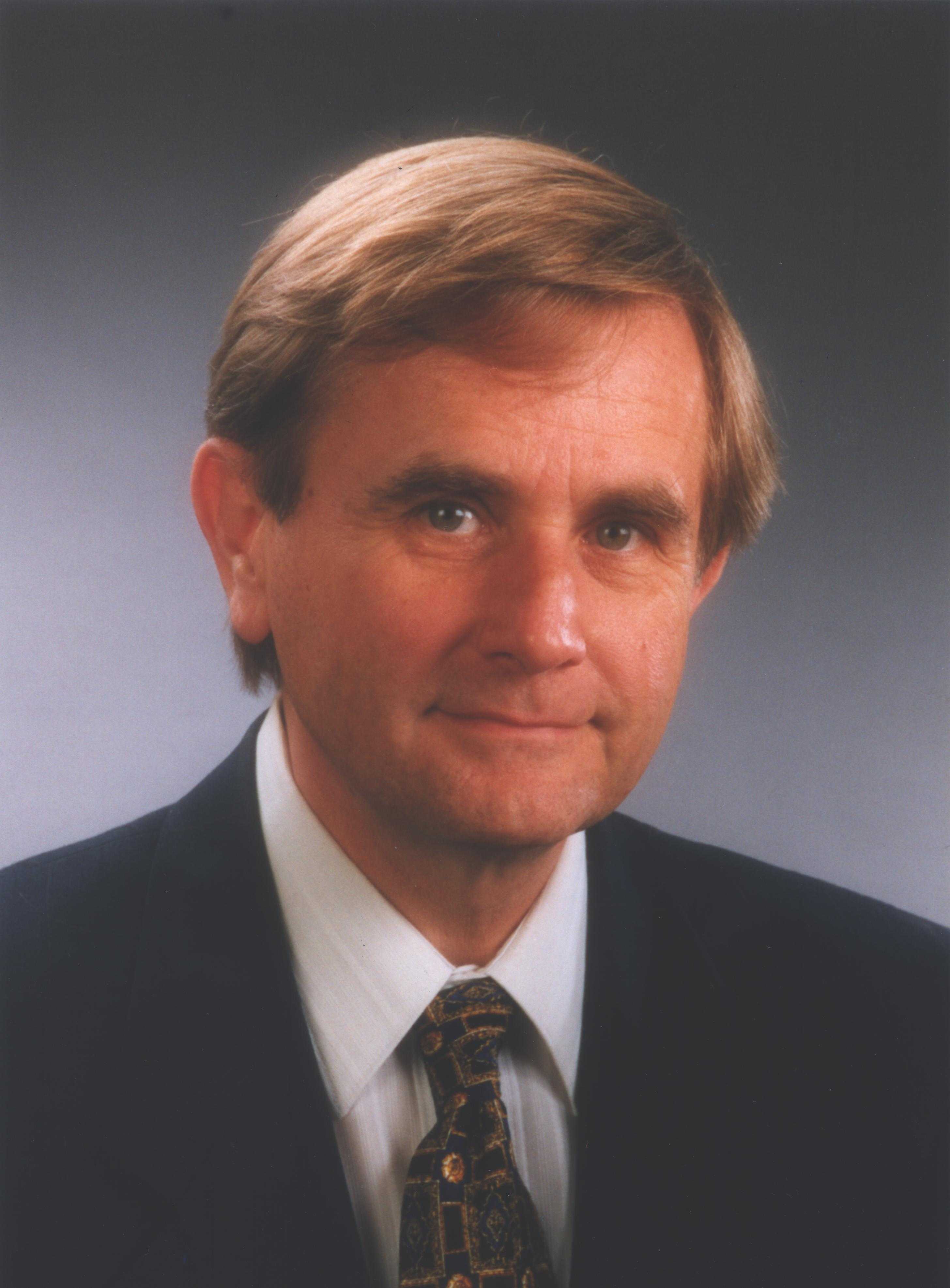
Andrew P. Ingersoll – 2007 Gerard P. Kuiper Prize recipient

The Division for Planetary Sciences of the American Astronomical Society awards the 2007 Gerard P. Kuiper Prize for outstanding contributions to the field of planetary science to Andrew P. Ingersoll, professor of Planetary Science at the California Institute of Technology. For more than 40 years, he has been a leader in the investigation of planetary atmospheres. Andy’s contributions have been wide-ranging, including fundamental studies of Venus’ runaway greenhouse effect and atmospheric tides, the general circulation of the martian atmosphere, and the meteorology of the giant planets. He has provided new and highly original insights into the circulation of the upper tropospheres of Jupiter and Saturn, and he has explored the dynamical connections between the deep Jovian atmosphere and the upper layers that are directly accessible to observation. These are fundamental to the investigation of the nature and origin of differential rotation in giant planet atmospheres. Andy is also well-known for his invaluable participation on instrument teams for interplanetary missions, including Pioneers 1 and 2, Pioneer Venus, Voyager, Mars Global Surveyor, Galileo, and Cassini, among others. He has helped to define the important atmospheric science objectives of these missions, to design the observations themselves, and to lead both the analysis and theoretical interpretation of the results. His breadth of experience, wisdom, and articulate explanations have earned him well-deserved and wide regard.

In recognition of his scientific leadership, intellect, curiosity, scientific productivity, generosity, and his passionate pursuit of solar system exploration, it is with great pleasure that the Division for Planetary Sciences awards the 2007 Gerard P. Kuiper Prize to Andrew P. Ingersoll.

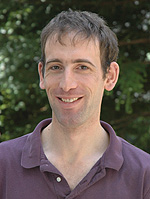
Francis Nimmo – 2007 Harold C. Urey Prize recipient

The Division for Planetary Sciences of the American Astronomical Society awards the 2007 Harold C. Urey Prize for outstanding achievement in planetary research by a young scientist to Francis Nimmo, Assistant Professor in the Department of Earth Sciences at UC Santa Cruz. A theoretical planetary geophysicist of exceptionally broad interests, Francis has made fundamental contributions to our understanding of the evolution of both terrestrial planets and icy satellites, using their observed surface topography and composition to investigate the evolution of forces responsible for their current states. His creative and provocative body of work has spanned the solar system, from estimates of the crustal thickness of Mercury, the surface and interior dynamics of Venus, and the evolution of the Martian crust to the interpretation of Triton’s surface ridges as formed by diurnal tidal stresses. His work incorporates estimates of core and mantle convection, tidal and radiogenic heating, crustal extension and compression, impacts, volcanism, and fluvial erosion. Francis has the skill of defining important problems, devising clever ways to solve them, and developing successful collaborations. He writes with exceptional clarity, thoroughness, and open-mindedness to the idea that even the most beautiful theory is only as strong as its observational support.

As a young planetary scientist whose work has strongly influenced current thinking about our Solar System from Mercury to Neptune, the Division for Planetary Sciences is pleased to award the 2007 Harold C. Urey Prize to Francis Nimmo.

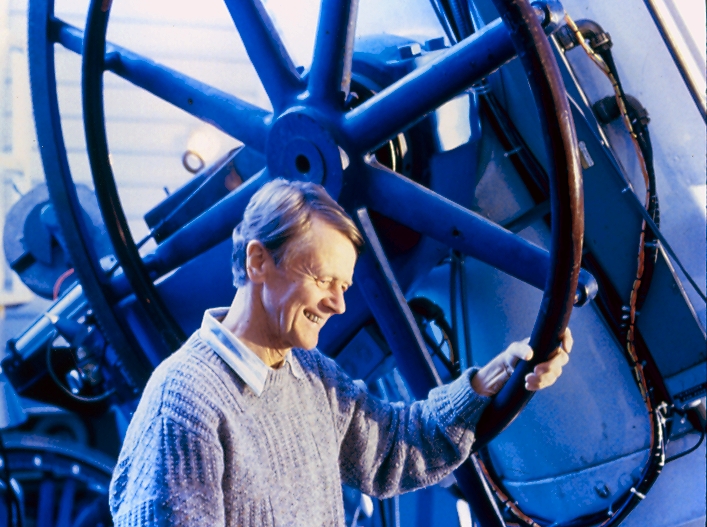
Tom Gehrels – 2007 Harold Masursky Award recipient

The Division for Planetary Sciences of the American Astronomical Society presents the 2007 Harold Masursky Award for outstanding service to planetary science and exploration to Tom Gehrels, Professor of Planetary Science at the University of Arizona. Tom’s visionary and tireless efforts in developing the Space Sciences Series of the University of Arizona Press changed the face of planetary science. He also edited many of the early volumes in the series, thereby setting the high standard of quality for which these books have become known. It would be difficult to find anyone working in planetary science today who has not utilized some of the thirty Space Science Series volumes produced during Tom’s tenure as General Editor. For generations of graduate students, they have served as de facto textbooks, introducing them to the field and aiding them in making the transition from course work to independent research. By linking each volume to a scientific meeting devoted to a general topic, Tom created an environment in which specialists could broaden their knowledge and contribute to cross-disciplinary discussion and debate. His forceful personality helped to reinforce the revolutionary idea of collaborative authorship between rivals to provide balanced views of contentious issues. Tom’s efforts to raise financial support for publication costs helped to insure a broad readership of these invaluable volumes.

In recognition of his energetic leadership over three decades to produce the peerless Space Science Series, the Division for Planetary Sciences is pleased to present the 2007 Harold Masursky Award to Tom Gehrels.

2006 DPS Prize Recipients

Dale P. Cruikshank – 2006 Gerard P. Kuiper Prize recipient

The Division for Planetary Sciences of the American Astronomical Society awards the 2006 Gerard P. Kuiper Prize for outstanding contributions to the field of planetary science to Dale P. Cruikshank, Research Scientist at the NASA Ames Research Center in California. Cruikshank pioneered the application of infrared spectroscopy to solar system bodies, developed laboratory techniques that became tools for interpreting the observations, and has been a leader in the design of instruments for remote sensing observations from deep space planetary exploration probes. Cruikshank’s key contributions concern the detection and characterization of volatiles and organics of the surfaces of asteroids and outer solar system bodies. His discoveries, spanning four decades, confirm the early conjecture that common ices are dominant components of outer solar system bodies. With colleagues, he discovered the five ices known on Triton, three on Pluto, and water ice on satellites of Saturn, Uranus, Neptune, and Pluto. With colleagues, he was first to find water ice in the Kuiper Belt, and methanol ice on a Centaur that links these bodies to comets. The ices he found on Triton and Pluto are the sources of the atmospheres of these two bodies, especially fitting discoveries as it was G. P. Kuiper who discovered the first satellite atmosphere, on Titan. Cruikshank pioneered thermal infrared determinations of the albedos of small bodies beyond the asteroid main belt, leading to the recognition that low- albedo material is prevalent in the outer solar system. His spectroscopic work gave the first firm evidence for complex organic solids on a planetary body (Saturn’s satellite Iapetus), and provides the basis for progress on the identification of such materials elsewhere. A distinguished scientist and a recognized leader in the planetary community, Cruikshank has participated in a number of past and present NASA missions, including Voyager, Cassini, Spitzer, and New Horizons.

For his outstanding contributions to planetary science, and especially planetary astronomy, it is with great pleasure that the Division for Planetary Sciences awards the 2006 Gerard P. Kuiper Prize to Dale P. Cruikshank.

Tristan Guillot – 2006 Harold C. Urey Prize recipient

The Division for Planetary Sciences of the American Astronomical Society awards the 2006 Harold C. Urey Prize for outstanding achievement in planetary research by a young scientist to Tristan Guillot, a Charge de Recherche of the CNRS at the Observatoire de la Cote d’Azur, in Nice, France. Guillot is a recognized expert in radiative transfer and its application to the internal structures of giant planets, both inside and outside our solar system. He has developed unique insights on how to properly treat the influence of strong stellar irradiation on the evolution of the deep convective zones of giant planets, discovering that a thickening radiative zone forms at the surface as the planet’s interior cools. With colleagues, he correctly predicted that hydrogen-rich exoplanets should have higher entropies than our own gas giants, and therefore larger radii. His doctoral work showed that hydrogen-helium alone does not produce sufficient opacity to maintain Jupiter and Saturn in convective equilibrium at kilobar pressure levels. This has important implications for these planets’ history and internal structure and opens a potential role for other opacity sources. Guillot’s synthesis of Galileo probe measurements with interior equations of state has determined that Jupiter’s core is much less massive than that of Saturn and that a substantial amount of heavy elements are retained in the envelope of Jupiter — the most definitive analysis of these important quantities to date. He has also contributed to the fields of brown dwarfs, giant planet formation, and the dynamics of atmospheric flow on tidally-synchronized gas giants. He has worked as well to advance planetary science in his native France, and on the upcoming COROT and JUNO missions.

As a young scientist demonstrating outstanding achievement with great potential for future success and scientific leadership, the Division for Planetary Sciences is pleased to award the 2006 Harold C. Urey Prize to Tristan Guillot.

Gentry Lee – 2006 Harold Masursky Award recipient

Gentry Lee, Chief Engineer for the Planetary Flight Systems Directorate of NASA’s Jet Propulsion Laboratory, Pasadena, Calif., has been awarded the prestigious Harold Masursky Award, presented by the American Astronomical Society’s Division for Planetary Sciences.

The Masursky Award recognizes individuals for outstanding service to planetary science and exploration through engineering, managerial, programmatic, or public service activities. The award citation states, “Lee has set the standard for systems engineering in the complex world of robotic planetary missions, and moreover, possesses the desire to impart this knowledge to those around him, especially young engineers.”

Lee was chief engineer for the Galileo project from 1977 to 1988 and, after working in a variety of positions on the Viking project from 1968 to 1976, was director of science analysis and mission planning during the Viking operations activities. In his current position, Lee is responsible for the engineering integrity of all the robotic planetary missions managed by JPL. His major recent work included not only the oversight of all engineering aspects of Spirit and Opportunity, the twin rover missions to Mars that landed in January 2004, but also the implementation of NASA’s successful Deep Impact and Stardust missions.

“Gentry Lee is one of the true heroes of deep space exploration,” said JPL director Dr. Charles Elachi. “His work has contributed to the success of JPL missions for more than 35 years.”

In addition to his engineering work, Lee has been an active novelist, television producer, computer game designer, media columnist and lecturer. He was the late Carl Sagan’s partner in the creation, design, development and implementation of the Emmy and Peabody award-winning public television series “Cosmos.” Lee has also co-authored four bestsellers with Arthur C. Clarke and written three more successful solo novels.

Lee’s previous awards include the NASA Medal for Exceptional Scientific Achievement in 1976 and the Distinguished Service Medal, NASA’s highest award, in 2005.

Gentry Lee received a Bachelor of Arts degree, Summa Cum Laude, from the University of Texas at Austin in 1963 and a Master of Science degree from the Massachusetts Institute of Technology in 1964. He then attended the University of Glasgow in Scotland on a Marshall Fellowship for one year.

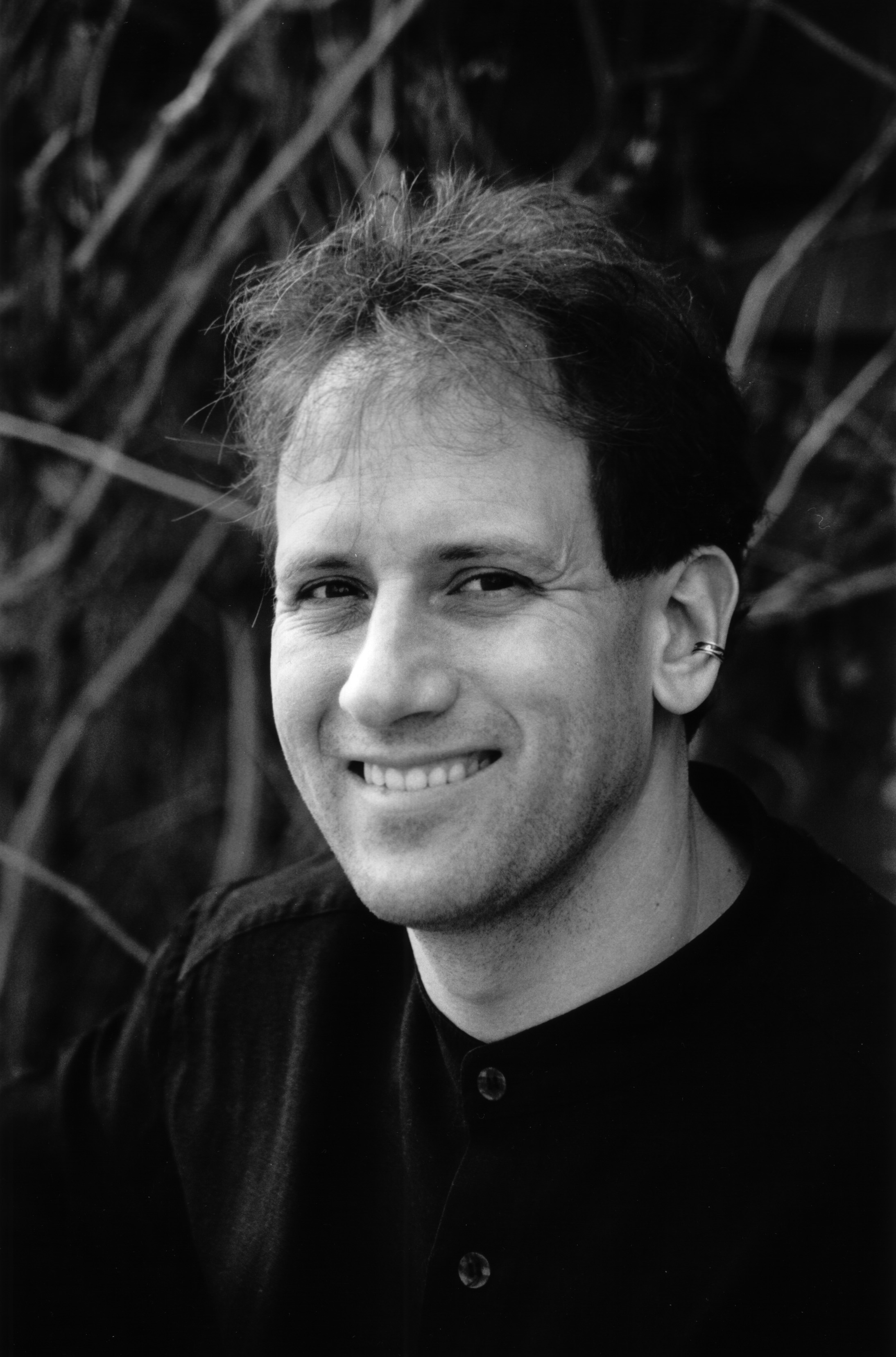
David H. Grinspoon – 2006 Sagan Medal recipient

The Division for Planetary Sciences of the American Astronomical Society awards the 2006 Carl Sagan Medal for Excellence in Public Communication by a Planetary Scientist to David H. Grinspoon, the Curator of Astrobiology at the Denver Museum of Nature & Science. Few practicing researchers in planetary science have devoted so much effort to public outreach, and done it so effectively, as David Grinspoon. He has a special gift in being able to communicate exciting ideas at the leading edge of planetary and astrobiological research to the interested public. In his prize-winning popular book, “Lonely Planets: The Natural Philosophy of Alien Life,” and his earlier “Venus Revealed,” one encounters amazingly engaging works that seek to place diverse aspects of life in the universe, and of our sister planet, into larger cultural contexts. The reader is treated to fresh, “outside the box” perceptions, and asked to stretch his or her mind in unexpected directions, an inevitably intensely rewarding experience!

Grinspoon received several awards recognizing his excellent teaching while at the University of Colorado. In more recent years, he has traveled and lectured extensively, appeared on radio and in television science documentaries, and written popular articles for magazines and Op Ed pieces for the nation’s leading newspapers. In Grinspoon’s interactions with the public there is visible joy and enthusiasm about planetary science and science in general, all supported by his profound sense of science as an ethical human enterprise. He is one of just a few excellent active planetary science researchers who self-describe their careers in education and public outreach as being of equal or greater importance. Grinspoon thus follows in the tradition of Carl Sagan himself, and like Sagan in his time, Grinspoon is nearly unique in making science truly hip.

For his strong dedication to excellence in communicating planetary science to the public, and illuminating the numinous, the Division for Planetary Sciences is pleased to present the 2006 Carl Sagan Medal to David H. Grinspoon.

Dr. Grinspoon is curator of astrobiology at the Denver Museum of Nature & Science, has been awarded the 2006 Carl Sagan Medal by the Division for Planetary Sciences (DPS) of the American Astronomical Society. The prestigious medal was created to recognize scientists whose efforts have significantly contributed to a public understanding of, and enthusiasm for, planetary science.

Grinspoon’s research focuses on the evolution of Earthlike planets elsewhere in the universe. He is a recognized expert on the planet Venus, and he serves as an advisor to NASA on space exploration strategy. Grinspoon is particularly interested in improving our ability to understand and predict climate change, and the implications of climate change on the habitability of different planets, including Earth in the future.

Though he is an accomplished researcher whose scientific findings have been published in journals such as Science and Nature, Grinspoon has always placed a high priority on sharing his knowledge of science with the general public. In 2004, he won the Pen Center Literary Award for Research Nonfiction for his book Lonely Planets: The Natural Philosophy of Alien Life , which explores the possibility of other life in the universe from scientific, historical and philosophical perspectives. The book won praise from Publishers Weekly, Scientific American, WIRED magazine, Entertainment Weekly, Kirkus Reviews (which gave Lonely Planets a starred review), and Booklist , which said, “Grinspoon comes across like a buddy in a bar, trying out ideas over a beer or a few.”

The success of Lonely Planets was a highlight in a long list of other accomplishments. Grinspoon’s first book, Venus Revealed: A New Look Below the Clouds of Our Mysterious Twin Planet, was a finalist for the Los Angeles Times Book Prize, and his popular writing has appeared in Scientific American, Natural History, and The New York Times, among other publications. In addition, he has been featured on National Public Radio, PBS, BBC World Service, and was a regular guest on The John Batchelor Show on the ABC Radio Network.

2005 DPS Prize Recipients

William Hubbard, 2005 Gerard P. Kuiper Prize recipient

The Division for Planetary Science of the American Astronomical Society awards the 2005 Gerard P. Kuiper Prize for outstanding contributions to the field of planetary science to William B. Hubbard, Professor of Planetary Science at the University of Arizona. Hubbard’s work has centered on the study of the internal structure and evolution of giant planets and brown dwarfs, as well as on the use of stellar occultations to study the atmospheres of the outer planets. Hubbard’s key early contributions on the internal thermal state and structure of Jupiter and Saturn established the framework for our current understanding of the jovian planets, particularly that these planets possess fully convective envelopes. Hubbard was the first to extend the work done by Henyey and Hayashi into the mass range of giant planets. He developed the basic techniques that are widely used to compute the evolution of giant planets. Hubbard’s book on Planetary Interiors is a thorough compendium of the remarkable breadth of his knowledge in this field. Hubbard has also contributed a substantial body of work on the use of stellar occultations to study the atmospheres of planets, beginning with the occultation of β Scorpii by Jupiter and Io, which led to a direct measurement of the scale height of Jupiter’s atmosphere. His pioneering work in the study of stellar occultations by solar system bodies led to his confirmation of the atmosphere of Pluto and co-discovery of ring arcs around Neptune. He also made significant contributions to the theory of central flashes and the intensity fluctuations in occultation light curves. In recognition of his lifetime of work on the energy transport, internal structure, and evolution of giant planets, extrasolar planets, and brown dwarfs, and for outstanding contributions to planetary science, it is with great pleasure that the Division for Planetary Science awards the 2005 Gerard P. Kuiper Prize to William B. Hubbard.

The Kuiper Prize is awarded annually to an active researcher in the DPS to recognize and honor outstanding contributions to planetary science. It is awarded to scientists whose achievements have most advanced our understanding of the planetary system.

David Nesvorny, 2005 Harold C. Urey Prize recipient

The Division for Planetary Science (DPS) of the American Astronomical Society (AAS) awards the 2005 Harold C. Urey Prize for outstanding achievement in planetary research by a young scientist to David Nesvorny, of the Southwest Research Institute in Boulder CO. Nesvorny is recognized for his exemplary record of achievement in the study of the dynamical evolution of small bodies in the solar system. His early work introduced the idea of three-body resonances, which are now understood to be a major cause of chaos in the orbits of planets and play a major role in the delivery of asteroids to near-Earth orbits. Nesvorny’s study of clustering in the asteroid belt led to the discovery of the tiny Karin asteroid family, which he dated at an age of 5.8 million years. He has also identified several other recent breakup events, with the largest being the formation of the Veritas family 8.3 million years ago. These results are now helping scientists to study asteroid geology, impact physics and effects of space weathering. Nesvorny has also been a pioneer in the modeling of the dynamical evolution of asteroids by the thermal radiation drag force and torques. He helped demonstrate that these effects spread out asteroid families in semi-major axis and modify asteroid spin rates and obliquities. As a young scientist demonstrating outstanding achievement with great potential for future success and scientific leadership, the Division for Planetary Sciences of the American Astronomical Society is pleased to award the 2005 Harold C. Urey Prize to David Nesvorny.

The Urey Prize is awarded annually to a member of the DPS to recognize and encourage outstanding achievements in planetary science by a young scientist.

Rosaly Lopes, 2005 Sagan Medal recipient

Rosaly Lopes

The Division for Planetary Science of the American Astronomical Society awards the 2005 Carl Sagan Medal for Excellence in Public Communication by a planetary scientist to Dr. Rosaly Lopes, a Principal Scientist at NASA’s Jet Propulsion Laboratory in Pasadena, California, and an Investigation Scientist for the Titan Radar Mapper on the Cassini-Huygens mission to Saturn. Throughout her career studying planetary volcanism, Lopes has been an enthusiastic and untiring communicator of planetary science to the public. Early in her career she served as Curator of Modern Astronomy and Deputy Head of Astronomy at the Old Royal Observatory Greenwich, where she was heavily engaged in interactions with the public and media. Since joining the JPL Galileo Near Infrared Mapping Spectrometer team in 1991, she has taken a leading role in communicating Galileo’s results to the public and teachers. Lopes is particularly active with Hispanic groups, and has been an inspiration for many young people in her native Brazil. She has worked tirelessly to bring science to Hispanic communities, and has been very active in the encouragement of women and minorities in science. She has written a popular book about volcanoes on Earth, and has edited an undergraduate book on planetary volcanism, in which all of the contributors are female scientists. She has always been extremely active in giving public and school talks throughout California, as well as in Brazil, Mexico, Portugal, and Italy. Lopes has conducted all of her public outreach activities while maintaining an extremely impressive scientific research program. For her strong dedication to excellence in communicating planetary science to the public, the Division for Planetary Science is pleased to present the 2005 Carl Sagan Medal to Rosaly Lopes.

J. Kelly Beatty, 2005 Harold Masursky Award recipient

The Division for Planetary Sciences of the American Astronomical Society presents the 2005 Harold Masursky Award for outstanding service to planetary science and exploration to J. Kelly Beatty, Executive Editor of Sky & Telescope magazine and Editor of Night Sky magazine. For more than 30 years, Beatty has been a leading communicator and interpreter of planetary science through his writing, editing, broadcasting, and public speaking. He has been equally adept at explaining the results of professional research and enabling his audience to vicariously experience the excitement of doing that research. It is a testament to his deep understanding of planetary science, and his accuracy and integrity in reporting it, that numerous researchers have invited him to participate in their observing campaigns and trusted him to report on them from ‘the inside.’ The New Solar System, a book that Beatty conceived and edited and that has been translated into several languages over the past two decades, is one of the most comprehensive and accessible overviews of planetary science for the public. Beatty has also played a key role in the training and mentoring of other journalists through his internship program at Sky & Telescope and his exemplary leadership of the press at meetings. Often he will ask a key question that focuses the attention of the rest of the press, and indeed of many researchers, on the true significance of a new scientific result. Beatty serves as a vital link between planetary scientists and the public that supports them. In recognition of his Meritorious Service to Planetary Science, the Division for Planetary Sciences is pleased to present the 2005 Harold Masursky Award to J. Kelly Beatty.

2004 DPS Prize Recipients

Carle M. Pieters, 2004 Gerard P. Kuiper Prize recipient

The Division for Planetary Sciences (DPS) has awarded its 2004 Gerard P. Kuiper Prize to Dr. Carle M. Pieters of Brown University. The Kuiper Prize is awarded annually to an active researcher in the DPS to recognize and honor outstanding contributions to planetary science. It is awarded to scientists whose achievements have most advanced our understanding of the planetary system. The Kuiper Prize will be presented to Pieters at DPS 2004, which will convene November 8-12 in Louisville, Kentucky.

Pieters has dedicated herself, through a wide range of laboratory and telescopic studies, to the establishment of a rigorous basis for the physical reasons behind the behavior of reflected light from a wide variety of planetary surfaces. Her work has been fundamental to understanding the mineralogical diversity and surface alteration processes for the Moon and asteroids. The discovery of olivine in the central peak of the lunar crater Copernicus and evidence for plutons in the middle crust of the Moon revealed a more diverse internal structure than previously realized. Her continued lunar research is fundamental for planning the exploration of the South-Pole Aitken basin. Her detailed studies of the finest fractions within the lunar regolith ultimately resulted in a fundamental new understanding of space weathering that is not only applicable to the Moon, but also to the asteroids.

Her current work focuses on achieving a detailed understanding for the regolith of Mars. Through her hard work and leadership, the NASA Reflectance Experiment Laboratory (RELAB) has provided ten thousand state-of-the-art spectroscopic measurements of meteorites, lunar, and terrestrial materials for the worldwide research community. Pieters is well known as an enthusiastic and inclusive researcher and mentor, who most importantly epitomizes the goal of unselfish cooperation in science.

Jean-Luc Margot, 2004 Harold C. Urey Prize recipient

The Division for Planetary Sciences (DPS) has awarded its 2004 Harold C. Urey Prize to Dr. Jean-Luc Margot of Cornell University. The Urey Prize is awarded annually to a member of the DPS to recognize and encourage outstanding achievements in planetary science by a young scientist. The Urey Prize will be presented to Margot at DPS 2004, which will convene November 8-12 in Louisville, Kentucky.

Margot, an Assistant Professor of Planetary Science at Cornell University, is recognized for his broad-ranging studies of solar system binary objects, of planetary spin states, and of water ice on the surface of the Moon, using ground-based and spaced-based telescopes sensitive at radio, infrared, and optical wavelengths. Margot has discovered and characterized binary systems from near-Earth space to the Kuiper Belt. His high-precision measurements of the spin states of Mercury and Venus are yielding important information about the interiors of those planets. He has measured the amplitude of tiny physical librations at Mercury, a finding that has important implications for the state of the planet’s core. Additionally, Margot’s radar interferometry measurements and digital elevation models of the lunar poles pinpoint potential regions for ice deposits on the Moon.

David Morrison, 2004 Sagan Medal recipient

The Division for Planetary Sciences (DPS) has awarded its 2004 Carl Sagan Medal to Dr. David Morrison of the NASA Ames Research Center. The Sagan Medal is awarded annually to an active researcher in the DPS for long-term excellence in the communication of planetary science to the public. The Sagan Medal will be presented to Morrison at DPS 2004, which will convene November 8-12 in Louisville, Kentucky. Morrison is Senior Scientist for the Astrobiology Institute at Ames, which is located in Moffett Field, California. Throughout his scientific career as an expert on solar system small bodies and as an investigator for numerous spacecraft missions, including Mariner 10, Voyager, and Galileo, Morrison also has enthusiastically dedicated himself to sharing the excitement of planetary exploration with the public. For two decades, Morrison generated a widely-praised and widely-used series of slide and information sets, featuring the best planetary images available; he also authored informational books for the general public on the Voyager flybys of Jupiter and Saturn.

Morrison has given hundreds of public lectures and has appeared for many years on radio and television explaining planetary science in everyday language. As President of the Astronomical Society of the Pacific, Morrison devoted himself to encouraging and supporting the educational work of the society and also chaired the ASP Long-Term Aims Committee, which set out the goals and activities for public outreach that the organization is still following today. He is co-author of one of the first textbooks in planetary science. Morrison and co-authors are also successors in the continuation and revision of the original George Abell series of astronomy textbooks, reaching students worldwide, providing for many the basis for their only college science course.

He has been instrumental in illuminating the scientific basis for potential hazards due to asteroid and comet impacts through refereed papers, popular articles and books, and is responsible for NEO News (with about 800 subscribers) and for the Impact Hazard website, http://impact.arc.nasa.gov/. His educational impact also continues through the coordination of activities for the NASA Astrobiology Institute, with special attention to the content of undergraduate courses in this new interdisciplinary field.

Alexander Basilevsky, 2004 Harold Masursky Award recipient

The Division for Planetary Sciences (DPS) of the American Astronomical Society has awarded its 2004 Harold Masursky Award to Dr. Alexander Basilevsky, Director of the Laboratory of Comparative Planetology at the Vernadsky Institute in Moscow, Russia. The Masursky Award is awarded annually to recognize and honor individuals who have rendered outstanding service to planetary science and exploration through engineering, managerial, programmatic, or public service activities. The Masursky Award will be presented to Basilevsky at DPS 2004, which will convene November 8-12 in Louisville, Kentucky.

Alexander Basilevsky is Director of the Laboratory of Comparative Planetology at the Vernadsky Institute in Moscow. As scientific colleagues and close personal friends during the Cold War era, Drs. Basilevsky and Masursky were together responsible for establishing some of the most basic and productive interactions between planetary scientists of the Soviet Union and those of the United States and Western Europe. As a leading expert in the study of cratering processes and planetary geology for the Moon, Mars, and Venus, Basilevsky was a natural Soviet scientific counterpart to Masursky. Also analogous to Masursky, Basilevsky’s detailed involvement and pushing of a scientific agenda in all Soviet lunar and planetary missions was a major factor in inserting science into otherwise political and engineering missions.

Dr. Basilevsky’s scientific and political impact extended internationally through his extensive effort and success in being one of the few Soviet scientists able to travel frequently to planetary conferences in the west. Further, he participated actively within the European Geophysical Union, the International Union of Geological Sciences, as well as within the organization of Vernadsky-Brown University Microsymposia on Comparative Planetology.

2003 DPS Prize Recipients

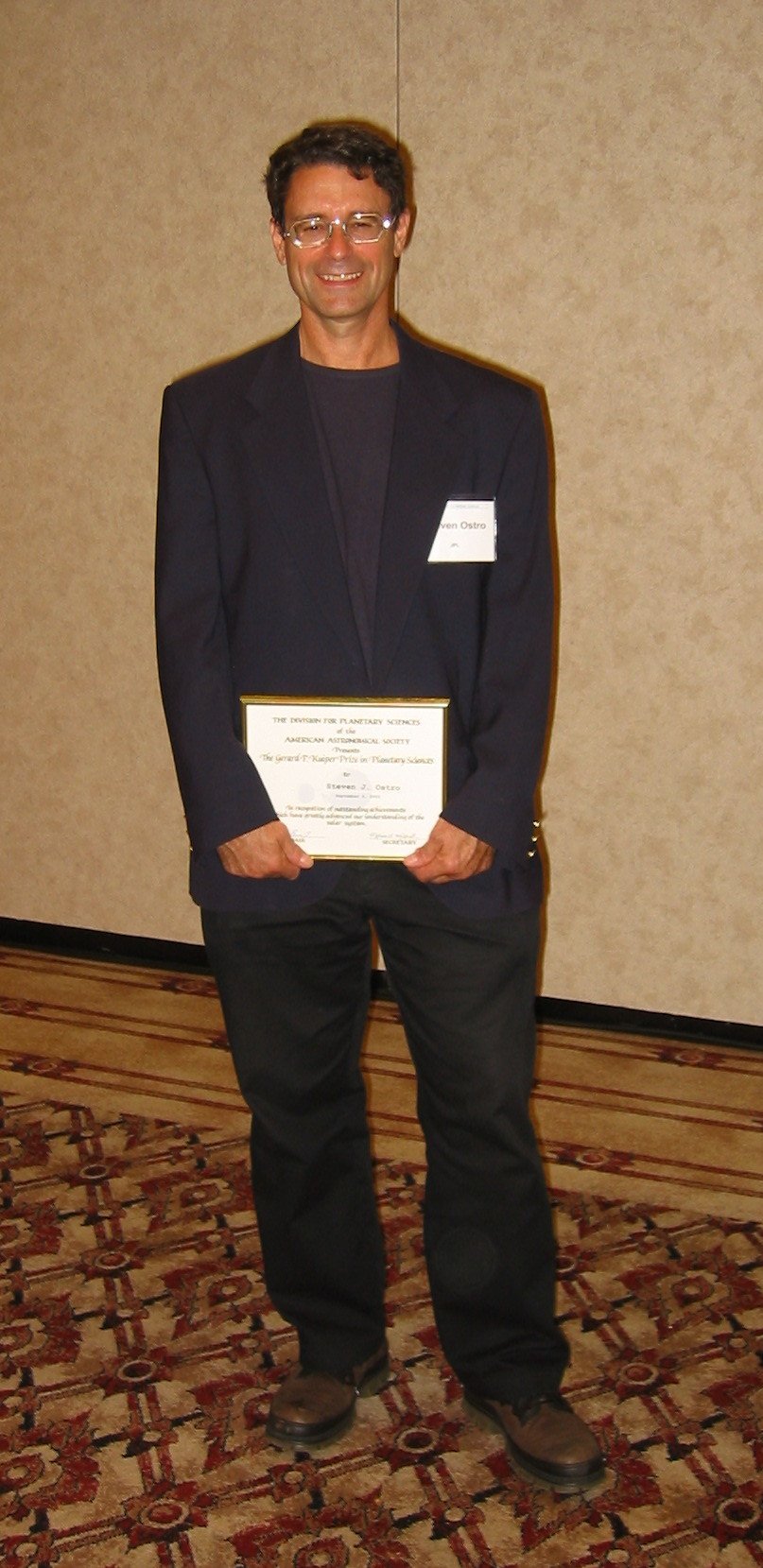
Steven J. Ostro, 2003 Gerard P. Kuiper Prize recipient

CITATION: The Division for Planetary Sciences of the American Astronomical Society awards the 2003 Gerard P. Kuiper Prize for outstanding contributions to the field of planetary science to Steven J. Ostro. Ostro is a Senior Research Scientist at the California Institute of Technology Jet Propulsion Laboratory. Ostro has been a pioneer and principal driving force in the area of planetary radar astronomy and continues to push the capabilities of this field to new heights. He is recognized for the first ever main-belt asteroid detection, of Ceres, as a graduate student and the extensive program of radar observations of near-Earth and main-belt asteroids since. The result has been a series of spatially-resolved images that have profoundly impacted our understanding of these bodies. Notable discoveries include the first strong evidence for a contact binary asteroid, 4769 Castalia; the most compelling evidence for a metallic, near-Earth asteroid, 1986 DA; the first confirmed non-principal axis rotator asteroid, 4179 Toutatis; the first mapping of a decameter, monolithic, rapidly rotating asteroid, 1998 KY26; and the first clearly resolved radar images of a main-belt asteroid, 216 Kleopatra. He made the first radar detection of Phobos and has been involved in radar studies of Saturn’s rings, the Galilean satellites and Mars.

In addition to observational work, Ostro has mentored the next generation of small body radar scientists. Together with these colleagues he has built the theoretical framework to obtain the most, and most reliable, scientific results from radar data. This includes development of the mathematical techniques for inverting asteroid echo edge frequencies to obtain pole-on silhouettes, and the development of real-time orbit determination software that uses radar data immediately to radically improve asteroid orbits. He has also applied his radar techniques to optical lightcurves of asteroids to derive convex hull-profiles, significantly more realistic than classical ellipsoidal fits.

Ostro approaches his work with intensity and dedication, maintaining the highest scientific standards. His achievements have significantly advanced our under-standing of the planetary system. His efforts stand as a positive example for all of us. The Division for Planetary Sciences is pleased to award the 2003 Gerard P. Kuiper prize to Steven Ostro.

For his years of research demonstrating the power of radar techniques to wrest information from near-Earth asteroids, Dr. Steven Ostro will receive the prestigious Gerard P. Kuiper Prize in 2003 from the American Astronomical Society’s Division for Planetary Sciences. Ostro studies asteroids as a senior research scientist at NASA’s Jet Propulsion Laboratory, Pasadena, Calif. He began probing these miniature planets with radar more than 20 years ago, and was essentially the only researcher doing so through the 1980s. The field has grown in the past decade, with increasing recognition of the scientific importance of asteroids.

“Not only has Steve pioneered this field, he has trained a whole posse of young scientists who are now helping to reveal these incredibly fascinating worlds,” said Division for Planetary Sciences Chair Dr. Richard Binzel, a planetary scientist at the Massachusetts Institute of Technology, Cambridge. “Steve has done groundbreaking work in a new area of solar system exploration,” said the division’s 2001 chair, Dr. Mark Sykes, a planetary scientist at the University of Arizona, Tucson. “With radar imaging of asteroids, he has provided insights into the shapes and collisional evolution of these very common solar system objects. He does things we couldn’t do otherwise without sending a spacecraft, and he works with an intensity and meticulousness that make him a good model for all of us.”

Ostro and his colleagues have successfully obtained radar echoes from nearly 200 asteroids, mostly ones that cross Earth’s orbit but also including many in the main asteroid belt between Mars and Jupiter. “Every single one of them is unique in its own way,” Ostro said. “It’s been just one remarkable object after another.”

For bodies that are mere points of light in the best optical telescopes, radar experiments have revealed exotic shapes, such as the dogbone configuration of asteroid Kleopatra and the elongated shape of Geographos. They have disclosed unusual motions, such as the slow wobbling of Toutatis. They have shown craters and other geological features on asteroids’ surfaces. They have identified some asteroids as metallic, some as unconsolidated heaps of rubble and some as pairs orbiting each other while they orbit the Sun. “I feel extremely fortunate to be doing this work,” Ostro said. “It’s like a Star Trek fantasy—seeing a world that no one has ever seen before. That’s what I’ve been able to do over and over.”

The radar experiments require large dish-shaped antennas, such as those at the Goldstone, Calif., facilities of NASA’s Deep Space Network, and the National Science Foundation’s Arecibo Observatory in Puerto Rico. The Goldstone antennas serve primarily for communicating with distance spacecraft and get additional use for radio astronomy, including radar investigations. With radar, a radio signal is beamed to the target, and the echo brings information about the object that has reflected it. “It’s not a passive observation like other areas of astronomy. It’s more like performing an experiment on the object,” Ostro said. “We stimulate the object to give up its secrets. We send out questions and get back answers.”

Among the most important answers from any near-Earth asteroid are exactly how far away it is and how fast it is traveling. That information allows a much more precise calculation of its orbit than is possible from only repeated optical observations of the same asteroid. With orbital calculations that incorporate radar-observation data, the forecast of the asteroid’s likelihood of striking Earth can often be extended for centuries into the future. Earlier this year, observations by Ostro and colleagues were used to show that an asteroid named 1950 DA has a slight chance—possibly one in 300, probably much less—of hitting Earth on Saturday, March 16, 2880, which makes 1950 DA the most hazardous known asteroid. To date, NASA has discovered about half of the estimated potentially hazardous near-Earth asteroids, and, besides the extremely remote possibility of 1950 AD, none is on a path that will impact the Earth. Near-Earth asteroids make inviting destinations for initial human exploration of the solar system beyond the Moon, Ostro said. Many would be relatively easy to reach and offer useful resources, such as metals, complex organic compounds and chemically bound water, for wider-ranging space exploration.

The prize is named for Gerard Kuiper, widely regarded as the father of modern planetary science. The 1,200-member Division for Planetary Sciences awards it to one scientist each year “whose achievements have most advanced our understanding of the planetary system.” Ostro will be the 20th recipient. Previous winners have included Carl Sagan, James Van Allen and Eugene Shoemaker. Ostro will be the first JPL scientist to receive the Kuiper Prize. The California Institute of Technology’s Dr. Peter Goldreich received it in 1992.

Ostro is a New Jersey native who earned bachelor’s degrees in liberal arts and ceramic science from Rutgers University, New Brunswick, N.J.; a master’s degree in engineering physics from Cornell University, Ithaca, N.Y.; and a doctorate in planetary sciences from the Massachusetts Institute of Technology. He began working at JPL in 1984. The California Institute of Technology, Pasadena, manages JPL for NASA.

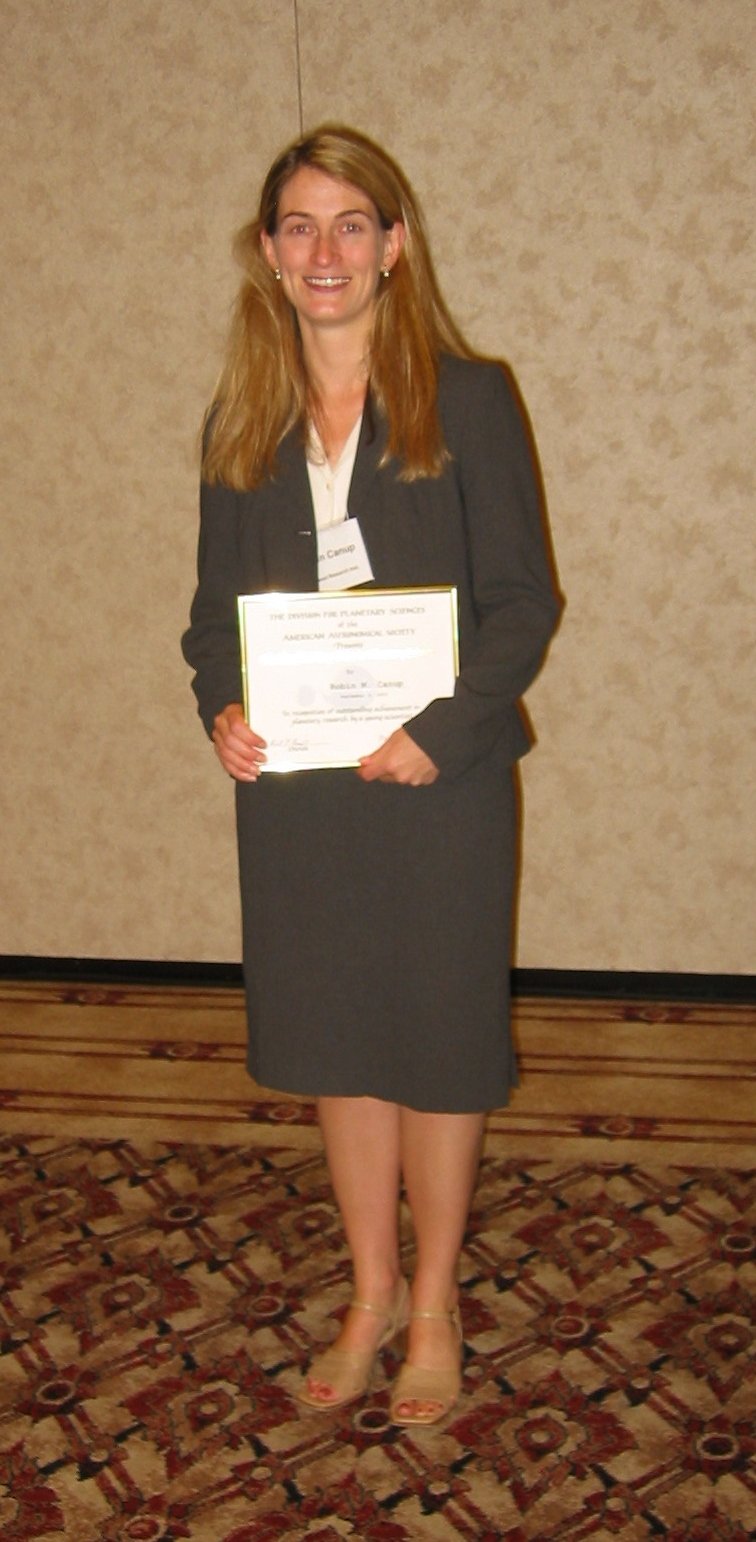
Robin M. Canup 2003 Harold C. Urey Prize recipient

CITATION: The Division for Planetary sciences of the American Astronomical Society awards the 2003 Harold C. Urey Prize for outstanding achievement in planetary research by a young scientist to Robin M. Canup. Canup, the Assistant Director of the Department of Space Studies at Southwest Research Institute in Boulder, Colorado, is recognized for substantially advancing our understanding of the Moon’s origin by a giant impact and its subsequent formation and dynamical evolution, including the origin of the lunar inclination. She has exhaustively assessed what it takes to create a companion to Earth in stable orbit. Her work provides important insights into the role of large collisions in planet formation, the bulk and surface composition of the Moon, and the likely characteristics of satellites in other planetary systems.

Canup was the lead editor of the Arizona Space Science Series book, Origin of the Earth and Moon, and organized a special session on the topic at the fall 1999 AGU. She demonstrates appreciable abilities as both a researcher and leader in her profession. The Division for Planetary Sciences is pleased to award the 2003 Harold C. Urey prize to Robin Canup.

The Urey Prize is awarded annually by the Division for Planetary Sciences (DPS), the largest division of the American Astronomical Society (AAS). The Urey Prize was established by the DPS to recognize and encourage outstanding achievements in planetary science by a young scientist.

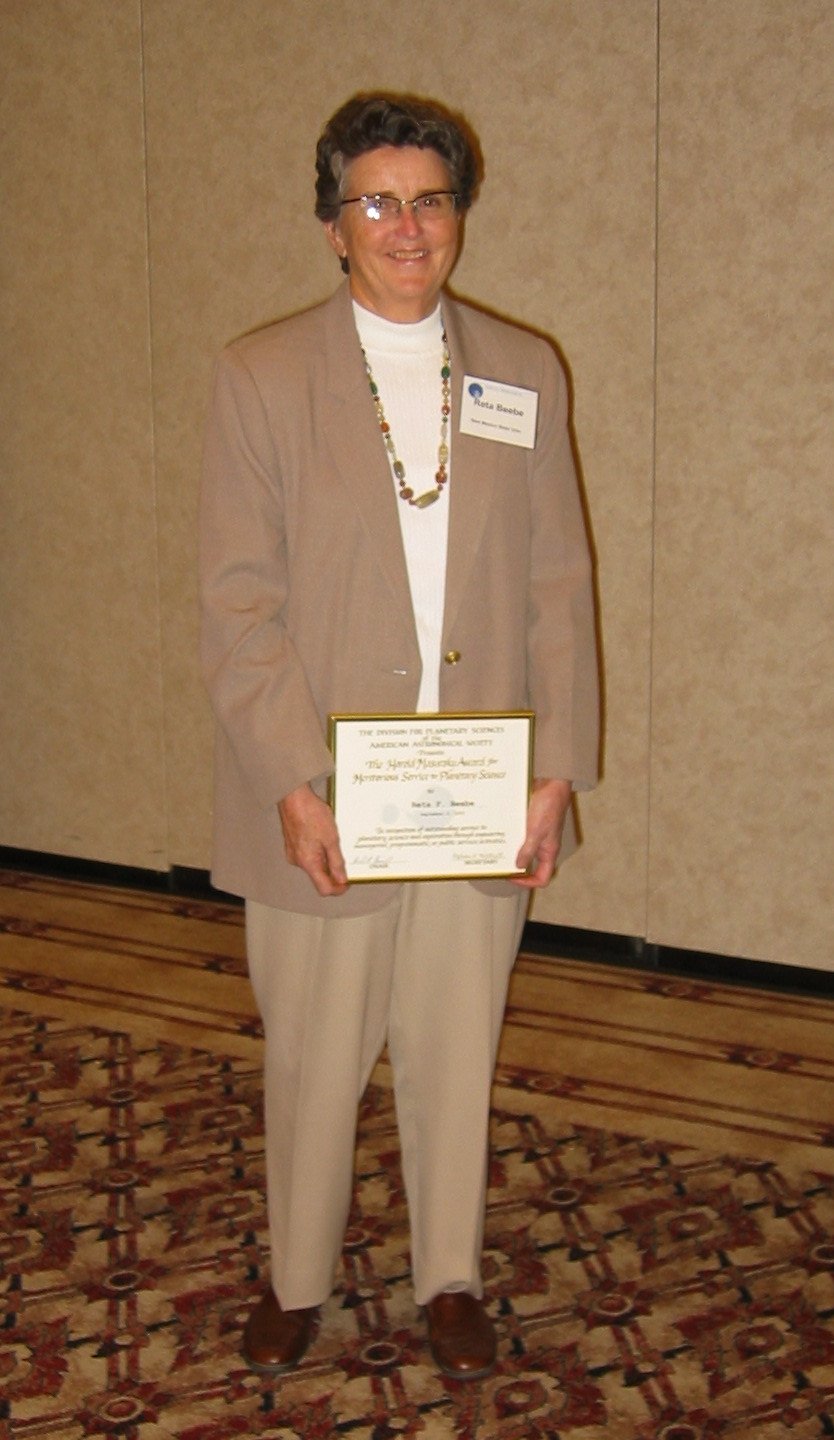
Reta F. Beebe, 2003 Harold Masursky Award recipient

CITATION: The Division for Planetary Sciences of the American Astronomical Society awards the 2003 Harold Masursky Award for outstanding service to planetary science and exploration to Reta F. Beebe. Beebe, a Professor of Astronomy at New Mexico State University in Las Cruces, New Mexico, is recognized for her substantial service contributions to the planetary science community throughout her long career, through her work on advisory committees, in elective office, and providing supporting observations for planetary missions. She accepted management of the NASA Planetary Data System Atmospheres Node when it was in trouble, and she has made it a resource to the Community. She has served as the Discipline Scientist for the Planetary Atmospheres program at NASA headquarters. She has served on the NRC Committee on Planetary and Lunar Exploration and now is its chair. She has served on numerous other working groups and commissions and has helped review myriad programs.

Beebe was elected Chair of the DPS from 1992 to 1993. She was elected and served on the DPS Committee as member from 1981 to 1984. As Chair of the NRC Giant Planets Discipline Panel of the NRC Solar System Exploration Survey, Beebe engaged in extensive outreach to the planetary community to ensure maximum community input to their deliberations.

The planetary community has benefited deeply from her selflessness. Reta Beebe serves as a model to us all for service to planetary science and exploration. The Division for Planetary Sciences is pleased to give the 2003 Harold Masursky Award to Reta Beebe.

Reta F. Beebe, a New Mexico State University astronomer, has been selected as the recipient of the 2003 Harold Masursky Award by the Division of Planetary Sciences (DPS) of the American Astronomical Society. She will be presented the award at the DPS meeting in September 2003 in Monterey, Calif. “I was quite surprised,” said Beebe. “It was not one single act of brilliance; instead the (planetary) community chose to honor me for my accumulated work.”

The award recognizes and honors individuals who have rendered outstanding service to planetary science and exploration through engineering, managerial, programmatic or public service activities. “I think Dr. Beebe is extremely deserving of this award,” said Rene Walterbos, head of New Mexico State’s astronomy department. “We are very pleased for her. I think this award also brings recognition and prestige to the department as well.”

Beebe, who has been a professor at NMSU for more than 30 years, is the director of the NASA Planetary Atmospheres Data Node, which is located at NMSU, and chairs the Committee for Planetary and Lunar Exploration (COMPLEX), which is the principle committee of the National Research Council of the National Academy of Science. This committee will oversee implementation of the Decadal Plan for Planetary Astronomy in the nation from 2003-2013.

Established by the DPS in 1991, the award is named after the late Harold Masursky of the U. S. Geological Survey, a scientist who was a Leader in establishing and accomplishing scientific objectives in both U. S. and international programs for planetary exploration. Former recipients of the Harold Masursky Award include the late world-renowned planetary scientist, Carl Sagan (1991); the former associate administrator for Space Science at NASA, Wesley Huntress (1999); and the late Congressman George E. Brown, Jr.

2002 DPS Prize Recipients

Eberhard Grün, 2002 Gerard P. Kuiper Prize recipient

CITATION: The Division for Planetary Science of the American Astronomical Society awards the 2002 Gerard P. Kuiper Prize for outstanding contributions to the field of planetary science to Eberhard Grün. Grün holds positions at both the Max-Planck-Instut für Kernphysik in Heidelberg, Germany, where he is a Senior Scientist, and at the University of Hawai’i’s Institute of Geophysics and Planetology. Grün is a leading expert in the study of dust in the solar system and has spearheaded its in situ exploration for decades. He is recognized for the discovery of interstellar grains passing through the solar system; the discovery of Jovian dust streams in interplanetary space; and major insights into the time evolution of the meteoritic complex by combining impact micro-crater data from lunar rocks, spacecraft meteoroid penetration and impact ionization data, and photographic and radar meteor data. Prior to the Voyager flybys, Grün foresaw the existence of dust rings around Jupiter and their replenishment from the Jovian satellites, as well as dust charging and interaction with the charged particle fluxes in the Jovian system. His career is an unbroken record of high quality work that has provided us with a good fraction of what we understand about the smallest bodies in the solar system.

The Kuiper Prize is awarded annually by the Division for Planetary Sciences (DPS), the largest division of the American Astronomical Society (AAS). The Kuiper Prize was established by the DPS to recognize outstanding contributors to planetary science (excluding work primarily with the Sun or Earth), awarding scientists whose achievements have most advanced our understanding of the solar system. This prize is the highest professional honor awarded by the DPS. Grün will receive the Kuiper Prize and associated cash award at special ceremonies on Wednesday afternoon, October 9, 2002, in the Ballroom of the Birmingham Jefferson Convention Center in Birmingham, Alabama, the site of this year’s DPS Meeting. He will then address the DPS membership; the title of his lecture is “Dust Astronomy.”

Grün received his doctorate at the University of Heidelberg in 1970 and continued there to become lecturer and senior scientist and leader of the cosmic dust group. He has been a visiting researcher at the Goddard Space Flight Center, Ames Research Center,and Jet Propulsion Laboratory, all NASA centers, as well as at the Lunar and Planetary Institute in Houston. He has been Principal Investigator for dust experiments aboard Helios 1, Helios 2, Galileo, Ulysses, and Cassini, a Co-Investigator for Nozomi, and provided dust sensors for Giotto.

Dr. Grün is recognized for the discovery of interstellar grains passing through the solar system, the discovery of Jupiter dust streams in interplanetary space, and major insights into the science of micrometeorites in space through the use of a variety of study techniques. In 2000, Grün was elected a Fellow of the American Geophysical Union. Minor Planet 1981 EY20 was designated 4240 Grün in honor of his spacecraft measurements of interplanetary dust.

Speaking of his years of experience, he stated, “I entered the field of dust research as a young scientist in the early days when the focus was on understanding the hazards from dust to manned and unmanned space activities. It was obvious that small meteor particles entering the Earth’s atmosphere at very high speed will easily do harm to any spacecraft when such a particle hits it. When it was recognized that shielding sensitive space equipment could easily control this danger much interest went away.

“But dust has many other faces, which makes it an exciting subject of astrophysical and planetary research. Dust particles come in various sizes, compositions, and shapes. Therefore, a multitude of parameters have to be determined in order to comprehensively characterize dust grains in space. The description of the dynamics of dust involves many disciplines: Keplerian dynamics, interactions with the radiation field and the plasma and magnetic environment. Dust cannot easily be characterized, it follows its own dynamics and disperses rapidly from its source, it is like smoke from a fire. This aspect however has a positive side: dust gives messages from remote processes and objects by which it was generated.

“Dust can be found everywhere in the solar system: From the heat in the F-corona to the deep freeze of the Kuiper belt and the Oort cloud dust plays an important role. We know today that almost each planet has its dusty shell.

“Through its wide distribution in the solar system dust can tell stories about its parents (comets, asteroids, satellites, and even interstellar matter) which otherwise are not easily readable.

“Taking a multi-disciplinary approach involving in situ space measurements, astronomical observations, theoretical studies, and laboratory investigations makes progress in the field. The close cooperation of astronomers, cosmochemists, dynamicist, and experimental physicists has, in fact, proven beneficial in solving dusty problems. It has been a privilege to work with many leading scientists in the various fields to help developing the field of dust research. I am honored to receive the Kuiper Prize of the DPS.”

Brett J. Gladman, 2002 Harold C. Urey Prize recipient

CITATION: The Division for Planetary Science of the American Astronomical Society awards the 2002 Harold C. Urey Prize for outstanding achievement in planetary research by a young scientist to Brett J. Gladman. Gladman, a Research Astronomer at the Observatoire de la Côte d’Azur in France, is recognized for his studies of orbital stability combining numerical and analytical resultsto elucidate the structure of the early solar system; his careful and extensive simulations of the orbital evolution of meteorites, fireballs, and NEOs that have fundamentally altered our understanding of the delivery paths of these objects; and his development of “pencil-beam” techniques to explore the outer solar system, leading to the discovery of 2 Uranian satellites and of more than a half-dozen Trans-Neptunian Objects.

The Urey Prize is awarded annually by the Division for Planetary Sciences (DPS), the largest division of the American Astronomical Society (AAS). The Urey Prize was established by the DPS to recognize and encourage outstanding achievements in planetary science by a young scientist. Gladman will receive the Urey Prize and associated cash award at special ceremonies on Wednesday afternoon, October 9, 2002, in the Ballroom of the Birmingham Jefferson Convention Center in Birmingham, Alabama, the site of this year’s DPS Meeting. He will then address the DPS membership; the title of his lecture is “Opening Pandora’s Box: The Discovery of New Irregular Satellites of the Giant Planets.”

Gladman received a Master of Science in Physics and Astronomy from Queen’s University in 1990, a Master of Science from Cornell University in 1992, where he also received his PhD in astronomy and theoretical and applied mechanics in 1996. He became an Henri Poincare Fellow at the Observatoire de la Cote d’Azur in Nice, France, in 1996, then an NSERC fellow at the Canadian Institute for Theoretical Astrophysics in 1997, and returned to the Observatoire de la Côte d’Azur in 1998 as a Chateaubriand International fellow, joining the staff of the observatory as a CNRS research astronomer in 1999. He recently became an associate professor in the Department of Physics and Astronomy at the University of British Columbia in Vancouver, Canada.

Gladman is recognized for his studies of the dynamical structure of the solar system; his extensive simulations of the orbital evolution of meteorites from the Moon, Mars, and the main asteroid belt have fundamentally altered our understanding of how these meteorites are delivered to Earth. His observations using electronic cameras on large telescopes to explore the outer solar system have led to the discovery of eleven new moons of Saturn and five of Uranus, as well as several dozen small bodies beyond the orbit of Neptune.

Dr. Gladman has been the recipient of several prizes and honors, including the designation of Minor Planet 7638 Gladman in 1999, the AAS Henri Chretian International Collaborative Research Prize in 1998, and the Eleanor York Prize for public service in astronomy by Cornell University in 1996.

Heidi B. Hammel, 2002 Sagan Medal recipient

CITATION: The Division for Planetary Science of the American Astronomical Society awards the 2002 Carl Sagan Medal for Excellence in Public Communication in Planetary Science to Heidi B. Hammel, a Senior Research Scientist with the Space Science Institute. Hammel’s dedication to the communication of the excitement of planetary science is evidenced in the large volume of lectures to children and general non-science audiences that has complemented her scientific career. She has a talent for clear, understandable, and enthusiastic descriptions of scientific results. She achieved national prominence in her outstanding communications during the Shoemaker-Levy 9 impact into Jupiter in 1994, when she tirelessly served as the spokesperson for all planetary scientists involved in that event. Her ability to communicate scientific ideas in plain language with infectious energy gives the public a personal look at the excitement of our field, and has an impact beyond the borders of planetary science.

The Sagan Medal is awarded to an active planetary scientist whose efforts have significantly contributed to a public understanding of, and enthusiasm for, planetary science. Hammel will receive the Sagan Medal and associated cash award at special ceremonies on Wednesday afternoon, October 9, 2002, in the Ballroom of the Birmingham Jefferson Convention Center in Birmingham, Alabama, the site of this year’s DPS Meeting. She will then address the DPS membership, the first Sagan Medal winner to be afforded this opportunity; the title of her lecture is, “Education and Public Outreach Opportunities for Ordinary Planetary Scientists.” Sagan Medal winners are also encouraged to address a public audience on the topic of planetary science. Hammel has arranged to deliver that lecture, “The Future of Planetary Exploration”, in conjunction with the semi-annual meeting of the AAS in January 2003 in Seattle, Washington.

Hammel received her undergraduate degree from the Massachusetts Institute of Technology in 1982 and her PhD in physics and astronomy from the University of Hawaii in 1988. After a postdoctoral position at the Jet Propulsion Laboratory (Pasadena, California), she returned to MIT, where she spent nearly nine years as a Principal Research Scientist in the Department of Earth, Atmospheric, and Planetary Sciences. She is presently a senior research scientist with Space Science Institute in Boulder, Colorado.

Hammel’s research focuses primarily on the giant outer planets and their satellites. She is an acknowledged expert about the planet Neptune, and was a member of the Imaging Science Team for the Voyager 2 encounter with that planet in 1989. She has imaged Neptune and Uranus with the Hubble Space Telescope, and is part of a group working to develop the Next Generation Space Telescope for NASA.

In addition to her scientific research, which earned her the DPS Urey Prize in 1996, Dr. Hammel has the ability to communicate scientific ideas to the public in a clear language with infectious enthusiasm, providing the public with a personal look at the excitement of planetary science. She articulately and unselfishly portrays her work and the work of others to the public and is gifted with a combination of intelligence, enthusiasm, and belief in the value of public education, something often rare among scientists.

Hammel chooses education and public outreach projects that parallel her research in order to get the most out of both experiences. One recent endeavor was a program called “Live from the Hubble Space Telescope” which directly involved school children in making planetary observations with the orbiting observatory. “Getting science out of the ivory tower and into the public realm is one of the most important and exciting things a scientist can do,” said Hammel. “I try to reach out to kids, especially girls, who may not have realized that science and engineering are careers they might pursue.”

Dr. Hammel was made a Fellow of the American Association for the Advancement of Science earlier this year. She has been cited previously for her work in public outreach, winning the Astronomical Society of the Pacific’s 1995 Klumpke-Roberts Award for public understanding and appreciation of astronomy; the 1996 Spirit of American Women National Award for encouraging young women to follow non-traditional career paths; and the Exploratorium’s 1998 Public Understanding of Science Award.

2001 DPS Prize Recipients

Bruce Hapke, 2001 Gerard P. Kuiper Prize recipient

Bruce W. Hapke, Professor of Planetary Sciences in the Department of Geology and Planetary Science of the University of Pittsburgh, was chosen by the Division for Planetary Sciences of the American Astronomical Society as the winner of the Kuiper Prize for the year 2001. The DPS is the premier international organization of professional planetary scientists and the Kuiper Prize is the most distinguished award given by the organization. The prize was established by the DPS to recognize and honor outstanding contributors to planetary science, and is awarded annually to “scientists whose achievements have most advanced our understanding of the planetary system.”

The Kuiper Prize will be awarded to Professor Hapke on Friday, November 30, 2001, at 2:00 PM CST at the Hyatt Regency in New Orleans, where the DPS Meeting is being held this year. Following the presentation of the award, Professor Hapke will deliver the Kuiper Prize Lecture on the topic, “Space Weathering – Surfing the Shifting Paradigms.” The prize is named in honor of Gerard P. Kuiper, who is widely regarded as the founder of modern planetary astronomy. Previous winners have included Carl Sagan, James Van Allen, and Eugene Shoemaker.

Dr. Hapke’s research specialty is the interaction of electromagnetic radiation with planetary surfaces. This interaction underlies the field of remote sensing, which is the science of learning about an object without physically touching it. Because spacecraft – both manned and unmanned – have landed on tiny fractions of the surfaces of only the moon, Mars, Venus, and the asteroid Eros, almost everything we know about the planets in our solar system is obtained by remote sensing. Dr. Hapke has developed remote sensing theories that are widely used by planetary scientists to analyze planetary data obtained by instruments aboard spacecraft and attached to telescopes. Many of the spacecraft images that are published in newspapers and magazines have first been processed using his theories. He has taken part in several NASA missions, including the Apollo missions to the moon, the Mariner 10 missions to Venus and Mercury, and the Viking landings on Mars, and has published over 100 papers in professional books and journals about the surfaces of planets.

Bruce Hapke was born in Racine, Wisconsin, and attended public schools there. He earned a Bachelor of Science Degree from the University of Wisconsin at Madison and a Doctorate from Cornell University. During the Korean war he served as a commissioned officer on active duty with the U. S. Naval Reserve. He was a Senior Research Associate in the Center for Radiophysics and Space Research at Cornell University. Since 1967 he has been a member of the faculty of the Department of Geology and Planetary Science of the University of Pittsburgh. He is a fellow of the American Geophysical Union and served as the chair of the Division for Planetary Sciences during 1988-1989.

Michael Brown, 2001 Harold C. Urey Prize recipient

Michael E. Brown, Assistant Professor of Planetary Astronomy at the California Institute of Technology, was chosen by the Division for Planetary Sciences of the American Astronomical Society as the winner of the Urey Prize for the year 2001. The DPS is the premier international organization of professional planetary scientists. It awards the Urey Prize on an annual basis to recognize and encourage outstanding achievements in planetary science by a young scientist.

The Urey Prize will be awarded to Professor Brown on Wednesday, November 28, 2001, at 2:00 PM CST at the Hyatt Regency in New Orleans, where the DPS Meeting is being held this year. Following the presentation of the award, Professor Brown will deliver the Urey Prize Lecture on the topic, “What Happened in the Outer Solar System?” The Urey prize is named in honor of Harold C. Urey, who was a Nobel Laureate in chemistry and a pioneer in the study of geochemical processes in the solar system.

Professor Brown’s wide-ranging interests as an observational astronomer have addressed many problems in the field. He measured the sulfur ion emission from the Io torus and quantified the relationship between Io’s volcanoes as a sulfur source and the subsequent evolution of ionic sulfur in the environment of the Jovian magnetosphere. He produced high resolution spectra and images of emission lines in the comets Hale-Bopp and Huyakutake, imaged time variable auroral arcs in atomic oxygen lines on Ganymede, and he mapped the surface and spatially resolved the atmosphere of Titan. He is also the discoverer of sodium and potassium in Europa’s atmosphere, water ice on the surface of Neptune’s satellite Nereid, and ammonia ice on the surface of Charon. His many research contributions are widely accepted by the planetary science community.

Andre Brahic, 2001 Sagan Medal recipient

André Brahic, Professor of Planetary Science at l’Université Paris 7 Denis Diderot in France, was chosen by the Division for Planetary Sciences of the American Astronomical Society as the winner of the Sagan Medal for the year 2001. The DPS is the premier international organization of professional planetary scientists. It awards the Sagan Medal on an annual basis to recognize and honor outstanding communication by an active planetary scientist to the general public.

The Sagan Medal will be awarded to Professor Brahic on Thursday evening, November 29, 2001, at the society’s banquet in New Orleans, where the DPS Meeting is being held this year. Dr. Brahic will also be the featured speaker at a special public lecture the previous evening sponsored by the Ponchartrain Astronomical Society and The Kenner Observatory and Planetarium. The public lecture will be part of a program scheduled to begin at 7:30 PM at The Kenner Observatory and Planetarium in Rivertown, near the New Orleans International Airport. The topic of Professor Brahic’s talk is, “Enfants du Soleil: The Story of our Origins.” The Sagan Medal is named in honor of the late Carl Sagan of Cornell University, an outstanding scientist who, through public lectures, TV series, and books, significantly contributed to a public understanding of and enthusiasm for planetary science.

For more than 25 years, Professor Brahic has been active in the study of planetary rings, participating in the Voyager mission, and currently is a member of the Imaging Team of the Cassini mission en route to Saturn. In addition to his scientific research, Professor Brahic has written at least 100 articles for the popular press, has written eight popular books, had made numerous appearances on television, and gives frequent and well-attended public lectures. During the Voyager missions he was one of the most sought after personalities to convey the excitement and wonder of that mission to the French-speaking public, but remarkably also among the English-speaking press. His most recent book, Les Enfants du Soleil (The Children of the Sun) is a best-selling science book in the French-speaking world. Professor Brahic is distinguished in his public communication by his joyous and enthusiastic style, but also by his rigorous attention to scientific accuracy. Thus it is entirely appropriate that he is sometimes referred to as “the Carl Sagan of France.”

2000 DPS Prize Recipients

Conway B. Leovy, 2000 Gerard P. Kuiper Prize Recipient

Conway B. Leovy, Emeritus Professor of Atmospheric Sciences and Geophysics, University of Washington in Seattle, has been awarded the Year 2000 Gerard P. Kuiper Prize by the Division for Planetary Sciences (DPS) of the American Astronomical Society. The award is given in recognition of Professor Leovy’s outstanding achievements in defining and advancing comparative studies of the structure and circulation of planetary atmospheres, their radiative and dynamic processes, and their interactions with the solid surfaces. The Kuiper Prize is awarded annually by the DPS to a scientist whose achievements have most advanced our understanding of the planetary system. The DPS, with a membership of about 1200, is the nation’s largest organization of professional scientists devoted to exploring the planets and other bodies of the solar system.

Prof. Leovy’s contributions to our present understanding of planetary atmospheres span more than thirty-five years, thirty of which were spent on the faculty of the University of Washington. He received his BA in physics and mathematics from the University of Southern California in 1954 and his PhD in Meteorology from MIT in 1963. Before joining the faculty of the University of Washington, he worked as a research meteorologist at Rand Corporation in Santa Monica, CA, where he made major contributions to our understanding of the chemistry and dynamics of Earth’s atmosphere. From Earth, he expanded his atmospheric studies first to Mars, then to Venus and Jupiter. Whether he was studying Earth or another planet, Prof. Leovy has always taken a multi-disciplinary, integrated system perspective. In the case of Mars, for example, he has studied the geology of the surface to search for evidence for climate change on the planet.

Richard Zurek, Manager of Jet Propulsion Labratory’s Earth and Space Sciences Division and one of many of Prof. Leovy’s former students who have gone on to distinguished careers in planetary science, rightly emphasizes the breadth of the view that his former professor has brought to the comparative studies of planetary atmospheres. That view encompasses theory, multi-disciplinary data analysis, multi-planet research, program strategy development, and participation in mission planning and execution. One must suppose that the great success of his endeavors, perfectly timed to contribute to this era of spacecraft exploration of the planets, has been uniquely satisfying to Leovy. His ever-modest demeanor well conceals any such self-satisfaction. He remains an example of a scientist whom we would wish to be the stereotype—brilliantly insightful, enthusiastic and lucid in his communications, supportive of his students and his colleagues, and socially aware.

The Kuiper Prize was established in 1984, and is named in honor of the late Gerard P. Kuiper of the University of Arizona, who played a leading role in astronomical observations of solar system objects and in NASA’s lunar exploration program.

Alessandro Morbidelli, 2000 Harold C. Urey Prize recipient

Dr. Alessandro Morbidelli of the Observatoire de la Côte d’Azur in Nice, France, has been awarded the Year 2000 Harold C. Urey Prize by the Division for Planetary Sciences (DPS) of the American Astronomical Society in recognition of his outstanding accomplishments in studies of solar system dynamics. His work includes modeling the delivery of meteorites to the Earth, formation and evolution of the Kirkwood gaps in the asteroid belt, studies of asteroid families, and the structure of the Kuiper belt of comets. The Urey prize is bestowed annually by the DPS to recognize and encourage outstanding achievement in planetary research by a young scientist. The DPS, with a membership of about 1200, is the nation’s largest organization of professional scientists devoted to exploring the planets and other bodies of the solar system.

Dr. Morbidelli, born in Italy in 1966, received his Master’s degree in physics from the University of Milan (Italy) in 1988 and his PhD in mathematics from the University of Namur (Belgium) in 1991. Since 1993, he has worked as an astronomer at the Nice Observatory in southern France. He began his career working on the theory of Hamiltonian systems, applying it to the dynamics of small bodies in the solar system. He has developed a theory on the secular evolution of asteroids—both inside and outside the main mean motion resonances with Jupiter—which helps to explain the origin of Sun-grazing near-Earth asteroids (NEAs). He was also the first to analytically investigate the dynamic structure of the Kuiper belt.

By means of numerical integrations, Dr. Morbidelli characterized the properties of the chaotic evolution of asteroids that escape from the main belt; he succeeded in showing that typical dynamic lifetimes of such asteroids are an order of magnitude shorter than previously thought. His studies also revealed that mean motion resonances with Mars and three-body resonances with the outer planets are important in delivering asteroids to near-Earth space. He is presently working on modeling the unbiased distribution of NEAs and on scenarios for the primordial depletion and dynamic excitation of the asteroid belt and the Kuiper belt. His work has done much to extend our understanding of the evolution of these belts.

The Urey Prize was established in 1984, and is named in honor of the late Harold C. Urey of the University of California at San Diego. Dr. Urey was a Nobel Laureate in chemistry and a pioneer in the study of geochemical processes in the solar system.

Larry A. Lebofsky, 2000 Carl Sagan Medal recipient

The year 2000 Carl Sagan Medal for Excellence in Public Communications in Planetary Science is awarded to Dr. Larry A. Lebofsky of the University of Arizona in Tucson, Arizona. The Carl Sagan Medal is bestowed annually by the Division for Planetary Sciences (DPS) of the American Astronomical Society to recognize and honor outstanding communication by an active planetary scientist to the general public. The DPS, with a membership of about 1200, is the nation’s largest organization of professional scientists solely devoted to exploring the planets and other bodies of the solar system.

Dr. Lebofsky has a long history of dedication to education and public outreach about a wide range of planetary science topics. His outreach activities engage many audiences at various levels of interest. He has helped produce classroom activities that span kindergarten through high school and beyond. He has worked to reach the adult population through public lectures and community science courses on the solar system. In 1990, he initiated a program known as Project ARTIST (Astronomy-Related Teacher In-Service Training) to educate elementary and secondary teachers in astronomy. To date, he is responsible for the training of over 4000 teachers with hands-on demonstration experiments related to solar system science.

Dr. Lebofsky was awarded a Bachelor of Science in Astronomy in 1969 by the California Institute of Technology, Pasadena, California. He received his Ph.D. in Earth and Planetary Sciences in 1974 from the Massachusetts Institute of Technology, Cambridge, Massachusetts. After working at the NASA Jet Propulsion Laboratory for two years as a National Research Council Resident Research Associate, he began working for the Lunar and Planetary Laboratory (LPL) at the University of Arizona in 1977. He has been associated with LPL continuously since that time. Dr. Lebofsky’s scientific research areas include studies of planetary surfaces, composition of asteroids and satellites, visible and infrared observations of asteroids and satellites, and laboratory studies of frosts and minerals. Asteroid 3439 Lebofsky was named in his honor. He is a member of many professional societies, including the DPS, the International Astronomical Union, the Astronomical Society of the Pacific, the Meteoritical Society, the American Geophysical Union, Sigma Xi, the National Science Teachers Association, the Association for the Education of Teachers in Science, The Association of Astronomy Educators, the Council for Elementary Science International, the American Institute for Aeronautics and Astronautics, and the International Dark Sky Association. Dr. Lebofsky has also served on many NASA and professional committees that promote planetary science education. He is Education Director for the San Juan Institute/Planetary Science Institute and the President-elect of the Arizona Science Teachers Association. Since 1997 he as served as the DPS Education Officer.

The Carl Sagan Medal for Excellence in Public Communication in Planetary Science, established in 1997 by the DPS and presented at its annual meeting, is named in honor of the late Carl Sagan of Cornell University, an outstanding scientist who, through public lectures, TV series, and books, significantly contributed to a public understanding of and enthusiasm for planetary science.

Congressman George E. Brown Jr., 2000 Harold Masursky Award recipient

The year 2000 Harold Masursky Meritorious Service Award of the Division for Planetary Sciences (DPS) of the American Astronomical Society is posthumously awarded to former Congressman George E. Brown, Jr., who died July 15, 1999. The Masursky Award is bestowed annually by the DPS to recognize outstanding service to the field of planetary sciences. Congressman Brown has been selected for the year 2000 award in recognition of his accomplishments as a champion for planetary science and exploration.

The DPS, with more than 1000 members, is the nation’s largest organization of professional scientists solely devoted to exploring the planets and other bodies of the solar system.

Congressman Brown, whose California district is close to NASA’s Jet Propulsion Laboratory (JPL), was first elected to the House of Representatives in 1962 and had been a member of its Science Committee since 1965. He was unique among the members of Congress in his resolve and steadfastness in support of scientific research. Throughout his career, Congressman Brown enthusiastically supported both manned and unmanned space exploration. He was instrumental in turning around several threats to cancel the Cassini-Huygens Mission to Saturn and consistently fought to keep NASA research line items in the federal budget.

DPS Chairman Robert M. Nelson notes that, “One of the principal reasons that the scientific community held George Brown in such high regard was due to his strong support for scientific research receiving federal support on the basis of peer review from the scientific community. Brown was a strong opponent of ‘earmarking’ by Congress, a process wherein individual congressmen trade favors in exchange for technical projects being funded within their own congressional districts. Brown recognized that excellence in science requires peer review from scientists worldwide rather than from a few special-interest individuals in a particular region.”

In the mid-1960s, and again in 1979, Congressman Brown led an effort to restructure and strengthen the National Science Foundation in the changing science and technology environment of those decades. He was an active participant in shaping the permanent science advisory mechanism in the Executive Office of the President, which was established in 1976 as the Office of Science and Technology Policy.

Congressman Brown also was a valued proponent of opportunities to use space for the benefit of mankind, a central goal of the 1958 National Space Act. His genuine enthusiasm for planetary exploration and the nation’s children led him to inspire students to dream of their own futures as the next generation of planetary explorers. Through live broadcasts, astronaut visits, and space-related math and science education initiatives, he brought the excitement of space exploration directly to the classroom.

The Meritorious Service Award, established by the DPS in 1991, is named in honor of the late Harold Masursky of the U. S. Geological Survey, an outstanding scientist who was a leader in establishing and accomplishing scientific objectives in both U. S. and international programs for planetary exploration.

DPS Eberhart Award Entry Form

Nominations for 2019 are due April 1, 2018.

Instructions

Please fill out the entry form below and send it and all material to:

DPS Press Officer
[email protected]
Subject: Jonathan Eberhart Award Application


Any questions should be addressed to the DPS press officer at [email protected].

The Eberhart Award Entry Form is not a web form! Cut and paste into your favorite word processor.

Eberhart Award Entry Form

Author Name: _______________________________________________Author Affiliation: ________________________________________Author Email Address: ______________________________________Entry submitted by (name and e-mail address, if different from above):_____________________________________________________________________Date This Entry Form Submitted: _____________________________________In the case of multiple authors, please add below, the name(s),affiliations, and email addresses of all co-authors:Year of publication for submitted material: __________________________Title: _____________________________________________________________________________________________________________________________________Where Published: _____________________________________________________Supporting Statement (optional; limit one page): May be written by the person submitting this entry form orsomeone else familiar with the circumstances under which the materialwas written, or familiar with (or included) in the scientific areadescribed.  It may be particularly helpful to describe the audiencefor the submitted material and the significance of the publication'simpact.Supporting statement submitted by (name and e-mail address, if different from above; may be submitted separately from this Entry Form):_____________________________________________________________________

Harold C. Urey Prize in Planetary Science

The Harold C. Urey Prize (“Urey Prize”), recognizes and encourages outstanding achievements in planetary science by an early-career scientist.  Criteria for consideration and selection include but are not limited to:

1. Innovative and creative nature of the candidate’s work:  The candidates for the Urey prize are poised to change the practice of planetary science through their approach to their research topic. Research activities by prize candidates provide insights or professional applications that influence the state of the art of their area of expertise, and influence how other scientists approach this topic, as evidenced by publications that are widely recognized as being influential (e.g., citations, acceptance at conferences and by the science community).

2. Leadership in the field:  The candidate is engaged in the broader research community and is committed to professional development at a broad level, including holding leadership positions, active in professional societies, and engaged in public outreach and national media, as appropriate for an early researcher.

3. Ethics: The candidate for nomination is expected to follow the AAS Code of Ethics (https://aas.org/policies/ethics) and the nomination letter should include a statement to that effect.

For additional Nomination information, see also here

Candidates for the Urey Prize must have held a recognized doctorate for not more than 8 years at the end of the calendar year of the award. In documented special circumstances, the committee may extend this time limitation by a moderate amount to allow for career breaks. It is recommended that the nominator contact the DPS Prize Subcommittee Chair if they plan to request such an extension.

The Urey Prize will consist of a certificate and a citation, accompanied (except for a posthumous recipient) by a cash award, in an amount to be determined by the DPS Committee.

The recipient of the Urey Prize  will be invited to present a lecture on a subject of their choosing. This lecture will normally be given at a DPS meeting, but an alternate venue may be arranged by the recipient and the DPS Committee. The recipient will also be invited to publish a written version of the Urey Prize lecture.

All DPS members are encouraged to submit nominations for the Urey Prize.

Urey Prize Winners

2026Tad Komacek
2026Ali Bramson
2025Xinting Yu
2025James Keane
2024Katherine de Kleer
2023Quanzhi Ye
2022Juan Lora
2021Lynnae Quick
2020Rebekah Dawson
2019Kelsi Singer
2018Francesca DeMeo
2017Bethany Ehlmann
2016Leigh Fletcher
2015Geronimo Villanueva
2014Matija Cuk
2013Anders Johansen
2012Alberto Fairen
2011Eric B. Ford
2010Jonathan J. Fortney
2009Sarah T. Stewart-Mukhopadhyay
2008no award
2007Francis Nimmo
2006Tristan Guillot
2005David Nesvorny
2004Jean-Luc Margot
2003Robin M. Canup
2002Brett J. Gladman
2001Michael Brown
2000Alessandro Morbidelli
1999Douglas P. Hamilton
1998Erik I. Asphaug
1997Renu Malhotra
1996Heidi B. Hammel
1995Emmanuel Lellouch
1994Karen J. Meech
1993Roger V. Yelle
1992Jack J. Lissauer
1991Richard P. Binzel
1990David J. Tholen
1989Chris P. McKay
1988Jonathan I. Lunine
1987Steve W. Squyres
1986Jack L. Wisdom
1985Larry W. Esposito
1984David J. Stevenson