
The Division for Planetary Sciences (DPS) of the American Astronomical Society (AAS)
has named its prize winners for 2025.

Dr. Faith Vilas is the recipient of the 2025 Gerard P. Kuiper Prize honoring outstanding contributions to the field of planetary science. Dr. Vilas has had a distinguished career of groundbreaking research and wide-ranging innovations. She has made outstanding contributions to our field across a range of diverse topics. She has pioneered remote sensing of the solar system, pushing its capabilities through instrument design and expert observations of a variety of targets. Dr. Vilas designed the coronagraph used to acquire the first image of a circumstellar disk around another star and made the first asteroid survey using a CCD spectrograph. She made pioneering observations of aqueous alteration on primitive asteroids, the mineralogy of Mercury, and hydration on the Moon. Her service to and leadership of the community have been extraordinary, including Program Director for Planetary Astronomy at the NSF; Chief Scientist of the NASA Planetary Data System; inaugural NASA Small Bodies Assessment Group (SBAG) Chair; Chair of the American Astronomical Society Division for Planetary Sciences; NASA Discovery Program Scientist; and Vice-Chair and Chair of the Detection and Characterization Sub-Committee on National Academies’ 2010 study on NEO detection, characterization, mitigation. Furthermore, she currently serves as the inaugural Editor of the AAS Planetary Science Journal. The impact of exceptional planetary science contributions enabled by Dr. Vilas’ work in these areas cannot be overstated.

Prof. Matthew Hedman is awarded the 2025 DPS Alexander Prize in recognition of his scientific, leadership, and collaborative contributions to Planetary Science. Dr. Hedman’s career has been one of field-changing scientific discoveries, contributions to missions, and mentorship of early-career researchers. Dr. Hedman has made pivotal discoveries in studies of the rings of Saturn, developing the tools required to use ring seismology to probe giant planet interiors. He was first to document periodic variations in Enceladus’s plumes related to tidal stresses. Recently, Prof. Hedman has also published observations and analysis of the Saturnian system from NASA’s James Webb Space Telescope (JWST), which is an entirely complementary set of observations and data analysis methods. Prof. Hedman’s service work includes a term as Secretary for the Division of Dynamical Astronomy of the AAS, as well as serving as a regular contributing member of OPAG. He served as a member of the Giant Planet Systems Panel for the Planetary Science and Astrobiology Decadal Survey 2023-2032. Artistically, he was part of a team that designed a public exhibit of eighty Cassini images shown at the American Museum of Natural History, the National Air and Space Museum, and a dozen smaller museums.
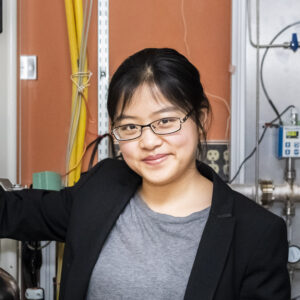
Dr. Xinting Yu is awarded one of two 2025 Harold C. Urey Prizes as a recognition for her broad and impactful work in both planetary and exoplanet science, on both planetary surfaces and atmospheres. Although an exoplanet scientist, she is involved in the solar system science community and has fostered new collaborations. She is learning new skills in geochemistry and thinks of her labwork in the context of theory and observations. Her distinctive expertise in both laboratory experiments and theoretical analysis positions her to play a critical and unique role in the field. Her work is applicable to Cassini, Dragonfly, and JWST and she also studies meteorites to learn about secondary atmospheres and outgassing. She has performed groundbreaking work on particles on Titan that informs on surface conditions applicable to the Dragonfly mission. Xinting has also been very active in mentorship and professional development.
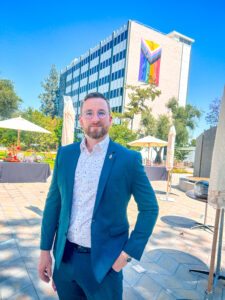
Dr. James Keane is awarded the 2025 Harold C. Urey Prize because he has distinguished himself with his broad and impactful research portfolio studying the geophysics of worlds across the Solar System, including the Moon, Io, Arrokoth, Pluto, and Enceladus. James has worked to combine gravity, topography, and imaging data to expand the science return of several planetary missions, including GRAIL, New Horizons, and Juno. He is a well-known science communicator whose prolific science illustrations have improved the accessibility of planetary science to the broader community and the lay public. Dr. Keane served on the Mercury and Moon panel of the Planetary Science and Astrobiology Decadal Survey (PSADS). He has a strong record of community service and outreach including as a DPS member, a member of the AAS Committee on the Status of Women, co-lead of the American Geophysical Union (AGU) Sketch your Science workshop, science advisor of AGU’s Eos, convenor of several Keck Institute for Space Science workshops, and science mentor for the NASA Planetary Science Summer School (PSSS). Dr. Keane collaborates widely and is currently mentoring graduate students at Caltech, University of Arizona, and Purdue. Dr. Keane is also the recipient of the Presidential Early Career Award for Scientists and Engineers (PECASE) and NASA Early Career Achievement Medal. As a graduate student, James received the Pellas-Graham Ryder Award and the Eugene M. Shoemaker Impact Cratering Award from the Geological Society of America’s Planetary Science Division, and AGU’s Outstanding Student Paper Award.

Dr. Rosaly Lopes is the winner of the 2025 Harold Masursky Award. Dr Lopes has demonstrated deep and broad dedication to the advancement and health of planetary science in countless ways that extend beyond her duties as a JPL scientist. She has done work with the State Department to further planetary science and space studies in other nations. Her comparative studies of volcanology on Earth, Io, Titan and other bodies have allowed her to make an indelible imprint on the field. She has been in leadership positions in various national and international planetary science/geology professional organizations since the mid-2000s, including as DPS Chair and AGU Planetary Section President. Dr. Lopes served on the Space Studies Board of the National Academy of Science, Engineering, and Medicine and participated in the study “Assessing the Health and Vitality of the NASA Science Mission Directorate’s Research Communities”. She was awarded an AGU Ambassador Award and Fellowship.
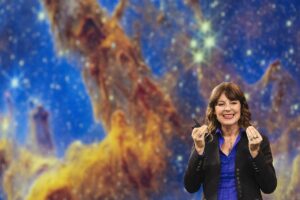
Dr Lisa Kaltenegger is awarded the 2025 Carl Sagan medal which recognizes and honors outstanding communication by an active planetary scientist to the general public. It is awarded to Lisa whose efforts have significantly contributed to a public understanding of, and enthusiasm for, planetary science. Dr Kaltenegger has, throughout her career, made communication and engagement a priority. She is the Founding Director of the Carl Sagan Institute at Cornell University (11 years ago, as an early career scientist) and a gifted communicator. Under her direction, the Carl Sagan Institute has built a YouTube channel with over 26,000 subscribers that showcases technical and popular science talks, and also has established a strong presence on major social media platforms. She has made outstanding contributions to the fields of planetary and exoplanetary science that she has associated with extensive, multi-faceted, and impactful communication of these fields to audiences that range from the general public to those in the critical pipelines of early career talent from the national and international educational systems. Lisa has appeared on high-profile podcasts and has recently published a critically acclaimed popular science book, “Alien Earths”, which has already been translated into 10 languages and has garnered widespread praise. Lisa’s TED Next talk associated with this book accumulated nearly half-a-million views just two months after being posted. Hundreds of stories and media quotations have resulted from her intriguing and accessible science publications. She has performed community service to the profession as a member of the Astronomy and Astrophysics Advisory Committee (AAAC) of the National Academy of Science (NAS), among many other roles.

Ms. Liz Kruesi is awarded the 2025 Jonathan Eberhart Planetary Sciences Journalism award, which recognizes distinguished popular writing on planetary sciences, for her piece entitled, “What has Perseverance found in two years on Mars?” published in February 2023 in Science News. The article provides an up-to-date assessment of the exploration of Jezero Crater by Perseverance and its place within NASA’s larger Mars Program while also making effective arguments for the importance of both. The piece’s description of the different kinds of geology encountered on the crater floor, the explanation of surprise of scientists to new results found by the rover, and the excellent pairing of images with the text all came together to evoke the exploration and excitement that comes with any ongoing mission. In between headlines, these missions are still treading further into the unknown. Through avoiding a focus on a particular result and instead describing the Mars Program as a kind of journey towards deeper understanding of the Red Planet, Ms. Kruesi’s piece successfully wove together multiple ongoing lines of research into a coherent story, which makes the case for not just why these scientists study Mars but why we all ought to care about what they find. Depicting an unfolding scientific understanding — in this case about the broad history of Jezero Crater and what it means for the samples that Perseverance is caching — before there is a clear consensus requires a deft hand as well as an attention to detail and pacing, and Ms. Kruesi’s piece achieved this, and much more, admirably.
“I think I can safely speak for the DPS Committee when I say that these seven awards are going to those who represent the best aspects of our community,” added DPS Press Secretary and Officer Theodore Kareta. “Congratulations again to each and every one of the winners.”
The 2025 DPS prizes will be presented at a joint meeting of the Division for Planetary Sciences and the Europlanet Society Congress (EPSC), which will take place in Helsinki, Finland and online from 7 to 12 September 2025. The prizes will be given out at a ceremony at 2:00 PM local time on 11 September.
Contacts:
Dr. Theodore Kareta
DPS Press Officer (outgoing)
[email protected]
Dr. Athena Coustenis
DPS Chair
[email protected]
More information about DPS prizes:
https://dps.aas.org/prizes
EPSC-DPS Joint Meeting 2025, Helsinki, Finland, 7-12 September 2025:
https://epsc-dps2025.eu/
The Division for Planetary Sciences (DPS), founded in 1968, is the largest special-interest Division of the American Astronomical Society (AAS). Members of the DPS study the bodies of our own solar system, from planets and moons to comets and asteroids, and all other solar-system objects and processes. With the discovery that planets exist around other stars, the DPS has expanded its scope to include the study of extrasolar planetary systems as well.
The American Astronomical Society (AAS), established in 1899, is the major organization of professional astronomers in North America. The mission of the AAS is to enhance and share humanity’s scientific understanding of the universe as a diverse and inclusive astronomical community, which it achieves through publishing, meeting organization, science advocacy, education and outreach, and training and professional development.