DPS 2016 Election Results

I know that you, like I, have been obsessively hitting ‘reload’ at fivethirtyeight.com to see the latest election predictions. Well, no more! The results of the DPS election are in.

I am pleased to announce that your new vice-chair-elect is Cathy Olkin, and that your new Committeemembers-elect are Catherine Neish and Britney Schmidt. Please join me in congratulating them for joining the DPS Leadership.

Thanks in equal measure are due to those who were willing to stand for election but who did not happen to win the day this year. I really like that our Bylaws require multiple candidates for each position:  it makes for elections that mean something. But it also means that each year we also pass over excellent people. Thanks to those candidates for running.

With our crop of fresh recruits, I am again renewed in my optimism about the future of our organization.  We will all be in good hands next year with Lucy McFadden as Chair and on into the future.

Jason W. Barnes
DPS Chair

Newsletter 16-28

Issue 16-28, July 30, 2016


+————————————CONTENTS—————————————-+

  1. REMINDER: PLEASE VOTE IN THE 2016 DPS ELECTION
  2. REMINDER: REGISTRATION DEADLINE FOR DPS48/EPSC 11
  3. JOBS, POSITIONS, OPPORTUNITIES
  4. UPCOMING MEETINGS

+——————————————————————————————–+


1———1———1———1———1———1———1———1———1———1

REMINDER: PLEASE VOTE IN THE 2016 DPS ELECTION


DEADLINE FAST APPROACHING: ONLY ONE DAY LEFT!


The 2016 election for DPS Vice-Chair and Committee is now open, and will 

close on July 31st 2016. 


Please remember to vote! Your colleagues on this year’s ballot would greatly 

appreciate all DPS members taking the time to vote in this year’s election. 

Thank you to those that have already voted.


Go to https://aas.org/vote/

You will need your AAS member login ID (which defaults to your membership 

number), and your password. 


If you have trouble voting on line, the AAS can do a proxy vote and vote on your 

behalf (send an e-mail to [email protected]). You will still get an automated email 

confirmation and a separate manual email, both with who you voted for and a 

confirmation number. 


You should vote for one of the two candidates for Vice-Chair: 

o Catherine Olkin, Southwest Research Institute

o Harold Reitsema, Retired


The elected Vice-Chair will take his/her functions in October 2016 and will 

become the DPS Chair in October 2017.


You should also vote for two of the five candidates for DPS Committee: 

o Ashley Davies, Jet Propulsion Laboratory

o Karl Hibbitts, The Johns Hopkins University Applied Physics Laboratory

o Catherine Neish, University of Western Ontario

o Britney Schmidt, Georgia Institute of Technology

o Maria Womack, University of South Florida


The successful candidates will serve on the Committee for three years after 

October 2016.


The detailed vitae and position statements for each of the candidates is linked 

from the main election page,

https://aas.org/vote/


It is very important for all DPS Members to participate to these elections, so 

please take a moment to vote!


Thank you!


2———2———2———2———2———2———2———2———2———2

REMINDER: REGULAR REGISTRATION DEADLINE FOR DPS 48/EPSC 11


The Regular Registration Deadline is Friday, August 12, 2016.  


Full Registration for Full DPS Members increases from $622 to $719 if you 

register after August 12.


Pasadena, CA, 16-21 October 2016 at the Pasadena Convention Center

https://aas.org/meetings/dps48


* Important dates


12 August 2016 DPS 48/ EPSC 11 Regular Registration Deadline

https://aas.org/meetings/dps48/registration


And also:

– 2 August 2016: Late Abstract Submission Deadline – 9:00pm ET

– 14 September 2016: Hotel Reservations Deadline

– 16 Septembar 2016: Dependent Care Grant Application Deadline


The DPS is grateful to our Meeting Sponsors:


AURA

Southwest Research Institute
Ball Aerospace

Nature Geoscience

Space Science Institute

The University of Arizona Press

Universities Space Research Association (USRA)

VORTICES


3———3———3———3———3———3———3———3———3———3

JOBS, POSITIONS, OPPORTUNITIES
 

A) TWO POSTDOCTORAL POSITIONS IN MODELING

     AND OBSERVATION OF EXOPLANET ATMOSPHERES 


    Bordeaux Laboratory for Astrophysics

    University of Bordeaux

    Bordeaux, France


    node/1694


4———4———4———4———4———4———4———4———4———4

UPCOMING MEETINGS


A) AGU 2016 SESSION P004: COMETARY PROCESSES 

     IN THE LIGHT OF ROSETTA

Conveners: Bonnie Buratti, Mathieu Choukroun, Matt Taylor, and Nicolas Altobelli

The European Space Agency’s Rosetta spacecraft will make an unprecedented 

controlled crash onto comet 67P/Churyumov-Gerasimenko in late September 

2016, providing close scrutiny of the comet until the very end. This session will 

focus on scientific results from this final stage of Rosetta’s life. The session will 

also include correlative studies among instruments from all phases of the mission; 

studies that incorporate ground-based observations for better temporal coverage 

and perspective; theoretical modeling of cometary processes; and interrelationships 

among comets and other small bodies.

AGU abstracts are due no later than 3 August.


B) AGU SESSION P026 SOLAR SYSTEM SMALL BODIES: 

RELICS OF FORMATION AND NEW WORLDS TO EXPLORE


We would like to invite you to submit an abstract to our session entitled 

“Solar System Small Bodies: Relics of Formation and New Worlds to Explore” 

scheduled at the AGU Fall Meeting at San Francisco, December 12-16 2016.


Abstract deadline: 3 August 23:59 EDT/03:59 +1 GMT.

https://agu.confex.com/agu/fm16/preliminaryview.cgi/Session13304


The composition and physical properties of Small Solar System Bodies 

(SSSBs), remnants of the formation of planets, are key to better understand 

our solar system. Increased knowledge of their surface properties and their 

potential as resources are also necessary to prepare for robotic and human 

exploration. Hints about the internal structure and composition of SSSBs 

have been acquired recently thanks to flyby/rendezvous data from space 

missions, study of complex multiple asteroid systems, or close encounter

between asteroids. This session welcomes abstracts on the results bringing 

information on the internal structure and composition of SSSBs based on 

space and ground-based data, numerical models, as well as instrument/mission 

concepts in the prospect of future exploration.


Conveners:  

Franck Marchis (SETI Institute & Iris AO), Julie C. Castillo (NASA Jet 

Propulsion Laboratory) and Padma A Yanamandra-Fisher (Space Science 

Institute)


C) AGU SESSION P006: DETECTION AND DIRECT IMAGING OF 

HABITABLE EXOPLANETS: PROGRESS AND FUTURE


We would like to invite you to submit an abstract to our session entitled 

“Detection And Direct Imaging Of Habitable Exoplanets: Progress And Future” 

scheduled at the AGU Fall Meeting at San Francisco, December 12-16 2016.


Abstract deadline: 3 August 23:59 EDT/03:59 +1 GMT.

https://agu.confex.com/agu/fm16/preliminaryview.cgi/Session13664


This session consists in a discussion on the potential of new and future facilities 

and modeling efforts designed to detect, image and characterize habitable 

exoplanets, studying their formation, evolution and also the existence of

possible biospheres.  Topics to be covered in this session include signs of 

exoplanet habitability and global biosignatures that can be sought with

upcoming instrumentation; instrument requirements and technologies to 

detect these markers; strategies for target selection and prioritization; and 

impacts of planetary system properties, ground-based and space telescope 

architectures, and impacts of instrument capabilities on the yield of potentially 

inhabited exoplanets.


Conveners: Franck Marchis (SETI Institute), Ramses M. Ramirez (Cornell 

University), Douglas Caldwell (SETI Institute)


———————————+

Send submissions to:

Anne Verbiscer, DPS Secretary ([email protected]


To unsubscribe visit http://aas.org/unsubscribe or email [email protected].

To change your address email [email protected].



Newsletter 16-27

Issue 16-27, July 24, 2016


+————————————CONTENTS—————————————-+

  1. REMINDER: PLEASE VOTE IN THE 2016 DPS ELECTION
  2. REMINDER: REGISTRATION DEADLINE FOR DPS48/EPSC 11
  3. JOBS, POSITIONS, OPPORTUNITIES
  4. UPCOMING MEETINGS

+——————————————————————————————–+


1———1———1———1———1———1———1———1———1———1

REMINDER: PLEASE VOTE IN THE 2016 DPS ELECTION


DEADLINE FAST APPROACHING: ONLY ONE MORE WEEK!


The 2016 election for DPS Vice-Chair and Committee is now open, and will 

close on July 31st 2016. 


Please remember to vote! 


Go to https://aas.org/vote/

You will need your AAS member login ID (which defaults to your membership 

number), and your password. 


If you have trouble voting on line, the AAS can do a proxy vote and vote on your 

behalf (send an e-mail to [email protected]). You will still get an automated email 

confirmation and a separate manual email, both with who you voted for and a 

confirmation number. 


You should vote for one of the two candidates for Vice-Chair: 

o Catherine Olkin, Southwest Research Institute

o Harold Reitsema, Retired


The elected Vice-Chair will take his/her functions in October 2016 and will 

become the DPS Chair in October 2017.


You should also vote for two of the five candidates for DPS Committee: 

o Ashley Davies, Jet Propulsion Laboratory

o Karl Hibbitts, The Johns Hopkins University Applied Physics Laboratory

o Catherine Neish, University of Western Ontario

o Britney Schmidt, Georgia Institute of Technology

o Maria Womack, University of South Florida


The successful candidates will serve on the Committee for three years after 

October 2016.


The detailed vitae and position statements for each of the candidates is linked 

from the main election page,

https://aas.org/vote/


It is very important for all DPS Members to participate to these elections, so 

please take a moment to vote!


Thank you!


2———2———2———2———2———2———2———2———2———2

REMINDER: REGULAR REGISTRATION DEADLINE FOR DPS 48/EPSC 11


The Regular Registration Deadline is Friday, August 12, 2016.  


Full Registration for Full DPS Members increases from $622 to $719 if you 

register after August 12.


Pasadena, CA, 16-21 October 2016 at the Pasadena Convention Center

https://aas.org/meetings/dps48


* Important dates


12 August 2016 DPS 48/ EPSC 11 Regular Registration Deadline

https://aas.org/meetings/dps48/registration


And also:

– 2 August 2016: Late Abstract Submission Deadline – 9:00pm ET

– 14 September 2016: Hotel Reservations Deadline

– 16 Septembar 2016: Dependent Care Grant Application Deadline


The DPS is grateful to our Meeting Sponsors:


Universities Space Research Association (USRA)
Ball Aerospace
Southwest Research Institute

Nature Geoscience

Elsevier

AURA

TMT-Thirty Meter Telescope

VORTICES

Space Science Institute


3———3———3———3———3———3———3———3———3———3

JOBS, POSITIONS, OPPORTUNITIES
 

A) POSTDOCTORAL POSITION 

     REACTION DYNAMICS & PLANETARY SCIENCES, 

     UNIVERSITY OF HAWAII AT MANOA, USA


The Reaction Dynamics Group, Department of Chemistry, University of 

Hawai’i at Manoa, invites applications for two postdoctoral positions. The 

appointment period is initially for one year, but can be renewed annually 

based on avail­a­b­ility of funds and satisfactory progress. The salary 

is competitive and commensurate with experience. Successful applicants 

should have a strong background in experimental reaction dynamics, UHV 

tech­nology, REMPI, and pulsed laser systems. The goal of the 

experiments is to probe the formation of water and hydroxyl radicals on 

the Moon via interaction of ionizing radiation (Solar Wind) with lunar 

(analog) silcates. 


Solid communication skills in English (written, oral), a publication 

record in internationally circulated, peer-reviewed journals, and willingness 

to work in a team are man­da­to­ry. Only self-motivated and energetic 

candidates are encouraged to apply. Please send a letter of 

interest, three letters of recommendation, CV, and publication list to 

Prof. Ralf I. Kaiser, De­partment of Chemistry, University of Hawai’i at 

Manoa, Honolulu, HI 96822-2275, USA [[email protected]]. Applicants 

must demonstrate their capability to prepare manuscripts for 

publications independently. 


The review of applications will start August 1, 2016, and continues 

until the position is filled. A description of our current research 

group can be found at http://www.chem.hawaii.edu/Bil301/welcome.html.


B) SPACE TELESCOPE SCIENCE INSTITUTE SUPPORT SCIENTIST
     BALTIMORE, MD


The Space Telescope Science Institute (STScI) has immediate openings for 
Support Scientists to work on operations, calibration, testing, on-orbit 
commissioning, and user support of the instruments for the Hubble Space 
Telescope (HST) and/or James Webb Space Telescope (JWST). Support Scientists 
typically spend 80% of their time in support of the science operations 
mission of the Institute and 20% on personal research. With grant support, 
they can increase their research fraction up to 50%. Persons with 
observational, instrumentation, or theoretical experience in Solar System 
science are encouraged to apply. Positions are for terms of three years and 
may be renewed depending on performance and availability of funding. 
Application deadline is Aug. 19, 2016. Further details can be found at: 
https://rn11.ultipro.com/SPA1004/JobBoard/listjobs.aspx?__VT=ExtCan


4———4———4———4———4———4———4———4———4———4

UPCOMING MEETINGS


A) AGU 2016 SESSION P004: COMETARY PROCESSES 

     IN THE LIGHT OF ROSETTA

Conveners: Bonnie Buratti, Mathieu Choukroun, Matt Taylor, and Nicolas Altobelli

The European Space Agency’s Rosetta spacecraft will make an unprecedented 

controlled crash onto comet 67P/Churyumov-Gerasimenko in late September 

2016, providing close scrutiny of the comet until the very end. This session will 

focus on scientific results from this final stage of Rosetta’s life. The session will 

also include correlative studies among instruments from all phases of the mission; 

studies that incorporate ground-based observations for better temporal coverage 

and perspective; theoretical modeling of cometary processes; and interrelationships 

among comets and other small bodies.

AGU abstracts are due no later than 3 August.


B) AGU SESSION P026 SOLAR SYSTEM SMALL BODIES: 

RELICS OF FORMATION AND NEW WORLDS TO EXPLORE


We would like to invite you to submit an abstract to our session entitled 

“Solar System Small Bodies: Relics of Formation and New Worlds to Explore” 

scheduled at the AGU Fall Meeting at San Francisco, December 12-16 2016.


Abstract deadline: 3 August 23:59 EDT/03:59 +1 GMT.

https://agu.confex.com/agu/fm16/preliminaryview.cgi/Session13304


The composition and physical properties of Small Solar System Bodies 

(SSSBs), remnants of the formation of planets, are key to better understand 

our solar system. Increased knowledge of their surface properties and their 

potential as resources are also necessary to prepare for robotic and human 

exploration. Hints about the internal structure and composition of SSSBs 

have been acquired recently thanks to flyby/rendezvous data from space 

missions, study of complex multiple asteroid systems, or close encounter

between asteroids. This session welcomes abstracts on the results bringing 

information on the internal structure and composition of SSSBs based on 

space and ground-based data, numerical models, as well as instrument/mission 

concepts in the prospect of future exploration.


Conveners:  

Franck Marchis (SETI Institute & Iris AO), Julie C. Castillo (NASA Jet 

Propulsion Laboratory) and Padma A Yanamandra-Fisher (Space Science 

Institute)


C) AGU SESSION P006: DETECTION AND DIRECT IMAGING OF 

HABITABLE EXOPLANETS: PROGRESS AND FUTURE


We would like to invite you to submit an abstract to our session entitled 

“Detection And Direct Imaging Of Habitable Exoplanets: Progress And Future” 

scheduled at the AGU Fall Meeting at San Francisco, December 12-16 2016.


Abstract deadline: 3 August 23:59 EDT/03:59 +1 GMT.

https://agu.confex.com/agu/fm16/preliminaryview.cgi/Session13664


This session consists in a discussion on the potential of new and future facilities 

and modeling efforts designed to detect, image and characterize habitable 

exoplanets, studying their formation, evolution and also the existence of

possible biospheres.  Topics to be covered in this session include signs of 

exoplanet habitability and global biosignatures that can be sought with

upcoming instrumentation; instrument requirements and technologies to 

detect these markers; strategies for target selection and prioritization; and 

impacts of planetary system properties, ground-based and space telescope 

architectures, and impacts of instrument capabilities on the yield of potentially 

inhabited exoplanets.


Conveners: Franck Marchis (SETI Institute), Ramses M. Ramirez (Cornell 

University), Douglas Caldwell (SETI Institute)


———————————+

Send submissions to:

Anne Verbiscer, DPS Secretary ([email protected]


To unsubscribe visit http://aas.org/unsubscribe or email [email protected].

To change your address email [email protected].


Newsletter 16-26

Issue 16-26, July 18, 2016


+————————————CONTENTS—————————————-+

  1. REMINDER: PLEASE VOTE IN THE 2016 DPS ELECTION
  2. REMINDER: REGISTRATION DEADLINE FOR DPS48/EPSC 11
  3. COMPUTATIONAL ADVANCES IN SOLAR SYSTEM STUDIES
  4. SBAG ANNOUNCEMENTS
  5. JOBS, POSITIONS, OPPORTUNITIES
  6. UPCOMING MEETINGS

+——————————————————————————————–+


1———1———1———1———1———1———1———1———1———1

REMINDER: PLEASE VOTE IN THE 2016 DPS ELECTION


DEADLINE FAST APPROACHING: ONLY TWO MORE WEEKS!


The 2016 election for DPS Vice-Chair and Committee is now open, and will 

close on July 31st 2016. 


Please remember to vote! 


Go to https://aas.org/vote/

You will need your AAS member login ID (which defaults to your membership 

number), and your password. 


If you have trouble voting on line, the AAS can do a proxy vote and vote on your 

behalf (send an e-mail to [email protected]). You will still get an automated email 

confirmation and a separate manual email, both with who you voted for and a 

confirmation number. 


You should vote for one of the two candidates for Vice-Chair: 

o Catherine Olkin, Southwest Research Institute

o Harold Reitsema, Retired


The elected Vice-Chair will take his/her functions in October 2016 and will 

become the DPS Chair in October 2017.


You should also vote for two of the five candidates for DPS Committee: 

o Ashley Davies, Jet Propulsion Laboratory

o Karl Hibbitts, The Johns Hopkins University Applied Physics Laboratory

o Catherine Neish, University of Western Ontario

o Britney Schmidt, Georgia Institute of Technology

o Maria Womack, University of South Florida


The successful candidates will serve on the Committee for three years after 

October 2016.


The detailed vitae and position statements for each of the candidates is linked 

from the main election page,

https://aas.org/vote/


It is very important for all DPS Members to participate to these elections, so 

please take a moment to vote!


Thank you!


2———2———2———2———2———2———2———2———2———2

REMINDER: REGULAR REGISTRATION DEADLINE FOR DPS 48/EPSC 11


The Regular Registration Deadline is Friday, August 12, 2016.  


Full Registration for Full DPS Members increases from $622 to $719 if you 

register after August 12.


Pasadena, CA, 16-21 October 2016 at the Pasadena Convention Center

https://aas.org/meetings/dps48


* Important dates


12 August 2016 DPS 48/ EPSC 11 Regular Registration Deadline

https://aas.org/meetings/dps48/registration


And also:

– 22 July 2016: Exhibitor Deadline

– 2 August 2016: Late Abstract Submission Deadline – 9:00pm ET

– 14 September 2016: Hotel Reservations Deadline

– 16 Septembar 2016: Dependent Care Grant Application Deadline


The DPS is grateful to our Meeting Sponsors:


Universities Space Research Association (USRA)
Ball Aerospace
Southwest Research Institute

Elsevier

Space Science Institute


3———3———3———3———3———3———3———3———3———3

COMPUTATIONAL ADVANCES IN SOLAR SYSTEM STUDIES


Computing in Science & Engineering (CiSE) magazine announces an opportunity 

to contribute to a special issue about  Computational Advances in Solar System

Studies. Submission deadline is November 1, 2016. See the call for articles at:

https://www.computer.org/web/computingnow/cscfp4


Computing in Science & Engineering (CiSE) magazine features the latest 

computational science and engineering research in an accessible format, along 

with departments covering news and analysis, computational science and 

engineering in education, and emerging technologies.


See https://www.computer.org/web/peer-review/magazines for general author guidelines.


Questions? Contact guest editors Lucy McFadden and 

Nargess Memarsadeghi at [email protected]    


4———4———4———4———4———4———4———4———4———4

SBAG ANNOUNCEMENTS


———————————-

Draft Findings from the SBAG 15 Meeting


Thank you for a productive SBAG 15 meeting! A draft document with findings 

from the meeting is now posted online and available for comments from the SBAG

community. Please provide any comments by July 25, 2016. Comments can be 

emailed to: [email protected] or any SBAG steering committee member. 

http://www.lpi.usra.edu/sbag/findings/


———————————-

Request for CubeSat and Small Sat Mission Concepts


As mentioned at the SBAG 15 meeting, we would like to collect a bit of information 

about possible CubeSat and small sat missions of interest to the SBAG community.  

We saw a few examples presented by the NIAC fellows at the SBAG 15 meeting and 

would like to hear your thoughts on the subject.  If you’d like, please provide one 

paragraph briefly describing the following:


•         A CubeSat or small sat mission concept (what is to be accomplished and briefly how),

•         The benefits of using CubeSats or small sats (e.g. low cost, distributed reach, etc),

•         Any technology that would enable or benefit the CubeSat portion of the mission.


Multiple submissions are fine, the CubeSat/small sats can be the primary spacecraft 

or daughter craft, and notional concepts are fine.  We will use this information to 

augment the newly created SBAG technology roadmap and to respond to any NASA 

inquiries about the suitability of CubeSat and small sat missions to our community. 

No proprietary information, please, as the summaries may be posted to SBAG’s

website as references for our technology roadmap.


Responses to Carolyn Mercer ([email protected]) by July 22 would be particularly 

helpful, but we will also collect this information through August 31.


———————————-

Upcoming SBAG Meetings


SBAG 16

January 11-13, 2017

University of Arizona

Tucson, AZ


SBAG 17

tentatively planned for:

June 13-15, 2017

NASA Goddard Space Flight Center

Greenbelt, MD


In particular, we’d like to know if there are known conflicts or issues with the dates 

tentatively planned for the SBAG 17 meeting, as we will be finalizing the dates for 

this meeting later this month. Please email incoming SBAG chair Tim Swindle

([email protected]) with any known issues or comments.


———————————-


Best wishes,

Nancy Chabot

SBAG Chair


5———5———5———5———5———5———5———5———5———5

JOBS, POSITIONS, OPPORTUNITIES
 

A) ESA RESEARCH FELLOWSHIP IN SPACE SCIENCE
 

content/esa-research-fellowship-space-science-0


6———6———6———6———6———6———6———6———6———6

UPCOMING MEETINGS


A) AGU 2016 SESSION P004: COMETARY PROCESSES 

     IN THE LIGHT OF ROSETTA

Conveners: Bonnie Buratti, Mathieu Choukroun, Matt Taylor, and Nicolas Altobelli

The European Space Agency’s Rosetta spacecraft will make an unprecedented 

controlled crash onto comet 67P/Churyumov-Gerasimenko in late September 

2016, providing close scrutiny of the comet until the very end. This session will 

focus on scientific results from this final stage of Rosetta’s life. The session will 

also include correlative studies among instruments from all phases of the mission; 

studies that incorporate ground-based observations for better temporal coverage 

and perspective; theoretical modeling of cometary processes; and interrelationships 

among comets and other small bodies.

AGU abstracts are due no later than 3 August.


B) AGU SESSION P026 SOLAR SYSTEM SMALL BODIES: 

RELICS OF FORMATION AND NEW WORLDS TO EXPLORE


We would like to invite you to submit an abstract to our session entitled 

“Solar System Small Bodies: Relics of Formation and New Worlds to Explore” 

scheduled at the AGU Fall Meeting at San Francisco, December 12-16 2016.


Abstract deadline: 3 August 23:59 EDT/03:59 +1 GMT.

https://agu.confex.com/agu/fm16/preliminaryview.cgi/Session13304


The composition and physical properties of Small Solar System Bodies 

(SSSBs), remnants of the formation of planets, are key to better understand 

our solar system. Increased knowledge of their surface properties and their 

potential as resources are also necessary to prepare for robotic and human 

exploration. Hints about the internal structure and composition of SSSBs 

have been acquired recently thanks to flyby/rendezvous data from space 

missions, study of complex multiple asteroid systems, or close encounter

between asteroids. This session welcomes abstracts on the results bringing 

information on the internal structure and composition of SSSBs based on 

space and ground-based data, numerical models, as well as instrument/mission 

concepts in the prospect of future exploration.


Conveners:  

Franck Marchis (SETI Institute & Iris AO), Julie C. Castillo (NASA Jet 

Propulsion Laboratory) and Padma A Yanamandra-Fisher (Space Science 

Institute)


C) AGU SESSION P006: DETECTION AND DIRECT IMAGING OF 

HABITABLE EXOPLANETS: PROGRESS AND FUTURE


We would like to invite you to submit an abstract to our session entitled 

“Detection And Direct Imaging Of Habitable Exoplanets: Progress And Future” 

scheduled at the AGU Fall Meeting at San Francisco, December 12-16 2016.


Abstract deadline: 3 August 23:59 EDT/03:59 +1 GMT.

https://agu.confex.com/agu/fm16/preliminaryview.cgi/Session13664


This session consists in a discussion on the potential of new and future facilities 

and modeling efforts designed to detect, image and characterize habitable 

exoplanets, studying their formation, evolution and also the existence of

possible biospheres.  Topics to be covered in this session include signs of 

exoplanet habitability and global biosignatures that can be sought with

upcoming instrumentation; instrument requirements and technologies to 

detect these markers; strategies for target selection and prioritization; and 

impacts of planetary system properties, ground-based and space telescope 

architectures, and impacts of instrument capabilities on the yield of potentially 

inhabited exoplanets.


Conveners: Franck Marchis (SETI Institute), Ramses M. Ramirez (Cornell 

University), Douglas Caldwell (SETI Institute)


———————————+

Send submissions to:

Anne Verbiscer, DPS Secretary ([email protected]


To unsubscribe visit http://aas.org/unsubscribe or email [email protected].

To change your address email [email protected].


Newsletter 16-25

Issue 16-25, July 4, 2016


+————————————CONTENTS—————————————-+

  1. IN MEMORIAM: EDGARD G. YANOVITSKIJ (1937-2016)
  2. REMINDER: EARLY REGISTRATION DEADLINE FOR DPS48/EPSC 11
  3. HARTMANN STUDENT TRAVEL GRANTS FOR DPS 48/EPSC 11
  4. EUROPLANET TRAVEL BURSARY FOR DPS48/EPSC11
  5. OPAG 2016 SUMMER MEETING – INFORMATION CIRCULAR
  6. METEORITICS AND PLANETARY SCIENCE JOURNAL SPECIAL ISSUE
  7. UPCOMING MEETINGS

+——————————————————————————————–+


1———1———1———1———1———1———1———1———1———1

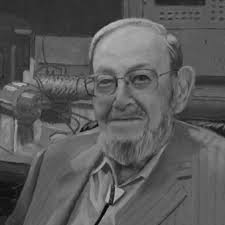
IN MEMORIAM: EDGARD G. YANOVITSKIJ (1937 – 2016) 

The Ukrainian scientific community is very sad to announce the passing of 
Professor Edgard G. Yanovitskij on 23 June 2016. Dr. Yanovitskij spent 
his entire professional life as a leading researcher at the Main 
Astronomical Observatory of the Ukrainian National Academy of Sciences 
in Kyiv. As a prominent member of the famous Soviet school of 
radiative transfer founded by Academicians Viktor Ambartsumian and 
Viktor Sobolev, he had devoted most of his exemplary career to the 
study of radiative energy transport in planetary atmospheres and 
analyses of spectrophotometric observations of planets. His most 
profound accomplishments include the general analysis of principles of 
invariance, the analytical theory of radiative transfer in vertically 
inhomogeneous atmospheres, and the development of extremely efficient 
and numerically accurate computer solvers of the radiative transfer 
equation. His seminal contributions were summarized in the monograph 
on “Light Scattering in Inhomogeneous Atmospheres” published by 
Springer. For many years, Dr. Yanovitskij served as an Editorial Board 
Member for the “Journal of Quantitative Spectroscopy and Radiative 
Transfer” and “Kinematics and Physics of Celestial Bodies.” His 
research accomplishments were celebrated by numerous professional 
awards, including the National Prize of Ukraine in Science and 
Technology. The relatives, colleagues, and friends of Professor Edgard 
Yanovitsky will always remember him as an outstanding scientist and an 
exceptional human being.
 

2———2———2———2———2———2———2———2———2———2

REMINDER: EARLY REGISTRATION DEADLINE FOR DPS 48/EPSC 11


The Early Registration Deadline is THIS FRIDAY July 8, 20156.  


Full Registration for Full DPS Members increases from $588 to $622 if you 

register after July 8.


Pasadena, CA, 16-21 October 2016 at the Pasadena Convention Center

https://aas.org/meetings/dps48


* Important dates


8 July 2016 DPS 48/EPSC 11 Early Registration Deadline – THIS FRIDAY

https://aas.org/meetings/dps48/registration

12 August 2016 DPS 48/ EPSC 11 Regular Registration Deadline

https://aas.org/meetings/dps48/registration


And also:

– 2 August 2016: DPS 48/EPSC 11 Late Abstract Submission Deadline – 9:00pm ET

– 14 September 2016: DPS 48/EPSC 11 Hotel Reservations Deadline


The DPS is grateful to our Meeting Sponsors:


Universities Space Research Association (USRA)
Ball Aerospace
Southwest Research Institute

Elsevier


3———3———3———3———3———3———3———3———3———3

HARTMANN STUDENT TRAVEL GRANTS FOR DPS 48/EPSC 11


A generous contribution from William K. Hartmann, supplemented by member 

contributions and matching funds from the DPS Committee, has enabled a limited 

number of student travel grants to assist participation by early-career scientists at 

the annual DPS meeting. 


Application details are at meetings/travel_grant_application


Travel grants are primarily intended for students, but post-doctoral scientists 

without other means of support will also be considered.  


The due date for applications is July 8, 2016 11:59 PM.  


The DPS Leadership is also soliciting additional contributions from members 

for the Hartmann Fund. Your tax-deductible gift promotes the careers of our next 

generation of planetary scientists. Thanks so much for your generosity.


4———4———4———4———4———4———4———4———4———4

EUROPLANET TRAVEL BURSARY FOR DPS48/EPSC11


Europlanet through its Research Infrastructure and support from ESA will 

support a limited number of Travel Bursaries for Early Stage Researchers 

(PhD Students) presenting oral or poster papers at the DPS-EPSC meeting.

To apply, please send the following  in a single email to Steve Miller :

[email protected]


  • A copy of your  meeting abstract
  • A cover letter 
  • Your educational institution, with contact detail
  • A brief (one page) CV
  • The name and email address of your supervisor.
  • Details of any funding you have already been allocated to attend the meeting
  • Whether you received a previous travel grant from Europlanet for the 2015 meeting (Nantes). 
  • Please attach a letter of recommendation from your Supervisor
  •  

These should be received by Friday July 8, 2016. 

Results of applications will be announced by end of July.


5———5———5———5———5———5———5———5———5———5

OPAG 2016 SUMMER MEETING – INFORMATION CIRCULAR


We cordially invite you to attend a face-to-face meeting of the Outer Planets 

Assessment Group (OPAG), scheduled for 2 days, August 11–12, 2016, in 

Flagstaff, AZ. 


These are exciting times for OPAG, with Juno’s arrival at Jupiter, the F ring 

and Grand Finale orbits of Cassini, Europa Clipper in Phase A, Science 

Definition Teams (SDT) underway for a Europa Lander mission and an Ice 

Giants Flagship, ESA JUICE mission in development, New-Frontiers 4 

including Saturn Probes and Ocean Worlds (Enceladus and Titan), and new 

Earth-based telescopic possibilities.  We will hear updates on all of these 

projects, plus a presentation on the Decadal Survey by Larry Soderblom, a 

summary on the work of the Roadmaps to Ocean Worlds (ROW), and updates 

about the Space Launch System, Participating Scientists study, PDS plans for 

future missions of interest to the OPAG community, MAPSIT, planetary 

volcanology, NASA education and communications, radioactive power systems, 

and of course, R&A.   


We will also introduce 6 new members of the OPAG steering committee: 

Kunio Sayanagi, Carol Paty, Terry Hurford, Jeff Bowman, Amanda Hendrix, 

Scott Edgington


Given the full schedule, the meeting will start at 8:00 AM each day. 

Registration and information about accommodations is available here:

http://www.cvent.com/d/3vqnfc or via  http://www.lpi.usra.edu/opag/

The meeting is open to all members of the planetary science community, 

including our international colleagues.


Poster presentations on technology developments: If you want to present 

a Technology poster, particularly if relevant to Ocean Worlds or Ice Giants, 

please send title and authors to Pat Beauchamp, [email protected] and

prepare a 1-2 slide ‘advertisement’ for the poster. 


We will also broadcast the meeting via Adobe Connect or WebEx for 

those who cannot attend in person.


We look forward to seeing you in Flagstaff!


6———6———6———6———6———6———6———6———6———6

METEORITICS AND PLANETARY SCIENCE JOURNAL SPECIAL ISSUE

The Meteoritics & Planetary Science journal (MAPS) has begun to accept 

submissions for our Special Issue about the state of crater studies.  Both new 

research or techniques into crater population studies and review-style papers 

are solicited.

To submit to this special issue, follow the normal submission steps for MAPS, 

and on Step 5, select the button to indicate “Yes” this is for a special issue, and 

then select “Issues in Crater Studies” from the drop-down list of special issues 

further down the page.

Submissions to this issue are expected to close on September 1, 2016.  If you 

plan to submit to this issue, please let Stuart Robbins ([email protected])

know.  Please also feel free to contact him with any questions you may have.


7———7———7———7———7———7———7———7———7———7

UPCOMING MEETINGS


A) EXPLORING THE INFRARED SOLAR SYSTEM 

     WITH THE JAMES WEBB SPACE TELESCOPE

      31 Aug to 2 Sept 2016
 
The aim of this workshop is to encourage and inform Solar System scientists 

about the use of the James Webb Space Telescope for infrared observations 

of Solar System targets. The workshop will be a mixture of scientific 

presentations and practical sessions including the use of the JWST 

Astronomy Planning Tool and Exposure Time Calculator.
 
Registration is now open for the workshop, from 31 August to 2 September 

in London (at the Royal Astronomical Society) 

here: https://jwst-workshop.eventbrite.co.uk
 
Speakers include:
Michele Dougherty (Imperial College London)
Leigh Fletcher (Leicester)
Stefanie Milam (GSFC)
Thomas Mueller (MPE)
John Stansberry (STScI)
Gillian Wright (UKATC)
 
JWST is a joint mission between NASA, ESA and CSA.


B) AGU 2016 SESSION P033 “Titan: Constraining an Ocean World”


We are pleased to announce a session on Titan at this year’s AGU Fall 

Meeting in San Francisco, 12-16th December 2016, and welcome submission 

of abstracts via the AGU portal at:

https://fallmeeting.agu.org/2016/abstract-submissions/


The joint NASA/ESA Cassini mission has established Titan as a prime location 

for investigating the limits of life. Cassini has studied Titan’s interior, seasonal 

changes on its surface and atmosphere, and the atmosphere’s interaction with an 

energetic magnetosphere. Cassini finds surface-atmosphere interactions producing 

erosional features similar to Earth’s, including dunes, mountains, rivers, alluvial 

deposits, and features suggesting recent cryovolcanism.   There is also evidence 

for a salty ocean interior and accumulations of liquid hydrocarbons are evident 

on its surface. The atmosphere’s interaction with the magnetosphere produces a

continuous supply of new organic material.   The inclusion of Titan as a target for 

exploration by missions under NASA’s New Frontiers program highlights broad 

solar system community interest in this scientifically rich moon.  This session 

will explore new results that intend to provide a comprehensive and integrated 

understanding of Titan’s interior, surface, and atmosphere, along with the 

atmosphere’s interaction with the Saturn’s energetic environment.


Deadline for abstracts: Wednesday, 3 August 23:59 EDT.


Conveners:  Robert M. Nelson (PSI), Rosaly Lopes (JPL), 

Conor A Nixon (NASA GFSC), Joseph H Westlake (JHU APL) 


C) EUROPA-ENCELADUS PLUMES MEETING


We will be hosting a Europa-Enceladus Plumes Meeting at Caltech all day 

on Saturday 15th October 2016, between the October Cassini PSG at JPL 

and the Division of Planetary Science (DPS) meeting the following week. 

The purpose of the meeting will be to compare Enceladus and Europa 

plumes and their sources, and in particular to consider how our understanding 

of Enceladus’ activity can be applied to Europan plumes, and observations 

of them by the Europa mission. More information will follow, at this time 

we are  requesting that people notify us if they are interested in attending 

(non-binding, for room planning purposes only):http://goo.gl/forms/hLSvt10pCe 

Carly Howett, Matt Hedman, Scott Edgington and John Spencer.


D) DUST, ATMOSPHERES, AND PLASMAS (DAP) 2017

The Dust, Atmosphere and Plasma environment of the Moon and Small 
Bodies (DAP-2017) workshop will be a forum:

(i) to discuss our current understanding of the surface environment 
  of the Moon, the moons of Mars, and asteroids, 
(ii) to share new results from past and ongoing missions to airless 
  bodies and comets, and 
(iii) to describe expectations for planned upcoming missions to 
  airless bodies and comets.

Location: Boulder
Host: LASP 
Date: January 11-13, 2017

It will be focused on the open science questions, the status and 
future of our supporting modeling and laboratory experimental 
capabilities, the definition of the required measurements and 
instrument capabilities for future investigations from orbit or 
landed on surfaces.

The invited Speakers are:

Dan Britt: Surface Properties of Asteroids
Jim Burch: Rosetta Results on Cometary Plasmas
Jasper Halekas: Plasma Environment of the Moon
Vicky Hamilton: Osiris Rex
Sascha Kempf: Europa Dust Environment
Mark Showalter: Search for the dust torus around Mars
Jamey Szalay: Dust Environment of the Moon
Alexander Zakharov: Mars, Phobos, Deimos Dust environment

We plan to have numerous contributed talks and encourage your 
submission(s).

The abstract submission deadline: September 15, 2016.

Please visit: 

http://impact.colorado.edu/dap_meeting.html 

The organizers:
Alan Stern and Mihaly Horanyi


———————————+ 

Send submissions to:

Anne Verbiscer, DPS Secretary ([email protected]


To unsubscribe visit http://aas.org/unsubscribe or email [email protected].

To change your address email [email protected].


Edgard G. Yanovitskij 1937-2016

Edgard G. YanovitskijThe Ukrainian scientific community is very sad to announce the passing of Professor Edgard G. Yanovitskij on 23 June 2016. Dr. Yanovitskij spent his entire professional life as a leading researcher at the Main Astronomical Observatory of the Ukrainian National Academy of Sciences in Kyiv. As a prominent member of the famous Soviet school of radiative transfer founded by Academicians Viktor Ambartsumian and Viktor Sobolev, he had devoted most of his exemplary career to the study of radiative energy transport in planetary atmospheres and analyses of spectrophotometric observations of planets. His most profound accomplishments include the general analysis of principles of invariance, the analytical theory of radiative transfer in vertically inhomogeneous atmospheres, and the development of extremely efficient and numerically accurate computer solvers of the radiative transfer equation. His seminal contributions were summarized in the monograph on “Light Scattering in Inhomogeneous Atmospheres” published by Springer. For many years, Dr. Yanovitskij served as an Editorial Board Member for the “Journal of Quantitative Spectroscopy and Radiative Transfer” and “Kinematics and Physics of Celestial Bodies.” His research accomplishments were celebrated by numerous professional awards, including the National Prize of Ukraine in Science and Technology. The relatives, colleagues, and friends of Professor Edgard Yanovitsky will always remember him as an outstanding scientist and an exceptional human being.

Newsetter 16-24

Issue 16-24, June 28, 2016


+————————————-CONTENTS—————————————-+

  1. DPS ELECTIONS 2016: PROCEDURE AND HOW TO VOTE
  2. CANDIDATE BIOS AND STATEMENTS

+——————————————————————————————–+


1———1———1———1———1———1———1———1———1———1

DPS ELECTIONS : PROCEDURE AND HOW TO VOTE


The 2016 election for DPS Vice-Chair and Committee is now open, and will close on July 31st 2016.


To vote, go to https://aas.org/vote. You will need your AAS member login ID (which defaults to your 

membership number), and your password.


If you have trouble voting on line, the AAS can do a proxy vote and vote on your behalf (send an e-mail
to [email protected]). You will still get an automated email confirmation and a separate manual email, both
with who you voted for and a confirmation number.


You should vote for one of the two candidates for Vice-Chair: 


Catherine B. Olkin, Southwest Research Institute

Harold Reitsema, Ball Aerospace, Retired


The elected Vice-Chair will begin serving in October 2016 and will become the DPS Chair in October 2017.


You should vote for two of the five candidates for DPS Committee: 


Ashley Davies, Jet Propulsion Laboratory

Karl Hibbitts, Johns Hopkins University Applied Physics Laboratory

Catherine Neish, University of Western Ontario

Britney Schmidt, Georgia Institute of Technology

Maria Womack, University of South Florida


The successful candidates will serve on the Committee for three years after October 2016.


The detailed vitae and position statements for each of the candidates follow.  

This information is also linked from the main election page http://aas.org/vote/


2———2———2———2———2———2———2———2———2———2

CANDIDATE BIOS AND STATEMENTS


Candidate biographical notes and statements follow in alphabetical order.


CANDIDATES FOR VICE-CHAIR (Vote for 1)


A) CATHERINE B. OLKIN: VICE-CHAIR


Education:

Ph.D., MIT, Earth, Atmospheric and Planetary Sciences, 1996

M.S., Stanford University, Aeronautics and Astronautics, 1989

B.S., MIT, Aeronautics and Astronautics, 1988


Career:

Southwest Research Institute (2004-present), currently Principal Scientist 

         (and Deputy Project Scientist on New Horizons mission) 

Lowell Observatory (1996-2004), Postdoctoral Researcher

MIT (1991-1996), Research Assistant

Jet Propulsion Lab (1989-1991), Member of Technical Staff 


Selected Awards and Honors:       

Laureate Award in Space from Aviation Week (to New Horizons Team), 2016

National Air & Space Museum Trophy Award (to New Horizons Team), 2016

Goddard Trophy (to New Horizons Team), 2016                                                                            

NASA Group Achievement Award to New Horizons Spacecraft Development Team, 2007


Community Service:

MIT Earth Atmospheric and Planetary Science Visiting Committee, 2014-present

Mentor to FIRST middle school and high school robotics teams, 2009-present

Liaison between the New Horizons Science Team and EPO team, 2008-2014

DPS Nominating Subcommittee, 2009 – 2012 


Statement: Olkin


Even though we are fortunate that planetary science excites and engages the public in a way that other fields of science often do not, our field faces significant issues that jeopardize our future.  Career threatening low success rates for R&A grants, a leaky pipeline for young researchers, and the struggles to meet Decadal Survey recommendations for the frequency of flight missions are just some of the challenges ahead.

There is no magic solution, but the first thing to remind ourselves is that the Division for Planetary Science is the largest professional organization of planetary sciences.  Our greatest strength is our diverse membership, which includes students, postdocs, university faculty, soft-money scientists, and civil servants. However to leverage this strength, we must be united as a community in our priorities and actions to advance planetary science. It will be particularly important in this election year and next, when we have newly elected representatives to educate them on the collective priorities of the community. We want to maintain a long-range vision that is resilient to election cycles.  

            I take pride in communicating the excitement of fundamental research and planetary exploration to the public and our elected representatives. I would be a tireless advocate for all the members of DPS to promote a strong planetary science program for both our nation and the world. 


B) HAROLD J REITSEMA: VICE CHAIR


Education:

Ph.D., New Mexico State University, Astronomy, 1977

B.A. Calvin College, Physics, 1972


Career:

Consultant to NASA, academia and aerospace industry, 2008-present

Ball Aerospace & Technologies Corp., Director of NASA Program Development, 1996-2008

Ball Aerospace & Technologies Corp., Submillimeter Wave Astronomy Satellite Project Manager, 1989-1996

Ball Aerospace & Technologies Corp., Staff Consultant, 1982-1989

University of Arizona, Senior Research Associate, 1977-1982


Selected honors, awards:

NASA Group Achievement Award, New Horizons Spacecraft Development Team, 2007

NASA Group Achievement Award, Submillimeter Wavelength Astronomy Satellite Team, 2004

AIAA Rocky Mountain Region Engineer of the Year, 1989


Selected service to the community:

DPS Committee, 1991-1994

AAS Committee on Astronomy and Public Policy, 1990-1993

AIAA Associate Fellow, Astronomy Technical Committee Chair, 1991


Statement: Reitsema

Planetary Science continues to experience spectacular success in theoretical understanding, ground-based observations and space missions. This success results from a vibrant community of planetary scientists, a vibrancy that requires a continuous inflow of new people with new ideas. Thus a health planetary science community requires adequate and stable funding and transparent planning for the future. The DPS plays a critical role in supporting NASA and NSF in providing the resources for continued success. The Chair’s function includes keeping clear communication with funding agencies and Congress to ensure that their decisions are well-informed and achieve the best results for the Planetary Science community. We need to create new opportunities for research as well as ensure that existing capabilities and personnel are productively utilized. Other DPS services to the planetary science community include providing a forum and voice for members’ needs and concerns, including diversity, equality and promoting productive work environments.


My career has relied entirely on “soft money” and I understand the challenges that presents. My position at Ball Aerospace gave me open and active communication channels both with the science community to create opportunities for research and with Washington to understand and influence policy and funding activities. As the Vice-Chair for the DPS I will be able to utilize this experience for the benefit of the broad Planetary Science community.


CANDIDATES FOR COMMITTTEE (Vote for two)


A) ASHLEY GERARD DAVIES: COMMITTEE


Research Scientist at the Jet Propulsion Laboratory – California Institute of Technology.

My specific research interests:

  •  
  •  
  •  
  •  


Education: 

Ph.D., Lancaster University, Lancaster, UK, 1988.

B.Sc. (hons), Combined Studies (Astronomy and Geology) University of Hertfordshire, Hatfield, UK, 1984.


Career: 

I have been at JPL for most of my professional career (since 1994). 

Research Scientist at the Jet Propulsion Laboratory – California Institute of Technology (1996+).

National Research Council Resident Research Associate, NASA/JPL (1994 – 1996).

UK Meteorological Office: Higher Scientific Officer (1990 – 1994).


Missions and projects:

•           Co-I, Europa Mission Mapping Imaging Spectrometer for Europa (MISE) (2015+)

•           Co-I and Science Lead, New Millennium Program (ST-6) Autonomous Sciencecraft Experiment (ASE)(2001 – present)

•           ASTER Team Associate (2004 – present)

•           Research Scientist, Galileo NIMS Team (2001 – 2002)

•           Scientist, Galileo NIMS team (1996 – 2001)


Position Statement:

In this increasingly unusual election year, uncertainty surrounds the future of planetary science, and in particular, the future of research and analysis.   What is at the forefront of everyone’s minds?  If you are like me, I find myself increasingly thinking about long-term funding of research.  Just from asking around my colleagues, if you are a mid-career scientist the concern is whether or not your R&A or mission concept proposals will be selected.  If you are at the beginning of your post-Ph.D. career, it is finding a suitable post-doctoral position.  With spacecraft returning data from one end of the Solar System to the other and NASA Flagship missions coming to an end, our community is, in part, a victim of its own success – the community has grown considerably over the last two decades, attracting superb talent, but the R&A budget has not grown at the same pace.  What can be done?  The DPS is uniquely positioned to lobby to first maintain and then expand NASA’s investment in research and analysis.  The robust advocacy of the DPS Committee was of great help in the recent expansion of planetary R&A.  These new R&A programs are welcome.  This is a trend that should be encouraged at the ultimate funding sources – Congress and the Presidency.  If elected to the DPS committee, I would encourage and participate in enhanced lobbying of both the Executive and Legislative Branches, in a year when uncertainty rules and political change is inevitable.  DPS must prepare for this.  It is imperative to at least maintain our ground, but with a new administration and Congress, this is also a rare opportunity to seek gains. 


B) KARL HIBBITTS: COMMITTEE


Scientist, The Johns Hopkins University Applied Physics Laboratory 


Research Focus:  Planetary Science

The goal of my research is to understand the relationships between surface composition and surface processes.  I use infrared spectroscopy to probe composition and infer mechanisms, having obtained my PhD analyzing Galileo NIMS data to understand the nature and processes behind the CO2 trapped in the surfaces of Callisto and Ganymede.  I’ve expanded upon that theme to investigate the surface compositions of the airless Saturnian satellites using Cassini VIMS and have developed a unique laboratory facility to investigate proposed mechanisms.  I am intrigued by the possible ubiquity of volatile and refractory material interactions through-out the solar system, including exploring this mechanism for retaining water on the surface of the Moon and other airless, nominally anhydrous bodies.  I continue to be active in space missions, as the deputy PI of the MISE instrument on the Europa Mission, and deputy PI of the NASA balloon missions BRRISON and BOPPS, which were potential lower cost and high cadence mission concepts to explore new capabilities, test measurements, and introduce scientists to mission operations.


Education:

PhD, Geology & Geophysics, Univ. of Hawaii, 2001.

BA, Physics/Geology, Cornell Univ., 1989.


Professional History:

07/05 – Pres:         Professional Staff, JHU-Applied Physics Laboratory.

03/02– 07/05:        Research Scientist, Planetary Science Institute. 

11/01 – 11/03:        Research Associate, Dept. of Earth & Space Sci., Univ. of Wash.

08/01 – 11/01:  Post-doctoral researcher, HIGP, Univ. of Hawaii.


Professional Societies

American Astronomical Society, Division for Planetary Sciences

American Geophysical Union


Service to Community

R&A Review panel group chief, panel member, and external reviewer

Journal reviews (Icarus, Journal of Geophysical Research)

Senior Review of Planetary Science missions panel member

Organized sessions and/or chaired sessions at LPSC, DPS, AGU

Member of SDT’s (JSO, ROW, GHAPS)

Contributed whitepapers to Decadal Survey

Co-led planetary science workshops 


Professional organizations like DPS provide an essential service to the planetary community advocating on our behalf and supporting the community from within. It is always a challenging time to step into a career in planetary science and the DPS has helped create a climate where the broadest demographics of its membership are better represented in mission participation and research.  The DPS supports the full breadth of the technical diversity our community; we all enjoy attending its annual meeting for planetary science and value the opportunities it provides for collaborations and we publish in the DPS journal, Icarus.  The DPS support of the planetary R&A program, and of the Decadal Survey recommended cadence of Discovery, New Frontiers, and Flagship missions has helped ensure the currently healthy state of the planetary program.  The DPS committee has and must continue to ensure these community needs are met.


The good health of planetary science is far from given.  We are currently in a state of great flux with an administration unsupportive of planetary science yet a Congress providing great support.  The continued antipathy of the administration for a strong planetary budget is a challenge the DPS will likely continue to have to counter.  The current support in Congress can change, and the work of the FRS will be essential to continually inform our representatives of the value planetary science and the community’s priorities. NASA needs constant reminder as well of the importance of the R&A program we all rely upon.  The development of new programs such as Ocean Worlds needs the continuous support that DPS can provide. There are also burgeoning opportunities within NASA and internationally especially new ones emerging across the Pacific and elsewhere that the DPS, as an international society, has a role in supporting.  The DPS needs our continued support to ensure it will be able to continue to fulfill its responsibilities to us and also to continue its essential outreach. 


If elected to the committee I will work hard to ensure DPS continues to support the needs of the community as it has in past and will be able to identify and support new needs in the future. 


C) CATHERINE D. NEISH: COMMITTEE


Assistant Professor, Department of Earth Sciences, The University of Western Ontario


Research Focus: Planetary Radar


I use orbital radar observations to study the geology of planetary surfaces, specializing in processes related to impact cratering. Radar is the best way to observe the surface of planets with large

opaque atmospheres, such as Venus and Saturn’s moon Titan, leading to a better understanding of their surface morphology. It also provides a wealth of information about the physical properties of the

surface being imaged, revealing features not easily seen with optical data alone. I am currently an associate member of the Cassini RADAR team, which continues to provide the highest resolution views of Titan’s surface. I was also a member of the Lunar Reconnaissance Orbiter’s (LRO) Mini-RF science team. I have published papers on seven different planetary bodies in our solar system with data provided by ten different spacecraft.


Education:

2008: PhD, Planetary Sciences, The University of Arizona

2004: BSc, Combined Honours Physics and Astronomy, The University of British Columbia


Employment History:

2015 – present: Assistant Professor, The University of Western Ontario

2013 – 2015: Assistant Professor, Florida Institute of Technology

2012 – 2013: Postdoctoral Fellow, NASA Goddard Space Flight Center

2009 – 2012: Postdoctoral Fellow, The Johns Hopkins University Applied Physics Laboratory


Spacecraft Involvement:

• Member of the Chandrayaan-1 and LRO Mini-RF Science Team (2009 – 2014)

• Associate Team Member of the Cassini Radar Science Team (2010 – present)


Scientific Collaborations and Committees:

• Member, “Roadmaps for Ocean Worlds”, NASA Outer Planets Assessment Group (2016 – present)

• Executive Council, Centre for Planetary Science and Exploration, The University of Western Ontario (2015 – present)

• Collaborator, FINESSE Node, NASA Solar System Exploration Research Virtual Institute (2014 – present)


Meeting Organization:

• Member, SOC, 2nd Annual NASA Exploration Science Forum (2015)

• Member, SOC, Habitable Worlds Across Time and Space, STScI 2014 Spring Symposium (2014)

• Lead organizer, Titan Surfaces Workshop, FIT (2014)

• Member, SOC, 45th Annual Meeting of the AAS Division for Planetary Sciences (2013)

• Member, SOC, 6th Annual NLSI Lunar Science Forum (2013)

• Lead organizer, NLSI Workshop Without Walls, a virtual meeting on lunar swirls (2011)


Statement: Neish


DPS was the first professional meeting I attended as a graduate student, and it remains my favourite yearly meeting. I have attended every DPS meeting since Cambridge in 2005, and consider this community my extended scientific family. I would be honoured to represent your interests and concerns as a member of the DPS committee.


As a DPS committee member, I would focus on several important issues to our community. First, as a Canadian scientist, I would aim to build bridges between the US and international planetary science communities. The DPS committee has not had an international member since Athena Coustenis completed her term in 2009, and the concern for the lack of international representation was raised during last year’s members meeting. My international perspective would be informed by the the decade of experience I have working within the United States and participating in NASA funded projects. This combination – my familiarity with the US system, and my outside perspective as an international member – allows me to make a unique contribution to the DPS committee. To that end, I have recently bid to host the first DPS meeting in Canada. Canadian scientists and engineers are important contributors to many NASA and ESA missions, and if successful, this meeting could encourage more participation between international researchers and space agencies.


As a DPS committee member, I would also advocate for junior researchers. Access to affordable publishing options is critical for young researchers attempting to make their mark on the field, especially in these times of uncertain funding. As a young scientist, I was able to publish the majority of my papers in Icarus because of the lack of page charges. We need to keep our division journal available as a high-quality but affordable option for up and coming researchers, while continuing to explore options for open access. I would also aim to offer more assistance for child care at DPS meetings, an issue that is often borne by the younger members of our field. In addition to supporting the very successful Susan Niebur Professional Development Fund, we need to go a step further and help parents by investigating local options for care. It can be difficult to identify safe and affordable child care in a new city every year, and having every parent do this individually could be construed as wasted effort on the community’s part. As a first step, we can emulate our colleagues from LPSC in implementing a child care survey, to assess the level of need within our community. 


We live in a wonderful (if uncertain) time for planetary science. I look forward to sharing new discoveries and advancing our field together.


D) BRITNEY SCHMIDT: COMMITTEE

Education:

Ph.D., UCLA, (2010), MS (2007), Geophysics and Space Physics

B.S., (2005) University of Arizona, Physics


Career:

Georgia Institute Of Technology–School of Earth and Atmospheric Sciences, Assistant Professor. 2013-present.

The Planetary Society—Board of Directors, 2016-present

University Of Texas At Austin –Institute for Geophysics, Research Scientist Associate V 2012-2013; Postdoctoral Fellow 2010-2011

University Of California At Los Angeles, –Graduate Student Researcher 2005-2010

University of Arizona, LPL–Undergraduate Researcher/Spacegrant, 2001-2005; 

Jet Propulsion Laboratory–NASA USRP Intern, 2003 & 2004


Missions:

Europa Flagship Mission–Co-I: REASON Instrument

NASA Dawn Mission –E/PO Science Team Liaison; Framing Camera Team Associate


Academic Service:       

–Member, NASA Outer Planets Assessment Group steering panel, current

–SDT Memberships: LUVOIR STDT current, Europa Lander SDT, current

–Service: AAS-DPS Nominating committee (past) & Federal Relations (rolling off) 

–Organizing Committees:  Astrobiology Science Conference 2015, Astrobiology Graduate Student Conference 2012, Astrobiology Research Focus Group 2012 (Chair)

–Reviewer, NASA, ESA, GRL, Icarus, EPSL Journals,

–Professional Memberships: AGU, AAS-DPS, GSA, IGS


Selected honors:

2014 Asteroid 24413 Britneyschmidt named by the International Astronomical Union.

2013 Outstanding Early Career Researcher, University of Texas, Institute for Geophysics

2012 NASA Early Career Fellowship

2009, 2005 Outstanding Teaching Assistant, UCLA Dept. Earth & Space Sciences

2008 Simon J. Lattimer Award For Service, UCLA 

2005 Outstanding Student- University of Arizona Dept. of Astronomy


Statement: Schmidt


I would be positively honored to represent our community on the DPS Committee.In my estimation, we need a growing budget, we need to insure our community stability, and we need to invest for the future.  Thus, I offer the following three goals that would guide my service to the DPS community:

  1. Sustained growth in both the Planetary Science Budget and the NASA topline through advocacy on behalf of the membership—this is our community “budget.”
  2. Improving the impact of the DPS as the largest professional organization for Planetary Sciences by increasing our role within the AAS, and interactions with partner societies and industry—this is our community “insurance.”
  3. Improving support and networks for early career planetary scientists, particularly in the coming “decade of darkness” for outer planet missions—this is our community “investment.”


In 2011, the planetary science community, and in particular the sub-disciplines who are generally active within the DPS, were hit hard by fiscal reprioritization.  My own involvement with the Federal Relations Subcommittee started just after that, motivated by the fact that the noise floor on the challenging budget had been raised, but that there was a lack of congruence in what was being communicated to Congress and the Administration.  Due in part to the concerted efforts of the FRS over several years with concise, consistent messaging and bringing together that message across many interested groups, we are now reaping the benefits of quality communication and community prioritization—we began in 2012 supporting a minimum $1.5B FY14 for Planetary, and now we have a proposed budget from the House above 1.6B for Planetary Science.  I see consistent messaging as an essential priority that the DPS Committee should maintain in order to avoid future budgetary problems.  Insuring that our message is heard and is effective also means going beyond our internal priorities to working with the AAS in a productive manner, and continuing to collaborate with AGU, the AAAS, and industry partners, giving us strength in numbers and synergy across science that speaks with one voice. Focusing on a strategy for insuring the future of our work is of particular importance in the near term, as we face a changing Administration while many important and new missions are to be proposed and selected.  Now is not the time to rest on our laurels! 


I am also deeply concerned about the support available for early career (EC) researchers.  I’ve been very active in trying to ensure that EC folks have more representation in OPAG and other forums, but we cannot lose track of this goal. Today’s graduate students and postdocs are tomorrow’s PIs.  Phase D/E mission spending is declining, R&A competition is fierce, and limited access to postdoc and graduate positions threatens even the current crop of young investigators.  In the next ten years, it is unclear what stop gaps may be available to support in particular the already dwindling number of EC outer solar system investigators given that any missions will be in the development phase, and senior investigators rolling off of Cassini and Juno funds will only increase competition.  Young scientists need more than just a chance to do their science, they need their own voices in decision making, too. I think this is a critical role that the DPS can uniquely play in preserving the health of our community and I would like to help us facilitate more Early Career involvement by making an effort to find sustainable ways to increase DPS funding for EC participants for science and strategic meetings (e.g. AGs), and advocating within the community, NASA and the funding process to preserve opportunities for young investigators.


I am thrilled to have been asked to run for DPS office.  DPS 2003 in Monterey was my very first scientific conference, and kick started my involvement with the organization and has defined the path of my career, a favor I hope to repay to the community through this service.  


E) MARIA WOMACK: COMMITTEE


-Bio/CV:

Research Professor, University of South Florida


-Scientific focus:

Using observational constraints (OIR and RMS spectroscopy and imaging) of comets and exoplanets to constrain 

planetary system formation models. 


-Education:

Ph.D. Physics, Arizona State University, 1991

B.S. Physics, Florida State University, 1985


-Professional Positions:

University of South Florida, Research Professor, 2015- present

National Science Foundation Division of Astronomical Sciences

  Expert, spring 2016

  Program Director (rotating), 2011-2015

St. Cloud State University, Asst/Assoc/Professor 1997-2015

Penn State Erie, Asst Professor, 1994-1997 

Northern Arizona University, Postdoctoral Research Associate, 1992-1994


-Service & Outreach:

NSF Program Director, 2011-2016

APS Bridge Site at USF for URM students in physics, committee member, 2015 – present

NSF and NASA panel review service, various

Journal reviewer: Icarus, Astrophysical Journal, Astronomical Journal

SOC for IAU Colloquium No.186: “Cometary Science after Hale-Bopp,” 2000-2002 

NAU/NASA Planetary Watch for undergraduate research, instructor, 1994-6 (summers)

NAU/NASA Native American Stargazer high school camp, instructor, 1994-8 (summers)

NASA PDS Small Bodies Node International Halley Watch Peer Review, 1993


-Major Awards and Grant Funding (all for cometary science):

NSF, multiple since 1994, incl. Faculty Early Career Development Program (CAREER), 1996

NASA Planetary Astronomy, 2001

NASA-NSF Joint Hale-Bopp program, 1997-1999.


Statement:

As a member of DPS for almost 30 years, I would be honored to serve on this committee. My experience as a university professor overlaps with that of many DPS members, when it comes to education, grant funding, and telescope access. While at NSF I was a strong advocate for planetary science issues. I created a portfolio of exoplanet awards and re-organized the planetary astronomy program (PLA) within the main individual-investigator program to include exoplanets. The helped consolidate and focus interest on issues related to the planetary field, and roughly doubled the number of proposals handled by PLA. This, in turn, increased the likelihood of recruiting future program directors from the field, which is healthier for planetary science. Working with colleagues at NSF and NASA Astrophysics, I created and helped develop the joint NASA-NSF Exoplanet Observations Research program (NN-EXPLORE) using the WIYN observatory. Working at NSF also gave me invaluable experience and understanding about funding, the individual-investigator programs, the mid-scale innovations program, and also the needs and pressures of federally funded facilities. My role as facilitator for the Astronomy and Astrophysics Advisory Committee allowed me to better understand Congressional mandates and to work closely with administrators at NASA and DOE as well as NSF. While at NSF I served as lead for both the Stellar (SAA) and Astronomy (PLA) programs and I think this broad experience helps me better understand how planetary issues fit into the larger picture at funding agencies.


As a committee member, I would work hard to serve the community, especially with regard to workforce issues, including improving the climate for underrepresented minorities and women, and increasing funding for planetary science.


———————————+ 

Send submissions to:

Anne Verbiscer, DPS Secretary ([email protected]


To unsubscribe visit http://aas.org/unsubscribe or email [email protected].

To change your address email [email protected].

DPS Elections 2016: Procedure And How To Vote

The 2016 election for DPS Vice-Chair and Committee is now open, and will close on July 31st 2016.

To vote, go to https://aas.org/vote. You will need your AAS member login ID (which defaults to your membership number), and your password.

If you have trouble voting on line, the AAS can do a proxy vote and vote on your behalf (send an e-mail to [email protected]). You will still get an automated email confirmation and a separate manual email, both with who you voted for and a confirmation number.

You should vote for one of the two candidates for Vice-Chair: 

  • Catherine B. Olkin, Southwest Research Institute
  • Harold Reitsema, Ball Aerospace, Retired

The elected Vice-Chair will begin serving in October 2016 and will become the DPS Chair in October 2017.

You should vote for two of the five candidates for DPS Committee: 

  • Ashley Davies, Jet Propulsion Laboratory
  • Karl Hibbitts, Johns Hopkins University Applied Physics Laboratory
  • Catherine Neish, University of Western Ontario
  • Britney Schmidt, Georgia Institute of Technology
  • Maria Womack, University of South Florida

The successful candidates will serve on the Committee for three years after October 2016.

The detailed vitae and position statements for each of the candidates follow.  

This information is also linked from the main election page http://aas.org/vote/

Newsletter 16-23

Issue 16-23, June 26, 2016


+————————————CONTENTS—————————————-+

  1. IN MEMORIAM: GERALD J. WASSERBURG (1930-2016)
  2. HARTMANN STUDENT TRAVEL GRANTS FOR DPS 48/EPSC 11
  3. EUROPLANET TRAVEL BURSARY FOR DPS48/EPSC11
  4. SBAG 15th MEETING REMOTE PARTICIPATION INFORMATION
  5. UPCOMING MEETINGS
  6. JOBS, POSITIONS, OPPORTUNITIES

+——————————————————————————————–+


1———1———1———1———1———1———1———1———1———1

IN MEMORIAM: GERALD J. WASSERBURG (1927-2016)


Gerald J. Wasserburg was an American geologist. At the time of his death, 

he was the John D. MacArthur Professor of Geology and Geophysics, Emeritus,

at the California Institute of Technology. He was best known for his work in the 

fields of isotope geochemistry, cosmochemistry, meteoritics, and astrophysics.


After leaving the U.S. Army, where he received the Combat Infantryman Badge, 

he attended college on the G.I. Bill. Wasserburg completed his Ph.D. from the 

University of Chicago in 1954, with a thesis on the development of krypton-argon 

dating. He joined the faculty at the California Institute of Technology (Caltech) in 

1955 as Assistant Professor. He became Associate Professor in 1959 and Professor 

of Geology and Geophysics in 1962, and in 1982, became the John D. MacArthur 

Professor of Geology and Geophysics, retiring in 2001. Along with Typhoon Lee 

and Dimitri Papanastassiou, he discovered the presence of short-lived radioactive 

aluminum-26 in the early solar system and short-lived palladium-107.


Wasserburg was deeply involved in the Apollo program with the returned lunar 

samples, and was the last living member of the so-called “Four Horsemen,” whose 

other members were Bob Walker, Jim Arnold, and Paul Gast. He pioneered the 

precise measurement of ultra-small samples under strict clean room conditions with 

minimal contamination. He was also the co-inventor of the Lunatic Spectrometer 

(the first fully digital, mass spectrometer with computer controlled magnetic field 

scanning and rapid switching) and founder of the “Lunatic Asylum” research 

laboratory at Caltech, which specialized in high-precision, high-sensitivity isotopic 

analyses of meteorites and lunar samples. He and his co-workers were major 

contributors to establishing a chronology for the Moon and proposed the hypothesis 

of the late heavy bombardment (LHB) of the whole inner solar system.


Wasserburg’s research led to a better understanding of the origins and history of the 

solar system and its component bodies and the precursor stellar sources contributing

to the solar system. This research established a timescale for the development of the 

early solar system, including the processes of nucleosynthesis and the formation and

evolution of the planets, the Moon, and the meteorites.


Wasserburg was a member of the U.S. National Academy of Science, the American

Philosophical Society, the American Academy of Arts and Sciences, and the Norwegian 

Academy of Science and Letters. He was also the recipient of numerous awards, 

including the Arthur L. Day Medal in 1970, the NASA Distinguished Public Service 

Medal in 1972 and 1978, the Wollaston Medal in 1985, the Gold Medal of the Royal 

Astronomical Society in 1991, the Bowie Medal in 2008, the H. Hess Medal of the 

American Geophysical Union in 1985, the Leonard Medal of the Meteoritical Society 

in 1975, the J. Lawrence Smith Medal of the National Academy of Science in 1985, 

the Holmes Medal of the European Union of Geosciences in 1986, and the V. M. 

Goldschmidt Medal of the Geochemical Society in 1978.


2———2———2———2———2———2———2———2———2———2

HARTMANN STUDENT TRAVEL GRANTS FOR DPS 48/EPSC 11


A generous contribution from William K. Hartmann, supplemented by member 

contributions and matching funds from the DPS Committee, has enabled a limited

number of student travel grants to assist participation by early-career scientists at 

the annual DPS meeting. 


Application details are at meetings/travel_grant_application


Travel grants are primarily intended for students, but post-doctoral scientists 

without other means of support will also be considered.  


The due date for applications is July 8, 2016 11:59 PM.  


The DPS Leadership is also soliciting additional contributions from members 

for the Hartmann Fund. Your tax-deductible gift promotes the careers of our next 

generation of planetary scientists. Thanks so much for your generosity.


3———3———3———3———3———3———3———3———3———3

EUROPLANET TRAVEL BURSARY FOR DPS48/EPSC11


Europlanet through its Research Infrastructure and support from ESA will 

support a limited number of Travel Bursaries for Early Stage Researchers

(PhD Students) presenting oral or poster papers at the DPS-EPSC meeting.

To apply, please send the following  in a single email to Steve Miller :

[email protected]


  • A copy of your  meeting abstract
  • A cover letter 
  • Your educational institution, with contact detail
  • A brief (one page) CV
  • The name and email address of your supervisor.
  • Details of any funding you have already been allocated to attend the meeting
  • Whether you received a previous travel grant from Europlanet for the 2015 meeting (Nantes). 
  • Please attach a letter of recommendation from your Supervisor
  •  

These should be received by Friday July 8, 2016. 

Results of applications will be announced by end of July.


4———4———4———4———4———4———4———4———4———4

SMALL BODIES ASSESSMENT GROUP 15TH MEETING: 

REMOTE PARTICIPATION INFORMATION


The 15th meeting of the Small Bodies Assessment Group (SBAG) will be 

held Tuesday, June 28, to midday Thursday, June 30, at the Johns 

Hopkins University Applied Physics Laboratory in Laurel, MD. Remote 

participation via Adobe Connect will be available from this link:


https://ac.arc.nasa.gov/sbag2016


The meeting agenda and other items are available on the SBAG website:


http://www.lpi.usra.edu/sbag/


We are looking forward to a productive meeting, starting on Tuesday!


5———5———5———5———5———5———5———5———5———5

UPCOMING MEETINGS


A) GSA 2016 SESSION T164: GEOLOGY OF THE PLUTO SYSTEM


We invite contributions to a special session on the geology of Pluto, 

its large moon Charon, and the smaller satellites Styx, Nix, Kerberos, 

and Hydra, at the 2016 GSA Annual Meeting in Denver, CO, September 

25-28.


The New Horizons mission has revealed surprisingly complex geology 

on the surfaces of Pluto and Charon. This session highlights the 

geological diversity of both bodies, as well as evidence for vigorous, 

ongoing activity on Pluto. By meeting time, most of the encounter data 

will be on the ground, providing an ideal opportunity to synthesize 

what we have learned of the geology of these remote worlds, and to 

compare and contrast processes with those on the Earth, Mars, and icy 

satellites. This session also serves as a companion to the special 

Pardee Symposium on Exploring the Third Zone: The Geology of Pluto, 

Charon, and the Kuiper Belt (P3). 


Please consider submitting an abstract for this session. For more 

information, visit: 


https://gsa.confex.com/gsa/2016AM/cfp.epl


The submission deadline is July 12, 2016.


Conveners:

William B McKinnon (Washington University in St. Louis)

Jeffrey M Moore (NASA Ames Research Center)


We hope to see you in Denver!


6———6———6———6———6———6———6———6———6———6

JOBS, POSITIONS, OPPORTUNITIES


A) POST-DOCTORAL POSITION IN SMALL BODY SOLAR 

     SYSTEM SCIENCE AT QUEEN’S UNIVERSITY, BELFAST


Dr. Wesley Fraser invites applications for a post-doctoral position at 

Queen’s University, in Belfast Northern Ireland. This post is available 

for 1.5 years from 1 October 2016 to work as part of the Solar System 

Group within the Astrophysics Research Centre. Faculty members of the 

QUB Solar System Group are current leaders of large telescope surveys, 

including an ESO large program on Kuiper Belt Object lightcurves 

(PI: Pedro Lacerda), the Colours of the Outer Solar System Origins Survey 

using the Gemini-North and Canada-France-Hawaii Telescopes 

(PI Wesley Fraser), and the Pan-STARRS Solar System Survey 

(Co-lead Alan Fitzsimmons).


The successful candidate will exploit these three datasets to study outer 

Solar System targets. Analysis of these data will focus on the following 

projects: searches for activity, photometric variability, and colour studies.


Further details of the post can be found here.


To apply for the position, please visit the application page.


Informal enquiries may be directed to Dr. Wesley Fraser 

(telephone: +44 02890976354; email: [email protected]).


Anticipated interview date: 27 July 2016

Salary: £31,656 – £41,255 per annum.

Closing date: 11 July 2016


———————————+

Send submissions to:

Anne Verbiscer, DPS Secretary ([email protected]


To unsubscribe visit http://aas.org/unsubscribe or email [email protected].

To change your address email [email protected].


Gerald J. Wasserburg 1927-2016

Gerald WasserburgGerald J. Wasserburg was an American geologist. At the time of his death, he was the John D. MacArthur Professor of Geology and Geophysics, Emeritus, at the California Institute of Technology. He was best known for his work in the fields of isotope geochemistry, cosmochemistry, meteoritics, and astrophysics.

After leaving the U.S. Army, where he received the Combat Infantryman Badge, he attended college on the G.I. Bill. Wasserburg completed his Ph.D. from the University of Chicago in 1954, with a thesis on the development of krypton-argon dating. He joined the faculty at the California Institute of Technology (Caltech) in 1955 as Assistant Professor. He became Associate Professor in 1959 and Professor of Geology and Geophysics in 1962, and in 1982, became the John D. MacArthur Professor of Geology and Geophysics, retiring in 2001. Along with Typhoon Lee and Dimitri Papanastassiou, he discovered the presence of short-lived radioactive aluminum-26 in the early solar system and short-lived palladium-107.

Wasserburg was deeply involved in the Apollo program with the returned lunar samples, and was the last living member of the so-called “Four Horsemen,” whose other members were Bob Walker, Jim Arnold, and Paul Gast. He pioneered the precise measurement of ultra-small samples under strict clean room conditions with minimal contamination. He was also the co-inventor of the Lunatic Spectrometer (the first fully digital, mass spectrometer with computer controlled magnetic field scanning and rapid switching) and founder of the “Lunatic Asylum” research laboratory at Caltech, which specialized in high-precision, high-sensitivity isotopic analyses of meteorites and lunar samples. He and his co-workers were major contributors to establishing a chronology for the Moon and proposed the hypothesis of the late heavy bombardment (LHB) of the whole inner solar system.

Wasserburg’s research led to a better understanding of the origins and history of the solar system and its component bodies and the precursor stellar sources contributing to the solar system. This research established a timescale for the development of the early solar system, including the processes of nucleosynthesis and the formation and evolution of the planets, the Moon, and the meteorites.

Wasserburg was a member of the U.S. National Academy of Science, the American Philosophical Society, the American Academy of Arts and Sciences, and the Norwegian Academy of Science and Letters. He was also the recipient of numerous awards, including the Arthur L. Day Medal in 1970, the NASA Distinguished Public Service Medal in 1972 and 1978, the Wollaston Medal in 1985, the Gold Medal of the Royal Astronomical Society in 1991, the Bowie Medal in 2008, the H. Hess Medal of the American Geophysical Union in 1985, the Leonard Medal of the Meteoritical Society in 1975, the J. Lawrence Smith Medal of the National Academy of Science in 1985, the Holmes Medal of the European Union of Geosciences in 1986, and the V. M. Goldschmidt Medal of the Geochemical Society in 1978.