AAS Division For Planetary Sciences Announces 2021 Prize Winners

The Division for Planetary Sciences (DPS) of the American Astronomical Society (AAS) has named its prize winners for 2021.

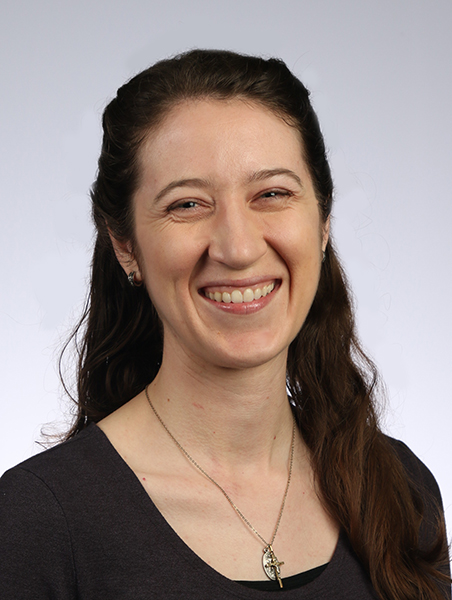
Therese Encrenaz

The DPS awards the 2021 Gerard P. Kuiper Prize for outstanding contributions to the field of planetary science to Dr. Therese Encrenaz (French National Center for Scientific Research emeritus scientist, Paris Observatory, Paris Sciences and Letters University) in recognition of her advancement of our understanding of planetary atmospheres through her pioneering techniques, as well as for enabling groundbreaking research through her leadership roles, primarily at Paris Observatory’s Laboratory for Space Science and Astrophysical Instrumentation (LESIA), over four decades. Dr. Encrenaz’s innovative observation methods, using instruments such as the Texas Echelon Cross Echelle Spectrograph (TEXES) and NASA Infrared Telescope Facility (IRTF), led to the mapping of hydrogen peroxide and its seasonal variability in the Martian atmosphere. Along with her study of the spatial and seasonal variation of water, these discoveries led to a deeper understanding of Martian atmospheric chemistry. She advanced Venusian atmospheric science by monitoring and analyzing the variation in the abundance of water and sulfur dioxide in the cloud tops. In addition to her research, Dr. Encrenaz has performed leadership roles in several space missions, including as Mission Scientist for the Infrared Space Observatory and as co-investigator on missions such as Vega, Galileo, Mars Express, Venus Express, and Rosetta. She has widely disseminated planetary science to the general public by authoring over 20 popular science books.

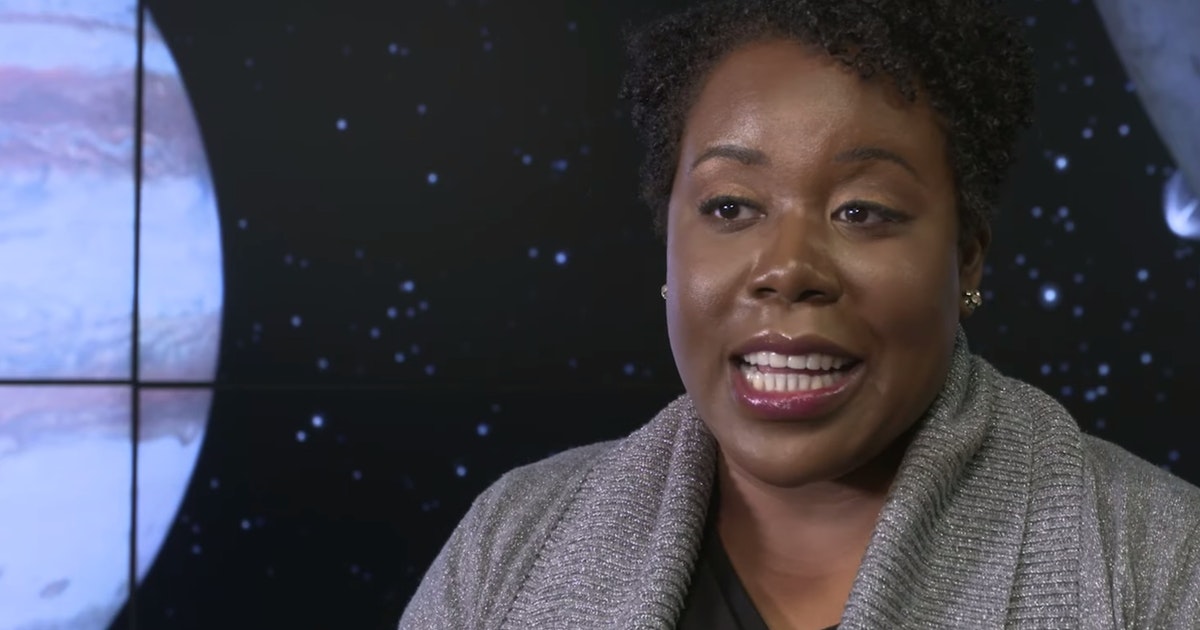
Lynnae QuickThe 2021 Harold C. Urey Prize for outstanding achievement in planetary research by an early career scientist is awarded to Dr. Lynnae C. Quick (NASA Goddard Space Flight Center). Dr. Quick’s innovative scientific work focuses on geophysical processes writ large, reaching from the inner solar system, through the asteroid belt, to ocean worlds, and into the exoplanetary realm. She has revisited modeling of (cryo)lava domes on Venus and Europa, was the first to model the formation of Ceres’ “bright spots” via the transport of material from a deep brine reservoir to the surface, has repeatedly provided new insights into plumes on Jupiter’s moon Europa, and shed light on the abundance of extrasolar ocean worlds. In addition to her scientific pursuits, Dr. Quick is exceptionally engaged in the broader research community through her proactive leadership as a co-investigator on several space missions, as a member of the Outer Planets Assessment Group steering committee, the Planetary Science Decadal Survey 2023-2032 panel on ocean worlds and dwarf planets, and the National Society of Black Physicists. Dr. Quick’s advocacy work to diversify the field is particularly notable. She has mentored many early career planetary scientists and is leading the Dragonfly Student and Early Career Investigator Program. Every aspect of Dr. Quick’s career represents a positive outlook for the future of our community.

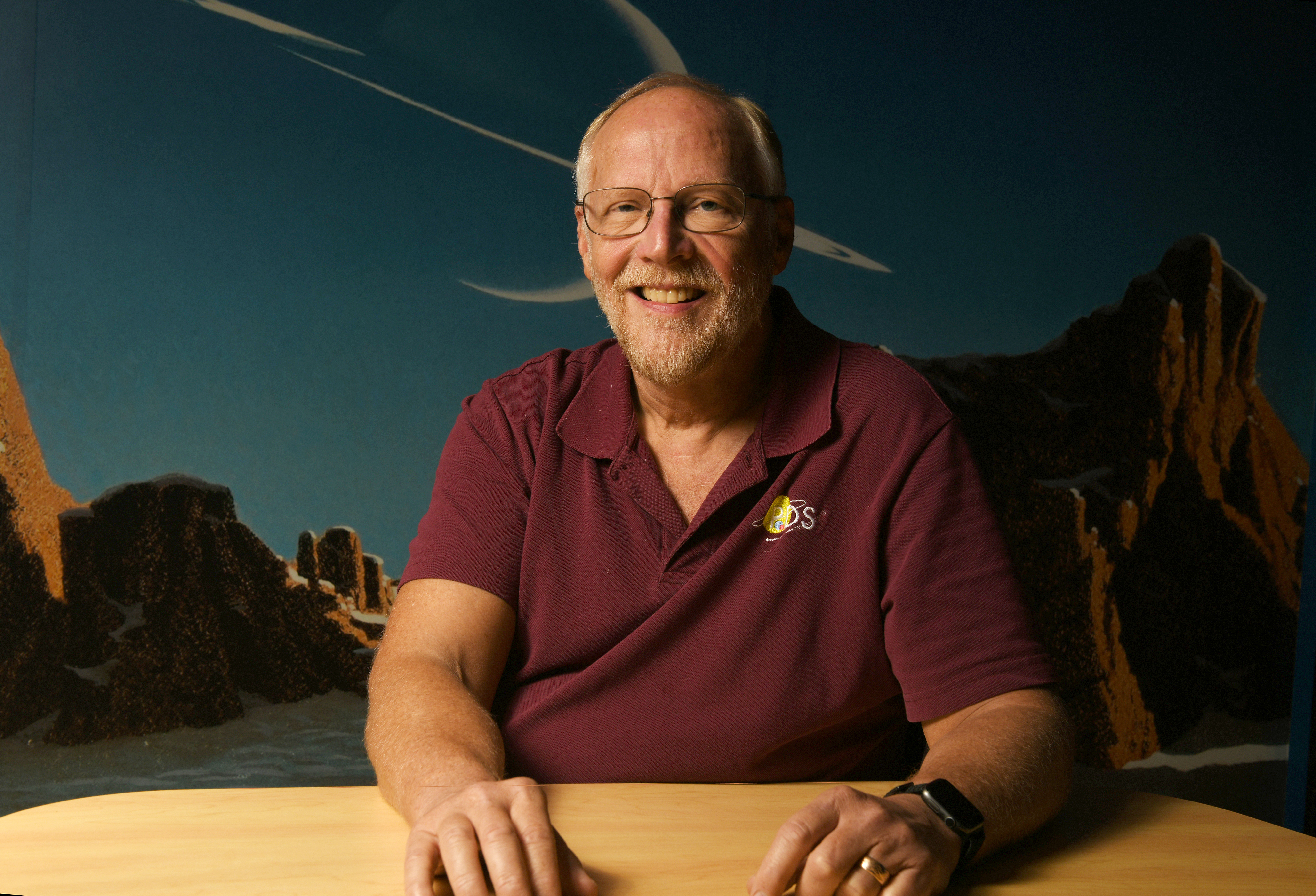
Mark ShowalterThe 2021 Harold Masursky Award for meritorious service to planetary science goes to Dr. Mark Showalter (SETI Institute). Dr. Showalter’s service to the community has centered around his 30 years as Principal Investigator of the Planetary Data System Ring-Moon Systems Node. In this role, Dr. Showalter has gone above and beyond simply archiving ring data to providing invaluable search and ephemeris tools that assist the planetary science community as a whole. He has set up graphical tools for observation and proposal planning, and produced the original design and much of the initial implementation of the Outer Planets Unified Search tool, which supports more than 1.5 million outer planet system observations.

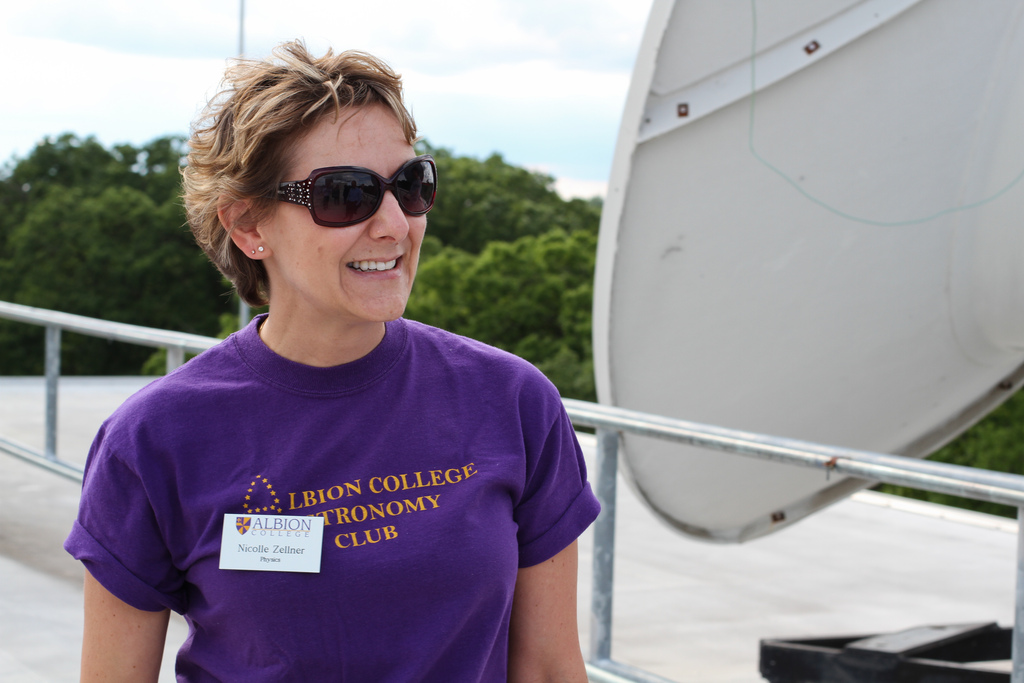
Nicholle ZellnerThis year the DPS is awarding two Carl Sagan Medals for excellence in public communication. One goes to Dr. Nicolle Zellner (Albion College) for her effective and wide-ranging outreach activities, reaching diverse audiences and spanning more than 20 years. Dr. Zellner has spoken to thousands of people around the country and has reached millions more through her written articles, television appearances, radio interviews, and more. She uses every opportunity to convey her passion and enthusiasm for space science to audiences of all ages, often bringing these topics to audiences who might otherwise not seek them out. She regularly offers public observing nights at Albion College and encourages college and community members to look up, especially during worldwide events, such as the annual International Observe the Moon Night, the 2012 Venus transit, and the 2017 Great American Solar Eclipse. Dr. Zellner co-founded the public observing program at Rensselaer Polytechnic Institute, is a member of one of the first classes of NASA’s Solar System Ambassadors, and is also a member of the Astronomy in Chile Educator Ambassadors Program.

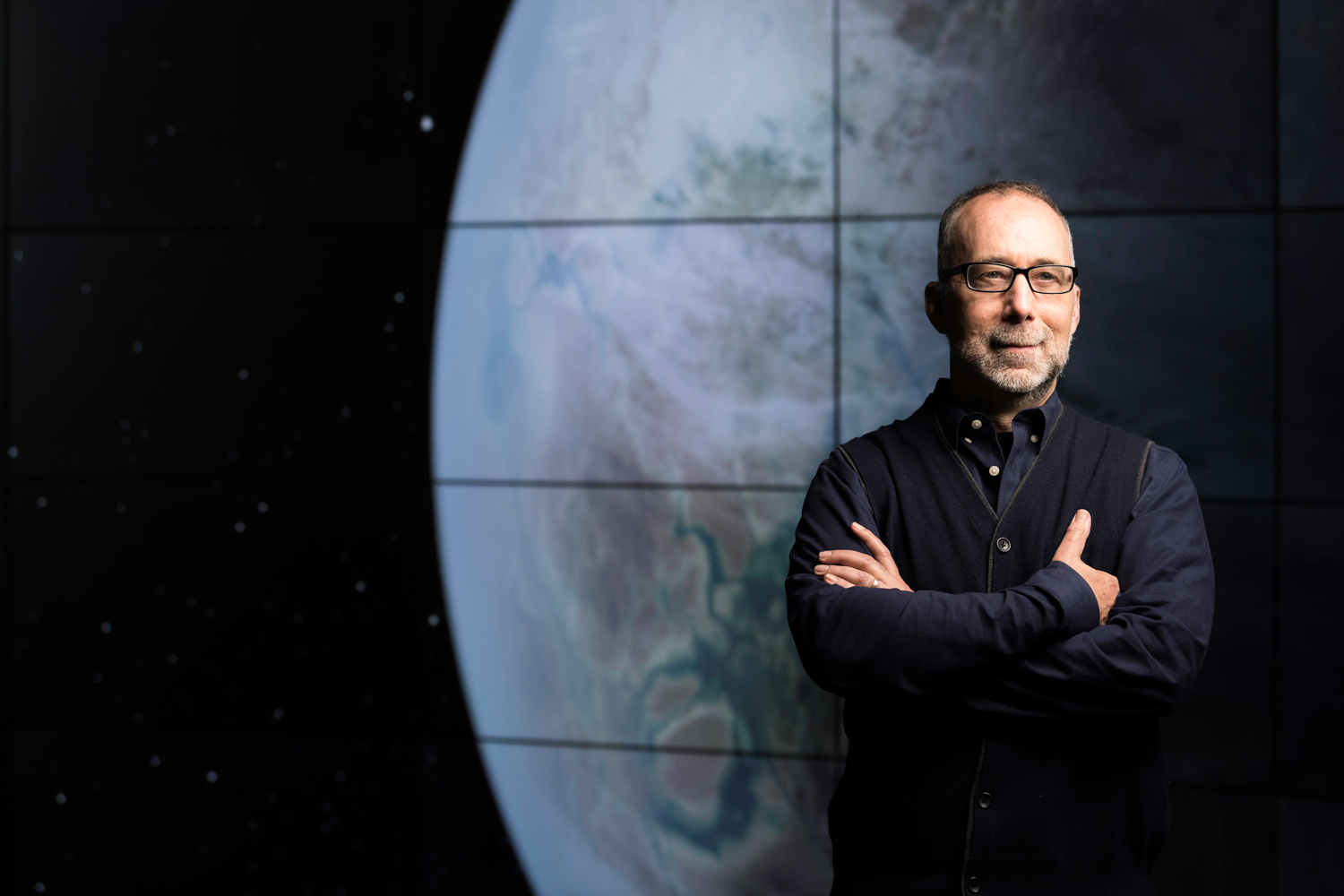
Adam FrankAlso receiving the Carl Sagan Medal is Dr. Adam Frank (University of Rochester), for founding continuously sustained efforts and solid platforms from which science can be distributed to the public in an accessible form. He was the co-founder of the National Public Radio 13.7 blog, a frequent contributor to the New York Times, and the creator of the Coursera course “Confronting the Big Questions: Highlights of Modern Astronomy.” The 13.7 Cosmos and Culture blog was a highly trafficked science blog with yearly visits exceeding 13 million.  Frank has also been a regular on-air commentator for NPR’s news show “All Things Considered.” Dr. Frank contributes to other publications like The Washington Post, The Atlantic and Scientific American and has authored four popular books arguing for the beauty of science and against science denial. He was also science advisor for Marvel’s “Doctor Strange” and has appeared on numerous science documentaries such as Netflix’s “Alien Worlds”.

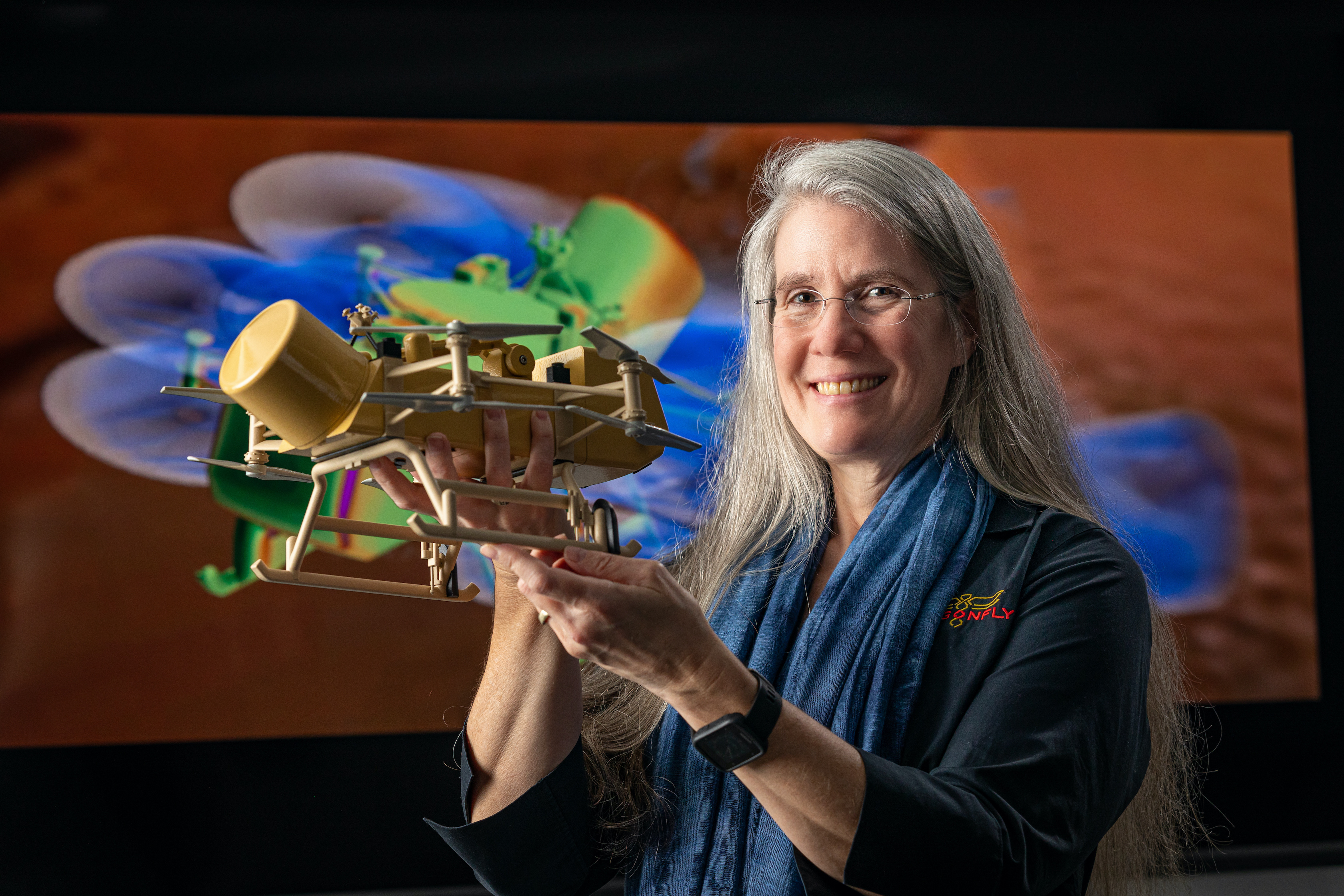
Elizabeth TurtleThe DPS is pleased to award the inaugural Claudia J. Alexander Prize recognizing outstanding contributions by a mid-career scientist to Dr. Elizabeth Turtle (Johns Hopkins University Applied Physics Laboratory). Dr. Turtle’s research contributions to understanding geophysical features on planetary surfaces, and the processes that drive them, span the solar system. She played an integral role in the analysis and interpretation of countless images from the Galileo and Cassini missions, building an intimate understanding of the mechanisms that shape the surfaces of satellites such as Io, Europa, and Titan. One of her most heavily cited papers, “Rapid and Extensive Surface Changes Near Titan’s Equator: Evidence of April Showers” (Science, 2011), demonstrates her creative approach of synthesizing data from three instruments on Cassini to tell a captivating story about an infrequent rain shower in Titan’s equatorial region. It is also clear that Dr. Turtle’s impact on planetary science will only grow. She currently leads two major projects slated to broaden humanity’s understanding of the habitability and potential for life on two of the most enchanting ocean worlds in our solar system: the Europa Imaging System (EIS) on Europa Clipper and the New Frontiers Dragonfly mission to Titan. Dr. Turtle exemplifies leadership in the field by any metric and is extremely dedicated to public outreach and engagement well beyond the scientific community.

Camille CarlisleThe Jonathan Eberhart Planetary Science Journalism Award for distinguished popular writing goes to Camille Carlisle for her article “Rugged Worlds” in the May 2020 issue of Sky & Telescope. In this thoroughly researched article, Carlisle provides a riveting account of the surprising discoveries and challenges encountered by the OSIRIS-REx and Hayabusa2 spacecraft during their visits to asteroids Bennu and Ryugu, respectively. She compares and contrasts the two missions, provides an overview of their contributions to asteroid science, and addresses the new questions raised by the findings. Her writing brings the excitement of planetary science to the general public. The article is a wonderful contribution to the field and will no doubt increase public interest in not only the two space missions but also more widely in solar system exploration.

“We are delighted to honor the outstanding contributions of these scientists and science communicators to the field, which span an incredible breadth of topics ranging across the solar system,” said Prof. Amy Mainzer, Chair of the DPS.

The 2021 DPS prizes will be presented at the 53rd annual meeting of the Division for Planetary Sciences, which will take place virtually from 3 to 8 October 2021.

Contacts:

Dr. Shantanu Naidu

DPS Press Officer

+1 (917) 373-8840

[email protected]

Dr. Amy Mainzer

DPS Chair

[email protected]

More information about DPS prizes:

prizes

53rd annual DPS meeting, 3-8 October 2021:

https://aas.org/meetings/dps53

The Division for Planetary Sciences (DPS), founded in 1968, is the largest special-interest Division of the American Astronomical Society (AAS). Members of the DPS study the bodies of our own solar system, from planets and moons to comets and asteroids, and all other solar-system objects and processes. With the discovery that planets exist around other stars, the DPS has expanded its scope to include the study of extrasolar planetary systems as well.

The American Astronomical Society (AAS), established in 1899, is the major organization of professional astronomers in North America. The mission of the AAS is to enhance and share humanity’s scientific understanding of the universe as a diverse and inclusive astronomical community, which it achieves through publishing, meeting organization, science advocacy, education and outreach, and training and professional development.

9 August 2021

Message from the Chair: 2021 DPS Election Results

It is my pleasure to announce the results of the 2021 DPS elections.

Congratulations to Catherine Neish, who is the incoming Vice-Chair, and to Brian Jackson and Serina Diniega, incoming Committee members. These elected members will begin their terms of service after the Members meeting at the 53nd Annual DPS meeting in October.

The Division for Planetary Sciences relies on volunteers for its leadership positions and we thank all members who were willing to run for these elected positions. A special thanks to our Nominating Subcommittee, Matthew Knight, Desiree Cotto-Figueroa, and Alessondra Springmann for assembling the 2021 slate of candidates, Secretary Maria Womack, for running the elections and to the AAS for their technical support.


Amy Mainzer

DPS Chair


9 Aug 2021

Newsletter 21-19

Issue 21-19, Aug 9, 2021


+————————————CONTENTS—————————————-+

  1. MESSAGE FROM THE CHAIR: 2021 DPS ELECTION RESULTS
  2. AAS DPS ANNOUNCES 2021 PRIZE WINNERS
  3. DPS MEETING SESSION CHAIRS STILL NEEDED
  4. DPS MEETING REGISTRATION REMINDER
  5. NORC DEIA RESEARCH STUDY SEEKS THOSE WHO SERVED AS NASA PI FOR COMPETED SPACE MISSION PROPOSAL
  6. JOBS, POSITIONS, AND OPPORTUNITIES

+——————————————————————————————–+


1———1———1———1———1———1———1———1———1———1


MESSAGE FROM THE CHAIR: 2021 DPS ELECTION RESULTS


It is my pleasure to announce the results of the 2021 DPS elections.


Congratulations to Catherine Neish, who is the incoming Vice-Chair, and to Brian Jackson and Serina Diniega, incoming Committee members. These elected members will begin their terms of service after the Members meeting at the 53nd Annual DPS meeting in October.


The Division for Planetary Sciences relies on volunteers for its leadership positions and we thank all members who were willing to run for these elected positions. A special thanks to our Nominating Subcommittee, Matthew Knight, Desiree Cotto-Figueroa, and Alessondra Springmann for assembling the 2021 slate of candidates, Secretary Maria Womack, for running the elections and to the AAS for their technical support.


Amy Mainzer

DPS Chair


9 Aug 2021


2———2———2———2———2———2———2———2———2———2


AAS DPS ANNOUNCES 2021 PRIZE WINNERS


Therese Encrenaz – 2021 Gerard P. Kuiper Prize

The DPS awards the 2021 Gerard P. Kuiper Prize for outstanding contributions to the field of planetary science to Dr. Therese Encrenaz (French National Center for Scientific Research emeritus scientist, Paris Observatory, Paris Sciences and Letters University) in recognition of her advancement of our understanding of planetary atmospheres through her pioneering techniques, as well as for enabling groundbreaking research through her leadership roles, primarily at Paris Observatory’s Laboratory for Space Science and Astrophysical Instrumentation (LESIA), over four decades. Dr. Encrenaz’s innovative observation methods, using instruments such as the Texas Echelon Cross Echelle Spectrograph (TEXES) and NASA Infrared Telescope Facility (IRTF), led to the mapping of hydrogen peroxide and its seasonal variability in the Martian atmosphere. Along with her study of the spatial and seasonal variation of water, these discoveries led to a deeper understanding of Martian atmospheric chemistry. She advanced Venusian atmospheric science by monitoring and analyzing the variation in the abundance of water and sulfur dioxide in the cloud tops. In addition to her research, Dr. Encrenaz has performed leadership roles in several space missions, including as Mission Scientist for the Infrared Space Observatory and as co-investigator on missions such as Vega, Galileo, Mars Express, Venus Express, and Rosetta. She has widely disseminated planetary science to the general public by authoring over 20 popular science books.


Lynnae Quick – 2021 Harold C. Urey Prize

The 2021 Harold C. Urey Prize for outstanding achievement in planetary research by an early career scientist is awarded to Dr. Lynnae C. Quick (NASA Goddard Space Flight Center). Dr. Quick’s innovative scientific work focuses on geophysical processes writ large, reaching from the inner solar system, through the asteroid belt, to ocean worlds, and into the exoplanetary realm. She has revisited modeling of (cryo)lava domes on Venus and Europa, was the first to model the formation of Ceres’ *bright spots* via the transport of material from a deep brine reservoir to the surface, has repeatedly provided new insights into plumes on Jupiter’s moon Europa, and shed light on the abundance of extrasolar ocean worlds. In addition to her scientific pursuits, Dr. Quick is exceptionally engaged in the broader research community through her proactive leadership as a co-investigator on several space missions, as a member of the Outer Planets Assessment Group steering committee, the Planetary Science Decadal Survey 2023-2032 panel on ocean worlds and dwarf planets, and the National Society of Black Physicists. Dr. Quick’s advocacy work to diversify the field is particularly notable. She has mentored many early career planetary scientists and is leading the Dragonfly Student and Early Career Investigator Program. Every aspect of Dr. Quick’s career represents a positive outlook for the future of our community.


Mark Showalter – 2021 Harold Masursky

The 2021 Harold Masursky Award for meritorious service to planetary science goes to Dr. Mark Showalter (SETI Institute). Dr. Showalter’s service to the community has centered around his 30 years as Principal Investigator of the Planetary Data System Ring-Moon Systems Node. In this role, Dr. Showalter has gone above and beyond simply archiving ring data to providing invaluable search and ephemeris tools that assist the planetary science community as a whole. He has set up graphical tools for observation and proposal planning, and produced the original design and much of the initial implementation of the Outer Planets Unified Search tool, which supports more than 1.5 million outer planet system observations.


Nicolle Zellner – 2021 Carl Sagan Medal

This year the DPS is awarding two Carl Sagan Medals for excellence in public communication. One goes to Dr. Nicolle Zellner (Albion College) for her effective and wide-ranging outreach activities, reaching diverse audiences and spanning more than 20 years. Dr. Zellner has spoken to thousands of people around the country and has reached millions more through her written articles, television appearances, radio interviews, and more. She uses every opportunity to convey her passion and enthusiasm for space science to audiences of all ages, often bringing these topics to audiences who might otherwise not seek them out. She regularly offers public observing nights at Albion College and encourages college and community members to look up, especially during worldwide events, such as the annual International Observe the Moon Night, the 2012 Venus transit, and the 2017 Great American Solar Eclipse. Dr. Zellner co-founded the public observing program at Rensselaer Polytechnic Institute, is a member of one of the first classes of NASA’s Solar System Ambassadors, and is also a member of the Astronomy in Chile Educator Ambassadors Program.


Adam Frank – 2021 Carl Sagan Medal

Also receiving the Carl Sagan Medal is Dr. Adam Frank (University of Rochester), for founding continuously sustained efforts and solid platforms from which science can be distributed to the public in an accessible form. He was the co-founder of the National Public Radio 13.7 blog, a frequent contributor to the New York Times, and the creator of the Coursera course *Confronting the Big Questions: Highlights of Modern Astronomy.* The 13.7 Cosmos and Culture blog was a highly trafficked science blog with yearly visits exceeding 13 million. Frank has also been a regular on-air commentator for NPR’s news show *All Things Considered.* Dr. Frank contributes to other publications like The Washington Post, The Atlantic and Scientific American and has authored four popular books arguing for the beauty of science and against science denial. He was also science advisor for Marvel’s “Doctor Strange* and has appeared on numerous science documentaries such as Netflix’s *Alien Worlds*.


Elizabeth Turtle – 2021 Claudia J. Alexander Prize

The DPS is pleased to award the inaugural Claudia J. Alexander Prize recognizing outstanding contributions by a mid-career scientist to Dr. Elizabeth Turtle (Johns Hopkins University Applied Physics Laboratory). Dr. Turtle’s research contributions to understanding geophysical features on planetary surfaces, and the processes that drive them, span the solar system. She played an integral role in the analysis and interpretation of countless images from the Galileo and Cassini missions, building an intimate understanding of the mechanisms that shape the surfaces of satellites such as Io, Europa, and Titan. One of her most heavily cited papers, *Rapid and Extensive Surface Changes Near Titan’s Equator: Evidence of April Showers* (Science, 2011), demonstrates her creative approach of synthesizing data from three instruments on Cassini to tell a captivating story about an infrequent rain shower in Titan’s equatorial region. It is also clear that Dr. Turtle’s impact on planetary science will only grow. She currently leads two major projects slated to broaden humanity’s understanding of the habitability and potential for life on two of the most enchanting ocean worlds in our solar system: the Europa Imaging System (EIS) on Europa Clipper and the New Frontiers Dragonfly mission to Titan. Dr. Turtle exemplifies leadership in the field by any metric and is extremely dedicated to public outreach and engagement well beyond the scientific community.


Camille Carlisle – 2021 Jonathan Eberhart Award

The Jonathan Eberhart Planetary Science Journalism Award for distinguished popular writing goes to Camille Carlisle for her article *Rugged Worlds* in the May 2020 issue of Sky & Telescope. In this thoroughly researched article, Carlisle provides a riveting account of the surprising discoveries and challenges encountered by the OSIRIS-REx and Hayabusa2 spacecraft during their visits to asteroids Bennu and Ryugu, respectively. She compares and contrasts the two missions, provides an overview of their contributions to asteroid science, and addresses the new questions raised by the findings. Her writing brings the excitement of planetary science to the general public. The article is a wonderful contribution to the field and will no doubt increase public interest in not only the two space missions but also more widely in solar system exploration.


3———3———3———3———3———3———3———3———3———3


DPS MEETING SESSION CHAIRS STILL NEEDED


If you are planning to attend the Fall 2021 DPS meeting, please volunteer to be a session chair or a science chat moderator. This is a great way to make new connections. Sign up here: https://bit.ly/3ycPMBb


4———4———4———4———4———4———4———4———4———4


DPS MEETING REGISTRATION REMINDER


Sep 9 is the presenter deadline to register. Non-presenters may register throughout the meeting. Full member registration fee is $270; all students are $75; other rates at the link below.

https://aas.org/meetings/dps53/registration


5———5———5———5———5———5———5———5———5———5


NORC DEIA RESEARCH STUDY SEEKS THOSE WHO SERVED AS NASA PI FOR COMPETED SPACE MISSION PROPOSAL


The National Academies of Sciences, Engineering, and Medicine (NASEM) has contracted with NORC at the University of Chicago (NORC) to implement an important research study to understand the factors that impede or facilitate diversity, equity, inclusion, and accessibility in the proposed leadership for competed space missions at the National Aeronautics and Space Administration (NASA). The results of this study will inform practical recommendations for the Science Mission Directorate at NASA and its partners to reduce impediments to applicants and thereby enhance diversity, equity, inclusion, and accessibility in the competitive pool of proposed leaders.


We are looking for potential key informants, who have served as Principal Investigator (PI) on at least one proposal for a competed space mission from 2010 to the present, who would be willing to participate in a discussion around the processes for preparing and submitting a mission proposal to NASA, and elements of the mission proposal process that may present barriers or are facilitators for achieving diversity, equity, inclusion, and accessibility. We are interested in speaking to an array of individuals, who can provide diverse perspectives based on their race/ethnicity, gender identity, career stage, success of applications to NASA, and other factors.


Participation in this study will comprise a 45–60-minute virtual discussion with an interviewer from NORC. Your participation in the study will NOT be made known to NASA or NASEM, and NO staff outside of the NORC Study Team will know your identity or be involved in the discussion itself. All interview responses will be kept confidential and stored separately from your contact information, and NORC will not share your contact information or interview responses with anyone outside our study team.


If you are interested in participating in the study, please complete this short Study Eligibility Survey by August 20, 2021: https://norc.az1.qualtrics.com/jfe/form/SV_dnCQsdxJUtl5W4u OR reply to [email protected]. The NORC study team will contact you within a few weeks to schedule an interview if you are eligible to participate.


Thank you,

The NORC Study Team


Elena Navarro (she/her/hers)

Research Analyst

Economics, Justice, and Society Department

work (312) 201-4486

[email protected]


NORC at the University of Chicago

55 East Monroe Street, 30th Floor, Chicago IL 60603


6———6———6———6———6———6———6———6———6———6


JOBS, POSITIONS, AND OPPORTUNITIES


A. Tenure-track/tenured faculty position in Space Physics at any rank/level, UCLA


https://recruit.apo.ucla.edu/JPF06572


B. 51 Pegasi b Fellowship in Planetary Astronomy at UCLA


https://jobregister.aas.org/ad/7c75e9d3


Job seekers and employers are encouraged to browse DPS’s job listings and advertise open positions.


———————————+


Send submissions to:


Maria Womack, DPS Secretary ([email protected])


You’re receiving this email because you are a DPS member. To unsubscribe or update your information, please send your request to [email protected]. The more general AAS privacy policy is available online at https://aas.org/about/policies/privacy-policy. Current and back issues of the DPS Newsletter can be found at newsletters

 

Newsletter 21-18

Issue 21-18, Aug 2, 2021

+————————————CONTENTS—————————————-+

  1. REGISTER NOW FOR FALL MEETING (SEP 9 PRESENTER DEADLINE)
  2. LIMITED DISCOUNTED REGISTRATION
  3. DPS MEETING SESSION CHAIRS NEEDED
  4. MERCURY’S SURFACE RESPONSE TO THE INTERPLANETARY ENVIRONMENT: IDENTIFYING NEEDED STUDIES IN LABORATORY ASTROPHYSICS
  5. ARECIBO OBSERVATORY QUARTERLY NEWSLETTER NOW AVAILABLE
  6. AGU SESSION P008 – ENCELADUS: BEACON OF OCEAN WORLDS
  7. P017 – IN SITU GEOPHYSICAL EXPLORATION OF PLANETARY BODIES
  8. JOBS, POSITIONS, AND OPPORTUNITIES

+——————————————————————————————–+


1———1———1———1———1———1———1———1———1———1


REGISTER NOW FOR FALL MEETING (SEP 9 PRESENTER DEADLINE)


Full member registration fee is $270; all students are $75; other rates at the link below.


[email protected]. These discounted registrations are intended for persons who submit an abstract to DPS and engage in the meeting, and whose work would benefit the planetary science community, but who in general receive little professional benefit from attending the meeting (and so generally would not attend).


3———3———3———3———3———3———3———3———3———3


DPS MEETING SESSION CHAIRS NEEDED


Will you attend DPS this fall? We need your help! DPS will be held virtually 3-8 October. Please add your name to the list of volunteers to be a session chair or science chat moderator here: https://bit.ly/3ycPMBb. Thanks!


4———4———4———4———4———4———4———4———4———4


MERCURY’S SURFACE RESPONSE TO THE INTERPLANETARY ENVIRONMENT: IDENTIFYING NEEDED STUDIES IN LABORATORY ASTROPHYSICS


Date: 24-27 January 2022

Location: Virtually Everywhere


Mercury is a complex system of interconnected parts: its magnetosphere, exosphere, and surface. How this system responds to its interplanetary (solar and dust) environment is equally complex. Numerous models have been developed to understand how solar wind particles and micrometeorites interact with Mercury’s magnetosphere and surface to modify the surface spectral, mineral, and chemical properties and to produce the planet’s exosphere. However, the reliability of these models hinges on how accurately we understand the underlying physical processes responsible for the observed properties.


This workshop will focus on identifying those physical processes whose uncertainties hinder the field’s ability to reliably model Mercury’s response to the solar and interplanetary environment. In specific, the workshop will discuss those studies in laboratory astrophysics, both experimental and theoretical, that are most critically needed in order to advance our understanding of Mercury’s system.


The goal of this workshop is to produce a series of focused reports to guide the scientific community’s efforts for supporting the analysis of the BepiColombo measurements and observations and for future missions. It will examine the limitations of current planetary models that allow us to understand what is observed in situ building on the underlying laboratory astrophysics data. Furthermore, it will outline the current status of laboratory astrophysics studies applicable to the above questions and what experimental and theoretical work is needed to fully address these unknowns.


A modest registration fee to be determined will be requested.


For more details, please visit:

https://meeting.psi.edu/mercurylab2022/

or email any questions to: [email protected]


5———5———5———5———5———5———5———5———5———5


ARECIBO OBSERVATORY QUARTERLY NEWSLETTER NOW AVAILABLE 


The 2021 Summer Arecibo Observatory Newsletter now available! Each newsletter features science highlights and updates about the facility, staff, and current education programs. See all Newsletters here: AO Newsletters. You can subscribe to receive future newsletters via email: Join the AO Newsletter list.


6———6———6———6———6———6———6———6———6———6


AGU SESSION P008 – ENCELADUS: BEACON OF OCEAN WORLDS


Saturn’s moon Enceladus continues to captivate. Its diversity of ocean world processes offers a bounty of phenomena for fundamental science, including cryovolcanism and plume dynamics, surface geology and the tectonics of ice, tidal heating, interior structure, ocean circulation dynamics, water-rock geochemistry, hydrothermal systems, the origin and evolution of icy bodies, and much more. Enceladus is a gateway to alien oceans. Furthermore, Enceladus is one of the prime destinations for astrobiology, because of the easy access to ocean-derived materials, and because it appears to be tantalizingly habitable. Many of us are now asking how Enceladus can support life, and how might we search for evidence of life?


This hybrid session (in person and virtual options) brings our diverse community together to discuss the current state of understanding of all things Enceladus. We also welcome contributions that contextualize Enceladus with other areas of Earth and Planetary Sciences, or provide perspectives on the future of Enceladus exploration.


Please submit your abstract by August 4 at

https://agu.confex.com/agu/fm21/prelim.cgi/Session/124708


Chris Glein (Southwest Research Institute) and Emily Martin (Smithsonian Institution)


7———7———7———7———7———7———7———7———7———7———


P017 – IN SITU GEOPHYSICAL EXPLORATION OF PLANETARY BODIES 


Recent planetary landers and rovers have introduced new geophysical approaches to characterizing planetary bodies. The acquisition of geophysical data (e.g. magnetic, radar, seismic, thermal, permitivity, etc.) makes it possible to characterize in unprecedented detail the interior of the study target, helping detect cores, characterizing regoliths, and exploring near-surface resources that could one day sustain long-lived exploration. We invite abstracts that present results from recent missions that involve geophysical instruments, such as InSight, Hayabyusa2/MASCOT, and the Chang’E 3, 4, and 5 landers and rovers. Discussion of novel exploration strategies, methods, and instruments that could be deployed in upcoming missions to the Moon, Mars, Europa, and elsewhere, are also welcome.


https://agu.confex.com/agu/fm21/prelim.cgi/Session/120500


The deadline for all submissions is Wednesday, August 4, 2021 at 23:59 EDT.


Conveners:

Laurent Montesi, University of Maryland College Park

Matthias Grott, German Aerospace Center (DLR)

Renee Weber, NASA Marshall Flight Center

Zhiyong Xiao, Sun Yat-sen University


8———8———8———8———8———8———8———8———8———8———


JOBS, POSITIONS, AND OPPORTUNITIES


A. TENURE TRACK FACULTY POSITION IN PLANETARY SCIENCE AT BROWN UNIVERSITY


The Department of Earth, Environmental and Planetary Sciences at Brown University invites applications for a tenure-track faculty position in Planetary Science. Ideal candidates are those working on fundamental processes applicable across multiple Solar System bodies and who would broaden and enhance existing departmental strengths in climate and environmental science, geochemistry, geophysics, planetary materials, or remote sensing. We encourage candidates from all fields of planetary science to apply.


http://apply.interfolio.com/90367


You may also contact the search committee chair Professor Ralph Milliken ([email protected]).


Job seekers and employers are encouraged to advertise open positions.


———————————+


Send submissions to:


Maria Womack, DPS Secretary ([email protected])


You’re receiving this email because you are a DPS member. To unsubscribe or update your information, please send your request to [email protected]. The more general AAS privacy policy is available online at https://aas.org/about/policies/privacy-policy. Current and back issues of the DPS Newsletter can be found at newsletters
 

DPS 2021 Elections Candidate Slate

Members of the DPS should have received their ballot by email on around 28 June.  If you need help please contact Diane Frendak at [email protected].


The DPS Nominating Subcommittee has identified the following candidates for the 2021 DPS elections for Vice Chair and Committee (the Student Representative is not open again until 2022).

Please read candidate information and statements in this pdf.


Vice Chair (1 to be elected):

  • Catherine Neish, U. of Western Ontario
  • Gonzalo Tancredi, UdelaR, Uruguay


Committee (2 to be elected):

  • Serina Diniega, JPL
  • Brian Jackson, Boise State U.
  • Joseph Masiero, Caltech/IPAC
  • Seth Jacobson, Michigan State U.


Per the DPS Bylaws, additional candidates for Vice Chair and Committee, supported by a petition of at least 20 DPS members, may be nominated by June 22nd. Please send any nominations to the DPS Secretary, Maria Womack, at [email protected].


The DPS Committee thanks the members of the Nominating Subcommittee for their dedicated service to the DPS:

  • Matthew Knight (Chair)
  • Desiree Cotto Figueroa
  • Alessondra Springmann


Last updated 28 June 2021

Newsletter 21-17

Issue 21-17, July 19, 2021

+————————————CONTENTS—————————————-+

  1. A FEW DAYS LEFT FOR DPS ABSTRACTS
  2. EASY TO VOTE IN DPS ELECTION
  3. ARECIBO OBSERVATORY COLLOQUIUM SERIES
  4. SPECIAL ISSUE ON GIANT PLANETS IN REMOTE SENSING JOURNAL
  5. AGU SESSION P007 – CONCEPT FOR FUTURE PLANETARY SCIENCE MISSIONS
  6. AGU SESSION P040 – TITAN: ATMOSPHERE, SURFACE AND INTERIOR
  7. DPS EDUCATION AND OUTREACH GRANTS
  8. TWO DPS FUNDS NOW UP TO $100K
  9. REGISTRATION OPEN FOR NATIONAL SOCIETY OF BLACK PHYSICISTS 2021 CONFERENCE
  10. JOBS, POSITIONS, AND OPPORTUNITIES

+——————————————————————————————–+


1———1———1———1———1———1———1———1———1———1


A FEW DAYS LEFT FOR DPS ABSTRACTS


You have a few days left to submit an abstract; the deadline is Thursday July 22, 2021. There will be no *late abstracts* this year. The fall meeting will take place 3 – 8 October 2021 **virtually anywhere.**


Pre-recorded materials (oral talks, iPosters, and summary slides) will all be due by 9 September 2021. This is a hard deadline, since the staff needs time to process, add captions, and upload everything to the site. After uploading, no changes can be made to oral talks, but you may alter iPosters until the meeting starts.


All talks and presentations will be available for viewing starting on 27 September, one week before the meeting.


https://aas.org/meetings/dps53/abstracts


2———2———2———2———2———2———2———2———2———2


EASY TO VOTE IN DPS ELECTION


The 2021 election for DPS Vice-Chair and Committee is now open, and will close at 11:59pm ET on July 29, 2021. To vote you should have already received an email on June 28 asking you to cast your ballot. If you do not see this email in your inbox, please check your spam/junk folder. If you still do not see it, contact the secretary.


Each email contains a link with a unique code that will bring you to the ballot site. There is no need to enter your AAS login information. You will be able to review the candidate statements and cast your vote.


You should vote for one of the two candidates for Vice-Chair:

Gonzalo Tancredi

Catherine Neish

The Vice-Chair will become the DPS Chair in October 2022.


You should vote for two of the four candidates for DPS Committee:

Seth Jacobson

Brian Jackson

Joseph Maseiro

Serina Diniega


The successful candidates will serve on the DPS Committee for three years. The detailed vitae and position statements for each of the candidates follow.


This information will also appear on the election page when you click on the link in your email sent from the AAS.


3———3———3———3———3———3———3———3———3———3


ARECIBO OBSERVATORY COLLOQUIUM SERIES


We invite prominent figures in planetary science, radio astronomy, and space and atmospheric sciences, to present and discuss the latest in their fields. All colloquia will be streamed live. Following the presentations there will be a section of questions and answers so that we can have an open discussion with the community of AO scientists, users, and friends.


The next colloquium will be *Next-Generation Planetary Radar*, by Dr. Joseph Lazio of the Jet Propulsion Laboratory, on  July 27 in the afternoon (time tbd, please see website below closer to the date). For more information, and to sign up for the email list, please visit http://www.naic.edu/ao/colloquium-series


4———4———4———4———4———4———4———4———4———4


SPECIAL ISSUE ON GIANT PLANETS IN REMOTE SENSING JOURNAL


Dr. Imke de Pater and Dr. Yamila Miguel are running a Special Issue entitled *Remote Sensing Observations of the Giant Planets* in the journal Remote Sensing (ISSN 2072-4292, IF 4.509).


This Special Issue focuses on Remote Sensing observations of giant planets across the electromagnetic spectrum. In this issue, the gas giants Jupiter and Saturn will be compared and contrasted with the smaller ice giants Uranus and Neptune. Our detailed knowledge of solar system giants will also be compared with the large amount of data coming from giant exoplanets and the prospects for this field in the near future. Review contributions are welcomed, as well as papers describing new observations and analyses.


For further reading, please follow the link to the Special Issue Website at: https://www.mdpi.com/journal/remotesensing/special_issues/RS_of_Giant_Planets


The submission deadline is 30 April 2022. You may send your manuscript now or up until the deadline. Submitted papers should not be under consideration for publication elsewhere. Authors are encouraged to send a short abstract or tentative title to the special issue guest editors (Dr. Imke de Pater: [email protected]; Dr. Yamila Miguel: [email protected]) before submission.


5———5———5———5———5———5———5———5———5———5


AGU SESSION P007 – CONCEPT FOR FUTURE PLANETARY SCIENCE MISSIONS


Planetary science missions of all sizes and types have been increasing in cadence in the last decade, visiting planets, moons and asteroids and comets from the inner to the outer solar system. Future mission architectures are expanding the range of possible sizes, from tiny CubeSat-based spacecraft to large, multi-stage systems such as Mars Sample Return and Europa Lander. New technologies are enabling missions to literally take off: as with the Ingenuity Mars Helicopter, and the Dragonfly Titan rotorcraft. In this session we solicit e-lightening poster presentations focusing on innovative ideas for future planetary missions and related instruments, with a focus on the science enabled.

Link: https://agu.confex.com/agu/fm21/prelim.cgi/Session/123480

The abstract submission deadline is 4 August 2021 at 23:59 EDT/03:59 +1 GMT.

Melissa Trainer, Conor Nixon, Morgan Cable, Karl Hibbitts


6———6———6———6———6———6———6———6———6———6


AGU SESSION P040 – TITAN: ATMOSPHERE, SURFACE AND INTERIOR


Titan is the only moon in the Solar System with a dense atmosphere and active hydrologic system. It is also an Ocean World, with a deep interior water ocean that may provide a harbor for life. Photochemistry in the stratosphere consumes methane and generates a wealth of complex organic molecules, similar to the atmospheric chemistry of prebiotic Earth. Molecules grow in size through a variety of processes, ultimately forming haze particles that settle on the surface and are reworked into large equatorial dune fields. In the lower atmosphere methane and ethane form lakes, seas, clouds and rain in a weather cycle analogous to the Earth’s water-based meteorology. The surface exhibits infrequent craters, but offers other mysterious landforms interpreted as mountains, putative cryovolcanoes, tectonic features, and fluvial/lacustrine morphologies.


In this session we welcome all recent research relevant to Titan, including new observations, spacecraft data analysis, modeling and laboratory experiment work. Abstracts can be submitted through the AGU portal: https://www.agu.org/fall-meeting through the deadline of 4 August at 23:59 EDT/03:59 +1 GMT.


Conveners:

Conor A. Nixon, NASA Goddard Space Flight Center

Kathleen Mandt, The Johns Hopkins University Applied Physics Laboratory

Alexander Hayes, Cornell University

Christophe Sotin, Jet Propulsion Laboratory-California Institute of Technology


7———7———7———7———7———7———7———7———7———7———


DPS EDUCATION AND OUTREACH GRANTS


The DPS Committee is offering small grants (average amounts of $200 to $500) to support DPS members to engage in local and virtual education and public engagement activities. These grants are intended to support DPS member efforts to engage other members, students, teachers, and the public and can be used for materials, consumables, equipment but not for salary or travel to DPS meetings. Current proposals are being accepted for programs that will occur by June 1, 2022. If you have a question about what is an acceptable cost, please contact the DPS Education Officer, Sanlyn Buxner, [email protected].  Grants have a rolling deadline with reviews beginning on August 1, 2021 and occurring each month after that. Awardees will be alerted by the 15th of each month after they are received. Applications will be accepted until all grant funds have been depleted, that cap will be posted on the website.


Learn more at education/education-outreach-grants/application.


8———8———8———8———8———8———8———8———8———8———


TWO DPS FUNDS NOW UP TO $100K


The DPS Committee is happy to announce that we are using reserve funds to increase the amounts to support underrepresented minority communities in planetary science (https://tinyurl.com/45ahn53w) and the Susan Niebur Professional Development Fund (https://tinyurl.com/3auehpkt), bringing both to $100k. The aim of these contributions is to enable the funds to be more sustainable in perpetuity, strengthening DPS’ support of these efforts.


We strongly encourage the community to continue to contribute to these two funds, along with the Hartmann Student Travel Grant Program (https://tinyurl.com/y6fhjyp9), to help broaden participation in the annual DPS meeting, along with the annual meeting of the National Society of Black Physicists, a DPS partner organization. We greatly appreciate the generous contributions made to date to all three of these funds, especially in these trying times.


9———9———9———9———9———9———9———9———9———9——–9


REGISTRATION OPEN FOR NATIONAL SOCIETY OF BLACK PHYSICISTS 2021 CONFERENCE


Registration is now open for this meeting, co-hosted by Brookhaven National Laboratory on November 4-7, 2021 (fully virtual). The theme for this year’s conference is *Grand Unification in the Diaspora.* The NSBP conference is the largest academic meeting of minority physicists in the United States. The goal of the conference is to provide mentorship opportunities, increase participant access to recruiters, offer networking opportunities, and inform the broader physics community on best practices that will be gleaned during and after the meeting. In addition to being a meeting that promotes the persistence of underrepresented physics students in the academic workforce pipeline, the conference hosts many high-level research talks, provides opportunities for peer-to-peer interactions, and allows students the opportunity for exposure to the scientific community. More information and deadlines can be found athttps://nsbp.org/page/2021conference, and a writeup about last year’s NSBP conference can be found here: https://physics.aps.org/articles/v13/185.


All are welcome to participate. Related, DPS has been working with NSBP to set up a partnership, in particular with their Earth and Planetary Science track. The DPS fund to support underrepresented minority communities in planetary science (https://tinyurl.com/45ahn53w) can be applied towards NSBP conference registration and/or NSBP membership. The deadline for this DPS fund application is September 17.


10———10———10———10———10———10———10———10———10———10———


JOBS, POSITIONS, AND OPPORTUNITIES


Job seekers and employers are encouraged to browse DPS’s job listings and advertise open positions.


———————————+


Send submissions to:


Maria Womack, DPS Secretary ([email protected])


You’re receiving this email because you are a DPS member. To unsubscribe or update your information, please send your request to [email protected]. The more general AAS privacy policy is available online at https://aas.org/about/policies/privacy-policy. Current and back issues of the DPS Newsletter can be found at newsletters


Newsletter 21-16

Issue 21-16, July 11, 2021

+————————————CONTENTS—————————————-+

  1. DPS 2021 ABSTRACTS OPEN UNTIL JUL 22
  2. DPS ELECTION OPEN UNTIL JUL 29
  3. LETTER FROM ICARUS EDITOR-IN-CHIEF
  4. UNDERREPRESENTED MINORITY COMMUNITIES TRAVEL GRANT
  5. DPS 2021 DEPENDENT CARE GRANTS
  6. CALL FOR NASA KECK KEY STRATEGIC MISSION SUPPORT PROPOSALS FOR 2022A
  7. JOBS, POSITIONS, AND OPPORTUNITIES

+——————————————————————————————–+


1———1———1———1———1———1———1———1———1———1


DPS 2021 ABSTRACTS OPEN UNTIL JUL 22


The fall meeting will take place 3 – 8 October 2021 **virtually anywhere.** Abstracts will be due July 22, 2021. There will be no *late abstracts* this year. Pre-recorded materials (oral talks, iPosters, and summary slides) will all be due by 9 September 2021. This is a hard deadline, since the staff needs time to process, add captions, and upload everything to the site. After uploading, no changes can be made to oral talks, but you may alter iPosters until the meeting starts. All talks and presentations will be available for viewing on 27 September, one week before the meeting.


https://aas.org/meetings/dps53/abstracts


2———2———2———2———2———2———2———2———2———2


DPS ELECTION OPEN UNTIL JUL 29


The 2021 election for DPS Vice-Chair and Committee is now open, and will close at 11:59pm ET on July 29, 2021. To vote you should have already received an email on June 28 asking you to cast your ballot. If you do not see this email in your inbox, please check your spam/junk folder. If you still do not see it, contact the secretary.


Each email contains a link with a unique code that will bring you to the ballot site. There is no need to enter your AAS login information. You will be able to review the candidate statements and cast your vote.


You should vote for one of the two candidates for Vice-Chair:

Catherine Neish

Gonzalo Tancredi

The Vice-Chair will become the DPS Chair in October 2022.


You should vote for two of the four candidates for DPS Committee:

Serina Diniega

Brian Jackson

Seth Jacobson

Joseph Maseiro


The successful candidates will serve on the DPS Committee for three years. The detailed vitae and position statements for each of the candidates follow.


This information will also appear on the election page when you click on the link in your email sent from the AAS.


3———3———3———3———3———3———3———3———3———3


LETTER FROM ICARUS EDITOR-IN-CHIEF


Dear Colleagues


I’m honored to have been chosen to lead the Editorial board of the journal Icarus, and I thank the DPS committee and the publisher Elsevier for their trust. I would like to warmly thank the former Editor in Chief (EiC), Rosaly Lopes, who has actively managed and promoted the journal during her three years of service and who, like her predecessors, has been an example for me.


We are taking advantage of the change in EiC to introduce some innovations to the journal. We welcome three new associate editors, Doris Breuer (DLR, Germany), Julianne Moses (Space Science Institute, USA) and Sean Raymond (University of Bordeaux, France), improving gender equality and geographical diversity in the editorial team. Two additional associate editors are expected to join the team at the end of the year. These new additions replace former editors who are ending their service or will do so at the end of 2021: Oded Aharonson, Michael Combi, William Grundy, Rosaly Lopes, Darrell Strobel, whom we all thank for their long dedication to the editorial task. From now on, Editors will be appointed for a maximum of 2 terms of three years, to ensure a timely turnover. Since I have been Associate Editor since 2000, I will not handle papers any more on a regular basis, but will focus on the journal policy and the management of the editorial board.


We have introduced two new types of articles, Letters and Notes, alongside the regular manuscripts which remain unchanged.


Letters are short manuscripts on ground-breaking results, with a potential high impact factor. Their length is limited to 3,500 words, abstract included, and they can contain up to three figures, each with a caption of up to 300 words, and one small table. Letters will be reviewed by two experts (ideally within two weeks) and, once published, will be highlighted on-line and in the printed issue.


Notes have been redefined as short manuscripts that present preliminary results, discuss an idea supported by some exploratory investigation, comment on a published manuscript, or report observations that don’t yet have clear implications or include null results. Their length is limited to 2,000 words and one figure. Notes will be reviewed by only one expert. Their scope is to provide a reference record for material which is not yet mature or developed enough to be the subject of a standard publication.


We have instituted an annual prize for the best paper led by a Ph.D. student. Moreover, because the voluntary work of the reviewers is essential for the quality and the performance of the journal, we have decided to publicly acknowledge all our reviewers at the end of each year (with permission, and without association with the paper reviewed to preserve anonymity), with a specific commendation for the reviewers who performed exceptional work. Icarus will also be more proactive in publishing review papers on relevant and timely topics. The DPS prize winners will be invited to submit a review paper on their work, as was traditional in the past.

All of these changes are reflected in the new web page of the journal and in the guidelines for authors; we invite everyone to check these periodically. Updates/news will also be issued regularly on Twitter, so please register not to miss them.


I would like to take advantage of this letter to address two recurrent complaints on Icarus that we have identified:

a) Elsevier has too expensive subscription fees and should be boycotted.

b) It takes too long to get reviews, possibly because of the two-reviewer system


Let me address all these issues with a constructive spirit of discussion; feel free to comment to me by email.


a) Many negotiations have been ongoing between research institutions and Elsevier concerning the subscription fees, and some (e.g. with the University of California) have converged to a satisfactory compromise. If you would like any further information or discussion regarding Elsevier’s pricing policies we will happily put you in direct contact with the publisher responsible for managing the journal. However, let me stress, that Icarus has no page charges. Most journals with moderate subscription fees instead have very high page charges. Now, in a world that, at last, is fighting seriously against discrimination, we should realize that page charges discriminate against scientists that are not well funded, perhaps because they work in developing countries. It is true that high subscription fees discriminate against researchers working in institutions with low library budgets, but many manuscripts are now available on arXiv (Icarus encourages authors to post their manuscripts, once accepted for publication) and, if not, the corresponding author can often be contacted for a reprint. Finally, all DPS members can subscribe to Icarus for only 132 USD annually. Thus, we are proud of being a free-of-charge journal, even though the subscription fees for libraries can be high.


b) No doubt it often takes too long to get the reviews, with any journal. We are analyzing what went wrong for the longest delayed papers, to learn from our errors; we are revising our procedures. This should hopefully reduce the average time between submission and first decision. But please, remember this issue also when you are asked to review a paper: accept (or decline) the invitation promptly, instead of letting the system time-out your invitation after a week (a lost week in terms of editorial time); and submit your review within your deadline. The two-reviewer system increases the length of the editorial process, but only marginally in most cases, while being a gauge of quality that we don’t intend to abandon. Indeed a positive review sometimes is just one that failed to notice a serious issue; with two reviews, the probability that the same serious issue is missed twice is reduced. I also wish to point out that in many cases it takes longer for the authors to resubmit their paper than to get the first reviews, another indication that in general the reviews are non-trivial and thus they are worth the time needed to get them. Please also recognize that the editorial work is not simply that of deciding whether to accept or reject a manuscript; it aims to drive authors and reviewers to converge to a consensus. In the end, all papers are better than those originally submitted. Although taking time, this drives quality up and makes the papers long-lasting in the field.


In summary, we think there are significant benefits to publishing in Icarus. Please, help us make Icarus better with your suggestions and support, by submitting to our journal your best papers and participating as experts to the review process. Let’s make Icarus fly high despite its wax wings!


Best regards


Alessandro Morbidelli (EiC) & the editorial board of Icarus.


4———4———4———4———4———4———4———4———4———4


UNDERREPRESENTED MINORITY COMMUNITIES IN PLANETARY SCIENCE TRAVEL GRANT


The makeup of the planetary science community does not reflect the full diversity of the United States, and in particular Black/African American, Indigenous, and Latinx communities are heavily underrepresented relative to the US labor force population (Rivera-Valentin et al., 2020). Therefore, the DPS is offering funds to encourage and support participation of students, scientists, and other space professionals who are members of underrepresented racial and ethnic groups. In partnership with the National Society of Black Physicists (NSBP), awards are available for members of Black/African American, Indigenous, and/or Latinx communities to support attendance at the annual DPS meeting and/or the annual NSBP meeting. The fund is intended to support some travel (when meetings are in person) and meeting registration fees, and applicants may also request coverage for society membership fees. Deadline Sep 17, 2021.


content/underrepresented-minority-communities-planetary-science-travel-grant-form


5———5———5———5———5———5———5———5———5———5


DPS 2021 DEPENDENT CARE GRANTS


The DPS Susan Niebur Professional Development Fund provides financial assistance to Qualifying members of the DPS in order to facilitate their meeting participation by offsetting dependent care costs (such as childcare, elder care, spousal care, etc) at the meeting location, or at home, during the DPS conference week. This includes dependent care expenses needed to allow attendance and participation in the 2021 virtual DPS meeting.


The DPS Professional Development Subcommittee will accept applications for dependent care subsidies to assist an eligible DPS member to participate in the 2020 DPS Meeting. The initial submission deadline is Thursday, September 9, 2021. The review of submissions will begin September 10; however, further requests will be accepted and reviewed, funding and eligibility permitting.


Please access the grant application form at development#grants .


Mark Gurwell, DPS Professional Development Subcommittee member


6———6———6———6———6———6———6———6———6———6


CALL FOR NASA KECK KEY STRATEGIC MISSION SUPPORT PROPOSALS FOR 2022A


NASA is a partner in the Keck telescopes, allocating ~47 nights/semester. For the 2022A proposal cycle, in addition to General Observing and Mission Support proposals, NASA is soliciting proposals for large Key Strategic Mission Support (KSMS) programs. Also, in 2022A, the NASA Keck proposal review will use a Dual Anonymous Proposal Review (DAPR) process.


KSMS projects may support past, present, and/or future missions, including JWST. Between 10-60 nights total over 2 years will be allocated between one or more KSMS projects with a maximum of 15 nights/semester. An important element of KSMS programs is a plan for timely release of processed data through the Keck Observatory Archive in a form suitable for use by the broader community. Read the full NASA Keck KSMS announcement here.


Key Dates:


– July 30: Call for Proposals and NOI submission site available

– August 16: Required but non-binding NOIs due by 4 pm Pacific

– September 2: Deadline to request a written letter of endorsement from NASA HQ

– September 16: Proposals and letters of support due by 4 pm Pacific


Questions: [email protected]


7———7———7———7———7———7———7———7———7———7———


JOBS, POSITIONS, AND OPPORTUNITIES


Job seekers and employers are encouraged to browse DPS’s job listings and advertise open positions.


A. Two post-doctoral scientist positions, planetary radar group, Arecibo Observatory


The research emphasis of the group is the study and characterization of near-Earth objects and other solar system bodies. The incumbents will be expected to participate in radar data processing, analysis, and modeling of near-Earth asteroids and other solar system bodies observed using the Arecibo planetary radar system. We encourage applications from candidates with experience in any type of small bodies observations or research. Experience with radar observations and techniques, programming languages, and Linux systems is preferred, but not required.


http://www.naic.edu/ao/scientist-user-portal/planetary-sciences/open-positions


B. Assistant Lecturer with Tenure Track at University of Bern


content/assistant-lecturer-tenure-track


C. Open Rank (Tenure-Track/Tenured) Faculty Position in Space Physics at UCLA


content/open-rank-tenure-tracktenured-faculty-position-space-physics-ucla


D. Two postdoctoral positions in planetary science at NAU


The PIXEL research group in the department of Astronomy and PlanetaryScience at Northern Arizona University seeks two (2) postdoctoral scholars to join our vibrant research team. The successful candidates are expected to publish scientific papers and are encouraged to lead the submission of proposals for external funding. The successful candidates will work closely within the broader research group and may choose to mentor undergraduate and/or graduate students, though this is not explicitly required. We seek candidates to work in multiple areas, including field analog research and complementary laboratory studies, remote sensing of planetary surfaces, specifically Mars, and to carry out mission operation roles.


https://tinyurl.com/5hes585m


———————————+


Send submissions to:


Maria Womack, DPS Secretary ([email protected])


You’re receiving this email because you are a DPS member. To unsubscribe or update your information, please send your request to [email protected]. The more general AAS privacy policy is available online at https://aas.org/about/policies/privacy-policy. Current and back issues of the DPS Newsletter can be found at newsletters


DPS 2021 Elections

DPS ELECTIONS 2021 : PROCEDURE AND HOW TO VOTE

The 2021 election for DPS Vice-Chair and Committee is now open, and will close at 11:59pm ET on July 29, 2021.

To vote you should have already received an email asking you to cast your ballot. If you do not see this email in your inbox, please check your spam/junk folder. If you still do not see it, contact the secretary.

Each email contains a link with a unique code that will bring you to the ballot site. There is no need to enter your AAS login information this year. You will be able to review the candidate statements and cast your vote.

You should vote for one of the two candidates for Vice-Chair:

  • Gonzalo Tancredi
  • Catherine Neish

The Vice-Chair will become the DPS Chair in October 2022.

You should vote for two of the four candidates for DPS Committee:

  • Joseph Masiero
  • Seth Jacobson
  • Brian Jackson
  • Serina Diniega

The successful candidates will serve on the DPS Committee for three years. The detailed vitae and position statements for each of the candidates follow.

This information will also appear on the election page when you click on the link in your email sent from the AAS.


CANDIDATE BIOS AND STATEMENTS

Candidate biographical notes and statements follow in reverse alphabetical order.

CANDIDATES FOR VICE-CHAIR (Vote for 1)


A) GONZALO TANCREDI


Born and living in Montevideo, Uruguay, South America.


Education


1989: Licentiate in Astronomy – Faculty of Humanities and Sciences, Universidad de la Republica (UdelaR), Uruguay.

1993: Ph.D. in Astronomy, Uppsala Observatory, Uppsala University, Sweden.

2015: Postgraduate Diploma in Cultural Management, UdelaR, Uruguay.


Professional Career

2008 – present: Full Professor and Director of the Dept. of Astronomy, Faculty of Sciences, UdelaR, Uruguay.

2004 -2012: Director of Observatorio Astronomico Los Molinos (Ministerio de Educacion y Cultura, Uruguay).

1993 -2008: Associate Professor at the Dept. of Astronomy, Faculty of Sciences, UdelaR, Uruguay.

1985 -1989; 1996 -2000: Lecturer and Scientific Advisor at the Planetarium in Montevideo.

1989 -1993: Fellow of the Swedish Institute.


Research Interests:

Physics and dynamics of small solar system bodies, with special attention to the impact processes.


Positions Held

2018 -present: President of IAU Division F Planetary Sciences and Astrobiology

2015 -2018: Vice President of IAU Division F

2012 -2015: Secretary of IAU Division F

2006 -2012: Member of the Organizing Committee of the IAU Commission 15 Physical Study of Comets & Minor Planets

2021 -present: Member of the Steering Committee of the International Asteroid Warning Network

  • Member of IAU Comm. F1 Meteors, Comm. F4 Asteroids, Comets and TNOs, WG Near Earth Objects, WG Small Bodies Nomenclature.

  • Member of the American Astronomical Society, American Geophysical Union, Royal Astronomical Society (UK), Meteoritical Society.

2015 -2018: President of Sociedad Uruguaya para el Progreso de la Ciencia y la Tecnologia (SUPCYT)

2002 -2004: President of Sociedad Uruguaya de Astronomia.


Academic Activities

  • Organizer and member of SOC and LOC of over 30 national, regional and international conferences and workshops.

  • Reviewer for Icarus, PSS, Meteoritics & Planetary Science, Planetary Science Journal, Astrobiology, Earth, Moon, and Planets, ApJ, AJ, A&A, MNRAS, Advances in Space Research, and some regional journals.

  • Member of the board of several commissions at my university and the research system in Uruguay and internationally (Faculty board, reviewer panels, etc.).

  • PI of several research projects and observational runs at different local and international agencies, including two projects from the US Embassy in Uruguay.


Education & Public Outreach

  • Advisor of over 20 graduate, master and PhD students.

  • Organizer and teacher at training schools for high-school teachers and graduate students.

  • Over 200 interviews for national and international media.

  • Author of the scripts of four shows for the Montevideo’s Planetarium.


Background


In 1989 I became the first undergraduate in Astronomy in Uruguay in over 15 years. This was possible because of two facts: I got a position as a lecturer at Montevideo’s Planetarium; and my early mentor, Prof. Julio A. Fernandez (Kuiper Prize 2019), came back to the country after a long, but a very academically successful, exile. Then, I went to the Uppsala Astronomical Observatory (Sweden) to continue my PhD studies in the planetary sciences group led by C.I. Lagerkvist and H. Rickman, first organizers of the conference series *Asteroids, Comets and Meteors* (ACM). My stage in Uppsala allowed me to make connections with the international community in Europe, US and Japan.


After finishing my PhD studies in 1993, I came back to Uruguay with two objectives: work together with Julio to consolidate a recognized planetary research group; and promote the scientific collaboration in our region. Both objectives had been achieved. There are very active planetary science groups in several South American countries (Argentina, Brazil, Chile and Uruguay), all with strong ties, who participate every 2 years in a regional Planetary Science Workshop. In 2017, Montevideo hosted the ACM conference, with about 500 participants (490 from abroad).


My participation in international organizations started from the beginning of my career. I participated in many Commissions and Working Groups of the IAU. In 2015, in an open election to all the members, I was elected Vice-President of the IAU Division F *Planetary Sciences and Astrobiology*; and most recently in 2018, I became President. It was the first time that a Latin American astronomer became President of one of the 9 IAU Divisions. Division F has at present almost 2500 members from the 5 continents. During my leadership, Division F has a prominent participation in the IAU news, a new Commission was created (Asteroids, Comets and TNOs), and a new Working Group (Exoplanetary System Nomenclature) was established.


Statement

I have been a member of AAS and DPS since 1999; I have participated in many annual meetings, especially those joint ones with EPSC. It was a great honor and surprise when the DPS Nominating Subcommittee invite me to run for Vice-Chair. To be the first Vice-Chair residing outside North America is a great challenge, but it reflects the open spirit of the AAS and DPS. As someone coming from a developing country and a minority group in terms of the scientific community, I am strongly in favor of the statement made by the last elected Vice-Chair Diana Blaney: *DPS needs to prioritize the elimination of racist barriers in our field.* In the same line of argument, it is worth to recognize the recent advance in gender balance among the DPS officers. After many years of majority male representation, 8 out of 10 Chairs in the last decade have been female. A natural step forward to continue in this equity and diversity process is to open up DPS leadership to other groups.

If elected Vice-Chair, I will make use of my international experience in the IAU to lead the DPS with the following key objectives:

  • Foster the collaboration between US planetary scientists and the rest of the world, in particular those in the Americas.

  • Make the DPS-EPSC joint meeting THE worldwide meeting of the planetary sciences community, with participation from around the world.

  • Continue the support to students and young planetary scientists.

  • Promote a deeper engagement in outreach activities of the Division members.


The COVID-19 pandemic has taught several lessons and it will have enduring consequences in our way of doing science in an inter-networked world. Virtual meetings will not replace the more intimate in-person ones, but they allow us to strengthen collaborations among widely spread colleagues. We must continue in this line.


B) CATHERINE NEISH


Education:

Ph.D. in Planetary Sciences, The University of Arizona, 2008

B.Sc. in Honours Physics and Astronomy, The University of British Columbia, 2004


Career:

Associate Professor, The University of Western Ontario, 2021 – present

Research Scientist, The Planetary Science Institute, 2016 – present

Assistant Professor, The University of Western Ontario, 2015 – 2021

Assistant Professor, Florida Institute of Technology, 2013 – 2015

Postdoctoral Fellow, NASA Goddard Space Flight Center, 2012 – 2013

Postdoctoral Fellow, The Johns Hopkins University Applied Physics Laboratory, 2009 – 2012

Co-Investigator, NASA’s Dragonfly Mission, 2019 – present

Associate Team Member, NASA’s Cassini RADAR Science Team, 2010 – 2018

Co-Investigator, Mini-RF on NASA’s Lunar Reconnaissance Orbiter, 2009 – 2014, 2017 – present


Research Interests:

Planetary geology, astrobiology, remote sensing, synthetic aperture radar, impact cratering, volcanism, field analogues.


Community Service:

DPS, Chair of the Publications Subcommittee, 2020 – present

GAC-MAC, Chair of the Finance Committee for the 2021 Meeting, 2020 – present

DPS, Member of the Publications Subcommittee, 2019 – present

IAU, Outer Solar System Task Group, Working Group for Planetary System Nomenclature, 2018 -present

DPS, Chair of the LOC for the 2022 Meeting, 2017 – present

DPS, Committee Member, 2016 – 2019


Statement:

I am running to be your DPS Vice Chair because I want to help build a diverse, welcoming, and engaged community of planetary scientists. I have been involved with the DPS since 2005, when I attended my first meeting in Cambridge, England. Over the years, I have come to see the DPS as my larger family of planetary scientists. I’ve always felt that the DPS plays an important role in advocating for planetary science and planetary scientists. We need that support more than ever now, as the world struggles forward under the restrictions of a year-long pandemic, and the systematic societal problems that plague our world. I would like to help to continue the broader mission of the DPS, and work to strengthen our community. To do this, I have several ideas I would like to implement if elected as Vice Chair, informed by the work I have done over the past five years as a member of the DPS Committee and Publications Subcommittee.


1. PUBLICATIONS: The Planetary Science Journal has been successfully operating for over a year now, providing opportunities for open-access publications and dual-anonymous reviews. However, the issue still remains that reviewers are providing unpaid labour for the community, a problem that is magnified for scientists in more precarious employment situations. When the PSJ starts to turn a profit, I would advocate that we use those funds to pay PSJ reviewers by providing free or reduced page charges for their next paper.


2. PRESENTATION AWARDS: As a community, we need to celebrate our successes. We also need to promote clear and open communication. Many societies addresses these goals by offering presentation awards at their annual meetings. If elected, I would advocate for the introduction of presentation awards at our annual meeting, for both students and professionals. This would provide one of the few avenues for student members to be recognized in our community, since the current prizes only recognize professionals in the field.


3. ACCESSIBILITY: The virtual meetings that have been held over the past year have clarified the benefits of making conferences more accessible to the wider community. Science is stronger when we hear everyone’s voices, and we do not exclude those whose disabilities present barriers to inclusion. I would seek to adopt some of the strategies that have been implemented in virtual meetings, in order to make in-person meetings more accessible. For example, we could provide captioning for plenary presentations, and online platforms where attendees can ask and answer questions.


These are just a few ideas, but I am open to feedback from the community. If elected, I will work towards building a community where everyone’s voice is heard, and everyone feels included. Thank you for your consideration.


CANDIDATES FOR COMMITTEE (Vote for two)


A) JOSEPH MASIERO


Research Areas:


Asteroid physical properties using thermal modeling, photometry, and polarimetry; numerical simulations of asteroid family evolution; hazards from near-Earth objects


Education:

2009: PhD (Astronomy), Institute for Astronomy, University of Hawaii at Manoa

2006: MS (Astronomy), Institute for Astronomy, University of Hawaii at Manoa

2004: BS (Astronomy & Astrophysics), The Pennsylvania State University


Employment:

2020-present: Scientist, Caltech/IPAC

2017-present: NEOWISE Deputy Principal Investigator

2012-2020: Scientist, NASA Jet Propulsion Laboratory

2009-2012: NASA Postdoctoral Fellow, NASA Jet Propulsion Laboratory


Selected Honors and Awards:

Asteroid (8255) Masiero named in honor

2019: JPL Lew Allen Award for significant accomplishment in research

2016: NASA Early Career Public Achievement Medal

2015,2018: JPL Voyager Awards

2014,2016: NASA Group Achievement Awards


Professional Service:

2021-present: IAU Commission F4 Organizing Committee

2020-present: DPS Professional Culture & Climate Subcommittee

2020-2021: NASA Planetary Data Ecosystem Independent Review Board

2016-2019: Organizer, SOC Chair, and Proceedings editor for the IAU 2018 Focus Meeting 1 *A Century of Asteroid Families*

2014-2017: NOAO Solar System TAC

2013-2015: Asteroids IV SOC

2012-present: Member on NASA TACs, ROSES panels, NSF panels

2010-present: mentor or co-mentor for 26 student interns


Statement:


It is my honor to be nominated for DPS Committee. DPS has been my scientific home since I began working in planetary science in graduate school, and the annual meeting is always my go-to conference. It would be my privilege to help guide our community and ensure that the DPS is supportive of all our members, fosters scientific engagement within the community, and helps to spread the interesting and amazing research we do to the public. Planetary science is fortunate to have an ongoing slate of research programs and missions that regularly captures public interest and produces amazing discoveries, and this looks to continue going forward.


As we as a community and society begin to recover from the effects of the COVID-19 pandemic, and the world slowly returns to normal, it is incumbent on us to take the lessons we have learned from recent events and not just return to the old normal but to improve upon it. For example, virtual conferences have dramatically expanded the ability to reach researchers and students for whom conference travel is an undue burden. However, they have also resulted in lost opportunities for networking that fall most heavily on early career scientists. Our goal going forward should be to find a way to optimize future events to have the best scientific impact while also being available to as many members as possible.


We also cannot ignore the societal inequalities that have been laid bare in the last year, and as a community must work to see them and address their effect on all of us. The first steps in this are to ensure that the ongoing Diversity, Equity, and Inclusion activities that DPS engages in are continued and expanded. This includes blocking time for DEI speakers and work force presentations and town halls at the annual meeting; reaching out to faculty and students at HBCU and MSI institutions; providing conference attendance grants to underrepresented students and researchers to expand access to our meetings. These programs are ongoing, and need to be nurtured and grown.


It is critical that going forward the DPS focuses on helping the members of our community that have been most impacted by recent events, as well expanding the reach of DPS to welcome everyone doing planetary research. Early career scientists and those in transitionary positions lost important opportunities due to COVID, and the DPS must work to ensure that they are not lost from the field as a result of this. In the same vein, DPS members who were already marginalized before the pandemic faced the most struggles during it, and so DPS must work to ensure that we are always acting on our ideals of diversity, equity, and inclusion. If I am elected, I will do my best to help DPS move forward with these important activities.


B) SETH JACOBSON


Research Areas

History of the solar system, planet formation, asteroids, comets, moons, planetary evolution, cosmochemistry, exoplanets, celestial mechanics


Employment

2019-present: Assistant Professor, Michigan State University, East Lansing, MI, USA

2017-2019: Assistant Professor, Northwestern University, Evanston, IL, USA

2013-2017: Postdoctoral Researcher, University of Bayreuth, Bayreuth, Germany and Cote d’Azur Observatory, Nice, France


Education

2012: PhD Astrophysical and Planetary Sciences, University of Colorado, Boulder, CO, USA

2010: MS Astrophysical and Planetary Sciences, University of Colorado, Boulder, CO, USA

2008: BS Applied and Engineering Physics, Cornell University, Ithaca, NY, USA


Selected Awards and Achievements

2017: Ronald Greeley Early Career Award in Planetary Sciences from AGU

2014: Asteroid 8618 named Sethjacobson at ACM

2010-2012: NASA Earth and Space Science Fellowship


Selected Service to the Community

2015-2020: AAS Division on Dynamical Astronomy leadership including committee member, vice chair, chair, and past chair roles

2019-present: AGU SEDI Prize Canvassing Committee

Science organizing committee chair for 2018 DDA annual meeting

Science organizing committee member for 7 internationally attended meetings including the DPS annual meeting

Associate editor, JGR Planets special issue on Exoplanets

Journal referee of 67 articles across 26 publications

Grant review chair, panelist and/or external reviewer on 27 panels across 5 nations and 15 programs

Public presentations at observatory open houses, planetarium shows, astronomy on tap, and other events


Statement

Thank you for considering my nomination to the DPS committee. My first academic conference was the 2007 DPS annual meeting in Orlando, FL as an undergraduate. Ever since then, I have considered myself a planetary scientist and the DPS as my primary professional organization. The continued success of the planetary science community and DPS, in particular, means so much to me. If elected to the DPS committee, I would work to ensure a successful annual meeting, awards selection process, and community advocacy.


I would work to increase the inclusivity of our annual meeting, awards, and other DPS processes and activities. For instance, when I was a committee member for the Division on Dynamical Astronomy of the AAS, we implemented a so-called Rooney Rule for the division’s highest honor, the Brouwer Award, which has a poor track record of women awardees (1 out of 36 at the time of the rule change) compared to the division’s membership (about 20% women). This rule states that if there are no women nominated, then the membership should be made aware and until at least one woman is nominated, no award can be made. While this rule is not a quota or an affirmative action plan, it counteracts the simplest reason why qualified women may not be winning the award, they are just not being nominated. Similar rules have worked for groups like the NFL and Facebook to increase diversity in hiring, and the rule is now in place across all of the DDA awards. While the DEI challenges facing the DPS are not identical to those at the DDA, those challenges can be met with inspired thinking and pro-active policies. The DPS can lead the planetary science community into a more inclusive future.


I would also work to increase the accessibility of our annual meeting and other DPS-hosted events. I am an advocate for affordable meetings, recognizing how cost is one of the primary barriers to increased participation. I also am an advocate for maintaining a hybrid option for the DPS annual meeting going forward. This last year has shown us that while online meetings are different, they can achieve many of the same goals as in-person meetings while including many attendees that are not typically able to attend. A hybrid option that encourages presenters to share their work both in-person and through an online platform will maximize impact of their presentations, engage more planetary scientists in discussion, and allow a more diverse set of participants going forward. Lastly, as we return to in-person meetings, we must consider how academic travel, particularly by airplane, can be a dominant source of carbon emissions in our own lives. Hybrid meetings allow personal commitments to reduce travel to not have negative effects on careers, particularly those of early-career scientists. Hybridizing our annual meeting on a regular basis will require time and energy as new procedures are developed, but I am confident that we can create a sustainable hybrid annual meeting that delivers a high-quality meeting experience to a broader group of participants.


Thank you again for considering my nomination to the DPS committee.


C) BRIAN JACKSON


Research Areas

Detection, characterization, and analysis of extrasolar planetary systems; Planetary analog field studies; Aeolian processes


Employment

2019-Present: Associate Professor, Boise State University, Dept. of Physics, Boise ID

2014-2019: Assistant Professor, Boise State University, Dept. of Physics, Boise ID

2011-2014: Postdoctoral Fellow, Carnegie Dept. of Terrestrial Magnetism, Washington DC

2009-2011: NASA Postdoctoral Program Fellow, NASA Goddard, Greenbelt MD


Education

2009: PhD (Planetary Science), University of Arizona, Lunar and

Planetary Lab, Tucson AZ

2004: BS (Physics), Georgia Institute of Technology, Atlanta GA


Selected Grants

2018-Present: NASA Solar System Workings Program

2018-Present: Idaho Space Grant Consortium

2017-2020: NASA Exoplanets Research Program

2014-2018: NASA Astrophysical Data Analysis Program


Selected Service to the Community

Planetary Science Journal Editor — 2020-Present

Co-Convener of the Planetary Allyship — 2017-Present

DPS Education Sub-Committee — 2015-Present (deputy chair since 2019)

DPS Meeting Virtual Organizing Committee Member — 2020

NASA Discovery Mission Program ($500M budget) panelist — 2019

DPS/EPSC Meeting Socal Organizing Committee Member — 2019

DPS Sciences Prize Sub-Committee Member — 2017-2019


Statement

I am humbled to be nominated to serve on the DPS committee and would be deeply honored to contribute to the DPS’s important and growing work. I feel profoundly connected to DPS as it has been my scientific home since 2005, when I attended my first major scientific conference as a graduate student in Cambridge UK, and I have served DPS in several capacities since then. If elected to the committee, I would concentrate on two areas: expanding the DPS’s scientific outreach efforts and supporting the committee’s work on equitable access and leadership. In my time as a member of DPS, I have contributed to several efforts in these two areas, but serving formally on the committee would allow me to help broaden and deepen those efforts.


There are few scientific endeavours that move the public in the same way as planetary science, as evidenced by the extraordinary and extraordinarily personal connections the public makes with past and ongoing missions. As compelling as this work is for the public, though, DPS could do even more, and as a committee member, I would hope to expand our connections with the public and with educators in particular. One project I would like to take on would be to make more aspects of the annual DPS meeting accessible to the public. For example, DPS could arrange to live-stream the plenary presentations over YouTube and Facebook. We could organize question-and-answer sessions with schools across the US and around the world. At my home institution, Boise State University, we have run a monthly virtual astronomy lecture series since last year, and so I have considerable experience with some of the relevant logistics. Creating more virtual components to the DPS meeting would be one way to broaden our society’s public engagement.


Incorporating more virtual components to the meeting would also help to address issues of accessibility and equity for the society. The recent creation of the DAIS (Disabled for Accessibility In Space — https://spacedais.mn.co/) group shows there is mounting interest in making the DPS meeting more accessible. Expanded virtual offerings are one way to engage with planetary scientists who experience disabilities. Moreover, the covid pandemic makes it likely that, even once in-person conferences take place again, virtual conference attendance will be commonplace. It would also allow scientists and aspiring scientists who are not able to afford travel and lodging to more easily participate in society events and activities, addressing multiple issues of accessibility, equity, and public engagement all at once. Specific and focused outreach to groups that represent folks under-represented in planetary science would also allow the society to better serve our community and address historical and ongoing inequities in science.


Through my long experience with the society, I have come to know that, at its very best, DPS is among the most warm and supportive, as well as innovative, scientific societies. If I were elected to the DPS committee, I would hope to contribute my own brand of service-centered science and help not just to do good science but also to do good.


Thank you for considering my nomination.


D) SERINA DINIEGA


Research and Professional Interest Areas

– Using analysis, laboratory experiments, & simulation, determine connections between environment, processes, & planetary geomorphology -including observable surface activity.

– Promote the education/interest of the next generation in mathematics, engineering, & science, with a focus on increasing equity and inclusion.

– Facilitate, develop, & implement program- and community-level strategies for the engagement of the planetary science community, towards scientific progress within robotic planetary exploration.

Employment

2013-present: Scientist, JPL, CA, USA

-Notable present work: Mission Development for Europa Clipper, Planetary Geosciences Group Supervisor

-Notable past work: NASA Mars Program Office lead science systems engineer, MEPAG Ice & Climate Evolution Science Analysis Group (ICE-SAG) Co-chair, Science leadership in mission concept development/proposal activities, Operations for Mars Reconnaissance Orbiter (MRO)

2010-2013: NASA Postdoc, JPL


Education

2010: PhD (Applied Mathematics), University of Arizona, Tucson, AZ, USA

2003: BS Honors (Mathematics), Caltech, Pasadena, CA, USA


Selected Awards and Achievements

JPL Voyager Award for Inclusion, Equity, and Diversity work (2021)

Report from the Ice & Climate Evolution Science Analysis group (ICE-SAG), Chaired by S. Diniega and N. E. Putzig, posted by MEPAG, 2019.

NASA MDAP grant (PI): Quantifying polar-aeolian activity rates within the North Polar Erg, Mars (2014-18)

JPL Team Award for Europa Clipper Investigation Scientists (2017)

Prockter, L, et al. (2017), The Value of Participating Scientist Programs to NASA’s Planetary Science Division. Posted by LPI, 2017.


Selected Service to the Community

NASA Planetary Science Advisory Committee (PAC) member (2020-pres.)

AAS DPS, Professional Climate and Culture Subcommittee (PCCS) Chair (2020-pres.), Co-chair (2018-19), member (2017-pres.)

Steering committee member of the cross-AG Inclusion/Diversity/Equity/Accessibility (IDEA) Working Group (2019-pres.)

Led four white papers for the Planetary Science & Astrobiology Decadal Survey: (1) A Critical Gap: In situ Measurements of Planetary Surface-Atmosphere Interactions Beyond Earth; (2) Mars as a “Natural Laboratory” for Studying Surface Activity on a Range of Planetary Bodies; (3) Ensuring a Safe & Equitable Workspace: The Importance & Feasibility of a Code of Conduct; (4) White Paper Summary of the Final Report from the Ice & Climate Evolution Science Analysis group (ICE-SAG), and co-author for numerous others on science and State of the Profession topics (2020)

Member/co-author of NASA Roadmap for the Ocean Worlds (ROW) group (2017)

Conference Convener: 9th Internat. Conf. on Mars (2019), Amazonian & Present-day Mars Climate Wkshp (2018)

SOC member: Planet. Dunes Wkshp (2020, virtual), 7th Internat. Conf. on Mars Polar Sci. & Explorat. (2020), AAS DPS Fall meeting (2018), Late Mars Wkshp (2018)

JPL Education, mentor for 25 undergraduate students (2011-pres.), incl. 3 undergrad theses

Scientific manuscript and research proposal reviewer (numerous, each year), including Top Reviewer recognition from Icarus (2015)


Statement


I am honored to be considered as a candidate for the DPS Committee. I am a relative newcomer to DPS, joining in 2016 when the meeting was held in Pasadena, CA. Since then I’ve been a regular attendee of DPS meetings and have been deeply involved in equity, diversity, inclusion, and accessibility (EDIA) efforts within this organization. In particular, I have served in the Professional Climate and Culture Subcommittee (PCCS) since 2017 (including presently as Chair) and as an organizing member of the inaugural Conduct Response Team (CRT) for the virtual DPS meeting in 2020. Through these and other efforts within DPS (as well as many efforts outside of DPS), my focus is on finding ways to improve inclusivity and equitable access/opportunity within planetary science activities, communications, and recognitions. Should I become a voting member of the DPS Committee, I would continue to focus my energies in these areas -with the ability to much more directly and officially integrate considerations of EDIA and community building within all DPS planning and decision-making, and with a firmer connection in such work to AAS policies and activities.


My goal is to help the DPS be a more welcoming and useful professional society, including for (but not limited to) a planetary explorer who has a minoritized identity, has accessibility concerns, and/or studies planetary topics not yet well represented at our meetings. In particular, should I be elected, I seek to help the DPS Committee continue to take a critical look at our institutional culture, policies, procedures, and documentation, and identify updates that could improve DPS activities and broaden our sense of community. As the PCCS Chair, I have been heavily involved with the development of partnerships with national professional societies serving underrepresented racial minority communities, and development of additional ways to include and support scientists and students of color. This year, the PCCS has also been paying attention to formal and informal DPS ways of doing business so as to identify those that may -intentionally or unintentionally -create barriers. From what we’ve noted so far, some of these can be addressed with small and easy changes (such as gender-inclusive language updates) and some of these would require larger and more careful effort to address as the practice/culture of interest is encoded in the bylaws or has solidified through history. But now is an opportune time for this type of introspection, and for even large changes to be considered, as so much in normal life has been thrown off-kilter and so many issues have been brought to light because of COVID and increased awareness of injustices and unfair expectations.


For this work, I bring much experience with consideration of diverse, cross-disciplinary, and cross-planet perspectives, and with communication and consensus-development efforts. I have served as Co-convener or on the SOC for numerous large conferences and workshops (virtual and in-person). I also am a grass-roots organizer within the planetary aeolian/dunes community, helping to organize related sessions and informal community meetings at major conferences. My work within the Mars Program Office and with MEP/MEPAG has honed a solid understanding of NASA priorities and programmatic considerations, as well as much experience running community meetings and studies. For the Planetary Science & Astrobiology Decadal Survey, I convened several diverse and excellent groups for generation of science and State of the Profession white papers, which led to presentations and recommendations to DS panels, JPL, and NASA. I recently began serving on the NASA Planetary Science Advisory Committee (PAC) and so am learning more about the range of issues faced within the full planetary science community while seeking out ways for NASA to improve their practices and communications (such as providing closed captioning at virtual public meetings).


In all of my planetary science work, I carry a goal of improving the health and inclusivity of our community – through individual reflection and action as well as institutional change. Our best science is done when every contributor can focus on doing the science, as they are able to be their authentic selves and know that their ideas will be heard. I look forward to bringing this perspective and my experience to the DPS Committee’s work. Many thanks for your time and consideration!

Newsletter 21-15

Issue 21-15, June 28, 2021

+————————————CONTENTS—————————————-+

  1. DPS ELECTIONS 2021 : PROCEDURE AND HOW TO VOTE
  2. CANDIDATE BIOS AND STATEMENTS
  3. DPS 2021 ABSTRACTS OPEN UNTIL JUL 22
  4. PLANETARY WHITE PAPERS NOW PUBLISHED
  5. ARECIBO SCIENCE ADVOCACY PARTNERSHIP ACTION ITEM: BILL S. 1260
  6. 8TH ANNUAL THE ART OF PLANETARY SCIENCE
  7. JOBS, POSITIONS, AND OPPORTUNITIES

+——————————————————————————————–+


1———1———1———1———1———1———1———1———1———1


DPS ELECTIONS 2021 : PROCEDURE AND HOW TO VOTE


The 2021 election for DPS Vice-Chair and Committee is now open, and will close at 11:59pm ET on July 29, 2021.


To vote you should have already received an email asking you to cast your ballot. If you do not see this email in your inbox, please check your spam/junk folder. If you still do not see it, contact the secretary.


Each email contains a link with a unique code that will bring you to the ballot site. There is no need to enter your AAS login information this year. You will be able to review the candidate statements and cast your vote.


You should vote for one of the two candidates for Vice-Chair:

Gonzalo Tancredi or Catherine Neish

The Vice-Chair will become the DPS Chair in October 2022.


You should vote for two of the four candidates for DPS Committee:

Joseph Masiero, Seth Jacobson, Brian Jackson, or Serina Diniega


The successful candidates will serve on the DPS Committee for three years. The detailed vitae and position statements for each of the candidates follow.


This information will also appear on the election page when you click on the link in your email sent from the AAS.


2———2———2———2———2———2———2———2———2———2


CANDIDATE BIOS AND STATEMENTS


Candidate biographical notes and statements follow in reverse alphabetical order.

CANDIDATES FOR VICE-CHAIR (Vote for 1)


  1. GONZALO TANCREDI


Born and living in Montevideo, Uruguay, South America.


Education


1989: Licentiate in Astronomy – Faculty of Humanities and Sciences, Universidad de la Republica (UdelaR), Uruguay.

1993: Ph.D. in Astronomy, Uppsala Observatory, Uppsala University, Sweden.

2015: Postgraduate Diploma in Cultural Management, UdelaR, Uruguay.


Professional Career

2008 – present: Full Professor and Director of the Dept. of Astronomy, Faculty of Sciences, UdelaR, Uruguay.

2004 -2012: Director of Observatorio Astronomico Los Molinos (Ministerio de Educacion y Cultura, Uruguay).

1993 -2008: Associate Professor at the Dept. of Astronomy, Faculty of Sciences, UdelaR, Uruguay.

1985 -1989; 1996 -2000: Lecturer and Scientific Advisor at the Planetarium in Montevideo.

1989 -1993: Fellow of the Swedish Institute.


Research Interests:

Physics and dynamics of small solar system bodies, with special attention to the impact processes.


Positions Held

2018 -present: President of IAU Division F Planetary Sciences and Astrobiology

2015 -2018: Vice President of IAU Division F

2012 -2015: Secretary of IAU Division F

2006 -2012: Member of the Organizing Committee of the IAU Commission 15 Physical Study of Comets & Minor Planets

2021 -present: Member of the Steering Committee of the International Asteroid Warning Network

  • Member of IAU Comm. F1 Meteors, Comm. F4 Asteroids, Comets and TNOs, WG Near Earth Objects, WG Small Bodies Nomenclature.

  • Member of the American Astronomical Society, American Geophysical Union, Royal Astronomical Society (UK), Meteoritical Society.

2015 -2018: President of Sociedad Uruguaya para el Progreso de la Ciencia y la Tecnologia (SUPCYT)

2002 -2004: President of Sociedad Uruguaya de Astronomia.


Academic Activities

  • Organizer and member of SOC and LOC of over 30 national, regional and international conferences and workshops.

  • Reviewer for Icarus, PSS, Meteoritics & Planetary Science, Planetary Science Journal, Astrobiology, Earth, Moon, and Planets, ApJ, AJ, A&A, MNRAS, Advances in Space Research, and some regional journals.

  • Member of the board of several commissions at my university and the research system in Uruguay and internationally (Faculty board, reviewer panels, etc.).

  • PI of several research projects and observational runs at different local and international agencies, including two projects from the US Embassy in Uruguay.


Education & Public Outreach

  • Advisor of over 20 graduate, master and PhD students.

  • Organizer and teacher at training schools for high-school teachers and graduate students.

  • Over 200 interviews for national and international media.

  • Author of the scripts of four shows for the Montevideo’s Planetarium.


Background


In 1989 I became the first undergraduate in Astronomy in Uruguay in over 15 years. This was possible because of two facts: I got a position as a lecturer at Montevideo’s Planetarium; and my early mentor, Prof. Julio A. Fernandez (Kuiper Prize 2019), came back to the country after a long, but a very academically successful, exile. Then, I went to the Uppsala Astronomical Observatory (Sweden) to continue my PhD studies in the planetary sciences group led by C.I. Lagerkvist and H. Rickman, first organizers of the conference series *Asteroids, Comets and Meteors* (ACM). My stage in Uppsala allowed me to make connections with the international community in Europe, US and Japan.


After finishing my PhD studies in 1993, I came back to Uruguay with two objectives: work together with Julio to consolidate a recognized planetary research group; and promote the scientific collaboration in our region. Both objectives had been achieved. There are very active planetary science groups in several South American countries (Argentina, Brazil, Chile and Uruguay), all with strong ties, who participate every 2 years in a regional Planetary Science Workshop. In 2017, Montevideo hosted the ACM conference, with about 500 participants (490 from abroad).


My participation in international organizations started from the beginning of my career. I participated in many Commissions and Working Groups of the IAU. In 2015, in an open election to all the members, I was elected Vice-President of the IAU Division F *Planetary Sciences and Astrobiology*; and most recently in 2018, I became President. It was the first time that a Latin American astronomer became President of one of the 9 IAU Divisions. Division F has at present almost 2500 members from the 5 continents. During my leadership, Division F has a prominent participation in the IAU news, a new Commission was created (Asteroids, Comets and TNOs), and a new Working Group (Exoplanetary System Nomenclature) was established.


Statement

I have been a member of AAS and DPS since 1999; I have participated in many annual meetings, especially those joint ones with EPSC. It was a great honor and surprise when the DPS Nominating Subcommittee invite me to run for Vice-Chair. To be the first Vice-Chair residing outside North America is a great challenge, but it reflects the open spirit of the AAS and DPS. As someone coming from a developing country and a minority group in terms of the scientific community, I am strongly in favor of the statement made by the last elected Vice-Chair Diana Blaney: *DPS needs to prioritize the elimination of racist barriers in our field.* In the same line of argument, it is worth to recognize the recent advance in gender balance among the DPS officers. After many years of majority male representation, 8 out of 10 Chairs in the last decade have been female. A natural step forward to continue in this equity and diversity process is to open up DPS leadership to other groups.

If elected Vice-Chair, I will make use of my international experience in the IAU to lead the DPS with the following key objectives:

  • Foster the collaboration between US planetary scientists and the rest of the world, in particular those in the Americas.

  • Make the DPS-EPSC joint meeting THE worldwide meeting of the planetary sciences community, with participation from around the world.

  • Continue the support to students and young planetary scientists.

  • Promote a deeper engagement in outreach activities of the Division members.


The COVID-19 pandemic has taught several lessons and it will have enduring consequences in our way of doing science in an inter-networked world. Virtual meetings will not replace the more intimate in-person ones, but they allow us to strengthen collaborations among widely spread colleagues. We must continue in this line.


B) CATHERINE NEISH


Education:

Ph.D. in Planetary Sciences, The University of Arizona, 2008

B.Sc. in Honours Physics and Astronomy, The University of British Columbia, 2004


Career:

Associate Professor, The University of Western Ontario, 2021 – present

Research Scientist, The Planetary Science Institute, 2016 – present

Assistant Professor, The University of Western Ontario, 2015 – 2021

Assistant Professor, Florida Institute of Technology, 2013 – 2015

Postdoctoral Fellow, NASA Goddard Space Flight Center, 2012 – 2013

Postdoctoral Fellow, The Johns Hopkins University Applied Physics Laboratory, 2009 – 2012

Co-Investigator, NASA’s Dragonfly Mission, 2019 – present

Associate Team Member, NASA’s Cassini RADAR Science Team, 2010 – 2018

Co-Investigator, Mini-RF on NASA’s Lunar Reconnaissance Orbiter, 2009 – 2014, 2017 – present


Research Interests:

Planetary geology, astrobiology, remote sensing, synthetic aperture radar, impact cratering, volcanism, field analogues.


Community Service:

DPS, Chair of the Publications Subcommittee, 2020 – present

GAC-MAC, Chair of the Finance Committee for the 2021 Meeting, 2020 – present

DPS, Member of the Publications Subcommittee, 2019 – present

IAU, Outer Solar System Task Group, Working Group for Planetary System Nomenclature, 2018 -present

DPS, Chair of the LOC for the 2022 Meeting, 2017 – present

DPS, Committee Member, 2016 – 2019


Statement:

I am running to be your DPS Vice Chair because I want to help build a diverse, welcoming, and engaged community of planetary scientists. I have been involved with the DPS since 2005, when I attended my first meeting in Cambridge, England. Over the years, I have come to see the DPS as my larger family of planetary scientists. I’ve always felt that the DPS plays an important role in advocating for planetary science and planetary scientists. We need that support more than ever now, as the world struggles forward under the restrictions of a year-long pandemic, and the systematic societal problems that plague our world. I would like to help to continue the broader mission of the DPS, and work to strengthen our community. To do this, I have several ideas I would like to implement if elected as Vice Chair, informed by the work I have done over the past five years as a member of the DPS Committee and Publications Subcommittee.


1. PUBLICATIONS: The Planetary Science Journal has been successfully operating for over a year now, providing opportunities for open-access publications and dual-anonymous reviews. However, the issue still remains that reviewers are providing unpaid labour for the community, a problem that is magnified for scientists in more precarious employment situations. When the PSJ starts to turn a profit, I would advocate that we use those funds to pay PSJ reviewers by providing free or reduced page charges for their next paper.


2. PRESENTATION AWARDS: As a community, we need to celebrate our successes. We also need to promote clear and open communication. Many societies addresses these goals by offering presentation awards at their annual meetings. If elected, I would advocate for the introduction of presentation awards at our annual meeting, for both students and professionals. This would provide one of the few avenues for student members to be recognized in our community, since the current prizes only recognize professionals in the field.


3. ACCESSIBILITY: The virtual meetings that have been held over the past year have clarified the benefits of making conferences more accessible to the wider community. Science is stronger when we hear everyone’s voices, and we do not exclude those whose disabilities present barriers to inclusion. I would seek to adopt some of the strategies that have been implemented in virtual meetings, in order to make in-person meetings more accessible. For example, we could provide captioning for plenary presentations, and online platforms where attendees can ask and answer questions.


These are just a few ideas, but I am open to feedback from the community. If elected, I will work towards building a community where everyone’s voice is heard, and everyone feels included. Thank you for your consideration.


CANDIDATES FOR COMMITTEE (Vote for two)


A) JOSEPH MASIERO


Research Areas:


Asteroid physical properties using thermal modeling, photometry, and polarimetry; numerical simulations of asteroid family evolution; hazards from near-Earth objects


Education:

2009: PhD (Astronomy), Institute for Astronomy, University of Hawaii at Manoa

2006: MS (Astronomy), Institute for Astronomy, University of Hawaii at Manoa

2004: BS (Astronomy & Astrophysics), The Pennsylvania State University


Employment:

2020-present: Scientist, Caltech/IPAC

2017-present: NEOWISE Deputy Principal Investigator

2012-2020: Scientist, NASA Jet Propulsion Laboratory

2009-2012: NASA Postdoctoral Fellow, NASA Jet Propulsion Laboratory


Selected Honors and Awards:

Asteroid (8255) Masiero named in honor

2019: JPL Lew Allen Award for significant accomplishment in research

2016: NASA Early Career Public Achievement Medal

2015,2018: JPL Voyager Awards

2014,2016: NASA Group Achievement Awards


Professional Service:

2021-present: IAU Commission F4 Organizing Committee

2020-present: DPS Professional Culture & Climate Subcommittee

2020-2021: NASA Planetary Data Ecosystem Independent Review Board

2016-2019: Organizer, SOC Chair, and Proceedings editor for the IAU 2018 Focus Meeting 1 *A Century of Asteroid Families*

2014-2017: NOAO Solar System TAC

2013-2015: Asteroids IV SOC

2012-present: Member on NASA TACs, ROSES panels, NSF panels

2010-present: mentor or co-mentor for 26 student interns


Statement:


It is my honor to be nominated for DPS Committee. DPS has been my scientific home since I began working in planetary science in graduate school, and the annual meeting is always my go-to conference. It would be my privilege to help guide our community and ensure that the DPS is supportive of all our members, fosters scientific engagement within the community, and helps to spread the interesting and amazing research we do to the public. Planetary science is fortunate to have an ongoing slate of research programs and missions that regularly captures public interest and produces amazing discoveries, and this looks to continue going forward.


As we as a community and society begin to recover from the effects of the COVID-19 pandemic, and the world slowly returns to normal, it is incumbent on us to take the lessons we have learned from recent events and not just return to the old normal but to improve upon it. For example, virtual conferences have dramatically expanded the ability to reach researchers and students for whom conference travel is an undue burden. However, they have also resulted in lost opportunities for networking that fall most heavily on early career scientists. Our goal going forward should be to find a way to optimize future events to have the best scientific impact while also being available to as many members as possible.


We also cannot ignore the societal inequalities that have been laid bare in the last year, and as a community must work to see them and address their effect on all of us. The first steps in this are to ensure that the ongoing Diversity, Equity, and Inclusion activities that DPS engages in are continued and expanded. This includes blocking time for DEI speakers and work force presentations and town halls at the annual meeting; reaching out to faculty and students at HBCU and MSI institutions; providing conference attendance grants to underrepresented students and researchers to expand access to our meetings. These programs are ongoing, and need to be nurtured and grown.


It is critical that going forward the DPS focuses on helping the members of our community that have been most impacted by recent events, as well expanding the reach of DPS to welcome everyone doing planetary research. Early career scientists and those in transitionary positions lost important opportunities due to COVID, and the DPS must work to ensure that they are not lost from the field as a result of this. In the same vein, DPS members who were already marginalized before the pandemic faced the most struggles during it, and so DPS must work to ensure that we are always acting on our ideals of diversity, equity, and inclusion. If I am elected, I will do my best to help DPS move forward with these important activities.


B) SETH JACOBSON


Research Areas

History of the solar system, planet formation, asteroids, comets, moons, planetary evolution, cosmochemistry, exoplanets, celestial mechanics


Employment

2019-present: Assistant Professor, Michigan State University, East Lansing, MI, USA

2017-2019: Assistant Professor, Northwestern University, Evanston, IL, USA

2013-2017: Postdoctoral Researcher, University of Bayreuth, Bayreuth, Germany and Cote d’Azur Observatory, Nice, France


Education

2012: PhD Astrophysical and Planetary Sciences, University of Colorado, Boulder, CO, USA

2010: MS Astrophysical and Planetary Sciences, University of Colorado, Boulder, CO, USA

2008: BS Applied and Engineering Physics, Cornell University, Ithaca, NY, USA


Selected Awards and Achievements

2017: Ronald Greeley Early Career Award in Planetary Sciences from AGU

2014: Asteroid 8618 named Sethjacobson at ACM

2010-2012: NASA Earth and Space Science Fellowship


Selected Service to the Community

2015-2020: AAS Division on Dynamical Astronomy leadership including committee member, vice chair, chair, and past chair roles

2019-present: AGU SEDI Prize Canvassing Committee

Science organizing committee chair for 2018 DDA annual meeting

Science organizing committee member for 7 internationally attended meetings including the DPS annual meeting

Associate editor, JGR Planets special issue on Exoplanets

Journal referee of 67 articles across 26 publications

Grant review chair, panelist and/or external reviewer on 27 panels across 5 nations and 15 programs

Public presentations at observatory open houses, planetarium shows, astronomy on tap, and other events


Statement

Thank you for considering my nomination to the DPS committee. My first academic conference was the 2007 DPS annual meeting in Orlando, FL as an undergraduate. Ever since then, I have considered myself a planetary scientist and the DPS as my primary professional organization. The continued success of the planetary science community and DPS, in particular, means so much to me. If elected to the DPS committee, I would work to ensure a successful annual meeting, awards selection process, and community advocacy.


I would work to increase the inclusivity of our annual meeting, awards, and other DPS processes and activities. For instance, when I was a committee member for the Division on Dynamical Astronomy of the AAS, we implemented a so-called Rooney Rule for the division’s highest honor, the Brouwer Award, which has a poor track record of women awardees (1 out of 36 at the time of the rule change) compared to the division’s membership (about 20% women). This rule states that if there are no women nominated, then the membership should be made aware and until at least one woman is nominated, no award can be made. While this rule is not a quota or an affirmative action plan, it counteracts the simplest reason why qualified women may not be winning the award, they are just not being nominated. Similar rules have worked for groups like the NFL and Facebook to increase diversity in hiring, and the rule is now in place across all of the DDA awards. While the DEI challenges facing the DPS are not identical to those at the DDA, those challenges can be met with inspired thinking and pro-active policies. The DPS can lead the planetary science community into a more inclusive future.


I would also work to increase the accessibility of our annual meeting and other DPS-hosted events. I am an advocate for affordable meetings, recognizing how cost is one of the primary barriers to increased participation. I also am an advocate for maintaining a hybrid option for the DPS annual meeting going forward. This last year has shown us that while online meetings are different, they can achieve many of the same goals as in-person meetings while including many attendees that are not typically able to attend. A hybrid option that encourages presenters to share their work both in-person and through an online platform will maximize impact of their presentations, engage more planetary scientists in discussion, and allow a more diverse set of participants going forward. Lastly, as we return to in-person meetings, we must consider how academic travel, particularly by airplane, can be a dominant source of carbon emissions in our own lives. Hybrid meetings allow personal commitments to reduce travel to not have negative effects on careers, particularly those of early-career scientists. Hybridizing our annual meeting on a regular basis will require time and energy as new procedures are developed, but I am confident that we can create a sustainable hybrid annual meeting that delivers a high-quality meeting experience to a broader group of participants.


Thank you again for considering my nomination to the DPS committee.


C) BRIAN JACKSON


Research Areas

Detection, characterization, and analysis of extrasolar planetary systems; Planetary analog field studies; Aeolian processes


Employment

2019-Present: Associate Professor, Boise State University, Dept. of Physics, Boise ID

2014-2019: Assistant Professor, Boise State University, Dept. of Physics, Boise ID

2011-2014: Postdoctoral Fellow, Carnegie Dept. of Terrestrial Magnetism, Washington DC

2009-2011: NASA Postdoctoral Program Fellow, NASA Goddard, Greenbelt MD


Education

2009: PhD (Planetary Science), University of Arizona, Lunar and

Planetary Lab, Tucson AZ

2004: BS (Physics), Georgia Institute of Technology, Atlanta GA


Selected Grants

2018-Present: NASA Solar System Workings Program

2018-Present: Idaho Space Grant Consortium

2017-2020: NASA Exoplanets Research Program

2014-2018: NASA Astrophysical Data Analysis Program


Selected Service to the Community

Planetary Science Journal Editor — 2020-Present

Co-Convener of the Planetary Allyship — 2017-Present

DPS Education Sub-Committee — 2015-Present (deputy chair since 2019)

DPS Meeting Virtual Organizing Committee Member — 2020

NASA Discovery Mission Program ($500M budget) panelist — 2019

DPS/EPSC Meeting Socal Organizing Committee Member — 2019

DPS Sciences Prize Sub-Committee Member — 2017-2019


Statement

I am humbled to be nominated to serve on the DPS committee and would be deeply honored to contribute to the DPS’s important and growing work. I feel profoundly connected to DPS as it has been my scientific home since 2005, when I attended my first major scientific conference as a graduate student in Cambridge UK, and I have served DPS in several capacities since then. If elected to the committee, I would concentrate on two areas: expanding the DPS’s scientific outreach efforts and supporting the committee’s work on equitable access and leadership. In my time as a member of DPS, I have contributed to several efforts in these two areas, but serving formally on the committee would allow me to help broaden and deepen those efforts.


There are few scientific endeavours that move the public in the same way as planetary science, as evidenced by the extraordinary and extraordinarily personal connections the public makes with past and ongoing missions. As compelling as this work is for the public, though, DPS could do even more, and as a committee member, I would hope to expand our connections with the public and with educators in particular. One project I would like to take on would be to make more aspects of the annual DPS meeting accessible to the public. For example, DPS could arrange to live-stream the plenary presentations over YouTube and Facebook. We could organize question-and-answer sessions with schools across the US and around the world. At my home institution, Boise State University, we have run a monthly virtual astronomy lecture series since last year, and so I have considerable experience with some of the relevant logistics. Creating more virtual components to the DPS meeting would be one way to broaden our society’s public engagement.


Incorporating more virtual components to the meeting would also help to address issues of accessibility and equity for the society. The recent creation of the DAIS (Disabled for Accessibility In Space — https://spacedais.mn.co/) group shows there is mounting interest in making the DPS meeting more accessible. Expanded virtual offerings are one way to engage with planetary scientists who experience disabilities. Moreover, the covid pandemic makes it likely that, even once in-person conferences take place again, virtual conference attendance will be commonplace. It would also allow scientists and aspiring scientists who are not able to afford travel and lodging to more easily participate in society events and activities, addressing multiple issues of accessibility, equity, and public engagement all at once. Specific and focused outreach to groups that represent folks under-represented in planetary science would also allow the society to better serve our community and address historical and ongoing inequities in science.


Through my long experience with the society, I have come to know that, at its very best, DPS is among the most warm and supportive, as well as innovative, scientific societies. If I were elected to the DPS committee, I would hope to contribute my own brand of service-centered science and help not just to do good science but also to do good.


Thank you for considering my nomination.


D) SERINA DINIEGA


Research and Professional Interest Areas

– Using analysis, laboratory experiments, & simulation, determine connections between environment, processes, & planetary geomorphology -including observable surface activity.

– Promote the education/interest of the next generation in mathematics, engineering, & science, with a focus on increasing equity and inclusion.

– Facilitate, develop, & implement program- and community-level strategies for the engagement of the planetary science community, towards scientific progress within robotic planetary exploration.

Employment

2013-present: Scientist, JPL, CA, USA

-Notable present work: Mission Development for Europa Clipper, Planetary Geosciences Group Supervisor

-Notable past work: NASA Mars Program Office lead science systems engineer, MEPAG Ice & Climate Evolution Science Analysis Group (ICE-SAG) Co-chair, Science leadership in mission concept development/proposal activities, Operations for Mars Reconnaissance Orbiter (MRO)

2010-2013: NASA Postdoc, JPL


Education

2010: PhD (Applied Mathematics), University of Arizona, Tucson, AZ, USA

2003: BS Honors (Mathematics), Caltech, Pasadena, CA, USA


Selected Awards and Achievements

JPL Voyager Award for Inclusion, Equity, and Diversity work (2021)

Report from the Ice & Climate Evolution Science Analysis group (ICE-SAG), Chaired by S. Diniega and N. E. Putzig, posted by MEPAG, 2019.

NASA MDAP grant (PI): Quantifying polar-aeolian activity rates within the North Polar Erg, Mars (2014-18)

JPL Team Award for Europa Clipper Investigation Scientists (2017)

Prockter, L, et al. (2017), The Value of Participating Scientist Programs to NASA’s Planetary Science Division. Posted by LPI, 2017.


Selected Service to the Community

NASA Planetary Science Advisory Committee (PAC) member (2020-pres.)

AAS DPS, Professional Climate and Culture Subcommittee (PCCS) Chair (2020-pres.), Co-chair (2018-19), member (2017-pres.)

Steering committee member of the cross-AG Inclusion/Diversity/Equity/Accessibility (IDEA) Working Group (2019-pres.)

Led four white papers for the Planetary Science & Astrobiology Decadal Survey: (1) A Critical Gap: In situ Measurements of Planetary Surface-Atmosphere Interactions Beyond Earth; (2) Mars as a “Natural Laboratory” for Studying Surface Activity on a Range of Planetary Bodies; (3) Ensuring a Safe & Equitable Workspace: The Importance & Feasibility of a Code of Conduct; (4) White Paper Summary of the Final Report from the Ice & Climate Evolution Science Analysis group (ICE-SAG), and co-author for numerous others on science and State of the Profession topics (2020)

Member/co-author of NASA Roadmap for the Ocean Worlds (ROW) group (2017)

Conference Convener: 9th Internat. Conf. on Mars (2019), Amazonian & Present-day Mars Climate Wkshp (2018)

SOC member: Planet. Dunes Wkshp (2020, virtual), 7th Internat. Conf. on Mars Polar Sci. & Explorat. (2020), AAS DPS Fall meeting (2018), Late Mars Wkshp (2018)

JPL Education, mentor for 25 undergraduate students (2011-pres.), incl. 3 undergrad theses

Scientific manuscript and research proposal reviewer (numerous, each year), including Top Reviewer recognition from Icarus (2015)


Statement


I am honored to be considered as a candidate for the DPS Committee. I am a relative newcomer to DPS, joining in 2016 when the meeting was held in Pasadena, CA. Since then I’ve been a regular attendee of DPS meetings and have been deeply involved in equity, diversity, inclusion, and accessibility (EDIA) efforts within this organization. In particular, I have served in the Professional Climate and Culture Subcommittee (PCCS) since 2017 (including presently as Chair) and as an organizing member of the inaugural Conduct Response Team (CRT) for the virtual DPS meeting in 2020. Through these and other efforts within DPS (as well as many efforts outside of DPS), my focus is on finding ways to improve inclusivity and equitable access/opportunity within planetary science activities, communications, and recognitions. Should I become a voting member of the DPS Committee, I would continue to focus my energies in these areas -with the ability to much more directly and officially integrate considerations of EDIA and community building within all DPS planning and decision-making, and with a firmer connection in such work to AAS policies and activities.


My goal is to help the DPS be a more welcoming and useful professional society, including for (but not limited to) a planetary explorer who has a minoritized identity, has accessibility concerns, and/or studies planetary topics not yet well represented at our meetings. In particular, should I be elected, I seek to help the DPS Committee continue to take a critical look at our institutional culture, policies, procedures, and documentation, and identify updates that could improve DPS activities and broaden our sense of community. As the PCCS Chair, I have been heavily involved with the development of partnerships with national professional societies serving underrepresented racial minority communities, and development of additional ways to include and support scientists and students of color. This year, the PCCS has also been paying attention to formal and informal DPS ways of doing business so as to identify those that may -intentionally or unintentionally -create barriers. From what we’ve noted so far, some of these can be addressed with small and easy changes (such as gender-inclusive language updates) and some of these would require larger and more careful effort to address as the practice/culture of interest is encoded in the bylaws or has solidified through history. But now is an opportune time for this type of introspection, and for even large changes to be considered, as so much in normal life has been thrown off-kilter and so many issues have been brought to light because of COVID and increased awareness of injustices and unfair expectations.


For this work, I bring much experience with consideration of diverse, cross-disciplinary, and cross-planet perspectives, and with communication and consensus-development efforts. I have served as Co-convener or on the SOC for numerous large conferences and workshops (virtual and in-person). I also am a grass-roots organizer within the planetary aeolian/dunes community, helping to organize related sessions and informal community meetings at major conferences. My work within the Mars Program Office and with MEP/MEPAG has honed a solid understanding of NASA priorities and programmatic considerations, as well as much experience running community meetings and studies. For the Planetary Science & Astrobiology Decadal Survey, I convened several diverse and excellent groups for generation of science and State of the Profession white papers, which led to presentations and recommendations to DS panels, JPL, and NASA. I recently began serving on the NASA Planetary Science Advisory Committee (PAC) and so am learning more about the range of issues faced within the full planetary science community while seeking out ways for NASA to improve their practices and communications (such as providing closed captioning at virtual public meetings).


In all of my planetary science work, I carry a goal of improving the health and inclusivity of our community – through individual reflection and action as well as institutional change. Our best science is done when every contributor can focus on doing the science, as they are able to be their authentic selves and know that their ideas will be heard. I look forward to bringing this perspective and my experience to the DPS Committee’s work. Many thanks for your time and consideration!


3———3———3———3———3———3———3———3———3———3


DPS 2021 ABSTRACTS OPEN UNTIL JUL 22


The fall meeting will take place 3 – 8 October 2021 **virtually anywhere.** Abstracts will be due July 22, 2021. There will be no *late abstracts* this year.


Pre-recorded materials (oral talks, iPosters, and summary slides) will all be due by 9 September 2021. This is a hard deadline, since the staff needs time to process, add captions, and upload everything to the site, which will be available for viewing one week before the meeting (27 September).


https://aas.org/meetings/dps53/abstracts


4———4———4———4———4———4———4———4———4———4


PLANETARY WHITE PAPERS NOW PUBLISHED


The Planetary white papers are now all published in the BAAS:


https://aas.org/posts/news/2021/06/aas-publishes-white-papers-planetary-sciences-decadal-survey


5———5———5———5———5———5———5———5———5———5


ARECIBO SCIENCE ADVOCACY PARTNERSHIP ACTION ITEM: BILL S. 1260


The Arecibo Science Advocacy Partnership (ASAP) is organizing an advocacy campaign to encourage Congress to include funding for the design and construction of a new Arecibo telescope in the US Innovation and Competition Act (Bill S. 1260) that was passed by the Senate on 6/8/21. The bill includes considerable investments in research and specifically calls out programs at the NSF and NASA. The bill includes topics that could be addressed by a new Arecibo telescope (or that were already being addressed at the AO before the collapse), including Space Situational Awareness, Planetary Defense, Search for Life and programs to address the STEM workforce and STEM education.


Read the Bill (select the Engrossed in Senate (6/8/21) version).


We are asking that you contact your representative and ask them to include funding for the design and construction of a new Arecibo telescope. Find your Congressional Representative here: https://www.house.gov/representatives/find-your-representative.


You can choose to call or write to your representative. You can find key talking points and a draft letter template here: Arecibo Key Talking Points and Sample Letter


Please let the ASAP know if you contact your representative by filling out this google form: https://forms.gle/JaDnqf7KqNM5At8U9


Best,

ASAP Advocacy Committee


6———6———6———6———6———6———6———6——–6———6


8TH ANNUAL THE ART OF PLANETARY SCIENCE


The Lunar and Planetary Laboratory invites you to submit your Data Art to the Eighth Annual Art of Planetary Science: Space Travel, occurring September 24-26th, 2021. The theme for this year’s exhibition is Space Travel, featuring art inspired by the past, present and future of space exploration and works of art created from scientific data, images, or models. Our goal is to bring together the thriving science and art community within the field of planetary sciences.


Data Art of all types (2D, 3D, audio, film, written works, digital images, painting, jewelry, clothing, etc.) and levels are encouraged to submit. Art will be virtually displayed on our website starting September 24 through October 31, 2021. There will be a special section for Data Art that is submitted on behalf of the American Astronomical Society Division of Planetary Science (AAS DPS) annual meeting. There will also be a special online vote for DPS attendees to choose their favorite art pieces for our second annual DPS Choice vote. Consider turning your DPS abstract into a visual form of art in order to convey your science to the community, jargon-free!


To submit your Data Art, read the prospectus and for further information visit or our website:www.lpl.arizona.edu/art.


Please email [email protected] with questions!

Submissions are open May 15 – August 15th, 2021:

https://www.lpl.arizona.edu/art/taps-2021-submissions-home


7——–7——–7——–7——–7——–7——–7——–7——–7——–7


JOBS, POSITIONS, AND OPPORTUNITIES


  1. Arkansas Center for Space and Planetary Sciences at the University of Arkansas, Fayetteville, is offering a post-doctoral position.


The Post-Doctoral Fellow will be responsible for conducting research on the stability of methane and carbon dioxide clathrates, as well as clathrasils (a clathrate-equivalent with silicon dioxide cages) under martian environment, using well-developed thermodynamic codes, combined with temperature and pressure data available for the martian surface. The objective is to map the stability of clathrates as a potential resource for future exploration. In addition, the Post Doctoral Fellow will have access to the entire Keck Laboratory for Space and Planetary Science. Therefore, he or she will be expected to conduct research on experimental simulations of planetary surfaces (Mars, Titan, Venus, Pluto) using the facilities and instruments available in the Keck Lab. Finally, this position is expected to write and submit his / her own proposals competing for federal funding, as well as write manuscript for peer-reviewed publication, and present the results at conferences and workshops.


The full description of the positions is available at:https://uasys.wd5.myworkdayjobs.com/en-US/UASYS/job/Fayetteville/Post-Doctoral-Fellow—12-MONTH_R0003398


Please contact Vincent Chevrier ([email protected]) for additional information.


B. Geologist


content/geologist


———————————+

Send submissions to:


Maria Womack, DPS Secretary ([email protected])


You’re receiving this email because you are a DPS member. To unsubscribe or update your information, please send your request to [email protected]. The more general AAS privacy policy is available online at https://aas.org/about/policies/privacy-policy. Current and back issues of the DPS Newsletter can be found at newsletters

Newsletter 21-14

Issue 21-14, June 20, 2021

+————————————CONTENTS—————————————-+

  1. FALL MEETING ABSTRACT DEADLINE JUL 22
  2. PROFESSIONAL CLIMATE AND CULTURE SUBCOMMITTEE: HAPPY JUNETEENTH!
  3. DPS FALL 2021 MEETING VIRTUAL SPACE ACCOMMODATION?
  4. NASA PLANETARY ADVISORY COMMITTEE MATERIALS
  5. JOBS, POSITIONS, AND OPPORTUNITIES

+——————————————————————————————–+


1———1———1———1———1———1———1———1———1———1


FALL MEETING ABSTRACT DEADLINE JUL 22


The fall meeting will take place 3 – 8 October 2021 **virtually anywhere.** Abstracts will be due 22 July 2021. No late abstracts will be accepted. Pre-recorded materials (oral talks, iPosters, and summary slides) will all be due 9 September 2021. This is a hard deadline, since the staff needs time to process, add captions, and upload everything to the site, which will be available for viewing one week before the meeting (27 September).


More information regarding the abstract submission process, including deadlines, topics, and presentation and discussion formats, is posted to the meeting website: https://aas.org/meetings/dps53/abstracts


2———2———2———2———2———2———2———2———2———2


PROFESSIONAL CLIMATE AND CULTURE SUBCOMMITTEE: HAPPY JUNETEENTH!


The DPS Professional Climate and Culture Subcommittee (PCCS) would like to wish everyone a Happy Juneteenth! This popular annual celebration of emancipation of slavery in the United States [1] is now recognized as a federal holiday. In honor of this occasion, we encourage all members of our community to celebrate [2], become familiar with this U.S. history [1], and reflect on the many contributions by Black scientists and other scientists of color to the investigation of space [3] as well as the needed continued discussions around racial inequity in this country [4].


Also perhaps donate to the DPS Fund to support underrepresented minority communities in planetary science [5], check out #blackinastroweek2021 (June 20-26), and register for this upcoming American Institute of Physics (AIP) TEAM-UP Webinar (June 22) about the experiences of African American women in physics and astronomy [6] or the NASEM National Summit (June 29-30) about addressing Diversity, Equity, Inclusion, & Anti-Racism in 21st Century STEMM Organizations [7].


References

[1] **What Is Juneteenth?** by Henry Louis Gates Jr. https://bit.ly/3cQmAqX

[2] **Emancipation** by Priscilla Jane Thompson https://bit.ly/3wGOrlF

[3] Profiles of Black scientists from AAS https://bit.ly/35BWT9N and NSBP (a DPS partner) https://bit.ly/2ShD8Bq

[4] **The ongoing significance of Juneteenth** from Scholars for Black Liveshttps://bit.ly/3gE1Q6U

[5] Donate to the DPS URM support fund https://bit.ly/3q9clnj

[6] Register here for the AIP TEAM-UP Webinar https://bit.ly/3wGxeZz

[7] Register here for the NASEM National Summit https://bit.ly/3vBtg2N


3———3———3———3———3———3———3———3———3———3


DPS FALL 2021 MEETING VIRTUAL SPACE ACCOMMODATION?


The 2021 DPS Virtual Organizing Committee (VOC) and Scientific Organizing Committee (SOC) are planning to have significant components of the meeting held in a Gather.town virtual space. The VOC would like to know if any of our meeting attendees will require accommodations for navigating the virtual exhibit and poster halls. Based on the specific need, the VOC will work with the attendee to ensure they are able to fully participate. Please email Joe Masiero ([email protected]) to coordinate.


4———4———4———4———4———4———4———4———4———4


NASA PLANETARY ADVISORY COMMITTEE MATERIALS


Slides from the latest NASA Planetary Advisory Committee (PAC) meeting are now available here: https://science.nasa.gov/researchers/nac/science-advisory-committees/pac


The community is encouraged to examine the materials, as they cover the latest status on NASA’s Research AND Analysis programs, responses to previous PAC findings, an update on NASA flight projects, the upcoming changes to the Science Mission Directorate’s information policy, and important results on demographics.


5———5———5———5———5———5———5———5———5———5


JOBS, POSITIONS, AND OPPORTUNITIES


A. Post-doctoral position in Isotope Geochemistry


content/post-doctoral-position-isotope-geochemistry


B. Post-doctoral position in Geophysics/Planetary physics


content/post-doctoral-position-geophysicsplanetary-physics


C. Scientific Data Analyst with the MAVEN Imaging UltraViolet Spectrograph Team


The Imaging Ultraviolet Spectrograph (IUVS) team on the MAVEN mission is seeking a talented data analyst. IUVS has made important discoveries about the Mars atmosphere, including escape and evolution, aurora, nightglow, photochemistry, composition, dynamics and cloud formation, and more discoveries are anticipated. Responsibilities include: Data analysis and interpretation, scientific programming, interpretation, presentation of results at conferences and in publications. Mentoring junior team members and software support. Mission operations. Position requirements include: Bachelor’s or Master’s degree in astronomy, physics, earth science, computer science or related area. Experience in scientific programming in python or IDL. Work with remote sensing data, retrievals, image processing. Experience with graphical data representation and scientific visualization. Desired qualifications include: Familiarity with planetary science, earth science or astrophysics through coursework or experience, and best practices for version control for code and data products. Inquiries to [email protected]. Please apply by 8 July at https://jobs.colorado.edu/jobs/JobDetail/?jobId=31136


———————————+

Send submissions to:


Maria Womack, DPS Secretary ([email protected])

You’re receiving this email because you are a DPS member. To unsubscribe or update your information, please send your request to [email protected]. The more general AAS privacy policy is available online at https://aas.org/about/policies/privacy-policy. Current and back issues of the DPS Newsletter can be found at newsletters