Statement of Support for the Black Community

The horrific events of this summer, including the killings of George Floyd and Breonna Taylor, the long history of violence inflicted on Black people, and the pain caused to Black members of the planetary science community, are intolerable. Systemic racism is in fundamental opposition to human decency and the core values of the AAS’s Division for Planetary Sciences (DPS). The DPS strives to be a supportive, equitable, and inclusive home for the greater planetary science community. We affirm our commitment to the principle that Black lives matter and to building a professional society that is safe, welcoming, and will not tolerate racism on any basis. The DPS leadership is here to stand with and support our community; we must do the work to create a better future. The DPS PCCS has created a living list of actions that we and our members can take to make our community more equitable Inclusivity.


2020 Prize Recipients

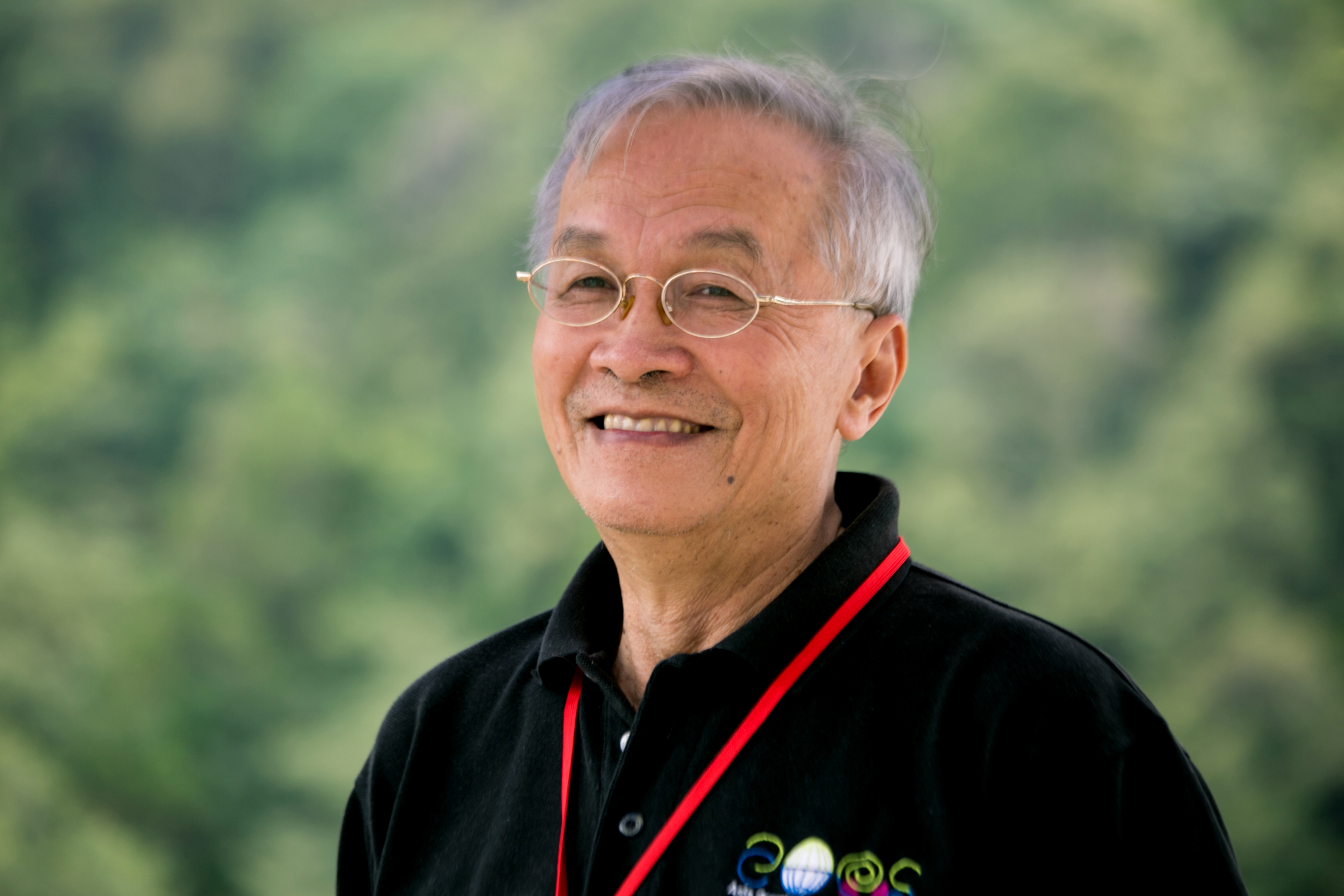
Wing-Huen Ip – 2020 Gerard P. Kuiper Prize 

Wing-Huen Ip

The Division for Planetary Sciences of the American Astronomical Society is pleased to award the 2020 Gerard P. Kuiper Prize for outstanding contributions to the field of planetary science to Professor Wing-Huen Ip at the Institute of Astronomy, National Central University, in Taiwan, for his contributions to advancements in comet plasma physics, solar-system dynamics, and magnetospheric interactions with atmospheres and solid surfaces. One example of his seminal contributions includes his paper in Nature that presented a model for the formation of magnetism-free cavities at Comet Halley; three decades later, the same phenomenon was seen on 67/P Churyumov-Gerasimenko by Rosetta.

Wing has been a ceaseless promoter of the scientific exploration of the solar system in the United States, Europe, and Asia. He was the founding president for the Asia-Oceania Geosciences Society (AOGS), which brought together the geosciences community and planted the seeds of planetary science in the Asia-Oceania region, since becoming one of the world’s leading international scientific organizations, forging new collaborative links between a wide range of fields across the globe.

Wing’s leadership and service has had a significant impact on the international planetary science community, and he has been involved in a variety of international missions to targets throughout the solar system. He is known as one of the three fathers of the Cassini-Huygens mission to Saturn and Titan and played a key role in getting the mission started. He has also participated as a co-investigator on numerous planetary missions including the Rosetta mission, ESA’s Giotto mission to Comet Halley, NASA’s International Cometary Explorer mission, and NASA’s Deep Space-1 mission to Comet Borrelly. He has exerted a strong influence on planetary science through international collaborations and the training and inspiration of young scientists.

In recognition of his scientific productivity, leadership, international collaboration, generosity, and passionate pursuit of solar system exploration, it is with great pleasure that the DPS awards the 2020 Gerard P. Kuiper Prize to Wing-Huen Ip.


Rebekah Dawson – 2020 Harold C. Urey Prize 

Rebekah Dawson

The Division for Planetary Sciences of the American Astronomical Society is pleased to award the 2020 Harold C. Urey Prize for outstanding achievement in planetary research by an early career scientist to Dr. Rebekah Dawson (Pennsylvania State University) in recognition of her groundbreaking research on planetary dynamics, the formation of planetary systems, and the characterization of exoplanets on close-in orbits. Her work combines a deep understanding of planetary dynamics, innovative statistical analysis of astronomical data, and keen insight into emerging trends to yield breakthrough science in both our own solar system and exoplanetary systems.

Rebekah has sorted out complex phenomenology with elegant and precise theoretical work, which has both clarified the interpretation of puzzling observational results and pointed the way toward tests of the models with future observations. An example of this is her early work on understanding radial-velocity data for multiplanet systems, where she re-analyzed archival data for planet 55 Cancri e and discovered previous misinterpretations; in doing so she paved a path for future observations to correctly characterize both this exoplanet and others. Throughout her varied projects that typically connect theory to observations, Rebekah has incorporated advanced statistical methods while keeping the focus on important scientific questions, setting an example for successful incorporation of new techniques in the field.

Rebekah has been invited to produce several reviews, including a synthesis of Kepler results and a comprehensive analysis of the formation of hot Jupiters. Her review paper on hot Jupiters is a milestone in that it synthesizes, interprets, and forecasts the state of the field for a wide range of researchers studying these enigmatic objects. She also exemplifies scientific leadership in her organization of prominent conferences and involvement in planning future NASA missions such as the Large Ultraviolet Optical Infrared Telescope (LUVOIR).

In summary, Rebekah Dawson has examined both new and long-standing scientific problems and through interdisciplinary and systematic analysis has changed the field’s view of several important concepts. The DPS is proud to award the 2020 Urey Prize to Rebekah Dawson.


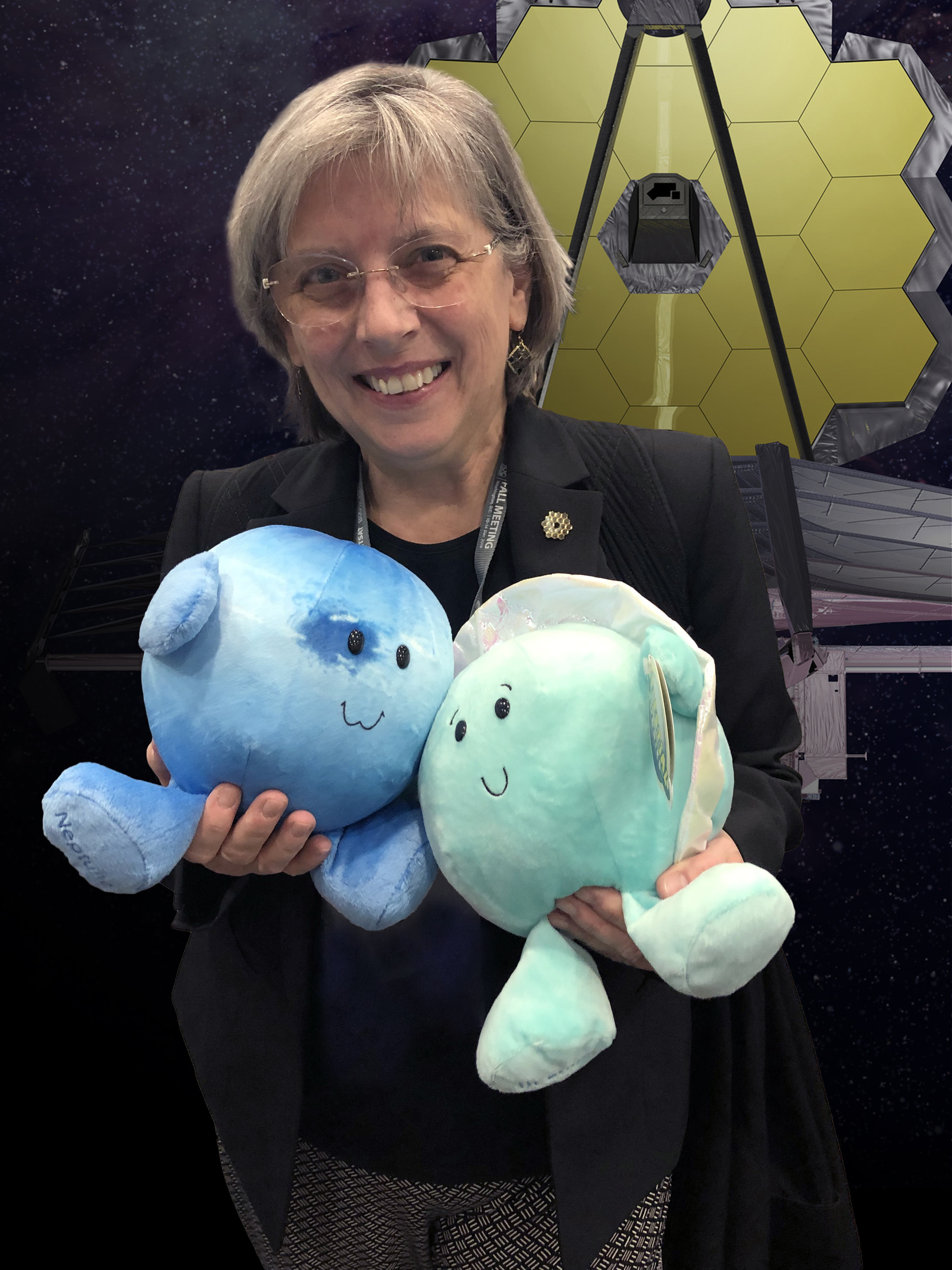
Heidi Hammel – 2020 Harold Masursky Award 

Heidi Hammel

The Division for Planetary Sciences (DPS) of the American Astronomical Society (AAS) is pleased to award the 2020 Harold Masursky Award for meritorious service to planetary science to Dr. Heidi B. Hammel (Association of Universities for Research in Astronomy) for her extensive and impactful service spanning nearly 30 years. She has served in many positions within the DPS and AAS, culminating in her service as DPS Chair (2013-2015). Her professional activities include a diverse set of advisory boards, editorial boards, panels, committees, task forces, and councils. She also participated and sometimes led many Telescope Allocation Committees (TACs) and review boards for Keck, IRTF, Spitzer, and Hubble; for Discovery missions; and Research and Analysis panels.

Heidi has a unique reputation as an advocate for the entire planetary science community, often ensuring that observatories and other facilities consider the full range of science opportunities pertinent to planetary science. For example, as an Interdisciplinary Scientist for the James Webb Space Telescope (JWST), she dedicated all of her guaranteed time to the community. Going even beyond that, she solicited input broadly from the solar-system community to create a comprehensive scientific program that would provide maximum science benefit, waiving all proprietary time for the data so that the solar-system researchers have immediate access.

As a tireless proponent for exploration of the distant ice giants, both via Earth-based astronomy and future space missions, Heidi provides a passionate voice for a broad swathe of observers and theorists studying the outer solar system and looking beyond the era of Cassini, Juno, and New Horizons. Among all of these activities, she makes public outreach and inspiration of the next generation of scientists a high priority, mentoring students and professionals alike. Early in her career she became a well-known “face” of planetary astronomy during the Comet Shoemaker-Levy 9 encounter with Jupiter. Her ability to communicate science to the public is effective and well-received.

This broad range of service highlights her depth and breadth of knowledge, leadership, commitment to mentoring, and programmatic diplomacy, all of which she continues to apply to the benefit of the planetary science community today. DPS is proud to honor Heidi B. Hammel with the Masursky Award.


Ray Jayawardhana – 2020 Carl Sagan Medal 

Ray Jayawardhana

The Division for Planetary Sciences of the American Astronomical Society is pleased to award the 2020 Carl Sagan Medal to Dr. Ray Jayawardhana (aka RayJay) for outstanding contributions to the dissemination of planetary science research to the general public. Like Carl Sagan was, Dr. Jayawardhana is an active, accomplished academic scientist; he is now Dean of the College of Arts and Sciences and Professor of Astronomy at Cornell University.

Ray has published four popular books to widespread acclaim. His first was Star Factories: The Birth of Stars and Planets, followed by Strange New Worlds: The Search for Alien Planets and Life Beyond Our Solar System, which served as the basis for an hourlong CBC TV documentary. His book Neutrino Hunters was published in seven countries and received a Canadian Science Writers’ Association book award in 2013. His most recent book, Child of the Universe, is aimed at kids and builds on the legacy of Carl Sagan by revealing our deep and enduring links with the cosmos. Like Carl, Ray has traveled the globe bringing astronomy to diverse audiences through lectures and the media.

As a popular professor, Ray taught thousands of nonscience majors in introductory astronomy courses. Over three decades, Ray has written frequently for many prestigious and widely read publications, including The Economist, Science (beginning as an undergraduate at Yale), New Scientist, Scientific American, Smithsonian, Astronomy, and Sky & Telescope. Lately Ray has become a frequent contributor to the highly influential, highly selective op-ed pages of the New York Times and the Wall Street Journal. His science writing has been recognized by an American Institute of Physics Science Writing Award in 2003, a Guggenheim Fellowship in 2014, and the Dwight Nicholson Medal for Outreach of the American Physical Society in 2018. Asteroid 4668 Rayjay is named after him.

While reaching out to the general public, Ray has remained a highly published and cited scientist and has been honored repeatedly for his research accomplishments in the fields of exoplanets and planetary formation. The DPS is proud to recognize Ray Jayawardhana for his outstanding public communications on the accomplishments of planetary scientists and astrophysicists with the award of the 2020 Carl Sagan Medal.


Christopher Crockett – 2020 Jonathan Eberhart Planetary Science Journalism Award 

Christopher Crockett

The Division for Planetary Sciences of the American Astronomical Society is pleased to award the 2020 Jonathan Eberhart Planetary Science Journalism Award for distinguished popular writing to freelance writer Dr. Christopher Crockett for his article “How the Moon Landings Changed Our View of the Solar System” published in Knowable magazine on July 16, 2019.

Dr. Crockett started out as a professional astronomer, receiving his PhD in astronomy from the University of California, Los Angeles, in 2011. He worked at Lowell Observatory and the U.S. Naval Observatory, where he focused on a search for young exoplanets. In 2016 his work led to the discovery of a giant exoplanet around the classical T Tauri star CI Tau.

In 2013 Dr. Crockett began his journey as an astronomy writer after he was awarded a Mass Media Fellowship by the American Association for the Advancement of Science. Since then he has worked for Scientific American, Science News, and Sky & Telescope magazines. Currently, he works as a freelancer covering a wide variety of topics ranging from planetary science and astronomy to physics. His work reaches a large audience through several popular science magazines.

In his winning article, published during the 50th anniversary of the Apollo 11 mission, Dr. Crockett describes how the lunar samples returned by the Apollo astronauts continue to transform our understanding of the evolution of the solar system to this day. He describes how the analysis of the samples led to theories that include a period of planetary migration and heavy bombardment on the Moon, and how recent studies cast doubt on these theories. The article emphasizes the need for future lunar exploration and sample return to answer outstanding questions about the solar system.

The DPS is proud to confer the 2020 Jonathan Eberhart Award on Chris Crockett for his outstanding article and to celebrate Knowable magazine for publishing it.

Newsletter 20-37

Issue 20-37, August 9, 2020


+————————————CONTENTS—————————————-+

  1. DPS 2020 ABSTRACTS DUE THIS WEEK!
  2. DPS EDUCATION AND OUTREACH GRANTS – FINAL DEADLINE EXTENDED UNTIL AUGUST 15TH
  3. DECADAL SURVEY WHITE PAPER ON THE SATURN RING SKIMMER MISSION CONCEPT 
  4. ARECIBO OBSERVATORY CALL FOR PROPOSALS
  5. CALL FOR NOMINATIONS: INCREASING THE DIVERSITY AND INCLUSION IN THE LEADERSHIP OF COMPETED SPACE MISSIONS

+——————————————————————————————–+


1———1———1———1———1———1———1———1———1———1

DPS 2020 ABSTRACTS DUE THIS WEEK!


Don’t forget that abstracts for DPS 2020 are due Wednesday, August 12 11:59PM EDT.


Abstracts have limits of 2250 characters (not including spaces).


First authors may submit up to one research abstract plus up to one abstract in each of
the following categories: History; Education and Community Engagement; Decadal
Whitepapers; Workforce


For more information about DPS 2020, please visit: https://aas.org/meetings/dps52


2———2———2———2———2———2———2———2———2———2

DPS EDUCATION AND OUTREACH GRANTS – FINAL DEADLINE EXTENDED UNTIL AUGUST 15TH


The DPS Committee is offering small grants (average amounts of $200 to $500) to

support DPS members to engage in local and virtual education and public engagement

activities. These grants are intended to support DPS member efforts to engage other

members, students, teachers, and the public and can be used for materials, consumables,
equipment but not for salary or travel to DPS meetings. Proposals are being accepted

for programs that will occur by June 1, 2021. We encourage creative solutions for

engagement efforts that also conform to social-distancing requirements. If you have a

question about what is an acceptable cost, please contact the DPS Education and Outreach
Officer, Sanlyn Buxner, [email protected].  Proposals should be emailed to [email protected]

and you will receive an email confirmation.


Applications will be accepted until August 15, 2020. All proposals will be reviewed by

members of the DPS education committee and the executive committee. Complete

directions, including a scoring rubric, can be found at

education/education-outreach-grants/application


Please address any questions to [email protected].


Sanlyn Buxner (Education and Public Outreach Officer) and

Brian Jackson (Deputy Education and Public Outreach Officer)


3———3———3———3———3———3———3———3———3———3

DECADAL SURVEY WHITE PAPER ON THE SATURN RING SKIMMER MISSION CONCEPT 


You are invited to support a white paper describing the Saturn Ring Skimmer 

mission concept, the next step to explore Saturn’s rings, atmosphere, interior, 

and inner magnetosphere.  


In addition to addressing fundamental questions about Saturn and its rings, as 

well as giant planets and astrophysical disk systems in general, the Saturn Ring 

Skimmer would reveal how the rings, magnetosphere, atmosphere, and interior 

of the planet operate as an inter-connected system.  We advocate that this mission 

concept be studied in depth as a potential option for the New Frontiers program.


The paper is available at: 

https://www.seti.org/RingSkimmerWP20


A form to register your support is available at: 

https://www.seti.org/RingSkimmerWP20_support


The paper will be submitted on August 15 to the Planetary Science and Astrobiology 

Decadal Survey. 


Matthew Tiscareno

Mar Vaquero

Matthew Hedman

and the Ring Skimmer team


4———4———4———4———4———4———4———4———4———4

ARECIBO OBSERVATORY CALL FOR PROPOSALS


We invite proposals for the Arecibo 305-m telescope for the Thursday, Sep 3, 2020

(17:00 AST, 21:00 UTC) deadline. These requests should be for telescope/radar usage

within the six-month (or in some cases one-year) period beginning January 1, 2021.


Important notices:

There will be no proposals accepted for Space and Atmospheric Sciences this term

due to 430MHz transmitter upgrades.


Proposals should be prepared under the procedures detailed in our guidelines. Please

note that these were substantially revised recently by the Arecibo Scheduling Advisory
Committee (ASAC) following feedback from Arecibo Observatory Users’ Committee

(AOUC).


We regret that, due to Congressional restrictions on the use of NASA funds, we are

unable to host on-site observers working for institutions in China. Observers from

China are welcome to apply for time as remote or in-absentia observers, but should

meet the criteria for these observing modes.


Proposals must be submitted using the Proposal Submission Tool.

Please email any questions about this call for proposals to Christiano Brum

([email protected]) or Maria Womack ([email protected]) (useful links are

listed in the end of this message).


Sincerely,

Christiano G.M. Brum (ASAC chair) and Maria Womack (ASAC co-chair)


Useful links:

Technical information for Radio Astronomy proposals for this deadline.

Proposal and Observation Preparation Tools (compute LST rise and set times for

sources and to calculate the dates when sources will be visible at nighttime).

Astronomy

Planetary Radar


5———5———5———5———5———5———5———5———5———5

CALL FOR NOMINATIONS: INCREASING DIVERSITY AND INCLUSION IN THE LEADERSHIP OF COMPETED SPACE MISSIONS


The National Academies is undertaking a new study that will recommend actions

to increase diversity, inclusion, equity and accessibility in the leadership of competed

space missions proposed to the NASA Science Mission Directorate (SMD).  In response

to a request from the NASA SMD, this study will examine the current mission proposal

system at NASA SMD and identify elements of the system that may present impediments

to applicants, limiting the diversity of the competitive pool.  As part of its work, the

committee will engage with a wide range of experts in the relevant social science and

space science communities. 

Please submit your nominations using this form.  Nominations will receive maximum
consideration if submitted by August 17, 2020.

Nominees with backgrounds in the following areas are encouraged:

·       Space science research (in areas such as planetary sciences, earth sciences, heliophysics, astronomy and astrophysics)

·       Space science mission and program management

·       Management of investigator-led multi-institutional projects at government science and engineering funding agencies

·       Workforce studies

·       Relevant social sciences research in areas such as organizational psychology and human systems integration

·       Diversity, equity and inclusion issues in education and workplaces

·       Relevant work in areas such as leadership development research and institutional/organizational change management


Visit the Study Website


———————————+ 

Send submissions to: 

Anne Verbiscer, DPS Secretary ([email protected]


You are receiving this email because you are a DPS member.

To unsubscribe or update your information, please send your request

to [email protected]. The more general AAS privacy policy is available

online at https://aas.org/about/policies/privacy-policy. Current and back

issues of the DPS Newsletter can be found at newsletters  

–>

Newsletter 20-36

Issue 20-36, August 2, 2020


+————————————CONTENTS—————————————-+

  1. MESSAGE FROM THE CHAIR: DPS 2020 ELECTION RESULTS
  2. DPS 2020 MEETING UPDATES
  3. NEW DPS DONATION FUND: SUPPORT UNDERREPRESENTED MINORITY COMMUNITIES IN PLANETARY SCIENCE
  4. DPS EDUCATION AND OUTREACH GRANTS – FINAL DEADLINE EXTENDED UNTIL AUGUST 15TH
  5. DPS 2020 PRIZES
  6. VENUS CONFERENCE GENERAL ANNOUNCEMENT
  7. NASA POSTDOCTORAL FELLOWSHIP – APPLICATION DEADLINE NOVEMBER 1, 2020

+——————————————————————————————–+


1———1———1———1———1———1———1———1———1———1

MESSAGE FROM THE CHAIR: 2020 DPS ELECTION RESULTS


It is my pleasure to announce the results of the 2020 DPS elections. The turnout 

this year was outstanding as over 45% of the membership voted in this election, 

topping last year’s record turnout of 41%. Thank you to the DPS membership for 

your strong participation.


Congratulations to Diana Blaney, who is the incoming Vice-Chair, to Jessie 

Christiansen and Kelsi Singer, incoming Committee members, and to Maya Yanez, 

the first Student Representative to the DPS Committee. These elected members 

will begin their terms of service after the Members meeting at the 52nd Annual 

DPS meeting in October.


The Division for Planetary Sciences relies on volunteers for its leadership 

positions and we thank all members who were willing to run for these elected 

positions. A special thanks to our Nominating Subcommittee, Carrie Nugent, 

Matthew Knight, and Desireé Cotto-Figueroa, for assembling the 2020 slate 

of candidates, Secretary Anne Verbiscer, for running the elections and to the 

AAS for their technical support.


Amanda Hendrix

DPS Chair


2———2———2———2———2———2———2———2———2———2

DPS 2020 MEETING UPDATES 


Meeting Website: https://aas.org/meetings/dps52


#DPS2020


* New this year! * Plenary sessions will be comprised of panel discussions on a 

variety of exciting planetary science topics! Meeting attendees can watch pre-recorded 

plenary talks ahead of time and then participate in live Zoom panel discussions 

(with Q&A) among invited plenary speakers. Meeting attendees can submit questions 

via Slack channels before or during the Zoom session.


Moderated parallel sessions will consist of topical Zoom Q&A sessions. Meeting 

attendees can watch pre-recorded talks, and view iPosters, ahead of time. Questions 

for presenters can be uploaded via Slack channels and/or during the live Zoom sessions.


Ongoing asynchronous (non-live) topical Slack discussions among presenters and 

attendees will occur throughout the week.


All talks (invited and contributed) will be prerecorded and available for viewing by 

registrants Oct 19. iPosters will also be available for viewing beginning Oct 19. 

Meeting registrants may upload questions, ahead of the meeting, via Slack channels. 

Stay tuned for instructions regarding the Slack channels.


When you submit your abstract, you will have a choice of presentation type: iPoster 

or pre-recorded talk. Wondering whether you should do an iPoster or a pre-recorded 

talk?  You can learn more about these presentation types at https://aas.org/meetings/dps52/abstracts 

under “Presentation Guidelines and Tips.”


There is a (1) one abstract limit for submission of Research Contributions. Additional 

abstracts may be submitted for the following types of submissions. We encourage you 

to submit to one of these categories, in addition to any research you will be presenting: 


            • History

            • Education and Community Engagement

            • Workforce

            • Decadal Whitepapers


Abstracts are limited to 2250 characters (not counting spaces).


3———3———3———3———3———3———3———3———3———3

NEW DPS DONATION FUND: SUPPORT UNDERREPRESENTED MINORITY COMMUNITIES IN PLANETARY SCIENCE


The DPS has created a new fund to support underrepresented minority communities in

planetary science. Funds from this account will be used to build partnerships between

the DPS and national organizations, such as the National Society of Black Physicists

(NSBP), and to enhance participation of underrepresented minority scientists at the

annual DPS meeting. The DPS Committee will work with our new partners to determine

how the money will be distributed. The fund has been seeded by an initial contribution

of $10,000 from DPS funds, and donations are most welcome.


Donate here: Inclusivity/support-underrepresented-minority-communities-planetary-science


4———4———4———4———4———4———4———4———4———4

DPS EDUCATION AND OUTREACH GRANTS – FINAL DEADLINE EXTENDED UNTIL AUGUST 15TH


The DPS Committee is offering small grants (average amounts of $200 to $500) to

support DPS members to engage in local and virtual education and public engagement

activities. These grants are intended to support DPS member efforts to engage other

members, students, teachers, and the public and can be used for materials, consumables,
equipment but not for salary or travel to DPS meetings. Proposals are being accepted

for programs that will occur by June 1, 2021. We encourage creative solutions for

engagement efforts that also conform to social-distancing requirements. If you have a

question about what is an acceptable cost, please contact the DPS Education and Outreach
Officer, Sanlyn Buxner, [email protected].  Proposals should be emailed to [email protected]

and you will receive an email confirmation.


Applications will be accepted until August 15, 2020. All proposals will be reviewed by

members of the DPS education committee and the executive committee. Complete

directions, including a scoring rubric, can be found at

education/education-outreach-grants/application


Please address any questions to [email protected].


Sanlyn Buxner (Education and Public Outreach Officer) and

Brian Jackson (Deputy Education and Public Outreach Officer)


5———5———5———5———5———5———5———5———5———5

DPS 2020 PRIZES


DPS Prize awardees will be announced in ~mid-August. Information about the prizes

can be found at prizes


6———6———6———6———6———6———6———6———6———6

VENUS CONFERENCE GENERAL ANNOUNCEMENT

Subject: Venus Science Today, A mini-Zoom conference 31 August – 3 September 2020 

We would like to invite you to consider attending and/or contributing a talk to Venus 

Science Today, a mini-Zoom conference. Venus Science Today will showcase talks 

about Venus research published in the past 12 months, or work in progress. The 

conference will take place over four days, but only two hours per day to allow 

simultaneous participation from Europe, the USA and East Asia. 

Conference detail can be found here: 
https://www.giss.nasa.gov/meetings/venus2020/ 

If you wish to contribute a talk you can register here: 
https://docs.google.com/forms/d/e/1FAIpQLSe_sLS5O55px7DiJbBJk6lhnS4VCmz8UJgEzHsyB0R6FPk5Aw/viewform?usp=sf_link 

This virtual conference is co-hosted remotely by the NASA Goddard Institute 

for Space Studies and the Akatsuki Science Team. 

We look forward to seeing you soon. 
Sincerely 
SOC Members 
Michael Way, Kandi Jessup, Cedric Gillmann, & Takehiko Satoh 


7———7———7———7———7———7———7———7———7———7

NASA POSTDOCTORAL FELLOWSHIP – APPLICATION DEADLINE NOVEMBER 1, 2020


The NASA Postdoctoral Program offers US and international scientists the opportunity 

to advance their research while contributing to NASA’s scientific goals.  The NPP 

supports fundamental science; explores the undiscovered; promotes intellectual 

growth; and encourages scientific connections.


Selected by a competitive peer-review process, NPP Fellows complete one- to three-year 

Fellowship appointments that advance NASA’s missions in earth science, heliophysics, 

planetary science, astrophysics, space bioscience, aeronautics and engineering, human 

exploration and space operations, and astrobiology.


Current NPP research opportunities in planetary science can be viewed here: 

NPP Planetary Sciences Research Opportunities.


Applicants must have a Ph.D. or equivalent degree in hand before beginning the fellowship, 

but may apply while completing the degree requirements. U.S. citizens, Lawful Permanent 

Residents, and foreign nationals eligible for J-1 status as a Research Scholar may apply.


Stipends start at $60,000 per year, with supplements for high cost-of-living areas and for 

certain academic specialties. Financial assistance is available for relocation and health 

insurance, and $10,000 per year is provided for professional travel.


Applications are accepted three times each year: March 1, July 1, and November 1.


For further information and to apply, visit: https://npp.usra.edu/


Questions: [email protected]


———————————+ 

Send submissions to: 

Anne Verbiscer, DPS Secretary ([email protected]


You are receiving this email because you are a DPS member.

To unsubscribe or update your information, please send your request

to [email protected]. The more general AAS privacy policy is available

online at https://aas.org/about/policies/privacy-policy. Current and back

issues of the DPS Newsletter can be found at newsletters  

–>
Message from the Chair: 2020 DPS Election Results

It is my pleasure to announce the results of the 2020 DPS elections. The turnout this year was outstanding as over 45% of the membership voted in this election, topping last year’s record turnout of 41%. Thank you to the DPS membership for  your strong participation.

Congratulations to Diana Blaney, who is the incoming Vice-Chair, to Jessie Christiansen and Kelsi Singer, incoming Committee members, and to Maya Yanez, the first Student Representative to the DPS Committee. These elected members will begin their terms of service after the Members meeting at the 52nd Annual DPS meeting in October.

The Division for Planetary Sciences relies on volunteers for its leadership positions and we thank all members who were willing to run for these elected positions. A special thanks to our Nominating Subcommittee, Carrie Nugent, Matthew Knight, and Desireé Cotto-Figueroa, for assembling the 2020 slate of candidates, Secretary Anne Verbiscer, for running the elections and to the AAS for their technical support.


Amanda Hendrix

DPS Chair


2 Aug 2020

Michael I. Mishchenko (1959-2020)

It is with great sadness that we announce the passing of our colleague Michael I. Mishchenko.  Dr. Michael Mishchenko was a graduate of the Moscow Institute of Physics and Technology and received his PhD (with honors) and Habilitation Doctoral degrees in physics from the National Academy of Sciences of Ukraine (NASU). He worked at the Main Astronomical Observatory in Kiev (1987-1992) and then joined the research staff of the NASA Goddard Institute for Space Studies in New York. Michael’s research interests included electromagnetic scattering by morphologically complex particles and particle groups, polarimetry, aerosol and cloud remote sensing, and ocean optics.

One of Michael’s principal accomplishments was his development of efficient T-matrix methods to enable numerically exact computer calculations of scattering and absorption by complex dispersions of randomly and preferentially oriented atmospheric particulates. T-matrix techniques are based on direct solutions of the Maxwell equations. The resulting computer programs work for morphologically complex particles with large size parameters, with benchmark accuracy over their range of applicability. Michael’s T-matrix computer programs have been publicly available on-line since 1997, and have been used in more than 1450 peer-reviewed publications. Michael himself used T-matrix methods in pioneering studies of the effects of morphological particle complexities on the radiative, polarization, and depolarization properties of mineral aerosols, fractal-soot and soot-containing aerosols, soot-contaminated cloud droplets, contrail particles, and polar stratospheric and noctilucent clouds.

Beyond scattering by single particles Michael derived the general theory of radiative transfer in particulate media directly from the Maxwell equations, an accomplishment that had eluded scientists for over a century. This microphysical derivation established the existence of a fundamental link between electromagnetics, radiative transfer, and coherent backscattering, defined the formal conditions of applicability of the radiative transfer equation, and clarified the physical nature of measurements taken with directional radiometers. It also identified and dispelled misconceptions inherent in conventional phenomenological radiometry and radiative transfer theory. As a result of Michael’s work, the disciplines of radiative transfer and directional radiometry are now legitimate branches of physical optics.

While Michael was a consummate theoretician he also managed the NASA/GEWEX Global Aerosol Climatology Project developing an innovative algorithm to infer aerosol properties from multi-channel ISCCP radiance data and compiling the first global satellite climatology of aerosol optical thickness and size for the full period of satellite observations.  Building on this work Michael’s seminal sensitivity analysis of passive algorithms for the retrieval of aerosol properties from space using radiance and polarization data was instrumental in the development of the NASA Glory Space Mission for which Michael served as Project Scientist.

Dr. Mishchenko published 7 monographs, 23 peer-reviewed book chapters, and some 300 journal papers. He was Editor-in-Chief of the Journal of Quantitative Spectroscopy and Radiative Transfer and of Physics Open. He previously served as Topical Editor on scattering and meteorological optics for Applied Optics and was an editorial board member for several other scholarly journals.

An elected Fellow of AGU, OSA, AMS, IoP (UK), and the Electromagnetics Academy, Dr. Mishchenko was the recipient of numerous professional awards including the AMS Henry G. Houghton Award, Hendrik C. van de Hulst Award from Elsevier, and two NASA Exceptional Scientific Achievement Medals. The International Astronomical Union honored Michael by giving Asteroid 22686 (1998 QL53) the name “Mishchenko”.Michael passed away on July 21, 2020.  His loss and his legacy are enormous.

Andy Lacis, Larry Travis, Barbara Carlson, and Brian Cairns

NASA GISS, 2880 Broadway, New York, NY 10025

Newsletter 20-35

Issue 20-35, July 27, 2020


+————————————CONTENTS—————————————-+

  1. IN MEMORIAM: MICHAEL I. MISHCHENKO (1959-2020)
  2. DPS ENVIRONMENTAL AFFAIRS SUBCOMMITTEE WHITE PAPER
  3. FINAL REMINDER: VOTE IN THE DPS 2020 ELECTIONS
  4. JWST CYCLE 1 GENERAL OBSERVER (GO) PROPOSAL DEADLINE
  5. OUTER PLANETS ASSESSMENT GROUP (OPAG) VIRTUAL MEETING
  6. FALL AGU VIRTUAL MEETING, ABSTRACT SUBMISSIONS OPEN

+——————————————————————————————–+


1———1———1———1———1———1———1———1———1———1

IN MEMORIAM: MICHAEL I. MISHCHENKO (1959-2020)


It is with great sadness that we announce the passing of our colleague Michael I. 

Mishchenko.  Dr. Michael Mishchenko was a graduate of the Moscow Institute of 

Physics and Technology and received his PhD (with honors) and Habilitation Doctoral 

degrees in physics from the National Academy of Sciences of Ukraine (NASU). He 

worked at the Main Astronomical Observatory in Kiev (1987-1992) and then joined 

the research staff of the NASA Goddard Institute for Space Studies in New York. 

Michael’s research interests included electromagnetic scattering by morphologically 

complex particles and particle groups, polarimetry, aerosol and cloud remote sensing, 

and ocean optics.

One of Michael’s principal accomplishments was his development of efficient T-matrix 

methods to enable numerically exact computer calculations of scattering and absorption 

by complex dispersions of randomly and preferentially oriented atmospheric particulates. 

T-matrix techniques are based on direct solutions of the Maxwell equations. The resulting 

computer programs work for morphologically complex particles with large size parameters, 

with benchmark accuracy over their range of applicability. Michael’s T-matrix computer 

programs have been publicly available on-line since 1997, and have been used in more than 

1450 peer-reviewed publications. Michael himself used T-matrix methods in pioneering 

studies of the effects of morphological particle complexities on the radiative, polarization, 

and depolarization properties of mineral aerosols, fractal-soot and soot-containing aerosols, 

soot-contaminated cloud droplets, contrail particles, and polar stratospheric and noctilucent clouds.

Beyond scattering by single particles Michael derived the general theory of radiative transfer 

in particulate media directly from the Maxwell equations, an accomplishment that had eluded 

scientists for over a century. This microphysical derivation established the existence of a 

fundamental link between electromagnetics, radiative transfer, and coherent backscattering, 

defined the formal conditions of applicability of the radiative transfer equation, and clarified 

the physical nature of measurements taken with directional radiometers. It also identified and 

dispelled misconceptions inherent in conventional phenomenological radiometry and radiative 

transfer theory. As a result of Michael’s work, the disciplines of radiative transfer and directional 

radiometry are now legitimate branches of physical optics.

While Michael was a consummate theoretician he also managed the NASA/GEWEX Global 

Aerosol Climatology Project developing an innovative algorithm to infer aerosol properties 

from multi-channel ISCCP radiance data and compiling the first global satellite climatology 

of aerosol optical thickness and size for the full period of satellite observations.  Building on 

this work Michael’s seminal sensitivity analysis of passive algorithms for the retrieval of aerosol 

properties from space using radiance and polarization data was instrumental in the development 

of the NASA Glory Space Mission for which Michael served as Project Scientist.

Dr. Mishchenko published 7 monographs, 23 peer-reviewed book chapters, and some 300 

journal papers. He was Editor-in-Chief of the Journal of Quantitative Spectroscopy and 

Radiative Transfer and of Physics Open. He previously served as Topical Editor on scattering 

and meteorological optics for Applied Optics and was an editorial board member for several 

other scholarly journals.

An elected Fellow of AGU, OSA, AMS, IoP (UK), and the Electromagnetics Academy, 

Dr. Mishchenko was the recipient of numerous professional awards including the AMS 

Henry G. Houghton Award, Hendrik C. van de Hulst Award from Elsevier, and two NASA 

Exceptional Scientific Achievement Medals. The International Astronomical Union honored 

Michael by giving Asteroid 22686 (1998 QL53) the name “Mishchenko”.

Michael passed away on July 21, 2020.  His loss and his legacy are enormous.


Andy Lacis, Larry Travis, Barbara Carlson, and Brian Cairns

NASA GISS, 2880 Broadway, New York, NY 10025


2———2———2———2———2———2———2———2———2———2

DPS ENVIRONMENTAL AFFAIRS SUBCOMMITTEE WHITE PAPER


The DPS Environmental Affairs Subcommittee (DPSEAS) has written a white paper 

“Pathways to Sustainable Planetary Science” to be submitted to the Decadal Survey. 

Please have a look 

wp-content/uploads/files/decadal_survey/DPSEAS_White_Paper.pdf

and considering endorsing at 

https://docs.google.com/forms/d/e/1FAIpQLSdxyIx4iOVHHmOIpYMMX0OQTlQbgdOH8SRqjGI4k7mN-5wOHg/viewform


3———3———3———3———3———3———3———3———3———3

FINAL REMINDER: VOTE IN THE 2020 DPS ELECTIONS


Thank you to those have already voted in the 2020 DPS Elections. As of today, 506 DPS 

Members have cast their ballots, a 41% turnout, matching last year’s record turnout!  

We are very close to beating that record that this year!  


Please vote today if you have not already done so as this is the FINAL WEEK to cast your 

ballot. The 2020 election for Vice-Chair and Committee closes this Friday, July 31, 2020.


We are electing the first-ever student representatives to the DPS Committee this year, 

so please take a moment to review the candidate statements and cast your vote. Thanks! 


To vote you should have received an email from the AAS asking you to cast your ballot. 

Each email contains a link with a unique code that will bring you to the ballot site. There 

is no need to enter your AAS login information. You will be able to review the candidate 

statements and cast your vote. 


You should vote for one of the two candidates for Vice-Chair: 

·       Diana Blaney

·       Nader Haghighipour

The Vice-Chair will become the DPS Chair in October 2021.


You should vote for two of the four candidates for DPS Committee: 

·       Jessie Christiansen

·       Edgard Rivera-Valentín

·       Kelsi Singer

·       Matt Tiscareno 

The successful candidates will serve on the DPS Committee for three years.


You should vote for one of the two candidates for the student representatives to the 

DPS Committee:

·       Malena Rice

·       Maya Yanez

The successful student candidate will serve on the DPS Committee for two years.


This information also appears on the election page when you click on the link in your 

email sent from the AAS.


4———4———4———4———4———4———4———4———4———4

JWST CYCLE 1 GENERAL OBSERVER (GO) PROPOSAL DEADLINE


The major disruption caused by the COVID-19 pandemic continues to affect all of us. 
Integration and testing of the James Webb Space Telescope are among the activities impacted.
NASA has re-evaluated the project schedule and announced a launch readiness date of October 31, 2021.


After consulting with the JWST Users Committee, STScI, NASA, ESA and CSA

have finalized the review schedule for Cycle 1 proposals. 


The JWST Cycle 1 General Observer (GO) proposal deadline will be 08:00 pm Eastern

Time (ET) on Tuesday November 24, 2020. 

We are announcing the deadline well in advance, so that proposers have flexibility to

prepare proposals as their COVID-impacted schedules permit.  The Call for Proposals 

remains unchanged from its release earlier this year. All proposal tools and documentation 

are available to proposers.


The JWST Telescope Allocation Committee (TAC) will review the proposals in February

2021 and recommend the Cycle 1 GO science program for announcement in March 2021.

We send best wishes to our user community and their families in these challenging times.

As always, please contact the jwst helpdesk if you have any questions.


5———5———5———5———5———5———5———5———5———5

OUTER PLANETS ASSESSMENT GROUP (OPAG) VIRTUAL MEETING


The Outer Planets Assessment Group (OPAG) meeting will be held virtually

September 1–3, 2020. Each day, the meeting will run from 9:00 a.m. to 2:00 p.m. PDT
(12:00 p.m. to 5:00 p.m. EDT).


The focus of this timely meeting will be on aspects of the decadal survey that are

relevant to OPAG. Status reports will be requested from the Decadal Survey co-chairs

and panel chairs.


Registration


Registration fees are not being collected for this virtual meeting, but registration is

required. To continue receiving updates complete the electronic registration form.

Registered attendees will receive an e-mail prior to the workshop from Houston

Meeting Info with virtual connection information. 

https://www.lpi.usra.edu/opag/


For more information, contact Meeting and Publication Services

USRA/Lunar and Planetary Institute [email protected]


6———6———6———6———6———6———6———6———6———6

FALL AGU VIRTUAL MEETING, ABSTRACT SUBMISSIONS OPEN

The American Geophysical Union Fall Virtual Meeting 2020 abstract
submission site is now open. Go to: http://www.agu.org/Fall-Meeting

Abstract submission guidelines are at: http://www.agu.org/Fall-Meeting/2020/Present/Abstracts
Session Viewer/Abstract submission site is at: http://agu.confex.com/agu/fm20/prelim.cgi/Home/0

We will be keeping all sites updated with information regarding the virtual meeting

as the planning continues.


AGU FALL MEETING SESSION: “ENCELADUS: A HABITABLE WORLD BECKONS”


Saturn’s small yet active icy moon remains one of the most scientifically compelling

worlds in the solar system.


In this long-running special session, now in its 15th year, we seek to sustain a highly
multidisciplinary and stimulating atmosphere that enables a deeper understanding of

the nature and causes of Enceladus’ activity. We encourage submissions that specifically

provide insights into the moon’s interior, biological potential, surface morphology, south

polar plume, and space environment from diverse disciplines: e.g., planetary geology,
comparative planetology of relevant icy satellites, terrestrial studies, hydrothermal systems,
oceanography, geodynamics, tectonics, volcanology, space physics, organic chemistry,
geochemistry, astrobiology, origins of life, microbiology, and biosignatures. Field,

laboratory, and theoretical studies are all welcome.


We also welcome contributions on Cassini data analysis and modeling, as well as instrument

and mission concept developments that will lay the groundwork for a new generation of

explorers to Enceladus.


Abstract submission deadline: July 29, 2020

Abstract submission link: https://agu.confex.com/agu/fm20/prelim.cgi/Session/101707


Chris Glein (SwRI) and Bill McKinnon (WashU)


AGU FALL MEETING SESSION: P006 – CARBON ACROSS THE SOLAR SYSTEM
ON THE EVE OF RETURNING ASTEROID SAMPLES


Studies of the existence and state of carbonaceous material on Solar System bodies

is at the forefront of planetary research. Samples of low-albedo asteroid 162173 Ryugu

are en route to the Earth on the Hayabusa2 probe, and a rehearsal of the initial sample

analysis is planned. At this time, the OSIRIS-REx space probe sampling of low-albedo

asteroid 101955 Bennu has been rehearsed. As a framework for these studies, telescopic,
laboratory and theoretical studies of carbon in all its forms have recently snowballed.

The 2018 SSERVI Carbon in the Solar System workshop launched a series of presentations

and discussions at various planetary science venues, enabling an information exchange

around the weathering of carbonaceous compounds in response to thermal processes and
irradiation, and what implications these compositions have for understanding material

processing in the Solar System. We will generate and share ideas to support research

and the imminent arrival of new samples.


We invite abstracts to be submitted through July 29:


https://www.agu.org/Fall-Meeting/2020/Present/Abstracts


Conveners:


Faith Vilas (Planetary Science Institute)

Amanda R. Hendrix  (Planetary Science Institute)


AGU FALL MEETING SESSION: “GEOLOGY AND GEOPHYSICS OF SATELLITES 

AND SMALL BODIES: TO IO, AND BEYOND”


We wish to invite abstracts to the AGU Fall Meeting Planetary Science session 

“Geology and Geophysics of Satellites and Small Bodies: to Io, and Beyond. 

This is an exciting time for exploring the dynamic, evolving small bodies in the 

Solar System.  The AGU abstract submission site will open in late June.  The 

deadline for all submissions is Wednesday, 29 July at 23:59 EDT.  We hope to 

see you (virtually!) in December.


Conveners:  A.G. Davies, K. de Kleer, T. McCord, T. V. Johnson


This is a session of contributed and invited papers on the geology and geophysics 

of active or recently active satellites and dwarf planets, including small exoplanets. 

Research is progressing rapidly due to the stream of new spacecraft and Earth-based 

telescope data.  Additionally, there are exciting future missions to the Jovian system 

under development, including Europa Clipper, JUICE, and the proposed Io Volcano 

Observer. Papers are welcomed on processes that affect the interiors of individual 

bodies as well as the surface expressions they produce. Included are the effects and 

chronology of internal heating (tidal dissipation and radioactivity), structural evolution 

(e.g., differentiation), tides, and other geophysical and geological processes (e.g., 

volcanism, tectonism).


Sincerely,

Ashley Gerard Davies, Katherine de Kleer, Tom McCord and Torrence Johnson.  


AGU FALL MEETING SESSION “LOOKING AHEAD TO THE FUTURE OF PLANETARY SCIENCE”


We’d like to invite abstracts to the virtual AGU session “ Looking ahead to the future of
Planetary Science” to be submitted through https://www.agu.org/Fall-Meeting/2020/Present/Abstracts
through July 29th, and look forward to seeing you for a fascinating session. 


LOOKING AHEAD TO THE FUTURE OF PLANETARY SCIENCE


Description:

In preparation for the NASA Decadal Survey, the Planetary Science Division awarded

funds to study eleven mission concepts under the rubric of PMCS (Planetary Mission

Concept Studies). This program element solicited proposals for mission concept studies

that addressed NASA’s planetary science objectives, which are to ascertain the content,

origin, and evolution of the Solar System and the potential for life elsewhere. The oral

session will highlight the final reports of these Planetary Science Decadal Survey studies,

while abstracts for additional concepts that the community may have will be solicited to

be presented in a poster session.


Thanks a lot,

Doris Daou, Pat Beauchamp and Julie Castillo-Rogez


AGU FALL MEETING SESSION “THE FUTURE OF PLANETARY ATMOSPHERIC,
SURFACE, AND INTERIOR SCIENCE USING RADIO AND LASER LINKS”


Radio science has been used to study solar system phenomena and fundamental physics

for over five decades. The scope of this session includes radio and optical science techniques

to study ocean worlds, planetary and small body interiors, the dynamics, composition,

and thermal structure of planetary atmospheres, to characterize the scattering, electrical,

and other properties of planetary surfaces, to study solar system dynamics, and to conduct

tests in fundamental physics. Of particular interest are presentations on radio science investigations
motivated by U.S. Planetary Science Decadal Survey white papers. Relevant technology topics
include but are not limited to the design of small spacecraft networks and constellations, advances
in flight and ground instrumentation, advances in space clock technologies, novel communications
architectures including optical links, advances in radio and laser technologies, and new techniques
and instrumentation for entry probe radio science.


The conveners invite abstracts to be submitted through July 29 at https://www.agu.org/Fall-Meeting/2020/Present/Abstracts 


David H. Atkinson, Sami W. Asmar, Luciano Iess, Silvia Tellmann


AGU FALL MEETING SESSION “TITAN – PAST, PRESENT AND FUTURE INVESTIGATIONS OF SATURN’S GIANT MOON”


Titan’s unique standing as the only moon in the solar system with a dense atmosphere

provides an environment like no other. Its complex meteorology of rainfall, wind, rivers,

lakes and seas interacting with a solid surface is reminiscent of the planets of the inner

solar system, while its icy crust and deep liquid water interior provide comparison to outer

solar system ocean worlds, such as Europa, Ganymede and Enceladus. Titan alone straddles

these diverse environments, providing a fertile natural laboratory for studying one-of-a-kind
chemistry, dynamics, geology and more. This session welcomes new results from past missions
including Voyager and Cassini-Huygens; present day modeling, observations and experiments;
and on-going scientific research to prepare for future missions including Dragonfly.


The conveners invite abstracts to be submitted through
https://www.agu.org/Fall-Meeting/2020/Present/Abstracts through July 29th, and look forward
to a session filled with exciting new results.


Conor Nixon, Alex Hayes, Kathy Mandt and Christophe Sotin


AGU FALL MEETING SESSION “CONCEPTS FOR FUTURE PLANETARY SCIENCE
MISSIONS AND INSTRUMENTS” (E-LIGHTNING)


Today planetary science missions are exploring the solar system as never before.

NASA spacecraft are headed to targets from Mercury to the Kuiper Belt, and aiming

to return the first samples from Mars and asteroid Bennu. ESA spacecraft are reaching

new targets from Mercury to Jupiter, and a wave of other missions from countries around

the world are targeting the Moon, Mars, near-Earth asteroids and beyond, with an dizzying

array of orbiters, rovers and landers. It is an exciting, dynamic time for planetary scientists

with new opportunities to propose mission concepts ranging from small Cubesats to traditional
large missions. This session solicits interactive electronic poster (e-Lightning) presentations

on novel mission and instrument concepts designed for future planetary science missions. 


Abstract submissions are encouraged on all relevant mission and instrument concepts at:
https://www.agu.org/Fall-Meeting/2020/Present/Abstracts by July 29th. 


We look forward to another very interesting session in December.

Conor Nixon, Morgan Cable, Charles Hibbitts, Melissa Trainer


AGU-2020 SESSION ON PLANETARY ACCRETION AND DIFFERENTIATION


We invite contributions to the session “Accretion and differentiation of rocky planets:
perspectives from geophysics, geochemistry, & astronomy” at the AGU Fall Meeting 

from 7-11 December 2020, which will be at least partially virtual this year. We welcome
contributions from all disciplines to advance the understanding of the formation and
differentiation of rocky planets including, but not limited to, geochemistry, geophysics,
cosmochemistry, planetary science, and astronomy:
https://agu.confex.com/agu/fm20/prelim.cgi/Session/101356. The AGU

abstract portal is already open and the deadline for submissions is Wednesday, 29 July.

Session description: The simultaneous advent of high-resolution observations of planet-

forming disks and enhanced prospects to characterize rocky exoplanets highlights the need

for increasing interdisciplinary collaboration to understand the birth and life cycle of terrestrial
worlds in our solar system and exoplanetary systems. Therefore, this session welcomes

abstracts that address new observational, theoretical, and laboratory constraints on the 

formation of Earth and other terrestrial planets in the solar system as well as in exoplanetary
systems. This includes modeling, observational, and experimental studies related to properties

of planetesimals, impacts, pebble accretion, core segregation, moon formation, crust–mantle
differentiation, atmosphere formation, or other major geophysical/geochemical processes that
fundamentally shape the evolution of rocky planetesimals and planets during their formation

and early evolution.

Conveners: Laura Schaefer (Stanford), Rebecca Fischer (Harvard), Tim Lichtenberg (Oxford)
Invited Speakers: Bethany Chidester (UC Davis), Jennifer Bergner (UChicago)
Sections: Study of Earth’s Deep Interior (primary), Mineral and Rock Physics, Planetary Science
Themes: Origin and evolution, Planetary atmospheres, Planetary interiors, Planetary Geochemistry

———————————+ 

Send submissions to: 

Anne Verbiscer, DPS Secretary ([email protected]


You are receiving this email because you are a DPS member.

To unsubscribe or update your information, please send your request

to [email protected]. The more general AAS privacy policy is available

online at https://aas.org/about/policies/privacy-policy. Current and back

issues of the DPS Newsletter can be found at newsletters

–>

Newsletter 20-34

Issue 20-34, July 22, 2020


+————————————CONTENTS—————————————-+

  1. 52nd DPS MEETING: OPEN FOR ABSTRACT SUBMISSIONS AND REGISTRATION
  2. HARTMANN STUDENT GRANTS FOR DPS
  3. COMET C/2020 F3 NEOWISE
  4. ARECIBO OBSERVATORY TOWN HALL – WEDNESDAY, JULY 29 AT 2PM EASTERN
  5. FALL AGU VIRTUAL MEETING, ABSTRACT SUBMISSIONS OPEN

+——————————————————————————————–+


1———1———1———1———1———1———1———1———1———1

52nd DPS MEETING: OPEN FOR ABSTRACT SUBMISSIONS AND REGISTRATION


https://aas.org/meetings/dps52


We hope to “see” you at this year’s DPS meeting, Oct 25-30.  

Member registration rate is $160; student rate is $75.


Abstracts will be due Aug 12, and submitters can choose between a preferred format 

of a pre-recorded talk or an iPoster. We will be announcing information on how to 

make a pre-recorded talk and an iPoster in the coming days.


2———2———2———2———2———2———2———2———2———2

HARTMANN STUDENT GRANTS FOR DPS

A generous contribution from William K. Hartmann, supplemented by member
contributions and matching funds from the DPS Committee, has enabled a limited
number of student grants to assist participation by early-career scientists at
the annual DPS meeting.

***NOTE: Due to the COVID-19 pandemic, the DPS meeting will be virtual this year. 

Hartmann funds, which are usually used to cover travel expenses, will be used this year 

to support meeting registration for students.***

** Application details are at meetings/travel_grant_application

Grants are primarily intended for students, but post-doctoral scientists
without other means of support will also be considered.

The due date for applications is August 20, 2020 11:59 PM PDT.

The DPS Leadership is also soliciting additional contributions from members
for the Hartmann Fund. Your tax-deductible gift promotes the careers of our next
generation of planetary scientists. Thanks so much for your generosity.


3———3———3———3———3———3———3———3———3———3

COMET C/2020 F3 NEOWISE


Comet C/2020 F3 NEOWISE makes its closest approach to the Earth today, and it is

visible to observers in the Northern Hemisphere roughly 1-1.5 hours after local sunset.

AAS’s Sky and Telescope Magazine has published this guide to help you spot the comet

for yourself:


https://skyandtelescope.org/astronomy-news/comet-neowise-dazzles-at-dusk/


4———4———4———4———4———4———4———4———4———4

ARECIBO OBSERVATORY TOWN HALL – WEDNESDAY, JULY 29 AT 2PM EASTERN


The Arecibo Observatory will host a Virtual Town Hall on Wednesday, July 29, 2020

from 2:00 PM – 3:30 PM EDT/AST. The meeting will open with several status updates

about the observatory and brief science highlights from the Astronomy, Space & Atmospheric
 Sciences, and Planetary Sciences groups, followed by a Q&A session with all of the

attendees. Visit our AO Town Hall website for more information and to submit questions

in advance.

Add to Calendar (Google) | Add to Calendar (iCAl/Outlook)


5———5———5———5———5———5———5———5———5———5

FALL AGU VIRTUAL MEETING, ABSTRACT SUBMISSIONS OPEN

The American Geophysical Union Fall Virtual Meeting 2020 abstract
submission site is now open. Go to: http://www.agu.org/Fall-Meeting

Abstract submission guidelines are at: http://www.agu.org/Fall-Meeting/2020/Present/Abstracts
Session Viewer/Abstract submission site is at: http://agu.confex.com/agu/fm20/prelim.cgi/Home/0

We will be keeping all sites updated with information regarding the virtual meeting

as the planning continues.


AGU FALL MEETING SESSION: “ENCELADUS: A HABITABLE WORLD BECKONS”


Saturn’s small yet active icy moon remains one of the most scientifically compelling

worlds in the solar system.


In this long-running special session, now in its 15th year, we seek to sustain a highly
multidisciplinary and stimulating atmosphere that enables a deeper understanding of

the nature and causes of Enceladus’ activity. We encourage submissions that specifically

provide insights into the moon’s interior, biological potential, surface morphology, south

polar plume, and space environment from diverse disciplines: e.g., planetary geology,
comparative planetology of relevant icy satellites, terrestrial studies, hydrothermal systems,
oceanography, geodynamics, tectonics, volcanology, space physics, organic chemistry,
geochemistry, astrobiology, origins of life, microbiology, and biosignatures. Field,

laboratory, and theoretical studies are all welcome.


We also welcome contributions on Cassini data analysis and modeling, as well as instrument

and mission concept developments that will lay the groundwork for a new generation of

explorers to Enceladus.


Abstract submission deadline: July 29, 2020

Abstract submission link: https://agu.confex.com/agu/fm20/prelim.cgi/Session/101707


Chris Glein (SwRI) and Bill McKinnon (WashU)


AGU FALL MEETING SESSION: P006 – CARBON ACROSS THE SOLAR SYSTEM
ON THE EVE OF RETURNING ASTEROID SAMPLES


Studies of the existence and state of carbonaceous material on Solar System bodies

is at the forefront of planetary research. Samples of low-albedo asteroid 162173 Ryugu

are en route to the Earth on the Hayabusa2 probe, and a rehearsal of the initial sample

analysis is planned. At this time, the OSIRIS-REx space probe sampling of low-albedo

asteroid 101955 Bennu has been rehearsed. As a framework for these studies, telescopic,
laboratory and theoretical studies of carbon in all its forms have recently snowballed.

The 2018 SSERVI Carbon in the Solar System workshop launched a series of presentations

and discussions at various planetary science venues, enabling an information exchange

around the weathering of carbonaceous compounds in response to thermal processes and
irradiation, and what implications these compositions have for understanding material

processing in the Solar System. We will generate and share ideas to support research

and the imminent arrival of new samples.


We invite abstracts to be submitted through July 29:

https://www.agu.org/Fall-Meeting/2020/Present/Abstracts


Conveners:


Faith Vilas (Planetary Science Institute)

Amanda R. Hendrix  (Planetary Science Institute)


AGU FALL MEETING SESSION: “GEOLOGY AND GEOPHYSICS OF SATELLITES AND SMALL BODIES: TO IO, AND BEYOND”


We wish to invite abstracts to the AGU Fall Meeting Planetary Science session 

“Geology and Geophysics of Satellites and Small Bodies: to Io, and Beyond. 

This is an exciting time for exploring the dynamic, evolving small bodies in the 

Solar System.  The AGU abstract submission site will open in late June.  The 

deadline for all submissions is Wednesday, 29 July at 23:59 EDT.  We hope to 

see you (virtually!) in December.


Conveners:  A.G. Davies, K. de Kleer, T. McCord, T. V. Johnson


This is a session of contributed and invited papers on the geology and geophysics 

of active or recently active satellites and dwarf planets, including small exoplanets. 

Research is progressing rapidly due to the stream of new spacecraft and Earth-based 

telescope data.  Additionally, there are exciting future missions to the Jovian system 

under development, including Europa Clipper, JUICE, and the proposed Io Volcano 

Observer. Papers are welcomed on processes that affect the interiors of individual 

bodies as well as the surface expressions they produce. Included are the effects and 

chronology of internal heating (tidal dissipation and radioactivity), structural evolution 

(e.g., differentiation), tides, and other geophysical and geological processes (e.g., 

volcanism, tectonism).


Sincerely,

Ashley Gerard Davies, Katherine de Kleer, Tom McCord and Torrence Johnson.  


AGU FALL MEETING SESSION “LOOKING AHEAD TO THE FUTURE OF PLANETARY SCIENCE”


We’d like to invite abstracts to the virtual AGU session “ Looking ahead to the future of Planetary
Science” to be submitted through https://www.agu.org/Fall-Meeting/2020/Present/Abstracts through
July 29th, and look forward to seeing you for a fascinating session. 


LOOKING AHEAD TO THE FUTURE OF PLANETARY SCIENCE


Description:

In preparation for the NASA Decadal Survey, the Planetary Science Division awarded

funds to study eleven mission concepts under the rubric of PMCS (Planetary Mission

Concept Studies). This program element solicited proposals for mission concept studies

that addressed NASA’s planetary science objectives, which are to ascertain the content,

origin, and evolution of the Solar System and the potential for life elsewhere. The oral

session will highlight the final reports of these Planetary Science Decadal Survey studies,

while abstracts for additional concepts that the community may have will be solicited to

be presented in a poster session.


Thanks a lot,

Doris Daou, Pat Beauchamp and Julie Castillo-Rogez


AGU FALL MEETING SESSION “THE FUTURE OF PLANETARY ATMOSPHERIC, SURFACE,
AND INTERIOR SCIENCE USING RADIO AND LASER LINKS”


Radio science has been used to study solar system phenomena and fundamental physics

for over five decades. The scope of this session includes radio and optical science techniques

to study ocean worlds, planetary and small body interiors, the dynamics, composition,

and thermal structure of planetary atmospheres, to characterize the scattering, electrical,

and other properties of planetary surfaces, to study solar system dynamics, and to conduct

tests in fundamental physics. Of particular interest are presentations on radio science investigations
motivated by U.S. Planetary Science Decadal Survey white papers. Relevant technology topics
include but are not limited to the design of small spacecraft networks and constellations, advances
in flight and ground instrumentation, advances in space clock technologies, novel communications
architectures including optical links, advances in radio and laser technologies, and new techniques
and instrumentation for entry probe radio science.


The conveners invite abstracts to be submitted through July 29 at https://www.agu.org/Fall-Meeting/2020/Present/Abstracts 


David H. Atkinson, Sami W. Asmar, Luciano Iess, Silvia Tellmann


AGU FALL MEETING SESSION “TITAN – PAST, PRESENT AND FUTURE INVESTIGATIONS OF SATURN’S GIANT MOON”


Titan’s unique standing as the only moon in the solar system with a dense atmosphere

provides an environment like no other. Its complex meteorology of rainfall, wind, rivers,

lakes and seas interacting with a solid surface is reminiscent of the planets of the inner

solar system, while its icy crust and deep liquid water interior provide comparison to outer

solar system ocean worlds, such as Europa, Ganymede and Enceladus. Titan alone straddles

these diverse environments, providing a fertile natural laboratory for studying one-of-a-kind
chemistry, dynamics, geology and more. This session welcomes new results from past missions
including Voyager and Cassini-Huygens; present day modeling, observations and experiments;
and on-going scientific research to prepare for future missions including Dragonfly.


The conveners invite abstracts to be submitted through
https://www.agu.org/Fall-Meeting/2020/Present/Abstracts through July 29th,
and look forward to a session filled with exciting new results.


Conor Nixon, Alex Hayes, Kathy Mandt and Christophe Sotin


AGU FALL MEETING SESSION “CONCEPTS FOR FUTURE PLANETARY SCIENCE
MISSIONS AND INSTRUMENTS” (E-LIGHTNING)


Today planetary science missions are exploring the solar system as never before.

NASA spacecraft are headed to targets from Mercury to the Kuiper Belt, and aiming

to return the first samples from Mars and asteroid Bennu. ESA spacecraft are reaching

new targets from Mercury to Jupiter, and a wave of other missions from countries around

the world are targeting the Moon, Mars, near-Earth asteroids and beyond, with an dizzying

array of orbiters, rovers and landers. It is an exciting, dynamic time for planetary scientists

with new opportunities to propose mission concepts ranging from small Cubesats to traditional
large missions. This session solicits interactive electronic poster (e-Lightning) presentations

on novel mission and instrument concepts designed for future planetary science missions. 


Abstract submissions are encouraged on all relevant mission and instrument concepts at:
https://www.agu.org/Fall-Meeting/2020/Present/Abstracts by July 29th. 


We look forward to another very interesting session in December.


Conor Nixon, Morgan Cable, Charles Hibbitts, Melissa Trainer


AGU-2020 SESSION ON PLANETARY ACCRETION AND DIFFERENTIATION


We invite contributions to the session “Accretion and differentiation of rocky planets:
perspectives from geophysics, geochemistry, & astronomy” at the AGU Fall Meeting 

from 7-11 December 2020, which will be at least partially virtual this year. We welcome
contributions from all disciplines to advance the understanding of the formation and
differentiation of rocky planets including, but not limited to, geochemistry, geophysics,
cosmochemistry, planetary science, and astronomy:

https://agu.confex.com/agu/fm20/prelim.cgi/Session/101356.
The AGU abstract portal is already open and the deadline for submissions is Wednesday, 29 July.

Session description: The simultaneous advent of high-resolution observations of planet-

forming disks and enhanced prospects to characterize rocky exoplanets highlights the need

for increasing interdisciplinary collaboration to understand the birth and life cycle of terrestrial
worlds in our solar system and exoplanetary systems. Therefore, this session welcomes

abstracts that address new observational, theoretical, and laboratory constraints on the 

formation of Earth and other terrestrial planets in the solar system as well as in exoplanetary
systems. This includes modeling, observational, and experimental studies related to properties

of planetesimals, impacts, pebble accretion, core segregation, moon formation, crust–mantle
differentiation, atmosphere formation, or other major geophysical/geochemical processes that
fundamentally shape the evolution of rocky planetesimals and planets during their formation

and early evolution.

Conveners: Laura Schaefer (Stanford), Rebecca Fischer (Harvard), Tim Lichtenberg (Oxford)
Invited Speakers: Bethany Chidester (UC Davis), Jennifer Bergner (UChicago)
Sections: Study of Earth’s Deep Interior (primary), Mineral and Rock Physics, Planetary Science
Themes: Origin and evolution, Planetary atmospheres, Planetary interiors, Planetary Geochemistry

———————————+ 

Send submissions to: 

Anne Verbiscer, DPS Secretary ([email protected]


You are receiving this email because you are a DPS member.

To unsubscribe or update your information, please send your request

to [email protected]. The more general AAS privacy policy is available

online at https://aas.org/about/policies/privacy-policy. Current and back

issues of the DPS Newsletter can be found at newsletters  

–>
Newsletter 20-33

Issue 20-33, July 19, 2020


+————————————CONTENTS—————————————-+

  1. REMINDER: VOTE IN THE 2020 DPS ELECTIONS
  2. JANUARY 2021 SBAG MEETING TO BE HELD VIRTUALLY
  3. FREE “BLACK LIVES IN ASTRONOMY” RESOURCE GUIDE AVAILABLE
  4. WHITE PAPER ON PLASMA AND MAGNETIC INSTRUMENTS IN SMALL BODY MISSIONS
  5. FALL AGU VIRTUAL MEETING, ABSTRACT SUBMISSIONS OPEN
  6. JOBS, POSITIONS, OPPORTUNITIES

+——————————————————————————————–+


1———1———1———1———1———1———1———1———1———1

REMINDER: VOTE IN THE 2020 DPS ELECTIONS


Thank you to those have already voted in the 2020 DPS Elections. As of Friday, 462 DPS 

Members have cast their ballots, a 38% turnout. Last year, we set a record with a 41% 

turnout.  We are very close to beating that record that this year!  


Please vote today if you have not already done so.


We are electing the first-ever student representatives to the DPS Committee this year, 

so please take a moment to review the candidate statements and cast your vote. Thanks! 


The 2020 election for DPS Vice-Chair and Committee will close on July 31st 2020.


To vote you should have received an email from the AAS asking you to cast your ballot. 

Each email contains a link with a unique code that will bring you to the ballot site. There 

is no need to enter your AAS login information. You will be able to review the candidate 

statements and cast your vote. 


You should vote for one of the two candidates for Vice-Chair: 

·       Diana Blaney

·       Nader Haghighipour

The Vice-Chair will become the DPS Chair in October 2021.


You should vote for two of the four candidates for DPS Committee: 

·       Jessie Christiansen

·       Edgard Rivera-Valentín

·       Kelsi Singer

·       Matt Tiscareno 

The successful candidates will serve on the DPS Committee for three years.


You should vote for one of the two candidates for the student representatives to the 

DPS Committee:

·       Malena Rice

·       Maya Yanez

The successful student candidate will serve on the DPS Committee for two years.


This information also appears on the election page when you click on the link in your 

email sent from the AAS.


2———2———2———2———2———2———2———2———2———2

JANUARY 2021 SBAG MEETING TO BE HELD VIRTUALLY

The next SBAG meeting will be January 26-27, 2021, virtually. Go to:
https://www.lpi.usra.edu/sbag/meetings


3———3———3———3———3———3———3———3———3———3

FREE “BLACK LIVES IN ASTRONOMY” RESOURCE GUIDE AVAILABLE


“Black Lives in Astronomy,” a new 8-page resource guide by astronomer/educator

Andrew Fraknoi, includes written and video resources about and by 25 black astronomers,

as well as general materials to examine the history and issues facing black members

of the astronomical community. Both older, established scientists and people early in

their careers are covered. It is aimed at the Astro 101 and amateur astronomer level,

and thus does not include any technical materials. It is designed to give instructors and

students examples of authentic black voices that can be shown in class or used in assignments.
You can find it free of charge at: http://bit.ly/blackastro 


For a broader examination of the astronomy (and astronomers) of non-white cultures,

see Fraknoi’s “Astronomy of Many Cultures” at the website of the Astronomical Society

of the Pacific, at: http://bit.ly/astrocultures


4———4———4———4———4———4———4———4———4———4

WHITE PAPER ON PLASMA AND MAGNETIC INSTRUMENTS IN SMALL BODY MISSIONS


We invite co-signers for our paper, “The Importance of Plasma and Magnetic Investigations

in Small Body Missions.” The paper highlights the small body science that can be conducted

with this instrumentation (internal layering/composition, remanent magnetism, space weathering,
and outgassing detection) and proposes a ride-along program be created which would allow

for continuous heliospheric monitoring en route and upon arrival at the target body using

these missions.


The paper can be accessed here:

https://drive.google.com/file/d/1Le3c5b04Dh0jf8oyGThTSlhZsh5Ivj8f/view?usp=sharing


Please email [email protected] if you would like to endorse.

The paper will be submitted by August 15th.


5———5———5———5———5———5———5———5———5———5

FALL AGU VIRTUAL MEETING, ABSTRACT SUBMISSIONS OPEN

The American Geophysical Union Fall Virtual Meeting 2020 abstract
submission site is now open. Go to: http://www.agu.org/Fall-Meeting

Abstract submission guidelines are at: http://www.agu.org/Fall-Meeting/2020/Present/Abstracts
Session Viewer/Abstract submission site is at: http://agu.confex.com/agu/fm20/prelim.cgi/Home/0

We will be keeping all sites updated with information regarding the virtual meeting

as the planning continues.


AGU FALL MEETING SESSION: “ENCELADUS: A HABITABLE WORLD BECKONS”


Saturn’s small yet active icy moon remains one of the most scientifically compelling

worlds in the solar system.


In this long-running special session, now in its 15th year, we seek to sustain a highly
multidisciplinary and stimulating atmosphere that enables a deeper understanding of

the nature and causes of Enceladus’ activity. We encourage submissions that specifically

provide insights into the moon’s interior, biological potential, surface morphology, south

polar plume, and space environment from diverse disciplines: e.g., planetary geology,
comparative planetology of relevant icy satellites, terrestrial studies, hydrothermal systems,
oceanography, geodynamics, tectonics, volcanology, space physics, organic chemistry,
geochemistry, astrobiology, origins of life, microbiology, and biosignatures. Field,

laboratory, and theoretical studies are all welcome.


We also welcome contributions on Cassini data analysis and modeling, as well as instrument

and mission concept developments that will lay the groundwork for a new generation of

explorers to Enceladus.


Abstract submission deadline: July 29, 2020
Abstract submission link: https://agu.confex.com/agu/fm20/prelim.cgi/Session/101707


Chris Glein (SwRI) and Bill McKinnon (WashU)


AGU FALL MEETING SESSION: P006 – CARBON ACROSS THE SOLAR SYSTEM
ON THE EVE OF RETURNING ASTEROID SAMPLES


Studies of the existence and state of carbonaceous material on Solar System bodies

is at the forefront of planetary research. Samples of low-albedo asteroid 162173 Ryugu

are en route to the Earth on the Hayabusa2 probe, and a rehearsal of the initial sample

analysis is planned. At this time, the OSIRIS-REx space probe sampling of low-albedo

asteroid 101955 Bennu has been rehearsed. As a framework for these studies, telescopic,
laboratory and theoretical studies of carbon in all its forms have recently snowballed.

The 2018 SSERVI Carbon in the Solar System workshop launched a series of presentations

and discussions at various planetary science venues, enabling an information exchange

around the weathering of carbonaceous compounds in response to thermal processes and
irradiation, and what implications these compositions have for understanding material

processing in the Solar System. We will generate and share ideas to support research

and the imminent arrival of new samples.


We invite abstracts to be submitted through July 29:  

https://www.agu.org/Fall-Meeting/2020/Present/Abstracts


Conveners:

Faith Vilas (Planetary Science Institute)

Amanda R. Hendrix  (Planetary Science Institute)


AGU FALL MEETING SESSION: “GEOLOGY AND GEOPHYSICS OF SATELLITES 

AND SMALL BODIES: TO IO, AND BEYOND”


We wish to invite abstracts to the AGU Fall Meeting Planetary Science session 

“Geology and Geophysics of Satellites and Small Bodies: to Io, and Beyond. 

This is an exciting time for exploring the dynamic, evolving small bodies in the 

Solar System.  The AGU abstract submission site will open in late June.  The 

deadline for all submissions is Wednesday, 29 July at 23:59 EDT.  We hope to 

see you (virtually!) in December.


Conveners:  A.G. Davies, K. de Kleer, T. McCord, T. V. Johnson


This is a session of contributed and invited papers on the geology and geophysics 

of active or recently active satellites and dwarf planets, including small exoplanets. 

Research is progressing rapidly due to the stream of new spacecraft and Earth-based 

telescope data.  Additionally, there are exciting future missions to the Jovian system 

under development, including Europa Clipper, JUICE, and the proposed Io Volcano 

Observer. Papers are welcomed on processes that affect the interiors of individual 

bodies as well as the surface expressions they produce. Included are the effects and 

chronology of internal heating (tidal dissipation and radioactivity), structural evolution 

(e.g., differentiation), tides, and other geophysical and geological processes (e.g., 

volcanism, tectonism).


Sincerely,

Ashley Gerard Davies, Katherine de Kleer, Tom McCord and Torrence Johnson.  


AGU FALL MEETING SESSION “LOOKING AHEAD TO THE FUTURE OF PLANETARY SCIENCE”


We’d like to invite abstracts to the virtual AGU session “ Looking ahead to the future of Planetary Science”
to be submitted through https://www.agu.org/Fall-Meeting/2020/Present/Abstracts through July 29th, and
look forward to seeing you for a fascinating session. 


LOOKING AHEAD TO THE FUTURE OF PLANETARY SCIENCE


Description:

In preparation for the NASA Decadal Survey, the Planetary Science Division awarded

funds to study eleven mission concepts under the rubric of PMCS (Planetary Mission

Concept Studies). This program element solicited proposals for mission concept studies

that addressed NASA’s planetary science objectives, which are to ascertain the content,

origin, and evolution of the Solar System and the potential for life elsewhere. The oral

session will highlight the final reports of these Planetary Science Decadal Survey studies,

while abstracts for additional concepts that the community may have will be solicited to

be presented in a poster session.


Thanks a lot,

Doris Daou, Pat Beauchamp and Julie Castillo-Rogez


AGU FALL MEETING SESSION “THE FUTURE OF PLANETARY ATMOSPHERIC, SURFACE,
AND INTERIOR SCIENCE USING RADIO AND LASER LINKS”


Radio science has been used to study solar system phenomena and fundamental physics

for over five decades. The scope of this session includes radio and optical science techniques

to study ocean worlds, planetary and small body interiors, the dynamics, composition,

and thermal structure of planetary atmospheres, to characterize the scattering, electrical,

and other properties of planetary surfaces, to study solar system dynamics, and to conduct

tests in fundamental physics. Of particular interest are presentations on radio science investigations
motivated by U.S. Planetary Science Decadal Survey white papers. Relevant technology topics
include but are not limited to the design of small spacecraft networks and constellations, advances
in flight and ground instrumentation, advances in space clock technologies, novel communications
architectures including optical links, advances in radio and laser technologies, and new techniques
and instrumentation for entry probe radio science.


The conveners invite abstracts to be submitted through July 29 at https://www.agu.org/Fall-Meeting/2020/Present/Abstracts 


David H. Atkinson, Sami W. Asmar, Luciano Iess, Silvia Tellmann


AGU FALL MEETING SESSION “TITAN – PAST, PRESENT AND FUTURE INVESTIGATIONS OF SATURN’S GIANT MOON”


Titan’s unique standing as the only moon in the solar system with a dense atmosphere

provides an environment like no other. Its complex meteorology of rainfall, wind, rivers,

lakes and seas interacting with a solid surface is reminiscent of the planets of the inner

solar system, while its icy crust and deep liquid water interior provide comparison to outer

solar system ocean worlds, such as Europa, Ganymede and Enceladus. Titan alone straddles

these diverse environments, providing a fertile natural laboratory for studying one-of-a-kind
chemistry, dynamics, geology and more. This session welcomes new results from past missions
including Voyager and Cassini-Huygens; present day modeling, observations and experiments;
and on-going scientific research to prepare for future missions including Dragonfly.


The conveners invite abstracts to be submitted through
https://www.agu.org/Fall-Meeting/2020/Present/Abstracts through July 29th,
and look forward to a session filled with exciting new results.


Conor Nixon, Alex Hayes, Kathy Mandt and Christophe Sotin


AGU FALL MEETING SESSION “CONCEPTS FOR FUTURE PLANETARY SCIENCE
MISSIONS AND INSTRUMENTS” (E-LIGHTNING)


Today planetary science missions are exploring the solar system as never before.

NASA spacecraft are headed to targets from Mercury to the Kuiper Belt, and aiming

to return the first samples from Mars and asteroid Bennu. ESA spacecraft are reaching

new targets from Mercury to Jupiter, and a wave of other missions from countries around

the world are targeting the Moon, Mars, near-Earth asteroids and beyond, with an dizzying

array of orbiters, rovers and landers. It is an exciting, dynamic time for planetary scientists

with new opportunities to propose mission concepts ranging from small Cubesats to traditional
large missions. This session solicits interactive electronic poster (e-Lightning) presentations

on novel mission and instrument concepts designed for future planetary science missions. 


Abstract submissions are encouraged on all relevant mission and instrument concepts at:
https://www.agu.org/Fall-Meeting/2020/Present/Abstracts by July 29th. 


We look forward to another very interesting session in December.


Conor Nixon, Morgan Cable, Charles Hibbitts, Melissa Trainer


AGU-2020 SESSION ON PLANETARY ACCRETION AND DIFFERENTIATION


We invite contributions to the session “Accretion and differentiation of rocky planets:
perspectives from geophysics, geochemistry, & astronomy” at the AGU Fall Meeting 

from 7-11 December 2020, which will be at least partially virtual this year. We welcome
contributions from all disciplines to advance the understanding of the formation and
differentiation of rocky planets including, but not limited to, geochemistry, geophysics,
cosmochemistry, planetary science, and astronomy:
https://agu.confex.com/agu/fm20/prelim.cgi/Session/101356. The AGU

abstract portal is already open and the deadline for submissions is Wednesday, 29 July.

Session description: The simultaneous advent of high-resolution observations of planet-

forming disks and enhanced prospects to characterize rocky exoplanets highlights the need

for increasing interdisciplinary collaboration to understand the birth and life cycle of terrestrial
worlds in our solar system and exoplanetary systems. Therefore, this session welcomes

abstracts that address new observational, theoretical, and laboratory constraints on the 

formation of Earth and other terrestrial planets in the solar system as well as in exoplanetary
systems. This includes modeling, observational, and experimental studies related to properties

of planetesimals, impacts, pebble accretion, core segregation, moon formation, crust–mantle
differentiation, atmosphere formation, or other major geophysical/geochemical processes that
fundamentally shape the evolution of rocky planetesimals and planets during their formation

and early evolution.

Conveners: Laura Schaefer (Stanford), Rebecca Fischer (Harvard), Tim Lichtenberg (Oxford)
Invited Speakers: Bethany Chidester (UC Davis), Jennifer Bergner (UChicago)
Sections: Study of Earth’s Deep Interior (primary), Mineral and Rock Physics, Planetary Science
Themes: Origin and evolution, Planetary atmospheres, Planetary interiors, Planetary Geochemistry


6———6———6———6———6———6———6———6———6———6

JOBS, POSITIONS, OPPORTUNITIES


A) RESEARCH PHYSICAL SCIENTIST

     USGS ASTROGEOLOGY SCIENCE CENTER


The USGS Astrogeology Science Center is accepting applications for a Research

Physical Scientist term position. The position requires a combination of expertise

in machine learning and multivariate statistics, as well as in spectroscopy and planetary

science. The researcher would work on software development and data analysis for

ChemCam, SuperCam, and similar instruments. This position is equivalent to a post-doc,
although a PhD is not necessarily required if the applicant has an appropriate combination

of education and experience. Applications will be accepted through July 22, or until 65
applications have been received. Only US citizens are eligible for this position. Start

date is flexible but would be no earlier than mid-August.


Please refer to the job posting for more details: 

https://www.usajobs.gov/GetJob/ViewDetails/573169300

Contact Ryan Anderson ([email protected]) with any questions.


B) U.S. NAVAL OBSERVATORY ASTRONOMER


The Nautical Almanac Office AA Department is hiring for an Astronomer GS-1330-11/12  


APPOINTMENT TYPE:       Permanent/Full-Time

LOCATION:       Washington, DC

ANNOUNCEMENT:  DE-10859318-20-DMM


OPEN DATE:      7/17/20

CLOSE DATE:     7/27/20


WHO MAY APPLY:  ALL US CITIZENS


To view the full vacancy announcement, please use the link provided below:

The URL is:   https://www.usajobs.gov/GetJob/ViewDetails/573609400


For more information, please see the DON USAJOBS Link:

https://donusajobs.gov/


———————————+ 

Send submissions to: 

Anne Verbiscer, DPS Secretary ([email protected]


You are receiving this email because you are a DPS member.

To unsubscribe or update your information, please send your request

to [email protected]. The more general AAS privacy policy is available

online at https://aas.org/about/policies/privacy-policy. Current and back

issues of the DPS Newsletter can be found at newsletters           

–>
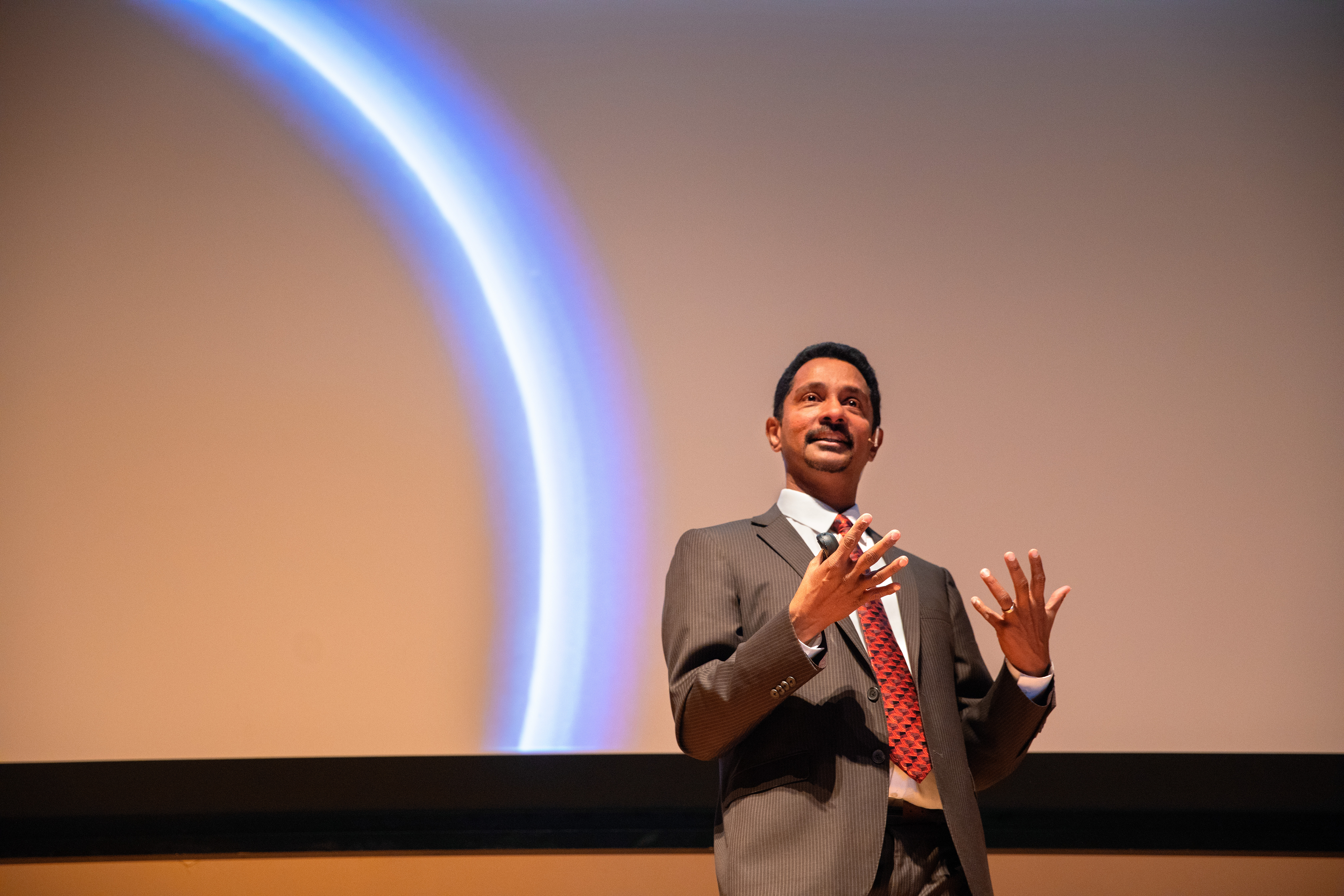
DPS 2020: Virtual Meeting

The DPS Committee has decided, out of concern for our community during the ongoing coronavirus pandemic, to hold the 52nd DPS meeting as a virtual meeting, Oct 26-30, with possible additional activities planned for surrounding days. The meeting will be a mix of pre-recorded talks, virtual posters, live moderated discussions of these talks and posters, live plenary sessions, and asynchronous discussions throughout the week.  The SOC is working the details – please stay tuned! 

We anticipate opening abstract submission on July 17, with abstracts due on Aug 10. Details regarding the use of Hartmann travel grants will be forthcoming. We will be offering the Niebur fund for childcare; these grants will be augmented to account for virtual meeting attendance.

Please stay tuned for plans ancillary activities such as workshops and social events associated with the meeting.

Are you interested in helping to plan the DPS meeting as part of the Virtual Organizing Committee (VOC)? Please contact Amanda Hendrix at [email protected]. We are seeking input on ancillary virtual activities and communication tools that would make this meeting especially useful to those whose careers are being particularly impacted by the current pandemic.

We will plan to hold a future DPS meeting in Spokane. A huge thank you to Jason Barnes and the Spokane LOC for their work so far!


10 July 2020