
Newsletter 20-44

Issue 20-44, September 22, 2020


+————————————CONTENTS—————————————-+

  1. DEADLINES FOR DPS PRESENTERS
  2. NEW VIDEO PERMISSIONS OPT-OUT AT DPS REGISTRATION
  3. VIRTUAL WOMEN IN PLANETARY SCIENCE DISCUSSION HOUR AT DPS 2020
  4. INTERNATIONAL OBSERVE THE MOON NIGHT IS THIS WEEK SEPTEMBER 26TH
  5. SPECIAL GUEST INVITE – BEYOND EARTH’S EDGE: THE POETRY OF SPACEFLIGHT WEBINAR
  6. SEEKING VOLUNTEERS FOR THE ICARUS EDITORIAL BOARD
  7. JOBS, POSITIONS, OPPORTUNITIES

+——————————————————————————————–+


1———1———1———1———1———1———1———1———1———1

DEADLINES FOR DPS PRESENTERS


For those of you who have been scheduled to present at the upcoming 52nd Annual 

Meeting of the AAS Division for Planetary Sciences. Please be sure to do the following:


By 5 October 2020


1) Register for the meeting! Oct. 5 is the deadline for presenters to register.


https://aas.org/meetings/dps52


2) Let us know whether you plan to participate in your session’s Live Q&A discussion, 

which will take place on Zoom according to the block schedule [link to block schedule].  

We need confirmations from all live participants so that session chairs will be able to 

prepare effectively for these Q&A sessions.  The link to the response form is in your 

confirmation email.


and by 9 October 2020


3a) For video presenters: Upload your presentation to the DPS video server. 

3b) For iPoster presenters:  Publish the initial version of your iPoster. Poster presenters 

may continue to revise iPosters until 19 October when all iPosters will go public. You 

may continue to revise your iPoster until 30 October, but do understand that they will 

have already been viewed.


2———2———2———2———2———2———2———2———2———2

NEW VIDEO PERMISSIONS OPT-OUT AT DPS REGISTRATION


The video permissions item in the DPS registration process has been changed to allow 

a full opt-out from AAS publications and promotional materials.  DPS participants who 

have already registered and wish to change their preferences may log back into the site 

in order to do so.


3———3———3———3———3———3———3———3———3———3

VIRTUAL WOMEN IN PLANETARY SCIENCE DISCUSSION HOUR AT DPS 2020


Date: Monday, Oct. 26

Time: 5:30 pm Eastern, 4:30 Central, 3:30 Mountain, 2:30 Pacific

Duration: ~1 hour


What: Join us for the annual DPS Women in Planetary Science event in its first ever 

virtual format. All are welcome!  This year we will have professional development 

“table topics” covering a wide range of themes based on the attendee interest.  A huge 

thanks(!) to our generous sponsor AURA for supporting this event again this year.  

Sign up is required so that we can plan for virtual “room size”, gauge attendee interests, 

and send you information/updates about the event.  Please see more details and sign 

up at http://bit.ly/DPS_WIPS_2020.  The deadline to sign up is right before the event 

(Monday October 26 at 5:30 pm Eastern), but if we get too many, people we may have 

to cap the attendance, so sign up early!  We will update the sign up page according to 

whether spots are still available.  The telecon link for the event will be sent to those 

who sign up and posted on the detailed schedule for the DPS meeting (not the block 

schedule).  Please do not post the telecon link in a public place.  For any questions 

please contact Kelsi Singer at kelsi.singer at gmail.com.  


4———4———4———4———4———4———4———4———4———4

INTERNATIONAL OBSERVE THE MOON NIGHT IS THIS WEEK SEPTEMBER 26TH


Join us for the 11th Annual International Observe the Moon Night this Saturday, 

September 26th! You are invited to join people around the world to learn about 

lunar science and exploration, take part in celestial observations, and honor cultural 

and personal connections to the Moon. This is also a great event to be a virtual speaker!


You can participate in International Observe the Moon Night from wherever you are.

Attend or host a virtual or in-person event, or observe the Moon from home. The 

Moon will be close to first quarter – a great phase for evening observing. 


Learn more, register your participation, and find recommended activities, tips and 

resources to host and evaluate events, and much more on the International Observe 

the Moon Night website: moon.nasa.gov/observe.


5———5———5———5———5———5———5———5———5———5

SPECIAL GUEST INVITE – BEYOND EARTH’S EDGE: THE POETRY OF SPACEFLIGHT WEBINAR


The Osher Lifelong Learning Institute at the University of Arizona is hosting a 

webinar event “Beyond Earth’s Edge: The Poetry of Spaceflight” on Monday, 

September 28 at 1 p.m Pacific Time. 


Special Invite Registration Link


The University of Arizona Press presents Julie Swarstad Johnson, poet and senior 

library specialist at the Poetry Center of the University of Arizona, and Christopher 

Cokinos, writer and poet and a professor of English at the University of Arizona. 


As the editors of Beyond Earth’s Edge: The Poetry of Spaceflight, Julie and Christopher 

will share poetry about space exploration, discuss the relevance of poetry to our 

understandings of space flight, and provide historical and biographical context for 

the work – poems that take readers on journeys to the Moon, Mars and beyond; 

poems that inspire reflection, concern, and wonder. 


Beyond Earth’s Edge: The Poetry of Spaceflight is a trailblazing anthology of 

poetry that spans from the dawn of the space age to the imagined futures of the 

universe. It offers a fascinating record of both national mindsets and private perspectives 

as poets grapple with the promise and peril of U.S. space exploration across decades 

and into the present. Tracing an arc of literary skepticism during the Apollo era and 

before to a more curious, and even hopeful, stance today, Beyond Earth’s Edge includes 

diverse perspectives from poets such as Robert Hayden, Rae Armantrout, N. Scott 

Momaday, Adrienne Rich, Tracy K. Smith, Ray Bradbury, May Swenson, Pablo 

Neruda, and many other engaging poetic voices.


Beyond Earth’s Edge vividly captures the violence of blastoff, the wonders seen 

by Hubble, and the trajectories of exploration to Mars and beyond through a wide 

array of lyric celebrations, somber meditations, accessible narratives, concrete poems, 

and new forms of science fiction. With the dawn of the New Space movement, continued 

interest in Mars, and renewed excitement about returning to the Moon, Beyond Earth’s 

Edge is a giant leap toward bridging poetry and science.


6———6———6———6———6———6———6———6———6———6

SEEKING VOLUNTEERS FOR THE ICARUS EDITORIAL BOARD


Every year, the DPS nominates candidates to the Icarus Editorial Board to serve a

3-year term (more information at leadership/publications/icarus). 

The Editorial Board is consulted by the Icarus Editor and Elsevier occasionally

during the year for various aspects related to the operation of the journal.


If you would like to volunteer for one of these positions, please e-mail the Publications
Subcommittee Chair (Ross Beyer, [email protected]) a brief statement to that effect

(no more than three sentences, could be less).  The DPS Publications Subcommittee

will gather and evaluate the submissions, and together with the DPS Committee will

determine which will be brought forward to the Icarus Editor for selection.  We will

let you know the outcome after the Fall Meeting.


7———7———7———7———7———7———7———7———7———7

JOBS, POSITIONS, OPPORTUNITIES


A) PLASKETT FELLOWSHIP 2020
     NATIONAL RESEARCH COUNCIL OF CANADA

https://career17.sapsf.com/sfcareer/jobreqcareer?jobId=10684&company=nationalreP

The National Research Council of Canada (NRC) is seeking a dynamic postdoctoral 

Research Associate to work within one or more of the multiple areas of astronomy

 research within the NRC’s Herzberg Astronomy and Astrophysics Research Centre 

(NRC-HAA) located in Victoria BC. The chosen candidate would be someone who 

shares our core values of Integrity, Excellence, Respect and Creativity.
 
The successful candidate will be an outstanding recent doctoral graduate in astrophysics 

or another closely related discipline who is highly motivated to engage in scientific projects 

at the NRC’s Herzberg Astronomy and Astrophysics Research Centre (NRC-HAA).  

Plaskett Fellows undertake leading-edge research activities in the field of astronomy 

and astrophysics. 

The successful candidate will:

  • Conduct original research independently and in collaboration with NRC-HAA staff members. 
  • Contribute to the scientific exploitation of NRC-HAA resources, particularly, but not limited to, the expertise of scientific and technical staff, and the astronomical facilities and infrastructure administered by NRC-HAA, such as ALMA, CFHT, the Gemini Observatory, the Canadian Astronomy Data Centre (CADC) home to the Canadian Virtual Observatory, the CANFAR cloud computing network, and the instrumentation labs. 
  • Engage with the astronomical community to advance NRC-HAA’s mandate to provide astronomical facilities and services to Canadian researchers. NRC-HAA is a leading developer of instrumentation for current and future ground- and space-based telescopes (e.g., ALMA, CFHT, Gemini, JWST, CASTOR, MSE, SKA, and TMT). 
  • Share with other postdoctoral research associates the organization of the Herzberg Astronomy and Astrophysics weekly seminars, which run from September to April. 

 
For background information on the Plaskett fellowship program, please go to: 

https://nrc.canada.ca/en/corporate/careers/plaskett-fellowship 

Information on NRC-HAA staff and their research interests is available at http://astroherzberg.org.

Full details of this position can found here: 

https://career17.sapsf.com/sfcareer/jobreqcareer?jobId=10684&company=nationalreP


B) POSTDOCTORAL RESEARCHER, SCIENCE (VISITING) (GEOCHEMISTRY AND PETROLOGY OF EXTRATERRESTRIAL MATERIALS)


The Lunar and Planetary Institute (LPI), part of the Universities Space Research 

Association (USRA), invites applications for a postdoctoral fellowship in the area 

of geochemistry and petrology of extraterrestrial materials.


The successful candidate will work as part of a team of planetary scientists at NASA 

Johnson Space Center in Houston, Texas. The project is funded by NASA to investigate 

the effect of shock on H mobility in nominally anhydrous minerals and apatite. The work 

will involve impact shock experiments on geological materials, and their analysis by a 

variety of in-situ techniques.  Candidates with a strong background in petrology or 

geochemistry, and preferably experience with H analysis by FTIR or SIMS and shock 

effects and experimental petrology in minerals and meteorites, are encouraged to apply.


Completion of the PhD by the beginning of the appointment is required. The position 

would be for one year, with a possible extension to a second year. The candidate must 

be able to pass a detailed government background investigation. Technical questions 

should be addressed to Dr. Anne Peslier ([email protected]). Interested applicants 

should apply to the posting before October 1, 2020 at https://usracareers.silkroad.com/ 

and must submit a cover letter, curriculum vitae with list of publications, a two- to three-

page statement of research interests and plans, and a list of at least three professional 

references. For general information about LPI please go to https://www.lpi.usra.edu/.


USRA is an independent, nonprofit research corporation where the combined efforts 

of in-house talent and university-based expertise merge to advance space science and 

technology. USRA works across disciplines including biomedicine, planetary science, 

astrophysics, and engineering and integrates those competencies into applications

 ranging from fundamental research to facility management and operations.


USRA is an Equal Opportunity Employer: Minorities / Females / Protected 

Veterans / Disabled / Sexual Orientation / Gender Identity.


———————————+ 

Send submissions to: 

Anne Verbiscer, DPS Secretary ([email protected]


You are receiving this email because you are a DPS member.

To unsubscribe or update your information, please send your request

to [email protected]. The more general AAS privacy policy is available

online at https://aas.org/about/policies/privacy-policy. Current and back

issues of the DPS Newsletter can be found at newsletters

–>
DPS 2020 Student and Early Career Reception

Date: Sunday, Oct. 25

Time: 4 pm Eastern, 3 Central, 2 Mountain, 1 Pacific

Duration: ~1 hour

What: Join us for a pre-conference networking and socializing hour where we will have the opportunity to meet people from our disciplines (and others!).  We will have a general discussion of professional development topics, an introduction to the format of the conference, info about virtual jobs board/career center, and a contest for the best virtual background.  A huge thanks(!) to our generous sponsor Southwest Research Institute for supporting this event.  Sign up is required so that we can plan for breakout rooms and send you information/updates about the event.  Please see more details and sign up at https://forms.gle/rshUeRbMEsK4dVUW8.   The deadline to sign up is right before the event (Sunday October 25 at 4 pm Eastern), but if we get too many people, we may have to cap the attendance, so sign up early! (There’s no penalty if you can’t attend). We will update the sign up page according to whether spots are still available.  The telecon link for the event will be sent to all those who sign up and will also be posted on the detailed schedule for the DPS meeting (not the block schedule).  Please do not post the telecon link in a public place.  For any questions please contact Maya Yanez at mdyanez at usc.edu.

Newsletter 20-43

Issue 20-43, September 16, 2020


+————————————CONTENTS—————————————-+

  1. THE DPS INVITES APPLICATIONS TO NEW FUND FOR UNDERREPRESENTED MINORITY COMMUNITIES IN PLANETARY SCIENCE
  2. DPS 2020 STUDENT AND EARLY CAREER RECEPTION

+——————————————————————————————–+


1———1———1———1———1———1———1———1———1———1

THE DPS INVITES APPLICATIONS TO NEW FUND FOR UNDERREPRESENTED 

MINORITY COMMUNITIES IN PLANETARY SCIENCE


The DPS is offering funds to encourage and support participation of students, scientists, 

and other space professionals who are members of underrepresented racial and ethnic 

groups. In partnership with the National Society of Black Physicists (NSBP), awards 

are available for members of Black/African American, Indigenous, and/or Latinx 

communities to support attendance at the annual DPS meeting and/or the annual NSBP 

meeting. The fund is intended to support some travel (when meetings are in person and 

not virtual) and meeting registration fees, and applicants may also request coverage for 

society membership fees. 


Please see this link to apply; the application deadline is October 13, 2020:

content/underrepresented-minority-communities-planetary-science-travel-grant-form


2———2———2———2———2———2———2———2———2———2

DPS 2020 STUDENT AND EARLY CAREER RECEPTION  


Date: Sunday, Oct. 25

Time: 4 pm Eastern, 3 Central, 2 Mountain, 1 Pacific

Duration: ~1 hour

What: Join us for a pre-conference networking and socializing hour where we will 

have the opportunity to meet people from our disciplines (and others!).  We will have 

a general discussion of professional development topics, an introduction to the format 

of the conference, info about virtual jobs board/career center, and a contest for the best 

virtual background.  A huge thanks(!) to our generous sponsor Southwest Research 

Institute for supporting this event.  Sign up is required so that we can plan for breakout 

rooms and send you information/updates about the event.  Please see more details and sign 

up at https://forms.gle/rshUeRbMEsK4dVUW8.   The deadline to sign up is right before 

the event (Sunday October 25 at 4 pm Eastern), but if we get too many people, we may 

have to cap the attendance, so sign up early! (There’s no penalty if you can’t attend). We 

will update the sign up page according to whether spots are still available.  The telecon 

link for the event will be sent to all those who sign up and will also be posted on the detailed 

schedule for the DPS meeting (not the block schedule).  Please do not post the telecon link 

in a public place.  For any questions please contact Maya Yanez at mdyanez at usc.edu.


———————————+ 

Send submissions to: 

Anne Verbiscer, DPS Secretary ([email protected]


You are receiving this email because you are a DPS member.

To unsubscribe or update your information, please send your request

to [email protected]. The more general AAS privacy policy is available

online at https://aas.org/about/policies/privacy-policy. Current and back

issues of the DPS Newsletter can be found at newsletters  

–>

Newsletter 20-42

Issue 20-42, September 13, 2020


+————————————CONTENTS—————————————-+

  1. DECADAL WHITE PAPER ON EXTEDED MISSIONS
  2. INTERNATIONAL OBSERVE THE MOON NIGHT IS SEPTEMBER 26TH
  3. 2021A NASA IRTF CALL FOR PROPOSALS 
  4. ARECIBO OBSERVATORY OBSERVER TRAINING WORKSHOP 
  5. JOBS, POSITIONS, OPPORTUNITIES

+——————————————————————————————–+


1———1———1———1———1———1———1———1———1———1

DECADAL WHITE PAPER ON EXTENDED MISSIONS


Please read and comment: 

https://docs.google.com/document/d/1DqFleFqZgvi-_FrnA075mp32erGZfSE9svTLQvRrr0k/edit?usp=sharing

Please co-sign: https://forms.gle/q9aoNY4mtB1aWVan9


There is a tremendous demonstrated value in Extended Missions. They produce excellent 

science at low incremental cost. Additionally, these missions provide early-career scientists 

opportunities for active mission involvement and experience in leadership roles, thus 

increasing diversity at all levels. However, despite NASA’s best intentions, there are 

aspects of their handling of Extended Missions that have detrimental effects to the success 

of those missions. We recommend several specific actions to be taken to ensure the 

financial stability of EMs, for the benefit to science, and to our community of scientists.


This will be an update to the 2016 National Academies report on “Extending Science: 

NASA’s Space Science Mission Extensions and the Senior Review Process”. We plan 

to evaluate the recommendations of that study, provide a reminder of those recommendations 

which have not yet been addressed, and add new recommendations.


Contact Ingrid Daubar  and/or 

Ross Beyer  with any questions or comments.


2———2———2———2———2———2———2———2———2———2

INTERNATIONAL OBSERVE THE MOON NIGHT IS SEPTEMBER 26TH


Join us for the 11th Annual International Observe the Moon Night on Saturday, 

September 26th! You are invited to join people around the world to learn about 

lunar science and exploration, take part in celestial observations, and honor cultural 

and personal connections to the Moon. This is also a great event to be a virtual speaker!


You can participate in International Observe the Moon Night from wherever you are.

Attend or host a virtual or in-person event, or observe the Moon from home. The 

Moon will be close to first quarter – a great phase for evening observing. 


Learn more, register your participation, and find recommended activities, tips and 

resources to host and evaluate events, and much more on the International Observe 

the Moon Night website: moon.nasa.gov/observe.


3———3———3———3———3———3———3———3———3———3

2021A NASA IRTF CALL FOR PROPOSALS 


The due date for the 2021A semester (February 1, 2021 to July 31, 2021) is Thursday, 

October 1, 2020. See our online submission form http://irtfweb.ifa.hawaii.edu/observing/applicationForms.php

which is available for proposal submission from 12:00AM on September 01, 2020 until 5:00PM 

on October 01, 2020 HST. Available instruments include: (1) SpeX, a 0.7 – 5.3 micron cross-dispersed 

medium-resolution spectrograph (up to R=2,500) and imager; (2) MORIS, a 512×512 pixel 

Andor CCD camera (60″x60″ field-of-view) mounted at the side-facing window of the 

SpeX cryostat that can be used simultaneously with SpeX; (3) iSHELL, a 1.1 – 5.3 micron 

cross-dispersed echelle spectrograph (up to R=75,000) and imager. Information on available 

facility and visitor instruments and performance can be found at: http://irtfweb.ifa.hawaii.edu/instruments

Exposure time calculators for SpeX and iSHELL are available on the respective instrument 

webpages. 


Please see http://irtfweb.ifa.hawaii.edu/observing/callForProposals.php for the full text.


4———4———4———4———4———4———4———4———4———4

ARECIBO OBSERVATORY OBSERVER TRAINING WORKSHOP

The Arecibo Observatory is hosting a free virtual workshop on October 15-16, 2020 

to train future observers. If you intend to venture into or use in your future research

projects single-dish radio or radar astronomy, please check out our page on this event

and register at 

https://www.naic.edu/ao/blog/gboao-single-dish-and-observer-training-workshops-october-13-16-2020


This workshop is intended for professionals or students who already have a basic

knowledge of radio astronomy but would like to learn how to use our observatories

to achieve their upcoming science goals.


This workshop is advertised jointly with the Green Bank Observatory, who are hosting

their own training workshop just prior to AO’s (October 13-14, 2020). Feel free to sign

up for both (if you intend to use both telescopes), but please register (at the link) for each
separately! The schedule will also be available at the link after we have a better idea of

the interests of our attendees. For now, the topics covered in AO’s Observer Training

Workshop will include talks and hands-on demos of the following topics:

-Interplanetary Scintillation

-Spectral Line Observations

-Pulsar Studies

-Planetary Radar

-Available Astronomy Instrumentation (receivers, backends)

-AO’s new proposal system

-Observing methods, telescope control software, data reduction software

-History of and future plans for Arecibo Observatory


Please note that due to the recent structural damage to the telescope we will be using

existing data rather than running live observations. You may find the press release on

the telescope shutdown via 

https://www.ucf.edu/news/broken-cable-damages-arecibo-observatory/.


5———5———5———5———5———5———5———5———5———5

JOBS, POSITIONS, OPPORTUNITIES


A) RESEARCH SCIENTIST, OUTER PLANET MAGNETOSPHERES AND
MOON INTERACTION

The Jet Propulsion Laboratory, California Institute of Technology
invites applications for a Research Scientist position in planetary
science, with a focus on research and instrument/mission development in
the areas of magnetospheres, magnetosphere-moon interactions and
astrobiology.

In this position you will conduct planetary science research with a
focus on modeling of magnetospheric charged particle interactions and
other exogenous weathering effects, and applying such results to inform
remote sensing observations and biosignature detection. It is expected
that the successful candidate would develop an independently-funded
research program and would pursue new mission and/or instrument
opportunities focusing on the exploration of habitable environments in
the Solar System, in particular the icy moons of the Ice Giant planets.

This position requires a Ph.D. degree in space physics, planetary
science, planetary physics, or a related field along with expertise in
outer planet magnetospheres and moon-magnetosphere interactions
(ideally Ice Giants).


To view the full description and apply, please visit:
http://jpl.jobs/jobs/2020-12409-Research-Science-Outer-Planet-Magnetospheres-and-Moon-Interactions.
Applications received by October 12, 2020, will receive full consideration.


B) ASSISTANT PROFESSOR, OKLAHOMA STATE UNIVERSITY


The Department of Physics at Oklahoma State University invites

applications for a tenure track assistant professor position in

astronomy or planetary sciences. The successful candidate should have a

proven track record of research in their respective area and is

expected to attract extramural research funding, publish scholarly

articles, and teach effectively at the graduate and undergraduate

levels. The successful candidate will also be expected to oversee the

department’s Mendenhall Observatory and coordinate outreach activity at

the site:

https://physics.okstate.edu/research/mendenhall-observatory


OSU is a Carnegie-R1 comprehensive public research university committed

to increasing the diversity of its faculty (currently 25% of the

Physics Department faculty are from underrepresented groups). The

Department of Physics welcomes applications from outstanding

candidates, who, through their research, teaching, and/or service will

contribute to the diversity and excellence of the Physics Department. A

Ph.D. in Physics or an allied field is required as well as the promise

of excellence in teaching and the ability to mentor underrepresented

students. 


An appointment at the Assistant Professor level is expected with a

start date of August 17, 2021. Review of applications will begin on

January 4, 2021 and will continue until the position is filled.


Apply at: 

https://apply.interfolio.com/77415


———————————+ 

Send submissions to: 

Anne Verbiscer, DPS Secretary ([email protected]


You are receiving this email because you are a DPS member.

To unsubscribe or update your information, please send your request

to [email protected]. The more general AAS privacy policy is available

online at https://aas.org/about/policies/privacy-policy. Current and back

issues of the DPS Newsletter can be found at newsletters  

–>

Newsletter 20-41

Issue 20-41, September 2, 2020


+————————————CONTENTS—————————————-+

  1. #DPS2020 BLOCK SCHEDULE AND REGISTRATION
  2. DPS DEPENDENT CARE GRANTS
  3. NEXT EXOPAG SIG3 TUTORIAL
  4. WHITE PAPERS ON DEIA TOPICS IN RESPONSE TO THE REQUEST FOR COMMUNITY INPUT INTO THE 2023-2032 PLANETARY SCIENCE AND ASTROBIOLOGY DECADAL SURVEY
  5. JOBS, POSITIONS, OPPORTUNITIES

+——————————————————————————————–+


1———1———1———1———1———1———1———1———1———1

#DPS2020 BLOCK SCHEDULE AND REGISTRATION


https://aas.org/meetings/dps52


Abstract authors will be notified about presentation details next week.


Don’t forget to register for #DPS2020! Registration will be open throughout the meeting 

until 30 October, and the deadline for presenters to register is 5 October. For the best 

meeting experience, we recommend registering before 19 October to watch prerecorded 

talks prior to the live topical discussions, which begin on 26 October.


In additional to an exciting science program that includes live discussions of pre-recorded 

talks and iPosters, along with ongoing asynchronous topical discussions on Slack, DPS 

attendees can look forward to these events during DPS week:


• Decadal Survey townhall

• NASA-NSF townhall

• Career center

• Planetary science art fair

• Student & early career reception

• Daily Science Chats: informal discussions of topics from that day’s sessions. Interactions 

between early career and more senior scientists will be encouraged.

• Women in Planetary Science discussion hour 

• Open mic night

• Social hours and games


2———2———2———2———2———2———2———2———2———2

DPS 2020 DEPENDENT CARE GRANTS


The DPS Susan Niebur Professional Development Fund provides financial assistance

to qualifying members of the DPS in order to facilitate their meeting participation by

offsetting dependent care costs (such as childcare, elder care, spousal care, etc) at the

meeting location, or at home, during the DPS conference week. This includes dependent

care expenses needed to allow attendance and participation in the 2020 virtual DPS meeting.

The DPS Professional Development Subcommittee will accept applications for dependent

care subsidies to assist an eligible DPS member to participate in the 2020 DPS Meeting.

The initial submission deadline is Monday, September 14, 2020.  The review of submissions

will begin Tuesday September 15; however, further requests will be accepted and reviewed,
funding and eligibility permitting.


Please access the grant application form at development#grants .


Mark Gurwell, DPS Professional Development Subcommittee member


3———3———3———3———3———3———3———3———3———3

NEXT EXOPAG SIG3 TUTORIAL


The next ExoPAG SIG3 Exoplanet-Solar System Synergy Tutorial Talk will be given by

Prof. Nancy Chanover, who will provide an introduction to the Planetary Data System Atmospheres
Node for those who might be considering using the PDS for exoplanet science.  


These tutorial talks are aimed at introducing field newcomers to important topics or methods

in planetary and exoplanetary science.  They typically include a 30 minute tutorial from an

expert to introduce the topic, followed by a 30 minute group discussion of a recent paper in
which the topic/method features.  The details for Nancy’s talk are listed below:


Date/Time:  Sept 10th at 11am PDT / 2pm EDT


Zoom Link:  https://washington.zoom.us/j/95177555751?pwd=UGZ0bnMyZVVNbmptcmZmZm1adWJkZz09


Speaker:  Nancy Chanover, Professor of Astronomy, New Mexico State University

Title:  How to Leverage NASA’s Planetary Data System Atmospheres Node for Exoplanet Science


Abstract:  The NASA Planetary Data System Atmospheres Node is charged with archiving
atmospheric data from NASA’s solar system missions, as well as ground-based observations,
laboratory experiments and analog field measurements conducted in support of NASA’s missions.
In this presentation I will provide a brief overview of the PDS Atmospheres Node data archive and
discuss its relevance to the exoplanet atmospheric science community. I will also briefly discuss
nomenclature issues that might be confusing to first-time users and point to PDS-based resources
to help interpret them. Finally, I will discuss a paper (Elrod et al. 2018) that illustrates the use of
data archived at the PDS Atmospheres Node for understanding the role that solar activity plays
in driving atmospheric escape on Mars.

Paper for Discussion:  Elrod et al. (2018), GRL, https://doi.org/10.1029/2018GL077729


4———4———4———4———4———4———4———4———4———4

WHITE PAPERS ON DEIA TOPICS IN RESPONSE TO THE REQUEST FOR
COMMUNITY INPUT INTO THE 2023-2032 PLANETARY SCIENCE AND
ASTROBIOLOGY DECADAL SURVEY


Diversity, Equity, Inclusion and Accessibility (DEIA) efforts within the Planetary

Science community have become a focus point of several NASA Assessment/Analysis

Groups (AGs). The EDI Working Group (WG) was formed by the AGs and its steering
committee consists of members of each AG steering committee and several affinity

groups.  The WG has helped gather community input in the form of a series of

Professional White Papers (WPs) in preparation for the Planetary Science and

Astrobiology Decadal Survey (Planetary2023). These WPs will be submitted by

their individual authors in support of the Planetary2023’s Statement of Task Part 9:

The state of the profession including issues of diversity, inclusion, equity, and accessibility,

the creation of safe workspaces, and recommended policies and practices to improve

the state of the profession. Where possible, provide specific, actionable and practical
recommendations to the agencies and community to address these areas.


Link to the Table of DEIA WPs for Planetary2023:
https://docs.google.com/spreadsheets/d/1t5hpGpVIWokwaymDITyMaYAVWJ4viFTsXDJVwTQb9gQ/edit?usp=sharing

We request that the planetary science community read and consider each of these

important WPs. The WPs each have links for individual co-signatures. Again, the

intention of this table is to amplify the priority of each of these WPs, as the topic of

State of the Profession is a high priority for the entire planetary science community.

Note that the State of the Profession deadline is September 15th, 2020, so individual
endorsements and co-signatures before that time are encouraged.

If you are the author of a DEIA-related white paper not on our spreadsheet and you’d

like to be included, please contact both of the WG Co-Chairs, Moses Milazzo
([email protected]) and Christina Richey ([email protected])

as soon as possible.


5———5———5———5———5———5———5———5———5———5

JOBS, POSITIONS, OPPORTUNITIES


A) ASSISTANT PROFESSOR OPENING – MIT/EAPS


The Department of Earth, Atmospheric and Planetary Sciences (EAPS) at the 

Massachusetts Institute of Technology (MIT) Cambridge, Massachusetts invites 

applications for a tenure-track faculty position in the broad area of Planetary Science. 

We seek an outstanding scientist with interest in and potential for innovation and 

leadership in planetary science that complements and/or expands the Department’s 

expertise. EAPS is an academic community of approximately 40 faculty, 100 research 

staff (including postdocs), and 180 students, who together form leading research 

programs on all aspects of Earth, planetary, geo-biological, and ocean, atmospheric, 

and climate sciences, some of which reside within the MIT WHOI Joint Program. 

EAPS is committed to academic excellence and to fostering a diverse, equitable, and 

inclusive environment. We seek candidates who have both the potential and strong 

commitment for innovation and leadership in teaching and mentoring undergraduate 

and graduate students, and share the Principles of our Community.

A complete application includes a cover letter, curriculum vitae, a 1- to 2- page statement 

on research and one on teaching and mentoring, and three letters of recommendation.  

Recognizing that educational experiences of all students are enhanced when the diversity 

of their backgrounds is acknowledged and valued, we ask candidates to articulate (in 

the teaching and mentoring statement, and, as appropriate, in the cover letter or research 

statement) their views on inclusivity and equity as they pertain to teaching, mentorship, 

research, and service.


Applicants must hold a Ph.D. in planetary science, astronomy/astrophysics, or other 

related field by the start of employment. Our intent is to hire at the assistant professor 

level, but moresenior appointments may also be considered. Applications are being 

accepted at Academic Jobs Online: https://academicjobsonline.org/ajo/jobs/16642

To receive full consideration, complete applications must be received by November 1, 2020.


Search Contact: Ms. Karen Fosher, HR Administrator, EAPS, 54-924

Massachusetts Institute of Technology, 77 Massachusetts Avenue, Cambridge, MA 02139-4307, 

email: [email protected]


MIT is an equal employment opportunity employer. All qualified applicants will receive 

consideration for employment and will not be discriminated against on the basis of race, 

color, sex, sexual orientation, gender identity, religion, disability, age, genetic information, 

veteran status, ancestry, or national or ethnic origin.


———————————+ 

Send submissions to: 

Anne Verbiscer, DPS Secretary ([email protected]


You are receiving this email because you are a DPS member.

To unsubscribe or update your information, please send your request

to [email protected]. The more general AAS privacy policy is available

online at https://aas.org/about/policies/privacy-policy. Current and back

issues of the DPS Newsletter can be found at newsletters  

–>

Nadine G. Barlow ( -2020)

Nadine Gail Barlow passed away on August 17, 2020. Over 18 years at Northern Arizona University, Nadine ascended the academic ranks, becoming Department Chair of Astronomy and Planetary Science. She received numerous awards for teaching excellence. Doubling the size of the Department, she grew its curriculum into a Ph.D.-granting program. Nadine supervised many undergraduate and graduate students, and was a popular mentor and friend to those under her tutelage. A prize for Undergraduate Research Excellence is being established in her name. Academic outreach was a priority, bringing the Arizona Space Grant Program to NAU, and fostering cooperation between NAU, Lowell Observatory, and the USGS. Nadine specialized in impact cratering processes across the Solar System. Almost on a dare, she mapped, measured, and classified every crater on Mars larger than 8 km in diameter for her Ph.D. dissertation. These data were used to establish the detailed relative chronology of Martian geologic features. Throughout her career, she expanded this database, as later spacecraft missions returned increasingly detailed images of Mars. The IAU named asteroid 15466 Barlow in her honor.

Nadine is missed by family and many lifelong friends.

Bob Marcialis, Faith Vilas, Lisa Prato, Lynn Hayden

Newsletter 20-40

Issue 20-40, August 30, 2020


+————————————CONTENTS—————————————-+

  1. IN MEMORIAM: NADINE G. BARLOW
  2. OPENINGS ON OUTER PLANETS ANALYSIS GROUP (OPAG) STEERING COMMITTEE
  3. NASA MISSION SCIENCE TEAM MEETING OPPORTUNITIES FOR EARLY CAREER SCIENTISTS
  4. NASA PLANETARY DATA ECOSYSTEM (PDE) INDEPENDENT REVIEW BOARD (IRB) SELF-NOMINATION CLOSING ON OR ABOUT SEPTEMBER 7 
  5. ARECIBO OBSERVATORY PROPOSAL DEADLINE EXTENDED: NOW DUE SEPTEMBER 10, 2020 (17:00 AST, 21:00 UTC)
  6. AGU VIRTUAL GEOSCIENCES CONGRESSIONAL VISITS DAY

+——————————————————————————————–+


1———1———1———1———1———1———1———1———1———1

IN MEMORIAM: NADINE G. BARLOW

Nadine Gail Barlow passed away on August 17, 2020.

Over 18 years at Northern Arizona University, Nadine ascended the academic ranks, 

becoming Department Chair of Astronomy and Planetary Science. She received 

numerous awards for teaching excellence. Doubling the size of the Department, she 

grew its curriculum into a Ph.D.-granting program. Nadine supervised many 

undergraduate and graduate students, and was a popular mentor and friend to those 

under her tutelage. A prize for Undergraduate Research Excellence is being established 

in her name. Academic outreach was a priority, bringing the Arizona Space Grant Program 

to NAU, and fostering cooperation between NAU, Lowell Observatory, and the USGS. 

Nadine specialized in impact cratering processes across the Solar System. Almost on a 

dare, she mapped, measured, and classified every crater on Mars larger than 8 km in 

diameter for her Ph.D. dissertation. These data were used to establish the detailed relative 

chronology of Martian geologic features. Throughout her career, she expanded this 

database, as later spacecraft missions returned increasingly detailed images of Mars. 
The IAU named asteroid 15466 Barlow in her honor.

Nadine is missed by family and many lifelong friends.

Bob Marcialis, Faith Vilas, Lisa Prato, Lynn Hayden


2———2———2———2———2———2———2———2———2———2

OPENINGS ON OUTER PLANETS ANALYSIS GROUP (OPAG) STEERING COMMITTEE


Several openings are available on the OPAG steering committee to replace members

who will be rolling off.   All interested candidates are encouraged to apply, particularly

those with expertise in Giant Planet Interiors, Ocean Worlds & Cryospheres (field and
experimental), Astrobiology, and those able to represent Science Mission Directorate

Cross-Divisional interests.


Nominations will be accepted after the OPAG virtual meeting in September 2020 and

will be due by November 1, 2020. New members will start their service in time for the

Spring 2021 OPAG meeting. Details of the nomination process include providing a one-

page letter of interest and a two-page NASA proposal-style CV that address what community

the candidates represent, and how they will enhance that community’s representation on

the steering committee.  A New Members subcommittee of the OPAG Steering Committee

will review all of the nominations and make recommendations to the full Steering Committee.  

Through the search process, we will strive to ensure representation across multiple axes to

foster an interdisciplinary, diverse, equitable, inclusive, and accessible community.


3———3———3———3———3———3———3———3———3———3

NASA MISSION SCIENCE TEAM MEETING OPPORTUNITIES FOR EARLY CAREER SCIENTISTS


Participation on a mission science team is a formative experience with long-standing

benefits to scientists. While NASA provides additional opportunities to serve on mission

science teams (for example, via Participating Scientist Programs, formal team affiliations

via Co-Is on science teams, etc.), extended and immersive opportunities to serve on science

teams are inherently limited considering the small number of missions in existence. In

addition, such opportunities can be difficult for early career scientists to utilize.


NASA is considering more accessible ways to significantly increase the number of early

career scientists exposed to the mission science team experience. Based on feedback from

the community, one such method under consideration is inviting senior graduate students

and early career scientists to observe mission science team meetings. Paired with mentors

from the science team, it is hoped that such an experience can provide valuable insight on

the work and team dynamics that take place on missions. The opportunity’s limited scope

could, over time, enable more scientists to participate than existing opportunities, providing

a gateway experience to help early career scientists make informed decisions about their

career paths.


The Psyche, Europa Clipper, Dragonfly missions are providing the opportunity for early

career scientists to observe their next science team meetings. This opportunity is open to

graduate students in or beyond their third year of earning their doctorate or early career

scientists within seven years of receiving their doctorate. Because of ITAR concerns, at

this time the opportunity is limited to U.S. citizens and green card holders. Interested

candidates should submit a letter no longer than two pages that describes their background

and research interests, how such an experience could be of benefit to them, and which

mission they wish to observe (along with any special interests in particular areas of that

mission). Respondents will be selected based upon the anticipated impact to their career

path and the alignment of the mission with their research interests. Selection preference

will be given to individuals from institutions that are underrepresented on planetary science
missions. NASA recognizes and supports the benefits of having diverse and inclusive
communities and expects that such values will be reflected in this opportunity.


Letters and questions can be sent to [email protected] with the subject line “Science

Team Meeting.” Those interested in observing the Europa Clipper mission must respond

by September 14, 2020, while those interested in the Dragonfly or Psyche missions must

respond by September 30, 2020.


4———4———4———4———4———4———4———4———4———4

NASA PLANETARY DATA ECOSYSTEM (PDE) INDEPENDENT REVIEW BOARD (IRB)
SELF-NOMINATION CLOSING ON OR ABOUT SEPTEMBER 7


NASA defines the Planetary Data Ecosystem (PDE) “as the ad hoc connected framework

of activities and products that are built upon and support the data collected by planetary

space missions and research programs, primarily those funded by NASA.” The PDE includes

but is not limited to archives, tools, programs, projects, pipelines, and stakeholder groups.


The PDE Independent Review Board (IRB) will conduct a review of the Planetary Science
Division’s (PSD) PDE with the goal of defining the full environment, identifying missing

or overly redundant elements, and providing findings and prioritized, actionable recommendations
for PSD’s long-term planning in support of the PDE.


The IRB will be comprised of members from academia, industry, Government, and the public.
Member expertise will span the areas of project management, science, engineering,

and the user base. The PDE IRB will be convened virtually over the course of three months

in fall 2020 (estimate).


A third-party contractor independently will select the PDE IRB members and will issue

any invitations to serve. NASA will provide the verbatim self-nominations to the contractor
without comment or prioritization. It is anticipated that the third-party contractor will begin
inviting members to serve in late-August and early-September. To submit a self-nomination,
please visit:
https://science.nasa.gov/researchers/volunteer-review-panels/planetary-data-ecosystem-pde-independent-review-board-irb.
Signing up does not commit you to serve and

does not prevent you from submitting responses to any NASA Request for Information.


PSD expects the ability to self-nominate to the IRB will close on or about September 7th.

If you have questions or comments, please email them directly to Rebecca McCauley Rench
([email protected]) using subject line: “PDE Self Nomination.”


5———5———5———5———5———5———5———5———5———5

ARECIBO OBSERVATORY PROPOSAL DEADLINE EXTENDED: NOW DUE SEPTEMBER 10, 2020 (17:00 AST, 21:00 UTC)


The proposal submission deadline for the Arecibo Observatory 2021 Semester A

observations has been extended by one week. The deadline is now September 10, 2020

(17:00 AST, 21:00 UTC).  


These observing requests should be for telescope/radar usage within the six-month (or

in some cases one-year) period beginning January 1, 2021.

We will continue to notify the community with updates regarding the telescope operations

as more information becomes available.

Proposals must be submitted using the Proposal Submission Tool.


Useful links:

Technical information for Radio Astronomy proposals for this deadline.

Proposal and Observation Preparation Tools (compute LST rise and set times for sources

and to calculate the dates when sources will be visible at nighttime).

Astronomy

Planetary Radar


Please email any questions about this call for proposals to

Christiano Brum ([email protected]) or Noemí Pinilla-Alonso ([email protected]).


6———6———6———6———6———6———6———6———6———6

AGU VIRTUAL GEOSCIENCES CONGRESSIONAL VISITS DAY


This Geosciences Congressional Visits Day will look a little different than our previous

events. This year the focus is on helping you renew your relationship with your legislators.

This Geo-CVD will consist of two parts:

On Tuesday, 15 September at 2pm ET we’ll have a legislative update so that you have

an understanding of the science policy landscape and help you decide what are the most

timely issues to raise with your legislators. This session will include a brief meeting refresher.

On Wednesday, 16 September at 2pm ET we’ll have a training to help you brush up on your
advocacy skills and ways to re-engage those legislators you may have lost touch with.

In addition to the legislative update and training, we’ll provide you with the materials

you need to successfully renew your relationships with your legislators this Fall.

A recording of both sessions will also be available.

Please register by Monday 31 August 2020.

———————————+ 

Send submissions to: 

Anne Verbiscer, DPS Secretary ([email protected]


You are receiving this email because you are a DPS member.

To unsubscribe or update your information, please send your request

to [email protected]. The more general AAS privacy policy is available

online at https://aas.org/about/policies/privacy-policy. Current and back

issues of the DPS Newsletter can be found at newsletters  

–>

Newsletter 20-39

Issue 20-39, August 23, 2020


+————————————CONTENTS—————————————-+

  1. DPS 2020 DEPENDENT CARE GRANTS
  2. APOPHIS T-9 YEARS: ABSTRACT DEADLINE REMINDER
  3. THE ART OF PLANETARY SCIENCE 2020: A VIRTUAL ODYSSEY
  4. INDICATION OF INTEREST: DECADAL WHITE PAPER ON THE VALUE OF EXTENDED MISSIONS
  5. 2021A NASA KECK CALL FOR PROPOSALS
  6. AGU VIRTUAL STUDENT TRAVEL GRANT APPLICATIONS DUE AUGUST 25
  7. LSST SOLAR SYSTEM SCIENCE COLLABORATION
  8. JOBS, POSITIONS, OPPORTUNITIES

+——————————————————————————————–+


1———1———1———1———1———1———1———1———1———1

DPS 2020 DEPENDENT CARE GRANTS


The DPS Susan Niebur Professional Development Fund provides financial assistance

to qualifying members of the DPS in order to facilitate their meeting participation by

offsetting dependent care costs (such as childcare, elder care, spousal care, etc) at the

meeting location, or at home, during the DPS conference week. This includes dependent

care expenses needed to allow attendance and participation in the 2020 virtual DPS meeting.

The DPS Professional Development Subcommittee will accept applications for dependent

care subsidies to assist an eligible DPS member to participate in the 2020 DPS Meeting.

The initial submission deadline is Monday, September 14, 2020.  The review of submissions

will begin Tuesday September 15; however, further requests will be accepted and reviewed,
funding and eligibility permitting.


Please access the grant application form at development#grants .


Mark Gurwell, DPS Professional Development Subcommittee member


2———2———2———2———2———2———2———2———2———2

APOPHIS T-9 YEARS: ABSTRACT DEADLINE REMINDER


Apophis T-9 Years: Knowledge Opportunities for the Science of Planetary Defense

Virtual Workshop November 4-6, 2020


This virtual workshop will explore the dynamical details and corresponding science

opportunities presented by the April 13, 2029 near-miss passage of the asteroid Apophis.
Knowledge is the first line of planetary defense, and the 2029 Apophis encounter is a

once-per-thousand-year opportunity for investigating an asteroid as large as 350 meters

passing within 6 Earth-radii.


Call for Abstracts

Abstract submission deadline – August 26, 2020, 5:00pm Central Daylight Time (GMT -5)


Registration

Registration deadline – October 21, 2020

https://www.hou.usra.edu/meetings/apophis2020/


3———3———3———3———3———3———3———3———3———3

THE ART OF PLANETARY SCIENCE 2020: A VIRTUAL ODYSSEY


Calling all space artists! 


Submissions are now open for The Art of Planetary Science 2020: A Virtual Odyssey. 


This year, we are partnered with International Observe the Moon Night and will

be hosting an additional special sub-gallery of moon-themed art as a result. 


The submission form, as well as detailed information about the 2020 Prospectus,

is located on our website


Art submissions are open August 1-31, 2020, and the virtual art gallery will be

located on The Art of Planetary Science 2020 website starting September 25th, 2020.

The Art of Planetary Science 2020: A Virtual Odyssey opening weekend will occur

September 25-27, 2020. The all-virtual event weekend will kick off with an opening

of the online art gallery, streamed presentations from artists and scientists, music and
entertainment performances, and a telescope viewing stream of the Moon. 

Stay tuned for more details and an event schedule release.


We hope to see you this year, virtually!

Sincerely,

Your TAPS 2020 Organizers

[email protected]

www.lpl.arizona.edu/art


4———4———4———4———4———4———4———4———4———4

INDICATION OF INTEREST: DECADAL WHITE PAPER ON THE VALUE OF EXTENDED MISSIONS


Please sign up here to be involved in a white paper to be submitted to the Planetary 

Science and Astrobiology Decadal Survey on the value of Extended Missions to 

planetary science and to the workforce.


https://forms.gle/862Ugz5jdQZfCgBa8


There is a tremendous demonstrated value in Extended Missions. They produce excellent 

science at low incremental cost. Additionally, these missions provide early-career scientists 

opportunities for active mission involvement and experience in leadership roles, thus 

increasing diversity at all levels. However, despite NASA’s best intentions, there are 

aspects of their handling of Extended Missions that have detrimental effects to the 

success of those missions.


This will be an update to the 2016 National Academies report on “Extending Science: 

NASA’s Space Science Mission Extensions and the Senior Review Process”. We plan 

to evaluate the recommendations of that study, provide a reminder of those 

recommendations which have not yet been addressed and add new recommendations.


Contact Ingrid Daubar  and/or 

Ross Beyer  with any questions or comments.


5———5———5———5———5———5———5———5———5———5

2021A NASA KECK CALL FOR PROPOSALS


The NASA Exoplanet Science Institute is soliciting proposals, including those for 

Solar System observations, to use NASA’s portion of time on the Keck Telescopes 

for the 2021A observing semester (February 1 – July 31, 2021). All proposals are 

due by September 17, 2020 at 4 pm PDT.


The opportunity to propose as a Principal Investigator for NASA time on the Keck 

Telescopes is open to all U.S.-based astronomers (a U.S.-based astronomer has their 

principal affiliation at a U.S. institution). Investigators from institutions outside of the 

U.S. may participate as Co-Investigators on proposals for NASA Keck time.


NASA intends the use of the Keck telescopes to be highly strategic in support of on-

going space missions and/or high priority, long-term science goals. Proposals are 

sought in the following discipline areas: (1) investigations in support of EXOPLANET 

EXPLORATION science goals and missions; (2) investigations of our own SOLAR 

SYSTEM; (3) investigations in support of COSMIC ORIGINS science goals and 

missions; and (4) investigations in support of PHYSICS OF THE COSMOS science 

goals and missions.  Direct mission support proposals in any of these scientific areas 

are also encouraged. 


Please read the Call for Proposals for complete information, instrument availability, 

and application guidelines.


Key Dates:

_ September 3: deadline to request General Mission Support letter from NASA HQ

_ September 17: all proposals and supporting letters due to NExScI


Questions: [email protected]


6———6———6———6———6———6———6———6———6———6

AGU VIRTUAL STUDENT TRAVEL GRANT APPLICATIONS DUE AUGUST 25


The 2020 AGU Fall Meeting Virtual Student Travel Grant program is accepting

applications for students to be reimbursed for some of the costs to attend #AGU20’s

online experience. This year, all factors are being considered, from technical needs like

Wi-Fi to childcare. The deadline to submit your application is August 25. READ MORE


7———7———7———7———7———7———7———7———7———7

LSST SOLAR SYSTEM SCIENCE COLLABORATION

Over its 10-year lifespan, the Rubin Observatory’s Legacy Survey of Space and

Time (LSST) will catalog over 5 million Main Belt asteroids, almost 300,000

Jupiter Trojans, over 100,000 NEOs, over 40,000 KBOs, tens of interstellar objects,

and over 10,000 comets. Many of these small bodies will receive hundreds of

observations in multiple bandpasses. The LSST Solar System Science Collaboration

(SSSC) is preparing methods and tools to analyze this data, as well as understand

optimum survey strategies for discovering moving objects throughout the Solar

System. Over the next year, the SSSC will be giving feedback on the possible

scenarios for the LSST survey strategy and providing suggestions for on-sky

observing during Rubin Observatory’s commissioning that would enhance

opportunities for science validation. Our current guidelines on membership are

focused on building community involvement. If you’re interested in joining the

SSSC, more details can be found at http://www.lsstsssc.org

If you have any questions, please contact the SSSC Co-Chairs,

Meg Schwamb ([email protected]) and

David Trilling ([email protected]).


8———8———8———8———8———8———8———8———8———8

JOBS, POSITIONS, OPPORTUNITIES


A) POSTDOCTORAL POSITION IN DATA VISUALIZATION FOR PLANETARY AND SPACE
SCIENCES

https://virtualplanet.wustl.edu/postdoc-position-in-data-visualization-for-planetary-sciences/

The Department of Earth & Planetary Sciences at Washington University
in St. Louis seeks a postdoctoral research associate to manage a unique
data visualization program within the Fossett Laboratory for Virtual
Planetary Exploration. The Fossett Lab is a leader in developing
applications and outreach experiences that leverage Augmented Reality
(AR) technology for education and research in Earth, planetary, and
space sciences. The successful candidate will maintain apps for
Microsoft HoloLens, iOS, and Android devices; build new AR experiences
that serve needs of Washington University instructors and scholars; and
coordinate education and outreach.

The candidate selected for this position will also conduct independent
research as an associate of the McDonnell Center for the Space Sciences
(MCSS). In their application, the candidate should describe research
interests and list potential collaborators from among MCSS faculty.

Candidates must have a Ph.D. in Earth, planetary, or space science. The
initial appointment is for one year, renewable for a second year.
Salary is commensurate with experience. To apply, contact Phil
Skemer, Director of the Fossett Lab, with a statement of interest, CV,
and names and contact information for three professional references.

[email protected]
http://virtualplanet.wustl.edu


B) POSTDOCTORAL OPPORTUNITIES WITH THE SMA


We are pleased to announce that the applications for the 2021 Submillimeter Array

(SMA) Postdoctoral Fellowship program are now open. We anticipate offering one

or more SMA Postdoctoral Fellowships starting Summer/Fall 2021. Application

information and instructions can be found at

http://www.cfa.harvard.edu/opportunities/fellowships/sma

The deadline for applications is October 15, 2020. 


The SMA is a pioneering radio interferometer designed for arc-second imaging in

the submillimeter spectrum. SMA science spans an impressive array of fields, ranging

from our solar system, through imaging of gas and dust and tracing magnetic fields in

stellar nurseries and planet-forming disks, to exploration of nearby galaxies and imaging

of dusty star-forming galaxies at high redshift, and to time domain flux monitoring

observations of compact objects. In addition to its outstanding record in astronomical

research, the SMA is a world leader in the design of wide-bandwidth, high-frequency

radio receivers for astronomy. The SMA recently commissioned a significant upgrade

to its correlator to process up to 48 GHz of total bandwidth at a uniform spectral resolution

of 140 kHz across the entire processed spectral range, providing significantly enhanced

science capability.


These positions are aimed chiefly at research, both observational and theoretical, in

submillimeter astronomy. Successful candidates will participate in remote and on-site
observations with the SMA, research in their interpretation, and/or instrument development.
While the SMA fellowships are intended primarily for research associated with the

SMA, our main offices at the Center for Astrophysics provide Fellows with unique

opportunities to develop collaborations within the broader CfA community of 250

Ph.D. staff researchers and with extraordinary freedom in structuring their research

activities. Applicants must have a recent Ph.D. in astronomy or a related field.


The SMA is a collaboration between the Smithsonian Astrophysical Observatory and

the Academia Sinica Institute of Astronomy and Astrophysics in Taipei, Taiwan. The
Smithsonian Astrophysical Observatory, a part of Center for Astrophysics, is an Equal
Opportunity/Affirmative Action Employer where all qualified applicants receive equal
consideration without regard to race, color, creed, national origin or gender.


The CfA is a supportive environment for many active STEM outreach and educational

programs at the local and national level, especially those reaching underserved communities.

We also conduct research on effectiveness of such innovations and offer professional
development opportunities to enhance proficiency in communication and teaching.


Should you have any questions, feel free to contact [email protected].


C) PHD AND POSTDOC OPPORTUNITIES AT DARTMOUTH COLLEGE


Dear colleagues,

We are searching for a graduate student and postdoctoral researcher in the broad

areas of ice mechanics and cryospheric fluid dynamics to join us in the Thayer

School of Engineering at Dartmouth College. We are looking for students of applied
mathematics, physics, earth science, or engineering with a keen interest in snow,

glaciers, permafrost, and/or icy satellites. Within each of these topic areas, we will

work together to find a project of mutual interest and the successful applicants will

be encouraged to develop their own ideas.

As a research group, we specifically aim to foster a broader participation of

underrepresented researchers in the geophysical sciences. Our goal is to build a
community that is supportive and inclusive, with individualized mentoring for

each researcher to account for the unique challenges they face.

Please feel free to get in touch if you are interested or know of exceptional candidates.

We prefer a winter/spring 2021 start for the PhD student, and flexible for the postdoc.

Dartmouth College is a private, liberal arts college in Hanover, New Hampshire

which is in the bucolic Upper Valley on the border of New Hampshire and Vermont.

Situated on the Connecticut River and the Appalachian Trail, there are fantastic

opportunities for outdoor activities in the surrounding region including hiking,

trail running, rowing, skiing, and cycling. Locally there are many trails for cross

country and backcountry skiing in addition to the Dartmouth Skiway. Major ski

resorts are nestled into the Green and White Mountains, about 1-2 hours afield.

The Upper Valley is a collection of 6+ towns with cafes, breweries, farmer’s

markets, and coop grocery stores with an artistic and inclusive community.

Additionally, Hanover is 2.5 hours from Boston, MA and 3.5 hours from Montreal, QC.

Dr. Colin R. Meyer
Assistant Professor of Engineering
Thayer School of Engineering, Dartmouth College
engineering.dartmouth.edu/people/faculty/colin-meyer


D) SCIENTIFIC PROGRAMMER POSITION, FREIE UNIVERSITÄT BERLIN (GERMANY)


Late Accretion onto Terrestrial Planets (TRR 170) is a Transregional Collaborative

Research Center funded by the German Research Foundation (DFG). The scope of

TRR 170 is the interdisciplinary study of the late growth history of terrestrial planets. 

We are seeking a programmer who is familiar with the setup and functionality of

Dataverse to provide programming support to our IT team. Work can be carried out

for selected work packages or in full.

Experience: IT student to senior programmer. The work can also be designed for a

Bachelor or Master thesis.

Working remotely is possible, office location at FU Berlin Campus Lankwitz.

In total 12 months of work can be split over several time periods in 2020-2023. 

READ MORE


———————————+ 

Send submissions to: 

Anne Verbiscer, DPS Secretary ([email protected]


You are receiving this email because you are a DPS member.

To unsubscribe or update your information, please send your request

to [email protected]. The more general AAS privacy policy is available

online at https://aas.org/about/policies/privacy-policy. Current and back

issues of the DPS Newsletter can be found at newsletters

–>

AAS Division For Planetary Sciences Announces 2020 Prize Winners

14 August 2020

The Division for Planetary Sciences (DPS) of the American Astronomical Society (AAS) has named its prize winners for 2020.

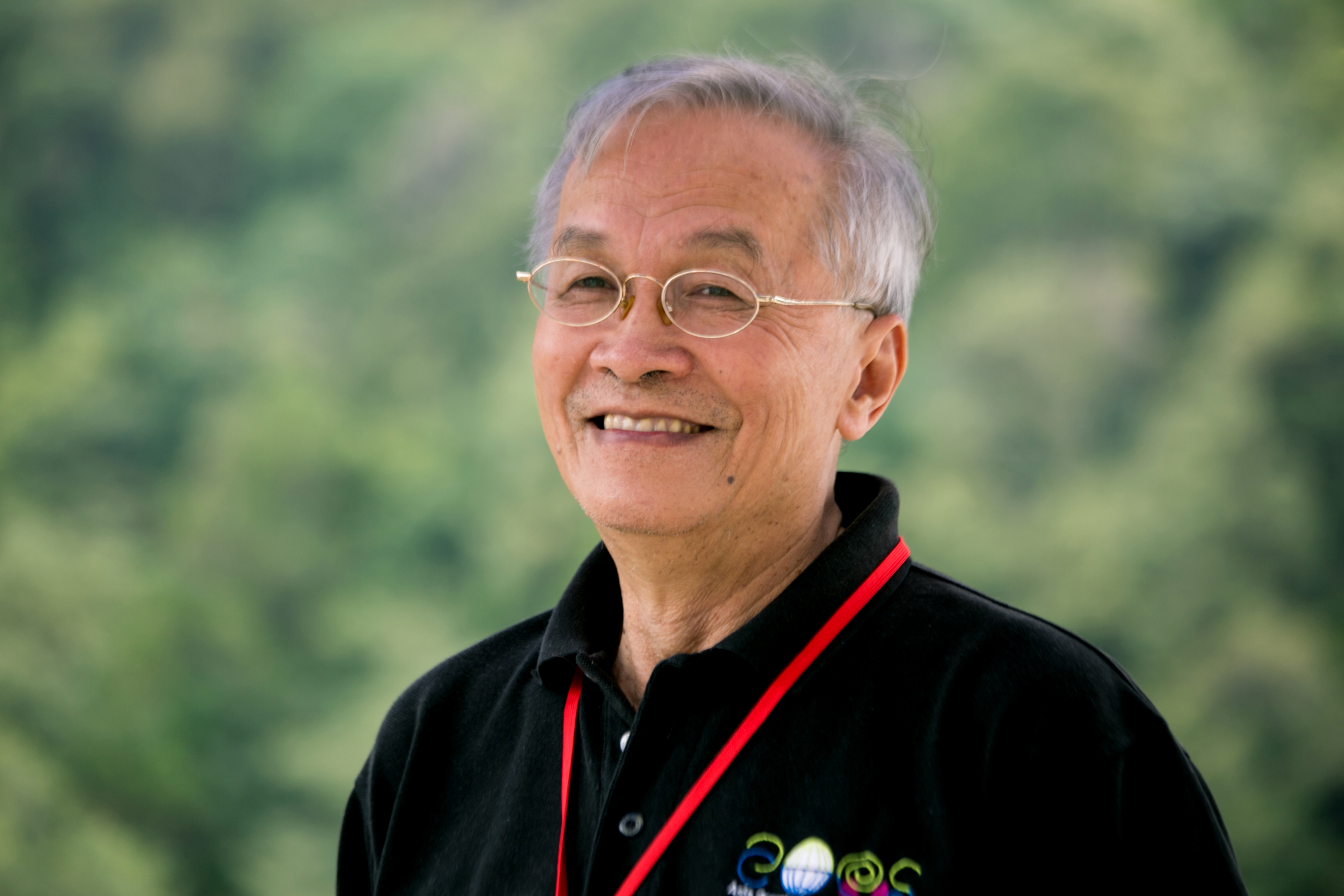
Wing-Huen IpThe DPS awards the 2020 Gerard P. Kuiper Prize for outstanding contributions to the field of planetary science to Professor Wing-Huen Ip (Institute of Astronomy, National Central University, Taiwan) for his contributions to advancements in comet plasma physics, solar-system dynamics, and magnetospheric interactions with atmospheres and solid surfaces. One example of his seminal contributions includes his paper in Nature that presented a model for the formation of magnetism-free cavities at Comet Halley; three decades later, the same phenomenon was seen on 67/P Churyumov-Gerasimenko by Rosetta. Wing was the founding president for the Asia-Oceania Geosciences Society (AOGS) and is known as one of the three fathers of the Cassini-Huygens mission to Saturn and Titan. He has also participated as a co-investigator on numerous planetary missions and has exerted a strong influence on planetary science through international collaborations and training and inspiring young scientists.

Rebekah DawsonThe 2020 Harold C. Urey Prize for outstanding achievement in planetary research by an early career scientist goes to Dr. Rebekah Dawson (Pennsylvania State University) in recognition of her groundbreaking research on planetary dynamics, the formation of planetary systems, and the characterization of exoplanets on close-in orbits. In one of her early works on understanding radial-velocity data for multiplanet systems, she re-analyzed archival data for planet 55 Cancri e and discovered previous misinterpretations; in doing so she paved a path for future observations to correctly characterize both this exoplanet and others. Rebekah exemplifies scientific leadership in her organization of prominent conferences and her involvement in planning future NASA missions such as the Large Ultraviolet Optical Infrared Telescope (LUVOIR).
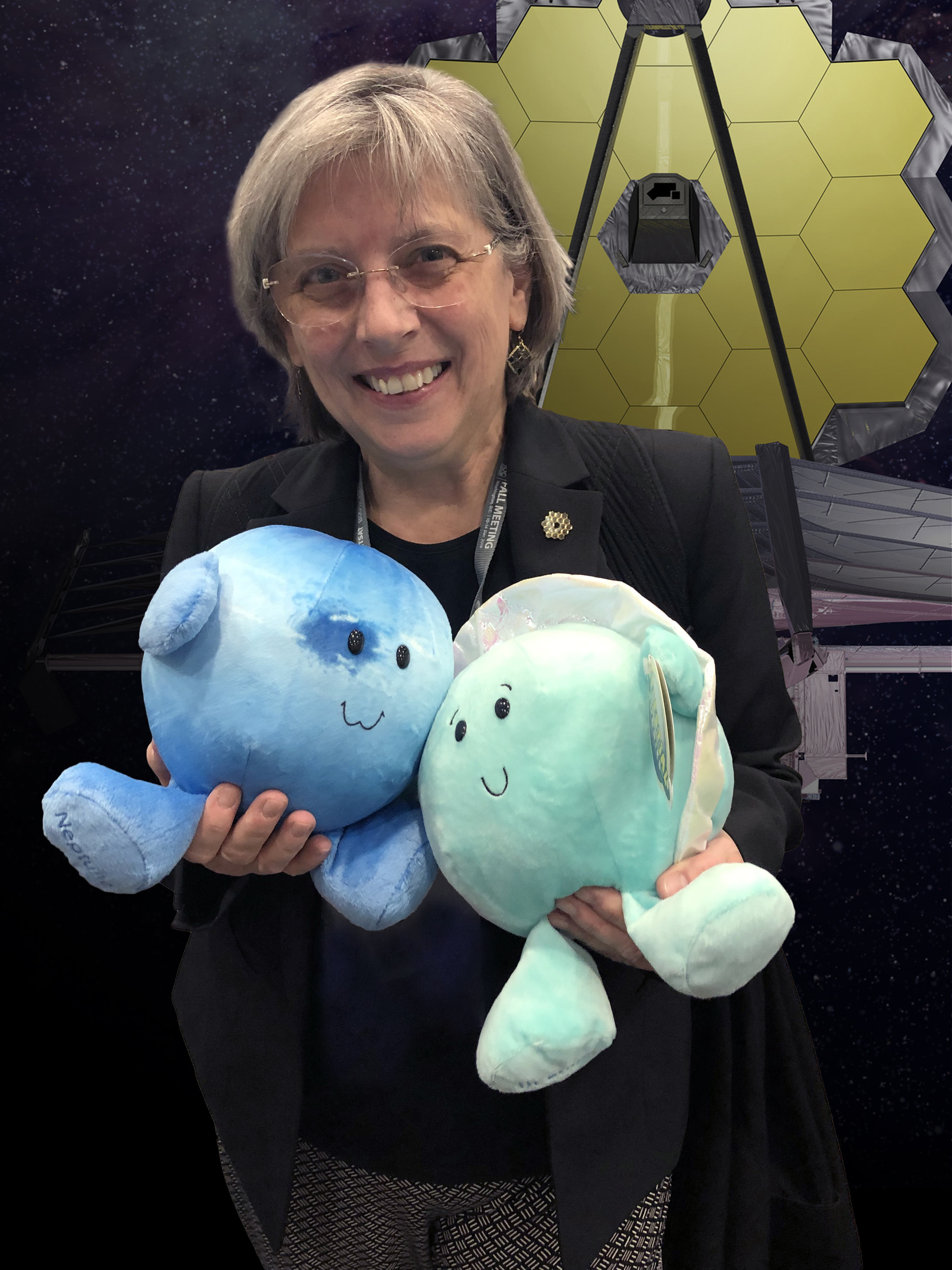
Heidi HammelThe 2020 Harold Masursky Award for meritorious service to planetary science goes to Dr. Heidi B. Hammel (Association of Universities for Research in Astronomy) for her extensive and impactful service, over nearly 30 years, on a diverse set of advisory boards, editorial boards, panels, committees, task forces, and councils for professional organizations. Heidi has a unique reputation as an advocate for the entire planetary science community, often ensuring that observatories — including the upcoming James Webb Space Telescope — and other facilities consider the full range of research opportunities pertinent to planetary science. As a tireless proponent for exploration of the distant ice giants, both via Earth-based astronomy and future interplanetary missions, Heidi provides a passionate voice for a broad swathe of observers and theorists studying the outer solar system.
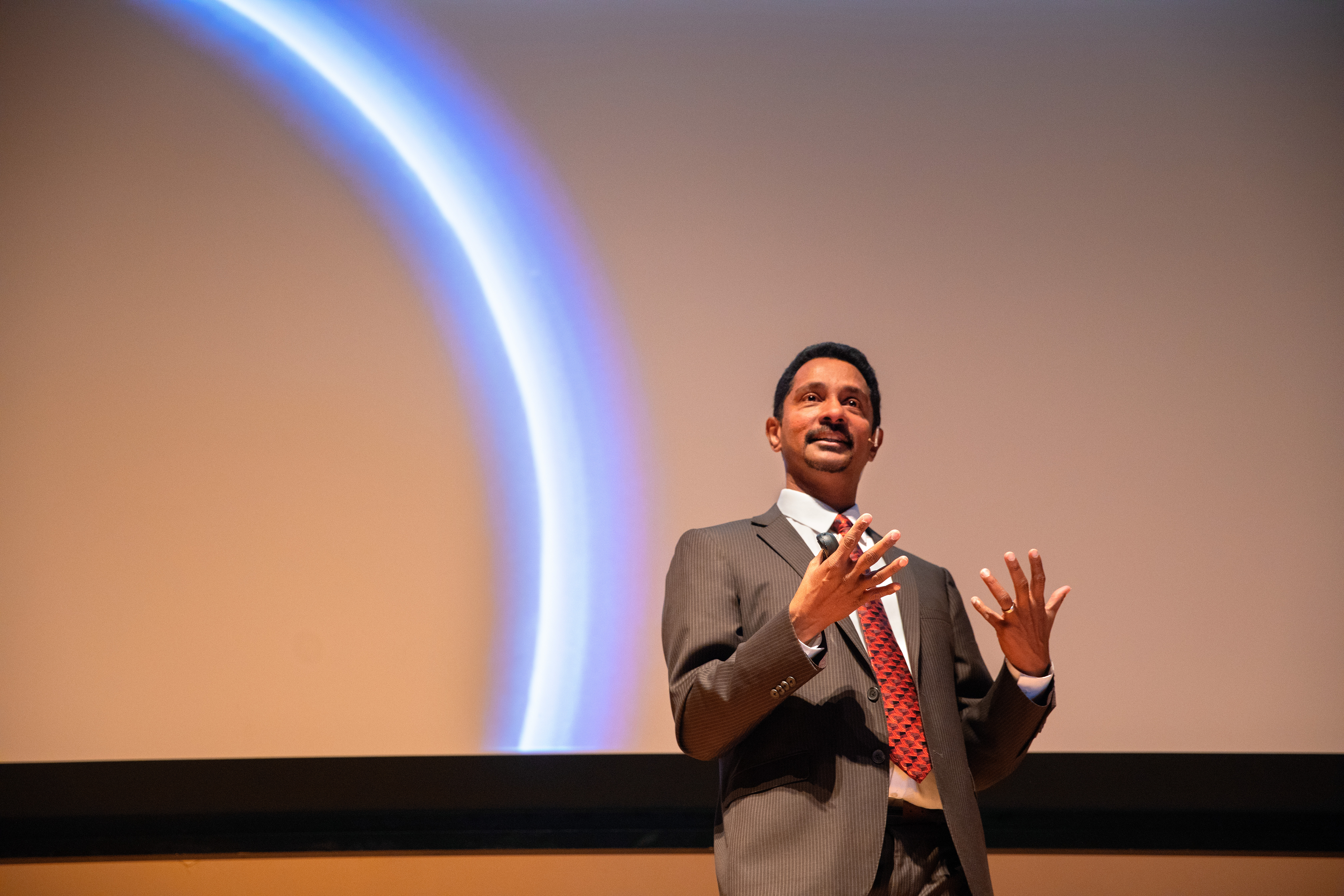
Ray JayawardhanaThe DPS awards the 2020 Carl Sagan Medal to Dr. Ray Jayawardhana (Cornell University) for outstanding contributions to the dissemination of planetary science research to the general public. Ray (aka RayJay) has published four popular books to widespread acclaim, one of which was the basis for an hourlong CBC TV documentary. His most recent book, Child of the Universe, is aimed at kids and builds on the legacy of Carl Sagan by revealing our deep and enduring links with the cosmos. Over three decades, Ray has written frequently for many prestigious and widely read publications such as the New York Times, the Wall Street Journal, The Economist, and Science. While reaching out to the general public, Ray has remained a highly published and cited scientist and has been honored repeatedly for his research accomplishments.

Christopher CrockettThe 2020 Jonathan Eberhart Planetary Science Journalism Award for distinguished popular writing goes to freelance writer Dr. Christopher Crockett. His winning article, “How the Moon Landings Changed Our View of the Solar System,” was published in Knowable magazine on July 16, 2019, during the 50th anniversary of the Apollo 11 mission. Chris describes how the lunar samples returned by the Apollo astronauts continue to transform our understanding of the evolution of the solar system. He describes how the samples led to theories that include a period of planetary migration and heavy bombardment on the Moon, and how recent studies cast doubt on these theories. The article emphasizes the need for future lunar exploration and sample return to answer outstanding questions about the solar system.

“What a pleasure it is to award these prizes to such deserving scientists,” says DPS Chair Dr. Amanda Hendrix. “These awardees have not only provided the world with new insights into our solar system and planetary systems beyond our own, but they also offer inspiration to the planetary science community and the wider public.”

The 2020 DPS prizes will be presented at the 52nd annual meeting of the Division for Planetary Sciences, which will take place virtually from 26 to 30 October 2020.

Contacts:

Dr. Shantanu Naidu

DPS Press Officer

+1 (917) 373-8840

[email protected]

Dr. Amanda Hendrix

DPS Chair

[email protected]

More information about DPS prizes:

prizes

52nd annual DPS meeting, 26-30 October 2020:

https://aas.org/meetings/dps52

The Division for Planetary Sciences (DPS), founded in 1968, is the largest special-interest Division of the American Astronomical Society (AAS). Members of the DPS study the bodies of our own solar system, from planets and moons to comets and asteroids, and all other solar-system objects and processes. With the discovery that planets exist around other stars, the DPS has expanded its scope to include the study of extrasolar planetary systems as well.

Newsletter 20-38

Issue 20-38, August 14, 2020


+————————————CONTENTS—————————————-+

  1. AAS DIVISION FOR PLANETARY SCIENCES 2020 PRIZES
  2. DPS 2020 DEPENDENT CARE GRANTS
  3. DPS EDUCATION AND OUTREACH GRANTS – FINAL DEADLINE EXTENDED UNTIL AUGUST 15TH
  4. NASA PLANETARY SCIENCE ADVISORY COMMITTEE (PAC) MEETING AUGUST 17-18
  5. SOFIA CYCLE 9 CALLS FOR PROPOSALS AND WEBINAR
  6. CALL FOR PAPERS TO A FOCUS ISSUE IN THE PLANETARY SCIENCE JOURNAL DEDICATED TO PAPERS HIGHLIGHTING LANDED LUNAR MISSION CONCEPTS AND HIGH-PRIORITY LANDING SITES
  7. ANNOUNCING THE EXOPLANET SOLAR SYSTEM (EXOSS) TUTORIAL TALK SERIES

+——————————————————————————————–+


1———1———1———1———1———1———1———1———1———1

AAS DIVISION FOR PLANETARY SCIENCES 2020 PRIZES


The DPS is pleased to announce its 2020 prize winners.


Gerard P. Kuiper Prize – Wing-Huen Ip


The DPS awards the 2020 Gerard P. Kuiper Prize for outstanding contributions to the 

field of planetary science to Professor Wing-Huen Ip (Institute of Astronomy, National 

Central University, Taiwan) for his contributions to advancements in comet plasma physics, 

solar-system dynamics, and magnetospheric interactions with atmospheres and solid surfaces. 

One example of his seminal contributions includes his paper in Nature that presented a 

model for the formation of magnetism-free cavities at Comet Halley; three decades later, 

the same phenomenon was seen on 67/P Churyumov-Gerasimenko by Rosetta. Wing was 

the founding president for the Asia-Oceania Geosciences Society (AOGS) and is known 

as one of the three fathers of the Cassini-Huygens mission to Saturn and Titan. He has also 

participated as a co-investigator on numerous planetary missions and has exerted a strong 

influence on planetary science through international collaborations and training and inspiring 

young scientists.


Harold C. Urey Prize – Rebekah Dawson


The 2020 Harold C. Urey Prize for outstanding achievement in planetary research by an 

early career scientist goes to Dr. Rebekah Dawson (Pennsylvania State University) in 

recognition of her groundbreaking research on planetary dynamics, the formation of 

planetary systems, and the characterization of exoplanets on close-in orbits. In one of her 

early works on understanding radial-velocity data for multi-planet systems, she re-analyzed 

archival data for planet 55 Cancri e and discovered previous misinterpretations; in doing 

so, she paved a path for future observations to correctly characterize both this exoplanet 

and others. Rebekah exemplifies scientific leadership in her organization of prominent 

conferences and her involvement in planning future NASA missions such as the Large 

Ultraviolet Optical Infrared Telescope (LUVOIR).


Harold Masursky Award – Heidi B. Hammel


The 2020 Harold Masursky Award for meritorious service to planetary science goes to 

Dr. Heidi B. Hammel (Association of Universities for Research in Astronomy) for her 

extensive and impactful service, over nearly 30 years, on a diverse set of advisory boards, 

editorial boards, panels, committees, task forces, and councils for professional organizations. 

Heidi has a unique reputation as an advocate for the entire planetary science community, 

often ensuring that observatories — including the upcoming James Webb Space Telescope — 

and other facilities consider the full range of research opportunities pertinent to planetary 

science. As a tireless proponent for exploration of the distant ice giants, both via Earth-based 

astronomy and future interplanetary missions, Heidi provides a passionate voice for a broad 

swathe of observers and theorists studying the outer solar system. 


Carl Sagan Medal – Ray Jayawardhana


The DPS awards the 2020 Carl Sagan Medal to Dr. Ray Jayawardhana (Cornell University) 

for outstanding contributions to the dissemination of planetary science research to the 

general public. Ray (aka RayJay) has published four popular books to widespread acclaim, 

one of which was the basis for an hourlong CBC TV documentary. His most recent book, 

Child of the Universe, is aimed at kids and builds on the legacy of Carl Sagan by revealing 

our deep and enduring links with the cosmos. Over three decades, Ray has written frequently 

for many prestigious and widely read publications such as the New York Times, the Wall 

Street Journal, The Economist, and Science. While reaching out to the general public, 

Ray has remained a highly published and cited scientist and has been honored repeatedly 

for his research accomplishments.


Jonathan Eberhart Planetary Science Journalism Award – Christopher Crockett


The 2020 Jonathan Eberhart Planetary Science Journalism Award for distinguished 

popular writing goes to freelance writer Dr. Christopher Crockett. His winning article, 

“How the Moon Landings Changed Our View of the Solar System,” was published 

in Knowable magazine on July 16, 2019, during the 50th anniversary of the Apollo 11 

mission. Chris describes how the lunar samples returned by the Apollo astronauts 

continue to transform our understanding of the evolution of the solar system. He 

describes how the samples led to theories that include a period of planetary migration 

and heavy bombardment on the Moon, and how recent studies cast doubt on these 

theories. The article emphasizes the need for future lunar exploration and sample 

return to answer outstanding questions about the solar system.


2———2———2———2———2———2———2———2———2———2

DPS 2020 DEPENDENT CARE GRANTS


The DPS Susan Niebur Professional Development Fund provides financial assistance to
qualifying members of the DPS in order to facilitate their meeting participation by offsetting
dependent care costs (such as child care, elder care, spousal care, etc) at the meeting location,
or at home, during the DPS conference week. This includes dependent care expenses needed
to allow attendance and participation in the 2020 virtual DPS meeting. The DPS Professional
Development Subcommittee will accept applications for dependent care subsidies to assist an
eligible DPS member to participate in the 2020 DPS Meeting. The initial submission deadline
is Monday, September 14, 2020.  The review of submissions will begin Tuesday September 15;
however, further requests will be accepted and reviewed, funding and eligibility permitting.


Please access the grant application form at development#grants .


Mark Gurwell, DPS Professional Development Subcommittee member


3———3———3———3———3———3———3———3———3———3

DPS EDUCATION AND OUTREACH GRANTS – FINAL DEADLINE EXTENDED UNTIL AUGUST 15TH


The DPS Committee is offering small grants (average amounts of $200 to $500) to

support DPS members to engage in local and virtual education and public engagement

activities. These grants are intended to support DPS member efforts to engage other

members, students, teachers, and the public and can be used for materials, consumables,
equipment but not for salary or travel to DPS meetings. Proposals are being accepted

for programs that will occur by June 1, 2021. We encourage creative solutions for

engagement efforts that also conform to social-distancing requirements. If you have a

question about what is an acceptable cost, please contact the DPS Education and Outreach
Officer, Sanlyn Buxner, [email protected].  Proposals should be emailed to [email protected]

and you will receive an email confirmation.


Applications will be accepted until August 15, 2020. All proposals will be reviewed by

members of the DPS education committee and the executive committee. Complete

directions, including a scoring rubric, can be found at

education/education-outreach-grants/application


Please address any questions to [email protected].


Sanlyn Buxner (Education and Public Outreach Officer) and

Brian Jackson (Deputy Education and Public Outreach Officer)


4———4———4———4———4———4———4———4———4———4

NASA PLANETARY SCIENCE ADVISORY COMMITTEE (PAC) MEETING AUGUST 17-18


NASA’s Planetary Science Advisory Committee (PAC) will hold a virtual meeting

on Monday, August 17, 2020, 10:00 AM to 6:00 PM EDT and Tuesday, August 18, 2020,

10:00 AM to 6:00 PM EDT. The agenda and connection information can be found here.


The meeting will be available telephonically and by WebEx.  

To participate in this meeting by telephone on all days: 

USA toll free conference call number 1-800-779-9966 

OR toll conference call number 1-517-645-6359, 

Passcode 5255996. 

The WebEx link is https://nasaenterprise.webex.com/

Meeting number is 901 917 366 

Password (case sensitive) on both days: PAC@Aug17+18


5———5———5———5———5———5———5———5———5———5

SOFIA CYCLE 9 CALLS FOR PROPOSALS AND WEBINAR


SOFIA Cycle 9 Calls for Proposals Released


The Proposal Calls for SOFIA Cycle 9 observations have been released with a

deadline of September 4, 2020, 21:00 PDT (September 5, 2020, 4:00 UTC). Detailed

information about the Cycle 9 calls can be found on our website.


Two Calls for Proposals are offered:

·         A Call for regular programs, for which approximately 500 hours of observations

will be offered and funding up to $4M is expected to be available for eligible proposers

·         A Call for the SOFIA Legacy Program, which enables programs producing a rich

archival dataset of significant scientific value to the astronomical community. Up to four

legacy proposals will be accepted, with each allocated up to ~200 hours of observing time

(~200 hours of observations per cycle in total). Funding is expected to be available at the

level of $2M per year.


All six instruments — EXES, FIFI-LS, FORCAST, FPI+, GREAT, and HAWC+

will be available during the Cycle (July 1, 2021 to September 30, 2022). SOFIA plans

to offer three Southern deployments: two long deployments (July-September 2021 and

2022) offering GREAT and HAWC+, and a short deployment in March 2022 offering

FIFI-LS. 


Proposals are to be submitted through the USPOT tool. The Help Desk is open to answer

any question and inquiry from the community: [email protected].  


Proposal Preparation Webinar: August 18, 8am-10:30am Pacific Time


On Tuesday August 18, 8am-10:30 am Pacific Time, a proposal Preparation Webinar

will be held on Webex. This webinar is intended to provide practical information to both
experienced and prospective SOFIA users on how to best design a scientifically and

technically strong SOFIA proposal for Cycle 9


For each SOFIA instrument, science staff members will present realistic science examples

and demonstrate how to determine the necessary signal to noise, choose the observing

strategy, determine the observing time estimation with SITE and design the corresponding
Astronomy Observation Request with USPOT. A general presentation will introduce the

main science cases addressed by SOFIA, and the general capabilities of the instrument

suite, as well as the specific features offered during Cycle 9, including the Dual Anonymous Review
framework. There will be ample time for questions.


Please connect through this Webex link. The preliminary agenda and more connection
information are available here. Slides from the webinar and associated video tutorials for
the 2019 Proposal Tool webinar are available here.


New for SOFIA in Cycle 9


·         Starting with Cycle 9, the observatory is adopting a policy of “two year” proposals:
accepted regular proposals with priority 2 and 3 will stay active in Cycle 9 and Cycle 10.

Priority 1 regular proposals and Legacy Proposals will continue to remain active until

completed.

·         For Cycle 9, the observatory is implementing dual-anonymous review. Proposers

should now upload two distinct pdfs in their proposals, and not identify themselves in the

main body pdf file.

·         The proprietary data period for Cycle 9 regular programs is six months rather than

twelve.

·         For Cycle 9, legacy proposals are invited to participate in a two-step process whereby

pilot Cycle 9 observations will be performed prior to the decision on committing to a full

legacy program.

·        “Survey” proposals, which propose to observe a small subset of a large number of

targets, are encouraged. “Such projects must specify and justify the minimum number of

targets necessary to complete the scientific objectives. The observatory plans to award up

to 100 hours for survey programs.

·         Additional standard modes are offered: the new honeycomb OTF mapping mode for
GREAT and the new total power mode on FIFI-LS.

·         The 63 microns (Band B) for HAWC and the new FIFI-LS on-the-fly mapping mode

is offered as shared risk.

·         The two polarizations of the GREAT Low Frequency Array can now be set to two
different frequencies to allow for simultaneous observations of two different lines.

·         Cycle 9 is potentially the last cycle in which FORCAST will be offered, depending

on funding and proposal pressure.

·         Up to 20 hours will be reserved for programs supporting JWST Early Release Science.

·         A joint proposal agreement with the Green Bank Observatory is now in place for Cycle 9.


6———6———6———6———6———6———6———6———6———6

CALL FOR PAPERS TO A FOCUS ISSUE IN THE PLANETARY SCIENCE JOURNAL DEDICATED TO
PAPERS HIGHLIGHTING LANDED LUNAR MISSION CONCEPTS AND HIGH-PRIORITY LANDING SITES


*New extended due date for submissions: November 1, 2020.


Journal: Planetary Science Journal


Contact: Please direct questions to the Special Issue Coordinators: Barbara Cohen
([email protected]) and Maria Banks ([email protected]).


Submission Instructions: Authors should submit their paper through the normal Planetary
Science Journal submission site (https://journals.aas.org/planetary-science-journal). When
submitting, please indicate the special issue: “Lunar Mission Concepts and High-Priority

Landing Sites” in the comments section.


Description of focus for the special issue:

In the last several years, the lunar community has submitted multiple detailed mission

proposals for amazing science we’d like to at the Moon, via Discovery, New Frontiers,

CLPS, and most recently, Planetary Mission Concepts for the Decadal Survey. We also

continue to collect high-quality lunar data via the Lunar Reconnaissance Orbiter (LRO)

and partner assets, illuminating new places where such missions could be safely and

productively deployed.

This special issue will be dedicated to papers highlighting lunar mission concepts, lunar

data analysis, and high-priority landing sites. A successful paper should bring together

elements of lunar data analysis (e.g. geology, site selection, new analyses, etc.), along

with a lunar mission or instrument/payload concept (science, instrumentation, mission

design, etc). Surface mission concepts should contain both a science justification for a

robotic (or human-assisted) mission, along with a detailed analysis of one or more candidate
landing sites to show the existence of a safe and interesting potential site for the mission

(e.g. geologic setting, slopes, hazards, rock abundance, maturity, etc.). Orbital mission

concepts should include new or updated lunar data analysis or interpretation that supports

the mission concept along with its science justification. Mission concepts need not be

highly mature, but should clearly describe the science case.


7———7———7———7———7———7———7———7———7———7

ANNOUNCING THE EXOPLANET SOLAR SYSTEM (EXOSS) TUTORIAL TALK SERIES


We would like to invite the planetary science community to join a new ExoPAG

Science Interest Group (SIG3) effort to enhance interactions between the Exoplanet

and Solar System communities. We have established a monthly Tutorial Talk aimed

at introducing field newcomers to important topics or methods in planetary and

exoplanetary science. The talks will include a 30 minute tutorial from an expert

to introduce the topic, followed by a 30 minute group discussion of a recent paper

in which the topic/method features. Each talk will be recorded and made available

online to create a database for community engagement. Talks will meet the first

Thursday of the month at 11 AM PDT/ 2 PM EDT.


The first ExoSS Tutorial Talk was on August 6th at 11am PDT. The topic was 

Volatile Solubilities in Rocks, by Laura Schaefer (Stanford), with a discussion of

Kite et al. (2020) Atmosphere Origins for Exoplanet Sub-Neptunes.  The recording

for this talk can be found here.


All are welcome, so feel free to share this announcement and the link to the recording

of the first tutorial. Also feel free to suggest topics you’d like to hear future tutorials on. 

Vikki Meadows, Mark Marley and Laura Schaefer are currently collecting suggestions

for future tutorials.  


———————————+ 

Send submissions to: 

Anne Verbiscer, DPS Secretary ([email protected]


You are receiving this email because you are a DPS member.

To unsubscribe or update your information, please send your request

to [email protected]. The more general AAS privacy policy is available

online at https://aas.org/about/policies/privacy-policy. Current and back

issues of the DPS Newsletter can be found at newsletters  

–>