“All that survives after our death are publications and people. So look carefully after the words you write, the thoughts and publications you create, and how you love others. For these are the only things that will remain.” –Susan Niebur

Susan Niebur, former NASA Program Scientist and founder of the Women in Planetary Science project, passed away on February 6, 2012, surrounded by family and friends. She will be remembered for her untiring work to bring people together and to find ways to help everyone to be able to live up to their potential; for the passion and incredible energy she brought to everything she did; for the constant encouragement and inspiration she provided to others; and for her wonderful and unfailing smile.
Susan got her Ph.D. in Physics at Washington University McDonnell Center for Space Sciences in 2001. While a student, she founded the American Physical Society’s Forum on Graduate Student Affairs and served as its first Chair; founded and led the first peer mentoring group at Washington University; co-created and administered the first National Doctoral Program Survey; and served as President, Vice President, Regional Coordinator, and first Alumni Affairs Coordinator for the National Association of Graduate-Professional Students. She started her career at NASA Headquarters straight out of grad school as a Presidential Management Intern in the Office of Space Science and became the Discovery Program Scientist in 2003. During her five-year service at NASA Headquarters she co-founded the first-ever Early Career Fellowships and Workshops for Planetary Scientists, held at annual meetings of the American Astronomical Society’s Division for Planetary Science and the Lunar and Planetary Science Conference.
In 2006 Susan left NASA and founded Niebur Consulting, to pursue research in space science policy, the history of space science missions, mission leadership and the place of women in the current landscape of planetary exploration. (Her publications on these topics can be found at http://susanniebur.wordpress.com/publication-list/.) She also consulted for major aerospace companies and research institutions on proposal strategy and planning. In addition, she worked tirelessly to promote community outreach projects, providing several forums for those whose voices aren’t always heard. In 2008, she founded the Women in Planetary Science project (“Women make up half the bodies in the solar system. Why not half the scientists?” http://womeninplanetaryscience.wordpress.com/), a community-building portal to promote networking and facilitate sharing of resources to remove barriers to success. As part of that project she ran a series of interviews 51 Women in Planetary Science, which represents a goldmine of information for anyone interested in learning about options available when pursuing a career in a planetary-science-related field. She also introduced the first Women’s Networking Breakfast, a hugely successful annual event at the Lunar and Planetary Science Conference, which, over just a few years, has grown from an overflowing hotel breakfast room to a large conference room, also overflowing.

Women’s Networking Breakfast, LPSC 2011
Among her numerous honors is the Public Service Award from the NASA Planetary Science Division in November 2011, for her “exemplary leadership abilities [that] have helped many women in the field, both planetary and astrophysics” (PSD Director Jim Green).
Susan was also extremely active in advocating for cancer research and raising awareness about Inflammatory Breast Cancer, a rare and very aggressive form of cancer. She fought that disease with all she had, documenting her journey on the site ToddlerPlanet.wordpress.com with compelling forthrightness, and was one of the creators of the online support network Mothers with Cancer about “Raising Children, Fighting Cancer, Living Life!” (http://motherswithcancer.wordpress.com/). Her tremendous contribution to social media and cancer advocacy has been widely recognized, including the Bloganthropy Annual Award for “using social media to make a difference” in 2011.
“Susan Niebur is survived by her family, friends, achievements, and the indelible marks she made on people around the world.” (Curt Niebur, February 6, 2012).
More information on Susan and links to her websites can be found at:
http://solarsystem.nasa.gov/people/profile.cfm?Code=NieburS

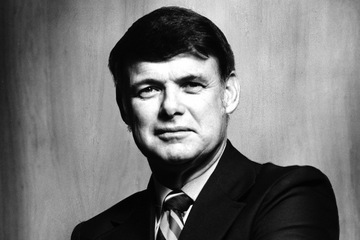 Bruce Murray, former JPL Director, co-founder of the Planetary Society, and Caltech Emeritus Professor passed away on August 29.
 It is with great sadness that we note the unexpected passing of
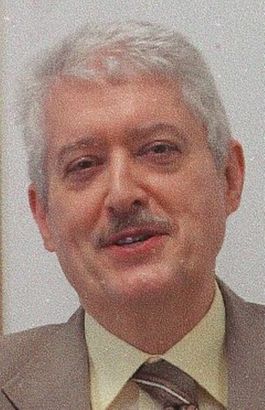 It is with great sadness that we announce the death from brain cancer Dr. Jeffrey K. Wagner, passed away July 8. He received a Bachelor of Science in astronomy from Penn State University in 1974 and a Ph.D. in geology and planetary sciences from the University of Pittsburgh in 1980. Wagner was a Professor of Astronomy and Geology at Bowling Green State University Firelands College for 30 years. Jeff’s name is familiar to everyone in the field of spectroscopy of planetary surfaces. His seminal work on the ultraviolet reflectances of planetary materials, which formed his Ph.D dissertation, opened a new field in planetary spectroscopy. He was the author of the book “Introduction to the Solar System,” which was published in 1991 and often used in the classroom by his students.
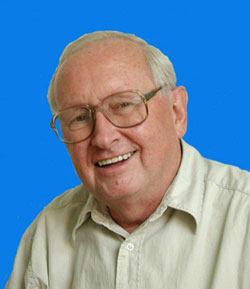 It is with great sadness I have to report the passing of Dr Hasso Niemann, who was a founding father of atmospheric experiments and mass spectrometry at the center which ultimately led to the successful SAM experiment currently operating on the Curiosity Rover. Hasso died peacefully in his sleep early Thursday, July 11 morning after a brief battle with cancer.
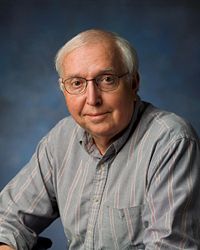 David S. McKay, Chief Scientist for Astrobiology at the NASA Johnson Space Center, passed away on February 20, 2013. During the Apollo program, McKay gave the first men to walk on the Moon training in geology. In recent years, McKay was perhaps best known for being the first author of a scientific paper postulating past life on Mars on the basis of evidence in martian meteorite ALH 84001. This paper has become one of the most heavily cited papers in planetary science. The NASA Astrobiology Institute was founded partially as a result of community interest in this paper and related topics.
 Stephen Eugene Dwornik passed away peacefully on December 17, 2012. Dwornik was born July 3, 1926, in Buffalo, New York, to Stephen Dwornik and Helena Januszkiewicz Soltys.
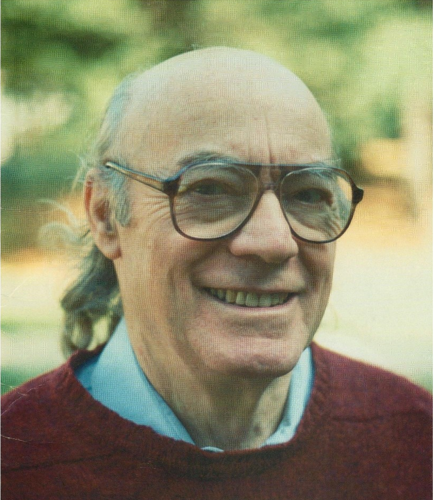 Dr. Bertram “Bert” Donn, the first head of NASA Goddard’s astrochemistry group, passed away on Friday December 28, 2012 at age 93. A New Yorker by birth, Bert attended Harvard University where he was taught by such legends as Fred Whipple, Cecilia Payne, and Bart Bok. A meeting with Harold Urey in the 1950s turned Bert’s attention to problems of low-temperature reactions and their connections to cometary and interstellar chemistry. Bert’s research at Goddard spanned theory, observation, and experiment, with connections to NASA missions such as Skylab, Apollo, and the International Ultraviolet Explorer. Bert also was an early NASA contributor to the astrobiological literature, he initiated several astrobiology-related research projects at Goddard, and he founded Goddard laboratories for studying the chemistry and physics of ice, dust, and nucleation. He was a 50-year member of the American Astronomical Society and a long-time DPS member. Aside from his Goddard work, Bert was a well-known and honored advocate of non-violence and peaceful conflict resolution, and was instrumental in the racial integration of Greenbelt, Maryland, where he and his family lived for 50 years. For more information please see
 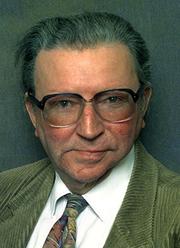 John Guest (1938-2012) was a pioneer in planetary geologic mapping, contributing to the first geologic map of Mercury, as well as the first comprehensive map of the eastern equatorial region of Mars with Ron Greeley. He participated in the Mariner 10 and Viking missions, as well as the Magellan mission to Venus. Along with Ron, he helped to select the Viking 2 landing site. Primarily though, John was a volcanologist, happiest when he was in the field, especially at Mt. Etna. John did his PhD work at University College London, mapping volcanic fields in Chile, including the Chao Dacite and the Upper Tertiary ignimbrites in Antofagasta Province. He then went to the University of London Observatory to work with Gilbert Fielder on lunar craters, quickly realizing that craters on the Moon are not volcanic, but impact, starting his long interest in planetary science.