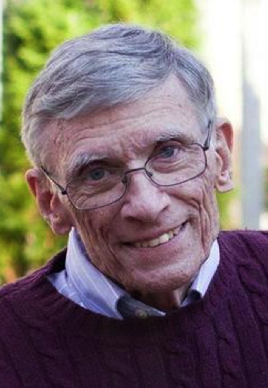
 Dr. Barney Conrath passed away peacefully in his sleep on April 23, 2014, at his home in Charlottesville, Virginia, after a bout with cancer. He is survived by his wife, Marjorie, three children, and five grandchildren.
He was born June 23, 1935 in Quincy, Illinois and grew up near Hannibal, Missouri. In 1957 he graduated from Culver-Stockton College in northeast Missouri with a BA in Physics, then earned an MA in Physics at the University of Iowa under the direction of James Van Allen. In July 1960, Barney joined the staff of NASA’s new Goddard Space Flight Center in Greenbelt, Maryland, where he would spend most of his professional career. However, Goddard was not ready to accommodate him, since the Center’s buildings were still under construction. Goddard’s scientists and engineers were housed in temporary quarters scattered over greater Washington, D.C., and Barney spent nearly two years working at the US Naval Receiving Station in the Anacostia section of the city. Later, he won a Robert Goddard Fellowship and took a leave to earn a PhD in Physics at the University of New Hampshire in 1966, his dissertation being on the violation of the 2nd and 3rd adiabatic invariants by hydromagnetic waves.
Fortunately for atmospheric science, Barney fell in with the wrong crowd at Goddard, and his career in space plasma physics was short lived. The atmosphere at the Center in its early days was charged with excitement: Earth-orbiting satellites were being launched at a regular rate and Goddard was supplying many of the experiments. Barney’s group was heavily involved with the Tiros and Nimbus weather satellites, which, respectively, had radiometers and spectrometers to measure the thermal radiation field of Earth’s atmosphere. This was a new area of exploration, and techniques were needed to interpret the observed radiation and derive physical atmospheric parameters, e.g., the distributions of temperatures, clouds, and gaseous constituents. Beginning in the mid 1960s, Barney contributed a series of seminal studies on the inversion of planetary infrared spectra observed from space-borne platforms, which was to occupy much of his career.
The course of Barney’s work was strongly influenced by his close association with Rudolf Hanel, who built a series of Infrared Interferometer Spectrometers (IRIS) that were onboard the Nimbus satellites, and then on spacecraft that went to Mars (Mariner 9) and the outer planets (Voyager 1 & 2). Barney was a co-investigator on all these experiments and became the Voyager IRIS principal investigator in 1986. Early on, Barney appreciated the value—and sheer enjoyment—of combining the activities of data acquisition and spectral inversion with detailed theoretical modeling of the results. His passion became understanding the atmospheric thermal structure and dynamics of the bodies he observed. Using terrestrial analogies to interpret data from strange worlds is usually a reasonable starting point, but sometimes one’s mind needs to be nimble. This was true of the hydrogen-dominated atmospheres in the outer solar system, where Barney and his colleagues discovered that conversion between the ortho and para forms of molecular hydrogen in disequilibrium could be an important energy source driving atmospheric motions.
Barney twice received the NASA Medal for Exceptional Scientific Achievement (1981, 1990), and he became a Goddard Senior Fellow in 1990. In 1996 he received the DPS Kuiper Prize for his scientific contributions to planetary science. He retired from Federal service in 1995 and became a Senior Research Associate at Cornell University, continuing his close collaboration with Peter Gierasch that had begun during the Voyager IRIS days. During this time, he participated in the Mars Global Surveyor Thermal Emission Spectrometer experiment. He was also a co-investigator on Cassini’s Composite Infrared Spectrometer (CIRS), an ambitious Fourier Transform Spectrometer that built on the earlier IRIS instruments. He worked with other CIRS investigators in studying the seasonally varying thermal structure and dynamics of Titan’s stratosphere and the large structural changes effected by Saturn’s great northern storm, which erupted in late 2010. He actively pursued his research until the end, preoccupied with determining the helium abundance of Saturn’s atmosphere—thus far a challenge—by combining CIRS data with radio occultations and with stellar occultations observed by the Cassini Visual Infrared Mapping Spectrometer (VIMS).
In his career, Barney led by quiet example, and he epitomized unselfish cooperation in research. He was attentive and encouraging. His integrity and competence were unquestioned. Those who knew him well will never forget those qualities, nor will they forget him.
Prepared by Michael Flasar, NASA Goddard Space Flight Center

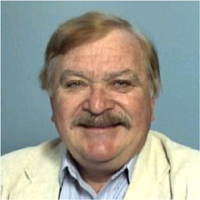 It is with great sadness that we report the loss of our colleague, Dr. Arvydas Kliore, who died suddenly on December 7, 2014 of natural causes. Arv was born in Lithuania and immigrated to the United States in 1949. He joined the engineering staff at JPL in 1962, where he had a distinguished career for over half a century with numerous publications and awards. A JPL Senior Research Scientist for more than 25 years, he was a pioneer in planetary radio science, especially in the study of planetary atmospheres and ionospheres, beginning with the first NASA planetary mission. Arv was a principalinvestigator or team member on every Mariner mission, on Pioneer 10/11, and on Pioneer Venus, and he served as Deputy Team Leader for the Galileo Radio Propagation Science Team. Most recently, he was a member of the Cassini Radio Science Team from 1990, serving as team leader for more than 20 years. Over his career, Arv attended nearly every DPS meeting in its 47-year history, a testament to his remarkable level of dedication and commitment to the community of planetary scientists.
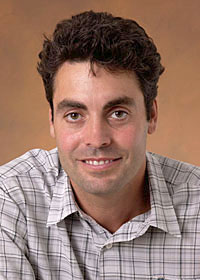 Dr. Alberto Behar, a long-time researcher at the Jet Propulsion Laboratory, died January, 9, 2015 in a small-plane accident near Van Nuys, CA.
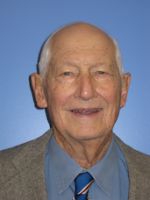 Charles A. Barth, Professor Emeritus at the University of Colorado, died on October 14th 2014. Charles grew up in Philadelphia where he attended Central High School. He received his B.S. in chemistry at Lehigh University. After serving in the Air Force, he earned his Ph.D. from UCLA. From 1958 to 1959 he was a postdoctoral fellow at the University of Bonn, Germany, followed by six years working at the CalTech/NASA Jet Propulsion Laboratory. From 1965 to 1992 he was the Director of the University of Colorado’s Laboratory for Atmospheric and Space Physics (LASP) and until 2002 a professor in the Department of Astrophysical and Planetary Sciences. He became Professor Emeritus in 2002.
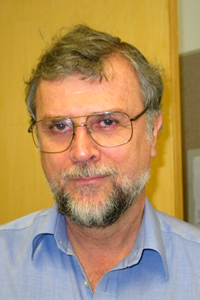 Dr. Lucas Kamp died of cancer on Sunday, March 30, 2014. He had been ill for approximately 1 year, however he continued his work planning for MIRO Rosetta cometary observations and analyzing Galileo NIMS data right up until his death.
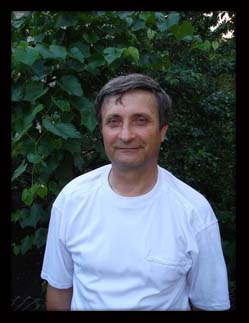 Feodor Velichko, the Leading Researcher of Institute of Astronomy of Kharkiv National University (Ukraine) died suddenly on Oct 1, 2013 in the age of 56. He was an expert in photometry and polarimetry of asteroids and comets and took part in many international observing programs devoted to physical studies of small bodies.
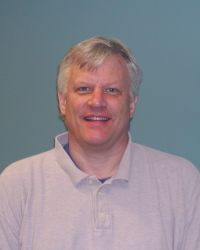 I have been informed that Dr. Gary B. Hansen passed away late Thursday evening, September 26, from complications of ALS. He died while sitting at his computer, working on some science or technical issue. This was a highly appropriate setting for Gary. Gary was a hard working and very dedicated scientist who contributed to a number of parts of the Planetary Sciences. He loved the work and the science. Working, I am sure, is where he wanted to be (“with his boots on,” so to speak).
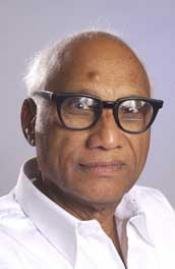 Our colleague and friend Bishun Khare died quietly on August 20 at the age of 80. Bishun is widely known for his early work on organic solid residues (tholins) related to the aerosols in planetary atmospheres and the interstellar medium, performed for many years at Cornell University in collaboration with Carl Sagan. Their 1984 paper gave the optical constants of Titan tholin from the X-ray to microwave region, and has served as a fundamental input to modeling work that included planetary surfaces in addition to atmospheric aerosols. That key paper has received well over 300 citations, and has stimulated much additional research on tholins, both in the US and in Europe. In 1996, Bishun moved from Cornell to NASA Ames Research Center on a Senior National Research Council fellowship, and subsequently joined the SETI Institute. He continued his research on many topics in his Ames lab, and mentored a great number of students, including supervising the thesis work of graduate students. Bishun was a patient, kind, and sharing individual, who loved to talk about science, especially the organic materials in Nature and those he could synthesize in his lab.