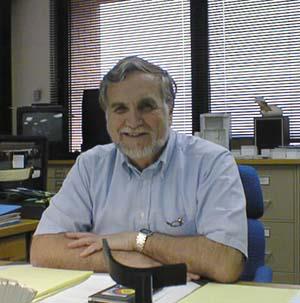
 Ronald Greeley, Regents’ Professor of planetary geology in the School of Earth and Space Exploration at Arizona State University, died Oct. 27, in Tempe, Arizona at the age of 72. Greeley has been involved in lunar and planetary studies since 1967 and has contributed significantly to our understanding of planetary bodies within our solar system.
The son of a military serviceman, Greeley moved around a great deal as child, providing him the opportunity to recognize differences and similarities in the landscape. In a memorable road trip during his early teens, while moving from Illinois to California, he would collect rocks and examine the geology of road-cuts along the way.
He went on to Geology at Mississippi State University, receive B.S. and M.S. degrees there. In 1966 he received a Ph.D. in Geology from the University of Missouri at Rolla. His Ph.D. research included field work on the Mississippi Barrier Islands, where he studied modern living forms of organisms that he was researching in the fossil rock record. This work foreshadowed a research career in which Greeley observed the present action of processes that were believed to be operating on our solar system’s planets and satellites.
After a year working for Standard Oil Company of California as a paleontologist, in 1967 Greeley was called to active military duty as an officer. Given his background in geology and remote sensing, the Army assigned him to NASA’s Ames Research Center to work on Apollo-related problems. (Greeley sometimes openly mused about whether this assignment came about by someone’s misunderstanding of his thesis topic of “lunulitiform bryozoans” as being somehow related to the geology of the Moon.)
At Ames, his research career in planetary science was launched, as he trailblazed the field of planetary geology alongside such colleagues as Verne Oberbeck, William Quaide, and Don Gault. Though Greeley had been hired by Gault to work on cratering, he was given relatively free rein to investigate planetary research topics of interest. Greeley became interested in lava tubes and lava channels as possible analogs to lunar features, and in the early 1970s he published a series of papers comparing lunar “rilles” with lava tubes and channels in Hawaii and in Idaho’s Snake River Plain. Work in both these areas resulted in publication of two superb field guides, and a 1971 Science article interpreting Hadley Rille—to be visited by Apollo 15 astronauts later that year—as a lava channel.
During this same period, stimulated by the new Mariner 9 pictures from Mars, Greeley began using wind tunnels at Ames to simulate how aeolian processes might operate on different planets. These experiments led to a succession of influential papers by Greeley and coworkers, including Jim Pollack, Jim Iverson, Bruce White, and others. These papers combined observation, theory, and careful experimental work to refine the physics of aeolian processes so that we could better understand wind-related erosion and deposition on other planets where conditions are very different from here on Earth.
While the initial research emphasis was Mars, Greeley subsequently conceived, designed, and built a wind tunnel that operates at Venus pressures, which would ultimately lead to better understanding of aeolian processes on our sister planet. As a result of this collective work, Greeley has become recognized not only as an expert in planetary science, but also as an expert on terrestrial aeolian processes, frequently consulted on problems of desertification and wind erosion.
Carleton Moore, founding director of Arizona State University’s Center for Meteorite Studies, met Greeley while on sabbatical at Ames. “I saw Ron and I saw potential,” he recalls. “When I got the opportunity, I hired him.” Greeley began teaching at ASU in 1977 with a joint professorship in the Department of Geology and the Center for Meteorite Studies.
Among other research projects, Greeley conducted photogeological mapping of planets and satellites, establishing ASU’s Space Photography Laboratory. In 1986, Greeley left the Center for Meteorite Studies to serve as chair of the Department of Geology.
“It was exciting to have him here; he was a major step in advancing space at ASU. He was the first one that came that did missions and experiments on planetary bodies,” says Moore. “He was really the first person to reach out to the other planets.”
In 1981, Greeley hired Phil Christensen as a postdoctoral researcher. “Ron played a major role in my career,” says Christensen, now a Regents’ Professor in the School of Earth and Space Exploration in ASU’s College of Liberal Arts and Sciences. “I came to ASU specifically to work with Ron after receiving my graduate degree, and I have remained at ASU for 30 years largely because of the remarkable environment that Ron created here to foster planetary science as an extension of geology.”
“Ron Greeley was indisputably one of the founders of planetary science, and the influence he has had, both through his own work and through the students and colleagues that he guided and mentored, touches virtually all aspects of this field,” says Christensen.
The many researchers mentored by Greeley include: Paul Spudis, Pete Schultz, Jim Zimbelman, Dave Crown, Jeff Moore, Eileen Theilig, Grady Blount, Dan Blumberg, Laurie Leshin, Bob Pappalardo, David R. Williams, David A. Williams, Patricio Figueredo, Bob Craddock, Rob Sullivan, Steve Kadel, Jim Rice, Thomas Doggett, and Mitch Schulte.
Greeley served as director of the NASA-ASU Regional Planetary Image Facility and principal investigator of the Planetary Aeolian Laboratory at NASA-Ames Research Center. He served on and chaired many NASA and National Academy of Science panels, and he most recently chaired the Planetary Science Subcommittee of the NASA Advisory Council.
Greeley was involved in nearly every major space probe mission flown in the solar system since the Apollo Moon landing. Mission projects included the Galileo mission to Jupiter, the Magellan mission to Venus, and the Shuttle Imaging Radar orbiter around Earth. He also conducted research on the moons of Uranus and Neptune, observed by the Voyager 2 mission.
Passionate about Mars exploration, Greeley has been involved with nearly all missions to the Red Planet: Mariner (6, 7, 9), Viking, Mars Pathfinder, Mars Global Surveyor, and the Mars Exploration Rovers. He served as a co-investigator for the camera system onboard the ongoing European Mars Express mission.
Greeley’s work lives on in proposed missions to Europa, Ganymede, and the Jupiter system, which he has tirelessly championed as US co-chair of the Joint Jupiter Science Definition Team.
“Ron was a profoundly influential scientist whose imprint on planetary science will live on through his body of research and the many students he taught and mentored. He was a wonderful friend and colleague. We were fortunate to have known him and will miss him terribly,” said Kip Hodges, founding director of the ASU School of Earth and Space Exploration.
Greeley is survived by his wife Cindy, his son Randall (Lidiette), and three grandchildren. He is preceded in death by his daughter, Vanessa.
In lieu of gifts, a scholarship fund is being set up to aid planetary students; more information on this will be announced once details are available. A Facebook page dedicated to Ron Greeley will be updated with related information, including information on memorial services: https://www.facebook.com/pages/Ronald-Greeley/180794408673305?sk=wall&fi… . You are also invited to that site to post your memories of Ron.
(Contributing to this piece are Bob Pappalardo, Nicole Cassis, Mike Carr, and Jeff Moore.)

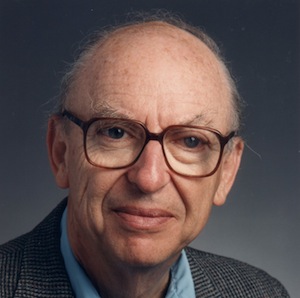 James R. Arnold, a Univ. of California, San Diego, nuclear chemist and visionary scientist, died at 88 on Jan. 6 in La Jolla from complications of Alzheimer’s disease. He was founding chairman of UC San Diego’s chemistry department and first director of the California Space Institute.
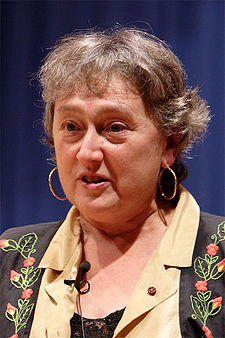 Lynn Margulis passed away on November 22, 2011, at her home, in Amherst, Massachussetts, aged 73. She was born in Chicago and enrolled at the University of Chicago when she was 14. Lynn was a renowned biologist and University Professor in the Department of Geosciences at the University of Massachusetts, whose faculty Margulis joined in 1988. Prior to that she taught at the University of Boston for 22 years. She is best known for her theory on the origin of eukaryotic organelles, and her contributions to the endosymbiotic theory. She is also associated with the Gaia hypothesis, based on an idea developed by the English environmental scientist James Lovelock.
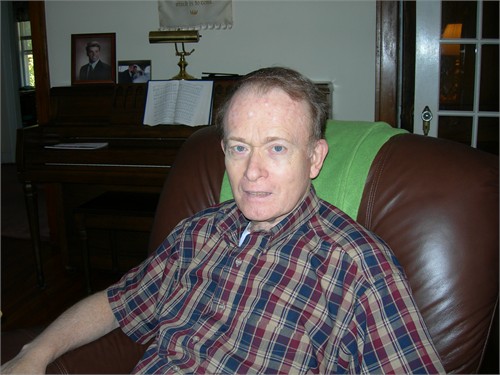 William H. Smyth (1941-2011) passed away on Friday Sept. 30, 2011 after a long illness. He is survived by his wife Iris (of 43 years), three children and five grandchildren.
 ANDREW A. DANTZLER (Age 49) of Sykesville, died on Thursday, October 13, 2011. Born March 25, 1962 in Bethesda, he was the son of Taft Dantzler of Blacksburg, VA and Barbara Surrett Dantzler of Rockville. He was the husband of Erin E. Dantzler of Sykesville. They had been married for 17 years. Andy worked at NASA from 1984-2006, serving as an optical engineer, EOS manager, Landsat 7 manager, assistant chief of the Laboratory for High Energy Astrophysics, and Director of the Solar System Exploration Division at NASA Headquarters. In 2006, Andy joined The Johns Hopkins University APL’s Civilian Space Business Area to lead the Living with a Star Missions. Andy was also the first Program Manager for Solar Probe Plus, which will journey closer to the Sun than any probe has ever gone. Andy was promoted to Program Area Manager for Civilian Space in 2009, overseeing program management for projects such as the MESSENGER mission, now in orbit about Mercury and the New Horizons mission on its way to Pluto and the Kuiper Belt. Andy’s other passion was Judo. He was a 3rd degree black belt in Judo and a member of the USA Judo Association. He was also a nationally certified coach and referee. In addition to his parents and wife, he is survived by daughter Melanie M. Celano of Falls Church, VA, sons Nicholas A. and Wesley S. Dantzler, both of Sykesville, brother Stephen Dantzler, sister Kathryn Payne and husband Bryan, brother Mark Dantzler and wife Cindy and stepmother Gladys Dantzler, as well as numerous nieces and nephews. The family will receive friends Tuesday from 2 to 4 and 7 to 9 p.m. at the Jeffrey N. Zumbrun Funeral Home, 6028 Sykesville Road, Eldersburg. A funeral service will be held Wednesday, 11 a.m. at the Wesley Freedom United Methodist Church, 961 Johnsville Road, Sykesville. Sympathies may be expressed in the form of contributions to the Make-A-Wish Foundation of America, Gift Processing Center, P.O. Box 6062, Albert Lea, MN 56007-6662 or the Dantzler Scholarship Fund c/o Capital One Bank, 6090 Daybreak Circle, Clarksville, MD 21029. Online condolences may be offered at
 The Division for Planetary Sciences is very sad to announce that our valued colleague and friend, Angioletta Coradini, passed away on September 4, 2011. Angioletta Coradini started her scientific career in 1969 with her PhD thesis at the Rome University “La Sapienza” devoted to the origin of the glassy particles found in the lunar soils. She worked on lunar samples from the Apollo missions during the seventies, at the Istituto di Astrofisica Spaziale of the Italian National Reseach Council (CNR). At the same time she started to study the formation of the solar system, becoming a leading expert in that field.
 DPS 2000 Kuiper Prize Recipient, Conway Leovy, passed away on July 9, 2011, aged 78. Conway was a prominent planetary scientist with major contributions in our understanding of the terrestrial planets, Mars and Venus, but also of Jupiter and Saturn’s satellite, Titan. In particular, Conway was very actively involved in Mars’ exploration and participated and contributed to the Mariner 6, 7 and 9 missions, the Viking landers and more recently in the Mars Reconnaissance Orbiter. Furthermore, Leovy furthered our knowledge in different branches of Earth’s atmospheric science.
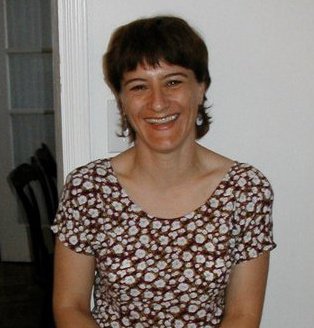 Elisabetta Pierazzo, Senior Scientist at the Planetary Science Institute, died at her home in Tucson, Arizona, on May 15. She was 47.