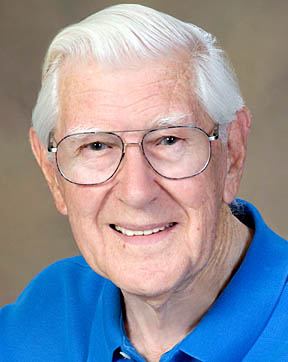
Mark Allen 1949-2016

Mark AllenMark Allen, 67, died on October 22 of complications from ALS (Lou Gehrig’s Disease). Mark was born in New York City on September 29, 1949, graduated Summa Cum Laude and Phi Beta Kappa from Columbia College of Columbia University in New York City and received his PhD from Caltech, both in chemistry. He spent nearly all of his 37-year career at Caltech and JPL, where he was a principal scientist, developing chemical models to study the atmospheres of the earth, planets, comets, interstellar space, and exoplanets. Working with his then postdoctoral advisor Prof. Yuk Yung of Caltech,  Mark was the principal architect, builder, and keeper of the comprehensive chemical code KINETICS which has become of the best-known models for simulating chemical processes in planetary atmospheres.  Mark was a team member of the NASA Astrobiology Institute (NAI) Virtual Planet Lab, Principal Investigator for the “Titan as a Prebiotic System” node of the NAI, and was involved in a number of NASA and ESA missions and mission concepts. He is survived by his wife of 34 years, Emily Bergman; children Boh Allen, Philip Allen, and daughter-in-law, Andrea Allen; mother Lucille Allen; and sister, Barbara Peterson. His research continues in the work of his colleagues and former graduate students and postdocs. Donations in his memory may be made to Columbia College at Columbia University, or the California Institute of Technology.

Jonathan Lunine, Yuk Yung, Julianne Moses, Bonnie Buratti, and Glenn Orton

Message from the Chair

Thank you Jason and greetings to my fellow DPS members. It is both a pleasure and an honor to serve as DPS chair for the coming year.

I want to thank Jason Barnes, Bonnie Buratti and the DPS committee for their volunteered time and commitment to the division. We welcome Cathy Olkin as Vice-Chair and Britney Schmidt and Catherine Neish as new Committee members. A special thanks to Bonnie Buratti for her just completed, 3- years’ service to our community.

I agreed to run for this position after researching the chair’s responsibilities, assessing my available time, consulting previous division chairs, and reflecting on my motives to serve. I can manage the responsibilities, have time to lead, as the Dawn mission, for which I’m a co-investigator, is in its last, extended-mission year. And my motivation for taking on this responsibility is to serve the DPS community because you are my academic family. I have grown personally and professionally with many of you for my entire career as a planetary scientist. I joined DPS as a graduate student in 1974, and have made career-long friends and colleagues. We’ve generated ideas for investigations, written proposals and then papers together, weathered proposal rejections and funding cuts, then celebrated the triumphs of successful NASA missions and participated in the transformation of knowledge that is now part of our world and civilization. When I come to meetings today, I see old friends and I continue to meet interesting, extremely intelligent, talented members who are carrying forward our charge to explore the solar system and other planetary systems and you want to make a difference in our world today.

In the coming year, the DPS committee and I will assess the community’s relationship with our publishers who make our scientific results available and I want to be sure they are accessible to everyone.

I will reinforce our professional community’s values treating each other with respect and care. Next year, we’ll host our annual meeting in Provo, UT and with AAS meeting organizers’ we are committed to hosting a meeting that is welcoming and safe for everyone. I ask you to embrace those values (respect and care) and to present and discuss your research, be open to critique of your results so that they are robust, critically reviewed, clearly presented and archived.

Our standing committees from who you’ve just heard will continue in the coming year with reviewed and renewed charges from the Committee.

Please encourage your colleagues and students to join the AAS and the DPS and enjoy the opportunities for professional growth that our division provides.

With that I want to open the meeting to questions.

Lucy McFadden
Pasadena, CA
October 19, 2016


Newsletter 16-42

Issue 16-42, October 23, 2016


+————————————CONTENTS—————————————-+

  1. IN MEMORIAM: EWEN WHITAKER (1922-2016)
  2. TRICK-OR-TREAT AND TELESCOPES
  3. PLANETARY SCIENCE VISION 2050 WORKSHOP
  4. SMALL SATELLITES FOR SPACE RESEARCH (COSPAR 2017)
  5. 42ND SCIENTIFIC ASSEMBLY OF THE COMMITTEE ON SPACE RESEARCH (COSPAR 2018)
  6. JOBS, POSITIONS, OPPORTUNITIES

+——————————————————————————————–+


1———1———1———1———1———1———1———1———1———1

IN MEMORIAM: EWEN WHITAKER (1922-2016)

Ewen was a British-born astronomer specializing in lunar studies since
1951. During WWII he was part of the secret PLUTO project (Pipe Line 
Under The Ocean) to supply Allied vehicles in France with gasoline 
after the Normandy invasion. After meeting Gerard Kuiper at an IAU 
meeting in Dubline in 1955, he was invited to join the Lunar Project
at Yerkes to produce a high-quality photographic atlas of the moon, 
and subsequently moved with Kuiper to Tucson, Arizona, where this 
project ultimately resulted in the establishment of the Lunar and 
Planetary Laboratory. He provided valuable input into the planning and 
operations of Apollo operations on the Moon. Ewen was much beloved by 
his colleagues and is remembered for his knowledge, friendliness and 
charm.

Rememberances:


http://tucson.com/news/local/ewen-whitaker-moon-mapper-dies/article_dd048c21-2438-5d3d-b3ab-f9414a5042bf.html
 

http://www.planetary.org/blogs/jason-davis/2016/20161021-remembering-ewen-whitaker.html

https://sservi.nasa.gov/articles/ewen-a-whitaker-1922-2016/


http://www.skyandtelescope.com/astronomy-news/remembering-ewen-whitaker-1922-2016/

https://en.wikipedia.org/wiki/Ewen_Whitaker


2———2———2———2———2———2———2———2———2———2

TRICK-OR-TREAT AND TELESCOPES


Based on an activity that DPS member Richard Schmude Jr. has been doing 

for years, with over 5000 children reached, DPS is initiating the program 

Trick-or-Treat and Telescopes. We are encouraging people to put out their 

telescopes during trick-or-treat time on Halloween, in their own lawns or in a 

neighbor’s lawn with better viewing (or more traffic). The following website 

gives advice and connections to resources. 


education/trick-or-treat-and-telescopes


3———3———3———3———3———3———3———3———3———3

PLANETARY SCIENCE VISION 2050 WORKSHOP 


NASA’s Planetary Science Division (PSD) is planning to host a community 

workshop at NASA headquarters in Washington, DC on February 27-28 and 

March 1, 2017. This workshop is meant to provide PSD with a very long-range 

vision of what planetary science may look like in the future. The workshop is to 

gather the leading experts in Solar System planetary science and related 

disciplines,together with experts in space technologies, to identify potential 

science goals and enabling technologies that can be implemented by the end 

of the 2040s and would support the next phase of Solar System exploration.


For further information and to register your interest in participating visit the 

website at:

http://www.hou.usra.edu/meetings/V2050/


James Green, PSD Director

Stephen Mackwell, SOC Chair

Doris Daou, SOC Executive Secretary


4———4———4———4———4———4———4———4———4———4

SMALL SATELLITES FOR SPACE RESEARCH (COSPAR 2017)

First announcement for the 3rd Symposium of the Committee on Space 
Research (COSPAR): Small Satellites for Space Research “COSPAR 2017”

Date: 18-22 September 2017

Place: Jeju Island, South Korea

Contact:                                               

COSPAR Secretariat 
2 place Maurice Quentin 
75039 Paris Cedex 01, France

Tel: +33 1 44 76 75 10
Fax: +33 1 44 76 74 37

http://[email protected]

http://cospar.kasi.re.kr/cospar-symposium-2017/

Host Organizations:
Korea Astronomy and Space Science Inst. (KASI)
Korean Space Science Society

Scientific Program Chair: Dr. Dong-Hun Lee, Kyung Hee Univ.

Abstract Deadline: 31 March 2017

Topics: 

– New ideas for upper atmosphere research with micro- and 
  nano-satellites
– Interaction of solar wind and Earth’s bow shock: Recent progress 
  in observations and modelling
– Dynamics of the magnetospheric process through coordinated 
  experiment and modelling
– Advances in astrophysical research with small satellites
– Planetary exploration of the solar system
– Enabling technologies
 
Selected papers published in Advances in Space Research and Life 
Sciences in Space Research, fully refereed journals with no deadlines 
open to all submissions in relevant fields.


5———5———5———5———5———5———5———5———5———5

42ND SCIENTIFIC ASSEMBLY OF THE COMMITTEE ON SPACE RESEARCH 
(COSPAR 2018)

14-22 July 2018
Pasadena, CA, USA

Contact:                                               
COSPAR Secretariat, 2 place Maurice Quentin, 75039 Paris Cedex 01, 
France
Tel: +33 1 44 76 75 10
Fax: +33 1 44 76 74 37
[email protected]

http://www.cospar-assembly.org

Host Organization: Caltech, home of JPL
Scientific Program Chair: Prof. Thomas Prince, CalTech

Abstract Deadline: 9 February 2018

Topics:

Approximately 125 meetings covering the fields of COSPAR 

Scientific Commissions (SC) and Panels:

– SC A:  The Earth’s Surface, Meteorology and Climate 

– SC B:  The Earth-Moon System, Planets, and Small Bodies of the Solar System

– SC C:  The Upper Atmospheres of the Earth and Planets Including Reference Atmospheres

– SC D:  Space Plasmas in the Solar System, Including Planetary Magnetospheres 

– SC E:  Research in Astrophysics from Space 

– SC F:  Life Sciences as Related to Space 

– SC G:  Materials Sciences in Space 

– SC H:  Fundamental Physics in Space 

– Panel on Satellite Dynamics (PSD)

– Panel on Scientific Ballooning (PSB)

– Panel on Potentially Environmentally Detrimental Activities in Space (PEDAS)

– Panel on Radiation Belt Environment Modelling (PRBEM) 

– Panel on Space Weather (PSW)

– Panel on Planetary Protection (PPP)

– Panel on Capacity Building (PCB)

– Panel on Education (PE)

– Panel on Exploration (PEX)

– Panel on Interstellar Research (PIR)

– Special events:  interdisciplinary lectures, round table, etc.

Selected papers published in Advances in Space Research and Life 
Sciences in Space Research, fully refereed journals with no deadlines 
open to all submissions in relevant fields.


6———6———6———6———6———6———6———6———6———6

JOBS, POSITIONS, OPPORTUNITIES


A) LECTURER IN THEORETICAL PLASMA PHYSICS 

     AND/OR SPACE SCIENCE AT IMPERIAL COLLEGE LONDON

Closing Date: 5th December 2016 (midnight BST)

Applications are invited for a Lecturer in Theoretical Plasma Physics 
and/or Space Science, based in the Department of Physics. We are 
seeking candidates from a broad range of related topics, including 
theoretical plasma physics and space plasma physics. The ability to 
span several complementary areas of research will be a distinct 
advantage.

Informal enquiries are welcomed and should be directed to Professors 
Roland Smith (Head of the Plasma Physics Group, 
[email protected]), Michele Dougherty (PI, Cassini and JUICE, 
[email protected]) or Tim Horbury (PI, Solar Orbiter, 
[email protected]). Please note that this post is open for 
applicants with expertise in data analysis, modelling or theory 
related to Solar Orbiter and JUICE as well as all space plasma physics.

For the full advert, job description, person specification and 
application instructions, please look at the online advertisement at:


http://www.jobs.ac.uk/job/AUU664/lecturer-in-theoretical-plasma-physics-and-or-space-science/


B) ASSISTANT PROFESSOR

     DEPARTMENT OF GEOLOGY

     ROWAN UNIVERSITY

     GLASSBORO, NEW JERSEY


The School of Earth & Environment at Rowan University is seeking an 
Assistant Professor for the Department of Geology. We seek outstanding 
candidates who hold a Ph.D. (by Sept 1, 2017) in Geology/Geoscience, or 
a closely related discipline. The successful candidate will have 
demonstrated early success at research and publication. Postdoctoral 
experience is desirable. We seek candidates who have a global focus – 
established international collaborations are a plus. The areas of 
expertise are open, however, preference will be given to applicants 
engaged in the following research: nearterm and/or long-term 
paleoclimate studies (biotic or abiotic), sea level science and coastal 
sustainability, geohazards, polar research, Earth systems processes, 
and planetary science in general, however, the science of impacts or 
the dynamical evolution of airless planetary bodies would be of 
particular interest.


https://rowanuniversity.hodesiq.com/jobs/assistant-professor-geology-glassboro-new-jersey-job-5352608


C) ASSISTANT PROFESSOR

     DEPARTMENT OF ASTRONOMY

     UNIVERSITY OF VIRGINIA

     CHARLOTTESVILLE, VIRGINIA


The Department of Astronomy at the University of Virginia invites 

applicants for a tenure-track Assistant Professor position. The candidate 

will join a diverse department with expertise in theoretical and observational 

astronomy and astrochemistry. Applicants, either observers or theorists,

 who will strengthen the collaboration between the Department of Astronomy 

and NRAO are encouraged to apply. The Headquarters of the National Radio 

Astronomy Observatory (NRAO) and the North American ALMA Science 

Center are located on the campus of the University of Virginia.


content/assistant-professor-astronomy-1


———————————+

Send submissions to:

Anne Verbiscer, DPS Secretary ([email protected]


To unsubscribe visit http://aas.org/unsubscribe or email [email protected].

To change your address email [email protected].



Ewen Whitaker 1922-2016

Ewen WhitakerEwen was a British-born astronomer specializing in lunar studies since 1951. During WWII he was part of the secret PLUTO project (Pipe Line Under The Ocean) to supply Allied vehicles in France with gasoline after the Normandy invasion. After meeting Gerard Kuiper at an IAU meeting in Dubline in 1955, he was invited to join the Lunar Project at Yerkes to produce a high-quality photographic atlas of the moon, and subsequently moved with Kuiper to Tucson, Arizona, where this project ultimately resulted in the establishment of the Lunar and Planetary Laboratory. He provided valuable input into the planning and operations of Apollo operations on the Moon. Ewen was much beloved by his colleagues and is remembered for his knowledge, friendliness and charm.

Rememberances:

http://tucson.com/news/local/ewen-whitaker-moon-mapper-dies/article_dd048c21-2438-5d3d-b3ab-f9414a5042bf.html

http://www.planetary.org/blogs/jason-davis/2016/20161021-remembering-ewen-whitaker.html

https://sservi.nasa.gov/articles/ewen-a-whitaker-1922-2016/

http://www.skyandtelescope.com/astronomy-news/remembering-ewen-whitaker-1922-2016/

https://en.wikipedia.org/wiki/Ewen_Whitaker

Final Message From The Chair

As I pass the gavel to incoming Chair Lucy McFadden at today’s Members’ Meeting, I am struck anew by the breadth of pure science that you do. It’s been easy to get caught up in the details of the meeting organizing. So it is particularly refreshing to see all of the great results and discussions taking place in Pasadena this week!

Particular thanks are due to this year’s Local and Scientific Organizing Committees, particularly LOC Chair Diana Blaney and SOC Chair Kevin Baines. One of the special pleasures of the job as DPS Chair is to see so many great volunteers from our community working toward common goals. So thank you to the DPS Committee, our subcommittees, and to our friends at the AAS for all of your service.

For the future, this year we have worked through a deliberate process to establish meeting locations beyond 2018. You heard from our EPSC colleague Manuel Grande on Monday that the 2019 DPS will be a joint meeting with EPSC in Geneva, Switzerland. In keeping with my promise to find cost-effective mid-sized cities in which to meet we have also penciled in Spokane, Washington for 2020 and Providence, Rhode Island for 2021. Together with Provo, Utah next year and Knoxville, Tennessee in 2018 these choices will lower the total cost of meeting attendance moving forward.

It’s been an exciting year, and I thank all of you for having been given the opportunity to serve. I hope to see you all at the Members’ Meeting at noon today,

DPS Chair
Jason W. Barnes

Newsletter 16-41

Issue 16-41, October 18, 2016


+————————————CONTENTS—————————————-+

  1. FINAL MESSAGE FROM THE CHAIR

+——————————————————————————————–+


1———1———1———1———1———1———1———1———1———1

FINAL MESSAGE FROM THE CHAIR
 

As I pass the gavel to incoming Chair Lucy McFadden at today’s Members’ 

Meeting, I am struck anew by the breadth of pure science that you do.  

It’s been easy to get caught up in the details of the meeting 

organizing.  So it is particularly refreshing to see all of the great 

results and discussions taking place in Pasadena this week!


Particular thanks are due to this year’s Local and Scientific Organizing 

Committees, particularly LOC Chair Diana Blaney and SOC Chair Kevin 

Baines.  One of the special pleasures of the job as DPS Chair is to see 

so many great volunteers from our community working toward common goals.  

So thank you to the DPS Committee, our subcommittees, and to our friends 

at the AAS for all of your service.


For the future, this year we have worked through a deliberate process to 

establish meeting locations beyond 2018.  You heard from our EPSC 

colleague Manuel Grande on Monday that the 2019 DPS will be a joint

meeting with EPSC in Geneva, Switzerland.  In keeping with my promise to 

find cost-effective mid-sized cities in which to meet we have also 

penciled in Spokane, Washington for 2020 and Providence, Rhode Island 

for 2021.  Together with Provo, Utah next year and Knoxville, Tennessee 

in 2018 these choices will lower the total cost of meeting attendance 

moving forward.


It’s been an exciting year, and I thank all of you for having been given 

the opportunity to serve.  I hope to see you all at the Members’ Meeting

at noon today,


DPS Chair


Jason W. Barnes

———————————+

Send submissions to:

Anne Verbiscer, DPS Secretary ([email protected]


To unsubscribe visit http://aas.org/unsubscribe or email [email protected].

To change your address email [email protected].
 

Newsletter 16-40

Issue 16-40, October 16, 2016


+————————————CONTENTS—————————————-+

  1. REMOTE PARTICIPATION FOR JWST WORKSHOP AND PROPOSAL TUTORIAL
  2. DIVISION FOR PLANETARY SCIENCES ANNOUNCEMENTS OF PLENARY
  3. ALAN STERN AND NEW HORIZONS TEAM RECEIEVE COSMOS AWARD
  4. NSF RELEASES DEAR COLLEAGUE LETTER ON ARECIBO OBSERVATORY
  5. JAPANESE SOCIETY FOR THE PROMOTION OF SCIENCE (JSPS) CORE-TO-CORE PROGRAM PLANET2 SYMPOSIUM 2017 PROGRAM PLANET2 SYMPOSIUM 2017

+——————————————————————————————–+


1———1———1———1———1———1———1———1———1———1

REMOTE PARTICIPATION FOR JWST WORKSHOP AND PROPOSAL TUTORIAL

JWST will be hosting a workshop on the new Early Release Science Program 

and proposal preparation at the DPS this Sunday, October 16 from 1-4 pm PDT.

Remote participation is available for those that are not in attendance.  See 

details below and here: http://jwst.stsci.edu/events/jwst-at-dps-epsc


Workshop on the JWST Early Release Science (ERS) Program

  • Sunday, Oct. 16, 1pm – 4pm PDT (Room C106, Conference Building)
  • JWST Project Status
  • Description of the JWST Director’s Discretionary Time Early Release Science Program 
    • Goals of the program
    • Proposal requirements
  • ERS vs. Guaranteed Time programs
  • Proposal planning tools overview
  • Remote participation via Webex:

Join webex meeting here 

Meeting number (access code): 641 227 642
Meeting password: JWSTdps!
 
Join by phone
1-855-244-8681 Call-in toll-free number (US/Canada)
1-650-479-3207 Call-in toll number (US/Canada)

2———2———2———2———2———2———2———2———2———2

DIVISION FOR PLANETARY SCIENCES ANNOUNCEMENT OF PLENARY


Addressing Unconscious Bias


Patricia Knezek

Wednesday, October 19th, 2016: 2:00-2:20 PM, Ballroom D


Abstract: Unconscious bias reflects expectations or stereotypes that influence 

our judgments of others (regardless of our own group). Everyone has 

unconscious biases. The end result of unconscious bias can be an accumulation 

of advantage or disadvantage that impacts the long-term career success of 

individuals, depending on which biases they are subject to. In order to foster a 

professional culture and climate, being aware of these unconscious biases and 

mitigating against them is a first step. This is particularly important when 

judgments are needed, such as in cases for recruitment, choice of speakers for 

conferences, and even reviewing papers submitted for publication. This 

presentation will cover how unconscious bias manifests itself, what evidence 

exists to demonstrate it exists, and ways it can be addressed.


http://womeninastronomy.blogspot.com/2016/10/dps-professional-culture-climate.html


3———3———3———3———3———3———3———3———3———3

ALAN STERN AND NEW HORIZONS TEAM RECEIVE COSMOS AWARD

Congratulations to DPS Member Alan Stern and the New Horizons team, 

winners of the 2016 Cosmos Award from The Planetary Society.  Alan 

and team will be presented the award at Agency night on Monday and 

again at the public lecture on Thursday night here at DPS in Pasadena.  

For more info see:
http://www.planetary.org/blogs/guest-blogs/2016/1012-alan-stern-new-horizons-team-cosmos-award.html


http://www.planetary.org/press-room/releases/2016/alan-stern-new-horizons.html
 

4———4———4———4———4———4———4———4———4———4

NSF RELEASES DEAR COLLEAGUE LETTER ON ARECIBO OBSERVATORY


NSF has released a Dear Colleague Letter NSF 16-144 

(https://www.nsf.gov/pubs/2016/nsf16144/nsf16144.jsp ) announcing its intent 

to release a Solicitation in the first quarter of Fiscal Year 2017 regarding future 

continued operations of Arecibo Observatory under substantially reduced funding 

commitment from NSF.


The 2012 Portfolio Review Committee of the NSF Division of Astronomical 

Sciences (AST) recommended that NSF AST’s involvement in Arecibo Observatory

be re-evaluated later in the decade, “in light of the science opportunities and budget 

forecasts at that time.” In August 2016, the National Academies’ Committee on the 

Review of Progress on the Decadal Survey Vision recommended that NSF should 

implement the recommendations of the Portfolio Review, which the Committee 

deemed as essential to sustaining the scientific vitality of the U.S. ground based 

astronomy program as new facilities come into operation. This recommendation 

followed numerous Committee Findings that commented on the AST budget.


NSF is currently preparing an Environmental Impact Statement (EIS) to evaluate 

potential effects of proposed changes to operations at Arecibo Observatory 

(see https://www.nsf.gov/mps/ast/env_impact_reviews/env_rev_arecibo.jsp ). 

The upcoming Solicitation will run concurrently with preparation of the EIS

with the intent of informing the decision-making process for future operations 

of Arecibo Observatory.


5———5———5———5———5———5———5———5———5———5

JAPANESE SOCIETY FOR THE PROMOTION OF SCIENCE (JSPS) CORE-TO-CORE 

PROGRAM PLANET2 SYMPOSIUM 2017


Symposium web site: https://www-n.oca.eu/michel/JSPSPlanet2_2017/


The JSPS Core-to-Core Program Planet2 Symposium 2017 will take place on 

February 20-23, 2017 in Villefranche Sur Mer (France) on the Côte d’Azur.

The Symposium aims at reviewing recent ongoing and upcoming space 

missions and observations and recent progress in planet formation theories. 

Also we will discuss how we should synthesize these observational constraints 

to improve our understanding of planetary formation inside and outside the 

solar system. Topics will include remote-sensing observations of small bodies 

from a spacecraft or from ground-based observatories, microanalyses of 

samples from small bodies, observations of exoplanets from both space-based 

and ground-based telescopes, and planetary formation theories (from disk 

formation/evolution to current planetary system properties). Opportunities 

for international exchanges of young scholars in this field of science will 

also be discussed.


Registration and abstract submission will open soon and will be announced 

in the next announcement. Please save the dates if you’re interested. 


Pr. Seiji Sugita and Dr. Patrick Michel (SOC chairs); 

please contact: [email protected] and [email protected] for questions.


———————————+

Send submissions to:

Anne Verbiscer, DPS Secretary ([email protected]


To unsubscribe visit http://aas.org/unsubscribe or email [email protected].

To change your address email [email protected]

Newsletter 16-39

Issue 16-39, October 9, 2016


+————————————CONTENTS—————————————-+

  1. TMT WORKSHOP AT DPS 48/EPSC 11
  2. NASA ASTROPHYSICS ASSETS TOWN HALLS I & II AT DPS 48/EPSC 11
  3. AAS ORAL HISTORY PROJECT AT THE UPCOMING DPS MEETING IN PASADENA
  4. THE THIRD WORKSHOP ON EXTREMELY PRECISE RADIAL VELOCITIES (EPRV III)
  5. JOBS, POSITIONS, OPPORTUNITIES

+——————————————————————————————–+


1———1———1———1———1———1———1———1———1———1

TMT WORKSHOP AT DPS 48/EPSC 11


The Thirty-Meter-Telescope (TMT) International Observatory will organize 

a DPS workshop on Tuesday October 18 at noon (Room C102). The aim of 

this workshop is to provide the community of future TMT users with a status 

update on the search for an alternative construction site. 


Lunch will be provided and to help with the head-count, please send an email 

to the workshop organizer ([email protected]) before October 13 to confirm 

your interest in participating in this workshop.


2———2———2———2———2———2———2———2———2———2

NASA ASTROPHYSICS ASSETS TOWN HALLS I & II AT DPS 48/EPSC 11


I = Monday, 17 October at 12:30pm-2:00pm

II = Thursday, 20 October at 12:00pm-1:30pm

Location: Ballroom C (Pasadena Convention Center)

Agenda and Abstracts


NASA Planetary Science and Astrophysics Assets Town Hall I

Monday, 17 October at 12:30pm-2:00pm

Organizer(s): Doris Daou (Planetary Science Division, NASA HQ)

12:30 PM – 2:00 PM; Ballroom C (Pasadena Convention Center)


The K2 mission makes use of the Kepler spacecraft and expands on its 

groundbreaking discoveries. The fields observed by K2 are close to the 

ecliptic and hence are rich in Solar System objects including planets, 

asteroids and trans-Neptunian objects (TNOs).  K2 has already performed 

observations of Neptune and its large moon Triton, Uranus, 68 Trojan and 

Hilda asteroids, 5 TNOs (including Pluto) and Comet C/2013 A1 (Siding 

Spring). Thousands of main-belt asteroids that fell into the pixel masks of 

stars have been have been serendipitously observed. Observations of 

moving bodies as bright as Jupiter and as faint as V=23 have proved 

successful. K2 has an ongoing funded Guest Observer program which has 

been successfully proposed to by members of the planetary science community. 

We will present K2’s plans and capabilities for solar system science.   


The Stratospheric Observatory for Infrared Astronomy makes observations 

at far-infrared wavelengths possible. A suite of cameras and spectrometers 

covers infrared wavelengths from 1 to 300 microns. A high-speed visible-

wavelength photometer is also available to observe stellar occultations by 

Solar System objects. In particular, the range of wavelengths from 30-300 

microns is nearly completely obscured form the ground, including our best 

mountaintop observatories. By flying in the stratosphere above 95% of 

atmospheric water vapor, access is opened to photometric, spectroscopic, 

and polarimetric observations of Solar System targets including small bodies 

through the major planets. We will brief the professional planetary science 

community on the capabilities of the observatory and its scientific 

instrumentation, the operation of the observatory, the proposal and planning 

process, and opportunities for involvement in the observatory itself.


The Spitzer Space Telescope is NASA’s Infrared Great Observatory and 

will operate until mid-2019.   The IRAC instrument provides unparalleled 

sensitivity at 3.6 and 4.5 microns that will only be superseded by JWST. 

For solar system observations Spitzer supports non-sidereal tracking rates 

of up to 1 arcsec per second, as well as the ability to do shadow observations 

for moving targets.  We will present Spitzer’s capabilities, future plans, 

and some science results from previous and ongoing planetary programs.  


NASA Planetary Science and Astrophysics Assets Town Hall II

II = Thursday, 20 October at 12:00pm-1:30pm

Organizer(s): Doris Daou (Planetary Science Division, NASA HQ)

12:00 PM – 1:30 PM; Ballroom C (Pasadena Convention Center)


The two W.M. Keck Observatory 10m telescopes regularly observe 

the increasingly dynamic and diverse body of objects in our solar system. 

Every US member of the solar system community has the opportunity to 

apply for time on the Keck telescopes through NASA’s call for proposals 

each March and September.  We will present Keck’s current and future

instrument capabilities as well as recent solar system science highlights 

from high spatial and spectral resolution imaging and spectroscopy. 

Although much information has been gained through spectroscopy of 

planets, comets, and Kuiper belt objects, many current solar system 

observers also take advantage of the adaptive optics systems on both 

Keck 1 and Keck 2 to determine rotation axes and pinpoint orbits with 

high astrometric precision. We will also provide information on how 

you can gain access to the NASA portion of Keck time, the only way 

that PIs from non Keck-member institutions can gain access, and highlight 

resources that are available for your use in the proposal planning process.


The NASA Infrared Telescope Facility (IRTF) is a dedicated observatory 

for mission support and planetary science research, with 50% of the telescope 

time allocated to solar system observations.  Instruments currently 

available include SpeX (a low to moderate spectral resolution 1-5.3 micron

spectrograph and imager), MORIS (a CCD camera used in conjunction 

with SpeX), iSHELL (a high spectral resolution 1.2-5.3 micron spectrograph 

and imager), and visitor spectrographs covering 5-24 microns.  We are also 

upgrading MIRSI, our 8-26 micron camera, and it should be available during

2017B.  The IRTF offers remote observing from any site with adequate internet 

connection, flexible scheduling (time slots as short as one hour), and daytime 

observing. 


The Infrared Science Archive (IRSA) is the repository for science products 

from NASA’s infrared and submillimeter missions, including many large-area 

and all-sky surveys. IRSA’s scientist will describe our tools and datasets of 

interest to the DPS community, including: how to get moving object 

observations out of the Spitzer and WISE archives, the WISE Co-Adder 

(which can sum up (NEO)WISE observations of moving targets), and the 

moving object “Pre-covery” tool.  


3———3———3———3———3———3———3———3———3———3

AAS ORAL HISTORY PROJECT AT THE UPCOMING DPS MEETING IN PASADENA


As part of the ongoing AAS Oral History Project, we are soliciting 

planetary scientists to be interviewed at the DPS meeting in Pasadena, 

CA. We are looking for DPS members from all stages of career from 

undergraduate to emeritus and everything in between. Each interview 

takes about two hours and will become part of an oral history archive 

in partnership with the AIP Niels Bohr Library Oral History Archive. 

Of particular interest to the interviewers are:


– Those involved with astronomy/planetary science education

– Members of “astronomy families,” such as dual-career couples, 

  single parents, and astronomers with a parent or child who is also 

  an astronomer (The interviewers would like to speak with the parent 

  or child, too, if possible.)

– Scientists who work in team collaborations

– Instrumentation designers and builders

– Scientists working with big data

– Researchers using small telescopes


Please sign up now at: 


http://tinyurl.com/OralDPS2016 


or by emailing Sanlyn Buxner ([email protected]).


4———4———4———4———4———4———4———4———4———4

THE THIRD WORKSHOP ON EXTREMELY PRECISE RADIAL 

VELOCITIES (EPRV III)

Please save the date for the Third Workshop on Extremely Precise Radial 

Velocities (EPRV III), at the Pennsylvania State University, University 

Park, PA, USA, during the week of August 14-17, 2017.

This workshop is for teams around the world to share techniques for advancing 

precise radial velocity work towards 10 cm/s precision in coming years. 

Building on the success of the first two workshops at Penn State in 2010 

and Yale in 2015, the focus on this workshop will be on the performance 

of the next generation of precise Doppler instruments, including hardware, 

statistical techniques for signal extraction and interpretation, and stellar 

jitter modeling and mitigation.

Please send questions or inquiries to Dr. Jason Wright at [email protected].


5———5———5———5———5———5———5———5———5———5

JOBS, POSITIONS, OPPORTUNITIES


A) JUNO-SUPPORTING POSTDOC POSITION


The California Institute of Technology (Caltech), Postdoctoral Scholars 

Program at the Jet Propulsion Laboratory (JPL) invites applications for 

a postdoctoral research position in JPL’s Planetary Science Section.

The research will involve coordination of Earth-based supporting 

observations for the Juno mission and Juno observations themselves. 

Dr. Glenn Orton, in JPL’s Planetary and Exoplanetary Atmospheres 

Group, will serve as JPL postdoctoral advisor to the selected candidate. 

The appointee will carry out research in collaboration with the JPL 

advisor, resulting in publications in the open literature. 

Candidates should have a recent PhD in planetary science with a 

strong background in atmospheres. Experience in radiative transfer 

and spacecraft observations is highly desirable. Candidates who have 

received their PhD within the past five years since the date of their 

application are eligible. Postdoctoral Scholar positions are awarded 

for a minimum of one-year period and may be renewed up to a 

maximum of three years.

Please send a letter describing your research interests, a curriculum 

vitae, a list of three references (with telephone numbers, postal and 

email address) and arrange the reference letters to be sent to:

Name: Glenn Orton
Address: Jet Propulsion Laboratory
4800 Oak Grove Drive, MS 183-501, Pasadena, CA 91109
Telephone: 818-354-2460
Fax: 818-393-5555
E-Mail: [email protected]

Caltech and JPL are equal opportunity/affirmative action employers. 

Women, minorities, veterans, and disabled persons are encouraged to apply.


http://postdocs.jpl.nasa.gov/researchapplicants/jobpostings/index.cfm?FuseAction=ShowJobPosting&JobPostingID=693


B) 3-YEAR POSTDOCTORAL POSITION


Institut d’Astrophysique Spatiale, Universite Paris-Sud

Orsay, France


content/3-year-postdoctoral-position


———————————+ 

Send submissions to:

Anne Verbiscer, DPS Secretary ([email protected]


To unsubscribe visit http://aas.org/unsubscribe or email [email protected].

To change your address email [email protected].


Newsletter 16-38

Issue 16-38, October 2, 2016


+————————————CONTENTS—————————————-+

  1. 32nd MEPAG MEETING 2nd INFORMATION CIRCULAR
  2. 2017 LABORATORY ASTROPHYSICS DISSERTATION PRIZE
  3. NASA SMD SEEKS VOLUNTEER REVIEWERS, ESPECIALLY FOR COLD TECH
  4. JOBS, POSITIONS, OPPORTUNITIES

+——————————————————————————————–+


1———1———1———1———1———1———1———1———1———1

32ND MEPAG MEETING 2ND INFORMATION CIRCULAR

Members of the Mars community,

I cordially invite you to participate in the 32nd meeting of the Mars 
Exploration Program Analysis Group (MEPAG), scheduled as a virtual 
meeting on October 6th, 2016, 8:30am-12:30pm PDT.

Adobe Connect information and current draft agenda are posted at:


http://mepag.nasa.gov/meeting/2016-10/meeting32_2nd Information Circular_v3.pdf
 
Key discussion topics will include:
* Reports from the Mars Exploration Program on budget, current 
  missions, and studies for future Mars missions;
* Updates on Human Exploration and Operations (HEO) activities;
* Report on the planetary science community-wide survey of 
  Participating Scientist programs;
* New membership within the MEPAG Goals and Executive Committee;
* Report from the recent conference on “Biosignature Preservation 
  and Detection in Mars Analog Environments”;
* Upcoming MEPAG activities, including the next face-to-face 
  MEPAG meeting (No. 33) in early 2017.

The meeting is open to all members of the Mars science community 
including our international colleagues. I look forward to your
participation.

Sincerely,
Dr. Jeffrey R. Johnson
MEPAG Chair


2———2———2———2———2———2———2———2———2———2

2017 LABORATORY ASTROPHYSICS DISSERTATION PRIZE


The Laboratory Astrophysics Division (LAD) of the American Astronomical 
Society (AAS) invites nominations for the 2017 Laboratory Astrophysics 
Dissertation Prize.  The field of laboratory astrophysics encompasses 
all fundamental theoretical and experimental research into the 
underlying processes that drive the cosmos. 

The Dissertation Prize is presented, normally on an annual basis, to 
recognize an outstanding doctoral dissertation (or the equivalent) in 
laboratory astrophysics.  The prize will be awarded to an individual who 
has completed their Ph.D. or equivalent degree in any of the three 
calendar years immediately preceding the award year.  The prize will 
include a cash award, a citation, and an invited lecture by the 
recipient at a meeting of the Division. 

The recipient for 2017 will be announced in early 2017 and the 
presentation made at the June 2017 LAD meeting.  Any nominee not 
selected will be automatically considered in the next two consecutive 
years, or as long as the nominee is eligible, whichever is less. 

The nomination package for the Dissertation Prize must include: 
a. A three-page summary of the thesis (not to exceed 5 pages total 
including figures and bibliography). 
b. A nomination letter. 
c. Two additional letters of recommendation. 
d. A statement from the nominee’s university stating that the Ph.D. or 
equivalent degree has been awarded. 
e. A curriculum vitae. 
f. A publication list. 

Nominators, letter writers, and candidates need not be AAS or LAD 
members. Self-nominations are allowed.  The deadline for receipt of the 
nomination package and supporting letters is Saturday 31 December 2016. 

Attracting and serving a diverse and inclusive membership worldwide is a 
primary goal for LAD.  In calling for nominations, we wish to remind you 
how important it is to give full consideration to qualified women, 
members of underrepresented minority groups, and scientists from outside 
the United States. 

All nomination material should be sent by the deadline directly to the 
LAD Secretary ([email protected]). 

Additional information can be found at https://lad.aas.org/prizes 

Daniel Wolf Savin 
LAD Secretary


3———3———3———3———3———3———3———3———3———3

NASA SMD SEEKS VOLUNTEER REVIEWERS, ESPECIALLY FOR COLD TECH

NASA’s Science Mission Directorate is seeking subject matter experts 
to serve as mail-in and/or panel meeting reviewers of proposals to 
ROSES and other solicitations. The landing page all of these forms 
may be found at: 

https://science.nasa.gov/researchers/volunteer-review-panels 

but potential volunteers are especially encouraged to fill out the 
form for Concepts for Ocean Worlds Life Detection Technology because 
that was lost in the mover to the new web page and hence was not seen 
as many people. Go to:

https://science.nasa.gov/researchers/volunteer-review-panels/roses-2016
-c20-concepts-ocean-worlds-life-detection-technology 

To fill out the forms just click the boxes to indicate the topics in 
which you consider yourself to be a subject matter expert. If your 
skills match our needs we will contact you to discuss scheduling. 

Max Bernstein

SMD Research Lead


4———4———4———4———4———4———4———4———4———4

JOBS, POSITIONS, OPPORTUNITIES


A) TENURE-TRACK ASSISTANT PROFESSOR

     Department of Astronomy

     Cornell University

     Ithaca, New York


The Cornell University Astronomy Department invites applications for a 
tenure-track assistant professor appointment to begin July 1, 2017. We
will consider applications from observers, experimentalists and 
theorists working in any area of astronomy, but particular areas of 
interest are cosmology, extragalactic astronomy, extrasolar and solar 
system planetary science, and relativistic astrophysics, including 
gravitational wave astronomy and astrophysics. Applicants should upload 
their applications, including a CV, list of publications, statement of 
research interests, and statement on teaching plans and philosophy to: 

https://academicjobsonline.org/ajo/jobs/7615 

Applicants should also arrange to have three letters of recommendation 
submitted to Academic Jobs Online. 

Inquiries may be sent to Ira Wasserman ([email protected]), Chair 
of the department.

We will begin reviewing applications November 1, 2016.

Cornell University is an Equal Opportunity/Armative Action Employer.


B) TENURE-TRACK ASSISTANT PROFESSOR 

     IN ASTRONOMY OR PLANETARY SCIENCE
     Northern Arizona University

     Flagstaff, Arizona

The Department of Physics and Astronomy at Northern Arizona University
is seeking excellent candidates for a tenure-track position in
astronomy and/or planetary science at the Assistant Professor level
beginning in August 2017 to help launch its new Ph.D. program
(www.physics.nau.edu/AstroPhD). The minimum qualification is an earned
doctorate in astronomy, planetary science, or a related field.
Preferred qualifications include demonstrated interest or ability to
develop a research program that involves undergraduate and graduate
students; a demonstrated record of publications and/or extramural
funding in astronomy and/or planetary science; evidence of high
quality teaching and commitment to student success at the graduate and
undergraduate levels; expertise in exoplanets, astro-informatics,
astro-chemistry, astronomical instrumentation, and/or observational
astronomy specializing in Solar System objects, exoplanets, or related
topics; and the ability to work with students, colleagues, and
community members from diverse cultures. The screening committee will
begin reviewing applications on October 24, 2016.

https://jobregister.aas.org/job_view?JobID=54717


C) POST-DOCTORAL POSITION IN GIANT PLANET MODELLING 

     AT LABORATOIRE DE METEOROLOGIE DYNAMIQUE, 

     UNIVERSITE PIERRE ET MARIE CURIE, PARIS, FRANCE 

A 15-month post-doctoral position in planetary atmospheric science is 

opened at Laboratoire de Météorologie Dynamique (LMD), starting in 

early 2017. The position is opened by Centre National de la Recherche 

Scientifique and hosted on the campus of Université Pierre et Marie 

Curie in the heart of Paris. 

More details here: 

[http://www.lmd.jussieu.fr/~aslmd/post-doc-position-LMD.pdf

Applications and information requests should be sent via email to 

Dr Aymeric SPIGA ([email protected]). The closing date is 

November 8th, 2016. Late applications might be considered, until 

the position is filled.


D) ASSISTANT/ASSOCIATE SCIENTIST(S)

     NATIONAL RADIO ASTRONOMY OBSERVATORY

     Charlottesville, Virginia


The North American ALMA Regional Center (NA ARC) is 

recruiting for multiple NRAO Assistant/Associate Scientist positions. 

The NRAO is seeking several qualified candidates to work with 

and lead teams within the NA ARC. Currently, there are four 

teams within the NA ARC: Telescope Interface and Diagnostics, 

ALMA Software Support & Testing, Science Community Interface 

and Science Data Services and Archive. The staff scientists 

recruited for these positions are expected to facilitate and 

enable cutting-edge science by community members and to 

work to enhance the observing capabilities for ALMA. 


For consideration please apply at www.nrao.edu ,

click on the “Careers” button. Please refer to job number 3361.


Please direct inquiries to [email protected].


E) HIRISE SPACECRAFT OPERATIONS ENGINEER POSITIONS

HiRISE (uahirise.org) is hiring two Spacecraft Operations Engineers 
to work at the HiRISE Operations Center on the University of Arizona’s 
Tucson campus. This is a full-time position working with HiRISE team 
scientists and JPL and other MRO instrument operations staff to plan 
and command high resolution images of Mars. 

The successful candidates will support HiRISE personnel in carrying 
out operational activities including the following: Plan observation 
sequences and perform command load generation for HiRISE. Interact 
and collaborate with HiRISE and MRO scientists and technicians to 
choose targets and plan the observation sequences in detail, including 
choosing camera settings with a detailed understanding of the MRO 
mission, the HiRISE camera and Mars. Verify that the imaging carried 
out during a planning cycle was properly commanded, identify potential 
problems, and implement solutions. 

An educational background in geosciences or remote sensing, or 
experience with flight operations for remote sensing instruments is 
preferred. Due to federal regulations, the position is restricted to 
U.S. citizens or legal permanent residents.

The University of Arizona encourages diverse candidates to apply, 
including people of color, women, veterans, and individuals with 
disabilities.

Apply at:

https://uacareers.com/postings/13857

(job number A21171)


F) MARS MISSION SCIENTIST AT JSC

The Astromaterials Research Office, part of the Astromaterials Research 
and Exploration Science (ARES) Division of the Exploration Integration 
and Science Directorate, NASA Johnson Space Center, seeks to fill a 
GS-13 Planetary Scientist civil service position with expertise in 
Mars-related research and mission science. This emphasis may include 
studies of astromaterials and/or analogs; generation and/or 
interpretation of Mars landed or remotely-sensed mission datasets; 
experimental studies of martian atmospheric, surficial, and/or interior 
processes; or combinations of these. The selectee will be expected to 
attract funds through peer-reviewed proposals, and/or through 
involvement in NASA planetary missions, especially those to Mars. 
Contributions to other ARES enterprises, such as research that advances 
curation knowledge for Mars sample return.
 
All candidates must use the USAJobs.gov website to prepare and submit 
applications, and United States citizenship is required to be eligible 
for this civil service position. Please go to:
 
https://www.usajobs.gov/GetJob/ViewDetails/451675100
 
to apply for this position. Applications will be accepted from 
6 to 26 October 2016. Interested parties may direct informal inquiries 
to Dr. David Draper, Manager, Astromaterials Research Office, 
[email protected]. A how-to guide for preparing responsive 
applications using the USAJobs.gov site, prepared by JSC Human 
Resources, will be provided upon request.


G) POST-DOC POSITION AT INAF-IAPS

A  post-doc position at INAF-IAPS is now open. The scope is to work on
spectral measurements of planetary analogues in support of EXOMARS and 
Dawn missions. 

For more information about the position application:


http://www.inaf.it/it/lavora-con-noi/assegni-di-ricerca/assegno-di-ricerca-dal-titolo-spectral-measurements-and-analysis-of-samples-analogues-of-planetary-surface201d
 

People interested in having more info can write 
Maria Cristina De Sanctis ([email protected]).


H) ASSISTANT PROFESSOR OF PLANETARY MATERIALS

     Department of Earth, Atmospheric, and Planetary Sciences

     Purdue University

     West Lafayette, Indiana


content/assistant-professor-planetary-materials


———————————+

Send submissions to:

Anne Verbiscer, DPS Secretary ([email protected]


To unsubscribe visit http://aas.org/unsubscribe or email [email protected].

To change your address email [email protected].


Message From The Chair: Where Do My Registration Fees Go?

With the Pasadena DPS/EPSC meeting forthcoming in just a month now, I thought that I might throw out some numbers with respect to where your money goes when you register for a DPS meeting. The Full Member, early registration this year was $588. It was $478 for the previous Pasadena DPS, in 2010. That’s a bit above inflation (which would have sent it at $536), but not too far off. However registration at the 2006 Pasadena meeting was just $225! What happened between 2006 and 2010?

We grew. It used to be that a DPS meeting was small enough that a volunteer Local Organizing Committee (LOC) Chair could run the whole meeting. The LOC Chair used to negotiate contracts with venues, hotels, and such. As the DPS attendance has grown, the LOC Chair job became too big.  It is just too much to ask for a scientist to volunteer a year of their time to keep registration costs down.

Since then we have professionalized DPS meeting planning. Our parent organization, the American Astronomical Society (AAS), now has a team of people whose job it is to run meetings. They take care of us here at the DPS as well as the AAS Summer and Winter meetings. This professionalization comes at a price, of course:  just under a quarter of the total meeting allocation ($144,000, or $156 per person) goes to the AAS in exchange for running the meeting (staff time, travel, and overhead).

I think that this cost is money well spent:  I want meeting professionals bearing the brunt of the burden for planning the DPS meeting, and I want our scientists doing as much science as they can with their time. We get significant value from the AAS’ organizational skills, too, including a huge increase in the amount of sponsorships to over $95,000 this year that we receive from our generous sponsors but also due in large part to the diligence of Debbie Kovalsky, the Sponsorship Coordinator up at the AAS.

The single biggest meeting expense that we have is food.  You wouldn’t believe how much planetary scientists eat! We have budgeted over $192,000 ($207 per person) this year for catering alone — itself almost as much as the entire 2006 meeting cost us ($199,390). Catering is where meeting spaces make their money; technically the facility rental was just $35,000 for the Pasadena Convention Center, provided we spent enough on food.

The rest of our estimated $650,000 meeting budget this year derives from ‘small’ charges: $25,000 for internet; $62,500 for A/V; $35,000 for the exhibition setup contractor. Security, program books, credit card processing fees. It all adds up.

As the vast majority of our revenue comes from your registration fees, the DPS Committee will be making a minor change to our fees policy moving forward. We have started adding in an on-site registration surcharge as insurance. The idea is to offset the possibility that all of you NASA folks who don’t get travel approval until 2 days before the meeting end up having to cancel your plans due to a government shutdown (at least 5% probability I think).

Thanks to Kelly Clark, the AAS CFO, for her help providing the budget numbers for this Fall’s meeting and for inspiring this Message. I look forward to seeing you all in Pasadena.

Jason W. Barnes
DPS Chair