Newsletter 17-11

Issue 17-11, March 8, 2017


+————————————CONTENTS—————————————-+

  1. IN MEMORIAM: TOBIAS C. OWEN (1936-2017)

+——————————————————————————————–+


1———1———1———1———1———1———1———1———1———1

IN MEMIORIAM: TOBIAS C. OWEN (1936-2017)


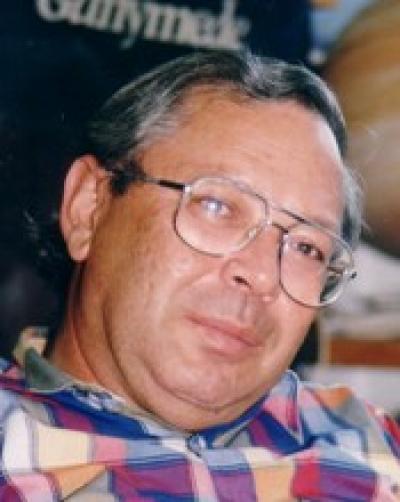
Tobias (Toby) C. Owen died on March 4, 2017.  With his passing, science has 

lost a great talent, a valued colleague, and to many in the US and abroad, a close 

friend.  A former student of G. P. Kuiper, Toby’s earliest work was in spectroscopy 

of the giant planets, and this interest quickly broadened to encompass all aspects 

of the origin and evolution of planetary atmospheres.  With a special interest in 

isotopic abundances, he pursued and promoted a wide range of observational and 

theoretical investigations toward understanding the origins of all the planets and 

small bodies of the Solar System.  As one of the world’s leading planetary scientists, 

he was an active participant in a great number of missions, including Apollo 15 and 16, 

Viking, Voyager, Galileo, Rosetta, Juno, and Cassini-Huygens.  He played a leading 

role in the development of the Cassini-Huygens mission as a joint project of NASA 

and ESA, and was called upon frequently to promote this and other missions to 

funding agencies in Europe as well as to NASA.  Toby had close ties with European 

colleagues, notably in France where he inspired a vigorous planetary group at the 

Paris Observatory, and also promoted collaboration with planetary scientists in the 

USSR/Russia and in other countries.  The DPS as a division of the AAS began with 

the initiative of Frank Drake, Carl Sagan, and Toby, acting on a suggestion of Juan 

Oro and with the support of several planetary specialists at Kitt Peak National 

Observatory.  In 1968, Toby and Carl forged the relationship with the AAS that 

persists to the present time.  The full story can be found on the DPS website at:


history/chamberlain_cruikshank_1999

Toby was a professor at SUNY Stony Brook for many years, and then at the 

University of Hawaii, where he was affiliated until his passing.  He will be 

remembered as a man of the world, unfailingly generous and modest, and a 

great scientist.  He inspired all of his many colleagues with his enthusiasm for 

all aspects of planetary science, including the big questions of the origin of the 

Solar System and of life in the Universe.  Toby received a number of honors in 

the US and in Europe, and in 2009, he was awarded the Gerard P. Kuiper Prize 

of the DPS.


Dale Cruikshank

DPS Historian


———————————+

Send submissions to:

Anne Verbiscer, DPS Secretary ([email protected]


To unsubscribe visit http://aas.org/unsubscribe or email [email protected].

To change your address email [email protected]

Tobias C. Owen 1936-2017

Tobias (Toby) C Owen died on March 4, 2017.  With his passing, science has lost a great talent, a valued colleague, and to many in the US and abroad, a close friend. A former student of G. P. Kuiper, Toby’s earliest work was in spectroscopy of the giant planets, and this interest quickly broadened to encompass all aspects of the origin and evolution of planetary atmospheres. With a special interest in isotopic abundances, he pursued and promoted a wide range of observational and theoretical investigations toward understanding the origins of all the planets and small bodies of the Solar System. As one of the world’s leading planetary scientists, he was an active participant in a great number of missions, including Apollo 15 and 16, Viking, Voyager, Galileo, Rosetta, Juno, and Cassini-Huygens. He played a leading role in the development of the Cassini-Huygens mission as a joint project of NASA and ESA, and was called upon frequently to promote this and other missions to funding agencies in Europe as well as to NASA. Toby had close ties with European colleagues, notably in France where he inspired a vigorous planetary group at the Paris Observatory, and also promoted collaboration with planetary scientists in the USSR/Russia and in other countries. The DPS as a division of the AAS began with the initiative of Frank Drake, Carl Sagan, and Toby, acting on a suggestion of Juan Oro and with the support of several planetary specialists at Kitt Peak National Observatory. In 1968, Toby and Carl forged the relationship with the AAS that persists to the present time. The full story can be found on the DPS website.

Toby was a professor at SUNY Stony Brook for many years, and then at the University of Hawaii, where he was affiliated until his passing. He will be remembered as a man of the world, unfailingly generous and modest, and a great scientist. He inspired all of his many colleagues with his enthusiasm for all aspects of planetary science, including the big questions of the origin of the Solar System and of life in the Universe. Toby received a number of honors in the US and in Europe, and in 2009, he was awarded the Gerard P. Kuiper Prize of the DPS.

Dale Cruikshank
DPS Historian

Newsletter 17-08

Issue 17-08, February 19, 2017


+————————————CONTENTS—————————————-+

  1. OUTER PLANETS ASSESSMENT GROUP UPDATES
  2. EUROPA LANDER SDT REPORT RELEASED
  3. 2017B NASA KECK CALL FOR PROPOSALS
  4. UPCOMING MEETINGS
  5. JOBS, POSITIONS, OPPORTUNITIES

+——————————————————————————————–+


1———1———1———1———1———1———1———1———1———1

OUTER PLANETS ASSESSMENT GROUP UPDATES:


1. Next OPAG meeting is Feb 22-23 in the grand ballroom of the Georgian 

Terrace Hotel in Atlanta.  See final agenda at http://www.lpi.usra.edu/opag/.  

Highlights include updates on Juno, Cassini, and Europa Clipper, 

Europa Lander SDT report and community discussion, report from the 

Roadmaps to Ocean Worlds study, and presentations on seven New Frontiers 

mission concepts to outer planets and ocean worlds.  


Webex:

OPAG Workshop 2017 

Wednesday, February 22, 2017  | 7:00 am Eastern Standard Time 

(GMT-05:00)  | 12 hours 50 minutes  | 

Recurrence: Every day, from Wednesday, February 22, 2017, to 

Thursday, February 23, 2017


Meeting Link: https://nasa.webex.com/nasa/j.php?MTID=m4f25a0acefb7ee05be4dc1ac6dadfb96

Meeting number: 998 698 611

Meeting password: W@lc0m31


Audio connection:
Conference Number: 1-888-324-7108
Participant Code: 3118411​


Please use the link below to test your connection prior to the meeting.


https://www.webex.com/test-meeting.html


2. Summer OPAG meeting:  Please join us September 6–7, 2017 in 

La Jolla, California, at the Samuel H. Scripps Auditorium 

(https://scripps.ucsd.edu/about/venues/seaside-forum), next to the 

largest ocean in the inner solar system. Additional details will be 

posted on the OPAG website (http://www.lpi.usra.edu/opag/) as 

they become available.


-Alfred McEwen and the OPAG steering committee


2———2———2———2———2———2———2———2———2———2

EUROPA LANDER SDT REPORT RELEASED


The SDT report for the pre-Phase A study of a Europa lander 

mission concept has been released and is available at 

http://solarsystem.nasa.gov/docs/Europa_Lander_SDT_Report_2016.pdf.


Community members are encouraged to read the report and attend a 

town hall event on Sunday, March 19, from 12:30 to 5:00 p.m. LPSC. 

The town hall is intended to provide an extended opportunity to 

communicate the science content of the report to the scientific community 

and, equally importantly, to engage in constructive discussion with the 

scientific community. A second town hall will take place on the afternoon 

of Sunday, April 23, at AbSciCon. 


For questions please contact Dr. Curt Niebur at [email protected].


3———3———3———3———3———3———3———3———3———3

2017B NASA KECK CALL FOR PROPOSALS


The 2017B NASA Keck call for proposals is available with proposals

due March 16, 2017


Highlights for 2017B (see guidelines for complete details):

1.  Keck Observatory Archive (KOA) Check: In an effort to use the NASA 

time on the Keck telescopes as efficiently as possible, starting in 2017B we 

will ask proposers to verify to the TAC that their science goals cannot be met 

through public observations already in the KOA.  To accompish this, the PI 

must enter text into a box on the submission page explaining why the data in 

KOA are not sufficient to meet their science goals.  Please see 

this section in the call guidelines for more information and instructions.


1.  Time Domain Astronomy:  Observers now have the ability to propose both

cadence/Time Domain Astronomy (TDA) and Target of Opportunity (ToO) 

programs following the policies outlined here (TDA policies) and 

here (ToO policies).  For Semester 2017A, four Keck partners (UC, Caltech, 

UH, and NASA) have agreed that TAC-approved ToO/TDA projects may 

interrupt observers at any of the four institutions.  Each TAC can award up 

to a combined total of six ToO/TDA observations which interrupt any of the 

other institutions.  PIs may ask for their time to be uninterruptable, i.e. as 

exempt from ToO or TDA interrupts.  Programs scheduled as half nights or 

smaller will not be interrupted.  It is anticipated that interruption-free time 

will be rarely granted.

2.  Information on strategic grading of NASA Keck proposals.

3.  Letter for Mission Support proposals must be requested from NASA HQ 

by March 1, two weeks before the submission deadline. 

4.  Check the WMKO instrument page for the current list of available instruments.

————————————————————————————————

NASA intends the use of the Keck telescopes to be highly strategic in support 

of on-going space missions and/or high priority, long-term science goals.

Proposals are sought in the following discipline areas: (1) investigations in support 

of EXOPLANET EXPLORATION science goals and missions; (2) investigations 

of our own SOLAR SYSTEM; (3) investigations in support of COSMIC ORIGINS 

science goals and missions; and (4) investigations in support of PHYSICS OF THE 

COSMOS science goals and missions.  Direct mission support proposals in any of 

these scientific areas are also encouraged.

The proposal process is managed by the NASA Exoplanet Science Institute 

(NExScI) at Caltech.

————————————————————————————————

Complete proposal call information: http://nexsci.caltech.edu/missions/KeckSolicitation/

Questions: [email protected]


4———4———4———4———4———4———4———4———4———4

UPCOMING MEETINGS


A) ASTROBIOLOGY 2017


Dear Colleagues, 


We announce that registration is open for Astrobiology 2017. 

This conference will take place in beautiful Chilean Patagonia at

Coyhaique (November 26th-December 1st, 2017).

http://www.astrobiology2017.org 


The astrobiology community in the IAU has the tradition to hold

a series of scientific meetings every three years.  For a truly multidisciplinary

discussion, we welcome researchers at the frontier of science from the

fields of astronomy, planetary and space science, chemistry, biology,

geology, philosophy, sociology and ethical issues, among others.  


KEY DATES  

* Early Registration deadline: May 19th 

* Oral contribution submission deadline: July 28th 

* Regular registration deadline: Oct 13th 

* Poster contribution deadline: Oct 13th 

* Late registration deadline: Nov 17th 

* Conference starts: Nov 26th  


CONFERENCE TOPICS  

* Star and planet formation 

* Extrasolar planets / Habitable zones and habitable planets 

* Planets in the solar system / Comets and meteorites 

* Prebiotic molecules in the ISM and protoplanetary disks 

* Early Earth environments and the emergence of life 

* Life in extreme conditions and early life 

* Search for life in the Universe 

* Societal and ethical issues linked to astrobiology 

* Education in Astrobiology  


INVITED SPEAKERS    Over 20 superb invited speakers have already

confirmed.  The updated list can be found at:  http://astrobiology2017.org/speakers/  


TRAINING SCHOOL    We are also preparing a two day training

school with lectures on basics of Astrobiology open to all participants. 

This school will precede the conference and take place on Santiago

during Friday 24th and Saturday 25th. There is no extra cost for

participants of the conference but space is limited.  Interested

participants of the TS should reserve a seat during registration.  


STUDENT SUPPORT     We expect to be able to provide a reduced

number of travel funds for students. Instructions to apply for it will be

provided on the webpage during coming March.


B) IUGG SYMPOSIUM ON PLANETARY SCIENCES


Dear Colleague

The 1st IUGG Symposium on Planetary Sciences (IUGG-PS 2017), 

​i​nterdisciplinary observation and understanding of the Solar System 

will be held in Berlin, Germany, July 3-5, 2017. More information 

can be found​ at http://www.dlr.de/iugg-ps2017

Best Regards
Shuanggen
On behalf of Organizing Committees


C) LABORATORY ASTROPHYSICS/PLANETARY SCIENCE SESSION 

     AT SUMMER AAS MEETING


Abstract submission (and registration) for the 2017 LAD meeting, held 

with the 230th AAS meeting (June 4-8th, 2017, in Austin TX) are now 

open!  Please go to https://aas.org/meetings/aas230 for all the details.


The LAD meeting will begin in the afternoon of Monday June 5th and end 

with a morning session on Thursday June 8th, with morning and afternoon 

sessions Tuesday and Wednesday.  There will also be a LAD plenary talk 

on Tuesday morning by Dr. Bonnie Buratti of JPL on results from the 

ROSETTA mission, with a focus on the importance of laboratory measurements 

to our understanding.  Session topics & confirmed invited speakers include:


Dust & Ices – with invited speaker Dr. Christine Joblin (IRAP)

Plasmas – with invited speaker Dr. R. Paul Drake (UMich) on upcoming 

major challenges and opportunities in plasma physics studies in the lab

Molecular Physics – with invited speaker Dr. Catherine Walsh (Leeds), 

speaking on chemical complexity in protoplanetary disks in the era of 

ALMA and Rosetta

Planetary Physics – with invited speaker Dr. Michael A’Hearn (UMd), 

speaking on studies of comet 67P/Churyumov-Gerasimenko

Atomic Physics – with invited speaker Dr. Stuart Loch (Auburn) speaking 

on methods for generating error estimates for theoretical calcuations

Nuclear/Particle Physics – with invited speakers Dr. Annika Peter (OSU) 

talking about Dark Matter searches and detection techniques


Substantial room has been left in the schedule for contributed talks (and posters), 

so please plan to attend and present your latest results at what will be a top 

meeting for Laboratory Studies in 2017!

Also, if you are interested in laboratory studies applicable to either 

Astrophysics or Planetary Science, please consider joining the LAD division: 

https://lad.aas.org/members


D) EUROPEAN PLANETARY SCIENCE CONGRESS 2017


Radisson Blu Hotel Latvija
17–22 September 2017, Riga, Latvia

http://epsc2017.eu

Abstract deadline: 3 May 2017, 13:00 CEST.

Dear colleagues,

We invite the world-wide community of planetary scientists to submit 

an abstract for presentation of their recent work at the EPSC 2017 Meeting, 

which will take place at Radisson Blu Hotel Latvija, Riga, Latvia, 

17–22 September 2017.

The previous meeting joint meeting with DPS in Pasadena, CA, United 

States, was hugely successful and enjoyable.

The EPSC2017 will revert to the traditional EPSC structure, with sessions 

for industry and amateurs and this year’s outreach theme will be enlarging 

our community. We expect a very well attended meeting, with many high 

quality presentations.

The meeting will consist of oral and poster sessions, as well as

workshop-style sessions. 
 

The current list of sessions is organized around the following topics:

TP Terrestrial Planets
LSE Lunar Science and Exploration
OPS Outer Planet Systems
MG Magnetospheres and Space Physics
MT Missions, Techniques and Industry
EX Exoplanets and Origins
AB Astrobiology
SB Small Bodies 
LF Laboratory and Field Investigations
OEP Outreach, Education, and Policy
AM Amateur Astronomy

The scientific programme and abstract submission are accessible at:

http://meetingorganizer.copernicus.org/EPSC2017/sessionprogramme
Please browse the list of sessions and identify the session that most closely 

matches your area of interest; your abstract can be submitted directly to that session.  

Information on registration and social events will become available soon 

on the meeting web site.

Please forward this message to colleagues who may be interested. 

We look forward to seeing you in Riga.

With best wishes,
Manuel Grande and Maria Teresa Capria
on behalf of the Scientific Organizing Committee

Mario Ebel
on behalf of Copernicus Meetings


E) RADIO EXPLORATION OF PLANETARY HABITABILITY


Join us at the upcoming AAS Topical Conference Series (AASTCS) meeting 

Radio Exploration of Planetary Habitability, to be held in Palm Springs, 

California, 7-12 May 2017.


https://aas.org/meetings/aastcs/radiohab


The idea of this meeting has grown out of the need to better understand 

star-planet interaction and its impact on habitability of planetary companions, 

especially those in close orbits around low-mass stars. The meeting will 

address a wide range of the related topics, broadly divided into the following 

three categories: 

  • Stellar activity and planetary habitability
  • Detection of planets and planetary magnetic fields
  • Relevant theoretical considerations 

Emphasis will be placed on a potential impact of radio astronomy, especially 

the existing and planned large radio telescopes, in this area of research.


Registration is open and abstracts are being accepted: Early registration

and abstract submission deadline: 8 March. 


Hotel reservations in the meeting room block are now open, as well. 

Reserve your room by 5 April to ensure the group rate.


More information will be added to the meeting website as it 

becomes available. 


Hope to see you in Palm Springs!


F) THE FIRST BILLION YEARS INITIATIVE


http://www.lpi.usra.edu/first-billion-years/


The basic structures and compositions of our solar system were set 

during its First Billion Years — a time of planetary accretion and 

differentiation, intense impact bombardment, and the beginnings of 

habitable environments. To encourage transdisciplinary study of this 

formative era, the Lunar and Planetary Institute is excited to announce 

a new initiative:  The First Billion Years


The initiative’s core will be a coordinated series of topical conferences, 

2017–2019, emphasizing fundamental processes during The First Billion Years:  

Accretion, Differentiation, Bombardment, and the Rise of Habitability. 

These conferences will include input from all relevant disciplines, 

provide venues for cross-fertilization of ideas across disciplinary boundaries, 

and facilitate major advances in our understanding of that seminal time. 

Beyond the conferences, we anticipate spinoffs of special sessions at other 

meetings, focused special publications, and topical workshops. 


Become a key contributor and help shape the course of important 

discussions surrounding The First Billion Years by participating in 

the four topical conferences!


Accretion:  Building New Worlds
Conference Date:  August 22–25, 2017
Location:  LPI, Houston, Texas

Differentiation:  Building the Internal Architecture of Planets
Conference Date:  April 23–27, 2018 
Location:  San Gabriel Valley, California


Bombardment:  Shaping Planetary Surfaces and Their Environments
Conference Date:  September 30–October 3, 2018
Location:  Barringer Crater, Winslow, Arizona


Habitability in the Early Solar System
Conference Date:  October 7–11, 2019
Location:  Yellowstone National Park 


5———5———5———5———5———5———5———5———5———5

JOBS, POSITIONS, OPPORTUNITIES

A) RESEARCH SCIENTIST

     Department of Materials Science and Engineering

     University of Virginia

     Charlottesville, Virginia


The Department of Materials Science and Engineering at the University 

of Virginia is seeking outstanding candidates for a Research Scientist. 

This position is term-limited. Primary responsibilities include participating 

with the Cassini team members to develop rarefied gas dynamics models 

to provide planning, data analyses and data interpretation of measurements 

to be made by the Cassini spacecraft of Saturn’s Atmosphere during its 

proximal orbits. This will include disseminating the scientific results at 

national conferences and in peer reviewed scientific journals. Secondary 

duties include writing scientific proposals to NASA and NSF to obtain 

funding to further research in the area of planetary evolution.


Skills in the following areas are essential: Knowledge of Direct Simulation 

Monte Carlo modelling for rarefied gas dynamics, Monte Carlo modeling 

of ballistic exospheres on planetary bodies, familiarity with the data from 

the INMS and CAPS instruments on Cassini, good oral and written 

communication skills, as well as attention to detail and good record keeping.


A Ph.D. in Engineering Physics or a related field with at least two years 

post-doctoral experience is preferred.


To apply, visit https://jobs.virginia.edu and search job posting number 0620345. 

Complete an online candidate profile and attach a cover letter, detailed 

curriculum vitae, and contact information for three references.


The University of Virginia is an equal opportunity / affirmative action 

employer committed to developing diversity in faculty at all levels and 

welcomes applications from women, minorities, veterans, and persons 

with disabilities.


B) POST-DOCTORAL RESEARCH ASSOCIATE: NEAR-EARTH OBJECT CHARACTERIZATION


https://lowell.edu/wp-content/uploads/2017/01/Post-Doc-Moskovitz-2017.pdf


Applications are invited for a postdoctoral position at Lowell

Observatory to work on the physical characterization of near-Earth

objects. This position will be supervised by Dr. Nicholas Moskovitz.

The position is to be split with 80% of the time dedicated to the main

program and 20% for any other research of the postdoctoral associate’s

choosing. The start date is negotiable, but the preference would be for

late Summer or early Fall 2017.


The postdoctoral associate will work in collaboration with

Dr. Moskovitz and other project team members on an ongoing physical

characterization survey of near-Earth objects. This survey is working

to build a comprehensive dataset of astrometry, rotational light

curves, and spectra for hundreds of newly discovered NEOs. In addition

to assisting with target management and conducting regular (1-2 nights

per month) observing runs, the postdoctoral associate will be expected

to take a leading role in the survey’s spectroscopic observations,

reductions, and analysis.


———————————+ 

Send submissions to:

Anne Verbiscer, DPS Secretary ([email protected]


To unsubscribe visit http://aas.org/unsubscribe or email [email protected].

To change your address email [email protected]
Newsletter 17-07

Issue 17-07, February 9, 2017


+————————————CONTENTS—————————————-+

  1. MESSAGE FROM THE CHAIR: CALL FOR 2017 DPS PRIZE NOMINATIONS
  2. HST AND EUROPA: CALL FOR COMMUNITY INPUT
  3. TITAN THROUGH TIME 4
  4. 2017 NASA PLANETARY SCIENCE SUMMER SEMINAR APPLICATIONS OPEN
  5. IN MEMORIAM: AKIVA BAR-NUN (1939-2017)
  6. JAMES WEBB SPACE TELESCOPE OBSERVER SUPPORT WEBINARS
  7. JWST USER COMMITTEE: CALL FOR NOMINATIONS
  8. DRAFT FINDINGS FROM SBAG 16 MEETING
  9. JOBS, POSITIONS, OPPORTUNITIES

+——————————————————————————————–+


1———1———1———1———1———1———1———1———1———1

MESSAGE FROM THE CHAIR: CALL FOR 2017 DPS PRIZE NOMINATIONS


Every year the DPS recognizes exceptional achievements in our field and 

nominations for this year’s prizes will be accepted until April 1, 2017. 

Detailed descriptions of each of the prizes and the criteria for nominees for 

each can be found at prizes. The nomination form and 

instructions can also be retrieved from prizes/nomination-form.

Please contact [email protected] or the prize subcommittee ([email protected])

with questions.  Being recognized by our colleagues for exceptional work is a 

great honor and inspires outstanding scientific research. Please take the time 

to recognize your colleagues for their exceptional work.


Anyone except current DPS Committee members may submit a nomination. 

A completed nomination will be retained and considered by the Prize Subcommittee 

for three years, or as long as the nominee is eligible, whichever is less. Past nominees 

may be re-nominated after the expiration of a prior nomination. For specific details, 

see the URL noted above.


Lucy McFadden

DPS Chair


2———2———2———2———2———2———2———2———2———2

HST AND EUROPA: CALL FOR COMMUNITY INPUT


Jupiter’s satellite Europa is a priority target for a NASA Flagship Mission. 

Observations with Hubble show evidence for gaseous plumes suggestive of 

outgassing from the sub-crustal ocean. There is high scientific importance in 

learning more about potential Europa plumes, their properties and locations.  

At the same time, HST observing time is a precious resource, and in prior 

observations the duty cycle of detections has been low.  


The STScI Director has constituted a committee to provide advice on how 

Hubble can best support planning for a future mission. The committee members 

are Professor John T. Clarke (Boston University), Dr. John Spencer (Southwest 

Research Institute) and Dr. Amanda Hendrix (Planetary Science Institute). One 

task of the committee is to recommend an approach that appropriately balances 

the science priorities against the resource requirements. 


Further details can be found at 

https://confluence.stsci.edu/display/STUCP/HST+Europa+Advisory+Committee.


At this time, the Advisory Committee is soliciting input from the community 

with regard to optimising Hubble observations of Europa. That input may be

relevant to any aspect of planning, scheduling and executing observations, 

including suggestions for coordinating Hubble programs with observations 

that might use other facilities. Contributors should indicate whether their

submission can be made available to the broader community. The committee 

will maintain full confidentiality if such is requested. 


Input should be submitted by e-mail to [email protected].


The deadline for receiving materials is TOMORROW February 10, 2017.


3———3———3———3———3———3———3———3———3———3

TITAN THROUGH TIME 4

NASA Goddard Space Flight Center, April 3-5 2017


Abstract submission is currently open for the 4th Workshop on “Titan Through Time: 

Formation, Evolution and Fate” until WEDNESDAY FEBRUARY 15TH 2017. 

As in previous years, we invite contributions on Titan’s atmosphere, surface and 

interior evolution; ongoing observations of seasonal change; modeling of all types; 

laboratory work, and other topics that give insight into Titan’s unique character.


Missions: as well as new results from Cassini-Huygens, we have recently

confirmed invited speakers on the subject of two recently announced mission 

proposals to Titan in the New Frontiers “Ocean Worlds” category: a Titan Orbiter, 

and a Titan Lander.


For further details, abstract submission and registration visit: www.regonline.com/titaniv


Note that support for some student travel is available by application.


Conor Nixon
Chair SOC

On behalf the Science Organizing Committee.


4———4———4———4———4———4———4———4———4———4

2017 NASA PLANETARY SCIENCE SUMMER SEMINAR* APPLICATIONS OPEN


NASA is accepting applications from science and engineering post-docs, recent 

PhDs, and doctoral students, as well as engineering students within 6-9 months 

of completion of their masters degree (but not planning to pursue a PhD degree), 

for its 29th Annual Planetary Science Summer Seminar*, which will be held 

July 24-28, 2017 at the Jet Propulsion Laboratory in Pasadena, Calif.


During the program and pre-session webinars, student teams will carry out the 

equivalent of an early mission concept study, prepare a proposal authorization 

presentation, present it to a review board, and receive feedback. By the end of the 

session, students will have a clearer understanding of the life cycle of a space mission; 

relationships between mission design, cost, and schedule; and the tradeoffs

necessary to stay within cost and schedule while preserving the quality of science.


Applications are due April 3, 2017.  Partial financial support is available for a 

limited number of individuals. Further information is available at http://psss.jpl.nasa.gov


*Previously named Planetary Science Summer School


5———5———5———5———5———5———5———5———5———5

IN MEMORIAM: AKIVA BAR-NUN (1939-2017)
 

Akiva Bar-Nun, a leader in the field of cosmochemistry, died in Jerusalem, 

Israel on January 25, 2017. Akiva was born in 1939. After 

completing his doctorate in shock wave chemistry at the Hebrew University 

in Jerusalem in 1968, he did his postdoc at Cornell University, where he 

worked with the late Carl Sagan.  This led to a lifelong interest in the origins 

of life.  His formal entrance into the field of planetary science came with a 

1975 paper predicting that thunderstorm shocks were the source of short-lived 

hydrocarbons in Jupiter’s atmosphere.  This prediction was eventually 

confirmed by spacecraft observations.  In 1976, after six years as lecturer at 

the Hebrew University, Akiva joined the faculty at Tel Aviv University. 

There he continued to explore the importance of shockwaves for the origins 

of life. In addition, he investigated the photochemical production of planetary 

aerosols. Later on, he set up his unique and world-famous laboratory, where 

he conducted pioneering studies of ices under conditions typical of comets. 

His investigations on trapping of volatiles by cometary ices and their subsequent 

release upon warming of the ice, revolutionized cometary research.  Akiva’s 

expertise made him a valuable contributor to several international space 

projects, including the HASI experiment on the HUYGENS spacecraft that 

landed on Titan, as well as the ALICE and ROSINA instruments on the 

ROSETTA spacecraft.  Akiva served as the Director General of the Israel 

Space Agency between 1989-1993, and then for another two years as its 

Vice Chairman.  He was an excellent teacher and mentor, who inspired 

numerous students, and he played an important role in advancing the public 

understanding of science. Generations of young students have delighted in 

his book on the Solar System (New Worlds, published in 1984, in Hebrew). 

Akiva was also a good friend.  He will be sorely missed.


Morris Podolak and Dina Prialnik

Submitted by Jonathan Lunine


(Corrected version)


6———6———6———6———6———6———6———6———6———6

JAMES WEBB SPACE TELESCOPE OBSERVER SUPPORT WEBINARS

1) Charts and webcast recording of the 2017/02/07 webinar
on the JWST Early Release Science Program, including background
info about JWST science capabilities and planning tools, are
available under Event Assets at:
              http://tinyurl.com/JWST-ERSwebinar

2) Two upcoming webinars may be of interest:
   + Moving Targets Observations with JWST (Feb. 14, 11am EST)
   + JWST Exposure Time Calculator Demo (Feb. 21, 11am EST)
   Information about both can be found at:
             https://jwst.stsci.edu/events


7———7———7———7———7———7———7———7———7———7

JWST USER COMMITTEE: CALL FOR NOMINATIONS

STScI is constituting a User Committee for the James Webb Space Telescope. 
The JSTUC will be drawn from the U.S, Canadian and ESA communities, and
will include representatives from the JWST instrument teams. The JSTUC 
charter is linked here

https://confluence.stsci.edu/display/STUCP/JWST+Users+Committee.

At this time, STScI is calling for expressions of interest from community 
members who would like to serve as JSTUC members. Self-nominations 
are welcomed. Submissions should include a cover letter and a one-page 
curriculum vitae summarizing the nominee’s relevant background and 
JWST-related interests, and should be submitted by e-mail to
[email protected]. There is no restriction on citizenship. Nominations 
will be considered through February 14, 2017.
  
Ken Sembach, Director, Space Telescope Science Institute  
John Mather Senior Project Scientist, James Webb Space Telescope, 
Goddard Space Flight Center  


8———8———8———8———8———8———8———8———8———8

DRAFT FINDINGS FROM THE SBAG 16 MEETING


Thank you for a productive SBAG 16 meeting! A draft document with findings 

from the meeting is now posted online and available for comments from the 

SBAG community. Please provide any comments by February 20, 2017. 

Comments can be emailed to [email protected] or any SBAG

steering committee member. 

http://www.lpi.usra.edu/sbag/findings/

Tim Swindle, SBAG Steering Committee Chair.


9———9———9———9———9———9———9———9———9———9

JOBS, POSITIONS, OPPORTUNITIES

A) POST-DOCTORAL RESEARCH ASSOCIATE: NEAR-EARTH OBJECT CHARACTERIZATION


https://lowell.edu/wp-content/uploads/2017/01/Post-Doc-Moskovitz-2017.pdf


Applications are invited for a postdoctoral position at Lowell

Observatory to work on the physical characterization of near-Earth

objects. This position will be supervised by Dr. Nicholas Moskovitz.

The position is to be split with 80% of the time dedicated to the main

program and 20% for any other research of the postdoctoral associate’s

choosing. The start date is negotiable, but the preference would be for

late Summer or early Fall 2017.


The postdoctoral associate will work in collaboration with

Dr. Moskovitz and other project team members on an ongoing physical

characterization survey of near-Earth objects. This survey is working

to build a comprehensive dataset of astrometry, rotational light

curves, and spectra for hundreds of newly discovered NEOs. In addition

to assisting with target management and conducting regular (1-2 nights

per month) observing runs, the postdoctoral associate will be expected

to take a leading role in the survey’s spectroscopic observations,

reductions, and analysis.


———————————+

Send submissions to:

Anne Verbiscer, DPS Secretary ([email protected]


To unsubscribe visit http://aas.org/unsubscribe or email [email protected].

To change your address email [email protected].

Call For 2017 DPS Prize Nominations

Every year the DPS recognizes exceptional achievements in our field and nominations for this year’s prizes will be accepted until April 1, 2017. Detailed descriptions of each of the prizes and the criteria for nominees for each can be found at prizes. The nomination form and instructions can also be retrieved from prizes/nomination-form. Please contact [email protected] or the prize subcommittee ([email protected]) with questions. Being recognized by our colleagues for exceptional work is a great honor and inspires outstanding scientific research. Please take the time to recognize your colleagues for their exceptional work.

Anyone except current DPS Committee members may submit a nomination. A completed nomination will be retained and considered by the Prize Subcommittee for three years, or as long as the nominee is eligible, whichever is less. Past nominees may be re-nominated after the expiration of a prior nomination. For specific details, see the URL noted above.

Lucy McFadden
DPS Chair

Newsletter 17-06

Issue 17-06, February 5, 2017


+————————————CONTENTS—————————————-+

  1. IN MEMORIAM: AKIVA BAR-NUN (1940-2017)
  2. JWST EARLY RELEASE SCIENCE PROGRAM: PRE-PROPOSAL WEBINAR
  3. MINOR PLANET CENTER USERS ADVISORY GROUP
  4. SUMMER INTERNSHIPS AT JOHNS HOPKINS APPLIED PHYSICS LAB (APL)
  5. 2017 AGU FELLOWS NOMINATIONS OPEN
  6. UPCOMING MEETINGS
  7. JOBS, POSITIONS, OPPORTUNITIES

+——————————————————————————————–+


1———1———1———1———1———1———1———1———1———1

IN MEMORIAM: AKIVA BAR-NUN (1940-2017)
 

Akiva Bar-Nun, a leader in the field of cosmochemistry, died in Jerusalem, 

Israel on January 25, 2017, after a long illness. Akiva was born in 1940. After 

completing his doctorate in shock wave chemistry at the Hebrew University 

in Jerusalem in 1968, he did his postdoc at Cornell University, where he 

worked with the late Carl Sagan.  This led to a lifelong interest in the origins 

of life.  His formal entrance into the field of planetary science came with a 

1975 paper predicting that thunderstorm shocks were the source of short-lived 

hydrocarbons in Jupiter’s atmosphere.  This prediction was eventually 

confirmed by spacecraft observations.  In 1976, after six years as lecturer at 

the Hebrew University, Akiva joined the faculty at Tel Aviv University. 

There he continued to explore the importance of shockwaves for the origins 

of life. In addition, he investigated the photochemical production of planetary 

aerosols. Later on, he set up his unique and world-famous laboratory, where 

he conducted pioneering studies of ices under conditions typical of comets. 

His investigations on trapping of volatiles by cometary ices and their subsequent 

release upon warming of the ice, revolutionized cometary research.  Akiva’s 

expertise made him a valuable contributor to several international space 

projects, including the HASI experiment on the HUYGENS spacecraft that 

landed on Titan, as well as the ALICE and ROSINA instruments on the 

ROSETTA spacecraft.  Akiva served as the Director General of the Israel 

Space Agency between 1989-1993, and then for another two years as its 

Vice Chairman.  He was an excellent teacher and mentor, who inspired 

numerous students, and he played an important role in advancing the public 

understanding of science. Generations of young students have delighted in 

his book on the Solar System (New Worlds, published in 1984, in Hebrew). 

Akiva was also a good friend.  He will be sorely missed.


Morris Podolak and Dina Prialnik

Submitted by Jonathan Lunine


2———2———2———2———2———2———2———2———2———2

JWST EARLY RELEASE SCIENCE PROGRAM: PRE-PROPOSAL WEBINAR 


Pre-proposal Webinar: Feb. 7, 11a – 1p Eastern Time (US)

Notice of Intent Deadline: Mar 3, 2017 (Mandatory)

Call for Proposals Finalized: May 2017

Proposal Deadline: Aug 18, 2017 


The Space Telescope Science Institute (STScI) is pleased to announce the

Call for Proposals for the James Webb Space Telescope (JWST) Director’s

Discretionary Early Release Science (DD ERS) program. The initial DD ERS

Call for Proposals is available at: http://j.tinyurl.com/hjt3u7e. The DD ERS

program is intended to support planning of Cycle 2 JWST proposals by

providing example data sets to the community within 6 months of the start

of science operations (c. May 1, 2019) . The JWST project encourages

submission of DD ERS proposals for all science themes, including Solar

System science. Proposals should address a broad range of applications and

observing modes relevant to their relevant theme. Participation in the program

is open to all categories of organizations, both domestic and foreign, including

educational institutions, profit and nonprofit organizations, NASA Centers, and

other Government agencies. 


STScI will host an initial webinar to help inform the community about the

goals and requirements of the DD ERS program and JWST capabilities,

and encourage submission of proposals.  Webex connection information

for the webinar can be found here:

https://jwst.stsci.edu/events/events-area/stsci-events-listing-container/solar-system-
community-webinar-jwst-early-release-science-program?mwc=4 


Additional webinars will be scheduled as needed depending on interest

expressed at the first.  


We would also like to recommend a number of other events including

ETC demonstration and other lectures listed at the JWST events page: https://jwst.stsci.edu/events


John Stansberry JWST — NIRCam Operations, Solar System Lead

Space Telescope Science Institute

410-338-2442


3———3———3———3———3———3———3———3———3———3

MPC USER’S ADVISORY GROUP

The Minor Planet Center (MPC) has become a functional sub-node of the 
Small Bodies Node (SBN) of NASA’s Planetary Data System (PDS). As part 
of that transition, we are creating a User’s Advisory Group for the 
MPC. We would like to include both data providers to the MPC and users 
of the data produced by MPC. We would also consider an orbital 
dynamicist who compares his/her results with those of the MPC. At this 
point we would like to solicit both volunteers and nominees from the 
community. We anticipate an annual face-to-face meeting at the MPC 
(in Cambridge, MA) and intervening electronic meetings perhaps 2 or 3 
times per year. International, i.e., non-US, members are welcome but we 
can not use NASA funds for the travel of international members. Please 
contact both Matt Holman, Director of the MPC, and Mike A’Hearn, PI of 
the PDS Small Bodies Node, with a very brief statement of your, or your 
nominee’s, relevance to the committee. See the web pages for the MPC: 

http://www.minorplanetcenter.net/iau/mpc.html 

and/or the SBN: 

http://pdssbn.astro.umd.edu


4———4———4———4———4———4———4———4———4———4

SUMMER INTERNSHIPS AT JOHNS HOPKINS APPLIED PHYSICS LAB (APL)
 
APL is looking for the next generation of explorers! The 2017 APL NASA 
Intern Program provides unique opportunities for university students 
to work on NASA missions or other space-related research projects. The 
internship program runs 10 weeks in the summer and applications are 
due March 26; however, selections are made on a continuous basis, so 
interested students should apply as early as possible. More information 
is available at:

http://www.jhuapl.edu/NASAIntern/


5———5———5———5———5———5———5———5———5———5

2017 AGU FELLOWS NOMINATIONS OPEN

The 2017 AGU Fellows nominations is now open. The deadline for
submission is set for 15 March 2017. The timeline for the 2017
nominations and committee work is posted at:ite:

http://honors.agu.org/fellows/

Some of these dates may change as we move along the process.

Sarah T. Stewart
President, AGU Planetary Section


6———6———6———6———6———6———6———6———6———6

UPCOMING MEETINGS


A) JPGU-AGU 2017 SESSION P-PS02: SMALL BODIES – EXPLORATION OF THE 
ASTEROID BELT AND THE SOLAR SYSTEM AT LARGE

May 20-25, Makuhari Messe

http://www.jpgu.org/meeting_e2017/

Abstract deadline: February 16, 2017 05:00PM JST (UTC/GMT +9hours)

Small Solar System bodies, including asteroids, comets, satellites, 
and interplanetary dust particles have undergone a recent scientific 
renaissance with new observations that have greatly expanded our 
understanding of the origin and evolution of our Solar System. This 
new information comes from telescopic data, and in-situ observations 
with spacecraft carrying high resolution instruments sensing IR, 
visible, UV, X-rays, gamma ray photons and neutrons. In addition, 
Hayabusa 1 has returned samples to earth and Hayabusa 2 and OSIRIS-REx 
have been sent to return more. In this session, all contributions on 
small solar system bodies are welcome. We welcome all contributions 
on recent advances in the study of asteroids whether obtained by 
rendezvous spacecraft, sample return, analysis of meteorites, remote 
sensing and laboratory research on analogous materials.

Conveners:

Eleonora Ammannito (UCLA),
Taishi Nakamoto (Tokyo Institute of Technology),
Masanao Abe (Institute of Space and Astronautical Science, Japan 
Aerospace Exploration Agency),
Christopher T. Russell (UCLA),
Sei-ichiro Watanabe, (Division of Earth and Planetary Sciences, 
Graduate School of Science, Nagoya University)


B) WOMEN IN ASTRONOMY IV: THE MANY FACES OF WOMEN ASTRONOMERS

     June 9-11, 2017

     Austin, TX


Women in Astronomy IV: The Many Faces of Women Astronomers, a

conference sponsored by the National Radio Astronomy Observatory

(NRAO) and the American Astronomical Society (AAS), with support

from the National Science Foundation (NSF), will take place June 9 – 11,

2017, following the 2017 AAS Summer Meeting in Austin, Texas.

Through extensive use of workshops, panels, and small group discussions,

WiA IV will focus on issues that affect a broad spectrum of women in

astronomy. It will address the challenges specific to women and what

institutions can do to create welcoming, equitable workplaces. Workshops

and breakout sessions will be structured with the aim of producing policy

white papers, tool kits, and resource lists.

 For more information, please visit the following link:


http://www.cvent.com/events/women-in-astronomy-iv-the-many-faces-of-women-
astronmers/event-summary-589214b84ab94f26ac269ad9823ef977.aspx


C) TITAN THROUGH TIME IV WORKSHOP

     NASA Goddard Space Flight Center

     April 3-5, 2017


Abstract Deadline: February 15


https://www.regonline.com/builder/site/Default.aspx?EventID=1929367


D) MICROSYMPOSIUM 58, SURFACE EXPLORATION AND SAMPLE RETURN:

      A NEW ERA IN PLANETARY SCIENCES

      The Woodlands, TX

      March 18-19, 2017


Featuring updates on the Chinese Lunar and Planetary Exploration Program  

Micro 58 is co-sponsored by Brown University, Vernadsky Institute, the Institute

for Space Research (IKI) and the Brown-MIT NASA Solar System Exploration

Research Virtual Institute (SSERVI-SEEED). The highly successful flyby of Pluto
has completed the reconnaissance exploration phase of our Solar System during
the last half-century.  The emplacement of sophisticated international orbital
spacecraft around seven Solar System planetary bodies has provided a first-order
characterization of their surfaces and atmospheres. On the basis of these findings,
we are now poised to define more clearly the major scientific goals for the next
half-century, and to accomplish these goals utilizing robotic surface exploration
and sample return, and human exploration of the Moon, Mars and other destinations.  
But what are these goals? Where are the most appropriate destinations for surface
exploration and sample return missions?  And how can different countries, agencies
and commercial enterprises work together to optimize robotic exploration leading
to human exploration?  
Microsymposium 58 will address several of these questions as we chart exploration
strategies for the coming decades.  What are the major outstanding scientific questions
for the Moon, Mars, Venus, Phobos/Deimos and asteroids?  What are the optimum
landing sites for robotic exploration, leading to sample return for these bodies? 
Where can human exploration optimize the scientific return?  The workshop will be
focused on 1) keynote presentations for identifying fundamental questions for each of
these destinations, followed by 2) reports and discussion on current and future plans for

landing and sample return sites on the Moon, Mars, Venus, Phobos/Deimos

and asteroids.  Invitations are extended to, and participation is expected from,

representatives from Russia, China, ESA, India, Japan, the United States, Korea,

and other space-faring nations and commercial enterprises.   

The program will be a mix of invited and contributed papers and will convene on
Saturday, March 18, 2017 (1 PM-6 PM) and Sunday, March 19, 2017 (8:30 AM-12 Noon). 

The Microsymposium will emphasize an open discussion format and will be

anchored by invited overviews, commentaries and posters. If you are interested in

participating in Micro 58, please register
online.   

Details and updates can be found at the Microsymposium 58
site.  Those wishing

to attend the conference can register at any time, including up to the time of the

conference, but advance notice helps us to plan refreshments and seating.


Co-conveners: James Head, Carle Pieters, Maria Zuber, Lev Zelenyi, Alexander

Basilevsky, Harald Hiesinger, Long Xiao.  Co-Sponsored by Brown University,

Vernadsky Institute, Institute for Space Research (IKI), and the Brown-MIT

NASA Solar System Exploration Research Virtual Institute (SSERVI-SEEED). 


E) SHOCK METAMORPHISM WORKSHOP

2017 International Workshop on: Shock Metamorphism in Terrestrial and
Extra-Terrestrial Rocks will be held June 26 – July 2 in Perth,
Australia, including a field trip to the Wolfe Creek crater in Western
Australia.

We invite researchers of all backgrounds and interests in studying
shock effects in geologic media and impact-related processes in the
solar system for this four-day multi-disciplinary workshop.

Early bird registration is now open and submissions close 1st May 2017.

More info:


http://www.sserviaustralia.org/event/shock-metamorphism-in-terrestrial-and-extra-terrestrial-rocks/


7———7———7———7———7———7———7———7———7———7

JOBS, POSITIONS, OPPORTUNITIES

A) POSTDOCTORAL POSITION: INTERIOR MODELING OF ROCKY PLANETS AND SOLID EXOPLANETS


https://www.dlr.de/dlr/jobs/en/desktopdefault.aspx/tabid-10596/1003_read-20762/

This vacancy at DLR Berlin is part of a new DFG Research Unit, focusing 

on the development of improved structural and thermal models of rocky 

planets and solid exoplanets in close collaboration with experimental and 

theoretical research groups studying matter under extreme conditions.


———————————+

Send submissions to:

Anne Verbiscer, DPS Secretary ([email protected]


To unsubscribe visit http://aas.org/unsubscribe or email [email protected].

To change your address email [email protected]

Akiva Bar-Nun 1939-2017

Akita Bar-Nun

Akiva Bar-Nun, a leader in the field of cosmochemistry, died in Jerusalem, Israel on January 25, 2017. Akiva was born in 1939. After completing his doctorate in shock wave chemistry at the Hebrew University in Jerusalem in 1968, he did his postdoc at Cornell University, where he worked with the late Carl Sagan. This led to a lifelong interest in the origins of life. His formal entrance into the field of planetary science came with a 1975 paper predicting that thunderstorm shocks were the source of short-lived hydrocarbons in Jupiter’s atmosphere. This prediction was eventually confirmed by spacecraft observations. In 1976, after six years as lecturer at the Hebrew University, Akiva joined the faculty at Tel Aviv University. There he continued to explore the importance of shockwaves for the origins of life. In addition, he investigated the photochemical production of planetary aerosols. Later on, he set up his unique and world-famous laboratory, where he conducted pioneering studies of ices under conditions typical of comets. His investigations on trapping of volatiles by cometary ices and their subsequent release upon warming of the ice, revolutionized cometary research. Akiva’s expertise made him a valuable contributor to several international space projects, including the HASI experiment on the HUYGENS spacecraft that landed on Titan, as well as the ALICE and ROSINA instruments on the ROSETTA spacecraft. Akiva served as the Director General of the Israel Space Agency between 1989-1993, and then for another two years as its Vice Chairman. He was an excellent teacher and mentor, who inspired numerous students, and he played an important role in advancing the public understanding of science. Generations of young students have delighted in his book on the Solar System (New Worlds, published in 1984, in Hebrew). Akiva was also a good friend. He will be sorely missed.


Morris Podolak and Dina Prialnik
Submitted by Jonathan Lunine

Message From The Chair

The AAS has joined with 150 other scientific and engineering societies, national associations, and universities to send a letter to President Donald J. Trump objecting to his January 27th executive order on visas and immigration. See the press release. And the letter concludes, “We stand ready to assist you in crafting an immigration and visa policy that advances US prosperity and ensures strong borders while staying true to foundational American principles as a nation of immigrants.”

Lucy McFadden
DPS Chair

Message From The Chair

Science, be it planetary science or another branch of science, advances through the open exchange of ideas. This exchange is critical to our success as a nation. There have been recent reports of US government agencies restricting the communication of scientific research. This is a fluid situation in which the details of the restrictions in time or scope change daily.  Despite this uncertainty, the DPS leadership wants to affirm its unwavering support for the free and open exchange of scientific results between scientists, to policymakers and to the public. The DPS will be a vocal advocate for the ability of our members and other scientists to carry out and freely communicate their research.

Lucy McFadden
DPS Chair

Newsletter 17-03

Issue 17-03, January 22, 2017


+————————————CONTENTS—————————————-+

  1. SIGN UP NOW FOR CONGRESSIONAL VISITS DAYS IN 2017
  2. THE DPS COMMITTEE REMINDS YOU TO VOTE IN THE AAS ELECTIONS
  3. JWST USER COMMITTEE: CALL FOR NOMINATIONS
  4. PELLAS-RYDER AWARD FOR BEST STUDENT PAPER IN PLANETARY SCIENCE

+——————————————————————————————–+


1———1———1———1———1———1———1———1———1———1

SIGN UP NOW FOR CONGRESSIONAL VISITS DAYS IN 2017
 

Sign-ups for the AAS-sponsored congressional visits days are still open! 

The first opportunity is AAS CVD, which will be held 21-22 March 2017. 

The AAS is extending the deadline for signing up to 30 January.


As always, the AAS hopes to be able to represent the full breadth of the 

AAS membership! If you’re an AAS member (junior members, too) and 

eligible to vote in the United States, then you should consider signing up 

for AAS Congressional Visits Day 2017. 


The AAS will cover most of your travel expenses for AAS CVD. 

We strongly encourage undergrads, grad students, and postdocs to sign up.


For more information about CVD opportunities in 2017:

https://aas.org/programs/congressional-visits-day-2017.


There is another opportunity in April (25-26 April) with a sign-up deadline 

of 28 February that you should also consider. This one will require you to 

pay for your own travel to and lodging in DC, but it offers a similarly 

fantastic CVD experience.


2———2———2———2———2———2———2———2———2———2

THE DPS COMMITTEE REMINDS YOU TO VOTE IN THE AAS ELECTIONS


Don’t forget to vote in AAS elections. The DPS is the largest AAS division. 

Perry Gerakines and Doris Daou are running for the nominating committee that 

selects candidates for officers and councilors and Karen Meech and Terry Oswalt 

are running for Councilor. 


Balloting closes at 11:59 pm EST on 1 February 2017

https://vote.aas.org/ballot/ballot_view/34 


3———3———3———3———3———3———3———3———3———3

JWST USER COMMITTEE: CALL FOR NOMINATIONS

 
STScI is constituting a User Committee for the James Webb Space Telescope. 

The JSTUC will be drawn from the U.S, Canadian and ESA communities, 

and will include representatives from the JWST instrument teams. The JSTUC 

charter is linked here

https://confluence.stsci.edu/display/STUCP/JWST+Users+Committee.


At this time, STScI is calling for expressions of interest from community 

members who would like to serve as JSTUC members. Self-nominations 

are welcomed. Submissions should include a cover letter and a one-page 

curriculum vitae summarizing the nominee’s relevant background and 

JWST-related interests, and should be submitted by e-mail to

[email protected]. There is no restriction on citizenship. Nominations 

will be considered through February 14, 2017.


Ken Sembach, Director, Space Telescope Science Institute 

John Mather Senior Project Scientist, James Webb Space Telescope,

Goddard Space Flight Center 


4———4———4———4———4———4———4———4———4———4

PELLAS-RYDER AWARD FOR BEST STUDENT PAPER IN PLANETARY SCIENCES


This award, which is jointly sponsored by the Meteoritical Society and 

the Planetary Geology Division of the Geological Society of America, 

is awarded to an undergraduate or graduate student who is first author 

of the best planetary science paper published in a peer-reviewed 

scientific journal during the year prior to the award. Potential 

topics include: Asteroids, Comets, Craters, Interplanetary Dust, 

Interstellar Medium, Lunar Samples, Meteors, Meteorites, Natural 

Satellites, Planets, Tektites, Origin and History of the Solar 

System.


The first author must have been a registered student at a degree 

awarding institution at the time the paper was submitted to the 

publishing journal. Two letters of certification are required: (1)

From the student’s department head attesting that the individual was

a student at the time of paper submission to the publishing journal; 

(2) From the student’s advisor detailing the portion of the work done 

by the student and contributed by others including the advisor.


The deadline for nominations of 2016 papers is January 31. Submissions 

for consideration should be sent (as PDF documents) by email to: Prof. 

James Wray, 2016-2017 PGD Chair, [email protected]. Further information 

is available at: 


http://rock.geosociety.org/pgd/pellas-ryder.html


———————————+

Send submissions to:

Anne Verbiscer, DPS Secretary ([email protected]


To unsubscribe visit http://aas.org/unsubscribe or email [email protected].

To change your address email [email protected]