
Newsletter 20-40

Issue 20-40, August 30, 2020


+————————————CONTENTS—————————————-+

  1. IN MEMORIAM: NADINE G. BARLOW
  2. OPENINGS ON OUTER PLANETS ANALYSIS GROUP (OPAG) STEERING COMMITTEE
  3. NASA MISSION SCIENCE TEAM MEETING OPPORTUNITIES FOR EARLY CAREER SCIENTISTS
  4. NASA PLANETARY DATA ECOSYSTEM (PDE) INDEPENDENT REVIEW BOARD (IRB) SELF-NOMINATION CLOSING ON OR ABOUT SEPTEMBER 7 
  5. ARECIBO OBSERVATORY PROPOSAL DEADLINE EXTENDED: NOW DUE SEPTEMBER 10, 2020 (17:00 AST, 21:00 UTC)
  6. AGU VIRTUAL GEOSCIENCES CONGRESSIONAL VISITS DAY

+——————————————————————————————–+


1———1———1———1———1———1———1———1———1———1

IN MEMORIAM: NADINE G. BARLOW

Nadine Gail Barlow passed away on August 17, 2020.

Over 18 years at Northern Arizona University, Nadine ascended the academic ranks, 

becoming Department Chair of Astronomy and Planetary Science. She received 

numerous awards for teaching excellence. Doubling the size of the Department, she 

grew its curriculum into a Ph.D.-granting program. Nadine supervised many 

undergraduate and graduate students, and was a popular mentor and friend to those 

under her tutelage. A prize for Undergraduate Research Excellence is being established 

in her name. Academic outreach was a priority, bringing the Arizona Space Grant Program 

to NAU, and fostering cooperation between NAU, Lowell Observatory, and the USGS. 

Nadine specialized in impact cratering processes across the Solar System. Almost on a 

dare, she mapped, measured, and classified every crater on Mars larger than 8 km in 

diameter for her Ph.D. dissertation. These data were used to establish the detailed relative 

chronology of Martian geologic features. Throughout her career, she expanded this 

database, as later spacecraft missions returned increasingly detailed images of Mars. 
The IAU named asteroid 15466 Barlow in her honor.

Nadine is missed by family and many lifelong friends.

Bob Marcialis, Faith Vilas, Lisa Prato, Lynn Hayden


2———2———2———2———2———2———2———2———2———2

OPENINGS ON OUTER PLANETS ANALYSIS GROUP (OPAG) STEERING COMMITTEE


Several openings are available on the OPAG steering committee to replace members

who will be rolling off.   All interested candidates are encouraged to apply, particularly

those with expertise in Giant Planet Interiors, Ocean Worlds & Cryospheres (field and
experimental), Astrobiology, and those able to represent Science Mission Directorate

Cross-Divisional interests.


Nominations will be accepted after the OPAG virtual meeting in September 2020 and

will be due by November 1, 2020. New members will start their service in time for the

Spring 2021 OPAG meeting. Details of the nomination process include providing a one-

page letter of interest and a two-page NASA proposal-style CV that address what community

the candidates represent, and how they will enhance that community’s representation on

the steering committee.  A New Members subcommittee of the OPAG Steering Committee

will review all of the nominations and make recommendations to the full Steering Committee.  

Through the search process, we will strive to ensure representation across multiple axes to

foster an interdisciplinary, diverse, equitable, inclusive, and accessible community.


3———3———3———3———3———3———3———3———3———3

NASA MISSION SCIENCE TEAM MEETING OPPORTUNITIES FOR EARLY CAREER SCIENTISTS


Participation on a mission science team is a formative experience with long-standing

benefits to scientists. While NASA provides additional opportunities to serve on mission

science teams (for example, via Participating Scientist Programs, formal team affiliations

via Co-Is on science teams, etc.), extended and immersive opportunities to serve on science

teams are inherently limited considering the small number of missions in existence. In

addition, such opportunities can be difficult for early career scientists to utilize.


NASA is considering more accessible ways to significantly increase the number of early

career scientists exposed to the mission science team experience. Based on feedback from

the community, one such method under consideration is inviting senior graduate students

and early career scientists to observe mission science team meetings. Paired with mentors

from the science team, it is hoped that such an experience can provide valuable insight on

the work and team dynamics that take place on missions. The opportunity’s limited scope

could, over time, enable more scientists to participate than existing opportunities, providing

a gateway experience to help early career scientists make informed decisions about their

career paths.


The Psyche, Europa Clipper, Dragonfly missions are providing the opportunity for early

career scientists to observe their next science team meetings. This opportunity is open to

graduate students in or beyond their third year of earning their doctorate or early career

scientists within seven years of receiving their doctorate. Because of ITAR concerns, at

this time the opportunity is limited to U.S. citizens and green card holders. Interested

candidates should submit a letter no longer than two pages that describes their background

and research interests, how such an experience could be of benefit to them, and which

mission they wish to observe (along with any special interests in particular areas of that

mission). Respondents will be selected based upon the anticipated impact to their career

path and the alignment of the mission with their research interests. Selection preference

will be given to individuals from institutions that are underrepresented on planetary science
missions. NASA recognizes and supports the benefits of having diverse and inclusive
communities and expects that such values will be reflected in this opportunity.


Letters and questions can be sent to [email protected] with the subject line “Science

Team Meeting.” Those interested in observing the Europa Clipper mission must respond

by September 14, 2020, while those interested in the Dragonfly or Psyche missions must

respond by September 30, 2020.


4———4———4———4———4———4———4———4———4———4

NASA PLANETARY DATA ECOSYSTEM (PDE) INDEPENDENT REVIEW BOARD (IRB)
SELF-NOMINATION CLOSING ON OR ABOUT SEPTEMBER 7


NASA defines the Planetary Data Ecosystem (PDE) “as the ad hoc connected framework

of activities and products that are built upon and support the data collected by planetary

space missions and research programs, primarily those funded by NASA.” The PDE includes

but is not limited to archives, tools, programs, projects, pipelines, and stakeholder groups.


The PDE Independent Review Board (IRB) will conduct a review of the Planetary Science
Division’s (PSD) PDE with the goal of defining the full environment, identifying missing

or overly redundant elements, and providing findings and prioritized, actionable recommendations
for PSD’s long-term planning in support of the PDE.


The IRB will be comprised of members from academia, industry, Government, and the public.
Member expertise will span the areas of project management, science, engineering,

and the user base. The PDE IRB will be convened virtually over the course of three months

in fall 2020 (estimate).


A third-party contractor independently will select the PDE IRB members and will issue

any invitations to serve. NASA will provide the verbatim self-nominations to the contractor
without comment or prioritization. It is anticipated that the third-party contractor will begin
inviting members to serve in late-August and early-September. To submit a self-nomination,
please visit:
https://science.nasa.gov/researchers/volunteer-review-panels/planetary-data-ecosystem-pde-independent-review-board-irb.
Signing up does not commit you to serve and

does not prevent you from submitting responses to any NASA Request for Information.


PSD expects the ability to self-nominate to the IRB will close on or about September 7th.

If you have questions or comments, please email them directly to Rebecca McCauley Rench
([email protected]) using subject line: “PDE Self Nomination.”


5———5———5———5———5———5———5———5———5———5

ARECIBO OBSERVATORY PROPOSAL DEADLINE EXTENDED: NOW DUE SEPTEMBER 10, 2020 (17:00 AST, 21:00 UTC)


The proposal submission deadline for the Arecibo Observatory 2021 Semester A

observations has been extended by one week. The deadline is now September 10, 2020

(17:00 AST, 21:00 UTC).  


These observing requests should be for telescope/radar usage within the six-month (or

in some cases one-year) period beginning January 1, 2021.

We will continue to notify the community with updates regarding the telescope operations

as more information becomes available.

Proposals must be submitted using the Proposal Submission Tool.


Useful links:

Technical information for Radio Astronomy proposals for this deadline.

Proposal and Observation Preparation Tools (compute LST rise and set times for sources

and to calculate the dates when sources will be visible at nighttime).

Astronomy

Planetary Radar


Please email any questions about this call for proposals to

Christiano Brum ([email protected]) or Noemí Pinilla-Alonso ([email protected]).


6———6———6———6———6———6———6———6———6———6

AGU VIRTUAL GEOSCIENCES CONGRESSIONAL VISITS DAY


This Geosciences Congressional Visits Day will look a little different than our previous

events. This year the focus is on helping you renew your relationship with your legislators.

This Geo-CVD will consist of two parts:

On Tuesday, 15 September at 2pm ET we’ll have a legislative update so that you have

an understanding of the science policy landscape and help you decide what are the most

timely issues to raise with your legislators. This session will include a brief meeting refresher.

On Wednesday, 16 September at 2pm ET we’ll have a training to help you brush up on your
advocacy skills and ways to re-engage those legislators you may have lost touch with.

In addition to the legislative update and training, we’ll provide you with the materials

you need to successfully renew your relationships with your legislators this Fall.

A recording of both sessions will also be available.

Please register by Monday 31 August 2020.

———————————+ 

Send submissions to: 

Anne Verbiscer, DPS Secretary ([email protected]


You are receiving this email because you are a DPS member.

To unsubscribe or update your information, please send your request

to [email protected]. The more general AAS privacy policy is available

online at https://aas.org/about/policies/privacy-policy. Current and back

issues of the DPS Newsletter can be found at newsletters  

–>
Newsletter 20-39

Issue 20-39, August 23, 2020


+————————————CONTENTS—————————————-+

  1. DPS 2020 DEPENDENT CARE GRANTS
  2. APOPHIS T-9 YEARS: ABSTRACT DEADLINE REMINDER
  3. THE ART OF PLANETARY SCIENCE 2020: A VIRTUAL ODYSSEY
  4. INDICATION OF INTEREST: DECADAL WHITE PAPER ON THE VALUE OF EXTENDED MISSIONS
  5. 2021A NASA KECK CALL FOR PROPOSALS
  6. AGU VIRTUAL STUDENT TRAVEL GRANT APPLICATIONS DUE AUGUST 25
  7. LSST SOLAR SYSTEM SCIENCE COLLABORATION
  8. JOBS, POSITIONS, OPPORTUNITIES

+——————————————————————————————–+


1———1———1———1———1———1———1———1———1———1

DPS 2020 DEPENDENT CARE GRANTS


The DPS Susan Niebur Professional Development Fund provides financial assistance

to qualifying members of the DPS in order to facilitate their meeting participation by

offsetting dependent care costs (such as childcare, elder care, spousal care, etc) at the

meeting location, or at home, during the DPS conference week. This includes dependent

care expenses needed to allow attendance and participation in the 2020 virtual DPS meeting.

The DPS Professional Development Subcommittee will accept applications for dependent

care subsidies to assist an eligible DPS member to participate in the 2020 DPS Meeting.

The initial submission deadline is Monday, September 14, 2020.  The review of submissions

will begin Tuesday September 15; however, further requests will be accepted and reviewed,
funding and eligibility permitting.


Please access the grant application form at development#grants .


Mark Gurwell, DPS Professional Development Subcommittee member


2———2———2———2———2———2———2———2———2———2

APOPHIS T-9 YEARS: ABSTRACT DEADLINE REMINDER


Apophis T-9 Years: Knowledge Opportunities for the Science of Planetary Defense

Virtual Workshop November 4-6, 2020


This virtual workshop will explore the dynamical details and corresponding science

opportunities presented by the April 13, 2029 near-miss passage of the asteroid Apophis.
Knowledge is the first line of planetary defense, and the 2029 Apophis encounter is a

once-per-thousand-year opportunity for investigating an asteroid as large as 350 meters

passing within 6 Earth-radii.


Call for Abstracts

Abstract submission deadline – August 26, 2020, 5:00pm Central Daylight Time (GMT -5)


Registration

Registration deadline – October 21, 2020

https://www.hou.usra.edu/meetings/apophis2020/


3———3———3———3———3———3———3———3———3———3

THE ART OF PLANETARY SCIENCE 2020: A VIRTUAL ODYSSEY


Calling all space artists! 


Submissions are now open for The Art of Planetary Science 2020: A Virtual Odyssey. 


This year, we are partnered with International Observe the Moon Night and will

be hosting an additional special sub-gallery of moon-themed art as a result. 


The submission form, as well as detailed information about the 2020 Prospectus,

is located on our website


Art submissions are open August 1-31, 2020, and the virtual art gallery will be

located on The Art of Planetary Science 2020 website starting September 25th, 2020.

The Art of Planetary Science 2020: A Virtual Odyssey opening weekend will occur

September 25-27, 2020. The all-virtual event weekend will kick off with an opening

of the online art gallery, streamed presentations from artists and scientists, music and
entertainment performances, and a telescope viewing stream of the Moon. 

Stay tuned for more details and an event schedule release.


We hope to see you this year, virtually!

Sincerely,

Your TAPS 2020 Organizers

[email protected]

www.lpl.arizona.edu/art


4———4———4———4———4———4———4———4———4———4

INDICATION OF INTEREST: DECADAL WHITE PAPER ON THE VALUE OF EXTENDED MISSIONS


Please sign up here to be involved in a white paper to be submitted to the Planetary 

Science and Astrobiology Decadal Survey on the value of Extended Missions to 

planetary science and to the workforce.


https://forms.gle/862Ugz5jdQZfCgBa8


There is a tremendous demonstrated value in Extended Missions. They produce excellent 

science at low incremental cost. Additionally, these missions provide early-career scientists 

opportunities for active mission involvement and experience in leadership roles, thus 

increasing diversity at all levels. However, despite NASA’s best intentions, there are 

aspects of their handling of Extended Missions that have detrimental effects to the 

success of those missions.


This will be an update to the 2016 National Academies report on “Extending Science: 

NASA’s Space Science Mission Extensions and the Senior Review Process”. We plan 

to evaluate the recommendations of that study, provide a reminder of those 

recommendations which have not yet been addressed and add new recommendations.


Contact Ingrid Daubar  and/or 

Ross Beyer  with any questions or comments.


5———5———5———5———5———5———5———5———5———5

2021A NASA KECK CALL FOR PROPOSALS


The NASA Exoplanet Science Institute is soliciting proposals, including those for 

Solar System observations, to use NASA’s portion of time on the Keck Telescopes 

for the 2021A observing semester (February 1 – July 31, 2021). All proposals are 

due by September 17, 2020 at 4 pm PDT.


The opportunity to propose as a Principal Investigator for NASA time on the Keck 

Telescopes is open to all U.S.-based astronomers (a U.S.-based astronomer has their 

principal affiliation at a U.S. institution). Investigators from institutions outside of the 

U.S. may participate as Co-Investigators on proposals for NASA Keck time.


NASA intends the use of the Keck telescopes to be highly strategic in support of on-

going space missions and/or high priority, long-term science goals. Proposals are 

sought in the following discipline areas: (1) investigations in support of EXOPLANET 

EXPLORATION science goals and missions; (2) investigations of our own SOLAR 

SYSTEM; (3) investigations in support of COSMIC ORIGINS science goals and 

missions; and (4) investigations in support of PHYSICS OF THE COSMOS science 

goals and missions.  Direct mission support proposals in any of these scientific areas 

are also encouraged. 


Please read the Call for Proposals for complete information, instrument availability, 

and application guidelines.


Key Dates:

_ September 3: deadline to request General Mission Support letter from NASA HQ

_ September 17: all proposals and supporting letters due to NExScI


Questions: [email protected]


6———6———6———6———6———6———6———6———6———6

AGU VIRTUAL STUDENT TRAVEL GRANT APPLICATIONS DUE AUGUST 25


The 2020 AGU Fall Meeting Virtual Student Travel Grant program is accepting

applications for students to be reimbursed for some of the costs to attend #AGU20’s

online experience. This year, all factors are being considered, from technical needs like

Wi-Fi to childcare. The deadline to submit your application is August 25. READ MORE


7———7———7———7———7———7———7———7———7———7

LSST SOLAR SYSTEM SCIENCE COLLABORATION

Over its 10-year lifespan, the Rubin Observatory’s Legacy Survey of Space and

Time (LSST) will catalog over 5 million Main Belt asteroids, almost 300,000

Jupiter Trojans, over 100,000 NEOs, over 40,000 KBOs, tens of interstellar objects,

and over 10,000 comets. Many of these small bodies will receive hundreds of

observations in multiple bandpasses. The LSST Solar System Science Collaboration

(SSSC) is preparing methods and tools to analyze this data, as well as understand

optimum survey strategies for discovering moving objects throughout the Solar

System. Over the next year, the SSSC will be giving feedback on the possible

scenarios for the LSST survey strategy and providing suggestions for on-sky

observing during Rubin Observatory’s commissioning that would enhance

opportunities for science validation. Our current guidelines on membership are

focused on building community involvement. If you’re interested in joining the

SSSC, more details can be found at http://www.lsstsssc.org

If you have any questions, please contact the SSSC Co-Chairs,

Meg Schwamb ([email protected]) and

David Trilling ([email protected]).


8———8———8———8———8———8———8———8———8———8

JOBS, POSITIONS, OPPORTUNITIES


A) POSTDOCTORAL POSITION IN DATA VISUALIZATION FOR PLANETARY AND SPACE
SCIENCES

https://virtualplanet.wustl.edu/postdoc-position-in-data-visualization-for-planetary-sciences/

The Department of Earth & Planetary Sciences at Washington University
in St. Louis seeks a postdoctoral research associate to manage a unique
data visualization program within the Fossett Laboratory for Virtual
Planetary Exploration. The Fossett Lab is a leader in developing
applications and outreach experiences that leverage Augmented Reality
(AR) technology for education and research in Earth, planetary, and
space sciences. The successful candidate will maintain apps for
Microsoft HoloLens, iOS, and Android devices; build new AR experiences
that serve needs of Washington University instructors and scholars; and
coordinate education and outreach.

The candidate selected for this position will also conduct independent
research as an associate of the McDonnell Center for the Space Sciences
(MCSS). In their application, the candidate should describe research
interests and list potential collaborators from among MCSS faculty.

Candidates must have a Ph.D. in Earth, planetary, or space science. The
initial appointment is for one year, renewable for a second year.
Salary is commensurate with experience. To apply, contact Phil
Skemer, Director of the Fossett Lab, with a statement of interest, CV,
and names and contact information for three professional references.

[email protected]
http://virtualplanet.wustl.edu


B) POSTDOCTORAL OPPORTUNITIES WITH THE SMA


We are pleased to announce that the applications for the 2021 Submillimeter Array

(SMA) Postdoctoral Fellowship program are now open. We anticipate offering one

or more SMA Postdoctoral Fellowships starting Summer/Fall 2021. Application

information and instructions can be found at

http://www.cfa.harvard.edu/opportunities/fellowships/sma

The deadline for applications is October 15, 2020. 


The SMA is a pioneering radio interferometer designed for arc-second imaging in

the submillimeter spectrum. SMA science spans an impressive array of fields, ranging

from our solar system, through imaging of gas and dust and tracing magnetic fields in

stellar nurseries and planet-forming disks, to exploration of nearby galaxies and imaging

of dusty star-forming galaxies at high redshift, and to time domain flux monitoring

observations of compact objects. In addition to its outstanding record in astronomical

research, the SMA is a world leader in the design of wide-bandwidth, high-frequency

radio receivers for astronomy. The SMA recently commissioned a significant upgrade

to its correlator to process up to 48 GHz of total bandwidth at a uniform spectral resolution

of 140 kHz across the entire processed spectral range, providing significantly enhanced

science capability.


These positions are aimed chiefly at research, both observational and theoretical, in

submillimeter astronomy. Successful candidates will participate in remote and on-site
observations with the SMA, research in their interpretation, and/or instrument development.
While the SMA fellowships are intended primarily for research associated with the

SMA, our main offices at the Center for Astrophysics provide Fellows with unique

opportunities to develop collaborations within the broader CfA community of 250

Ph.D. staff researchers and with extraordinary freedom in structuring their research

activities. Applicants must have a recent Ph.D. in astronomy or a related field.


The SMA is a collaboration between the Smithsonian Astrophysical Observatory and

the Academia Sinica Institute of Astronomy and Astrophysics in Taipei, Taiwan. The
Smithsonian Astrophysical Observatory, a part of Center for Astrophysics, is an Equal
Opportunity/Affirmative Action Employer where all qualified applicants receive equal
consideration without regard to race, color, creed, national origin or gender.


The CfA is a supportive environment for many active STEM outreach and educational

programs at the local and national level, especially those reaching underserved communities.

We also conduct research on effectiveness of such innovations and offer professional
development opportunities to enhance proficiency in communication and teaching.


Should you have any questions, feel free to contact [email protected].


C) PHD AND POSTDOC OPPORTUNITIES AT DARTMOUTH COLLEGE


Dear colleagues,

We are searching for a graduate student and postdoctoral researcher in the broad

areas of ice mechanics and cryospheric fluid dynamics to join us in the Thayer

School of Engineering at Dartmouth College. We are looking for students of applied
mathematics, physics, earth science, or engineering with a keen interest in snow,

glaciers, permafrost, and/or icy satellites. Within each of these topic areas, we will

work together to find a project of mutual interest and the successful applicants will

be encouraged to develop their own ideas.

As a research group, we specifically aim to foster a broader participation of

underrepresented researchers in the geophysical sciences. Our goal is to build a
community that is supportive and inclusive, with individualized mentoring for

each researcher to account for the unique challenges they face.

Please feel free to get in touch if you are interested or know of exceptional candidates.

We prefer a winter/spring 2021 start for the PhD student, and flexible for the postdoc.

Dartmouth College is a private, liberal arts college in Hanover, New Hampshire

which is in the bucolic Upper Valley on the border of New Hampshire and Vermont.

Situated on the Connecticut River and the Appalachian Trail, there are fantastic

opportunities for outdoor activities in the surrounding region including hiking,

trail running, rowing, skiing, and cycling. Locally there are many trails for cross

country and backcountry skiing in addition to the Dartmouth Skiway. Major ski

resorts are nestled into the Green and White Mountains, about 1-2 hours afield.

The Upper Valley is a collection of 6+ towns with cafes, breweries, farmer’s

markets, and coop grocery stores with an artistic and inclusive community.

Additionally, Hanover is 2.5 hours from Boston, MA and 3.5 hours from Montreal, QC.

Dr. Colin R. Meyer
Assistant Professor of Engineering
Thayer School of Engineering, Dartmouth College
engineering.dartmouth.edu/people/faculty/colin-meyer


D) SCIENTIFIC PROGRAMMER POSITION, FREIE UNIVERSITÄT BERLIN (GERMANY)


Late Accretion onto Terrestrial Planets (TRR 170) is a Transregional Collaborative

Research Center funded by the German Research Foundation (DFG). The scope of

TRR 170 is the interdisciplinary study of the late growth history of terrestrial planets. 

We are seeking a programmer who is familiar with the setup and functionality of

Dataverse to provide programming support to our IT team. Work can be carried out

for selected work packages or in full.

Experience: IT student to senior programmer. The work can also be designed for a

Bachelor or Master thesis.

Working remotely is possible, office location at FU Berlin Campus Lankwitz.

In total 12 months of work can be split over several time periods in 2020-2023. 

READ MORE


———————————+ 

Send submissions to: 

Anne Verbiscer, DPS Secretary ([email protected]


You are receiving this email because you are a DPS member.

To unsubscribe or update your information, please send your request

to [email protected]. The more general AAS privacy policy is available

online at https://aas.org/about/policies/privacy-policy. Current and back

issues of the DPS Newsletter can be found at newsletters

–>

AAS Division For Planetary Sciences Announces 2020 Prize Winners

14 August 2020

The Division for Planetary Sciences (DPS) of the American Astronomical Society (AAS) has named its prize winners for 2020.

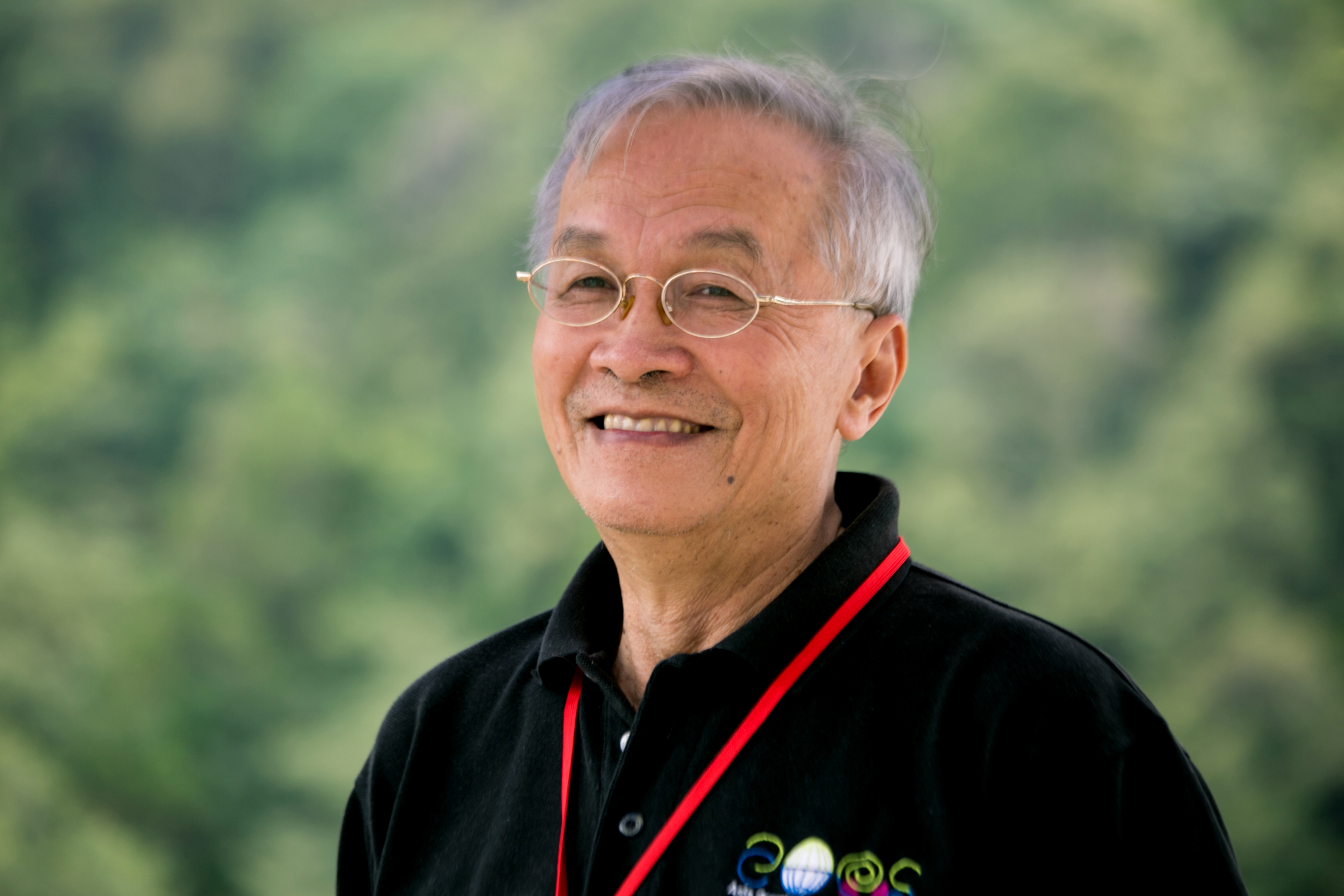
Wing-Huen IpThe DPS awards the 2020 Gerard P. Kuiper Prize for outstanding contributions to the field of planetary science to Professor Wing-Huen Ip (Institute of Astronomy, National Central University, Taiwan) for his contributions to advancements in comet plasma physics, solar-system dynamics, and magnetospheric interactions with atmospheres and solid surfaces. One example of his seminal contributions includes his paper in Nature that presented a model for the formation of magnetism-free cavities at Comet Halley; three decades later, the same phenomenon was seen on 67/P Churyumov-Gerasimenko by Rosetta. Wing was the founding president for the Asia-Oceania Geosciences Society (AOGS) and is known as one of the three fathers of the Cassini-Huygens mission to Saturn and Titan. He has also participated as a co-investigator on numerous planetary missions and has exerted a strong influence on planetary science through international collaborations and training and inspiring young scientists.

Rebekah DawsonThe 2020 Harold C. Urey Prize for outstanding achievement in planetary research by an early career scientist goes to Dr. Rebekah Dawson (Pennsylvania State University) in recognition of her groundbreaking research on planetary dynamics, the formation of planetary systems, and the characterization of exoplanets on close-in orbits. In one of her early works on understanding radial-velocity data for multiplanet systems, she re-analyzed archival data for planet 55 Cancri e and discovered previous misinterpretations; in doing so she paved a path for future observations to correctly characterize both this exoplanet and others. Rebekah exemplifies scientific leadership in her organization of prominent conferences and her involvement in planning future NASA missions such as the Large Ultraviolet Optical Infrared Telescope (LUVOIR).
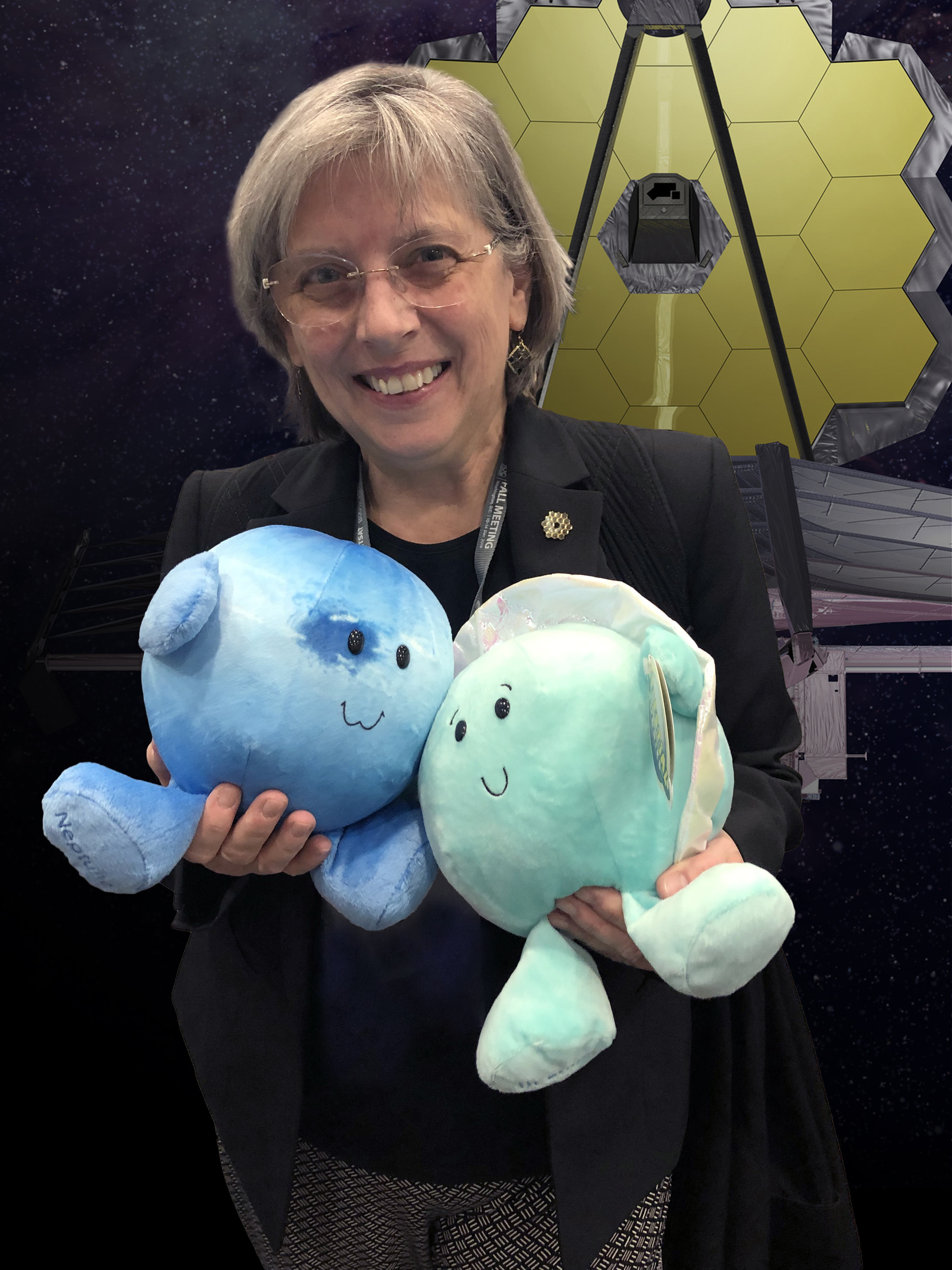
Heidi HammelThe 2020 Harold Masursky Award for meritorious service to planetary science goes to Dr. Heidi B. Hammel (Association of Universities for Research in Astronomy) for her extensive and impactful service, over nearly 30 years, on a diverse set of advisory boards, editorial boards, panels, committees, task forces, and councils for professional organizations. Heidi has a unique reputation as an advocate for the entire planetary science community, often ensuring that observatories — including the upcoming James Webb Space Telescope — and other facilities consider the full range of research opportunities pertinent to planetary science. As a tireless proponent for exploration of the distant ice giants, both via Earth-based astronomy and future interplanetary missions, Heidi provides a passionate voice for a broad swathe of observers and theorists studying the outer solar system.
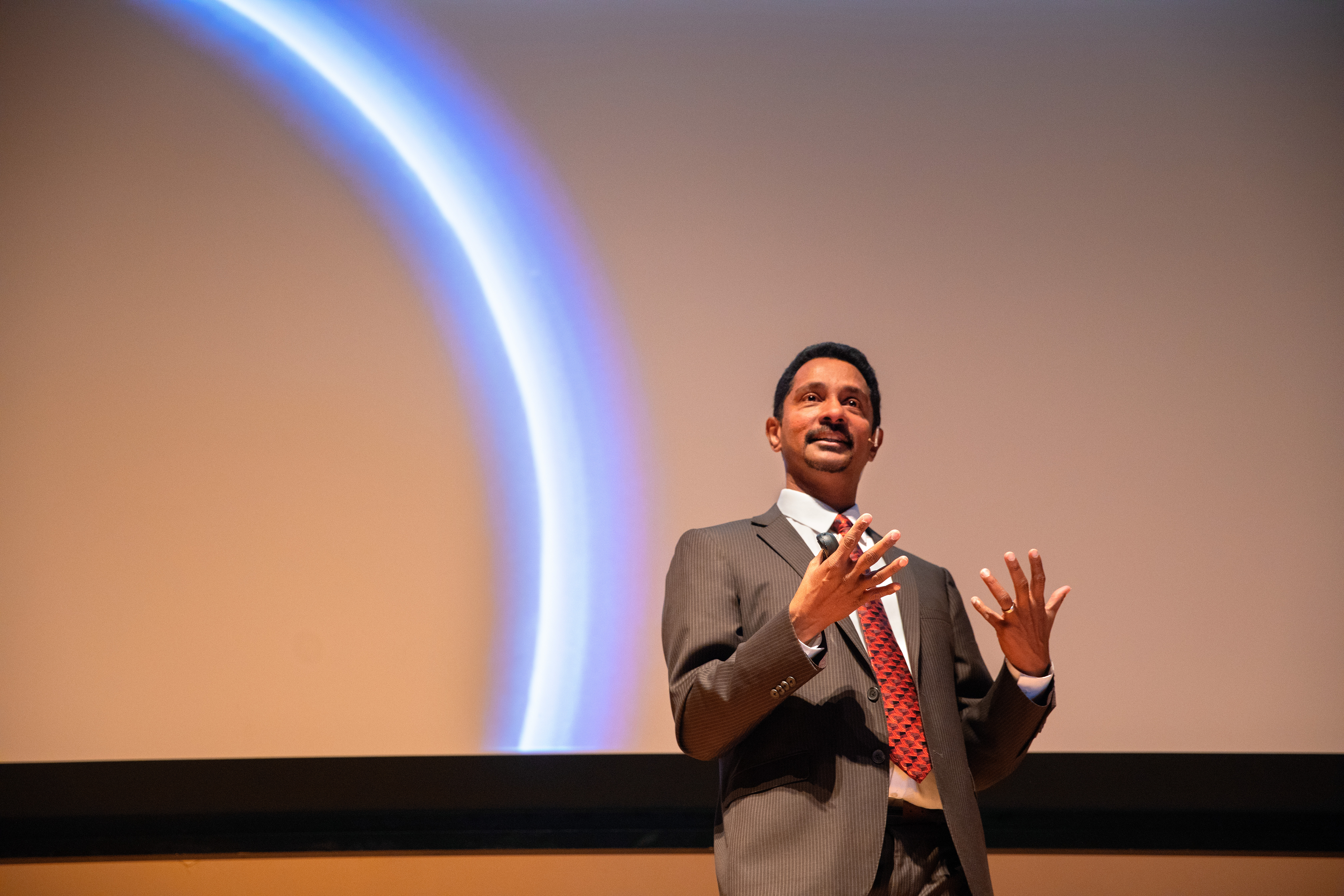
Ray JayawardhanaThe DPS awards the 2020 Carl Sagan Medal to Dr. Ray Jayawardhana (Cornell University) for outstanding contributions to the dissemination of planetary science research to the general public. Ray (aka RayJay) has published four popular books to widespread acclaim, one of which was the basis for an hourlong CBC TV documentary. His most recent book, Child of the Universe, is aimed at kids and builds on the legacy of Carl Sagan by revealing our deep and enduring links with the cosmos. Over three decades, Ray has written frequently for many prestigious and widely read publications such as the New York Times, the Wall Street Journal, The Economist, and Science. While reaching out to the general public, Ray has remained a highly published and cited scientist and has been honored repeatedly for his research accomplishments.

Christopher CrockettThe 2020 Jonathan Eberhart Planetary Science Journalism Award for distinguished popular writing goes to freelance writer Dr. Christopher Crockett. His winning article, “How the Moon Landings Changed Our View of the Solar System,” was published in Knowable magazine on July 16, 2019, during the 50th anniversary of the Apollo 11 mission. Chris describes how the lunar samples returned by the Apollo astronauts continue to transform our understanding of the evolution of the solar system. He describes how the samples led to theories that include a period of planetary migration and heavy bombardment on the Moon, and how recent studies cast doubt on these theories. The article emphasizes the need for future lunar exploration and sample return to answer outstanding questions about the solar system.

“What a pleasure it is to award these prizes to such deserving scientists,” says DPS Chair Dr. Amanda Hendrix. “These awardees have not only provided the world with new insights into our solar system and planetary systems beyond our own, but they also offer inspiration to the planetary science community and the wider public.”

The 2020 DPS prizes will be presented at the 52nd annual meeting of the Division for Planetary Sciences, which will take place virtually from 26 to 30 October 2020.

Contacts:

Dr. Shantanu Naidu

DPS Press Officer

+1 (917) 373-8840

[email protected]

Dr. Amanda Hendrix

DPS Chair

[email protected]

More information about DPS prizes:

prizes

52nd annual DPS meeting, 26-30 October 2020:

https://aas.org/meetings/dps52

The Division for Planetary Sciences (DPS), founded in 1968, is the largest special-interest Division of the American Astronomical Society (AAS). Members of the DPS study the bodies of our own solar system, from planets and moons to comets and asteroids, and all other solar-system objects and processes. With the discovery that planets exist around other stars, the DPS has expanded its scope to include the study of extrasolar planetary systems as well.

Newsletter 20-38

Issue 20-38, August 14, 2020


+————————————CONTENTS—————————————-+

  1. AAS DIVISION FOR PLANETARY SCIENCES 2020 PRIZES
  2. DPS 2020 DEPENDENT CARE GRANTS
  3. DPS EDUCATION AND OUTREACH GRANTS – FINAL DEADLINE EXTENDED UNTIL AUGUST 15TH
  4. NASA PLANETARY SCIENCE ADVISORY COMMITTEE (PAC) MEETING AUGUST 17-18
  5. SOFIA CYCLE 9 CALLS FOR PROPOSALS AND WEBINAR
  6. CALL FOR PAPERS TO A FOCUS ISSUE IN THE PLANETARY SCIENCE JOURNAL DEDICATED TO PAPERS HIGHLIGHTING LANDED LUNAR MISSION CONCEPTS AND HIGH-PRIORITY LANDING SITES
  7. ANNOUNCING THE EXOPLANET SOLAR SYSTEM (EXOSS) TUTORIAL TALK SERIES

+——————————————————————————————–+


1———1———1———1———1———1———1———1———1———1

AAS DIVISION FOR PLANETARY SCIENCES 2020 PRIZES


The DPS is pleased to announce its 2020 prize winners.


Gerard P. Kuiper Prize – Wing-Huen Ip


The DPS awards the 2020 Gerard P. Kuiper Prize for outstanding contributions to the 

field of planetary science to Professor Wing-Huen Ip (Institute of Astronomy, National 

Central University, Taiwan) for his contributions to advancements in comet plasma physics, 

solar-system dynamics, and magnetospheric interactions with atmospheres and solid surfaces. 

One example of his seminal contributions includes his paper in Nature that presented a 

model for the formation of magnetism-free cavities at Comet Halley; three decades later, 

the same phenomenon was seen on 67/P Churyumov-Gerasimenko by Rosetta. Wing was 

the founding president for the Asia-Oceania Geosciences Society (AOGS) and is known 

as one of the three fathers of the Cassini-Huygens mission to Saturn and Titan. He has also 

participated as a co-investigator on numerous planetary missions and has exerted a strong 

influence on planetary science through international collaborations and training and inspiring 

young scientists.


Harold C. Urey Prize – Rebekah Dawson


The 2020 Harold C. Urey Prize for outstanding achievement in planetary research by an 

early career scientist goes to Dr. Rebekah Dawson (Pennsylvania State University) in 

recognition of her groundbreaking research on planetary dynamics, the formation of 

planetary systems, and the characterization of exoplanets on close-in orbits. In one of her 

early works on understanding radial-velocity data for multi-planet systems, she re-analyzed 

archival data for planet 55 Cancri e and discovered previous misinterpretations; in doing 

so, she paved a path for future observations to correctly characterize both this exoplanet 

and others. Rebekah exemplifies scientific leadership in her organization of prominent 

conferences and her involvement in planning future NASA missions such as the Large 

Ultraviolet Optical Infrared Telescope (LUVOIR).


Harold Masursky Award – Heidi B. Hammel


The 2020 Harold Masursky Award for meritorious service to planetary science goes to 

Dr. Heidi B. Hammel (Association of Universities for Research in Astronomy) for her 

extensive and impactful service, over nearly 30 years, on a diverse set of advisory boards, 

editorial boards, panels, committees, task forces, and councils for professional organizations. 

Heidi has a unique reputation as an advocate for the entire planetary science community, 

often ensuring that observatories — including the upcoming James Webb Space Telescope — 

and other facilities consider the full range of research opportunities pertinent to planetary 

science. As a tireless proponent for exploration of the distant ice giants, both via Earth-based 

astronomy and future interplanetary missions, Heidi provides a passionate voice for a broad 

swathe of observers and theorists studying the outer solar system. 


Carl Sagan Medal – Ray Jayawardhana


The DPS awards the 2020 Carl Sagan Medal to Dr. Ray Jayawardhana (Cornell University) 

for outstanding contributions to the dissemination of planetary science research to the 

general public. Ray (aka RayJay) has published four popular books to widespread acclaim, 

one of which was the basis for an hourlong CBC TV documentary. His most recent book, 

Child of the Universe, is aimed at kids and builds on the legacy of Carl Sagan by revealing 

our deep and enduring links with the cosmos. Over three decades, Ray has written frequently 

for many prestigious and widely read publications such as the New York Times, the Wall 

Street Journal, The Economist, and Science. While reaching out to the general public, 

Ray has remained a highly published and cited scientist and has been honored repeatedly 

for his research accomplishments.


Jonathan Eberhart Planetary Science Journalism Award – Christopher Crockett


The 2020 Jonathan Eberhart Planetary Science Journalism Award for distinguished 

popular writing goes to freelance writer Dr. Christopher Crockett. His winning article, 

“How the Moon Landings Changed Our View of the Solar System,” was published 

in Knowable magazine on July 16, 2019, during the 50th anniversary of the Apollo 11 

mission. Chris describes how the lunar samples returned by the Apollo astronauts 

continue to transform our understanding of the evolution of the solar system. He 

describes how the samples led to theories that include a period of planetary migration 

and heavy bombardment on the Moon, and how recent studies cast doubt on these 

theories. The article emphasizes the need for future lunar exploration and sample 

return to answer outstanding questions about the solar system.


2———2———2———2———2———2———2———2———2———2

DPS 2020 DEPENDENT CARE GRANTS


The DPS Susan Niebur Professional Development Fund provides financial assistance to
qualifying members of the DPS in order to facilitate their meeting participation by offsetting
dependent care costs (such as child care, elder care, spousal care, etc) at the meeting location,
or at home, during the DPS conference week. This includes dependent care expenses needed
to allow attendance and participation in the 2020 virtual DPS meeting. The DPS Professional
Development Subcommittee will accept applications for dependent care subsidies to assist an
eligible DPS member to participate in the 2020 DPS Meeting. The initial submission deadline
is Monday, September 14, 2020.  The review of submissions will begin Tuesday September 15;
however, further requests will be accepted and reviewed, funding and eligibility permitting.


Please access the grant application form at development#grants .


Mark Gurwell, DPS Professional Development Subcommittee member


3———3———3———3———3———3———3———3———3———3

DPS EDUCATION AND OUTREACH GRANTS – FINAL DEADLINE EXTENDED UNTIL AUGUST 15TH


The DPS Committee is offering small grants (average amounts of $200 to $500) to

support DPS members to engage in local and virtual education and public engagement

activities. These grants are intended to support DPS member efforts to engage other

members, students, teachers, and the public and can be used for materials, consumables,
equipment but not for salary or travel to DPS meetings. Proposals are being accepted

for programs that will occur by June 1, 2021. We encourage creative solutions for

engagement efforts that also conform to social-distancing requirements. If you have a

question about what is an acceptable cost, please contact the DPS Education and Outreach
Officer, Sanlyn Buxner, [email protected].  Proposals should be emailed to [email protected]

and you will receive an email confirmation.


Applications will be accepted until August 15, 2020. All proposals will be reviewed by

members of the DPS education committee and the executive committee. Complete

directions, including a scoring rubric, can be found at

education/education-outreach-grants/application


Please address any questions to [email protected].


Sanlyn Buxner (Education and Public Outreach Officer) and

Brian Jackson (Deputy Education and Public Outreach Officer)


4———4———4———4———4———4———4———4———4———4

NASA PLANETARY SCIENCE ADVISORY COMMITTEE (PAC) MEETING AUGUST 17-18


NASA’s Planetary Science Advisory Committee (PAC) will hold a virtual meeting

on Monday, August 17, 2020, 10:00 AM to 6:00 PM EDT and Tuesday, August 18, 2020,

10:00 AM to 6:00 PM EDT. The agenda and connection information can be found here.


The meeting will be available telephonically and by WebEx.  

To participate in this meeting by telephone on all days: 

USA toll free conference call number 1-800-779-9966 

OR toll conference call number 1-517-645-6359, 

Passcode 5255996. 

The WebEx link is https://nasaenterprise.webex.com/

Meeting number is 901 917 366 

Password (case sensitive) on both days: PAC@Aug17+18


5———5———5———5———5———5———5———5———5———5

SOFIA CYCLE 9 CALLS FOR PROPOSALS AND WEBINAR


SOFIA Cycle 9 Calls for Proposals Released


The Proposal Calls for SOFIA Cycle 9 observations have been released with a

deadline of September 4, 2020, 21:00 PDT (September 5, 2020, 4:00 UTC). Detailed

information about the Cycle 9 calls can be found on our website.


Two Calls for Proposals are offered:

·         A Call for regular programs, for which approximately 500 hours of observations

will be offered and funding up to $4M is expected to be available for eligible proposers

·         A Call for the SOFIA Legacy Program, which enables programs producing a rich

archival dataset of significant scientific value to the astronomical community. Up to four

legacy proposals will be accepted, with each allocated up to ~200 hours of observing time

(~200 hours of observations per cycle in total). Funding is expected to be available at the

level of $2M per year.


All six instruments — EXES, FIFI-LS, FORCAST, FPI+, GREAT, and HAWC+

will be available during the Cycle (July 1, 2021 to September 30, 2022). SOFIA plans

to offer three Southern deployments: two long deployments (July-September 2021 and

2022) offering GREAT and HAWC+, and a short deployment in March 2022 offering

FIFI-LS. 


Proposals are to be submitted through the USPOT tool. The Help Desk is open to answer

any question and inquiry from the community: [email protected].  


Proposal Preparation Webinar: August 18, 8am-10:30am Pacific Time


On Tuesday August 18, 8am-10:30 am Pacific Time, a proposal Preparation Webinar

will be held on Webex. This webinar is intended to provide practical information to both
experienced and prospective SOFIA users on how to best design a scientifically and

technically strong SOFIA proposal for Cycle 9


For each SOFIA instrument, science staff members will present realistic science examples

and demonstrate how to determine the necessary signal to noise, choose the observing

strategy, determine the observing time estimation with SITE and design the corresponding
Astronomy Observation Request with USPOT. A general presentation will introduce the

main science cases addressed by SOFIA, and the general capabilities of the instrument

suite, as well as the specific features offered during Cycle 9, including the Dual Anonymous Review
framework. There will be ample time for questions.


Please connect through this Webex link. The preliminary agenda and more connection
information are available here. Slides from the webinar and associated video tutorials for
the 2019 Proposal Tool webinar are available here.


New for SOFIA in Cycle 9


·         Starting with Cycle 9, the observatory is adopting a policy of “two year” proposals:
accepted regular proposals with priority 2 and 3 will stay active in Cycle 9 and Cycle 10.

Priority 1 regular proposals and Legacy Proposals will continue to remain active until

completed.

·         For Cycle 9, the observatory is implementing dual-anonymous review. Proposers

should now upload two distinct pdfs in their proposals, and not identify themselves in the

main body pdf file.

·         The proprietary data period for Cycle 9 regular programs is six months rather than

twelve.

·         For Cycle 9, legacy proposals are invited to participate in a two-step process whereby

pilot Cycle 9 observations will be performed prior to the decision on committing to a full

legacy program.

·        “Survey” proposals, which propose to observe a small subset of a large number of

targets, are encouraged. “Such projects must specify and justify the minimum number of

targets necessary to complete the scientific objectives. The observatory plans to award up

to 100 hours for survey programs.

·         Additional standard modes are offered: the new honeycomb OTF mapping mode for
GREAT and the new total power mode on FIFI-LS.

·         The 63 microns (Band B) for HAWC and the new FIFI-LS on-the-fly mapping mode

is offered as shared risk.

·         The two polarizations of the GREAT Low Frequency Array can now be set to two
different frequencies to allow for simultaneous observations of two different lines.

·         Cycle 9 is potentially the last cycle in which FORCAST will be offered, depending

on funding and proposal pressure.

·         Up to 20 hours will be reserved for programs supporting JWST Early Release Science.

·         A joint proposal agreement with the Green Bank Observatory is now in place for Cycle 9.


6———6———6———6———6———6———6———6———6———6

CALL FOR PAPERS TO A FOCUS ISSUE IN THE PLANETARY SCIENCE JOURNAL DEDICATED TO
PAPERS HIGHLIGHTING LANDED LUNAR MISSION CONCEPTS AND HIGH-PRIORITY LANDING SITES


*New extended due date for submissions: November 1, 2020.


Journal: Planetary Science Journal


Contact: Please direct questions to the Special Issue Coordinators: Barbara Cohen
([email protected]) and Maria Banks ([email protected]).


Submission Instructions: Authors should submit their paper through the normal Planetary
Science Journal submission site (https://journals.aas.org/planetary-science-journal). When
submitting, please indicate the special issue: “Lunar Mission Concepts and High-Priority

Landing Sites” in the comments section.


Description of focus for the special issue:

In the last several years, the lunar community has submitted multiple detailed mission

proposals for amazing science we’d like to at the Moon, via Discovery, New Frontiers,

CLPS, and most recently, Planetary Mission Concepts for the Decadal Survey. We also

continue to collect high-quality lunar data via the Lunar Reconnaissance Orbiter (LRO)

and partner assets, illuminating new places where such missions could be safely and

productively deployed.

This special issue will be dedicated to papers highlighting lunar mission concepts, lunar

data analysis, and high-priority landing sites. A successful paper should bring together

elements of lunar data analysis (e.g. geology, site selection, new analyses, etc.), along

with a lunar mission or instrument/payload concept (science, instrumentation, mission

design, etc). Surface mission concepts should contain both a science justification for a

robotic (or human-assisted) mission, along with a detailed analysis of one or more candidate
landing sites to show the existence of a safe and interesting potential site for the mission

(e.g. geologic setting, slopes, hazards, rock abundance, maturity, etc.). Orbital mission

concepts should include new or updated lunar data analysis or interpretation that supports

the mission concept along with its science justification. Mission concepts need not be

highly mature, but should clearly describe the science case.


7———7———7———7———7———7———7———7———7———7

ANNOUNCING THE EXOPLANET SOLAR SYSTEM (EXOSS) TUTORIAL TALK SERIES


We would like to invite the planetary science community to join a new ExoPAG

Science Interest Group (SIG3) effort to enhance interactions between the Exoplanet

and Solar System communities. We have established a monthly Tutorial Talk aimed

at introducing field newcomers to important topics or methods in planetary and

exoplanetary science. The talks will include a 30 minute tutorial from an expert

to introduce the topic, followed by a 30 minute group discussion of a recent paper

in which the topic/method features. Each talk will be recorded and made available

online to create a database for community engagement. Talks will meet the first

Thursday of the month at 11 AM PDT/ 2 PM EDT.


The first ExoSS Tutorial Talk was on August 6th at 11am PDT. The topic was 

Volatile Solubilities in Rocks, by Laura Schaefer (Stanford), with a discussion of

Kite et al. (2020) Atmosphere Origins for Exoplanet Sub-Neptunes.  The recording

for this talk can be found here.


All are welcome, so feel free to share this announcement and the link to the recording

of the first tutorial. Also feel free to suggest topics you’d like to hear future tutorials on. 

Vikki Meadows, Mark Marley and Laura Schaefer are currently collecting suggestions

for future tutorials.  


———————————+ 

Send submissions to: 

Anne Verbiscer, DPS Secretary ([email protected]


You are receiving this email because you are a DPS member.

To unsubscribe or update your information, please send your request

to [email protected]. The more general AAS privacy policy is available

online at https://aas.org/about/policies/privacy-policy. Current and back

issues of the DPS Newsletter can be found at newsletters  

–>

Newsletter 20-37

Issue 20-37, August 9, 2020


+————————————CONTENTS—————————————-+

  1. DPS 2020 ABSTRACTS DUE THIS WEEK!
  2. DPS EDUCATION AND OUTREACH GRANTS – FINAL DEADLINE EXTENDED UNTIL AUGUST 15TH
  3. DECADAL SURVEY WHITE PAPER ON THE SATURN RING SKIMMER MISSION CONCEPT 
  4. ARECIBO OBSERVATORY CALL FOR PROPOSALS
  5. CALL FOR NOMINATIONS: INCREASING THE DIVERSITY AND INCLUSION IN THE LEADERSHIP OF COMPETED SPACE MISSIONS

+——————————————————————————————–+


1———1———1———1———1———1———1———1———1———1

DPS 2020 ABSTRACTS DUE THIS WEEK!


Don’t forget that abstracts for DPS 2020 are due Wednesday, August 12 11:59PM EDT.


Abstracts have limits of 2250 characters (not including spaces).


First authors may submit up to one research abstract plus up to one abstract in each of
the following categories: History; Education and Community Engagement; Decadal
Whitepapers; Workforce


For more information about DPS 2020, please visit: https://aas.org/meetings/dps52


2———2———2———2———2———2———2———2———2———2

DPS EDUCATION AND OUTREACH GRANTS – FINAL DEADLINE EXTENDED UNTIL AUGUST 15TH


The DPS Committee is offering small grants (average amounts of $200 to $500) to

support DPS members to engage in local and virtual education and public engagement

activities. These grants are intended to support DPS member efforts to engage other

members, students, teachers, and the public and can be used for materials, consumables,
equipment but not for salary or travel to DPS meetings. Proposals are being accepted

for programs that will occur by June 1, 2021. We encourage creative solutions for

engagement efforts that also conform to social-distancing requirements. If you have a

question about what is an acceptable cost, please contact the DPS Education and Outreach
Officer, Sanlyn Buxner, [email protected].  Proposals should be emailed to [email protected]

and you will receive an email confirmation.


Applications will be accepted until August 15, 2020. All proposals will be reviewed by

members of the DPS education committee and the executive committee. Complete

directions, including a scoring rubric, can be found at

education/education-outreach-grants/application


Please address any questions to [email protected].


Sanlyn Buxner (Education and Public Outreach Officer) and

Brian Jackson (Deputy Education and Public Outreach Officer)


3———3———3———3———3———3———3———3———3———3

DECADAL SURVEY WHITE PAPER ON THE SATURN RING SKIMMER MISSION CONCEPT 


You are invited to support a white paper describing the Saturn Ring Skimmer 

mission concept, the next step to explore Saturn’s rings, atmosphere, interior, 

and inner magnetosphere.  


In addition to addressing fundamental questions about Saturn and its rings, as 

well as giant planets and astrophysical disk systems in general, the Saturn Ring 

Skimmer would reveal how the rings, magnetosphere, atmosphere, and interior 

of the planet operate as an inter-connected system.  We advocate that this mission 

concept be studied in depth as a potential option for the New Frontiers program.


The paper is available at: 

https://www.seti.org/RingSkimmerWP20


A form to register your support is available at: 

https://www.seti.org/RingSkimmerWP20_support


The paper will be submitted on August 15 to the Planetary Science and Astrobiology 

Decadal Survey. 


Matthew Tiscareno

Mar Vaquero

Matthew Hedman

and the Ring Skimmer team


4———4———4———4———4———4———4———4———4———4

ARECIBO OBSERVATORY CALL FOR PROPOSALS


We invite proposals for the Arecibo 305-m telescope for the Thursday, Sep 3, 2020

(17:00 AST, 21:00 UTC) deadline. These requests should be for telescope/radar usage

within the six-month (or in some cases one-year) period beginning January 1, 2021.


Important notices:

There will be no proposals accepted for Space and Atmospheric Sciences this term

due to 430MHz transmitter upgrades.


Proposals should be prepared under the procedures detailed in our guidelines. Please

note that these were substantially revised recently by the Arecibo Scheduling Advisory
Committee (ASAC) following feedback from Arecibo Observatory Users’ Committee

(AOUC).


We regret that, due to Congressional restrictions on the use of NASA funds, we are

unable to host on-site observers working for institutions in China. Observers from

China are welcome to apply for time as remote or in-absentia observers, but should

meet the criteria for these observing modes.


Proposals must be submitted using the Proposal Submission Tool.

Please email any questions about this call for proposals to Christiano Brum

([email protected]) or Maria Womack ([email protected]) (useful links are

listed in the end of this message).


Sincerely,

Christiano G.M. Brum (ASAC chair) and Maria Womack (ASAC co-chair)


Useful links:

Technical information for Radio Astronomy proposals for this deadline.

Proposal and Observation Preparation Tools (compute LST rise and set times for

sources and to calculate the dates when sources will be visible at nighttime).

Astronomy

Planetary Radar


5———5———5———5———5———5———5———5———5———5

CALL FOR NOMINATIONS: INCREASING DIVERSITY AND INCLUSION IN THE LEADERSHIP OF COMPETED SPACE MISSIONS


The National Academies is undertaking a new study that will recommend actions

to increase diversity, inclusion, equity and accessibility in the leadership of competed

space missions proposed to the NASA Science Mission Directorate (SMD).  In response

to a request from the NASA SMD, this study will examine the current mission proposal

system at NASA SMD and identify elements of the system that may present impediments

to applicants, limiting the diversity of the competitive pool.  As part of its work, the

committee will engage with a wide range of experts in the relevant social science and

space science communities. 

Please submit your nominations using this form.  Nominations will receive maximum
consideration if submitted by August 17, 2020.

Nominees with backgrounds in the following areas are encouraged:

·       Space science research (in areas such as planetary sciences, earth sciences, heliophysics, astronomy and astrophysics)

·       Space science mission and program management

·       Management of investigator-led multi-institutional projects at government science and engineering funding agencies

·       Workforce studies

·       Relevant social sciences research in areas such as organizational psychology and human systems integration

·       Diversity, equity and inclusion issues in education and workplaces

·       Relevant work in areas such as leadership development research and institutional/organizational change management


Visit the Study Website


———————————+ 

Send submissions to: 

Anne Verbiscer, DPS Secretary ([email protected]


You are receiving this email because you are a DPS member.

To unsubscribe or update your information, please send your request

to [email protected]. The more general AAS privacy policy is available

online at https://aas.org/about/policies/privacy-policy. Current and back

issues of the DPS Newsletter can be found at newsletters  

–>

Newsletter 20-36

Issue 20-36, August 2, 2020


+————————————CONTENTS—————————————-+

  1. MESSAGE FROM THE CHAIR: DPS 2020 ELECTION RESULTS
  2. DPS 2020 MEETING UPDATES
  3. NEW DPS DONATION FUND: SUPPORT UNDERREPRESENTED MINORITY COMMUNITIES IN PLANETARY SCIENCE
  4. DPS EDUCATION AND OUTREACH GRANTS – FINAL DEADLINE EXTENDED UNTIL AUGUST 15TH
  5. DPS 2020 PRIZES
  6. VENUS CONFERENCE GENERAL ANNOUNCEMENT
  7. NASA POSTDOCTORAL FELLOWSHIP – APPLICATION DEADLINE NOVEMBER 1, 2020

+——————————————————————————————–+


1———1———1———1———1———1———1———1———1———1

MESSAGE FROM THE CHAIR: 2020 DPS ELECTION RESULTS


It is my pleasure to announce the results of the 2020 DPS elections. The turnout 

this year was outstanding as over 45% of the membership voted in this election, 

topping last year’s record turnout of 41%. Thank you to the DPS membership for 

your strong participation.


Congratulations to Diana Blaney, who is the incoming Vice-Chair, to Jessie 

Christiansen and Kelsi Singer, incoming Committee members, and to Maya Yanez, 

the first Student Representative to the DPS Committee. These elected members 

will begin their terms of service after the Members meeting at the 52nd Annual 

DPS meeting in October.


The Division for Planetary Sciences relies on volunteers for its leadership 

positions and we thank all members who were willing to run for these elected 

positions. A special thanks to our Nominating Subcommittee, Carrie Nugent, 

Matthew Knight, and Desireé Cotto-Figueroa, for assembling the 2020 slate 

of candidates, Secretary Anne Verbiscer, for running the elections and to the 

AAS for their technical support.


Amanda Hendrix

DPS Chair


2———2———2———2———2———2———2———2———2———2

DPS 2020 MEETING UPDATES 


Meeting Website: https://aas.org/meetings/dps52


#DPS2020


* New this year! * Plenary sessions will be comprised of panel discussions on a 

variety of exciting planetary science topics! Meeting attendees can watch pre-recorded 

plenary talks ahead of time and then participate in live Zoom panel discussions 

(with Q&A) among invited plenary speakers. Meeting attendees can submit questions 

via Slack channels before or during the Zoom session.


Moderated parallel sessions will consist of topical Zoom Q&A sessions. Meeting 

attendees can watch pre-recorded talks, and view iPosters, ahead of time. Questions 

for presenters can be uploaded via Slack channels and/or during the live Zoom sessions.


Ongoing asynchronous (non-live) topical Slack discussions among presenters and 

attendees will occur throughout the week.


All talks (invited and contributed) will be prerecorded and available for viewing by 

registrants Oct 19. iPosters will also be available for viewing beginning Oct 19. 

Meeting registrants may upload questions, ahead of the meeting, via Slack channels. 

Stay tuned for instructions regarding the Slack channels.


When you submit your abstract, you will have a choice of presentation type: iPoster 

or pre-recorded talk. Wondering whether you should do an iPoster or a pre-recorded 

talk?  You can learn more about these presentation types at https://aas.org/meetings/dps52/abstracts 

under “Presentation Guidelines and Tips.”


There is a (1) one abstract limit for submission of Research Contributions. Additional 

abstracts may be submitted for the following types of submissions. We encourage you 

to submit to one of these categories, in addition to any research you will be presenting: 


            • History

            • Education and Community Engagement

            • Workforce

            • Decadal Whitepapers


Abstracts are limited to 2250 characters (not counting spaces).


3———3———3———3———3———3———3———3———3———3

NEW DPS DONATION FUND: SUPPORT UNDERREPRESENTED MINORITY COMMUNITIES IN PLANETARY SCIENCE


The DPS has created a new fund to support underrepresented minority communities in

planetary science. Funds from this account will be used to build partnerships between

the DPS and national organizations, such as the National Society of Black Physicists

(NSBP), and to enhance participation of underrepresented minority scientists at the

annual DPS meeting. The DPS Committee will work with our new partners to determine

how the money will be distributed. The fund has been seeded by an initial contribution

of $10,000 from DPS funds, and donations are most welcome.


Donate here: Inclusivity/support-underrepresented-minority-communities-planetary-science


4———4———4———4———4———4———4———4———4———4

DPS EDUCATION AND OUTREACH GRANTS – FINAL DEADLINE EXTENDED UNTIL AUGUST 15TH


The DPS Committee is offering small grants (average amounts of $200 to $500) to

support DPS members to engage in local and virtual education and public engagement

activities. These grants are intended to support DPS member efforts to engage other

members, students, teachers, and the public and can be used for materials, consumables,
equipment but not for salary or travel to DPS meetings. Proposals are being accepted

for programs that will occur by June 1, 2021. We encourage creative solutions for

engagement efforts that also conform to social-distancing requirements. If you have a

question about what is an acceptable cost, please contact the DPS Education and Outreach
Officer, Sanlyn Buxner, [email protected].  Proposals should be emailed to [email protected]

and you will receive an email confirmation.


Applications will be accepted until August 15, 2020. All proposals will be reviewed by

members of the DPS education committee and the executive committee. Complete

directions, including a scoring rubric, can be found at

education/education-outreach-grants/application


Please address any questions to [email protected].


Sanlyn Buxner (Education and Public Outreach Officer) and

Brian Jackson (Deputy Education and Public Outreach Officer)


5———5———5———5———5———5———5———5———5———5

DPS 2020 PRIZES


DPS Prize awardees will be announced in ~mid-August. Information about the prizes

can be found at prizes


6———6———6———6———6———6———6———6———6———6

VENUS CONFERENCE GENERAL ANNOUNCEMENT

Subject: Venus Science Today, A mini-Zoom conference 31 August – 3 September 2020 

We would like to invite you to consider attending and/or contributing a talk to Venus 

Science Today, a mini-Zoom conference. Venus Science Today will showcase talks 

about Venus research published in the past 12 months, or work in progress. The 

conference will take place over four days, but only two hours per day to allow 

simultaneous participation from Europe, the USA and East Asia. 

Conference detail can be found here: 
https://www.giss.nasa.gov/meetings/venus2020/ 

If you wish to contribute a talk you can register here: 
https://docs.google.com/forms/d/e/1FAIpQLSe_sLS5O55px7DiJbBJk6lhnS4VCmz8UJgEzHsyB0R6FPk5Aw/viewform?usp=sf_link 

This virtual conference is co-hosted remotely by the NASA Goddard Institute 

for Space Studies and the Akatsuki Science Team. 

We look forward to seeing you soon. 
Sincerely 
SOC Members 
Michael Way, Kandi Jessup, Cedric Gillmann, & Takehiko Satoh 


7———7———7———7———7———7———7———7———7———7

NASA POSTDOCTORAL FELLOWSHIP – APPLICATION DEADLINE NOVEMBER 1, 2020


The NASA Postdoctoral Program offers US and international scientists the opportunity 

to advance their research while contributing to NASA’s scientific goals.  The NPP 

supports fundamental science; explores the undiscovered; promotes intellectual 

growth; and encourages scientific connections.


Selected by a competitive peer-review process, NPP Fellows complete one- to three-year 

Fellowship appointments that advance NASA’s missions in earth science, heliophysics, 

planetary science, astrophysics, space bioscience, aeronautics and engineering, human 

exploration and space operations, and astrobiology.


Current NPP research opportunities in planetary science can be viewed here: 

NPP Planetary Sciences Research Opportunities.


Applicants must have a Ph.D. or equivalent degree in hand before beginning the fellowship, 

but may apply while completing the degree requirements. U.S. citizens, Lawful Permanent 

Residents, and foreign nationals eligible for J-1 status as a Research Scholar may apply.


Stipends start at $60,000 per year, with supplements for high cost-of-living areas and for 

certain academic specialties. Financial assistance is available for relocation and health 

insurance, and $10,000 per year is provided for professional travel.


Applications are accepted three times each year: March 1, July 1, and November 1.


For further information and to apply, visit: https://npp.usra.edu/


Questions: [email protected]


———————————+ 

Send submissions to: 

Anne Verbiscer, DPS Secretary ([email protected]


You are receiving this email because you are a DPS member.

To unsubscribe or update your information, please send your request

to [email protected]. The more general AAS privacy policy is available

online at https://aas.org/about/policies/privacy-policy. Current and back

issues of the DPS Newsletter can be found at newsletters  

–>

Message from the Chair: 2020 DPS Election Results

It is my pleasure to announce the results of the 2020 DPS elections. The turnout this year was outstanding as over 45% of the membership voted in this election, topping last year’s record turnout of 41%. Thank you to the DPS membership for  your strong participation.

Congratulations to Diana Blaney, who is the incoming Vice-Chair, to Jessie Christiansen and Kelsi Singer, incoming Committee members, and to Maya Yanez, the first Student Representative to the DPS Committee. These elected members will begin their terms of service after the Members meeting at the 52nd Annual DPS meeting in October.

The Division for Planetary Sciences relies on volunteers for its leadership positions and we thank all members who were willing to run for these elected positions. A special thanks to our Nominating Subcommittee, Carrie Nugent, Matthew Knight, and Desireé Cotto-Figueroa, for assembling the 2020 slate of candidates, Secretary Anne Verbiscer, for running the elections and to the AAS for their technical support.


Amanda Hendrix

DPS Chair


2 Aug 2020

Michael I. Mishchenko (1959-2020)

It is with great sadness that we announce the passing of our colleague Michael I. Mishchenko.  Dr. Michael Mishchenko was a graduate of the Moscow Institute of Physics and Technology and received his PhD (with honors) and Habilitation Doctoral degrees in physics from the National Academy of Sciences of Ukraine (NASU). He worked at the Main Astronomical Observatory in Kiev (1987-1992) and then joined the research staff of the NASA Goddard Institute for Space Studies in New York. Michael’s research interests included electromagnetic scattering by morphologically complex particles and particle groups, polarimetry, aerosol and cloud remote sensing, and ocean optics.

One of Michael’s principal accomplishments was his development of efficient T-matrix methods to enable numerically exact computer calculations of scattering and absorption by complex dispersions of randomly and preferentially oriented atmospheric particulates. T-matrix techniques are based on direct solutions of the Maxwell equations. The resulting computer programs work for morphologically complex particles with large size parameters, with benchmark accuracy over their range of applicability. Michael’s T-matrix computer programs have been publicly available on-line since 1997, and have been used in more than 1450 peer-reviewed publications. Michael himself used T-matrix methods in pioneering studies of the effects of morphological particle complexities on the radiative, polarization, and depolarization properties of mineral aerosols, fractal-soot and soot-containing aerosols, soot-contaminated cloud droplets, contrail particles, and polar stratospheric and noctilucent clouds.

Beyond scattering by single particles Michael derived the general theory of radiative transfer in particulate media directly from the Maxwell equations, an accomplishment that had eluded scientists for over a century. This microphysical derivation established the existence of a fundamental link between electromagnetics, radiative transfer, and coherent backscattering, defined the formal conditions of applicability of the radiative transfer equation, and clarified the physical nature of measurements taken with directional radiometers. It also identified and dispelled misconceptions inherent in conventional phenomenological radiometry and radiative transfer theory. As a result of Michael’s work, the disciplines of radiative transfer and directional radiometry are now legitimate branches of physical optics.

While Michael was a consummate theoretician he also managed the NASA/GEWEX Global Aerosol Climatology Project developing an innovative algorithm to infer aerosol properties from multi-channel ISCCP radiance data and compiling the first global satellite climatology of aerosol optical thickness and size for the full period of satellite observations.  Building on this work Michael’s seminal sensitivity analysis of passive algorithms for the retrieval of aerosol properties from space using radiance and polarization data was instrumental in the development of the NASA Glory Space Mission for which Michael served as Project Scientist.

Dr. Mishchenko published 7 monographs, 23 peer-reviewed book chapters, and some 300 journal papers. He was Editor-in-Chief of the Journal of Quantitative Spectroscopy and Radiative Transfer and of Physics Open. He previously served as Topical Editor on scattering and meteorological optics for Applied Optics and was an editorial board member for several other scholarly journals.

An elected Fellow of AGU, OSA, AMS, IoP (UK), and the Electromagnetics Academy, Dr. Mishchenko was the recipient of numerous professional awards including the AMS Henry G. Houghton Award, Hendrik C. van de Hulst Award from Elsevier, and two NASA Exceptional Scientific Achievement Medals. The International Astronomical Union honored Michael by giving Asteroid 22686 (1998 QL53) the name “Mishchenko”.Michael passed away on July 21, 2020.  His loss and his legacy are enormous.

Andy Lacis, Larry Travis, Barbara Carlson, and Brian Cairns

NASA GISS, 2880 Broadway, New York, NY 10025

Newsletter 20-35

Issue 20-35, July 27, 2020


+————————————CONTENTS—————————————-+

  1. IN MEMORIAM: MICHAEL I. MISHCHENKO (1959-2020)
  2. DPS ENVIRONMENTAL AFFAIRS SUBCOMMITTEE WHITE PAPER
  3. FINAL REMINDER: VOTE IN THE DPS 2020 ELECTIONS
  4. JWST CYCLE 1 GENERAL OBSERVER (GO) PROPOSAL DEADLINE
  5. OUTER PLANETS ASSESSMENT GROUP (OPAG) VIRTUAL MEETING
  6. FALL AGU VIRTUAL MEETING, ABSTRACT SUBMISSIONS OPEN

+——————————————————————————————–+


1———1———1———1———1———1———1———1———1———1

IN MEMORIAM: MICHAEL I. MISHCHENKO (1959-2020)


It is with great sadness that we announce the passing of our colleague Michael I. 

Mishchenko.  Dr. Michael Mishchenko was a graduate of the Moscow Institute of 

Physics and Technology and received his PhD (with honors) and Habilitation Doctoral 

degrees in physics from the National Academy of Sciences of Ukraine (NASU). He 

worked at the Main Astronomical Observatory in Kiev (1987-1992) and then joined 

the research staff of the NASA Goddard Institute for Space Studies in New York. 

Michael’s research interests included electromagnetic scattering by morphologically 

complex particles and particle groups, polarimetry, aerosol and cloud remote sensing, 

and ocean optics.

One of Michael’s principal accomplishments was his development of efficient T-matrix 

methods to enable numerically exact computer calculations of scattering and absorption 

by complex dispersions of randomly and preferentially oriented atmospheric particulates. 

T-matrix techniques are based on direct solutions of the Maxwell equations. The resulting 

computer programs work for morphologically complex particles with large size parameters, 

with benchmark accuracy over their range of applicability. Michael’s T-matrix computer 

programs have been publicly available on-line since 1997, and have been used in more than 

1450 peer-reviewed publications. Michael himself used T-matrix methods in pioneering 

studies of the effects of morphological particle complexities on the radiative, polarization, 

and depolarization properties of mineral aerosols, fractal-soot and soot-containing aerosols, 

soot-contaminated cloud droplets, contrail particles, and polar stratospheric and noctilucent clouds.

Beyond scattering by single particles Michael derived the general theory of radiative transfer 

in particulate media directly from the Maxwell equations, an accomplishment that had eluded 

scientists for over a century. This microphysical derivation established the existence of a 

fundamental link between electromagnetics, radiative transfer, and coherent backscattering, 

defined the formal conditions of applicability of the radiative transfer equation, and clarified 

the physical nature of measurements taken with directional radiometers. It also identified and 

dispelled misconceptions inherent in conventional phenomenological radiometry and radiative 

transfer theory. As a result of Michael’s work, the disciplines of radiative transfer and directional 

radiometry are now legitimate branches of physical optics.

While Michael was a consummate theoretician he also managed the NASA/GEWEX Global 

Aerosol Climatology Project developing an innovative algorithm to infer aerosol properties 

from multi-channel ISCCP radiance data and compiling the first global satellite climatology 

of aerosol optical thickness and size for the full period of satellite observations.  Building on 

this work Michael’s seminal sensitivity analysis of passive algorithms for the retrieval of aerosol 

properties from space using radiance and polarization data was instrumental in the development 

of the NASA Glory Space Mission for which Michael served as Project Scientist.

Dr. Mishchenko published 7 monographs, 23 peer-reviewed book chapters, and some 300 

journal papers. He was Editor-in-Chief of the Journal of Quantitative Spectroscopy and 

Radiative Transfer and of Physics Open. He previously served as Topical Editor on scattering 

and meteorological optics for Applied Optics and was an editorial board member for several 

other scholarly journals.

An elected Fellow of AGU, OSA, AMS, IoP (UK), and the Electromagnetics Academy, 

Dr. Mishchenko was the recipient of numerous professional awards including the AMS 

Henry G. Houghton Award, Hendrik C. van de Hulst Award from Elsevier, and two NASA 

Exceptional Scientific Achievement Medals. The International Astronomical Union honored 

Michael by giving Asteroid 22686 (1998 QL53) the name “Mishchenko”.

Michael passed away on July 21, 2020.  His loss and his legacy are enormous.


Andy Lacis, Larry Travis, Barbara Carlson, and Brian Cairns

NASA GISS, 2880 Broadway, New York, NY 10025


2———2———2———2———2———2———2———2———2———2

DPS ENVIRONMENTAL AFFAIRS SUBCOMMITTEE WHITE PAPER


The DPS Environmental Affairs Subcommittee (DPSEAS) has written a white paper 

“Pathways to Sustainable Planetary Science” to be submitted to the Decadal Survey. 

Please have a look 

wp-content/uploads/files/decadal_survey/DPSEAS_White_Paper.pdf

and considering endorsing at 

https://docs.google.com/forms/d/e/1FAIpQLSdxyIx4iOVHHmOIpYMMX0OQTlQbgdOH8SRqjGI4k7mN-5wOHg/viewform


3———3———3———3———3———3———3———3———3———3

FINAL REMINDER: VOTE IN THE 2020 DPS ELECTIONS


Thank you to those have already voted in the 2020 DPS Elections. As of today, 506 DPS 

Members have cast their ballots, a 41% turnout, matching last year’s record turnout!  

We are very close to beating that record that this year!  


Please vote today if you have not already done so as this is the FINAL WEEK to cast your 

ballot. The 2020 election for Vice-Chair and Committee closes this Friday, July 31, 2020.


We are electing the first-ever student representatives to the DPS Committee this year, 

so please take a moment to review the candidate statements and cast your vote. Thanks! 


To vote you should have received an email from the AAS asking you to cast your ballot. 

Each email contains a link with a unique code that will bring you to the ballot site. There 

is no need to enter your AAS login information. You will be able to review the candidate 

statements and cast your vote. 


You should vote for one of the two candidates for Vice-Chair: 

·       Diana Blaney

·       Nader Haghighipour

The Vice-Chair will become the DPS Chair in October 2021.


You should vote for two of the four candidates for DPS Committee: 

·       Jessie Christiansen

·       Edgard Rivera-Valentín

·       Kelsi Singer

·       Matt Tiscareno 

The successful candidates will serve on the DPS Committee for three years.


You should vote for one of the two candidates for the student representatives to the 

DPS Committee:

·       Malena Rice

·       Maya Yanez

The successful student candidate will serve on the DPS Committee for two years.


This information also appears on the election page when you click on the link in your 

email sent from the AAS.


4———4———4———4———4———4———4———4———4———4

JWST CYCLE 1 GENERAL OBSERVER (GO) PROPOSAL DEADLINE


The major disruption caused by the COVID-19 pandemic continues to affect all of us. 
Integration and testing of the James Webb Space Telescope are among the activities impacted.
NASA has re-evaluated the project schedule and announced a launch readiness date of October 31, 2021.


After consulting with the JWST Users Committee, STScI, NASA, ESA and CSA

have finalized the review schedule for Cycle 1 proposals. 


The JWST Cycle 1 General Observer (GO) proposal deadline will be 08:00 pm Eastern

Time (ET) on Tuesday November 24, 2020. 

We are announcing the deadline well in advance, so that proposers have flexibility to

prepare proposals as their COVID-impacted schedules permit.  The Call for Proposals 

remains unchanged from its release earlier this year. All proposal tools and documentation 

are available to proposers.


The JWST Telescope Allocation Committee (TAC) will review the proposals in February

2021 and recommend the Cycle 1 GO science program for announcement in March 2021.

We send best wishes to our user community and their families in these challenging times.

As always, please contact the jwst helpdesk if you have any questions.


5———5———5———5———5———5———5———5———5———5

OUTER PLANETS ASSESSMENT GROUP (OPAG) VIRTUAL MEETING


The Outer Planets Assessment Group (OPAG) meeting will be held virtually

September 1–3, 2020. Each day, the meeting will run from 9:00 a.m. to 2:00 p.m. PDT
(12:00 p.m. to 5:00 p.m. EDT).


The focus of this timely meeting will be on aspects of the decadal survey that are

relevant to OPAG. Status reports will be requested from the Decadal Survey co-chairs

and panel chairs.


Registration


Registration fees are not being collected for this virtual meeting, but registration is

required. To continue receiving updates complete the electronic registration form.

Registered attendees will receive an e-mail prior to the workshop from Houston

Meeting Info with virtual connection information. 

https://www.lpi.usra.edu/opag/


For more information, contact Meeting and Publication Services

USRA/Lunar and Planetary Institute [email protected]


6———6———6———6———6———6———6———6———6———6

FALL AGU VIRTUAL MEETING, ABSTRACT SUBMISSIONS OPEN

The American Geophysical Union Fall Virtual Meeting 2020 abstract
submission site is now open. Go to: http://www.agu.org/Fall-Meeting

Abstract submission guidelines are at: http://www.agu.org/Fall-Meeting/2020/Present/Abstracts
Session Viewer/Abstract submission site is at: http://agu.confex.com/agu/fm20/prelim.cgi/Home/0

We will be keeping all sites updated with information regarding the virtual meeting

as the planning continues.


AGU FALL MEETING SESSION: “ENCELADUS: A HABITABLE WORLD BECKONS”


Saturn’s small yet active icy moon remains one of the most scientifically compelling

worlds in the solar system.


In this long-running special session, now in its 15th year, we seek to sustain a highly
multidisciplinary and stimulating atmosphere that enables a deeper understanding of

the nature and causes of Enceladus’ activity. We encourage submissions that specifically

provide insights into the moon’s interior, biological potential, surface morphology, south

polar plume, and space environment from diverse disciplines: e.g., planetary geology,
comparative planetology of relevant icy satellites, terrestrial studies, hydrothermal systems,
oceanography, geodynamics, tectonics, volcanology, space physics, organic chemistry,
geochemistry, astrobiology, origins of life, microbiology, and biosignatures. Field,

laboratory, and theoretical studies are all welcome.


We also welcome contributions on Cassini data analysis and modeling, as well as instrument

and mission concept developments that will lay the groundwork for a new generation of

explorers to Enceladus.


Abstract submission deadline: July 29, 2020

Abstract submission link: https://agu.confex.com/agu/fm20/prelim.cgi/Session/101707


Chris Glein (SwRI) and Bill McKinnon (WashU)


AGU FALL MEETING SESSION: P006 – CARBON ACROSS THE SOLAR SYSTEM
ON THE EVE OF RETURNING ASTEROID SAMPLES


Studies of the existence and state of carbonaceous material on Solar System bodies

is at the forefront of planetary research. Samples of low-albedo asteroid 162173 Ryugu

are en route to the Earth on the Hayabusa2 probe, and a rehearsal of the initial sample

analysis is planned. At this time, the OSIRIS-REx space probe sampling of low-albedo

asteroid 101955 Bennu has been rehearsed. As a framework for these studies, telescopic,
laboratory and theoretical studies of carbon in all its forms have recently snowballed.

The 2018 SSERVI Carbon in the Solar System workshop launched a series of presentations

and discussions at various planetary science venues, enabling an information exchange

around the weathering of carbonaceous compounds in response to thermal processes and
irradiation, and what implications these compositions have for understanding material

processing in the Solar System. We will generate and share ideas to support research

and the imminent arrival of new samples.


We invite abstracts to be submitted through July 29:


https://www.agu.org/Fall-Meeting/2020/Present/Abstracts


Conveners:


Faith Vilas (Planetary Science Institute)

Amanda R. Hendrix  (Planetary Science Institute)


AGU FALL MEETING SESSION: “GEOLOGY AND GEOPHYSICS OF SATELLITES 

AND SMALL BODIES: TO IO, AND BEYOND”


We wish to invite abstracts to the AGU Fall Meeting Planetary Science session 

“Geology and Geophysics of Satellites and Small Bodies: to Io, and Beyond. 

This is an exciting time for exploring the dynamic, evolving small bodies in the 

Solar System.  The AGU abstract submission site will open in late June.  The 

deadline for all submissions is Wednesday, 29 July at 23:59 EDT.  We hope to 

see you (virtually!) in December.


Conveners:  A.G. Davies, K. de Kleer, T. McCord, T. V. Johnson


This is a session of contributed and invited papers on the geology and geophysics 

of active or recently active satellites and dwarf planets, including small exoplanets. 

Research is progressing rapidly due to the stream of new spacecraft and Earth-based 

telescope data.  Additionally, there are exciting future missions to the Jovian system 

under development, including Europa Clipper, JUICE, and the proposed Io Volcano 

Observer. Papers are welcomed on processes that affect the interiors of individual 

bodies as well as the surface expressions they produce. Included are the effects and 

chronology of internal heating (tidal dissipation and radioactivity), structural evolution 

(e.g., differentiation), tides, and other geophysical and geological processes (e.g., 

volcanism, tectonism).


Sincerely,

Ashley Gerard Davies, Katherine de Kleer, Tom McCord and Torrence Johnson.  


AGU FALL MEETING SESSION “LOOKING AHEAD TO THE FUTURE OF PLANETARY SCIENCE”


We’d like to invite abstracts to the virtual AGU session “ Looking ahead to the future of
Planetary Science” to be submitted through https://www.agu.org/Fall-Meeting/2020/Present/Abstracts
through July 29th, and look forward to seeing you for a fascinating session. 


LOOKING AHEAD TO THE FUTURE OF PLANETARY SCIENCE


Description:

In preparation for the NASA Decadal Survey, the Planetary Science Division awarded

funds to study eleven mission concepts under the rubric of PMCS (Planetary Mission

Concept Studies). This program element solicited proposals for mission concept studies

that addressed NASA’s planetary science objectives, which are to ascertain the content,

origin, and evolution of the Solar System and the potential for life elsewhere. The oral

session will highlight the final reports of these Planetary Science Decadal Survey studies,

while abstracts for additional concepts that the community may have will be solicited to

be presented in a poster session.


Thanks a lot,

Doris Daou, Pat Beauchamp and Julie Castillo-Rogez


AGU FALL MEETING SESSION “THE FUTURE OF PLANETARY ATMOSPHERIC,
SURFACE, AND INTERIOR SCIENCE USING RADIO AND LASER LINKS”


Radio science has been used to study solar system phenomena and fundamental physics

for over five decades. The scope of this session includes radio and optical science techniques

to study ocean worlds, planetary and small body interiors, the dynamics, composition,

and thermal structure of planetary atmospheres, to characterize the scattering, electrical,

and other properties of planetary surfaces, to study solar system dynamics, and to conduct

tests in fundamental physics. Of particular interest are presentations on radio science investigations
motivated by U.S. Planetary Science Decadal Survey white papers. Relevant technology topics
include but are not limited to the design of small spacecraft networks and constellations, advances
in flight and ground instrumentation, advances in space clock technologies, novel communications
architectures including optical links, advances in radio and laser technologies, and new techniques
and instrumentation for entry probe radio science.


The conveners invite abstracts to be submitted through July 29 at https://www.agu.org/Fall-Meeting/2020/Present/Abstracts 


David H. Atkinson, Sami W. Asmar, Luciano Iess, Silvia Tellmann


AGU FALL MEETING SESSION “TITAN – PAST, PRESENT AND FUTURE INVESTIGATIONS OF SATURN’S GIANT MOON”


Titan’s unique standing as the only moon in the solar system with a dense atmosphere

provides an environment like no other. Its complex meteorology of rainfall, wind, rivers,

lakes and seas interacting with a solid surface is reminiscent of the planets of the inner

solar system, while its icy crust and deep liquid water interior provide comparison to outer

solar system ocean worlds, such as Europa, Ganymede and Enceladus. Titan alone straddles

these diverse environments, providing a fertile natural laboratory for studying one-of-a-kind
chemistry, dynamics, geology and more. This session welcomes new results from past missions
including Voyager and Cassini-Huygens; present day modeling, observations and experiments;
and on-going scientific research to prepare for future missions including Dragonfly.


The conveners invite abstracts to be submitted through
https://www.agu.org/Fall-Meeting/2020/Present/Abstracts through July 29th, and look forward
to a session filled with exciting new results.


Conor Nixon, Alex Hayes, Kathy Mandt and Christophe Sotin


AGU FALL MEETING SESSION “CONCEPTS FOR FUTURE PLANETARY SCIENCE
MISSIONS AND INSTRUMENTS” (E-LIGHTNING)


Today planetary science missions are exploring the solar system as never before.

NASA spacecraft are headed to targets from Mercury to the Kuiper Belt, and aiming

to return the first samples from Mars and asteroid Bennu. ESA spacecraft are reaching

new targets from Mercury to Jupiter, and a wave of other missions from countries around

the world are targeting the Moon, Mars, near-Earth asteroids and beyond, with an dizzying

array of orbiters, rovers and landers. It is an exciting, dynamic time for planetary scientists

with new opportunities to propose mission concepts ranging from small Cubesats to traditional
large missions. This session solicits interactive electronic poster (e-Lightning) presentations

on novel mission and instrument concepts designed for future planetary science missions. 


Abstract submissions are encouraged on all relevant mission and instrument concepts at:
https://www.agu.org/Fall-Meeting/2020/Present/Abstracts by July 29th. 


We look forward to another very interesting session in December.

Conor Nixon, Morgan Cable, Charles Hibbitts, Melissa Trainer


AGU-2020 SESSION ON PLANETARY ACCRETION AND DIFFERENTIATION


We invite contributions to the session “Accretion and differentiation of rocky planets:
perspectives from geophysics, geochemistry, & astronomy” at the AGU Fall Meeting 

from 7-11 December 2020, which will be at least partially virtual this year. We welcome
contributions from all disciplines to advance the understanding of the formation and
differentiation of rocky planets including, but not limited to, geochemistry, geophysics,
cosmochemistry, planetary science, and astronomy:
https://agu.confex.com/agu/fm20/prelim.cgi/Session/101356. The AGU

abstract portal is already open and the deadline for submissions is Wednesday, 29 July.

Session description: The simultaneous advent of high-resolution observations of planet-

forming disks and enhanced prospects to characterize rocky exoplanets highlights the need

for increasing interdisciplinary collaboration to understand the birth and life cycle of terrestrial
worlds in our solar system and exoplanetary systems. Therefore, this session welcomes

abstracts that address new observational, theoretical, and laboratory constraints on the 

formation of Earth and other terrestrial planets in the solar system as well as in exoplanetary
systems. This includes modeling, observational, and experimental studies related to properties

of planetesimals, impacts, pebble accretion, core segregation, moon formation, crust–mantle
differentiation, atmosphere formation, or other major geophysical/geochemical processes that
fundamentally shape the evolution of rocky planetesimals and planets during their formation

and early evolution.

Conveners: Laura Schaefer (Stanford), Rebecca Fischer (Harvard), Tim Lichtenberg (Oxford)
Invited Speakers: Bethany Chidester (UC Davis), Jennifer Bergner (UChicago)
Sections: Study of Earth’s Deep Interior (primary), Mineral and Rock Physics, Planetary Science
Themes: Origin and evolution, Planetary atmospheres, Planetary interiors, Planetary Geochemistry

———————————+ 

Send submissions to: 

Anne Verbiscer, DPS Secretary ([email protected]


You are receiving this email because you are a DPS member.

To unsubscribe or update your information, please send your request

to [email protected]. The more general AAS privacy policy is available

online at https://aas.org/about/policies/privacy-policy. Current and back

issues of the DPS Newsletter can be found at newsletters

–>

Newsletter 20-34

Issue 20-34, July 22, 2020


+————————————CONTENTS—————————————-+

  1. 52nd DPS MEETING: OPEN FOR ABSTRACT SUBMISSIONS AND REGISTRATION
  2. HARTMANN STUDENT GRANTS FOR DPS
  3. COMET C/2020 F3 NEOWISE
  4. ARECIBO OBSERVATORY TOWN HALL – WEDNESDAY, JULY 29 AT 2PM EASTERN
  5. FALL AGU VIRTUAL MEETING, ABSTRACT SUBMISSIONS OPEN

+——————————————————————————————–+


1———1———1———1———1———1———1———1———1———1

52nd DPS MEETING: OPEN FOR ABSTRACT SUBMISSIONS AND REGISTRATION


https://aas.org/meetings/dps52


We hope to “see” you at this year’s DPS meeting, Oct 25-30.  

Member registration rate is $160; student rate is $75.


Abstracts will be due Aug 12, and submitters can choose between a preferred format 

of a pre-recorded talk or an iPoster. We will be announcing information on how to 

make a pre-recorded talk and an iPoster in the coming days.


2———2———2———2———2———2———2———2———2———2

HARTMANN STUDENT GRANTS FOR DPS

A generous contribution from William K. Hartmann, supplemented by member
contributions and matching funds from the DPS Committee, has enabled a limited
number of student grants to assist participation by early-career scientists at
the annual DPS meeting.

***NOTE: Due to the COVID-19 pandemic, the DPS meeting will be virtual this year. 

Hartmann funds, which are usually used to cover travel expenses, will be used this year 

to support meeting registration for students.***

** Application details are at meetings/travel_grant_application

Grants are primarily intended for students, but post-doctoral scientists
without other means of support will also be considered.

The due date for applications is August 20, 2020 11:59 PM PDT.

The DPS Leadership is also soliciting additional contributions from members
for the Hartmann Fund. Your tax-deductible gift promotes the careers of our next
generation of planetary scientists. Thanks so much for your generosity.


3———3———3———3———3———3———3———3———3———3

COMET C/2020 F3 NEOWISE


Comet C/2020 F3 NEOWISE makes its closest approach to the Earth today, and it is

visible to observers in the Northern Hemisphere roughly 1-1.5 hours after local sunset.

AAS’s Sky and Telescope Magazine has published this guide to help you spot the comet

for yourself:


https://skyandtelescope.org/astronomy-news/comet-neowise-dazzles-at-dusk/


4———4———4———4———4———4———4———4———4———4

ARECIBO OBSERVATORY TOWN HALL – WEDNESDAY, JULY 29 AT 2PM EASTERN


The Arecibo Observatory will host a Virtual Town Hall on Wednesday, July 29, 2020

from 2:00 PM – 3:30 PM EDT/AST. The meeting will open with several status updates

about the observatory and brief science highlights from the Astronomy, Space & Atmospheric
 Sciences, and Planetary Sciences groups, followed by a Q&A session with all of the

attendees. Visit our AO Town Hall website for more information and to submit questions

in advance.

Add to Calendar (Google) | Add to Calendar (iCAl/Outlook)


5———5———5———5———5———5———5———5———5———5

FALL AGU VIRTUAL MEETING, ABSTRACT SUBMISSIONS OPEN

The American Geophysical Union Fall Virtual Meeting 2020 abstract
submission site is now open. Go to: http://www.agu.org/Fall-Meeting

Abstract submission guidelines are at: http://www.agu.org/Fall-Meeting/2020/Present/Abstracts
Session Viewer/Abstract submission site is at: http://agu.confex.com/agu/fm20/prelim.cgi/Home/0

We will be keeping all sites updated with information regarding the virtual meeting

as the planning continues.


AGU FALL MEETING SESSION: “ENCELADUS: A HABITABLE WORLD BECKONS”


Saturn’s small yet active icy moon remains one of the most scientifically compelling

worlds in the solar system.


In this long-running special session, now in its 15th year, we seek to sustain a highly
multidisciplinary and stimulating atmosphere that enables a deeper understanding of

the nature and causes of Enceladus’ activity. We encourage submissions that specifically

provide insights into the moon’s interior, biological potential, surface morphology, south

polar plume, and space environment from diverse disciplines: e.g., planetary geology,
comparative planetology of relevant icy satellites, terrestrial studies, hydrothermal systems,
oceanography, geodynamics, tectonics, volcanology, space physics, organic chemistry,
geochemistry, astrobiology, origins of life, microbiology, and biosignatures. Field,

laboratory, and theoretical studies are all welcome.


We also welcome contributions on Cassini data analysis and modeling, as well as instrument

and mission concept developments that will lay the groundwork for a new generation of

explorers to Enceladus.


Abstract submission deadline: July 29, 2020

Abstract submission link: https://agu.confex.com/agu/fm20/prelim.cgi/Session/101707


Chris Glein (SwRI) and Bill McKinnon (WashU)


AGU FALL MEETING SESSION: P006 – CARBON ACROSS THE SOLAR SYSTEM
ON THE EVE OF RETURNING ASTEROID SAMPLES


Studies of the existence and state of carbonaceous material on Solar System bodies

is at the forefront of planetary research. Samples of low-albedo asteroid 162173 Ryugu

are en route to the Earth on the Hayabusa2 probe, and a rehearsal of the initial sample

analysis is planned. At this time, the OSIRIS-REx space probe sampling of low-albedo

asteroid 101955 Bennu has been rehearsed. As a framework for these studies, telescopic,
laboratory and theoretical studies of carbon in all its forms have recently snowballed.

The 2018 SSERVI Carbon in the Solar System workshop launched a series of presentations

and discussions at various planetary science venues, enabling an information exchange

around the weathering of carbonaceous compounds in response to thermal processes and
irradiation, and what implications these compositions have for understanding material

processing in the Solar System. We will generate and share ideas to support research

and the imminent arrival of new samples.


We invite abstracts to be submitted through July 29:

https://www.agu.org/Fall-Meeting/2020/Present/Abstracts


Conveners:


Faith Vilas (Planetary Science Institute)

Amanda R. Hendrix  (Planetary Science Institute)


AGU FALL MEETING SESSION: “GEOLOGY AND GEOPHYSICS OF SATELLITES AND SMALL BODIES: TO IO, AND BEYOND”


We wish to invite abstracts to the AGU Fall Meeting Planetary Science session 

“Geology and Geophysics of Satellites and Small Bodies: to Io, and Beyond. 

This is an exciting time for exploring the dynamic, evolving small bodies in the 

Solar System.  The AGU abstract submission site will open in late June.  The 

deadline for all submissions is Wednesday, 29 July at 23:59 EDT.  We hope to 

see you (virtually!) in December.


Conveners:  A.G. Davies, K. de Kleer, T. McCord, T. V. Johnson


This is a session of contributed and invited papers on the geology and geophysics 

of active or recently active satellites and dwarf planets, including small exoplanets. 

Research is progressing rapidly due to the stream of new spacecraft and Earth-based 

telescope data.  Additionally, there are exciting future missions to the Jovian system 

under development, including Europa Clipper, JUICE, and the proposed Io Volcano 

Observer. Papers are welcomed on processes that affect the interiors of individual 

bodies as well as the surface expressions they produce. Included are the effects and 

chronology of internal heating (tidal dissipation and radioactivity), structural evolution 

(e.g., differentiation), tides, and other geophysical and geological processes (e.g., 

volcanism, tectonism).


Sincerely,

Ashley Gerard Davies, Katherine de Kleer, Tom McCord and Torrence Johnson.  


AGU FALL MEETING SESSION “LOOKING AHEAD TO THE FUTURE OF PLANETARY SCIENCE”


We’d like to invite abstracts to the virtual AGU session “ Looking ahead to the future of Planetary
Science” to be submitted through https://www.agu.org/Fall-Meeting/2020/Present/Abstracts through
July 29th, and look forward to seeing you for a fascinating session. 


LOOKING AHEAD TO THE FUTURE OF PLANETARY SCIENCE


Description:

In preparation for the NASA Decadal Survey, the Planetary Science Division awarded

funds to study eleven mission concepts under the rubric of PMCS (Planetary Mission

Concept Studies). This program element solicited proposals for mission concept studies

that addressed NASA’s planetary science objectives, which are to ascertain the content,

origin, and evolution of the Solar System and the potential for life elsewhere. The oral

session will highlight the final reports of these Planetary Science Decadal Survey studies,

while abstracts for additional concepts that the community may have will be solicited to

be presented in a poster session.


Thanks a lot,

Doris Daou, Pat Beauchamp and Julie Castillo-Rogez


AGU FALL MEETING SESSION “THE FUTURE OF PLANETARY ATMOSPHERIC, SURFACE,
AND INTERIOR SCIENCE USING RADIO AND LASER LINKS”


Radio science has been used to study solar system phenomena and fundamental physics

for over five decades. The scope of this session includes radio and optical science techniques

to study ocean worlds, planetary and small body interiors, the dynamics, composition,

and thermal structure of planetary atmospheres, to characterize the scattering, electrical,

and other properties of planetary surfaces, to study solar system dynamics, and to conduct

tests in fundamental physics. Of particular interest are presentations on radio science investigations
motivated by U.S. Planetary Science Decadal Survey white papers. Relevant technology topics
include but are not limited to the design of small spacecraft networks and constellations, advances
in flight and ground instrumentation, advances in space clock technologies, novel communications
architectures including optical links, advances in radio and laser technologies, and new techniques
and instrumentation for entry probe radio science.


The conveners invite abstracts to be submitted through July 29 at https://www.agu.org/Fall-Meeting/2020/Present/Abstracts 


David H. Atkinson, Sami W. Asmar, Luciano Iess, Silvia Tellmann


AGU FALL MEETING SESSION “TITAN – PAST, PRESENT AND FUTURE INVESTIGATIONS OF SATURN’S GIANT MOON”


Titan’s unique standing as the only moon in the solar system with a dense atmosphere

provides an environment like no other. Its complex meteorology of rainfall, wind, rivers,

lakes and seas interacting with a solid surface is reminiscent of the planets of the inner

solar system, while its icy crust and deep liquid water interior provide comparison to outer

solar system ocean worlds, such as Europa, Ganymede and Enceladus. Titan alone straddles

these diverse environments, providing a fertile natural laboratory for studying one-of-a-kind
chemistry, dynamics, geology and more. This session welcomes new results from past missions
including Voyager and Cassini-Huygens; present day modeling, observations and experiments;
and on-going scientific research to prepare for future missions including Dragonfly.


The conveners invite abstracts to be submitted through
https://www.agu.org/Fall-Meeting/2020/Present/Abstracts through July 29th,
and look forward to a session filled with exciting new results.


Conor Nixon, Alex Hayes, Kathy Mandt and Christophe Sotin


AGU FALL MEETING SESSION “CONCEPTS FOR FUTURE PLANETARY SCIENCE
MISSIONS AND INSTRUMENTS” (E-LIGHTNING)


Today planetary science missions are exploring the solar system as never before.

NASA spacecraft are headed to targets from Mercury to the Kuiper Belt, and aiming

to return the first samples from Mars and asteroid Bennu. ESA spacecraft are reaching

new targets from Mercury to Jupiter, and a wave of other missions from countries around

the world are targeting the Moon, Mars, near-Earth asteroids and beyond, with an dizzying

array of orbiters, rovers and landers. It is an exciting, dynamic time for planetary scientists

with new opportunities to propose mission concepts ranging from small Cubesats to traditional
large missions. This session solicits interactive electronic poster (e-Lightning) presentations

on novel mission and instrument concepts designed for future planetary science missions. 


Abstract submissions are encouraged on all relevant mission and instrument concepts at:
https://www.agu.org/Fall-Meeting/2020/Present/Abstracts by July 29th. 


We look forward to another very interesting session in December.


Conor Nixon, Morgan Cable, Charles Hibbitts, Melissa Trainer


AGU-2020 SESSION ON PLANETARY ACCRETION AND DIFFERENTIATION


We invite contributions to the session “Accretion and differentiation of rocky planets:
perspectives from geophysics, geochemistry, & astronomy” at the AGU Fall Meeting 

from 7-11 December 2020, which will be at least partially virtual this year. We welcome
contributions from all disciplines to advance the understanding of the formation and
differentiation of rocky planets including, but not limited to, geochemistry, geophysics,
cosmochemistry, planetary science, and astronomy:

https://agu.confex.com/agu/fm20/prelim.cgi/Session/101356.
The AGU abstract portal is already open and the deadline for submissions is Wednesday, 29 July.

Session description: The simultaneous advent of high-resolution observations of planet-

forming disks and enhanced prospects to characterize rocky exoplanets highlights the need

for increasing interdisciplinary collaboration to understand the birth and life cycle of terrestrial
worlds in our solar system and exoplanetary systems. Therefore, this session welcomes

abstracts that address new observational, theoretical, and laboratory constraints on the 

formation of Earth and other terrestrial planets in the solar system as well as in exoplanetary
systems. This includes modeling, observational, and experimental studies related to properties

of planetesimals, impacts, pebble accretion, core segregation, moon formation, crust–mantle
differentiation, atmosphere formation, or other major geophysical/geochemical processes that
fundamentally shape the evolution of rocky planetesimals and planets during their formation

and early evolution.

Conveners: Laura Schaefer (Stanford), Rebecca Fischer (Harvard), Tim Lichtenberg (Oxford)
Invited Speakers: Bethany Chidester (UC Davis), Jennifer Bergner (UChicago)
Sections: Study of Earth’s Deep Interior (primary), Mineral and Rock Physics, Planetary Science
Themes: Origin and evolution, Planetary atmospheres, Planetary interiors, Planetary Geochemistry

———————————+ 

Send submissions to: 

Anne Verbiscer, DPS Secretary ([email protected]


You are receiving this email because you are a DPS member.

To unsubscribe or update your information, please send your request

to [email protected]. The more general AAS privacy policy is available

online at https://aas.org/about/policies/privacy-policy. Current and back

issues of the DPS Newsletter can be found at newsletters  

–>