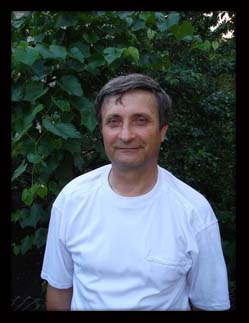
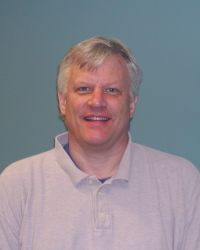
Alberto Behar 1967-2015

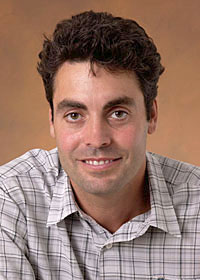
Alberto BeharDr. Alberto Behar, a long-time researcher at the Jet Propulsion Laboratory, died January, 9, 2015 in a small-plane accident near Van Nuys, CA.

An expert on robotics for exploring extreme environments on Earth and other planets, Behar worked in the Avionics, Instruments, and Science divisions at JPL. He played a key role in developing in situ robotic systems for measuring Earth’s ice sheets in Antarctica and Greenland using submarines, ice rovers, and boats. He also participated in the exploration of Mars, serving as the Investigation Scientist for both the Dynamic Albedo of Neutrons (DAN) instrument on the Curiosity rover and the High Energy Neutron Detector on the Mars Odyssey orbiter. Alberto was a research professor in the School of Earth and Space Exploration at Arizona State University. He held a PhD in Electrical Engineering from the University of Southern California.

Thomas Wagner, the Cryosphere Program Scientist at NASA Headquarters, summed up Behar this way: “From his submarines that peeked under Antarctica to his boats that raced Greenland’s rivers, Alberto’s work enabled measurements of things we’d never known. His creativity knew few bounds. He is, and will forever be, sorely missed.”

Charles A. Barth 1930-2014

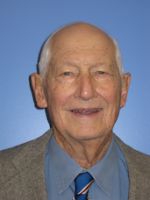
Charles A. BarthCharles A. Barth, Professor Emeritus at the University of Colorado, died on October 14th 2014.  Charles grew up in Philadelphia where he attended Central High School. He received his B.S. in chemistry at Lehigh University. After serving in the Air Force, he earned his Ph.D. from UCLA. From 1958 to 1959 he was a postdoctoral fellow at the University of Bonn, Germany, followed by six years working at the CalTech/NASA Jet Propulsion Laboratory. From 1965 to 1992 he was the Director of the University of Colorado’s Laboratory for Atmospheric and Space Physics (LASP) and until 2002 a professor in the Department of Astrophysical and Planetary Sciences. He became Professor Emeritus in 2002.

Between 1962 and 2002, Charles was active on numerous experiments studying the Earth and other planets, including Mariners 5, 6, 7, and 9, OGO-2, 4, 5, and 6, Atmosphere Explorer-C and D, the Solar Mesosphere Explorer, the Student Nitric Oxide Experiment, and instruments on Apollo 17, Pioneer Venus, Galileo, and Cassini. As a professor, he especially valued giving undergraduate students their first taste of space and planetary science by allowing them to design, build and operate spacecraft. He mentored and inspired many undergraduate and graduate students, postdoctoral fellows, and scientists, producing a lasting legacy of friends, colleagues, and outstanding scientists. He will be missed greatly.

Transmitted by A. Hendrix

Gerhard Neukum 1944-2014

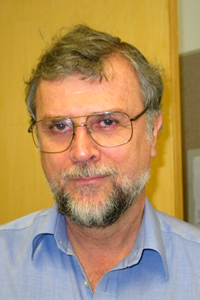
Prof. Gerhard Neukum, our planetary scientist colleague, passed away on 21 September 2014. He was one of the most prominent planetary researchers in Germany and one of the world’s recognised experts in the field. He made a name for himself in his chosen field with the work he conducted on the chronology of Solar System bodies.

He was born in 1944 in the Sudetenland, he got his Ph.D. in physics on lunar craters at the University of Heidelberg, and his HDR in geophysics and planetary sciences at the University Louis and Maximilian in Munich in 1983, where he was appointed extraordinary professor in 1989. Since 1997, he occupied the position of professor of geosciences at the Free University of Berlin. He also headed the Institute of Planetology DLR between 1993 and 2002.

He was instrumental in the birth of ESA’s Mars Express Mission devoted to the in-depth study of the surface of Mars since late 2003, for which he instigated the development of the high-resolution stereo camera (HRSC) leading the team of scientists that analyzes the results of this experiment. G. Neukum was also part of the imaging team of the joint ESA-NASA Cassini- Huygens mission who is exploring the Saturnian system since 2004.  He was furthermore involved in the ESA Rosetta mission which is expected to land on the comet Churyumov – Gerasimenko in November 2014, and in NASA’s Dawn mission to study the asteroid Vesta and the dwarf planet Ceres.

Gerry Neugebauer 1932-2014

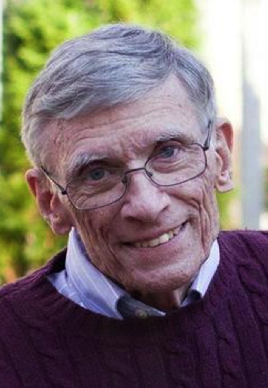
Gerry Neugebauer, an astrophysicist who pioneered ways to peer into previously invisible sectors of outer space, helping to discover hundreds of thousands of planets, stars and galaxies, died on Sept. 26 in Arizona. Dr. Neugebauer was a former chairman of the division of physics, mathematics and astronomy at the California Institute of Technology and director of the Palomar Observatory there.

Gerhart Otto Neugebauer was born in Gottingen, Germany, on Sept. 3, 1932. He then changed his first name to Gerry. He graduated from Cornell with a degree in physics and earned a Ph.D. in physics from Caltech. From 1960 to 1963, Dr. Neugebauer served in the Army, which assigned him to the Jet Propulsion Laboratory where he designed the infrared equipment for the Mariner 2 mission to Venus in 1962, and then was hired at Caltech’s physics faculty.

Early on he worked with Robert B. Leighton of Caltech, who in the early 1960s developed a telescope that Dr. Neugebauer used to sweep the sky from the Mount Wilson Observatory. His persistence was rewarded when he found an object the size of the solar system. It turned out to be a newborn star, a discovery that shed light on how stars are formed. He and his colleagues went on to locate the exact center of the Milky Way.

He was considered a father of the field of infrared radiation, along with Frank J. Low of the University of Arizona. Dr. Neugebauer’s biggest achievement was in detecting and interpreting infrared radiation emanating from outer space. A major advance came in 1983, when he was the scientific director of the Infrared Astronomical Satellite, or IRAS, sponsored by NASA, Britain and the Netherlands, when he helped develop instruments sensitive enough to detect a 20-watt light bulb on Pluto or a speck of dust from a mile away. His team pinpointed more than a half-million sources of infrared radiation in the sky, many of them galaxies. It found rings of debris and dust around stars that were an early clue that planets exist beyond Earth’s solar system.

Dr. Neugebauer was a member of the National Academy of Sciences, the American Philosophical Society and the American Academy of Arts and Sciences. He received the Space Science Award of the American Institute of Aeronautics and Astronautics, and the Herschel Medal of the Royal Astronomical Society in Britain, of which he was a member.

[Condensed and edited extract from the NY Times – http://www.nytimes.com/2014/10/03/us/gerry-neugebauer-pioneer-in-space-studies-dies-at-82.html?_r=0]

Barney J. Conrath 1935-2014

Barney J. ConrathDr. Barney Conrath passed away peacefully in his sleep on April 23, 2014, at his home in Charlottesville, Virginia, after a bout with cancer.  He is survived by his wife, Marjorie, three children, and five grandchildren.

He was born June 23, 1935 in Quincy, Illinois and grew up near Hannibal, Missouri.  In 1957 he graduated from Culver-Stockton College in northeast Missouri with a BA in Physics, then earned an MA in Physics at the University of Iowa under the direction of James Van Allen.  In July 1960, Barney joined the staff of NASA’s new Goddard Space Flight Center in Greenbelt, Maryland, where he would spend most of his professional career.  However, Goddard was not ready to accommodate him, since the Center’s buildings were still under construction.  Goddard’s scientists and engineers were housed in temporary quarters scattered over greater Washington, D.C., and Barney spent nearly two years working at the US Naval Receiving Station in the Anacostia section of the city.  Later, he won a Robert Goddard Fellowship and took a leave to earn a PhD in Physics at the University of New Hampshire in 1966, his dissertation being on the violation of the 2nd and 3rd adiabatic invariants by hydromagnetic waves.

Fortunately for atmospheric science, Barney fell in with the wrong crowd at Goddard, and his career in space plasma physics was short lived.  The atmosphere at the Center in its early days was charged with excitement: Earth-orbiting satellites were being launched at a regular rate and Goddard was supplying many of the experiments.  Barney’s group was heavily involved with the Tiros and Nimbus weather satellites, which, respectively, had radiometers and spectrometers to measure the thermal radiation field of Earth’s atmosphere.  This was a new area of exploration, and techniques were needed to interpret the observed radiation and derive physical atmospheric parameters, e.g., the distributions of temperatures, clouds, and gaseous constituents.  Beginning in the mid 1960s, Barney contributed a series of seminal studies on the inversion of planetary infrared spectra observed from space-borne platforms, which was to occupy much of his career.

The course of Barney’s work was strongly influenced by his close association with Rudolf Hanel, who built a series of Infrared Interferometer Spectrometers (IRIS) that were onboard the Nimbus satellites, and then on spacecraft that went to Mars (Mariner 9) and the outer planets (Voyager 1 & 2).  Barney was a co-investigator on all these experiments and became the Voyager IRIS principal investigator in 1986.  Early on, Barney appreciated the value—and sheer enjoyment—of combining the activities of data acquisition and spectral inversion with detailed theoretical modeling of the results.  His passion became understanding the atmospheric thermal structure and dynamics of the bodies he observed.  Using terrestrial analogies to interpret data from strange worlds is usually a reasonable starting point, but sometimes one’s mind needs to be nimble.  This was true of the hydrogen-dominated atmospheres in the outer solar system, where Barney and his colleagues discovered that conversion between the ortho and para forms of molecular hydrogen in disequilibrium could be an important energy source driving atmospheric motions.

Barney twice received the NASA Medal for Exceptional Scientific Achievement (1981, 1990), and he became a Goddard Senior Fellow in 1990.  In 1996 he received the DPS Kuiper Prize for his scientific contributions to planetary science.  He retired from Federal service in 1995 and became a Senior Research Associate at Cornell University, continuing his close collaboration with Peter Gierasch that had begun during the Voyager IRIS days. During this time, he participated in the Mars Global Surveyor Thermal Emission Spectrometer experiment. He was also a co-investigator on Cassini’s Composite Infrared Spectrometer (CIRS), an ambitious Fourier Transform Spectrometer that built on the earlier IRIS instruments.   He worked with other CIRS investigators in studying the seasonally varying thermal structure and dynamics of Titan’s stratosphere and the large structural changes effected by Saturn’s great northern storm, which erupted in late 2010.  He actively pursued his research until the end, preoccupied with determining the helium abundance of Saturn’s atmosphere—thus far a challenge—by combining CIRS data with radio occultations and with stellar occultations observed by the Cassini Visual Infrared Mapping Spectrometer (VIMS). 

In his career, Barney led by quiet example, and he epitomized unselfish cooperation in research.  He was attentive and encouraging.  His integrity and competence were unquestioned.  Those who knew him well will never forget those qualities, nor will they forget him.

Prepared by Michael Flasar, NASA Goddard Space Flight Center

Call to Action from DPS Federal Relations Subcommittee Chair

CALL TO ACTION !!!

The AAS has issued an action alert to its members this week, and we have an opportunity to piggy back on their efforts. The planetary sections of other scientific societies are also calling members to action this week. Details of the action alert are at http://aas.org/posts/news/2014/05/aas-action-alert

The House of Representatives’ Commerce, Justice, and Science (CJS) Appropriations Subcommittee is responsible for funding NASA and NSF. The full Appropriations Committee in the House recently passed this bill out of committee, and it now heads to the floor (likely on May 29) for the full House’s consideration, subject to potential amendments. The bill, as currently written, would increase the NASA top-line budget to $17.9 billion. In that context, SMD would increase to $5.19 billion, and planetary science did very well in garnering an increase to $1.45 billion.

Under current budget rules, any increases for programs in the bill must be offset by decreases to other programs within this same bill. When the Appropriations Committee considered this bill, the chairman of the CJS subcommittee, Rep. Frank Wolf (R, VA-10), indicated that he expects some members of the House will look to augment other programs (e.g., the Community Oriented Policing Services program) by taking money from science. These types of amendments have been introduced and passed in the past. The attempts to shift funding away from science would come in the form of amendments on the House floor when the chamber considers the bill on or about Thursday, May 29th.

Please contact your member of the House of Representatives as soon as possible – the schedule is highly subject to change. If you do contact your Representative, we encourage you to convey a nuanced two-part message: (1) support for NASA and NSF funding levels in the bill as introduced, and (2) oppose amendments that would reduce these levels. You can use the resource set up by the AAS at http://aas.org/posts/news/2014/05/aas-action-alert.

If you have questions, please contact Makenzie Lystrup a

–Makenzie Lystrup, FRS Chair (dps.frschair.aas.org)


27 May 2014

Lucas Kamp 1946-2014

Lucas KampDr. Lucas Kamp died of cancer on Sunday, March 30, 2014. He had been ill for approximately 1 year, however he continued his work planning for MIRO Rosetta cometary observations and analyzing Galileo NIMS data right up until his death.

Lucas was born on March 15, 1946 in Kingston-on-Thames, England, U.K.  He was raised in the Netherlands, and spoke four languages, English, Dutch, German, and French.

Dr. Kamp received an A.B. in Astrophysical Sciences from Princeton University in 1968. Following that degree he received a Masters degree in 1970 and a Ph.D.in 1972 from the University of Chicago, both in Astronomy and Astrophysics.

From 1972-1974, Dr. Kamp was an NRC Research Affiliate at the NASA Goddard Space Flight Center in Greenbelt, MD. His work consisted of research in model stellar atmospheres, spectroscopy, and radiative transfer, specializing in non-LTE effects in early-type stars.

From 1974 – 1980, he was an Assistant Professor of Astronomy at Boston University. There he taught and worked on the analyses of IUE satellite data. Dr. Kamp joined JPL/Caltech in January 1981 where he remained up until his death. During this time he spent two sabbaticals at Oxford University where he and Professor Fred Taylor modelled near-infrared thermal emission emanating from Venus’s deep atmosphere and surface. During his time at JPL, he worked on numerous spacecraft projects including Voyager, Galileo, Viking orbiter, EPOXI, Rosetta and JUNO. He was a major contributor to the NIMS effort, particularly in the geometric and photometric aspects of NIMS hyperspectral image cubes.

Dr. Kamp was an author or co-author of 190 scientific publications. He received awards from NASA for his work on Cassini, Galileo, Rosetta and EPOXI.  He received the NASA Individual Exceptional Service Medal for contributions to Galileo NIMS data processing in October 2003.

Prepared by S. Gulkis, B. Carlson, R. Lopes

Feodor Velichko 1957-2013

Feodor VelichkoFeodor Velichko, the Leading Researcher of Institute of Astronomy of Kharkiv National University (Ukraine) died suddenly on Oct 1, 2013 in the age of 56. He was an expert in photometry and polarimetry of asteroids and comets and took part in many international observing programs devoted to physical studies of small bodies.

Feodor Velichko’s personal page
http://www.astron.kharkov.ua/staff/Velichko_F/

(transmitted by Irina Belskaya)

Final Press Briefings Update for DPS Denver Meeting

 FINAL PRESS-CONFERENCE PROGRAM FOR THE
45TH MEETING OF THE AAS DIVISION FOR PLANETARY SCIENCES

Planetary scientists are now converging on Denver, Colorado, for next week’s 45th annual meeting of the Division for Planetary Sciences (DPS) of the American Astronomical Society (AAS). The meeting begins on Sunday, 6 October, and lasts through Friday, 11 October, at the Sheraton Denver Downtown Hotel, 1550 Court Place, Denver, CO 80202. Some 600 planetary scientists, astronomers, educators, and journalists are expected. Twitter hashtag: #dps13.

Main meeting website (including information on travel & lodging):
http://aas.org/meetings/45th-meeting-division-planetary-sciences

Search or browse the meeting program:
http://aas.org/meetings/dps45/science_program

Earlier media advisories:
press

Complimentary Press Registration

The AAS/DPS offers complimentary press registration to bona fide working journalists and public-information officers (PIOs); please contact DPS Press Officer Dr. Vishnu Reddy ([email protected]).

Press Office

A press office will be set up at the Sheraton in Plaza Court 7 and will be open to journalists during normal conference hours. Among other amenities, it will offer workspace and wireless Internet connectivity.

During the meeting you may reach DPS Press Officer Dr. Vishnu Reddy via cell phone at +1 808-342-8932. Assisting in the press room is AAS Press Officer Dr. Rick Fienberg ([email protected], cell +1 857-891-5649).

Press Conferences

News briefings for the media will be conducted during the lunch break (12:00 pm to 1:30 pm MDT) in Governor’s Square 11, Monday through Wednesday, 7-9 October.

Listed below are the press-conference speakers and topics. All findings are embargoed until the time of presentation at the meeting. “Time of presentation” means the start time of the oral or poster session in which the paper will be given, or the time of the corresponding press conference (if any), whichever comes first. The complete AAS/DPS embargo policy is online here:http://aas.org/media/press-releases/embargo-policy-aas-division-meetings

Note: All new discoveries are subject to confirmation by independent teams of scientists. Inclusion here does not imply endorsement by the American Astronomical Society and/or the Division for Planetary Sciences. The AAS and DPS do not endorse individual scientific results.

Monday, 7 October, 12 noon to 1:30 pm MDT

* Apostolos Christou, “A Genetic Cluster of Martian Trojan Asteroids”
* Torrence Johnson, “Effects of Carbon Chemistry on Exoplanet Habitability”
* Franck Marchis, “New Insights on Main Belt Triple Asteroid (87) Sylvia”
* Benoit Noyelles, “Mercury’s Entrapment into the 3:2 Spin-Orbit Resonance”
* Feng Tian, “Atmospheres of Potentially Habitable Planets”

Tuesday, 8 October, 12 noon to 1:30 pm MDT

* Nadine Barlow, “Origin of Martian Low-Aspect-Ratio Layered Ejecta Craters”
* Maria Gritsevich, “A Comprehensive Study of the Chelyabinsk Meteorite”
* Brian Jackson, “A Survey for Very-Short-Period Planets in the Kepler Data”
* Amy Mainzer, “Recent Results and Observations of Tiny Near-Earth Objects”
* Mark Showalter, “New Hubble Results on Neptune’s Moons and Rings”

Wednesday, 9 October, 12 noon to 1:30 pm MDT

* Mona Delitsky, “Diamond in Saturn’s Deep Atmosphere”
* Harold Levison, “Forming the Small Satellites of Pluto”
* Jian-Yang Li, “Early Characterization of Comet C/2012 S1 (ISON)”
* Kevin Walsh, “Will Comet ISON Survive Its Close Encounter with the Sun?”

Remote Access to Press Conferences via Webcast

Journalists unable to attend the meeting in person may tune in to our briefings streamed live on the Web. Since the webcast includes audio, video, and PowerPoint slides, you must have a broadband (high-speed) Internet connection to watch and listen. Also, your Web browser must have the free Adobe Flash plug-in (http://get.adobe.com/flashplayer/).

The webcast also includes a chat window whereby remote participants may ask questions. We can’t guarantee that all questions received from webcast viewers will be asked aloud — it depends on how much time we have and how many questions we’re getting from onsite reporters.

AAS/DPS Press Conference webcasts:
* http://aas.org/media-press/aas-press-conference-webcasts
* Make sure your pop-up blocker is disabled or that it allows pop-ups from aas.org.

Instructions:
* Password: Contact DPS Press Officer Dr. Vishnu Reddy ([email protected]) or AAS Press Officer Dr. Rick Fienberg ([email protected]) for the password, which is for journalists only; the AAS/DPS pays by the “viewer hour,” so we can’t afford to open the live webcast to the public. After the meeting, archived webcasts will be freely available publicly via our online archive (http://aas.org/media-press/archived-aas-press-conference-webcasts).
* Once the webcast window opens, press the Play (>) button.
* Press the Open Chat Window button. You’ll be asked to enter your name; please use your real first and last names, not a cutesy Internet nickname.
* You can resize the chat window and move it to any convenient position on your screen.
* To ask a question, type it into the input box near the bottom of the chat window and click the Send button.

Contact:
Dr. Vishnu Reddy
DPS Press Officer
+1 808-342-8932
[email protected]

Gary B. Hansen 1953-2013

Gary B. HansenI have been informed that Dr. Gary B. Hansen passed away late Thursday evening, September 26, from complications of ALS. He died while sitting at his computer, working on some science or technical issue. This was a highly appropriate setting for Gary. Gary was a hard working and very dedicated scientist who contributed to a number of parts of the Planetary Sciences. He loved the work and the science. Working, I am sure, is where he wanted to be (“with his boots on,” so to speak).

Gary B. Hansen was born 12 July 1953 in Denver Colorado. He earned a BS in Engineering and Applied Science from the California Institute of Technology, 1975, an M.S. in Aeronautics and Astronautics, 1986, and a Ph.D. in Geophysics, 1996, both from the University of Washington. He held a variety of positions throughout his career, starting as an engineer for CBS television in Los Angeles 1976-79, then at the jet Propulsion laboratory, Pasadena CA (Asst. cognizant engineer for the Galileo spacecraft flight computer). At JPL he also performed considerable laboratory work on the properties of CO2 ice, which eventually supported his Ph.D., dissertation. In 1996, he came to work with me at the University of Hawaii as a researcher in my Division of Planetary Geosciences and worked closely with me and my graduate students for six years before I retired from the University and set up my own Institute near Winthrop, Washington. Gary moved to the University of Washington, became a Research Faculty there, but we continued to work on joint projects.

Gary had a long connection with and loved Seattle, and he participated in its music and sports scenes as well as his research. He owned a house there even when he worked at the University of Hawaii. The University of Washington was the natural place for him to be associated and the Department of Earth and Space Science (ESS) found a way to enable this. He felt comfortable there and contributed to several parts of the Department and its research effort, in addition to working on his and our planetary science projects. As his health failed, the ESS provided what assistance and support they could to enable his participation until the end. For this I am sure Gary, as well as those of us who knew Gary, were very appreciative.

Gary’s specialty became radiative transfer, especially in multi scattering media, such as CO2 and H2O ices. This was essential to the study of the outer solar system satellites. When Gary came to work with me in 1996, we were just beginning the observational phase of the Galileo mission and its infrared spectrometer, NIMS. As the spectra rolled in, we had a feast, and we made several important discoveries. This would not have happened without Gary’s deep understanding of the physics behind the signals the spectrometer was receiving. Further, Gary was a wizard at developing calibrations and corrections for this finicky instrument and its idiosyncrasies, and he worked long, hard hours developing credibility for the NIMS data (and later for the VIMS data too).

Gary was an essential component to the growth and development of several graduate students and post doctoral fellows, several of whom are professional scientists in their own right today. They too, I am sure, will join in recognizing our appreciation for Gary’s contributions and his friendship.

Composed by Tom McCord