
Newsletter 16-03

Issue 16-03, January 22, 2016


+—————————————CONTENTS————————————-+

  1. REMINDER: VOTE IN THE 2016 AAS ELECTION
  2. SIGN UP FOR 2016 AAS CONGRESSIONAL VISITS DAY TODAY
  3. DPS MEMBER WINS EGU DAVID BATES MEDAL
  4. OPAG MEETING: PRESENTING R&A NUGGETS
  5. UPCOMING MEETINGS
  6. JOBS, POSITIONS, OPPORTUNITIES

+——————————————————————————————–+


1———1———1———1———1———1———1———1———1———1

REMINDER: VOTE IN THE 2016 AAS ELECTION


DPS members who are AAS members are reminded to vote in the 2016 

AAS election.  DPS members Stefanie Milam and Jay Pasachoff are on

the ballot for AAS Councilor.  Deadline is 31 January 2016.


2———2———2———2———2———2———2———2———2———2

SIGN UP FOR 2016 AAS CONGRESSIONAL VISITS DAY TODAY


Do you want to learn how science policy gets made “inside the Beltway?”

Would you like the opportunity to share your passion for science with people 

in Congress and the White House? Have you ever run for student government?


If you answered yes to any of these questions and want to help the AAS

advocate for our discipline in Washington, please consider applying to 

participate in the 2016 AAS Congressional Visits Day (CVD).


AAS CVD is 15-16 March 2016, and the deadline for signing up is 22 January (TODAY!).


If you’re an AAS member (junior membership counts) and eligible to vote in 

the United States, then you should consider signing up for AAS Congressional 

Visits Day 2016. The AAS will cover most of your travel expenses. We strongly 

encourage undergrads, grad students, and postdocs to apply. 


To apply, please complete the CVD form


For more information about CVD check the AAS Policy Blog post

If you have any questions, please email us at [email protected] .


We hope to see you in DC in March!


3———3———3———3———3———3———3———3———3———3

DPS MEMBER WINS EGU DAVID BATES MEDAL


DPS member, Sushil Atreya, has been selected for the David Bates Medal 

of the European Geosciences Union for “exceptional contributions to planetary 

and solar system sciences”. The medal was established by the EGS (now 

EGU) in 1992 in honor of the eminent physicist and mathematician Professor 

David Bates and is awarded every other year.  

(http://www.egu.eu/news/200/egu-announces-2016-awards-and-medals/)

http://www.egu.eu/awards-medals/david-bates/


Congratulations Sushil!


4———4———4———4———4———4———4———4———4———4

OPAG MEETING: PRESENTING R&A NUGGETS

Dear OPAG Colleagues,


At the upcoming OPAG meeting we will have 30 minutes dedicated 

to R&A nuggets, similar to the last OPAG meeting.  Please consider 

presenting your latest results!   


You can find instructions and advice here: 

http://www.lpi.usra.edu/opag/meetings/aug2015/presentations/


Examples and a template can be found here:

http://www.lpi.usra.edu/opag/science_nuggets/


Let us know when you arrive — we hope that you will take advantage 

of this opportunity to showcase your research. 


5———5———5———5———5———5———5———5———5———5

UPCOMING MEETINGS

A) AOGS 2016 SESSION PS-13: Communicating The Excitement 

Of Space Exploration To Audiences In Young Space-faring Nations


Asia Oceania Geosciences Conference 2016

July 31 – Aug 5, Beijing, China

Conference website:

http://www.asiaoceania.org/aogs2016/public.asp?page=home.htm

Abstract submission deadline: February 19, 2016


Recent years have seen growth in the number of nations that are 

conducting spacecraft missions for planetary science, space science, 

and astronomy. China, India, and Japan have flown successful lunar 

and planetary missions. Korea and Russia also have plans to enter or 

re-enter the arena of space exploration. A challenge for countries with 

youthful space exploration programs is to engage their citizens and 

communicate an appreciation of the value and excitement of space 

exploration. This session will highlight education and public outreach 

(EPO) programs, strategies, and technologies, with emphasis on developing 

countries and nations that are relatively new to space science and exploration. 

We also welcome presentations that describe outreach programs that have 

been successful in the U.S., Europe, or elsewhere.


Conveners: Prof. Yongchun Zheng (National Astronomical Observatories, 

Chinese Academy of Sciences, China), Dr. David Blewett (Johns Hopkins 

University Applied Physics Laboratory, United States)


B) 31st IUGG Conference on Mathematical Geophysics, Paris.

Geophysics, from Mathematics to Experiments 


The 31st edition of the IUGG Conference on Mathematical Geophysics

(CMG) is to be held at the Institut Henri Poincare (Paris) on June 6th to

10th, 2016.  CMG covers a wide spectrum of current research topics in

Geophysics: physical based modelling and measurements in Geophysics,

using mathematical and numerical approaches, spanning terrestrial,

atmospheric and oceanic flows, seismology, modelling of seismic sources

and eruptions. This conference is traditionally dedicated to theoretical

and modeling works but in 2016, it will also emphasize works with an

experimental side or related to experimental investigation — in particular

conceptual experiments that address physical mechanisms and scaling l

aws. A dedicated session on Planetary Geophysics is chaired by Ralph

Lorenz (APL) and Norbert Schorghofer (Hawaii). 


Please note the dates and visit cmg2016.sciencesconf.org  for more

details, abstract templates and schedule. Note that the deadline for

abstract submission has been extended to 31st January 2016.  Registration

will open in February.


Questions may be emailed to: [email protected] 


6———6———6———6———6———6———6———6———6———6

JOBS, POSITIONS, OPPORTUNITIES


A) Tenure Track Faculty in Astronomy and Sabbatical 

Replacement Instructor Positions Embry-Riddle Aeronautical University

Daytona Beach, Florida


Brief Posting Description

The Department of Physical Sciences at Embry-Riddle Aeronautical 

University’s Daytona Beach Campus invites applications for a Tenure-Track 

faculty position in the astronomical sciences, including planetary science.  

Candidates with observational and/or instrumentation experience who are 

interested in using the facilities outlined below are especially encouraged

to apply.  This 9-month tenure track position may be at any rank: assistant 

through full professor. Applicants for this position must have a Ph.D. in 

astronomy, physics, or related discipline.  In addition, one or more sabbatical 

replacement instructor positions will be available.  Applicants for the latter 

must have at least a M.S. degree in physics, astronomy, or related discipline.  

All candidates must be available by August 15, 2016.


Job Requirements

Applications are under consideration now and the position will remain open 

until filled.  Completed applications must include a cover letter, full CV,

 statements of teaching philosophy and research interests, as well as the 

names, telephone numbers, and email addresses of at least three professional 

references.  All materials must be submitted through our online application

portal (http://eraucareers.erau.edu).  For information on the position and 

department, please contact Terry D. Oswalt, Ph.D., Chair, Department 

Physical Sciences, [email protected], 386-226-7571.  For questions 

or help with the application process, please contact Erin Goldesberry, 

[email protected].


———————————+

Send submissions to:

Anne Verbiscer, DPS Secretary ([email protected]


To unsubscribe visit http://aas.org/unsubscribe or email [email protected].

To change your address email [email protected]


Anne J. Verbiscer
Research Associate Professor
Department of Astronomy
University of Virginia
Charlottesville, Virginia 22904-4325
Newsletter 16-2

Issue 16-02, January 17, 2016


+—————————————CONTENTS————————————-+

  1. REMINDER: VOTE IN THE 2016 AAS ELECTION
  2. NASA’S ASTROPHYSICS WEBSITE FOR THE PLANETARY SCIENCE
    COMMUNITY
  3. COMMUNITY REMINDER
  4. SPICE TRAINING CLASS
  5. SBAG GOALS DOCUMENT AVAILABLE FOR REVIEW AND COMMENT
  6. UPCOMING MEETINGS
  7. JOBS, POSITIONS, OPPORTUNITIES

+——————————————————————————————–+


1———1———1———1———1———1———1———1———1———1

REMINDER: VOTE IN THE 2016 AAS ELECTION


DPS members who are AAS members are reminded to vote in the 2016 

AAS election.  DPS members Stefanie Milam and Jay Pasachoff are on

the ballot for AAS Councilor.  Deadline is 31 January 2016.


2———2———2———2———2———2———2———2———2———2

NASA’S ASTROPHYSICS WEBSITE FOR THE PLANETARY SCIENCE
COMMUNITY


Jim Green, Director, Planetary Science Division, NASA

Paul Hertz, Director, Astrophysics Division, NASA


NASA’s Astrophysics Missions are available for the use of the entire science 

community to advance important science objectives independent of which 

NASA Division manages the programs.  The planetary science community has 

benefited from both using the tools and science derived from NASA’s 

astrophysics investments. This has been occurring for a long time and we 

want to highlight this great relationship that our two disciplines have continued 

to develop over the years. We truly believe that the collaboration benefits both 

scientific disciplines and furthermore, that the best insights comes from 

interdisciplinary interactions between many scientific fields. 


With the goal of engaging the planetary community in taking part in further 

potential observations from astrophysics missions and continued astrophysics 

collaborations, we held workshops at the Division of Planetary Science (DPS) 

meeting through a collaboration of the Astrophysics and Planetary Science 

Divisions. As a result and with the goal of providing continuous information to 

the community we are creating a website that would keep updates about the 

missions proposals schedules as well as links to white papers and presentations 

that would help our community.


Please visit http://www.lpi.usra.edu/astrophysicsassets/, we plan to archive the 

presentations given at our workshops and keep an updated calendar relevant 

to our community. 


This website is not meant to replace the missions websites, but provide, as 

much as possible a portal for our community interested in using those 

investments. It is quite apparent that we have been experiencing a renaissance 

of planetary science using astrophysics missions. We deeply appreciate how 

these two communities of scientists have started to work together in 

understanding the origin and evolution of our Solar System and all the 

diversity of objects within. When we look at the sky at night, we now know 

that the stars we see have solar systems similar to our own.  This is the new 

paradigm that has drawn us more closely together.


3———3———3———3———3———3———3———3———3———3

COMMUNITY REMINDER

We would like to remind the community that NNH15ZDA012L, 

“NASA RFI: PREPARATION FOR THE DEVELOPMENT OF A 

COMMUNITY-BASED ROADMAP FOR NASA’S PLANETARY 

DATA SERVICES” is open through January 25, 2016.  


We want to encourage past or present users of Planetary Data System Data 

or services to look the RFI and decide if there is a contribution in each case

that the user would like to make toward providing community comments 

on the workings of PDS.


Thank you.


Tom Morgan


4———4———4———4———4———4———4———4———4———4

SPICE TRAINING CLASS

NASA’s Navigation and Ancillary Information Facility announces a SPICE 

training class will be held April 12-14, 2016, at a hotel near Pasadena California. 

Details about the class and the registration form are available here:  http://naif.jpl.nasa.gov/naif/WS2016_announcement.html.


The class is designed for professionals working in the field of solar system 

research. It will consist of a combination of lectures, based on SPICE tutorials, 

and on student-executed programming lessons (“open book” style) available in 

each of the four programming languages supported by NAIF (Fortran 77, C, 

IDL and Matlab). 


There is no charge for the class, but advance registration is required. The 60 

seats available will be allocated only upon NAIF receiving a completed

registration form. Allocation will be done on a first come — first served basis.


5———5———5———5———5———5———5———5———5———5

SBAG GOALS DOCUMENT AVAILABLE FOR REVIEW AND COMMENT


Dear SBAG Community,


I’m happy to share that the SBAG document, Goals and Objectives for the 

Exploration and Investigation of the Solar System’s Small Bodies, is now 

available for review and comment by the SBAG community. Thank you to 

everyone, especially the goals committee leads and members, for all the work 

over the last year to get us to this point!


http://www.lpi.usra.edu/sbag/goals/


Over the last year, the committees have worked to produce this document, 

with drafts posted to the SBAG website prior to the SBAG 13 meeting in 

June 2015, a three-month community comment and review period through

September 2015, followed by revisions by the committees and creation of a

single document in the last quarter of 2015. This complete document is now 

posted for further review and comments from the SBAG community, with 

all comments due by February 19, 2016. Comments should be directed to 

SBAG chair, Nancy Chabot ([email protected]). 


The timing of this comment period is purposely chosen to enable review of 

the document prior to the upcoming SBAG 14 meeting at the end of the

month (January 27-29, 2016). The goals document will be discussed during 

the SBAG 14 meeting, and there is time following the meeting for additional 

comments. 


As a reminder, please register for the SBAG 14 meeting if you plan to attend, 

and I look forward to a productive meeting in a few weeks.

http://www.lpi.usra.edu/sbag/meetings/


Best wishes,

Nancy Chabot

SBAG Chair
 

6———6———6———6———6———6———6———6———6———6

UPCOMING MEETINGS

A) AOGS 2016 SESSION PS-08: 

Solar System Primitive Body Exploration Missions


Asia Oceania Geosciences Conference 2016

July 31 – Aug 5, Beijing, China

Conference website: 

http://www.asiaoceania.org/aogs2016/public.asp?page=home.htm


Abstract submission deadline: February 19, 2016


This session welcomes abstracts about the results from all past and 

ongoing small body missions by combining multiple missions, as well 

as new concepts for future missions.  Solar system small bodies are 

considered the best-preserved fossils from the early era of planetary 

systems formation. Small body exploration missions have tremendously 

revolutionized our understanding of the formation of the planetary system 

with their paradigm changing results.  In the context of past and current 

missions, such as Dawn, Rosetta, Stardust-Next, EPOXI, Deep Impact, 

NEAR, Giotto, and VEGA, as well as missions such as Hayabusa2, en 

route to its target, OSIRIS-REx, in development and possibly Lucy, Psyche, 

AIDA, and the Japanese Trojan asteroid mission, it is now time to both 

combine the mission results to enhance scientific returns of these missions, 

and to develop concepts for future small body explorations.  Abstract

submissions are open until February 19, 2016.


Conveners:  Jian-Yang Li (Planetary Science Institute, United States), 

Makoto Yoshikawa (JAXA, Japan), Lucy McFadden (NASA Goddard 

Space Flight Center, United States), Sebastien Besse (ESA, Spain), 

Liang Chang (Yunnan Observatory, China)


B) AOGS 2016 SESSION PS-09: Planetary Science Data Archiving


Asia Oceania Geosciences Conference 2016

July 31 – Aug 5, Beijing, China

Conference website:

http://www.asiaoceania.org/aogs2016/public.asp?page=home.htm

Abstract submission deadline: February 19, 2016


The focus of this session is planetary science data archives, archiving 

activities, and future plans. We invite contributed abstracts related to 

all aspects of planetary science data archiving activities and concepts 

and will invite speakers from the major data archiving organizations 

from various space agencies to discuss their facilities and activities. 

It is of great importance and broad community interest to archive and 

make available to the public the data returned by planetary science 

exploration missions and related data from Earth-based observatories. 

The ultimate goal is to enable and facilitate combined scientific analyses 

using data covering long time-baselines and multiple observations for 

new phenomena and scientific objectives emerging in the future. This 

session provides a forum for researchers in planetary sciences to discuss 

and understand the standards, approaches, current progress, and future 

plans and concepts for effective long-term planetary science data 

preservation.  Abstract submissions are open until February 19, 2016.


Conveners: Jian-Yang Li (Planetary Science Institute, United States), 

Ludmilla Kolokolova (University of Maryland, United States), Daniel 

Crichton (JPL, Caltech, United States), Sebastien Besse (ESA, Spain), 

Yukio Yamamoto (JAXA, Japan)


C) AOGS 2016 SESSION PS04 : Comparative Aeronomy of Solar

System Bodies 


Asia Oceania Geosciences Conference 2016

July 31 – Aug 5, Beijing, China

Conference website:

http://www.asiaoceania.org/aogs2016/public.asp?page=home.htm

Abstract submission deadline: February 19, 2016


Description: Aeronomy, coined by Dr. Sidney Chapman more than 60

years ago and to be distinguished from meteorology, is the study of the

upper regions of planetary atmospheres where ionization and dissociation

are important. Over the past several decades, many planetary missions

(Mars Express, Venus Express, Pioneer Venus Orbiter, Cassini-Huygens,

Messenger, MAVEN, Rosetta, etc.) have contributed substantially to our

knowledge of the physical, chemical, and dynamical processes occurring

within the mesospheres, thermospheres, exospheres, and ionospheres of

various Solar System objects, as well as the couplings of these regions

both downward with the lower atmospheres and upward with the plasma

environments. The comparative approach is becoming increasingly fruitful

when applied to Solar System objects as both spacecraft- and ground-based

datasets are accumulated and interpreted by sophisticated multi-species fluid

and kinetic models. In this session, we invite abstracts on observational,

theoretical, and experimental results of different aspects of aeronomical

processes within the Solar System. We also invite presentations on relevant

future planetary missions (scientific goals, instrumentations, etc.). Both

solicited and contributed talks will be included. 


Convernors:

Jun Cui (National Astronomical Observatories, Chinese Academy of

Sciences, China), [email protected]

S.A. Haider (Physical Research Laboratory, India), [email protected]

Wing-Huen Ip (National Central University, Taiwan), [email protected]

Robert Lillis (University of California Berkeley, United States), [email protected]

Ingo Mueller-Wodarg (Imperial College London, United Kingdon) [email protected] 


D) ISLPS 2016


International Symposium on Lunar and Planetary Science 2016

June 9-10, 2016, Wuhan, China

Conference website: http://www.must.edu.mo/ISLPS2016/

Abstract submission deadline: March 30, 2016


International Symposium on Lunar and Planetary Science (ISLPS) is a 

biyearly conference series co-organized by China University of Geosciences 

(Wuhan) and Macau University of Science and Technology.  The 2016 

meeting will be held on June 9 and 10 in Wuhan, China.  The Science 

Organization Committee is co-chaired by Prof. Wing-Huen Ip (NCU, 

Taiwan) and Prof. James Head (Brown University).  This international 

symposium focuses on the international academic exchange on the topics 

of processing, analysis, research and application of lunar and planetary 

exploration data.  The scope of the symposium includes, but is not limited 

to, lunar and planetary compositions, topography, surface and internal 

processes, geology, planetary atmosphere and magnetic fields and plasmas, 

meteorites and cosmochemistry, asteroids and comets, and future deep 

space missions.


Authors are invited to submit a full paper in the form of an electronic 

file in WORD format to [email protected] before March 30, 2016.  A 

template is available.  All accepted papers will be presented in the symposium, 

and a special issue in an English journal is under planning.


Scientific Organization Committee: 

Wing-Huen Ip (Co-Chair, National Central University, Taiwan/Macau 

University of Science and Technology, China), 

James W. Head (Co-Chair, Brown University, USA), 

Clive Neal (University of Notre Dame, USA), 

Jian-Yang Li (Planetary Science Institute, USA), 

Kwing Lam, Chan (Macau University of Science and Technology, China), 

Chunlai Li (National Observatory of China), 

Long Xiao (China University of Geosciences, Wuhan, China), 

Mark Wieczorek (IPGP Planetary and Space Sciences, University of Sorbonne Paris Cité, France),

Noriyuki Namiki (National Astronomical Observatory of Japan), 

Yangting Lin (Institute of Geology and Geophysics, China), 

Young-Jun Choi (Space Science Division, Korea Astronomy and Space Science Institute)


7———7———7———7———7———7———7———7———7———7

JOBS, POSITIONS, OPPORTUNITIES


A) DIRECTOR OF THE LUNAR AND PLANETARY INSTITUTE


USRA is an independent, nonprofit research corporation where the 

combined efforts of in-house talent and university-based expertise 

merge to advance space science and technology. USRA works across 

disciplines including biomedicine, planetary science, astrophysics, 

and engineering and integrates those competencies into applications 

ranging from fundamental research to facility management and 

operations. USRA engages the creativity and authoritative expertise of 

the research community to develop and deliver sophisticated, forward-

looking solutions to Federal agencies and other customers – on 

schedule and within budget.


Universities Space Research Association is seeking a Director of the 

Lunar and Planetary Institute program in Houston, TX. This position 

will provide scientific leadership and management of the program to 

maintain it as a premier research center in support of the NASA 

strategic goals in planetary science and exploration of the solar 

system. This position will also identify new opportunities to leverage 

funding, strengthen, and broaden the funding for research at the LPI 

and also partner with NASA’s Johnson Space Center (JSC) to advance 

the center Lunar and Planetary Science goals. Provide local oversight 

of the institutional functions associated with the USRA owned 

facility in Houston.


All interested candidates must apply directly at: 


https://usracareers.silkroad.com/


———————————+

Send submissions to:

Anne Verbiscer, DPS Secretary ([email protected]


To unsubscribe visit http://aas.org/unsubscribe or email [email protected].

To change your address email [email protected].


Anne J. Verbiscer
Research Associate Professor
Department of Astronomy
University of Virginia
Charlottesville, Virginia 22904-4325

Newsletter 16-1

Issue 16-01, January 10, 2016


+—————————————CONTENTS————————————-+

  1. MESSAGE FROM THE CHAIR: CALL FOR VOLUNTEERS
  2. REMINDER: CALL FOR DPS 2016 PRIZE NOMINATIONS
  3. OPAG 2016 WINTER MEETING: INFORMATION CIRCULAR
  4. 615. WE-HERAEUS-SEMINAR: HOW PRIMITIVE ARE COMETS?
  5. 41ST SCIENTIFIC ASSEMBLY OF THE COMMITTEE ON SPACE RESEARCH (COSPAR)
  6. JOBS, POSITIONS, OPPORTUNITIES

+——————————————————————————————–+


1———1———1———1———1———1———1———1———1———1

MESSAGE FROM THE CHAIR: CALL FOR VOLUNTEERS


The DPS runs on the efforts of volunteers.  We are currently soliciting 

volunteers for the various positions described below. 

In addition to the elected positions, the DPS Committee appoints additional 

officers that serve for fixed terms.  We as a society have had the good fortune 

to have Andrew Rivkin serve us as our Treasurer since 2011, and Vishnu 

Reddy serve as our Press Officer since 2010.  Both are stepping down at the 

completion of their present terms. 

As the DPS committee considers potential new Treasurers and Press Officers, 

we want to cast a wide net as possible.  To that end if you, or someone who 

you know, would be both capable and willing to serve the DPS in one of these 

capacities, then please let us know by emailing me at [email protected] . 

The job of the Treasurer is to track the Division’s finances, participate in DPS 

Committee discussions and business, and to pay claimants from the DPS 

accounts when needed.  The Press Officer’s primary duties occur during the 

annual meeting where they must organize daily press briefings. Lately the job 

has also included considerable time during the year to coordinate with the DPS 

Committee, oversee deliberations for the Eberhart Award, and to field press

inquiries to the DPS on planetary topics.  Both of these officers participate in 

two DPS Committee telecons per month and attend an annual 2-day DPS

Committee meeting in Washington, DC.  Both the Treasurer and Press Officer

serve for 3-year terms. 

The DPS Committee is creating a Subcommittee on Harassment to keep up 

the momentum from Christina Richey’s Masursky Prize lecture at our recent 

meeting. The charge of this new subcommittee will be to investigate concrete 

actions that the DPS can take to ensure that our field’s professional climate 

allows for success based solely on scientific merit. I envision that this 

subcommittee will be populated by a diverse set of creative-thinking DPS 

Members, so I encourage both men and women as well as junior and 

well-established people to volunteer (send an email to [email protected]). 

Now’s not the time to be shy; if you would be willing to actively contribute 

to the DPS, please let us know! 

Jason W. Barnes 
DPS Chair

2———2———2———2———2———2———2———2———2———2

REMINDER: CALL FOR DPS 2016 PRIZE NOMINATIONS
 

DEADLINE MARCH 15, 2016


Every year the DPS recognizes exceptional achievement in our field. 

It is time to consider nominating a respected colleague for one of the 

annual DPS prizes:


The Gerard P. Kuiper Prize honors outstanding contributions to the field 

of planetary science.


The Harold C. Urey Prize recognizes outstanding achievement in planetary 

research by a young scientist. 


The Harold Masursky Award acknowledges outstanding service to planetary 

science and exploration. 


The Carl Sagan Medal recognizes and honors outstanding communication

by an active planetary scientist to the general public.


The Jonathan Eberhart Planetary Sciences Journalism Award recognizes

and stimulates distinguished popular writing on planetary sciences. 


Detailed descriptions of each of the prizes and the criteria for nominees for 

each can be found at prizes. The nomination form and 

instructions can also be retrieved from this website. The completed nomination 

form and supporting material should be emailed to [email protected]


Starting this year we are requiring that the nomination package with all

supporting material be submitted as a single document. If you have a 

nomination from a past year that is being carried over, you do not need to

resubmit unless you are including new material.  


Anyone except current DPS Committee members may submit a nomination. 

A completed nomination will be retained and considered by the Prize 

Subcommittee for three years, or as long as the nominee is eligible, whichever 

is less. Past nominees may be re-nominated after the expiration of a prior 

nomination. A posthumous nomination is allowed for a limited time after the

nominee’s death, except for the Sagan Medal. For specific details, see the

URL noted above.


The deadline for nominations this year is March 15. 


3———3———3———3———3———3———3———3———3———3

OPAG 2016 WINTER MEETING: INFORMATION CIRCULAR


We cordially invite you to attend the 2016 face-to-face meeting of the 

Outer Planets Assessment Group (OPAG), scheduled for 2 days, February 1-2, 2016, 
at Southwest Research Institute (SWRI) Building 263 located at 1223 

Martin Goland Avenue, San Antonio, TX 85721 near the East Gate.  


Meetings will begin at 8:30 AM each day, and end by 5 PM on Feb 2.


Please register to attend in person at: http://icpi.nasaprs.com/opag2016


Key information and discussion topics will include:

* Developments in Outer Planets exploration since the summer 2015 OPAG 

meeting, including status of a new “ocean worlds” program, potential Europa 
mission augmentations, and New Frontiers Announcement of Opportunity.

* Overview of latest mission science planning and results:

Cassini

New Horizons

Juno

Europa Mission

* Report from “Ocean Worlds” workshop

* Formulation of a Science Analysis Group study to explore ocean worlds

* Next Decadal Survey

* Ice Giants mission study progress report

* Department of Energy Pu238 production status

* Potential High Definition Space Telescope

* Poster presentations on CubeSats and technology
  developments


The meeting is open to all members of the planetary science community, 

including our international colleagues. If you want to present a CubeSat 

or Technology poster, please send title and authors to Pat Beauchamp, 
[email protected].  We will also broadcast the meeting 

via Adobe Connect for those who cannot attend in person.


We look forward to seeing you in San Antonio!


Candice Hansen and Alfred McEwen, Current and incoming OPAG Chair


4———4———4———4———4———4———4———4———4———4

615. WE-HERAEUS-SEMINAR: HOW PRIMITIVE ARE COMETS ?

Bad Honnef, Germany, 24th – 29th April 2016

Sponsored by the WE-Heraeus-Stiftung


Website of the meeting:

http://www.igep.tu-bs.de/WE-Heraeus/index_en.html


Scientific Organizers:

Murthy Gudipati (JPL, USA), contact: [email protected]

Jürgen Blum (IGeP, TU Braunschweig, Germany) contact: [email protected]


Motivation:

In the light of recent advances in our understanding of comets, in particular 

through the space missions Rosetta, Deep-Impact, and Epoxi, this Wilhelm 

und Else Heraeus-Stiftung-supported “615. WE-Heraeus-Seminar: How 

Primitive are Comets?” will focus on the interior composition of cometary 

nuclei. All of the talks, posters, and discussion will focus on how recent 

scientific advancements and future comet missions could enable a better 

understanding of the cometary nucleus, its structure, and composition, 

from the deep interior to the surface, as well as of the formation of the 

first solid bodies in the young solar system.


Contributions:

Besides about 25-30 invited talks, a few (~5-10) contributed oral presentations 

and a significant number (~30) of contributed poster presentations are available.

Please send your title, abstract, and preference (oral or poster) to the organizers 

before the end of February 2016. MS Word, pdf or plain text abstracts are 

welcome.


Logistics:

There will be no conference fee and the WE-Heraeus-Stiftung takes over all 

costs for the accommodation and meals of all participants.


The scientific program is scheduled to start on Monday, April 25th, 2016, 

09:00 h and will end on Friday, April 29th, 2016, 17:30 h. Arrival is planned 

for Sunday afternoon/evening. The registration desk will be open on Sunday

from 17:00 h through 21:00 h and on Monday morning. Departure will be on 

Friday, around 17:30 h.


An informal welcome and get together plus a buffet supper will take place 

on Sunday evening from 18:30 h onwards.


One evening the Wilhelm and Else Heraeus Foundation invites all participants 

to a “Heraeus Dinner” (conference dinner) and free beverages.


An excursion is planned for Thursday afternoon, a leisurely hike in the 

vicinity (destination is the Drachenfels “Dragon’s Rock”. It is a hill – 321 

meters – in the Siebengebirge uplands between Königswinter and Bad Honnef).


In order to stimulate as much exchange and discussion as possible, we hope 

that your schedule permits you to be present for the full duration of the seminar.


Venue, accommodation, and meals: Lectures and meals are all arranged in

the main building of the Physikzentrum Bad Honnef.


Physikzentrum Bad Honnef

Hauptstraße 5

53604 Bad Honnef

GERMANY


Accommodation will be booked for you automatically according to the 

arrival and departure information you provided to us – either in the main 

building of the Physikzentrum or in the guesthouse in the park area of the 

Physikzentrum. Information of your accommodation will follow in due 

time (about one week before the seminar).


More information about the Physikzentrum and travel hints are available at 
http://www.pbh.de/en/index.shtml


All meals will be served at the Physikzentrum, starting with dinner on 

Sunday, ending with lunch on Friday. Vegetarian food is available on request.


5———5———5———5———5———5———5———5———5———5

41ST SCIENTIFIC ASSEMBLY OF THE COMMITTEE ON

SPACE RESEARCH (COSPAR)

Title: Planetary Formation session at COSPAR 2016

(Istanbul, Turkey, on 30 July – 7 August 2016) 


The Committee on Space Research (COSPAR) will hold its 41st Scientific

Assembly in Istanbul, Turkey, on 30 July – 7 August 2016. The COSPAR

Scientific Assemblies supply a forum to all scientists involved in space

research for the presentation of their latest scientific results, the exchange

of knowledge and also the discussion of space research problems. Together

with the now traditional session devoted to exoplanetary studies, event E1.21

“Exoplanets”, COSPAR 2016 will also hold for the first time a session

specifically dedicated to the formation and the evolution of planets and

planetary systems, event B0.5 “Planetary Formation: From Dust to Giant

Exoplanets”. This event, currently planned to take place over two half-day

sessions, is jointly organized by Commission B “Space Studies of the

Earth-Moon System, Planets, and Small Bodies of the Solar System” and

Commission E “Research in Astrophysics from Space”. 


Scientific rationale of event B0.5 “Planetary Formation: From Dust to Giant Exoplanets”: 


Our understanding of planetary formation as derived from the Solar System,

for decades the only known example of a planetary system, has been

challenged over the last twenty years by the rich diversity of discovered

extrasolar planets. The Solar System, however, still represents a unique

source of detailed information on the processes shaping the formation and

subsequent evolution of planets, both individually and as a whole. Theoretical

works on the formation and early dynamical evolution of planetary systems has

helped to bridge the gap between the story told by the Solar System and that

coming from the extrasolar planets, but the ever growing body of data supplied

by space missions and ground-based facilities promises new challenges in the

coming years. The aim of COSPAR 2016 event B0.5 “Planetary Formation:

From Dust to Giant Exoplanets” is to offer to all involved communities a

common space for discussing new theoretical, observational and laboratory

results about the formation and evolution of planetary systems and of their

formation environments, the protoplanetary disks. 


Conference website: https://www.cospar-assembly.org/ 


Abstract submission deadline: 2016 February 12  


Scientific Organizing Committee:  Diego Turrini (Main Scientific Organizer,

INAF-IAPS, Italy), Sho Sasaki (Deputy Organizer, Osaka University, Japan),

Francesca Altieri (INAF-IAPS, Italy), Gennaro D’Angelo (SETI Institute, USA),

Francesco Marzari (University of Padova, Italy), Motohide Tamura (National

Astronomical Observatory, Japan), Mark Wyatt (University of Cambridge, UK),

Hajime Yano (JAXA, Japan).


6———6———6———6———6———6———6———6———6———6

JOBS, POSITIONS, OPPORTUNITIES


A) LUNAR AND PLANETARY SCIENCE POSITIONS

FLORIDA SPACE INSTITUTE OF THE UNIVERSITY OF

CENTRAL FLORIDA (UCF), ORLANDO, FLORIDA


The Florida Space Institute (http://fsi.ucf.edu/), a multi-disciplinary 

center based in Orlando, Florida is devoted to facilitating and conducting 

leading edge applied and basic research in space fields ranging from 

planetary science to space physics to Earth science. We are now seeking 

new applications for lunar, planetary and extra-solar planet research 

scientist positions.


UCF and FSI have a range of planetary scientists, primarily working 

in the areas of small body studies, Mars, and exoplanets (see http://planets.ucf.edu/),

and we are committed to becoming a premier institution in planetary 

science and education. Of particular interest to FSI are Principal Investigators 

of planetary science research grants, centers, and mission experiments who 

are seeking a greater career opportunity. 


Applicants must have a PhD in a planetary science or a relevant field. 

Preference will be given to candidates with at least six years post qualification 

experience. Successful applicants should have demonstrated research leadership 

ability and interpersonal skills, and a consistent record of both research 

publications and competitively funded space research and/or experimentation 

grants and contracts.  


Review of applications will start in March 2016. Applicants should apply 

online at www.jobswithucf.com and click on the ‘Search Available Positions’ 

option on the top left. Once there, type in position number 42542 in the 

“keywords” box to search for this position. The hired candidate is expected 

to start employment at UCF in the Fall 2016 semester. 


The University of Central Florida is an equal opportunity, equal access, 

and affirmative action employer.


B) SUMMER INTERNSHIPS IN RADIO ASTRONOMY, SOLAR

SYSTEM STUDIES & ATMOSPHERIC SCIENCES 

ARECIBO OBSERVATORY


content/summer-internships-radio-astronomy-solar-system-studies-atmospheric-sciences-arecibo


———————————+

Send submissions to:

Anne Verbiscer, DPS Secretary ([email protected]


To unsubscribe visit http://aas.org/unsubscribe or email [email protected].

To change your address email [email protected].


Anne J. Verbiscer
Research Associate Professor
Department of Astronomy
University of Virginia
Charlottesville, Virginia 22904-4325

Message From The Chair: Call For Volunteers

The DPS runs on the efforts of volunteers. We are currently soliciting volunteers for the various positions described below. 

In addition to the elected positions, the DPS Committee appoints additional officers that serve for fixed terms. We as a society have had the good fortune to have Andrew Rivkin serve us as our Treasurer since 2011, and Vishnu Reddy serve as our Press Officer since 2010.  Both are stepping down at the completion of their present terms. 

As the DPS committee considers potential new Treasurers and Press Officers, we want to cast a wide net as possible. To that end if you, or someone who you know, would be both capable and willing to serve the DPS in one of these capacities, then please let us know by emailing me at [email protected] . 

The job of the Treasurer is to track the Division’s finances, participate in DPS Committee discussions and business, and to pay claimants from the DPS accounts when needed. The Press Officer’s primary duties occur during the annual meeting where they must organize daily press briefings. Lately the job has also included considerable time during the year to coordinate with the DPS Committee, oversee deliberations for the Eberhart Award, and to field press inquiries to the DPS on planetary topics. Both of these officers participate in two DPS Committee telecons per month and attend an annual 2-day DPS Committee meeting in Washington, DC. Both the Treasurer and Press Officer serve for 3-year terms. 

The DPS Committee is creating a Subcommittee on Harassment to keep up the momentum from Christina Richey’s Masursky Prize lecture at our recent meeting. The charge of this new subcommittee will be to investigate concrete actions that the DPS can take to ensure that our field’s professional climate allows for success based solely on scientific merit. I envision that this subcommittee will be populated by a diverse set of creative-thinking DPS Members, so I encourage both men and women as well as junior and well-established people to volunteer (send an email to [email protected]). 

Now’s not the time to be shy; if you would be willing to actively contribute to the DPS, please let us know! 

Jason W. Barnes 
DPS Chair

Lloyd V. Wallace 1927-2015

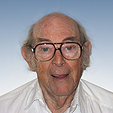
Lloyd WallaceLloyd V. Wallace, Ph.D, Emeritus Astronomer at the Kitt Peak National Observatory, passed away on October 26, 2015 in Tucson. Born in 1927 in Detroit, Michigan, in humble circumstances, Lloyd developed an early interest in solar and planetary astronomy and was a protégé of Ralph Nichols, a physics professor at the University of Western Ontario. Later he moved back to the United States and obtained his Ph.D in Astronomy at the University of Michigan in 1957 under Leo Goldberg. It was while he was at the University of Michigan that he met and married his wife, Ruth. At various times in his early career, and as the result of a complex series of events, he held Canadian, British, and United States citizenships and even found time to become an expert professional electrician. On acquiring his degree he obtained a position with Joe Chamberlain at the Yerkes Observatory and began a lifetime association with Chamberlain and Don Hunten (then a visitor to Yerkes) in atmospheric and spectroscopic research. In 1962 they moved to Tucson where Chamberlain became the head of the Space Division at the Kitt Peak National Observatory, a unit set up by the first director, Aden Meinel, to apply advances in technology to astronomical research. Lloyd was hired as the principal experimenter in the observatory’s sounding rocket program, which was set up by the National Science Foundation to provide staff and visitor access to the upper atmosphere for research purposes. With this program he supervised a series of 39 Aerobee rocket flights from the White Sands Missile range to investigate upper atmosphere emissions, aeronomic processes, and make astronomical observations over a period of about 10 years. He was also involved in the first attempts to establish a remotely controlled 50&rdquo telescope on Kitt Peak and efforts within the Division to create an Earth orbiting astronomical telescope. In parallel with these activities Lloyd conducted research which was largely focused on spectroscopic investigations. In the early days these included measurement of upper atmospheric emissions, particularly visual dayglow, the discovery of Raman lines in Uranus, Lightning spectrum, and auroral emissions. During this time he also pursued theoretical studies of resonant line transfer and some of the first modelling of the thermal structure of outer planet atmospheres. With the conclusion of the rocket program he turned his attention to high-resolution studies of the sun and cool stars and to long-term study of the variability of atmospheric pollutants (HCl, HF. CO2) over Kitt Peak. His solar and cool star studies led to the production of several high-resolution digital atlases extending from the UV to the thermal IR, and in addition, studies of line variability and the molecular content of sunspots. Lloyd was a very private and genuine person, but with a very sharp wit. He was highly productive with 135 published papers bearing his name.
Giovanni Picardi 1936-2015

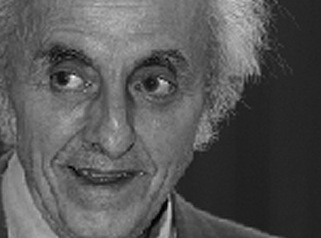
Giovanni Picardi

On the night of August 16th Prof. Giovanni Picardi passed suddenly away. Born in 1936  
Prof Picardi has been during all his long career a brilliant and innovative radar scientist and
an admired teacher at the University of Rome Sapienza.  Among the many radar projects he
carried on, he has provided fundamental contributions to all the radars presently operating
around other bodies of the Solar System and planetary radar sounding would not have 
developed into the field of study we see today without his ingenuity and work. What he has 
done and what he has given to radar science will remain for the present and future students 
and scientists and the seeds of his activity will remain in the Italian and International community.

Enrico Flamini

Raul A. Baragiola 1945-2015

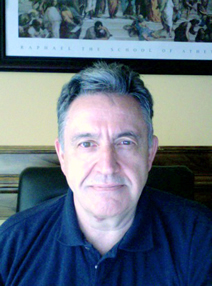
Raul A. BaragiolaA man of diverse interests and avid curiosity, Raúl A. Baragiola, the Alice and Guy Wilson Chair Professor of Materials Science at the University of Virginia, passed away 21 June 2015, only few months after his seventieth birthday. Raúl began his career at the Balseiro Institute in Bariloche, Argentina, studying electron emission from solid materials, later expanding his expertise to ion, electron, and photon interactions with surfaces. His interest in the surface properties of semi-conductors and insulators led him to the field of Space and Planetary Science, where for the last 25 years he studied the interaction of radiation with condensed ices, minerals, and extraterrestrial materials.

Born 31 March, 1945, Raul came to the US after working many years at the Centro Atómico in Bariloche, Argentina when concerns about the Argentina’s political stability and the safety of his family lead him to emigrate. He joined Ted Madey’s laboratory at Rutgers in 1988. He settled permanently at the University of Virginia (UVa) to direct the Laboratory for Astrophysics and Surface Physics (LASP) in 1990.

At UVa, Raúl started working on electronic sputtering from condensed gases and water ice in close collaboration with R. E. Johnson (UVa) and Walter Brown (AT & T Bell Laboratory), but he soon initiated key experiments designed to explore the complexities of sputtering of water ice. He had notable success in studying water ice photodesorption induced by Lyman-alpha light and its implications for interstellar ices. Subsequent efforts in a similar vein included investigating the existence of condensed O2 on Ganymede, measuring the sputtering yield of various ices, and characterizing the physical and chemical effects of radiations on laboratory analogs of planetary ices, while making laboratory data available to guide interpretation of astronomical spectra. In collaboration with R. W. Carlson (JPL), results from ion irradiation of water ice were used to explain the infrared signature of hydrogen peroxide on the surface of Europa. Raúl made numerous other significant research contributions towards understanding of the properties of planetary and interstellar water ice and the effects of radiation on these extraterrestrial surfaces. Recent ongoing research centered on laboratory astrochemistry, focusing on the synthesis, destruction and sputtering of plethora of condensed ices which include H2, CO, CO2, CH4, NH3, O2, O3, H2O2 and more complex species by ion and UV irradiation.

In collaboration with Lucy McFadden (NASA-Goddard) to understand the sulfur deficit on the surface of the Eros during NEAR’s encounter, Raul initiated research focused on the effects of space weathering on airless bodies. The combined in situ ability to measure reflectance, surface chemistry, and sputtered species due to solar-wind type ion irradiation was a hallmark feature of Raúl’s laboratory. In particular, Raúl was interested in the formation of Fe nano-particles and the effects of Earth’s atmosphere on ion bombarded silicates and minerals. With the discovery of water on the lunar surface, Raúl investigated formation for -OH species by solar wind proton irradiation of silicate minerals. Recent experiments characterizing electron emission from lunar soils echoed his early work on electron-induced secondary electron measurements.

Raúl was a prominent member in the Planetary Science and the Laboratory Astrophysics community and a frequent, vocal participant at DPS, AGU, and LPSC conferences. He was a Fellow of the American Physical Society (APS) and the Institute of Physics (London), receiving a Lifetime Achievement Award from the International Committee on Atomic Collisions in Solids and a NASA Achievement Award for his work on the Cassini mission. He served as a science member on the Cassini Plasma Spectrometer (CAPS) team, collaborating with D. T. Young at Southwest Research Institute (SwRI). Over the course of his career, Raúl published ~ 200 refereed scientific articles and book chapters, contributed to more than 140 conferences presentations and 80 invited lectures, advised more than 40 students and post-doctoral researchers on multiple continents, and collaborated with more research groups than is possible to name. His scientific legacy endures through them.

He leaves behind his dear wife of 46 years, Beatriz; three children: Verena, Valeria, and Pablo; his three precious grandchildren: Maya, Ella, and Leo who were the pride and joy of his later life; and his family of students and post-docs. All of whom will greatly miss Raul’s ability to simplify deeply complex problems, as well as his passion for life, philosophy, and wicked sense of humor.

————————————-

Catherine Dukes – Research Scientist – Laboratory for Astrophysics and Surface Physics – UVa

Ujjwal Raut – Research Scientist – Laboratory for Astrophysics and Surface Physics – UVa

Claudia J. Alexander 1959-2015

Claudia J AlexanderClaudia J. Alexander (1959–2015), Ph.D. was a research scientist specializing in geophysics 
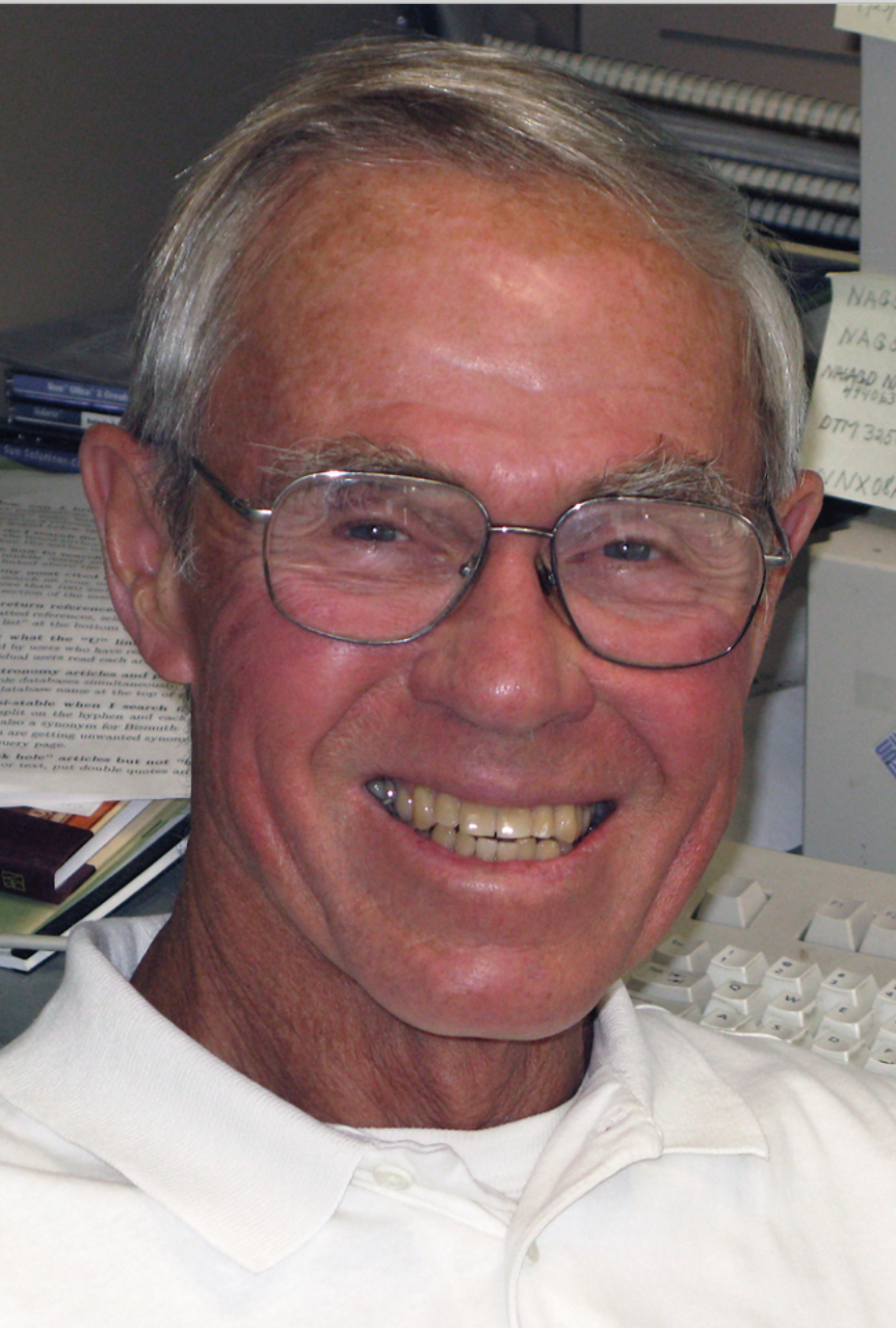
and planetary science. She has worked for the United States Geological Survey and the 
National Aeronautics and Space Administration. As member of the technical staff at the Jet 
Propulsion Laboratory, she was the last project manager of NASA’s Galileo mission to Jupiter 
and until the time of her passing had served as project scientist of NASA’s role in the European 
led Rosetta mission to study comet 67P/Churyumov-Gerasimenko. Claudia was the 17th African 
American woman to get a PhD in physics or astronomy (http://www.aawip.com/physics-astro-only-list.html)
and the winner was several awards, including the Emerald Honor for Women of Color in 
Research & Engineering by Career Communications Group, Inc.at the National Women of Color 
Research Sciences and Technology Conference. She was also very active in education and outreach, 
and a mentor to several younger scientists. Our condolences go out to her family, co-workers and friends 
at this time.

Stanton J. Peale 1937-2015

Stanton J PealeStanton J. Peale passed away on May 14, 2015 in Santa Barbara from complications of leukemia. He was 78. Stan was surrounded by family and friends prior to and during his passing. He was a kind and brilliant planetary scientist with expertise in dynamics and geophysics. His career spanned over five decades. After earning his PhD at Cornell University in 1965, he took a faculty position at the University of California, Los Angeles, and then at the University of California, Santa Barbara, where he worked from 1968 until 2015. His most recent work was submitted for publication on May 11, 2015. His contributions include the prediction of widespread volcanism on Jupiter’s moon Io, the derivation of a general theoretical framework that governs the rotational states of bodies subject to tides, the study of tidal evolution in satellite systems, and the development of an ingenious procedure to determine the size and state of Mercury’s core. He was also a pioneer in the study of extrasolar planets, both in terms of their dynamics and their detection by microlensing. Stan’s work illustrated the power of physics to probe the interiors of planets. Stan was awarded the Newcomb Cleveland Prize (1979), the James Craig Watson Medal (1982), and the Brouwer Award (1992). He was elected to the National Academy of Sciences in 2009. He was a wonderful, beloved colleague and will be deeply missed.
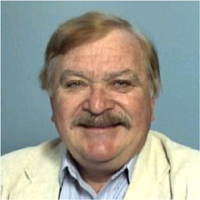
Arvydas J. Kliore 1935-2014

Arvydas J. KlioreIt is with great sadness that we report the loss of our colleague, Dr. Arvydas Kliore, who died suddenly on December 7, 2014 of natural causes. Arv was born in Lithuania and immigrated to the United States in 1949. He joined the engineering staff at JPL in 1962, where he had a distinguished career for over half a century with numerous publications and awards. A JPL Senior Research Scientist for more than 25 years, he was a pioneer in planetary radio science, especially in the study of planetary atmospheres and ionospheres, beginning with the first NASA planetary mission. Arv was a principalinvestigator or team member on every Mariner mission, on Pioneer 10/11, and on Pioneer Venus, and he served as Deputy Team Leader for the Galileo Radio Propagation Science Team. Most recently, he was a member of the Cassini Radio Science Team from 1990, serving as team leader for more than 20 years. Over his career, Arv attended nearly every DPS meeting in its 47-year history, a testament to his remarkable level of dedication and commitment to the community of planetary scientists.

Arv set high standards for scientific achievement, generosity, modesty, personal integrity, and an infectious enthusiasm for life. Those of us who had the privilege of working with him for decades have benefited from his wisdom, fairness, sense of perspective grounded in long experience, and unstinting loyalty and support. We miss him greatly, and will carry his memory and many contributions with us.

– Dick French, on behalf of the Cassini Radio Science Team