
For the Media
- August 5, 2013 Press Release: DPS Denver Meeting Media Invitation
- September 13, 2013 Press Release: DPS Denver Meeting Second Media Invitation
13 September 2013
** Contact details appear below. **
PRELIMINARY PRESS-CONFERENCE PROGRAM SET FOR THE
45TH MEETING OF THE AAS DIVISION FOR PLANETARY SCIENCES
New discoveries in planetary science, covering everything from Mercury near the Sun to giant planets circling distant stars, will be featured in three press conferences at the 45th annual meeting of the Division for Planetary Sciences (DPS) of the American Astronomical Society (AAS) at the Sheraton Denver Downtown Hotel, 1550 Court Place, Denver, CO 80202, from Sunday, 6 October, through Friday, 11 October 2013. More than 700 planetary scientists, astronomers, educators, and journalists are expected. Twitter hashtag: #dps45.
The AAS/DPS offers complimentary press registration to bona fide working journalists and public-information officers (PIOs); see details below.
Main meeting website (including information on travel & lodging):
http://aas.org/meetings/45th-meeting-division-planetary-sciences
Search or browse the meeting program:
http://aas.org/meetings/dps45/science_program
Meeting Highlights
There will be a wide range of invited and prize talks by distinguished planetary scientists, including “Voyager at the Edge of Interstellar Space” by Ed Stone (Caltech), “End-of-the-World: Using Science to Dispel Public Fear” by David Morrison (NASA Astrobiology Institute), “The Chelyabinsk Airburst Event” by Mark Boslough (Sandia National Labs), “Titan’s Spectacular Volte-Face” by Caitlin Griffith (Univ. of Arizona), and “Finding Near-Earth Objects Before They Find Us” by Don Yeomans (Jet Propulsion Lab).
Special events include a reading of “And the Sun Stood Still,” a new play about Copernicus by science writer Dava Sobel, performed by the Boulder Ensemble Theater Company; Agency Night with John Grunsfeld (NASA) Jim Green (NASA), Maria Womack (NSF), and Yvonne Pendleton (NASA); and workshops on the New Horizons Earth-Based Pluto Observing Campaign and professional-amateur collaboration.
Complimentary Press Registration
Registration is free for bona fide media representatives; please contact DPS Press Officer Dr. Vishnu Reddy ([email protected]) prior to your arrival in Denver.
Press Office
A press office will be set up at the Sheraton in Plaza Court 7 and will be open to journalists during normal conference hours. Among other amenities, it will offer workspace and wireless Internet connectivity.
During the meeting you may reach DPS Press Officer Dr. Vishnu Reddy via cell phone at +1 808-342-8932. Assisting in the press room is AAS Press Officer Dr. Rick Fienberg ([email protected], cell +1 857-891-5649).
Press Conferences
News briefings for the media will be conducted during the lunch break (12:00 pm to 1:30 pm MDT) in Governor’s Square 11, Monday through Wednesday, 7-9 October.
Listed below are the press-conference speakers and topics; these remain subject to change, and several additional speakers have been invited.
All findings are embargoed until the time of presentation at the meeting. “Time of presentation” means the start time of the oral or poster session in which the paper will be given, or the time of the corresponding press conference (if any), whichever comes first. The complete AAS/DPS embargo policy is online here: http://aas.org/media/press-releases/embargo-policy-aas-division-meetings
Note: All new discoveries are subject to confirmation by independent teams of scientists. Inclusion here does not imply endorsement by the American Astronomical Society and/or the Division for Planetary Sciences. The AAS and DPS do not endorse individual scientific results.
Monday, 7 October, 12 noon to 1:30 pm MDT
* Apostolos Christou, “A Genetic Cluster of Martian Trojan Asteroids”
* Benoit Noyelles, “Mercury’s Entrapment into the 3:2 Spin-Orbit Resonance”
* Feng Tian, “Atmospheres of Potentially Habitable Planets”
Tuesday, 8 October, 12 noon to 1:30 pm MDT
* Maria Gritsevich, “A Comprehensive Study of the Chelyabinsk Meteorite”
* Amy Mainzer, “Recent Results and Observations of Tiny Near-Earth Objects”
* Mark Showalter, “New Hubble Results on Neptune’s Moons and Rings”
Wednesday, 9 October, 12 noon to 1:30 pm MDT
* Nadine Barlow, “Origin of Martian Low-Aspect-Ratio Layered Ejecta Craters”
* Mona Delitsky, “Diamond in Saturn’s Deep Atmosphere”
* Harold Levison, “Forming the Small Satellites of Pluto”
* Jian-Yang Li, “Early Characterization of Comet C/2012 S1 (ISON)”
Remote Access to Press Conferences via Webcast
Journalists unable to attend the meeting in person may tune in to our briefings streamed live on the Web. Since the webcast includes audio, video, and PowerPoint slides, you must have a broadband (high-speed) Internet connection to watch and listen. Also, your Web browser must have the free Adobe Flash plug-in (http://get.adobe.com/flashplayer/).
The webcast also includes a chat window whereby remote participants may ask questions. We can’t guarantee that all questions received from webcast viewers will be asked aloud — it depends on how much time we have and how many questions we’re getting from onsite reporters.
AAS/DPS Press Conference webcasts:
* http://aas.org/media-press/aas-press-conference-webcasts
* Make sure your pop-up blocker is disabled or that it allows pop-ups from aas.org.
Instructions:
* Password: Contact DPS Press Officer Dr. Vishnu Reddy ([email protected]) or AAS Press Officer Dr. Rick Fienberg ([email protected]) for the password, which is for journalists only; the AAS/DPS pays by the “viewer hour,” so we can’t afford to open the live webcast to the public. After the meeting, archived webcasts will be freely available publicly via our online archive (http://aas.org/media-press/archived-aas-press-conference-webcasts).
* Once the webcast window opens, press the Play (>) button.
* Press the Open Chat Window button. You’ll be asked to enter your name; please use your real first and last names, not a cutesy Internet nickname.
* You can resize the chat window and move it to any convenient position on your screen.
* To ask a question, type it into the input box near the bottom of the chat window and click the Send button.
Contact:
Dr. Vishnu Reddy
DPS Press Officer
+1 808-342-8932
[email protected]
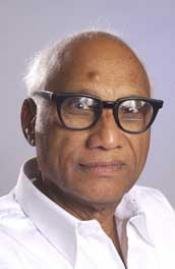 Our colleague and friend Bishun Khare died quietly on August 20 at the age of 80. Bishun is widely known for his early work on organic solid residues (tholins) related to the aerosols in planetary atmospheres and the interstellar medium, performed for many years at Cornell University in collaboration with Carl Sagan. Their 1984 paper gave the optical constants of Titan tholin from the X-ray to microwave region, and has served as a fundamental input to modeling work that included planetary surfaces in addition to atmospheric aerosols. That key paper has received well over 300 citations, and has stimulated much additional research on tholins, both in the US and in Europe. In 1996, Bishun moved from Cornell to NASA Ames Research Center on a Senior National Research Council fellowship, and subsequently joined the SETI Institute. He continued his research on many topics in his Ames lab, and mentored a great number of students, including supervising the thesis work of graduate students. Bishun was a patient, kind, and sharing individual, who loved to talk about science, especially the organic materials in Nature and those he could synthesize in his lab.
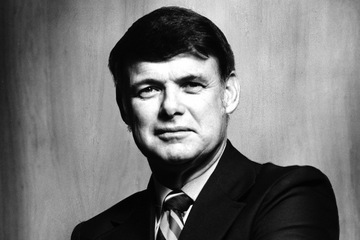 Bruce Murray, former JPL Director, co-founder of the Planetary Society, and Caltech Emeritus Professor passed away on August 29.
 It is with great sadness that we note the unexpected passing of
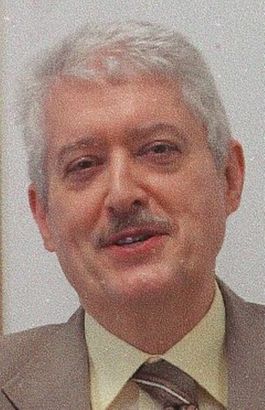 It is with great sadness that we announce the death from brain cancer Dr. Jeffrey K. Wagner, passed away July 8. He received a Bachelor of Science in astronomy from Penn State University in 1974 and a Ph.D. in geology and planetary sciences from the University of Pittsburgh in 1980. Wagner was a Professor of Astronomy and Geology at Bowling Green State University Firelands College for 30 years. Jeff’s name is familiar to everyone in the field of spectroscopy of planetary surfaces. His seminal work on the ultraviolet reflectances of planetary materials, which formed his Ph.D dissertation, opened a new field in planetary spectroscopy. He was the author of the book “Introduction to the Solar System,” which was published in 1991 and often used in the classroom by his students.
 It is with great sadness I have to report the passing of Dr Hasso Niemann, who was a founding father of atmospheric experiments and mass spectrometry at the center which ultimately led to the successful SAM experiment currently operating on the Curiosity Rover. Hasso died peacefully in his sleep early Thursday, July 11 morning after a brief battle with cancer.
 David S. McKay, Chief Scientist for Astrobiology at the NASA Johnson Space Center, passed away on February 20, 2013. During the Apollo program, McKay gave the first men to walk on the Moon training in geology. In recent years, McKay was perhaps best known for being the first author of a scientific paper postulating past life on Mars on the basis of evidence in martian meteorite ALH 84001. This paper has become one of the most heavily cited papers in planetary science. The NASA Astrobiology Institute was founded partially as a result of community interest in this paper and related topics.
 Stephen Eugene Dwornik passed away peacefully on December 17, 2012. Dwornik was born July 3, 1926, in Buffalo, New York, to Stephen Dwornik and Helena Januszkiewicz Soltys.