DPS-EPSC 2011 JOINT MEETING : CALL FOR PAPERS
La Cité Internationale des Congrès Nantes Métropole
03-07 October 2011, Nantes, France
Abstract deadline: 31 May, 2011.
Dear colleagues,
We invite the world-wide community of planetary scientists to submit an abstract for presentation of their recent work at the joint EPSC-DPS 2011 Meeting, which will take place at La Cité Internationale des Congrès Nantes Métropole in Nantes, France, 3-7 October 2011. This modern congress centre is very close to the centre of Nantes, an attractive city, the historical capital of Brittany, on the west coast of France, about 2 hours by high speed train from Paris.
The meeting will consist of oral and poster sessions, as well as workshop-style sessions. We expect a very well attended meeting, with many high quality presentations.
The current list of over 70 sessions is organized around the following topics:
- TP Terrestrial Planets
- GP Giant Planet Systems
- MG Magnetospheres and Space Physics
- MT Missions and Techniques
- EO Exoplanets and Origins
- AB Astrobiology
- SB Small Bodies
- PD Planetary Dynamics
- LF Laboratory and Field Investigations
- OEA Outreach, Education, and Amateur Astronomy
The scientific program and abstract submission are accessible at:
http://meetingorganizer.copernicus.org/epsc2010/sessionprogramme
Please browse the list of sessions and identify the session that most closely matches your area of interest; your abstract can then be submitted directly to that session. The session conveners, together with the Scientific Organizing Committee, will finalize the science program shortly after the abstract deadline.
Travel funding will be available for students: EPSC will make a contribution to a large number of European PhD students to support their attendance; DPS will provide support to recipients of the Hartmann Student Travel Grant (see hereafter).
Information on registration, accommodation, travel routes, visa requirements and social events will also become available shortly onthe meeting web site.
Some specifications of the EPSC-DPS Joint meeting:
- The five-day meeting will be organized in parallel sessions of oral and poster presentations as well as workshops related to research, teaching and outreach in the planetary sciences.
- There is no limitation in the number of abstract submissions per author and no abstract fees will be levied.
- You will be asked to prepare your abstract as PDF file locally on your own computer, using the templates supplied on the web site, and then to submit the PDF you have generated. You are encouraged to make use of the two pages available. The abstracts will be available on line and to search engines.
- You will be able to enter on line and edit and update your abstract after submission
Please forward this message to colleagues who may be interested. We look forward to seeing you in Nantes.
With best wishes,
Manuel Grande and Renu Malhotra on behalf of the Scientific Organizing Committee
Mario Ebel on behalf of Copernicus Meetings
—————————–
Hartmann Travel Grants for the join DPS/EPSC meeting
Starting with a generous contribution from William K. Hartmann, followed by member contributions and matching funds from the DPS Committee, a limited number of student travel grants are made available to assist toward participating at the annual DPS meeting. Travel grants are primarily intended for students, but post-doctoral scientists without other means of support will also be considered. Travel grants for the Nantes meeting will be no more than approximately five hundred dollars and are intended to provide a supplement that makes the difference on whether or not a student is able to attend the annual meeting. In some cases the travel grant may be requested to cover the meeting registration fee. Preference is given to students who have not received a Travel Grant in the past. Because of the joint meeting there will be several changes to the DPS travel grant program for this meeting only:
- DPS travel grants will be limited to students or post-docs attending US institutions only. We have a reciprocal agreement with the EPSC that they will fund European (and other foreign) students.
- The deadline for applications will be will be very early this year. Application deadline is 9:00 PM PDT, Friday May 20, 2011. Late applications cannot be accepted. All notifications will be made on or before June 3, 2011.
Please see the Hartmann Travel Grant page at the DPS web site for detailed information on submittal and format.

 James L. Elliot, Professor of Planetary Astronomy and Physics at MIT, has passed away Wednesday night March 2, 2011. Jim was one of the pioneers in using stellar occultations to probe planetary atmospheres and the physical properties of small bodies in the outer solar system and beyond. Among his accomplishments are the discoveries of the ring system of Uranus and the atmosphere of Pluto. He received his undergraduate degree from MIT in 1965 and his Ph.D. from Harvard in 1972. Before returning to MIT in 1978, he was a postdoc and faculty member in the Astronomy Department of Cornell University. Jim was a wonderful mentor and teacher, and was especially supportive of women in astronomy. We will miss him deeply.
 Donald Mount Hunten passed away on the 14th of December, 2010.
 Brian Geoffrey Marsden was born on August 5, 1937, in Cambridge, England. He was an undergraduate at New College, University of Oxford. By the time he received his undergraduate degree, in mathematics, he had already developed somewhat of an international reputation for the computation of orbits of comets, including new discoveries, and spent part of his first two undergraduate summer vacations working at the British Nautical Almanac Office.
 Dr. Ralph Belknap Baldwin died peacefully on October 23, 2010, at age 98.
 Thomas J. Ahrens, one of the leading figures in mineral physics, geophysics, and planetary sciences during the Twentieth Century and a member of the Seismological Laboratory, passed away on November 24, 2010 at the age of 74.
 The French astronomer and aeronaut Audouin Dollfus passed away October 1, 2010 in Versailles, France, at the age of 85. Born November 12, 1924 in Paris and son of an aeronaut, he built his first refracting telescope at the age of 14. Graduated in Mathematical Sciences and Physics, he started his career at the Observatory of Paris-Meudon as a student of astronomer Bernard Lyot. At a time when astronomy was focusing on deep sky, Dollfus turned to the study of the Solar System, and became a worldwide expert on the subject. He created the Laboratory of Solar System Physics at Meudon, studying all planets, with special interest in Mars, Venus, Mercury, Saturn and Jupiter. He also contributed to the study of the Sun through the development of a coronagraph that was used by many spacecraft missions. Dollfus led astronomical campaigns both at the Observatory of Meudon and the Pic-du-Midi Observatory. He discovered Janus, 10th satellite of Saturn in 1966, and asteroïd 2451 bears his name. The breadth and reach of his research and his numerous (330) scientific publications allowed him to contribute to many international committees.
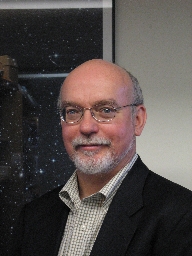 The DPS joins the astronomical community in mourning the untimely death of John Huchra, distinguished astronomer and Past President of the AAS, on October 8. John was a friend of the DPS in our time of financial crisis, when he was serving as the AAS President. He will be sorely missed.