Lucas Kamp 1946-2014

Lucas KampDr. Lucas Kamp died of cancer on Sunday, March 30, 2014. He had been ill for approximately 1 year, however he continued his work planning for MIRO Rosetta cometary observations and analyzing Galileo NIMS data right up until his death.

Lucas was born on March 15, 1946 in Kingston-on-Thames, England, U.K.  He was raised in the Netherlands, and spoke four languages, English, Dutch, German, and French.

Dr. Kamp received an A.B. in Astrophysical Sciences from Princeton University in 1968. Following that degree he received a Masters degree in 1970 and a Ph.D.in 1972 from the University of Chicago, both in Astronomy and Astrophysics.

From 1972-1974, Dr. Kamp was an NRC Research Affiliate at the NASA Goddard Space Flight Center in Greenbelt, MD. His work consisted of research in model stellar atmospheres, spectroscopy, and radiative transfer, specializing in non-LTE effects in early-type stars.

From 1974 – 1980, he was an Assistant Professor of Astronomy at Boston University. There he taught and worked on the analyses of IUE satellite data. Dr. Kamp joined JPL/Caltech in January 1981 where he remained up until his death. During this time he spent two sabbaticals at Oxford University where he and Professor Fred Taylor modelled near-infrared thermal emission emanating from Venus’s deep atmosphere and surface. During his time at JPL, he worked on numerous spacecraft projects including Voyager, Galileo, Viking orbiter, EPOXI, Rosetta and JUNO. He was a major contributor to the NIMS effort, particularly in the geometric and photometric aspects of NIMS hyperspectral image cubes.

Dr. Kamp was an author or co-author of 190 scientific publications. He received awards from NASA for his work on Cassini, Galileo, Rosetta and EPOXI.  He received the NASA Individual Exceptional Service Medal for contributions to Galileo NIMS data processing in October 2003.

Prepared by S. Gulkis, B. Carlson, R. Lopes

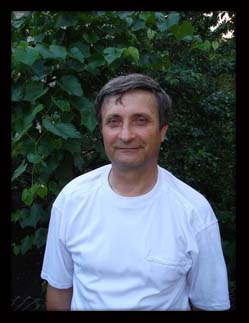
Feodor Velichko 1957-2013

Feodor VelichkoFeodor Velichko, the Leading Researcher of Institute of Astronomy of Kharkiv National University (Ukraine) died suddenly on Oct 1, 2013 in the age of 56. He was an expert in photometry and polarimetry of asteroids and comets and took part in many international observing programs devoted to physical studies of small bodies.

Feodor Velichko’s personal page
http://www.astron.kharkov.ua/staff/Velichko_F/

(transmitted by Irina Belskaya)

Final Press Briefings Update for DPS Denver Meeting

 FINAL PRESS-CONFERENCE PROGRAM FOR THE
45TH MEETING OF THE AAS DIVISION FOR PLANETARY SCIENCES

Planetary scientists are now converging on Denver, Colorado, for next week’s 45th annual meeting of the Division for Planetary Sciences (DPS) of the American Astronomical Society (AAS). The meeting begins on Sunday, 6 October, and lasts through Friday, 11 October, at the Sheraton Denver Downtown Hotel, 1550 Court Place, Denver, CO 80202. Some 600 planetary scientists, astronomers, educators, and journalists are expected. Twitter hashtag: #dps13.

Main meeting website (including information on travel & lodging):
http://aas.org/meetings/45th-meeting-division-planetary-sciences

Search or browse the meeting program:
http://aas.org/meetings/dps45/science_program

Earlier media advisories:
press

Complimentary Press Registration

The AAS/DPS offers complimentary press registration to bona fide working journalists and public-information officers (PIOs); please contact DPS Press Officer Dr. Vishnu Reddy ([email protected]).

Press Office

A press office will be set up at the Sheraton in Plaza Court 7 and will be open to journalists during normal conference hours. Among other amenities, it will offer workspace and wireless Internet connectivity.

During the meeting you may reach DPS Press Officer Dr. Vishnu Reddy via cell phone at +1 808-342-8932. Assisting in the press room is AAS Press Officer Dr. Rick Fienberg ([email protected], cell +1 857-891-5649).

Press Conferences

News briefings for the media will be conducted during the lunch break (12:00 pm to 1:30 pm MDT) in Governor’s Square 11, Monday through Wednesday, 7-9 October.

Listed below are the press-conference speakers and topics. All findings are embargoed until the time of presentation at the meeting. “Time of presentation” means the start time of the oral or poster session in which the paper will be given, or the time of the corresponding press conference (if any), whichever comes first. The complete AAS/DPS embargo policy is online here:http://aas.org/media/press-releases/embargo-policy-aas-division-meetings

Note: All new discoveries are subject to confirmation by independent teams of scientists. Inclusion here does not imply endorsement by the American Astronomical Society and/or the Division for Planetary Sciences. The AAS and DPS do not endorse individual scientific results.

Monday, 7 October, 12 noon to 1:30 pm MDT

* Apostolos Christou, “A Genetic Cluster of Martian Trojan Asteroids”
* Torrence Johnson, “Effects of Carbon Chemistry on Exoplanet Habitability”
* Franck Marchis, “New Insights on Main Belt Triple Asteroid (87) Sylvia”
* Benoit Noyelles, “Mercury’s Entrapment into the 3:2 Spin-Orbit Resonance”
* Feng Tian, “Atmospheres of Potentially Habitable Planets”

Tuesday, 8 October, 12 noon to 1:30 pm MDT

* Nadine Barlow, “Origin of Martian Low-Aspect-Ratio Layered Ejecta Craters”
* Maria Gritsevich, “A Comprehensive Study of the Chelyabinsk Meteorite”
* Brian Jackson, “A Survey for Very-Short-Period Planets in the Kepler Data”
* Amy Mainzer, “Recent Results and Observations of Tiny Near-Earth Objects”
* Mark Showalter, “New Hubble Results on Neptune’s Moons and Rings”

Wednesday, 9 October, 12 noon to 1:30 pm MDT

* Mona Delitsky, “Diamond in Saturn’s Deep Atmosphere”
* Harold Levison, “Forming the Small Satellites of Pluto”
* Jian-Yang Li, “Early Characterization of Comet C/2012 S1 (ISON)”
* Kevin Walsh, “Will Comet ISON Survive Its Close Encounter with the Sun?”

Remote Access to Press Conferences via Webcast

Journalists unable to attend the meeting in person may tune in to our briefings streamed live on the Web. Since the webcast includes audio, video, and PowerPoint slides, you must have a broadband (high-speed) Internet connection to watch and listen. Also, your Web browser must have the free Adobe Flash plug-in (http://get.adobe.com/flashplayer/).

The webcast also includes a chat window whereby remote participants may ask questions. We can’t guarantee that all questions received from webcast viewers will be asked aloud — it depends on how much time we have and how many questions we’re getting from onsite reporters.

AAS/DPS Press Conference webcasts:
* http://aas.org/media-press/aas-press-conference-webcasts
* Make sure your pop-up blocker is disabled or that it allows pop-ups from aas.org.

Instructions:
* Password: Contact DPS Press Officer Dr. Vishnu Reddy ([email protected]) or AAS Press Officer Dr. Rick Fienberg ([email protected]) for the password, which is for journalists only; the AAS/DPS pays by the “viewer hour,” so we can’t afford to open the live webcast to the public. After the meeting, archived webcasts will be freely available publicly via our online archive (http://aas.org/media-press/archived-aas-press-conference-webcasts).
* Once the webcast window opens, press the Play (>) button.
* Press the Open Chat Window button. You’ll be asked to enter your name; please use your real first and last names, not a cutesy Internet nickname.
* You can resize the chat window and move it to any convenient position on your screen.
* To ask a question, type it into the input box near the bottom of the chat window and click the Send button.

Contact:
Dr. Vishnu Reddy
DPS Press Officer
+1 808-342-8932
[email protected]

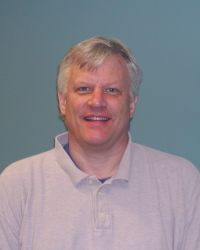
Gary B. Hansen 1953-2013

Gary B. HansenI have been informed that Dr. Gary B. Hansen passed away late Thursday evening, September 26, from complications of ALS. He died while sitting at his computer, working on some science or technical issue. This was a highly appropriate setting for Gary. Gary was a hard working and very dedicated scientist who contributed to a number of parts of the Planetary Sciences. He loved the work and the science. Working, I am sure, is where he wanted to be (“with his boots on,” so to speak).

Gary B. Hansen was born 12 July 1953 in Denver Colorado. He earned a BS in Engineering and Applied Science from the California Institute of Technology, 1975, an M.S. in Aeronautics and Astronautics, 1986, and a Ph.D. in Geophysics, 1996, both from the University of Washington. He held a variety of positions throughout his career, starting as an engineer for CBS television in Los Angeles 1976-79, then at the jet Propulsion laboratory, Pasadena CA (Asst. cognizant engineer for the Galileo spacecraft flight computer). At JPL he also performed considerable laboratory work on the properties of CO2 ice, which eventually supported his Ph.D., dissertation. In 1996, he came to work with me at the University of Hawaii as a researcher in my Division of Planetary Geosciences and worked closely with me and my graduate students for six years before I retired from the University and set up my own Institute near Winthrop, Washington. Gary moved to the University of Washington, became a Research Faculty there, but we continued to work on joint projects.

Gary had a long connection with and loved Seattle, and he participated in its music and sports scenes as well as his research. He owned a house there even when he worked at the University of Hawaii. The University of Washington was the natural place for him to be associated and the Department of Earth and Space Science (ESS) found a way to enable this. He felt comfortable there and contributed to several parts of the Department and its research effort, in addition to working on his and our planetary science projects. As his health failed, the ESS provided what assistance and support they could to enable his participation until the end. For this I am sure Gary, as well as those of us who knew Gary, were very appreciative.

Gary’s specialty became radiative transfer, especially in multi scattering media, such as CO2 and H2O ices. This was essential to the study of the outer solar system satellites. When Gary came to work with me in 1996, we were just beginning the observational phase of the Galileo mission and its infrared spectrometer, NIMS. As the spectra rolled in, we had a feast, and we made several important discoveries. This would not have happened without Gary’s deep understanding of the physics behind the signals the spectrometer was receiving. Further, Gary was a wizard at developing calibrations and corrections for this finicky instrument and its idiosyncrasies, and he worked long, hard hours developing credibility for the NIMS data (and later for the VIMS data too).

Gary was an essential component to the growth and development of several graduate students and post doctoral fellows, several of whom are professional scientists in their own right today. They too, I am sure, will join in recognizing our appreciation for Gary’s contributions and his friendship.

Composed by Tom McCord


Second Media Invitation for the 45th DPS Meeting

For the Media

  • August 5, 2013 Press Release: DPS Denver Meeting Media Invitation
  • September 13, 2013 Press Release: DPS Denver Meeting Second Media Invitation

13 September 2013

** Contact details appear below. **

PRELIMINARY PRESS-CONFERENCE PROGRAM SET FOR THE
45TH MEETING OF THE AAS DIVISION FOR PLANETARY SCIENCES

New discoveries in planetary science, covering everything from Mercury near the Sun to giant planets circling distant stars, will be featured in three press conferences at the 45th annual meeting of the Division for Planetary Sciences (DPS) of the American Astronomical Society (AAS) at the Sheraton Denver Downtown Hotel, 1550 Court Place, Denver, CO 80202, from Sunday, 6 October, through Friday, 11 October 2013. More than 700 planetary scientists, astronomers, educators, and journalists are expected. Twitter hashtag: #dps45.

The AAS/DPS offers complimentary press registration to bona fide working journalists and public-information officers (PIOs); see details below.

Main meeting website (including information on travel & lodging):
http://aas.org/meetings/45th-meeting-division-planetary-sciences

Search or browse the meeting program:
http://aas.org/meetings/dps45/science_program

Meeting Highlights

There will be a wide range of invited and prize talks by distinguished planetary scientists, including “Voyager at the Edge of Interstellar Space” by Ed Stone (Caltech), “End-of-the-World: Using Science to Dispel Public Fear” by David Morrison (NASA Astrobiology Institute), “The Chelyabinsk Airburst Event” by Mark Boslough (Sandia National Labs), “Titan’s Spectacular Volte-Face” by Caitlin Griffith (Univ. of Arizona), and “Finding Near-Earth Objects Before They Find Us” by Don Yeomans (Jet Propulsion Lab).

Special events include a reading of “And the Sun Stood Still,” a new play about Copernicus by science writer Dava Sobel, performed by the Boulder Ensemble Theater Company; Agency Night with John Grunsfeld (NASA) Jim Green (NASA), Maria Womack (NSF), and Yvonne Pendleton (NASA); and workshops on the New Horizons Earth-Based Pluto Observing Campaign and professional-amateur collaboration.

Complimentary Press Registration

Registration is free for bona fide media representatives; please contact DPS Press Officer Dr. Vishnu Reddy ([email protected]) prior to your arrival in Denver.

Press Office

A press office will be set up at the Sheraton in Plaza Court 7 and will be open to journalists during normal conference hours. Among other amenities, it will offer workspace and wireless Internet connectivity.

During the meeting you may reach DPS Press Officer Dr. Vishnu Reddy via cell phone at +1 808-342-8932. Assisting in the press room is AAS Press Officer Dr. Rick Fienberg ([email protected], cell +1 857-891-5649).

Press Conferences

News briefings for the media will be conducted during the lunch break (12:00 pm to 1:30 pm MDT) in Governor’s Square 11, Monday through Wednesday, 7-9 October.

Listed below are the press-conference speakers and topics; these remain subject to change, and several additional speakers have been invited.

All findings are embargoed until the time of presentation at the meeting. “Time of presentation” means the start time of the oral or poster session in which the paper will be given, or the time of the corresponding press conference (if any), whichever comes first. The complete AAS/DPS embargo policy is online here: http://aas.org/media/press-releases/embargo-policy-aas-division-meetings

Note: All new discoveries are subject to confirmation by independent teams of scientists. Inclusion here does not imply endorsement by the American Astronomical Society and/or the Division for Planetary Sciences. The AAS and DPS do not endorse individual scientific results.

Monday, 7 October, 12 noon to 1:30 pm MDT

* Apostolos Christou, “A Genetic Cluster of Martian Trojan Asteroids”
* Benoit Noyelles, “Mercury’s Entrapment into the 3:2 Spin-Orbit Resonance”
* Feng Tian, “Atmospheres of Potentially Habitable Planets”

Tuesday, 8 October, 12 noon to 1:30 pm MDT

* Maria Gritsevich, “A Comprehensive Study of the Chelyabinsk Meteorite”
* Amy Mainzer, “Recent Results and Observations of Tiny Near-Earth Objects”
* Mark Showalter, “New Hubble Results on Neptune’s Moons and Rings”

Wednesday, 9 October, 12 noon to 1:30 pm MDT

* Nadine Barlow, “Origin of Martian Low-Aspect-Ratio Layered Ejecta Craters”
* Mona Delitsky, “Diamond in Saturn’s Deep Atmosphere”
* Harold Levison, “Forming the Small Satellites of Pluto”
* Jian-Yang Li, “Early Characterization of Comet C/2012 S1 (ISON)”

Remote Access to Press Conferences via Webcast

Journalists unable to attend the meeting in person may tune in to our briefings streamed live on the Web. Since the webcast includes audio, video, and PowerPoint slides, you must have a broadband (high-speed) Internet connection to watch and listen. Also, your Web browser must have the free Adobe Flash plug-in (http://get.adobe.com/flashplayer/).

The webcast also includes a chat window whereby remote participants may ask questions. We can’t guarantee that all questions received from webcast viewers will be asked aloud — it depends on how much time we have and how many questions we’re getting from onsite reporters.

AAS/DPS Press Conference webcasts:
* http://aas.org/media-press/aas-press-conference-webcasts
* Make sure your pop-up blocker is disabled or that it allows pop-ups from aas.org.

Instructions:
* Password: Contact DPS Press Officer Dr. Vishnu Reddy ([email protected]) or AAS Press Officer Dr. Rick Fienberg ([email protected]) for the password, which is for journalists only; the AAS/DPS pays by the “viewer hour,” so we can’t afford to open the live webcast to the public. After the meeting, archived webcasts will be freely available publicly via our online archive (http://aas.org/media-press/archived-aas-press-conference-webcasts).
* Once the webcast window opens, press the Play (>) button.
* Press the Open Chat Window button. You’ll be asked to enter your name; please use your real first and last names, not a cutesy Internet nickname.
* You can resize the chat window and move it to any convenient position on your screen.
* To ask a question, type it into the input box near the bottom of the chat window and click the Send button.

Contact:
Dr. Vishnu Reddy
DPS Press Officer
+1 808-342-8932
[email protected]
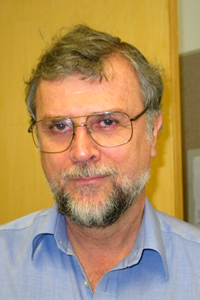
 

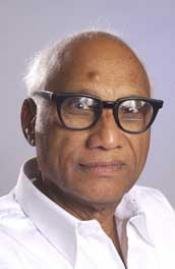
Bishun N. Khare 1933–2013

Bishun KhareOur colleague and friend Bishun Khare died quietly on August 20 at the age of 80. Bishun is widely known for his early work on organic solid residues (tholins) related to the aerosols in planetary atmospheres and the interstellar medium, performed for many years at Cornell University in collaboration with Carl Sagan. Their 1984 paper gave the optical constants of Titan tholin from the X-ray to microwave region, and has served as a fundamental input to modeling work that included planetary surfaces in addition to atmospheric aerosols. That key paper has received well over 300 citations, and has stimulated much additional research on tholins, both in the US and in Europe. In 1996, Bishun moved from Cornell to NASA Ames Research Center on a Senior National Research Council fellowship, and subsequently joined the SETI Institute. He continued his research on many topics in his Ames lab, and mentored a great number of students, including supervising the thesis work of graduate students. Bishun was a patient, kind, and sharing individual, who loved to talk about science, especially the organic materials in Nature and those he could synthesize in his lab.
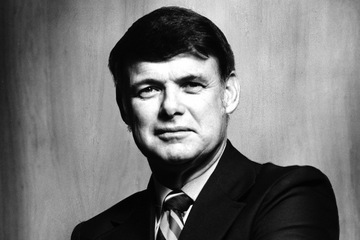
Composed by D. Cruikshank


Bruce Murray 1931-2013

Bruce MurrayBruce Murray, former JPL Director, co-founder of the Planetary Society, and Caltech Emeritus Professor passed away on August 29.
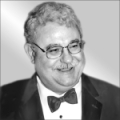
In the words of JPL’s Director Charles Elachi “Bruce was JPL’s fifth Director, serving from 1976 to 1982, but his association with JPL goes back much further. He was a Caltech geologist and a key member of the Mariner 4 Imaging team that captured the first close up image of Mars in 1964. It was only the first of four planetary missions in which he played a vital role as a scientist.
Shortly after Bruce became Director, JPL was the scene for mission operations for the landings of Viking 1 and 2 on Mars. The following year Voyager 1 and 2 were launched, and Bruce led the lab through the Voyagers’ encounters at Jupiter and Saturn. He worked tirelessly to save our nation’s planetary exploration capability at a tumultuous time when there was serious talk of curtailing future missions. Along with Carl Sagan and Lou Friedman, he founded The Planetary Society. Long after returning to Caltech as a professor, he continued to be a strong voice in expressing the importance of space exploration.”

Obituaries have been posted in various websites, including The Planetary Society and the Los Angeles Times.


Michael J. Wargo 1951-2013

Mike WargoIt is with great sadness that we note the unexpected passing of
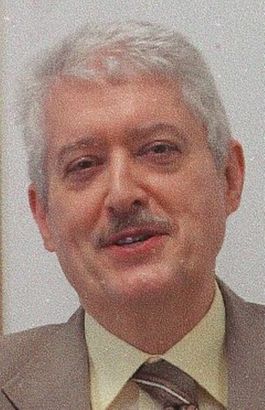
Mike Wargo, Chief Exploration Scientist for NASA’s Human Exploration and Operations Mission Directorate (HEOMD). Mike was a leading contributor to NASA’s human lunar and planetary exploration program. He was involved in many lunar missions, including Lunar Reconnaissance Orbiter and the LCROSS satellite. In his nearly two decades at NASA, he received numerous awards, including the NASA Exceptional Service Medal and seven group achievement awards. He worked tirelessly to integrate science community input into human exploration planning as the primary interface with NASA’s Mars, Lunar, and Small Bodies Assessment Groups. His openness, enthusiasm and energy will be sorely missed. More extensive memoria may be found at:
http://www.lpi.usra.edu/features/wargo/

http://www.legacy.com/obituaries/nytimes/obituary.aspx?pid=166329664#fbL…

NASA is asking the International Astronomical Union to name a crater on the moon in his honor “so his name will be forever enshrined in the heavens.” Gifts may be made to MIT in memory of Michael Wargo for the Department of Materials Science Endowed Fellowship Fund by contacting Bonny Kellerman, [email protected] or at 617-253-9722.

[From the PEN]

Solar Systems In Focus

5 August 2013

** Contact details appear below. **

SOLAR SYSTEMS IN FOCUS:
45TH MEETING OF THE AAS DIVISION FOR PLANETARY SCIENCES,
6-11 OCTOBER 2013, DENVER, COLORADO

The 45th meeting of the Division for Planetary Sciences (DPS) of the American Astronomical Society (AAS) will take place at the Sheraton Denver Downtown Hotel, 1550 Court Place, Denver, CO 80202, from Sunday, 6 October, through Friday, 11 October 2013. More than 600 astronomers and planetary scientists are expected to attend, and they’ll give some 700 presentations to communicate new results obtained on our solar system as well as on extrasolar planetary systems from both ground- and space-based studies. The meeting program includes both oral and poster sessions, along with featured talks from DPS prize winners.

The AAS offers complimentary press registration to bona fide working journalists and public-information officers (PIOs); see details below.

Main meeting website (including information on travel & lodging):
http://aas.org/meetings/45th-meeting-division-planetary-sciences

Search or browse the meeting program:
http://aas.org/meetings/dps45/science_program

DPS embargo policy:
http://aas.org/media/press-releases/embargo-policy-aas-division-meetings

Some specific presentations of interest to the media (authors and presentation dates and times will be available via the meeting program link, above, by late August or early September):

* “End of the World: Using Science to Dispel Public Fear,” David Morrison, NASA Lunar Science Institute
* “Titan’s Spectacular Volte-Face,” Caitlin Griffith, University of Arizona
* “Planets Orbiting M Dwarf Stars: The Most Characterizable Terrestrial Exoplanets Are Also the Most Abundant,” Philip Muirhead, Boston University
* “Mars Science Laboratory: Findings and Highlights of the First Year,” Sushil Atreya, University of Michigan
* “The Kuiper Belt After 20 Years: Past, Present & Future,” Hilke Schlichting, MIT
* “Voyager at the Edge of Interstellar Space,” Edward Stone, Caltech
* “The Chelyabinsk Airburst Event,” Mark Boslough, Sandia National Labs
* “Small Is NOT Dull: Unraveling the Complexity of Surface Processes on Asteroids, Comets, and Small Satellites,” Joseph Veverka, Cornell University
* “From Pebbles to Planets,” Anders Johansen, Lund University
* “Near-Earth Objects: Finding Them Before They Find Us,” Don Yeomans, JPL

Complimentary Press Registration

Registration is free for bona fide media representatives; please contact DPS Press Officer Dr. Vishnu Reddy ([email protected]) prior to your arrival in Denver.

Press Facilities

A press office will be set up at the Sheraton in Plaza Court 7 and will be open to journalists during normal conference hours. Among other amenities, it will offer workspace and wireless Internet connectivity.

News briefings for the media will be conducted during the lunch break (12:00 p.m. to 1:30 p.m. MDT) in Governor’s Square 11, Monday through Wednesday, 7-9 October. Topics and speakers will be announced at http://aas.org/meetings/dps45/science_program as soon as they’re confirmed.

During the meeting you may reach DPS Press Officer Dr. Vishnu Reddy via cell phone at +1 808-342-8932. Assisting in the press room is AAS Press Officer Dr. Rick Fienberg ([email protected], cell +1 857-891-5649).

Remote Access to Press Conferences

Journalists unable to attend the meeting in person may tune in to our Monday, Tuesday, and Wednesday briefings streamed live on the Web. Since the webcast includes audio, video, and PowerPoint slides, you must have a broadband (high-speed) Internet connection to watch and listen.

The webcast also includes a chat window whereby remote participants may ask questions. We can’t guarantee that all questions received from webcast viewers will be asked aloud — it depends on how much time we have and how many questions we’re getting from onsite reporters.

Details of the webcasts can be obtained by contacting the DPS Press Officer prior to the meeting.

Contact:
Dr. Vishnu Reddy
DPS Press Officer
+1 808-342-8932
[email protected]


Jeffrey K. Wagner 1952 – 2013

It is with great sadness that we announce the death from brain cancer Dr. Jeffrey K. Wagner, passed away July 8. He received a Bachelor of Science in astronomy from Penn State University in 1974 and a Ph.D. in geology and planetary sciences from the University of Pittsburgh in 1980. Wagner was a Professor of Astronomy and Geology at Bowling Green State University Firelands College for 30 years. Jeff’s name is familiar to everyone in the field of spectroscopy of planetary surfaces. His seminal work on the ultraviolet reflectances of planetary materials, which formed his Ph.D dissertation, opened a new field in planetary spectroscopy. He was the author of the book “Introduction to the Solar System,” which was published in 1991 and often used in the classroom by his students.