
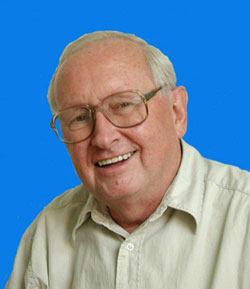
 It is with great sadness I have to report the passing of Dr Hasso Niemann, who was a founding father of atmospheric experiments and mass spectrometry at the center which ultimately led to the successful SAM experiment currently operating on the Curiosity Rover. Hasso died peacefully in his sleep early Thursday, July 11 morning after a brief battle with cancer.
Hasso leaves a huge legacy at Goddard and in the planetary and atmospheric sciences community with a career devoted to the development of mass spectrometer technology and using these capabilities to measure the composition of planetary atmospheres. Hasso¹s career began in graduated school with rather cumbersome rocket flight experiments and has spanned the epoch that saw spaceflight mass spectrometry evolve from crude, heavy laboratory tools to its current highly sophisticated state where mass spectrometers are now viewed as a primary instrument on planetary missions. Hasso made major contributions at every turn. Early in his career at Goddard as head of the Atmospheric Experiments Branch Hasso pioneered in situ exploration of the upper atmosphere of the earth with instruments on several spacecraft. He later focused on planetary atmospheres with first in situ measurements of the upper atmosphere of Venus on the Pioneer Venus Mission and subsequently the deep atmosphere of Jupiter with the prime instrument on the Galileo Probe that allowed fundamental questions regarding the formation mechanisms of giant planets to be addressed. Hasso contributed greatly to the Cassini mission as Principal Investigator on the Cassini Huygens Gas Chromatograph Mass Spectrometer and the Facility Instrument Provider of the Cassini Ion and Neutral Mass Spectrometer. His legacy continued at Goddard even after his retirement with provision of mass spectrometer by members of his group to missions such as the Mars Science Laboratory and the MAVEN Mars Orbiter.
Hasso cultivated broad and long lasting collaborations with world class planetary atmospheric scientists. He published many ground breaking papers describing the results of these experiments. Among his notable awards were NASA¹s Distinguished Service Medal for his career contributions in mass spectrometry, the Lindsay award in 1997 and the Al Seiff Memorial Award presented to him after his retirement in 2007. After his retirement Hasso continued to participate in the Cassini and continued to advise the mass spectrometer group at Goddard.
Hasso legacy will live on not only with his many planetary science colleagues but also with the technical teams that worked with him on all aspects of instrument development. Hasso’s interest in inviting young people to be part of his instrument efforts, his exemplary leadership and extraordinary work ethic in making the instruments happen, and his graceful and gracious diplomacy in dealing with the myriad people involved in the projects were all lessons in being a model scientist and human being.
The family will conduct private funeral arrangements.
Nicholas White and Jonathan Lunine
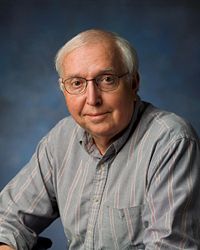 David S. McKay, Chief Scientist for Astrobiology at the NASA Johnson Space Center, passed away on February 20, 2013. During the Apollo program, McKay gave the first men to walk on the Moon training in geology. In recent years, McKay was perhaps best known for being the first author of a scientific paper postulating past life on Mars on the basis of evidence in martian meteorite ALH 84001. This paper has become one of the most heavily cited papers in planetary science. The NASA Astrobiology Institute was founded partially as a result of community interest in this paper and related topics.
 Stephen Eugene Dwornik passed away peacefully on December 17, 2012. Dwornik was born July 3, 1926, in Buffalo, New York, to Stephen Dwornik and Helena Januszkiewicz Soltys.
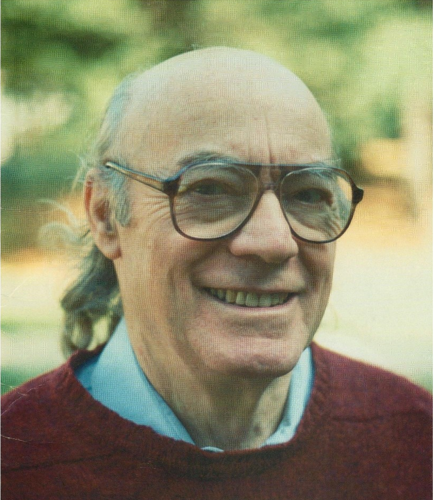 Dr. Bertram “Bert” Donn, the first head of NASA Goddard’s astrochemistry group, passed away on Friday December 28, 2012 at age 93. A New Yorker by birth, Bert attended Harvard University where he was taught by such legends as Fred Whipple, Cecilia Payne, and Bart Bok. A meeting with Harold Urey in the 1950s turned Bert’s attention to problems of low-temperature reactions and their connections to cometary and interstellar chemistry. Bert’s research at Goddard spanned theory, observation, and experiment, with connections to NASA missions such as Skylab, Apollo, and the International Ultraviolet Explorer. Bert also was an early NASA contributor to the astrobiological literature, he initiated several astrobiology-related research projects at Goddard, and he founded Goddard laboratories for studying the chemistry and physics of ice, dust, and nucleation. He was a 50-year member of the American Astronomical Society and a long-time DPS member. Aside from his Goddard work, Bert was a well-known and honored advocate of non-violence and peaceful conflict resolution, and was instrumental in the racial integration of Greenbelt, Maryland, where he and his family lived for 50 years. For more information please see
 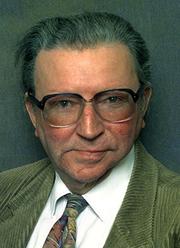 John Guest (1938-2012) was a pioneer in planetary geologic mapping, contributing to the first geologic map of Mercury, as well as the first comprehensive map of the eastern equatorial region of Mars with Ron Greeley. He participated in the Mariner 10 and Viking missions, as well as the Magellan mission to Venus. Along with Ron, he helped to select the Viking 2 landing site. Primarily though, John was a volcanologist, happiest when he was in the field, especially at Mt. Etna. John did his PhD work at University College London, mapping volcanic fields in Chile, including the Chao Dacite and the Upper Tertiary ignimbrites in Antofagasta Province. He then went to the University of London Observatory to work with Gilbert Fielder on lunar craters, quickly realizing that craters on the Moon are not volcanic, but impact, starting his long interest in planetary science.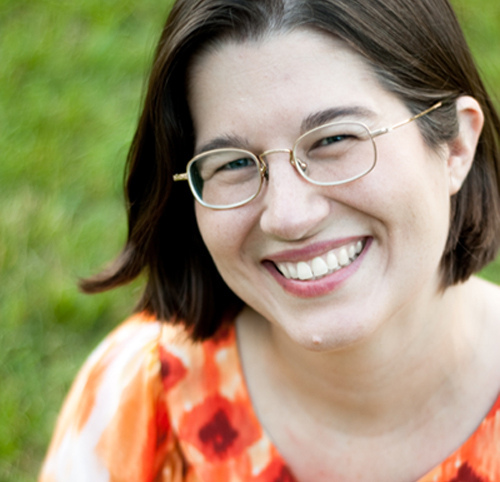

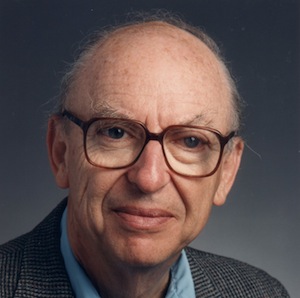 James R. Arnold, a Univ. of California, San Diego, nuclear chemist and visionary scientist, died at 88 on Jan. 6 in La Jolla from complications of Alzheimer’s disease. He was founding chairman of UC San Diego’s chemistry department and first director of the California Space Institute.
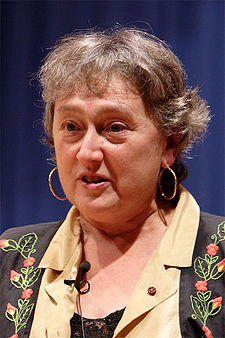 Lynn Margulis passed away on November 22, 2011, at her home, in Amherst, Massachussetts, aged 73. She was born in Chicago and enrolled at the University of Chicago when she was 14. Lynn was a renowned biologist and University Professor in the Department of Geosciences at the University of Massachusetts, whose faculty Margulis joined in 1988. Prior to that she taught at the University of Boston for 22 years. She is best known for her theory on the origin of eukaryotic organelles, and her contributions to the endosymbiotic theory. She is also associated with the Gaia hypothesis, based on an idea developed by the English environmental scientist James Lovelock.
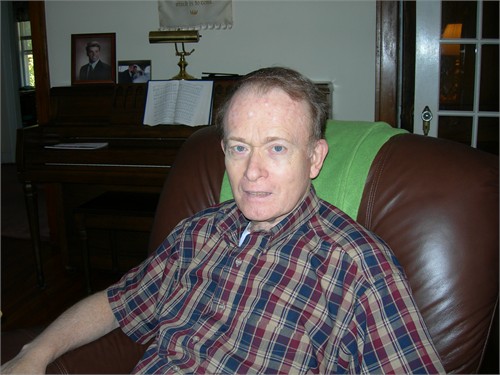 William H. Smyth (1941-2011) passed away on Friday Sept. 30, 2011 after a long illness. He is survived by his wife Iris (of 43 years), three children and five grandchildren.