
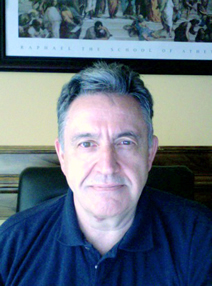
 A man of diverse interests and avid curiosity, Raúl A. Baragiola, the Alice and Guy Wilson Chair Professor of Materials Science at the University of Virginia, passed away 21 June 2015, only few months after his seventieth birthday. Raúl began his career at the Balseiro Institute in Bariloche, Argentina, studying electron emission from solid materials, later expanding his expertise to ion, electron, and photon interactions with surfaces. His interest in the surface properties of semi-conductors and insulators led him to the field of Space and Planetary Science, where for the last 25 years he studied the interaction of radiation with condensed ices, minerals, and extraterrestrial materials.
Born 31 March, 1945, Raul came to the US after working many years at the Centro Atómico in Bariloche, Argentina when concerns about the Argentina’s political stability and the safety of his family lead him to emigrate. He joined Ted Madey’s laboratory at Rutgers in 1988. He settled permanently at the University of Virginia (UVa) to direct the Laboratory for Astrophysics and Surface Physics (LASP) in 1990.
At UVa, Raúl started working on electronic sputtering from condensed gases and water ice in close collaboration with R. E. Johnson (UVa) and Walter Brown (AT & T Bell Laboratory), but he soon initiated key experiments designed to explore the complexities of sputtering of water ice. He had notable success in studying water ice photodesorption induced by Lyman-alpha light and its implications for interstellar ices. Subsequent efforts in a similar vein included investigating the existence of condensed O2 on Ganymede, measuring the sputtering yield of various ices, and characterizing the physical and chemical effects of radiations on laboratory analogs of planetary ices, while making laboratory data available to guide interpretation of astronomical spectra. In collaboration with R. W. Carlson (JPL), results from ion irradiation of water ice were used to explain the infrared signature of hydrogen peroxide on the surface of Europa. Raúl made numerous other significant research contributions towards understanding of the properties of planetary and interstellar water ice and the effects of radiation on these extraterrestrial surfaces. Recent ongoing research centered on laboratory astrochemistry, focusing on the synthesis, destruction and sputtering of plethora of condensed ices which include H2, CO, CO2, CH4, NH3, O2, O3, H2O2 and more complex species by ion and UV irradiation.
In collaboration with Lucy McFadden (NASA-Goddard) to understand the sulfur deficit on the surface of the Eros during NEAR’s encounter, Raul initiated research focused on the effects of space weathering on airless bodies. The combined in situ ability to measure reflectance, surface chemistry, and sputtered species due to solar-wind type ion irradiation was a hallmark feature of Raúl’s laboratory. In particular, Raúl was interested in the formation of Fe nano-particles and the effects of Earth’s atmosphere on ion bombarded silicates and minerals. With the discovery of water on the lunar surface, Raúl investigated formation for -OH species by solar wind proton irradiation of silicate minerals. Recent experiments characterizing electron emission from lunar soils echoed his early work on electron-induced secondary electron measurements.
Raúl was a prominent member in the Planetary Science and the Laboratory Astrophysics community and a frequent, vocal participant at DPS, AGU, and LPSC conferences. He was a Fellow of the American Physical Society (APS) and the Institute of Physics (London), receiving a Lifetime Achievement Award from the International Committee on Atomic Collisions in Solids and a NASA Achievement Award for his work on the Cassini mission. He served as a science member on the Cassini Plasma Spectrometer (CAPS) team, collaborating with D. T. Young at Southwest Research Institute (SwRI). Over the course of his career, Raúl published ~ 200 refereed scientific articles and book chapters, contributed to more than 140 conferences presentations and 80 invited lectures, advised more than 40 students and post-doctoral researchers on multiple continents, and collaborated with more research groups than is possible to name. His scientific legacy endures through them.
He leaves behind his dear wife of 46 years, Beatriz; three children: Verena, Valeria, and Pablo; his three precious grandchildren: Maya, Ella, and Leo who were the pride and joy of his later life; and his family of students and post-docs. All of whom will greatly miss Raul’s ability to simplify deeply complex problems, as well as his passion for life, philosophy, and wicked sense of humor.
————————————-
Catherine Dukes – Research Scientist – Laboratory for Astrophysics and Surface Physics – UVa
Ujjwal Raut – Research Scientist – Laboratory for Astrophysics and Surface Physics – UVa
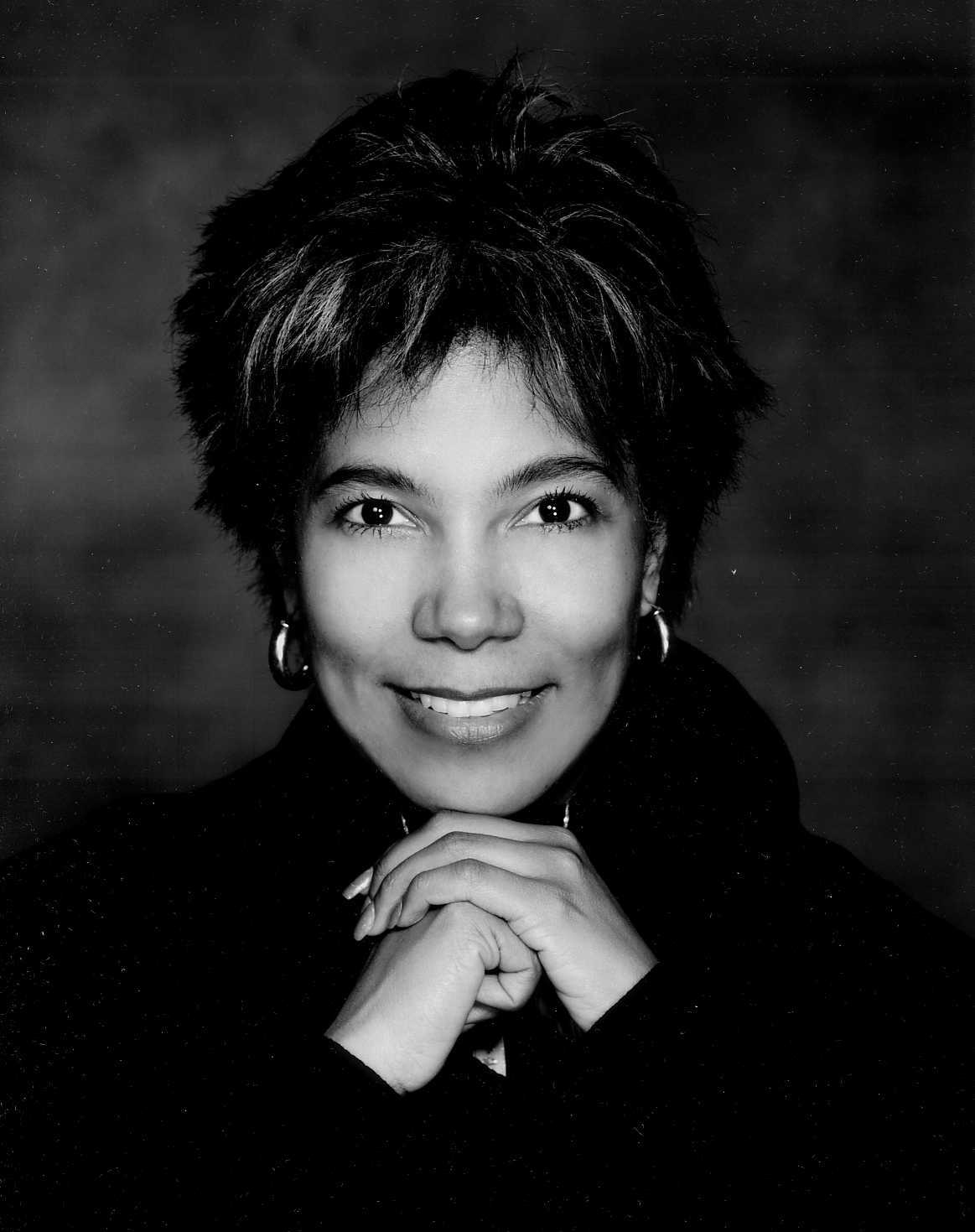 Claudia J. Alexander (1959–2015), Ph.D. was a research scientist specializing in geophysics
 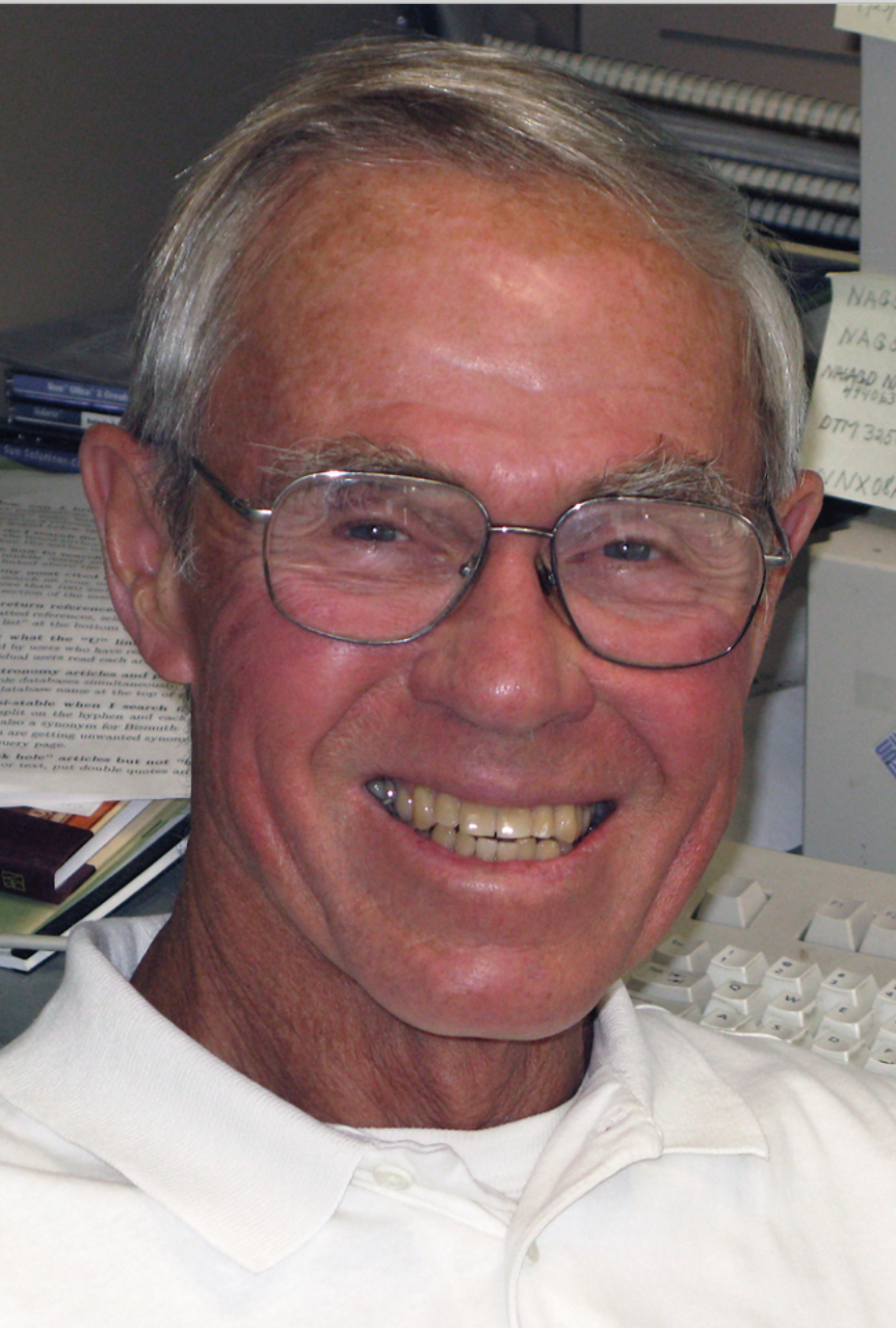 Stanton J. Peale passed away on May 14, 2015 in Santa Barbara from complications of leukemia. He was 78. Stan was surrounded by family and friends prior to and during his passing. He was a kind and brilliant planetary scientist with expertise in dynamics and geophysics. His career spanned over five decades. After earning his PhD at Cornell University in 1965, he took a faculty position at the University of California, Los Angeles, and then at the University of California, Santa Barbara, where he worked from 1968 until 2015. His most recent work was submitted for publication on May 11, 2015. His contributions include the prediction of widespread volcanism on Jupiter’s moon Io, the derivation of a general theoretical framework that governs the rotational states of bodies subject to tides, the study of tidal evolution in satellite systems, and the development of an ingenious procedure to determine the size and state of Mercury’s core. He was also a pioneer in the study of extrasolar planets, both in terms of their dynamics and their detection by microlensing. Stan’s work illustrated the power of physics to probe the interiors of planets. Stan was awarded the Newcomb Cleveland Prize (1979), the James Craig Watson Medal (1982), and the Brouwer Award (1992). He was elected to the National Academy of Sciences in 2009. He was a wonderful, beloved colleague and will be deeply missed.
 It is with great sadness that we report the loss of our colleague, Dr. Arvydas Kliore, who died suddenly on December 7, 2014 of natural causes. Arv was born in Lithuania and immigrated to the United States in 1949. He joined the engineering staff at JPL in 1962, where he had a distinguished career for over half a century with numerous publications and awards. A JPL Senior Research Scientist for more than 25 years, he was a pioneer in planetary radio science, especially in the study of planetary atmospheres and ionospheres, beginning with the first NASA planetary mission. Arv was a principalinvestigator or team member on every Mariner mission, on Pioneer 10/11, and on Pioneer Venus, and he served as Deputy Team Leader for the Galileo Radio Propagation Science Team. Most recently, he was a member of the Cassini Radio Science Team from 1990, serving as team leader for more than 20 years. Over his career, Arv attended nearly every DPS meeting in its 47-year history, a testament to his remarkable level of dedication and commitment to the community of planetary scientists.
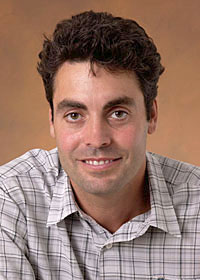 Dr. Alberto Behar, a long-time researcher at the Jet Propulsion Laboratory, died January, 9, 2015 in a small-plane accident near Van Nuys, CA.
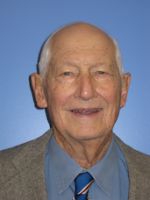 Charles A. Barth, Professor Emeritus at the University of Colorado, died on October 14th 2014. Charles grew up in Philadelphia where he attended Central High School. He received his B.S. in chemistry at Lehigh University. After serving in the Air Force, he earned his Ph.D. from UCLA. From 1958 to 1959 he was a postdoctoral fellow at the University of Bonn, Germany, followed by six years working at the CalTech/NASA Jet Propulsion Laboratory. From 1965 to 1992 he was the Director of the University of Colorado’s Laboratory for Atmospheric and Space Physics (LASP) and until 2002 a professor in the Department of Astrophysical and Planetary Sciences. He became Professor Emeritus in 2002.
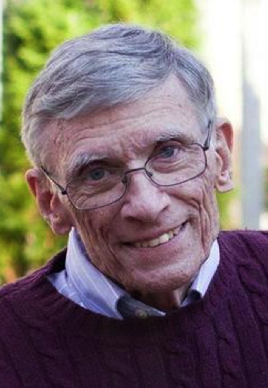 Dr. Barney Conrath passed away peacefully in his sleep on April 23, 2014, at his home in Charlottesville, Virginia, after a bout with cancer. He is survived by his wife, Marjorie, three children, and five grandchildren.