
Newsletter 17-48

Issue 17-48, December 3, 2017


+————————————CONTENTS—————————————-+

  1. REMINDER: RENEW YOUR AAS/DPS MEMBERSHIP TODAY
  2. GEOSCIENCES SPECIAL ISSUE: RECENT ADVANCES IN LUNAR STUDIES
  3. CALL FOR LETTERS OF APPLICATION FOR MEMBERSHIP ON NASA’S SCIENCE DEFINITION TEAM FOR CERES MISSION STUDIES
  4. JOBS, POSITIONS, OPPORTUNITIES

+——————————————————————————————–+


1———1———1———1———1———1———1———1———1———1

REMINDER: RENEW YOUR AAS/DPS MEMBERSHIP TODAY


AAS emailed members in early September announcing the start of membership

renewal season, and many took notice. Online renewals are arriving at a steady

pace. If you have already paid your dues, thanks for your continued support.


As many of you saw during the Members meeting in Provo, the AAS regularly

purges the DPS membership list early in the year and we lose 200-300 members.

Please renew your membership today so this does not happen to you!


To help reduce costs and the Society’s carbon footprint, we encourage you to

renew online today for fast, easy self-service. Simply log in to pay your dues,

to confirm or update your journal subscriptions and Division memberships,

and to lock in savings for 2018 by renewing for two years at the current rate.

(Note: That last option isn’t available to junior members, who instead get two

years for the price of one — currently $84 —when first joining the Society,

then renew annually thereafter.)


Renew before 31 December to maintain your benefits and receive additional

savings: the AAS will extend a one-time 15% discount off your portion of the

author charges for one paper published in the Astronomical Journal, the

Astrophysical Journal, ApJ Letters, or ApJ Supplement. Eligible members

can double their savings: if you renew by 31 December for two years, you will

receive the 15% author discount on one paper each in 2018 and 2019.

The Society has much planned for 2018 — including the 231st meeting of the

AAS in National Harbor in January — so you won’t want to miss out on the latest

science, member communications, and career and networking opportunities.

Supporting the AAS is supporting your discipline. Renew today!


If you have any questions about your dues or benefits, or need assistance

when logging in, please contact the membership team by email at

[email protected] or by phone at 202-328-2010. Thank you!


2———2———2———2———2———2———2———2———2———2

GEOSCIENCES SPECIAL ISSUE: RECENT ADVANCES IN LUNAR STUDIES


Dear Colleagues,


The journal Geosciences is accepting papers for a Special Issue related to

recent advances in studies of the Moon. Since the Apollo era, sample studies,

remote analyses, and dynamical models continue to tease out details related

to the Moon’s formation and evolution. Additionally, the international lunar

science community is eager to continue its presence on the Moon, as evidenced

by recent, upcoming, and future lunar missions. All of these topics are of great

interest to the broader geoscience community.


The Special Issue welcomes papers that describe studies related to any of the

above topics and will be an outlet for rapid, accessible, and peer-reviewed

publications. The editors especially welcome papers from young investigators.


Additional details are available at:


http://www.mdpi.com/journal/geosciences/special_issues/lunar_studies


Dr. Nicolle E. B. Zellner

Dr. Karen R. S. Cahill

Guest Editors


3———3———3———3———3———3———3———3———3———3

CALL FOR LETTERS OF APPLICATION FOR MEMBERSHIP ON

NASA’S SCIENCE DEFINITION TEAM FOR CERES MISSION STUDIES


The Planetary Science Division of NASA’s Science Mission Directorate

plans to conduct a generic study of mission options, including science and

technology options, for future exploration of the dwarf planet Ceres. The

study will build upon, but not be limited to, the National Research Council’s

Planetary Science Decadal Survey, entitled “Visions and Voyages for

Planetary Science in the Decade 2013-2022″ (available at

http://solarsystem.nasa.gov/docs/Vision_and_Voyages-FINAL.pdf); the

intent of this study is to provide information for the deliberative process for

the next Decadal Survey. The study also will build upon results from

previous ground-based studies and the Dawn mission.  Important to this

study will be the establishment of a Science Definition Team to guide the

technical study team. NASA invites scientists and other qualified and

interested individuals at U.S. institutions to apply for membership on

the Ceres Science Definition Team (SDT).


Members of the Ceres SDT will provide the technical team and NASA

with scientific assistance and direction during preliminary architecture

assessment of missions to the dwarf planet Ceres. Near-term activities

of the SDT will include the establishment of prioritized science

objectives and a realistic scientific concept of operations, development

and assessment of alternative architectures, including model

payload/instrument suites for proof of concept, and suggestions for

threshold science objectives/measurements for viable missions

within resource constraints provided by NASA. NASA will use the

products of this study for planning purposes. The SDT will be formed

in January 2018 and will be disbanded after the work is complete,

approximately 8 months later.


The Ceres SDT will:


1. Identify and prioritize science objectives to be addressed by spaceflight

mission(s) based upon recommendations from the 2013-2022 Decadal Survey,

but also account for recent information and current state of the science.


2. Participate in mission studies designed to address those science objectives.

Aspects of this participation will include:


·         Science traceability, identification of measurements, and

specification of model payload

·         Science concept of operations

·         Participation in tradeoffs among scientific value, cost, and risk

·         Ranking of alternative architectures

·         Identification of enabling/enhancing technologies


3. Assist in the preparation of study reports.


All reports and output materials of the study will be made publicly available.

Participation in the Ceres SDT is open to all qualified and interested individuals.


SDT member selection will be coordinated with the Chairs. The selected

members will have demonstrated expertise and knowledge in areas highly

relevant to Ceres science and related technologies and instrumentation.

NASA anticipates the selection of approximately eight to ten SDT members.

Representative(s) from the NASA Planetary Science Division, and possibly

other Agency representatives, may serve as ex officio members of the SDT.


DETAILS REQUESTED FOR SDT MEMBERSHIP SELECTION


Responses to this Call for Membership in the Ceres SDT shall be in the form

of a Letter of Application. The Letter of Application should provide clearly

defined evidence of the candidate’s relevant demonstrated experience and

background. The Letter of Application may also contain a brief list of

references to scientific or technical peer-reviewed papers the applicant has

published that formally establish their position of scientific leadership in

the community. References are not included in the page limit (given below).

The letter should also contain a statement confirming the applicant’s time

availability during the next twelve months to participate on the SDT, particularly

if there are any major schedule constraints that may restrict engagement at

critical times. The expected time commitment would include the following:


·         A kick-off teleconference the first week after selection

·         One face-to-face meeting in the later winter to early spring 2018

·         Availability via phone and E-mail during mission study activities

(at JPL) to address any science questions that arise and that cannot

be handled by local scientists; We expect ~2-3 detailed mission

studies to be done as part of this effort

·         Teleconferences to follow each mission study

·         Preparation and review of materials for the final report (draft due

August 2018, TBC)

·         Additional teleconferences and face-to-face meetings as the SDT

deems appropriate


Note that a significant amount of the interaction among the SDT is anticipated t

o be via E-mail and WebEx.


Letters of Application are invited only from individuals. Group applications will

not be considered. In addition, collaborations and teams will not be considered.


Each Letter of Application, limited to one page with 11-point Times font and

1-inch margins, must be received by Dr. Michael Kelley via E-mail no later

than December 21, 2017 (5:00 p.m. EST) at the address below. The subject

line of the E-mail should read “Ceres pre-decadal SDT application”.


The issuance of this Call for Letters of Application does not obligate NASA

to accept any of the applications. Any costs incurred by prospective investigators

in preparing submissions in response to this Call are incurred completely at

the submitter’s own risk.


Dr. Michael Kelley

Planetary Sciences Division

Science Mission Directorate

E-mail: [email protected]

Phone:  202-358-0607


4———4———4———4———4———4———4———4———4———4

JOBS, POSITIONS, OPPORTUNITIES


A) NASA JOB OPENING ANTICIPATED IN LABORATORY ASTROCHEMISTRY

A NASA civil-servant position is anticipated for early 2018 in the NASA
Goddard Space Flight Center’s Astrochemistry Laboratory in Greenbelt,
Maryland.  The new employee’s work will be in the Cosmic Ice group on
problems relevant to low-temperature, low-pressure chemical changes and
physical properties related to solar-system and interstellar materials.
The successful candidate will have laboratory experience in cryogenic,
vacuum, and infrared spectral measurements, and preferably some
familiarity with radiation-chemical or photochemical studies.  Duties in
this research position will include investigating astrochemical problems
connected to past, current, and future NASA missions and projects.
Opportunities for collaborations with other NASA science teams exist.

Applicant should have a PhD or equivalent in chemistry, physics, or a
closely related field, with post-doctoral experience desired.  Good oral
and written communications skills, such as experience writing papers and
proposals, are required.

It is anticipated that this position will be at the GS-13 level or,
depending on the applicant’s qualifications, GS-14.  Interested persons
should watch for the official announcement, with additional details, on
the USAJOBS website.  Note that US citizenship at the time of the
application is a requirement for this position.

For more information about this opportunity, please contact Jason
Dworkin ([email protected]), Reggie Hudson
([email protected]), or Perry Gerakines ([email protected]).

See also the Cosmic Ice Laboratory’s website at
https://science.gsfc.nasa.gov/691/cosmicice/
for information on the group’s recent work.


———————————+

Send submissions to:

Anne Verbiscer, DPS Secretary ([email protected]


To unsubscribe visit http://aas.org/unsubscribe or email [email protected].
To change your address email [email protected] 
Newsletter 17-47

Issue 17-47, November 19, 2017


+————————————CONTENTS—————————————-+

  1. RENEW YOUR AAS/DPS MEMBERSHIP TODAY
  2. ASTROBIOLOGY SCIENCE STRATEGY FOR THE SEARCH FOR LIFE IN THE UNIVERSE:
  3. 2018 PIERAZZO INTERNATIONAL STUDENT TRAVEL AWARD
  4. SMALL BODIES ASSESSMENT GROUP (SBAG) 18TH MEETING AGENDA
  5. EXPLORATION SCIENCE SUMMER INTERNSHIP PROGRAM
  6. JOBS, POSITIONS, OPPORTUNITIES

+——————————————————————————————–+


1———1———1———1———1———1———1———1———1———1

RENEW YOUR AAS/DPS MEMBERSHIP TODAY


AAS emailed members in early September announcing the start of membership

renewal season, and many took notice. Online renewals are arriving at a steady

pace. If you have already paid your dues, thanks for your continued support.


As many of you saw during the Members meeting in Provo, the AAS regularly

purges the DPS membership list early in the year and we lose 200-300 members.

Please renew your membership today so this does not happen to you!


To help reduce costs and the Society’s carbon footprint, we encourage you to

renew online today for fast, easy self-service. Simply log in to pay your dues,

to confirm or update your journal subscriptions and Division memberships,

and to lock in savings for 2018 by renewing for two years at the current rate.

(Note: That last option isn’t available to junior members, who instead get two

years for the price of one — currently $84 —when first joining the Society,

then renew annually thereafter.)


Renew before 31 December to maintain your benefits and receive additional

savings: the AAS will extend a one-time 15% discount off your portion of the

author charges for one paper published in the Astronomical Journal, the

Astrophysical Journal, ApJ Letters, or ApJ Supplement. Eligible members

can double their savings: if you renew by 31 December for two years, you will

receive the 15% author discount on one paper each in 2018 and 2019.

The Society has much planned for 2018 — including the 231st meeting of the

AAS in National Harbor in January — so you won’t want to miss out on the latest

science, member communications, and career and networking opportunities.

Supporting the AAS is supporting your discipline. Renew today!


If you have any questions about your dues or benefits, or need assistance

when logging in, please contact the membership team by email at

[email protected] or by phone at 202-328-2010. Thank you!


2———2———2———2———2———2———2———2———2———2

ASTROBIOLOGY SCIENCE STRATEGY FOR THE SEARCH FOR LIFE IN

THE UNIVERSE: CALL FOR WHITE PAPERS


Dear Colleagues,

In preparation for and as an input to the upcoming decadal surveys in

astronomy and astrophysics and planetary science, the National Academies

of Sciences, Engineering, and Medicine has been charged with carrying

out a study on the astrobiology science strategy as it relates to the search

for life in the solar system and extrasolar planetary systems

(http://sites.nationalacademies.org/SSB/CurrentProjects/SSB_180812).

The committee is requesting community input in the form of white papers.

Please find recommended topics for white papers and submission guidelines

at the following website:

http://sgiz.mobi/s3/Astrobiology-Strategy-Call-For-Papers.

White papers will be accepted from immediately until 8 January, 2018.

Papers received earlier will have a higher likelihood of being read and

considered. Please note that multiple authorship accurately reflecting a

consensus among many individuals is strongly encouraged. Everyone in

research communities associated with astrobiology is encouraged to

author or collaborate on these papers.


3———3———3———3———3———3———3———3———3———3

2018 PIERAZZO INTERNATIONAL STUDENT TRAVEL AWARD

Application deadline: 9 PM PST, November 30, 2017

Awards will be announced on or before December 9, 2017

This award is established by the Planetary Science Institute in memory
of Senior Scientist Betty Pierazzo to support and encourage graduate
students to build international collaborations and relationships in
planetary science. Two awards will be made each year, contingent upon
there being meritorious applications. One will be awarded to a graduate
student working on his or her Ph.D. at an institution within the U.S.
This is to support travel to a planetary science related meeting
(conferences and workshops) outside of the U.S. The second award will
be to a graduate student working on his or her Ph.D. at an institution
outside of the U.S. This is to support travel to a planetary science
related meeting within the U.S. These include general meetings that
have planetary-focused sessions such as the AGU, GSA, EGU and IAG.

The award will consist of a certificate and up to $2000US.

Additional information and application materials are available at:

http://www.psi.edu/pista


4———4———4———4———4———4———4———4———4———4

SMALL BODIES ASSESSMENT GROUP (SBAG) 18TH MEETING AGENDA


We have an outline of an agenda for the 18th SBAG meeting, January 17-18

at NASA-Ames. For those of you preparing to make travel plans, we wanted

to let you know what’s happening when, in general terms. The bottom line is

that we’ll be meeting from 8:30 to 5:30 each day, and we hope that you will

stay through the afternoon of the second day, because we’ve devoted the last

afternoon to discussion of the SBAG Goals and how they lead into our activities

for the upcoming Decadal Survey. We have lots of open discussion time

scheduled then, so this is your chance to get involved in the process early

and deeply.

The basic agenda will be:

Wednesday morning: NASA reports, small bodies news;

Wednesday afternoon: Reports about small bodies missions, lightning talks by

early career scientists and engineers (followed by a reception);

Thursday morning: Resource utilization, planetary defense, technology;

Thursday afternoon: Small bodies goals (and their relation to the Decadal Survey).

I looking forward to seeing many of you in a couple of months.

Tim Swindle

SBAG Chair


5———5———5———5———5———5———5———5———5———5

EXPLORATION SCIENCE SUMMER INTERN PROGRAM


The Lunar and Planetary Institute (LPI) is hosting a special summer intern

program to involve students in activities that support missions to the Moon

that utilize the Orion crew vehicle, the Deep Space Gateway, and robotic

assets on the lunar surface. It is a unique opportunity to integrate scientific

input with exploration activities in a way that mission architects and spacecraft

engineers can use.  Activities may involve assessments of landing sites and

traverse plans for multiple destinations that are responsive to NASA objectives.

The LPI invites applications from graduate students in geology, planetary science,

and related programs.


The Exploration Science Summer Intern Program builds on the success of the

Lunar Exploration Summer Intern Program that was designed to evaluate possible

landing sites on the Moon for robotic and human exploration missions. Over a

five year period (2008–2012), teams of students worked with LPI science staff

and their collaborators to produce A Global Lunar Landing Site Study to Provide

the Scientific Context for Exploration of the Moon. The program for 2018 is

designed to have the same impact on future exploration activities. This will be

a unique team activity that should foster extensive discussions among students

and senior science team members.


The 10-week program runs from May 29, 2018, through August 3, 2018.

Selected interns will receive a $5,883 stipend, and up to a $1,000 travel

expense reimbursement for U.S. citizens, or $1,500 for foreign nationals.


https://www.lpi.usra.edu/exploration_intern/


6———6———6———6———6———6———6———6———6———6

JOBS, POSITIONS, OPPORTUNITIES


A) POSTDOCTORAL POSITION IN EXOPLANET ATMOSPHERES
University of Maryland, College Park

Applications are invited for a postdoctoral research position in the Department

 of Astronomy at the University of Maryland, College Park. The successful

candidate will work with Professor Eliza Kempton on theoretical radiative

transfer calculations for exoplanet atmospheres. Applicants should have

previous experience in modeling (exo)planetary atmospheres, although a

variety of backgrounds may be relevant. The position is for a period of up

to three years, starting in fall 2018, contingent on positive yearly progress

evaluations. A Ph.D. in Physics, Astronomy, or a related field is required

prior to the start date. A competitive salary and funds for research and

travel will be provided.

The University of Maryland hosts a vibrant astrophysics research community

and is also located within short driving distance to exoplanet researchers at

the NASA Goddard Space Flight Center, Space Telescope Science Institute

(STScI), and Carnegie Department of Terrestrial Magnetism (DTM). The

successful candidate will also be a member of the Center for Theory and

Computation (CTC) at the University of Maryland.

All materials should be received by December 15 (submitted to

[email protected]) for full consideration.

Additional information can be found at:
https://jobregister.aas.org/ad/14e64131


———————————+

Send submissions to:

Anne Verbiscer, DPS Secretary ([email protected]


To unsubscribe visit http://aas.org/unsubscribe or email [email protected].

To change your address

Newsletter 17-46

Issue 17-46, November 12, 2017


+————————————CONTENTS—————————————-+

  1. ATTENTION FUTURE JWST PROPOSERS
  2. RENEW YOUR AAS/DPS MEMBERSHIP TODAY
  3. WEB-EX AND PROGRAM FOR VEXAG ANNUAL MEETING #15, NOVEMBER 14-16
  4. AMERICAN GEOPHYSICAL UNION FALL MEETING PANEL DISCUSSION: PLANETARY BODIES IN THE ULTRAVIOLET
  5. SMALL BODIES ASSESSMENT GROUP (SBAG) 18TH MEETING
  6. SCIENTIFIC WORKSHOP ON THE TRANSNEPTUNIAN SOLAR SYSTEM, COIMBRA, PORTUGAL
  7. JOBS, POSITIONS, OPPORTUNITIES

+——————————————————————————————–+


1———1———1———1———1———1———1———1———1———1

ATTENTION FUTURE JWST PROPOSERS


A proposal planning workshop has been organized for Solar System observers

November 13-15, 2017 at STScI in Baltimore. This workshop will assist solar

system scientists to correctly plan JWST General Observer (GO) proposals for

Cycle 1. Invited talks and contributed posters will address a range of solar

system science applications. Plenary presentations by JWST project personnel

will introduce the planning tools (Astronomer’s Proposal Tool (APT), Exposure

Time Calculator (ETC), the ETC python engine, Pandeia, and general Target

Visibility Tool (TVT)), and summarize key aspects of the observatory and

instruments.

If you cannot attend in person, please feel free to join us remotely

(No Registration Required!) through WebEx.  Connection details are below. 

The full agenda and other details can be foundhere.

JWST Planning Solar System Observations
WebEx link
Every day, from Monday, November 13, 2017, to Wednesday, November 15, 2017
Meeting number (access code): 907 959 363
Meeting password: Solar2017
Audio connection: +1-510-210-8882 USA toll

Prior to the workshop participants should:

1.     Install the Astronomers Proposal Tool (APT)

2.     Create an account at MyST (Required to save Exposure Time Calculator workbooks)

Finally, another workshop similar to the one above is being organized

December 13-15, 2017 at ESTEC in Noorwijk, Netherlands.  Registration closes

December 1, 2017 if you are interested in attending.  Details can be found here:

https://www.cosmos.esa.int/web/jwst-ssws-2017

We look forward to seeing you!

2———2———2———2———2———2———2———2———2———2

RENEW YOUR AAS/DPS MEMBERSHIP TODAY


AAS emailed members in early September announcing the start of membership

renewal season, and many took notice. Online renewals are arriving at a steady

pace. If you have already paid your dues, thanks for your continued support.


As many of you saw during the Members meeting in Provo, the AAS regularly

purges the DPS membership list early in the year and we lose 200-300 members.

Please renew your membership today so this does not happen to you!


To help reduce costs and the Society’s carbon footprint, we encourage you to

renew online today for fast, easy self-service. Simply log in to pay your dues,

to confirm or update your journal subscriptions and Division memberships,

and to lock in savings for 2018 by renewing for two years at the current rate.

(Note: That last option isn’t available to junior members, who instead get two

years for the price of one — currently $84 —when first joining the Society,

then renew annually thereafter.)


Renew before 31 December to maintain your benefits and receive additional

savings: the AAS will extend a one-time 15% discount off your portion of the

author charges for one paper published in the Astronomical Journal, the

Astrophysical Journal, ApJ Letters, or ApJ Supplement. Eligible members

can double their savings: if you renew by 31 December for two years, you will

receive the 15% author discount on one paper each in 2018 and 2019.

The Society has much planned for 2018 — including the 231st meeting of the

AAS in National Harbor in January — so you won’t want to miss out on the latest

science, member communications, and career and networking opportunities.

Supporting the AAS is supporting your discipline. Renew today!


If you have any questions about your dues or benefits, or need assistance

when logging in, please contact the membership team by email at

[email protected] or by phone at 202-328-2010. Thank you!


3———3———3———3———3———3———3———3———3———3

WEB-EX AND PROGRAM FOR VEXAG ANNUAL MEETING #15, NOVEMBER 14-16


Venus Exploration Analysis Group (VEXAG) Meeting #15 will be held on

Tuesday-Thursday, November 14-16, 2016 at the Applied Physics

Laboratory (APL), Laurel Maryland, hosted by Noam Izenberg. The Program

and other information is posted on the LPI VEXAG Web-Site:


https://www.lpi.usra.edu/vexag/meetings/vexag-15/


November 14, 2017 (Tuesday) – NASA and Mission Report (AM) and Venus

Mission and Instrument Studies (PM)


November 15, 2017 (Wednesday) – Venus Science and Technology Reports

(AM) and NASA Reports, Mission and Technology Studies (PM)


November 16, 2017 (Thursday) – Workshops, Data Sets, and Tools (AM),

Adjourn at mid-day.


WEB-EX


Dial in: (240)228-1000 (Washington, DC) (443)778-1000 (Baltimore, MD)

(844)275-9323 (Toll Free)


Password for all 3 days: VEXAG17


Day 1: Tuesday, November 14, 2017, 8:00 pm (10 hrs), Eastern Standard

Time Meeting number and Access Code: 990 886 895


Day 2: Wednesday, November 15, 2017, 8:00 pm (10 hrs), Eastern Standard

Time Meeting number and Access Code:994 172 685


Day 3: Thursday, November 16, 2017, 8:00 am (4 hrs), Eastern Standard

Time (Meeting number and Access Code: 998 579 076


4———4———4———4———4———4———4———4———4———4

AMERICAN GEOPHYSICAL UNION FALL MEETING PANEL DISCUSSION:

PLANETARY BODIES IN THE ULTRAVIOLET


In recent years, UV spectroscopy techniques have provided significant insights

into volatiles, surface composition, and space weathering effects on Solar System

objects. At the AGU meeting in New Orleans, please join us for session P23F,

“Planetary Bodies in the Ultraviolet.”  We will hear about recent UV observations,

from Earth-orbiting telescopes and deep space probes, of Mercury, asteroids,

comets, moons, and plumes. We’ll also hear about new lab work being done to

aid in interpreting these data. This will be a panel discussion with audience

participation. It’s sure to be an engaging discussing and we hope to see you there.


P23F, “Planetary Bodies in the Ultraviolet,” on Tues Dec 12 1:40-3:40PM (room R02/R03).


Amanda Hendrix

Faith Vilas


5———5———5———5———5———5———5———5———5———5

SMALL BODIES ASSESSMENT GROUP (SBAG) 18TH MEETING


Registration and other information about the 18th Small Bodies Assessment

Group (SBAG) meeting is now available on the SBAG website at
https://www.lpi.usra.edu/sbag/meetings/

Three things to note:

1) The meeting will last two full days, January 17 and January 18 (we had originally

blocked out three days, but the third day will only be for the Steering Committee).

2) We welcome foreign nationals, but you need to register by December 6 to

allow time to process the necessary forms.

3) We encourage attendance by early career community members (students,

postdocs, and scientists and engineers within three years of their degree). There

will be some travel support available, and we will have lightning talks and/or a

poster session for early career attendees, depending on interest. More information

is available on the website.

I hope to see many of you at Ames in January.

Tim Swindle
Chair, Small Bodies Assessment Group

________________________________


Announcement: SBAG Early-Career Travel Support and Lightning Talks


The next meeting of the Small Bodies Assessment Group will be held at NASA

Ames Research Center on January 17-18, 2018. We want to make you aware of

some opportunities for students and early-career scientists and engineers. Please

pass along to relevant colleagues/students. Watch the SBAG webpage for more

updates about the meeting: https://www.lpi.usra.edu/sbag/


Early career travel support: We are planning to offer limited U.S. travel support

for early career scientists to participate in the SBAG 18 meeting, to be held at the

NASA Ames Research Center on January 17-18, 2018.  Interested undergraduate

students, graduate students, postdocs, and other early career scientists (within 3

years of PhD/MS/BS) should submit a letter and a CV to SBAG Early Career

Secretary Angela Stickle ([email protected]) and Hannah Susorney

([email protected]) by COB (5 pm Eastern time) November 22, 2017.

Included in the letter, which must not exceed 2 pages, should be a demonstration

of financial need and an explanation of how the applicant’s work relates to the

purposes of the SBAG. The letter and CV should be combined into a single PDF

document for submission by e-mail attachment.  Recipients of travel support will

be expected to give a short presentation (~10-15 minutes) of their SBAG-relevant

work at the SBAG 18 meeting.


Lightning Talks/Poster Session: We are providing time on the agenda for early-career

scientists and engineers present at the meeting to introduce themselves and their

research to the community. Lightning talks will be 3 minutes each, with the possibility

of a small poster session to showcase your work. If you are interested in participating

in lightning talks, please contact the early-career secretary Angela Stickle

([email protected]) ASAP to secure a spot.


Thanks

Angela Stickle

SBAG Early Career Secretary


6———6———6———6———6———6———6———6———6———6

SCIENTIFIC WORKSHOP ON THE TRANSNEPTUNIAN SOLAR SYSTEM,

26-29 MARCH 2018, COIMBRA, PORTUGAL


There will be an international scientific workshop on the Transneptunian Solar

System, scheduled in Coimbra, Portugal, for 26 – 29 March 2018.

We invite you to register for the meeting and to propose contributed papers for

the workshop sessions until 20 January 2018 on the following topics:
– Physical properties of TNOs: Interior, surface, atmosphere
– The large TNOs: Pluto and others
– Satellites – Binaries and multiple systems
– Formation and evolution processes: Origin, planetesimals, multiples, dynamical & collisional evolution, physical processing
– Relationships with other populations: Centaurs, planetary Trojans, comets, Inner Oort Cloud
– Planet IX and related TNOs – Dynamical effects, indicators, properties
– Extra-solar KBO populations: Structure, properties
– Prospects for KBO research

Details on the workshop framework (SOC, LOC, invited speakers, deadlines,

venue & travel & hotel information) as well as access for registration, hotel

booking and abstract submission can be found at

http://www2.mps.mpg.de/services/coimbra/


The number of workshop participants is limited to 100 persons.


7———7———7———7———7———7———7———7———7———7

JOBS, POSITIONS, OPPORTUNITIES


A) PHYSICS AND ASTRONOMY FACULTY

      BRIGHAM YOUNG UNIVERSITY

     PROVO, UTAH


content/physics-astronomy-faculty


The Department of Physics and Astronomy at Brigham Young University

(BYU) in Provo, Utah, invites applications for a faculty position to begin in

August 2018.  The new faculty member will be expected to provide excellent

teaching and research mentoring at the undergraduate and graduate levels.

All new faculty members are also expected to develop externally-funded

research programs of significance. We are seeking applicants in the fields

of Acoustics, Atomic Molecular and Optical Physics, Astronomy, Condensed

Matter Physics, Magnetic Resonance Imaging, Numerical Relativity, Physics

Education Research/Astronomy Education Research, Plasma Physics, Quantum

Information, or Theoretical Physics to strengthen and complement existing

research programs (see http://www.physics.byu.edu). Interested candidates

should complete an online faculty application at https://yjobs.byu.edu (posting

66856), with a cover letter outlining teaching and research experience and

aspirations, a current CV, and provide the contact information for three references.

For additional info, contact [email protected]. Completed applications

received by November 15, 2017 will be given full consideration. BYU, an

equal opportunity employer, requires all faculty members to observe the

university’s honor code and dress and grooming standards.  Preference is

given to qualified candidates who are members in good standing of the

affiliated church, The Church of Jesus Christ of Latter-day Saints.

Contact Email: 

[email protected]


B) VISITING FACULTY

     BRIGHAM YOUNG UNIVERSITY

     PROVO, UTAH


content/visiting-faculty


The Department of Physics and Astronomy at Brigham Young University

(BYU) in Provo, Utah, invites applications for a one-year (but renewable up

to three years) visiting professional faculty position to begin in 2018.  The

new faculty member will be expected to support existing research programs

(see http://www.physics.byu.edu), with particular emphasis on providing

excellent mentoring at the undergraduate and graduate levels and on building

connections with industry. Interested candidates should complete an online

faculty application at https://yjobs.byu.edu (posting 66871), with a cover

letter outlining research and industrial experience as well as professional

aspirations, a current CV, and provide the contact information for three

references. For additional info, contact [email protected].  Completed

applications received by November 1, 2017 will be given full consideration.

BYU, an equal opportunity employer, requires all faculty members to

observe the university’s honor code and dress and grooming standards. 

Preference is given to qualified candidates who are members in good standing

of the affiliated church, The Church of Jesus Christ of Latter-day Saints.

Contact Email: 

[email protected]


C) POSTDOCTORAL POSITION IN EXOPLANET ATMOSPHERES

     UNIVERSITY OF MARYLAND

     COLLEGE PARK, MARYLAND


Applications are invited for a postdoctoral research position in the

Department of Astronomy at the University of Maryland, College Park.

The successful candidate will work with Professor Eliza Kempton on

theoretical radiative transfer calculations for exoplanet atmospheres.

Applicants should have previous experience in modeling (exo)planetary

atmospheres, although a variety of backgrounds may be relevant. The

position is for a period of up to three years, starting in fall 2018,

contingent on positive yearly progress evaluations. A Ph.D. in Physics,

Astronomy, or a related field is required prior to the start date. A

competitive salary and funds for research and travel will be provided.


The University of Maryland hosts a vibrant astrophysics research

community and is also located within short driving distance to

exoplanet researchers at the NASA Goddard Space Flight Center, Space

Telescope Science Institute (STScI), and Carnegie Department of

Terrestrial Magnetism (DTM). The successful candidate will also be a

member of the Center for Theory and Computation (CTC) at the University

of Maryland.


All materials should be received by December 15 for full consideration.


Additional information can be found at:


https://jobregister.aas.org/ad/14e64131


———————————+

Send submissions to:

Anne Verbiscer, DPS Secretary ([email protected]


To unsubscribe visit http://aas.org/unsubscribe or email [email protected].

To change your address email [email protected]
Message from the Chair : DPS 49 Recap and Reminder to Fill Out the Exit Survey

We had a great DPS last month. We had more than 800 registered attendees at the meeting which exceeded our expected number of attendees. There was a great scientific program thanks to all of you sharing your scientific results and thanks to the hard work by the Science Organizing Committee led by David O’Brien. The Local Organizing Committee led by Jani Radebaugh put together fun activities like the geology field trip and the banquet. Thank you, Jani and the LOC!

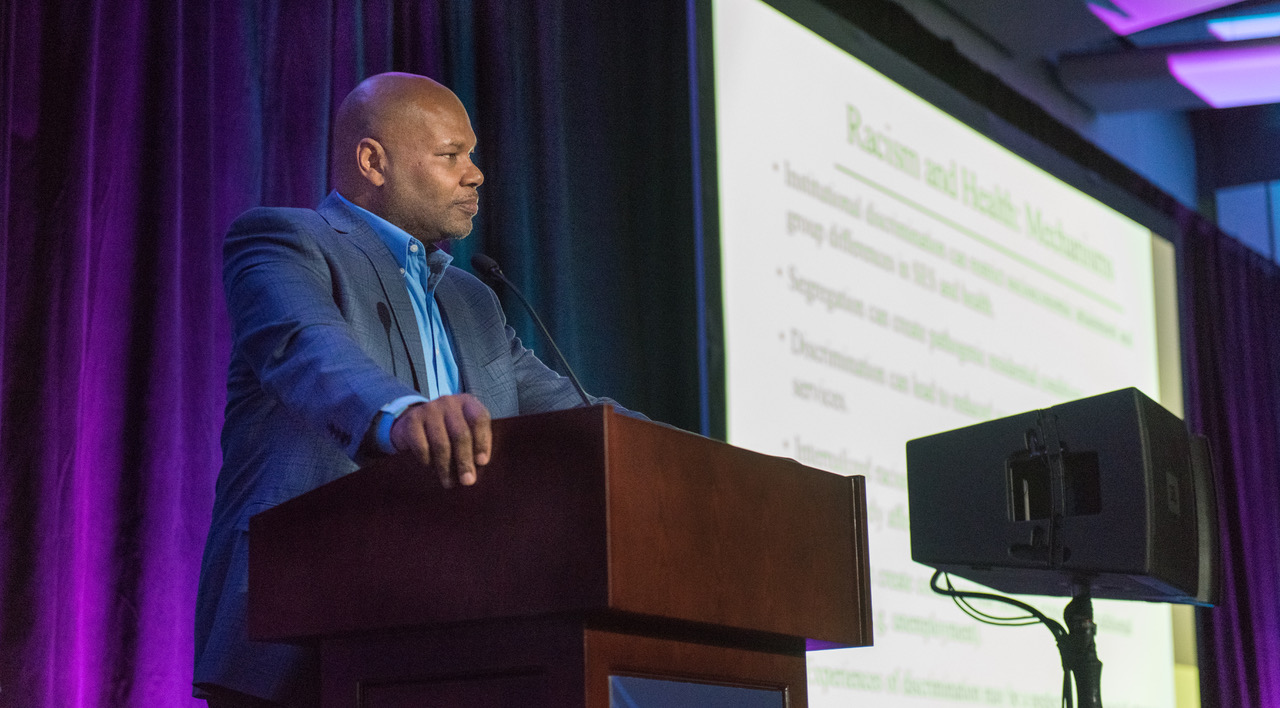
We also continued our tradition of having a plenary speaker addressing issues of inclusiveness. This year the PCCS arranged a talk about microagression by Dr. William Smith (University of Utah). Dr. Smith went above and beyond by presenting his research area and contextualizing it for our community of planetary science. Thanks for a really informative and engaging talk, Dr. Smith.

Photo courtesy of: Henry Throop

We are looking ahead to next year’s DPS meeting and we want to hear from you about this year’s meeting. Please fill out the survey about the 49th annual DPS meeting. The link was sent to attendees in an email from the American Astronomical Society on October 23rd. We want to hear from you!

Cathy Olkin

DPS Chair

November 5, 2017

Newsletter 17-45

Issue 17-45, November 5, 2017

+————————————CONTENTS—————————————-+

  1. MESSAGE FROM THE CHAIR: DPS 49 RECAP AND REMINDER TO FILL OUT THE EXIT SURVEY
  2. NASA EARTH AND SPACE SCIENCE FELLOWSHIP (NESSF) PROGRAM
  3. WORKSHOP IN GEOLOGY AND GEOPHYSICS OF THE SOLAR SYSTEM
  4. ELS LETTER OF INTENT TO PARTICIPATE
  5. GEOPHYSICAL PLANET DEFINITION (GPD) USERS PAGE
  6. LUNAR SCIENCE FOR LANDED MISSIONS WORKSHOP
  7. JOBS, POSITIONS, OPPORTUNITIES

+——————————————————————————————–+


1———1———1———1———1———1———1———1———1———1

MESSAGE FROM THE CHAIR : DPS 49 RECAP AND REMINDER TO FILL OUT THE EXIT SURVEY


We had a great DPS last month. We had more than 800 registered attendees

 at the meeting which exceeded our expected number of attendees. There

was a great scientific program thanks to all of you sharing your scientific

results and thanks to the hard work by the Science Organizing Committee

led by David O’Brien. The Local Organizing Committee led by Jani

Radebaugh put together fun activities like the geology field trip and the

banquet. Thank you, Jani and the LOC!


We also continued our tradition of having a plenary speaker addressing issues

of inclusiveness. This year the PCCS arranged a talk about microagression

by Dr. William Smith (University of Utah). Dr. Smith went above and beyond

by presenting his research area and contextualizing it for our community of

planetary science. Thanks for a really informative and engaging talk, Dr. Smith.


We are looking ahead to next year’s DPS meeting and we want to hear from

you about this year’s meeting. Please fill out the survey about the 49th

annual DPS meeting. The link was sent to attendees in an email from the

American Astronomical Society on October 23rd. We want to hear from you!


Cathy Olkin

DPS Chair

2———2———2———2———2———2———2———2———2———2

NASA EARTH AND SPACE SCIENCE FELLOWSHIP (NESSF) PROGRAM


NASA’s Science Mission Directorate announces the call for graduate

fellowship proposals to the NASA Earth and Space Science Fellowship

(NESSF) program for the 2018-2019 academic year. This call for

fellowship proposals solicits applications from accredited U.S.

universities on behalf of individuals pursuing Master of Science

(M.Sc.) or Doctoral (Ph.D.) degrees in Earth and space sciences, or

related disciplines.


The deadline for new applications is February 1, 2018, and the deadline

for RENEWAL applications is March 15, 2018.


The NESSF call for proposals and submission instructions are located at

the NESSF 18 solicitation index page at:


http://nspires.nasaprs.com/


Click on “Solicitations” then “Open Solicitations” then select the

“NESSF 18” announcement.


All proposals must be submitted in electronic format only through the

NASA NSPIRES system. The faculty advisor has an active role in the

submission of the fellowship proposal. To use the NSPIRES system, the

faculty advisor, the student, and the university must all register.

Extended instructions on how to submit an electronic proposal package

are posted on the NESSF 18 solicitation index page listed above. You

can register in NSPIRES at:


http://nspires.nasaprs.com/


For further information, contact:


Earth Science:

Claire Macaulay, (202) 358-0151, [email protected]


Space Science (Heliophysics, Planetary Science, and Astrophysics):

Marian Norris, (202) 358-4452, [email protected]


3———3———3———3———3———3———3———3———3———3

WORKSHOP IN GEOLOGY AND GEOPHYSICS OF THE SOLAR SYSTEM


June 23rd-July 1st 2018 

Petnica Science Center, Petnica, Serbia


http://petnica.rs/planetary2017/


This multi-disciplinary workshop will cover wide range of topics

related to the formation, structure and dynamics of the Solar System

bodies. The workshop is aimed for students (PhD students, but advanced

undergraduate and Master’s students are also welcome) and young

researchers of various backgrounds and different levels of experience

in the fields of planetary science and space exploration. Please visit

out website for more info and get in touch if you are interested!

4———4———4———4———4———4———4———4———4———4

ELS LETTER OF INTENT TO PARTICIPATE


We are pleased to announce that the 6th European Lunar Symposium (ELS)

will be held in Toulouse, France May 13-16, 2018. This meeting,

organized in partnership with NASA’s Solar System Exploration Research

Virtual Institute (SSERVI), will cover current advances and prospects

in lunar science and exploration in Europe and elsewhere.


Building upon successful previous ELS meetings and acknowledging a

growing interest in lunar science exploration worldwide, we anticipate

a larger number of participants for ELS 2018. In order to make

necessary logistical arrangements, we would like your help (before

abstract submission and registration dates are announced) in letting us

know before December 1st 2017 about your firm intention to attend ELS

2018.


Please visit the following link to submit your response – European

Lunar Symposium (ELS) – 2018 Letter of Intent to Participate


Patrick Pinet ([email protected]) and Mahesh Anand

([email protected]) (On behalf of the ELS Organizers)


5———5———5———5———5———5———5———5———5———5

GEOPHYSICAL PLANET DEFINITION (GPD) USERS PAGE


The Geophysical Planet Definition (or GPD) can be stated as “A planet

is a sub-stellar mass body that has never undergone nuclear fusion and

that has enough gravitation to be round due to hydrostatic equilibrium

regardless of its orbital parameters.”


We are sampling community usage in GPD. Specifically, we want to know

if you as a planetary scientist think that the GPD is a useful planet

definition (recognizing that other planet definition may also be useful

to you). To that end we’ve developed a form at:


http://bit.ly/GPD_list


for those who find GPD a handy definition and who want to help us gauge

that interest.


Will Grundy

Tod Lauer

Phil Metzger

Kirby Runyon

Kelsi Singer

Alan Stern

Mark Sykes


6———6———6———6———6———6———6———6———6———6

LUNAR SCIENCE FOR LANDED MISSIONS WORKSHOP


SSERVI and LEAG, in partnership, are pleased to announce the “Lunar

Science for Landed Missions Workshop,” January 10-12, 2018, at NASA

Ames Research Center. This workshop is intended to produce a set of

priority targets for near-term landed missions on the Moon, primarily,

but not exclusively, from commercial exploration firms interested in

pursuing ventures on the Moon. Abstracts are solicited describing

target areas on the Moon for near-term in-situ science, network

science, and sample return missions. Abstracts should be up to one page

in length and are intended to stimulate discussion about specific

targets. This workshop will result in a report to be presented to NASA

Headquarters as an initial community consensus of priority landed

targets, with the potential of future solicitations for science-focused

payloads at such target sites.


Further information on this workshop, along with information on

logistics, abstract guidelines and submission, and workshop

registration, is available at: 


https://lunar-landing.arc.nasa.gov


Abstracts are due on November 10, 2017.


7———7———7———7———7———7———7———7———7———7

JOBS, POSITIONS, OPPORTUNITIES


A) CORNELL CENTER FOR ASTROPHYSICS AND PLANETARY SCIENCES

     RESEARCH SUPPORT SPECIALIST II: 


Department mission and background information:  Cornell is a private ivy

league university and the land grant university for New York State. Cornell

Center for Atmospheric and Planetary Science’s mission is to discover,

preserve, & disseminate knowledge, produce creative works, and promote

culture within these sciences throughout the Cornell community. The Center

also aims, through public outreach to enhance the lives and livelihoods of

our students, the people of New York, and others around the world.  


The Cornell Center for Astrophysics and Planetary Science seeks candidates

to fill our Research Support Specialist II position.  The position is responsible

for support of the design, construction, and use of state-of -the -art submillimeter

spectrometers for use in astronomy at major observatories. The person is

responsible for the design, construction, troubleshooting and repair of

cryogenic, mechanical, and electrical systems, management of laboratory

activities and observing runs, and the supervision of certain laboratory

activities.  


The successful candidate must the following skills: 

(1)           Experience with cryogenics and low temperature refrigerators,

including liquid helium and nitrogen cryostats, 3He refrigerators, and adiabatic

demagnetization refrigerators (ADRs).  Familiarity with the properties and uses of
mechanical/structural and electrical properties of materials at low temperatures.

(2)           Computerized engineering skills (computer aided design (CAD), and

finite element analysis (FEA)) and their applications to cryogenic and vacuum

vessels, devices for mounting optics and large mass instrumentation to

telescopes in the field, and   subcomponents of telescopes.

(3)           Management/logistics skills, including the development, and maintenance

of group activity schedules, and the ability to coordinate the logistics involved

in shipping large research instruments to places as diverse as South Pole and

Mauna Kea. 

(4)           Laboratory software skills including familiarity with the Labview

environment, and ability to interface basic instrumentation.

(5)           Basic laboratory electronic skills including soldering, wire-wrapping,

bread-boarding of basic circuits.

(6)           Machinist and assembly skills, including the ability to machine complex
subcomponents of large instruments, and make repairs to our instruments both

at Cornell University and in field laboratories  Finally, the position will include

possible supervision of one to three undergraduate assistants.


Question may be directed to Lynda Sovocool, Finance and Human

Resource Manager, [email protected].  

Applicants may apply at:
https://cornell.wd1.myworkdayjobs.com/en-US/CornellCareerPage/job/Ithaca-Main-Campus/Research-Support-Specialist-II_WDR-00012890


B) RESEARCH PLANETARY SCIENTIST AT NASA GODDARD SPACE FLIGHT CENTER


The Planetary Systems Laboratory at NASA GSFC is seeking to hire

an early or mid-career (GS13/14) planetary scientist to engage in a strong

independent  research program, and to strengthen and extend the laboratory’s

successful track record in  the development of instrumentation for

planetary missions. 


Some of the specific requirements sought after for this position include:


– Take a leadership role in a program for planetary instrument concept design

   and development, particularly in the infrared.
– Evaluate and revise current instrument concept designs based on science

  requirements and develops/modifies science requirements to be compatible with

  available technology.
– Maintain an independent science and instrument research program with regular

  publications.


A full description of the requirements and information on how to apply are found


on the USAJOBS site:


https://www.usajobs.gov/GetJob/ViewDetails/483320200


The due date for applications is 11/24/2017. In the event of questions please contact:

[email protected] or [email protected].


US citizenship is required. NASA GSFC is an equal opportunity employer.


C) ONE PHD AND TWO POSTDOC POSITIONS WITH THE EXOMARS TGO MISSION


The Space Reasearch Centre of Poland is offering one PhD and two

postdoc positions to work with the data to be collected starting from

next spring with the instruments onboard the Trace Gas Orbiter

spacecraft of ESA/IKI’s ExoMars2016 mission, in the fields of

geosciences (hydrothermal processes, volcanism, mineralogy, tectonics,

thermal properties of rocks) and/or atmospheric sciences (atmosphere

circulation modelling). The descriptions are here:


https://euraxess.ec.europa.eu/jobs/254063

https://euraxess.ec.europa.eu/jobs/253303

https://euraxess.ec.europa.eu/jobs/254061


The deadline for applying is December 10, 2017, auditions will be held

in January and the contracts will start on March 1st. Please contact

Daniel Mege for more information ([email protected]).


———————————+

Send submissions to:

Anne Verbiscer, DPS Secretary ([email protected]


To unsubscribe visit http://aas.org/unsubscribe or email [email protected].

To change your address email [email protected]

Newsletter 17-44

Issue 17-44, October 29, 2017


+————————————CONTENTS—————————————-+

  1. JWST WORKSHOP MATERIALS FROM DPS 2017
  2. NASA SCIENCE MISSION DIRECTORATE SEEKING VOLUNTEER REVIEWERS
  3. TRICK OR TREAT AND TELESCOPES
  4. JOBS, POSITIONS, OPPORTUNITIES

+——————————————————————————————–+


1———1———1———1———1———1———1———1———1———1

JWST WORKSHOP MATERIALS FROM DPS 2017

Presentations from the JWST Observation Planning Workshop (Sun. 10/15)
and Townhall (Tue. 10/17) at the 2017 DPS Meeting can be downloaded here:

https://stsci.box.com/s/t5jv7tvn5fq4123zt8ikgf9zuf71mdjg

Workshop Materials:
—————————-
00-All_JWST-Presentations_DPS2017.zip
01-Agenda.pdf
02-JWST_DPS_2017_Milam.pdf
03-JWST_SolarSystemOverview_JStans_2017-DPS.pdf
04-APT-Demo_WJanuszewski_2017-DPS.pptx
05-JWST_ExposureSpecs_Overview.pdf
06-NIRSpec_MSA-LongSlit_CProffitt_2017-DPS.pdf
07-ETC-Intro_BHoller_2017-DPS.pdf
APT-Demo_WJanuszewski_2017-DPS.pdf
DPS_APT_examples.aptx
NIRSpec-4-SolarSystem_CProffitt-Poster_2017-DPS.pdf

Townhall Materials:
————————–
THall1-JWST_Project+ObsPrograms_2017-DPS.pdf
THall2-JWST_SolarSystemOverview_JStans_2017-DPS.pdf

John Stansberry
JWST — NIRCam Operations, Solar System Lead
Space Telescope Science Institute
410  338  2442


2———2———2———2———2———2———2———2———2———2

NASA SCIENCE MISSION DIRECTORATE SEEKING VOLUNTEER REVIEWERS


NASA SMD is seeking subject matter experts to serve as reviewers for

the following ROSES-2017 programs:


C.5 Exobiology


https://science.nasa.gov/researchers/volunteer-review-panels/roses-

program-element-c5-exobiology


C.9 The Mars Data Analysis Program


https://science.nasa.gov/researchers/volunteer-review-panels/roses-2017

-c9-the-mars-data-analysis-program


C.11 Discovery Data Analysis


https://science.nasa.gov/researchers/volunteer-review-panels/roses-2017

-c11-discovery-data-analysis


C.12 Planetary Instrument Concepts for the Advancement of Solar System

Observations (PICASSO)


https://science.nasa.gov/researchers/volunteer-review-panels/roses-c12-

planetary-instrument-concepts-advancement-solar-system-observations-

picasso


C.14 Planetary Science and Technology Through Analog Research


https://science.nasa.gov/researchers/volunteer-review-panels/roses-c14-

planetary-science-and-technology-through-analog-research


C.20 The Rosetta Data Analysis Program


https://science.nasa.gov/researchers/volunteer-review-panels/roses-c20-

rosetta-data-analysis-program


Either use the link above or start at this permanent link:


https://science.nasa.gov/researchers/volunteer-review-panels 


This lists all of the current forms. We had some issues with the forms

last month but think that they are all fixed now.


3———3———3———3———3———3———3———3———3———3

TRICK OR TREAT AND TELESCOPES


DPS is  continuing its Trick-or-Treat and Telescopes Program. We are encouraging

people to put out their telescopes during trick-or-treat time on Halloween, in their

own lawns or in a neighbor’s lawn with better viewing (or more traffic). The

following website gives advice and connections to resources.


education/trick-or-treat-and-telescopes


4———4———4———4———4———4———4———4———4———4

JOBS, POSITIONS, OPPORTUNITIES


A) PRIZE POSTDOCTORAL POSITION

     Department of  Astronomy

     University of Maryland

     College Park, Maryland


Applications are invited for a Prize Postdoctoral Position in Theoretical

Astrophysics at the Department of Astronomy, University of Maryland,

College Park.  Established in 2006, this postdoctoral program is connected

with the Maryland Astronomy Center for Theory and Computation whose

faculty maintain active research programs in the areas of planetary/solar-system

dynamics, exoplanet atmospheres, cosmology and galaxy formation, and

high-energy astrophysics (including compact object physics). Candidates

with a strong background in these fields, but particularly with a planetary/

exoplanetary focus for this cycle, are encouraged to apply. The successful

candidate must have a Ph.D. in Physics, Astronomy, or a   related field by

the start date of the appointment.  A Fall 2018 start date is envisaged, but

earlier dates are also possible and the appointment term is 2-3 years.  To apply,

please send a CV, publication list, and a 3 page statement of research interests

and experience, packaged as a single PDF, to the above e-mail address by

December 15, 2017. Candidates must also arrange for three letters of

recommendation to be sent to the same e-mail address by this date. Please

put “CTC Prize Postdoc” in the subject line of all correspondence. Applicants

for this position may also be considered for other postdoctoral positions in

the Astronomy Department at Maryland. For further information, please

contact Prof. Douglas Hamilton at [email protected]. The University

of Maryland is an   equal opportunity/affirmative action employer committed

to excellence through diversity.                              


B) PLANETARY/METEOR PHYSICIST

     NASA Marshall Space Flight Center


http://www.jacobs.com/join-us#apply-for-a-job

As a Planetary/Meteor Physicist, the selected candidate will support the

Meteoroid Environment Office (MEO) within the Natural Environments

Branch at NASA Marshall Space Flight Center (MSFC). The selected

candidate will work to improve NASA’s understanding of the meteoroid

environment, particularly with regard to those particles posing a hazard

to spacecraft throughout the Solar System.

Duties will include the following:

  • Developing and refining the MEO’s Meteoroid Engineering Model (MEM), meteor shower forecasts, and supporting models.  These models are essential for assessing hazards to spacecraft and astronauts in low Earth orbit and beyond.
  • Analyzing data from visual observers, meteor camera networks, telescopic instrumentation, and in-situ measurements to derive models of meteor speeds, fluxes, masses, and densities.
  • Tracking meteor events and updating the US Government and the public on the circumstances surrounding these events.

Required Qualifications:

  • PhD (preferred) in Astronomy or Physics from an ABET accredited institution, or equivalent degree and experience, with a specialty in solar system dynamics or small body dynamics.
  • Must have published papers as first author on solar system dynamics in peer-reviewed astronomical journals such as Icarus; Earth, Moon, and Planets; the Astronomical Journal; or the Monthly Notices of the Royal Astronomical Society.
  • Experience with three-body and N-body simulations of planetary systems.
  • Expertise in one or more computer languages, preferably Python or the C family.

Experience studying orbital resonances and stability is desired.


Typically, educational requirements are the equivalent of a Ph.D.,

a minimum of a Masters with at least 2 years of experience, or BS

with at least 6 years of experience.


Proof of U.S. Citizenship is required.


Jacobs is an Equal Opportunity/Affirmative Action Employer. All

qualified applicants will receive consideration for employment without

regard to race, color, religion, sex, sexual orientation, gender identity,

national origin, disability, veteran status or other characteristics

protected by law. Jacobs is a background screening, drug-free workplace. 


C) RESEARCH ASSOCIATE IN PLANETARY ATMOSPHERIC SCIENCE

     Department of Physics and Astronomy

     University of Leicester


Ref SEN00931

Full Details:  https://goo.gl/UTxqvx 
Salary Grade 7 – £33,518 to £38,833 per annum
Full-time open-ended contract subject to external fixed-term funding.

Funding is available for 3 years

Closing date:  23 November 2017

The Physics and Astronomy Department at the University of Leicester

invites applications for a Post-Doctoral Research Associate (PDRA) in

Planetary Atmospheric Science. You will join a planetary science team

led by Dr. Leigh Fletcher, addressing the scientific aims of a European

Research Council (ERC) grant to explore atmospheric processes on the

giant planets of our Solar System. You will use world-leading ground-

and space-based observations of the gas and ice giants to prepare data

analysis procedures for the James Webb Space Telescope, due for

launch in 2019. This will develop the expertise and tools required for

the first publications exploiting JWST infrared maps of these distant

worlds, to be observed as part of a Guaranteed-Time programme of

Solar System observations. The PDRA position will initially be for a

period of three years, with the possibility of extension depending on

progress and funding considerations.

The ERC “GIANTCLIMES” project

(http://cordis.europa.eu/project/rcn/207884_en.html) seeks to assemble

a comprehensive climatology of the four giant planets over large spans

of time, investigating the natural cycles of meteorology, circulation, and

chemistry shaping the environments on these worlds. Inversions of

planetary spectra, from the ultraviolet to the microwave, will be used to 

reconstruct these atmospheres in three dimensions to explore both their

temporal variability and the processes coupling different atmospheric

regimes. You will analyse subsets of existing data from Cassini, Spitzer

and ground-based facilities to prepare planetary mapping and spectral

simulation software for upcoming JWST observations, and will participate

in the analysis of the first datasets from the observatory. We are therefore 

particularly interested in candidates with a background in planetary

atmospheres and spectroscopic modelling techniques, but all applicants

with a strong background in planetary science are encouraged to apply.

You will carry out independent and collaborative research for this project

and disseminate the results to the international scientific community.

There will be significant opportunities to collaborate within Leicester’s 

Planetary Science team (whose existing research includes planetary

magnetospheres, ionospheres, atmospheres and surface science), Earth

Observation group, and with an international team specialising in radiative

transfer and spectral inversion for planetary atmospheres.

In addition to the online application form, applicants are requested to

provide: [1] a CV and publication list; [2] two academic references; [3]

a one-page cover letter detailing how your prior experience and future

research aims are commensurate with the aims of the programme outlined 

above.

Informal enquiries are welcome and should be made to Dr. Leigh Fletcher

on [email protected] or 0116 252 3585


———————————+

Send submissions to:

Anne Verbiscer, DPS Secretary ([email protected]


To unsubscribe visit http://aas.org/unsubscribe or email [email protected].

To change your address email [email protected]

Newsletter 17-43

Issue 17-43, October 13, 2017


+————————————CONTENTS—————————————-+

  1. DPS NOMINATING SUBCOMMITTEE MEMBER ELECTION DURING DPS 49
  2. MESSAGE FROM THE CHAIR: APPLICATIONS FOR ICARUS EDITOR-IN-CHIEF ACCEPTED UNTIL OCTOBER 15, 2017
  3. ACCESSIBILITY AND INCLUSION INFORMATION FOR 2017 DPS MEETING
  4. JWST SOLAR SYSTEM OBSERVATION PLANNING WORKSHOP AT DPS 49
  5. JWST SOLAR SYSTEM TOWNHALL AT DPS 49
  6. JWST OBSERVATION PLANNING WORKSHOP FINAL ANNOUNCEMENT
  7. NEWS FOR THE PLANETARY COMMUNITY FROM THE NASA/IPAC INFRARED SCIENCE ARCHIVE (IRSA)
  8. ASTROBIOLOGY 2017 FINAL ANNOUNCEMENT – POSTER DEADLINE, PROGRAM, AND MORE
  9. 42nd SCIENTIFIC ASSEMBLY OF THE COMMITTEE ON SPACE RESEARCH (COSPAR)
  10. ICE GIANT EXPLORATION WORKSHOP AT DPS 49
  11. PLANETARY RESOURCES WORKSHOP AT DPS 49
  12. LSST AND THE SOLAR SYSTEM WORKSHOP AT DPS 49
  13. FUTURE KUIPER BELT MISSIONS WORKSHOP AT DPS 49
  14. TRICK OR TREAT AND TELESCOPES
  15. JOBS, POSITIONS, OPPORTUNITIES

+——————————————————————————————–+


1———1———1———1———1———1———1———1———1———1

DPS NOMINATING SUBCOMMITTEE MEMBER ELECTION DURING DPS 49 


Our DPS by-laws allow for the election of a member to the Nominating Sub-committee 

each year at the members meeting, Wednesday Oct. 18, 12:30 pm.  Nominations of 

subcommittee candidates are made in person at the members meeting and will not 

close until at least three members are nominated. Please consider nominating those 

you think would be good for the position. The membership will then vote at the 

meeting and elect one person to work with the other two subcommittee members 

for a 3 year term. 


This position is important because they seek candidates to run for the elected offices 

of Vice-Chair and Committee members. The division’s leadership is responsible for 

our annual meetings and carrying out the activities of the division including managing 

the division’s funds, carrying out its elections, federal relations, education, press 

activities, web maintenance, providing professional development programs, ensuring 

a climate conducive to collegial and productive scientific exploration and enabling 

publication of our scientific results. The main activities for this committee are generally 

conducted in the spring semester in preparation for summer DPS elections. If you have 

questions about the tasks please feel free to contact the current nominating subcommittee 

chair (Kelsi Singer; [email protected]) or other current/past members.  

2———2———2———2———2———2———2———2———2———2

MESSAGE FROM THE CHAIR: APPLICATIONS FOR ICARUS EDITOR-IN-CHIEF 

ACCEPTED UNTIL OCTOBER 15, 2017


Applications for the position of Icarus Editor-in-Chief will be accepted until 

October 15, 2017. The application, consisting of a cover letter with a 5-year 

vision statement and skills and experience brought to the position, Curriculum 

Vita and publications list, should be submitted here

Deadline: October 15, 2017.  

Questions, contact Lucy McFadden or Kate Hibbert.


DPS Banquet

You may continue to sign up for the DPS banquet until the close of registration 

on Sunday October 15, 2017. To include a banquet ticket in your registration, 

go to registration, click on Register Online for the DPS 49 Meeting, scroll down 

the page and add the banquet to your registration. You may also sign up when 

you pick up your badge at the meeting. The banquet fee covers transportation 

to and from Sundance resort where the banquet is held.


Invitation to attend Ice Cream Social to close #DPS17

Where: Utah Valley Convention Center

When: Friday Oct. 20, 2017, 3:45-4:30pm

How do I let you know I’ll be there? Doodle poll response to be sure we have 

enough ice cream  


Lucy McFadden

DPS Chair


3———3———3———3———3———3———3———3———3———3

ACCESSIBILITY AND INCLUSION INFORMATION FOR 2017 DPS MEETING


Attendees of the 2017 DPS meeting are encouraged to review the Accessibility 

and Inclusion portion of the meeting web site before traveling to Provo 

(https://aas.org/meetings/dps49/accessibility).  There you will find maps of the 

meeting venue with locations of accessible entrances, quiet rooms, nursing mother 

rooms, and gender-neutral bathrooms, as well as recommendations and best 

practices for making the DPS meeting an inclusive environment.


Nancy Chanover

Co-Chair

DPS Professional Culture and Climate Subcommittee


4———4———4———4———4———4———4———4———4———4

JWST SOLAR SYSTEM OBSERVATION PLANNING WORKSHOP AT DPS 49

Sunday Oct. 15, 2017, 1pm – 5pm (Cascade C room)

Prior to the workshop participants should:

1.     Install the Astronomers Proposal Tool (APT) 

2.     Download example APT file from stsci.box.com

3.     Create an account at MyST (Required to save Exposure Time Calculator workbooks)

Agenda and Remote Participation information can be found here.
 

5———5———5———5———5———5———5———5———5———5

JWST SOLAR SYSTEM TOWNHALL AT DPS 49
 

Tuesday Oct. 17, Noon – 1:30pm (Cascade D room)

·       JWST Project Status

·       Guaranteed Time programs

·       General Observer program: How to propose

Box lunches available for the first 50 participants.


6———6———6———6———6———6———6———6———6———6

JWST OBSERVATION PLANNING WORKSHOP FINAL ANNOUNCEMENT

JWST Observation Planning Workshop, Nov. 13 – 15 2017
 

Space Telescope Science Institute, Baltimore, MD
REGISTRATION Closes Oct. 15, 2017
Workshop and registration information.


7———7———7———7———7———7———7———7———7———7

NEWS FOR THE PLANETARY COMMUNITY FROM THE NASA/IPAC
INFRARED SCIENCE ARCHIVE (IRSA) 


(1) NEOWISE 2017 data release 


The 2017 data release for NEOWISE was in June 2017. The 3-year NEOWISE

archive now contains over 7.7 million calibrated image sets and over 57 billion

source detections overall. As of mid-September 2017, NEOWISE is 55% into its

eighth sky coverage since the start of the Reactivation mission. Over 691,000

infrared measurements have been made of 27,628 different solar system objects,

including 735 NEOs and 128 comets.   See these websites for data access and

more information:
http://irsa.ipac.caltech.edu/Missions/wise.html
http://wise2.ipac.caltech.edu/docs/release/neowise/
https://neowise.ipac.caltech.edu/ 


This video playlist collects all the WISE and Solar System Object relevant videos:
https://www.youtube.com/playlist?list=PL3UuvF_s8KWJ0HAT-6KcFEOp74MV9eKM5  


(2) Time Series Tool  IRSA has a new Time Series Tool: http://irsa.ipac.caltech.edu/irsaviewer/timeseries 
This tool allows exploration and analysis of time series observations. For
WISE/NEOWISE and PTF, users can view measurements as  a function of time,
simultaneously visualize the single-epoch images, and  optionally find the period
of variability. Partial functionality is available for other data sets.  This video
playlist collects all the relevant movies on the Time Series Tool:
https://www.youtube.com/playlist?list=PL3UuvF_s8KWKPpThkUGibSXgSrH2wxgFY

This video describes how to use this tool for Solar System Objects: https://youtu.be/cA1ZzK2xAw8  


(3) IRTF archive coming to IRSA  Starting in Feb 2018, IRSA will host the

public archive for the NASA/Infrared Telescope Facility (IRTF). The archive

will serve raw data from the SpeX and iSHELL instruments.


8———8———8———8———8———8———8———8———8———8

ASTROBIOLOGY 2017 FINAL ANNOUNCEMENT – POSTER DEADLINE, PROGRAM, AND MORE


The date is quickly approaching for Astrobiology 2017

(Coyhaique, November 26-December 1, 2017).

http://www.astrobiology2017.org  


POSTER CONTRIBUTION AND REGULAR REGISTRATION DEADLINE 

The poster contribution and regular registration deadlines have been EXTENDED

until October 20, 2017.  Don’t miss the chance to participate and send in your

poster contribution!  


ASTROBIOLOGY 2017 BEST POSTER AWARD  An award has been

established for the best poster; it will be selected during the week of the

conference. The link to the abstract submission form will be send with the

confirmation email after your registration.  


PROGRAM 

61 superb oral contributions have already been selected while

the number of participants keeps growing. For the final program and an

updated list of participants check:

http://astrobiology2017.org/scientific-programme/ http://astrobiology2017.org/participants/  


HOW TO GET THERE 

The closest airport is Balmaceda airport (BBA), airport transfers follow

a direct, yet scenic, route to Coyhaique. You can secure a transportation

from  the registration platform or upon arrival to the airport. For more

information on how to get to Coyhaique plus local information, please

click http://astrobiology2017.org/coyhaique-tours/  


TRAINING SCHOOL 

All the seats for the Training School preceeding Astrobiology 2017 have

been taken. We will soon contact those registered there for meal

alternatives. For more information on the training school,

please click http://astrobiology2017.org/training-school/.  


EXPLORE PATAGONIA 

Make sure you don’t miss this chance to see one of the most

wonderful landscapes on Earth. There are several alternatives to

explore Patagonia before and after the meeting at

http://astrobiology2017.org/coyhaique-tours/.  


FOLLOW US 

Pre-register at the bottom of http://astrobiology2017.org

to receive updated information, and follow us in Twitter and Facebook:
       http://twitter.com/astrobio2017        http://facebook.com/astrobio2017  


With best regards,       

Patricio Rojo (LOC’s chair) 


9———9———9———9———9———9———9———9———9———9

42nd SCIENTIFIC ASSEMBLY OF THE COMMITTEE ON

SPACE RESEARCH (COSPAR)


Pasadena, California, 14-22 July 2018. 


The Committee on Space Research (COSPAR) will hold its 42nd Scientific

Assembly in Pasadena, California, USA, on 14-22 July, 2018. The COSPAR

Scientific Assemblies supply a forum to all scientists involved in space

research for the presentation of their latest scientific results, the exchange

of knowledge and also the discussion of space research problems.


Abstract submission is now open (deadline 9 February, 2018)


http://cospar2018.org


10——–10——–10——–10——–10——–10——–10——–10——–10——–10 

ICE GIANT EXPLORATION WORKSHOP AT DPS 49


Workshop:  The Next Steps in Ice Giant Exploration

Time:  Monday, 16 October 2017, 12:00 – 13:15

Location:  “Cascade C” room of the Convention Center

Organizers:  Mark Hofstadter, Amy Simon, and Zibi Turtle

This workshop is an opportunity for interested members of the community to 

discuss the future of ice giant exploration.  The discussion, moderated by 

members of the science team for the recently completed Ice Giant mission 

study (https://www.lpi.usra.edu/icegiants/mission_study/), will address the 

following topics:  
* Research within the R&A programs,
* Juno and Cassini results that inform ice giant science and missions,
* The role of Flagship, New Frontiers, and Discovery missions in ice giant exploration,
* Atmospheric probes,
* Instrumentation and technology development for ice giant exploration.


For more information, contact [email protected]


11——–11——–11——–11——–11——–11——–11——–11——–11——–11

PLANETARY RESOURCES WORKSHOP AT DPS 49


Time: Wednesday, 18 October 2017, 12:00

Location: “Battle Creek” room of the Convention Center


Planetary Resources, the asteroid mining company, is developing methodology

 to quantify water abundance on volatile-rich C-complex NEAs in order to 

perform resource assessment. While spectral measurements in the visible to 

near-infrared regions can reveal a NEA’s hydration state, these reflectance 

measurements are only sensitive to the optical surface. Additionally, spectral 

measurements of surface hydration (and spectral measurements in general) can 

be affected by poorly understood processes that may hinder accurate resource 

assessment. As such, a deeper understanding of the underlying mechanisms 

affecting asteroid surfaces is required. The goal of this workshop is to bring 

together experts from across multiple disciplines to facilitate a broad technical 

discussion around this complex challenge. Topics of interest for discussion 

include but are not limited to space weathering, thermal processing of asteroid 

surface material, carbonaceous chondrite mineralogy, regolith formation and 

sorting, solar wind implantation of H, and any other processes that may affect 

the quantification of water on asteroids.


Akbar Whizin

Elizabeth Frank

John Shriver


12——–12——–12——–12——–12——–12——–12——–12——–12——–12

LSST AND THE SOLAR SYSTEM WORKSHOP AT DPS 49


Thursday October 19 2017, 4:30-6:30 pm, 49th DPS meeting, Cascade E 

(Utah Valley Convention Center) 

This workshop serves as the annual meeting of the Large Synoptic Sky 

Survey Telescope (LSST) Solar System Science Collaboration (SSSC) 

and is open to all DPS attendees. We will provide a brief status of LSST 

with respect to Solar System science and provide updates on current and 

future activities within the SSSC. 

The presentation schedule is as follows: 

  •  LSST & Solar System Science Collaboration (SSSC) Update: Where is the SSSC Headed in 2018? – Meg Schwamb (Gemini Observatory) & David Trilling (NAU) 
  • The LSST Observing Strategy: Upcoming Opsim Simulations, Small Body Metrics, and White Papers – Lynne Jones (University of Washington/LSST) 
  •  LSST Solar System Data Products and Moving Object Processing System (MOPS) Status – Mario Jurić (University of Washington/LSST)
  • The Minor Planet Center: Status and Plans – Matt Holman (Harvard CfA/MPC)
  •  Community Feedback on the Planned LSST Solar System Database Schema

Contact organizers Meg Schwamb ([email protected]) and 

David Trilling ([email protected]) with any questions 


13——–13——–13——–13——–13——–13——–13——–13——–13——–13

FUTURE KUIPER BELT MISSIONS WORKSHOP AT DPS 49


Sunday, 3:30 pm at DPS 49 Provo, Battle Creek Room


Interested DPS members please join us Sunday, October 15th, from 3:30-5:30 

pm for a focused workshop on future missions to the Kuiper Belt.  The workshop 

will take place in the Battle Creek room of the Utah Valley Convention Center 

(DPS 49 conference venue).  No pre-registration required. 


The Kuiper Belt (KB) is a scientific treasure trove consisting of comets, 

planetesimals, and small planets like Pluto. Since its discovery in the early 

1990s, the KB has yielded fundamental insights into planetary accretion, the 

migration of planets, and the population structure of our solar system—

including the discovery that dwarf planets like Pluto are common there.


In this workshop we will review the scientific case to return to Pluto with an 

orbiter, as well as the scientific case to explore other small KB planets and 

smaller bodies with flybys or orbiters. We will go beyond this to discuss 

possible mission payloads. Finally, we will solicit community and individual 

scientist interest in future studies leading to the next Decadal Survey.


14——–14——–14——–14——–14——–14——–14——–14——–14——–14

TRICK OR TREAT AND TELESCOPES


DPS is  continuing its Trick-or-Treat and Telescopes Program. We are encouraging 

people to put out their telescopes during trick-or-treat time on Halloween, in their 

own lawns or in a neighbor’s lawn with better viewing (or more traffic). The 

following website gives advice and connections to resources. 


education/trick-or-treat-and-telescopes


15——–15——–15——–15——–15——–15——–15——–15——–15——–15

JOBS, POSITIONS, OPPORTUNITIES


A) POSTDOCTORAL RESEARCHER 

     SHOCK COMPRESSION LAB

     UNIVERSITY OF CALIFORNIA DAVIS


Professor Sarah Stewart’s group in the Department of Earth and Planetary

Sciences seeks a postdoctoral researcher to conduct experimental work in 

the department’s Shock Compression Lab. The lab’s primary research themes 

focus on understanding the role of material properties in governing the

outcome of large impact events, including the physical and chemical processes 

that shape planetary formation and early Earth evolution and habitability.


The successful candidate will conduct shock physics experiments using 

the laboratory’s two light gas guns and will contribute to diagnostic 

development for in-situ spectroscopy and time-resolved measurements 

of thermodynamic properties in shock-compressed materials. The candidate 

may also participate in ongoing collaborations at external facilities or 

through the group’s participation in the UC Center for Frontiers in High 

Energy Density Science.


Minimum qualifications: A PhD in physics, geology, chemistry, materials 

science or a related field is required.


Desired qualifications: Prior experience on similar experimental platforms 

is preferred but not required. Prior experience with high pressure-temperature 

thermodynamics and equation-of-state studies and/or experience with optical 

systems, spectroscopic data or pyrometry would be particularly beneficial, as 

would experience designing and conducting high-pressure experiments.

Candidates should have demonstrated ability to work independently within

their areas of expertise; however, experimental and computational support is 

available, and collaboration in a group setting is expected to support ongoing 

research projects.


To apply: The position is available immediately and will remain open until 

filled. Interested candidates should contact Dr. Dylan Spaulding 

([email protected]) and includea CV and brief statement of research 

interests.


B) ASTROMETRY LABORATORY INSTRUCTOR AND OBSERVATORY MANAGER

     Wellesley College

     Wellesley, Massachusetts


The Astronomy Department of Wellesley College, a highly selective liberal 

arts college devoted to educating women who will make a difference in the 

world, invites applications for a non-tenure track, renewable faculty position 

as Laboratory Instructor in Astronomy and Observatory Manager, beginning 

in July 2018.

The Astronomy Department is dedicated to providing outstanding classroom 

and research opportunities in astronomy for students of all levels and backgrounds, 

from non-science majors to budding planetary scientists and astrophysicists. We 

seek a colleague who shares our passion for the education of undergraduate women, 

with demonstrated experience in hands-on astronomical observations and 

instrumentation, a desire to collaborate, a zest for public outreach, and strong 

leadership and communication skills. An advanced degree in astronomy or a 

closely related field is required. We strongly encourage applications from 

candidates who share our goal of building a diverse community.

The successful applicant will be responsible for:
● Laboratory instruction and support for astronomical observations across the 

Astronomy Department curriculum, making use of both historical and research 

grade observing facilities at the College’s on-campus Whitin Observatory
● Management and maintenance of the Whitin Observatory’s laboratory and 

research instrumentation and facilities
● Curricular innovation to help shape hands-on, discovery-based learning, from 

introductory courses for non-majors to advanced opportunities for upper-level 

students 
● Training and management of the nighttime student staff, and supervision of 

community outreach activities at the Whitin Observatory

The appointment as Instructor in Science Laboratory/Observatory Manager 

(ISL/OM) is renewable upon successful review. It is a full-time position during 

the nine months spanning the academic year (September – May), with an 

additional stipend during the summer to support the management of the Observatory 

during the annual summer research session, and to maintain equipment for the 

upcoming academic year. 

For more information about the Astronomy Department, our on-campus 

Whitin Observatory, and our curriculum we invite you to visit our webpage 

at http://www.wellesley.edu/astronomy. The Astronomy Department is a 

founding member of the Keck Northeast Astronomy Consortium 

(http://astro.swarthmore.edu/knac/). 

For more information about Wellesley

 College, please visit http://www.wellesley.edu.

To apply for this position, please submit a letter that describes your relevant 

teaching, public outreach, and instrumentation skills, a CV, and three letters 

of recommendation at http://career.wellesley.edu/postings/1855. The deadline 

for applications is December 19, 2017. For more information, feel free to 

contact Richard French, Chair of the Astronomy Department, at  

rfrench@wellesley.edu.


C) POSTDOCTORAL POSITION

     Europa Ridge Modeling at Purdue University


The Planetary Program at Purdue University is seeking an individual to 

join a 3-year effort to model the formation of Europa’s ubiquitous ridges.  

The position is initially a one-year appointment with the possibility of 

extension for up to three years. We seek someone with strong quantitative 

and modeling skills that can apply finite element methods and analytic 

models to the thermo-mechanical interaction of water in dikes and Europa’s 

cold near-surface ice shell.  A familiarity with UNIX is required and 

experience in FORTRAN programming is desirable.


Applicants must have a Ph.D. in a field related to Physics, Geophysics or 

Planetary Science and appropriate computer and modeling skills. Salary 

and benefits are highly competitive. The appointment can begin as early 

as January 2018. Applications should include a CV, bibliography and names 

of at least three referees. We prefer electronic submission directly to

[email protected]. Applications completed by January 1, 2018 will be 

given full consideration, although the search will continue until the position 

is filled.  A background check is required for employment in this position.


Purdue University is an EOE/AA employer.  All individuals, including 

minorities, women, individuals with disabilities, and veterans are 

encouraged to apply.


———————————+ 

Send submissions to: 

Anne Verbiscer, DPS Secretary ([email protected]


To unsubscribe visit http://aas.org/unsubscribe or email [email protected].

To change your address email [email protected]

Message From The Chair: Applications For Icarus Editor-In-Chief Accepted Until October 15, 2017

Icarus

Applications for the position of Icarus Editor-in-Chief will be accepted until October 15, 2017. The application, consisting of a cover letter with a 5-year vision statement and skills and experience brought to the position, Curriculum Vita and publications list, should be submitted here. Deadline: October 15, 2017.  Questions, contact Lucy McFadden or Kate Hibbert.


DPS Banquet

You may continue to sign up for the DPS banquet until the close of registration on Sunday October 15, 2017. To include a banquet ticket in your registration, go to registration, click on Register Online for the DPS 49 Meeting, scroll down the page and add the banquet to your registration. You may also sign up when you pick up your badge at the meeting. The banquet fee covers transportation to and from Sundance resort where the banquet is held.


Invitation to attend Ice Cream Social to close #DPS17

Where: Utah Valley Convention Center

When: Friday Oct. 20, 2017, 3:45-4:30pm

How do I let you know I’ll be there? Doodle poll response to be sure we have enough ice cream  


Lucy McFadden

DPS Chair

Newsletter 17-42

Issue 17-42, October 9, 2017


+————————————CONTENTS—————————————-+

  1. MESSAGE FROM THE CHAIR: APPLICATIONS FOR ICARUS EDITOR-IN-CHIEF ACCEPTED UNTIL OCTOBER 15, 2017
  2. ACCESSIBILITY AND INCLUSION INFORMATION FOR 2017 DPS MEETING
  3. ICE GIANT EXPLORATION WORKSHOP AT DPS 49
  4. PLANETARY RESOURCES WORKSHOP AT DPS 49
  5. LSST AND THE SOLAR SYSTEM WORKSHOP AT DPS 49
  6. FUTURE KUIPER BELT MISSIONS WORKSHOP AT DPS 49
  7. TRICK OR TREAT AND TELESCOPES
  8. JOBS, POSITIONS, OPPORTUNITIES

+——————————————————————————————–+


1———1———1———1———1———1———1———1———1———1

MESSAGE FROM THE CHAIR: APPLICATIONS FOR ICARUS EDITOR-IN-CHIEF

ACCEPTED UNTIL OCTOBER 15, 2017


Applications for the position of Icarus Editor-in-Chief will be accepted until

October 15, 2017. The application, consisting of a cover letter with a 5-year

vision statement and skills and experience brought to the position, Curriculum

Vita and publications list, should be submitted here

Deadline: October 15, 2017.  

Questions, contact Lucy McFadden or Kate Hibbert.


DPS Banquet

You may continue to sign up for the DPS banquet until the close of registration

on Sunday October 15, 2017. To include a banquet ticket in your registration,

go to registration, click on Register Online for the DPS 49 Meeting, scroll down

the page and add the banquet to your registration. You may also sign up when

you pick up your badge at the meeting. The banquet fee covers transportation

to and from Sundance resort where the banquet is held.


Invitation to attend Ice Cream Social to close #DPS17

Where: Utah Valley Convention Center

When: Friday Oct. 20, 2017, 3:45-4:30pm

How do I let you know I’ll be there? Doodle poll response to be sure we have

enough ice cream  


Lucy McFadden

DPS Chair


2———2———2———2———2———2———2———2———2———2

ACCESSIBILITY AND INCLUSION INFORMATION FOR 2017 DPS MEETING


Attendees of the 2017 DPS meeting are encouraged to review the Accessibility

and Inclusion portion of the meeting web site before traveling to Provo

(https://aas.org/meetings/dps49/accessibility).  There you will find maps of the

meeting venue with locations of accessible entrances, quiet rooms, nursing mother

rooms, and gender-neutral bathrooms, as well as recommendations and best

practices for making the DPS meeting an inclusive environment.


Nancy Chanover

Co-Chair

DPS Professional Culture and Climate Subcommittee


3———3———3———3———3———3———3———3———3———3

ICE GIANT EXPLORATION WORKSHOP AT DPS 49


Workshop:  The Next Steps in Ice Giant Exploration

Time:  Monday, 16 October 2017, 12:00 – 13:15

Location:  “Cascade C” room of the Convention Center

Organizers:  Mark Hofstadter, Amy Simon, and Zibi Turtle

This workshop is an opportunity for interested members of the community to

discuss the future of ice giant exploration.  The discussion, moderated by

members of the science team for the recently completed Ice Giant mission

study (https://www.lpi.usra.edu/icegiants/mission_study/), will address the

following topics:  
* Research within the R&A programs,
* Juno and Cassini results that inform ice giant science and missions,
* The role of Flagship, New Frontiers, and Discovery missions in ice giant exploration,
* Atmospheric probes,
* Instrumentation and technology development for ice giant exploration.


For more information, contact [email protected]


4———4———4———4———4———4———4———4———4———4

PLANETARY RESOURCES WORKSHOP AT DPS 49


Time: Wednesday, 18 October 2017, 12:00

Location: “Battle Creek” room of the Convention Center


Planetary Resources, the asteroid mining company, is developing methodology

 to quantify water abundance on volatile-rich C-complex NEAs in order to

perform resource assessment. While spectral measurements in the visible to

near-infrared regions can reveal a NEA’s hydration state, these reflectance

measurements are only sensitive to the optical surface. Additionally, spectral

measurements of surface hydration (and spectral measurements in general) can

be affected by poorly understood processes that may hinder accurate resource

assessment. As such, a deeper understanding of the underlying mechanisms

affecting asteroid surfaces is required. The goal of this workshop is to bring

together experts from across multiple disciplines to facilitate a broad technical

discussion around this complex challenge. Topics of interest for discussion

include but are not limited to space weathering, thermal processing of asteroid

surface material, carbonaceous chondrite mineralogy, regolith formation and

sorting, solar wind implantation of H, and any other processes that may affect

the quantification of water on asteroids.


Akbar Whizin

Elizabeth Frank

John Shriver


5———5———5———5———5———5———5———5———5———5

LSST AND THE SOLAR SYSTEM WORKSHOP AT DPS 49


Thursday October 19 2017, 4:30-6:30 pm, 49th DPS meeting, Cascade E

(Utah Valley Convention Center)

This workshop serves as the annual meeting of the Large Synoptic Sky

Survey Telescope (LSST) Solar System Science Collaboration (SSSC)

and is open to all DPS attendees. We will provide a brief status of LSST

with respect to Solar System science and provide updates on current and

future activities within the SSSC.

The presentation schedule is as follows:

  •  LSST & Solar System Science Collaboration (SSSC) Update: Where is the SSSC Headed in 2018? – Meg Schwamb (Gemini Observatory) & David Trilling (NAU)
  • The LSST Observing Strategy: Upcoming Opsim Simulations, Small Body Metrics, and White Papers – Lynne Jones (University of Washington/LSST)
  •  LSST Solar System Data Products and Moving Object Processing System (MOPS) Status – Mario Jurić (University of Washington/LSST)
  • The Minor Planet Center: Status and Plans – Matt Holman (Harvard CfA/MPC)
  •  Community Feedback on the Planned LSST Solar System Database Schema

Contact organizers Meg Schwamb ([email protected]) and

David Trilling ([email protected]) with any questions


6———6———6———6———6———6———6———6———6———6

FUTURE KUIPER BELT MISSIONS WORKSHOP AT DPS 49


Sunday, 3:30 pm at DPS 49 Provo, Battle Creek Room


Interested DPS members please join us Sunday, October 15th, from 3:30-5:30

pm for a focused workshop on future missions to the Kuiper Belt.  The workshop

will take place in the Battle Creek room of the Utah Valley Convention Center

(DPS 49 conference venue).  No pre-registration required. 


The Kuiper Belt (KB) is a scientific treasure trove consisting of comets,

planetesimals, and small planets like Pluto. Since its discovery in the early

1990s, the KB has yielded fundamental insights into planetary accretion, the

migration of planets, and the population structure of our solar system—

including the discovery that dwarf planets like Pluto are common there.


In this workshop we will review the scientific case to return to Pluto with an

orbiter, as well as the scientific case to explore other small KB planets and

smaller bodies with flybys or orbiters. We will go beyond this to discuss

possible mission payloads. Finally, we will solicit community and individual

scientist interest in future studies leading to the next Decadal Survey.


7———7———7———7———7———7———7———7———7———7

TRICK OR TREAT AND TELESCOPES


DPS is  continuing its Trick-or-Treat and Telescopes Program. We are encouraging

people to put out their telescopes during trick-or-treat time on Halloween, in their

own lawns or in a neighbor’s lawn with better viewing (or more traffic). The

following website gives advice and connections to resources.


education/trick-or-treat-and-telescopes


8———8———8———8———8———8———8———8———8———8

JOBS, POSITIONS, OPPORTUNITIES


A) POSTDOCTORAL RESEARCHER AT SWRI BOULDER

Department Of Space Studies

SwRI Boulder

Boulder, Colorado


The Department of Space Studies at Southwest Research Institute (Boulder)

seeks a postdoctoral researcher to support activities of the Spectral Analysis

Working Group of the OSIRIS-REx mission prior to and during spacecraft

operations at the asteroid (101955) Bennu.  The successful candidate will have

a demonstrated ability to carry out independent research in the area(s) of solid

surface planetary and/or laboratory spectroscopy (VNIR and/or TIR), and is

expected to publish scientific papers on a regular basis. This position entails

regular travel (~two weeks duration, every other month) to Ithaca College

(Ithaca, NY), travel to science team meetings (two/year, usually in Tucson AZ),

and co-location in Tucson AZ for mission-critical events, primarily in the first

half of calendar year 2019.  The desired start date is 2 January 2018; the position

is for two years, with the potential to extend for a third year. 

Applications must include a curriculum vitae, cover letter, statement of research

interests and contact information for three professional references.

Applications will be accepted immediately, with reviews starting 15 October,

and the application deadline is 5:00 pm CDT, 30 October 2017.   For more

information on desired qualifications and to submit an application go to:

https://resapp.swri.org/ResApp/Job_Search_Results.aspx?DETAIL=15-01241

Contact: Vicky Hamilton ([email protected])


B) PHD POSITION IN GEOLOGY/PLANETARY SCIENCE AT UCLA

PhD positions in sedimentology and planetary science at UCLA
– Fall 2018

Multiple funded PhD positions are available in the Department of Earth,
Planetary, and Space Sciences at UCLA working with Mackenzie Day on
topics related to aeolian geomorphology, sedimentology, and planetary
surface processes. Project opportunities are widely ranging and include
involvement in wind tunnel experiments, field work, and remote sensing
of Mars and other planetary bodies.

The expected start date is Fall 2018. Students will engage in highly
collaborative research with institutions around the country. Applicants
are expected to have a strong background in geology and general
sciences. Those with a strong background in physics or computer science
are particularly encouraged.

Interested candidates should contact Mackenzie Day at [email protected] for
more information and to discuss potential research projects.
Applications should ultimately be submitted at:

http://epss.ucla.edu/graduate/admissions/ 


C) ASSISTANT PROFESSOR, EXOPLANETARY ATMOSPHERIC THEORIST, UCF

The Planetary Sciences Group in the University of Central Florida’s
Department of Physics invites applications for a tenure-track assistant
professorship, anticipated to start in August 2018.

We seek candidates in exoplanet atmospheric theory who can add to or
complement ongoing research in exoplanet characterization. The
successful applicant is expected to establish an independent,
internationally competitive, externally funded research program and
demonstrate excellence and innovation in graduate and undergraduate
education.

Information about the UCF planetary group:

http://planets.ucf.edu

which is housed in Physics and the Florida Space Institute:

http://fsi.ucf.edu

This group is over 40 researchers, including 8 (soon to be 10)
professors, 2 lecturers, 8 soft-money researchers, 15 PhD students,
postdocs, and undergraduate researchers. Research ranges from
exoplanets to surfaces to space medicine.

See details and application procedures at:

https://www.jobswithucf.com/postings/51176

Application review will begin November 15, 2017. New application
review will continue until the position is filled. Please upload all
materials simultaneously; one submission is allowed. Updates to
complete applications may be emailed.

Contact:
Joseph Harrington
[email protected]

As an equal opportunity/affirmative action employer, UCF encourages
all qualified applicants to apply, including women, veterans,
individuals with disabilities, and members of traditionally
underrepresented populations.


D) ASSISTANT OR ASSOCIATE PROFESSOR, PLANETARY SCIENCE INSTRUMENTALIST, UCF

The Department of Physics at the University of Central Florida invites
applications for a tenure-track assistant or tenured associate
professorship, anticipated to start in August 2018.

We seek candidates with expertise in space instrumentation for
planetary missions that would complement current research. The
successful applicant is expected to establish an independent,
internationally competitive, externally funded research program and
have a strong commitment to excellence and innovation in graduate and
undergraduate education.

Information about the UCF planetary group:

http://planets.ucf.edu

which is housed in Physics and the Florida Space Institute:

http://fsi.ucf.edu

This group has over 40 researchers, including 8 (soon to be 10)
professors, 2 lecturers, 8 soft-money researchers, 15 PhD students,
postdocs, and undergraduate researchers. Research ranges from
planetesimal formation to icy satellites to in-situ resource
utilization.

See details and application procedures at:

https://www.jobswithucf.com/postings/51177

Application review will begin November 15, 2017. New application
review will continue until the position is filled. Please upload all
materials simultaneously; one submission is allowed. Updates to
complete applications may be emailed.

Contact: Joshua Colwell <[email protected]>

As an equal opportunity/affirmative action employer, UCF encourages
all qualified applicants to apply, including women, veterans,
individuals with disabilities, and members of traditionally
underrepresented populations.


E) PHD POSITION IN SPACE PHYSICS, UPPSALA, SWEDEN

Applications are invited for a PhD student position to study the plasma
environment of Mars. Big questions remain regarding the topic – did
ancient Mars lose most of its primordial atmosphere in to space, and
how can we address this using current day measurements? Specifically,
the aim of the project is to develop detailed understanding of
electrodynamic processes at the day-night boundary, where steep
gradients in plasma density and temperature are found. Intense, varied
crustal magnetic fields, along with dynamic fields induced by the solar
wind flowing past the planet are also significant here. The new PhD
student will work directly with experimental data from both the ESA
Mars Express and NASA MAVEN missions.

The position is available at the Uppsala office at the Swedish
Institute of Space Physics (IRF), located at the Angstrom Laboratory in
Uppsala, Sweden, starting in 2018 for a total duration of four years. 
Information on research at IRF Uppsala can be found at:

http://www.irfu.se

For further details, please see:

http://www.irf.se/Topical/Vacancies/?group=P4&vacid=58

Reference number: 2.2.1-253/17
Closing date: 31 October 2017

———————————+

Send submissions to:

Anne Verbiscer, DPS Secretary ([email protected]


To unsubscribe visit http://aas.org/unsubscribe or email [email protected].

To change your address email [email protected]

Newsletter 17-41

Issue 17-41, October 6, 2017

+————————————CONTENTS—————————————-+

  1. IN MEMORIAM: VON R. ESHLEMAN  (1924-2017)

+——————————————————————————————–+


1———1———1———1———1———1———1———1———1———1

IN MEMORIAM: VON R. ESHLEMAN (1924-2017)


Von R. Eshleman died peacefully on September 22, 2017, five days after his

93rd birthday.  Although he began his career in radar astronomy, he is best known

as a pioneer in the use of spacecraft radio signals for precise measurements in

planetary exploration — specifically, the radio occultation method for profiling

planetary atmospheres and ionospheres, which has now been “brought home”

for monitoring Earth’s atmosphere using GPS satellites.


Von was the youngest of four boys born in Covington, Ohio, a farming community

with a large population of Old German Baptist Brethren, from which his grandfather

had broken away in the late 1800s.  He progressed rapidly through his early school

years, then served as an electronics technician in the U.S. Navy during World War II

(1943-46).  While stationed in Italy at the end of the war, he became intrigued by the

possibility of bouncing radio signals from the lunar surface.  Although his own

ship-based experiments were unsuccessful, this curiosity guided his professional

life for the next 60 years.


He attended the General Motors Institute of Technology and Ohio State University

before graduating with a bachelor’s degree in electrical engineering from George

Washington University in 1949.  While at GWU, he met and married Patricia

Middleton and they had the first of four children.  Recruited to graduate school

at Stanford University by Fred Terman, he obtained an MS in 1950 and a Ph.D.

in 1952.  His doctoral research, supervised by Mike Villard and Larry Manning,

was on radio reflections from ionized meteor trails in the upper Earth’s atmosphere.


After serving five years as a member of Stanford’s Electrical Engineering research

staff, Von was promoted to Assistant Professor in 1957, then Associate Professor,

and finally full Professor in 1962.  With colleagues Allen Peterson and Ray

Leadabrand, he founded the Stanford Center for Radar Astronomy in 1962, which

oversaw two-way dual-frequency radio propagation experiments between Stanford’s

150-foot antenna (‘The Dish’) and Pioneers 6-9 in orbit around the Sun, measuring

the density, velocity, and structure of the solar wind.


By the mid-1960s Eshleman’s team had refocused on planets and on the

telecommunications signals normally used to transmit spacecraft images and

other remotely acquired data.  The radio signals themselves are perturbed when

a spacecraft flies behind a planet; by measuring the small changes in frequency,

it is possible to determine the temperature and pressure profile of an occulting

atmosphere (very similar to the results returned by a weather balloon) and the

electron density of an ionosphere. The experiments were originally proposed

for an ‘uplink’ geometry (transmission from Earth to the spacecraft), but only

‘downlink’ implementations were approved.  Nonetheless, graduate students

Gunnar Fjeldbo and Len Tyler (among others) perfected the technique and were

rewarded with the first profiles from Mars (cold and thin) and Venus (hot and

dense) in 1965 and 1967, respectively.  Eshleman and his associates also

demonstrated that properties of planetary surfaces could be derived from radio

echoes reflected from the Moon and Mars.


Eshleman was not involved in Pioneer 10 and 11 radio occultation experiments

at Jupiter until it became apparent that the radio results differed radically from

 results obtained by other instruments.  Over several years, Von and others

worked out the corrections needed for analysis when planets are oblate (as the

gas giants are because of their rapid rotation).  The effects of turbulence and

magnetic fields were incorporated by Bjarne Haugstad and Dave Hinson.  Von

led the Radio Science Team through the very successful Voyager 1 and 2

planning, implementation, and Jupiter encounters, then handed off day-to-day

operations to Tyler.


After Voyager, Eshleman focused on topics such as evolute flashes during deep

radio occultations, stellar gravitational lenses and their effects on propagating

radio waves, ring particle dynamics, absorption in planetary atmospheres (with

students Paul Steffes and Tom Spilker), and retro-reflection from icy planetary

surfaces.  Although not a member of the science team, he got to see the ultimate

radio occultation experiment (an uplink implementation) when New Horizons

passed Pluto and signals transmitted from Earth were perturbed by its barely

detectable atmosphere.


Dozens of graduate students benefited from Von’s direct mentoring; but he was

also an innovative classroom teacher.  He converted a mezzanine-level class on

electromagnetics to a generalized “waves” class for a broader audience of

Stanford graduate students — such as those interested in acoustics, seismology,

and oceanography.  For advanced undergraduates, he developed a new class

called “Planetary Exploration”, which was attractive to students with science,

engineering, and mathematics skills but who were not majoring in astronomy.


Von maintained contacts with industry, serving as a consultant for North American

Rockwell and Watkins-Johnson.  He advised the McGraw-Hill Book Company,

the National Bureau of Standards, and (of course) the National Aeronautics and

Space Administration.  He also served briefly as Deputy Director of the Office

of Technology Policy and Space Affairs in the U.S. Department of State.  But

he always returned to the skilled and productive use of electromagnetics to

explore the universe — a task that his associates recall that he not only wanted

to do, but to do well.


Richard Simpson and other colleagues

———————————+

Send submissions to:

Anne Verbiscer, DPS Secretary ([email protected]


To unsubscribe visit http://aas.org/unsubscribe or email [email protected].

To change your address email [email protected]