AAS Division For Planetary Sciences Announces 2024 Prize Winners

The Division for Planetary Sciences (DPS) of the American Astronomical Society (AAS)
has named its prize winners for 2024.

Prof. Paul Feldman is awarded the 2024 Kuiper prize for outstanding contributions to planetary science. His nomination posthumously recognizes Dr. Feldman’s outstanding contributions to the small body community. Dr. Feldman was an expert in far-ultraviolet (FUV) spectroscopy. He used this technique to study a broad range of planetary bodies, including Mars, Io, and icy moons. He made the first detection of H2 in the atmosphere of Mars, furthering our understanding of the evolution of H2O on that world. Most lasting are his groundbreaking contributions to cometary science, especially regarding the molecular and atomic excitation mechanisms in their comae. Dr. Feldman discovered that CO is one of the most important cometary ices, now a fundamental fact mentioned in astronomy textbooks. Dr. Feldman was instrumental in building a successful rocket-borne observational program at Johns Hopkins University, which played a critical role in the use of space-based FUV platforms in future missions. He mentored dozens of students and early-career scientists and upheld an exemplary record of service to the planetary community. These contributions include six years as Chair of the Department of Physics and Astronomy at Johns Hopkins University, and nine years as Associate Editor for the Journal of Astronomical Instrumentation.


Prof. David Sing is awarded the 2024 Alexander Prize for a mid-career scientist who has made and continues to make outstanding contributions that have significantly advanced our knowledge of planetary systems, including our solar system. His nomination recognizes Dr. Sing’s contribution to the characterization of exoplanet atmospheres. Dr. Sing’s deep insight into planetary atmospheres has led to major advances in this field. He is outstanding at not just finding the essential scientific questions, but also interfacing with the goals of the exoplanet community at large, and the desires of the much larger astronomical community. He pioneered the observational study of clouds, hazes, and aerosols in the atmospheres of exoplanets. In one of 2016’s most cited papers in astronomy, Dr. Sing demonstrated that clouds were nearly ubiquitous in the atmospheres of Hot Jupiters, contrary to initial expectations. Dr. Sing also spearheaded the PanCET program, which led to a new understanding of previous unknown UV absorbers in exoplanet atmospheres and the first detection of escaping helium. Dr. Sing has mentored a large number of students and postdocs, and these scientists are now emerging leaders in their own right. He excels in building compelling science cases around large, diverse, and collegial teams.


Prof. Katherine de Kleer is awarded the 2024 Urey Prize which recognizes and encourages outstanding achievements in planetary science by an early-career scientist.Her nomination recognizes her creative and outstanding work in planetary astronomy. Dr. de Kleer’s work is motivated by fundamental questions in planetary science, and spans a range of techniques, from using satellite mutual events to map volcanic structures on Io, to eclipse observations of Galilean satellites to make observations of visible auroral emissions, to the first ALMA polarimetric observations in the solar system, to mid-infrared JWST observations of some of the potentially earliest formed asteroids, to her most recent study using isotopic observations of gasses on Io to make informed statements about the volcanic history of the body. Dr. de Kleer excels in finding innovative ways to exploit the capabilities of telescopes at a range of wavelengths to make key advances. Dr. de Kleer has mentored a large number of students, and contributed to a range of unique outreach efforts, including teaching physics classes in San Quentin prison and working as an Astronomer in Residence at the Grand Canyon.


Ms. Renee Dotson has been awarded the 2024 Masursky Prize for outstanding service to the planetary science community. The nomination recognizes Ms. Dotson’s longstanding service to the planetary science community as the Production Editor for the Space Science Series of the University of Arizona Press. For more than two decades, Ms. Dotson has held the principal role in bringing the end-to-end final product to completion for fifteen separate volumes on a wide range of topics. These books have served as definitive references for planetary scientists, from graduate students and postdocs to leading researchers seeking expertise in a new field. In addition to her work on the Space Science Series, Ms. Dotson regularly contributes to the Lunar and Planetary Institute’s summer intern program and the Lunar and Planetary Science Conference. Ms. Dotson’s contributions have touched nearly every researcher and every corner of our field, and have had an immeasurable impact on new generations of planetary scientists.


Dr. Jamie Molaro is awarded the 2024 Sagan medal for outstanding communication by an active planetary scientist to the general public. The nomination recognizes Dr. Molaro’s contributions to changing the way planetary science appears to the world, including efforts to connect art and science, as well as efforts to engage underserved communities. Dr. Molaro created the annual “Art of Planetary Science” exhibition, which has invited the public to engage with science-driven art since 2013. She extended this effort into a series of workshops on space, art, and society called “Making Space”, where participants learn how to use art as a tool for scientific inquiry and public discourse around space exploration. Dr. Molaro is also a leader in our community in making science more accessible to Disabled individuals, by forming the Disabled for Accessibility in Space (DAIS) group and leading research with the AstroAccess project. Dr. Molaro’s other outreach activities include public interviews and presentations, and a notable appearance at Burning Man with an open-source rover.


Mr. Andrew Grant is awarded the 2024 Jonathan Eberhart Planetary Sciences Journalism award, which recognizes distinguished popular writing on planetary sciences, for his piece entitled “The rocky lives of cosmic rubble piles” published in March 2023 in Physics Today. The article tells a story of how our understanding of Near-Earth Asteroids has evolved over the past two decades – specifically, that they are ‘rubble piles’ instead of monolithic bodies – through the lens of results from recent spacecraft missions like NASA’s DART and OSIRIS-REx. These new insights are contextualized from comments from many planetary scientists working in different parts of the asteroid science today and through a discussion of the deeper history of the ideas, hypotheses, and insights that helped this field become what it is. The piece thus perfectly threaded the needle between getting the science right while still telling a coherent story of how the science has evolved. Getting this balance right is especially critical for a piece which discusses the potential risks posed by some of these asteroids, so Grant’s success here in explaining the process of science while emphasizing its effectiveness is doubly admirable. Grant’s piece successfully captured not just the exciting information that is being revealed about asteroids from missions, telescopes, and modeling efforts today, but was able to explain and convey the sense of wonder and excitement that can come from understanding them better to a general audience.


“It is my honor to congratulate this year’s award winners on behalf of the DPS community,” said DPS Chair Dr. Carol Raymond. “They should take immense pride in their achievements and this peer recognition. They embody the excellence and creativity of our community and its commitment to sharing our science with the public.”

The 2024 DPS prizes will be presented at the 56th annual meeting of the Division for Planetary Sciences, which will take place in Boise, Idaho and online from 1 to 6 October 2024.

More information about DPS prizes: https://dps.aas.org/prizes

56th annual DPS meeting, 6-10 October 2024: https://aas.org/meetings/dps56

The Division for Planetary Sciences (DPS), founded in 1968, is the largest special-interest
Division of the American Astronomical Society (AAS). Members of the DPS study the bodies of
our own solar system, from planets and moons to comets and asteroids, and all other solar-
system objects and processes. With the discovery that planets exist around other stars, the DPS
has expanded its scope to include the study of extrasolar planetary systems as well.
The American Astronomical Society (AAS), established in 1899, is the major organization of
professional astronomers in North America. The mission of the AAS is to enhance and share
humanity’s scientific understanding of the universe as a diverse and inclusive astronomical
community, which it achieves through publishing, meeting organization, science advocacy,
education and outreach, and training and professional development.

Newsletter 24-14

Issue 24-14, Aug 5, 2024

+————————————CONTENTS—————————————-+

  1. CALL FOR LATE POSTER ABSTRACTS FOR 56TH DPS MEETING
  2. EARLY REGISTRATION IS NOW OPEN FOR 56TH ANNUAL MEETING OF THE AAS DIVISION FOR PLANETARY SCIENCES (DPS)
  3. PLEASE VOTE IN THE 2024 DPS ELECTION
  4. EXHIBITOR AND SPONSOR OPPORTUNITIES AT 56TH DPS MEETING
  5. NEW HORIZONS DATA RELEASE AVAILABLE THROUGH NASA PDS
  6. NEW HORIZONS SCIENCE SPOTLIGHT WEBINAR
  7. ICE GIANT SYSTEMS SEMINAR SERIES: AUG 13TH DR JESSICA WEBER (JPL/CALTECH)
  8. ABSTRACT REMINDER 2024 ADVANCING IDEA IN PLANETARY SCIENCE CONFERENCE
  9. CURRENT TABLE OF CONTENTS FOR ICARUS AND THE PLANETARY SCIENCE JOURNAL
  10. JOBS, POSITIONS, AND OPPORTUNITIES

+——————————————————————————————–+

1———1———1———1———1———1———1———1———1——-

CALL FOR LATE POSTER ABSTRACTS FOR 56TH DPS MEETING

Late abstract submissions are now being accepted for posters at the 56th Division for Planetary Sciences meeting.  Only one first-author scientific abstract is permitted per individual, so if you have already submitted a science abstract you may not submit another late poster science abstract.

The SOC encourages abstracts in all of (but not limited to) these categories.

Additional late poster abstracts are welcome in the areas of workforce, education, outreach, DEIA (diversity, equity, inclusion, and accessibility), and historical astronomy even if you have already submitted an abstract to those categories.

Submit late poster abstracts by Friday, 9 August, at 11:59 pm ET.

https://aas.org/meetings/dps56/abstracts

2———2———2———2———2———2———2———2———2——-

EARLY REGISTRATION IS NOW OPEN FOR 56TH ANNUAL MEETING OF THE AAS DIVISION FOR PLANETARY SCIENCES (DPS)

Early registration is open for the 56th DPS Meeting in beautiful Boise, Idaho.  Early registration will close on August 14th, and regular registration will close on September 12th.  Register now to take advantage of the early-bird registration rates and consider attending one of the free workshops on Sunday October 6th or sign up to tour the Western Snake River Plain.  Note that you must register for the meeting to attend any of these events.   Information about registration rates, the workshops, and the tour can be found on the following webpage.  https://aas.org/meetings/dps56/registration

You can reserve housing at this time through the following link.  The housing deadline is September 13th. https://aas.org/meetings/dps56/accommodations

Click on this link to read a letter from our chair regarding the meeting registration rates.  

If you have questions or need any assistance with registration, you can reach out to the AAS staff at [email protected]

3———3———3———3———3———3———3———3———3——-

PLEASE VOTE IN THE 2024 DPS ELECTION

You should have received your ballot on Thursday July 11th at the email address you registered with for AAS/DPS for the 2024 DPS election.  If you did not see your ballot, please check your spam/junk folder and also check that your membership did not lapse.  Additional e-mails will be sent periodically until you have voted.  If you have not received a ballot, and your DPS membership is current, please reach out to Diane Frendak at [email protected] or 202-328-2010 x109 for help.  The election will close on August 20th.  

LEADERSHIP: This year we are choosing a new Vice-Chair, two DPS Committee Members, and one Student Representative.  The Vice-Chair will become Chair in October 2025.  For more information about current officers and committee members, please visit the leadership section of the DPS website.  

CANDIDATES: Information and position statements for the candidates have been collected into this single PDF. The same information is also accessible on your ballot.  

4———4———4———4———4———4———4———4———4——-

EXHIBITOR AND SPONSOR OPPORTUNITIES AT 56TH DPS MEETING

If you are looking to showcase your organization or product to an audience of influencers and decision makers, please consider a booth, sponsorship, or both. See the Exhibitor Prospectus for more information.  https://aas.org/meetings/dps56/exhibitors-sponsors

Please note: booth space and sponsorship packages are limited and are available on a first-come, first-served basis.   

Important Dates  

  • 16 August: Booth purchase early deadline  
  • 20 September: Booth purchase final deadline 
  • 6 October: Booth setup
  • 10 October: Booth teardown

If you have any questions about the exhibit booth or sponsorship packages, please reach out to Rod Nenner, Director of Sales and Strategic Partnerships for the AAS. 

[email protected] 

202-328-2010 x148 

Schedule a call: Rod’s calendar

5———5———5———5———5———5———5———5———5——-

NEW HORIZONS DATA RELEASE AVAILABLE THROUGH NASA PDS

The following New Horizons data were released in the NASA PDS in May and June and are now available for use in research and proposals:

2024.05.30 New Horizons Bolometric Hemispherical Albedo Map of Pluto

To access the data above, go to:  https://pdssbn.astro.umd.edu/holdings/pds4-nh_derived:pluto_albedo-v1.0/SUPPORT/dataset.shtml

2024.06.28 New Horizons Alice Reference Files Used in Calibrating Data

2024.06.28 New Horizons Alice KEM1 Encounter Calibrated Data

2024.06.28 New Horizons Alice KEM1 Encounter Raw Data

2024.06.28 New Horizons Documents for the Alice Instrument

2024.06.28 New Horizons Documents for the LORRI Instrument

2024.06.28 New Horizons Mission Documents v2.0

2024.06.28 New Horizons Documents for the SWAP Instrument

2024.06.28 New Horizons LORRI Reference Files Used in Calibrating Data

2024.06.28 New Horizons LORRI KEM1 Encounter Partially Processed Data

2024.06.28 New Horizons LORRI KEM1 Encounter Raw Data

2024.06.20 New Horizons SWAP KEM2 Raw,Calibrated V1.0

2024.06.20 New Horizons SDC KEM2 Raw,Calibrated V1.0

2024.06.20 New Horizons PEPSSI KEM2 Raw,Calibrated V1.0

2024.06.20 New Horizons LORRI KEM2 Raw,Calibrated V1.0

2024.06.20 New Horizons LEISA KEM2 Raw,Calibrated V1.0

To access the data listed above, go to:

https://pdssbn.astro.umd.edu/data_sb/missions/nh-kem/index.shtml

New Horizons team

6———6———6———6———6———6———6———6———6——-

NEW HORIZONS SCIENCE SPOTLIGHT WEBINAR

New Horizons continues its operation, now at 58.8au from the Sun. Since 2015 it has made ground-breaking discoveries of the Pluto-Charon system, flown past the small contact KBO binary Arrokoth and collected phase and light curve data for some three dozen additional KBOs and the ice giants. It has also been sampling dust density throughout the solar system and studying the cosmic optical background. To raise awareness of New Horizon’s scientific impact we are beginning a new spotlight seminar series on the 4th Thursday of each month at 2:30 PM EST, which we invite you to attend online, or watch recorded at your convenience.

Calendar for future seminars:

https://zoom.us/meeting/tJMudu6upzwsGdKrlGdxLvb2e_I91uILetOL/ics?icsToken=98tyKuCvrTotHN2SthqBRowEA4j4KO7xmGZdjad2jhPCBzh_dAGkM91ra-NqOfTV

Recordings are archived and posted at: 

https://pluto.jhuapl.edu/News-Center/index.php#Spotlight-Presentations

Speaker Schedule:

  • May 23, 2024 – Mark Postman, New Synoptic Observations of the Cosmic Optical Background with New Horizons
  • Jun 27, 2024 – Alex Doner, New Horizons Venetia Burney Student Dust Counter Observes Higher than Expected Fluxes Approaching 60 AU
  • Jul 25, 2024 – Anne Verbiscer, Photometric Parameters for KBOs Derived from LORRI Photometry
  • Aug 22, 2024 – Randy Gladstone, The Lyman Alpha Sky as Observed by New Horizons at 57 AU
  • Sep 26, 2024 – The Termination Shock

For questions, contact New Horizons CoI Susan Benecchi, [email protected]

7———7———7———7———7———7———7———7———7——-

ICE GIANT SYSTEMS SEMINAR SERIES: AUG 13TH DR JESSICA WEBER (JPL/CALTECH)

Date/Time: Aug 13th, 11am ET

Speaker: Dr. Jessica Weber (JPL/Caltech)

Topic: Astrobiology Applications in the Uraniun System

The Ice Giant Systems Seminar Series showcases recent developments in scientific topics covering all aspects of the ice giant systems, including atmospheres, satellites, rings, magnetic fields, interior structures, and science related to formation and evolution.

Events are held on the second Tuesday of the month. To access the virtual seminar, view the seminar schedule, and access recordings of previous talks, visit the series website here: http://icegiantsseminar.jhuapl.edu  

8———8———8———8———8——–8———8———8———8——-

ABSTRACT REMINDER 2024 ADVANCING IDEA IN PLANETARY SCIENCE CONFERENCE

The LPI’s 2024 Advancing IDEA in Planetary Science conference aims to boost the community’s momentum in incorporating Inclusion, Diversity, Equity, and Accessibility (IDEA) principles in the workforce. NASA and other planetary science stakeholders have committed to fostering IDEA principles throughout their agencies and funded programs. The LPI’s Expanding NASA’s Community of Planetary Sample Scientists (ENComPSS) program is supporting this virtual conference as a next step, building upon the 2022 Advancing IDEA in Planetary Science conference. We encourage participants from the 2022 conference to provide updates on the progress that has been made in the past two years.

The meeting will be held virtually Oct 21 – 25, 2024

Abstract submission deadline: August 7, 2024, 5:00 p.m. CDT

Registration fees are not being collected for this meeting, but registration is required. Registration will be available through October 25. Before the conference, registered attendees will receive an email from Houston Meeting Info with virtual connection information.

 9———9———9———9———9———9———9———9———9——-

CURRENT TABLE OF CONTENTS FOR THE ICARUS AND THE PLANETARY SCIENCE JOURNAL

The current issues for both DPS-affiliated journals are here:

Icarus:

https://www.sciencedirect.com/journal/icarus/vol/418/suppl/C

The Planetary Science Journal:

https://iopscience.iop.org/issue/2632-3338/5/8

10———10———10———10———10———10———10———10———

JOBS, POSITIONS, AND OPPORTUNITIES

Job seekers and employers are encouraged to browse DPS’s job listings and advertise open positions **for free**.

Recent openings and opportunities are listed below and more are at the link above.

  1. Associate Editor Opening for Icarus Covering Mars surface geomorphology and geochemistry

The role of Associate Editor, along with the Editor-in-Chief and other members of the Editorial Board of the Journal and Elsevier, is to manage the peer review process for manuscripts submitted to the journal using the online journal system.  The Associate Editor is empowered to make decisions autonomously on manuscripts but is also welcome (and expected) to seek the opinion of the wider editorial team.

The Associate Editor role entails:

  •  Responsibility for the scientific content of the Journal within a specific area relating  to  the  Journal,  taking  into  account  the  Aims  and  Scope, the Publisher’s editorial policies as updated from time to time (including without limitation those on ethics in publishing at the Publisher’s website) and the editorial policy of the Journal. 
  • The evaluation and selection of articles for publication in the Journal that are consistent with the high standards of the journal.  This includes coordinating an objective and unbiased peer-review process for submitted Articles, obtaining a minimum of (2) reviews for each article, and will reject, or return  for  revision  to  the  authors Articles  that  do  not  meet  the required standards of the Journal.
  •  Ensuring an appropriate and sufficient level of submissions of Articles for publication to meet the publication goals of the Journal. If necessary, the Editor will solicit Articles to help meet such publication goals.
  •  Conduct activities in accordance with generally accepted industry standards for integrity and objectivity in all matters respecting the selection, editing, acceptance and reviewing of Articles

Alongside the review process the Associate Editors are asked to periodically participate in discussions with Elsevier about the journal’s development and potential new initiatives.  The team of Editors will hold meetings approximately twice a year via video call, as well as in-person meetings in conjunction with certain events or training sessions, as required.

The applicants:

  • Must have a PhD in a field of study relevant to the scope of this journal
  • Applicants who must have demonstrated broad expertise in Mars surface geomorphology and geochemistry
  • Be knowledgeable in research publishing, managing a journal publication, the peer review process and in growing a journal
  • Demonstrate skills as a good collaborator with ability to lead a team effectively

Elsevier is committed to inclusion and diversity in our work and want the Journal to reflect the diversity of the communities we serve. We are therefore committed to ensuring that the Editorial Board is representative, and encourage all individuals interested to apply for a position with the board. 

Interested candidates are asked to provide a complete CV, including publication record, as well as a one-page summary of their relevant experience and area of expertise for this Associate Editor position by October 1, 2024.  Please include up to three references. 

Applications and relevant supporting documents must be sent to Christina Gifford, Publisher, [email protected].

  1. Job Announcement – Department Chair of Physics and Applied Physics

The University of Massachusetts Lowell invites applications for the position of Chair to lead an established and active Department of Physics and Applied Physics. We seek a visionary chair with a record of academic and research achievement to take the department to a new level, who will supervise and maintain departmental academic activities, while continuing their independent research program in a field that enhances and/or complements our current research strengths. The successful candidate will be a nationally prominent academic leader with an established record of excellence in research, education and mentorship that can promote a culture of innovation, collaboration, respect, and integrity.

The University of Massachusetts Lowell is a leading public research university in the greater Boston area and has a national reputation in science, engineering, and technology. The appointee will be offered a competitive start-up package, with access to high-end research equipment and facilities, and the opportunity to collaborate with colleagues across disciplines in various science and engineering departments and research centers.

The position is open until filled, with a planned start date of September 1, 2025.

For more information visit: https://explorejobs.uml.edu/en-us/job/523612/professor-and-department-chair-of-physics-and-applied-physics

  1. Lecturer or Senior Lecturer Positions in the Department of Physics at Imperial College London

Applications are invited for five Lecturer or Senior Lecturer positions within the Department of Physics at Imperial College. The positions are permanent academic appointments. The post holders will play a leading role in shaping the future research and teaching portfolio of the Department. We are seeking candidates whose expertise will strengthen our academic mission to deliver world-class scholarship, education and research. Appointment of the highest caliber candidates will be based on scientific excellence.

The Department is structured into five research communities that drive new research directions: Light, Matter, Physics of Particles, Physics of the Universe, and Space, Plasma and Climate. In this call, we particularly welcome applications in the following research areas:

  • Atmospheric dynamics of extreme weather.
  • Direct search for dark matter.
  • Physics implementation of neuromorphic hardware.
  • Quantum technology.
  • Quantum Field Theory and gravity.
  • Application of Artificial Intelligence to astrophysical modeling.

Reference Number: NAT01762

Salary: £67,221 – £76,184 per annum

Location / Campus: South Kensington Campus – On site only

Contract Type: Full time, permanent

Closing date: 19-Aug-2024

https://www.imperial.ac.uk/jobs/search-jobs/description/index.php?jobId=19563&jobTitle=Lecturer%2FSenior+Lecturer+in+Physics%2C+Department+of+Physics

  1. Assistant Professor – Department of Astronomy – Division of Mathematical and Physical Sciences, University of California, Berkeley

The Department of Astronomy at the University of California, Berkeley seeks applicants for an Assistant Professorship. This position is open to all subfields of Astronomy and Astrophysics. UC Berkeley is committed to academic excellence and to fostering a diverse, equitable, and inclusive environment. We seek an outstanding scientist who has the potential for innovation and leadership in research, commits to teaching and mentoring undergraduate and graduate students, and shares the core values listed at https://astro.berkeley.edu/about/diversity-and-climate.

Applications from women and candidates in other underrepresented groups are especially encouraged, in alignment with Federal affirmative action goals and the UC Berkeley strategic plan for equity and inclusion (https://hr.berkeley.edu/policies/affirmative-action-eeo/plan-placement).

The University is family-friendly (http://ofew.berkeley.edu/welfare/families) and

responsive to family needs of faculty, including dual-career couples and single parents. For information about potential relocation to Berkeley, or career needs of accompanying partners, please visit http://ofew.berkeley.edu/new-faculty.

The University of California is committed to creating and maintaining a community dedicated to the advancement, application, and transmission of knowledge and creative endeavors through academic excellence, where all individuals who participate in University programs and activities can work and learn together in a safe and secure environment, free of violence, harassment, discrimination, exploitation, or intimidation. Consistent with this commitment, UC Berkeley requires all applicants for Senate faculty positions to complete, sign, and upload an Authorization of Information Release form into AP Recruit as part of their application. If an applicant does not include the signed authorization, the application will be considered incomplete, and as with any incomplete application, will not receive further consideration. Although all applicants for faculty recruitments must complete the entire application, applicants will only be subject to reference checks if and when they are selected as the candidate to whom the hiring unit would like to extend a formal offer. More information is available on https://ofew.berkeley.edu/attestation-prior-misconduct.

Anticipated start: July 1, 2025

Open date: July 25, 2024

Apply by this date to ensure full consideration by the committee.

Final date: Friday, Nov 1, 2024 at 11:59pm (Pacific Time)

Application link with full details: https://aprecruit.berkeley.edu/JPF04517

+———————————

Send submissions to: Denise Stephens, DPS Secretary, at this address  [email protected]

You’re receiving this email because you are a DPS member. To unsubscribe or update your information, please send your request to [email protected]. The more general AAS privacy policy is available online at https://aas.org/about/policies/privacy-policy. Current and back issues of the DPS Newsletter can be found at https://dps.aas.org/newslettersTo unsubscribe from this list please go to https://lists.aas.org/confirm/?u=WumMgxrgIYvmfnfPIPRxfPgLc6qriC4R


Newsletter 24-13

Issue 24-13, Jul 26, 2024

+————————————CONTENTS—————————————-+

  1. EARLY REGISTRATION IS NOW OPEN FOR 56TH ANNUAL MEETING OF THE AAS DIVISION FOR PLANETARY SCIENCES (DPS)
  2. PLEASE VOTE IN THE 2024 DPS ELECTION
  3. EXHIBITOR AND SPONSOR OPPORTUNITIES AT 56TH DPS MEETING
  4. NEW HORIZONS DATA RELEASE AVAILABLE THROUGH NASA PDS
  5. NEW HORIZONS SCIENCE SPOTLIGHT WEBINAR
  6. BLACK SPACE WEEK 2024 RECORDINGS ARE AVAILABLE
  7. AGU SESSION P033: SSSBs: SAMPLE RETURNS, JWST, GROUND-BASED ASTRONOMY, AND MORE
  8. AGU SESSION P018: JUNO’S MULTI-INSTRUMENT VIEW OF IO, EUROPA, AND GANYMEDE
  9. AGU SESSION P028: PLANETARY SCIENCE AND ASTROBIOLOGY WITH THE HABITABLE WORLDS OBSERVATORY
  10. AGU SESSION ANNOUNCEMENT: P009: ENCELADUS: THE STORYTELLER
  11. SERIES OF NASA SMD WORKSHOPS DISCUSSING PRIORITY SCIENCE GOALS AND PLANETARY PROTECTION KNOWLEDGE GAPS
  12. ASTROBIOLOGY AND THE FUTURE OF LIFE MEETING
  13. ICE GIANT SYSTEMS SEMINAR SERIES: AUG 13TH DR JESSICA WEBER (JPL/CALTECH)
  14. CURRENT TABLE OF CONTENTS FOR THE PLANETARY SCIENCE JOURNAL AND ICARUS
  15. JOBS, POSITIONS, AND OPPORTUNITIES

+——————————————————————————————–+

1———1———1———1———1———1———1———1———1——-

EARLY REGISTRATION IS NOW OPEN FOR 56TH ANNUAL MEETING OF THE AAS DIVISION FOR PLANETARY SCIENCES (DPS)

Early registration is open for the 56th DPS Meeting in beautiful Boise, Idaho.  Early registration will close on August 14th, and regular registration will close on September 12th.  Register now to take advantage of the early-bird registration rates and consider attending one of the free workshops on Sunday October 6th or sign up to tour the Western Snake River Plain.  Note that you must register for the meeting to attend any of these events.   Information about registration rates, the workshops, and the tour can be found on the following webpage.  https://aas.org/meetings/dps56/registration

You can reserve housing at this time through the following link.  The housing deadline is September 13th. https://aas.org/meetings/dps56/accommodations

Click on this link to read a letter from our chair regarding the meeting registration rates.  

If you have questions or need any assistance with registration, you can reach out to the AAS staff at [email protected]

2———2———2———2———2———2———2———2———2——-

PLEASE VOTE IN THE 2024 DPS ELECTION

You should have received your ballot on Thursday July 11th at the email address you registered with for AAS/DPS for the 2024 DPS election.  If you did not see your ballot, please check your spam/junk folder and also check that your membership did not lapse.  Additional e-mails will be sent periodically until you have voted.  If you have not received a ballot, and your DPS membership is current, please reach out to Diane Frendak at [email protected] or 202-328-2010 x109 for help.  The election will close on August 20th.  

LEADERSHIP: This year we are choosing a new Vice-Chair, two DPS Committee Members, and one Student Representative.  The Vice-Chair will become Chair in October 2025.  For more information about current officers and committee members, please visit the leadership section of the DPS website.  

CANDIDATES: Information and position statements for the candidates have been collected into this single PDF. The same information is also accessible on your ballot.  

3———3———3———3———3———3———3———3———3——-

EXHIBITOR AND SPONSOR OPPORTUNITIES AT 56TH DPS MEETING

If you are looking to showcase your organization or product to an audience of influencers and decision makers, please consider a booth, sponsorship, or both. See the Exhibitor Prospectus for more information.  https://aas.org/meetings/dps56/exhibitors-sponsors

Please note: booth space and sponsorship packages are limited and are available on a first-come, first-served basis.   

Important Dates  

  • 16 August: Booth purchase early deadline  
  • 20 September: Booth purchase final deadline 
  • 6 October: Booth setup
  • 10 October: Booth teardown

If you have any questions about the exhibit booth or sponsorship packages, please reach out to Rod Nenner, Director of Sales and Strategic Partnerships for the AAS. 

[email protected] 

202-328-2010 x148 

Schedule a call: Rod’s calendar

4———4———4———4———4———4———4———4———4——-

NEW HORIZONS DATA RELEASE AVAILABLE THROUGH NASA PDS

The following New Horizons data were released in the NASA PDS in May and June and are now available for use in research and proposals:

2024.05.30 New Horizons Bolometric Hemispherical Albedo Map of Pluto

To access the data above, go to:  https://pdssbn.astro.umd.edu/holdings/pds4-nh_derived:pluto_albedo-v1.0/SUPPORT/dataset.shtml

2024.06.28 New Horizons Alice Reference Files Used in Calibrating Data

2024.06.28 New Horizons Alice KEM1 Encounter Calibrated Data

2024.06.28 New Horizons Alice KEM1 Encounter Raw Data

2024.06.28 New Horizons Documents for the Alice Instrument

2024.06.28 New Horizons Documents for the LORRI Instrument

2024.06.28 New Horizons Mission Documents v2.0

2024.06.28 New Horizons Documents for the SWAP Instrument

2024.06.28 New Horizons LORRI Reference Files Used in Calibrating Data

2024.06.28 New Horizons LORRI KEM1 Encounter Partially Processed Data

2024.06.28 New Horizons LORRI KEM1 Encounter Raw Data

2024.06.20 New Horizons SWAP KEM2 Raw,Calibrated V1.0

2024.06.20 New Horizons SDC KEM2 Raw,Calibrated V1.0

2024.06.20 New Horizons PEPSSI KEM2 Raw,Calibrated V1.0

2024.06.20 New Horizons LORRI KEM2 Raw,Calibrated V1.0

2024.06.20 New Horizons LEISA KEM2 Raw,Calibrated V1.0

To access the data listed above, go to:

https://pdssbn.astro.umd.edu/data_sb/missions/nh-kem/index.shtml

New Horizons team

5———5———5———5———5———5———5———5———5——-

NEW HORIZONS SCIENCE SPOTLIGHT WEBINAR

New Horizons continues its operation, now at 58.8au from the Sun. Since 2015 it has made ground-breaking discoveries of the Pluto-Charon system, flown past the small contact KBO binary Arrokoth and collected phase and light curve data for some three dozen additional KBOs and the ice giants. It has also been sampling dust density throughout the solar system and studying the cosmic optical background. To raise awareness of New Horizon’s scientific impact we are beginning a new spotlight seminar series on the 4th Thursday of each month at 2:30 PM EST, which we invite you to attend online, or watch recorded at your convenience.

Calendar for future seminars:

https://zoom.us/meeting/tJMudu6upzwsGdKrlGdxLvb2e_I91uILetOL/ics?icsToken=98tyKuCvrTotHN2SthqBRowEA4j4KO7xmGZdjad2jhPCBzh_dAGkM91ra-NqOfTV

Recordings are archived and posted at: 

https://pluto.jhuapl.edu/News-Center/index.php#Spotlight-Presentations

Speaker Schedule:

  • May 23, 2024 – Mark Postman, New Synoptic Observations of the Cosmic Optical Background with New Horizons
  • Jun 27, 2024 – Alex Doner, New Horizons Venetia Burney Student Dust Counter Observes Higher than Expected Fluxes Approaching 60 AU
  • Jul 25, 2024 – Anne Verbiscer, Photometric Parameters for KBOs Derived from LORRI Photometry
  • Aug 22, 2024 – Randy Gladstone, The Lyman Alpha Sky as Observed by New Horizons at 57 AU
  • Sep 26, 2024 – The Termination Shock

For questions, contact New Horizons CoI Susan Benecchi, [email protected]

6———6———6———6———6———6———6———6———6——-

BLACK SPACE WEEK 2024 RECORDINGS ARE AVAILABLE

The fifth annual Black Space Week, organized by the Black in Astro organization, was held in Washington, DC., June 16-22, 2024 (https://www.blackinastro.com/black-space-week-2024). The events of Black Space Week were attended by hundreds, and included several panels featuring current and former astronauts, high-ranking U.S. Space Force officers, actors, entrepreneurs, government officials, students, and scientists. The full event was organized in partnership with NASA, the U.S. National Space Council, and the White House, and it was recognized by the U.S. Vice President, Kamala Harris (https://eos.org/articles/black-space-week-celebrates-fifth-anniversary). Recordings of the panels and discussion can be viewed at https://www.youtube.com/@Black_In_Astro. Please share this resource around the DPS community and keep your eyes out for the 2025 event!

7———7———7———7———7———7———7———7———7——-

AGU P033 SSSBs: SAMPLE RETURNS, JWST, GROUND-BASED ASTRONOMY, AND MORE

Please consider submitting an abstract to our session on SSSBs. This session welcomes abstracts that address analyses of returned samples, new observations and models of large planetesimals found across the solar system, and contrast the properties of planetesimals found in various small body reservoirs.

Observations returned by space missions (e.g., OSIRIS-REx, Hayabusa 2, New Horizons…) and large telescopic facilities (e.g., JWST, Adaptive optics observations) offer a broad encompassing view of the populations of large planetesimals and dwarf planets that formed shortly after solar system formation. Most of these bodies have retained information on their accretional environments while others have undergone significant internal evolution. The sample return missions will continue deciphering the solar system’s early history with the exploration of near Earth asteroids like Ryugu and Bennu. Upcoming flyby missions to visit 16 Psyche and Jupiter Trojan asteroids and instruments on the extremely large telescopes available in the next decade will provide observations with unprecedented details of many large planetesimals.

Conveners: Julie Castillo, Franck Marchis, Bryan Holler

Submit an abstract here: https://agu.confex.com/agu/agu24/prelim.cgi/Session/225952

Deadline July 31, 2024

8———8———8———8———8——–8———8———8———8——-

AGU SESSION:P018: JUNO’S MULTI-INSTRUMENT VIEW OF IO, EUROPA, AND GANYMEDE

Please consider submissions to the AGU Session P018: Juno’s multi-instrument view of Io, Europa, and Ganymede

https://agu.confex.com/agu/agu24/prelim.cgi/Session/226276

Session ID: 226276  

Session Title: P018: Juno’s multi-instrument view of Io, Europa and Ganymede 

Section: Planetary Sciences  

 Session Description:

The Juno spacecraft performed close and distant flybys of Ganymede, Europa, and Io between 2021 and 2024. The data collected during these flybys provided unprecedented views of these Jovian moons. Juno’s multi-instrument measurements include high-resolution imagery in visible, ultraviolet, and infrared of the surface geology and composition, microwave subsurface sounding, electromagnetic sounding of the sub-surface conductive layers, gravitational sounding of the interior, as well as the characterization of the electromagnetic fields and particles environment of these moons.

This session welcomes papers on the observations and models related to Juno’s flybys of Europa, Ganymede, and Io, focusing on the surface composition and geology, ice-shell thermal structure, ocean dynamics, the structure and dynamics of deeper layers as well as atmospheric and space environment studies. Ground and space telescope observations of the Jovian moons and modeling work in anticipation of the Europa Clipper and Jupiter Icy Moons Explorer (JUICE) missions are equally welcome.

Conveners: Anton Ermakov (Stanford), Tracy M. Becker (SwRI), Hao Cao (UCLA), Lynnae C. Quick (GSFC), Phillip H. Phipps (Univ. of Maryland, Baltimore County)

Deadline July 31, 2024

9———9———9———9———9———9———9———9———9——-

AGU SESSION P028: PLANETARY SCIENCE AND ASTROBIOLOGY WITH THE HABITABLE WORLDS OBSERVATORY

If you are planning to attend AGU this year, please consider submitting an abstract to the Planetary Science and Astrobiology with the Habitable Worlds Observatory session!

Session ID: 226393

Session Title: P028: Planetary Science and Astrobiology with the Habitable Worlds Observatory

Section: Planetary Sciences

Habitable Worlds Observatory (HWO) is a NASA mission concept currently under development that responds to the Astro2020 Decadal Survey’s prioritization of a large, space-based, ultraviolet/optical/near-infrared-capable telescope capable of directly imaging Earth-like exoplanets around nearby Sun-like stars. Importantly, HWO will also have a science scope that can address elements of the Planetary Science and Astrobiology Decadal Survey through its imaging and spectroscopy of solar system worlds. This Great Observatory will revolutionize our understanding of habitability, search for signs of life elsewhere, and study planetary system formation/evolution in our solar system and beyond. This session invites presentations focused on the major science questions that could be answered with HWO. Key topical areas will include characterizing exoplanetary atmospheres, potential biospheres, and surface environments through direct imaging and transits; solar system science; understanding planetary systems; and exoplanet demographics.

https://agu.confex.com/agu/agu24/prelim.cgi/Session/226393

Deadline July 31, 2024

10———10———10———10———10———10———10———10———

AGU SESSION ANNOUNCEMENT: P009: ENCELADUS: THE STORYTELLER

Saturn’s moon Enceladus has a starring role in the story of our solar system. It is the smallest geologically active body. It is also an ocean world. Enceladus’ subsurface ocean is in direct contact with a rocky seafloor where geophysical processes fuel geochemistry.

There is an amazing diversity of planetary processes to explore on Enceladus. Moreover, this moon appears to provide the most accessible ocean samples beyond Earth in which we can search for evidence of life. Incredible progress has been made, but the story is still unfolding. We continue to ask questions, from how does Enceladus work as a system, to could life be supported and leave imprints on the environment?

We welcome contributions from diverse perspectives across all disciplines of planetary science and astrobiology, with topics ranging from the deep interior to the space environment. Icy/ocean world comparative studies and mission/technology developments are also encouraged.

Submit your abstract here: https://agu.confex.com/agu/agu24/prelim.cgi/Session/224915

Due by 31 July 2024.

11———11———11———11———11———11———11———11———

SERIES OF NASA SMD WORKSHOPS DISCUSSING PRIORITY SCIENCE GOALS AND PLANETARY PROTECTION KNOWLEDGE GAPS

Please join NASA’s Science Mission Directorate for a series of workshops aimed at discussing the priority science goals and Planetary Protection knowledge gaps that NASA should address in advance of human presence on the surface of Mars.

The first, a two-day virtual seminar, “Science and Planetary Protection in Advance of Human Missions Seminar”, will take place on July 31 and August 1, 2024. It will introduce key discussion topics and knowledge gaps, led by community experts and based on the latest available data. We will ask attendees to contribute to brainstorming sessions to identify forward work and potential priorities for the subsequent workshop.

The second, a three-day virtual workshop to be held October 30 – November 1, will collect abstracts from the community to introduce mission concepts, research questions, and considerations based on discussions at the first event. Additional details about the second workshop will be provided as they are available.

Attendees will discuss and develop answers to pertinent questions including:

  • What data do we need to collect and what research do we need to conduct to limit harmful contamination of Mars before humans arrive?
  • What scientific research needs to be conducted before humans arrive and how will it inform the activities of the human explorers once they are on the surface?
  • What research will the crew themselves be doing, and how will forward and backward contamination control be incorporated into those research activities?

We will use results from these workshops to inform future research and mission priorities for the NASA Planetary Protection Office, the Astrobiology Program, and the Mars Exploration Program. This workshop is co-sponsored by the Network for Life Detection (NfoLD), an Astrobiology Research Coordination Network (RCN). We will make a summary of the workshop publicly available.

Find additional information and updates on the event page.

Please send any additional questions to Bob Collom at [email protected]

Click on this link to register for the workshop

12———12———12———12———12———12———12———12———

ASTROBIOLOGY AND THE FUTURE OF LIFE MEETING

The Astrobiology and the Future of Life meeting is scheduled for October 16–18, 2024, at the Lunar and Planetary Institute (LPI) in Houston, Texas. This meeting is designed to explore the potential of new interdisciplinary, interdivisional research efforts organized around the theme of the Future of Life. Presentations related to astrobiology and NASA’s science divisions (Astrophysics, Biological and Physical Sciences, Earth Science, Heliophysics, and Planetary Science) may include such topics as:

  • Technosignatures (Astrophysics, Planetary Science)
  • Future evolution of Earth (Biological and Physical Sciences, Earth Science, Planetary Science)
  • Long-term climate sustainability and the fates of biospheres and technospheres (Astrophysics, Earth Science, Planetary Science)
  • Modeling possible future Earths and exoplanet observations (Astrophysics, Earth Science, Planetary Science)
  • Survival of Earth life on other planets (Biological and Physical Sciences)
  • Multigenerational life in isolated habitats (Biological and Physical Sciences)
  • Solar/Stellar evolution and habitable zones (Astrophysics, Earth Science, Planetary Science)
  • The Sun’s future path through the galaxy and possible climate implications (Astrophysics, Earth Science, Planetary Science)
  • Long-term biosphere/planetary feedback affecting the habitable lifetimes of planets (Planetary Science)
  • Stability of Planetary Systems (Astrophysics, Planetary Science)
  • Solar/stellar variability and limits on biospheres and technospheres (Astrophysics, Earth Science, Planetary Science)
  • Evolution of habitable zones during post-main sequence solar/stellar evolution (Astrophysics Heliophysics, Planetary Science)

Abstract submission deadline: August 2, 2024, 5:00 p.m. CDT

Questions concerning this announcement may be directed to David Grinspoon at [email protected].

13———13———13———13———13———13———13———13———

ICE GIANT SYSTEMS SEMINAR SERIES: AUG 13TH DR JESSICA WEBER (JPL/CALTECH)

Date/Time: Aug 13th, 11am ET

Speaker: Dr. Jessica Weber (JPL/Caltech)

Topic: Astrobiology Applications in the Uraniun System

The Ice Giant Systems Seminar Series showcases recent developments in scientific topics covering all aspects of the ice giant systems, including atmospheres, satellites, rings, magnetic fields, interior structures, and science related to formation and evolution.

Events are held on the second Tuesday of the month. To access the virtual seminar, view the seminar schedule, and access recordings of previous talks, visit the series website here: http://icegiantsseminar.jhuapl.edu  

14———14———14———14———14——–14———14———14———14——-

CURRENT TABLE OF CONTENTS FOR THE PLANETARY SCIENCE JOURNAL AND ICARUS

The current issues for both DPS-affiliated journals are here:

The Planetary Science Journal:

https://iopscience.iop.org/issue/2632-3338/5/7

Icarus:

https://www.sciencedirect.com/journal/icarus/vol/418/suppl/C

15———15———15———15———15——–15———15———15———15——-

JOBS, POSITIONS, AND OPPORTUNITIES

Job seekers and employers are encouraged to browse DPS’s job listings and advertise open positions **for free**.

Recent openings and opportunities are listed below and more are at the link above.

  1. Associate Editor Opening for Icarus Covering Mars surface geomorphology and geochemistry

The role of Associate Editor, along with the Editor-in-Chief and other members of the Editorial Board of the Journal and Elsevier, is to manage the peer review process for manuscripts submitted to the journal using the online journal system.  The Associate Editor is empowered to make decisions autonomously on manuscripts but is also welcome (and expected) to seek the opinion of the wider editorial team.

The Associate Editor role entails:

  •  Responsibility for the scientific content of the Journal within a specific area relating  to  the  Journal,  taking  into  account  the  Aims  and  Scope, the Publisher’s editorial policies as updated from time to time (including without limitation those on ethics in publishing at the Publisher’s website) and the editorial policy of the Journal. 
  • The evaluation and selection of articles for publication in the Journal that are consistent with the high standards of the journal.  This includes coordinating an objective and unbiased peer-review process for submitted Articles, obtaining a minimum of (2) reviews for each article, and will reject, or return  for  revision  to  the  authors Articles  that  do  not  meet  the required standards of the Journal.
  •  Ensuring an appropriate and sufficient level of submissions of Articles for publication to meet the publication goals of the Journal. If necessary, the Editor will solicit Articles to help meet such publication goals.
  •  Conduct activities in accordance with generally accepted industry standards for integrity and objectivity in all matters respecting the selection, editing, acceptance and reviewing of Articles

Alongside the review process the Associate Editors are asked to periodically participate in discussions with Elsevier about the journal’s development and potential new initiatives.  The team of Editors will hold meetings approximately twice a year via video call, as well as in-person meetings in conjunction with certain events or training sessions, as required.

The applicants:

  • Must have a PhD in a field of study relevant to the scope of this journal
  • Applicants who must have demonstrated broad expertise in Mars surface geomorphology and geochemistry
  • Be knowledgeable in research publishing, managing a journal publication, the peer review process and in growing a journal
  • Demonstrate skills as a good collaborator with ability to lead a team effectively

Elsevier is committed to inclusion and diversity in our work and want the Journal to reflect the diversity of the communities we serve. We are therefore committed to ensuring that the Editorial Board is representative, and encourage all individuals interested to apply for a position with the board. 

Interested candidates are asked to provide a complete CV, including publication record, as well as a one-page summary of their relevant experience and area of expertise for this Associate Editor position by October 1, 2024.  Please include up to three references. 

Applications and relevant supporting documents must be sent to Christina Gifford, Publisher, [email protected].

  1. Job Announcement – Department Chair of Physics and Applied Physics

The University of Massachusetts Lowell invites applications for the position of Chair to lead an established and active Department of Physics and Applied Physics. We seek a visionary chair with a record of academic and research achievement to take the department to a new level, who will supervise and maintain departmental academic activities, while continuing their independent research program in a field that enhances and/or complements our current research strengths. The successful candidate will be a nationally prominent academic leader with an established record of excellence in research, education and mentorship that can promote a culture of innovation, collaboration, respect, and integrity.

The University of Massachusetts Lowell is a leading public research university in the greater Boston area and has a national reputation in science, engineering, and technology. The appointee will be offered a competitive start-up package, with access to high-end research equipment and facilities, and the opportunity to collaborate with colleagues across disciplines in various science and engineering departments and research centers.

The position is open until filled, with a planned start date of September 1, 2025.

For more information visit: https://explorejobs.uml.edu/en-us/job/523612/professor-and-department-chair-of-physics-and-applied-physics

  1. Two Open Rank Professors of Planetary Sciences at the University of Bern

Institution: Division of Space Research and Planetary Sciences, University of Bern, Switzerland 

Job Description:  The Division of Space Research and Planetary Sciences within the Physics Institute of the University of Bern has two openings, as of 2025, for two professors in experimental planetary sciences. The Division is one of the leading research groups in the field of space instrumentation for experimental solar system exploration and is looking for professors in the fields of planetary remote sensing and in situ mass spectrometry or in related fields. The initial hiring level can range from assistant professor tenure track to full professor according to qualifications (open rank). The successful candidates are expected to have or further develop an excellent and internationally recognized track record in the development, construction, and exploitation of scientific instrumentation flying on spacecraft missions. The Division offers excellent conditions in terms of laboratory infrastructure, engineering, and manufacturing capabilities to build space-grade hardware. The University of Bern has set the aim of increasing the percentage of women in leading academic positions and thus strongly encourages female scientists to apply for the positions.

The application deadline is 1 August 2024. This is a reposted job ad because of the long time interval between the initial publication date and the deadline. More information can be found at:

https://www.space.unibe.ch/about_us/jobs/questionnaire/index_eng.html

  1. Lecturer or Senior Lecturer Positions in the Department of Physics at Imperial College London

Applications are invited for five Lecturer or Senior Lecturer positions within the Department of Physics at Imperial College. The positions are permanent academic appointments. The post holders will play a leading role in shaping the future research and teaching portfolio of the Department. We are seeking candidates whose expertise will strengthen our academic mission to deliver world-class scholarship, education and research. Appointment of the highest caliber candidates will be based on scientific excellence.

The Department is structured into five research communities that drive new research directions: Light, Matter, Physics of Particles, Physics of the Universe, and Space, Plasma and Climate. In this call, we particularly welcome applications in the following research areas:

  • Atmospheric dynamics of extreme weather.
  • Direct search for dark matter.
  • Physics implementation of neuromorphic hardware.
  • Quantum technology.
  • Quantum Field Theory and gravity.
  • Application of Artificial Intelligence to astrophysical modeling.

Reference Number: NAT01762

Salary: £67,221 – £76,184 per annum

Location / Campus: South Kensington Campus – On site only

Contract Type: Full time, permanent

Closing date: 19-Aug-2024

https://www.imperial.ac.uk/jobs/search-jobs/description/index.php?jobId=19563&jobTitle=Lecturer%2FSenior+Lecturer+in+Physics%2C+Department+of+Physics

+———————————

Send submissions to: Denise Stephens, DPS Secretary, at this address  [email protected]

You’re receiving this email because you are a DPS member. To unsubscribe or update your information, please send your request to [email protected]. The more general AAS privacy policy is available online at https://aas.org/about/policies/privacy-policy. Current and back issues of the DPS Newsletter can be found at https://dps.aas.org/newsletters

To unsubscribe from this list please go to https://lists.aas.org/confirm/?u=WumMgxrgIYvmfnfPIPRxfPgLc6qriC4R

Message from the Chair: DPS56 Registration Rates

Dear DPS Members,
I wanted to reach out to discuss the registration rates for this year’s meeting. The DPS
Committee recognizes the impact of relatively high registration rates on our member’s ability to
participate and has made a concerted effort to contain costs. However, we were unable to bring
rates down due to several factors discussed below.
As has been the case in past years, our registration rates are determined by a few guiding
principles:

  • The DPS should not plan to make a profit on the meetings but should budget for the
    meeting to roughly break even.
  • Attendance should be assumed to reflect the historical attendance at DPS meetings.
  • Virtual attendees should not subsidize in person meeting costs like food and facilities.

The biggest of several unknowns when setting registration rates is how many people will attend,
and what will be the split between in-person and virtual participants. To estimate this, we
considered historical data for three previous meetings that were not joint with EPSC. The typical
size of DPS meetings means that we are too large for a low-cost university campus venue and too
small to take much advantage of economies of scale at conference venues.
Once the number of participants is set, we estimate and scrub the cost of the meeting services.
Inflation has continued to erode purchasing power in 2024, and that is true for meeting costs as
well. To achieve our goal of a revenue-neutral meeting we have set the registration rates at
roughly 3.5% above last year’s rates, except for the regular and late full member rates which
remain the same. We continue to keep the virtual registration rates as affordable as possible to
improve meeting accessibility and to support those aiming to reduce their carbon footprint. As
reported at last year’s members meeting, the costs of the hybrid meeting in 2023 were covered by
the virtual registrations at close to 95%, and we expect the same this year.
As was reported last year, our registration rates have been roughly in line with inflation over the
past twenty years. In 2022 rates jumped above inflation due to increased venue costs, COVID-19
mitigation measures, and the introduction of hybrid meeting options. Even with these higher
registration rates, we lost money in both the 2022 and 2023 meetings. We therefore cannot lower
the registration rates without putting the Division in a difficult financial position. Our approach
therefore was to plan for a balanced budget while still providing an excellent meeting
experience. Although the venue costs in Boise are lower, and the meeting is one day shorter, the
estimated participation dictates the rates that can balance the meeting budget and preserve the
financial health of the Division.
We continue to prioritize keeping student registration low and encourage students to take
advantage of the Hartmann Travel Grant. In addition, the Underrepresented Minority
Communities in Planetary Science Travel Grants are available to support the participation of
students, scientists, and other space professionals who are members of underrepresented racial
and ethnic groups. Information and an application for both grants can be found
here: https://dps.aas.org/news/dps-travel-grants-application/.

The LOC, SOC, and VOC have been working very hard to deliver an excellent hybrid meeting
this fall in a beautiful, walkable city. Please consider encouraging your institution, project team,
or organization to sponsor an event, if not a full exhibit booth
(https://aas.org/meetings/dps56/exhibitors-sponsors). I hope to see many of you in Boise or
online this October.
Carol

Newsletter 24-12

Issue 24-12, Jul 16, 2024

+————————————CONTENTS—————————————-+

  1. LETTER FROM THE DPS CHAIR REGARDING MEETING REGISTRATION RATES
  2. REGISTRATION WILL OPEN SOON FOR THE 56TH ANNUAL MEETING OF THE AAS DIVISION FOR PLANETARY SCIENCES (DPS)
  3. DPS ABSTRACT DEADLINE EXTENDED TO FRIDAY JULY 19
  4. 2024 DPS TRAVEL GRANT APPLICATIONS ARE DUE SUNDAY JULY 21
  5. DPS EARLY BIRD EXHIBITOR DISCOUNT ENDS AUGUST 16
  6. THE 2024 DPS ELECTIONS ARE NOW OPEN
  7. BLACK SPACE WEEK 2024 RECORDINGS ARE AVAILABLE
  8. AGU P033: SSSBs: SAMPLE RETURNS, JWST, GROUND-BASED ASTRONOMY, AND MORE
  9. SERIES OF NASA SMD WORKSHOPS DISCUSSING PRIORITY SCIENCE GOALS AND PLANETARY PROTECTION KNOWLEDGE GAPS
  10. ICE GIANT SYSTEMS SEMINAR SERIES: AUG 13TH DR JESSICA WEBER (JPL/CALTECH)
  11. AGU SESSION:P018: JUNO’S MULTI-INSTRUMENT VIEW OF IO, EUROPA, AND GANYMEDE
  12. AGU SESSION ANNOUNCEMENT: P028: PLANETARY SCIENCE AND ASTROBIOLOGY WITH THE HABITABLE WORLDS OBSERVATORY
  13. ASTROBIOLOGY AND THE FUTURE OF LIFE MEETING
  14. SURVEY ASSESSING HOW DIVERSITY AND INCLUSION HAVE CHANGED IN ASTROBIOLOGY
  15. 56TH LUNAR AND PLANETARY SCIENCE CONFERENCE – SAVE THE DATE
  16. PLANETARY SCIENCE JOURNAL PUBLISHES 1000TH PAPER
  17. AGU SESSION ANNOUNCEMENT: P009: ENCELADUS: THE STORYTELLER
  18. CURRENT TABLE OF CONTENTS FOR ICARUS AND THE PLANETARY SCIENCE JOURNAL
  19. JOBS, POSITIONS, AND OPPORTUNITIES

+——————————————————————————————–+

1———1———1———1———1———1———1———1———1——-

LETTER FROM THE DPS CHAIR REGARDING MEETING REGISTRATION RATES

Dear DPS Members,

I wanted to reach out to discuss the registration rates for this year’s meeting. The DPS Committee recognizes the impact of relatively high registration rates on our member’s ability to participate and has made a concerted effort to contain costs. However, we were unable to bring rates down due to several factors discussed below.

As has been the case in past years, our registration rates are determined by a few guiding principles:

  • The DPS should not plan to make a profit on the meetings but should budget for the meeting to roughly break even.
  • Attendance should be assumed to reflect the historical attendance at DPS meetings.
  • Virtual attendees should not subsidize in person meeting costs like food and facilities.

The biggest of several unknowns when setting registration rates is how many people will attend, and what will be the split between in-person and virtual participants. To estimate this, we considered historical data for three previous meetings that were not joint with EPSC. The typical size of DPS meetings means that we are too large for a low-cost university campus venue and too small to take much advantage of economies of scale at conference venues.

Once the number of participants is set, we estimate and scrub the cost of the meeting services. Inflation has continued to erode purchasing power in 2024, and that is true for meeting costs as well. To achieve our goal of a revenue-neutral meeting we have set the registration rates at roughly 3.5% above last year’s rates, except for the regular and late full member rates which remain the same. We continue to keep the virtual registration rates as affordable as possible to improve meeting accessibility and to support those aiming to reduce their carbon footprint. As reported at last year’s members meeting, the costs of the hybrid meeting in 2023 were covered by the virtual registrations at close to 95%, and we expect the same this year.

As was reported last year, our registration rates have been roughly in line with inflation over the past twenty years. In 2022 rates jumped above inflation due to increased venue costs, COVID-19 mitigation measures, and the introduction of hybrid meeting options. Even with these higher registration rates, we lost money in both the 2022 and 2023 meetings. We therefore cannot lower the registration rates without putting the Division in a difficult financial position. Our approach therefore was to plan for a balanced budget while still providing an excellent meeting experience. Although the venue costs in Boise are lower, and the meeting is one day shorter, the estimated participation dictates the rates that can balance the meeting budget and preserve the financial health of the Division.

We continue to prioritize keeping student registration low and encourage students to take advantage of the Hartmann Travel Grant. In addition, the Underrepresented Minority Communities in Planetary Science Travel Grants are available to support the participation of students, scientists, and other space professionals who are members of underrepresented racial and ethnic groups. Information and an application for both grants can be found here: https://dps.aas.org/news/dps-travel-grants-application/.

The LOC, SOC, and VOC have been working very hard to deliver an excellent hybrid meeting this fall in a beautiful, walkable city. Please consider encouraging your institution, project team, or organization to sponsor an event, if not a full exhibit booth (https://aas.org/meetings/dps56/exhibitors-sponsors). I hope to see many of you in Boise or online this October.

Carol

2———2———2———2———2———2———2———2———2——-

REGISTRATION WILL OPEN SOON FOR THE 56TH ANNUAL MEETING OF THE AAS DIVISION FOR PLANETARY SCIENCES (DPS)

Registration for the 56th annual DPS will be opening soon. You can view registration fees, deadlines, and registration types for both in-person and virtual participants on the DPS webpage below.  Once registration opens, if you have questions or need any assistance you can reach out to the AAS staff at [email protected]

Please note: Yom Kippur begins on Friday, 11 October, so the meeting will begin with an evening reception on Sunday, 6 October, and end one day earlier than usual, on Thursday, October 10.

https://aas.org/meetings/dps56/registration

3———3———3———3———3———3———3———3———3——-

DPS ABSTRACT DEADLINE EXTENDED TO FRIDAY JULY 19

We are extending the abstract deadline to accommodate members experiencing significant severe weather disruptions to power and internet access. Please note that due to scheduling conflicts, AAS staff will not be available on Friday to respond to queries or help resolve technical difficulties with the abstract site. If you have problems on Friday, please contact the SOC chair (Kat Volk, [email protected]) in addition to the appropriate AAS help email; we will make sure any delays in processing help requests do not prevent abstracts from being considered for the meeting. If you experience problems logging into the abstract system, please try refreshing your browser several times as this often resolves the problem.

https://aas.org/meetings/dps56/abstracts

4———4———4———4———4———4———4———4———4——-

2024 DPS TRAVEL GRANT APPLICATIONS ARE DUE SUNDAY JULY 21

The DPS Travel Grant application form is open to support participation in the 2024 DPS or National Society of Black Physicists annual meetings via the Hartmann and the URM Travel grants. 

The Hartmann Student Travel Grant supports student presentations at the annual DPS meeting. (Postdoctoral scholars may also be eligible, but students are prioritized.) 

The Underrepresented Minority (URM) Communities in Planetary Science Travel Grant supports attendance by student and professional folks that are members of Black/African American, Indigenous, and/or Latinx communities to support in-person or virtual attendance at the annual DPS or NSBP meeting.

Apply here to both/either program: https://dps.aas.org/news/dps-travel-grants-application/ 

The deadline is July 21.

Community donations are critical for the health of these awards. Donations to the URM travel grant through the end of October will be matched by a DPS community member, up to $4k. Instructions to donate are linked at https://dps.aas.org/news/dps-travel-grants-application/

5———5———5———5———5———5———5———5———5——-

DPS EARLY BIRD EXHIBITOR DISCOUNT ENDS AUGUST 16

The American Astronomical Society invites you to support the 56th meeting of the Division for Planetary Sciences (DPS).

If you are interested in showcasing your brand or product to a target audience of industry professionals, DPS 56 is where you should be. The Exhibitor Prospectus provides information on exhibitor booths and high-impact yet cost-effective sponsorship opportunities. Please note: booth space and sponsorship packages are limited and are available on a first-come, first-served basis.   

Important Dates  

  • 16 August: Booth purchase early deadline  
  • 20 September: Booth purchase final deadline 
  • 6 October: Booth setup
  • 10 October: Booth teardown

DPS 2024 is going to be a great meeting! Boise is beautiful in October, and our meeting program is packed with exciting science.  

If you have any questions about the exhibit booth or sponsorship packages, please reach out to Rod Nenner, Director of Sales and Strategic Patnerships for the AAS. 

[email protected] 

202-328-2010 x148 

Schedule a call: Rod’s calendar

6———6———6———6———6———6———6———6———6——-

THE 2024 DPS ELECTIONS ARE NOW OPEN

You should have received your ballot on Thursday July 11th at the email address you registered with for AAS/DPS.  If you did not see your ballot, please check your spam/junk folder and also check that your membership did not lapse.

LEADERSHIP: This year we are choosing a new Vice-Chair, two DPS Committee Members, and one Student Representative.  The Vice-Chair will become Chair in October 2025.  For more information about current officers and committee members, please visit the leadership section of the DPS website.  

CANDIDATES: Information and position statements for the candidates have been collected into this single PDF; however, if you prefer the information separately, please click on each candidate’s name in this section.  The same information is also accessible on your ballot.

Vice-Chair (Vote for 1) 

DPS Committee Members (Vote for 2)

Student Representative (Vote for 1) 

NEED HELP? Please contact Diane Frendak at [email protected] or 202-328-2010 x109.

7———7———7———7———7———7———7———7———7——-

BLACK SPACE WEEK 2024 RECORDINGS ARE AVAILABLE

The fifth annual Black Space Week, organized by the Black in Astro organization, was held in Washington, DC., June 16-22, 2024 (https://www.blackinastro.com/black-space-week-2024). The events of Black Space Week were attended by hundreds, and included several panels featuring current and former astronauts, high-ranking U.S. Space Force officers, actors, entrepreneurs, government officials, students, and scientists. The full event was organized in partnership with NASA, the U.S. National Space Council, and the White House, and it was recognized by the U.S. Vice President, Kamala Harris (https://eos.org/articles/black-space-week-celebrates-fifth-anniversary). Recordings of the panels and discussion can be viewed at https://www.youtube.com/@Black_In_Astro. Please share this resource around the DPS community and keep your eyes out for the 2025 event!

8———8———8———8———8——–8———8———8———8——-

AGU P033: SSSBs: SAMPLE RETURNS, JWST, GROUND-BASED ASTRONOMY, AND MORE

Please consider submitting an abstract to our session on SSSBs. This session welcomes abstracts that address analyses of returned samples, new observations and models of large planetesimals found across the solar system, and contrast the properties of planetesimals found in various small body reservoirs.

Observations returned by space missions (e.g., OSIRIS-REx, Hayabusa 2, New Horizons…) and large telescopic facilities (e.g., JWST, Adaptive optics observations) offer a broad encompassing view of the populations of large planetesimals and dwarf planets that formed shortly after solar system formation. Most of these bodies have retained information on their accretional environments while others have undergone significant internal evolution. The sample return missions will continue deciphering the solar system’s early history with the exploration of near Earth asteroids like Ryugu and Bennu. Upcoming flyby missions to visit 16 Psyche and Jupiter Trojan asteroids and instruments on the extremely large telescopes available in the next decade will provide observations with unprecedented details of many large planetesimals.

Conveners: Julie Castillo, Franck Marchis, Bryan Holler

Submit an abstract here: https://agu.confex.com/agu/agu24/prelim.cgi/Session/225952

Deadline July 31, 2024

9———9———9———9———9———9———9———9———9——-

SERIES OF NASA SMD WORKSHOPS DISCUSSING PRIORITY SCIENCE GOALS AND PLANETARY PROTECTION KNOWLEDGE GAPS

Please join NASA’s Science Mission Directorate for a series of workshops aimed at discussing the priority science goals and Planetary Protection knowledge gaps that NASA should address in advance of human presence on the surface of Mars.

The first, a two-day virtual seminar, “Science and Planetary Protection in Advance of Human Missions Seminar”, will take place on July 31 and August 1, 2024. It will introduce key discussion topics and knowledge gaps, led by community experts and based on the latest available data. We will ask attendees to contribute to brainstorming sessions to identify forward work and potential priorities for the subsequent workshop.

The second, a three-day virtual workshop to be held October 30 – November 1, will collect abstracts from the community to introduce mission concepts, research questions, and considerations based on discussions at the first event. Additional details about the second workshop will be provided as they are available.

Attendees will discuss and develop answers to pertinent questions including:

  • What data do we need to collect and what research do we need to conduct to limit harmful contamination of Mars before humans arrive?
  • What scientific research needs to be conducted before humans arrive and how will it inform the activities of the human explorers once they are on the surface?
  • What research will the crew themselves be doing, and how will forward and backward contamination control be incorporated into those research activities?

We will use results from these workshops to inform future research and mission priorities for the NASA Planetary Protection Office, the Astrobiology Program, and the Mars Exploration Program. This workshop is co-sponsored by the Network for Life Detection (NfoLD), an Astrobiology Research Coordination Network (RCN). We will make a summary of the workshop publicly available.

Find additional information and updates on the event page.


Please send any additional questions to Bob Collom at [email protected]

Click on this link to register for the workshop

10———10———10———10———10———10———10———10———

ICE GIANT SYSTEMS SEMINAR SERIES: AUG 13TH DR JESSICA WEBER (JPL/CALTECH)

Date/Time: Aug 13th, 11am ET

Speaker: Dr. Jessica Weber (JPL/Caltech)

Topic: Astrobiology Applications in the Uraniun System

The Ice Giant Systems Seminar Series showcases recent developments in scientific topics covering all aspects of the ice giant systems, including atmospheres, satellites, rings, magnetic fields, interior structures, and science related to formation and evolution.

Events are held on the second Tuesday of the month. To access the virtual seminar, view the seminar schedule, and access recordings of previous talks, visit the series website here: http://icegiantsseminar.jhuapl.edu  

11———11———11———11———11———11———11———11———

AGU SESSION:P018: JUNO’S MULTI-INSTRUMENT VIEW OF IO, EUROPA, AND GANYMEDE

Please consider submissions to the AGU Session P018: Juno’s multi-instrument view of Io, Europa, and Ganymede

https://agu.confex.com/agu/agu24/prelim.cgi/Session/226276

Session ID: 226276  
Session Title: P018: Juno’s multi-instrument view of Io, Europa and Ganymede 
Section: Planetary Sciences  

 Session Description:

The Juno spacecraft performed close and distant flybys of Ganymede, Europa, and Io between 2021 and 2024. The data collected during these flybys provided unprecedented views of these Jovian moons. Juno’s multi-instrument measurements include high-resolution imagery in visible, ultraviolet, and infrared of the surface geology and composition, microwave subsurface sounding, electromagnetic sounding of the sub-surface conductive layers, gravitational sounding of the interior, as well as the characterization of the electromagnetic fields and particles environment of these moons.

This session welcomes papers on the observations and models related to Juno’s flybys of Europa, Ganymede, and Io, focusing on the surface composition and geology, ice-shell thermal structure, ocean dynamics, the structure and dynamics of deeper layers as well as atmospheric and space environment studies. Ground and space telescope observations of the Jovian moons and modeling work in anticipation of the Europa Clipper and Jupiter Icy Moons Explorer (JUICE) missions are equally welcome.

Conveners: Anton Ermakov (Stanford), Tracy M. Becker (SwRI), Hao Cao (UCLA), Lynnae C. Quick (GSFC), Phillip H. Phipps (Univ. of Maryland, Baltimore County)

12———12———12———12———12———12———12———12———

AGU SESSION ANNOUNCEMENT: P028: PLANETARY SCIENCE AND ASTROBIOLOGY WITH THE HABITABLE WORLDS OBSERVATORY

If you are planning to attend AGU this year, please consider submitting an abstract to the Planetary Science and Astrobiology with the Habitable Worlds Observatory session!

Session ID: 226393

Session Title: P028: Planetary Science and Astrobiology with the Habitable Worlds Observatory

Section: Planetary Sciences

Habitable Worlds Observatory (HWO) is a NASA mission concept currently under development that responds to the Astro2020 Decadal Survey’s prioritization of a large, space-based, ultraviolet/optical/near-infrared-capable telescope capable of directly imaging Earth-like exoplanets around nearby Sun-like stars. Importantly, HWO will also have a science scope that can address elements of the Planetary Science and Astrobiology Decadal Survey through its imaging and spectroscopy of solar system worlds. This Great Observatory will revolutionize our understanding of habitability, search for signs of life elsewhere, and study planetary system formation/evolution in our solar system and beyond. This session invites presentations focused on the major science questions that could be answered with HWO. Key topical areas will include characterizing exoplanetary atmospheres, potential biospheres, and surface environments through direct imaging and transits; solar system science; understanding planetary systems; and exoplanet demographics.

https://agu.confex.com/agu/agu24/prelim.cgi/Session/226393

13———13———13———13———13———13———13———13———

ASTROBIOLOGY AND THE FUTURE OF LIFE MEETING

The Astrobiology and the Future of Life meeting is scheduled for October 16–18, 2024, at the Lunar and Planetary Institute (LPI) in Houston, Texas. This meeting is designed to explore the potential of new interdisciplinary, interdivisional research efforts organized around the theme of the Future of Life. Presentations related to astrobiology and NASA’s science divisions (Astrophysics, Biological and Physical Sciences, Earth Science, Heliophysics, and Planetary Science) may include such topics as:

  • Technosignatures (Astrophysics, Planetary Science)
  • Future evolution of Earth (Biological and Physical Sciences, Earth Science, Planetary Science)
  • Long-term climate sustainability and the fates of biospheres and technospheres (Astrophysics, Earth Science, Planetary Science)
  • Modeling possible future Earths and exoplanet observations (Astrophysics, Earth Science, Planetary Science)
  • Survival of Earth life on other planets (Biological and Physical Sciences)
  • Multigenerational life in isolated habitats (Biological and Physical Sciences)
  • Solar/Stellar evolution and habitable zones (Astrophysics, Earth Science, Planetary Science)
  • The Sun’s future path through the galaxy and possible climate implications (Astrophysics, Earth Science, Planetary Science)
  • Long-term biosphere/planetary feedback affecting the habitable lifetimes of planets (Planetary Science)
  • Stability of Planetary Systems (Astrophysics, Planetary Science)
  • Solar/stellar variability and limits on biospheres and technospheres (Astrophysics, Earth Science, Planetary Science)
  • Evolution of habitable zones during post-main sequence solar/stellar evolution (Astrophysics Heliophysics, Planetary Science)

Abstract submission deadline: August 2, 2024, 5:00 p.m. CDT

Questions concerning this announcement may be directed to David Grinspoon at [email protected].

14———14———14———14———14——–14———14———14———14——-

SURVEY ASSESSING HOW DIVERSITY AND INCLUSION HAVE CHANGED IN ASTROBIOLOGY

Dr. Arsev Umur Aydinoglu (Middle East Technical University) is conducting a second survey to assess how diversity and inclusion may have changed in the field of Astrobiology, since the first survey was conducted in 2022. Those findings were presented at AbSciCon 2024 (307-05, Diversity and Inclusion in Astrobiology: Results from a Survey).

Please find the follow-up survey here: 

https://www.surveymonkey.com/r/astrobiology2024

15———15———15———15———15——–15———15———15———15——-

56TH LUNAR AND PLANETARY SCIENCE CONFERENCE – SAVE THE DATE

The 56th Lunar and Planetary Science Conference (LPSC) will be held at The Woodlands Waterway Marriott Hotel and Convention Center in The Woodlands, Texas, and virtually on March 10–14, 2025. LPSC is a defining event in planetary research, bringing together a diverse group of international experts in a truly collaborative environment. For 56 years, LPSC has been convening the lunar and planetary science community to showcase the latest science, research, and discoveries in the field. To learn more, visit https://www.hou.usra.edu/meetings/lpsc2025/.

Indication of Interest

Submit an indication of interest to receive additional information about the conference.

16———16———16———16———16———16———16———16———16——-

PLANETARY SCIENCE JOURNAL PUBLISHES 1000TH PAPER

The Planetary Science Journal’s 1000th paper was just published!  Read about it and the PSJ impact factor for the past year in our press release:

https://aas.org/press/planetary-science-journal-publishes-its-1000th-article

17———17———17———17——–17———17———17———17———

AGU SESSION ANNOUNCEMENT: P009: ENCELADUS: THE STORYTELLER

Saturn’s moon Enceladus has a starring role in the story of our solar system. It is the smallest geologically active body. It is also an ocean world. Enceladus’ subsurface ocean is in direct contact with a rocky seafloor where geophysical processes fuel geochemistry.

There is an amazing diversity of planetary processes to explore on Enceladus. Moreover, this moon appears to provide the most accessible ocean samples beyond Earth in which we can search for evidence of life. Incredible progress has been made, but the story is still unfolding. We continue to ask questions, from how does Enceladus work as a system, to could life be supported and leave imprints on the environment?

We welcome contributions from diverse perspectives across all disciplines of planetary science and astrobiology, with topics ranging from the deep interior to the space environment. Icy/ocean world comparative studies and mission/technology developments are also encouraged.

Submit your abstract here: https://agu.confex.com/agu/agu24/prelim.cgi/Session/224915

Due by 31 July 2024.

18———18———18———18———18———18———18———18———

CURRENT TABLE OF CONTENTS FOR ICARUS AND THE PLANETARY SCIENCE JOURNAL 

The current issues for both DPS-affiliated journals are here:

Icarus:

https://www.sciencedirect.com/journal/icarus/vol/417/suppl/C

The Planetary Science Journal:

https://iopscience.iop.org/issue/2632-3338/5/7

19———19———19———19———19———19———19———19———

JOBS, POSITIONS, AND OPPORTUNITIES

Job seekers and employers are encouraged to browse DPS’s job listings and advertise open positions **for free**.

Recent openings and opportunities are listed below and more are at the link above.

  1. Associate Editor Opening for Icarus Covering Mars surface geomorphology and geochemistry

The role of Associate Editor, along with the Editor-in-Chief and other members of the Editorial Board of the Journal and Elsevier, is to manage the peer review process for manuscripts submitted to the journal using the online journal system.  The Associate Editor is empowered to make decisions autonomously on manuscripts but is also welcome (and expected) to seek the opinion of the wider editorial team.

The Associate Editor role entails:

  •  Responsibility for the scientific content of the Journal within a specific area relating  to  the  Journal,  taking  into  account  the  Aims  and  Scope, the Publisher’s editorial policies as updated from time to time (including without limitation those on ethics in publishing at the Publisher’s website) and the editorial policy of the Journal. 
  • The evaluation and selection of articles for publication in the Journal that are consistent with the high standards of the journal.  This includes coordinating an objective and unbiased peer-review process for submitted Articles, obtaining a minimum of (2) reviews for each article, and will reject, or return  for  revision  to  the  authors Articles  that  do  not  meet  the required standards of the Journal.
  •  Ensuring an appropriate and sufficient level of submissions of Articles for publication to meet the publication goals of the Journal. If necessary, the Editor will solicit Articles to help meet such publication goals.
  •  Conduct activities in accordance with generally accepted industry standards for integrity and objectivity in all matters respecting the selection, editing, acceptance and reviewing of Articles

Alongside the review process the Associate Editors are asked to periodically participate in discussions with Elsevier about the journal’s development and potential new initiatives.  The team of Editors will hold meetings approximately twice a year via video call, as well as in-person meetings in conjunction with certain events or training sessions, as required.

The applicants:

  • Must have a PhD in a field of study relevant to the scope of this journal
  • Applicants who must have demonstrated broad expertise in Mars surface geomorphology and geochemistry
  • Be knowledgeable in research publishing, managing a journal publication, the peer review process and in growing a journal
  • Demonstrate skills as a good collaborator with ability to lead a team effectively

Elsevier is committed to inclusion and diversity in our work and want the Journal to reflect the diversity of the communities we serve. We are therefore committed to ensuring that the Editorial Board is representative, and encourage all individuals interested to apply for a position with the board.

Interested candidates are asked to provide a complete CV, including publication record, as well as a one-page summary of their relevant experience and area of expertise for this Associate Editor position by October 1, 2024.  Please include up to three references. 

Applications and relevant supporting documents must be sent to Christina Gifford, Publisher, [email protected].

  1. Job Announcement – Department Chair of Physics and Applied Physics

The University of Massachusetts Lowell invites applications for the position of Chair to lead an established and active Department of Physics and Applied Physics. We seek a visionary chair with a record of academic and research achievement to take the department to a new level, who will supervise and maintain departmental academic activities, while continuing their independent research program in a field that enhances and/or complements our current research strengths. The successful candidate will be a nationally prominent academic leader with an established record of excellence in research, education and mentorship that can promote a culture of innovation, collaboration, respect, and integrity.

The University of Massachusetts Lowell is a leading public research university in the greater Boston area and has a national reputation in science, engineering, and technology. The appointee will be offered a competitive start-up package, with access to high-end research equipment and facilities, and the opportunity to collaborate with colleagues across disciplines in various science and engineering departments and research centers.

The position is open until filled, with a planned start date of September 1, 2025.

For more information visit: https://explorejobs.uml.edu/en-us/job/523612/professor-and-department-chair-of-physics-and-applied-physics

  1. Two Open Rank Professors of Planetary Sciences at the University of Bern

Institution: Division of Space Research and Planetary Sciences, University of Bern, Switzerland 

Job Description:  The Division of Space Research and Planetary Sciences within the Physics Institute of the University of Bern has two openings, as of 2025, for two professors in experimental planetary sciences. The Division is one of the leading research groups in the field of space instrumentation for experimental solar system exploration and is looking for professors in the fields of planetary remote sensing and in situ mass spectrometry or in related fields. The initial hiring level can range from assistant professor tenure track to full professor according to qualifications (open rank). The successful candidates are expected to have or further develop an excellent and internationally recognized track record in the development, construction, and exploitation of scientific instrumentation flying on spacecraft missions. The Division offers excellent conditions in terms of laboratory infrastructure, engineering, and manufacturing capabilities to build space-grade hardware. The University of Bern has set the aim of increasing the percentage of women in leading academic positions and thus strongly encourages female scientists to apply for the positions.

The application deadline is 1 August 2024. This is a reposted job ad because of the long time interval between the initial publication date and the deadline. More information can be found at:

https://www.space.unibe.ch/about_us/jobs/questionnaire/index_eng.html

+———————————

Send submissions to: Denise Stephens, DPS Secretary, at this address  [email protected]

You’re receiving this email because you are a DPS member. To unsubscribe or update your information, please send your request to [email protected]. The more general AAS privacy policy is available online at https://aas.org/about/policies/privacy-policy. Current and back issues of the DPS Newsletter can be found at https://dps.aas.org/newsletters

To unsubscribe from this list please go to https://lists.aas.org/confirm/?u=WumMgxrgIYvmfnfPIPRxfPgLc6qriC4R

Newsletter 24-11

Issue 24-11, Jul 12, 2024

+————————————CONTENTS—————————————-+

  1. THE 2024 DPS ELECTIONS ARE NOW OPEN
  2. ABSTRACT SUBMISSION OPEN FOR THE 56TH ANNUAL MEETING OF THE AAS DIVISION FOR PLANETARY SCIENCES (DPS)
  3. 2024 DPS TRAVEL GRANT APPLICATION FORM IS OPEN
  4. KIANA MCFADDEN THIS YEAR’S DPS-NSBP SPEAKER AWARDEE
  5. BLACK SPACE WEEK 2024 RECORDINGS ARE AVAILABLE
  6. AGU P033: SSSBs: SAMPLE RETURNS, JWST, GROUND-BASED ASTRONOMY, AND MORE
  7. 2024 TAPS MEETING ABSTRACT SUBMISSION, TRAVEL GRANT APPLICATION, AND REGISTRATION OPEN – AUGUST 15-16, SAN ANTONIO
  8. SERIES OF NASA SMD WORKSHOPS DISCUSSING PRIORITY SCIENCE GOALS AND PLANETARY PROTECTION KNOWLEDGE GAPS
  9. 2024 ADVANCING IDEA IN PLANETARY SCIENCE CONFERENCE
  10. ICE GIANT SYSTEMS SEMINAR SERIES: AUG 13TH DR JESSICA WEBER (JPL/CALTECH)
  11. AGU SESSION:P018: JUNO’S MULTI-INSTRUMENT VIEW OF IO, EUROPA, AND GANYMEDE
  12. AGU SESSION ANNOUNCEMENT: P028: PLANETARY SCIENCE AND ASTROBIOLOGY WITH THE HABITABLE WORLDS OBSERVATORY
  13. ASTROBIOLOGY AND THE FUTURE OF LIFE MEETING
  14. SURVEY ASSESSING HOW DIVERSITY AND INCLUSION HAVE CHANGED IN ASTROBIOLOGY
  15. 56TH LUNAR AND PLANETARY SCIENCE CONFERENCE – SAVE THE DATE
  16. PLANETARY SCIENCE JOURNAL PUBLISHES 1000TH PAPER
  17. EXHIBITOR & SPONSORSHIP OPPORTUNITIES 56TH DPS MEETING
  18. CURRENT TABLE OF CONTENTS FOR ICARUS AND THE PLANETARY SCIENCE JOURNAL
  19. JOBS, POSITIONS, AND OPPORTUNITIES

+——————————————————————————————–+

1———1———1———1———1———1———1———1———1——-

THE 2024 DPS ELECTIONS ARE NOW OPEN

You should have received your ballot on Thursday July 11th at the email address you registered with for AAS/DPS.  If you did not see your ballot, please check your spam/junk folder and also check that your membership did not lapse.

LEADERSHIP: This year we are choosing a new Vice-Chair, two DPS Committee Members, and one Student Representative.  The Vice-Chair will become Chair in October 2025.  For more information about current officers and committee members, please visit the leadership section of the DPS website.  

CANDIDATES: Information and position statements for the candidates have been collected into this single PDF; however, if you prefer the information separately, please click on each candidate’s name in this section.  The same information is also accessible on your ballot.

Vice-Chair (Vote for 1) 

DPS Committee Members (Vote for 2)

Student Representative (Vote for 1) 

NEED HELP? Please contact Diane Frendak at [email protected] or 202-328-2010 x109.

2———2———2———2———2———2———2———2———2——-

ABSTRACT SUBMISSION OPEN FOR THE 56TH ANNUAL MEETING OF THE AAS DIVISION FOR PLANETARY SCIENCES (DPS)

Abstract submission is now open for the 56th Annual Division for Planetary Sciences (DPS) meeting.  The abstract deadline is Wednesday July 17.  One first-author scientific abstract is permitted per individual; additional abstracts are permitted in the areas of workforce, education, outreach, DEIA (diversity, equity, inclusion, and accessibility), and historical astronomy. 

Submit your Abstract

The SOC encourages abstracts in all of (but not limited to) the categories below.  Please get in touch with the DPS SOC chair (Kat Volk) with any questions you may have.

  • Asteroids: Dynamics, Origins, and Theory
  • Asteroids: Main-Belt Asteroid Physical Characteristics and Observational Surveys
  • Asteroids: Bennu and Ryugu
  • Asteroids: Planetary Defense, NEO Physical Characteristics, and Observational Surveys
  • Astrobiology and Origins of Life
  • Astrochemistry: Building Blocks of Planetary Systems
  • Atmospheric Processes
  • Centaurs and Kuiper Belt Objects: Dynamics, Origins, and Theory
  • Centaurs and Kuiper Belt Objects: Observational Surveys and Physical Characterization
  • Comets: Comae, Nuclei, and Surfaces (Observational/Physical Characterization, Chemistry)
  • Comets: Dynamics, Origins, and Theory
  • Earth as a Planet
  • Enceladus
  • Europa
  • Exoplanets and Systems: Discoveries and Characterization
  • Exoplanets and Systems: Atmospheres
  • Exoplanets and Systems: Dynamics, Origins, and Theory
  • Exoplanets: Habitability and Biosignatures
  • Field Campaigns and Planetary Analogues
  • Formation of Planets, Satellites, and Planetary Systems: Theory
  • Giant Planets: Interiors and Atmospheres
  • Giant Planets: Satellites and Satellite Systems (Regular and Irregular)
  • Icy Satellites
  • Interstellar Objects
  • Io
  • Laboratory Research
  • Magnetospheres and Space Environment
  • Mars
  • Mars Satellites: Phobos and Deimos
  • Mercury
  • Meteorites and Solar System Formation
  • Mission Concepts, Instruments and Facilities
  • Earth’s Moon
  • Ocean Worlds
  • Other
  • Planet and Satellite Dynamics
  • Planetary Interiors
  • Planetary Rings
  • Pluto System
  • Sun and the Heliosphere
  • Solar System Debris: Meteoroids, Meteors, and Dust
  • Surface Processes
  • Titan
  • Trojan Asteroids: Observations, Properties, and Dynamics
  • Venus

Areas of History/DEIA/Workforce/Education/Outreach

  • Planetary Science Workforce
  • Outreach / Education
  • DEIA
  • Amateur Astronomy / Citizen Science
  • Historical Astronomy

Please note: Yom Kippur begins on Friday, 11 October, so the meeting will begin with an evening reception on Sunday, 6 October, and end one day earlier than usual, on Thursday, October 10.

If you have any questions regarding DPS 56, please contact the AAS meetings team at 202-328-2010 or [email protected].

3———3———3———3———3———3———3———3———3——-

2024 DPS TRAVEL GRANT APPLICATION FORM IS OPEN

The DPS Travel Grant application form is open to support participation in the 2024 DPS or National Society of Black Physicists annual meetings via the Hartmann and the URM Travel grants. 

The Hartmann Student Travel Grant supports student presentations at the annual DPS meeting. (Postdoctoral scholars may also be eligible, but students are prioritized.) 

The Underrepresented Minority (URM) Communities in Planetary Science Travel Grant supports attendance by student and professional folks that are members of Black/African American, Indigenous, and/or Latinx communities to support in-person or virtual attendance at the annual DPS or NSBP meeting.

Apply here to both/either program: https://dps.aas.org/news/dps-travel-grants-application/ 

The deadline is July 21.

Community donations are critical for the health of these awards. Donations to the URM travel grant through the end of October will be matched by a DPS community member, up to $4k. Instructions to donate are linked at https://dps.aas.org/news/dps-travel-grants-application/

4———4———4———4———4———4———4———4———4——-

KIANA MCFADDEN THIS YEAR’S DPS-NSBP SPEAKER AWARDEE

The DPS and National Society of Black Physicists (NSBP) are pleased to announce this year’s DPS-NSBP Speaker Awardee: Kiana McFadden, a PhD candidate at the University of Arizona. Kiana McFadden was selected based on her talk at the NSBP Fall 2023 meeting, entitled “Size and Albedo Constraints for (152830) Dinkinesh Using WISE Data.” This work was critical for helping the NASA Lucy mission plan their November 2023 encounter with this small main-belt asteroid. We look forward to hearing her invited talk at the 2024 DPS annual meeting, with travel supported by DPS. 

5———5———5———5———5———5———5———5———5——-

BLACK SPACE WEEK 2024 RECORDINGS ARE AVAILABLE

The fifth annual Black Space Week, organized by the Black in Astro organization, was held in Washington, DC., June 16-22, 2024 (https://www.blackinastro.com/black-space-week-2024). The events of Black Space Week were attended by hundreds, and included several panels featuring current and former astronauts, high-ranking U.S. Space Force officers, actors, entrepreneurs, government officials, students, and scientists. The full event was organized in partnership with NASA, the U.S. National Space Council, and the White House, and it was recognized by the U.S. Vice President, Kamala Harris (https://eos.org/articles/black-space-week-celebrates-fifth-anniversary). Recordings of the panels and discussion can be viewed at https://www.youtube.com/@Black_In_Astro. Please share this resource around the DPS community and keep your eyes out for the 2025 event!

6———6———6———6———6———6———6———6———6——-

AGU P033: SSSBs: SAMPLE RETURNS, JWST, GROUND-BASED ASTRONOMY, AND MORE

Please consider submitting an abstract to our session on SSSBs. This session welcomes abstracts that address analyses of returned samples, new observations and models of large planetesimals found across the solar system, and contrast the properties of planetesimals found in various small body reservoirs.

Observations returned by space missions (e.g., OSIRIS-REx, Hayabusa 2, New Horizons…) and large telescopic facilities (e.g., JWST, Adaptive optics observations) offer a broad encompassing view of the populations of large planetesimals and dwarf planets that formed shortly after solar system formation. Most of these bodies have retained information on their accretional environments while others have undergone significant internal evolution. The sample return missions will continue deciphering the solar system’s early history with the exploration of near Earth asteroids like Ryugu and Bennu. Upcoming flyby missions to visit 16 Psyche and Jupiter Trojan asteroids and instruments on the extremely large telescopes available in the next decade will provide observations with unprecedented details of many large planetesimals.

Conveners: Julie Castillo, Franck Marchis, Bryan Holler

Submit an abstract here: https://agu.confex.com/agu/agu24/prelim.cgi/Session/225952

Deadline July 31, 2024

7———7———7———7———7———7———7———7———7——-

2024 TAPS MEETING ABSTRACT SUBMISSION, TRAVEL GRANT APPLICATION, AND REGISTRATION OPEN – AUGUST 15-16, SAN ANTONIO

The 2nd Texas Area Planetary Science (TAPS) Meeting will take place on August 15-16, 2024, at the downtown UT San Antonio (UTSA) campus in San Antonio (UTSA San Pedro I, 506 Dolorosa St, San Antonio). The TAPS meeting aims to strengthen interactions within the Texas planetary-exoplanet science and astrobiology community and foster collaborations & partnerships between institutions & researchers. We encourage researchers, faculty, postdocs, and students interested in planetary science and astrobiology/exoplanet research to join us for this 1.5-day event. 

The meeting website has been updated: https://sites.google.com/view/tapsmeeting/home

You can submit your abstract (this year, we are soliciting oral or poster presentations), apply for a travel grant, and register on the website under the tab TAPS002-2024. We are pleased to offer travel grants for attendees at all career stages, supported by the Heising-Simons Foundation.

Here are the deadlines to keep in mind:

July 8th: Abstract Submission Deadline

July 9th: Travel Grant Application Deadline

July 15th: Registration Deadline

Please contact Xinting Yu ([email protected]) or [email protected] for any questions.

8———8———8———8———8——–8———8———8———8——-

SERIES OF NASA SMD WORKSHOPS DISCUSSING PRIORITY SCIENCE GOALS AND PLANETARY PROTECTION KNOWLEDGE GAPS

Please join NASA’s Science Mission Directorate for a series of workshops aimed at discussing the priority science goals and Planetary Protection knowledge gaps that NASA should address in advance of human presence on the surface of Mars.

The first, a two-day virtual seminar, “Science and Planetary Protection in Advance of Human Missions Seminar”, will take place on July 31 and August 1, 2024. It will introduce key discussion topics and knowledge gaps, led by community experts and based on the latest available data. We will ask attendees to contribute to brainstorming sessions to identify forward work and potential priorities for the subsequent workshop.

The second, a three-day virtual workshop to be held October 30 – November 1, will collect abstracts from the community to introduce mission concepts, research questions, and considerations based on discussions at the first event. Additional details about the second workshop will be provided as they are available.

Attendees will discuss and develop answers to pertinent questions including:

  • What data do we need to collect and what research do we need to conduct to limit harmful contamination of Mars before humans arrive?
  • What scientific research needs to be conducted before humans arrive and how will it inform the activities of the human explorers once they are on the surface?
  • What research will the crew themselves be doing, and how will forward and backward contamination control be incorporated into those research activities?

We will use results from these workshops to inform future research and mission priorities for the NASA Planetary Protection Office, the Astrobiology Program, and the Mars Exploration Program. This workshop is co-sponsored by the Network for Life Detection (NfoLD), an Astrobiology Research Coordination Network (RCN). We will make a summary of the workshop publicly available.

Find additional information and updates on the event page.


Please send any additional questions to Bob Collom at [email protected]

Click on this link to register for the workshop

9———9———9———9———9———9———9———9———9——-

2024 ADVANCING IDEA IN PLANETARY SCIENCE CONFERENCE

The LPI’s 2024 Advancing IDEA in Planetary Science conference aims to boost the community’s momentum in incorporating Inclusion, Diversity, Equity, and Accessibility (IDEA) principles in the workforce. NASA and other planetary science stakeholders have committed to fostering IDEA principles throughout their agencies and funded programs. The LPI’s Expanding NASA’s Community of Planetary Sample Scientists (ENComPSS) program is supporting this virtual conference as a next step, building upon the 2022 Advancing IDEA in Planetary Science conference. We encourage participants from the 2022 conference to provide updates on the progress that has been made in the past two years.

Call for Abstracts and Registration

Abstract submission deadline: August 7, 2024, 5:00 p.m. CDT

Registration fees are not being collected for this meeting, but registration is required. Registration will be available through October 25. Before the conference, registered attendees will receive an email from Houston Meeting Info with virtual connection information.

Meeting Portal Updates: We have modified the meeting portal to follow best practices that support inclusion, diversity, equity, and accessibility. We encourage you to log into the meeting portal to update your profile information. From the meeting portal home page, click Edit Profile.

https://www.hou.usra.edu/meetings/advancingidea2024/

10———10———10———10———10———10———10———10———

ICE GIANT SYSTEMS SEMINAR SERIES: AUG 13TH DR JESSICA WEBER (JPL/CALTECH)

Date/Time: Aug 13th, 11am ET

Speaker: Dr. Jessica Weber (JPL/Caltech)

Topic: Astrobiology Applications in the Uraniun System

The Ice Giant Systems Seminar Series showcases recent developments in scientific topics covering all aspects of the ice giant systems, including atmospheres, satellites, rings, magnetic fields, interior structures, and science related to formation and evolution.

Events are held on the second Tuesday of the month. To access the virtual seminar, view the seminar schedule, and access recordings of previous talks, visit the series website here: http://icegiantsseminar.jhuapl.edu  

11———11———11———11———11———11———11———11———

AGU SESSION:P018: JUNO’S MULTI-INSTRUMENT VIEW OF IO, EUROPA, AND GANYMEDE

Please consider submissions to the AGU Session P018: Juno’s multi-instrument view of Io, Europa, and Ganymede

https://agu.confex.com/agu/agu24/prelim.cgi/Session/226276

Session ID: 226276  
Session Title: P018: Juno’s multi-instrument view of Io, Europa and Ganymede 
Section: Planetary Sciences  

 Session Description:

The Juno spacecraft performed close and distant flybys of Ganymede, Europa, and Io between 2021 and 2024. The data collected during these flybys provided unprecedented views of these Jovian moons. Juno’s multi-instrument measurements include high-resolution imagery in visible, ultraviolet, and infrared of the surface geology and composition, microwave subsurface sounding, electromagnetic sounding of the sub-surface conductive layers, gravitational sounding of the interior, as well as the characterization of the electromagnetic fields and particles environment of these moons.

This session welcomes papers on the observations and models related to Juno’s flybys of Europa, Ganymede, and Io, focusing on the surface composition and geology, ice-shell thermal structure, ocean dynamics, the structure and dynamics of deeper layers as well as atmospheric and space environment studies. Ground and space telescope observations of the Jovian moons and modeling work in anticipation of the Europa Clipper and Jupiter Icy Moons Explorer (JUICE) missions are equally welcome.

Conveners: Anton Ermakov (Stanford), Tracy M. Becker (SwRI), Hao Cao (UCLA), Lynnae C. Quick (GSFC), Phillip H. Phipps (Univ. of Maryland, Baltimore County)

12———12———12———12———12———12———12———12———

AGU SESSION ANNOUNCEMENT: P028: PLANETARY SCIENCE AND ASTROBIOLOGY WITH THE HABITABLE WORLDS OBSERVATORY

If you are planning to attend AGU this year, please consider submitting an abstract to the Planetary Science and Astrobiology with the Habitable Worlds Observatory session!

Session ID: 226393

Session Title: P028: Planetary Science and Astrobiology with the Habitable Worlds Observatory

Section: Planetary Sciences

Habitable Worlds Observatory (HWO) is a NASA mission concept currently under development that responds to the Astro2020 Decadal Survey’s prioritization of a large, space-based, ultraviolet/optical/near-infrared-capable telescope capable of directly imaging Earth-like exoplanets around nearby Sun-like stars. Importantly, HWO will also have a science scope that can address elements of the Planetary Science and Astrobiology Decadal Survey through its imaging and spectroscopy of solar system worlds. This Great Observatory will revolutionize our understanding of habitability, search for signs of life elsewhere, and study planetary system formation/evolution in our solar system and beyond. This session invites presentations focused on the major science questions that could be answered with HWO. Key topical areas will include characterizing exoplanetary atmospheres, potential biospheres, and surface environments through direct imaging and transits; solar system science; understanding planetary systems; and exoplanet demographics.

https://agu.confex.com/agu/agu24/prelim.cgi/Session/226393

13———13———13———13———13———13———13———13———

ASTROBIOLOGY AND THE FUTURE OF LIFE MEETING

The Astrobiology and the Future of Life meeting is scheduled for October 16–18, 2024, at the Lunar and Planetary Institute (LPI) in Houston, Texas. This meeting is designed to explore the potential of new interdisciplinary, interdivisional research efforts organized around the theme of the Future of Life. Presentations related to astrobiology and NASA’s science divisions (Astrophysics, Biological and Physical Sciences, Earth Science, Heliophysics, and Planetary Science) may include such topics as:

  • Technosignatures (Astrophysics, Planetary Science)
  • Future evolution of Earth (Biological and Physical Sciences, Earth Science, Planetary Science)
  • Long-term climate sustainability and the fates of biospheres and technospheres (Astrophysics, Earth Science, Planetary Science)
  • Modeling possible future Earths and exoplanet observations (Astrophysics, Earth Science, Planetary Science)
  • Survival of Earth life on other planets (Biological and Physical Sciences)
  • Multigenerational life in isolated habitats (Biological and Physical Sciences)
  • Solar/Stellar evolution and habitable zones (Astrophysics, Earth Science, Planetary Science)
  • The Sun’s future path through the galaxy and possible climate implications (Astrophysics, Earth Science, Planetary Science)
  • Long-term biosphere/planetary feedback affecting the habitable lifetimes of planets (Planetary Science)
  • Stability of Planetary Systems (Astrophysics, Planetary Science)
  • Solar/stellar variability and limits on biospheres and technospheres (Astrophysics, Earth Science, Planetary Science)
  • Evolution of habitable zones during post-main sequence solar/stellar evolution (Astrophysics Heliophysics, Planetary Science)

Abstract submission deadline: August 2, 2024, 5:00 p.m. CDT

Questions concerning this announcement may be directed to David Grinspoon at [email protected].

14———14———14———14———14——–14———14———14———14——-

SURVEY ASSESSING HOW DIVERSITY AND INCLUSION HAVE CHANGED IN ASTROBIOLOGY

Dr. Arsev Umur Aydinoglu (Middle East Technical University) is conducting a second survey to assess how diversity and inclusion may have changed in the field of Astrobiology, since the first survey was conducted in 2022. Those findings were presented at AbSciCon 2024 (307-05, Diversity and Inclusion in Astrobiology: Results from a Survey).

Please find the follow-up survey here: 

https://www.surveymonkey.com/r/astrobiology2024

15———15———15———15———15——–15———15———15———15——-

56TH LUNAR AND PLANETARY SCIENCE CONFERENCE – SAVE THE DATE

The 56th Lunar and Planetary Science Conference (LPSC) will be held at The Woodlands Waterway Marriott Hotel and Convention Center in The Woodlands, Texas, and virtually on March 10–14, 2025. LPSC is a defining event in planetary research, bringing together a diverse group of international experts in a truly collaborative environment. For 56 years, LPSC has been convening the lunar and planetary science community to showcase the latest science, research, and discoveries in the field. To learn more, visit https://www.hou.usra.edu/meetings/lpsc2025/.

Indication of Interest

Submit an indication of interest to receive additional information about the conference.

16———16———16———16———16———16———16———16———16——-

PLANETARY SCIENCE JOURNAL PUBLISHES 1000TH PAPER

The Planetary Science Journal’s 1000th paper was just published!  Read about it and the PSJ impact factor for the past year in our press release:

https://aas.org/press/planetary-science-journal-publishes-its-1000th-article

17———17———17———17——–17———17———17———17———

EXHIBITOR & SPONSORSHIP OPPORTUNITIES 56TH DPS MEETING

The American Astronomical Society invites you to support the 56th meeting of the Division for Planetary Sciences (DPS).

Each year the annual DPS meeting offers a jam-packed scientific schedule attracting your target audience. Last year’s Exhibit Hall was the hub of activity, boasting a robust exhibitor presence, meeting areas for attendees, dining, daily poster sessions, daily refreshment breaks, and evening receptions.

Boise, Idaho, is the perfect setting for this meeting. Both urban and wild, it’s lively, clean, artistic, and offers great dining options; its tree-lined streets are just steps from mountains, the Boise River, and hundreds of superb hiking trails.

The Exhibitor & Sponsor Prospectus will be available the first week of July. For updates, please visit https://aas.org/meetings/dps56. For more information on exhibiting at or sponsoring DPS 56, please contact Rod Nenner, Director of Strategic Partnerships. 

Past exhibitors include NASA, the Planetary Data System, Elsevier, Universities Space Research Association, the Lunar and Planetary Institute, Los Alamos National Lab – Center for Space and Earth Science, NASA’s Jet Propulsion Laboratory, the International Astronomical Union, the European Space Agency, Lockheed Martin, Ball Aerospace, Draper Laboratory, Northrop Grumman, the National Radio Astronomy Observatory, and many more.

18———18———18———18———18———18———18———18———

CURRENT TABLE OF CONTENTS FOR ICARUS AND THE PLANETARY SCIENCE JOURNAL 

The current issues for both DPS-affiliated journals are here:

Icarus:

https://www.sciencedirect.com/journal/icarus/vol/417/suppl/C

The Planetary Science Journal:

https://iopscience.iop.org/issue/2632-3338/5/7

19———19———19———19———19———19———19———19———

JOBS, POSITIONS, AND OPPORTUNITIES

Job seekers and employers are encouraged to browse DPS’s job listings and advertise open positions **for free**.

Recent openings and opportunities are listed below and more are at the link above.

  1. Job Announcement – Department Chair of Physics and Applied Physics

The University of Massachusetts Lowell invites applications for the position of Chair to lead an established and active Department of Physics and Applied Physics. We seek a visionary chair with a record of academic and research achievement to take the department to a new level, who will supervise and maintain departmental academic activities, while continuing their independent research program in a field that enhances and/or complements our current research strengths. The successful candidate will be a nationally prominent academic leader with an established record of excellence in research, education and mentorship that can promote a culture of innovation, collaboration, respect, and integrity.

The University of Massachusetts Lowell is a leading public research university in the greater Boston area and has a national reputation in science, engineering, and technology. The appointee will be offered a competitive start-up package, with access to high-end research equipment and facilities, and the opportunity to collaborate with colleagues across disciplines in various science and engineering departments and research centers.

The position is open until filled, with a planned start date of September 1, 2025.

 For more information visit: https://explorejobs.uml.edu/en-us/job/523612/professor-and-department-chair-of-physics-and-applied-physics

  1. Two Open Rank Professors of Planetary Sciences at the University of Bern

Institution: Division of Space Research and Planetary Sciences, University of Bern, Switzerland 

Job Description:  The Division of Space Research and Planetary Sciences within the Physics Institute of the University of Bern has two openings, as of 2025, for two professors in experimental planetary sciences. The Division is one of the leading research groups in the field of space instrumentation for experimental solar system exploration and is looking for professors in the fields of planetary remote sensing and in situ mass spectrometry or in related fields. The initial hiring level can range from assistant professor tenure track to full professor according to qualifications (open rank). The successful candidates are expected to have or further develop an excellent and internationally recognized track record in the development, construction, and exploitation of scientific instrumentation flying on spacecraft missions. The Division offers excellent conditions in terms of laboratory infrastructure, engineering, and manufacturing capabilities to build space-grade hardware. The University of Bern has set the aim of increasing the percentage of women in leading academic positions and thus strongly encourages female scientists to apply for the positions.

The application deadline is 1 August 2024. This is a reposted job ad because of the long time interval between the initial publication date and the deadline. More information can be found at:

https://www.space.unibe.ch/about_us/jobs/questionnaire/index_eng.html

+———————————

Send submissions to: Denise Stephens, DPS Secretary, at this address  [email protected]

You’re receiving this email because you are a DPS member. To unsubscribe or update your information, please send your request to [email protected]. The more general AAS privacy policy is available online at https://aas.org/about/policies/privacy-policy. Current and back issues of the DPS Newsletter can be found at https://dps.aas.org/newsletters

To unsubscribe from this list please go to https://lists.aas.org/confirm/?u=WumMgxrgIYvmfnfPIPRxfPgLc6qriC4R
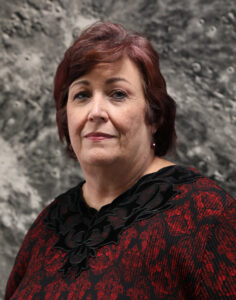
Newsletter 24-10

Issue 24-10, July 3, 2024

+————————————CONTENTS—————————————-+

  1. ABSTRACT SUBMISSION OPEN FOR THE 56TH ANNUAL MEETING OF THE AAS DIVISION FOR PLANETARY SCIENCES (DPS)
  2. DPS CALL FOR SPLINTER MEETING PROPOSALS
  3. 2024 DPS TRAVEL GRANT APPLICATION FORM IS OPEN
  4. KIANA MCFADDEN THIS YEAR’S DPS-NSBP SPEAKER AWARDEE
  5. 2024 ADVANCING IDEA IN PLANETARY SCIENCE CONFERENCE
  6. AGU P033: SSSBs: SAMPLE RETURNS, JWST, GROUND-BASED ASTRONOMY, AND MORE
  7. SURVEY ASSESSING HOW DIVERSITY AND INCLUSION HAVE CHANGED IN ASTROBIOLOGY
  8. 56TH LUNAR AND PLANETARY SCIENCE CONFERENCE – SAVE THE DATE
  9. PLANETARY SCIENCE JOURNAL PUBLISHES 1000TH PAPER
  10. 2024 TAPS MEETING ABSTRACT SUBMISSION, TRAVEL GRANT APPLICATION, AND REGISTRATION OPEN – AUGUST 15-16, SAN ANTONIO
  11. EXHIBITOR & SPONSORSHIP OPPORTUNITIES 56TH DPS MEETING
  12. DPS PROFESSIONAL DEVELOPMENT SUBCOMMITTEE SEEKS NEW MEMBERS
  13. CURRENT TABLE OF CONTENTS FOR THE PLANETARY SCIENCE JOURNAL AND ICARUS
  14. JOBS, POSITIONS, AND OPPORTUNITIES

+——————————————————————————————–+

1———1———1———1———1———1———1———1———1——-

ABSTRACT SUBMISSION OPEN FOR THE 56TH ANNUAL MEETING OF THE AAS DIVISION FOR PLANETARY SCIENCES (DPS)

Abstract submission is now open for the 56th Annual Division for Planetary Sciences (DPS) meeting.  The abstract deadline is Wednesday July 17.  One first-author scientific abstract is permitted per individual; additional abstracts are permitted in the areas of workforce, education, outreach, DEIA (diversity, equity, inclusion, and accessibility), and historical astronomy. 

Submit your Abstract

The SOC encourages abstracts in all of (but not limited to) the categories below.  Please get in touch with the DPS SOC chair (Kat Volk) with any questions you may have.

  • Asteroids: Dynamics, Origins, and Theory
  • Asteroids: Main-Belt Asteroid Physical Characteristics and Observational Surveys
  • Asteroids: Bennu and Ryugu
  • Asteroids: Planetary Defense, NEO Physical Characteristics, and Observational Surveys
  • Astrobiology and Origins of Life
  • Astrochemistry: Building Blocks of Planetary Systems
  • Atmospheric Processes
  • Centaurs and Kuiper Belt Objects: Dynamics, Origins, and Theory
  • Centaurs and Kuiper Belt Objects: Observational Surveys and Physical Characterization
  • Comets: Comae, Nuclei, and Surfaces (Observational/Physical Characterization, Chemistry)
  • Comets: Dynamics, Origins, and Theory
  • Earth as a Planet
  • Enceladus
  • Europa
  • Exoplanets and Systems: Discoveries and Characterization
  • Exoplanets and Systems: Atmospheres
  • Exoplanets and Systems: Dynamics, Origins, and Theory
  • Exoplanets: Habitability and Biosignatures
  • Field Campaigns and Planetary Analogues
  • Formation of Planets, Satellites, and Planetary Systems: Theory
  • Giant Planets: Interiors and Atmospheres
  • Giant Planets: Satellites and Satellite Systems (Regular and Irregular)
  • Icy Satellites
  • Interstellar Objects
  • Io
  • Laboratory Research
  • Magnetospheres and Space Environment
  • Mars
  • Mars Satellites: Phobos and Deimos
  • Mercury
  • Meteorites and Solar System Formation
  • Mission Concepts, Instruments and Facilities
  • Earth’s Moon
  • Ocean Worlds
  • Other
  • Planet and Satellite Dynamics
  • Planetary Interiors
  • Planetary Rings
  • Pluto System
  • Sun and the Heliosphere
  • Solar System Debris: Meteoroids, Meteors, and Dust
  • Surface Processes
  • Titan
  • Trojan Asteroids: Observations, Properties, and Dynamics
  • Venus

Areas of History/DEIA/Workforce/Education/Outreach

  • Planetary Science Workforce
  • Outreach / Education
  • DEIA
  • Amateur Astronomy / Citizen Science
  • Historical Astronomy

Please note: Yom Kippur begins on Friday, 11 October, so the meeting will begin with an evening reception on Sunday, 6 October, and end one day earlier than usual, on Thursday, October 10.

If you have any questions regarding DPS 56, please contact the AAS meetings team at 202-328-2010 or [email protected].

2———2———2———2———2———2———2———2———2——-

DPS CALL FOR SPLINTER MEETING PROPOSALS

We are still accepting proposals from the community for Splinter Meetings for the 56th Annual Meeting of the Division for Planetary Sciences (DPS). Decisions about which proposals can be accommodated are expected to be made by 16 July for Splinter Meetings.

Splinter Meetings are science or programmatic meetings that may be scheduled by organizations or groups usually in parallel to scheduled DPS sessions. These will usually require separate meeting space and may require A/V support, and/or catering. Deadline: 10 July

https://submissions.mirasmart.com/DPS56/Splash.aspx

3———3———3———3———3———3———3———3———3——-

2024 DPS TRAVEL GRANT APPLICATION FORM IS OPEN

The DPS Travel Grant application form is open to support participation in the 2024 DPS or National Society of Black Physicists annual meetings via the Hartmann and the URM Travel grants. 

The Hartmann Student Travel Grant supports student presentations at the annual DPS meeting. (Postdoctoral scholars may also be eligible, but students are prioritized.) 

The Underrepresented Minority (URM) Communities in Planetary Science Travel Grant supports attendance by student and professional folks that are members of Black/African American, Indigenous, and/or Latinx communities to support in-person or virtual attendance at the annual DPS or NSBP meeting.

Apply here to both/either program: https://dps.aas.org/news/dps-travel-grants-application/ 

The deadline is July 21.

Community donations are critical for the health of these awards. Donations to the URM travel grant through the end of October will be matched by a DPS community member, up to $4k. Instructions to donate are linked at https://dps.aas.org/news/dps-travel-grants-application/

4———4———4———4———4———4———4———4———4——-

KIANA MCFADDEN THIS YEAR’S DPS-NSBP SPEAKER AWARDEE

The DPS and National Society of Black Physicists (NSBP) are pleased to announce this year’s DPS-NSBP Speaker Awardee: Kiana McFadden, a PhD candidate at the University of Arizona. Kiana McFadden was selected based on her talk at the NSBP Fall 2023 meeting, entitled “Size and Albedo Constraints for (152830) Dinkinesh Using WISE Data.” This work was critical for helping the NASA Lucy mission plan their November 2023 encounter with this small main-belt asteroid. We look forward to hearing her invited talk at the 2024 DPS annual meeting, with travel supported by DPS. 

5———5———5———5———5———5———5———5———5——-

2024 ADVANCING IDEA IN PLANETARY SCIENCE CONFERENCE

The LPI’s 2024 Advancing IDEA in Planetary Science conference aims to boost the community’s momentum in incorporating Inclusion, Diversity, Equity, and Accessibility (IDEA) principles in the workforce. NASA and other planetary science stakeholders have committed to fostering IDEA principles throughout their agencies and funded programs. The LPI’s Expanding NASA’s Community of Planetary Sample Scientists (ENComPSS) program is supporting this virtual conference as a next step, building upon the 2022 Advancing IDEA in Planetary Science conference. We encourage participants from the 2022 conference to provide updates on the progress that has been made in the past two years.

Call for Abstracts and Registration

Abstract submission deadline: August 7, 2024, 5:00 p.m. CDT

Registration fees are not being collected for this meeting, but registration is required. Registration will be available through October 25. Before the conference, registered attendees will receive an email from Houston Meeting Info with virtual connection information.

Meeting Portal Updates: We have modified the meeting portal to follow best practices that support inclusion, diversity, equity, and accessibility. We encourage you to log into the meeting portal to update your profile information. From the meeting portal home page, click Edit Profile.

https://www.hou.usra.edu/meetings/advancingidea2024/

6———6———6———6———6———6———6———6———6——-

AGU P033: SSSBs: SAMPLE RETURNS, JWST, GROUND-BASED ASTRONOMY, AND MORE

Please consider submitting an abstract to our session on SSSBs. This session welcomes abstracts that address analyses of returned samples, new observations and models of large planetesimals found across the solar system, and contrast the properties of planetesimals found in various small body reservoirs.

Observations returned by space missions (e.g., OSIRIS-REx, Hayabusa 2, New Horizons…) and large telescopic facilities (e.g., JWST, Adaptive optics observations) offer a broad encompassing view of the populations of large planetesimals and dwarf planets that formed shortly after solar system formation. Most of these bodies have retained information on their accretional environments while others have undergone significant internal evolution. The sample return missions will continue deciphering the solar system’s early history with the exploration of near Earth asteroids like Ryugu and Bennu. Upcoming flyby missions to visit 16 Psyche and Jupiter Trojan asteroids and instruments on the extremely large telescopes available in the next decade will provide observations with unprecedented details of many large planetesimals.

Conveners: Julie Castillo, Franck Marchis, Bryan Holler

Submit an abstract here: https://agu.confex.com/agu/agu24/prelim.cgi/Session/225952

Deadline July 31, 2024

7———7———7———7———7———7———7———7———7——-

SURVEY ASSESSING HOW DIVERSITY AND INCLUSION HAVE CHANGED IN ASTROBIOLOGY

Dr. Arsev Umur Aydinoglu (Middle East Technical University) is conducting a second survey to assess how diversity and inclusion may have changed in the field of Astrobiology, since the first survey was conducted in 2022. Those findings were presented at AbSciCon 2024 (307-05, Diversity and Inclusion in Astrobiology: Results from a Survey).

Please find the follow-up survey here: 

https://www.surveymonkey.com/r/astrobiology2024

8———8———8———8———8——–8———8———8———8——-

56TH LUNAR AND PLANETARY SCIENCE CONFERENCE – SAVE THE DATE

The 56th Lunar and Planetary Science Conference (LPSC) will be held at The Woodlands Waterway Marriott Hotel and Convention Center in The Woodlands, Texas, and virtually on March 10–14, 2025. LPSC is a defining event in planetary research, bringing together a diverse group of international experts in a truly collaborative environment. For 56 years, LPSC has been convening the lunar and planetary science community to showcase the latest science, research, and discoveries in the field. To learn more, visit https://www.hou.usra.edu/meetings/lpsc2025/.

Indication of Interest

Submit an indication of interest to receive additional information about the conference.

9———9———9———9———9———9———9———9———9——-

PLANETARY SCIENCE JOURNAL PUBLISHES 1000TH PAPER

The Planetary Science Journal’s 1000th paper was just published!  Read about it and the PSJ impact factor for the past year in our press release:

https://aas.org/press/planetary-science-journal-publishes-its-1000th-article

10———10———10———10———10———10———10———10———

2024 TAPS MEETING ABSTRACT SUBMISSION, TRAVEL GRANT APPLICATION, AND REGISTRATION OPEN – AUGUST 15-16, SAN ANTONIO

The 2nd Texas Area Planetary Science (TAPS) Meeting will take place on August 15-16, 2024, at the downtown UT San Antonio (UTSA) campus in San Antonio (UTSA San Pedro I, 506 Dolorosa St, San Antonio). The TAPS meeting aims to strengthen interactions within the Texas planetary-exoplanet science and astrobiology community and foster collaborations & partnerships between institutions & researchers. We encourage researchers, faculty, postdocs, and students interested in planetary science and astrobiology/exoplanet research to join us for this 1.5-day event. 

The meeting website has been updated: https://sites.google.com/view/tapsmeeting/home

You can submit your abstract (this year, we are soliciting oral or poster presentations), apply for a travel grant, and register on the website under the tab TAPS002-2024. We are pleased to offer travel grants for attendees at all career stages, supported by the Heising-Simons Foundation.

Here are the deadlines to keep in mind:

July 8th: Abstract Submission Deadline

July 9th: Travel Grant Application Deadline

July 15th: Registration Deadline

Please contact Xinting Yu ([email protected]) or [email protected] for any questions.

11———11———11———11———11———11———11———11———

EXHIBITOR & SPONSORSHIP OPPORTUNITIES 56TH DPS MEETING

The American Astronomical Society invites you to support the 56th meeting of the Division for Planetary Sciences (DPS).

Each year the annual DPS meeting offers a jam-packed scientific schedule attracting your target audience. Last year’s Exhibit Hall was the hub of activity, boasting a robust exhibitor presence, meeting areas for attendees, dining, daily poster sessions, daily refreshment breaks, and evening receptions.

Boise, Idaho, is the perfect setting for this meeting. Both urban and wild, it’s lively, clean, artistic, and offers great dining options; its tree-lined streets are just steps from mountains, the Boise River, and hundreds of superb hiking trails.

The Exhibitor & Sponsor Prospectus will be available the first week of July. For updates, please visit https://aas.org/meetings/dps56. For more information on exhibiting at or sponsoring DPS 56, please contact Rod Nenner, Director of Strategic Partnerships. 

Past exhibitors include NASA, the Planetary Data System, Elsevier, Universities Space Research Association, the Lunar and Planetary Institute, Los Alamos National Lab – Center for Space and Earth Science, NASA’s Jet Propulsion Laboratory, the International Astronomical Union, the European Space Agency, Lockheed Martin, Ball Aerospace, Draper Laboratory, Northrop Grumman, the National Radio Astronomy Observatory, and many more.

12———12———12———12———12———12———12———12———

DPS PROFESSIONAL DEVELOPMENT SUBCOMMITTEE SEEKS NEW MEMBERS

The DPS Professional Development Subcommittee seeks new members; all career levels from students to professionals are welcome. The Professional Development Subcommittee provides educational, networking, and informational opportunities within the DPS community. These include the Women in Planetary Science event, professional development events, early career events, and a dependent care grant at the annual meeting. Read more about the subcommittee here: https://dps.aas.org/leadership/development

If you’re interested in joining this subcommittee, e-mail the current chair Jennifer Hanley ([email protected]).

13———13———13———13———13———13———13———13———

CURRENT TABLE OF CONTENTS FOR THE PLANETARY SCIENCE JOURNAL AND ICARUS

The current issues for both DPS-affiliated journals are here:

The Planetary Science Journal:

https://iopscience.iop.org/issue/2632-3338/5/6

Icarus:

https://www.sciencedirect.com/journal/icarus/vol/416/suppl/C

14———14———14———14———14———14———14———14———

JOBS, POSITIONS, AND OPPORTUNITIES

Job seekers and employers are encouraged to browse DPS’s job listings and advertise open positions **for free**.

Recent openings and opportunities are listed below and more are at the link above.

  1. Job Announcement – Department Chair of Physics and Applied Physics

The University of Massachusetts Lowell invites applications for the position of Chair to lead an established and active Department of Physics and Applied Physics. We seek a visionary chair with a record of academic and research achievement to take the department to a new level, who will supervise and maintain departmental academic activities, while continuing their independent research program in a field that enhances and/or complements our current research strengths. The successful candidate will be a nationally prominent academic leader with an established record of excellence in research, education and mentorship that can promote a culture of innovation, collaboration, respect, and integrity.

The University of Massachusetts Lowell is a leading public research university in the greater Boston area and has a national reputation in science, engineering, and technology. The appointee will be offered a competitive start-up package, with access to high-end research equipment and facilities, and the opportunity to collaborate with colleagues across disciplines in various science and engineering departments and research centers.

The position is open until filled, with a planned start date of September 1, 2025.

 For more information visit: https://explorejobs.uml.edu/en-us/job/523612/professor-and-department-chair-of-physics-and-applied-physics

  • Two Open Rank Professors of Planetary Sciences at the University of Bern

Institution: Division of Space Research and Planetary Sciences, University of Bern, Switzerland 

Job Description:  The Division of Space Research and Planetary Sciences within the Physics Institute of the University of Bern has two openings, as of 2025, for two professors in experimental planetary sciences. The Division is one of the leading research groups in the field of space instrumentation for experimental solar system exploration and is looking for professors in the fields of planetary remote sensing and in situ mass spectrometry or in related fields. The initial hiring level can range from assistant professor tenure track to full professor according to qualifications (open rank). The successful candidates are expected to have or further develop an excellent and internationally recognized track record in the development, construction, and exploitation of scientific instrumentation flying on spacecraft missions. The Division offers excellent conditions in terms of laboratory infrastructure, engineering, and manufacturing capabilities to build space-grade hardware. The University of Bern has set the aim of increasing the percentage of women in leading academic positions and thus strongly encourages female scientists to apply for the positions. 

The application deadline is 1 August 2024. More information can be found at:

https://www.space.unibe.ch/about_us/jobs/questionnaire/index_eng.html

+———————————

Send submissions to: Denise Stephens, DPS Secretary, at this address  [email protected]

You’re receiving this email because you are a DPS member. To unsubscribe or update your information, please send your request to [email protected]. The more general AAS privacy policy is available online at https://aas.org/about/policies/privacy-policy. Current and back issues of the DPS Newsletter can be found at https://dps.aas.org/newsletters

To unsubscribe from this list please go to https://lists.aas.org/confirm/?u=WumMgxrgIYvmfnfPIPRxfPgLc6qriC4R

Newsletter 24-09

Issue 24-09, Jun 17, 2024

+————————————CONTENTS—————————————-+

  1. 56TH ANNUAL MEETING OF THE AAS DIVISION FOR PLANETARY SCIENCES (DPS)
  2. DPS CALL FOR WORKSHOP AND SPLINTER MEETING PROPOSALS
  3. HAPPY JUNETEENTH!
  4. KIANA MCFADDEN THIS YEAR’S DPS-NSBP SPEAKER AWARDEE
  5. 2024 ADVANCING IDEA IN PLANETARY SCIENCE CONFERENCE
  6. DPS FEDERAL RELATIONS SUBCOMMITTEE (FRS) CAPITOL HILL ANNUAL VISIT
  7. SEARCH FOR LIFE SCIENCE ANALYSIS GROUP (SFL-SAG) CALL FOR APPLICATIONS
  8. NEW HORIZONS SCIENCE SPOTLIGHT WEBINAR
  9. NEUTRAL AND ION PHOTOCHEMISTRY IN PLANETARY ATMOSPHERES – LORENTZ CENTER WORKSHOP – CONTACT ORGANIZERS BY JUNE 17
  10. 2024 TAPS MEETING ABSTRACT SUBMISSION, TRAVEL GRANT APPLICATION, AND REGISTRATION OPEN – AUGUST 15-16, SAN ANTONIO
  11. CULTURALLY INCLUSIVE PLANETARY ENGAGEMENT WORKSHOP IN BOULDER
  12. EXOPLANETS: COMPOSITIONS, MINERALOGY, EVOLUTION – INTERDISCIPLINARY WORKSHOP WITH TRAVEL SUPPORT (AUGUST 17-18, CHICAGO)
  13. DPS PROFESSIONAL DEVELOPMENT SUBCOMMITTEE SEEKS NEW MEMBERS
  14. EXAMINING THE READINESS OF THE LUNAR COMMUNITY TO RECEIVE ARTEMIS SAMPLES
  15. SPACE SCIENCE SERIES VOLUMES AVAILABLE ON OPEN ACCESS
  16. CURRENT TABLE OF CONTENTS FOR ICARUS AND THE PLANETARY SCIENCE JOURNAL 
  17. JOBS, POSITIONS, AND OPPORTUNITIES

+——————————————————————————————–+

1———1———1———1———1———1———1———1———1——-

56TH ANNUAL MEETING OF THE AAS DIVISION FOR PLANETARY SCIENCES (DPS)

Join us 6-10 October in Boise, Idaho, and online for the 56th Annual Division for Planetary Sciences (DPS) meeting.  We plan to open abstract submissions by 24 June with a closing date of 17 July.  

The Hartmann Student Travel Grant and the Underrepresented Minority Communities in Planetary Science Travel Grant will again be offered, stay tuned for the applications to open in the next couple of weeks.

Please note: Yom Kippur begins on Friday, 11 October, so the meeting will begin with an evening reception on Sunday, 6 October, and end one day earlier than usual, on Thursday, October 10.

If you have any questions regarding DPS 56, please contact the AAS meetings team at 202-328-2010 or [email protected].

2———2———2———2———2———2———2———2———2——-

DPS CALL FOR WORKSHOP AND SPLINTER MEETING PROPOSALS

We are now calling for proposals from the community for Workshops and Splinter Meetings for the 56th Annual Meeting of the Division for Planetary Sciences (DPS). Decisions about which proposals can be accommodated are expected to be made by 9 July for Workshops and 16 July for Splinter Meetings.

Workshop Proposals

A workshop is a focused meeting, typically with a small group of invited participants, usually on an educational, programmatic, or career topic. Workshops are typically collaborative and interactive. Examples include tutorials on use of astronomical software, and tools related to scheduling and data analysis for observatories and missions. Formal Working Group meetings for observatories and missions are usually scheduled as workshops. Deadline: 2 July

Splinter Meeting Proposals

Splinter Meetings are science or programmatic meetings that may be scheduled by organizations or groups usually in parallel to scheduled DPS sessions. These will usually require separate meeting space and may require A/V support, and/or catering. Deadline: 10 July

https://submissions.mirasmart.com/DPS56/Splash.aspx

3———3———3———3———3———3———3———3———3——-

HAPPY JUNETEENTH!

The DPS Professional Climate and Culture Subcommittee (PCCS) would like to wish everyone a Happy Juneteenth! This annual celebration of emancipation of slavery in the United States [1] is a federal holiday (on June 19). In honor of this occasion, we encourage all members of our community to celebrate [2], become familiar with this U.S. history [1], and reflect on the many contributions by Black scientists and other scientists of color to the investigation of space. In particular, we recommend checking out #blackinastroweek2024 (June 16-22) [3] and consider participating in the annual meeting of the National Society of Black Physicists (NSBP), this year jointly hosted with the National Society of Hispanic Physicists (NSHP), to be held Nov 13-17 in Houston, TX [4]. Via a partnership between NSBP and DPS, the annual DPS URM travel grant to support attendance by members of URM communities to the NSBP or the DPS annual meeting will open shortly. Donations to the DPS URM travel grant can be submitted via the DPS site, and those submitted by the end of October will be matched by a DPS community member, up to $4k.

References

[1] “What Is Juneteenth?” by Henry Louis Gates Jr. https://bit.ly/3cQmAqX

[2] Poem “Emancipation” by Priscilla Jane Thompson https://bit.ly/3wGOrlF

[3] Black in Astro week: https://www.blackinastro.com/

[4] NSBP website including link to the meeting: https://nsbp.org/

4———4———4———4———4———4———4———4———4——-

KIANA MCFADDEN THIS YEAR’S DPS-NSBP SPEAKER AWARDEE

The DPS and National Society of Black Physicists (NSBP) are pleased to announce this year’s DPS-NSBP Speaker Awardee: Kiana McFadden, a PhD candidate at the University of Arizona. Kiana McFadden was selected based on her talk at the NSBP Fall 2023 meeting, entitled “Size and Albedo Constraints for (152830) Dinkinesh Using WISE Data.” This work was critical for helping the NASA Lucy mission plan their November 2023 encounter with this small main-belt asteroid. We look forward to hearing her invited talk at the 2024 DPS annual meeting, with travel supported by DPS. 

5———5———5———5———5———5———5———5———5——-

2024 ADVANCING IDEA IN PLANETARY SCIENCE CONFERENCE

The LPI’s 2024 Advancing IDEA in Planetary Science conference aims to boost the community’s momentum in incorporating Inclusion, Diversity, Equity, and Accessibility (IDEA) principles in the workforce. NASA and other planetary science stakeholders have committed to fostering IDEA principles throughout their agencies and funded programs. The LPI’s Expanding NASA’s Community of Planetary Sample Scientists (ENComPSS) program is supporting this virtual conference as a next step, building upon the 2022 Advancing IDEA in Planetary Science conference. We encourage participants from the 2022 conference to provide updates on the progress that has been made in the past two years.

Call for Abstracts and Registration

Abstract submission deadline: August 7, 2024, 5:00 p.m. CDT

Registration fees are not being collected for this meeting, but registration is required. Registration will be available through October 25. Before the conference, registered attendees will receive an email from Houston Meeting Info with virtual connection information.

Meeting Portal Updates: We have modified the meeting portal to follow best practices that support inclusion, diversity, equity, and accessibility. We encourage you to log into the meeting portal to update your profile information. From the meeting portal home page, click Edit Profile.

https://www.hou.usra.edu/meetings/advancingidea2024/

6———6———6———6———6———6———6———6———6——-

DPS FEDERAL RELATIONS SUBCOMMITTEE (FRS) CAPITOL HILL ANNUAL VISIT

The DPS Federal Relations Subcommittee (FRS) completed its annual visit to Capitol Hill, to discuss NASA and NSF planetary science funding and priorities, in early June of 2024. The FRS visits followed DPS Committee advocacy visits in early May of 2024. A revised one-pager, available to the DPS community on the AAS DPS website, and a letter detailing planetary science community priorities and specific asks were included in visit preparation efforts. During these visits we met and communicated with House and Senate Authorization and Appropriation staffers responsible for NASA and NSF, as well as individual Congressional offices of DPS committee and FRS members. We also had the opportunity to meet with the newly introduced NASA SMD Acting PSD Director. Our advocacy focused on continued education about the Planetary Science and Astrobiology decadal survey, as well as the small-, mid-scale, and large missions to multiple solar system destinations that sustain our current workforce and provide opportunities to train the next generation of STEM professionals. We emphasized the importance of maintaining the decadal recommendation specific to Research and Analysis (R&A) funding levels tied to 10% of the PSD budget, as well as the importance of balance across NASA SMD and PSD, which includes a balance of mission destinations and opportunities for planetary science community members of different career stages. Our advocacy was well received this year, and there continues to be strong support for planetary science within Congress. 

Angela M. Dapremont, AAS DPS FRS Chair ([email protected])

7———7———7———7———7———7———7———7———7——-

SEARCH FOR LIFE SCIENCE ANALYSIS GROUP (SFL-SAG) CALL FOR APPLICATIONS

The Mars Exploration Program Analysis Group (MEPAG) and the NASA Astrobiology program have chartered the Search for Life Science Analysis Group (SFL-SAG). The purpose of the SFL-SAG is to refine the recommendation for a ‘Search for Life’ mission in the 2023-2032 Planetary Science Decadal Survey by narrowing down the type of environment to which the SFL mission will be delivered, identifying the specific science and technology needs for a mission to that location, and identifying those mission elements that will offer the most conclusive answers, for a mission of this class, to the question of ‘Are we alone?’. The SFL-SAG charter can be found at https://www.lpi.usra.edu/mepag/sag/sfl-sag/SFL-SAG_Charter.pdf and contains further details about the purpose, scope, approach and deliverables of the SAG.

To maximize the value of the SAG’s final report, the chartering organizations are seeking representation across a broad range of scientific and technical fields, including, but not limited to:

  • Astrobiology and origin of life
  • Geology (geochemistry, geobiology)
  • Biology (biochemistry, microbiology)
  • Chemistry (organic chemistry, prebiotic chemistry)
  • Climate and atmospheric science
  • Planetary protection
  • Technology (robotics, landed and mobility systems, instrumentation, life detection, subsurface access, mission architecture and operations)

Self-nominations for participation on SFL-SAG are being solicited through June 26, 2024, with selections occurring soon thereafter. The anticipated period of SAG activities will be July 2024-March 2025. Applicants should anticipate a regular meeting cadence during this period, with meetings done chiefly by Microsoft Teams or Zoom, and communications by email.

Applicants are asked to submit their CV of no more than 2 pages, and a cover letter of no more than 2 pages (as a single, combined document), indicating interest in SFL-SAG participation, and touching upon those evaluation elements listed in the SFL-SAG Charter under ‘Methods/SAG Member Selection’ and listed on the application website at https://www.lpi.usra.edu/mepag/sag/sfl-sag/. As we seek a balance of experiences and expertise, selection to the SAG does not require knowledge of, or experience in, all evaluation elements. Applications are encouraged from candidates whose primary expertise is not based in Mars research, and applicants from all career levels.

Applications should be uploaded at the Google Form https://forms.gle/pYLUyyDMLijPxMTd7 in PDF or DOC file format by 5pm PDT on June 26, 2024.

If you have questions, or difficulty uploading your application, please contact Jonathan Bapst at [email protected]

8———8———8———8———8——–8———8———8———8——-

NEW HORIZONS SCIENCE SPOTLIGHT WEBINAR

Join us on June 27th, 2:30-3pm EST (11:30-12 PST,12:30-1pm MST,1:30-2pm CST)

New Horizons continues its operation, now at 58.8au from the Sun. Since 2015 it has made ground-breaking discoveries of the Pluto-Charon system, flown past the small contact KBO binary Arrokoth and collected phase and light curve data for some three dozen additional KBOs and the ice giants. It has also been sampling dust density throughout the solar system and studying the cosmic optical background. To raise awareness of New Horizon’s scientific impact we are beginning a new spotlight seminar series (30 min, fourth week each month) which we invite you to attend online, or watch recorded at your convenience. 

Our speaker will be Alex Doner from the University of Colorado. His talk is entitled:

“New Horizons Venetia Burney Student Dust Counter Observes Higher than Expected Fluxes Approaching 60 AU”

Connection Link:

https://zoom.us/j/97317697636?pwd=MTAzMjJmNThTeFppR3JoYzlkUXVCQT09

Meeting ID: 973 1769 7636

Calendar for future seminars:

https://zoom.us/meeting/tJMudu6upzwsGdKrlGdxLvb2e_I91uILetOL/ics?icsToken=98tyKuCvrTotHN2SthqBRowEA4j4KO7xmGZdjad2jhPCBzh_dAGkM91ra-NqOfTV

Recordings are archived and posted at: 

https://pluto.jhuapl.edu/News-Center/index.php#Spotlight-Presentations

For questions, contact New Horizons CoI Susan Benecchi, [email protected]

9———9———9———9———9———9———9———9———9——-

NEUTRAL AND ION PHOTOCHEMISTRY IN PLANETARY ATMOSPHERES – LORENTZ CENTER WORKSHOP – CONTACT ORGANIZERS BY JUNE 17

We would like to draw your attention to the following Lorentz Center Workshop:  Neutral and Ion Photochemistry in Planetary Atmospheres, 29 July – 2 August 2024, Lorentz Center@Oort – Leiden, The Netherlands

https://www.lorentzcenter.nl/neutral-and-ion-photochemistry-in-planetary-atmospheres.html

The aim of this meeting is to bring together experts from the chemistry, planetary science, and astronomy communities to tackle topics such as:

  • Disequilibrium Chemistry in (Exo)Planetary Atmospheres
  • Observational Diagnostics of Photochemistry
  • Chemical Networks, Cross Sections, Molecular Spectroscopy
  • Laboratory Experiments, Ab-Initio Calculations

The workshop will be a small-scale, in-person meeting with a strong focus on interactive discussions and collaboration. There is no registration fee and participation includes daily lunches, a sea-side workshop dinner, and a wine and cheese social event.             

We still have several open spots, so if you are interested to participate or have further questions, you can send an email to [email protected] or contact one of the organizers directly before June 17th. Please feel free to share this message with interested colleagues or students.

10———10———10———10———10———10———10———10———

2024 TAPS MEETING ABSTRACT SUBMISSION, TRAVEL GRANT APPLICATION, AND REGISTRATION OPEN – AUGUST 15-16, SAN ANTONIO

The 2nd Texas Area Planetary Science (TAPS) Meeting will take place on August 15-16, 2024, at the downtown UT San Antonio (UTSA) campus in San Antonio (UTSA San Pedro I, 506 Dolorosa St, San Antonio). The TAPS meeting aims to strengthen interactions within the Texas planetary-exoplanet science and astrobiology community and foster collaborations & partnerships between institutions & researchers. We encourage researchers, faculty, postdocs, and students interested in planetary science and astrobiology/exoplanet research to join us for this 1.5-day event. 

The meeting website has been updated: https://sites.google.com/view/tapsmeeting/home

You can submit your abstract (this year, we are soliciting oral or poster presentations), apply for a travel grant, and register on the website under the tab TAPS002-2024. We are pleased to offer travel grants for attendees at all career stages, supported by the Heising-Simons Foundation.

Here are the deadlines to keep in mind:

July 8th: Abstract Submission Deadline

July 9th: Travel Grant Application Deadline

July 15th: Registration Deadline

Please contact Xinting Yu ([email protected]) or [email protected] for any questions.

11———11———11———11———11———11———11———11———

CULTURALLY INCLUSIVE PLANETARY ENGAGEMENT WORKSHOP IN BOULDER

Planetary scientists and astrobiologists within the United States are invited to apply to attend the Culturally Inclusive Planetary Engagement professional development workshop and public engagement event August 20-22, 2024, in Boulder, CO, in partnership with the Laboratory for Atmospheric and Space Physics (LASP) and Boys & Girls Clubs of Denver Metro. During the three-day workshop, participants engage with local informal educators to discuss and model effective strategies for engaging Black and Latinx communities in planetary science, and conduct hands-on activities during a co-designed public engagement event. More information about the workshop and links to the application form are available at https://www.lpi.usra.edu/planetary-reach/workshops/

Spaces are limited. Stipends (including travel stipends) are available for those participants who are able to accept them. Application deadline: June 18, 2024.

12———12———12———12———12———12———12———12———

EXOPLANETS: COMPOSITIONS, MINERALOGY, EVOLUTION – INTERDISCIPLINARY WORKSHOP WITH TRAVEL SUPPORT (AUGUST 17-18, CHICAGO)

Exoplanets! Formation! Evolution! And you! Participate in a great interdisciplinary workshop at Goldschmidt24 that will feature talks+discussions on astronomy, geology, and astrobiology to help bridge the gap in exoplanet characterization. The speakers of the workshop — all experts in their field — have come together to write the Reviews in Mineralogy and Geochemistry (RiMG) book: “Exoplanets: Compositions, Mineralogy, Evolution.” The chapters are primers, focused on understanding/learning about other disciplines and are catered to non-expert scientists, and will be the focus of the talks. The hope for our workshop is to spur interdisciplinary conversations and initiate collaborations, as well as explain the current state of the field and teach one another about our respective fields. Plus, everyone gets a copy of the book with registration!

Workshop information: https://tinyurl.com/Goldschmidt24Exoplanets

Dates: August 17-18, 2024 in Chicago, right before Goldschmidt2024

Registration: Cost is $260 (reg) / $210 (students). Includes lunch and coffee for both days, as well as a copy of the RiMG book!

Travel support: The organizers have secured NASA funding to offset domestic travel and registration costs for U.S.-based researchers. Interested attendees can apply for funding here: https://forms.gle/F8QkqKuPhqCTsnow6

Forms submitted by June 23 will receive full consideration. We expect to notify applicants by June 26, 2024. The workshop registration deadline is July 1, 2024.

If you have any questions, please reach out to Natalie Hinkel at [email protected].

13———13———13———13———13———13———13———13———

DPS PROFESSIONAL DEVELOPMENT SUBCOMMITTEE SEEKS NEW MEMBERS

The DPS Professional Development Subcommittee seeks new members; all career levels from students to professionals are welcome. The Professional Development Subcommittee provides educational, networking, and informational opportunities within the DPS community. These include the Women in Planetary Science event, professional development events, early career events, and a dependent care grant at the annual meeting. Read more about the subcommittee here: https://dps.aas.org/leadership/development

If you’re interested in joining this subcommittee, e-mail the current chair Jennifer Hanley ([email protected]).

14———14———14———14———14———14———14———14———

EXAMINING THE READINESS OF THE LUNAR COMMUNITY TO RECEIVE ARTEMIS SAMPLES

The joint LEAG-ExMAG Specific Action Team (SAT) is examining the readiness of the lunar community to receive Artemis samples.  Part of their task is to address how well-prepared we are to maximize the science return of nominal Artems samples.  In this context, preparedness refers to that of workforce, facilities, and funding.  A critical part of making this determination is receiving community input for the report.

With this is mind, please respond to a survey about how well prepared we are as a lunar community to enhance the science return of Artemis samples.  The survey should take approximately 5-15 minutes and your input is greatly appreciated.  We especially would appreciate you letting us know who else should be sent this survey as we want to make sure all interested stakeholders have a chance to provide input.

The link to the form: https://forms.gle/Sab8uXSYEn1Yv4qW7

Please reach out to Nicolle Zellner with any questions: [email protected]

15———15———15———15———15———15———15———15———

SPACE SCIENCE SERIES VOLUMES AVAILABLE ON OPEN ACCESS

The University of Arizona Press announces the Open Access release of fourteen previous volumes in the Space Science Series.  These newly released volumes span the broad range of planetary science, including giant planets, rings, satellites, asteroids, meteorites, protostars and planets.   The full announcement and Open Access links can be found here:  https://uapress.arizona.edu/2024/05/new-oa-titles-space-science

16———16———16———16———16———16———16———16———

CURRENT TABLE OF CONTENTS FOR ICARUS AND THE PLANETARY SCIENCE JOURNAL

The current issues for both DPS-affiliated journals are here:

Icarus:

https://www.sciencedirect.com/journal/icarus/vol/415/suppl/C

The Planetary Science Journal:

https://iopscience.iop.org/issue/2632-3338/5/6

17———17———17———17———17———17———17———17———

JOBS, POSITIONS, AND OPPORTUNITIES

Job seekers and employers are encouraged to browse DPS’s job listings and advertise open positions **for free**.

Recent openings and opportunities are listed below and more are at the link above.

  1. Job Announcement – Department Chair of Physics and Applied Physics

The University of Massachusetts Lowell invites applications for the position of Chair to lead an established and active Department of Physics and Applied Physics. We seek a visionary chair with a record of academic and research achievement to take the department to a new level, who will supervise and maintain departmental academic activities, while continuing their independent research program in a field that enhances and/or complements our current research strengths. The successful candidate will be a nationally prominent academic leader with an established record of excellence in research, education and mentorship that can promote a culture of innovation, collaboration, respect, and integrity.

The University of Massachusetts Lowell is a leading public research university in the greater Boston area and has a national reputation in science, engineering, and technology. The appointee will be offered a competitive start-up package, with access to high-end research equipment and facilities, and the opportunity to collaborate with colleagues across disciplines in various science and engineering departments and research centers.

The position is open until filled, with a planned start date of September 1, 2025.

 For more information visit: https://explorejobs.uml.edu/en-us/job/523612/professor-and-department-chair-of-physics-and-applied-physics

  • NASA Postdoctoral Fellowship – Application Deadline July 1, 2024

The NASA Postdoctoral Program offers US and international scientists the opportunity to advance their research while contributing to NASA’s scientific goals.  The NPP supports fundamental science; explores the undiscovered; promotes intellectual growth; and encourages scientific connections. 

Selected by a competitive peer-review process, NPP Fellows complete one- to three-year Fellowship appointments that advance NASA’s missions in Earth science, planetary science, heliophysics, astrophysics, biological and physical science, aeronautics and engineering, human exploration systems, space operations, space technology, and astrobiology.  Search for NPP research opportunities in Planetary Science here: NPP Research Opportunities

 Applicants must have a Ph.D. or equivalent degree in hand before beginning the fellowship, but may apply while completing the degree requirements. Please see current eligibility requirements. Stipends start at $70,000 per year, with supplements for higher cost-of-living areas and for certain academic specialties. Financial assistance is available for relocation and health insurance, and $10,000 per year is provided for travel and professional development. 

 Applications are accepted three times each year: March 1, July 1, and November 1.

 For further information and to apply, visit: https://npp.orau.org/applicants/index.html.   

 Questions: [email protected]

  • Two Open Rank Professors of Planetary Sciences at the University of Bern

Institution: Division of Space Research and Planetary Sciences, University of Bern, Switzerland 

Job Description:  The Division of Space Research and Planetary Sciences within the Physics Institute of the University of Bern has two openings, as of 2025, for two professors in experimental planetary sciences. The Division is one of the leading research groups in the field of space instrumentation for experimental solar system exploration and is looking for professors in the fields of planetary remote sensing and in situ mass spectrometry or in related fields. The initial hiring level can range from assistant professor tenure track to full professor according to qualifications (open rank). The successful candidates are expected to have or further develop an excellent and internationally recognized track record in the development, construction, and exploitation of scientific instrumentation flying on spacecraft missions. The Division offers excellent conditions in terms of laboratory infrastructure, engineering, and manufacturing capabilities to build space-grade hardware. The University of Bern has set the aim of increasing the percentage of women in leading academic positions and thus strongly encourages female scientists to apply for the positions. 

The application deadline is 1 August 2024. More information can be found at:

https://www.space.unibe.ch/about_us/jobs/questionnaire/index_eng.html

+———————————

Send submissions to: Denise Stephens, DPS Secretary, at this address  [email protected]

You’re receiving this email because you are a DPS member. To unsubscribe or update your information, please send your request to [email protected]. The more general AAS privacy policy is available online at https://aas.org/about/policies/privacy-policy. Current and back issues of the DPS Newsletter can be found at https://dps.aas.org/newsletters

To unsubscribe from this list please go to https://lists.aas.org/confirm/?u=WumMgxrgIYvmfnfPIPRxfPgLc6qriC4R
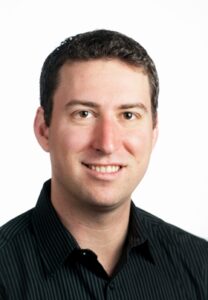
Kiana McFadden Is The 2024 DPS-NSBP Speaker Awardee

Within the partnership between The Division for Planetary Sciences (DPS) of the American Astronomical Society (AAS) and the National Society of Black Physicists (NSBP), Earth and Planetary Systems Sciences (EPSS) section, we recognize Kiana McFadden as the newest DPS-NSBP Speaker Awardee. Kiana is a PhD student in planetary science at the University of Arizona, specializing in the study of small body surfaces. She is currently working with Dr. Amy Mainzer for the study of mainbelt asteroids, using images acquired by the Near-Earth Object Wide-Field Infrared Survey Explorer (NEOWISE) and Wide-Field Infrared Survey Explorer (WISE) space telescopes.

Kiana McFadden’s award-winning talk at the NSBP Fall 2023 meeting, entitled “Size and Albedo Constraints for (152830) Dinkinesh Using WISE Data,” described work that was critical for helping the NASA Lucy mission plan their November 2023 encounter with this small main-belt asteroid (as described here).

The DPS partnership with NSBP was established to jointly represent the interests of planetary
scientists and students who identify as members of communities that are critically underrepresented
in this discipline. This partnership is part of a broader effort by the DPS to facilitate the involvement
and participation of more students/scientists belonging to racial/ethnic groups that have been
historically underrepresented in the planetary science discipline.

More information on the structure of this partnership can be found here: https://dps.aas.org/leadership/nsbp_parnership and donations supporting associated travel grants can be submitted here: https://dps.aas.org/Inclusivity/support-underrepresented-minority-communities-planetary-science.

Within this DPS-NSBP partnership, the top early career EPSS speaker is selected by the NSBP EPSS
chairs, based on their presentation at the annual NSBP meeting, as the DPS-NSBP Speaker awardee.
This Speaker is invited by DPS to speak at the following year’s DPS meeting, with expenses covered
by the DPS. Furthermore, the NSBP EPSS Chairs and the DPS Committee facilitate invitation of the
Speaker to an academic seminar at an HBCU, NASA center, national laboratory, or large planetary
science university program or research institute, in the same calendar year.

DPS is thrilled to invite Kiana McFadden to speak at the 2024 DPS meeting, which will be held in
Boise, Idaho, USA and virtually. Additionally, Kiana McFadden will be speaking at the
Southwest Research Institute (SwRI), in Boulder, colloquium series this fall.

Contacts:
Dr. Carol Raymond, DPS Chair, [email protected]
Dr. Serina Diniega, DPS committee member, [email protected]
Dr. Theodore Kareta, DPS Press Officer, [email protected]
More information about DPS: https://dps.aas.org/
More information about the DPS 2024 meeting: https://dps.aas.org/meetings/future
More information about NSBP: https://nsbp.org/
Kiana McFadden’s professional website: https://www.lpl.arizona.edu/graduate/students/kiana-mcfadden

The Division for Planetary Sciences (DPS), founded in 1968, is the largest special-interest Division
of the American Astronomical Society (AAS). Members of the DPS study the bodies of our own
solar system, from planets and moons to comets and asteroids, and all other solar-system objects and
processes. With the discovery that planets exist around other stars, the DPS has expanded its scope to
include the study of extrasolar planetary systems as well.
The American Astronomical Society (AAS), established in 1899, is the major organization of
professional astronomers in North America. The mission of the AAS is to enhance and share
humanity’s scientific understanding of the universe as a diverse and inclusive astronomical
community, which it achieves through publishing, meeting organization, science advocacy, education
and outreach, and training and professional development.

DPS Travel Grants Application

The AAS Division for Planetary Sciences (DPS) offers two travel grants to DPS conferences on an annual basis. Award of a travel grant assumes submission of a DPS abstract which is described in the application. Approximately 30 travel grants may be awarded at $500-$1500 each:

  • The Hartmann Student Travel Grant supports student presentations at the annual DPS meeting. (Postdoctoral scholars may also be eligible, but students are prioritized.) These travel grants are intended to provide a supplement that enables the student to be able to present at the annual meeting, especially in person. 
  • The Underrepresented Minority (URM) Communities in Planetary Science Travel Grant  supports attendance by students and professionals who are members of groups that have had inadequate access to the planetary science community.  Applications are especially encouraged from members of group(s) whose contributions to STEM may have been overlooked, students and professionals hailing from colleges and non-R1 academic or research institutions* that have not traditionally benefited from connections to the planetary science community, and/or students and professionals with degrees in broader STEM disciplines (e.g., chemistry, physics, engineering, mathematics) who are new to the planetary science community. The aim of these grants is to enable in-person or virtual participation at DPS or National Society of Black Physicists (NSBP) – National Society of Hispanics Physicists (NSHP) meetings. Presentation by the applicant is not required but is prioritized.
    * Relevant institutions include small colleges and universities, primarily undergraduate institutions, and minority serving institutions (MSIs), including but not limited to, Hispanic Serving Institutions (HSIs), Historically Black Colleges and Universities (HBCUs), Native American-Serving Non-Tribal Institutions, and Tribal Colleges and Universities.

An application may be submitted jointly to both programs.

Applicants for DPS travel grants do not need to be U.S. citizens or permanent residents; travel grants are open to all nationalities. Eligible candidates are welcome to apply for both grants, but if selected would receive only one. The application process is integrated into abstract submission for the DPS2026 Meeting (deadline 1 July 2026).

Questions about the Hartmann Student Travel Grant or the URM travel grant should be directed to the DPS Vice Chair, [email protected].

The 2026 DPS travel grant application form is now open. This will be for attendance at the DPS meeting in Spokane, Washington, U.S.A. 25-30 October 2026. Award notifications are planned during July (before the early registration deadline), but the award team will work with the DPS and NSBP-NSHP meeting organizers to accommodate the various registration deadlines/costs should there be delays. Awards typically take the form of a single payment, issued around the start of the relevant meeting or afterward, as a reimbursement. Grants are primarily intended for students, but post-doctoral scientists without other means of support will also be considered. The deadline is 1 July, 2026.

Additionally, DPS provides dependent care grants. Dependent care grants provide financial assistance to qualifying members in order to facilitate their meeting attendance by offsetting costs for child care, elder care, spousal care, etc. at the meeting location or at home during the DPS conference. Apply for a dependent care grant here.

Community donations are critical for the health of these awards. To donate, please log in to your AAS account, access this link, and select the grant you wish to support.