
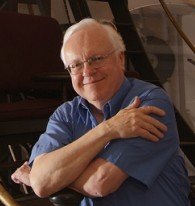
 Brian Geoffrey Marsden was born on August 5, 1937, in Cambridge, England. He was an undergraduate at New College, University of Oxford. By the time he received his undergraduate degree, in mathematics, he had already developed somewhat of an international reputation for the computation of orbits of comets, including new discoveries, and spent part of his first two undergraduate summer vacations working at the British Nautical Almanac Office.
After Oxford, in 1959, he worked at the Yale University Observatory, where he started computing the orbits of comets. Recalling his earlier interest in Jupiter’s moons, he completed the requirements for his Ph.D. degree with a thesis on “The Motions of the Galilean Satellites of Jupiter”. At the invitation of director Fred Whipple, he joined the staff of the Smithsonian Astrophysical Observatory in Cambridge, Massachusetts in 1965 where he developed a way to incorporate forces over and above those of gravitation directly into the equations that governed the motion of a comet. It is noteworthy that the procedure devised and developed by Marsden is still widely used to compute the non-gravitational effects of comets, with relatively little further modification by other astronomers.
Marsden succeeded Dr. Owen Gingerich as the CBAT director in 1968 and in 1978 the IAU asked him to also take over the direction of the MPC.
Marsden was also interested in the “transneptunian objects”. More specifically, he was the first to suggest, correctly, that three further transneptunian objects discovered in 1993 were exactly like Pluto in the sense that they all orbit the Sun twice while Neptune orbits it thrice. This particular recognition set him firmly on the quest to “demote” Pluto. Success required the discovery of transneptunian objects more comparable to Pluto in size, something that finally happened in 2005 with the discovery of the object that came to be known as Eris. At its triennial meeting in 2006 in Prague, the IAU voted to designate these objects, together with two further transneptunian objects now known as Makemake and Haumea, as well as the largest asteroid, Ceres, members of a new class of “dwarf planet”. It was also at the IAU meeting in Prague that Marsden stepped down as MPC director, and he was quite entertained by the thought that both he and Pluto had been retired on the same day.
Marsden served as an associate director of the Harvard-Smithsonian Center for Astrophysics for more than 15 years; he was chair of the Division of Dynamical Astronomy of the American Astronomical Society during 1976-1978 and president of the IAU commissions that oversaw the operation of the minor Planet Center (1976-1979) and the Central Bureau for Astronomical Telegrams (2000-2003). He continued to serve subsequently on the two solar-system nomenclature committees of the IAU, being the perennial secretary of the one that decides on names for asteroids. He also continued to publish a “Catalogue of Cometary Orbits”, the first of these having appeared in 1972 and its successors roughly at intervals of two years.
B. Marsden passed away on 18 November and will be sorely missed by our community.
 Thomas J. Ahrens, one of the leading figures in mineral physics, geophysics, and planetary sciences during the Twentieth Century and a member of the Seismological Laboratory, passed away on November 24, 2010 at the age of 74.
 Dr. Ralph Belknap Baldwin died peacefully on October 23, 2010, at age 98.
 The French astronomer and aeronaut Audouin Dollfus passed away October 1, 2010 in Versailles, France, at the age of 85. Born November 12, 1924 in Paris and son of an aeronaut, he built his first refracting telescope at the age of 14. Graduated in Mathematical Sciences and Physics, he started his career at the Observatory of Paris-Meudon as a student of astronomer Bernard Lyot. At a time when astronomy was focusing on deep sky, Dollfus turned to the study of the Solar System, and became a worldwide expert on the subject. He created the Laboratory of Solar System Physics at Meudon, studying all planets, with special interest in Mars, Venus, Mercury, Saturn and Jupiter. He also contributed to the study of the Sun through the development of a coronagraph that was used by many spacecraft missions. Dollfus led astronomical campaigns both at the Observatory of Meudon and the Pic-du-Midi Observatory. He discovered Janus, 10th satellite of Saturn in 1966, and asteroïd 2451 bears his name. The breadth and reach of his research and his numerous (330) scientific publications allowed him to contribute to many international committees.
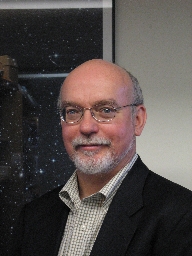 The DPS joins the astronomical community in mourning the untimely death of John Huchra, distinguished astronomer and Past President of the AAS, on October 8. John was a friend of the DPS in our time of financial crisis, when he was serving as the AAS President. He will be sorely missed.