Issue 16-17, May 22, 2016
+————————————CONTENTS—————————————-+
- MESSAGE FROM THE CHAIR: FUTURE OF THE PLANETARY BUDGET
- SPITZER CYCLE 13 PROPOSAL DEADLINE JUNE 8
- JOBS, POSITIONS, OPPORTUNITIES
+——————————————————————————————–+
1———1———1———1———1———1———1———1———1———1
MESSAGE FROM THE CHAIR: FUTURE OF THE PLANETARY BUDGET
I wanted to relay to you a brief note on the budget situation. The NASA
Planetary Science budget has recovered from the hard times in 2013 and
2014 when we suffered a 20% cut in the President’s proposed budget.
But even though Earth Science and Planetary Science had nearly the same
enacted budget back in 2006, this past year PSD got $1.631B and Earth
Science was up at $1.931. We want to grow the Planetary budget by
increasing the topline numbers, not by cannibalizing other science programs.
And with our strong support from Congress, continued Planetary budget
increases are entirely within the realm of possiblility. The new House
language mandates a 2022 Europa Clipper launch and a 2024 launch of a
Europa Lander, and puts its money where its mouth is by allocating $260M
for Europa. But the disconnect between the legislative branch and the
executive branch is making for an inefficient way forward.
Congress has consistently supported Planetary Science over and above
Presidential budget requests in recent years. But the disconnect between
enacted budgets and executive future budget runouts leads to a less than
optimal use of money from an efficiency standpoint. To illustrate the issue,
we’ve put together this graph of requested and projected versus enacted
budgets (real-year dollars, not inflation adjusted) since 2013:
http://tinyurl.com/PSDbudget . These projections force NASA to plan
assuming that it will get less money in the future, when its nearly certain
that Congress will pass higher numbers. These low projections make it
hard to, for instance, plan for Europa Clipper’s development or choose a
healthy number of competed missions.
This administration has made it clear that Planetary Science is not their
priority. But a new administration will come into the picture for the next
budget cycle. Hopefully their outlook will be more in tune with that of
Congress and supportive for us, whoever it is that ends up in the White
House in 2017.
Jason W. Barnes
DPS Chair
2———2———2———2———2———2———2———2———2———2
SPITZER CYCLE 13 PROPOSAL DEADLINE JUNE 8
The Cycle-13 proposal deadline is less than a month away.
** Proposals are due by 8 June 2016, 4:00 PM PDT **
This is Spitzer’s last big proposal call and solicits all proposal sizes,
including the new category Frontier Legacy for programs requesting
> 2000 hours. 14,000 hours of new observations are solicited for
execution between October 1, 2016 and September 30, 2018.
Priority in the selection of Cycle-13 will be given to programs that highlight
— Astro2010 science themes
— PLANETARY SCIENCE PROGRAMS OBSERVING TARGETS
IN OUR SOLAR SYSTEM.
— Investigations that concentrate on developing the scientific landscape
that JWST will explore, or will help maximize the JWST scientific return.
All programmatic and technical information for Cycle-13 is available
electronically from the Proposal Kit section of the Spitzer Science Center
website at http://ssc.spitzer.caltech.edu/warmmission/propkit/
If you have any questions please contact us at the Spitzer Helpdesk at
[email protected]
The details of the execution of Spitzer Cycle-13 are contingent on the
results from the 2016 NASA Astrophysics Senior Review. We will
notify the community when NASA has finalized the details.
3———3———3———3———3———3———3———3———3———3
JOBS, POSITIONS, OPPORTUNITIES
A) PLANETARY GIS SPECIALIST
SETI Institute
Mountain View, CA
The Planetary GIS Data Specialist is responsible for producing
“research ready” cartographic and geospatial data for various projects.
This work involves interfacing with the supervisor to determine the
data processing strategy for a particular project and then executing
that strategy.
Responsibilities
- Image processing of experimental data records up to map projected images
- Mosaicking of images
- Production of digital terrain models from stereo pairs of images
- Production of other data products derived from the above
- Production of visualizations of the above data products
- Work with supervisor to find the best ways to perform various kinds of cartographic analyses
Qualifications
- Masters degree or equivalent experience in geographic information systems
- Experience working with planetary data
- Experience with Unix operating systems
- Experience with the Integrated Software for Imagers and Spectrometers software
- Some programming experience (any language)
Physical Requirements
- Frequent to continuous sitting
- Frequent to continuous use of computer monitor, mouse and keyboard
- Frequent use of standard office equipment
- Occasional bending, reaching, kneeling
For consideration, please send resume and cover letter to: https://home.eease.adp.com/recruit/?id=15252021
B) POSTDOCTORAL RESEARCH SCIENTISTS
The Planetary Science Institute (EOE/M/F/Vet/Disability) in collaboration
with The CosmoQuest Virtual Research Facility is interested in hiring two
Postdoctoral Research Scientists with concentrations in (1) earth and
planetary science and (2) astrophysics and heliophysics, to work closely
with scientists, educators, and the general public through CosmoQuest.
CosmoQuest provides the general public and educators opportunities to
learn through classes and web content, and to contribute to NASA SMD
related science in meaningful ways. These postdocs are research-focused
positions. Postdocs will collaboratively work to ensure that citizen science
results can be used to advance the understanding of the universe, and will
be expected to aid in or lead projects that produce peer-reviewed science
publications. The official job(s) description and application can be found at
http://www.psi.edu/about/hr under “Science Support Staff – Current Openings.”
C) STAFF SCIENTIST IN GEOPHYSICS, GEOCHEMISTRY,
AND/OR COSMOCHEMISTRY
The Department of Terrestrial Magnetism (DTM) at the Carnegie Institution
for Science seeks applicants for the position of Staff Scientist in the broad
categories of geophysics, geochemistry, and/or cosmochemistry. We are
particularly interested in innovative researchers whose observations help to
constrain the role of fluids (e.g., water, other volatiles, melt) in: the past and
present evolution of the solid Earth; the formation and early development of
Earth’s atmosphere; and/or the origin of volatiles on Earth and other rocky
planets. Subfields of interest include, but are not limited to, geodesy, geo/
cosmochemistry, magnetotellurics, noble gases, remote sensing, seismology
and/or astrochemistry. Applicants who integrate across traditional boundaries
are particularly encouraged to apply. The applicant should complement
existing strengths within the Department (http://dtm.carnegiescience.edu/research).
We especially encourage applications from early career scientists and from
members of traditionally underrepresented groups.
The Carnegie Institution is a basic research organization with a history of
innovative instrumentation development. DTM staff scientists hold 12-month
salaried appointments and pursue independent research supported by a
combination of endowment and federal funds. DTM staff scientists do not
have teaching duties, but we place considerable emphasis on the mentoring
of postdoctoral scholars.
Applications should be submitted online at
https://jobs.carnegiescience.edu/jobs/dtm/ and should include a curriculum
vitae, a brief statement of research plans, and abstracts from the applicant’s
three most important papers. Please also provide the names, email addresses,
and phone numbers of three professional referees, whose letters may be
requested by DTM. Review of the applications will begin on August 1, 2016.
Please contact the chair of the search committee Lara Wagner with any
questions regarding this position by email at [email protected].
The Carnegie Institution is an Equal Opportunity Employer. All qualified
applicants will receive consideration for employment and will not be
discriminated against on the basis of gender, race/ethnicity, protected
veteran status, disability, or other protected group status.
———————————+
Send submissions to:
Anne Verbiscer, DPS Secretary ([email protected])
To unsubscribe visit http://aas.org/unsubscribe or email [email protected].
To change your address email [email protected].
The Division for Planetary Sciences (DPS) of the American Astronomical Society (AAS) is pleased to announce its 2016 prize winners.
Gerard P. Kuiper Prize for outstanding contributions to the field of planetary science is awarded posthumously to the late Dr. Stanton J. Peale (University of California at Santa Barbara) for his substantial and broad contributions to planetary science, particularly in the areas of planetary dynamics, planetary interiors, and the search for extrasolar planetary systems. His application of rigorous mathematical modeling to understanding the interiors of planets and moons led to the prediction that Io, one of the moons of Jupiter discovered by Galileo, would exhibit active volcanic eruptions. Soon after this prediction, the Voyager 1 spacecraft discovered the first example of active volcanism outside the Earth. He devised an ingenious procedure to determine whether Mercury’s core is molten, a procedure that was successfully implemented using radar observations.. His other significant contributions included studies of the Laplace resonance, a celestial dance linking Io to other Galilean moons, and the spin-orbit behaviors of several planets and satellites. Toward the end of his career, Dr. Peale turned his attention towards the search for and dynamical characteristics of extrasolar planets. Before his death on May 14, 2015, Dr. Peale was an emeritus professor at the University of California at Santa Barbara. He was elected to the National Academy of Sciences in 2009, and was a Fellow of the American Association for the Advancement of Science and of the American Geophysical Union. He holds a NASA Exceptional Achievement Medal and asteroid 3612 Peale was named after him in recognitions of his achievements. He received his doctoral degree from Cornell University in 1965.
The Harold C. Urey Prize for outstanding achievement in planetary research by a young scientist goes to Dr. Leigh Fletcher (University of Leicester, United Kingdom) in recognition of his ground-breaking work in understanding physical and chemical processes in the atmospheres of the outer planets. His research has resulted in insights into such phenomena as the distribution of temperatures, chemicals, and clouds in Jupiter’s Great Red Spot; the chemical make-up of Saturn’s atmosphere, which reveals clues about its origin; the identification of the cloud levels responsible for the brightening of a planetary-scale region on Jupiter; the discovery of a major hot vortex in Saturn’s stratosphere; the implications of changes of Saturn’s temperatures and gaseous constituents for variability in its dynamics; and the distribution of Neptune’s stratospheric temperatures and minor constituents. Dr. Fletcher is currently a Royal Society University Research Fellow. He received his PhD in planetary sciences from the University of Oxford in 2007.
Harold Masursky Award for outstanding service to planetary science and exploration goes to Dr. Mark V. Sykes (Planetary Science Institute) for his significant contributions to fostering a positive research environment for planetary scientists. Examples of his advocacy for planetary sciences include authorship of NASA’s first spacecraft data rights policy; providing groundwork for the first decadal survey for Solar System studies and organizing, editing and publishing the first collection of community white papers on all aspects of planetary science, which is now a standard practice; establishing and for nine years editing the weekly Planetary Exploration Newsletter (PEN), which now has over 3000 subscribers; and successfully rallying astronomers around the world against an effort to build a development near Mt. Hopkins in Arizona that would have led to substantial light pollution near major telescope facilities. He was a founding member of the NASA Small Bodies Assessment Group and served both on the steering committee and as chair. He has been a tireless advocate of planetary research and data analysis programs, fairness and integrity in the peer-review process, and NASA budget transparency. He has been an advocate in Congress for competed planetary missions and research. Dr. Sykes served the DPS in many capacities, including a term as Chair. He established the Division’s Federal Relations subcommittee, began annual meetings between DPS leadership and NASA officials, and established regular outreach between DPS leadership and early career planetary scientists. Finally, over the past twelve years he greatly expanded the Planetary Science Institute, where he is the Director, to be the largest non-government employer of planetary scientists today. Dr. Sykes received his PhD from the University of Arizona in Planetary Sciences in 1986. He holds a Juris Doctor from the same institution and is a member of the Arizona Bar. He is also a professional opera chorister.
The Carl Sagan Medal for outstanding public communication by an active planetary scientist goes to Dr. Yong-Chun Zheng (National Astronomical Observatories, Chinese Academy of Sciences) for his tireless promotion of planetary sciences to the Chinese public and for his explanations of Chinese science to the western world. As an investigator on Chang’E-1 and Chang’E-2 with expertise in lunar geochemistry and geology, he has delivered scores of talks at planetariums and science museums. He is a columnist for the Xinhua News Agency, and he is a frequent contributor to print and online publications that have millions of readers, such as China Science and Technology Daily. Dr. Zheng blogs several times each day on the sites of the China Science Daily and the Chinese Academy of Sciences, with an emphasis in his writings about why the average person should care about topics in planetary science and astronomy. His blog at http://www.sciencenet.cn has been visited more than 340,000 times, and he has written several books and book chapters for a general audience. His more than 100 popular articles have been published in The People’s Daily, Space Exploration, Military Digest, Newton Science World, and other publications. He often posts about NASA’s missions, including most recently about New Horizons and the recurrent seasonal gullies on Mars. Dr. Zheng earned his doctoral degree in geochemistry and cosmochemistry from the Institute of Geochemistry, Chinese Academy of Sciences, in 2005. He currently serves as an associate professor at the National Astronomical Observatories. He is also an adjunct associate professor at the Macau University of Science and Technology in Macau, China.
The Jonathan Eberhart Planetary Sciences Journalism Award recognizes and stimulates distinguished popular writing on planetary sciences. This year’s recipient is Nadia Drake, a freelance science journalist and contributing writer for National Geographic’s Phenomena website. She has a PhD in genetics from Cornell University on the topic of genomic imprinting, which was gained while simultaneously being principal dancer for the Ithaca Ballet. Since studying science communication at the University of California, Santa Cruz, she has been an intern at Nature, an astronomy reporter at Science News, and a reporter for Wired Science covering life sciences. Dr. Drake has written about rogue planets, human ancestors, and giant spiders. She has a particular fondness for Iapetus, exomoons, words, and champagne. In her winning entry, “Scientists in Flying Telescope Race to Intercept Pluto’s Shadow” (http://news.nationalgeographic.com/2015/07/150702-pluto-occultation-shad…), Dr. Drake gives a highly engaging personal account of how astronomers are keeping tabs on Pluto’s puzzling atmosphere by chasing the planet’s shadow with the SOFIA airborne observatory. The article can be found at http://news.nationalgeographic.com/2015/07/150702-pluto-occultation-shad…
The 2016 DPS prizes will be presented at the joint 48th meeting of the Division for Planetary Sciences (DPS) and 11th European Planetary Science Congress (EPSC) in Pasadena, California, 16-21 October 2016 (https://aas.org/meetings/dps48).

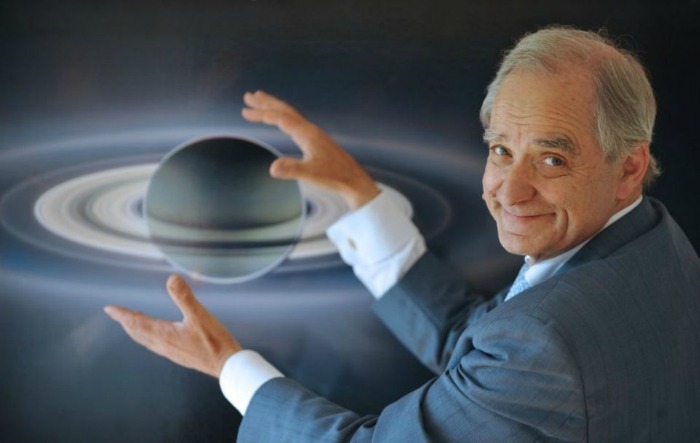 The planetary community, and in particular his French colleagues and friends, are very sad to announce the passing of André Brahic. Professor at the University Paris-Diderot, based at the Observatory of Paris until 1995 and the AIM laboratory at CEA Saclay, André Brahic devoted most of his career to the study of solar system bodies, in particular of planetary rings and the formation of planets, but started out by working on the chaos theory, the dynamics of galaxies and the supernovas. He was a member of the scientific teams of the cameras on Voyager 1 and 2, through which he made many discoveries and notably confirmed the existence of Neptune rings and the arcs of the Adams ring, that he had predicted. With an international team, he showed that the Adams ring, is actually composed of four arcs that he and his collaborators baptized “Courage”, “Liberté”, “Egalité”, “Fraternité” (CLEF for “KEY” in French). He was also a member of the science team on the Cassini mission, still returning amazing science results from the Saturnian system, that André would have liked to follow until the mission’s end. André Brahic was of course also an extraordinary communicator, who transmitted his passion for science and astrophysics to generations of students and to the public. This has probably incited many of today astronomers career choices, as it was for me – André was my professor during the Master degree. He knew how to communicate his enthusiasm for science to everyone, whatever their level of education. André Brahic received the DPS Carl Sagan Medal in 2001 and the Jean Perrin 2006 award for scientific popularization. In July 2015, he received the insignia of Chevalier de la Legion d’Honneur in France. André Brahic has left an impressive heritage and will always be remembered as a great scientist, a great teacher and a great advocate of communicating with the public.