Message from the Chair: Yom Kippur

The DPS Committee would like to offer our heartfelt apologies for scheduling the 2022 London DPS meeting over Yom Kippur.  We have also realized that Yom Kippur starts on the last day of the meeting in 2024.  Choosing these dates was an oversight on our part. It was unintentional and we are sorry for all the inconveniences it causes. We have instituted processes to ensure that this type of oversight does not happen again.

The SOC and LOC will accommodate requests of speakers who observe Yom Kippur not to be scheduled on those dates. In addition, there will be no virtual poster session on Yom Kippur.

The LOC will provide information regarding services at local synagogues for those wishing to observe the holiday.

Newsletter 22-17

Issue 22-17, Jun 29, 2022


+————————————CONTENTS—————————————-+

  1. MESSAGE FROM THE CHAIR: YOM KIPPUR
  2. PROPOSALS DUE FOR WORKSHOP (JUL 8) AND SPLINTER MEETINGS (JUL 14)
  3. DPS ABSTRACTS ARE OPEN!
  4. REQUEST FOR SURVEY PARTICIPATION
  5. JOBS, POSITIONS AND OPPORTUNITIES


+——————————————————————————————–+


1———1———1———1———1———1———1———1———1———1———


MESSAGE FROM THE CHAIR: YOM KIPPUR


The DPS Committee would like to offer our heartfelt apologies for scheduling the 2022 London DPS meeting over Yom Kippur.  We have also realized that Yom Kippur starts on the last day of the meeting in 2024.  Choosing these dates was an oversight on our part. It was unintentional and we are sorry for all the inconveniences it causes. We have instituted processes to ensure that this type of oversight does not happen again.


The SOC and LOC will accommodate requests of speakers who observe Yom Kippur not to be scheduled on those dates. In addition, there will be no virtual poster session on Yom Kippur.


The LOC will provide information regarding services at local synagogues for those wishing to observe the holiday.


With deepest apologies,


Diana Blaney, Chair, Division of Planetary Sciences


2———2———2———2———2———2———2———2———2———2———


PROPOSALS DUE FOR WORKSHOP (JUL 8) AND SPLINTER MEETINGS (JUL 14)


Do you have an idea for a workshop and/or splinter meeting for our Fall DPS meeting? We are still accepting proposals for these side meetings. Please submit a request for your meeting at the link below.

https://aas.org/meetings/dps54/session-proposals


Are you interested, but not sure which one to request? Read descriptions about both at the link above. It’s a great way to have a more focused gathering with your colleagues at the conference.


3———3———3———3———3———3———3———3———3———3———


DPS ABSTRACTS ARE OPEN!


The deadline for submission is Jul 26.

An abstract (which will appear in the Meeting program) must be submitted for every presentation. There are 5 types of presentations for the Division for Planetary Sciences Meeting.

  • Invited talk (Plenary or  Prize)
  • Research Contributed (including Dissertation talks)
  • History
  • Education
  • Workforce


You may present a maximum of four (4) abstracts from the above categories, selecting no more than one paper for any one category. This applies to in-person, fully remote and hybrid Meetings.


There is no limit to the number of abstracts that you may co-author. NOTE: The abstract body text can be a maximum of 2,250 characters (which includes letters, numbers, punctuation, and symbols/special characters).


Only speakers invited by the SOC may submit plenary talks.


4———4———4———4———4———4———4———4———4———4———

REQUEST FOR SURVEY PARTICIPATION


My name is Alyvia Fondren, and I am an undergraduate student at Albion College in Michigan. I am working with Dr. Andrea Francis in the Psychology Department and Dr. Nicolle Zellner in the Physics Department to test models about women’s experiences with STEM mentors during their undergraduate experience at liberal arts colleges and large universities. Results will be used to guide the creation of mentorship programs for women in STEM.


The questionnaire covers possible mentorship you experienced as an undergraduate and the type of institution that you attended. Your participation is entirely voluntary and is expected to take no more than 15 minutes.


Link to the study: https://www.surveymonkey.com/r/YXQRVDC


For additional information, please contact Dr. Andrea Francis at [email protected] or Dr. Nicolle Zellner at [email protected].


5———5———5———5———5———5———5———5———5———5———


JOBS, POSITIONS AND OPPORTUNITIES


Open Rank Tenure-Track Faculty in Planetary Science, Pennsylvania State U.


content/open-rank-tenure-track-faculty-planetary-science


The Department of Geosciences at The Pennsylvania State University, in University Park, PA invites applications for an Open-Rank, Tenure-Track or Tenured Faculty position in the field of Planetary Science.


The Department of Geosciences is part of the College of Earth and Mineral Sciences (EMS) and, along with the Earth and Environmental Systems Institute (EESI), houses top-ranked research programs in geology, geophysics, geobiology, geochemistry, and interdisciplinary Earth systems research. Penn State’s Department of Astronomy and Astrophysics is home to similarly strong and relevant exoplanet research. Building on decades of involvement with NASA’s Astrobiology Program, Penn State recently formed the Consortium for Planetary and Exoplanetary Science and Technology, including the Planetary System Science Center (PSSC), as part of a commitment to expanding research in the planetary sciences. The successful candidate will be part of this growing and interdisciplinary community with opportunities for service and leadership to shape the future of the planetary fields and interdisciplinary research at Penn State. The position is a co-hire between the Department of Geosciences and EESI.


Responsibilities

We seek a colleague who will develop a vigorous and externally funded research program, advance undergraduate and graduate education by teaching courses and providing research training, and work to advance diversity, equity, and inclusion in the geosciences.


Qualifications

The successful candidate will hold a Ph.D. in a relevant field by the time of hire. While any and all areas of Planetary Science expertise are appropriate for this position, Penn State aims to expand involvement in the exploration of the solar system through NASA or international space missions.  Connections to solar system exploration include a wide range of disciplines and research approaches, such as laboratory experimentation, analog research, computational research, remote sensing, instrument development, or through mission science team participation and leadership.


(edited for length)


———————————


Send submissions to: Maria Womack, DPS Secretary ([email protected])

You’re receiving this email because you are a DPS member. To unsubscribe or update your information, please send your request to [email protected]. The more general AAS privacy policy is available online at https://aas.org/about/policies/privacy-policy. Current and back issues of the DPS Newsletter can be found at newsletters


To unsubscribe from this list please go to https://lists.aas.org/confirm/?u=WumMgxrgIYvmfnfPIPRxfPgLc6qriC4R

Newsletter 22-16

Issue 22-16, Jun 26, 2022

+————————————CONTENTS—————————————-+

  1. DPS ABSTRACTS OPEN MONDAY JUN 27
  2. DPS ACCOMMODATIONS SITE UP
  3. CULTURALLY INCLUSIVE PLANETARY ENGAGEMENT (JUN 30 DEADLINE)
  4. BLACK SPACE WEEK/BLACK IN ASTRO WEEK
  5. JOBS, POSITIONS AND OPPORTUNITIES

+——————————————————————————————–+


1———1———1———1———1———1———1———1———1———1———

DPS ABSTRACTS OPEN MONDAY JUN 27

Join us in the heart of the planetary science community in Canada for the 54th Annual Meeting of the Division for Planetary Sciences. To be held both virtually and in person 2-7 October 2022 in London, Canada, this hybrid meeting will include options for active remote participation, such as the popular iPoster presentation format. As our first in-person meeting since 2019, #DPS2022 promises to provide a lively environment, a jam-packed scientific schedule, and the chance to reconnect once again with colleagues and friends. See you there!

The abstract site will open on Monday, 27 June. The abstract deadline is Tuesday, 26 July, at 11:59 pm ET.

2———2———2———2———2———2———2———2———2———2———

DPS ACCOMMODATIONS SITE IS UP

Are you attending DPS 54 in person? If so, check out the information and special rates/deals at the accommodations page. Reserve your room now.

https://aas.org/meetings/dps54/accommodations

You can also read about the meeting venue – RBC Place London – and nearby dining options at the main meeting page. Check it out:

https://aas.org/meetings/dps54

3———3———3———3———3———3———3———3———3———3———

CULTURALLY INCLUSIVE PLANETARY ENGAGEMENT (JUN 30 DEADLINE)

Conducted by the NASA SMD Science Activation Planetary Reach project

Do you want to learn strategies for engaging diverse audiences? Planetary scientists (including graduate students, post-doctoral researchers, engineers and technicians) and informal educators are invited to apply to attend a professional development workshop, Culturally Inclusive Planetary Engagement, August 4-6, 2022. During the workshop, scientists and educators are paired together and supported in two-way conversations around diversity and inclusion. Participants will discuss ways to engage Latinx and Black youth in their community in planetary science and exploration. Workshop participants come away with actionable strategies and hands-on activity ideas for engagement and the beginnings of relationships/collaborations with other participants. Following the workshop, a public engagement event will be held at a local institution allowing workshop participants the opportunity to utilize engagement strategies discussed in the workshop.

Who: Space is limited to 15 planetary scientists (including graduate students, post-doctoral researchers, and planetary engineers and technicians) and 15 informal educators. Stipends are available for participants able to accept them.

 Times and location: The workshop will take place in Houston, August 4th (1:00pm – 5:00pm CDT) and August 5th (9:00am – 5:00pm CDT) with a community engagement event on August 6th.


Application form at https://www.surveymonkey.com/r/DMZ2765. The deadline to apply is 5:00pm CDT, June 30, 2022.

More information about the workshop: https://www.lpi.usra.edu/planetary-reach/houston


4———4———4———4———4———4———4———4———4———4———4———

BLACK SPACE WEEK/BLACK-IN-ASTRO WEEK

My name is Rob and I am the public relations director for BlackInAstro this year. On behalf of our organization, we’d like to request that you can share Black Space Week/ Black In Astro Week with all of your networks. To give some background on our organization, we are a team of Black students and professionals working to amplify and celebrate the Black experience in the Space field, a movement founded by Ashley Lindalia Walker. BlackInAstro/BlackSpace week took place June 19th -June 25th, 2022, our website is here blackinastro.com with the events and our recent  nature article.


In Solidarity,

On Behalf of Black In Astro,

Rob | Public Relations Director


5———5———5———5———5———5———5———5———5———5———

JOBS, POSITIONS AND OPPORTUNITIES


A. Scientific Data Analyst with the MAVEN Imaging UltraViolet Spectrograph Team

The Imaging Ultraviolet Spectrograph (IUVS) team on the MAVEN mission is seeking a talented data analyst. IUVS has made important discoveries about the Mars atmosphere, including escape and evolution, aurora, nightglow, photochemistry, composition, dynamics and cloud formation, and more discoveries are anticipated. Responsibilities include: Data analysis and interpretation, scientific programming, interpretation, presentation of results at conferences and in publications. Mentoring junior team members and software support. Mission operations. Position requirements include: Bachelor’s or Master’s degree in astronomy, physics, earth science, computer science or related area. Experience in scientific programming in python or IDL. Work with remote sensing data, retrievals, image processing. Experience with graphical data representation and scientific visualization. Desired qualifications include: Familiarity with planetary science, earth science or astrophysics through coursework or experience, and best practices for version control for code and data products. Inquiries to [email protected]. Please apply by 15 July at

https://jobs.colorado.edu/jobs/JobDetail/?jobId=39804


———————————


Send submissions to: Maria Womack, DPS Secretary ([email protected])

You’re receiving this email because you are a DPS member. To unsubscribe or update your information, please send your request to [email protected]. The more general AAS privacy policy is available online at https://aas.org/about/policies/privacy-policy. Current and back issues of the DPS Newsletter can be found at newsletters


To unsubscribe from this list please go to https://lists.aas.org/confirm/?u=WumMgxrgIYvmfnfPIPRxfPgLc6qriC4R

Newsletter 22-15

Issue 22-15, Jun 19, 2022

+————————————CONTENTS—————————————-+

  1. ICARUS ASSOCIATE EDITOR
  2. 2022 DPS URM TRAVEL GRANT APPLICATION FORM TO OPEN END OF JUNE
  3. LAST CHANCE TO PETITION FOR ADDITIONAL CANDIDATES
  4. FEDERAL RELATIONS SUBCOMMITTEE VISITS CAPITOL HILL

+——————————————————————————————–+

1———1———1———1———1———1———1———1———1———1———

ICARUS ASSOCIATE EDITOR

Icarus is devoted to the publication of original contributions in the field of Solar System studies. Manuscripts reporting the results of new research – observational, experimental, or theoretical – concerning the astronomy, geology, meteorology, physics, chemistry, biology, and other scientific aspects of our Solar System or extrasolar systems are welcome.

The journal generally does not publish papers devoted exclusively to the Sun or the Earth; papers on celestial mechanics or astrophysics are acceptable only if they have a clear importance for planetary science; descriptive studies of meteorites should be addressed to journals of meteoritics, but are relevant for Icarus if they provide constraints on the formation or evolution of planetesimals, planets or the solar system in its globality. Icarus does not publish papers that provide “improved” versions of Bode’s law, or other numerical relations, without a sound physical basis.

Icarus does not publish meeting announcements or general notices. Reviews, historical papers, and manuscripts describing spacecraft instrumentation may be considered, but only with prior approval of the editor. An entire issue of the journal is occasionally devoted to a single subject, usually arising from a conference on the same topic. The language of publication is English. American or British usage is accepted, but not a mixture of these.

Icarus – Journal – Elsevier

Icarus continues to be a leading journal in the field.  In 2020 the journal published over 1,000 articles, and gained a CiteScore of 7.2, and an Impact Factor of 3.508 (2020). The Journal enjoys strong support from communities across the subject fields it covers, as well as an engaged international Editorial Board: https://www.journals.elsevier.com/solar-energy/editorial-board

Associate Editor Role

The role of Associate Editor, along with the Editor-in-Chief and other members of the Editorial Board of the Journal and Elsevier, is to manage the peer review process for manuscripts submitted to the journal using the online journal system.  The Associate Editor is empowered to make decisions autonomously on manuscripts but is also welcome (and expected) to seek the opinion of the wider editorial team.

The Associate Editor role entails:

·       Responsibility for the scientific content of the Journal within a specific area relating  to  the  Journal,  taking  into  account  the  Aims  and  Scope, the Publisher’s editorial policies as updated from time to time (including without limitation those on ethics in publishing at the Publisher’s website) and the editorial policy of the Journal.  

·       The evaluation and selection of articles for publication in the Journal that are consistent with the high standards of the journal.  This includes coordinating an objective and unbiased peer-review  process for  submitted Articles, obtaining a minimum of (2) reviews for each article, and will reject, or  return  for  revision  to  the  authors Articles  that  do  not  meet  the required standards of the Journal.

·       Ensuring an appropriate and sufficient level of submissions of Articles for publication to meet the publication goals of the Journal. If necessary, the Editor will solicit Articles to help meet such publication goals.

·       Conduct activities in accordance with generally accepted industry standards for integrity and objectivity in all matters respecting the selection, editing, acceptance and reviewing of Articles

Alongside the review process the Associate Editors are asked to periodically participate in discussions with Elsevier about the journal’s development and potential new initiatives.  The team of Editors will hold meetings approximately twice a year via video call, as well as in-person meetings in conjunction with certain events or training sessions, as required.

The applicants:

–       Must have a PhD in a field of study relevant to the scope of this journal

–       Must have demonstrated broad expertise in:

–       surface geology including tectonics, geomorphology and crater features of rocky bodies in the solar system

–       Be knowledgeable in research publishing, managing a journal publication, the peer review process and in growing a journal

–       Demonstrate skills as a good collaborator with ability to lead a team effectively

Elsevier is committed to inclusion and diversity in our work and want the Journal to reflect the diversity of the communities we serve. We are therefore committed to ensuring that the Editorial Board is representative, and encourage all individuals interested to apply for a position with the board.

Interested candidates are asked to provide a complete CV, including publication record, as well as a one-page summary of their relevant experience and area of expertise for this Associate Editor position by August 1, 2022.  Please include up to three references.  

Applications and relevant supporting documents must be sent to Christina Gifford, Publisher, [email protected].

2———2———2———2———2———2———2———2———2———2———

2022 DPS URM TRAVEL GRANT APPLICATION TO OPEN END OF JUNE

The DPS will again offer travel funds to encourage and support participation of students, scientists, and other space professionals who are members of underrepresented racial and ethnic groups. In partnership with the National Society of Black Physicists (NSBP), awards are available for members of Black/African American, Indigenous, and/or Latinx communities to support attendance at the annual DPS meeting and/or the annual NSBP meeting. The application will be updated in the next few weeks (with a tentative deadline of August 1 for in-person travel, September 1 for virtual registration).


The DPS community is also encouraged to support this fund – donations can be submitted at:Inclusivity/support-underrepresented-minority-communities-planetary-science Last year’s application form can also be viewed at this page.


3———3———3———3———3———3———3———3———3———3———

LAST CHANCE TO PETITION FOR ADDITIONAL CANDIDATES

This is a reminder that, per the DPS Bylaws, additional candidates for Vice Chair and Committee, supported by a petition of at least 20 DPS members, may be nominated by June 21st (this Tuesday). Please send any nominations to the DPS Secretary, Maria Womack, at [email protected].

The slate of candidates thus far was published in the 12th newsletter for this year:

newsletters/22-12


4———4———4———4———4———4———4———4———4———4———4———

FEDERAL RELATIONS SUBCOMMITTEE VISITS CAPITOL HILL

The DPS Federal Relations Subcommittee (FRS) recently completed a visit to Capitol Hill, following up on a visit by the DPS Committee a few weeks prior. We met with key staffers for House and Senate Authorization and Appropriation Committees in charge of NASA and NSF, in addition to individual representative offices and a dinner with Dr. Lori Glaze. Our advocacy focused on the release of the Planetary Sciences and Astrobiology Decadal Survey and educating policy makers about its ambitious, yet excellent set of community-based priorities. Another message we stressed is the need for scientists in our membership to have a healthy balance of Research and Analysis (R&A) funding levels to insure a healthy workforce with reasonable proposal selection rates. The Decadal recommendation to gradually increase NASA’s R&A funding line to 10% of the overall Planetary Sciences Directorate levels was well received and commended for its clarity. Time and again we heard strong bipartisan support for the planetary sciences.  We encourage you to contact your representatives in the coming year to thank them for supporting our planetary science endeavors, and the full FRS is available to help in these conversations.

Kurt Retherford – DPS Federal Relations Officer


———————————


Send submissions to: Maria Womack, DPS Secretary ([email protected])

You’re receiving this email because you are a DPS member. To unsubscribe or update your information, please send your request to [email protected]. The more general AAS privacy policy is available online at https://aas.org/about/policies/privacy-policy. Current and back issues of the DPS Newsletter can be found at newsletters


To unsubscribe from this list please go to https://lists.aas.org/confirm/?u=WumMgxrgIYvmfnfPIPRxfPgLc6qriC4R

Newsletter 22-14


Issue 22-14, Jun 16, 2022


+————————————CONTENTS—————————————-+

  1. FALL DPS MEETING WEBSITE IS UP
  2. FALL DPS MEETING WORKSHOP AND SPLINTER MEETING PROPOSALS SITE IS OPEN
  3. PLANETARY SCIENCE ADVISORY COMMITTEE MEETING, JUNE 21 TO 23, 2022
  4. CULTURALLY INCLUSIVE PLANETARY ENGAGEMENT
  5. JOBS, POSITIONS, AND OPPORTUNITIES

+——————————————————————————————–+


1———1———1———1———1———1———1———1———1———1———

FALL DPS MEETING WEBSITE IS UP


The London, Ontario, planetary science community is excited to welcome us for our first in-person meeting since 2019. We will present the meeting in a hybrid format. You will be able to interact face-to-face or through the virtual platform.


https://aas.org/meetings/dps54


We hope to see you there!


2———2———2———2———2———2———2———2———2———2———

FALL DPS MEETING WORKSHOP AND SPLINTER MEETING PROPOSALS SITE IS OPEN


Do you have an idea for a workshop and/or splinter meeting for our Fall DPS meeting? We are now accepting proposals for workshops and splinter meetings at the fall DPS meeting. Please submit a request for your meeting at the link below. You can also navigate to it from the main meeting website above.


https://aas.org/meetings/dps54/session-proposals


Workshop proposals due by 8 July

Splinter Meeting proposals due by 14 July


3———3———3———3———3———3———3———3———3———3———

PLANETARY SCIENCE ADVISORY COMMITTEE (PAC) MEETING, JUNE 21 TO 23, 2022


The next Planetary Science Advisory Committee (PAC) meeting will take place June 21 through 23, 2022, as a hybrid meeting at NASA Headquarters and on WebEx. The agenda is posted online, with WebEx connection information: https://science.nasa.gov/researchers/nac/science-advisory-committees/pac


Accessibility: Captioning will be provided for this meeting. NASA is committed to providing equal access to this meeting for all participants. If you need alternative formats or other reasonable accommodations, please contact Ms. KarShelia Kinard, Science Mission Directorate, NASA Headquarters, (202) 358–2355 or [email protected].


4———4———4———4———4———4———4———4———4———4———4———


CULTURALLY INCLUSIVE PLANETARY ENGAGEMENT


Conducted by the NASA SMD Science Activation Planetary Reach project


Do you want to learn strategies for engaging diverse audiences? Planetary scientists (including graduate students, post-doctoral researchers, engineers and technicians) and informal educators are invited to apply to attend a professional development workshop, Culturally Inclusive Planetary Engagement, August 4-6, 2022. During the workshop, scientists and educators are paired together and supported in two-way conversations around diversity and inclusion. Participants will discuss ways to engage Latinx and Black youth in their community in planetary science and exploration. Workshop participants come away with actionable strategies and hands-on activity ideas for engagement and the beginnings of relationships/collaborations with other participants. Following the workshop, a public engagement event will be held at a local institution allowing workshop participants the opportunity to utilize engagement strategies discussed in the workshop.


Who: Space is limited to 15 planetary scientists (including graduate students, post-doctoral researchers, and planetary engineers and technicians) and 15 informal educators. Stipends are available for participants able to accept them.


Times and location: The workshop will take place in Houston, August 4th (1:00pm – 5:00pm CDT) and August 5th (9:00am – 5:00pm CDT) with a community engagement event on August 6th.


Application form at https://www.surveymonkey.com/r/DMZ2765. The deadline to apply is 5:00pm CDT, June 30, 2022.


More information about the workshop: https://www.lpi.usra.edu/planetary-reach/houston


5———5———5———5———5———5———5———5———5———5———5


JOBS, POSITIONS, AND OPPORTUNITIES


Job seekers and employers are encouraged to browse DPS’s job listings and advertise open positions.

Recent openings and opportunities are listed below and more are at the link above.


A. Science Operations Scientist, BepiColombo Mission


The European Space Agency has a job position open for a Science Operations Scientist on this mission, see attached link.


Science Operations Scientist (esa.int) 


B. ​​Research Scientist, Planetary Geosciences, JPL


content/research-scientist-planetary-geosciences


———————————


Send submissions to: Maria Womack, DPS Secretary ([email protected])

You’re receiving this email because you are a DPS member. To unsubscribe or update your information, please send your request to [email protected]. The more general AAS privacy policy is available online at https://aas.org/about/policies/privacy-policy. Current and back issues of the DPS Newsletter can be found at newsletters


To unsubscribe from this list please go to https://lists.aas.org/confirm/?u=WumMgxrgIYvmfnfPIPRxfPgLc6qriC4R

Newsletter 22-13

Issue 22-13, Jun 5, 2022

+————————————CONTENTS—————————————-+

  1. DPS MEETINGS EXPLORATION TEAM LOOKING INTO HYBRID AND OTHER MEETING STRUCTURES
  2. VIRTUAL COFFEE HOUR: FUTURE LEADERS OF OCEAN WORLDS (MON JUN 6)
  3. JOBS, POSITIONS, AND OPPORTUNITIES

+——————————————————————————————–+

1———1———1———1———1———1———1———1———1———1———

DPS MEETINGS EXPLORATION TEAM WILL START LOOKING INTO HYBRID AND OTHER MEETING STRUCTURES

The DPS Committee has convened a DPS Meetings Exploration Team (DPS-MXT/”DPS mixt”) to identify options for the structure of future DPS fall meetings, so as to best serve the full DPS community. In particular, this team will consider hybrid meeting structures (i.e., a meeting with both in-person and remote participants) and identify risks, costs, resources, and benefits associated with such design. This team will then recommend next steps to the DPS Committee for effective development of future DPS meetings, including—but not limited to—those with hybrid structure. Output from this team will be delivered to the DPS Committee and DPS community via a few interim reports and then a final written report by the end of calendar year 2022. The team’s scope, timeline, and membership are outlined in their charter, posted at: meetings/dps-mxt.

To gather input, DPS-MXT plans to send out a short survey to the DPS community (~July 2022), invite some community members to participate in DPS-MXT telecon discussions (July-Sept 2022), and learn from 2022 meeting experiences, including with the hybrid 2022 DPS meeting. If you’d like to volunteer information—such as your experiences with organizing/attending or future forecasts regarding different meeting structures—please add that information to the survey or email the DPS-MXT chair ([email protected]) directly.

2———2———2———2———2———2———2———2———2———2———

VIRTUAL COFFEE HOUR: FUTURE LEADERS OF OCEAN WORLDS (MON JUN 6)

Join FLOW (Future Leaders of Ocean Worlds) in the upcoming virtual coffee hour on The Art of Networking: learn how one can leverage conferences, workshops, and meetings to build meaningful research connections and advocate for changes in the research community.

Panelists:

  • Dr. Donald Burke-Agüero: professor of molecular microbiology and immunology and joint professor of biochemistry at the University of Missouri; https://burkelab.missouri.edu/
  • Dr. Justin Filiberto: Branch chief in Astromaterials Research and Exploration Science (ARES) Research Office at NASA Johnson Space Center; https://www.justinfiliberto.com/
  • Dr. Graham Lau: Host of the show, “Ask an Astrobiologist”; Director of Communications and Marketing for Blue Marble Space; Research Scientist with the Blue Marble Space Institute of Science; Director of Logistics for the University Rover Challenge; https://cosmobiota.com/

Date & Time: Monday June 6th at 9 am PT / 12 pm ET | 1 hour

Webex Link: https://jpl.webex.com/jpl/j.php?MTID=m45e9babf3a6d9d4e1766712e1d8a6545

Meeting number: 2760 897 6075

Password: NJpDXxJi335Join by phone: +1-510-210-8882 USA Toll

Access code: 276 089 76075

3———3———3———3———3———3———3———3———3———3———

JOBS, POSITIONS, AND OPPORTUNITIES

Job seekers and employers are encouraged to browse DPS’s job listings and advertise open positions.

Recent openings and opportunities are listed below and more are at the link above.


A. Planetary Instrument Postdoc, LANL

content/planetary-instrument-postdoc

B. Research Space Scientist, Research AST, Planetary Studies, NASA GSFC

content/research-space-scientist-research-ast-planetary-studie

C. Mars Atmospheric Scientist, NASA GSFC

content/mars-atmospheric-scientist

D. Tenure-Track Position in Geomicrobiology, U. Western Ontario

content/tenure-track-position-geomicrobiology

E. LRO Diviner Postdoctoral Researcher, Stony Brook

content/lro-diviner-postdoctoral-researcher

———————————

Send submissions to: Maria Womack, DPS Secretary ([email protected])

You’re receiving this email because you are a DPS member. To unsubscribe or update your information, please send your request to [email protected]. The more general AAS privacy policy is available online at https://aas.org/about/policies/privacy-policy. Current and back issues of the DPS Newsletter can be found at newsletters


To unsubscribe from this list please go to https://lists.aas.org/confirm/?u=WumMgxrgIYvmfnfPIPRxfPgLc6qriC4R

Newsletter 22-12

Issue 22-12, May 22, 2022

+————————————CONTENTS—————————————-+

  1. DPS 2022 ELECTION: CANDIDATE SLATE
  2. SUMMER SCHOOL IN SOFTWARE SYSTEMS FOR ASTRONOMY
  3. SBAG MEETING JUN 7-9, 2022
  4. DAVINCI IN SITU CAPABILITY ROUNDTABLE
  5. JOBS, POSITIONS, AND OPPORTUNITIES

+——————————————————————————————–+

1———1———1———1———1———1———1———1———1———1———

DPS 2022 ELECTION: CANDIDATE SLATE

The DPS Nominating Subcommittee has identified the following candidates for the 2022 DPS elections for Vice Chair, Committee, and Student Representative.


Vice Chair (1 to be elected):

Joe Spitale, SETI Institute

Carol Raymond, NASA JPL


Committee (2 to be elected):

Jennifer Hanley, Lowell Observatory  

Shawn Brooks, NASA JPL  

Flaviane Venditti, University of Central Florida

Driss Takir, NASA JSC


Student representative (1 to be elected):

Alex Rousch, University of Texas at San Antonio

Samuel Myers, University of Arizona

Robert Melikyan, University of Arizona


Per the DPS Bylaws, additional candidates for Vice Chair and Committee, supported by a petition of at least 20 DPS members, may be nominated by June 21st. Please send any nominations to the DPS Secretary, Maria Womack, at [email protected].


The DPS Committee thanks the members of the Nominating Subcommittee for their dedicated service to the DPS:


Desiree Cotto Figueroa (Chair), Alessondra Springmann, Morgan Cable


2———2———2———2———2———2———2———2———2———2———

SUMMER SCHOOL IN SOFTWARE SYSTEMS FOR ASTRONOMY

Software Systems for Astronomy will again be offered online this year, and will be spread over 7 weeks, 05-Jul to 12-Aug, 2022.  The course covers the design and implementation of software for telescope and instrument control systems, observation planning tools, and software for analyzing and archiving astronomical data.

If you are not a University of Hawaii at Hilo (UHH) student, follow the instructions given at this link: https://astro.uhh.hawaii.edu/ssfa.php

3———3———3———3———3———3———3———3———3———3———


SBAG MEETING JUN 7-9, 2022


Meeting #27 of the Small Bodies Assessment Group (SBAG) will take place June 7-9, 2022 at the Residence Downtown Hotel in Washington DC, with a virtual option. Registration is required, although there is no registration fee.  For full details including blocks for room reservations  and registration information, please visit:


https://www.lpi.usra.edu/sbag/meetings/sbag-27/


4———4———4———4———4———4———4———4———4———4———


DAVINCI IN SITU CAPABILITY ROUNDTABLE


DAVINCI (Deep Atmosphere Venus Investigation of Noble gases, Chemistry, and Imaging) will host a virtual community meeting on July 28, 2022.  Within the capabilities of its atmospheric probe, DAVINCI carries an in situ analytical suite.  The DAVINCI team is evaluating options and science justification to include one additional atmospheric gas target to its suite of laser-capable measurements for high precision analysis during descent (details provided in included link), and we welcome input from the scientific community. We invite applications to join a conversation with the DAVINCI Science Team to discuss scientific drivers and hypotheses for a set of candidate atmospheric gases.  


Please note that participation in this meeting does not grant DAVINCI team membership and the decision for selection and/or inclusion of an additional gas target is the sole responsibility of the DAVINCI project.  


We are excited for the opportunity to engage the science community and the expertise and energy of fellow Venusians, to provide an avenue to contribute to the science capabilities of this long-awaited and long-overdue in situ probe mission. We hope you will join us!


Applications can be submitted at https://ssed.gsfc.nasa.gov/davinci/roundtable


5———5———5———5———5———5———5———5———5———5———


JOBS, POSITIONS, AND OPPORTUNITIES


Job seekers and employers are encouraged to browse DPS’s job listings and advertise open positions.


Recent openings and opportunities are listed below and many more are at the link above.


  1. Research Space Scientist Position At NASA GSFC, Due May 24


The Solar System Exploration Data Services Office at NASA Goddard Space Flight Center is seeking a Research Space Scientist specializing in Planetary Studies. Candidates would perform management duties for actively accumulating scientific archives such as those within NASA’s Planetary Data System (PDS), with emphasis on developing and utilizing Artificial Intelligence and Machine Learning techniques to process and analyze large scientific datasets (e.g., PDS and other SMD archives) and developing techniques and tools necessary for enabling new scientific discoveries. Candidates would also study the origin, composition, structure and evolution of our solar system and extra-solar system bodies using PDS and SMD-sponsored archives, including regularly reporting the results of work to the community through publications and other media. The job is open to all US citizens.


Applications are open between 5/20/2022 and 5/24/2022.


https://www.usajobs.gov/GetJob/ViewDetails/655016900


  1. Postdoctoral Scholar in Climate of Exoplanets and/or Mars


content/postdoctoral-scholar-climate-exoplanets-andor-mars


  1. Section Manager, Planetary Sciences Section


content/section-manager-planetary-sciences-section


  1. Atmospheric Scientist Position At NASA GSFC


The Planetary Environments Lab at NASA Goddard Space Flight Center, which studies the chemistry and astrobiology of the atmospheres and surfaces of planetary bodies, is seeking a scientist who specializes in planetary studies, with a strong emphasis on investigations of upper atmospheres, ionospheres, and exospheres of our Solar System. Candidates are expected to have experience in spacecraft mass spectrometry techniques, including instrument ground and flight calibrations, and data processing and interpretation. The job is open to all US citizens.  


Applications are open between 6/6/2022 and 6/20/2022.  


https://www.usajobs.gov/job/652774100


———————————+


Send submissions to: Maria Womack, DPS Secretary ([email protected])

You’re receiving this email because you are a DPS member. To unsubscribe or update your information, please send your request to [email protected]. The more general AAS privacy policy is available online at https://aas.org/about/policies/privacy-policy. Current and back issues of the DPS Newsletter can be found at newsletters


To unsubscribe from this list please go to https://lists.aas.org/confirm/?u=WumMgxrgIYvmfnfPIPRxfPgLc6qriC4R

ReplyReply allForward

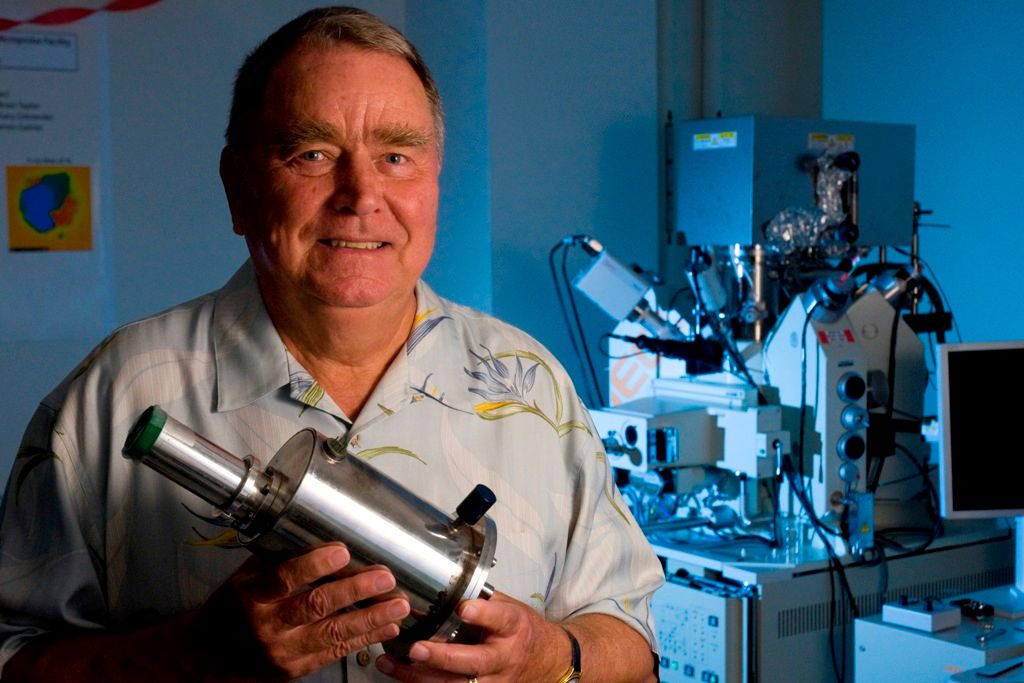
Klaus Keil 1934-2022

Klaus Keil was Emeritus Professor, former Director of the Hawai`i Institute of Geophysics and Planetology, and former Interim Dean of the School of Ocean and Earth Science and Technology. Klaus was an outstanding scientist, spectacular mentor, educator, and leader, dedicated family man, and enthusiastic tennis player. His academic and science leadership skills glittered at the University of Hawai`i since 1990 and at the Institute of Meteoritics at the University of New Mexico from 1968 to 1990.

Klaus was a pioneer in the use of the electron microprobe in meteoritics and in petrology and mineralogy in general. In the early 1960s, he worked with colleagues at NASA Ames Research Center, Ray Fitzgerald and Kurt Heinrich, to make the first energy dispersive X-ray spectrometer for use in microanalysis. This device was the first to focus on terrestrial and extraterrestrial geological materials, and the first to use a solid-state lithium-drifted Si detector. Over his long and illustrious career, Klaus studied practically every type of meteorite and lunar sample, addressing big problems in planetary science, from chondrule formation to pyroclastic eruptions on the Moon and achondritic bodies, from asteroid disruption to the composition of the Martian surface.

His accomplishments were recognized through awards of the Leonard Medal from the Meteoritical Society, the J. Lawrence Smith Medal of the National Academy of Sciences, and election as a Legends Fellow of the Microanalysis Society, in addition to numerous other accolades including the main belt asteroid Keil and the extraterrestrial mineral keilite, (Fe,Mg)S, named in his honor.

Edited for length; longer version here: https://meteoritical.org/news/klaus-keil-1934-2022

Newsletter 22-11

Issue 22-11, May 08, 2022

+————————————CONTENTS—————————————-+

  1. FARINELLA PRIZE DEADLINE EXTENDED TO MAY 15TH
  2. IN MEMORIAM: KLAUS KEIL (1939-2022)
  3. ECLIPSE SOUNDSCAPES: CITIZEN SCIENCE PROJECT SURVEY
  4. SBAG MEETING JUN 7-9
  5. ICY OCEAN WORLDS: PAST AND FUTURE EXPLORATIONS, EPSC2022, OPS3
  6. JOBS, POSITIONS, AND OPPORTUNITIES

+——————————————————————————————–+


1———1———1———1———1———1———1———1———1———1———1


FARINELLA PRIZE DEADLINE EXTENDED TO MAY 15TH


This year’s topic is:  Asteroids: Physics, Dynamics, Modeling and Observations


The Prize is part of the Europlanet Society activities and is awarded at the yearly EPSC, which this year will be held in Granada (Spain).


All information about the Prize as well as nomination forms can be found at:


https://www.europlanet-society.org/call-farinella-2022/


Please, feel free to handle this announcement to whomever you may think interested in nominating any candidate.


2———2———2———2———2———2———2———2———2———2———2


IN MEMORIAM: KLAUS KEIL (1939-2022)


Klaus Keil was Emeritus Professor, former Director of the Hawai`i Institute of Geophysics and Planetology, and former Interim Dean of the School of Ocean and Earth Science and Technology. Klaus was an outstanding scientist, spectacular mentor, educator, and leader, dedicated family man, and enthusiastic tennis player. His academic and science leadership skills glittered at the University of Hawai`i since 1990 and at the Institute of Meteoritics at the University of New Mexico from 1968 to 1990.

Klaus was a pioneer in the use of the electron microprobe in meteoritics and in petrology and mineralogy in general. In the early 1960s, he worked with colleagues at NASA Ames Research Center, Ray Fitzgerald and Kurt Heinrich, to make the first energy dispersive X-ray spectrometer for use in microanalysis. This device was the first to focus on terrestrial and extraterrestrial geological materials, and the first to use a solid-state lithium-drifted Si detector. Over his long and illustrious career, Klaus studied practically every type of meteorite and lunar sample, addressing big problems in planetary science, from chondrule formation to pyroclastic eruptions on the Moon and achondritic bodies, from asteroid disruption to the composition of the Martian surface.

His accomplishments were recognized through awards of the Leonard Medal from the Meteoritical Society, the J. Lawrence Smith Medal of the National Academy of Sciences, and election as a Legends Fellow of the Microanalysis Society, in addition to numerous other accolades including the main belt asteroid Keil and the extraterrestrial mineral keilite, (Fe,Mg)S, named in his honor.

Edited for length; longer version here:


https://meteoritical.org/news/klaus-keil-1934-2022


3———3———3———3———3———3———3———3———3———3


ECLIPSE SOUNDSCAPES: CITIZEN SCIENCE PROJECT SURVEY


Last summer, we learned that approximately half of the scientists and engineers who responded to another survey were interested in learning more about how to make their work more accessible. In this short survey (less than 10 minutes) we hope to gather information about your specific accessibility training needs.


Your responses will directly impact future accessibility training opportunities offered by Eclipse Soundscapes: Citizen Science Project (ES:CSP) and shared by NASA SMD Community of Practice for Education (SCoPE), so we hope you will consider completing this survey. You may access the survey at the following link: 


https://asu.co1.qualtrics.com/jfe/form/SV_88QEHFMWAcYOepM?survey_source=arisa


The survey will close at the end of the day on May 13.


The SciAct portfolio of projects is funded through cooperative agreement by NASA’s Science Mission Directorate to connect NASA science experts, content, and experiences with communities to activate minds and deepen understanding of our world and beyond. Recruiting and working with scientists and engineers who serve as subject matter experts (SMEs) is a core part of this work. This survey is being conducted by ARISA Lab and Arizona State University, on behalf of the Eclipse Soundscapes: Citizen Science Project (ES:CSP) and the NASA SMD Community of Practice for Education (SCoPE), which are part of NASA SciAct (Award Numbers 80NSSC21M0008 and NNH20ZDA001N). More information about ES:CSP and SCoPE can be found on NASA Science Activation Teams Page.


SCoPE & ES:CSP Teams


4———4———4———4———4———4———4———4———4———4———4———

SBAG MEETING JUN 7-9

The upcoming NASA Small Bodies Assessment Group meeting will be held virtually and in person in Washington D.C. on June 7 – 9 2022. There will be multiple presentation opportunities at this meeting specifically for the early career small body community including invited early-career speakers and lightning talks. Applications for 15-minute invited talks and ~3 minute lightning talks are due via email by COB (5 pm Eastern Time) by May 11 2022.

We are also continuing our meeting mentor program, so please reach out if you are an early-career attendee who would like to be paired with a mentor during the meeting.

Additional details about these opportunities are available on the SBAG meeting website: https://www.lpi.usra.edu/sbag/meetings/. There will also be additional travel stipends available and information about this application process will be added to the website in the near future.


Please send the application to SBAG Early Career Secretary Stephanie Jarmak ([email protected]) and feel free to contact her if you have any questions about the application process.


5———5———5———5———5———5———5———5———5———5———


ICY OCEAN WORLDS: PAST AND FUTURE EXPLORATIONS, EPSC2022, OPS3


Link: https://meetingorganizer.copernicus.org/EPSC2022/abstractsubmission/44575


The exploration of the outer solar system by Galileo at Jupiter, Cassini-Huygens at Saturn, New Horizons at Pluto-Charon and Dawn at Ceres, has revealed that several icy worlds harbor subsurface salty liquid reservoirs underneath their cold surface. Such discoveries provide incentive for future exploration of the icy Galilean satellites with Europa Clipper and JUICE, and Titan with Dragonfly, and motivate several other mission projects already under consideration by space agencies.


While we are entering in a new era in icy world exploration, understanding these promising worlds and preparing for their characterization requires input from a variety of scientific disciplines: planetary geology and geophysics (including active processes, e.g. plumes), atmospheric physics, life sciences, space weathering, as well as supporting laboratory studies, numerical simulations, preparatory studies for future missions and technology developments in instrumentation and engineering. We welcome abstracts that cover this full breadth of disciplines required for the characterization and future exploration of icy world systems.


The deadline for abstract submission is 18 May 2022, 13:00 CEST.


Best Regards,

Alice Lucchetti, Gabriel Tobie, Carly Howett, Frank Postberg, Federico Tosi.


6———6———6———6———6———6———6———6———6———6———


JOBS, POSITIONS, AND OPPORTUNITIES

Job seekers and employers are encouraged to browse DPS’s job listings and advertise open positions.


Recent openings and opportunities are listed below and many more are at the link above.


A. Postdoctoral scientist, Arecibo Observatory

The planetary radar group at the Arecibo Observatory, in Puerto Rico, is accepting applications for a post-doctoral scientist position. The research emphasis of the group is the study and characterization of near-Earth objects and other solar system bodies. The incumbent will be expected to participate in optical observations, data processing, analysis, and modeling of near-Earth asteroids using radar and optical data. We encourage applications from candidates with experience in any type of small bodies observations or research. Experience with observation techniques, programming languages, and Linux systems is preferred, but not required.

To apply: https://jobs.ucf.edu/en-us/job/502155/postdoctoral-scholar-planetary-radar-arecibo-observatory


B. NASA Postdoctoral Fellowship


The NASA Postdoctoral Program offers US and international scientists the opportunity to advance their research while contributing to NASA’s scientific goals.  The NPP supports fundamental science; explores the undiscovered; promotes intellectual growth; and encourages scientific connections.


Search for NPP research opportunities in Planetary Science here:

NPP Research Opportunities.


Applicants must have a Ph.D. or equivalent degree in hand before beginning the fellowship, but

may apply while completing the degree requirements. Please see current eligibility requirements. Stipends start at  $63,000 per year, with supplements for higher cost-of-living areas and for certain academic specialties. Financial assistance is available for relocation and health insurance, and $10,000 per year is provided for travel and professional development.


Applications are accepted three times each year: March 1, July 1, and November 1. 


For further information and to apply, visit:

https://npp.orau.org/applicants/index.html.   


Questions: [email protected] 


———————————+


Send submissions to: Maria Womack, DPS Secretary ([email protected])

You’re receiving this email because you are a DPS member. To unsubscribe or update your information, please send your request to [email protected]. The more general AAS privacy policy is available online at https://aas.org/about/policies/privacy-policy. Current and back issues of the DPS Newsletter can be found at newsletters


To unsubscribe from this list please go to https://lists.aas.org/confirm/?u=WumMgxrgIYvmfnfPIPRxfPgLc6qriC4R

Newsletter 22-10

Issue 22-10, April 26, 2022

+————————————CONTENTS—————————————-+

  1. PLANETARY SCIENCE AND ASTROBIOLOGY DECADAL SURVEY 2023-2032
  2. NEW DIRECTOR FOR THE MINOR PLANET CENTER
  3. SBAG STEERING COMMITTEE POSITIONS OPEN
  4. ARECIBO OBSERVATORY SPRING 2022 NEWSLETTER NOW AVAILABLE
  5. SBAG EARLY CAREER OPPORTUNITIES
  6. EPSC SESSION OPS2 (EXPLORATION OF TITAN)
  7. JOBS, POSITIONS, AND OPPORTUNITIES

+——————————————————————————————–+

1———1———1———1———1———1———1———1———1———1———1

PLANETARY SCIENCE AND ASTROBIOLOGY DECADAL SURVEY 2023-2032

new decadal survey from the National Academies of Sciences, Engineering, and Medicine identifies scientific priorities and opportunities and makes funding recommendations to maximize the advancement of planetary science, astrobiology, and planetary defense in the next 10 years.

The report identifies three high-level scientific themes — origins, worlds and processes, and life and habitability — and defines 12 priority science questions to help guide mission selection and research efforts in planetary science and astrobiology.

Read more, including the report, at the link:

https://bit.ly/3KfATTX

2———2———2———2———2———2———2———2———2———2———2

NEW DIRECTOR FOR THE MINOR PLANET CENTER

The Small Bodies Node (SBN) of NASA’s Planetary Data System announces that Dr. Matthew Payne has been appointed to the Directorship of the Minor Planet Center (MPC), located at the Center for Astrophysics, Harvard and Smithsonian.

https://pds-smallbodies.astro.umd.edu/

https://minorplanetcenter.net/

Previously the Project Scientist at the MPC, Dr. Payne has served as Acting Director of the MPC since February 2021. Dr. Payne has overseen several recent improvements in the MPC’s operations, including the integration of a full helpdesk system, and has led automation and modernization efforts to optimize observational data processing and in preparation for the next generation of surveys. SBN looks forward to future improvements planned under Matthew Payne’s leadership. The Minor Planet Center, operating under the auspices of the International Astronomical Union, is a functional sub-node of SBN and is funded by the Near-Earth Object Observations Program of NASA’s Planetary Defense Coordination Office.

https://www.nasa.gov/specials/pdco/index.html

3———3———3———3———3———3———3———3———3———3

SBAG STEERING COMMITTEE POSITIONS OPEN (MAY 6)

Three positions are open for the Steering Committee of the Small Bodies Assessment Group (SBAG), with three-year terms starting in August 2022.

The Committee organizes SBAG meetings, writes the official SBAG findings, and takes a leadership role in other activities where community input on topics of interest is needed.

In addition to a member in Planetary Defense who works to understand the population of small bodies that may impact our planet, we seek two at-large members in any area of small body research at any career stage. 

The application requires: 1) a two-page CV, including a description of participation in SBAG or other small bodies organizations, and 2) a short (300 words maximum) statement of interest. Criteria for selection are: participation in small bodies community organizations, leadership experience, and relevant research or mission experience. 

In support of diversity, applicants may specify gender, whether they belong to an underrepresented group in STEM, or other additional relevant information.

Send applications to Bonnie Buratti ([email protected]) by May 6, 2022, 8:00 PM EDT. New members will be announced at the 27th Meeting of SBAG, June 7-9, 2022.

Bonnie Buratti, SBAG Steering Committee Chair

Website: https://www.lpi.usra.edu/sbag/

4———4———4———4———4———4———4———4———4———4———4———

ARECIBO OBSERVATORY SPRING 2022 NEWSLETTER NOW AVAILABLE

The Spring 2022 Arecibo Observatory Newsletter is now available! Each newsletter features science highlights and updates about the facility, staff, and education program. The newsletter includes articles and highlights about recent planetary science publications using Arecibo data:

You can subscribe to receive future newsletters via email: Join AO Newsletter list.

5———5———5———5———5———5———5———5———5———5———

SBAG EARLY CAREER OPPORTUNITIES

The upcoming NASA Small Bodies Assessment Group meeting will be held virtually and in person in Washington D.C. on June 7 – 9 2022. There will be multiple presentation opportunities at this meeting specifically for the early career small body community including invited early-career speakers and lightning talks. Applications for 15-minute invited talks and ~3 minute lightning talks are due via email by COB (5 pm Eastern Time) by May 11 2022.

Additional details about these opportunities will be available on the SBAG meeting website: https://www.lpi.usra.edu/sbag/meetings/. Please send the application to SBAG Early Career Secretary Stephanie Jarmak ([email protected]) and feel free to contact her if you have any questions about the application process.  

6———6———6———6———6———6———6———6———6———6

EPSC SESSION OPS2 (EXPLORATION OF TITAN)

The Europlanet Science Congress (EPSC) 2022 is planned to be held in Granada, Spain, 18–23 September 2022, in person! We’d like to direct your attention towards the session OPS2 « Exploration of Titan ».

Conveners: Alice Le Gall, Anezina Solomonidou | Co-conveners: Ralph Lorenz, Conor Nixon, Marco Mastroguiseppe, Sandrine Vinatier

Session Description: Saturn’s moon Titan, despite its satellite status, has nothing to envy to planets: it has planetary dimensions, a substantial and dynamic atmosphere, a carbon cycle, a variety of geological features (dunes, lakes, rivers, mountains and more), seasons, and a hidden ocean. It even now has its own mission: Dragonfly, selected by NASA in the frame of the New Frontiers program.

In this session, scientific presentations are solicited to cover all aspects of current research on Titan: from its interior to its upper atmosphere, using data collected from the Cassini-Huygens mission (2004-2017) and/or from ground-based telescopes (e.g., ALMA) and/or based on modeling and experimental efforts to support the interpretation of past and future observations of this unique world.

See here: https://meetingorganizer.copernicus.org/EPSC2022/session/44576

The deadline for abstract submission is 18 May 2022, 13:00 CEST.

Information on how to submit an abstract can be found at the link: https://www.epsc2022.eu/abstract_management/how_to_submit_an_abstract.html

Looking forward to meeting you in person at last!

 Best regards,

Alice Le Gall

7———7———7———7———7———7———7———7———7———7———7———

JOBS, POSITIONS, AND OPPORTUNITIES

Job seekers and employers are encouraged to browse DPS’s job listings and advertise open positions.

Recent openings and opportunities are listed below and many more are at the link above.

A. Lecture or Assistant Teaching Professor, NAU

The Dept. of Astronomy & Planetary Science, Northern Arizona University, has a Lecturer or Assistant Teaching Professor in Astronomy position opening! We’d love to invite any qualified people, and especially those with diverse backgrounds, to apply and to join us in teaching and/or developing our unique curriculum at beautiful Flagstaff, AZ! Please send any inquires to the committee chair, Dr. Lisa Chien ([email protected]).

Lecturer or Assistant Teaching Professor, Astronomy & Planetary Science, Northern Arizona University, AZ

https://hr.peoplesoft.nau.edu/psp/ph92prta/EMPLOYEE/HRMS/c/HRS_HRAM.HRS_APP_SCHJOB.GBL?Page=HRS_APP_JBPST&Action=U&FOCUS=Applicant&SiteId=2&JobOpeningId=606215&PostingSeq=1

B. Envision Vensar Project Scientist, JPL

The Planetary Science Directorate and the Venus Synthetic Aperture Radar (VenSAR) Project seek a Project Scientist for the development and operations of the VenSAR radar on the European Space Agency’s (ESA) EnVision mission.

Details can be found at : https://citjpl.wd5.myworkdayjobs.com/Jobs/job/JPL-Campus/EnVision-VenSAR-Project-Scientist_R1983

C. Postdoctoral Position In Planetary Astronomy, Caltech

https://www.gps.caltech.edu/about/positions-available/postdoctoral-positions/postdoctoral-position-planetary-science

Applications are invited for a postdoctoral position in planetary astronomy within Caltech’s Division of Geological and Planetary Sciences. The successful applicant will collaborate with the de Kleer research group on the interpretation of thermal data of icy moons and small bodies from ALMA, the VLA, and JWST. The work will involve reduction and analysis of thermal data, as well as collaboration on the development of (sub)surface models which will be used to characterize (sub)surface processes on these worlds. The project requires training in mathematics and physics as well as strong scientific programming skills. Experience working with astronomical or spacecraft data is required, and experience with radio interferometry and/or mid-infrared spectroscopy is preferred. The successful candidate will have opportunities to mentor graduate and undergraduate students.

The start date is flexible, but will be no sooner than June 1, 2022. The initial duration of the position is one year, with renewal for up to two additional years. The position offers a competitive salary, benefits, and annual research budget, as well as access to Caltech’s extensive resources, including the Keck and Palomar Observatories and computational facilities.

Applicants for the position must have a PhD in planetary science, astronomy, astrophysics, physics, geology, or an equivalent field by the date of their appointment. Applicants must provide a CV including a complete list of publications; a 1-2 page statement describing their research interests and experience; and the names of three individuals who can provide letters of recommendation. Application materials should be sent to Jen Shechet ([email protected]) no later than May 20, 2022. Questions regarding the position should be directed to Professor Katherine de Kleer ([email protected]).

D. ​​Canada Excellence Research Chair In Cosmochemical Planetary Exploration, York University

https://tinyurl.com/34ykbkr4


———————————+


Send submissions to: Maria Womack, DPS Secretary ([email protected])

You’re receiving this email because you are a DPS member. To unsubscribe or update your information, please send your request to [email protected]. The more general AAS privacy policy is available online at https://aas.org/about/policies/privacy-policy. Current and back issues of the DPS Newsletter can be found at newsletters


To unsubscribe from this list please go to http://www.simplelists.com/confirm.php?u=WumMgxrgIYvmfnfPIPRxfPgLc6qriC4R