
Newsletter 16-23

Issue 16-23, June 26, 2016


+————————————CONTENTS—————————————-+

  1. IN MEMORIAM: GERALD J. WASSERBURG (1930-2016)
  2. HARTMANN STUDENT TRAVEL GRANTS FOR DPS 48/EPSC 11
  3. EUROPLANET TRAVEL BURSARY FOR DPS48/EPSC11
  4. SBAG 15th MEETING REMOTE PARTICIPATION INFORMATION
  5. UPCOMING MEETINGS
  6. JOBS, POSITIONS, OPPORTUNITIES

+——————————————————————————————–+


1———1———1———1———1———1———1———1———1———1

IN MEMORIAM: GERALD J. WASSERBURG (1927-2016)


Gerald J. Wasserburg was an American geologist. At the time of his death, 

he was the John D. MacArthur Professor of Geology and Geophysics, Emeritus,

at the California Institute of Technology. He was best known for his work in the 

fields of isotope geochemistry, cosmochemistry, meteoritics, and astrophysics.


After leaving the U.S. Army, where he received the Combat Infantryman Badge, 

he attended college on the G.I. Bill. Wasserburg completed his Ph.D. from the 

University of Chicago in 1954, with a thesis on the development of krypton-argon 

dating. He joined the faculty at the California Institute of Technology (Caltech) in 

1955 as Assistant Professor. He became Associate Professor in 1959 and Professor 

of Geology and Geophysics in 1962, and in 1982, became the John D. MacArthur 

Professor of Geology and Geophysics, retiring in 2001. Along with Typhoon Lee 

and Dimitri Papanastassiou, he discovered the presence of short-lived radioactive 

aluminum-26 in the early solar system and short-lived palladium-107.


Wasserburg was deeply involved in the Apollo program with the returned lunar 

samples, and was the last living member of the so-called “Four Horsemen,” whose 

other members were Bob Walker, Jim Arnold, and Paul Gast. He pioneered the 

precise measurement of ultra-small samples under strict clean room conditions with 

minimal contamination. He was also the co-inventor of the Lunatic Spectrometer 

(the first fully digital, mass spectrometer with computer controlled magnetic field 

scanning and rapid switching) and founder of the “Lunatic Asylum” research 

laboratory at Caltech, which specialized in high-precision, high-sensitivity isotopic 

analyses of meteorites and lunar samples. He and his co-workers were major 

contributors to establishing a chronology for the Moon and proposed the hypothesis 

of the late heavy bombardment (LHB) of the whole inner solar system.


Wasserburg’s research led to a better understanding of the origins and history of the 

solar system and its component bodies and the precursor stellar sources contributing

to the solar system. This research established a timescale for the development of the 

early solar system, including the processes of nucleosynthesis and the formation and

evolution of the planets, the Moon, and the meteorites.


Wasserburg was a member of the U.S. National Academy of Science, the American

Philosophical Society, the American Academy of Arts and Sciences, and the Norwegian 

Academy of Science and Letters. He was also the recipient of numerous awards, 

including the Arthur L. Day Medal in 1970, the NASA Distinguished Public Service 

Medal in 1972 and 1978, the Wollaston Medal in 1985, the Gold Medal of the Royal 

Astronomical Society in 1991, the Bowie Medal in 2008, the H. Hess Medal of the 

American Geophysical Union in 1985, the Leonard Medal of the Meteoritical Society 

in 1975, the J. Lawrence Smith Medal of the National Academy of Science in 1985, 

the Holmes Medal of the European Union of Geosciences in 1986, and the V. M. 

Goldschmidt Medal of the Geochemical Society in 1978.


2———2———2———2———2———2———2———2———2———2

HARTMANN STUDENT TRAVEL GRANTS FOR DPS 48/EPSC 11


A generous contribution from William K. Hartmann, supplemented by member 

contributions and matching funds from the DPS Committee, has enabled a limited

number of student travel grants to assist participation by early-career scientists at 

the annual DPS meeting. 


Application details are at meetings/travel_grant_application


Travel grants are primarily intended for students, but post-doctoral scientists 

without other means of support will also be considered.  


The due date for applications is July 8, 2016 11:59 PM.  


The DPS Leadership is also soliciting additional contributions from members 

for the Hartmann Fund. Your tax-deductible gift promotes the careers of our next 

generation of planetary scientists. Thanks so much for your generosity.


3———3———3———3———3———3———3———3———3———3

EUROPLANET TRAVEL BURSARY FOR DPS48/EPSC11


Europlanet through its Research Infrastructure and support from ESA will 

support a limited number of Travel Bursaries for Early Stage Researchers

(PhD Students) presenting oral or poster papers at the DPS-EPSC meeting.

To apply, please send the following  in a single email to Steve Miller :

[email protected]


  • A copy of your  meeting abstract
  • A cover letter 
  • Your educational institution, with contact detail
  • A brief (one page) CV
  • The name and email address of your supervisor.
  • Details of any funding you have already been allocated to attend the meeting
  • Whether you received a previous travel grant from Europlanet for the 2015 meeting (Nantes). 
  • Please attach a letter of recommendation from your Supervisor
  •  

These should be received by Friday July 8, 2016. 

Results of applications will be announced by end of July.


4———4———4———4———4———4———4———4———4———4

SMALL BODIES ASSESSMENT GROUP 15TH MEETING: 

REMOTE PARTICIPATION INFORMATION


The 15th meeting of the Small Bodies Assessment Group (SBAG) will be 

held Tuesday, June 28, to midday Thursday, June 30, at the Johns 

Hopkins University Applied Physics Laboratory in Laurel, MD. Remote 

participation via Adobe Connect will be available from this link:


https://ac.arc.nasa.gov/sbag2016


The meeting agenda and other items are available on the SBAG website:


http://www.lpi.usra.edu/sbag/


We are looking forward to a productive meeting, starting on Tuesday!


5———5———5———5———5———5———5———5———5———5

UPCOMING MEETINGS


A) GSA 2016 SESSION T164: GEOLOGY OF THE PLUTO SYSTEM


We invite contributions to a special session on the geology of Pluto, 

its large moon Charon, and the smaller satellites Styx, Nix, Kerberos, 

and Hydra, at the 2016 GSA Annual Meeting in Denver, CO, September 

25-28.


The New Horizons mission has revealed surprisingly complex geology 

on the surfaces of Pluto and Charon. This session highlights the 

geological diversity of both bodies, as well as evidence for vigorous, 

ongoing activity on Pluto. By meeting time, most of the encounter data 

will be on the ground, providing an ideal opportunity to synthesize 

what we have learned of the geology of these remote worlds, and to 

compare and contrast processes with those on the Earth, Mars, and icy 

satellites. This session also serves as a companion to the special 

Pardee Symposium on Exploring the Third Zone: The Geology of Pluto, 

Charon, and the Kuiper Belt (P3). 


Please consider submitting an abstract for this session. For more 

information, visit: 


https://gsa.confex.com/gsa/2016AM/cfp.epl


The submission deadline is July 12, 2016.


Conveners:

William B McKinnon (Washington University in St. Louis)

Jeffrey M Moore (NASA Ames Research Center)


We hope to see you in Denver!


6———6———6———6———6———6———6———6———6———6

JOBS, POSITIONS, OPPORTUNITIES


A) POST-DOCTORAL POSITION IN SMALL BODY SOLAR 

     SYSTEM SCIENCE AT QUEEN’S UNIVERSITY, BELFAST


Dr. Wesley Fraser invites applications for a post-doctoral position at 

Queen’s University, in Belfast Northern Ireland. This post is available 

for 1.5 years from 1 October 2016 to work as part of the Solar System 

Group within the Astrophysics Research Centre. Faculty members of the 

QUB Solar System Group are current leaders of large telescope surveys, 

including an ESO large program on Kuiper Belt Object lightcurves 

(PI: Pedro Lacerda), the Colours of the Outer Solar System Origins Survey 

using the Gemini-North and Canada-France-Hawaii Telescopes 

(PI Wesley Fraser), and the Pan-STARRS Solar System Survey 

(Co-lead Alan Fitzsimmons).


The successful candidate will exploit these three datasets to study outer 

Solar System targets. Analysis of these data will focus on the following 

projects: searches for activity, photometric variability, and colour studies.


Further details of the post can be found here.


To apply for the position, please visit the application page.


Informal enquiries may be directed to Dr. Wesley Fraser 

(telephone: +44 02890976354; email: [email protected]).


Anticipated interview date: 27 July 2016

Salary: £31,656 – £41,255 per annum.

Closing date: 11 July 2016


———————————+

Send submissions to:

Anne Verbiscer, DPS Secretary ([email protected]


To unsubscribe visit http://aas.org/unsubscribe or email [email protected].

To change your address email [email protected].
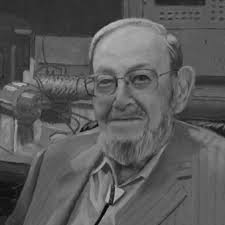


Gerald J. Wasserburg 1927-2016

Gerald WasserburgGerald J. Wasserburg was an American geologist. At the time of his death, he was the John D. MacArthur Professor of Geology and Geophysics, Emeritus, at the California Institute of Technology. He was best known for his work in the fields of isotope geochemistry, cosmochemistry, meteoritics, and astrophysics.
After leaving the U.S. Army, where he received the Combat Infantryman Badge, he attended college on the G.I. Bill. Wasserburg completed his Ph.D. from the University of Chicago in 1954, with a thesis on the development of krypton-argon dating. He joined the faculty at the California Institute of Technology (Caltech) in 1955 as Assistant Professor. He became Associate Professor in 1959 and Professor of Geology and Geophysics in 1962, and in 1982, became the John D. MacArthur Professor of Geology and Geophysics, retiring in 2001. Along with Typhoon Lee and Dimitri Papanastassiou, he discovered the presence of short-lived radioactive aluminum-26 in the early solar system and short-lived palladium-107.

Wasserburg was deeply involved in the Apollo program with the returned lunar samples, and was the last living member of the so-called “Four Horsemen,” whose other members were Bob Walker, Jim Arnold, and Paul Gast. He pioneered the precise measurement of ultra-small samples under strict clean room conditions with minimal contamination. He was also the co-inventor of the Lunatic Spectrometer (the first fully digital, mass spectrometer with computer controlled magnetic field scanning and rapid switching) and founder of the “Lunatic Asylum” research laboratory at Caltech, which specialized in high-precision, high-sensitivity isotopic analyses of meteorites and lunar samples. He and his co-workers were major contributors to establishing a chronology for the Moon and proposed the hypothesis of the late heavy bombardment (LHB) of the whole inner solar system.

Wasserburg’s research led to a better understanding of the origins and history of the solar system and its component bodies and the precursor stellar sources contributing to the solar system. This research established a timescale for the development of the early solar system, including the processes of nucleosynthesis and the formation and evolution of the planets, the Moon, and the meteorites.

Wasserburg was a member of the U.S. National Academy of Science, the American Philosophical Society, the American Academy of Arts and Sciences, and the Norwegian Academy of Science and Letters. He was also the recipient of numerous awards, including the Arthur L. Day Medal in 1970, the NASA Distinguished Public Service Medal in 1972 and 1978, the Wollaston Medal in 1985, the Gold Medal of the Royal Astronomical Society in 1991, the Bowie Medal in 2008, the H. Hess Medal of the American Geophysical Union in 1985, the Leonard Medal of the Meteoritical Society in 1975, the J. Lawrence Smith Medal of the National Academy of Science in 1985, the Holmes Medal of the European Union of Geosciences in 1986, and the V. M. Goldschmidt Medal of the Geochemical Society in 1978.

Newsletter 16-22

Issue 16-22, June 19, 2016

+————————————CONTENTS—————————————-+

  1. IN MEMORIAM: S. ICHTIAQUE RASOOL (1930-2016)
  2. REMINDER: DPS 48/EPSC 11 ABSTRACT DEADLINE MOVED UP ONE DAY TO JUNE 22
  3. HARTMANN STUDENT TRAVEL GRANTS FOR DPS 48/EPSC 11
  4. ABSTRACTS ON LABORATORY RESEARCH FOR PLANETARY SCIENCE
  5. SAVE THE DATE FOR THE FIFTH INTERNATIONAL PLANETARY DUNES WORKSHOP

+——————————————————————————————–+

1———1———1———1———1———1———1———1———1———1

IN MEMORIAM: S. ICHTIAQUE RASOOL (1930-2016)

S. Ichtiaque Rasool passed away peacefully on April 20, 2016. Born in 1930
in Lucknow, India, Ichtiaque moved to France where he earned his doctorate
in atmospheric sciences in 1956 at the University of Paris and met his wife
of 51 years, Francoise. He came to United States in 1961 at the invitation of Robert Jastrow of the Goddard Institute of Space Science and began what turned out to be an amazing 45 year career with NASA eventually retiring from the position of Chief Scientist for Global Change. In 1968, Ichtiaque spent a sabbatical year in Paris, during which he gave lectures that were instrumental in the formation of a planetology group at the Paris Observatory and attracted Catherine de Bergh, Thérèse Encrenaz, and Daniel Gautier to pursue careers in planetary science. While at GISS, he was appointed an editor of the Journal of The Atmospheric Sciences and actively solicited papers on planetary atmospheres. Ichtiaque became a US citizen in 1970 and in 1971

he moved to NASA Headquarters as the Deputy Director for Planetary Programs under Director Robert S. Kraemer when the Grand Tour Mission was under consideration and cancelled and resurrected as Voyager 1 (Mariner Jupiter Saturn) and 2 (Mariner Jupiter Uranus Neptune). During this period there was also

the launch and landing of Viking Spacecrafts on Mars. Later Ichtiaque served as Noel Hinner’s Deputy for Science before moving over to the Earth Science side of NASA. After joining GISS he collaborated with Arv Kliore on Mariner radio occultation measurements of the atmospheres/ionospheres of Mars and Venus. With Catherine de Bergh he wrote one of the early papers about the runaway greenhouse on Venus and with Stephen Schneider he raised the issue about the combined effects of large increases in CO2 and aerosols in a Science

publication. He was the recipient of the NASA Medal for Exceptional Scientific Achievement in 1974, the William T. Pecora Award in 2002, and the COSPAR

William Nordberg Medal in 1988. Throughout his career he was a strong

William Nordberg Medal in 1988. Throughout his career he was a strong advocate for international cooperation in Earth and planetary sciences, even during waning years of the cold war. Ichtiaque is survived by his wife, his son, Immanuel Rasool, his daughter, Elisa Petit, and four grandchildren. For those who would like to know more about his unique career, his book entitled “My Life: From Riches to Rags and (almost) back! A Memoire” is recommended and available from Amazon.com.
Darrell Strobel, Catherine de Bergh, Thérèse Encrenaz, Tobias Owen

2———2———2———2———2———2———2———2———2———2

REMINDER: DPS 48/EPSC 11 ABSTRACT DEADLINE MOVED UP ONE DAY TO JUNE 22

As a result of the AAS moving to new offices this month, we have moved up the abstract deadline for this Fall’s DPS/EPSC meeting in Pasadena to Wednesday June 22 at 9:00 PM (21:00) Eastern Daylight Time. The AAS will be physically unplugging the servers to migrate them to the new offices on the old deadline date. Apologies for the change, but it’s the best solution under the circumstances. Please update your calendars with the new date:

9:00 PM EDT Wednesday June 22, 2016

3———3———3———3———3———3———3———3———3———3

HARTMANN STUDENT TRAVEL GRANTS FOR DPS 48/EPSC 11

A generous contribution from William K. Hartmann, supplemented by member contributions and matching funds from the DPS Committee, has enabled a limited number of student travel grants to assist participation by early-career scientists at the annual DPS meeting.

Application details are at meetings/travel_grant_application Travel grants are primarily intended for students, but post-doctoral scientists

without other means of support will also be considered. The due date for applications is July 8, 2016 11:59 PM.

The DPS Leadership is also soliciting additional contributions from members
for the Hartmann Fund. Your tax-deductible gift promotes the careers of our next generation of planetary scientists. Thanks so much for your generosity.

4———4———4———4———4———4———4———4———4———4

ABSTRACTS ON LABORATORY RESEARCH FOR PLANETARY SCIENCES

Dear Experimental Planetary Science Colleagues,

The Abstracts deadline is June 22, 2016 for the 48th Division for Planetary

Science (DPS) Meeting jointly with European Planetary Sciences Congress (EPSC) to be held from 16-21 October 2016 at the Pasadena Convention Center, Pasadena, California, USA. You are strongly encouraged to submit abstracts that focus on the main sessions of DPS/EPSC.

This year we are also bringing the Laboratory Astrophysics Division (LAD) of AAS closer to DPS.

We are pleased to inform you that some of the laboratory related abstracts that are selected for oral presentations at the DPS/EPSC will be designated as “jointly with LAD”. If you are not a member of LAD yet, we strongly encourage you to become a member at https://lad.aas.org/

As laboratory research is an important aspect of planetary science, strong participation by the LAD community is needed for a successful meeting. A significant presence by the LAD community would greatly enrich the quality
of the scientific discussions that are held at the DPS meeting. In an effort to increase the impact of laboratory research presentations to the community at
this meeting, the DPS Science Organizing Committee is committed to integrating these talks and posters within the appropriate planetary science topics, and not relegating laboratory talks and posters to an isolated laboratory session. This is the approach that has been used very successfully for the past several DPS meetings, and we aim to continue this integrated approach. The degree to which
we can achieve this will depend on strong participation from the LAD community, so please consider submitting an abstract (abstract submissions is open now through 9:00 pm ET, 22 June 2016) for this year’s DPS/EPSC meeting. Please do not hesitate to contact me or Murthy if you have any questions.

If the DPS receives a large number of high-quality abstracts from LAD members, we will be in a better position to highlight some of the accepted talks as “Joint DPS/EPSC and LAD Talks”.

Best regards,

Nancy Chanover
Member-at-Large, LAD Committee 2013-2016
[email protected]

Murthy Gudipati
SOC Member, 2016 DPS/EPSC [email protected]

5———5———5———5———5———5———5———5———5———5

SAVE THE DATE FOR THE FIFTH INTERNATIONAL PLANETARY DUNES WORKSHOP

The Fifth International Planetary Dunes Workshop will be conducted

May 16–19, 2017, at Dixie State University, St. George, Utah. The workshop format will consist of 21⁄2 days of topical discussions, a poster session/social,
and one-day field trip to Zion National Park and Coral Pink Sand Dunes State Park. The workshop will focus on the following science questions: (1) Under what conditions are terrestrial subaqueous dunes a suitable analog for planetary dunes? (2) Can sediment composition be used to better understand sediment source, transport, sorting, and in situ weather processes? (3) Can bedform scale be used to characterize a planetary body’s surface-atmosphere interface (e.g., boundary layer, fluid/air properties)? (4) Under what conditions will the principle of equifinality apply and how does this affect our interpretations? More details can be found at http://www.hou.usra.edu/meetings/dunes2017/

LTC(Ret) Timothy N. Titus Ph.D. Supervisory Research Space Scientist Mission Operations Group Chief Astrogeology Science Center

United States Geological Survey

———————————+
Send submissions to:
Anne Verbiscer, DPS Secretary ([email protected])

To unsubscribe visit http://aas.org/unsubscribe or email [email protected]. To change your address email [email protected]

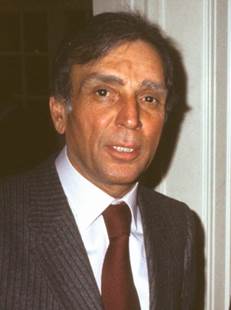
S. Ichtiaque Rasool 1930-2016

Ichtiaque RasoolS. Ichtiaque Rasool passed away peacefully on April 20, 2016. Born in 1930 in Lucknow, India, Ichtiaque moved to France where he earned his doctorate in atmospheric sciences in 1956 at the University of Paris and met his wife of 51 years, Francoise. He came to United States in 1961 at the invitation of Robert Jastrow of the Goddard Institute of Space Science and began what turned out to be an amazing 45 year career with NASA eventually retiring from the position of Chief Scientist for Global Change.  In 1968, Ichtiaque spent a sabbatical year in Paris, during which he gave lectures that were instrumental in the formation of a planetology group at the Paris Observatory and attracted Catherine de Bergh, Thérèse Encrenaz, and Daniel Gautier to pursue careers in planetary science.  While at GISS, he was appointed an editor of the Journal of The Atmospheric Sciences and actively solicited papers on planetary atmospheres. Ichtiaque became a US citizen in 1970 and in 1971 he moved to NASA Headquarters as the Deputy Director for Planetary Programs under Director Robert S. Kraemer when the Grand Tour Mission was under consideration and cancelled and resurrected as Voyager 1 (Mariner Jupiter Saturn) and 2 (Mariner Jupiter Uranus Neptune).  During this period there was also the launch and landing of Viking Spacecrafts on Mars. Later Ichtiaque served as Noel Hinner’s Deputy for Science before moving over to the Earth Science  side of NASA. After joining GISS he collaborated with Arv Kliore on Mariner radio occultation measurements of the atmospheres/ionospheres of Mars and Venus. With Catherine de Bergh he wrote one of the early papers about the runaway greenhouse on Venus and with Stephen Schneider he raised the issue about the combined effects of large increases in CO2 and aerosols in a Science publication. He was the recipient of the NASA Medal for Exceptional Scientific Achievement in 1974, the William T. Pecora Award in 2002, and the COSPAR William Nordberg Medal in 1988. Throughout his career he was a strong advocate for international cooperation in Earth and planetary sciences, even during waning years of the cold war.  Ichtiaque is survived by his wife, his son, Immanuel Rasool, his daughter, Elisa Petit, and four grandchildren. For those who would like to know more about his unique career, his book entitled “My Life: From Riches to Rags and (almost) back! A Memoire” is recommended and available from Amazon.com.

Darrell Strobel, Catherine de Bergh, Thérèse Encrenaz, Tobias Owen

Newsletter 16-21

Issue 16-21, June 14, 2016


+————————————CONTENTS—————————————-+

1)IN MEMORIAM: ANDRE BRAHIC (1942-2016)

2)REMINDER: DPS 48/EPSC 11 ABSTRACT DEADLINE MOVED UP ONE DAY TO JUNE 22

3)HARTMANN STUDENT TRAVEL GRANTS FOR DPS 48/EPSC 11

4)WHITE PAPER ON THE VALUE OF PARTICIPATING SCIENCE PROGRAMS ON NASA PLANETARY MISSIONS

5)SECOND ANNOUNCEMENT OF THE 2016 EDITION OF THE IAC WINTER SCHOOL

6)UPCOMING MEETINGS

+——————————————————————————————–+


1———1———1———1———1———1———1———1———1———1

IN MEMORIAM: ANDRE BRAHIC (1942-2016)


The planetary community, and in particular his French colleagues and friends, 

are very sad to announce the passing of André Brahic. Professor at the University 

Paris-Diderot, based at the Observatory of Paris until 1995 and the AIM laboratory 

at CEA Saclay, André Brahic devoted most of his career to the study of solar system

bodies, in particular of planetary rings and the formation of planets, but started out

by working on the chaos theory, the dynamics of galaxies and the supernovas. He 

was a member of the scientific teams of the cameras on Voyager 1 and 2, through 

which he made many discoveries and notably confirmed the existence of Neptune 

rings and the arcs of the Adams ring, that he had predicted. With an international 

team, he showed that the Adams ring, is actually composed of four arcs that he and 

his collaborators baptized “Courage”, “Liberté”, “Egalité”, “Fraternité” (CLEF for 

“KEY” in French). He was also a member of the science team on the Cassini mission, 

still returning amazing science results from the Saturnian system, that André would 

have liked to follow until the mission’s end.  André Brahic was of course also an 

extraordinary communicator, who transmitted his passion for science and astrophysics 

to generations of students and to the public. This has probably incited many of today’s

astronomers career choices, as it was for me – André was my professor during the

Master degree. He knew how to communicate his enthusiasm for science to everyone, 

whatever their level of education. André Brahic received the DPS Carl Sagan Medal 

in 2001 and the Jean Perrin 2006 award for scientific popularization. In July 2015,

he received the insignia of Chevalier de la Legion d’Honneur in France.  André Brahic 

has left an impressive heritage and will always be remembered as a great scientist, 

a great teacher and a great advocate of communicating with the public. 


Athena Coustenis


2———2———2———2———2———2———2———2———2———2

REMINDER: DPS 48/EPSC 11 ABSTRACT DEADLINE MOVED UP ONE 

DAY TO JUNE 22 


As a result of the AAS moving to new offices this month, we have moved up 

the abstract deadline for this Fall’s DPS/EPSC meeting in Pasadena to 

Wednesday June 22 at 9:00 PM (21:00) Eastern Daylight Time.  The AAS 

will be physically unplugging the servers to migrate them to the new offices 

on the old deadline date.  Apologies for the change, but it’s the best solution 

under the circumstances. Please update your calendars with the new date:


9:00 PM EDT Wednesday June 22, 2016


3———3———3———3———3———3———3———3———3———3

HARTMANN STUDENT TRAVEL GRANTS FOR DPS 48/EPSC 11


A generous contribution from William K. Hartmann, supplemented by member 

contributions and matching funds from the DPS Committee, has enabled a limited 

number of student travel grants to assist participation by early-career scientists at 

the annual DPS meeting. 


Application details are at meetings/travel_grant_application


Travel grants are primarily intended for students, but post-doctoral scientists 

without other means of support will also be considered.  


The due date for applications is July 8, 2016 11:59 PM.  


The DPS Leadership is also soliciting additional contributions from members 

for the Hartmann Fund. Your tax-deductible gift promotes the careers of our next 

generation of planetary scientists. Thanks so much for your generosity.


4———4———4———4———4———4———4———4———4———4

WHITE PAPER ON THE VALUE OF PARTICIPATING SCIENCE 

PROGRAMS ON NASA PLANETARY MISSIONS 


Dear Colleagues,


On behalf of the Assessment/Advisory Groups (OPAG, MEPAG, VEXAG, 

SBAG, LEAG and CAPTEM), we are preparing a white paper about the value 

of Participating Science programs on NASA planetary missions, and how the 

usefulness of such programs might be maximized. This white paper will be 

delivered to NASA and made available to the scientific community.


To help with the study, we have prepared a survey to gather opinions and 

perceptions about Participating Scientist programs and experiences. (Please note, 

we consider Guest Investigators and Interdisciplinary Scientists to also be a type 

of Participating Scientist). Please consider responding to this survey whether or 

not you have been a Participating Scientist on a NASA mission. We will be 

contacting mission Principle Investigators and Project Scientists separately 

about their experiences, but all are welcome to fill out this survey; please 

answer as many or as few questions as you wish.


https://docs.google.com/forms/d/1S-QzqQX6hgdl709VL5MMEBZbjHzti4Z8dHbvpLPLwOk/viewform


If you have any questions about the survey or the white paper, please contact [email protected].


5———5———5———5———5———5———5———5———5———5

SECOND ANNOUNCEMENT OF THE 2016 EDITION OF THE IAC WINTER SCHOOL

This announcement is to remind you of the XXVIII Edition of the IAC 
Winter School, organized by the Instituto de Astrofisica de Canarias 
and focused on the exploration of the Solar System. The school will 
be held in the UNESCO word heritage city of San Cristobal de La Laguna, 
in Tenerife (Canary Islands, Spain) in November, 7-16, 2016.

The school is intended for post-graduate students in Astrophysics/
Planetary Sciences completing their PhD, and also to young postdocs. 
It is limited to 50 participants, and will provide several advanced 
courses in specific topics like planetary space missions, asteroids, 
comets, origin and evolution of the Solar System and a small workshop 
on planetary data archiving and image processing.

The students will have the opportunity to present a poster with their 
recent work. 

Registration deadline is June, 15th 

For more details visit our website: 

http://www.iac.es/winterschool/2016/


6———6———6———6———6———6———6———6———6———6

UPCOMING MEETINGS


A) ENCELADUS AND THE ICY MOONS OF SATURN

     26-29 July 2016

     Boulder, Colorado            


     Early Registration Deadline: 24 June 2016


     http://www.hou.usra.edu/meetings/enceladus2016/registration/


 B) GSA ANNUAL MEETING 2016 SESSION T172. TECTONIC, 

      VOLCANIC, AND VOLCANOTECTONIC PROCESSES ON 

     ROCKY PLANETARY BODIES

We invite contributions to a special session on tectonic, volcanic, 
and volcanotectonic processes on rocky planetary bodies at the 2016 
GSA Annual Meeting in Denver, CO, September 25-28.

Volcanism and tectonism are two of the most ubiquitous processes at 
work in the Solar System, shaping substantially the surfaces of the 
terrestrial planets. Through a combination of solicited and
contributed presentations, this session will host observational, 
laboratory, theoretical, or analogue research into any aspect of 
planetary volcanic and tectonic activity. We particularly welcome 
submissions that compare landforms and processes on multiple bodies, 
and how lessons from specific studies can be applied to understanding 
volcanism and tectonism across the inner Solar System and beyond.

Please consider submitting an abstract for this session. For more 
information, visit: 

https://gsa.confex.com/gsa/2016AM/cfp.epl

The submission deadline is July 12, 2016.

Conveners:
Paul Byrne (North Carolina State University)
Christian Klimczak (University of Georgia)

We look forward to seeing you in Denver.

———————————+ 

Send submissions to:

Anne Verbiscer, DPS Secretary ([email protected]


To unsubscribe visit http://aas.org/unsubscribe or email [email protected].

To change your address email [email protected].

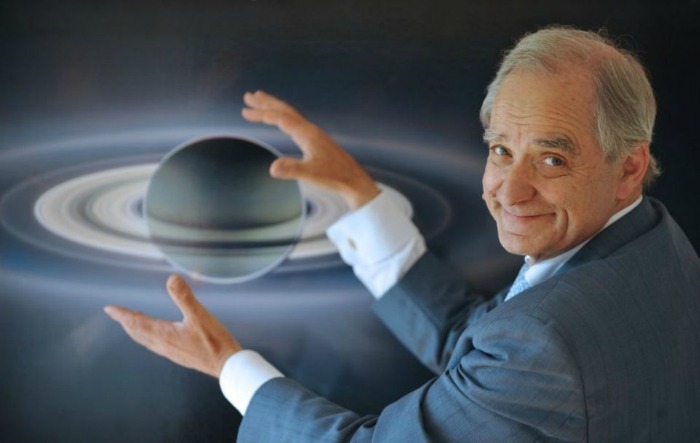
Andre Brahic 1942-2016

Andre BrahicThe planetary community, and in particular his French colleagues and friends, are very sad to announce the passing of André Brahic. Professor at the University Paris-Diderot, based at the Observatory of Paris until 1995 and the AIM laboratory at CEA Saclay, André Brahic devoted most of his career to the study of solar system bodies, in particular of planetary rings and the formation of planets, but started out by working on the chaos theory, the dynamics of galaxies and the supernovas. He was a member of the scientific teams of the cameras on Voyager 1 and 2, through which he made many discoveries and notably confirmed the existence of Neptune rings and the arcs of the Adams ring, that he had predicted. With an international team, he showed that the Adams ring, is actually composed of four arcs that he and his collaborators baptized “Courage”, “Liberté”, “Egalité”, “Fraternité” (CLEF for “KEY” in French). He was also a member of the science team on the Cassini mission, still returning amazing science results from the Saturnian system, that André would have liked to follow until the mission’s end.  André Brahic was of course also an extraordinary communicator, who transmitted his passion for science and astrophysics to generations of students and to the public. This has probably incited many of today astronomers career choices, as it was for me – André was my professor during the Master degree. He knew how to communicate his enthusiasm for science to everyone, whatever their level of education. André Brahic received the DPS Carl Sagan Medal in 2001 and the Jean Perrin 2006 award for scientific popularization. In July 2015, he received the insignia of Chevalier de la Legion d’Honneur in France.  André Brahic has left an impressive heritage and will always be remembered as a great scientist, a great teacher and a great advocate of communicating with the public.

Athena Coustenis

Message From The Chair: Publication Survey

At the Members’ Meeting in National Harbor I was pleased to see the general interest and engagement on publication matters.  Last December, in a message from the chair, I informed you about the details of the agreement that we made with Elsevier regarding Icarus and the formation of a Publications Subcommittee. That Subcommittee has assembled a survey that we would like you to take.

Shortly, you will be sent a link from the AAS SurveyMonkey account inviting you to take the survey. I encourage you to take some of your time to respond so that the DPS Committee can get a strong sense of your ideas and desires regarding our strategy for planetary publication matters and how it might evolve in the future.

The Publications Subcommittee has written up a brief overview and background for the survey that you can find below. Look for the survey coming in the next couple of days.

Jason W. Barnes
DPS Chair

History
Academic Press first published Icarus in 1962.  The DPS was formed in 1970, and became affiliated with Icarus in 1975.  Since Icarus was published for more than a decade before DPS involvement, the intellectual property that is Icarus originated under Academic Press.  Harcourt acquired Academic Press in 1969, which was in turn purchased by Reed Elsevier in 2000; Elsevier now publishes Icarus.

The fact that the DPS does not own the primary journal in which its members publish, review, and edit the content is very different from the DPS’s parent organization, the American Astronomical Society, which owns the Astrophysical Journal, the Astronomical Journal, etc.  Some similar scholarly societies own and operate journals (e.g. the American Geophysical Union publishes JGR and GRL).

Changing Circumstances
The Division was happily associated with Icarus for many decades, but the Internet has changed perspectives on academic publishing.  A part of the process that came under scrutiny was the retention of copyright by the publishing companies.  This scrutiny and analysis gave rise to the Open Access movement about a decade ago.  Issues about Open Access have been raised in past DPS Members meetings, but no consensus was arrived at.

Changes for NASA-Funded Research
NASA plans to adopt a policy requiring papers and research based on NASA-funded research to be deposited in a publicly accessible NASA online archive within one year of publication.

How does that impact Icarus papers?  Well, it depends. If all authors of a paper are civil servants, then Elsevier can’t (and doesn’t now) claim copyright of the paper, and it can be easily and legally submitted by its authors to this new NASA archive. But if even one author of an Icarus paper is not a civil servant, then the copyright must be transferred to Elsevier, which then owns it and it cannot legally be deposited in NASA’s archive. Elsevier’s solution is for the author to pay an Open Access fee (currently $2,750) making the published article Open Access under an author-selected Creative Commons license so that it can now be legally placed in the NASA archive.  This is an extra publication cost, but the ROSES-2015 and 2016 documents indicate that Open Access fees, like page charges, may be included in proposals as allowable charges on a grant, so should be requested in future proposal budgets.

The Committee Contemplates
By 2011, the DPS Committee felt that its relationship with Icarus should be re-evaluated, especially regarding what more the DPS could get out of its connection with Icarus, so discussions were started with Elsevier, which sparked discussion about the more general nature of the relation of the Division to scientific publishing.  Soon, knowledge of the Open Access movement and its impact on publishing was more widespread among the Committee and DPS members in general.

Beyond Open Access issues, there are concerns about Elsevier’s actions on the global stage that seemed to prioritize Elsevier profits over scholarship.  Elsevier desired to control more of the editorial process than they had traditionally done with Icarus.  Beyond that, the DPS Committee contemplated how the Division might benefit if it had more ownership and control of our scientific journal.

2015 Agreement with Elsevier
The Committee had much information but it was unclear what course should be taken, so it decided not to make any bold moves.  The DPS would stay with Icarus for the time being and sign an agreement with Elsevier effective October 1, 2015. The agreement automatically renews every three years, if neither party objects.

The Future
During the last year, the DPS Committee was concerned about its relationship with Elsevier and seriously considered the implications and possibilities of ending the relationship.  But it did not feel that it had a sufficient sense of the membership’s concerns to make that decision or navigate between various options in the wake of such a decision.

DPS members have voiced concern about our relationship with Elsevier over the years, but in order for the Committee to chart a way forward, they must feel confident about the sense of the membership at large, and that is why you will be receiving an invitation to take a survey that covers these topics, please respond and let your voice be heard.

Newsletter 16-20

Issue 16-20, June 7, 2016


+————————————CONTENTS—————————————-+

  1. MESSAGE FROM THE CHAIR: PUBLICATION SURVEY
  2. REMINDER: DPS 48/EPSC 11 ABSTRACT DEADLINE MOVED UP ONE DAY TO JUNE 22 
  3. SBAG 15 MEETING REGISTRATION
  4. SBAG STEERING COMMITTEE CANDIDATE SOLICITATION
  5. JOBS, POSITIONS, OPPORTUNITIES

+——————————————————————————————–+


1———1———1———1———1———1———1———1———1———1

MESSAGE FROM THE CHAIR: PUBLICATION SURVEY


At the Members’ Meeting in National Harbor I was pleased to see the general 

interest and engagement on publication matters.  Last December, in a message 

from the chair (news/message-chair-icarus-agreement-reached),

I  informed you about the details of the agreement that we made with Elsevier 

regarding Icarus and the formation of a Publications Subcommittee.  That

Subcommittee has assembled a survey that we would like you to take. 

Shortly, you will be sent a link from the AAS SurveyMonkey account inviting 

you to take the survey.  I encourage you to take some of your time to respond 

so that the DPS Committee can get a strong sense of your ideas and desires 

regarding our strategy for planetary publication matters and how it might evolve 

in the future. 

The Publications Subcommittee has written up a brief overview and background 

for the survey that you can find here: 


news/message-chair-publication-survey


Look for the survey coming in the next couple of days. 

Jason W. Barnes 
DPS Chair 


2———2———2———2———2———2———2———2———2———2

REMINDER: DPS 48/EPSC 11 ABSTRACT DEADLINE MOVED UP ONE 

DAY TO JUNE 22 


As a result of the AAS moving to new offices this month, we have moved up 

the abstract deadline for this Fall’s DPS/EPSC meeting in Pasadena to 

Wednesday June 22 at 9:00 PM (21:00) Eastern Daylight Time.  The AAS 

will be physically unplugging the servers to migrate them to the new offices 

on the old deadline date.  Apologies for the change, but it’s the best solution 

under the circumstances. Please update your calendars with the new date:


9:00 PM EDT Wednesday June 22, 2016


3———3———3———3———3———3———3———3———3———3

SBAG 15 MEETING REGISTRATION


Registration for the SBAG 15 meeting in now available from the SBAG 

website:

http://www.lpi.usra.edu/sbag/


SBAG 15 Meeting

June 28 – June 30, 2016

Johns Hopkins University Applied Physics Laboratory

Laurel, MD


Additional logistical details and the agenda are also available on the SBAG 

website as well. 


If you plan to attend the SBAG 15 meeting, please register. Registration is 

free but is used for planning purposes and to document community interest in 

SBAG meetings, to ensure continued support. 


Please feel free to contact me with any questions, and I’m looking forward 

to a productive meeting at the end of the month. 


Best wishes,

Nancy Chabot

SBAG Chair


4———4———4———4———4———4———4———4———4———4

SBAG STEERING COMMITTEE CANDIDATE SOLICITATION

Dear SBAG community, 

The SBAG (Small Bodies Assessment Group) Steering Committee is composed 

of members who represent the diverse nature of the small bodies community. 

The Steering Committee organizes SBAG meetings, drafts and edits findings 

relating to topics of interest to the small bodies community, and provides input 

to NASA on topics relating to the science of small bodies, the use of small bodies 

in support of human space activities, technology relating to the exploration and 

utilization of small bodies, and planetary defense. Each member serves a multi-year 

term. There are three positions open on the SBAG Steering Committee starting in 

August 2016. We are looking for candidates in the following areas:


* SBAG  Planetary Defense Lead – Serve as a Steering Committee member and 

lead SBAG activities relating to topics of planetary defense at SBAG meetings and 

Steering Committee discussions. Three-year term.


* Outer Solar System Small Bodies Expert – Serve as a SBAG Steering Committee 

member and provide specific expertise on topics and issues related to the science of 

small bodies in the outer Solar System, to complement the expertise of the continuing

 Steering Committee members. The Steering Committee already has specific expertise 

relating to comets, so this position is intended to be for an expert in KBOs, Jupiter 

Trojans, small moons of the outer planets, and/or Centaurs. Three-year term.


* Member with any expertise relevant to SBAG – The Steering Committee tries to 

maintain expertise in several specific areas, including those mentioned above, but 

also wants to represent a broad cross-section of the small bodies community, and 

seeks potential members who are interested in small bodies topics, regardless of 

specific expertise. The intent of describing this position this way is to encourage 

potential candidates from across the community (candidates for the first two 

positions will automatically be considered as well). Three-year term.


To indicate your willingness to serve in any of these positions, please email 

Tim Swindle ([email protected]) by June 23, 2016, and include a two- to 

four-page CV. 

The current Steering Committee will select new members at the 15th Meeting of 

SBAG, June 28-30, 2016.

Tim Swindle
Incoming SBAG Chair
http://www.lpi.usra.edu/sbag/


5———5———5———5———5———5———5———5———5———5

JOBS, POSITIONS, OPPORTUNITIES


A) POSTDOC – IONOSPHERIC RADIO OCCULTATIONS AT SATURN, 

     TITAN, AND MARS

     Boston University 


The Center for Space Physics at Boston University invites applications 

for a postdoctoral researcher position supervised by Professor Paul Withers. 

The research will involve the analysis of radio occultation observations of 

the ionospheres of Saturn, Titan, and Mars. Candidates should possess 

a PhD degree in a relevant field. Experience conducting research on planetary 

ionospheres is desirable. The salary offered will be competitive and 

commensurate with experience. Funding is available for two years with 

the possibility of extension. The appointment is expected to begin as soon 

as possible after 1 September 2016. Please contact Paul Withers 

([email protected]) for further information.


Applications should be sent by email to Paul Withers ([email protected]).


The application should be submitted in PDF format and contain a curriculum 

vitae, statement of research interests, and contact information for three 

referees. Review of applications will begin on 1 July 2016. Women and 

underrepresented minorities are particularly encouraged to apply. 

Boston University is an equal opportunity/affirmative action employer.


———————————+

Send submissions to:

Anne Verbiscer, DPS Secretary ([email protected]


To unsubscribe visit http://aas.org/unsubscribe or email [email protected].

To change your address email [email protected].


Urgent Message From The Chair: DPS 48/EPSC 11 Abstract Deadline Moved Up One Day To June 22

As a result of the AAS moving to new offices this month, we have moved up the abstract deadline for this Fall’s DPS/EPSC meeting in Pasadena to Wednesday June 22 at 9:00 PM (21:00) Eastern Daylight Time.  It turns out that the AAS will be physically unplugging the servers to migrate them to the new offices on the old deadline date.  Apologies for the change, but it’s the best solution under the circumstances. Please update your calendars with the new date:

9:00 PM EDT Wednesday June 22, 2016

Jason W. Barnes
DPS Chair

Newsletter 16-19

Issue 16-19, June 2, 2016


+————————————CONTENTS—————————————-+

  1. DEADLINE MOVED UP ONE DAY TO JUNE 22

+——————————————————————————————–+


1———1———1———1———1———1———1———1———1———1

URGENT MESSAGE FROM THE CHAIR: DPS 48/EPSC 11 ABSTRACT 

DEADLINE MOVED UP ONE DAY TO JUNE 22 

As a result of the AAS moving to new offices this month, we have moved up 

the abstract deadline for this Fall’s DPS/EPSC meeting in Pasadena to 

Wednesday June 22 at 9:00 PM (21:00) Eastern Daylight Time.  It turns out 

that the AAS will be physically unplugging the servers to migrate them to the 

new offices on the old deadline date.  Apologies for the change, but it’s the best 

solution under the circumstances. Please update your calendars with the new date:


9:00 PM EDT Wednesday June 22, 2016

Jason W. Barnes 
DPS Chair


———————————+

Send submissions to:

Anne Verbiscer, DPS Secretary ([email protected]


To unsubscribe visit http://aas.org/unsubscribe or email [email protected].

To change your address email [email protected].