2019 Prize Recipients

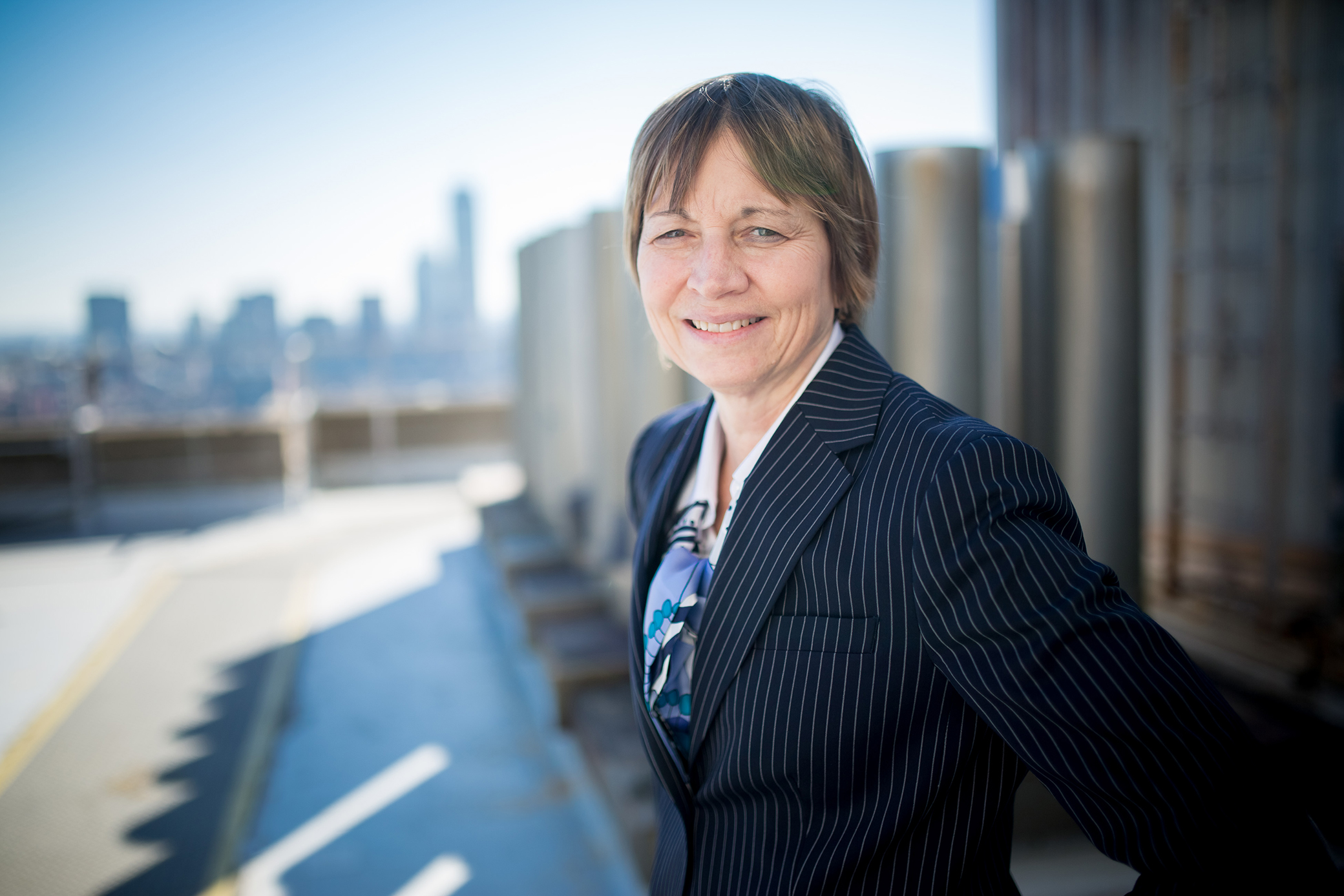
Maria Zuber – 2019 Gerard P. Kuiper Prize

Maria ZuberDPS awards the 2019 Gerard P. Kuiper Prize for outstanding contributions to the field of planetary science to Maria Zuber (MIT) for her contributions to advancements in geophysics, planetary gravity mapping, and laser altimetry. One example of her seminal contributions includes her paper in Science in 2000 combining Mars Global Surveyor laser altimetry data and gravity data to determine the crustal and upper mantle structure of Mars. Another example is her leadership as principal investigator of the GRAIL mission to construct a model of the Moon’s gravitational field to spherical harmonic degree 1,800, which exceeds the baseline requirement of the mission by an order of magnitude. Dr. Zuber has turned her attention to many different solid bodies in the solar system including Mercury, Venus, Eros, Vesta, and Ceres. Over the years she has advised a number of students and postdocs, and one reports that she strikes the perfect balance of being demanding, supportive, encouraging, and open minded.


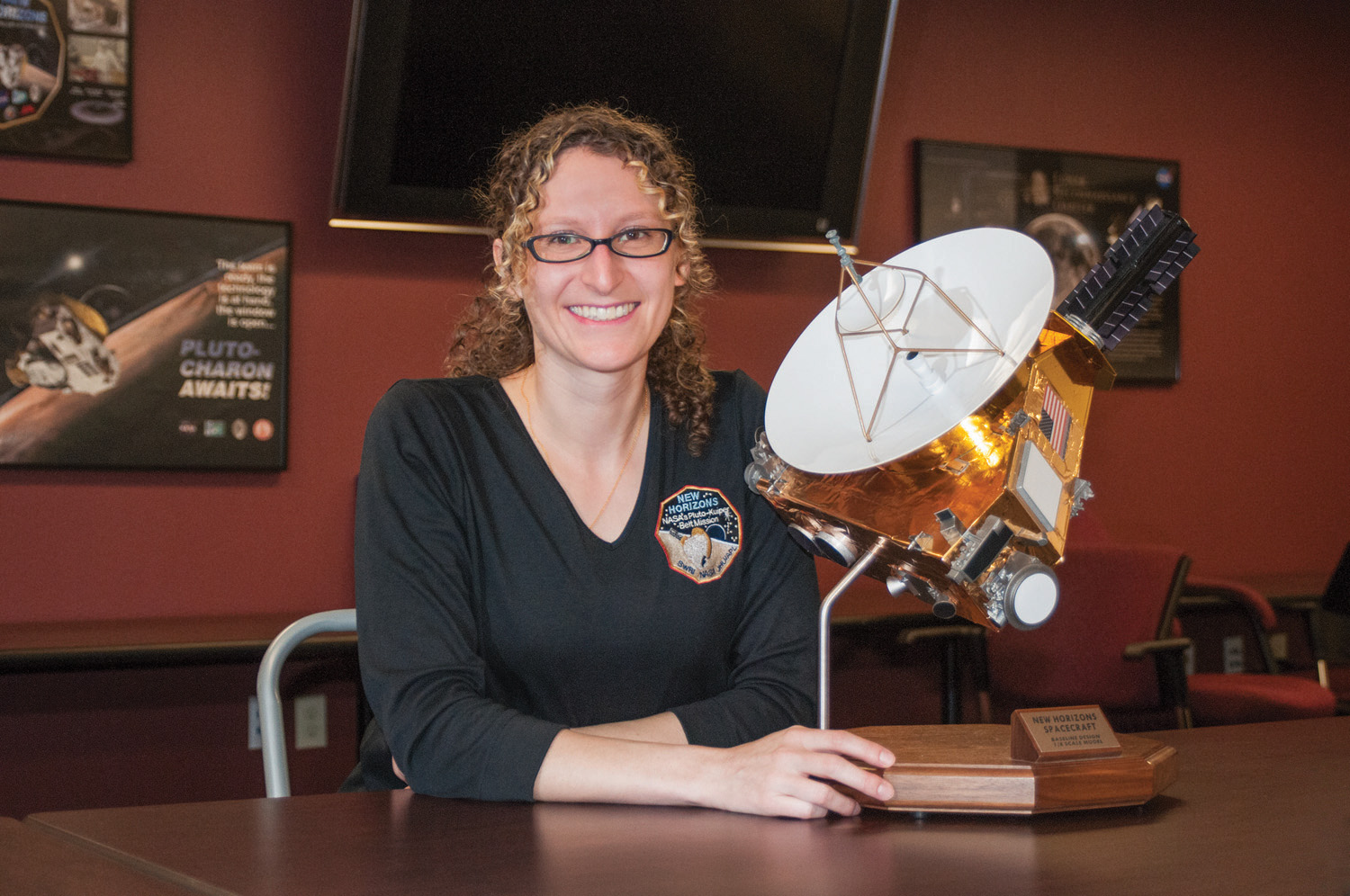
Kelsi Singer – 2019 Harold C. Urey Prize

Kelsi SingerDPS awards the 2019 Harold C. Urey Prize for outstanding achievement in planetary research by a young scientist to Kelsi Singer (SwRI). We award this prize in recognition of Dr. Singer’s work in impact cratering and in the geology and geophysics of icy worlds. In one paper, she used Cassini observations of Iapetus to create a catalog of landslide data and tested theories of long-runout landslides. Dr. Singer also used secondary craters on Europa and Ganymede to produce size-frequency and size-velocity distributions for icy blocks that revealed fundamental scaling relationships. In recent work, she used the cratering record on Pluto and Charon to determine that there is a deficit of small objects in the Kuiper Belt, with implications for the collisional history of the Kuiper belt and planetesimal formation. Dr Singer’s work is meticulous, rigorous, and insightful. In the best tradition of scientific brilliance, she examines data with an open mind, considers multiple theories, follows those theories to their logical conclusions, quantifies her uncertainties, and applies healthy skepticism toward her results. Photo credit: Rayna Tedford


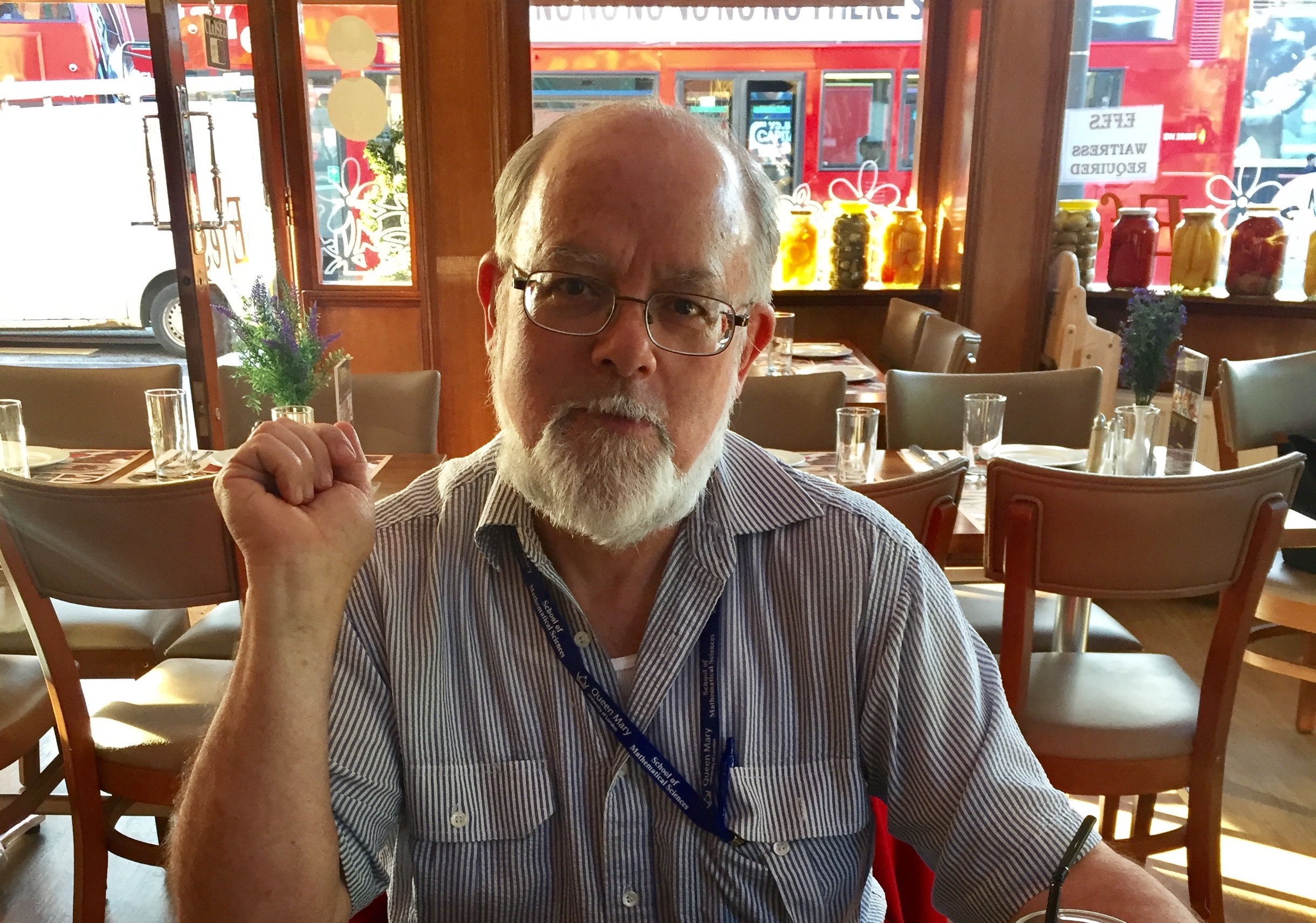
Phil Nicholson – 2019 Harold Masursky Award

Phil NicholsonDPS awards the 2019 Harold Masursky Award for meritorious service to planetary science to Phil Nicholson (Cornell University). A highlight of his service to the community has been his role as Editor in Chief of Icarus for 20 years. During his tenure he improved the experience for authors, reduced time to publication, and increased access. Dr. Nicholson was dedicated to the integrity of the peer review process; he gave everyone the chance to have their voice heard. His work as Editor in Chief, in addition to his full load of teaching and research duties — as well as his volunteer efforts on numerous committees and review panels — makes him an icon of service to the planetary science community.


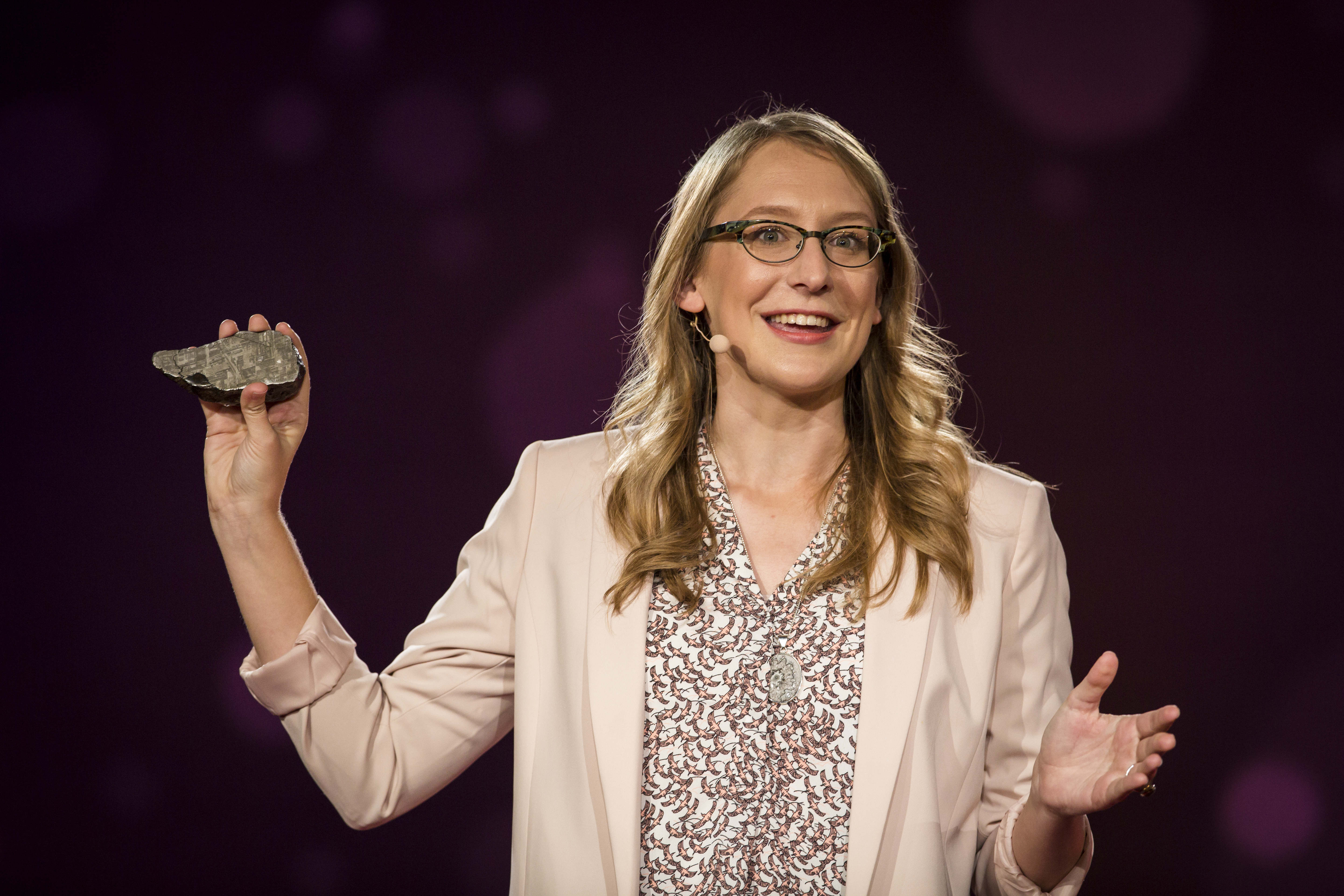
Carrie Nugent – 2019 Carl Sagan Medal

Carrie NugentDPS awards the 2019 Carl Sagan Medal for excellence in public communication to Carrie Nugent (Olin College) for her compelling and effective outreach to a worldwide audience. In her highly rated Spacepod podcast, Dr. Nugent interviews other scientists about their work, providing the public with a wide and deep view of planetary science research. Through Spacepod, she has enabled hundreds of members of our community to share their science with the public. Dr. Nugent is an engaging speaker with more than 1.3 million views of her TED talk on asteroid hunting. She uses clear, evocative language to make solar system discoveries accessible to people of all ages and backgrounds.


Rebecca Boyle – 2019 Jonathan Eberhart Planetary Science Journalism Award

Rebecca BoyleThe Jonathan Eberhart Planetary Science Journalism Award for distinguished popular writing goes to Rebecca Boyle for her article “Pictures of Worlds to Come” in the December 6, 2018, issue of Nature. In this eloquently written feature, Rebecca explores the rapidly evolving field of planet formation, which lies at the intersection of planetary science and other branches of astronomy. She brings to light the giant strides being made in imaging protoplanetary disks by vividly describing the extremely detailed images taken by the Atacama Large Millimeter/submillimeter Array and other facilities. She addresses the challenges presented by such observations to theories about planet formation and how researchers are working on reconciling those. Rebecca beautifully wraps together historical insights, the latest science, and potential paths forward to paint a vibrant picture of this exciting field.

Message from the AAS President and DPS Chair: Moon – 2024 ?

Vice-President Pence recently announced the Administration’s goal of returning US astronauts to the lunar surface by 2024. The NASA plan is nicknamed “Artemis.” Last week the Administration delivered to Congress an amendment to its initially proposed fiscal year (FY) 2020 budget to reflect this ambitious new goal.


The budget amendment contained proposals to add a total of $1.6 billion to NASA’s FY20 budget, offset by reductions to the Pell Grant program in the Department of Education. The amendment also contained a proposal to give the NASA Administrator the authority to transfer funds between appropriations accounts “…in the event that the Administrator determines that the transfers are necessary in support of establishment of a U.S. strategic presence on the Moon.”


Our Concerns


The proposed reductions to the Pell Grant program are certainly a concern for any organization that cares about the training of current and future generations of researchers and educators in our disciplines. There will be fierce opposition in Congress to this proposed budgetary offset.


NASA Administrator Jim Bridenstine has publicly stated on at least a couple of occasions that it doesn’t make sense to cut science programs to achieve human exploration goals — mostly because Congress is opposed to such moves — and we take him at his word. However, this initial $1.6 billion augmentation is only a down payment, and some outside experts have put the likely additional annual funding augmentation need closer to $4-8 billion. While trimming science programs won’t come close to filling such budgetary holes, the proposed transfer authority is an item for serious concern should push come to shove in achieving the 2024 goal. One reason for this concern is that such transfers and communications to Congress about them take place in the shadows, outside of the sunshine of the normal public Congressional appropriations process.


Science Priorities


In addition to the Administration’s already-proposed Lunar Discovery and Exploration Program (LDEP) — which the House Appropriations Committee appears to be on track to support — the new $1.6 billion amendment allocates $90 million to NASA’s Science Mission Directorate (SMD) “for the purchase of commercial services to deliver a rover to…explore the Moon’s polar regions in advance of a human mission.”


Since the changes in civilian space policy to return to the Moon have occurred after the last planetary science decadal survey in 2013 and that survey’s midterm assessment in 2018, there is not a community-wide consensus on where the Administration’s proposed lunar science program would rank within the relative priorities for lunar science, let alone within the priorities for the overall planetary science enterprise. The primary new lunar mission prioritized by the 2013 planetary decadal was the Lunar Geophysical Network (recommended for inclusion in the fifth New Frontiers competition). The 2013 survey also reaffirmed the 2003 survey’s Lunar South Pole- Aitken Basin Sample Return mission for the fifth New Frontiers competition since it wasn’t selected in the fourth New Frontiers round.


The current astronomy and astrophysics decadal survey is likely to consider lunar far-side project proposals, and the upcoming planetary science decadal survey will certainly need to consider the changes to civil space policy and commercial spaceflight  capabilities as they impact the survey committee’s holistic approach to prioritizing lunar and planetary research. In the meantime the LDEP program within SMD appears to be doing an admirable job of finding synergies between efforts to kick-start a lunar commercial services industry and solid peer-reviewed science investigations and payloads, while adhering to science priorities described in the 2013 planetary decadal survey.


What Are the AAS and DPS Doing?


We have decided against taking an official position on NASA’s Artemis proposal at this time. It is still very early, and we do not think that the benefits of public opposition to an ill-defined and untested proposal outweigh the use of political capital, at least not yet. We are clearly opposed to the Pell Grant offset on principle, and we have serious concerns about the proposed transfer authority and the as-yet undefined scientific content of the proposed crewed Artemis lunar program. The House Appropriations Committee responsible for NASA is working toward a 7% increase for NSF and a 4% increase for NASA SMD in FY20, which is a reassuring sign of their continued strong support for space sciences.


We will, however, have the AAS public-policy staff informally present our concerns — Pell Grant offset, transfer authority, and lack of community consensus on the science program — to relevant Congressional and Executive Branch staff. A Congressional Hill visit by the AAS Division for Planetary Sciences (DPS) Committee on May 10th preemptively delivered the core of this message, which was well received. If evolving circumstances require the AAS to take a strong public position for or against what NASA proposes or does, we will not hesitate to do so.


As always, we welcome your comments and/or concerns about the AAS and DPS approach to advocating on your behalf.


Megan Donahue

AAS President


Linda Spilker

DPS Chair


23 May 2019

Newsletter 19-20

Issue 19-20, May 23, 2019


+————————————CONTENTS—————————————-+

  1. MESSAGE FROM THE AAS PRESIDENT AND DPS CHAIR: MOON – 2024?

+——————————————————————————————–+


1———1———1———1———1———1———1———1———1———1

MESSAGE FROM THE AAS PRESIDENT AND DPS CHAIR: MOON – 2024 ?


Vice-President Pence recently announced the Administration’s goal of returning

US astronauts to the lunar surface by 2024. The NASA plan is nicknamed “Artemis.”

Last week the Administration delivered to Congress an amendment to its initially 

proposed fiscal year (FY) 2020 budget to reflect this ambitious new goal.


The budget amendment contained proposals to add a total of $1.6 billion to

NASA’s FY20 budget, offset by reductions to the Pell Grant program in the

Department of Education. The amendment also contained a proposal to give

the NASA Administrator the authority to transfer funds between appropriations

accounts “…in the event that the Administrator determines that the transfers are

necessary in support of establishment of a U.S. strategic presence on the Moon.”


Our Concerns


The proposed reductions to the Pell Grant program are certainly a concern for

any organization that cares about the training of current and future generations

of researchers and educators in our disciplines. There will be fierce opposition

in Congress to this proposed budgetary offset.


NASA Administrator Jim Bridenstine has publicly stated on at least a couple of

occasions that it doesn’t make sense to cut science programs to achieve human

exploration goals — mostly because Congress is opposed to such moves — and

we take him at his word. However, this initial $1.6 billion augmentation is only a

down payment, and some outside experts have put the likely additional annual

funding augmentation need closer to $4-8 billion. While trimming science programs

won’t come close to filling such budgetary holes, the proposed transfer authority

is an item for serious concern should push come to shove in achieving the 2024 goal.

One reason for this concern is that such transfers and communications to Congress

about them take place in the shadows, outside of the sunshine of the normal public

Congressional appropriations process.


Science Priorities


In addition to the Administration’s already-proposed Lunar Discovery and Exploration

Program (LDEP) — which the House Appropriations Committee appears to be on

track to support — the new $1.6 billion amendment allocates $90 million to NASA’s

Science Mission Directorate (SMD) “for the purchase of commercial services to

deliver a rover to…explore the Moon’s polar regions in advance of a human mission.”


Since the changes in civilian space policy to return to the Moon have occurred

after the last planetary science decadal survey in 2013 and that survey’s midterm assessment

in 2018, there is not a community-wide consensus on where the Administration’s

proposed lunar science program would rank within the relative priorities for lunar

science, let alone within the priorities for the overall planetary science enterprise.

The primary new lunar mission prioritized by the 2013 planetary decadal was the

Lunar Geophysical Network (recommended for inclusion in the fifth New Frontiers

competition). The 2013 survey also reaffirmed the 2003 survey’s Lunar South Pole-

Aitken Basin Sample Return mission for the fifth New Frontiers competition since

it wasn’t selected in the fourth New Frontiers round.


The current astronomy and astrophysics decadal survey is likely to consider lunar

far-side project proposals, and the upcoming planetary science decadal survey will

certainly need to consider the changes to civil space policy and commercial spaceflight 

capabilities as they impact the survey committee’s holistic approach to prioritizing

lunar and planetary research. In the meantime the LDEP program within SMD

appears to be doing an admirable job of finding synergies between efforts to

kick-start a lunar commercial services industry and solid peer-reviewed science

investigations and payloads, while adhering to science priorities described in the

2013 planetary decadal survey.


What Are the AAS and DPS Doing?


We have decided against taking an official position on NASA’s Artemis proposal

at this time. It is still very early, and we do not think that the benefits of public

opposition to an ill-defined and untested proposal outweigh the use of political

capital, at least not yet. We are clearly opposed to the Pell Grant offset on principle,

and we have serious concerns about the proposed transfer authority and the as-yet

undefined scientific content of the proposed crewed Artemis lunar program. The

House Appropriations Committee responsible for NASA is working toward a 7%

increase for NSF and a 4% increase for NASA SMD in FY20, which is a reassuring

sign of their continued strong support for space sciences.


We will, however, have the AAS public-policy staff informally present our concerns

— Pell Grant offset, transfer authority, and lack of community consensus on the science

program — to relevant Congressional and Executive Branch staff. A Congressional Hill

visit by the AAS Division for Planetary Sciences (DPS) Committee on May 10th

preemptively delivered the core of this message, which was well received. If

evolving circumstances require the AAS to take a strong public position for or

against what NASA proposes or does, we will not hesitate to do so.


As always, we welcome your comments and/or concerns about the AAS and

DPS approach to advocating on your behalf.


Megan Donahue

AAS President


Linda Spilker

DPS Chair


———————————+

Send submissions to:

Anne Verbiscer, DPS Secretary ([email protected]


You are receiving this email because you are a DPS member.

To unsubscribe or update your information, please send your request

to [email protected]. The more general AAS privacy policy is available

online at https://aas.org/about/policies/privacy-policy. Current and back

issues of the DPS Newsletter can be found at newsletters              

Newsletter 19-19

Issue 19-19, May 19, 2019


+————————————CONTENTS—————————————-+

  1. LABORATORY ASTROPHYSICS DIVISION (LAD) OF AAS – ELECTIONS – PLEASE VOTE!
  2. SOFTWARE SYSTEMS FOR ASTRONOMY – REGISTRATION OPEN
  3. SYMPOSIUM IN CELEBRATION OF MIKE A’HEARN
  4. 5TH MEPAG VIRTUAL MEETING
  5. JOBS, POSITIONS, OPPORTUNITIES

+——————————————————————————————–+


1———1———1———1———1———1———1———1———1———1

LABORATORY ASTROPHYSICS DIVISION (LAD) OF AAS – ELECTIONS – PLEASE VOTE!


Dear LAD Voting Members:


The LAD election for Vice-Chair, Secretary, Treasurer, and two Members-at-Large,

for terms beginning in 2019 is now open.  The elected candidates will assume their

positions in June 2019.  The elected Vice-Chair will serve for two years as Vice-Chair, 

followed by two years as Chair, and then by two years as Past-Chair.  All other open 

positions are for three year terms


The Officers and Members-at-Large will help decide the Division’s direction and

goals.  Your voice is important.  The best way to ensure that your voice is heard

is to vote.


The ballot is now available online at


http://members.aas.org/Services/AAS_Member/Division_Voting/LAD_Voting.aspx


LAD voting members will need to log in to access the voting information page and

ballot. The ballot will open in a new window so you can toggle between the candidate

statements and your ballot.  If a member clicks on the “Vote Now” button but does

 not cast a ballot, then the AAS will need to update the member’s record to restore

access to the slate.  Please contact Diane Frendak at the AAS should you encounter

log in or balloting challenges. She can be reached at [email protected] or

202-328-2010 x109.


Vote today!  Balloting closes at 11:59 pm EDT on Sunday 02 June 2019.


Sincerely,

Daniel Wolf Savin

Outgoing LAD Secretary


2———2———2———2———2———2———2———2———2———2

SOFTWARE SYSTEMS FOR ASTRONOMY – REGISTRATION OPEN


Please note that registration is now open for the summer school in Software Systems 

for Astronomy (SSfA-6).  The course will take place 15-Jul to 26-Jul, 2019, on the 

Big Island of Hawaii.  The course covers software design and implementation of 

telescope and instrument control systems, observation planning tools, and software

for analyzing and archiving astronomical data. 


If you are not a UHH student, use this link to register:


  https://hilo.hawaii.edu/depts/summer/SummerAdmissions.php


If you are a UHH student, use this link to register:


   https://hilo.hawaii.edu/depts/summer/SummerCourseRegistration.php


More information can be found here:  
 

http://astro.uhh.hawaii.edu/Summer/Summer-2019/ssfa19.php


Direct questions to [email protected]


3———3———3———3———3———3———3———3———3———3

SYMPOSIUM IN CELEBRATION OF MIKE A’HEARN  


New Cometary Insights from the Close Approach of 46P/Wirtanen: 

A Symposium in Celebration of Mike A’Hearn 


Registration for the meeting, which will be held August 6-8, 2019 on the

University of Maryland campus is now open.    For more information about

the meeting and a link to the registration site, go to
http://wirtanen.astro.umd.edu/symposium/index.shtml 


4———4———4———4———4———4———4———4———4———4

5TH MEPAG VIRTUAL MEETING
  
The 1st Informational Circular for the 5th MEPAG Virtual Meeting (VM5) 
is posted at: 

https://mepag.jpl.nasa.gov/meetings.cfm 

This meeting will be held Thursday, June 6th, 2019, at 11:00 am-1:00 pm
EDT. Agenda items are expected to include an update from NASA HQ, a 
final report from the Ice and Climate Evolution Science Analysis Group 
(ICE-SAG), information about the upcoming Ninth International 
Conference on Mars and subsequent MEPAG Meeting 37 (July 22-25 and 
July 26, respectively), and reports about other Mars-relevant meetings.
Additionally, we will formally welcome in the incoming MEPAG Chair, 
Dr. R. Aileen Yingst (PSI). The current agenda and WebEx connectivity 
information are included in the 1st Informational Circular. Updates to 
the agenda and presentations will be posted to the MEPAG meeting 
website above.

All members of the Mars science community including our international 
colleagues are welcomed to attend.

Sent on behalf of Dr. Jeffrey R. Johnson, MEPAG Chair


4———4———4———4———4———4———4———4———4———4

JOBS, POSITIONS, OPPORTUNITIES


A) UPCOMING PROGRAM SCIENTIST POSITIONS AT NASA HQ


The Science Mission Directorate (SMD) will seek to fill multiple Science Program

Management (GS-1301-14/15 AST, Program Scientist) positions in the Earth Science, 

Heliophysics, Planetary Science, and Astrophysics Divisions, and/or the SMD Front Office.


This will be a Direct Hire Authority (DHA) announcement through USAJOBS,

so it will only be open for 5 days. The short period that the announcement is

open is due to the type of hiring authority, that streamlines the hiring process

and assists with rapidly filling competitive positions. This competition is open

to all U.S. Citizens.


The announcement will open on June 10 and close on June 14 at

https://www.usajobs.gov/.

The NASA Announcement Number will be HQ19H0004.


Please log into USAJOBS to create/update your resume, etc., in advance, so

as not to miss this opportunity that will be open for only 5 days.


B) GUEST SCIENTIST OR POSTDOCTORAL POSITION IN SPACE PHYSICS


The Solar System Physics and Space Technology research programme at the

Swedish Institute of Space Physics in Kiruna, IRF, invites applications

for a postdoctoral position in Space Physics, related to the ESA

Rosetta mission to comet 67P Churyumov-Gerasimenko.


The mission is now in an intensive data analysis phase. Applications

are invited both for a guest scientist or postdoc position up to the

end of 2020, with some possibility to two years in total.


The position is a research position for studies of the cometary plasma

environment and its interaction with the solar wind primarily using ion

data from the Ion Composition Analyzer on board Rosetta.


The position is funded by the Swedish Research Council.


Contact: Dr. Hans Nilsson, [email protected], +46-980-79 127


Applications: [email protected]


Closing date: 16 June 2019


Reference number: 2.2.1-154/19 


https://www.irf.se/jobb


IRF is a governmental research institute that conducts postgraduate

education and research in space physics, atmospheric physics and space

technology. Many projects are run as international projects in

collaboration with other research institutes and space agencies. IRF

has 100 employees and offices in Kiruna (headquarters), Umea, Uppsala

and Lund.


http://www.irf.se


C) OPEN POSITION AT NASA MARSHALL SPACE FLIGHT CENTER: MSFC CHIEF
SCIENTIST

NASA is currently seeking highly skilled applicants for the Chief
Scientist position at Marshall Space Flight Center (MSFC) in
Huntsville, AL. The Chief Scientist provides scientific leadership to
all MSFC Science and Technology Office programs, projects, and
activities and advises center leadership on key scientific issues
related to the health and growth of science at MSFC. The incumbent
represents MSFC science to the external community including NASA
Headquarters and field centers, academia, government agencies, and
private industry and is part of a team of Chief Scientists at each
Center.

Please click the following link below for the full list of
responsibilities and qualifications. The position is open to all U.S.
citizens and is scheduled to close on Monday, June 3, 2019. This is an
exciting time to join the NASA team as we prepare to send Astronauts to
the Moon by 2024, followed by a sustained presence on and around the
Moon by 2028 and then onto Mars. I encourage you to consider applying
and accepting the opportunity to become a part of this great endeavor.

https://www.usajobs.gov/GetJob/ViewDetails/533547500


D) ARECIBO HAS A STAFF SCIENTIST POSITION OPEN


AO is seeking application for a staff scientist position preferably

with VLBI experience:


https://jobs.ucf.edu/en-us/job/497173/observatory-scientist-or-senior-observatory-scientist-interferometry-radioastronomy 


———————————+

Send submissions to: 

Anne Verbiscer, DPS Secretary ([email protected]


You are receiving this email because you are a DPS member.

To unsubscribe or update your information, please send your request

to [email protected]. The more general AAS privacy policy is available

online at https://aas.org/about/policies/privacy-policy. Current and back

issues of the DPS Newsletter can be found at newsletters              
Newsletter 19-18

Issue 19-18, May 11, 2019


+————————————CONTENTS—————————————-+

  1. ICARUS NEWS: TWITTER FEED, LETTERS, INVITED REVIEWS, SPECIAL ISSUES
  2. EUROPLANET SOCIETY MEMBERSHIP ANNOUNCEMENT
  3. DPS ELECTIONS 2019: CANDIDATE SLATE
  4. BINARY ASTEROIDS IN THE SOLAR SYSTEM WORKSHOP: SECOND CALL FOR ABSTRACTS

+——————————————————————————————–+


1———1———1———1———1———1———1———1———1———1

ICARUS NEWS: TWITTER FEED, LETTERS, INVITED REVIEWS, SPECIAL ISSUES


Icarus now has a Twitter feed: 

@IcarusJournal

https://twitter.com/IcarusJournal

The feed is set up show papers published (updated daily) but, as we build

a following, we will be able to add a curator and some more content.


We are now pleased to announce the introduction of a ‘Letter’ article type

for Icarus, allowing the rapid publication of concise articles that deal with

all aspects of Solar System studies. The aim is to offer an effective method

of bringing new results quickly to the public. Manuscript size is limited to

3000 words, with a maximum of 4 figures and/or tables, and no more than

4 pages of supplementary materials. Authors should select the article type

‘Letter’ when submitting their contribution. The Letters are short research

papers and do not replace Icarus Notes (for which Supplementary materials

are not allowed).


We are also pleased to announce the introduction of Invited Reviews for Icarus.

From time to time the Editors may invite specific authors or groups to contribute

a review article to Icarus on a key topic, area, or event. Invited Review authors

should select the article type ‘Invited Review’ when submitting their contribution.

Only reviews that have been specifically invited by the Editors will be considered.


Special issues: We welcome proposals for special issues. Our Tunguska special

issue is being published this month. Special issues on Mars Express to ExoMars

and Late Mars Workshop are in progress, as are special issues on Cassini and TNOs. 


Rosaly Lopes

Editor-in-Chief


2———2———2———2———2———2———2———2———2———2

EUROPLANET SOCIETY MEMBERSHIP ANNOUNCEMENT


Dear colleagues,

Please consider becoming a member of the Europlanet Society, the new European

platform for planetary scientist and organizing body of the EPSC meetings.

Europlanet Society membership will entitle you to discounted fees when you

register for the EPSC-DPS Joint Meeting 2019, in the same respect as DPS

membership. You will find all information regarding the distinct membership

programs on the Europlanet Planet website, including reduced fees for students,

early career scientists, amateur astronomers and retired scientists. 

Other membership benefits include:

  • Opportunities to take an active role in shaping the future of planetary science in Europe by electing or standing for offices and committee positions in the Europlanet Society
  • Reduced rates for Europlanet events, including the annual European Planetary Science Congress (EPSC)
  • Participation in events with policy makers and funders
  • Support from Regional Hubs in developing local networks for planetary science
  • Opportunities to input into policy and strategy papers and consultations
  • Access to the Europlanet Early Career Network (EPEC) for early career researchers

If you would like to receive any more information about the Society or the benefits of joining, please contact Jonas L’Haridon at[email protected].
 

Planetarily yours,
The Europlanet Society


3———3———3———3———3———3———3———3———3———3

DPS ELECTIONS 2019: CANDIDATE SLATE


The DPS Nominating Subcommittee has identified the following candidates

for the 2019 DPS elections for Vice Chair and Committee :


Vice-Chair (1 to be elected):

o Amy Mainzer, JPL

o Matthew Tiscareno, SETI Institute


Committee (2 to be elected):

o Dana Hurley, APL

o Franck Marchis, SETI Institute

o Jay Pasachoff, Williams College

o Noemi Pinilla-Alonso, Florida Space Institute


Additional candidates, supported by a petition of at least 20 DPS members,

may be nominated by May 28th. Please send any nominations to the

DPS Secretary, Anne Verbiscer, at [email protected].


The DPS Committee thanks the members of the Nominating Subcommittee:

    Yvonne Pendleton (Chair)

    Carrie Nugent

    Matthew Knight

for their dedicated service to the DPS.


4———4———4———4———4———4———4———4———4———4

BINARY ASTEROIDS IN THE SOLAR SYSTEM WORKSHOP: SECOND CALL FOR ABSTRACTS 

The first Binary Asteroids in the Solar System Workshop was held in Steamboat 
Springs, CO, in 2007. The workshop has been held every three years since in 
Poland, Hawai’i, and the Czech Republic. 

The 5th workshop returns to Colorado, this time in Fort Collins, near the 

Colorado State University campus, on 2019 September 3-5. 

Details are available at 

    http://binaryast5.org/ 

The number of participants is limited to a maximum of 60. 

Registration and abstract submission are now open. The deadline for early 
abstract submissions is July 1, 2019. Late submissions (posters only) will 
be accepted from July 1 through August 15, 2019. 

The workshops are characterized by a relaxed atmosphere and free format, with 
almost as much time for discussion as for the presentations themselves. 

The goal of the workshop is to bring together various ideas on the detection, 
characterization, formation, and implications of binary and multiple objects 
among the NEO, main-belt, Trojan, Centaur, TNO populations. We hope to include 
all of the many modes of observation, in all of the dynamical populations, as 
well as theory and numerical modeling of formation and evolution of these 
systems. We especially welcome the new topics of rings of small bodies, and 
heliocentric orbital pairs of asteroids and their implications. 

There will be some funds available for students to waive either the 
registration fee or for travel support. Students hoping for a grant 
should register soon. No payment will be required at the time. However, 
registering will reserve a seat in the meeting room pending review of 
the request. Proof of student status may be required. 

If you have any questions, please contact 

Brian D. Warner (LOC) 
[email protected]


———————————+

Send submissions to: 

Anne Verbiscer, DPS Secretary ([email protected]


You are receiving this email because you are a DPS member.

To unsubscribe or update your information, please send your request

to [email protected]. The more general AAS privacy policy is available

online at https://aas.org/about/policies/privacy-policy. Current and back

issues of the DPS Newsletter can be found at newsletters              

Newsletter 19-17

Issue 19-17, May 7, 2019


+————————————CONTENTS—————————————-+

  1. AAS COMMITTEE ON THE STATUS OF WOMEN IN ASTRONOMY (CSWA) SURVEY
  2. EPSC/DPS 2019 JOINT MEETING ABSTRACTS DUE TODAY
  3. DEADLINE EXTENDED: PLUTO SYSTEM AFTER NEW HORIZONS CONFERENCE

+——————————————————————————————–+


1———1———1———1———1———1———1———1———1———1

AAS COMMITTEE ON THE STATUS OF WOMEN IN ASTRONOMY (CSWA) SURVEY


The Committee on the Status of Women in Astronomy (CSWA) is seeking input

from DPS members! They have created a community survey that will be used to

help the AAS, the CSWA, etc. to prioritize how they meet the community needs

in the 2020s around four main areas:  Harassment and Bullying; Creating Inclusive
Environments; Professional Development, Hiring, and Retention; and Professional

Ethics. They are looking for as many responses as possible from the community so

that the results really reflect their needs. Completing the survey should take only

about 10-15 minutes and is completely anonymous (no collecting of names,

institutions, IP addresses, etc.).

Please take the survey and spread the word to other members!


It will be open until May 11, even though the blog below says that the deadline

is April 23, the deadline has been extended until May 11.


More info and the survey link can be found here:  
https://womeninastronomy.blogspot.com/2019/03/repost-facing-future-cswa-seeks-your.html


2———2———2———2———2———2———2———2———2———2

EPSC/DPS 2019 JOINT MEETING ABSTRACTS DUE TODAY


NOTE TO THOSE IN THE US : The abstract deadline is 13:00 CEST on May 8

which is 7:00 AM EDT, 4:00 AM PDT, making the deadline effectively May 7.


EXO7 : PLANETARY AERONOMY – NEAR AND AFAR


Dear colleagues,

We are organizing the session “Planetary Aeronomy: Near and Afar” as
part of the EPSC-DPS Joint Meeting that will take place in Geneva,
Switzerland, on 15-20 September 2019. This session brings together
experts studying planetary upper atmospheres of both exo- and solar
system planets. You can find further information about the meeting and
the session through the links:

https://www.epsc-dps2019.eu/home.html
https://meetingorganizer.copernicus.org/EPSC-DPS2019/session/34017

Invited Speakers will be announced in due course.

Deadline for abstract submission is: 8 May.

Looking forward to seeing you there,

Antonio García Muñoz
Tommi Koskinen
Panayotis Lavvas


EXO16 : OCEAN WORLDS AND ICY MOONS


Conveners : C. Howett, S. Fatemi, C. German, C. Hansen, J. Hofgartner,

M. Holmberg, T. Hurford, H. Huybrighs, A. Murray, A. Rhoden, D. Snowden,

A. Solomonidou, J. Spitale, F. Tosi


The set of known and suspected ocean worlds continues to expand, leading

to intense interest in their viability as potential habitats that may be or may

have been inhabited. Previous missions such as Cassini-Huygens, Galileo and

New Horizons provide a major incentive for future exploration of the icy Galilean

satellites with Europa Clipper and JUICE. Understanding ocean worlds and

preparing for their exploration requires input from a variety of scientific disciplines: 

planetary geology and geophysics (including active processes, e.g. plumes),

atmospheric physics, life sciences, magnetospheric environment, space weathering,

as well as supporting laboratory studies, preparatory studies for future missions and 

technology developments in instrumentation and engineering. We welcome abstracts

that span the full breadth of disciplines that apply to the icy moons in the outer Solar

System with potential liquid oceans underneath, and their exploration.


MIT3: PLANETARY SMALLSATS – MISSIONS, INSTRUMENTS, AND TECHNOLOGIES


Please consider submitting an abstract to session MIT3 of the EPSC-DPS Joint

meeting 2019 which will take place at the Centre International de Conferences

de Geneve (CICG) in Geneva, Switzerland on 15–20 September 2019.

https://www.epsc-dps2019.eu/home.html


Abstract submission deadline: 08 May 2019, 13:00 CEST

With the recent success of MarCO and technology investments made in

CubeSats/SmallSats, the time is rapidly approaching that planetary missions

can use instruments to achieve high quality scientific measurements. This session

focuses on concepts for miniature planetary instruments, technologies and missions.


Link to abstract submission: https://meetingorganizer.copernicus.org/epsc-dps2019/sessionprogramme


Thanks a lot,

Convener: Patricia Beauchamp

Co-conveners: John Baker, Brook Lakew, Jean-Pierre Lebreton, Carolyn Mercer


OPS1 : ICE GIANT SYSTEMS


Conveners: D. H. Atkinson, O. Mousis, M. Hofstadter, S. Atreya, T. Cavalie,

L. Fletcher, C. Paty, E. P. Turtle


This session welcomes abstracts addressing all aspects of ice-giants systems

including the internal structure of the ice giants, the composition, structure, and

processes of and within ice-giant atmospheres, ice-giant magnetospheres, satellites,

and rings, and the relationship to exoplanetary systems. The session will comprise a 

combination of solicited and contributed oral and poster presentations on new and

continuing studies of the ice-giant systems and the connection of the ice giants to

our current understanding of exoplanetary systems.


We welcome papers that

• Address the current understanding of ice-giant systems, including atmospheres,

interiors, magnetospheres, rings, and satellites including Triton;

• Advance our understanding of the ice-giant systems in preparation for future

exploration, both remote sensing and in situ;

• Discuss what the ice giants can tell us about solar system formation and evolution

leading to a better understanding of the current structure of the solar system and its

habitable zone;

• Address outstanding science questions requiring future investigations including

from spacecraft, remote sensing, theoretical, and laboratory work necessary to improve

our knowledge of the ice giants and their relationship to the gas giants and the solar system;

• Present concepts for missions, instruments, and investigations to make appropriate

and useful measurements.


The EPSC-DPS website can be found at https://www.epsc-dps2019.eu/


And the outer planet system sessions are listed at


https://meetingorganizer.copernicus.org/epsc-dps2019/sessionprogramme


If any further information is needed, please let me know. Thank you!


David Atkinson


OPS2 : SATURN SYSTEM AND THE CASSINI-HUYGENS MISSION


Please consider submitting an abstract to session OPS2 of the EPSC-DPS Joint

meeting 2019 which will take place at the Centre International de Conferences

de Geneve (CICG) in Geneva, Switzerland on 15–20 September 2019.


https://www.epsc-dps2019.eu/home.html


Results related to the Saturnian system from ground-based and Cassini-Huygens

mission observations are welcome in OPS2. All aspects of the system (planet,

satellites and rings) will be presented, with emphasis on recent findings. 


For more information see: 


https://meetingorganizer.copernicus.org/EPSC-DPS2019/abstractsubmission/34116


Abstract submission deadline : 08 May 2019, 13:00 CEST


Early registration deadline : 31 July 2019


Conveners: A. Coustenis, S. Edgington, F. M. Flasar, A. Masters, C. Plainaki, L. Spilker 


SB1 : DYNAMICAL AND PHYSICAL CHARACTERISATION OF SMALL BODIES WITH GAIA AND THE NEW GENERATION OF SURVEYS


This session welcomes abstracts describing results, developments, and

perspectives on the discovery or the physical and dynamical

characterisation of the small bodies of our solar system using ground

based and space-borne telescopic surveys. Results related to the

utilisation of the stellar and solar system objects catalogs published

in Gaia DR2 are especially welcomed.


This session invites also abstracts about future Gaia data releases

and their perspectives (asteroid mass measurements, the detection of

Yarkovsky acceleration on objects, and spin/shape properties from

photometry), as well as other future surveys or missions.


The abstract submission deadline is May 8, 2019, 13:00 CEST.  Please

use the below link to learn more about this session and to submit an

abstract:


https://meetingorganizer.copernicus.org/EPSC-DPS2019/session/34453


We look forward to a great meeting in Geneva.


The conveners,

Paolo Tanga, Federica Spoto, Joseph Masiero


SB4: PLANETESIMALS: PRIMITIVE AND DIFFERENTIATED SMALL BODIES, INCLUDING 

VESTA AND CERES AS SEEN BY THE DAWN MISSION


Dear colleagues,


we would like to invite you to submit an abstract for the the next EPSC-DPS joint 

meeting 2019 (Geneva,  Switzerland, 15–20 Septemberhttps://www.epsc-dps2019.eu/)

to the session

SB4: “Planetesimals: primitive and differentiated small bodies, including Vesta and 

Ceres as seen after the Dawn mission”


This session welcomes contributions addressing asteroid science primarily building on 

data from the Dawn and other spacecraft missions, along with complementary observations 

from ground and space telescopic assets. Studies on the composition, geological properties, 

surface and internal processes of Vesta, Ceres, and other main belt asteroids in general are 

encouraged. We also foster studies on the formation of planetesimals, their differentiation, 

and further evolution, including their collisional break-up and creation of families of new 

generation asteroids. Contributions shedding new light on the processes driving asteroid 

accretion, evolution, and the information they bring to early solar system history, are also 

welcomed. This session aims to provide an update on the state of knowledge of the Main Belt.


The abstract submission deadline is 8 May 2019, 13:00 CEST.

You can submit an abstract by clicking the following link: 
 

https://meetingorganizer.copernicus.org/EPSC-DPS2019/session/34459
 

Looking forward to seeing you in Geneva,


the conveners


Mauro Ciarniello, Julie Castillo, Daniele Fulvio, Simone Ieva, Katharina Otto, 

Marcel Popescu, Andrea Raponi


SB5 : TRANS-NEPTUNIAN OBJECTS AND THEIR DUST ENVIRONMENT, PLUTO, 2014 MU69, AND CENTAURS


This session welcomes papers about the trans-Neptunian objects and their

environment, including investigations of space weathering. We encourage

scientific investigations based on both space and Earth-based observations

as well as theoretical and laboratory investigations. Papers based on observations

and measurements obtained from within the Kuiper Belt are particularly

encouraged including those focusing on 2014 MU69 (a target of the New

Horizons mission). We also welcome papers about the Pluto system including

investigations of the geology, composition, atmosphere, climate and environment.

Papers on processes that may be active in the Pluto system are particularly

encouraged and include topics such as formation of organics in Pluto’s

atmosphere and surface, or seasonal/climatic models of volatile transports.

This session will also welcome abstracts devoted to studies of the Centaurs, 

in particular on their structure, composition, dynamics and activity patterns.

We invite studies that describe observations, theory, experimental work, and

future spacecraft encounters related to: (i) the onset and provenance of activity

beyond Jupiter’s orbit, and (ii) the nature of surface modification at these

heliocentric distances (including, but not limited to, solar radiation, space

weathering and impacts).


The abstract submission deadline is May 8, 2019, 13:00 CEST. 


https://meetingorganizer.copernicus.org/EPSC-DPS2019/session/34462 


Please join us in Geneva, Sept. 15-20 2019, for what is sure to be a great meeting.


Conveners: Kelsi Singer, Maria Teresa Capria, Heather Elliott, Sonia Fornasier, 

Walter Harris, Rodrigo Leiva, Catherine Olkin,Davide Perna, Simon Porter, 

Silvia Protopappa, Gal Sarid, Bernard Schmitt, Anne Verbiscer, Laura Woodney


SB8 : LATEST SCIENCE RESULTS IN PLANETARY DEFENCE


Dear Colleagues,


We would like to invite you to send an abstract to Session SB8 “Latest Science

Results in Planetary Defence”  at the EPSC-DPS Joint Meeting on 15 – 20

September 2019 in Geneva.


Abstracts are invited covering all aspects of planetary defense: Results from

space and ground based telescopic data, results from past and ongoing missions

that are relevant for planetary defence as well as updates of planned missions

that will significantly contribute and enhance the scientific knowledge for the

global planetary defence strategy are welcome.


More information about the session and a link to abstract submission can be found on:

https://meetingorganizer.copernicus.org/EPSC-DPS2019/session/34463

Deadline is the 8th of May.


Best regards,  

The Conveners 


SB11 : PLANETARY RING SYSTEMS


Dear Colleagues,  

We would like to invite you to send an abstract to Session SB11 “Planetary ring systems”

at the EPSC-DPS Joint Meeting on 15 – 20 September 2019 in Geneva, Switzerland. 


This session is open for discussions about rings around Jupiter, Saturn, Uranus,

Neptune and small outer-solar-system bodies. Theoretical and observational studies

of ring morphology, dynamics, composition, origin, evolution, and interactions

with nearby moons are all topics of interest. Contributions reporting on the latest

results from the Cassini mission and from TNO and Centaur observations are

particularly welcome. 


More information about the session and a link to abstract submission can be found on:
https://meetingorganizer.copernicus.org/EPSC-DPS2019/session/34467 


Deadline is the 8th of May 2019.  

Best regards, Phillip D. Nicholson, Gianrico Filacchione 


TP6: MOON AND OTHER AIRLESS ROCKS


Dear Colleagues,

We would like to invite you to submit an abstract to Session TP6 “Moon and Other Airless 

Rocks”  at the EPSC-DPS Joint Meeting on 15 – 20 September 2019 in Geneva.

Abstracts are invited on any research related to Moon, moons, asteroids, and the interactions 

of airless rocks with the space environment. Earth’s Moon has been our guide to cratering and 

other processes that affect airless rocks in space. Recent discoveries have shown that the Moon 

is not what we thought it was, suggesting we ought to re-examine our understanding of processes 

affecting airless rocky bodies and their surfaces.

More information about the session and a link to abstract submission can be found on:
https://meetingorganizer.copernicus.org/EPSC-DPS2019/session/34055
Deadline is the 8th of May.

Best regards, 
Tim Livengood
Amanda Hendrix

Co-conveners


TP17/OPS8 : ATMOSPHERES AND EXOSPHERES OF TERRESTRIAL BODIES

Space missions have provided a wealth of data on the atmospheres and aeronomy of rocky planets 

and moons, from the lower layers up to the external envelopes in direct contact with the solar wind. 

An recent emerging finding is evidence that the atmosphere behaves as a single coherent system with 

complex coupling between layers. 

This session solicits contributions that investigate processes at work (chemistry, energetics, dynamics, 

electricity, escape etc…) on Venus, Mars, and Titan and includes studies of the coupling between the 

lower/middle and upper atmospheres. Contributions based on analysis of recent spacecraft and ground-based 

observations, comparative planetology studies, numerical modelling and relevant laboratory investigations 

are particularly welcome. The session will consist of invited and contributed oral talks as well as posters. 

The abstract deadline is 8 May, 2019, at 13:00 CET. Hope to see you in Geneva! 

The conveners:  Anni Määttänen, Michael Chaffin, Francisco González-Galindo, 

Majd Mayyasi, Claire Newman, Takehiko Satoh, Dmitrij Titov


TP20 : IONOSPHERES OF UNMAGNETIZED BODIES IN THE SOLAR SYSTEM AND THEIR RESPONSES TO SPACE WEATHER ACTIVITY


Dear colleagues,


We would like to encourage you to submit an abstract to our session

TP20: Ionospheres of Unmagnetized Bodies in the Solar System and their

responses to space weather activity: Terrestrial Planets and comets for the

joint EPSC-DPS conference that will take place in Genève (Switzerland) 

on 15-20 September 2019.


Please find more details in here:

https://meetingorganizer.copernicus.org/epsc-dps2019/sessionprogramme


“Ionospheres are an integral part of planetary atmospheres, being tightly coupled

to the neutral atmosphere, exosphere and surrounding plasma environments.

Specifically, the ionospheres of unmagnetized (or weakly-magnetized) bodies

with substantial atmospheres are controlled not only by solar radiation and neutral

atmosphere variations, but also directly impacted by the surrounding plasma

environment (e.g. the solar wind for Mars, Venus, Pluto and comets, and the

Kronian magnetosphere for Titan) and space weather variability. Understanding

how each unmagnetized body reacts to all these factors is a key in comparative

aeronomy because although a priori all of them have a general similar behavior,

they also have scientifically important differences caused by their different natures.

This session focuses on the ionospheres of Mars, Venus, Pluto, Titan, and comets

such as 67P/CG, and solicits abstracts concerning remote and in situ data analysis,

modeling studies, instrumentation and mission concepts. Topics may include, but

are not limited to, day and night side ionospheric variability, sources and influences

of ionization, ion-neutral coupling, current systems, comparative ionospheric studies,

and solar wind-ionosphere interactions and responses of the ionized and neutral

regimes to transient space weather events. Abstracts on general plasma and escape

processes are also welcome.”.


** Note that this year this session belongs to the “Terrestrial Planets” block only,

but both terrestrial planets and comet communities are welcome to submit abstracts.


Deadline for abstract submissions: 8 May 2019, 13:00 CEST


Please do not hesitate to forward this message to appropriate persons.


With best wishes,

Beatriz Sanchez-Cano, Christopher Fowler, Xiaohua Fang, Candace Gray, 

Pierre Henri, Matteo Crismani 


3———3———3———3———3———3———3———3———3———3

DEADLINE EXTENDED: PLUTO SYSTEM AFTER NEW HORIZONS CONFERENCE


Dear Colleagues,


The abstract submission deadline for the “Pluto System After New Horizons”

conference has been extended to 5 pm CDT on May 8.


The link for abstract submission is here:


https://www.hou.usra.edu/meetings/plutosystem2019/abstracts/


Please also note that the early registration deadline is June 14.


Thanks,


Alan Stern (SOC Chair)

Hal Weaver (LOC Chair)


———————————+

Send submissions to: 

Anne Verbiscer, DPS Secretary ([email protected]


You are receiving this email because you are a DPS member.

To unsubscribe or update your information, please send your request

to [email protected]. The more general AAS privacy policy is available

online at https://aas.org/about/policies/privacy-policy. Current and back

issues of the DPS Newsletter can be found at newsletters              

Newsletter 19-16

Issue 19-16, May 4, 2019


+————————————CONTENTS—————————————-+

  1. DPS ELECTIONS 2019: CANDIDATE SLATE
  2. EPSC/DPS 2019 JOINT MEETING SESSIONS
  3. DEADLINE EXTENDED: PLUTO SYSTEM AFTER NEW HORIZONS CONFERENCE
  4. SMALL BODIES SESSION, THE 4TH INTERNATIONAL CONFERENCE ON LUNAR AND DEEP SPACE EXPLORATION
  5. JOBS, POSITIONS, OPPORTUNITIES

+——————————————————————————————–+


1———1———1———1———1———1———1———1———1———1

DPS ELECTIONS 2019: CANDIDATE SLATE


The DPS Nominating Subcommittee has identified the following candidates

for the 2019 DPS elections for Vice Chair and Committee :


Vice-Chair (1 to be elected):

o Amy Mainzer, JPL

o Matthew Tiscareno, SETI Institute


Committee (2 to be elected):

o Dana Hurley, APL

o Franck Marchis, SETI Institute

o Jay Pasachoff, Williams College

o Noemi Pinilla-Alonso, Florida Space Institute


Additional candidates, supported by a petition of at least 20 DPS members,

may be nominated by May 28th. Please send any nominations to the

DPS Secretary, Anne Verbiscer, at [email protected].


The DPS Committee thanks the members of the Nominating Subcommittee:

    Yvonne Pendleton (Chair)

    Carrie Nugent

   Matthew Knight

for their dedicated service to the DPS.


2———2———2———2———2———2———2———2———2———2

EPSC/DPS 2019 JOINT MEETING SESSIONS


NOTE TO THOSE IN THE US : The abstract deadline is 13:00 CEST on May 8

which is 7:00 AM EDT, 4:00 AM PDT.  Please plan accordingly!


EXO7 : PLANETARY AERONOMY – NEAR AND AFAR


Dear colleagues,

We are organizing the session “Planetary Aeronomy: Near and Afar” as
part of the EPSC-DPS Joint Meeting that will take place in Geneva,
Switzerland, on 15-20 September 2019. This session brings together
experts studying planetary upper atmospheres of both exo- and solar
system planets. You can find further information about the meeting and
the session through the links:

https://www.epsc-dps2019.eu/home.html
https://meetingorganizer.copernicus.org/EPSC-DPS2019/session/34017

Invited Speakers will be announced in due course.

Deadline for abstract submission is: 8 May.

Looking forward to seeing you there,

Antonio García Muñoz
Tommi Koskinen
Panayotis Lavvas


EXO16 : OCEAN WORLDS AND ICY MOONS


Conveners : C. Howett, S. Fatemi, C. German, C. Hansen, J. Hofgartner,

M. Holmberg, T. Hurford, H. Huybrighs, A. Murray, A. Rhoden, D. Snowden,

A. Solomonidou, J. Spitale, F. Tosi


The set of known and suspected ocean worlds continues to expand, leading

to intense interest in their viability as potential habitats that may be or may

have been inhabited. Previous missions such as Cassini-Huygens, Galileo and

New Horizons provide a major incentive for future exploration of the icy Galilean

satellites with Europa Clipper and JUICE. Understanding ocean worlds and

preparing for their exploration requires input from a variety of scientific disciplines: 

planetary geology and geophysics (including active processes, e.g. plumes),

atmospheric physics, life sciences, magnetospheric environment, space weathering,

as well as supporting laboratory studies, preparatory studies for future missions and 

technology developments in instrumentation and engineering. We welcome abstracts

that span the full breadth of disciplines that apply to the icy moons in the outer Solar

System with potential liquid oceans underneath, and their exploration.


MIT3: PLANETARY SMALLSATS – MISSIONS, INSTRUMENTS, AND TECHNOLOGIES


Please consider submitting an abstract to session MIT3 of the EPSC-DPS Joint

meeting 2019 which will take place at the Centre International de Conferences

de Geneve (CICG) in Geneva, Switzerland on 15–20 September 2019.

https://www.epsc-dps2019.eu/home.html


Abstract submission deadline: 08 May 2019, 13:00 CEST

With the recent success of MarCO and technology investments made in

CubeSats/SmallSats, the time is rapidly approaching that planetary missions

can use instruments to achieve high quality scientific measurements. This session

focuses on concepts for miniature planetary instruments, technologies and missions.


Link to abstract submission: https://meetingorganizer.copernicus.org/epsc-dps2019/sessionprogramme


Thanks a lot,

Convener: Patricia Beauchamp

Co-conveners: John Baker, Brook Lakew, Jean-Pierre Lebreton, Carolyn Mercer


OPS1 : ICE GIANT SYSTEMS


Conveners: D. H. Atkinson, O. Mousis, M. Hofstadter, S. Atreya, T. Cavalie,

L. Fletcher, C. Paty, E. P. Turtle


This session welcomes abstracts addressing all aspects of ice-giants systems

including the internal structure of the ice giants, the composition, structure, and

processes of and within ice-giant atmospheres, ice-giant magnetospheres, satellites,

and rings, and the relationship to exoplanetary systems. The session will comprise a 

combination of solicited and contributed oral and poster presentations on new and

continuing studies of the ice-giant systems and the connection of the ice giants to

our current understanding of exoplanetary systems.


We welcome papers that

• Address the current understanding of ice-giant systems, including atmospheres,

interiors, magnetospheres, rings, and satellites including Triton;

• Advance our understanding of the ice-giant systems in preparation for future

exploration, both remote sensing and in situ;

• Discuss what the ice giants can tell us about solar system formation and evolution

leading to a better understanding of the current structure of the solar system and its

habitable zone;

• Address outstanding science questions requiring future investigations including

from spacecraft, remote sensing, theoretical, and laboratory work necessary to improve

our knowledge of the ice giants and their relationship to the gas giants and the solar system;

• Present concepts for missions, instruments, and investigations to make appropriate

and useful measurements.


The EPSC-DPS website can be found at https://www.epsc-dps2019.eu/


And the outer planet system sessions are listed at


https://meetingorganizer.copernicus.org/epsc-dps2019/sessionprogramme


If any further information is needed, please let me know. Thank you!


David Atkinson


OPS2 : SATURN SYSTEM AND THE CASSINI-HUYGENS MISSION


Please consider submitting an abstract to session OPS2 of the EPSC-DPS Joint

meeting 2019 which will take place at the Centre International de Conferences

de Geneve (CICG) in Geneva, Switzerland on 15–20 September 2019.


https://www.epsc-dps2019.eu/home.html


Results related to the Saturnian system from ground-based and Cassini-Huygens

mission observations are welcome in OPS2. All aspects of the system (planet,

satellites and rings) will be presented, with emphasis on recent findings. 


For more information see: 


https://meetingorganizer.copernicus.org/EPSC-DPS2019/abstractsubmission/34116


Abstract submission deadline : 08 May 2019, 13:00 CEST


Early registration deadline : 31 July 2019


Conveners: A. Coustenis, S. Edgington, F. M. Flasar, A. Masters, C. Plainaki, L. Spilker 


SB1 : DYNAMICAL AND PHYSICAL CHARACTERISATION OF SMALL BODIES WITH GAIA AND THE NEW GENERATION OF SURVEYS


This session welcomes abstracts describing results, developments, and

perspectives on the discovery or the physical and dynamical

characterisation of the small bodies of our solar system using ground

based and space-borne telescopic surveys. Results related to the

utilisation of the stellar and solar system objects catalogs published

in Gaia DR2 are especially welcomed.


This session invites also abstracts about future Gaia data releases

and their perspectives (asteroid mass measurements, the detection of

Yarkovsky acceleration on objects, and spin/shape properties from

photometry), as well as other future surveys or missions.


The abstract submission deadline is May 8, 2019, 13:00 CEST.  Please

use the below link to learn more about this session and to submit an

abstract:


https://meetingorganizer.copernicus.org/EPSC-DPS2019/session/34453


We look forward to a great meeting in Geneva.


The conveners,

Paolo Tanga, Federica Spoto, Joseph Masiero


SB4: PLANETESIMALS: PRIMITIVE AND DIFFERENTIATED SMALL BODIES, INCLUDING VESTA AND CERES AS SEEN BY THE DAWN MISSION


Dear colleagues,


we would like to invite you to submit an abstract for the the next EPSC-DPS joint meeting 

2019 (Geneva,  Switzerland, 15–20 Septemberhttps://www.epsc-dps2019.eu/) to the session 

SB4: “Planetesimals: primitive and differentiated small bodies, including Vesta and Ceres as seen after the Dawn mission”


This session welcomes contributions addressing asteroid science primarily building on data 

from the Dawn and other spacecraft missions, along with complementary observations from 

ground and space telescopic assets. Studies on the composition, geological properties, surface 

and internal processes of Vesta, Ceres, and other main belt asteroids in general are encouraged. 

We also foster studies on the formation of planetesimals, their differentiation, and further evolution, 

including their collisional break-up and creation of families of new generation asteroids. Contributions 

shedding new light on the processes driving asteroid accretion, evolution, and the information 

they bring to early solar system history, are also welcomed. This session aims to provide an 

update on the state of knowledge of the Main Belt.


The abstract submission deadline is 8 May 2019, 13:00 CEST.

You can submit an abstract by clicking the following link: 
 

https://meetingorganizer.copernicus.org/EPSC-DPS2019/session/34459
 

Looking forward to seeing you in Geneva,


the conveners


Mauro Ciarniello, Julie Castillo, Daniele Fulvio, Simone Ieva, Katharina Otto, 

Marcel Popescu, Andrea Raponi


SB5 : TRANS-NEPTUNIAN OBJECTS AND THEIR DUST ENVIRONMENT, PLUTO, 2014 MU69, AND CENTAURS


This session welcomes papers about the trans-Neptunian objects and their

environment, including investigations of space weathering. We encourage

scientific investigations based on both space and Earth-based observations

as well as theoretical and laboratory investigations. Papers based on observations

and measurements obtained from within the Kuiper Belt are particularly

encouraged including those focusing on 2014 MU69 (a target of the New

Horizons mission). We also welcome papers about the Pluto system including

investigations of the geology, composition, atmosphere, climate and environment.

Papers on processes that may be active in the Pluto system are particularly

encouraged and include topics such as formation of organics in Pluto’s

atmosphere and surface, or seasonal/climatic models of volatile transports.

This session will also welcome abstracts devoted to studies of the Centaurs, 

in particular on their structure, composition, dynamics and activity patterns.

We invite studies that describe observations, theory, experimental work, and

future spacecraft encounters related to: (i) the onset and provenance of activity

beyond Jupiter’s orbit, and (ii) the nature of surface modification at these

heliocentric distances (including, but not limited to, solar radiation, space

weathering and impacts).


The abstract submission deadline is May 8, 2019, 13:00 CEST. 


https://meetingorganizer.copernicus.org/EPSC-DPS2019/session/34462 


Please join us in Geneva, Sept. 15-20 2019, for what is sure to be a great meeting.


Conveners: Kelsi Singer, Maria Teresa Capria, Heather Elliott, Sonia Fornasier, 

Walter Harris, Rodrigo Leiva, Catherine Olkin,Davide Perna, Simon Porter, 

Silvia Protopappa, Gal Sarid, Bernard Schmitt, Anne Verbiscer, Laura Woodney


SB8 : LATEST SCIENCE RESULTS IN PLANETARY DEFENCE


Dear Colleagues,


We would like to invite you to send an abstract to Session SB8 “Latest Science

Results in Planetary Defence”  at the EPSC-DPS Joint Meeting on 15 – 20

September 2019 in Geneva.


Abstracts are invited covering all aspects of planetary defense: Results from

space and ground based telescopic data, results from past and ongoing missions

that are relevant for planetary defence as well as updates of planned missions

that will significantly contribute and enhance the scientific knowledge for the

global planetary defence strategy are welcome.


More information about the session and a link to abstract submission can be found on:

https://meetingorganizer.copernicus.org/EPSC-DPS2019/session/34463

Deadline is the 8th of May.


Best regards,  

The Conveners 


SB11 : PLANETARY RING SYSTEMS


Dear Colleagues,  

We would like to invite you to send an abstract to Session SB11 “Planetary ring systems”

at the EPSC-DPS Joint Meeting on 15 – 20 September 2019 in Geneva, Switzerland. 


This session is open for discussions about rings around Jupiter, Saturn, Uranus,

Neptune and small outer-solar-system bodies. Theoretical and observational studies

of ring morphology, dynamics, composition, origin, evolution, and interactions

with nearby moons are all topics of interest. Contributions reporting on the latest

results from the Cassini mission and from TNO and Centaur observations are

particularly welcome. 


More information about the session and a link to abstract submission can be found on:
https://meetingorganizer.copernicus.org/EPSC-DPS2019/session/34467 


Deadline is the 8th of May 2019.  

Best regards, Phillip D. Nicholson, Gianrico Filacchione 


TP6: MOON AND OTHER AIRLESS ROCKS


Dear Colleagues,

We would like to invite you to submit an abstract to Session TP6 “Moon and Other Airless 

Rocks”  at the EPSC-DPS Joint Meeting on 15 – 20 September 2019 in Geneva.

Abstracts are invited on any research related to Moon, moons, asteroids, and the interactions 

of airless rocks with the space environment. Earth’s Moon has been our guide to cratering and 

other processes that affect airless rocks in space. Recent discoveries have shown that the Moon 

is not what we thought it was, suggesting we ought to re-examine our understanding of processes 

affecting airless rocky bodies and their surfaces.

More information about the session and a link to abstract submission can be found on:
https://meetingorganizer.copernicus.org/EPSC-DPS2019/session/34055
Deadline is the 8th of May.

Best regards, 
Tim Livengood
Amanda Hendrix

Co-conveners


TP17/OPS8 : ATMOSPHERES AND EXOSPHERES OF TERRESTRIAL BODIES

Space missions have provided a wealth of data on the atmospheres and aeronomy of 

rocky planets and moons, from the lower layers up to the external envelopes in direct contact 

with the solar wind. An recent emerging finding is evidence that the atmosphere behaves as a 

single coherent system with complex coupling between layers. 

This session solicits contributions that investigate processes at work (chemistry, energetics, 

dynamics, electricity, escape etc…) on Venus, Mars, and Titan and includes studies of the 

coupling between the lower/middle and upper atmospheres. Contributions based on analysis 

of recent spacecraft and ground-based observations, comparative planetology studies, numerical 

modelling and relevant laboratory investigations are particularly welcome. The session will 

consist of invited and contributed oral talks as well as posters. 

The abstract deadline is 8 May, 2019, at 13:00 CET. Hope to see you in Geneva! 

The conveners:  Anni Määttänen, Michael Chaffin, Francisco González-Galindo, Majd Mayyasi, 

Claire Newman, Takehiko Satoh, Dmitrij Titov


TP20 : IONOSPHERES OF UNMAGNETIZED BODIES IN THE SOLAR SYSTEM AND THEIR RESPONSES TO SPACE WEATHER ACTIVITY


Dear colleagues,


We would like to encourage you to submit an abstract to our session

TP20: Ionospheres of Unmagnetized Bodies in the Solar System and their

responses to space weather activity: Terrestrial Planets and comets for the

joint EPSC-DPS conference that will take place in Genève (Switzerland) 

on 15-20 September 2019.


Please find more details in here:

https://meetingorganizer.copernicus.org/epsc-dps2019/sessionprogramme


“Ionospheres are an integral part of planetary atmospheres, being tightly coupled

to the neutral atmosphere, exosphere and surrounding plasma environments.

Specifically, the ionospheres of unmagnetized (or weakly-magnetized) bodies

with substantial atmospheres are controlled not only by solar radiation and neutral

atmosphere variations, but also directly impacted by the surrounding plasma

environment (e.g. the solar wind for Mars, Venus, Pluto and comets, and the

Kronian magnetosphere for Titan) and space weather variability. Understanding

how each unmagnetized body reacts to all these factors is a key in comparative

aeronomy because although a priori all of them have a general similar behavior,

they also have scientifically important differences caused by their different natures.

This session focuses on the ionospheres of Mars, Venus, Pluto, Titan, and comets

such as 67P/CG, and solicits abstracts concerning remote and in situ data analysis,

modeling studies, instrumentation and mission concepts. Topics may include, but

are not limited to, day and night side ionospheric variability, sources and influences

of ionization, ion-neutral coupling, current systems, comparative ionospheric studies,

and solar wind-ionosphere interactions and responses of the ionized and neutral

regimes to transient space weather events. Abstracts on general plasma and escape

processes are also welcome.”.


** Note that this year this session belongs to the “Terrestrial Planets” block only,

but both terrestrial planets and comet communities are welcome to submit abstracts.


Deadline for abstract submissions: 8 May 2019, 13:00 CEST


Please do not hesitate to forward this message to appropriate persons.


With best wishes,

Beatriz Sanchez-Cano, Christopher Fowler, Xiaohua Fang, Candace Gray, 

Pierre Henri, Matteo Crismani 


3———3———3———3———3———3———3———3———3———3

DEADLINE EXTENDED: PLUTO SYSTEM AFTER NEW HORIZONS CONFERENCE


Dear Colleagues,


The abstract submission deadline for the “Pluto System After New Horizons”

conference has been extended to 5 pm CDT on May 8.


The link for abstract submission is here:


https://www.hou.usra.edu/meetings/plutosystem2019/abstracts/


Please also note that the early registration deadline is June 14.


Thanks,


Alan Stern (SOC Chair)

Hal Weaver (LOC Chair)


4———4———4———4———4———4———4———4———4———4

SMALL BODIES SESSION, THE 4TH INTERNATIONAL CONFERENCE ON LUNAR 

AND DEEP SPACE EXPLORATION


July 22 – 24, Zhuhai, China


Abstract deadline: June 7, 2019


http://ldse2019.csp.escience.cn/


The International Conference on Lunar and Deep Space Exploration (LDSE) is a

bi-annual event jointly organized by China National Space Administration (CNSA)

and Chinese Academy of Sciences.  With the rapid development of lunar and deep

space exploration in China in the recent decades, this conference is becoming a major

forum in China to discuss ideas and scientific results in planetary explorations.  The

topics cover all areas in planetary researches and road maps, with the focus on exploration 

missions and related ground observations, laboratory experiments, and theoretical work.


The Small Bodies Session of LDSE promotes researches of solar system small bodies

from the past and current missions and helps develop future mission concepts.  Solar

system small bodies are considered the best-preserved fossils from the early era of the

planetary system formation.  Their current status and past evolution are key to understanding

the beginning of the solar system.  The CNSA has selected the next Chinese small body

mission to return samples from Earth’s quasi-satellite 2016 HO3 and then orbit the main

belt comet (MBC) 133P/Elst-Pizarro.  In this context, we welcome abstracts on all aspects

of small bodies research, especially near-Earth objects and MBCs.


Conveners: Jian-Yang Li (Planetary Science Institute), Hao Zhang (China University of 

Geosciences), Xian Shi (Max Planck Institute for Solar System Research)


5———5———5———5———5———5———5———5———5———5

JOBS, POSITIONS, OPPORTUNITIES


A) SMALL BODIES SCIENTIST

     Jet Propulsion Laboratory, California Institute of Technology


The Jet Propulsion Laboratory, California Institute of Technology

invites applications for a Scientist in areas relevant to understanding

small bodies of the Solar System, including comets, asteroids, Kuiper

Belt objects, and Centaurs.  The Scientist will be responsible for maintaining

a research portfolio focused on conducting cutting-edge scientific research

within the small bodies field, including using ground-based observatories,

space-based mission data, and/or theoretical modeling. The Scientist will

develop an independently-funded research program, publish findings in

the peer-reviewed literature, and collaboratively pursue new mission and/or

instrument opportunities focusing on the exploration of small bodies.


Complete applications will include a cover letter describing the

applicant’s vision for their role at JPL as a leader and contributor

in the field of small body research, a curriculum vita including a

bibliography of refereed and other work, a statement on research

experience and research objectives, and contact information for at

least three professional references. Applications received by June 15,

2019 will receive full consideration.


Link:

https://jpl.jobs/jobs/2019-10610-Scientist-Small-Bodies-of-the-Solar-System-2019-10610


B) POSTDOCTORAL POSITION IN STUDIES OF SOLAR SYSTEM MINOR PLANETS

     Queen’s University Belfast


Applications are invited for a Postdoctoral Research Fellowship position in

the study of the Solar System minor planets, funded by the UK Science and

Technology Facilities Council (STFC). The post, available up to 31st March

2021 in the first instance with the possibility of renewal depending on

performance and  availability of funding, is located in the Astrophysics Research

Centre (ARC) of the School of Mathematics and Physics at Queen’s University

Belfast. The nominal starting date is October 1, 2019 or as soon thereafter as

possible. The Postdoctoral Research Fellow will work with Dr. Meg Schwamb

to develop and exploit next-generation tools for analyzing and interpreting

future observations and Solar System moving object detections from the Large

Synoptic Survey Telescope (LSST). 


To read the full details and to apply, visit:  https://jobregister.aas.org/ad/0f3262c3


Application Deadline: Monday, June 3, 2019

Informal inquiries may be directed to Dr Meg Schwamb, email: [email protected]


———————————+

Send submissions to: 

Anne Verbiscer, DPS Secretary ([email protected]


You are receiving this email because you are a DPS member.

To unsubscribe or update your information, please send your request

to [email protected]. The more general AAS privacy policy is available

online at https://aas.org/about/policies/privacy-policy. Current and back

issues of the DPS Newsletter can be found at newsletters              

DPS Elections 2019: Candidate Slate


The DPS Nominating Subcommittee has identified the following candidates for the 2019 DPS elections for Vice Chair and Committee :


Vice-Chair (1 to be elected):

o Amy Mainzer, JPL

o Matthew Tiscareno, SETI Institute


Committee (2 to be elected):

o Dana Hurley, APL

o Franck Marchis, SETI Institute

o Jay Pasachoff, Williams College

o Noemi Pinilla-Alonso, Florida Space Institute


Additional candidates, supported by a petition of at least 20 DPS members, may be nominated by May 28th. Please send any nominations to the DPS Secretary, Anne Verbiscer, at [email protected].


The DPS Committee thanks the members of the Nominating Subcommittee:

    Yvonne Pendleton (Chair)

    Carrie Nugent

    Matthew Knight

for their dedicated service to the DPS.


25 Apr 2019

Newsletter 19-15

Issue 19-15, April 25, 2019


+————————————CONTENTS—————————————-+

  1. DPS ELECTIONS 2019: CANDIDATE SLATE
  2. EPSC/DPS 2019 JOINT MEETING SESSIONS
  3. NASA CITIZEN SCIENCE COMMUNITY WORKSHOP
  4. SOFTWARE SYSTEMS FOR ASTRONOMY – REGISTRATION OPEN

+——————————————————————————————–+


1———1———1———1———1———1———1———1———1———1

DPS ELECTIONS 2019: CANDIDATE SLATE


The DPS Nominating Subcommittee has identified the following candidates

for the 2019 DPS elections for Vice Chair and Committee :


Vice-Chair (1 to be elected):

o Amy Mainzer, JPL

o Matthew Tiscareno, SETI Institute


Committee (2 to be elected):

o Dana Hurley, APL

o Franck Marchis, SETI Institute

o Jay Pasachoff, Williams College

o Noemi Pinilla-Alonso, Florida Space Institute


Additional candidates, supported by a petition of at least 20 DPS members,

may be nominated by May 28th. Please send any nominations to the

DPS Secretary, Anne Verbiscer, at [email protected].


The DPS Committee thanks the members of the Nominating Subcommittee:

    Yvonne Pendleton (Chair)

    Carrie Nugent

    Matthew Knight

for their dedicated service to the DPS.


2———2———2———2———2———2———2———2———2———2

EPSC/DPS 2019 JOINT MEETING SESSIONS


NOTE TO THOSE IN THE US : The abstract deadline is 13:00 CEST on May 8

which is 7:00 AM EDT, 4:00 AM PDT.  Please plan accordingly!


EXO7 : PLANETARY AERONOMY – NEAR AND AFAR


Dear colleagues,

We are organizing the session “Planetary Aeronomy: Near and Afar” as
part of the EPSC-DPS Joint Meeting that will take place in Geneva,
Switzerland, on 15-20 September 2019. This session brings together
experts studying planetary upper atmospheres of both exo- and solar
system planets. You can find further information about the meeting and
the session through the links:

https://www.epsc-dps2019.eu/home.html
https://meetingorganizer.copernicus.org/EPSC-DPS2019/session/34017

Invited Speakers will be announced in due course.

Deadline for abstract submission is: 8 May.

Looking forward to seeing you there,

Antonio García Muñoz
Tommi Koskinen
Panayotis Lavvas


EXO16 : OCEAN WORLDS AND ICY MOONS


Conveners : C. Howett, S. Fatemi, C. German, C. Hansen, J. Hofgartner,

M. Holmberg, T. Hurford, H. Huybrighs, A. Murray, A. Rhoden, D. Snowden,

A. Solomonidou, J. Spitale, F. Tosi


The set of known and suspected ocean worlds continues to expand, leading

to intense interest in their viability as potential habitats that may be or may

have been inhabited. Previous missions such as Cassini-Huygens, Galileo and

New Horizons provide a major incentive for future exploration of the icy Galilean

satellites with Europa Clipper and JUICE. Understanding ocean worlds and

preparing for their exploration requires input from a variety of scientific disciplines: 

planetary geology and geophysics (including active processes, e.g. plumes),

atmospheric physics, life sciences, magnetospheric environment, space weathering,

as well as supporting laboratory studies, preparatory studies for future missions and 

technology developments in instrumentation and engineering. We welcome abstracts

that span the full breadth of disciplines that apply to the icy moons in the outer Solar

System with potential liquid oceans underneath, and their exploration.


OPS1 : ICE GIANT SYSTEMS


Conveners: D. H. Atkinson, O. Mousis, M. Hofstadter, S. Atreya, T. Cavalie,

L. Fletcher, C. Paty, E. P. Turtle


This session welcomes abstracts addressing all aspects of ice-giants systems

including the internal structure of the ice giants, the composition, structure, and

processes of and within ice-giant atmospheres, ice-giant magnetospheres, satellites,

and rings, and the relationship to exoplanetary systems. The session will comprise a 

combination of solicited and contributed oral and poster presentations on new and

continuing studies of the ice-giant systems and the connection of the ice giants to

our current understanding of exoplanetary systems.


We welcome papers that

• Address the current understanding of ice-giant systems, including atmospheres,

interiors, magnetospheres, rings, and satellites including Triton;

• Advance our understanding of the ice-giant systems in preparation for future

exploration, both remote sensing and in situ;

• Discuss what the ice giants can tell us about solar system formation and evolution

leading to a better understanding of the current structure of the solar system and its

habitable zone;

• Address outstanding science questions requiring future investigations including

from spacecraft, remote sensing, theoretical, and laboratory work necessary to improve

our knowledge of the ice giants and their relationship to the gas giants and the solar system;

• Present concepts for missions, instruments, and investigations to make appropriate

and useful measurements.


The EPSC-DPS website can be found at https://www.epsc-dps2019.eu/


And the outer planet system sessions are listed at


https://meetingorganizer.copernicus.org/epsc-dps2019/sessionprogramme


If any further information is needed, please let me know. Thank you!


David Atkinson


OPS2 : SATURN SYSTEM AND THE CASSINI-HUYGENS MISSION


Please consider submitting an abstract to session OPS2 of the EPSC-DPS Joint

meeting 2019 which will take place at the Centre International de Conferences

de Geneve (CICG) in Geneva, Switzerland on 15–20 September 2019.


https://www.epsc-dps2019.eu/home.html


Results related to the Saturnian system from ground-based and Cassini-Huygens

mission observations are welcome in OPS2. All aspects of the system (planet,

satellites and rings) will be presented, with emphasis on recent findings. 


For more information see: 


https://meetingorganizer.copernicus.org/EPSC-DPS2019/abstractsubmission/34116


Abstract submission deadline : 08 May 2019, 13:00 CEST


Early registration deadline : 31 July 2019


Conveners: A. Coustenis, S. Edgington, F. M. Flasar, A. Masters, C. Plainaki, L. Spilker 


SB1 : DYNAMICAL AND PHYSICAL CHARACTERISATION OF SMALL BODIES WITH GAIA AND THE NEW GENERATION OF SURVEYS


This session welcomes abstracts describing results, developments, and

perspectives on the discovery or the physical and dynamical

characterisation of the small bodies of our solar system using ground

based and space-borne telescopic surveys. Results related to the

utilisation of the stellar and solar system objects catalogs published

in Gaia DR2 are especially welcomed.


This session invites also abstracts about future Gaia data releases

and their perspectives (asteroid mass measurements, the detection of

Yarkovsky acceleration on objects, and spin/shape properties from

photometry), as well as other future surveys or missions.


The abstract submission deadline is May 8, 2019, 13:00 CEST.  Please

use the below link to learn more about this session and to submit an

abstract:


https://meetingorganizer.copernicus.org/EPSC-DPS2019/session/34453


We look forward to a great meeting in Geneva.


The conveners,

Paolo Tanga, Federica Spoto, Joseph Masiero


SB4: PLANETESIMALS: PRIMITIVE AND DIFFERENTIATED SMALL BODIES, INCLUDING VESTA AND CERES AS SEEN BY THE DAWN MISSION


Dear colleagues,


we would like to invite you to submit an abstract for the the next EPSC-DPS joint 

meeting 2019 (Geneva,  Switzerland, 15–20 Septemberhttps://www.epsc-dps2019.eu/)

to the session

SB4: “Planetesimals: primitive and differentiated small bodies, including Vesta and Ceres 

as seen after the Dawn mission”


This session welcomes contributions addressing asteroid science primarily building on data 

from the Dawn and other spacecraft missions, along with complementary observations from 

ground and space telescopic assets. Studies on the composition, geological properties, surface 

and internal processes of Vesta, Ceres, and other main belt asteroids in general are encouraged. 

We also foster studies on the formation of planetesimals, their differentiation, and further evolution, 

including their collisional break-up and creation of families of new generation asteroids. Contributions 

shedding new light on the processes driving asteroid accretion, evolution, and the information they 

bring to early solar system history, are also welcomed. This session aims to provide an update on the 

state of knowledge of the Main Belt.


The abstract submission deadline is 8 May 2019, 13:00 CEST.

You can submit an abstract by clicking the following link: 
 

https://meetingorganizer.copernicus.org/EPSC-DPS2019/session/34459
 

Looking forward to seeing you in Geneva,


the conveners


Mauro Ciarniello, Julie Castillo, Daniele Fulvio, Simone Ieva, Katharina Otto, Marcel Popescu, Andrea Raponi


SB5 : TRANS-NEPTUNIAN OBJECTS AND THEIR DUST ENVIRONMENT, PLUTO, 2014 MU69, AND CENTAURS


This session welcomes papers about the trans-Neptunian objects and their

environment, including investigations of space weathering. We encourage

scientific investigations based on both space and Earth-based observations

as well as theoretical and laboratory investigations. Papers based on observations

and measurements obtained from within the Kuiper Belt are particularly

encouraged including those focusing on 2014 MU69 (a target of the New

Horizons mission). We also welcome papers about the Pluto system including

investigations of the geology, composition, atmosphere, climate and environment.

Papers on processes that may be active in the Pluto system are particularly

encouraged and include topics such as formation of organics in Pluto’s

atmosphere and surface, or seasonal/climatic models of volatile transports.

This session will also welcome abstracts devoted to studies of the Centaurs, 

in particular on their structure, composition, dynamics and activity patterns.

We invite studies that describe observations, theory, experimental work, and

future spacecraft encounters related to: (i) the onset and provenance of activity

beyond Jupiter’s orbit, and (ii) the nature of surface modification at these

heliocentric distances (including, but not limited to, solar radiation, space

weathering and impacts).


The abstract submission deadline is May 8, 2019, 13:00 CEST. 


https://meetingorganizer.copernicus.org/EPSC-DPS2019/session/34462 


Please join us in Geneva, Sept. 15-20 2019, for what is sure to be a great meeting.


Conveners: Kelsi Singer, Maria Teresa Capria, Heather Elliott, Sonia Fornasier, 

Walter Harris, Rodrigo Leiva, Catherine Olkin,Davide Perna, Simon Porter, 

Silvia Protopappa, Gal Sarid, Bernard Schmitt, Anne Verbiscer, Laura Woodney


SB8 : LATEST SCIENCE RESULTS IN PLANETARY DEFENCE


Dear Colleagues,


We would like to invite you to send an abstract to Session SB8 “Latest Science

Results in Planetary Defence”  at the EPSC-DPS Joint Meeting on 15 – 20

September 2019 in Geneva.


Abstracts are invited covering all aspects of planetary defense: Results from

space and ground based telescopic data, results from past and ongoing missions

that are relevant for planetary defence as well as updates of planned missions

that will significantly contribute and enhance the scientific knowledge for the

global planetary defence strategy are welcome. 


More information about the session and a link to abstract submission can be found on:

https://meetingorganizer.copernicus.org/EPSC-DPS2019/session/34463

Deadline is the 8th of May.


Best regards,  

The Conveners 


SB11 : PLANETARY RING SYSTEMS


Dear Colleagues,  

We would like to invite you to send an abstract to Session SB11 “Planetary ring systems”

at the EPSC-DPS Joint Meeting on 15 – 20 September 2019 in Geneva, Switzerland. 


This session is open for discussions about rings around Jupiter, Saturn, Uranus,

Neptune and small outer-solar-system bodies. Theoretical and observational studies

of ring morphology, dynamics, composition, origin, evolution, and interactions

with nearby moons are all topics of interest. Contributions reporting on the latest

results from the Cassini mission and from TNO and Centaur observations are

particularly welcome. 


More information about the session and a link to abstract submission can be found on:
https://meetingorganizer.copernicus.org/EPSC-DPS2019/session/34467 


Deadline is the 8th of May 2019.  

Best regards, Phillip D. Nicholson, Gianrico Filacchione 


TP6: MOON AND OTHER AIRLESS ROCKS


Dear Colleagues,

We would like to invite you to submit an abstract to Session TP6 “Moon and Other Airless Rocks”  

at the EPSC-DPS Joint Meeting on 15 – 20 September 2019 in Geneva.

Abstracts are invited on any research related to Moon, moons, asteroids, and the interactions of 

airless rocks with the space environment. Earth’s Moon has been our guide to cratering and other 

processes that affect airless rocks in space. Recent discoveries have shown that the Moon is not 

what we thought it was, suggesting we ought to re-examine our understanding of processes affecting 

airless rocky bodies and their surfaces.

More information about the session and a link to abstract submission can be found on:
https://meetingorganizer.copernicus.org/EPSC-DPS2019/session/34055
Deadline is the 8th of May.

Best regards, 
Tim Livengood
Amanda Hendrix

Co-conveners


TP17/OPS8 : ATMOSPHERES AND EXOSPHERES OF TERRESTRIAL BODIES

Space missions have provided a wealth of data on the atmospheres and aeronomy of rocky 

planets and moons, from the lower layers up to the external envelopes in direct contact with 

the solar wind. An recent emerging finding is evidence that the atmosphere behaves as a single 

coherent system with complex coupling between layers. 

This session solicits contributions that investigate processes at work (chemistry, energetics, 

dynamics, electricity, escape etc…) on Venus, Mars, and Titan and includes studies of the coupling 

between the lower/middle and upper atmospheres. Contributions based on analysis of recent spacecraft 

and ground-based observations, comparative planetology studies, numerical modelling and relevant 

laboratory investigations are particularly welcome. The session will consist of invited and contributed 

oral talks as well as posters. 

The abstract deadline is 8 May, 2019, at 13:00 CET. Hope to see you in Geneva! 

The conveners:  Anni Määttänen, Michael Chaffin, Francisco González-Galindo, Majd Mayyasi, 

Claire Newman, Takehiko Satoh, Dmitrij Titov


TP20 : IONOSPHERES OF UNMAGNETIZED BODIES IN THE SOLAR SYSTEM AND THEIR RESPONSES TO SPACE WEATHER ACTIVITY


Dear colleagues,


We would like to encourage you to submit an abstract to our session

TP20: Ionospheres of Unmagnetized Bodies in the Solar System and their

responses to space weather activity: Terrestrial Planets and comets for the 

joint EPSC-DPS conference that will take place in Genève (Switzerland) 

on 15-20 September 2019.


Please find more details in here:

https://meetingorganizer.copernicus.org/epsc-dps2019/sessionprogramme


“Ionospheres are an integral part of planetary atmospheres, being tightly coupled

to the neutral atmosphere, exosphere and surrounding plasma environments.

Specifically, the ionospheres of unmagnetized (or weakly-magnetized) bodies

with substantial atmospheres are controlled not only by solar radiation and neutral

atmosphere variations, but also directly impacted by the surrounding plasma

environment (e.g. the solar wind for Mars, Venus, Pluto and comets, and the

Kronian magnetosphere for Titan) and space weather variability. Understanding

how each unmagnetized body reacts to all these factors is a key in comparative

aeronomy because although a priori all of them have a general similar behavior,

they also have scientifically important differences caused by their different natures.

This session focuses on the ionospheres of Mars, Venus, Pluto, Titan, and comets

such as 67P/CG, and solicits abstracts concerning remote and in situ data analysis,

modeling studies, instrumentation and mission concepts. Topics may include, but

are not limited to, day and night side ionospheric variability, sources and influences

of ionization, ion-neutral coupling, current systems, comparative ionospheric studies,

and solar wind-ionosphere interactions and responses of the ionized and neutral

regimes to transient space weather events. Abstracts on general plasma and escape

processes are also welcome.”.


** Note that this year this session belongs to the “Terrestrial Planets” block only,

but both terrestrial planets and comet communities are welcome to submit abstracts.


Deadline for abstract submissions: 8 May 2019, 13:00 CEST


Please do not hesitate to forward this message to appropriate persons.


With best wishes,

Beatriz Sanchez-Cano, Christopher Fowler, Xiaohua Fang, Candace Gray, 

Pierre Henri, Matteo Crismani 


3———3———3———3———3———3———3———3———3———3

BUILDING THE NASA CITIZEN SCIENCE COMMUNITY WORKSHOP


Building the NASA Citizen Science Community, June 20-22, 2019,

Hacienda del Sol, Tucson, AZ.


Scientists, educators, students, and people interested in learning about, and

joining, citizen science projects are invited attend this 3-day workshop. The

focus has two primary areas of focus: 1) to bring together citizen science

practitioners from NASA and the broader global citizen science community

to discuss best practices from successful citizen science projects, to brainstorm

ideas for new citizen science projects, and to devise ways to grow NASA’s

citizen science community, and 2) to gather students, educators, and citizen

scientists to explore current citizen science projects, learn about the type of

work occurring in different projects, and explore ways to get involved.

Representatives from NASA, iNaturalist, GLOBE, Zooniverse, CosmoQuest,

and other citizen science programs will be present. Registration is free but

limited; registration is on a first-come, first-serve basis. Breakfast and lunch

are provided all three days.


4———4———4———4———4———4———4———4———4———4

SOFTWARE SYSTEMS FOR ASTRONOMY – REGISTRATION OPEN

Please note that registration is now open for the summer school in 
Software Systems for Astronomy (SSfA-6). The course will take place 
July 15-26, 2019, on the Big Island of Hawaii. The course covers 
software design and implementation of telescope and instrument control 
systems, observation planning tools, and software for analyzing and 
archiving astronomical data. 

If you are not a University of Hawaii at Hilo (UHH) student, use this 
link to register:

https://hilo.hawaii.edu/depts/summer/SummerAdmissions.php

If you are a UHH student, use this link to register:

https://hilo.hawaii.edu/depts/summer/SummerCourseRegistration.php

More information can be found here: 

http://astro.uhh.hawaii.edu/Summer/Summer-2019/ssfa19.php

Direct questions to [email protected]


———————————+

Send submissions to:

Anne Verbiscer, DPS Secretary ([email protected]


You are receiving this email because you are a DPS member.

To unsubscribe or update your information, please send your request

to [email protected]. The more general AAS privacy policy is available

online at https://aas.org/about/policies/privacy-policy. Current and back

issues of the DPS Newsletter can be found at newsletters              

Newsletter 19-14

Issue 19-14, April 20, 2019


+————————————CONTENTS—————————————-+

  1. HARTMANN STUDENT TRAVEL GRANTS FOR DPS/EPSC MEETING
  2. EPSC/DPS 2019 JOINT MEETING SESSIONS
  3. LUNAR AND SMALL BODIES GRADUATE CONFERENCE 2019 ANNOUNCEMENT
  4. OPAG MEETING AGENDA ANNOUNCEMENT
  5. NEOWISE 2019 DATA RELEASE AVAILABLE APRIL 11, 2019
  6. NASA POSTDOCTORAL FELLOWSHIP – APPLICATION DEADLINE JULY 1, 2019
  7. NASA CITIZEN SCIENCE COMMUNITY WORKSHOP
  8. SOFTWARE SYSTEMS FOR ASTRONOMY – REGISTRATION OPEN
  9. JOBS, POSITIONS, OPPORTUNITIES

+——————————————————————————————–+


1———1———1———1———1———1———1———1———1———1

HARTMANN STUDENT TRAVEL GRANTS FOR DPS/EPSC MEETING


A generous contribution from William K. Hartmann, supplemented by member 

contributions and matching funds from the DPS Committee, has enabled a limited 

number of student travel grants to assist participation by early-career scientists at 

the annual DPS meeting.


Application details are at: meetings/hartmann-application

Travel grants are intended to be supplemental and are primarily intended for students,

but post-doctoral scientists without other means of support will also be considered.


THE DUE DATE FOR APPLICATIONS IS APRIL 24 11:59 PM EDT


The DPS Leadership is also soliciting additional contributions from members 

for the Hartmann Fund. Your tax-deductible gift promotes the careers of our 

next generation of planetary scientists. You can make a donation here:


https://tinyurl.com/y6z5gzlt


Thanks so much for your generosity.


2———2———2———2———2———2———2———2———2———2

EPSC/DPS 2019 JOINT MEETING SESSIONS


EXO7 : PLANETARY AERONOMY – NEAR AND AFAR


Dear colleagues,

we are organizing the session “Planetary Aeronomy: Near and Afar” as
part of the EPSC-DPS Joint Meeting that will take place in Geneva,
Switzerland, on 15-20 September 2019. This session brings together
experts studying planetary upper atmospheres of both exo- and solar
system planets. You can find further information about the meeting and
the session through the links:

https://www.epsc-dps2019.eu/home.html
https://meetingorganizer.copernicus.org/EPSC-DPS2019/session/34017

Invited Speakers will be announced in due course.

Deadline for abstract submission is: 8 May.

Looking forward to seeing you there,

Antonio García Muñoz
Tommi Koskinen
Panayotis Lavvas


EXO16 : OCEAN WORLDS AND ICY MOONS


Conveners : C. Howett, S. Fatemi, C. German, C. Hansen, J. Hofgartner,

M. Holmberg, T. Hurford, H. Huybrighs, A. Murray, A. Rhoden, D. Snowden,

A. Solomonidou, J. Spitale, F. Tosi


The set of known and suspected ocean worlds continues to expand, leading

to intense interest in their viability as potential habitats that may be or may

have been inhabited. Previous missions such as Cassini-Huygens, Galileo and

New Horizons provide a major incentive for future exploration of the icy Galilean

satellites with Europa Clipper and JUICE. Understanding ocean worlds and

preparing for their exploration requires input from a variety of scientific disciplines: 

planetary geology and geophysics (including active processes, e.g. plumes),

atmospheric physics, life sciences, magnetospheric environment, space weathering,

as well as supporting laboratory studies, preparatory studies for future missions and 

technology developments in instrumentation and engineering. We welcome abstracts

that span the full breadth of disciplines that apply to the icy moons in the outer Solar

System with potential liquid oceans underneath, and their exploration.


OPS1 : ICE GIANT SYSTEMS


Conveners: D. H. Atkinson, O. Mousis, M. Hofstadter, S. Atreya, T. Cavalie,

L. Fletcher, C. Paty, E. P. Turtle


This session welcomes abstracts addressing all aspects of ice-giants systems

including the internal structure of the ice giants, the composition, structure, and

processes of and within ice-giant atmospheres, ice-giant magnetospheres, satellites,

and rings, and the relationship to exoplanetary systems. The session will comprise a 

combination of solicited and contributed oral and poster presentations on new and

continuing studies of the ice-giant systems and the connection of the ice giants to

our current understanding of exoplanetary systems.


We welcome papers that

• Address the current understanding of ice-giant systems, including atmospheres,

interiors, magnetospheres, rings, and satellites including Triton;

• Advance our understanding of the ice-giant systems in preparation for future

exploration, both remote sensing and in situ;

• Discuss what the ice giants can tell us about solar system formation and evolution

leading to a better understanding of the current structure of the solar system and its

habitable zone;

• Address outstanding science questions requiring future investigations including

from spacecraft, remote sensing, theoretical, and laboratory work necessary to improve

our knowledge of the ice giants and their relationship to the gas giants and the solar system;

• Present concepts for missions, instruments, and investigations to make appropriate

and useful measurements.


The EPSC-DPS website can be found at https://www.epsc-dps2019.eu/


And the outer planet system sessions are listed at


https://meetingorganizer.copernicus.org/epsc-dps2019/sessionprogramme


If any further information is needed, please let me know. Thank you!


David Atkinson


OPS2 : SATURN SYSTEM AND THE CASSINI-HUYGENS MISSION


Please consider submitting an abstract to session OPS2 of the EPSC-DPS Joint

meeting 2019 which will take place at the Centre International de Conferences

de Geneve (CICG) in Geneva, Switzerland on 15–20 September 2019.


https://www.epsc-dps2019.eu/home.html


Results related to the Saturnian system from ground-based and Cassini-Huygens

mission observations are welcome in OPS2. All aspects of the system (planet,

satellites and rings) will be presented, with emphasis on recent findings. 


For more information see: 


https://meetingorganizer.copernicus.org/EPSC-DPS2019/abstractsubmission/34116


Abstract submission deadline : 08 May 2019, 13:00 CEST


Early registration deadline : 31 July 2019


Conveners: A. Coustenis, S. Edgington, F. M. Flasar, A. Masters, C. Plainaki, L. Spilker 


SB1 : DYNAMICAL AND PHYSICAL CHARACTERISATION OF SMALL BODIES WITH GAIA AND THE NEW GENERATION OF SURVEYS


This session welcomes abstracts describing results, developments, and

perspectives on the discovery or the physical and dynamical

characterisation of the small bodies of our solar system using ground

based and space-borne telescopic surveys. Results related to the

utilisation of the stellar and solar system objects catalogs published

in Gaia DR2 are especially welcomed.


This session invites also abstracts about future Gaia data releases

and their perspectives (asteroid mass measurements, the detection of

Yarkovsky acceleration on objects, and spin/shape properties from

photometry), as well as other future surveys or missions.


The abstract submission deadline is May 8, 2019, 13:00 CEST.  Please

use the below link to learn more about this session and to submit an

abstract:


https://meetingorganizer.copernicus.org/EPSC-DPS2019/session/34453


We look forward to a great meeting in Geneva.


The conveners,

Paolo Tanga, Federica Spoto, Joseph Masiero


SB4: PLANETESIMALS: PRIMITIVE AND DIFFERENTIATED SMALL BODIES, INCLUDING VESTA AND CERES AS SEEN BY THE DAWN MISSION


Dear colleagues,


we would like to invite you to submit an abstract for the the next EPSC-DPS joint meeting 2019 

(Geneva,  Switzerland, 15–20 Septemberhttps://www.epsc-dps2019.eu/)

to the session

SB4: “Planetesimals: primitive and differentiated small bodies, including Vesta and Ceres as seen 

after the Dawn mission”


This session welcomes contributions addressing asteroid science primarily building on data from the 

Dawn and other spacecraft missions, along with complementary observations from ground and space 

telescopic assets. Studies on the composition, geological properties, surface and internal processes of 

Vesta, Ceres, and other main belt asteroids in general are encouraged. We also foster studies on the 

formation of planetesimals, their differentiation, and further evolution, including their collisional break-

up and creation of families of new generation asteroids. Contributions shedding new light on the processes 

driving asteroid accretion, evolution, and the information they bring to early solar system history, are 

also welcomed. This session aims to provide an update on the state of knowledge of the Main Belt.


The abstract submission deadline is 8 May 2019, 13:00 CEST.

You can submit an abstract by clicking the following link: 
 

https://meetingorganizer.copernicus.org/EPSC-DPS2019/session/34459
 

Looking forward to seeing you in Geneva,


the conveners


Mauro Ciarniello, Julie Castillo, Daniele Fulvio, Simone Ieva, Katharina Otto, Marcel Popescu, Andrea Raponi


SB5 : TRANS-NEPTUNIAN OBJECTS AND THEIR DUST ENVIRONMENT, PLUTO, 2014 MU69, AND CENTAURS


This session welcomes papers about the trans-Neptunian objects and their

environment, including investigations of space weathering. We encourage

scientific investigations based on both space and Earth-based observations

as well as theoretical and laboratory investigations. Papers based on observations

and measurements obtained from within the Kuiper Belt are particularly

encouraged including those focusing on 2014 MU69 (a target of the New

Horizons mission). We also welcome papers about the Pluto system including

investigations of the geology, composition, atmosphere, climate and environment.

Papers on processes that may be active in the Pluto system are particularly

encouraged and include topics such as formation of organics in Pluto’s

atmosphere and surface, or seasonal/climatic models of volatile transports.

This session will also welcome abstracts devoted to studies of the Centaurs, 

in particular on their structure, composition, dynamics and activity patterns.

We invite studies that describe observations, theory, experimental work, and

future spacecraft encounters related to: (i) the onset and provenance of activity

beyond Jupiter’s orbit, and (ii) the nature of surface modification at these

heliocentric distances (including, but not limited to, solar radiation, space

weathering and impacts).


The abstract submission deadline is May 8, 2019, 13:00 CEST. 


https://meetingorganizer.copernicus.org/EPSC-DPS2019/session/34462 


Please join us in Geneva, Sept. 15-20 2019, for what is sure to be a great meeting.


Conveners: Kelsi Singer, Maria Teresa Capria, Heather Elliott, Sonia Fornasier, 

Walter Harris, Rodrigo Leiva, Catherine Olkin,Davide Perna, Simon Porter, 

Silvia Protopappa, Gal Sarid, Bernard Schmitt, Anne Verbiscer, Laura Woodney


SB8 : LATEST SCIENCE RESULTS IN PLANETARY DEFENCE


Dear Colleagues,


We would like to invite you to send an abstract to Session SB8 “Latest Science

Results in Planetary Defence”  at the EPSC-DPS Joint Meeting on 15 – 20

September 2019 in Geneva.


Abstracts are invited covering all aspects of planetary defense: Results from

space and ground based telescopic data, results from past and ongoing missions

that are relevant for planetary defence as well as updates of planned missions

that will significantly contribute and enhance the scientific knowledge for the

global planetary defence strategy are welcome.


More information about the session and a link to abstract submission can be found on:

https://meetingorganizer.copernicus.org/EPSC-DPS2019/session/34463

Deadline is the 8th of May.


Best regards,  

The Conveners 


SB11 : PLANETARY RING SYSTEMS


Dear Colleagues,  

We would like to invite you to send an abstract to Session SB11 “Planetary ring systems”

at the EPSC-DPS Joint Meeting on 15 – 20 September 2019 in Geneva, Switzerland. 


This session is open for discussions about rings around Jupiter, Saturn, Uranus,

Neptune and small outer-solar-system bodies. Theoretical and observational studies

of ring morphology, dynamics, composition, origin, evolution, and interactions

with nearby moons are all topics of interest. Contributions reporting on the latest

results from the Cassini mission and from TNO and Centaur observations are

particularly welcome. 


More information about the session and a link to abstract submission can be found on:
 https://meetingorganizer.copernicus.org/EPSC-DPS2019/session/34467 


Deadline is the 8th of May 2019.  

Best regards, Phillip D. Nicholson, Gianrico Filacchione 


TP6: MOON AND OTHER AIRLESS ROCKS


Dear Colleagues,

We would like to invite you to submit an abstract to Session TP6 “Moon and Other Airless Rocks”  at the EPSC-DPS Joint Meeting on 15 – 20 September 2019 in Geneva.

Abstracts are invited on any research related to Moon, moons, asteroids, and the interactions of airless rocks with the space environment. Earth’s Moon has been our guide to cratering and other processes that affect airless rocks in space. Recent discoveries have shown that the Moon is not what we thought it was, suggesting we ought to re-examine our understanding of processes affecting airless rocky bodies and their surfaces.

More information about the session and a link to abstract submission can be found on:
https://meetingorganizer.copernicus.org/EPSC-DPS2019/session/34055
Deadline is the 8th of May.

Best regards, 
Tim Livengood
Amanda Hendrix

Co-conveners

TP20 : IONOSPHERES OF UNMAGNETIZED BODIES IN THE SOLAR SYSTEM AND THEIR RESPONSES TO SPACE WEATHER ACTIVITY


Dear colleagues,


We would like to encourage you to submit an abstract to our session

TP20: Ionospheres of Unmagnetized Bodies in the Solar System and their

responses to space weather activity: Terrestrial Planets and comets for the

joint EPSC-DPS conference that will take place in Genève (Switzerland) 

on 15-20 September 2019.


Please find more details in here:

https://meetingorganizer.copernicus.org/epsc-dps2019/sessionprogramme


“Ionospheres are an integral part of planetary atmospheres, being tightly coupled

to the neutral atmosphere, exosphere and surrounding plasma environments.

Specifically, the ionospheres of unmagnetized (or weakly-magnetized) bodies

with substantial atmospheres are controlled not only by solar radiation and neutral

atmosphere variations, but also directly impacted by the surrounding plasma

environment (e.g. the solar wind for Mars, Venus, Pluto and comets, and the

Kronian magnetosphere for Titan) and space weather variability. Understanding

how each unmagnetized body reacts to all these factors is a key in comparative

aeronomy because although a priori all of them have a general similar behavior,

they also have scientifically important differences caused by their different natures.

This session focuses on the ionospheres of Mars, Venus, Pluto, Titan, and comets

such as 67P/CG, and solicits abstracts concerning remote and in situ data analysis,

modeling studies, instrumentation and mission concepts. Topics may include, but

are not limited to, day and night side ionospheric variability, sources and influences

of ionization, ion-neutral coupling, current systems, comparative ionospheric studies,

and solar wind-ionosphere interactions and responses of the ionized and neutral

regimes to transient space weather events. Abstracts on general plasma and escape

processes are also welcome.”.


** Note that this year this session belongs to the “Terrestrial Planets” block only,

but both terrestrial planets and comet communities are welcome to submit abstracts.


Deadline for abstract submissions: 8 May 2019, 13:00 CEST


Please do not hesitate to forward this message to appropriate persons.


With best wishes,

Beatriz Sanchez-Cano, Christopher Fowler, Xiaohua Fang, Candace Gray, 

Pierre Henri, Matteo Crismani 


3———3———3———3———3———3———3———3———3———3

LUNAR AND SMALL BODIES GRADUATE CONFERENCE 2019 ANNOUNCEMENT


Abstract Submission Deadline: June 21, 2019

ESF Abstract Submission Deadline: April 23, 2019


Registration is now open for the 9th Annual Lunar and Small Bodies Graduate Conference (LunGradCon 2019)

to be held on Monday, July 22, 2019 at the NASA Ames Research Center, preceding the NASA Exploration 

Science Forum (ESF, July 23-25). With the expanded interests of the Solar System Exploration Research 

Virtual Institute (SSERVI), the scope of LunGradCon includes both lunar and small body science. LunGradCon 

provides an opportunity for grad students and early-career postdocs to present their research on lunar and small 

body science in a low-stress, friendly environment, being critiqued only by their peers. In addition to oral 

presentations, the conference presents opportunities for professional development and networking with fellow 

grad students and postdocs, as well as senior members of SSERVI. A limited amount of funding will be provided 

for travel and lodging costs. The deadline for LunGradCon registration and abstract submission is June 21, 2019, 

11:59 PM PDT. The ESF abstract deadline is April 23rd. LunGradCon attendees are highly encouraged to also 

submit abstracts to the ESF.


For more details, please visit:

http://impact.colorado.edu/lungradcon/2019/

or email any questions to: [email protected]


4———4———4———4———4———4———4———4———4———4

OPAG MEETING AGENDA ANNOUNCED


The OPAG April 23-24, 2019 meeting Agenda has been posted on the OPAG website:


https://www.lpi.usra.edu/opag/meetings/upcoming/


Registration is required for all attendees except for the steering committee members.

Please use the link above to access the registration link on the OPAG website.


5———5———5———5———5———5———5———5———5———5

NEOWISE 2019 DATA RELEASE AVAILABLE APRIL 11, 2019 


The Near-Earth Object Wide-field Infrared Survey Explorer (NEOWISE) and IPAC

at the California Institute of Technology announce the NEOWISE 2019 Data Release. 


The 2019 Data Release includes all data acquired during the fifth year of the NEOWISE
Reactivation mission (Mainzer et al. 2014, ApJ, 792, 30), 13 December 2017 to 13

December 2018.  These data are combined with the Year 1-4 NEOWISE data into a

single archive that contains approximately 12.8 million sets of 3.4 and 4.6 micron images

and a database of over 95 billion source detections extracted from those images.   


NEOWISE scanned the sky nearly ten complete times during the first five years of

survey operations, with approximately six months between survey passes.  With twelve

or more independent 3.4 and 4.6 micron exposures made on each point of the sky

during each survey epoch, the NEOWISE archive is a time-domain resource for extracting
multiple, independent thermal flux and position measurements of solar system small

bodies, as well as background galactic and extragalactic sources. 


A quick guide to the NEOWISE data release, data access instructions and supporting
documentation is available at  http://wise2.ipac.caltech.edu/docs/release/neowise/


Access to the NEOWISE data products is available via the on-line and API services of
the NASA/IPAC Infrared Science Archive (IRSA) at https://irsa.ipac.caltech.edu


NEOWISE is a project of the Jet Propulsion Laboratory/California Institute of Technology. 
NEOWISE is funded by the National Aeronautics and Space Administration

Planetary Science Division.


6———6———6———6———6———6———6———6———6———6

NASA POSTDOCTORAL FELLOWSHIP – APPLICATION DEADLINE JULY 1, 2019


The NASA Postdoctoral Program offers US and international scientists the opportunity to 

advance their research while contributing to NASA’s scientific goals.  The NPP supports 

fundamental science; explores the undiscovered; promotes intellectual growth; and 

encourages scientific connections.


Selected by a competitive peer-review process, NPP Fellows complete one- to three-year 

Fellowship appointments that advance NASA’s missions in earth science, heliophysics, 

planetary science, astrophysics, space bioscience, aeronautics and engineering, human 

exploration and space operations, and astrobiology.


Current NPP research opportunities in planetary science can be viewed here:

NPP Planetary Sciences Research Opportunities.


Applicants must have a Ph.D. or equivalent degree in hand before beginning the fellowship, 

but may apply while completing the degree requirements. U.S. citizens, Lawful Permanent 

Residents, and foreign nationals eligible for J-1 status as a Research Scholar may apply.


Stipends start at $60,000 per year, with supplements for high cost-of-living areas and for 

certain academic specialties. Financial assistance is available for relocation and health 

insurance, and $10,000 per year is provided for professional travel.


Applications are accepted three times each year: March 1, July 1, and November 1.


For further information and to apply, visit: https://npp.usra.edu/


Questions: [email protected]


7———7———7———7———7———7———7———7———7———7

BUILDING THE NASA CITIZEN SCIENCE COMMUNITY WORKSHOP


Building the NASA Citizen Science Community, June 20-22, 2019,

Hacienda del Sol, Tucson, AZ.


Scientists, educators, students, and people interested in learning about, and

joining, citizen science projects are invited attend this 3-day workshop. The

focus has two primary areas of focus: 1) to bring together citizen science

practitioners from NASA and the broader global citizen science community

to discuss best practices from successful citizen science projects, to brainstorm

ideas for new citizen science projects, and to devise ways to grow NASA’s

citizen science community, and 2) to gather students, educators, and citizen

scientists to explore current citizen science projects, learn about the type of

work occurring in different projects, and explore ways to get involved.

Representatives from NASA, iNaturalist, GLOBE, Zooniverse, CosmoQuest,

and other citizen science programs will be present. Registration is free but

limited; registration is on a first-come, first-serve basis. Breakfast and lunch

are provided all three days.


8———8———8———8———8———8———8———8———8———8

SOFTWARE SYSTEMS FOR ASTRONOMY – REGISTRATION OPEN

Please note that registration is now open for the summer school in 
Software Systems for Astronomy (SSfA-6). The course will take place 
July 15-26, 2019, on the Big Island of Hawaii. The course covers 
software design and implementation of telescope and instrument control 
systems, observation planning tools, and software for analyzing and 
archiving astronomical data. 

If you are not a University of Hawaii at Hilo (UHH) student, use this 
link to register:

https://hilo.hawaii.edu/depts/summer/SummerAdmissions.php

If you are a UHH student, use this link to register:

https://hilo.hawaii.edu/depts/summer/SummerCourseRegistration.php

More information can be found here: 

http://astro.uhh.hawaii.edu/Summer/Summer-2019/ssfa19.php

Direct questions to [email protected]


9———9———9———9———9———9———9———9———9———9

JOBS, POSITIONS, OPPORTUNITIES


A) POSTDOCTORAL POSITION, YALE UNIVERSITY


The department of Geology and Geophysics at Yale University invites

applications for a postdoctoral position in the area of planetary climates.

The successful candidate will join the research group of Prof. Juan Lora

to explore various aspects of Solar System atmospheres. Potential projects

include investigations of the hydrologic cycles of Earth and Titan, modeling

of gas giant atmospheric dynamics, and surface–atmosphere interactions on

terrestrial bodies. The work will involve interdisciplinary approaches, and

interaction with other experts within the Department and across the University

will be highly encouraged. Applications will be reviewed starting May 15, 2019.


For full details and information on how to apply, visit:

https://earth.yale.edu/opportunities


Informal inquiries to [email protected] are welcome.


B) POSTDOCTORAL FELLOW IN OCEAN WORLD GEOLOGY: COMBINED
TEACHING AND RESEARCH OPPORTUNITY 


The Physics and Astronomy Department at Wheaton College in Norton,

Massachusetts invites applications for a one-year postdoctoral fellowship

position in ocean world geology and geophysics, with an expected start

date in July 2019. We seek candidates who are enthusiastic about teaching

in a small liberal arts college setting, and who can contribute to ongoing

research on the dynamics of ocean worlds.  The chosen candidate will

conduct research with Professors Geoffrey Collins and Jason Goodman

on ocean-ice interactions and transport processes through floating ice shells

on the outer planet satellites, especially as it relates to the transport of materials

of astrobiological interest.  The chosen candidate will also teach one class

each semester, including introductory geology. 


To read the full details and to apply, visit

https://jobs.wheatoncollege.edu/postings/2636


Applications will be reviewed on an on-going basis beginning May 10, 2019.


———————————+

Send submissions to: 

Anne Verbiscer, DPS Secretary ([email protected]


You are receiving this email because you are a DPS member.

To unsubscribe or update your information, please send your request

to [email protected]. The more general AAS privacy policy is available

online at https://aas.org/about/policies/privacy-policy. Current and back

issues of the DPS Newsletter can be found at newsletters