Newsletter 22-14


Issue 22-14, Jun 16, 2022


+————————————CONTENTS—————————————-+

  1. FALL DPS MEETING WEBSITE IS UP
  2. FALL DPS MEETING WORKSHOP AND SPLINTER MEETING PROPOSALS SITE IS OPEN
  3. PLANETARY SCIENCE ADVISORY COMMITTEE MEETING, JUNE 21 TO 23, 2022
  4. CULTURALLY INCLUSIVE PLANETARY ENGAGEMENT
  5. JOBS, POSITIONS, AND OPPORTUNITIES

+——————————————————————————————–+


1———1———1———1———1———1———1———1———1———1———

FALL DPS MEETING WEBSITE IS UP


The London, Ontario, planetary science community is excited to welcome us for our first in-person meeting since 2019. We will present the meeting in a hybrid format. You will be able to interact face-to-face or through the virtual platform.


https://aas.org/meetings/dps54


We hope to see you there!


2———2———2———2———2———2———2———2———2———2———

FALL DPS MEETING WORKSHOP AND SPLINTER MEETING PROPOSALS SITE IS OPEN


Do you have an idea for a workshop and/or splinter meeting for our Fall DPS meeting? We are now accepting proposals for workshops and splinter meetings at the fall DPS meeting. Please submit a request for your meeting at the link below. You can also navigate to it from the main meeting website above.


https://aas.org/meetings/dps54/session-proposals


Workshop proposals due by 8 July

Splinter Meeting proposals due by 14 July


3———3———3———3———3———3———3———3———3———3———

PLANETARY SCIENCE ADVISORY COMMITTEE (PAC) MEETING, JUNE 21 TO 23, 2022


The next Planetary Science Advisory Committee (PAC) meeting will take place June 21 through 23, 2022, as a hybrid meeting at NASA Headquarters and on WebEx. The agenda is posted online, with WebEx connection information: https://science.nasa.gov/researchers/nac/science-advisory-committees/pac


Accessibility: Captioning will be provided for this meeting. NASA is committed to providing equal access to this meeting for all participants. If you need alternative formats or other reasonable accommodations, please contact Ms. KarShelia Kinard, Science Mission Directorate, NASA Headquarters, (202) 358–2355 or [email protected].


4———4———4———4———4———4———4———4———4———4———4———


CULTURALLY INCLUSIVE PLANETARY ENGAGEMENT


Conducted by the NASA SMD Science Activation Planetary Reach project


Do you want to learn strategies for engaging diverse audiences? Planetary scientists (including graduate students, post-doctoral researchers, engineers and technicians) and informal educators are invited to apply to attend a professional development workshop, Culturally Inclusive Planetary Engagement, August 4-6, 2022. During the workshop, scientists and educators are paired together and supported in two-way conversations around diversity and inclusion. Participants will discuss ways to engage Latinx and Black youth in their community in planetary science and exploration. Workshop participants come away with actionable strategies and hands-on activity ideas for engagement and the beginnings of relationships/collaborations with other participants. Following the workshop, a public engagement event will be held at a local institution allowing workshop participants the opportunity to utilize engagement strategies discussed in the workshop.


Who: Space is limited to 15 planetary scientists (including graduate students, post-doctoral researchers, and planetary engineers and technicians) and 15 informal educators. Stipends are available for participants able to accept them.


Times and location: The workshop will take place in Houston, August 4th (1:00pm – 5:00pm CDT) and August 5th (9:00am – 5:00pm CDT) with a community engagement event on August 6th.


Application form at https://www.surveymonkey.com/r/DMZ2765. The deadline to apply is 5:00pm CDT, June 30, 2022.


More information about the workshop: https://www.lpi.usra.edu/planetary-reach/houston


5———5———5———5———5———5———5———5———5———5———5


JOBS, POSITIONS, AND OPPORTUNITIES


Job seekers and employers are encouraged to browse DPS’s job listings and advertise open positions.

Recent openings and opportunities are listed below and more are at the link above.


A. Science Operations Scientist, BepiColombo Mission


The European Space Agency has a job position open for a Science Operations Scientist on this mission, see attached link.


Science Operations Scientist (esa.int) 


B. ​​Research Scientist, Planetary Geosciences, JPL


content/research-scientist-planetary-geosciences


———————————


Send submissions to: Maria Womack, DPS Secretary ([email protected])

You’re receiving this email because you are a DPS member. To unsubscribe or update your information, please send your request to [email protected]. The more general AAS privacy policy is available online at https://aas.org/about/policies/privacy-policy. Current and back issues of the DPS Newsletter can be found at newsletters


To unsubscribe from this list please go to https://lists.aas.org/confirm/?u=WumMgxrgIYvmfnfPIPRxfPgLc6qriC4R

Newsletter 22-13

Issue 22-13, Jun 5, 2022

+————————————CONTENTS—————————————-+

  1. DPS MEETINGS EXPLORATION TEAM LOOKING INTO HYBRID AND OTHER MEETING STRUCTURES
  2. VIRTUAL COFFEE HOUR: FUTURE LEADERS OF OCEAN WORLDS (MON JUN 6)
  3. JOBS, POSITIONS, AND OPPORTUNITIES

+——————————————————————————————–+

1———1———1———1———1———1———1———1———1———1———

DPS MEETINGS EXPLORATION TEAM WILL START LOOKING INTO HYBRID AND OTHER MEETING STRUCTURES

The DPS Committee has convened a DPS Meetings Exploration Team (DPS-MXT/”DPS mixt”) to identify options for the structure of future DPS fall meetings, so as to best serve the full DPS community. In particular, this team will consider hybrid meeting structures (i.e., a meeting with both in-person and remote participants) and identify risks, costs, resources, and benefits associated with such design. This team will then recommend next steps to the DPS Committee for effective development of future DPS meetings, including—but not limited to—those with hybrid structure. Output from this team will be delivered to the DPS Committee and DPS community via a few interim reports and then a final written report by the end of calendar year 2022. The team’s scope, timeline, and membership are outlined in their charter, posted at: meetings/dps-mxt.

To gather input, DPS-MXT plans to send out a short survey to the DPS community (~July 2022), invite some community members to participate in DPS-MXT telecon discussions (July-Sept 2022), and learn from 2022 meeting experiences, including with the hybrid 2022 DPS meeting. If you’d like to volunteer information—such as your experiences with organizing/attending or future forecasts regarding different meeting structures—please add that information to the survey or email the DPS-MXT chair ([email protected]) directly.

2———2———2———2———2———2———2———2———2———2———

VIRTUAL COFFEE HOUR: FUTURE LEADERS OF OCEAN WORLDS (MON JUN 6)

Join FLOW (Future Leaders of Ocean Worlds) in the upcoming virtual coffee hour on The Art of Networking: learn how one can leverage conferences, workshops, and meetings to build meaningful research connections and advocate for changes in the research community.

Panelists:

  • Dr. Donald Burke-Agüero: professor of molecular microbiology and immunology and joint professor of biochemistry at the University of Missouri; https://burkelab.missouri.edu/
  • Dr. Justin Filiberto: Branch chief in Astromaterials Research and Exploration Science (ARES) Research Office at NASA Johnson Space Center; https://www.justinfiliberto.com/
  • Dr. Graham Lau: Host of the show, “Ask an Astrobiologist”; Director of Communications and Marketing for Blue Marble Space; Research Scientist with the Blue Marble Space Institute of Science; Director of Logistics for the University Rover Challenge; https://cosmobiota.com/

Date & Time: Monday June 6th at 9 am PT / 12 pm ET | 1 hour

Webex Link: https://jpl.webex.com/jpl/j.php?MTID=m45e9babf3a6d9d4e1766712e1d8a6545

Meeting number: 2760 897 6075

Password: NJpDXxJi335Join by phone: +1-510-210-8882 USA Toll

Access code: 276 089 76075

3———3———3———3———3———3———3———3———3———3———

JOBS, POSITIONS, AND OPPORTUNITIES

Job seekers and employers are encouraged to browse DPS’s job listings and advertise open positions.

Recent openings and opportunities are listed below and more are at the link above.


A. Planetary Instrument Postdoc, LANL

content/planetary-instrument-postdoc

B. Research Space Scientist, Research AST, Planetary Studies, NASA GSFC

content/research-space-scientist-research-ast-planetary-studie

C. Mars Atmospheric Scientist, NASA GSFC

content/mars-atmospheric-scientist

D. Tenure-Track Position in Geomicrobiology, U. Western Ontario

content/tenure-track-position-geomicrobiology

E. LRO Diviner Postdoctoral Researcher, Stony Brook

content/lro-diviner-postdoctoral-researcher

———————————

Send submissions to: Maria Womack, DPS Secretary ([email protected])

You’re receiving this email because you are a DPS member. To unsubscribe or update your information, please send your request to [email protected]. The more general AAS privacy policy is available online at https://aas.org/about/policies/privacy-policy. Current and back issues of the DPS Newsletter can be found at newsletters


To unsubscribe from this list please go to https://lists.aas.org/confirm/?u=WumMgxrgIYvmfnfPIPRxfPgLc6qriC4R

Newsletter 22-12

Issue 22-12, May 22, 2022

+————————————CONTENTS—————————————-+

  1. DPS 2022 ELECTION: CANDIDATE SLATE
  2. SUMMER SCHOOL IN SOFTWARE SYSTEMS FOR ASTRONOMY
  3. SBAG MEETING JUN 7-9, 2022
  4. DAVINCI IN SITU CAPABILITY ROUNDTABLE
  5. JOBS, POSITIONS, AND OPPORTUNITIES

+——————————————————————————————–+

1———1———1———1———1———1———1———1———1———1———

DPS 2022 ELECTION: CANDIDATE SLATE

The DPS Nominating Subcommittee has identified the following candidates for the 2022 DPS elections for Vice Chair, Committee, and Student Representative.


Vice Chair (1 to be elected):

Joe Spitale, SETI Institute

Carol Raymond, NASA JPL


Committee (2 to be elected):

Jennifer Hanley, Lowell Observatory  

Shawn Brooks, NASA JPL  

Flaviane Venditti, University of Central Florida

Driss Takir, NASA JSC


Student representative (1 to be elected):

Alex Rousch, University of Texas at San Antonio

Samuel Myers, University of Arizona

Robert Melikyan, University of Arizona


Per the DPS Bylaws, additional candidates for Vice Chair and Committee, supported by a petition of at least 20 DPS members, may be nominated by June 21st. Please send any nominations to the DPS Secretary, Maria Womack, at [email protected].


The DPS Committee thanks the members of the Nominating Subcommittee for their dedicated service to the DPS:


Desiree Cotto Figueroa (Chair), Alessondra Springmann, Morgan Cable


2———2———2———2———2———2———2———2———2———2———

SUMMER SCHOOL IN SOFTWARE SYSTEMS FOR ASTRONOMY

Software Systems for Astronomy will again be offered online this year, and will be spread over 7 weeks, 05-Jul to 12-Aug, 2022.  The course covers the design and implementation of software for telescope and instrument control systems, observation planning tools, and software for analyzing and archiving astronomical data.

If you are not a University of Hawaii at Hilo (UHH) student, follow the instructions given at this link: https://astro.uhh.hawaii.edu/ssfa.php

3———3———3———3———3———3———3———3———3———3———


SBAG MEETING JUN 7-9, 2022


Meeting #27 of the Small Bodies Assessment Group (SBAG) will take place June 7-9, 2022 at the Residence Downtown Hotel in Washington DC, with a virtual option. Registration is required, although there is no registration fee.  For full details including blocks for room reservations  and registration information, please visit:


https://www.lpi.usra.edu/sbag/meetings/sbag-27/


4———4———4———4———4———4———4———4———4———4———


DAVINCI IN SITU CAPABILITY ROUNDTABLE


DAVINCI (Deep Atmosphere Venus Investigation of Noble gases, Chemistry, and Imaging) will host a virtual community meeting on July 28, 2022.  Within the capabilities of its atmospheric probe, DAVINCI carries an in situ analytical suite.  The DAVINCI team is evaluating options and science justification to include one additional atmospheric gas target to its suite of laser-capable measurements for high precision analysis during descent (details provided in included link), and we welcome input from the scientific community. We invite applications to join a conversation with the DAVINCI Science Team to discuss scientific drivers and hypotheses for a set of candidate atmospheric gases.  


Please note that participation in this meeting does not grant DAVINCI team membership and the decision for selection and/or inclusion of an additional gas target is the sole responsibility of the DAVINCI project.  


We are excited for the opportunity to engage the science community and the expertise and energy of fellow Venusians, to provide an avenue to contribute to the science capabilities of this long-awaited and long-overdue in situ probe mission. We hope you will join us!


Applications can be submitted at https://ssed.gsfc.nasa.gov/davinci/roundtable


5———5———5———5———5———5———5———5———5———5———


JOBS, POSITIONS, AND OPPORTUNITIES


Job seekers and employers are encouraged to browse DPS’s job listings and advertise open positions.


Recent openings and opportunities are listed below and many more are at the link above.


  1. Research Space Scientist Position At NASA GSFC, Due May 24


The Solar System Exploration Data Services Office at NASA Goddard Space Flight Center is seeking a Research Space Scientist specializing in Planetary Studies. Candidates would perform management duties for actively accumulating scientific archives such as those within NASA’s Planetary Data System (PDS), with emphasis on developing and utilizing Artificial Intelligence and Machine Learning techniques to process and analyze large scientific datasets (e.g., PDS and other SMD archives) and developing techniques and tools necessary for enabling new scientific discoveries. Candidates would also study the origin, composition, structure and evolution of our solar system and extra-solar system bodies using PDS and SMD-sponsored archives, including regularly reporting the results of work to the community through publications and other media. The job is open to all US citizens.


Applications are open between 5/20/2022 and 5/24/2022.


https://www.usajobs.gov/GetJob/ViewDetails/655016900


  1. Postdoctoral Scholar in Climate of Exoplanets and/or Mars


content/postdoctoral-scholar-climate-exoplanets-andor-mars


  1. Section Manager, Planetary Sciences Section


content/section-manager-planetary-sciences-section


  1. Atmospheric Scientist Position At NASA GSFC


The Planetary Environments Lab at NASA Goddard Space Flight Center, which studies the chemistry and astrobiology of the atmospheres and surfaces of planetary bodies, is seeking a scientist who specializes in planetary studies, with a strong emphasis on investigations of upper atmospheres, ionospheres, and exospheres of our Solar System. Candidates are expected to have experience in spacecraft mass spectrometry techniques, including instrument ground and flight calibrations, and data processing and interpretation. The job is open to all US citizens.  


Applications are open between 6/6/2022 and 6/20/2022.  


https://www.usajobs.gov/job/652774100


———————————+


Send submissions to: Maria Womack, DPS Secretary ([email protected])

You’re receiving this email because you are a DPS member. To unsubscribe or update your information, please send your request to [email protected]. The more general AAS privacy policy is available online at https://aas.org/about/policies/privacy-policy. Current and back issues of the DPS Newsletter can be found at newsletters


To unsubscribe from this list please go to https://lists.aas.org/confirm/?u=WumMgxrgIYvmfnfPIPRxfPgLc6qriC4R

ReplyReply allForward

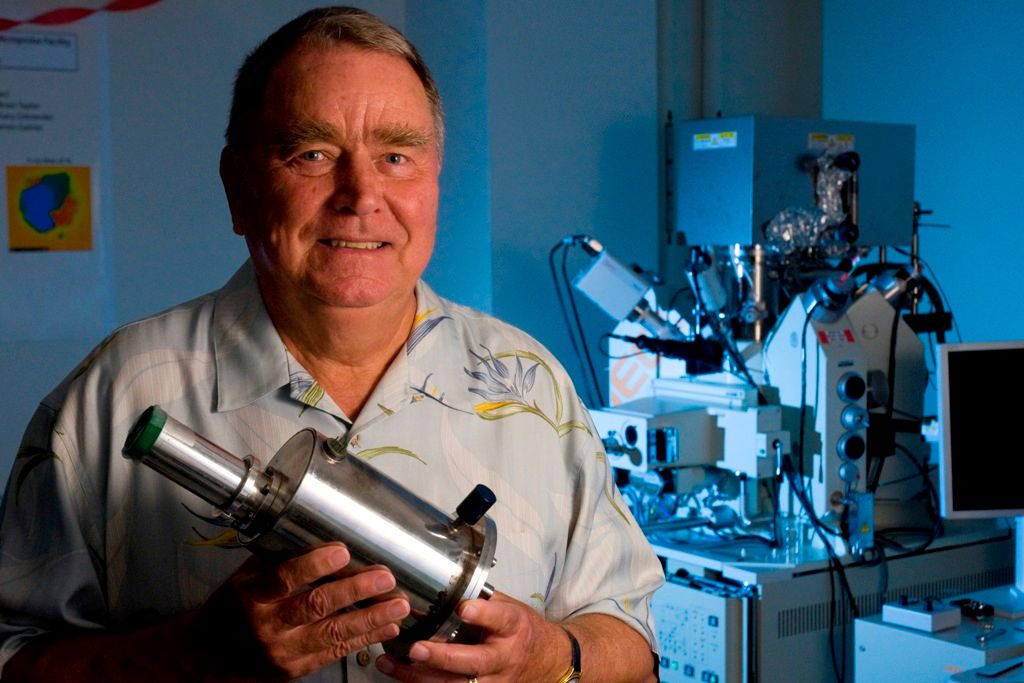
Klaus Keil 1934-2022

Klaus Keil was Emeritus Professor, former Director of the Hawai`i Institute of Geophysics and Planetology, and former Interim Dean of the School of Ocean and Earth Science and Technology. Klaus was an outstanding scientist, spectacular mentor, educator, and leader, dedicated family man, and enthusiastic tennis player. His academic and science leadership skills glittered at the University of Hawai`i since 1990 and at the Institute of Meteoritics at the University of New Mexico from 1968 to 1990.

Klaus was a pioneer in the use of the electron microprobe in meteoritics and in petrology and mineralogy in general. In the early 1960s, he worked with colleagues at NASA Ames Research Center, Ray Fitzgerald and Kurt Heinrich, to make the first energy dispersive X-ray spectrometer for use in microanalysis. This device was the first to focus on terrestrial and extraterrestrial geological materials, and the first to use a solid-state lithium-drifted Si detector. Over his long and illustrious career, Klaus studied practically every type of meteorite and lunar sample, addressing big problems in planetary science, from chondrule formation to pyroclastic eruptions on the Moon and achondritic bodies, from asteroid disruption to the composition of the Martian surface.

His accomplishments were recognized through awards of the Leonard Medal from the Meteoritical Society, the J. Lawrence Smith Medal of the National Academy of Sciences, and election as a Legends Fellow of the Microanalysis Society, in addition to numerous other accolades including the main belt asteroid Keil and the extraterrestrial mineral keilite, (Fe,Mg)S, named in his honor.

Edited for length; longer version here: https://meteoritical.org/news/klaus-keil-1934-2022

Newsletter 22-10

Issue 22-10, April 26, 2022

+————————————CONTENTS—————————————-+

  1. PLANETARY SCIENCE AND ASTROBIOLOGY DECADAL SURVEY 2023-2032
  2. NEW DIRECTOR FOR THE MINOR PLANET CENTER
  3. SBAG STEERING COMMITTEE POSITIONS OPEN
  4. ARECIBO OBSERVATORY SPRING 2022 NEWSLETTER NOW AVAILABLE
  5. SBAG EARLY CAREER OPPORTUNITIES
  6. EPSC SESSION OPS2 (EXPLORATION OF TITAN)
  7. JOBS, POSITIONS, AND OPPORTUNITIES

+——————————————————————————————–+

1———1———1———1———1———1———1———1———1———1———1

PLANETARY SCIENCE AND ASTROBIOLOGY DECADAL SURVEY 2023-2032

new decadal survey from the National Academies of Sciences, Engineering, and Medicine identifies scientific priorities and opportunities and makes funding recommendations to maximize the advancement of planetary science, astrobiology, and planetary defense in the next 10 years.

The report identifies three high-level scientific themes — origins, worlds and processes, and life and habitability — and defines 12 priority science questions to help guide mission selection and research efforts in planetary science and astrobiology.

Read more, including the report, at the link:

https://bit.ly/3KfATTX

2———2———2———2———2———2———2———2———2———2———2

NEW DIRECTOR FOR THE MINOR PLANET CENTER

The Small Bodies Node (SBN) of NASA’s Planetary Data System announces that Dr. Matthew Payne has been appointed to the Directorship of the Minor Planet Center (MPC), located at the Center for Astrophysics, Harvard and Smithsonian.

https://pds-smallbodies.astro.umd.edu/

https://minorplanetcenter.net/

Previously the Project Scientist at the MPC, Dr. Payne has served as Acting Director of the MPC since February 2021. Dr. Payne has overseen several recent improvements in the MPC’s operations, including the integration of a full helpdesk system, and has led automation and modernization efforts to optimize observational data processing and in preparation for the next generation of surveys. SBN looks forward to future improvements planned under Matthew Payne’s leadership. The Minor Planet Center, operating under the auspices of the International Astronomical Union, is a functional sub-node of SBN and is funded by the Near-Earth Object Observations Program of NASA’s Planetary Defense Coordination Office.

https://www.nasa.gov/specials/pdco/index.html

3———3———3———3———3———3———3———3———3———3

SBAG STEERING COMMITTEE POSITIONS OPEN (MAY 6)

Three positions are open for the Steering Committee of the Small Bodies Assessment Group (SBAG), with three-year terms starting in August 2022.

The Committee organizes SBAG meetings, writes the official SBAG findings, and takes a leadership role in other activities where community input on topics of interest is needed.

In addition to a member in Planetary Defense who works to understand the population of small bodies that may impact our planet, we seek two at-large members in any area of small body research at any career stage. 

The application requires: 1) a two-page CV, including a description of participation in SBAG or other small bodies organizations, and 2) a short (300 words maximum) statement of interest. Criteria for selection are: participation in small bodies community organizations, leadership experience, and relevant research or mission experience. 

In support of diversity, applicants may specify gender, whether they belong to an underrepresented group in STEM, or other additional relevant information.

Send applications to Bonnie Buratti ([email protected]) by May 6, 2022, 8:00 PM EDT. New members will be announced at the 27th Meeting of SBAG, June 7-9, 2022.

Bonnie Buratti, SBAG Steering Committee Chair

Website: https://www.lpi.usra.edu/sbag/

4———4———4———4———4———4———4———4———4———4———4———

ARECIBO OBSERVATORY SPRING 2022 NEWSLETTER NOW AVAILABLE

The Spring 2022 Arecibo Observatory Newsletter is now available! Each newsletter features science highlights and updates about the facility, staff, and education program. The newsletter includes articles and highlights about recent planetary science publications using Arecibo data:

You can subscribe to receive future newsletters via email: Join AO Newsletter list.

5———5———5———5———5———5———5———5———5———5———

SBAG EARLY CAREER OPPORTUNITIES

The upcoming NASA Small Bodies Assessment Group meeting will be held virtually and in person in Washington D.C. on June 7 – 9 2022. There will be multiple presentation opportunities at this meeting specifically for the early career small body community including invited early-career speakers and lightning talks. Applications for 15-minute invited talks and ~3 minute lightning talks are due via email by COB (5 pm Eastern Time) by May 11 2022.

Additional details about these opportunities will be available on the SBAG meeting website: https://www.lpi.usra.edu/sbag/meetings/. Please send the application to SBAG Early Career Secretary Stephanie Jarmak ([email protected]) and feel free to contact her if you have any questions about the application process.  

6———6———6———6———6———6———6———6———6———6

EPSC SESSION OPS2 (EXPLORATION OF TITAN)

The Europlanet Science Congress (EPSC) 2022 is planned to be held in Granada, Spain, 18–23 September 2022, in person! We’d like to direct your attention towards the session OPS2 « Exploration of Titan ».

Conveners: Alice Le Gall, Anezina Solomonidou | Co-conveners: Ralph Lorenz, Conor Nixon, Marco Mastroguiseppe, Sandrine Vinatier

Session Description: Saturn’s moon Titan, despite its satellite status, has nothing to envy to planets: it has planetary dimensions, a substantial and dynamic atmosphere, a carbon cycle, a variety of geological features (dunes, lakes, rivers, mountains and more), seasons, and a hidden ocean. It even now has its own mission: Dragonfly, selected by NASA in the frame of the New Frontiers program.

In this session, scientific presentations are solicited to cover all aspects of current research on Titan: from its interior to its upper atmosphere, using data collected from the Cassini-Huygens mission (2004-2017) and/or from ground-based telescopes (e.g., ALMA) and/or based on modeling and experimental efforts to support the interpretation of past and future observations of this unique world.

See here: https://meetingorganizer.copernicus.org/EPSC2022/session/44576

The deadline for abstract submission is 18 May 2022, 13:00 CEST.

Information on how to submit an abstract can be found at the link: https://www.epsc2022.eu/abstract_management/how_to_submit_an_abstract.html

Looking forward to meeting you in person at last!

 Best regards,

Alice Le Gall

7———7———7———7———7———7———7———7———7———7———7———

JOBS, POSITIONS, AND OPPORTUNITIES

Job seekers and employers are encouraged to browse DPS’s job listings and advertise open positions.

Recent openings and opportunities are listed below and many more are at the link above.

A. Lecture or Assistant Teaching Professor, NAU

The Dept. of Astronomy & Planetary Science, Northern Arizona University, has a Lecturer or Assistant Teaching Professor in Astronomy position opening! We’d love to invite any qualified people, and especially those with diverse backgrounds, to apply and to join us in teaching and/or developing our unique curriculum at beautiful Flagstaff, AZ! Please send any inquires to the committee chair, Dr. Lisa Chien ([email protected]).

Lecturer or Assistant Teaching Professor, Astronomy & Planetary Science, Northern Arizona University, AZ

https://hr.peoplesoft.nau.edu/psp/ph92prta/EMPLOYEE/HRMS/c/HRS_HRAM.HRS_APP_SCHJOB.GBL?Page=HRS_APP_JBPST&Action=U&FOCUS=Applicant&SiteId=2&JobOpeningId=606215&PostingSeq=1

B. Envision Vensar Project Scientist, JPL

The Planetary Science Directorate and the Venus Synthetic Aperture Radar (VenSAR) Project seek a Project Scientist for the development and operations of the VenSAR radar on the European Space Agency’s (ESA) EnVision mission.

Details can be found at : https://citjpl.wd5.myworkdayjobs.com/Jobs/job/JPL-Campus/EnVision-VenSAR-Project-Scientist_R1983

C. Postdoctoral Position In Planetary Astronomy, Caltech

https://www.gps.caltech.edu/about/positions-available/postdoctoral-positions/postdoctoral-position-planetary-science

Applications are invited for a postdoctoral position in planetary astronomy within Caltech’s Division of Geological and Planetary Sciences. The successful applicant will collaborate with the de Kleer research group on the interpretation of thermal data of icy moons and small bodies from ALMA, the VLA, and JWST. The work will involve reduction and analysis of thermal data, as well as collaboration on the development of (sub)surface models which will be used to characterize (sub)surface processes on these worlds. The project requires training in mathematics and physics as well as strong scientific programming skills. Experience working with astronomical or spacecraft data is required, and experience with radio interferometry and/or mid-infrared spectroscopy is preferred. The successful candidate will have opportunities to mentor graduate and undergraduate students.

The start date is flexible, but will be no sooner than June 1, 2022. The initial duration of the position is one year, with renewal for up to two additional years. The position offers a competitive salary, benefits, and annual research budget, as well as access to Caltech’s extensive resources, including the Keck and Palomar Observatories and computational facilities.

Applicants for the position must have a PhD in planetary science, astronomy, astrophysics, physics, geology, or an equivalent field by the date of their appointment. Applicants must provide a CV including a complete list of publications; a 1-2 page statement describing their research interests and experience; and the names of three individuals who can provide letters of recommendation. Application materials should be sent to Jen Shechet ([email protected]) no later than May 20, 2022. Questions regarding the position should be directed to Professor Katherine de Kleer ([email protected]).

D. ​​Canada Excellence Research Chair In Cosmochemical Planetary Exploration, York University

https://tinyurl.com/34ykbkr4


———————————+


Send submissions to: Maria Womack, DPS Secretary ([email protected])

You’re receiving this email because you are a DPS member. To unsubscribe or update your information, please send your request to [email protected]. The more general AAS privacy policy is available online at https://aas.org/about/policies/privacy-policy. Current and back issues of the DPS Newsletter can be found at newsletters


To unsubscribe from this list please go to http://www.simplelists.com/confirm.php?u=WumMgxrgIYvmfnfPIPRxfPgLc6qriC4R

Newsletter 22-09

Issue 22-09, April 10, 2022

+————————————CONTENTS—————————————-+

  1. NASA REQUEST FOR INFORMATION: INTEREST IN COMPETING FOR OPERATION OF THE LUNAR AND PLANETARY INSTITUTE
  2. CALL FOR DPS PRIZE NOMINATIONS CLOSES THIS WEEK
  3. NASA TOPS COMMUNITY PANEL NOMINATIONS
  4. SUMMER SCHOOL IN SOFTWARE SYSTEMS FOR ASTRONOMY
  5. HABITABLE WORLDS MEETING IN EDINBURGH
  6. THE XII PAOLO FARINELLA PRIZE IS NOW OPEN FOR NOMINATIONS
  7. JOBS, POSITIONS, AND OPPORTUNITIES

+——————————————————————————————–+

1———1———1———1———1———1———1———1———1———1———1

NASA REQUEST FOR INFORMATION: INTEREST IN COMPETING FOR OPERATION OF

THE LUNAR AND PLANETARY INSTITUTE


NASA seeks information that may influence the formulation of a solicitation(s) to continue activities operated via a Lunar and Planetary Institute. Over 50 years ago, the National Academy of Sciences recommended the creation of an independent-of-NASA Lunar Science Institute that was renamed the Lunar and Planetary Institute (LPI) in 1978. LPI is not a NASA facility, and it does not share a fiscal identity with NASA nor is it a Federally Funded Research and Development Center (FFRDC).


Currently, NASA funds an LPI to be located close to NASA’s Johnson Space Center (JSC) and to enable the Science Mission Directorate (SMD) at NASA Headquarters to further NASA’s Planetary Science Goals. The purpose of this RFI is to identify entities that have an interest in submitting a credible proposal(s) to carry out the activities-of-interest-to-NASA that are listed in Section 4 of the RFI entitled “Interest in Competing for Operation of the Lunar and Planetary Institute” available at short URL:

https://go.nasa.gov/RFI22LP


2———2———2———2———2———2———2———2———2———2———2

CALL FOR DPS PRIZE NOMINATIONS CLOSES THIS WEEK


Deadline: April 15, 2022


Every year the DPS recognizes exceptional achievement in our field. Please consider nominating a respected colleague for one of the annual DPS prizes.


The DPS sponsors six prizes:


The Gerard P. Kuiper Prize [prizes/kuiper] recognizes and honors outstanding contributors to the field of planetary science.


The Claudia J. Alexander Prize [prizes/alexander] recognizes excellence and achievements by a mid-career scientist.


The Harold C. Urey Prize [prizes/urey] recognizes and encourages outstanding achievements in planetary research by an early-career scientist.


The Harold Masursky Award [prizes/masursky] recognizes and honors individuals who have rendered outstanding service to planetary science and exploration through – but not limited to – engineering, managerial, programmatic, editorial, or public service activities.


The Carl Sagan Medal [prizes/sagan] recognizes and honors outstanding communication by an active planetary scientist to the general public.


The Jonathan Eberhart Planetary Sciences Journalism Award [prizes/eberhart] recognizes and stimulates distinguished popular writing on planetary sciences.


DPS members and the planetary science community-at-large are encouraged to submit nominations for DPS prizes.


A complete nomination submitted by the deadline will be considered by the DPS Prize subcommittee for 3 years (i.e. for this year’s award, next year’s award, and the year after that), or for the duration of a candidate’s eligibility, whichever is less. Please fill out the nomination form [prizes/eberhart#Nomination], and it will be submitted to the prize subcommittee. The Eberhart Award has different rules and procedures than the other DPS Prizes, please see its page [prizes/eberhart-nomination-form] for more information.


Scroll to the bottom of prizes for rules and procedures.


Questions: Email [email protected]


3———3———3———3———3———3———3———3———3———3

NASA TOPS COMMUNITY PANEL NOMINATIONS


The National Aeronautics and Space Administration (NASA), is seeking persons to serve on a community panel for NASA’s Transform to Open Science (TOPS) and Year of Open Science initiatives. TOPS is a program of the Open-Source Science Initiative (OSSI) within the Science Mission Directorate (SMD). To spark change and inspire open science engagement, OSSI has created the TOPS mission and declared 2023 as the Year of Open Science. Community panel members shall provide input on TOPS mission, goals, partnerships, and activities.


For information and to express interest in participating, go to:


https://science.nasa.gov/open-science-overview/TOPS-community-panel


Travel reimbursement to any in-person panel events will be provided. Additionally, non-civil servant panelists will receive a $1200 per day honorarium.


We expect to hold two 1.5-day panel events. The first session (virtual) will be held during the week of May 16, 2022. The second session will be held in October 2022.


The request for panelists closes April 15, 2022


4———4———4———4———4———4———4———4———4———4———4———

SUMMER SCHOOL IN SOFTWARE SYSTEMS FOR ASTRONOMY


“Software Systems for Astronomy” will again be offered online this year spread over 7 weeks, 05-Jul to 12-Aug, 2022.  The course covers the design and implementation of software for telescope and instrument control systems, observation planning tools, and software for analyzing and archiving astronomical data.


https://astro.uhh.hawaii.edu/ssfa.php


5———5———5———5———5———5———5———5———5———5———

HABITABLE WORLDS MEETING IN EDINBURGH


It is now only a few weeks until the close, on April 22nd, of early bird registration and abstract submission for the inaugural Forming and Exploring Habitable Worlds Meeting taking place in Edinburgh on the week beginning November 7th 2022.


 www.habitableworlds.co.uk/registration


6———6———6———6———6———6———6———6———6———6

THE XII PAOLO FARINELLA PRIZE IS NOW OPEN FOR NOMINATIONS


This year topic is:


     Asteroids: Physics, Dynamics, Modelling and Observations


The Prize is part of the Europlanet Society activities and is awarded  at the yearly EPSC, that this year will be held in Granada (Spain).


All information about the Prize as well as nomination forms can be found at:


   https://www.europlanet-society.org/call-farinella-2022/


DEADLINE for nominations is May 1st 2022.


7———7———7———7———7———7———7———7———7———7———7———


JOBS, POSITIONS, AND OPPORTUNITIES


Job seekers and employers are encouraged to browse DPS’s job listings and advertise open positions.

Recent openings and opportunities are listed below and many more are at the link above.


A. Tenure Track Position(s), Lowell Observatory


content/tenure-track-positions


B. Planetary Sciences Postdoctoral Researcher, Los Alamos National Laboratory


content/planetary-sciences-postdoctoral-researcher


———————————+


Send submissions to: Maria Womack, DPS Secretary ([email protected])

You’re receiving this email because you are a DPS member. To unsubscribe or update your information, please send your request to [email protected]. The more general AAS privacy policy is available online at https://aas.org/about/policies/privacy-policy. Current and back issues of the DPS Newsletter can be found at newsletters


To unsubscribe from this list please go to http://www.simplelists.com/confirm.php?u=ylcEAW4DS1lXghdX09yBl7CdqhqngvUq

Newsletter 22-08

Issue 22-08, March 27, 2022

+————————————CONTENTS—————————————-+

  1. CALL FOR DPS PRIZE NOMINATIONS
  2. CELEBRATING CONTRIBUTIONS FROM WOMEN, IN ASTRONOMY AND IN SCIENCE
  3. 3 DAYS LEFT! 2022 NASA PLANETARY SCIENCE SUMMER SCHOOL APPLICATIONS DUE MARCH 30, 2022
  4. NEOWISE 2022 DATA RELEASE AVAILABLE MARCH 23, 2022
  5. SMALL BODIES ASSESSMENT GROUP (SBAG) STEERING COMMITTEE POSITIONS OPEN
  6. ARECIBO / GREEN BANK SINGLE DISH SUMMER SCHOOL REGISTRATION DEADLINE APRIL 6TH, 2022
  7. JOBS, POSITIONS, AND OPPORTUNITIES

+——————————————————————————————–+

1———1———1———1———1———1———1———1———1———1———1

CALL FOR DPS PRIZE NOMINATIONS

Deadline: April 15, 2022

Every year the DPS recognizes exceptional achievement in our field. Please consider nominating a respected colleague for one of the annual DPS prizes.

The DPS sponsors six prizes:

The Gerard P. Kuiper Prize [prizes/kuiper] recognizes and honors outstanding contributors to the field of planetary science.

The Claudia J. Alexander Prize [prizes/alexander] recognizes excellence and achievements by a mid-career scientist.

The Harold C. Urey Prize [prizes/urey] recognizes and encourages outstanding achievements in planetary research by an early-career scientist.

The Harold Masursky Award [prizes/masursky] recognizes and honors individuals who have rendered outstanding service to planetary science and exploration through – but not limited to – engineering, managerial, programmatic, editorial, or public service activities.

The Carl Sagan Medal [prizes/sagan] recognizes and honors outstanding communication by an active planetary scientist to the general public.

The Jonathan Eberhart Planetary Sciences Journalism Award [prizes/eberhart] recognizes and stimulates distinguished popular writing on planetary sciences.

DPS members and the planetary science community-at-large are encouraged to submit nominations for DPS prizes.

A complete nomination submitted by the deadline will be considered by the DPS Prize subcommittee for 3 years (i.e. for this year’s award, next year’s award, and the year after that), or for the duration of a candidate’s eligibility, whichever is less. Please fill out the nomination form [prizes/eberhart#Nomination], and it will be submitted to the prize subcommittee. The Eberhart Award has different rules and procedures than the other DPS Prizes, please see its page [prizes/eberhart-nomination-form] for more information.

Scroll to the bottom of prizes for rules and procedures.

Questions: Email [email protected]

2———2———2———2———2———2———2———2———2———2———2

CELEBRATING CONTRIBUTIONS FROM WOMEN, IN ASTRONOMY AND IN SCIENCE

The DPS Professional Climate and Culture Subcommittee (PCCS) highlights that March is Women’s History Month. We’d like to share a recent great article about how women in science are doing great astronomy and planetary science research and also changing up the culture of our community.

https://www.scientificamerican.com/article/women-are-creating-a-new-culture-for-astronomy/

This article features many great folks, including Drs. Ekta Patel, Heather Knutson, Lia Medeiros, Sarah Hörst, Sarah Tuttle, Meg Urry, Jessica Werk, Caitlin Casey, Laura Kreidberg, Laura Chomiuk, Danielle Berg, Sinclaire Manning, Melinda Soares-Furtado, Laura Lopez, Emily Martin, Catherine Zucker, Kathryne Daniel, Melodie Kao, Nicolle Zellner, and Vera Rubin. This article discusses the many (intersecting) marginalized identities of these folks, and strategies and efforts they undertake as they contribute mightily to their science fields and communities. We found this article via a AAS CSWA post: https://womeninastronomy.blogspot.com/2022/03/crosspost-women-are-creating-new.html. Happy March, all!

3———3———3———3———3———3———3———3———3———3

3 DAYS LEFT! 2022 NASA PLANETARY SCIENCE SUMMER SCHOOL APPLICATIONS DUE MARCH 30, 2022

Offered by the Jet Propulsion Laboratory in Pasadena, CA, PSSS is a 3-month long career development experience to learn the development of a hypothesis-driven robotic space mission in a concurrent engineering environment while getting an in-depth, first-hand look at mission design, life cycle, costs, schedule & the inherent trade-offs. 

Science & engineering doctoral candidates, recent PhDs, postdocs, & junior faculty who are U.S. Citizens or legal permanent residents (& a very limited number of Foreign Nationals from non-designated counties) are eligible. Applicants from diverse backgrounds are particularly encouraged to apply – we highly value diversity, equity, and inclusion. 

Session 1: May 9-Aug 5

Session 2: May 23-Aug 19 

With workload of a rigorous 3-hour graduate-level course, participants act as a planetary science mission team during the first 12 weeks of preparatory webinars, with the final culminating week mentored by JPL’s Advance Project Design Team for refining the mission concept design & presenting it to a mock expert review board.  The culminating week is typically at JPL, but in 2022 it is likely virtual due to Covid-19 pandemic concerns. 

go.nasa.gov/missiondesignschools


4———4———4———4———4———4———4———4———4———4———4———

NEOWISE 2022 DATA RELEASE AVAILABLE MARCH 23, 2022

The Near-Earth Object Wide-field Infrared Survey Explorer (NEOWISE) and IPAC at the California Institute of Technology announce the NEOWISE 2022 Data Release.

The 2022 Data Release includes data acquired during the eighth year of the NEOWISE Reactivation mission (Mainzer et al. 2014, ApJ, 792, 30), 13 December 2020 to 13 December 2021.  These data are combined with the Year 1-7 data into a single archive that contains ~20.3 million sets of 3.4 and 4.6 micron images and a database of ~151 billion source detections extracted from those images.  

NEOWISE scanned the sky nearly sixteen complete times during the first eight years of survey operations, with approximately six months between survey passes.  Twelve or more independent exposures are made on each point of the sky during each survey epoch.  Therefore, the NEOWISE archive is a time-domain resource for extracting multiple, independent thermal flux and position measurements of solar system small bodies and background galactic and extragalactic sources.

A guide to the NEOWISE data release, data access instructions and supporting documentation is available at  http://wise2.ipac.caltech.edu/docs/release/neowise/.  Access to the NEOWISE data products is available via the on-line and API services of the NASA/IPAC Infrared Science Archive (IRSA) at https://irsa.ipac.caltech.edu.

NEOWISE is a joint project of the Jet Propulsion Laboratory/California Institute of Technology and the University of Arizona, funded by the National Aeronautics and Space Administration Planetary Science Division.

5———5———5———5———5———5———5———5———5———5———

SMALL BODIES ASSESSMENT GROUP (SBAG) STEERING COMMITTEE POSITIONS OPEN

We are soliciting up to five positions open on the Steering Committee of the Small Bodies Assessment Group (SBAG), with terms starting in August 2020.

The SBAG Steering Committee organizes SBAG meetings, writes the official SBAG findings, and takes a leadership role in other activities where community input on topics of interest is needed. The Steering Committee members should be as diverse as the community, in terms of topical interest (asteroids, comets, meteoroids, TNOs, KBOs, observational, experimental, computational, sample handling, etc.), demographics, experience, type of employer (commercial, small business, academia, government), and other parameters.

We are looking for members with expertise in the following areas:

• Human Exploration Lead – We desire an individual actively involved in, studying, and aware of

Human Exploration and the current challenges and progress in this field to lead related SBAG activities

• At-large members (2 to 4) – Any member of the small bodies community from any career stage is welcome to apply.

Terms are for three years. Application for Steering Committee Membership requires a) a two-page CV, which should include a description of participation in SBAG or other small bodies community organizations, and b) a short (one-page or equivalent) statement of interest.

Previous participation in SBAG is preferred, but not required. To indicate your willingness to serve in any of these positions, please email Bonnie Buratti ([email protected]) by May 25, 2020, and include a two-page CV and your statement of interest. The current Steering

Committee will select new members prior to the 23rd Meeting of SBAG, June 1-2, 2020.

Bonnie Buratti, SBAG Steering Committee Chair

Website: https://www.lpi.usra.edu/sbag

6———6———6———6———6———6———6———6———6———6

ARECIBO / GREEN BANK SINGLE DISH SUMMER SCHOOL REGISTRATION DEADLINE APRIL 6TH, 2022

The single dish summer school this year will be held from 16 – 20 May, 2022, and is jointly organized by Arecibo and Green Bank Observatories. We are excited to hold this event in person at the Arecibo Observatory! For participants who can’t attend in person, there will also be a fully virtual option.

The school is open to any advanced undergraduates, graduate students, postdocs, and astronomers from other fields interested in learning about the techniques and applications of radio astronomy and gaining practical experience in using single-dish telescopes and radio data analysis.

Registration is free and open now at this link: https://www.naic.edu/ao/single-dish-summer-school-spring-2022.  

The application deadline is Wednesday, April 6th, 2022, 5pm EDT. Participants will be notified of acceptance by April 8th.

Meals, lodging, and transportation for activities and the airport will be covered. Participants must cover their own travel to and from Puerto Rico.

7———7———7———7———7———7———7———7———7———7———7———

JOBS, POSITIONS, AND OPPORTUNITIES


Job seekers and employers are encouraged to browse DPS’s job listings and advertise open positions.

Recent openings and opportunities are listed below and many more are at the link above.


  1. Post-doctoral research associate in planetary atmospheres, LPL, UAZ


content/post-doctoral-research-associate-planetary-atmospheres 


  1. Postdoctoral position in Mass Spectrometry of Lunar Volatiles, NASA GSFC


content/postdoctoral-position-mass-spectrometry-lunar-volatiles


  1. Research Scientist, Origin of life/Prebiotic Chemistry, NASA JPL


content/research-scientist-origin-lifeprebiotic-chemistry


———————————+


Send submissions to: Maria Womack, DPS Secretary ([email protected])

You’re receiving this email because you are a DPS member. To unsubscribe or update your information, please send your request to [email protected]. The more general AAS privacy policy is available online at https://aas.org/about/policies/privacy-policy. Current and back issues of the DPS Newsletter can be found at newsletters


To unsubscribe from this list please go to http://www.simplelists.com/confirm.php?u=ylcEAW4DS1lXghdX09yBl7CdqhqngvUq
Newsletter 22-07

Issue 22-07, March 15, 2022

+————————————CONTENTS—————————————-+

  1. LPSC EXIT SURVEY
  2. CELEBRATING CONTRIBUTIONS FROM WOMEN IN ASTRONOMY AND OTHER STEM
  3. 2022B NASA IRTF CALL FOR PROPOSALS
  4. MAKING SPACE: A WORKSHOP ON SPACE, SCIART, & SOCIETY
  5. WORKSHOP TO ENGAGE DIVERSE AUDIENCES IN PLANETARY SCIENCE
  6. JOBS, POSITIONS, AND OPPORTUNITIES

+——————————————————————————————–+


1———1———1———1———1———1———1———1———1———1———1

LPSC EXIT SURVEY

The Professional Culture and Climate Subcommittee urges DPS members who attended this year’s Lunar and Planetary Science Conference to fill out that conference’s exit survey, which can be accessed at the following URL: https://www.surveymonkey.com/r/B2HF6KZ.  Participation in such surveys is key to improving future meetings for all attendees and is particularly important as institutions learn how to effectively implement hybrid meetings.  The LPSC survey closes on March 21, 2022.


2———2———2———2———2———2———2———2———2———2———2

CELEBRATING CONTRIBUTIONS FROM WOMEN IN ASTRONOMY AND OTHER STEM

The DPS Professional Climate and Culture Subcommittee (PCCS) highlights that March is Women’s History Month. Here are a few recent articles, describing great contributions by women and highlighting some excellent women scientists. Please enjoy!

  1. As shared on the AAS Committee on the Status of Women in Astronomy (CSWA) blog, a wonderful writeup by Dr. Chanda Prescod-Weinstein about “Harriet Tubman, Astronomer Extraordinaire”: http://womeninastronomy.blogspot.com/2022/03/crosspost-harriet-tubman-astronomer.html , including a link to a broad project celebrating the bicentennial of Ms. Tubman’s birth.
  2. Posted on the AAS Committee on the Status of Minorities in Astronomy (CSMA) is an interview with graduate student Kiersten Boley, who is studying exoplanets at Ohio State University and working with Dr. Jessie Christiansen (Research Scientist at the NASA Exoplanet Science Institute and a DPS Committee member):http://astronomyincolor.blogspot.com/2022/02/black-history-month-star-profiles.html#more
  3. The American Association for the Advancement of Science (AAAS) has an intriguing exhibit in Washington DC (March 5-27), with 120 life-sized statues of a contemporary women STEM innovators and role models leading a variety of fields, from protecting wildlife, discovering galaxies, building YouTube’s platform, to trying to cure cancer: https://www.aaas.org/page/ifthen-ambassadors

3———3———3———3———3———3———3———3———3———3

2022B NASA IRTF CALL FOR PROPOSALS

The due date for the 2022B semester (August 1, 2022 to January 31, 2023) is Friday, April 1, 2022. See our online submission form http://irtfweb.ifa.hawaii.edu/observing/applicationForms.php, which is available for proposal submission from 12:00AM on March 01, 2022 until 5:00PM on April 01, 2022 HST. Available instruments include: (1) SpeX, a 0.7 – 5.3 micron cross-dispersed medium-resolution spectrograph (up to R=2,500) and imager; (2) MORIS, a 512×512 pixel Andor CCD camera (60″x60″ field-of-view) mounted at the side-facing window of the SpeX cryostat that can be used simultaneously with SpeX; (3) iSHELL, a 1.1 – 5.3 micron cross-dispersed echelle spectrograph (up to R=75,000) and imager. Information on available facility and visitor instruments and performance can be found at: http://irtfweb.ifa.hawaii.edu/instruments. Exposure time calculators for SpeX and iSHELL are available on the respective instrument webpages.

Please see http://irtfweb.ifa.hawaii.edu/observing/callForProposals.php for the full text.

4———4———4———4———4———4———4———4———4———4

MAKING SPACE: A WORKSHOP ON SPACE, SCIART, & SOCIETY

Making Space is an in-person multi-day workshop about space, sciart, and making where we use art as a tool to explore scientific concepts and humanity’s relationship to space. Participants will learn about how we use spacecraft observations to explore other worlds, how to re-frame those observations in creative ways, do collaborative discussion and art activities, and practice creating sciart through hands-on art labs in a variety of mediums. By the end of the workshop, participants will create their own piece of science-driven art which they will be invited to showcase at an art exhibition later in the year. The workshop is targeted towards an adult audience with backgrounds (professional or otherwise) in art and/or science. Artists, makers, scientists, science communicators, and educators are encouraged to apply!

Applications open for April 15-17, 2022 at the Catalyst Arts & Maker Space in Tucson, AZ. Sign up to be notified for Los Angeles and Denver events. These workshops are supported by NASA’s Solar System Exploration Research Virtual Institute (SSERVI).

Website/Contact: https://trex.psi.edu/making-space, [email protected]

5———5———5———5———5———5———5———5———5———5

WORKSHOP TO ENGAGE DIVERSE AUDIENCES IN PLANETARY SCIENCE

Do you want to learn how to engage diverse audiences in planetary science and exploration? Join us for a workshop, which will prepare planetary scientists and informal educators to engage audiences in planetary science and exploration, with an explicit focus on Latinx and Black communities. During the workshop, planetary scientists and informal educators will come together to: collaborate and learn from each other, modify hands-on planetary activities and resources to better engage audiences, learn and share effective practices and strategies to engage Black and Latinx communities, and practice conducting activities using these strategies at a community event, on Saturday April 9.


Times and location: The workshop will take place in meeting rooms on the Arizona State University Tempe campus for the first three days, with a community engagement event in Phoenix on April 9.

Travel Stipends available for participating scientists.

Who: Space is limited to 15 planetary scientists (including graduate students, post-doctoral researchers, and planetary engineers and technicians) and 15 informal educators.

Information at https://www.lpi.usra.edu/planetary-reach/

Application form at https://www.surveymonkey.com/r/299SC62


6———6———6———6———6———6———6———6———6———6

JOBS, POSITIONS, AND OPPORTUNITIES

Job seekers and employers are encouraged to browse DPS’s job listings and advertise open positions.

Recent openings and opportunities are listed below and many more are at the link above.


A. ​​Two Year Postdoc, Earth and Planetary Sciences, University of Rochester


content/2-year-postdoctoral-appointment-earth-and-planetary-sciences-university-rochester


B. Research Fellow in numerical modeling, Curtin University


content/research-fellow-numerical-modelling


C. Mars 2020 Postdoc, Purdue University


content/mars-2020-postdoc


D. Postdoc Position in Planetary/Exoplanet Geophysics, Brown University


content/postdoc-position-planetaryexoplanet-geophysics


E. Assistant Professor of Cosmochemistry, Globe Institute University, Copenhagen


content/assistant-professor-cosmochemistry


F. Postdoc, JPL Ice Spectroscopy Lab


The Ice Spectroscopy Laboratory at NASA Jet Propulsion Laboratory in Pasadena, CA invites applications for a new postdoctoral opportunity in radiation-induced processes.


The research work will involve laboratory simulations of interactions between Solar System bodies and energetic particles such as electrons, protons, and heavy ions (O+, S+). The work will primarily focus on interactions between energetic electrons and the surface of Europa at temperatures of ~100 K, including sputtering, electron penetration, and the effects of ionizing radiation on organic molecules and microbial life. Expertise in physics and chemistry of radiation and a strong interest to conduct research in these areas is highly desired.


These projects will utilize high-energy electrons, protons, and ions in the keV to MeV range in addition to conventional infrared and ultraviolet spectroscopic and mass spectrometric techniques. Successful candidates should have hands-on experience in similar research activities and should be able to participate in multiple projects. The MeV electron source is located in Gaithersburg, MD, and will require travel to the site (maximum of 6 weeks per year) and should be able to assemble and disassemble equipment to perform experiments. Dr. Bryana Henderson will serve as the JPL postdoctoral advisor to the selected candidate.


Link for more information, and to apply:

https://citjpl.wd5.myworkdayjobs.com/Jobs/job/JPL-Campus/Postdoc-Opportunity—Investigate-Physical-and-Chemical-Effects-of-Radiation–Group-3227_R1575


———————————+


Send submissions to: Maria Womack, DPS Secretary ([email protected])

You’re receiving this email because you are a DPS member. To unsubscribe or update your information, please send your request to [email protected]. The more general AAS privacy policy is available online at https://aas.org/about/policies/privacy-policy. Current and back issues of the DPS Newsletter can be found at newsletters


To unsubscribe from this list please go to http://www.simplelists.com/confirm.php?u=ylcEAW4DS1lXghdX09yBl7CdqhqngvUq

Message from the Chair About the Scientific Community In Ukraine

The AAS, along with the European Astronomical Society (EAS), the International Astronomical Union (IAU), and the African Astronomical Society (AfAS), have issued a statement (below) expressing great concern about current events in Ukraine and support for Ukrainian scientists. The DPS shares this concern and also expresses support for our Ukranian colleagues and their families during this crisis.

____________________________________________


The European Astronomical Society (EAS), the International Astronomical Union (IAU), the American Astronomical Society (AAS), and the African Astronomical Society (AfAS) have been observing with great concern the events unfolding in Ukraine and fear the adverse consequences for the scientific community, our colleagues, and their families. We have been receiving reports of the dire circumstances they are experiencing: their freedom, safety and even their lives are under threat.


The mission of our societies is to promote and safeguard the science of astronomy in all its aspects, including research, communication, education and development through international cooperation. We believe in free expression and free exchange of scientific ideas and in peaceful collaboration at a global level. The current events jeopardise the scientific cooperation within our European community and with the rest of the world.


We are deeply concerned for the Ukrainian community as well as for the entire region. Triggered by the life-threatening situation in which our Ukrainian colleagues find themselves, the EAS, IAU, AAS, and AfAS wish to encourage members to help wherever possible in this difficult time for Ukraine. Ukrainian astronomers seeking support should contact the Institute of International Education (IIE) scholar rescue fund


https://bit.ly/36DMYEj


which supports refugee scholars, and is activating an Ukraine-specific student emergency fund:

https://bit.ly/3IBcckT


Roger Davies, President of the European Astronomical Society

Debra Elmegreen, President of the International Astronomical Union

Paula Szkody, President of the American Astronomical Society

Jamal Minouni, President of the African Astronomical Society


28 Feb 2022

Introducing the Inaugural DPS-NSBP Speaker Awardee: Dr. Jasmine Bayron

As we reach the end of Black History Month, the DPS is thrilled to recognize Dr. Jasmine Bayron, from the American Museum of Natural History and City University of New York.  Dr. Bayron is the first awardee from the new Joint Speaker Program established between DPS and the National Society of Black Physicists (NSBP), Earth and Planetary Systems Sciences (EPSS) section, based on her excellent NSBP 2021 meeting presentation, “Moapa Valley (CM1): The Black Box of the CM Parent Asteroid.”

As the Joint DPS-NSBP Program Speaker, Dr. Bayron has been invited to speak at the DPS 2022 meeting, with expenses covered by DPS.  She also will be speaking at the Howard University Physics Department Colloquium Series, with support provided by the Planetary Geology, Geophysics and Geochemistry Laboratory at NASA Goddard Space Flight Center.  The full AAS press release on Dr. Bayron’s selection can be found at news/inaugural-dps-nsbp-speaker-awardee-dr-bayron and information about the DPS-NSBP partnership can be found at leadership/nsbp_parnership.

We look forward to hearing from Dr. Bayron this October!


28 Feb 2022