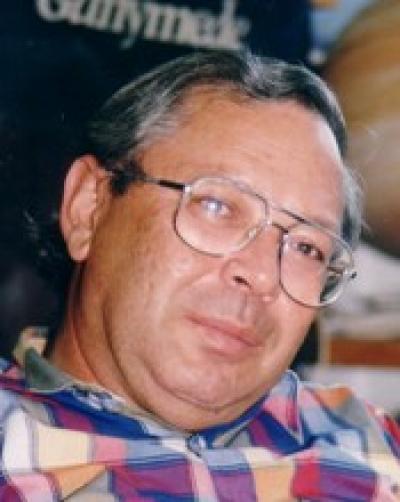
Akiva Bar-Nun 1939-2017

Akita Bar-Nun

Akiva Bar-Nun, a leader in the field of cosmochemistry, died in Jerusalem, Israel on January 25, 2017. Akiva was born in 1939. After completing his doctorate in shock wave chemistry at the Hebrew University in Jerusalem in 1968, he did his postdoc at Cornell University, where he worked with the late Carl Sagan. This led to a lifelong interest in the origins of life. His formal entrance into the field of planetary science came with a 1975 paper predicting that thunderstorm shocks were the source of short-lived hydrocarbons in Jupiter’s atmosphere. This prediction was eventually confirmed by spacecraft observations. In 1976, after six years as lecturer at the Hebrew University, Akiva joined the faculty at Tel Aviv University. There he continued to explore the importance of shockwaves for the origins of life. In addition, he investigated the photochemical production of planetary aerosols. Later on, he set up his unique and world-famous laboratory, where he conducted pioneering studies of ices under conditions typical of comets. His investigations on trapping of volatiles by cometary ices and their subsequent release upon warming of the ice, revolutionized cometary research. Akiva’s expertise made him a valuable contributor to several international space projects, including the HASI experiment on the HUYGENS spacecraft that landed on Titan, as well as the ALICE and ROSINA instruments on the ROSETTA spacecraft. Akiva served as the Director General of the Israel Space Agency between 1989-1993, and then for another two years as its Vice Chairman. He was an excellent teacher and mentor, who inspired numerous students, and he played an important role in advancing the public understanding of science. Generations of young students have delighted in his book on the Solar System (New Worlds, published in 1984, in Hebrew). Akiva was also a good friend. He will be sorely missed.


Morris Podolak and Dina Prialnik
Submitted by Jonathan Lunine

Newsletter 17-05

Issue 17-05, February 1, 2017


+————————————CONTENTS—————————————-+

  1. MESSAGE FROM THE CHAIR
  2. NASA SCIENCE MISSION DIRECTORATE SEEKING VOLUNTEER REVIEWERS
  3. CALL FOR EXTERNAL REVIEWERS NASA POSTDOCTORAL PROGRAM (NPP)

+——————————————————————————————–+


1———1———1———1———1———1———1———1———1———1

MESSAGE FROM THE CHAIR
 

The AAS has joined with 150 other scientific and engineering societies,

national associations, and universities to send a letter to President Donald J.

Trump objecting to his January 27th executive order on visas and immigration.

See the press release at

https://aas.org/media/press-releases/aas-urges-president-rescind-order-visas-immigration

And the letter concludes, “We stand ready to assist you in crafting an immigration

and visa policy that advances US prosperity and ensures strong borders while

staying true to foundational American principles as a nation of immigrants.”


Lucy McFadden

DPS Chair


2———2———2———2———2———2———2———2———2———2

NASA SCIENCE MISSION DIRECTORATE SEEKING VOLUNTEER 

REVIEWERS FOR ROSES AND NESSF


Science Mission Directorate is seeking subject matter experts to serve as mail-in 

and/or panel meeting reviewers of proposals submitted to ROSES-2016 

programs in Earth Science and Planetary Science and also our NASA Earth

and Space Science (graduate student) Fellowship programs. The landing page 

that will take you to all of the volunteer reviewer forms may be found at

https://science.nasa.gov/researchers/volunteer-review-panels and the links 

to individual forms appear below.


We are currently seeking reviewers for:


3———3———3———3———3———3———3———3———3———3

CALL FOR EXTERNAL REVIEWERS NASA POSTDOCTORAL PROGRAM (NPP)


The NASA Postdoctoral Program (NPP), managed by USRA, provides young 

and more senior scientists the opportunity to work on 1 to 3 year assignments 

with NASA scientists and engineers at NASA centers and institutes to advance 

NASA’s missions in earth science, heliophysics, planetary science, astrophysics, 

space bioscience, aeronautics, engineering, human exploration and space operations, 

astrobiology, and science management. USRA is recruiting well-qualified reviewers 

for upcoming applications. 


Reviewers may be asked to review up to 5 applications (each application is 15 

pages, including figures and citations; double-spaced).  Proposals deadlines are 

March 1, July 1, and November 1. The reviewer evaluations are submitted online 

and those who are eligible will receive an honorarium of $50 for each review submitted. 


Reviewers should have the following minimum qualifications: three (3) years 

past PhD; 10 or more peer-reviewed publications; at least five (5) peer-reviewed 

publications as first author; work in a field relevant to NASA; and show national 

and international prominence through awards and invitations to speak at major 

scientific meetings. 


If you are interested in being a reviewer, visit https://npp.usra.edu/reviewer_connect/

and create an account.  For additional questions email [email protected].


Feel free to pass this information to colleagues.


You may also visit https://npp.usra.edu/ for information about the Program.


———————————+

Send submissions to:

Anne Verbiscer, DPS Secretary ([email protected]


To unsubscribe visit http://aas.org/unsubscribe or email [email protected].

To change your address email [email protected]

Message From The Chair

The AAS has joined with 150 other scientific and engineering societies, national associations, and universities to send a letter to President Donald J. Trump objecting to his January 27th executive order on visas and immigration. See the press release. And the letter concludes, “We stand ready to assist you in crafting an immigration and visa policy that advances US prosperity and ensures strong borders while staying true to foundational American principles as a nation of immigrants.”

Lucy McFadden
DPS Chair

Newsletter 17-04

Issue 17-04, January 30, 2017


+————————————CONTENTS—————————————-+

  1. MESSAGE FROM THE CHAIR
  2. THE DPS COMMITTEE REMINDS YOU TO VOTE IN THE AAS ELECTIONS
  3. LOTTERY FOR 1-YEAR COMPLIMENTARY SUBSCRIPTION TO ICARUS
  4. JWST EARLY RELEASE SCIENCE PROGRAM: PRE-PROPOSAL WEBINAR
  5. CALL FOR PAPERS: PLANETARY SPACE SCIENCE SPECIAL ISSUE
  6. HST EUROPA ADVISORY COMMITTEE
  7. UPCOMING MEETINGS
  8. JOBS, POSITIONS, OPPORTUNITIES

+——————————————————————————————–+


1———1———1———1———1———1———1———1———1———1

MESSAGE FROM THE CHAIR
 

Science, be it planetary science or another branch of science, advances through 

the open exchange of ideas. This exchange is critical to our success as a nation. 

There have been recent reports of US government agencies restricting the 

communication of scientific research. This is a fluid situation in which the details 

of the restrictions in time or scope change daily.  Despite this uncertainty, the 

DPS leadership wants to affirm its unwavering support for the free and open 

exchange of scientific results between scientists, to policymakers and to the public. 

The DPS will be a vocal advocate for the ability of our members and other scientists 

to carry out and freely communicate their research.


Lucy McFadden

DPS Chair


2———2———2———2———2———2———2———2———2———2

THE DPS COMMITTEE REMINDS YOU TO VOTE IN THE AAS ELECTIONS


Don’t forget to vote in AAS elections. The DPS is the largest AAS division. 

Perry Gerakines and Doris Daou are running for the nominating committee that 

selects candidates for officers and councilors and Karen Meech and Terry Oswalt 

are running for Councilor. 


Balloting closes soon at 11:59 pm EST on 1 February 2017 !

https://vote.aas.org/ballot/ballot_view/34 


3———3———3———3———3———3———3———3———3———3

LOTTERY FOR 1-YEAR COMPLIMENTARY SUBSCRIPTION TO ICARUS
 

As part of the Division’s agreement with Elsevier, the publisher offers 30 free 

subscriptions to Icarus every year.  With thanks to Tony Roman, our webmaster, 

for setting up this link, enter the lottery at 

publications/icarus-complimentary.

You may enter the lottery if your institution doesn’t have a subscription to Icarus 

and you provide a statement explaining your need/desire for a free subscription. 

The lottery will close Feb. 1, 2017.


4———4———4———4———4———4———4———4———4———4

JWST EARLY RELEASE SCIENCE PROGRAM: PRE-PROPOSAL WEBINAR 


Pre-proposal Webinar: Feb. 7, 11a – 1p Eastern Time (US)

Notice of Intent Deadline: Mar 3, 2017 (Mandatory)

Call for Proposals Finalized: May 2017

Proposal Deadline: Aug 18, 2017 


The Space Telescope Science Institute (STScI) is pleased to announce the

Call for Proposals for the James Webb Space Telescope (JWST) Director’s

Discretionary Early Release Science (DD ERS) program. The initial DD ERS

Call for Proposals is available at: http://j.tinyurl.com/hjt3u7e. The DD ERS

program is intended to support planning of Cycle 2 JWST proposals by

providing example data sets to the community within 6 months of the start

of science operations (c. May 1, 2019) . The JWST project encourages

submission of DD ERS proposals for all science themes, including Solar

System science. Proposals should address a broad range of applications and

observing modes relevant to their relevant theme. Participation in the program

is open to all categories of organizations, both domestic and foreign, including

educational institutions, profit and nonprofit organizations, NASA Centers, and

other Government agencies. 


STScI will host an initial webinar to help inform the community about the

goals and requirements of the DD ERS program and JWST capabilities,

and encourage submission of proposals.  Webex connection information

for the webinar can be found here:

https://jwst.stsci.edu/events/events-area/stsci-events-listing-container/solar-system-community-webinar-jwst-early-release-science-program?mwc=4 


Additional webinars will be scheduled as needed depending on interest

expressed at the first.  


We would also like to recommend a number of other events including

ETC demonstration and other lectures listed at the JWST events page: https://jwst.stsci.edu/events


John Stansberry JWST — NIRCam Operations, Solar System Lead

Space Telescope Science Institute 410  338  2442


5———5———5———5———5———5———5———5———5———5

CALL FOR PAPERS: PLANETARY SPACE SCIENCE SPECIAL ISSUE ON 

“Atmospheres, Magnetospheres and Surfaces of the outer planets, their satellites and ring systems: Part XII”


Dear colleagues, please be reminded of the opportunity to submit a paper in a new 

special issue of Planetary and Space Science on the subject of the Atmospheres, 

Magnetospheres and Surfaces of the outer planets, their satellites and ring systems.


All papers presented in planetary meetings (solicited, contributed oral and 

posters) and concerning results on the outer planets and their systems, as well 

as laboratory or modelling work for the analysis of such data, are welcome 

to an article in this PSS issue.


The deadline for submission of the manuscripts for this issue will be end of 

April 2017. Please forward this message to other colleagues who may be 

interested and kindly send us an indication of interest for submitting a 

manuscript as soon as possible.


Instructions for submission:

•       The submission website for this journal is located at: https://www.evise.com/evise/faces/pages/homepage/homepage.jspx?_adf.ctrl-state=nnbgqauhm_70

•       To ensure that all manuscripts are correctly identified please select the name of the special issue when you upload your manuscripts: SI:Outer Planets XII


Looking forward to your manuscripts and indications of interest,


The Guest Editors


– Athena Coustenis ([email protected])

– Sushil Atreya ([email protected])

– Julie Castillo ([email protected])

– Ingo Müller-Wodarg ([email protected])

– Linda Spilker ([email protected])

– Giovanni Strazzulla ([email protected])


6———6———6———6———6———6———6———6———6———6

HST EUROPA ADVISORY COMMITTEE


Jupiter’s satellite Europa is a priority target for a NASA Flagship

Mission. Observations with Hubble show evidence for gaseous plumes

suggestive of outgassing from the sub-crustal ocean. There is high

scientific importance in learning more about potential Europa plumes,

their properties and locations. At the same time, HST observing time

is a precious resource, and in prior observations the duty cycle of

detections has been low.


The STScI Director has constituted a committee to provide advice on how

Hubble can best support planning for a future mission. One task of the

committee is to recommend an approach that appropriately balances the

science priorities against the resource requirements.


Further details can be found here:


https://confluence.stsci.edu/display/STUCP

/HST+Europa+Advisory+Committee


At this time, the Advisory Committee is soliciting input from the

community with regard to optimising Hubble observations of Europa. That

input may be relevant to any aspect of planning, scheduling and

executing observations, including suggestions for coordinating Hubble

programs with observations that might use other facilities.

Contributors should indicate whether their submission can be made

available to the broader community. The committee will maintain full

confidentiality if such is requested. Input should be submitted by

e-mail to [email protected].


The deadline for receiving materials is February 10, 2017.


7———7———7———7———7———7———7———7———7———7

UPCOMING MEETINGS


A) AOGS2017 SESSION PS-11: Exploring the Solar System Primitive Bodies 


August 6 – 11, Singapore


http://www.asiaoceania.org/aogs2017/public.asp?page=home.htm


Abstract deadline: February 15, 2017


This session welcomes abstracts about the studies of solar system small 

bodies, using data from exploration missions, ground- and space-based 

observatories, laboratory facilities, and theoretical studies.  It also welcomes 

abstracts about new concepts for future missions, observing and laboratory 

facilities, and ideas for future studies.  Abstracts reporting the recent results 

from Dawn, New Horizons, and Rosetta missions are especially welcome. 

Solar system small bodies are considered the best-preserved fossils from 

the early era of planetary systems formation.  Small bodies could also have 

played an important role in delivering water and organics to the inner solar 

system, relevant to the origin of habitable worlds and life.  With the context 

of a big wave of recent small body missions, this session is designed to 

promote the research of solar system primitive bodies from multiple 

approaches and multiple disciplines, and to help develop concepts for 

future studies and exploration missions.


Conveners:

Dr. Jian-Yang Li (PSI, USA) 

Dr. Makoto Yoshikawa (JAXA, Japan)

Dr. Eleonora Ammannito (UCLA, USA)

Dr. Bin Yang (YNO, China)


B) 1st IUGG Symposium on Planetary Sciences (IUGG-PS 2017),

     July 3-5, 2017,

     Berlin, Germany

     http://www.dlr.de/iugg-ps2017 


8———8———8———8———8———8———8———8———8———8

JOBS, POSITIONS, OPPORTUNITIES

A) BUSINESS DEVELOPMENT MANAGER, PLANETARY SCIENCES, AT BALL


Seeking to fill a full-time position to support the Ball Civil Space 

business unit as business development lead for planetary science. This 

includes creating, finding, pursuing, developing, and winning business 

with civil governmental and non-governmental organizations in the areas 

of: pure science missions, technology development programs, and support 

for NASA centers and FFRDCs. Develop and execute a broad strategy to 

grow Ball’s planetary business and market share. Successfully 

collaborate with Ball’s Washington, DC, office, Communications, and 

other business units at Ball Aerospace. Engage principal investigators 

to develop highly competitive teams for science missions and technology 

development opportunities.


More information may be found at:


https://careers.ball.com/psc/HCMPCG91/EMPLOYEE/HRMS/c/HRS_HRAM.HRS_CE.GBL?Page=HRS_CE_JOB_DTL&Action=A&JobOpeningId=660124&SiteId=1&PostingSeq=1&


———————————+

Send submissions to:

Anne Verbiscer, DPS Secretary ([email protected]


To unsubscribe visit http://aas.org/unsubscribe or email [email protected].

To change your address email [email protected]

Message From The Chair

Science, be it planetary science or another branch of science, advances through the open exchange of ideas. This exchange is critical to our success as a nation. There have been recent reports of US government agencies restricting the communication of scientific research. This is a fluid situation in which the details of the restrictions in time or scope change daily.  Despite this uncertainty, the DPS leadership wants to affirm its unwavering support for the free and open exchange of scientific results between scientists, to policymakers and to the public. The DPS will be a vocal advocate for the ability of our members and other scientists to carry out and freely communicate their research.

Lucy McFadden
DPS Chair

Newsletter 17-03

Issue 17-03, January 22, 2017


+————————————CONTENTS—————————————-+

  1. SIGN UP NOW FOR CONGRESSIONAL VISITS DAYS IN 2017
  2. THE DPS COMMITTEE REMINDS YOU TO VOTE IN THE AAS ELECTIONS
  3. JWST USER COMMITTEE: CALL FOR NOMINATIONS
  4. PELLAS-RYDER AWARD FOR BEST STUDENT PAPER IN PLANETARY SCIENCE

+——————————————————————————————–+


1———1———1———1———1———1———1———1———1———1

SIGN UP NOW FOR CONGRESSIONAL VISITS DAYS IN 2017
 

Sign-ups for the AAS-sponsored congressional visits days are still open! 

The first opportunity is AAS CVD, which will be held 21-22 March 2017. 

The AAS is extending the deadline for signing up to 30 January.


As always, the AAS hopes to be able to represent the full breadth of the 

AAS membership! If you’re an AAS member (junior members, too) and 

eligible to vote in the United States, then you should consider signing up 

for AAS Congressional Visits Day 2017. 


The AAS will cover most of your travel expenses for AAS CVD. 

We strongly encourage undergrads, grad students, and postdocs to sign up.


For more information about CVD opportunities in 2017:

https://aas.org/programs/congressional-visits-day-2017.


There is another opportunity in April (25-26 April) with a sign-up deadline 

of 28 February that you should also consider. This one will require you to 

pay for your own travel to and lodging in DC, but it offers a similarly 

fantastic CVD experience.


2———2———2———2———2———2———2———2———2———2

THE DPS COMMITTEE REMINDS YOU TO VOTE IN THE AAS ELECTIONS


Don’t forget to vote in AAS elections. The DPS is the largest AAS division. 

Perry Gerakines and Doris Daou are running for the nominating committee that 

selects candidates for officers and councilors and Karen Meech and Terry Oswalt 

are running for Councilor. 


Balloting closes at 11:59 pm EST on 1 February 2017

https://vote.aas.org/ballot/ballot_view/34 


3———3———3———3———3———3———3———3———3———3

JWST USER COMMITTEE: CALL FOR NOMINATIONS

 
STScI is constituting a User Committee for the James Webb Space Telescope. 

The JSTUC will be drawn from the U.S, Canadian and ESA communities, 

and will include representatives from the JWST instrument teams. The JSTUC 

charter is linked here

https://confluence.stsci.edu/display/STUCP/JWST+Users+Committee.


At this time, STScI is calling for expressions of interest from community 

members who would like to serve as JSTUC members. Self-nominations 

are welcomed. Submissions should include a cover letter and a one-page 

curriculum vitae summarizing the nominee’s relevant background and 

JWST-related interests, and should be submitted by e-mail to

[email protected]. There is no restriction on citizenship. Nominations 

will be considered through February 14, 2017.


Ken Sembach, Director, Space Telescope Science Institute 

John Mather Senior Project Scientist, James Webb Space Telescope,

Goddard Space Flight Center 


4———4———4———4———4———4———4———4———4———4

PELLAS-RYDER AWARD FOR BEST STUDENT PAPER IN PLANETARY SCIENCES


This award, which is jointly sponsored by the Meteoritical Society and 

the Planetary Geology Division of the Geological Society of America, 

is awarded to an undergraduate or graduate student who is first author 

of the best planetary science paper published in a peer-reviewed 

scientific journal during the year prior to the award. Potential 

topics include: Asteroids, Comets, Craters, Interplanetary Dust, 

Interstellar Medium, Lunar Samples, Meteors, Meteorites, Natural 

Satellites, Planets, Tektites, Origin and History of the Solar 

System.


The first author must have been a registered student at a degree 

awarding institution at the time the paper was submitted to the 

publishing journal. Two letters of certification are required: (1)

From the student’s department head attesting that the individual was

a student at the time of paper submission to the publishing journal; 

(2) From the student’s advisor detailing the portion of the work done 

by the student and contributed by others including the advisor.


The deadline for nominations of 2016 papers is January 31. Submissions 

for consideration should be sent (as PDF documents) by email to: Prof. 

James Wray, 2016-2017 PGD Chair, [email protected]. Further information 

is available at: 


http://rock.geosociety.org/pgd/pellas-ryder.html


———————————+

Send submissions to:

Anne Verbiscer, DPS Secretary ([email protected]


To unsubscribe visit http://aas.org/unsubscribe or email [email protected].

To change your address email [email protected]

Newsletter 17-02

Issue 17-02, January 17, 2017


+————————————CONTENTS—————————————-+

  1.  LOTTERY FOR 1-YEAR COMPLIMENTARY SUBSCRIPTION TO ICARUS
  2. THE DPS COMMITTEE REMINDS YOU TO VOTE IN THE AAS ELECTIONS
  3. NASA NEW FRONTIERS 4 AO PRE-PROPOSAL CONFERENCE
  4. CALL FOR NEW MEMBERSHIP IN TMT INTERNATIONAL SCIENCE DEVELOPMENT TEAMS
  5. OPAG MEETING REGISTRATION OPEN
  6. TOWN HALLS TO DISCUSS EUROPA LANDER SDT REPORT
  7. JOBS, POSITIONS, OPPORTUNITIES

+——————————————————————————————–+


1———1———1———1———1———1———1———1———1———1

LOTTERY FOR 1-YEAR COMPLIMENTARY SUBSCRIPTION TO ICARUS
 

As part of the Division’s agreement with Elsevier, the publisher offers 30 free 

subscriptions to Icarus every year.  With thanks to Tony Roman, our webmaster, 

for setting up this link, enter the lottery at 

publications/icarus-complimentary

You may enter the lottery if your institution doesn’t have a subscription to Icarus 

and you provide a statement explaining your need/desire for a free subscription. 

The lottery will close in 2 weeks after this notice.


2———2———2———2———2———2———2———2———2———2

THE DPS COMMITTEE REMINDS YOU TO VOTE IN THE AAS ELECTIONS


Don’t forget to vote in AAS elections. The DPS is the largest AAS division. 

Perry Gerakines and Doris Daou are running for the nominating committee that 

selects candidates for officers and councilors and Karen Meech and Terry Oswalt 

are running for Councilor. 


Balloting closes at 11:59 pm EST on 1 February 2017

https://vote.aas.org/ballot/ballot_view/34 


3———3———3———3———3———3———3———3———3———3

NASA NEW FRONTIERS 4 AO PRE-PROPOSAL CONFERENCE
 
Potential proposers to the New Frontiers 4 AO soliciting Principal 
Investigator (PI)-led science investigations utilizing a complete 
spaceflight mission are encouraged to attend the pre-proposal 
conference on Friday, January 20, 2017, from 11:00 am to 
approximately 3:30 pm eastern time (Washington, DC). Information 
will be presented by NASA officials, and participants will have the 
opportunity to pose questions regarding the opportunity. The 
conference will be virtual and participation will be facilitated 
via Webex and teleconference phone line. Travel to the pre-proposal 
conference is not necessary and attendance in person is not 
supported. The agenda and instructions will be posted at the NF4 
acquisition website (https://newfrontiers.larc.nasa.gov/) under 
the Pre-Proposal tab. Attendance is open to all and no registration 
is required.


4———4———4———4———4———4———4———4———4———4

CALL FOR NEW MEMBERSHIP IN TMT INTERNATIONAL SCIENCE 

DEVELOPMENT TEAMS


Applications for membership in the Thirty Meter Telescope (TMT) International Science Development Teams (ISDTs) are being accepted until 20 January 2017

The ISDTs are research groups that provide scientific guidance and feedback 

to the TMT project, stimulate planning for future TMT observing programs, 

and build connections between TMT and the international astronomical 

community. They foster scientific collaboration across the TMT partnership 

and beyond, into the broader astronomical community. ISDT membership is 

open to all qualified Ph.D. scientists.


ISDT members contributed extensively to the 2015 edition of the

TMT Detailed Science Case. They have organized parallel topical sessions 

at the annual TMT Science Forum, and have recently written a set of 

concept studies for TMT Key Project observing programs.


There are currently nine ISDTs, organized around the following science themes:

  • Fundamental physics and cosmology
  • Early universe, galaxy formation and the intergalactic medium
  • Supermassive black holes
  • Milky Way and nearby galaxies
  • Stars, stellar physics and the interstellar medium
  • Formation of stars and planets
  • Exoplanets
  • Our solar system
  • Time domain science

Application instructions are available at the TMT ISDT web site, where you can

also find more detailed information about the ISDTs, their organizers, membership, 

and activities. ISDT membership entails a commitment of time and effort. 

Applications will be evaluated by the ISDT organizers and the TMT Science 

Advisory Committee based on the candidate’s scientific qualifications, the 

activities that he or she proposes to carry out in support of the ISDT and TMT, 

and the level of effort that he or she can commit to investing in ISDT activities.


5———5———5———5———5———5———5———5———5———5

OPAG MEETING REGISTRATION OPEN


Registration is now open for the OPAG meeting to be held 

February 22–23 in Atlanta, Georgia.


To register, visit http://www.cvent.com/d/zvq56f

(the page also includes hotel information).


This link has also been added to the meeting information on the OPAG website 

(http://www.lpi.usra.edu/opag/).


6———6———6———6———6———6———6———6———6———6 

TOWN HALLS TO DISCUSS EUROPA LANDER SDT REPORT
 
NASA is currently conducting a pre-phase A study of a Europa lander 
mission concept with the primary goal of searching for evidence of 
biomarkers and/or extant life on Europa. The SDT report will be 
released in late January, and NASA and the SDT are eager to hear 
feedback from the science community on the science content and 
implementation for the mission concept. To that end, NASA will host 
interactive town halls at LPSC and AbSciCon to discuss the SDT report.  
The purpose of these town halls is to provide an extended opportunity 
to communicate the science content of the report to the scientific 
community and, equally importantly, to engage in constructive 
discussion with the scientific community. The workshops will take 
place on the afternoons of Sunday, March 19, for LPSC and Sunday, 
April 23, for AbSciCon. For questions please contact Dr. Curt Niebur 
at [email protected].


7———7———7———7———7———7———7———7———7———7

JOBS, POSITIONS, OPPORTUNITIES


A) SCIENTIST LEVEL II, EXOPLANET AND COMPARATIVE PLANETARY SYSTEMS SCIENCE

JET PROPULSION LABORATORY

PASADENA, CALIFORNIA


https://jobregister.aas.org/node/58363


The Jet Propulsion Laboratory, California Institute of Technology 

invites applications for a staff Scientist position under the Exoplanetary 

Science Initiative. We are seeking a scientist who will take an active 

role as a leader and collaborator in the area of exoplanet and comparative 

planetary science. The successful candidate benefitswill also contribute 

to the development of mission and instrument concepts, science analysis 

plans, and support science program management. The candidate will be 

expected to develop a strong research program, and to maintain 

communication with astrophysics and planetary scientists at JPL and Caltech, 

including with the Infrared Processing and Analysis Center (IPAC), the 

NASA Exoplanet Science Institute (NExScI), and the NASA Exoplanet 

Exploration Program. We require a Ph.D. in astrophysics, planetary science, 

or related field, with a record of publications in exoplanet or planetary 

science, or related field. The candidate is expected to take initiative in 

collaborating across exoplanet and planetary sciences, to support 

planning, development, and implementation activities related to these, 

and to demonstrate effective presentation and communication skills.


B) RESEARCH SUPPORT SPECIALIST III-
     SPIF DATA MANAGER/GIS SPECIALIST-

CORNELL UNIVERSITY

ITHACA, NEW YORK

The Cornell Center for Atmospheric and Planetary Science seeks

candidates with GIS experience to fill our Spacecraft Planetary

Imaging Facility, (SPIF) Data Manager’s/GIS Specialist position. 

The SPIF Manager is responsible for the management of all aspects

of SPIF operations. Assisting users in locating, processing and

analyzing spacecraft data stored in NASA Planetary Data Systems.

The successful candidate will hold yearly workshops on ArcGIS,

SOCET, SET/GPX, and PDS data processing using USGS ISIS

software package. They will also develop and maintain education/public

outreach programs alongside existing center outreach personnel.

To apply and see additional information please go to:
https://cornell.wd1.myworkdayjobs.com/en-US/CornellCareerPage/job/Ithaca-Main-Campus/SPIF-Data-Manager-GIS-Specialist_WDR-00009712-1.

Questions may be directed to Lynda Sovocool, Finance and Human

Resource Manager, [email protected]


C) POST-DOCTORAL RESEARCH ASSOCIATE


LOWELL OBSERVATORY

FLAGSTAFF, ARIZONA


content/post-doctoral-research-associate-1


———————————+

Send submissions to:

Anne Verbiscer, DPS Secretary ([email protected]


To unsubscribe visit http://aas.org/unsubscribe or email [email protected].

To change your address email [email protected]

Newsletter 17-01

Issue 17-01, January 8, 2017


+————————————CONTENTS—————————————-+

  1. MESSAGE FROM THE CHAIR: HAPPY NEW YEAR, 2017
  2. 16th SMALL BODIES ASSESSMENT GROUP (SBAG) MEETING JANUARY 11-13 IN TUCSON
  3. THE DPS COMMITTEE REMINDS YOU TO VOTE IN THE AAS ELECTIONS
  4. 2017 EXOPLANET SUMMER PROGRAM: JUNE 26 – JULY 21, 2017
  5. NASA NEW FRONTIERS 4 AO PRE-PROPOSAL CONFERENCE
  6. UPCOMING MEETINGS

+——————————————————————————————–+


1———1———1———1———1———1———1———1———1———1

MESSAGE FROM THE CHAIR: HAPPY NEW YEAR, 2017
 

I hope everyone had a chance to have some down-time with family and 

friends and perhaps also work hard and focus on something scientific over 

the holidays.  I’m optimistic that we will continue to have the opportunity 

to pursue exploration of our Solar System and other planetary systems in 

the year to come, and here’s why.


In October, Thomas Zurbuchen was appointed Associate Administrator 

for NASA’s Science Mission Directorate. He comes with broad scientific 

and organizational leadership experience and I’m encouraged by his leadership 

already. Last week, NASA announced that two missions were selected to 

proceed into development in the Discovery Program and a few weeks 

before that the Announcement of Opportunity for the New Frontiers Program 

was released. That and a strong Research and Analysis Program provide 

many opportunities for scientific investigations in our fields of research. 


The NASA transition team has landed and is actively preparing for the 

new administration. Full speed ahead!


Next week we’ll open a lottery for 30 free subscriptions to Icarus, the 

Journal of Solar System research published by Elsevier.  At the link, 

you’ll enter your name and a few sentences stating why you want the 

subscription and that you don’t have access to an institutional subscription. 


The DPS Committee is in the process of analyzing the exit poll from the 

Pasadena meeting, for the purpose of improving the meeting to be held in 

Provo Utah, October 15-20, 2017. Stand-by for that analysis, and thanks 

to the 353 of the >1400 attendees who responded.


Lucy McFadden

DPS Chair


2———2———2———2———2———2———2———2———2———2

16th SMALL BODIES ASSESSMENT GROUP (SBAG) MEETING 

JANUARY 11-13 IN TUCSON

The 16th meeting of the Small Bodies Assessment Group (SBAG) will 

be this coming week, Jan. 11-13, in Tucson.

The meeting will be available live via Adobe Connect at

https://ac.arc.nasa.gov/sbag16/


The telecon number is 800-857-7273, participant passcode: 9348469

The agenda can be found at the link below:


http://www.lpi.usra.edu/sbag/meetings/jan2017/Agenda_20161222.pdf

I hope to see you, either in person or virtually this week. 

Tim Swindle

SBAG Chair


3———3———3———3———3———3———3———3———3———3

THE DPS COMMITTEE REMINDS YOU TO VOTE IN THE AAS ELECTIONS


Don’t forget to vote in AAS elections. The DPS is the largest AAS division. 

Perry Gerakines and Doris Daou are running for the nominating committee that 

selects candidates for officers and councilors and Karen Meech and Terry Oswalt 

are running for Councilor. 


Balloting closes at 11:59 pm EST on 1 February 2017

https://vote.aas.org/ballot/ballot_view/34 


4———4———4———4———4———4———4———4———4———4

2017 EXOPLANET SUMMER PROGRAM: JUNE 26 – JULY 21, 2017

http://owl.ucsc.edu/visitors/


The Other Worlds Laboratory (OWL) at the University of California, 

Santa Cruz (UCSC) announces the 2017 Exoplanet Summer Program 

(ESP). Within the program we wish to foster new and existing research 

collaborations by outstanding visitors, with stays of 1 to 4 weeks.


Program: The purpose of the program is to allow visitors to generate new

ideas, nurture existing research projects and collaborations, and foster new ones. 

There is no theme or focus area – in this fast-moving exoplanets field we want 

the participants to drive the discussion and work on areas they feel is most 

pressing and exciting. We imagine an ESP program that is modest in terms of 

planned activities, besides a daily coffee and seminar with active discussion. 

Participants can expect access to shared offices on campus, discussion common 

areas, and of course immersion in Santa Cruz’s natural beauty.


Eligibility: Faculty, researchers, postdocs, and graduate students at any level are

invited to apply. Funding is limited, so participant travel support will range from 

partial to full.


Applications: Please write 1-2 pages that cover the following areas: The science 

that you would like to accomplish while in Santa Cruz, the proposed dates of 

your stay, and the science connections that you see with faculty, researchers, or 

students within the OWL. Please also include a CV of up to 2 pages. The current 

roster of planetary investigators and research at UC Santa Cruz can be found at 

http://owl.ucsc.edu/. We particularly welcome joint applications by small groups 

wishing to work together on projects. E-mail applications to OWL Director 

Jonathan Fortney at [email protected].


Information: We will work with program visitors to aid in finding suitable 

housing accommodations either on or off campus. Some on campus shared-

apartment-style housing will be available. Keep in mind that Santa Cruz is 

a popular summer destination. Please contact Jonathan Fortney by e-mail or 

phone, 831-459-1312, with additional questions about the ESP program.


Deadlines: Applications that are received by January 15th, February 15th,

and March 15th, 2017, will be reviewed on a rolling basis.


5———5———5———5———5———5———5———5———5———5

NASA NEW FRONTIERS 4 AO PRE-PROPOSAL CONFERENCE
 
Potential proposers to the New Frontiers 4 AO soliciting Principal 
Investigator (PI)-led science investigations utilizing a complete 
spaceflight mission are encouraged to attend the pre-proposal 
conference on Friday, January 20, 2017, from 11:00 am to 
approximately 3:30 pm eastern time (Washington, DC). Information 
will be presented by NASA officials, and participants will have the 
opportunity to pose questions regarding the opportunity. The 
conference will be virtual and participation will be facilitated 
via Webex and teleconference phone line. Travel to the pre-proposal 
conference is not necessary and attendance in person is not 
supported. The agenda and instructions will be posted at the NF4 
acquisition website (https://newfrontiers.larc.nasa.gov/) under 
the Pre-Proposal tab. Attendance is open to all and no registration 
is required.


6———6———6———6———6———6———6———6———6———6

UPCOMING MEETINGS


A) ASTROBIOLOGY SCIENCE CONFERENCE SESSION ON THE MODERN MARS HABITABILITY

http://www.hou.usra.edu/meetings/abscicon2017

Abstracts due January 18, 2017

Meeting dates April 24-28, Mesa AZ

Modern Mars Habitability: Recent discoveries on Mars, including: 

Recurring Slope Lineae, ground ice, and active gully formation, 

have been interpreted as indications for the transient presence of 

water. The potential for liquid water on Mars has profound 

implications for the habitability of the modern Mars environment. 

This session solicits papers that examine the evidence for habitable 

environments on Mars, present results about life in analogs to these 

environments, discuss hypotheses to explain the active processes, 

evaluate issues for planetary protection, and explore the implications 

for future explorations of Mars.


Organizers: Carol Stoker, NASA Ames Research Center, 

and Alfred McEwen, LPL, University of Arizona


B) TITAN THROUGH TIME 4
     NASA GSFC, April 3-5th 2017

We are pleased to announce that the 4th workshop on “Titan Through 

Time: Titan’s Formation, Evolution and Fate” will be held at NASA 

Goddard Space Flight Center, April 3-5th 2017. As in previous years, 

the 2 1/2 day workshop will feature a mixture of invited review talks, 

as well as contributed talks and posters. The timing of this workshop 

is especially apt, coinciding with the last year of the Cassini mission, 

and an era when new missions to Titan are envisaged for the “Ocean 

Worlds” initiative of the New Frontiers program.

Invited speakers and meeting details can be found at: www.regonline.com/titaniv

The deadline for abstracts is February 15th 2017. Limited student travel 

funding is available: see website for details.

Hoping to see many of you in Goddard in April,
Conor Nixon
Chair SOC

On behalf the Science Organizing Committee.


C) CALL FOR PAPERS: SESSION PS06 AT AOGS 2017


Please consider submitting an abstract in the following session at the 

upcoming AOGS meeting in Singapore, 6-11 August 2017.


http://www.asiaoceania.org/aogs2017/public.asp?page=home.htm


—–

PS06: Icy Worlds: Moons, Dwarf Planets, Rings and Exoplanets


This session will be devoted to outer planet satellites, rings, icy dwarf 

planets and water-rich exoplanets. The session will include solicited,

contributed, and poster presentations addressing observational, laboratory,

and theoretical studies relevant to past, ongoing, and future missions.
Relevant topics include:
(1) interior structure, composition and thermal evolution,
(2) surface geology and composition,
(3) orbital dynamics and interactions,
(4) structure, dynamics and physical properties of planetary rings,
(5) habitable potential for the water worlds.

—–


The abstract submission deadline is 15 February 2017.


The Conveners:


Dr. Jun Kimura (Osaka University, Japan) 
Dr. Mathieu Choukroun (California Institute of Technology, United States) 
Dr. Frank Sohl (German Aerospace Center (DLR), Germany) 
Dr. Steven Vance (Jet Propulsion Laboratory, United States) 
Dr. Athena Coustenis (Paris Observatory, France) 


D)  CALL FOR PAPERS: SESSION PS15 AT AOGS 2017


http://www.asiaoceania.org/aogs2017/public.asp?page=home.htm


The abstract submission deadline is 15 February 2017.


PS15: Volcanism and Tectonism Across the Solar System


The surfaces of the terrestrial planets and their satellites have been 

largely shaped through volcanic and tectonic processes. Extreme 

conditions on outer solar system bodies, such as the Jovian and 

Saturnian satellites, result in different types of volcanism and tectonism. 

Fracturing and faulting processes mainly affect minor bodies such as 

asteroids and small moons, where volcanism and tectonism have not 

played an important role. We invite contributions that cover a wide 

range of topics including geomorphology and composition of volcanic 

deposits, edifices, and plumes, volcano-induced deformation and edifice 

growth and collapse to tectonic structures, faulting and fracturing processes, 

crustal stress and strain analysis, cryovolcanism, and any study related to 

planetary endogenic processes. Furthermore, studies that relay interactions 

between planetary interiors, surfaces, and atmospheres are welcomed. 

Comparative studies of volcanic or tectonic systems on Earth with a strong 

remote sensing component are encouraged. 

——— 

Hope to see you there!


The Conveners:


Dr. Anezina Solomonidou (Jet Propulsion Laboratory, Caltech, United States)

Dr. Thomas Platz (Max-Planck Institute for Solar System Research, Germany)

Dr. Florian M. Schwandner (Jet Propulsion Laboratory, Caltech, United States)


E) EUROPEAN GEOSCIENCES UNION (EGU) CONFERENCE

This is a reminder that the next European Geosciences Union (EGU) 
conference will be held in Vienna on 23-28 April, 2017, with an 
impending abstract deadline of January 11, 2017. There are several 
planetary-science sessions in categories that include “Solar System 
Exploration and Techniques”, “Small Bodies and Dust”, 
“Terrestrial Planets”, plus “Outer Planets, Icy Satellites and Rings”.  
The latter will include both Cassini and Earth-based results.

The conveners wish to call your particular attention to a special 
session this year, PS3.2, covering results from the Juno mission and 
supporting observations of Jupiter from space-based and ground-based 
facilities.

PS3.2: Initial Results from Juno’s Exploration of Jupiter and the 
Earth-based Collaborative Campaign

Convener: Scott Bolton; Co-Conveners: Paul Hartogh, Tristan Guillot, 
Glenn Orton, John Connerney, Jean-Claude Gerard 

Abstract submission is made through the following site: 

http://meetingorganizer.copernicus.org/EGU2017/abstract
submission/24838

Abstract submission deadline: January 11, 2017

———————————+

Send submissions to:

Anne Verbiscer, DPS Secretary ([email protected]


To unsubscribe visit http://aas.org/unsubscribe or email [email protected].

To change your address em

Message From The Chair: Happy New Year, 2017

I hope everyone had a chance to have some down-time with family and friends and perhaps also work hard and focus on something scientific over the holidays.  I’m optimistic that we will continue to have the opportunity to pursue exploration of our Solar System and other planetary systems in the year to come, and here’s why.

In October, Thomas Zurbuchen was appointed Associate Administrator for NASA’s Science Mission Directorate. He comes with broad scientific and organizational leadership experience and I’m encouraged by his leadership already. Last week, NASA announced that two missions were selected to proceed into development in the Discovery Program and a few weeks before that the Announcement of Opportunity for the New Frontiers Program was released. That and a strong Research and Analysis Program provide many opportunities for scientific investigations in our fields of research. 

The NASA transition team has landed and is actively preparing for the new administration. Full speed ahead!

Next week we’ll open a lottery for 30 free subscriptions to Icarus, the Journal of Solar System research published by Elsevier.  At the link, you’ll enter your name and a few sentences stating why you want the subscription and that you don’t have access to an institutional subscription. 

The DPS Committee is in the process of analyzing the exit poll from the Pasadena meeting, for the purpose of improving the meeting to be held in Provo Utah, October 15-20, 2017. Stand-by for that analysis, and thanks to the 353 of the >1400 attendees who responded.

Lucy McFadden
DPS Chair

Newsletters 16-48

Issue 16-48, December 23, 2016


+————————————CONTENTS—————————————-+

  1. LAST CALL: RENEW YOUR AAS/DPS MEMBERSHIP TODAY
  2. 16th SMALL BODIES ASSESSMENT GROUP (SBAG) MEETING JANUARY 11-13 IN TUCSON
  3. EPSC2017 – FIRST ANNOUNCEMENT AND CALL FOR SESSIONS
  4. JSPS PLANET2 SYMPOSIUM 2017: REGISTRATION IS OPEN
  5. 48th LPSC REGISTRATION IS OPEN
  6. JOBS, POSITIONS, OPPORTUNITIES

+——————————————————————————————–+


1———1———1———1———1———1———1———1———1———1

LAST CALL: RENEW YOUR AAS/DPS MEMBERSHIP TODAY
 

AAS emailed members in early September announcing the start of membership 

renewal season, and many took notice. Online renewals are arriving at a steady 

pace. If you have already paid your dues, thanks for your continued support.


To help reduce costs and the Society’s carbon footprint, we encourage you to 

renew online today for fast, easy self-service. Simply log in to pay your dues,

to confirm or update your journal subscriptions and Division memberships, 

and to lock in savings for 2017 by renewing for two years at the current rate. 

(Note: That last option isn’t available to junior members, who instead get two

years for the price of one — currently $81 —when first joining the Society, 

then renew annually thereafter.)


Renew before 31 December to maintain your benefits and receive additional 

savings: the AAS will extend a one-time 15% discount off your portion of the 

author charges for one paper published in the Astronomical Journal, the 

Astrophysical Journal, ApJ Letters, or ApJ Supplement. Eligible members 

can double their savings: if you renew by 31 December for two years, you will 

receive the 15% author discount on one paper each in 2017 and 2018.

The Society has much planned for 2017 — including the 229th meeting of the 

AAS in Grapevine, TX in January — so you won’t want to miss out on the latest 

science, member communications, and career and networking opportunities. 

Supporting the AAS is supporting your discipline. Renew today!


If you have any questions about your dues or benefits, or need assistance 

when logging in, please contact the membership team by email at 

[email protected] or by phone at 202-328-2010. Thank you!


2———2———2———2———2———2———2———2———2———2

16th SMALL BODIES ASSESSMENT GROUP (SBAG) MEETING 

JANUARY 11-13 IN TUCSON

Further updates about SBAG 16: 

1) If you are planning to come to Tucson for the meeting, the deadline 

for booking hotel rooms at the group rate has been extended to Dec. 30. 

Details are on the Registration page at the SBAG meetings website:

http://www.lpi.usra.edu/sbag/meetings/ 

2) If you are not planning to come to Tucson for the meeting, presentations 

can be viewed live (and you can ask questions) via Adobe Connect at 

https://ac.arc.nasa.gov/sbag16/ 

3) The full details of the agenda as it stands at the moment can be found 

at the link below, and will be updated as necessary on the SBAG meetings 

website. There are still a couple of places where we are not sure of speakers, 

but they will be filled in on the website as they are finalized. 
 

http://www.lpi.usra.edu/sbag/meetings/jan2017/Agenda_20161222.pdf

I hope to see you, either in person or virtually, in about three weeks. 

Tim Swindle

SBAG Chair


3———3———3———3———3———3———3———3———3———3

EPSC2017 – FIRST ANNOUNCEMENT AND CALL FOR SESSIONS


Dear colleagues,

The 12th European Planetary Science Congress will take place at the Radisson 

Blu Hotel Latvija, Riga, Latvia, from 17–22 September 2017.

We thank you for making this year’s joint meeting with DPS in Pasadena, 

United States, a great success. 

The EPSC2017 will revert to the traditional EPSC structure, with sessions

for industry and amateurs and this year’s outreach theme will be enlarging 

our community.

As with the previous highly successful EPSC meetings, EPSC2017 provides 

an attractive platform to exchange and present results, develop new ideas and 

to network the planetary science community in Europe. A forum you might say! 

It will have a distinctively interactive style, with a mix of talks, workshops and 

posters, intended to provide a stimulating environment for the community to meet. 

The modern congress hotel is very close to the Old Town of Riga, a vibrant, 

attractive Baltic city with lots of interesting historical sites.

The success of EPSC is founded on the excellence of its sessions and conveners. 

So we encourage you to make session or workshop proposals on the conference 

website before 25 January 2017:

http://www.epsc2017.eu

The meeting will cover the whole scope of planetary science with typically 

50 sessions of different types.

We look forward to many proposals for exciting sessions and look forward to 

seeing you in Riga.

Best regards,

Manuel Grande and Maria Teresa Capria 
Scientific Organizing Committee Chairs

Amara Graps
Local Organizing Committee Chair

Mario Ebel
Copernicus Meetings


4———4———4———4———4———4———4———4———4———4

JSPS PLANET2 SYMPOSIUM 2017: REGISTRATION IS OPEN

Japanese Society for the Promotion of Science (JSPS) Core-to-Core Program 

Planet2 Symposium 2017 web site: 
https://www-n.oca.eu/michel/JSPSPlanet2_2017/

The JSPS Core-to-Core Program Planet2 Symposium 2017 will take place 
on February 20-23, 2017 in Villefranche Sur Mer (France) on the 
Cote d’Azur. The Symposium aims at reviewing recent ongoing and 
upcoming space missions and observations and recent progress in 
planet formation theories. Also we will discuss how we should 
synthesize these observational constraints to improve our 
understanding of planetary formation inside and outside the solar 
system. Topics will include remote-sensing observations of small 
bodies from a spacecraft or from ground-based observatories, 
microanalyses of samples from small bodies, observations of 
exoplanets from both space-based and ground-based telescopes, and 
planetary formation theories (from disk formation/evolution to 
current planetary system properties). Opportunities for 
international exchanges of young scholars in this field of 
science will also be discussed.

Registration is now open, please visit:

https://www-n.oca.eu/michel/JSPSPlanet2_2017/JSPSPlanet2_Registration/JSPSPlanet2_Registration.html


If you wish to give a talk or present a poster, please send your name, affiliation, 

type of presentation, title and 3 line-abstract to the SOC co-chairs (see below).
We look forward to seeing you in Villefranche Sur Mer.

 
Pr. Seiji Sugita and Dr. Patrick Michel (SOC chairs); 
Please send abstracts and questions to: [email protected] and

[email protected] 


5———5———5———5———5———5———5———5———5———5

LUNAR AND PLANETARY SCIENCE CONFERENCE 48TH LPSC


MARCH 20-24, 2017

THE WOODLANDS, TEXAS


Registration for the 48th LPSC is now open, and we are very excited to announce

that we have lowered the rates from 2016!


http://www.hou.usra.edu/meetings/lpsc2017/registration/registration/


Upcoming Deadlines:


Abstracts Due: January 10

Dwornik Award Applications: January 11 

Career Development Award Applications: January 13

Requests for peripheral meeting space: January 13


6———6———6———6———6———6———6———6———6———6

JOBS, POSITIONS, OPPORTUNITIES 


  1.  

NASA’s Navigation and Ancillary Information Facility, developers of 

the “SPICE” observation geometry system used worldwide in support of 

planetary missions, is looking for a permanent new staff member. Interested 

persons should read the detailed announcement at:


http://naif.jpl.nasa.gov/naif/newhire_R2.pdf  

and may apply for the job through the JPL Human Resources website, here: 


https://experienced-jpl.icims.com/jobs/search,

selecting Requisition ID 2016-7626.


  1.  

TO WORK WITH MINOR PLANET CENTER

We are seeking a research scientist with experience related to the 
Minor Planet Center and/or NASA’s Near-Earth Object Observations 
program. The candidate will work with Michael A’Hearn in managing 
the integration of the Minor Planet Center into the Small Bodies Node 
of the Planetary Data System and will provide continuity of expertise 
beyond A’Hearn’s retirement. Research in relevant fields is an 
appropriate portion of the position.

Further details are available at:

http://www.astro.umd.edu/employment/index.html#planetary-mpc

Questions should be addressed directly to Professor A’Hearn 
(ma at astro.umd.edu).

Applications should include a standard CV and a short (up to two 
pages) summary of relevant experience.

Funding for the position is anticipated in January.

C)   FACULTY POSITION IN PLANETARY SCIENCE,

DEPARTMENT OF PHYSICS AND SPACE SCIENCES –

FLORIDA INSTITUTE OF TECHNOLOGY. 


Position # PSS705 


The Department of Physics and Space Sciences at Florida Institute of

Technology invites applications for a permanent faculty position

beginning August 2017. This position is at the rank of assistant

professor, but higher ranks may be considered for senior or

well-established candidates. While applicants from all branches of

planetary science will be considered, those with active research

involving Mars are strongly encouraged to apply. We are especially

interested in applicants with experience that overlaps other research

areas in our department, and that can make best use of our available

research facilities. These facilities include a large Mars atmospheric

simulation chamber and 1-m class telescopes in Florida, Tucson,

Chile, and La Palma. Candidates should be committed to excellence

in teaching at the undergraduate and graduate levels, and to developing

or bringing a leading research program in planetary science. The

candidate will also mentor and train students in our Space Sciences

masters and doctoral programs, and work closely with the Buzz Aldrin

Space Institute. 


Florida Tech hosts one of the largest physics and space sciences

programs in the U.S. The Department of Physics and Space Sciences

has 130 undergraduates and 35 graduate students. Being founded to

support NASA, and being only a few miles from the Kennedy Space

Center, we are tightly integrated into the federal and private space

industry. Information about the department and its current research

activities can be found at http://cos.fit.edu/pss/. For more information

interested candidates should contact Dr. Daniel Batcheldor. To apply

email [email protected] with the subject “Position # PSS705”. In a

single PDF provide a cover letter, CV, statements of research and

teaching experience and interests, and the names and contact information

of at least three references. Review of applications will begin immediately,

but applications will be accepted until the position is filled. Florida Tech

is an equal opportunity employer.


  1.  

SUMMER SCIENCE PROGRAM

The Summer Science Program (SSP) is a residential enrichment program 

for academically gifted high school students, operated by a small, 

independent nonprofit. SSP seeks a Chief Academic Officer (CAO) 

to oversee the quality and direction of its academic content.


Applications should include a CV, two letters of recommendation, and 

a statement of interest that connects the candidate’s experience with SSP’s 

mission. Candidates should also familiarize themselves with the website 

(http://www.summerscience.org). SSP is an unusual educational organization, 

and this is a new position. Please help us get to know you by including 

any questions and/or comments with your application. Application 

materials and inquiries should be emailed to SSP’s Executive Director, 

Richard Bowdon: [email protected].

We will begin reviewing applications on February 1st.


E)    RESEARCH SUPPORT SPECIALIST III-

SPIF DATA MANAGER/GIS SPECIALIST-

CORNELL UNIVERSITY


The Cornell Center for Atmospheric and Planetary Science seeks

candidates with GIS experience to fill our Spacecraft Planetary

Imaging Facility, (SPIF) Data Manager’s/GIS Specialist position. 

The SPIF Manager is responsible for the management of all aspects

of SPIF operations. Assisting users in locating, processing and

analyzing spacecraft data stored in NASA Planetary Data Systems.


The successful candidate will hold yearly workshops on ArcGIS,

SOCET, SET/GPX, and PDS data processing using USGS ISIS

software package. They will also develop and maintain education/public

outreach programs alongside existing center outreach personnel.

To apply and see additional information please go to:
https://cornell.wd1.myworkdayjobs.com/en-US/CornellCareerPage/job/
Ithaca-Main-Campus/SPIF-Data-Manager-GIS-Specialist_WDR-00009712-1.

Questions may be directed to Lynda Sovocool,

Finance and Human Resource Manager, [email protected].  


———————————+

Send submissions to:

Anne Verbiscer, DPS Secretary ([email protected]


To unsubscribe visit http://aas.org/unsubscribe or email [email protected].

To chan