DPS Elections 2017

The 2017 election for DPS Vice-Chair and Committee is now open, and will close on July 31st 2017.

To vote, go to the AAS election page. You will need your AAS member login ID (which defaults to your membership number), and your password.

If you have trouble voting on line, the AAS can do a proxy vote and vote on your behalf (send an e-mail to the DPS secretary). You will still get an automated email confirmation and a separate manual email, both with who you voted for and a confirmation number.

You should vote for one of the two candidates for Vice-Chair: 

  • Reggie Hudson, NASA Goddard Space Flight Center
  • Linda Spilker, Jet Propulsion Laboratory

The elected Vice-Chair will begin serving in October 2017 and will become the DPS Chair in October 2018.

You should vote for two of the five candidates for DPS Committee: 

  • Michele Bannister, Queens University, Belfast
  • Terry Hurford, NASA Goddard Space Flight Center
  • David Morrison, NASA Ames Research Center
  • Michael “Migo” Mueller, Kapteyn Astronomical Institute, Netherlands
  • Padma Yanamandra-Fisher, Space Science Institute

The successful candidates will serve on the Committee for three years after October 2017.

The detailed vitae and position statements for each of the candidates follow. This information is also linked from the main election page and on the DPS ballot page.

Newsletter 17-25

Issue 17-25, June 23, 2017


+—————————–CONTENTS——————————–+

  1. DPS ELECTIONS 2017: PROCEDURE AND HOW TO VOTE
  2. CANDIDATE BIOS AND STATEMENTS

+——————————————————————————————–+


1———1———1———1———1———1———1———1———1———1

DPS ELECTIONS : PROCEDURE AND HOW TO VOTE


The 2017 election for DPS Vice-Chair and Committee is now open, and will close on July 31st 2017.


To vote, go to https://aas.org/vote. You will need your AAS member login ID (which defaults to your 

membership number), and your password.


If you have trouble voting on line, the AAS can do a proxy vote and vote on your behalf
(send an e-mail to [email protected]). You will still get an automated email confirmation and a separate
manual email, both with who you voted for and a confirmation number.


You should vote for one of the two candidates for Vice-Chair: 


Reggie Hudson, NASA Goddard Space Flight Center

Linda Spilker, Jet Propulsion Laboratory


The elected Vice-Chair will begin serving in October 2017 and will become the DPS Chair in October 2018.


You should vote for two of the five candidates for DPS Committee: 


Michele Bannister, Queens University, Belfast

Terry Hurford, NASA Goddard Space Flight Center

David Morrison, NASA Ames Research Center

Michael “Migo” Mueller, Kapteyn Astronomical Institute, Netherlands

Padma Yanamandra-Fisher, Space Science Institute


The successful candidates will serve on the Committee for three years after October 2017.


The detailed vitae and position statements for each of the candidates follow.  This information is also linked 

from the main election page http://aas.org/vote/   and


https://vote.aas.org/ballot/ballot_view/39


2———2———2———2———2———2———2———2———2———2

CANDIDATE BIOS AND STATEMENTS


Candidate biographical notes and statements follow in alphabetical order.


CANDIDATES FOR VICE-CHAIR (Vote for 1)


A) REGGIE L. HUDSON: VICE-CHAIR


Education:

Post-doctoral research: University College London, 1985-1986

Ph.D., University of Tennessee, Physical Chemistry, 1978

A.B., Pfeiffer College, Mathematics and Chemistry, 1974


Career:

Lead Scientist, Cosmic Ice Lab, NASA Goddard Space Flight Center – 2009-present

Assoc. Chief, Astrochemistry Lab, NASA Goddard Space Flight Center – 2011-present

Acting Chief, Planetary Systems Lab, NASA Goddard Space Flight Center – 2010-2011

Visiting Scientist, NASA Goddard Space Flight Center – 1984-2008

Professor of Chemistry, Eckerd College, Florida – 1978-2008  (ACS certified program)

Adjunct professor in astronomy – University of Maryland, 2011, 2012, 2015


Selected Honors and Awards:

Continuous NASA grant support of planetary science research since 1991 

NSF grants for infrared and magnetic resonance instrumentation 

HHMI grant for curricular innovations and new faculty positions 

Awards for teaching, research, and campus leadership 


Community Service:

Chair, Astrochemistry Subdivision (700 members), American Chemical Soc., 2016-2017  

Editorial Board: Astrobiology, 2010-present

Manuscript reviewer: Icarus, JGR, PSS, ApJ, ApJL, A&A, MNRAS, Astrobiology, OLEB, Nature, Science, JACS, JCP, JPC, PCCP, JCE, Molec. Phys., Bull. Hist. Chem.

Proposal reviewer: NASA planetary science and astronomy programs, NSF astronomy and chemistry programs, DOE, various observatories, assorted international programs  


Statement: Hudson


It is an honor to be nominated for Vice Chair of the Division for Planetary Sciences (DPS).  I have long been a DPS member, I know many of the Division’s senior members, and I have worked actively with newer members.  My research supports and enhances past, present, and future planetary missions, so that I am familiar with a broad range of planetary science activities, but without too close an affiliation with any single program to be able to represent all.  I also have international experience and a firm connection to the astrobiology community. 

To this nomination I bring a diverse, multidisciplinary background having served as both a tenured college professor and a NASA planetary science researcher.  My non-DPS connections have helped me lobby for and discover opportunities for younger members and funding for early-career scientists.  I have been involved in education and science advocacy for decades and will continue such work as a DPS officer.  Recent events in DC have, to be tactful, sent mixed messages to scientists and the public, again emphasizing the need for science literacy.  The DPS has an almost unfair advantage over some scientific fields in that regard, with its inherently interesting subject, and I will continue take full advantage of it.  

Our annual meetings inspire, inform, and continue to grow in attendance, but financial scares of recent years have reinforced the need for continued budgetary care, which I will emphasize.  Careful financial planning is needed as we continue to enjoy the rewards of current planetary missions and projects (e.g., New Horizons, Mars, Dawn, Juno) and look forward to new successes with OSIRIS-REx, new capabilities with JWST, a return to icy satellites, movement towards new worlds (e.g., Venus, Uranus) and preparing for the next Decadal Survey.

            Finally, journal access remains a concern for many DPS members.  Even the traditionally sluggish American Chemical Society threatens to pass us by in terms of access.  The efforts of current and past DPS officers concerning access to our published research results must be continued and reinforced.

            Having balanced two jobs in two distinct areas for over two decades, I will be an informed, energetic officer and advocate for our causes, within and beyond the DPS, and within and beyond NASA.  Thank you for this opportunity.


B) LINDA J. SPILKER:  VICE-CHAIR


Education:

Ph.D.  (Summa cum laude), UCLA, Geophysics and Space Physics, 1992

M.S.    California State University, Los Angeles, Physics, 1983

B.S.     California State University, Fullerton, Physics, 1977


Career:

Jet Propulsion Laboratory:

     Cassini Project Scientist (2010–present) 

     Cassini Deputy Project Scientist  (1997–2010)

     Cassini Composite Infrared Spectrometer Co-I (1990–present), lead CIRS ring team

     Cassini Mission Scientist (1990–1997)

     Voyager Photopolarimeter Science Associate (1984–1990)

     Voyager Infrared Radiometer & Spectrometer (IRIS), Experiment Rep.  (1977–1990)

California Institute of Technology, Geology Dept. Research Assistant  (1975-1977)

PI for NASA R&A programs including CDAP, PG&G and OPR (1993-2012)


Selected Awards and Honors:

NASA Exceptional Service Medal, Cassini leadership (2013)

NASA Group Achievement Awards (10) for Cassini (2002 – 2016)

ESA Award for contribution to Huygens Probe (1997)

NASA Exceptional Service Medal, Voyager Neptune (1990)

NASA Group Achievement Awards (7) for Voyager Mission (1982 – 1989)

Distinguished Alumna Award for Math, Science & Engineering, Cal State Fullerton (2005)

Distinguished Alumna Award for Natural & Social Sciences, Cal State LA (1996)


Selected Service to Community:

Outer Planets Assessment Group (OPAG) Deputy Chair (2017 – present)

OPAG Steering Committee (2008 – present)

NASA Decadal Survey:  Planetary Rings Panel (2001)

Planetary Science Data Steering Group  (1991 – 1994)

Advisory Council for Planetary Data System Ring Node  (1990 – present)

American Association of University Women member (1985 – present)


Candidate Statement:


Planetary science has experienced tremendous success in the past several years with interplanetary missions big and small, ground-based and space-based telescopic observing programs, and laboratory and modeling efforts to understand our new data.   However, as an organization, the DPS must never be complacent. NASA leadership changes as do members of Congress. As we advocate for programs, we must also keep our representatives in Congress informed about our scientific accomplishments and vision for the future.  Congress passes a new budget every year and we must thank them for their support, asking them to continue to protect NASA science.


After talking with DPS members, one of the biggest concerns facing our membership is the uncertainty in Research and Analysis (R&A) programs.  Low proposal acceptance rates and unacceptably long delays in awards continue to erode the foundation of our solar system exploration program.  Unless resources are applied to the problem to increase R&A immediately we face long-term loss of capability as both established and young planetary scientists are forced to seek other careers. The next generation of planetary scientists is endangered.  It is truly amazing that this is occurring at a time when we are experiencing a fire hose of data from active Mars missions, Cassini at Saturn, Juno at Jupiter, and many other missions in flight or preparing for flight.  I believe that DPS has a responsibility to be a leader in advocating for the growth of NASA’s R&A programs.  The health of these programs is essential to the success and future of our solar system exploration.


We must continue to explore the most productive ways to investigate our solar system and the exoplanets beyond. One approach is to continue to foster international collaboration on planetary missions because the science return is greatly enhanced through the use of multinational funds and expertise.  Like the R&A programs at the other end of the spectrum, the existence of planetary missions, including those with international collaboration, is an important part of our solar system exploration program. 


Our research is funded primarily by taxpayer dollars, and that carries two important responsibilities. We must ensure that the public gets the best possible research for their investment, and we must communicate our scientific results to the general public in a way that is interesting and exciting to them. Regarding the quality of research, our greatest strength is our diverse membership, and I firmly support inclusion, diversity and fairness in our community. Regarding communication to the public, we need to continue reaching out to the public through school visits, outreach talks, and popular articles.   I take great pride in communicating the excitement of NASA programs like Cassini to both members of Congress and the public.


The DPS must continue to assume a leadership role as an advocate for solar system science, including healthy research programs, strong ground-based and space-based observing programs, laboratory support, and robust, balanced solar system missions.  The midterm review of the decadal survey is coming soon and it is time to start thinking about the next decadal survey.  As vice-chair of DPS, I will solicit input from DPS members and work to develop a consensus on the key actions our organization should be taking.  I also plan to craft a constructive, ongoing dialog with NASA leadership to accomplish these goals.  


CANDIDATES FOR COMMITTTEE (Vote for two)


A) MICHELE T. BANNISTER: COMMITTEE


Research Fellow and Director’s Outreach Fellow at Queen’s University Belfast.


I use the techniques of observational astronomy to understand the populations and surface properties of the small bodies of the Solar System. I am involved in several international collaborations, and I led data acquisition for the Outer Solar System Origins Survey (50 colleagues).


Education:


Ph.D., the Australian National University with a year at Caltech, Astronomy, 2013 

B.Sc. (Honours), University of Canterbury, New Zealand, Astronomy and Geology, 2007


Career:


Queen’s University Belfast, United Kingdom, 2016-present, postdoctoral fellow

Herzberg Research Institute/University of Victoria, British Columbia, Canada, 2013-2016, postdoctoral fellow


Service to the community:


HST Solar System Advisory Committee, 2014

Reviewer for panels and journals: NASA SSO proposals panel, HST, CFHT, AJ, ApJL

Science teams and working groups: PanSTARRS, OSSOS, Col-OSSOS, CFIS, WFIRST, LSST, MSE

Session chair at DPS and at MetSoc

Asteroid (10463) Bannister was named by the IAU in 2017


Statement: Bannister


As the largest planetary science society in the world, the DPS interacts with scientists at an international level. The DPS has provided support and a scientific family to me for a decade as I have moved across five countries for research. I would be 

honoured to now help serve it as a committee member. 


I want our professional society to support and aid the problems of our community. I would focus on working to improve the diversity and equity of the DPS in a number of areas. 


First, I want graduate students and research interns who are coming to their first DPS to feel they have a realistic chance of becoming involved in the large-facility and spacecraft-based research that they see presented by career scientists. I would like to help the DPS build support structures that can bring early-career scientists into missions & projects in a straightforward, documented and transparent way. This transparency will also reduce the barriers to participation by early-career scientists who have trajectories in institutes that do not have a long culture of mission development.


Another issue that I see our community facing is retention. We cannot have a diverse workforce if the structural and intersectional problems that affect our scientists continue. A professional society will not by itself solve all problems, but it can help allay some. I will work toward putting in place additional support structures for early to mid-career scientists that help stave off the whittling away of our community. One that I see an immediate use for is a small grant program: aimed at helping with unexpected expenses, not easily paid for by normal personal funding. The lack of such a program cumulatively applies pressures that remove people from the field. I also want to propose investigating a program of offering free registration at our meetings to early to mid-career colleagues in the STEM societies that support & represent minority identities. Planetary science should be open to all, and any barrier we can remove is one more step toward that.


B) TERRY A. HURFORD: COMMITTEE


Education:


Ph.D., University of Arizona, Planetary Science, 2005

B.S., Astronomy and Physics with Honors, Cum Laude, University of Arizona, 1998


Career:


Planetary Scientist, Geology Geophysics and Geochemistry Lab., NASA GSFC, 2016-Present

Planetary Scientist, Planetary Systems Lab., NASA GSFC, 2008-2016

NASA Postdoctoral Program, ORAU, 2005-2008


Selected Honors and Awards:


NASA Robert H. Goddard Award, Team achievement, CIRS team, 2016

NASA Robert H. Goddard Award, Individual achievement, 2015

NASA Robert H. Goddard Award, Team achievement, OPIS/WASP, 2015

NASA Special Act Award, 2012, 2011, 2010 – Outstanding service to Outer PlanetsResearch Program

GSFC Recognition Award, 2010


Statement:


I would be honored to represent our community as part of the DPS Committee. 


I see two areas that need support of the DPS committee to ensure the future health of our community. 1) A focus on maintaining a stable community and 2) a focus on early and mid career scientists within the community.


The planetary science community has built top notch research programs in both the US and abroad.  And that success is seen in the spectacular science return from well planned and executed planetary missions. Currently the planetary science budget is healthy but it comes at a time where future stability is not a given.  Therefore, we need to continue to educate the broader community and Congress of the success of planetary science and the need to continue to support it. And we need to figure out how to best deploy resources now, while they are relatively strong, to make sure if things change in the future we have the right networks and resources to withstand any periods of shortfall.


With the success of the planetary community, it seems that there are more opportunities than ever.  But more opportunities also brings more AOs, more proposal deadlines, more requests for service and more pressure to do it all. A lot of this increase in workload falls upon the early and mid career scientists, who are working to establish themselves and their future funding stability.  We need to make sure that early and mid career scientists have more representation within the community, so that their needs can be heard.  And we need to find ways to better support and recognize their tremendous efforts.  


I am thrilled to have been nominated to run for DPS office.  I’ve always felt support from this community and I look forward to repaying the community through this service.


C) DAVID MORRISON: COMMITTEE


Senior Scientist, NASA Ames Research Center


Research Focus: Planetary Exploration, Planetary Defense, Education & Outreach

I developed my enthusiasm for planetary science as Carl Sagan’s graduate student; I am a charter member of the DPS and have attended most DPS meetings. I was privileged to be part of the first golden age of planetary exploration, with the Mariner, Viking, and Voyager missions. In 17 years as a faculty member at the University of Hawaii, I participated in the pioneering development of Mauna Kea as an outstanding observatory site, and I served for 4 years as Director of the NASA IRTF. Among my proudest research accomplishments (with colleagues) were demonstration that the surface temperature of Venus is nearly uniform as evidence for a thick greenhouse atmosphere, discovery of the bimodal distribution of asteroid albedos and the definition of the C and S taxonomy, first determination of the infrared thermal emission from Io volcanoes, and first measurement of the surface composition of Pluto. As Galileo Program Scientist, I helped establish the overall objectives and select the science instruments for that mission. I chaired the Congressionally mandated NASA Spaceguard Committee in 1991-92, publishing the first modern quantitative assessment of the impact hazard, testifying 4 times before Congressional committees on how to deal with the hazard, and serving on a variety of committees and oversight groups for NASA and the International Astronomical Union. Since coming to NASA Ames Research Center in 1988, I have primarily been focused on science management, including establishing the first two NASA multidisciplinary virtual institutes, the NASA Astrobiology Institute and the NASA Lunar Science Institute. I am also a passionate advocate for science education and public outreach, having written several textbooks and many popular articles on astronomy and planetary science. In 2012, I became well-known as the leading scientist debunking widespread claims of the “end of the world”, with writing, speaking, talking with media, and answering on-line questions from the public including many frightened children. I am proud also to have worked recently with my co-authors Andrew Fraknoi and Sidney Wolff to make our popular undergraduate astronomy textbook available on-line and free of charge.


Education:

1962: BA in Physics, University of Illinois

1969: PhD in Astronomy, Harvard University


Employment History:

1969 – 1988: Professor, Institute for Astronomy and Dept of Physics & Astronomy, University of Hawaii (Manoa)

1981 – 1982: Vice Chancellor for Research (acting). University of Hawaii (Manoa)

1981: Deputy Director (acting), NASA HQ Science Directorate

1988 – 1996: Chief, Space Science Division, NASA Ames Research Center

1996 – 2001: Director of Space, NASA Ames Research Center

2001 – 2008: Senior Scientist, NASA Astrobiology Institute

2008 – 2010: Founding Director, NASA Lunar Science Institute

2010 – 2014: Director, Carl Sagan Center, SETI Institute

2011 – present: Senior Scientist, NASA Solar System Exploration Virtual Institute

2014 – present: Chief Scientist, NASA Ames Asteroid Threat Assessment Project


Spacecraft Involvement :

Imaging Science Team Member, Voyager

Program Scientist and later Interdisciplinary Scientist, Galileo

Interdisciplinary Scientist, Kepler


Scientific and Professional Offices

DPS Secretary/Treasurer

DPS Committee

DPS Chair

AAS Council

Astronomical Society of the Pacific, President

AAAS Astronomy Section, President

IAU Planets Section, President

IAU Working Group on Near Earth Objects, Chair

NASA Spaceguard Working Group, Chair

NASA Planetary Astronomy Committee, Chair

NASA Astrobiology Roadmap Working Group, Chair 


Major Awards and Honors

Klumpke-Roberts Prize for science communications, Astronomical Society of Pacific

NASA Outstanding Leadership Medal for work as Galileo Project Scientist

NASA Outstanding Leadership Medal for Spaceguard Survey

NASA Exceptional Achievement Medal for outreach, debunking pseudoscience

Dryden medal of the American Institute of Aeronautics and Astronautics for astrobiology 

Carl Sagan Medal of the DPS for science outreach and communications

Education Prize of the American Astronomical Society

Fellow of American Association for the Advancement of Science

Fellow of California Academy of Sciences

Fellow of Committee for Skeptical Inquiry

Name given to asteroid 2410 Morrison


Statement: Morrison

Planetary science/exploration is one of the most successful and inspiring human endeavors of the past half-century. I can remember when the discipline of planetary science did not exist, and we debated whether we would ever be large enough to justify a professional organization or a journal devoted to the planets. What an incredible ride we have had! In retrospect, our growth may look inevitable, but along the way we faced many existential challenges. When I was DPS Chair in 1981, the Reagan Administration was slashing research budgets and proposed to terminate Voyager after its Saturn encounter. Yet we survived and grew, and today we are in the midst of a renaissance of planetary exploration, with (among others) several international missions to the Moon, an incredible flotilla of Mars spacecraft in orbit and on the surface, the uniquely successful Cassini and Rosetta missions, and the spectacular New Horizons encounter with Pluto. However, our discipline still faces major challenges. The fact that the NASA planetary budget is the largest in its history does not automatically translate into an equitable or optimum distribution of resources to our community. What looks great from the top down may appear quite different from the perspective of a student or the majority of DPS members who depend on soft money.


If elected to the DPS Committee, here are some of the issues I hope to promote. First is the relationship we have with related disciplines. (1) Earth Science. A healthy study of other planets requires similar focus on the planet we know best. (2) Astrobiology. The search for life on other worlds has become a major driver for missions to Mars and the ocean worlds of the outer solar system. (3) Planetary Defense. Research to find hazardous NEOs and develop mitigation technologies is a practical spin-off from planetary science. (4) Exoplanets. There are now hundreds of known exoplanets for every planet in our solar system. (5) Human exploration. Long dormant, human flights to the Moon and Mars are being seriously discussed. (6) Astrophysics. Many of our instruments, from Arecibo to Hubble to JWST, are shared with other parts of astronomy. Each of these six topics provides opportunities to expand our discipline intellectually and to gain additional support from the public and from funding agencies. Second is the requirement to encourage diversity and to open our professional ranks to anyone who wants to be part of our community. We have made great strides, but the challenge remains. Related issues include grad student and post-doc funding, and opportunities for participating scientists on NASA missions.  Third is the importance of education and public outreach. Planetary science has always had outstanding communicators, such as Carl Sagan and Neil de Grasse Tyson, and many others whose names are less well known. Our future ultimately depends on the ability of all of us to share our excitement with the public and politicians, and especially to nurture young people’s interest in science. Very few people will become professional planetary scientists, but millions can and should share in our exciting quest for knowledge.


D) MICHAEL “MIGO” MUELLER: COMMITTEE


Calibration scientist at Kapteyn Astronomical Institute, Rijksuniversiteit Groningen, Netherlands


Research focus: thermal emission of asteroids; calibration of space-based IR facilities


Education:

Dr. rer. nat. (equivalent: PhD), 2007, Geosciences, Freie Universität Berlin, Germany

Dipl.-Phys. (equivalent: MSc), 2003, Theoretical Physics, Freie Universität Berlin, Germany


Employment history:

2015 – present: Calibration scientist for JWST-MIRI, Rijksuniversiteit Groningen

2011 – 2015: Calibration scientist for Herschel-HIFI, SRON Groningen

2009 – 2011: Poincaré postdoctoral fellow, Observatoire de la Côte d’Azur, Nice

2007 – 2009: Research associate, Steward Observatory, University of Arizona

2003 – 2007: Research assistant, DLR Berlin, Germany


Space missions:

– JWST: test and calibration team member, MIRI (2015-present)

– Herschel: calibration and operations, HIFI (2011-2015)


Academic Service:

– Reviewer: Icarus, NASA, Planet. Space Sci., A&A, Adv. Space Res.

– Professional Memberships: AAS-DPS, Nederlandse Astronomenclub, IAU


Statements:


If elected as a DPS committee member, I would be thrilled to serve the

community that so greatly served me.  I attended 13 DPS meetings since

2003, and they remain my favorite conference, with their spirit of

friendly professionalism that makes our field stand out.  May the story of my first

DPS, 2003 in Monterey, CA, serve as illustration:


Those were interesting times, with an outsider candidate, who had

never held elected office, running for … governor of the state we

were in.  I was a first-year grad student and intimidated by this large

room full of people whose names I had read on papers. Until a speaker

in ‘my’ session opened his talk with a faux Austrian accent: “Hi, I’m

Andy, and I’m running for governor.” Hilarity ensued, my stage-fright

was gone. This was a friendly crowd, and my accent would only help my talk. 

I left the conference with very constructive feedback, with exciting

new ideas, and with email addresses of people who would soon enough

turn into collaborators and friends.  


Today, we live in times that are just as … interesting, with

isolationism on the rise across the globe.  My candidacy is a reminder

that, like science itself, DPS is international and relies on the free

exchange of ideas. Space missions, which are so critical for our

field, depend  increasingly on international collaboration. Yet,

European DPS members have been unrepresented in the committee since

2009. 


Based on personal experience, I will emphasize the perspective of DPS

members outside of North America.  As an example, I propose a

straightforward improvement of the Hartmann travel grants, one of our

most important tools to make DPS meetings accessible to early-career

scientists. I obtained a Hartmann grant for the 2003 meeting in Monterey, CA, 

but it was so small compared to trans-Atlantic airfare

Berlin-California, it was not very effective in getting me travel

permission.  On the flipside, the 2005 grant for the meeting in

Cambridge, UK, (a one-hour flight from Berlin) was far more generous

than I needed it to be.  Both grants made sense for US participants,

for whom they were tailored.

I propose we add a flat dollar amount toHartmann travel grant if

grantees have to cross an ocean in order to reach the meeting (to be

discussed: does Hawaii qualify as trans-Pacific?).  In 2018, this will

benefit Europeans going to Knoxville.  In 2019, this will benefit

Americans going to Genève.  In both cases, the system will be fairer

and more efficient, with minimal extra overhead (one extra check-box

in the form, one extra if-statement in the calculation of the grant)


E) PADMA A. YANAMANDRA-FISHER: COMMITTEE


Senior Research Scientist, Space Science Institute


Scientific focus

Understand light scattering by various solar system bodies to probe the physical properties of the respective scattering medium; provide a bridge between professional, amateur and educational communities for astronomy.


Education

EMBA (Strategy and Marketing), Drucker School of Business, Claremont, CA 2006

Ph.D. (Physics), University of Denver, Denver, CO 1989

M.Sc. (Astrophysics and Plasma Physics), University of Delhi, Delhi, India 1977

B.Sc (Physics), Hindu College, Delhi, India, 1974


Professional Positions

Space Science Institute, Senior Research Scientist, Boulder, Co, 2011 – Present

Research Scientist, Jet Propulsion Laboratory, Pasadena, CA, 1991 – 2011

Postdoctoral Research Associate, Jet Propulsion Laboratory, Pasadena, CA, 1989 – 1991


Service & Outreach:

-NSF and NASA panel review service, various

-Journal reviewer: Icarus, Astrophysical Journal, Astronomical Journal

-Science reviewer of NASA and IAU Educational products

-Convener, AGU, AOGS, IAU, EPSC meetings since 2010

-NASA PDS Small Bodies Node (Comets) Peer Review, 2016

-Member,CIOC, NASA panel for characterization of comets ISON (2013) and SidingSpring (2014)

-Global Ground-based Amateur Observations Coordinator, ESA/Rosetta mission 2014-2016

-Founder, The Pro-Am Collaborative Science (PACA) Project, creator of pro-am observing campaigns via social media

-Keynote Speaker, National Australian Convention of Amateur Astronomers (NACAA), 2014, 2016

-Speaker, Amateur Astronomer (comet) meetings such as British Astronomical Association (BAA) and Czech Amateur Observer Conference

-Invited Speaker, Europlanet meetings for Amateur Astronomers in support ESA/Rosetta mission and NASA/JUNO mission

-Mentor, Summer interns

-Member, Working Group on Astrostatistics and Astroinformatics, since 2013


Major Awards and Grant Funding 

NASA Planetary Astronomy (PAST and SSO), several since 1992 (as PI and Co-I), study of Jupiter and Saturn and its rings

NASA Planetary Atmospheres (PATM and SSW), several since 1992 (as PI and Co-I) study of Jupiter and Saturn

NASA PDART, archival of ground-based mid-ir data of Jupiter, 2016

NASA/ISE, Citizen science approach to the study of polarization of the inner solar corona on 21 August 2017

Observational proposals from NASA/IRTF, Gemini, Keck, U. of Hawaii, U. of Arizona/Steward Observatory (PI, Co-I to observe Jupiter, Saturn, Saturn’s ring system; comets)


Statement 

I am honored to be considered for this position. I regard the DPS as the flagship association for the planetary community to address issues that affect both work and personal lives. The balance between these two aspects of a person’s life benefits both the individual and the community. However, many other issues have come up in recent years that threatens this balance such as gender, race, family; lack of or limited funding, loss of expertise/knowledge; inclusion and diversity issues. As a scientist, I have found that I had to change my science focus from Saturn’s rings to outer planetary atmospheres; from spacecraft/mission data to ground-based observations and to data mining/numerical algorithms. Although it seemed I was changing my science focus, I realized I was expanding my skill set, which allowed me to be able to innovate as I moved on with my career. Specifically, the opportunity to participate in ground-based observing allowed me develop strategies of the type of observations needed and expand to observations of other solar system objects; became adept at writing observing proposals, based on the strategic knowledge gaps (SKG), identify the valuable contributions of the amateur community to develop pro-am observing campaigns – the most notable campaigns being CIOC_ISON (comet ISON), CIOC_SidingSpring (comet SidingSpring), in lieu of spacecraft missions to these objects; and complementary ground-based amateur observations in support of the ESA/Rosetta mission to the comet 67P/Churyumov-Gerasimenko). These efforts spurred the development of a consistent set of standards for observations, reporting them and archival of the data to coalesce the amateur community and their contribution to professional research.


Knowing the importance of polarization studies, I have initiated polarimetric observation program of the Sun, Earth, Moon, Mars, Jupiter, Saturn, including both professional and amateur observers. In anticipation of observations from the 2017 Total Solar eclipse and the study of the scattering medium, I am leading a multi-site citizen science experiment to measure the linear polarization of the inner solar corona. One of the goals is to develop standards for consistent polarimetric observations of various solar system objects and with various audiences (from informal to formal and educators).


With the large volumes of data becoming the normal in the future, planetary scientists sometimes need to transform into data scientists to explore and mine large data sets as part of doing research. These are some of the current issues facing our community, which we must address and embrace to stay competitive and maintain our role in space exploration. 


I have been a member of DPS for 30 years (wow!), as a young early career scientist to a mid-level research scientist and have experienced many of the issues I have identified. These experiences make me empathetic, willing to find solutions and and help bring about change as needed. As a committee member, I would work hard to improve the climate for inclusion of the diverse planetary science community in the workplace; strive to find solutions for the harsh funding situation with innovative partnerships and sharing of resources; develop/grow the synergy of the pro-am astronomy communities to partner with each other in support of mission and provide a bridge for STEM-related interaction with formal and informal educational audiences.


———————————+ 

Send submissions to:

Anne Verbiscer, DPS Secretary ([email protected]


To unsubscribe visit http://aas.org/unsubscribe or email [email protected].

To change your address email [email protected].

 

Newsletter 17-24

Issue 17-24, June 22, 2017


+————————————CONTENTS—————————————-+

  1. JAMES WEBB SPACE TELESCOPE NEWS
  2. ALMA LONG BASELINE WORKSHOP (2ND ANNOUNCEMENT)
  3. ANNOUNCEMENT OF SPICE TRAINING CLASS
  4. A CENTURY OF ASTEROID FAMILIES (A FOCUS MEETING AT THE 2018 IAU GENERAL ASSEMBLY)

+——————————————————————————————–+


1———1———1———1———1———1———1———1———1———1

JAMES WEBB SPACE TELESCOPE NEWS


Dear Colleagues,


We would like to draw your attention to the upcoming JWST events for the 

Planetary Science Community:


    JWST proposal workshops

    Sept 17-22: EPSC (Riga, Latvia) – proposed


    JWST proposal workshop and JWST Townhall

    Oct 15-20: DPS (Provo, UT) – proposed


    Solar System Workshop (Baltimore, MD)

    Nov 13-15: JWST

     https://jwst.stsci.edu/news-events/events/events-area/stsci-events-listing-container/planning-solar-system-observations-with-jwst—stsci-venue?mwc=4


    JWST Solar System Workshop (ESTEC: Noordwijk, Netherlands)

    Dec 13-15:

     https://www.cosmos.esa.int/web/jwst-ssws-2017/home


   IMPORTANT REMINDER FOR JWST Cycle 1 Call for Proposals


    – General Observer (GO) Cycle 1 Call Released: November 30, 2017

    – GTO/ERS targets and APT files finalized: November 15, 2017

    – GO Proposal Deadline: March 2, 2018

    – JWST launch: October 2018

    – Full Science Operations: April 2019


2———2———2———2———2———2———2———2———2———2

ALMA LONG BASELINE WORKSHOP (2ND ANNOUNCEMENT)

Mielparque Kyoto, October 3-5, 2017


The Atacama Large Millimeter/Submillimeter Array (ALMA) is now the most 

powerful mm/submm interferometer in the world, and it is producing a total of 

> 500 refereed papers in nearly all fields of astronomy and astrophysics. In 

particular, the ~0.02” submm images obtained during the long baseline campaign 

in 2014 (ALMA Partnership et al. 2015) have led to numerous publication and 

followup observational and theoretical studies, signifying the extreme importance 

of the high resolution imaging capabilities of ALMA.  


The scope of this three day workshop is to (1) review the high-resolution ALMA 

science results obtained to date, (2) identify detailed science cases for the future 

baseline expansion of ALMA (e.g. aiming at an angular resolution of ~ 0.001”-0.003″), 

(3) discuss the scientific and technical requirements such as, for example, angular

resolution, number and size of the antennas, sensitivity and operational frequency, 

and (4) review the technical feasibility studies for longer baseline imaging. We 

envision the output of this workshop to be used as a guideline to pave the pathway 

for the future expansion of ALMA.


We will have slots available for contributed talks. We will also have space for 

poster presentations.


Registration is now available from the following website.  

http://alma-intweb.mtk.nao.ac.jp/~diono/meetings/longBL2017/


IMPORTANT NOTE: 

The workshop can accommodate up to ~100 participants, and registration will be 

processed on first-come-first-served basis.  Registration will be closed when we 

reach the maximum number of participants.  Please register early.


3———3———3———3———3———3———3———3———3———3

ANNOUNCEMENT OF A SPICE TRAINING CLASS


NASA’s Navigation and Ancillary Information Facility (NAIF) announces a 

“SPICE” training class to be held November 7 – 9, 2017, in the Pasadena California 

area. SPICE is a system used by scientists worldwide to compute observation 

geometry associated with instruments aboard robotic spacecraft. The class is 

free and open to all persons, including foreign and commercial. Further 

information and a registration form are available at https://naif.jpl.nasa.gov/naif/WS2017_prelim_announcement


4———4———4———4———4———4———4———4———4———4

A CENTURY OF ASTEROID FAMILIES (A FOCUS MEETING AT THE 2018 IAU GENERAL ASSEMBLY)

Dates: 28-30 August 2018

Location: Vienna, Austria


Join us at the 2018 IAU General Assembly for a Focus Meeting celebrating 

the centennial of the discovery of asteroid families.  Main topics areas include:


-A Look Back: The History of Asteroid Families (before Yarkovsky)

-Families in the Era of the Yarkovsky Effect

-Families as a Probe of Catastrophic Collisions

-Families beyond the Main Belt

-New Results in Asteroid Family Science 

-A Look Forward: Predictions for the Future


For more information, visit the meeting webpage:

http://asteroidfamilies.net/IAU2018/


On behalf of the SOC:

Joe Masiero (Chair), Miroslav Broz, Valerio Carruba, Alberto Cellino, 

Julia de Leon, Patrick Michel, David Nesvorny, Noemi Pinilla-Alonso, 

Federica Spoto, David Vokrouhlicky, Fumi Yoshida


———————————+

Send submissions to: 

Anne Verbiscer, DPS Secretary ([email protected]


To unsubscribe visit http://aas.org/unsubscribe or email [email protected].

To change your address email [email protected]

Newsletter 17-23

Issue 17-23, June 19, 2017


+————————————CONTENTS—————————————-+

  1. PLANETARY EXPLORATION NEWSLETTER INVITATION
  2. ICE GIANT MISSION STUDY RELEASED
  3. NEOWISE 2017 DATA RELEASE AVAILABLE JUNE 1, 2017
  4. NOTICE OF FUTURE CALL FOR NASA KECK KEY STRATEGIC MISSION SUPPORT PROGRAMS
  5. SPACE SETTLEMENT SYMPOSIUM, CALL FOR ABSTRACTS
  6. SUDBURY FIELD CAMP APPLICATION DEADLINE JUNE 30
  7. CALL FOR EXTERNAL REVIEWERS FOR NASA POSTDOCTORAL PROGRAM (NPP)
  8. HAYABUSA SAMPLE ANALYSIS OPPORTUNITY
  9. JOBS, POSITIONS, OPPORTUNITIES
  10. UPCOMING MEETINGS, WORKSHOPS

+——————————————————————————————–+


1———1———1———1———1———1———1———1———1———1

PLANETARY EXPLORATION NEWSLETTER INVITATION


Dear Colleagues, 


You are invited to subscribe to and participate in the Planetary Exploration

Newsletter (PEN), now in its eleventh year. PEN is a free weekly electronic

newsletter, provided as a service by the Planetary Science Institute, for

planetary scientists around the world to communicate with each other. The

editors are volunteers. PEN contains meeting announcements, job announcements,

and your submissions of news regarding or impacting solar system exploration,

upcoming mission events, awards, policy issues, as well as editorials, commentary

and memorials, and planetary-related commercial announcements. PEN also

includes announcements of PDS data releases and ROSES programs and special

messages to the planetary community from NASA leadership.  


The PEN Meeting Calendar (http://planetarynews.org/meetings.html) strives to

be the most exhaustive listing of planetary-related meetings, conferences and

workshops around the world. Send the title, dates, location and URL to

pen_editor at psi.edu


Go to http://planetarynews.org to subscribe to future mailings, read current

and past newsletters, and see guidelines for submitting content. There is no charge. 


Your PEN Editors, 


Mark V. Sykes, Karen R. Stockstill-Cahill, Elisabeth Adams

(Planetary Science Institute)


2———2———2———2———2———2———2———2———2———2

ICE GIANT MISSION STUDY RELEASED


A joint NASA-ESA study of potential missions to Uranus and Neptune has 

been released.  The study was performed as part of preparations for the next 

Planetary Science Decadal Survey.  It identifies the scientific questions the 

next Ice Giant mission should address, and discusses various instruments, 

spacecraft, flight-paths, and technologies that could be used. The full study 

as well as an Executive Summary are available at


http://www.lpi.usra.edu/icegiants/mission_study


3———3———3———3———3———3———3———3———3———3

NEOWISE 2017 DATA RELEASE AVAILABLE JUNE 1, 2017


The Near-Earth Object Wide-field Infrared Survey Explorer (NEOWISE)

and IPAC at the California Institute of Technology announce the NEOWISE

2017 Data Release. 


The 2017 Data Release includes all data acquired during the third year of

the  NEOWISE Reactivation mission (Mainzer et al. 2014, ApJ, 792, 30),

13 December  2015 to 13 December 2016.  These data are combined with

the Year 1 and 2  NEOWISE data into a single archive that contains

approximately 7.7 million sets  of 3.4 and 4.6 micron images and a database

of over 57.7 billion source  detections extracted from those images.    


NEOWISE scanned the sky nearly six complete times during the first three

years  of survey operations, with approximately six months between survey

passes.   With twelve or more independent 3.4 and 4.6 micron exposures

made on each point  of the sky during each survey epoch, the NEOWISE

archive is a time-domain  resource for extracting multiple, independent

thermal flux and position  measurements of solar system small bodies, as

well as background galactic and  extragalactic sources. 


A quick guide to the NEOWISE data release, data access instructions and

supporting documentation is available at

http://wise2.ipac.caltech.edu/docs/release/neowise/.

Access to the NEOWISE data products is available via the on-line and API

services of the NASA/IPAC Infrared Science Archive (IRSA) at

https://irsa.ipac.caltech.edu.  IRSA’s new Time Series Tool enables interactive

visualization and analysis of NEOWISE light curve and image data
(https://irsa.ipac.caltech.edu/irsaviewer/timeseries).   


NEOWISE is a project of the Jet Propulsion Laboratory/California Institute

of Technology. NEOWISE is funded by the National Aeronautics and Space

Administration Planetary Science Division.


4———4———4———4———4———4———4———4———4———4

NOTICE OF FUTURE CALL FOR NASA KECK KEY STRATEGIC 

MISSION SUPPORT PROGRAMS


NASA is a 1/6 partner in the two 10-m telescopes of the William M. Keck 

Observatory. Access to NASA’s share of this time on the Keck telescopes, 

approximately 90 nights per year, is available to all astronomers resident at 

US institutions. Proposals are submitted twice a year to the

NASA Exoplanet Science Institute (NExScI) which runs the selection process 

on behalf of all science disciplines in NASA’s Astrophysics and Planetary 

Science Divisions. Observing time is awarded on the basis of scientific merit 

and the degree to which the proposed program supports NASA missions and/or 

NASA’s strategic goals. 


Starting in 2016, NASA set aside 1/3 of its allocation for Key Strategic Mission 

Support programs (KSMS). These programs were required to demonstrate a 

critical need for ground-based data in direct support of an on-going or a future 

space mission. In the 2016A semester, NASA selected three KSMS projects for 

a 2 year duration: follow-up of transiting exoplanet candidates found by the K2 

mission (Andrew Howard, PI, Hawaii/Caltech, 40 nights over 2 years); calibration 

of photometric redshifts for the EUCLID mission using spectroscopic redshifts of 

over 1,000 galaxies (Dan Stern, JPL, PI, 10 nights over 2 years); and a search for 

evidence of water and active generation of plumes in support of the Europa Clipper 

project (Lucas Paganini, U. Catholic/GSFC, PI, 10 nights over 2 years). All three 

programs come to an end at the completion of the 2017B semester.


In the expectation that NASA’s 5-year Cooperative Agreement with William 

M. Keck Observatory will be renewed for the period 2018-2022, NASA is 

planning to release a new call for KSMS projects to begin with the 2018A 

semester. Details of the opportunity and the proposal process will be announced 

when the 2018A Call for Proposals is released early in August 2017 with non-binding 

notices of intent due shortly thereafter. All proposals for the 2018A semester will be 

due on September 14, 2017.  A KSMS project is typically multi-semester, spanning 

10-60 nights over a time period of up to three years. The KSMS opportunity will be 

open for all topics/missions in astrophysics and planetary science. 


5———5———5———5———5———5———5———5———5———5

SPACE SETTLEMENT SYMPOSIUM, CALL FOR ABSTRACTS


The Call for Abstracts is open for the annual Space Settlement Symposium (S3), 

Austin, TX, USA, Nov. 10-11, 2017. This is part of the New Worlds 2017 Fair 

and Conference including the Space Cowboy Ball: http://newworlds2017.space/.


Topics include: 

SPACE RESOURCES (Mining the Sky),

SPACE MAKERS (Manufacturing), 

HOME SWEET HOME (Habitats), 

SPACE HIGHWAYS (Intra-Solar-System Transportation), 

BIONEERING (To Survive and Thrive in Space), 

FARMERS IN THE SKY (Food and Agriculture in space).


To submit an abstract:  http://newworlds2017.space/s3-2017/.

For more information contact [email protected].


6———6———6———6———6———6———6———6———6———6

SUDBURY FIELD CAMP APPLICATION DEADLINE JUNE 30


The Short Course and Field School at the Sudbury Impact Structure is a 

week-long classroom and field training program based in Sudbury, Ontario. 

The goal of the program will be to introduce students to impact cratering

processes and observe, in the field, the attributes of an immense basin-size

impact structure. Sudbury is known for spectacular shatter cones, tremendously 

thick melt-bearing impact breccias (the Onaping Formation), and a differentiated 

impact melt sheet (the Sudbury Igneous Complex). Skills developed during the 

program should better prepare students for their own thesis studies in impact

cratered terrains, whether they be on Earth, the Moon, Mars, or some other solar 

system planetary surface. This field camp is being organized under the auspices 

of the NASA Solar System Exploration Research Virtual Institute, which is 

designed, in part, to train a new generation of explorers for the Moon and beyond. 

The activity is being led by an SSERVI international partner, the 

Canadian Lunar Research Network, and coordinated with the LPI-JSC

Center for Lunar Science and Exploration.


Please pass this information on to any students who might be interested.


APPLICATION DEADLINE:  June 30, 2017


Applications are only accepted using the online application form found at the LPI’s
Sudbury Field Camp website: www.lpi.usra.edu/exploration/sudbury/


Please contact Brittany McNeal ([email protected]) if help is needed during the application process. 

Course instruction by Drs. Gordon “Oz” Osinski and David A. Kring.


7———7———7———7———7———7———7———7———7———7 

CALL FOR EXTERNAL REVIEWERS FOR NASA POSTDOCTORAL PROGRAM (NPP)


The NASA Postdoctoral Program (NPP), managed by USRA, provides young 
and more senior scientists the opportunity to work on 1 to 3 year 
assignments with NASA scientists and engineers at NASA centers and 
institutes to advance NASA’s missions in earth science, heliophysics, 
planetary science, astrophysics, space bioscience, aeronautics, 
engineering, human exploration and space operations, astrobiology, and 
science management. USRA is recruiting well-qualified reviewers for 
upcoming applications. 
 
Reviewers may be asked to review up to 5 applications (each application 
is 15 pages, including figures and citations; double-spaced). Proposal 
deadlines are March 1, July 1, and November 1. The reviewer evaluations 
are submitted online and those who are eligible will receive an 
honorarium of $50 for each review submitted.
 
Reviewers should have the following minimum qualifications: three (3) 
years past PhD; 10 or more peer-reviewed publications; at least five 
(5) peer-reviewed publications as first author; work in a field 
relevant to NASA; and show national and international prominence 
through awards and invitations to speak at major scientific meetings.
 
If you are interested in being a reviewer, and create an account, 
visit: 

https://npp.usra.edu/reviewer_connect/ 

For additional questions email [email protected].
 
Feel free to pass this information to colleagues.


8———8———8———8———8———8———8———8———8———8

HAYABUSA SAMPLE ANALYSIS OPPORTUNITY


Dear Colleagues,


It’s my great pleasure to let you know that ISAS/JAXA has issued the new 

international announcement of opportunity for Hayabusa-returned sample 

analysis.


Everybody who intends to gain a new insight in planetary science via Hayabusa

sample analysis is welcome to submit a proposal in response to the new AO.


Please find the details of the new AO, including the guidebook for proposers, 

the list of previously accepted proposals, and the sample catalog that describes t

he properties of the samples available at the following website:


http://hayabusaao.isas.jaxa.jp/5th/


Proposals are accepted any time. It will take around a month for the selection process.


We are looking forward to accepting exciting proposals from you!


Sincerely,


Toru Yada

Astromaterial Science Research Group (ASRG), ISAS, JAXA


9———9———9———9———9———9———9———9———9———9

JOBS, POSITIONS, OPPORTUNITIES


A) SCIENTIFIC PROGRAMMER, PLANETARY DATA SYSTEM 

     SMALL BODIES NODE


The Small Bodies Node (SBN) of NASA’s Planetary Data System, based in 
the Department of Astronomy at the University of Maryland, College 
Park, is seeking a programmer with analytic experience who would work 
with a larger group of planetary scientists and programmers. The ideal 
candidate will also work closely with programmers at the Minor Planet 
Center at the Center for Astrophysics, Cambridge, MA, concerned with 
small body astronomy and orbital calculation. Five years experience is 
required, including some system administration experience or training, 
and with some experience either designing or implementing IT security 
measures in a Linux network environment. A familiarity with relational 
database management is also desired. A Bachelor’s or Master’s level 
degree in computer science or a related field is prefered, but previous 
work experience will also be considered. Near-term tasks include 
developing a cross-identification database for all bodies represented 
in the archive, overseeing the security plan for the SBN, back-end 
development and user interface development, and reporting to NASA.

For more details and to apply, visit: 

https://jobs.physicstoday.org/jobs/9151374  

To receive full consideration, applications must be submitted by 
August 25, 2017.


10——–10——–10——–10——–10——–10——–10——–10——–10——–10

UPCOMING MEETINGS, WORKSHOPS


A) ACCRETION: BUILDING NEW WORLDS

     August 15-18, 2017

     Houston, Texas


https://www.hou.usra.edu/meetings/accretion2017/


The Accretion Conference will focus on processes that lead to planetary systems, 

like our own, with silicate-rich and volatile-rich planetary bodies. These bodies 

and their subsequent evolutions provide the bases for habitable environments and 

for the origin of life as we know it. The goal of this topical conference is to integrate 

the disparate stories of planetary accretion, both physical and chemical, into a 

consistent (although understandably incomplete) whole. 


The Accretion conference will encompass the formation and aggregation of 

dust and gas to embryos to planets, and include astronomical observations of 

circumstellar disks, chemical and physical data from the solar system materials 

(meteorites, etc.), and simulations of physical and chemical processes of accretion. 

All relevant data and ideas are welcome.


B) ASTROBIOLOGY 2017

     November 26-December 1, 2017

     Coyhaique, Chile


Find below exciting news for Astrobiology 2017. This conference will take 

place in the beautiful Chilean Patagonia in Coyhaique (November 26-December 

1, 2017).

http://www.astrobiology2017.org   


EARLY REGISTRATION DEADLINE EXTENDED      

To allow for students applying for grants to still make the early registration 

deadline, the deadline has been extended until June 19, 2017. Please note that

other key dates have not changed.  


ORAL CONTRIBUTIONS       

Oral contributions will be received until July 28, 2017. Please note that a link 

to the abstract submission form is sent to you after the registration process is

completed. The SOC will select oral papers after their review. The notification

of acceptance will be sent by August 25, 2017. 


TRAINING SCHOOL       

A two day training school with lectures on basics of Astrobiology will take 

place in Santiago during the Friday-Saturday preceding the conference 

(November 24-25), and it is open to early-career participants. There is no extra 

cost for participants of the conference but only a maximum of 80 participants 

can be accommodated. Interested participants of the TS should reserve a seat 

during registration, Reservations for the training school are on a first come-first 

served basis, so we urge you to register as soon as possible to secure a place. 

For more information on the training school, including the program, please click

http://astrobiology2017.org/training-school/.  


HOTEL RESERVATIONS       

The registration platform also allows you to reserve your hotel room at the 

discounted rates for Astrobiology 2017. While some hotels are more flexible, 

the discounted rates for others are guaranteed only until May 30th, 2017, 

so please, plan accordingly.  


INVITED SPEAKERS       

We have 26 superb confirmed invited speakers. The updated list can be found 

at:  http://astrobiology2017.org/speakers/  


FOLLOW US      

Pre-register at the bottom of http://astrobiology2017.org to receive updated 

information and follow us in Twitter and Facebook

http://twitter.com/astrobio2017        

http://facebook.com/astrobio2017       


With best regards,        

Patricio Rojo (LOC’s chair) 


C) NEAR-EARTH OBJECTS: PROPERTIES, DETECTION, RESOURCES,

     IMPACTS, AND DEFENDING EARTH

     14 May – 8 June 2018

     Munich, Germany


Dear asteroid aficionado,


From 14 May to 8 June 2018 we will hold a workshop titled “Near-Earth objects: 

Properties, detection, resources, impacts and defending Earth” within the 

framework of the Munich Institute for Astro- and Particle Physics (MIAPP), 

funded by the Munich/Garching Excellence Cluster “Origins and Structure of the 

Universe. The primary goal is to identify the remaining uncertainties in determining 

the Earth’s impact hazard and how to reduce them.


More information is available at http://tinyurl.com/MIAPP-2018-NEO-Workshop.


The deadline for expressing your interest in attending is 14 August 2017.  
(The website ‘Registration’ does not require any payment.)


The organising committee:


Andreas Burkert, Camilla Colombo, Robert Jedicke, Detlef Koschny, Richard Wainscoat


———————————+

Send submissions to: 

Anne Verbiscer, DPS Secretary ([email protected]


To unsubscribe visit http://aas.org/unsubscribe or email [email protected].

To change your address email [email protected]

Newsletter 17-22

Issue 17-22, June 2, 2017


+————————————CONTENTS—————————————-+

1) AAS DIVISION FOR PLANETARY SCIENCES 2017 PRIZES

+——————————————————————————————–+


1———1———1———1———1———1———1———1———1———1

AAS DIVISION FOR PLANETARY SCIENCES 2017 PRIZES


Margaret G. Kivelson — Gerard P. Kuiper Prize

The DPS awards the 2017 Gerard P. Kuiper Prize for outstanding contributions

to planetary science to Margaret G. Kivelson (University of California, Los Angeles,

and University of Michigan) for her work studying Jupiter’s magnetospheric

plasmas to understand the interiors of planets and their moons. Dr. Kivelson’s

pioneering discoveries of an ocean inside Europa and a magnetic field generated

by Ganymede showed us that these icy bodies are not inert but dynamic worlds.

Her insights have spurred us to recognize that habitability need not depend on

proximity to the Sun in the traditional habitable zone. As a direct result of Dr.

Kivelson’s advancements, we now recognize that the ocean worlds of the outer

solar system may represent our best chances for discovering life beyond Earth.


Bethany L. Ehlmann — Harold C. Urey Prize

The DPS awards the 2017 Harold C. Urey Prize for outstanding achievements

in planetary research by an early-career scientist to Bethany L. Ehlmann

(California Institute of Technology) for her work using spectroscopy to determine

the mineralogy of Mars’s surface and the extent of the red planet’s previous

habitability. Dr. Ehlmann’s discovery of carbonates, serpentines, and clay

minerals in Mars’s most ancient rocks shows that multiple types of clement

and hospitable environments existed early in Martian history, especially the

most ancient groundwater-fed environments as yet unvisited by rovers. Her

inspiring work has motivated the development of Mars exploration strategies

and methods, has been applied to other solar system bodies, and will continue

to drive planetary science forward.


Louise M. Prockter — Harold Masursky Award

The DPS awards the 2017 Harold Masursky Award for meritorious service to

planetary science to Louise M. Prockter (Lunar and Planetary Institute). Dr.

Prockter’s tireless participation and leadership serving on National Research

Council boards and NASA committees has ensured that our voice as a community

is heard and that science priorities are established and followed. Her work with

engineers has extended the scientific return of multiple NASA missions beyond

their original goals. By setting up support groups and mentoring female scientists,

Dr. Prockter ensured faster development of early-career researchers who have

made strong contributions to the field. By choosing to serve, Dr. Prockter and

the committees on which she has participated have advanced the field of planetary

science and engaged more scientists successfully in discovery.


Megan E. Schwamb — Carl Sagan Medal

The DPS awards the Carl Sagan Medal for excellence in public communication

by an active planetary scientist to Megan E. Schwamb (Gemini Observatory) for

the creation and development of new tools and venues to facilitate planetary

science communication. Dr. Schwamb created the Astrotweeps project in which

a different astronomer drives the same Twitter account (@astrotweeps) each week.

She started Astronomy on Tap to promote direct dissemination of planetary science

in bars and restaurants. Perhaps the most valuable aspect of Dr. Schwamb’s

outreach work, though, revolves around creating a channel for communication

in the other direction by enabling amateurs to contribute to ongoing research.

The citizen science of Planet Hunters and Planet Four, facilitated by Dr. Schwamb,

form the basis of this new mode of interaction.


Henry B. Throop — Carl Sagan Medal

The DPS awards the Carl Sagan Medal for excellence in public communication

by an active planetary scientist to Henry B. Throop (Planetary Science Institute)

for his efforts to kindle interest in worlds beyond Earth throughout the developing

world. Dr. Throop’s presentations in South Africa, India, Namibia, Botswana,

Nepal, and Mexico reach audiences who might otherwise not be exposed to

planetary science. He closely collaborates with teachers and works with a

diverse group of students and the public to stimulate their curiosity and show

them how they can explore the world around them. With his engaging personality

and genuine interest in interacting with students and teachers in far-flung places,

Dr. Throop presents a positive face for science using planetary exploration as a driver.


Joshua Sokol — Jonathan Eberhart Planetary Sciences Journalism Award

The DPS awards the 2017 Jonathan Eberhart Planetary Sciences Journalism

Award for distinguished popular writing to Joshua Sokol for his article “Hidden

Depths” in the 13 August 2016 issue of New Scientist. In his thoroughly researched

and beautifully written story, Sokol explains how icy worlds far from the Sun’s

warmth, such as Jupiter’s moon Europa and Saturn’s moon Enceladus, can maintain

subsurface oceans. After describing the otherworldly environment of our own

planet’s deep seafloor and the creatures that dwell there, he explores how

hydrothermal and chemical processes within extraterrestrial oceans might support

microbes or other forms of life. Sokol’s article ends with the compelling and

provocative suggestion that ice worlds with concealed oceans may be the norm,

making Earth — with its exposed oceans — an outlier.


———————————+

Send submissions to:

Anne Verbiscer, DPS Secretary ([email protected]


To unsubscribe visit http://aas.org/unsubscribe or email [email protected].

To change your address email [email protected]

2017 Prize Recipients

Margaret G. Kivelson — Gerard P. Kuiper Prize

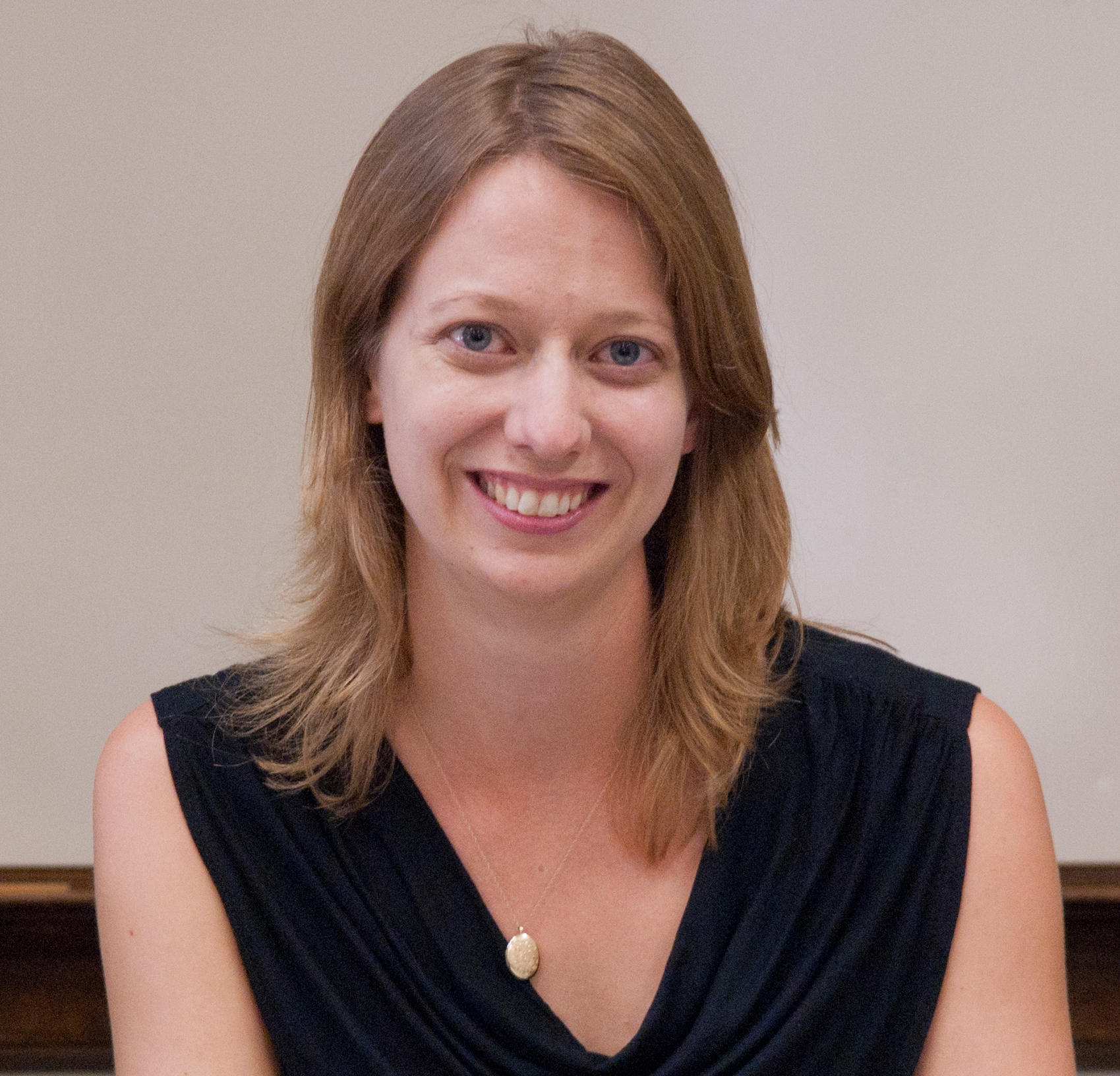
Margaret KivelsonThe Gerard P. Kuiper Prize for outstanding contributions to planetary science goes to Margaret G. Kivelson (University of California, Los Angeles, and University of Michigan) for her work studying Jupiter’s magnetospheric plasmas to understand the interiors of planets and their moons. Kivelson’s pioneering discoveries of an ocean inside Jupiter’s moon Europa and a magnetic field generated by neighboring Ganymede showed us that these icy bodies are not inert but dynamic worlds. Her insights have spurred us to recognize that habitability need not depend on proximity to the Sun in the traditional habitable zone. As a direct result of Kivelson’s advancements, we now recognize that the ocean worlds of the outer solar system may represent our best chances for discovering life beyond Earth.
portrait painted by Pamela Davis Kivelson


Bethany L. Ehlmann — Harold C. Urey Prize

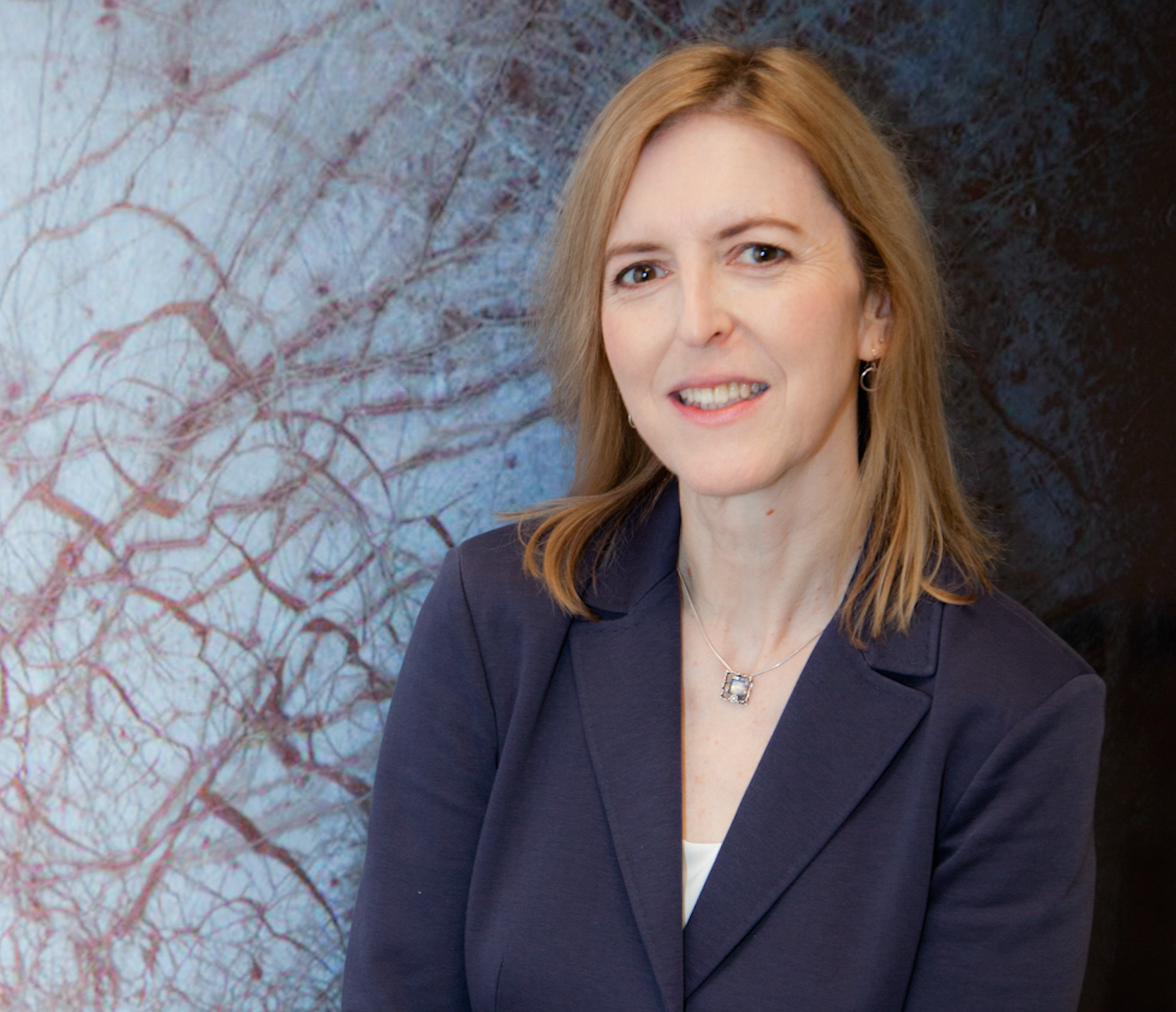
Bethany EhlmannBethany L. Ehlmann (California Institute of Technology) will receive the Harold C. Urey Prize for outstanding achievement in planetary research by an early-career scientist for her work using spectroscopy to determine the mineralogy of Mars’s surface and the extent of the red planet’s previous habitability. Dr. Ehlmann’s discovery of carbonates, serpentines, and clay minerals in Mars’s most ancient rocks shows that multiple types of clement and hospitable environments existed early in Martian history, especially the most ancient groundwater-fed environments as yet unvisited by rovers. Her inspiring work has motivated the development of Mars exploration strategies and methods, has been applied to other solar system bodies, and will continue to drive planetary science forward.


Louise M. Prockter — Harold Masursky Award

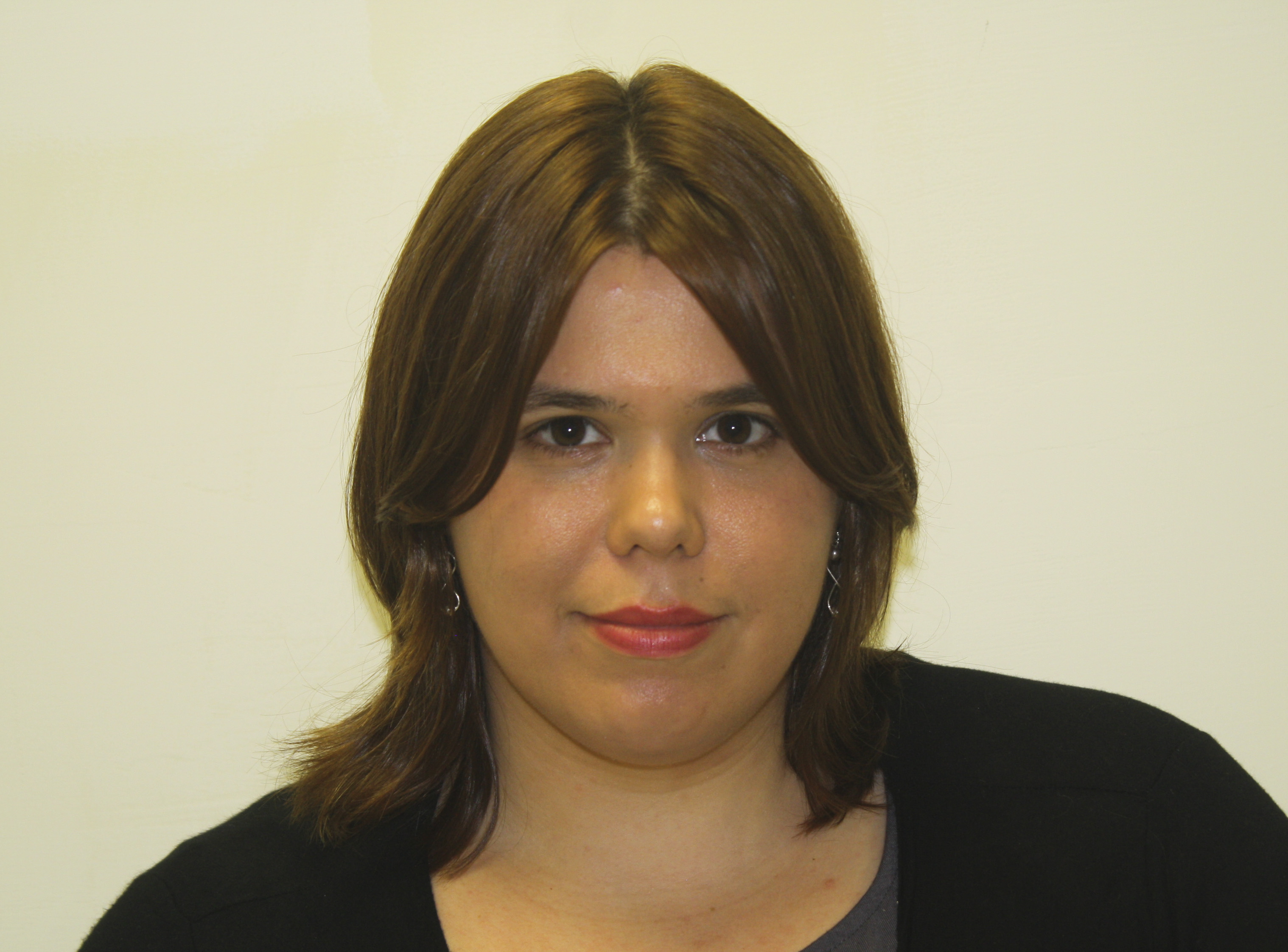
Louise ProckterReceiving the Harold Masursky Award for meritorious service to planetary science is Louise M. Prockter (Lunar and Planetary Institute) for her tireless participation and leadership serving on National Research Council boards and NASA committees, which has ensured that the community’s voice is heard and that science priorities are established and followed. Her work with engineers has extended the scientific return of multiple NASA missions beyond their original goals. By setting up support groups and mentoring female scientists, Prockter ensured faster development of early-career researchers who have made strong contributions to the field. By choosing to serve, Prockter and the committees on which she has participated have advanced the field of planetary science and engaged more scientists successfully in discovery.


Megan E. Schwamb — Carl Sagan Medal

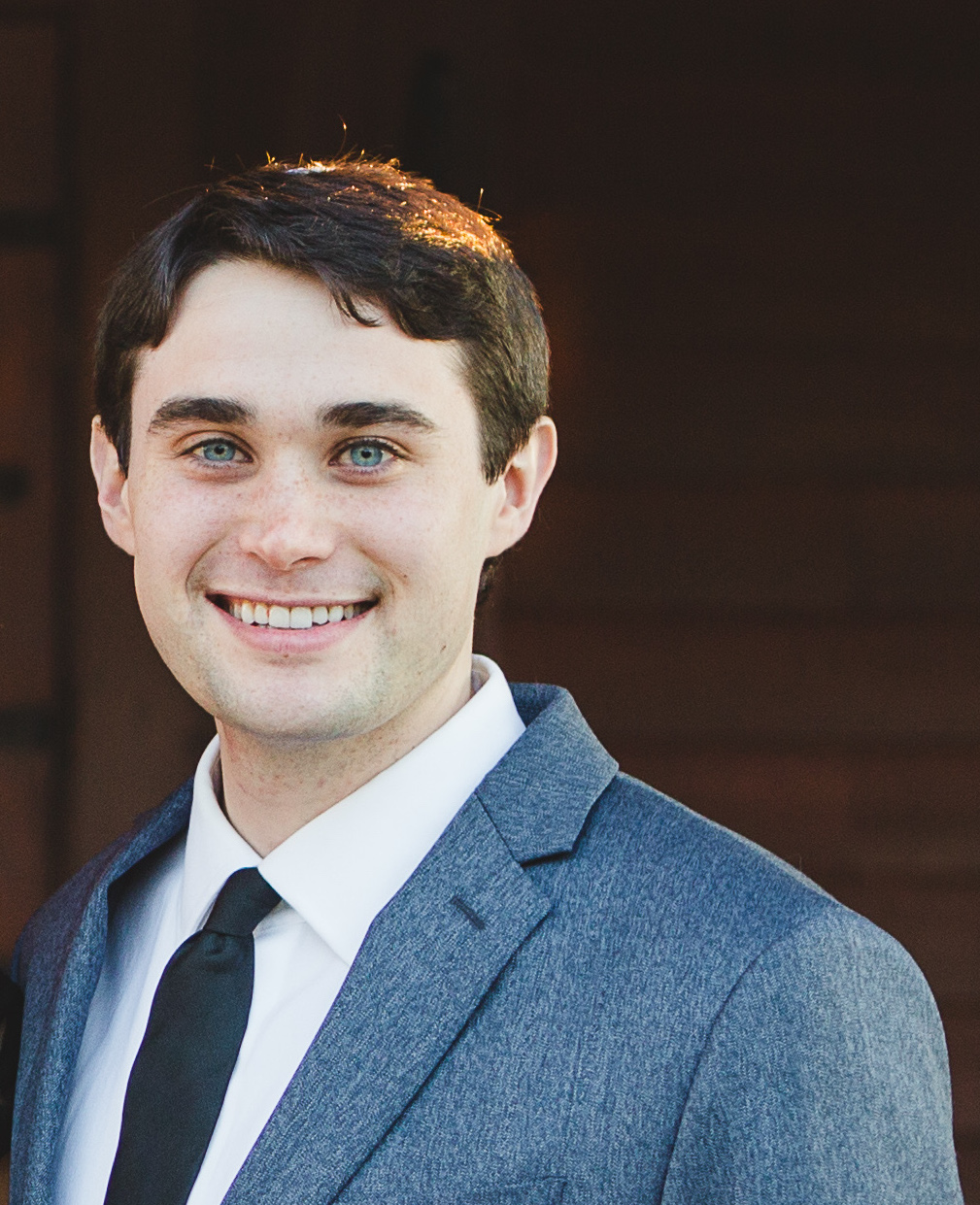
Megan SchwambThis year the DPS is awarding not one, but two Carl Sagan Medals for excellence in public communication by active planetary scientists. One medal goes to Megan E. Schwamb (Gemini Observatory) for the creation and development of new tools and venues to facilitate planetary science communication. Schwamb created the Astrotweeps project in which a different astronomer drives the same Twitter account (@astrotweeps) each week. She started Astronomy on Tap to promote direct dissemination of planetary science in bars and restaurants. Perhaps the most valuable aspect of Schwamb’s outreach work, though, revolves around creating a channel for communication in the other direction by enabling amateurs to contribute to ongoing research. The citizen science of Planet Hunters and Planet Four, facilitated by Schwamb, form the basis of this new mode of interaction.



Henry B. Throop — Carl Sagan Medal

Henry ThroopAlso receiving the Carl Sagan Medal is Henry B. Throop (Planetary Science Institute) for his efforts to kindle interest in worlds beyond Earth throughout the developing world. Throop’s presentations in South Africa, India, Namibia, Botswana, Nepal, and Mexico reach audiences who might otherwise not be exposed to planetary science. He closely collaborates with teachers and works with a diverse group of students and the public to stimulate their curiosity and show them how they can explore the world around them. With his engaging personality and genuine interest in interacting with students and teachers in far-flung places, Throop presents a positive face for science using planetary exploration as a driver.


Joshua Sokol — Jonathan Eberhart Planetary Sciences Journalism Award

Josh SokolThe Jonathan Eberhart Planetary Sciences Journalism Award for distinguished popular writing goes to Cambridge, Massachusetts-based science writer Joshua Sokol for his article “Hidden Depths” in the 13 August 2016 issue of New Scientist. In his thoroughly researched and beautifully written story, Sokol explains how icy worlds far from the Sun’s warmth, such as Jupiter’s moon Europa and Saturn’s moon Enceladus, can maintain subsurface oceans. After describing the otherworldly environment of our own planet’s deep seafloor and the creatures that dwell there, he explores how hydrothermal and chemical processes within extraterrestrial oceans might support microbes or other forms of life. Sokol’s article ends with the compelling and provocative suggestion that ice worlds with concealed oceans may be the norm, making Earth — with its exposed oceans — an outlier.
AAS Division For Planetary Sciences Announces 2017 Prize Winners

The Division for Planetary Sciences (DPS) of the American Astronomical Society (AAS) has named its prize winners for 2017.

Margaret KivelsonThe Gerard P. Kuiper Prize for outstanding contributions to planetary science goes to Margaret G. Kivelson (University of California, Los Angeles, and University of Michigan) for her work studying Jupiter’s magnetospheric plasmas to understand the interiors of planets and their moons. Kivelson’s pioneering discoveries of an ocean inside Jupiter’s moon Europa and a magnetic field generated by neighboring Ganymede showed us that these icy bodies are not inert but dynamic worlds. Her insights have spurred us to recognize that habitability need not depend on proximity to the Sun in the traditional habitable zone. As a direct result of Kivelson’s advancements, we now recognize that the ocean worlds of the outer solar system may represent our best chances for discovering life beyond Earth.

portrait painted by Pamela Davis Kivelson

Bethany EhlmannBethany L. Ehlmann (California Institute of Technology) will receive the Harold C. Urey Prize for outstanding achievement in planetary research by an early-career scientist for her work using spectroscopy to determine the mineralogy of Mars’s surface and the extent of the red planet’s previous habitability. Dr. Ehlmann’s discovery of carbonates, serpentines, and clay minerals in Mars’s most ancient rocks shows that multiple types of clement and hospitable environments existed early in Martian history, especially the most ancient groundwater-fed environments as yet unvisited by rovers. Her inspiring work has motivated the development of Mars exploration strategies and methods, has been applied to other solar system bodies, and will continue to drive planetary science forward.

Louise ProckterReceiving the Harold Masursky Award for meritorious service to planetary science is Louise M. Prockter (Lunar and Planetary Institute) for her tireless participation and leadership serving on National Research Council boards and NASA committees, which has ensured that the community’s voice is heard and that science priorities are established and followed. Her work with engineers has extended the scientific return of multiple NASA missions beyond their original goals. By setting up support groups and mentoring female scientists, Prockter ensured faster development of early-career researchers who have made strong contributions to the field. By choosing to serve, Prockter and the committees on which she has participated have advanced the field of planetary science and engaged more scientists successfully in discovery.

Megan SchwambThis year the DPS is awarding not one, but two Carl Sagan Medals for excellence in public communication by active planetary scientists. One medal goes to Megan E. Schwamb (Gemini Observatory) for the creation and development of new tools and venues to facilitate planetary science communication. Schwamb created the Astrotweeps project in which a different astronomer drives the same Twitter account (@astrotweeps) each week. She started Astronomy on Tap to promote direct dissemination of planetary science in bars and restaurants. Perhaps the most valuable aspect of Schwamb’s outreach work, though, revolves around creating a channel for communication in the other direction by enabling amateurs to contribute to ongoing research. The citizen science of Planet Hunters and Planet Four, facilitated by Schwamb, form the basis of this new mode of interaction.

Henry ThroopAlso receiving the Carl Sagan Medal is Henry B. Throop (Planetary Science Institute) for his efforts to kindle interest in worlds beyond Earth throughout the developing world. Throop’s presentations in South Africa, India, Namibia, Botswana, Nepal, and Mexico reach audiences who might otherwise not be exposed to planetary science. He closely collaborates with teachers and works with a diverse group of students and the public to stimulate their curiosity and show them how they can explore the world around them. With his engaging personality and genuine interest in interacting with students and teachers in far-flung places, Throop presents a positive face for science using planetary exploration as a driver.

Josh SokolThe Jonathan Eberhart Planetary Sciences Journalism Award for distinguished popular writing goes to Cambridge, Massachusetts-based science writer Joshua Sokol for his article “Hidden Depths” in the 13 August 2016 issue of New Scientist. In his thoroughly researched and beautifully written story, Sokol explains how icy worlds far from the Sun’s warmth, such as Jupiter’s moon Europa and Saturn’s moon Enceladus, can maintain subsurface oceans. After describing the otherworldly environment of our own planet’s deep seafloor and the creatures that dwell there, he explores how hydrothermal and chemical processes within extraterrestrial oceans might support microbes or other forms of life. Sokol’s article ends with the compelling and provocative suggestion that ice worlds with concealed oceans may be the norm, making Earth — with its exposed oceans — an outlier.

“Announcing these prizes is the highlight of the spring planetary sciences calendar,” says DPS Chair Lucy McFadden. “I look forward to presenting these awards to the winners in person this coming October at the 49th annual meeting of the DPS in Provo, Utah.”

Contact:

Shantanu Naidu

DPS Press Officer

[email protected]

Lucy McFadden

DPS Chair

[email protected]

More information about DPS prizes:

prizes

49th annual DPS meeting, Provo, Utah, 15-20 October 2017:

https://aas.org/meetings/dps49

The Division for Planetary Sciences (DPS), founded in 1968, is the largest special-interest Division of the American Astronomical Society (AAS). Members of the DPS study the bodies of our own solar system, from planets and moons to comets and asteroids, and all other solar-system objects and processes. With the discovery that planets exist around other stars, the DPS has expanded its scope to include the study of extrasolar planetary systems as well.

Newsletter 17-21

Issue 17-21, May 30, 2017


+————————————CONTENTS—————————————-+

1) MICHAEL F. A’HEARN VISITATION AND FUNERAL NOTICE

+——————————————————————————————–+


1———1———1———1———1———1———1———1———1———1

MICHAEL F. A’HEARN VISITATION AND FUNERAL NOTICE


Mike passed away on Monday, May 29, 2017, at his home in
University Park, MD. He had a deep love of science and gregarious
nature, always able to make a positive difference in whatever he did.
An obituary will be forthcoming.

Mike was the beloved husband of Maxine C. A’Hearn; father of Brian J.
(Zlata) of Oxford, UK, Kevin P. (Kanlayane) of Vienna, VA, and Patrick
N. A’Hearn of Seattle, WA; grandfather of Sean, Brendan, Marie, Eliane,
and Gabriel.

Relatives and friends may call at:

Visitation
Wednesday, May 31, from 2 to 4 and 7 to 9 PM
Collins Funeral Home
500 University Boulevard West
Silver Spring, MD
(Valet Parking)

Funeral
Thursday, June 1, at 10 AM
Mass of Christian Burial
Holy Redeemer Church
Berwyn Rd & 49th Avenue
College Park, MD

Interment at Gate of Heaven Cemetery.

Memorial contributions may be made to:

S.O.M.E. (So Others Might Eat)
71 O Street, NW
Washington, DC 20001
http://www.some.org

or

Catholic Relief Services
P.O. Box 17090
Baltimore, MD 21297
http://www.crs.org


———————————+

Send submissions to:

Anne Verbiscer, DPS Secretary ([email protected]


To unsubscribe visit http://aas.org/unsubscribe or email [email protected].

To change your address email [email protected]

Nathan Bridges 1966-2017

Nathan Bridges, a planetary research scientist at the Johns Hopkins University Applied Physics Laboratory (APL), died on April 26. He was 50 years old.

Bridges, who joined APL’s Planetary Exploration (SRE) Group in 2009, was a senior expert on the geology of Mars, remote sensing techniques, and the role of wind-driven processes in planetary erosion and sedimentation on Earth, Mars, and Titan, Saturn’s largest moon. Among his many important findings, Bridges discovered that wind is as important a geologic process on Mars as it is on Earth, despite the much lower density of the Martian atmosphere.

He was an integral part of multiple Mars missions and instrument teams: he served as a Co-Investigator on the High Resolution Imaging Science Experiment (HiRISE) instrument on the Mars Reconnaissance Orbiter, a Co-Investigator on the Mars Science Laboratory (Curiosity rover) ChemCam instrument, and a science teammember on two Mars-2020 rover instruments, SuperCam and the Mars EnvironmentalDynamics Analyzer.

Bridges was also an associate research professor in the Department of Earth and Planetary Sciences at Johns Hopkins University, where he taught a class and advised graduate students. Additionally, he took leadership roles in the international planetary science community. For example, he served as editor of the American Geophysical Union publication EOS, secretary of the AGU Planetary Science Section, guest editor of several special issues of the journal Icarus, and on numerous NASA panels and advisory committees.

Bridges developed research collaborations with colleagues from around the world. His work included field studies at dune fields on Earth, experiments in wind tunnels to simulate conditions on other planets, and analysis of data from spacecraft observations.

He earned a B.A. in geology from the University of Colorado in 1989, an M.S. in geology from Arizona State University in 1992, and a Ph.D. in geology from the University of Massachusetts in 1997. He spent twelve years at NASA’s Jet Propulsion Laboratory in Pasadena, California, before joining APL.

Bridges is survived by his wife Karen, daughter Sarah, and son Matthew.

A tribute to Bridges from the Planetary Society, of which he was a member since 1980, can be read here.


Newsletter 17-20

Issue 17-20, May 13, 2017


+————————————CONTENTS—————————————-+

  1. IN MEMORIAM: NATHAN BRIDGES (1966-2017)
  2. DPS ELECTIONS 2017: CANDIDATE SLATE
  3. NOMINATIONS FOR THE 7TH PAOLO FARINELLA PRIZE NOW OPEN
  4. JWST EXPOSURE TIME CALCULATOR (ETC) WEBINAR FOR SOLAR SYSTEM SCIENCE
  5. AAS LABORATORY ASTROPHYSICS DIVISION (LAD) 2017 ELECTIONS OPEN
  6. LLOYD V. BERKNER SPACE POLICY INTERNSHIPS AUTUMN 2017
  7. SUMMER SCHOOL IN SOFTWARE SYSTEMS FOR ASTRONOMY
  8. NASA SMD SEEKS PROPOSAL REVIEWERS
  9. SOFIA CYCLE 6 CALL FOR PROPOSALS
  10.  SBAG ANNOUNCEMENT: PSP WHITE PAPER NOW AVAILABLE

+——————————————————————————————–+


1———1———1———1———1———1———1———1———1———1

IN MEMORIAM: NATHAN BRIDGES (1966-2017)


Nathan Bridges, a planetary research scientist at the Johns Hopkins University

Applied Physics Laboratory (APL), died on April 26. He was 50 years old.


Bridges, who joined APL’s Planetary Exploration (SRE) Group in 2009, was a

senior expert on the geology of Mars, remote sensing techniques, and the role

of wind-driven processes in planetary erosion and sedimentation on Earth, Mars,

and Titan, Saturn’s largest moon. Among his many important findings, Bridges

discovered that wind is as important a geologic process on Mars as it is on Earth,

despite the much lower density of the Martian atmosphere.


He was an integral part of multiple Mars missions and instrument teams: he served

as a Co-Investigator on the High Resolution Imaging Science Experiment (HiRISE)

instrument on the Mars Reconnaissance Orbiter, a Co-Investigator on the Mars

Science Laboratory (Curiosity rover) ChemCam instrument, and a science team

member on two Mars-2020 rover instruments, SuperCam and the Mars Environmental

Dynamics Analyzer. 


Bridges was also an associate research professor in the Department of Earth

and Planetary Sciences at Johns Hopkins University, where he taught a class

and advised graduate students. Additionally, he took leadership roles in the

international planetary science community. For example, he served as editor

of the American Geophysical Union publication EOS, secretary of the AGU

Planetary Science Section, guest editor of several special issues of the journal

Icarus, and on numerous NASA panels and advisory committees.


Bridges developed research collaborations with colleagues from around the

world. His work included field studies at dune fields on Earth, experiments

in wind tunnels to simulate conditions on other planets, and analysis of data

from spacecraft observations.


He earned a B.A. in geology from the University of Colorado in 1989, an M.S.

in geology from Arizona State University in 1992, and a Ph.D. in geology

from the University of Massachusetts in 1997. He spent twelve years at

NASA’s Jet Propulsion Laboratory in Pasadena, California, before joining APL.


Bridges is survived by his wife Karen, daughter Sarah, and son Matthew. 


A tribute to Bridges from the Planetary Society, of which he was a member

since 1980, can be read here.


2———2———2———2———2———2———2———2———2———2

DPS ELECTIONS 2017: CANDIDATE SLATE


The DPS Nominating Subcommittee has identified the following candidates

for the 2017 DPS elections for Vice Chair and Committee :


Vice-Chair (1 to be elected):

o Reggie Hudson, Goddard Space Flight Center

o Linda Spilker, Jet Propulsion Laboratory/Caltech


Committee (2 to be elected):

o Michele Bannister, Queen’s University Belfast, UK

o David Morrison, NASA Ames

o Migo Mueller, University of Groningen, The Netherlands

o Padma Yanamandra-Fisher, Space Science Institute


Additional candidates, supported by a petition of at least 20 DPS members,

may be nominated by May 24th. Please send any nominations to the

DPS Secretary, Anne Verbiscer, at [email protected].


3———3———3———3———3———3———3———3———3———3

NOMINATIONS FOR THE 7TH PAOLO FARINELLA PRIZE NOW OPEN


To honor the memory and the outstanding figure of Paolo Farinella (1953-2000),

an extraordinary scientist and person, a prize has been established in recognition

of significant contributions given in the fields of interest of Paolo, which span

from planetary sciences to space geodesy, fundamental physics, science

popularization, security in space, weapons control and disarmament. The prize

has been proposed during the “International Workshop on Paolo Farinella, the

scientist and the man”, held in Pisa in 2010, and is supported by the following

Italian Institutions: University of Pisa, ASI, INAF, IFAC-CNR.

Previous recipients of the “Paolo Farinella Prize” were:

– 2011: William F. Bottke, for his contribution to the field of “Physics and
         dynamics of small solar system bodies”
– 2012: John Chambers, for his contribution to the field of “Formation and
         early evolution of the solar system “
– 2013: Patrick Michel, for his contribution to the field of ” Collisional
         processes in the Solar System”
– 2014: David Vokrouhlicky, for his contribution to the field of “Non
         gravitational forces in the Solar System”
– 2015: Nicolas Biver, for his contribution to the field of “Dynamics and
         physics of comets”
– 2016: Kleomenis Tsiganis, for his contribution to the field of “Applications
         of celestial mechanics to the natural bodies of our solar system”.

The seventh Paolo Farinella Prize is devoted to planetary sciences and
specifically to studies on the

   “Physics and dynamics of the inner planets of the solar system and their
    satellites”.

The award ceremony will be hosted by the European Planetary Science
Congress (EPSC) meeting in Riga, Latvia (17th to 22nd of September 2017).

The call and the nomination forms can be found at:

http://www.europlanet-eu.org/nominations-for-the-7th-paolo-farinella-prize-now-open/

For the 7 th “Paolo Farinella” Prize the terms and rules are as follows:

1. A competition is announced to award the “Paolo Farinella” Prize for the
    year 2017. The prize consists of a plate, a certificate and the amount of
    1500 ?.  The winner is expected to give a Prize lecture at the EPSC awards
    special session.

2. The winner will be selected on the basis of his/her overall research
    results in the field of “Physics and dynamics of the inner planets of
    the solar system and their satellites”.

3. Nominations must be sent by email not later than May 25th, 2017, to the
    following addresses:

        [email protected] and [email protected]

4. The nominations for the “Paolo Farinella” Prize can be made by any
    researcher that works in the field of planetary sciences following the

    indications in the attached form. Self nominations are cceptable. The

    candidates should have international and interdisciplinary collaborations

    and should be not older than 47 years, the age of Paolo when he passed

    away, at the date of April 30th, 2017.

5. The winner of the prize will be selected before June 15th, 2017 by the
    “Paolo Farinella” Prize Committee composed of outstanding scientists in
    planetary sciences, with specific experience in the field.

6. The Prize Committee will consider all the nominations, but will be entitled
    to autonomously consider other candidates in case the reported candidates do
    not meet criteria 2. and 4.


4———4———4———4———4———4———4———4———4———4

JWST EXPOSURE TIME CALCULATOR (ETC) WEBINAR

FOR SOLAR SYSTEM SCIENCE 


ETC Webinar: Thursday, June 15, 12-1 PM EDT (US) 

Webex info: Link: https://tinyurl.com/n662ezq

Meeting number: 640 002 474

Password: JWST2018 


The General Observer (GO) Call for Proposals will be released on November 30, 2017,

with a submission due date of March 2, 2018. Get ahead of the game by joining

STScI’s John Stansberry and Bryan Holler for a hands-on demonstration of the

ETC in the context of Solar System observations. This webinar will also feature

an overview of Pandeia, the downloadable ETC engine written in Python, and a

request for community input on Pandeia tools and capabilities that would be useful

for planning observations. 


Attendance information and a recording of the webinar will also be available on

the JWST events page at: jwst.stsci.edu/news-events/events. 


Other useful links:  JWST ETC web-interface: jwst.etc.stsci.edu 

(Note that you must create a MyST log-in to save your workbooks in the ETC.) 


Pandeia download page: ssb.stsci.edu/pandeia/engine/1.0/ 


JWST Documentation (JDOX) for Solar System targets will begin to be

published on May 19 at: jwst-docs.stsci.edu


5———5———5———5———5———5———5———5———5———5

AAS LABORATORY ASTROPHYSICS DIVISION (LAD) 2017 ELECTIONS OPEN

Dear Colleagues, 


Laboratory Astrophysics Division (LAD) Electrons are “OPEN”.

Please participate and elect one each of the candidates. If you are not yet a full

member of LAD (one of the Divisions of American Astronomical Society) ,

please do consider becoming a member and vote. It is important for Planetary

Sciences and Astrophysics to have a strong LAD. If you think laboratory data are

important, if you think future space instrumentation is important, you need to

support LAD. 


To Vote (LAD): https://aas.org/vote 

To Join LAD: https://lad.aas.org/ 


Regards, Murthy Gudipati


6———6———6———6———6———6———6———6———6———6

LLOYD V. BERKNER SPACE POLICY INTERNSHIPS AUTUMN 2017 


The goal of the Lloyd V. Berkner Space Policy Internship is to provide

promising undergraduate and graduate students with the opportunity to

work in the area of civil space research policy in the nation’s capital,

under the aegis of the National Academies of Sciences, Engineering,

and Medicine’s Space Science Board. 


The autumn program is open to undergraduate and graduate students. 

The deadline for applications is 2 June.  Candidate(s) selected will be

contacted no later than 7 July. 


Additional information about the program, including the application

procedure, can be found at

http://sites.nationalacademies.org/SSB/SSB_052239.


7———7———7———7———7———7———7———7———7———7 

SUMMER SCHOOL IN SOFTWARE SYSTEMS FOR ASTRONOMY


Registration is now open for the 4th offering of Software Systems for Astronomy.  

The course covers software design and implementation of telescope and instrument

control systems, observation planning tools, and software for analyzing and

archiving astronomical data. SSfA-4 will be offered as a two week intensive

course this summer, 24-Jul to 04-Aug, 2017, on the Big Island of Hawaii.


To register, visit the following web page and follow the instructions

(UHH students skip steps 1-4):


http://astro.uhh.hawaii.edu/Summer/Summer-2017/summer2017.php#Special_Summer_Note


The course number is ASTR394.  For more information visit:


http://astro.uhh.hawaii.edu/Summer/Summer-2017/summer2017.php


or send email to [email protected]


8———8———8———8———8———8———8———8———8———8

NASA SMD SEEKS PROPOSAL REVIEWERS


SMD is seeking subject matter experts to serve as mail-in and panel reviewers

for the following programs:


Fire Impacts on Regional Emissions and Chemistry (ROSES-2017 A.23)

AVIRIS-NG Flights in India (ROSES-2016 A.31)

Emerging Worlds (ROSES-2017 C.2)

Solar System Observations (ROSES-2017 C.6)

Planetary Data Archiving, Restoration, and Tools (ROSES-2017 C.7)

Cassini Data Analysis Program (ROSES-2017 C.10)

The New Frontiers Data Analysis Program (ROSES-2016 C.19)

OSIRIS REx Participating Scientists Program (ROSES-2017 C.22)

Exoplanet Research Program (ROSES-2017 E.3)

ROSES-2017 Heliophysics Programs


Either click on the titles above or start at this permanent link

https://science.nasa.gov/researchers/volunteer-review-panels

where the volunteer reviewer forms are always posted.


9———9———9———9———9———9———9———9———9———9

SOFIA CYCLE 6 CALL FOR PROPOSALS


The Stratospheric Observatory for Infrared Astronomy (SOFIA) is pleased

to announce the release of its Cycle 6 Call for Proposals (CfP) on May 1, 2017.  


The Call solicits proposals from the U.S., and international, astronomical 

community for approximately 500 hours of SOFIA observations, and is issued

on behalf of NASA by the Universities Space Research Association (USRA).  

The proposal deadline is June 30, 2017, and the Cycle 6 observing period will

be from February 2, 2018 to February 1, 2019.  NASA expects approximately

$5M to be available for support of U.S. affiliated investigators.


Instruments offered for Cycle 6 observations are: (1) the EXES mid-IR 

high-resolution spectrometer, (2) the FIFI-LS far-IR imaging spectrometer,

(3) the FORCAST mid-IR camera, including its grism spectrometer (4) the

FPI+ camera in science mode (5) the GREAT heterodyne spectrometer, and

(6) The HAWC+ far-IR imager and polarimeter.  New in Cycle 6 is the

availability of the GREAT dual-array mode LFA/HFA, as well as two of

the bands in the new lower-frequency 4GREAT receiver.


Starting with the Cycle 6 Call for Proposals the proposal category “Thesis 

Enabling Programs” is introduced, specifically aimed at supporting graduate 

student research.


For further details, please see:

https://www.sofia.usra.edu/science/proposing-and-observing/proposal-calls/cycle-6


10——–10——–10——–10——–10——–10——–10——–10——–10——–10

SBAG ANNOUNCEMENT: PSP WHITE PAPER NOW AVAILABLE


This is a community announcement that the Participating Scientist White

Paper (entitled: The Value of Participating Scientist Programs to NASA’s

Planetary Science Division, by L. Prockter et al.) has been posted to the

SBAG website under the “Documents” page. To access the document,

please follow this link: http://www.lpi.usra.edu/sbag/documents/


Thanks,

Angela Stickle

SBAG Early-career secretary


———————————+

Send submissions to:

Anne Verbiscer, DPS Secretary ([email protected]


To unsubscribe visit http://aas.org/unsubscribe or email [email protected].

To change your address email [email protected]