
Newsletter 22-19


Issue 22-19, Jul 17, 2022

+————————————CONTENTS—————————————-+

  1. MESSAGE FROM THE CHAIR: REGISTRATION FEES
  2. REMINDER: DPS ABSTRACTS ARE OPEN UNTIL JUL 26
  3. 2022 DPS URM TRAVEL GRANT APPLICATION OPEN UNTIL AUGUST 5
  4. ELECTION OPEN UNTIL AUG 12
  5. SURVEY TO GUIDE FUTURE DPS MEETING STRUCTURES BY JULY 25
  6. AGU SESSION P009: EXTRAORDINARY ENCELADUS
  7. NASA WORKSHOP: SMD BRIDGE PROGRAM
  8. JOBS, POSITIONS AND OPPORTUNITIES


+——————————————————————————————–+


1———1———1———1———1———1———1———1———1———1———


MESSAGE FROM THE CHAIR: REGISTRATION FEES


Dear DPS Members,


We are getting ready to open up registration and you will likely have sticker shock at the increase in DPS registration fees for the 2022 London, Ontario meeting. We did too when we met to work through the meeting budget and finalized the numbers.  


Some key guidelines we used in setting the registration fees:

DPS should not plan to make a profit on the meetings but should budget for the meeting to roughly break even.


Attendance should be assumed to reflect the historical attendance at DPS meetings.


Virtual attendees should not subsidize in person meeting costs like food and facilities.


In building the meeting budget we looked at the actual costs of the DPS virtual meetings and DPS in person meetings the most recent of which was 4 years ago. Costs have gone up over this period.  We worked with Catherine Neish (Local Organizing Committee Chair), John Moores (Scientific Organizing Committee Chair) and Tim Holt (Virtual Organizing Committee Chair) to identify what content, tools, and approaches would enable a productive science meeting for both the in person and virtual attendees in a cost-effective manner. A budget was then built from the ground up and voted on by the committee.


There are a lot of unknowns in setting the registration fees. How many people will attend total? What will be the split between in person and virtual? What are the tools/formats/approaches that will work best for a hybrid meeting?  How much more work would it be to do both the in-person part of the meeting and the virtual at the same time?


We have created a working group on the future of DPS meetings with representatives from the different DPS subcommittees. This group is gathering recommendations and will make an initial presentation at the London meeting to work on a longer-term vision of what the DPS meeting of the future will look like. They will be conducting a survey in the near future to get member feedback.


We also kept the student registration as low as we could. There is support for students from the Hartmann Travel Grant. The Underrepresented Minority Communities in Planetary Science Travel Grants are also available to encourage and support participation of students, scientists, and other space professionals who are members of underrepresented racial and ethnic groups.  Information on applying to these funds for the 2022 meeting will be posted shortly.


I hope to see you in London which is shaping up to be a very exciting meeting!


Diana


P.S. Kevin Marvel put up a link on general AAS meetings costs that people may also find helpful.  https://aas.org/posts/news/2020/12/if-its-virtual-why-does-it-cost-anything-all


2———2———2———2———2———2———2———2———2———2———


REMINDER: DPS ABSTRACTS ARE OPEN UNTIL JUL 26


The deadline for submission is Jul 26. An abstract must be submitted for every presentation. There are 5 types of presentations for the Division for Planetary Sciences Meeting.


  • Invited talk (Plenary or Prize)
  • Research Contributed (including Dissertation talks)
  • History
  • Education
  • Workforce


You may present a maximum of four (4) abstracts from the above categories, selecting no more than one paper for any one category.


3———3———3———3———3———3———3———3———3———3———


2022 DPS URM TRAVEL GRANT APPLICATION OPEN UNTIL AUGUST 5


The DPS once again offers travel funds to encourage and support participation of students, scientists, and other space professionals who are members of historically underrepresented and underserved racial and ethnic groups. In partnership with the National Society of Black Physicists (NSBP), awards are available for members of Black/African American, Indigenous, and/or Latinx communities to support attendance at the annual DPS meeting and/or the annual NSBP meeting. To apply for in-person travel support for either the DPS or NSBP 2022 meeting, please apply by August 5. Tentatively, a later deadline will be set for applications for virtual registration (but such applications can be submitted now).

The application can be found at content/underrepresented-minority-communities-planetary-science-travel-grant-form.


The DPS community is encouraged to support this fund – donations can be submitted at:Inclusivity/support-underrepresented-minority-communities-planetary-science.


4———4———4———4———4———4———4———4———4———4———


ELECTION OPEN UNTIL AUG 12


You should have received your ballot last week in your email. This election has two components: voting for Division leaders and considering changes to the DPS Bylaws.


LEADERSHIP: This year we’re choosing a new Vice-Chair, two DPS Committee members, and one Student Representative to the DPS Committee. The Vice-Chair will become Chair in October 2023. Information and position statements for all candidates have been collected into this single PDF.


BYLAWS: Please review the DPS Bylaws Markup before voting FOR or AGAINST approval.


5———5———5———5———5———5———5———5———5———5———


SURVEY TO GUIDE FUTURE DPS MEETING STRUCTURES BY JULY 25


The DPS Meetings Exploration Team (DPS-MXT) is working to identify options for future DPS fall meeting structures (e.g., virtual, in-person focused, or hybrid) that would best serve the full DPS community, and is soliciting input from the DPS community via a survey. The survey will take 5-30min to fill out (depending on your level of answer detail) and is at: https://bit.ly/3R6XUgD. More information about DPS-MXT can be found at meetings/dps-mxt, and questions/comments can be directed to the DPS-MXT Chair, Serina Diniega ([email protected]). Thank you for your help!


6———6———6———6———6———6———6———6———6———6———


AGU SESSION P009: EXTRAORDINARY ENCELADUS


With the release of the 2023-2032 Decadal Survey Origins, Worlds, and Life, we now know that a return to Enceladus is a top priority of the planetary science and astrobiology communities. The reason why Enceladus is of such profound interest is the extraordinary science that it has provided on ocean world processes and the potential for life beyond Earth.


This long-standing session seeks to continue our discussions on all of the fascinating phenomena that make Enceladus so alluring. We encourage submissions on a wide range of topics that include (but are not limited to): Enceladus’s plume, its jets/curtains, surface geology and composition, tectonics, ocean chemistry, heat generation and transport processes, hydrothermal systems, analog studies, interior structure, thermal and geochemical evolution, formation and age, prebiotic chemistry, habitability, and the possible nature and signatures of life. Submissions on approaches/instruments for future missions are also encouraged.


We welcome a diversity of perspectives.


Please submit your abstract by August 3 at

https://agu.confex.com/agu/fm22/prelim.cgi/Session/159706


Chris Glein (Southwest Research Institute) and Laurie Barge (Jet Propulsion Laboratory)


7———7———7———7———7———7———7———7———7———7———


NASA WORKSHOP: SMD BRIDGE PROGRAM


NASA’s Science Mission Directorate (SMD) will be holding a community workshop in October with the goal of co-creating the NASA SMD Bridge Program. The NASA SMD Bridge Program is a new initiative to improve diversity, equity, inclusion and accessibility within the NASA workforce and within the U.S. science and engineering communities. The program aims to increase engagement and partnering between NASA centers and Minority-Serving Institutions (MSIs), such as Historically Black Colleges and Universities (HBCUs), Tribal Colleges and Universities (TCUs), Primarily Undergraduate Institutions (PUIs), and PhD-granting Universities, with a focus on paid research and engineering student positions at participating institutions to transition science and engineering students from undergraduate studies into graduate schools and employment by NASA.


The NASA SMD Bridge Program Workshop will be fully virtual and is scheduled to take place from October 17-22, 2022. Any and all members of the STEM or STEM education communities are welcome to attend. Interested parties may submit an indication of interest (through July 25, 2022) to attend the workshop here. See the workshop website and FAQ for more information.


Please don’t hesitate to reach out to Dr. Padi Boyd [patricia.t.boyd_at_nasa.gov] with any additional questions. Please also feel free to distribute this announcement to members of your communities.


8———8———8———8———8———8———8———8———8———8———


JOBS, POSITIONS AND OPPORTUNITIES


A. Postdoc MITHNEOS, NAU


The postdoctoral scholar will work in collaboration with Dr. Cristina Thomas and other project team members on the MIT-Hawaii Near Earth Object Spectroscopic Survey (MITHNEOS), a long-running near-infrared spectral survey using SpeX on the NASA Infrared Telescope Facility (IRTF). Leadership of the program has recently passed to Dr. Thomas at NAU. The postdoctoral scholar will take a leading role in all aspects of the survey including target selection, spectroscopic observations (~1 night per month), reduction, and data analysis.

To apply please submit a cover letter, curriculum vitae, a statement of past research accomplishments and future research goals (2 pages or less), and contact information for three references.

content/postdoc-mithneos


———————————


Send submissions to: Maria Womack, DPS Secretary ([email protected])

You’re receiving this email because you are a DPS member. To unsubscribe or update your information, please send your request to [email protected]. The more general AAS privacy policy is available online at https://aas.org/about/policies/privacy-policy. Current and back issues of the DPS Newsletter can be found at newsletters


To unsubscribe from this list please go to https://lists.aas.org/confirm/?u=WumMgxrgIYvmfnfPIPRxfPgLc6qriC4R

ReplyReply allForward
 

Newsletter 22-18

Issue 22-18, Jul 8, 2022

+————————————CONTENTS—————————————-+

  1. ELECTION NOW OPEN!
  2. REMINDER: DPS ABSTRACTS ARE OPEN UNTIL JUL 26
  3. 2022 DPS URM TRAVEL GRANT APPLICATION OPEN UNTIL AUGUST 5
  4. LPI INTERN STORIES 2022
  5. ATMOSPHERES, CLIMATE, AND POTENTIAL HABITABILITY OF ROCKY EXOPLANETS
  6. REMINDER: DPS PROPOSALS DUE FOR WORKSHOP (JUL 8 TODAY) AND SPLINTER MEETINGS (JUL 14)
  7. SURVEY TO GUIDE FUTURE DPS MEETING STRUCTURES (IN-PERSON, VIRTUAL, HYBRID)
  8. SHARING PLANETARY SCIENCE: USING HANDS-ON ACTIVITIES
  9. THE ROAD TO MISSION SCIENCE: SEMINARS FOR STUDENTS AND EARLY CAREER RESEARCHERS
  10. JOBS, POSITIONS AND OPPORTUNITIES


+——————————————————————————————–+


1———1———1———1———1———1———1———1———1———1———


ELECTION NOW OPEN!


You should have received your ballot yesterday at the email address you registered with AAS/DPS. If you did not see it, please check your spam/junk folder and also check that your membership did not lapse.


This election has two components: voting for Division leaders and considering changes to the DPS Bylaws. Voting will be open until August 12.


LEADERSHIP: This year we’re choosing a new Vice-Chair, two DPS Committee members, and one Student Representative to the DPS Committee. The Vice-Chair will become Chair in October 2023.

For more information about current officers and committee members, please visit the leadership section of the DPS website.


Candidates


Information and position statements for all candidates have been collected into this single PDF; however, if you prefer the information separately, please click on each candidate’s name in this section. The same information is also accessible on your ballot.

Vice-Chair (vote for 1)


DPS Committee Members (vote for 2)


Student Representative (vote for 1)


BYLAWS: Please review the DPS Bylaws Markup before voting FOR or AGAINST approval.


2———2———2———2———2———2———2———2———2———2———


REMINDER: DPS ABSTRACTS ARE OPEN UNTIL JUL 26


What will you present at DPS?


The deadline for submission is Jul 26. An abstract (which will appear in the Meeting program) must be submitted for every presentation. There are 5 types of presentations for the Division for Planetary Sciences Meeting.


  • Invited talk (Plenary or Prize)
  • Research Contributed (including Dissertation talks)
  • History
  • Education
  • Workforce


You may present a maximum of four (4) abstracts from the above categories, selecting no more than one paper for any one category. This applies to in-person, fully remote and hybrid meetings.


There is no limit to the number of abstracts that you may co-author. NOTE: The abstract body text can be a maximum of 2,250 characters (which includes letters, numbers, punctuation, and symbols/special characters).


Only speakers invited by the SOC may submit plenary talks.


 3———3———3———3———3———3———3———3———3———3———


2022 DPS URM TRAVEL GRANT APPLICATION OPEN UNTIL AUGUST 5


The DPS once again offers travel funds to encourage and support participation of students, scientists, and other space professionals who are members of historically underrepresented and underserved racial and ethnic groups. In partnership with the National Society of Black Physicists (NSBP), awards are available for members of Black/African American, Indigenous, and/or Latinx communities to support attendance at the annual DPS meeting and/or the annual NSBP meeting. To apply for in-person travel support for either the DPS or NSBP 2022 meeting, please apply by August 5. Tentatively, a later deadline will be set for applications for virtual registration (but such applications can be submitted now). The application can be found at content/underrepresented-minority-communities-planetary-science-travel-grant-form.


The DPS community is encouraged to support this fund – donations can be submitted at:Inclusivity/support-underrepresented-minority-communities-planetary-science.


4———4———4———4———4———4———4———4———4———4———


LPI INTERN STORIES 2022


Thursday, July 21, 4 p.m. EDT / 3 p.m. CDT / 2 p.m. MDT / 1 p.m. PDT.


Wondering what it takes to become a planetary science intern working alongside LPI and NASA scientists, conducting cutting-edge research? Join us for Intern Stories 2022 to find out! During this free, virtual event, you’ll hear from LPI summer interns about how they applied and prepared for their internship, their ongoing experiences, and how the internship has helped them. Middle and high schoolers, undergraduate students, parents, and educators are encouraged to tune in!


LEARN MORE: https://www.lpi.usra.edu/features/2022/062422/lpi-intern-stories

ZOOM REGISTRATION: https://www.zoomgov.com/webinar/register/WN_pzwVSCFOR-WZE4yJzvU31g

YOUTUBE LIVESTREAM: https://www.youtube.com/c/LPIUSRA


5———5———5———5———5———5———5———5———5———5———


ATMOSPHERES, CLIMATE, AND POTENTIAL HABITABILITY OF ROCKY EXOPLANETS


Time and Location: 12-16 December 2022; Chicago, IL and online


Session ID: 158628


Abstract Submission Deadline: August 3, 2022


Exoplanet discoveries of the past decade have shown that every star hosts at least 0.1-1.0 roughly Earth-sized, or rocky, planets. Our galaxy therefore contains billions of rocky worlds, vastly outnumbering the four rocky planets of our own Solar System. What are these worlds like?


This session invites submissions that probe the nature of rocky exoplanets, including: What can our Solar System teach us about rocky exoplanets? How different are atmospheres and climates on rocky planets around other stars, on rocky planets in exotic orbital states, or on rocky planets with radically different formation histories? How can we characterize such planets via observations? And could the processes that kept Earth habitable over billions of years also occur elsewhere?


Submissions that use observation, experiment, or theory are all welcome.

To submit your abstract, visit: https://go.umd.edu/cSo

Invited Speakers: Wanying Kang (MIT), Martin Turbet (LMD/IPSL)

Conveners: Mark Hammond ([email protected]), Daniel Koll ([email protected]), Thaddeus Komacek ([email protected]), Jun Yang ([email protected] )


6———6———6———6———6———6———6———6———6———6———


REMINDER: DPS PROPOSALS DUE FOR WORKSHOP (JUL 8 TODAY) AND SPLINTER MEETINGS (JUL 14)


Today is the last day to submit a request for a workshop at the DPS Fall Meeting. If you would like to have one for DPS54 please submit a request here:


https://aas.org/meetings/dps54/session-proposals


Are you interested, but not sure which one to request? Read descriptions about both at the link above. It’s a great way to have a more focused gathering with your colleagues at the conference.


7———7———7———7———7———7———7———7———7———7———


SURVEY TO GUIDE FUTURE DPS MEETING STRUCTURES (IN-PERSON, VIRTUAL, HYBRID)


The DPS Meetings Exploration Team (DPS-MXT) is working to identify options for future DPS fall meeting structures (e.g., virtual, in-person focused, or hybrid) that would best serve the full DPS community, and is soliciting input from the DPS community via a survey. The survey will take 5-10 min to fill out (depending on your level of answer detail) and is at: https://bit.ly/3R6XUgD. More information about DPS-MXT can be found at meetings/dps-mxt, and questions/comments can be directed to the DPS-MXT Chair, Serina Diniega ([email protected]). Thank you for your help!


8———8———8———8———8———8———8———8———8———8———


SHARING PLANETARY SCIENCE: USING HANDS-ON ACTIVITIES


Friday, July 22, 4 p.m. EDT / 3 p.m. CDT / 2 p.m. MDT / 1 p.m. PDT.


Learn about a variety of versatile, hands-on activities that scientists can use to engage different audiences in planetary science. Join in to discuss effective strategies and share your experiences and favorite activities.


LEARN MORE: https://www.lpi.usra.edu/education/scientist-engagement

JOIN THE EVENT:


https://www.zoomgov.com/j/1616763689?pwd=enI1UnJDK24rc0tFb1YrcGN2ZEhsQT09

YOUTUBE LIVESTREAM: https://www.youtube.com/c/LPIUSRA


9———9———9———9———9———9———9———9———9———9———


THE ROAD TO MISSION SCIENCE: SEMINARS FOR STUDENTS AND EARLY CAREER RESEARCHERS


The Lunar and Planetary Institute is hosting webinars for those who have an interest in becoming involved in current or future planetary science missions. Undergraduate and graduate students, postdocs, and early career scientists are invited to join us for a discussion of how to prepare for a career in mission science.


The virtual event will feature a panel of mentors and mission scientists representing active and upcoming planetary missions, including Curiosity and PerseveranceDragonfly, and DART. Panelists will share their backgrounds, experiences, and recommendations. Participants will be encouraged to ask questions and make connections with mission scientists. We will describe planetary missions, discuss mission science careers, and highlight relevant opportunities for students and early career scientists.


The next event will be a 90-minute virtual seminar on TUESDAY, JULY 19, at 3 p.m. EDT / 2 p.m. CDT / 1 p.m. MDT / 12 p.m. PDT.


Learn Morehttps://www.lpi.usra.edu/features/2022/061722/seminars

Zoom Registrationhttps://www.zoomgov.com/webinar/register/WN_rIpsEg4_R_6qPSqK3VXcPw 

YouTube Livestream:  https://www.youtube.com/c/LPIUSRA


Check out the Resource Packet https://www.lpi.usra.edu/education/events/The-Road-to-Mission-Science_Resource-Packet.pdf  for information about mission science, internships, fellowships, scholarships, awards, and more.


10———10———10———10———10———10———10———10———10———


JOBS, POSITIONS AND OPPORTUNITIES


A. Caltech/JPL Postdoc in Stable Isotope Geochemistry


Applications are invited for a postdoctoral position in clumped isotope geochemistry within Caltech’s Division of Geological & Planetary Sciences.  The successful applicant will work with Professor John Eiler and Dr. Amy Hofmann (JPL) on the collection and interpretation of clumped isotope signatures in polycyclic aromatic hydrocarbons (PAHs) from different classes of carbonaceous meteorites.


Applicants for this position must have a PhD in geochemistry, organic geochemistry, isotope geochemistry, organic chemistry, or equivalent by the time of the appointment. Additional required qualifications include significant organic chemistry ‘wet lab’ experience and a working knowledge of the principles of stable isotope geochemistry.


The selected candidate is expected to begin as soon as possible.  The initial duration of the position is one year.


The full advertisement (with additional details regarding job responsibilities and application requirements) can be found here: https://www.gps.caltech.edu/about/positions-available/postdoctoral-positions/postdoctoral-position-in-geochemistry


Questions regarding the position should be directed to Dr. Amy Hofmann ([email protected]).


B. Research Space Scientist, NASA GSFC


content/research-space-scientist-1

———————————


Send submissions to: Maria Womack, DPS Secretary ([email protected])

You’re receiving this email because you are a DPS member. To unsubscribe or update your information, please send your request to [email protected]. The more general AAS privacy policy is available online at https://aas.org/about/policies/privacy-policy. Current and back issues of the DPS Newsletter can be found at newsletters


To unsubscribe from this list please go to https://lists.aas.org/confirm/?u=WumMgxrgIYvmfnfPIPRxfPgLc6qriC4R

Message from the Chair: Yom Kippur

The DPS Committee would like to offer our heartfelt apologies for scheduling the 2022 London DPS meeting over Yom Kippur.  We have also realized that Yom Kippur starts on the last day of the meeting in 2024.  Choosing these dates was an oversight on our part. It was unintentional and we are sorry for all the inconveniences it causes. We have instituted processes to ensure that this type of oversight does not happen again.

The SOC and LOC will accommodate requests of speakers who observe Yom Kippur not to be scheduled on those dates. In addition, there will be no virtual poster session on Yom Kippur.

The LOC will provide information regarding services at local synagogues for those wishing to observe the holiday.

Newsletter 22-17

Issue 22-17, Jun 29, 2022


+————————————CONTENTS—————————————-+

  1. MESSAGE FROM THE CHAIR: YOM KIPPUR
  2. PROPOSALS DUE FOR WORKSHOP (JUL 8) AND SPLINTER MEETINGS (JUL 14)
  3. DPS ABSTRACTS ARE OPEN!
  4. REQUEST FOR SURVEY PARTICIPATION
  5. JOBS, POSITIONS AND OPPORTUNITIES


+——————————————————————————————–+


1———1———1———1———1———1———1———1———1———1———


MESSAGE FROM THE CHAIR: YOM KIPPUR


The DPS Committee would like to offer our heartfelt apologies for scheduling the 2022 London DPS meeting over Yom Kippur.  We have also realized that Yom Kippur starts on the last day of the meeting in 2024.  Choosing these dates was an oversight on our part. It was unintentional and we are sorry for all the inconveniences it causes. We have instituted processes to ensure that this type of oversight does not happen again.


The SOC and LOC will accommodate requests of speakers who observe Yom Kippur not to be scheduled on those dates. In addition, there will be no virtual poster session on Yom Kippur.


The LOC will provide information regarding services at local synagogues for those wishing to observe the holiday.


With deepest apologies,


Diana Blaney, Chair, Division of Planetary Sciences


2———2———2———2———2———2———2———2———2———2———


PROPOSALS DUE FOR WORKSHOP (JUL 8) AND SPLINTER MEETINGS (JUL 14)


Do you have an idea for a workshop and/or splinter meeting for our Fall DPS meeting? We are still accepting proposals for these side meetings. Please submit a request for your meeting at the link below.

https://aas.org/meetings/dps54/session-proposals


Are you interested, but not sure which one to request? Read descriptions about both at the link above. It’s a great way to have a more focused gathering with your colleagues at the conference.


3———3———3———3———3———3———3———3———3———3———


DPS ABSTRACTS ARE OPEN!


The deadline for submission is Jul 26.

An abstract (which will appear in the Meeting program) must be submitted for every presentation. There are 5 types of presentations for the Division for Planetary Sciences Meeting.

  • Invited talk (Plenary or  Prize)
  • Research Contributed (including Dissertation talks)
  • History
  • Education
  • Workforce


You may present a maximum of four (4) abstracts from the above categories, selecting no more than one paper for any one category. This applies to in-person, fully remote and hybrid Meetings.


There is no limit to the number of abstracts that you may co-author. NOTE: The abstract body text can be a maximum of 2,250 characters (which includes letters, numbers, punctuation, and symbols/special characters).


Only speakers invited by the SOC may submit plenary talks.


4———4———4———4———4———4———4———4———4———4———

REQUEST FOR SURVEY PARTICIPATION


My name is Alyvia Fondren, and I am an undergraduate student at Albion College in Michigan. I am working with Dr. Andrea Francis in the Psychology Department and Dr. Nicolle Zellner in the Physics Department to test models about women’s experiences with STEM mentors during their undergraduate experience at liberal arts colleges and large universities. Results will be used to guide the creation of mentorship programs for women in STEM.


The questionnaire covers possible mentorship you experienced as an undergraduate and the type of institution that you attended. Your participation is entirely voluntary and is expected to take no more than 15 minutes.


Link to the study: https://www.surveymonkey.com/r/YXQRVDC


For additional information, please contact Dr. Andrea Francis at [email protected] or Dr. Nicolle Zellner at [email protected].


5———5———5———5———5———5———5———5———5———5———


JOBS, POSITIONS AND OPPORTUNITIES


Open Rank Tenure-Track Faculty in Planetary Science, Pennsylvania State U.


content/open-rank-tenure-track-faculty-planetary-science


The Department of Geosciences at The Pennsylvania State University, in University Park, PA invites applications for an Open-Rank, Tenure-Track or Tenured Faculty position in the field of Planetary Science.


The Department of Geosciences is part of the College of Earth and Mineral Sciences (EMS) and, along with the Earth and Environmental Systems Institute (EESI), houses top-ranked research programs in geology, geophysics, geobiology, geochemistry, and interdisciplinary Earth systems research. Penn State’s Department of Astronomy and Astrophysics is home to similarly strong and relevant exoplanet research. Building on decades of involvement with NASA’s Astrobiology Program, Penn State recently formed the Consortium for Planetary and Exoplanetary Science and Technology, including the Planetary System Science Center (PSSC), as part of a commitment to expanding research in the planetary sciences. The successful candidate will be part of this growing and interdisciplinary community with opportunities for service and leadership to shape the future of the planetary fields and interdisciplinary research at Penn State. The position is a co-hire between the Department of Geosciences and EESI.


Responsibilities

We seek a colleague who will develop a vigorous and externally funded research program, advance undergraduate and graduate education by teaching courses and providing research training, and work to advance diversity, equity, and inclusion in the geosciences.


Qualifications

The successful candidate will hold a Ph.D. in a relevant field by the time of hire. While any and all areas of Planetary Science expertise are appropriate for this position, Penn State aims to expand involvement in the exploration of the solar system through NASA or international space missions.  Connections to solar system exploration include a wide range of disciplines and research approaches, such as laboratory experimentation, analog research, computational research, remote sensing, instrument development, or through mission science team participation and leadership.


(edited for length)


———————————


Send submissions to: Maria Womack, DPS Secretary ([email protected])

You’re receiving this email because you are a DPS member. To unsubscribe or update your information, please send your request to [email protected]. The more general AAS privacy policy is available online at https://aas.org/about/policies/privacy-policy. Current and back issues of the DPS Newsletter can be found at newsletters


To unsubscribe from this list please go to https://lists.aas.org/confirm/?u=WumMgxrgIYvmfnfPIPRxfPgLc6qriC4R

Newsletter 22-16

Issue 22-16, Jun 26, 2022

+————————————CONTENTS—————————————-+

  1. DPS ABSTRACTS OPEN MONDAY JUN 27
  2. DPS ACCOMMODATIONS SITE UP
  3. CULTURALLY INCLUSIVE PLANETARY ENGAGEMENT (JUN 30 DEADLINE)
  4. BLACK SPACE WEEK/BLACK IN ASTRO WEEK
  5. JOBS, POSITIONS AND OPPORTUNITIES

+——————————————————————————————–+


1———1———1———1———1———1———1———1———1———1———

DPS ABSTRACTS OPEN MONDAY JUN 27

Join us in the heart of the planetary science community in Canada for the 54th Annual Meeting of the Division for Planetary Sciences. To be held both virtually and in person 2-7 October 2022 in London, Canada, this hybrid meeting will include options for active remote participation, such as the popular iPoster presentation format. As our first in-person meeting since 2019, #DPS2022 promises to provide a lively environment, a jam-packed scientific schedule, and the chance to reconnect once again with colleagues and friends. See you there!

The abstract site will open on Monday, 27 June. The abstract deadline is Tuesday, 26 July, at 11:59 pm ET.

2———2———2———2———2———2———2———2———2———2———

DPS ACCOMMODATIONS SITE IS UP

Are you attending DPS 54 in person? If so, check out the information and special rates/deals at the accommodations page. Reserve your room now.

https://aas.org/meetings/dps54/accommodations

You can also read about the meeting venue – RBC Place London – and nearby dining options at the main meeting page. Check it out:

https://aas.org/meetings/dps54

3———3———3———3———3———3———3———3———3———3———

CULTURALLY INCLUSIVE PLANETARY ENGAGEMENT (JUN 30 DEADLINE)

Conducted by the NASA SMD Science Activation Planetary Reach project

Do you want to learn strategies for engaging diverse audiences? Planetary scientists (including graduate students, post-doctoral researchers, engineers and technicians) and informal educators are invited to apply to attend a professional development workshop, Culturally Inclusive Planetary Engagement, August 4-6, 2022. During the workshop, scientists and educators are paired together and supported in two-way conversations around diversity and inclusion. Participants will discuss ways to engage Latinx and Black youth in their community in planetary science and exploration. Workshop participants come away with actionable strategies and hands-on activity ideas for engagement and the beginnings of relationships/collaborations with other participants. Following the workshop, a public engagement event will be held at a local institution allowing workshop participants the opportunity to utilize engagement strategies discussed in the workshop.

Who: Space is limited to 15 planetary scientists (including graduate students, post-doctoral researchers, and planetary engineers and technicians) and 15 informal educators. Stipends are available for participants able to accept them.

 Times and location: The workshop will take place in Houston, August 4th (1:00pm – 5:00pm CDT) and August 5th (9:00am – 5:00pm CDT) with a community engagement event on August 6th.


Application form at https://www.surveymonkey.com/r/DMZ2765. The deadline to apply is 5:00pm CDT, June 30, 2022.

More information about the workshop: https://www.lpi.usra.edu/planetary-reach/houston


4———4———4———4———4———4———4———4———4———4———4———

BLACK SPACE WEEK/BLACK-IN-ASTRO WEEK

My name is Rob and I am the public relations director for BlackInAstro this year. On behalf of our organization, we’d like to request that you can share Black Space Week/ Black In Astro Week with all of your networks. To give some background on our organization, we are a team of Black students and professionals working to amplify and celebrate the Black experience in the Space field, a movement founded by Ashley Lindalia Walker. BlackInAstro/BlackSpace week took place June 19th -June 25th, 2022, our website is here blackinastro.com with the events and our recent  nature article.


In Solidarity,

On Behalf of Black In Astro,

Rob | Public Relations Director


5———5———5———5———5———5———5———5———5———5———

JOBS, POSITIONS AND OPPORTUNITIES


A. Scientific Data Analyst with the MAVEN Imaging UltraViolet Spectrograph Team

The Imaging Ultraviolet Spectrograph (IUVS) team on the MAVEN mission is seeking a talented data analyst. IUVS has made important discoveries about the Mars atmosphere, including escape and evolution, aurora, nightglow, photochemistry, composition, dynamics and cloud formation, and more discoveries are anticipated. Responsibilities include: Data analysis and interpretation, scientific programming, interpretation, presentation of results at conferences and in publications. Mentoring junior team members and software support. Mission operations. Position requirements include: Bachelor’s or Master’s degree in astronomy, physics, earth science, computer science or related area. Experience in scientific programming in python or IDL. Work with remote sensing data, retrievals, image processing. Experience with graphical data representation and scientific visualization. Desired qualifications include: Familiarity with planetary science, earth science or astrophysics through coursework or experience, and best practices for version control for code and data products. Inquiries to [email protected]. Please apply by 15 July at

https://jobs.colorado.edu/jobs/JobDetail/?jobId=39804


———————————


Send submissions to: Maria Womack, DPS Secretary ([email protected])

You’re receiving this email because you are a DPS member. To unsubscribe or update your information, please send your request to [email protected]. The more general AAS privacy policy is available online at https://aas.org/about/policies/privacy-policy. Current and back issues of the DPS Newsletter can be found at newsletters


To unsubscribe from this list please go to https://lists.aas.org/confirm/?u=WumMgxrgIYvmfnfPIPRxfPgLc6qriC4R

Newsletter 22-15

Issue 22-15, Jun 19, 2022

+————————————CONTENTS—————————————-+

  1. ICARUS ASSOCIATE EDITOR
  2. 2022 DPS URM TRAVEL GRANT APPLICATION FORM TO OPEN END OF JUNE
  3. LAST CHANCE TO PETITION FOR ADDITIONAL CANDIDATES
  4. FEDERAL RELATIONS SUBCOMMITTEE VISITS CAPITOL HILL

+——————————————————————————————–+

1———1———1———1———1———1———1———1———1———1———

ICARUS ASSOCIATE EDITOR

Icarus is devoted to the publication of original contributions in the field of Solar System studies. Manuscripts reporting the results of new research – observational, experimental, or theoretical – concerning the astronomy, geology, meteorology, physics, chemistry, biology, and other scientific aspects of our Solar System or extrasolar systems are welcome.

The journal generally does not publish papers devoted exclusively to the Sun or the Earth; papers on celestial mechanics or astrophysics are acceptable only if they have a clear importance for planetary science; descriptive studies of meteorites should be addressed to journals of meteoritics, but are relevant for Icarus if they provide constraints on the formation or evolution of planetesimals, planets or the solar system in its globality. Icarus does not publish papers that provide “improved” versions of Bode’s law, or other numerical relations, without a sound physical basis.

Icarus does not publish meeting announcements or general notices. Reviews, historical papers, and manuscripts describing spacecraft instrumentation may be considered, but only with prior approval of the editor. An entire issue of the journal is occasionally devoted to a single subject, usually arising from a conference on the same topic. The language of publication is English. American or British usage is accepted, but not a mixture of these.

Icarus – Journal – Elsevier

Icarus continues to be a leading journal in the field.  In 2020 the journal published over 1,000 articles, and gained a CiteScore of 7.2, and an Impact Factor of 3.508 (2020). The Journal enjoys strong support from communities across the subject fields it covers, as well as an engaged international Editorial Board: https://www.journals.elsevier.com/solar-energy/editorial-board

Associate Editor Role

The role of Associate Editor, along with the Editor-in-Chief and other members of the Editorial Board of the Journal and Elsevier, is to manage the peer review process for manuscripts submitted to the journal using the online journal system.  The Associate Editor is empowered to make decisions autonomously on manuscripts but is also welcome (and expected) to seek the opinion of the wider editorial team.

The Associate Editor role entails:

·       Responsibility for the scientific content of the Journal within a specific area relating  to  the  Journal,  taking  into  account  the  Aims  and  Scope, the Publisher’s editorial policies as updated from time to time (including without limitation those on ethics in publishing at the Publisher’s website) and the editorial policy of the Journal.  

·       The evaluation and selection of articles for publication in the Journal that are consistent with the high standards of the journal.  This includes coordinating an objective and unbiased peer-review  process for  submitted Articles, obtaining a minimum of (2) reviews for each article, and will reject, or  return  for  revision  to  the  authors Articles  that  do  not  meet  the required standards of the Journal.

·       Ensuring an appropriate and sufficient level of submissions of Articles for publication to meet the publication goals of the Journal. If necessary, the Editor will solicit Articles to help meet such publication goals.

·       Conduct activities in accordance with generally accepted industry standards for integrity and objectivity in all matters respecting the selection, editing, acceptance and reviewing of Articles

Alongside the review process the Associate Editors are asked to periodically participate in discussions with Elsevier about the journal’s development and potential new initiatives.  The team of Editors will hold meetings approximately twice a year via video call, as well as in-person meetings in conjunction with certain events or training sessions, as required.

The applicants:

–       Must have a PhD in a field of study relevant to the scope of this journal

–       Must have demonstrated broad expertise in:

–       surface geology including tectonics, geomorphology and crater features of rocky bodies in the solar system

–       Be knowledgeable in research publishing, managing a journal publication, the peer review process and in growing a journal

–       Demonstrate skills as a good collaborator with ability to lead a team effectively

Elsevier is committed to inclusion and diversity in our work and want the Journal to reflect the diversity of the communities we serve. We are therefore committed to ensuring that the Editorial Board is representative, and encourage all individuals interested to apply for a position with the board.

Interested candidates are asked to provide a complete CV, including publication record, as well as a one-page summary of their relevant experience and area of expertise for this Associate Editor position by August 1, 2022.  Please include up to three references.  

Applications and relevant supporting documents must be sent to Christina Gifford, Publisher, [email protected].

2———2———2———2———2———2———2———2———2———2———

2022 DPS URM TRAVEL GRANT APPLICATION TO OPEN END OF JUNE

The DPS will again offer travel funds to encourage and support participation of students, scientists, and other space professionals who are members of underrepresented racial and ethnic groups. In partnership with the National Society of Black Physicists (NSBP), awards are available for members of Black/African American, Indigenous, and/or Latinx communities to support attendance at the annual DPS meeting and/or the annual NSBP meeting. The application will be updated in the next few weeks (with a tentative deadline of August 1 for in-person travel, September 1 for virtual registration).


The DPS community is also encouraged to support this fund – donations can be submitted at:Inclusivity/support-underrepresented-minority-communities-planetary-science Last year’s application form can also be viewed at this page.


3———3———3———3———3———3———3———3———3———3———

LAST CHANCE TO PETITION FOR ADDITIONAL CANDIDATES

This is a reminder that, per the DPS Bylaws, additional candidates for Vice Chair and Committee, supported by a petition of at least 20 DPS members, may be nominated by June 21st (this Tuesday). Please send any nominations to the DPS Secretary, Maria Womack, at [email protected].

The slate of candidates thus far was published in the 12th newsletter for this year:

newsletters/22-12


4———4———4———4———4———4———4———4———4———4———4———

FEDERAL RELATIONS SUBCOMMITTEE VISITS CAPITOL HILL

The DPS Federal Relations Subcommittee (FRS) recently completed a visit to Capitol Hill, following up on a visit by the DPS Committee a few weeks prior. We met with key staffers for House and Senate Authorization and Appropriation Committees in charge of NASA and NSF, in addition to individual representative offices and a dinner with Dr. Lori Glaze. Our advocacy focused on the release of the Planetary Sciences and Astrobiology Decadal Survey and educating policy makers about its ambitious, yet excellent set of community-based priorities. Another message we stressed is the need for scientists in our membership to have a healthy balance of Research and Analysis (R&A) funding levels to insure a healthy workforce with reasonable proposal selection rates. The Decadal recommendation to gradually increase NASA’s R&A funding line to 10% of the overall Planetary Sciences Directorate levels was well received and commended for its clarity. Time and again we heard strong bipartisan support for the planetary sciences.  We encourage you to contact your representatives in the coming year to thank them for supporting our planetary science endeavors, and the full FRS is available to help in these conversations.

Kurt Retherford – DPS Federal Relations Officer


———————————


Send submissions to: Maria Womack, DPS Secretary ([email protected])

You’re receiving this email because you are a DPS member. To unsubscribe or update your information, please send your request to [email protected]. The more general AAS privacy policy is available online at https://aas.org/about/policies/privacy-policy. Current and back issues of the DPS Newsletter can be found at newsletters


To unsubscribe from this list please go to https://lists.aas.org/confirm/?u=WumMgxrgIYvmfnfPIPRxfPgLc6qriC4R

Newsletter 22-14


Issue 22-14, Jun 16, 2022


+————————————CONTENTS—————————————-+

  1. FALL DPS MEETING WEBSITE IS UP
  2. FALL DPS MEETING WORKSHOP AND SPLINTER MEETING PROPOSALS SITE IS OPEN
  3. PLANETARY SCIENCE ADVISORY COMMITTEE MEETING, JUNE 21 TO 23, 2022
  4. CULTURALLY INCLUSIVE PLANETARY ENGAGEMENT
  5. JOBS, POSITIONS, AND OPPORTUNITIES

+——————————————————————————————–+


1———1———1———1———1———1———1———1———1———1———

FALL DPS MEETING WEBSITE IS UP


The London, Ontario, planetary science community is excited to welcome us for our first in-person meeting since 2019. We will present the meeting in a hybrid format. You will be able to interact face-to-face or through the virtual platform.


https://aas.org/meetings/dps54


We hope to see you there!


2———2———2———2———2———2———2———2———2———2———

FALL DPS MEETING WORKSHOP AND SPLINTER MEETING PROPOSALS SITE IS OPEN


Do you have an idea for a workshop and/or splinter meeting for our Fall DPS meeting? We are now accepting proposals for workshops and splinter meetings at the fall DPS meeting. Please submit a request for your meeting at the link below. You can also navigate to it from the main meeting website above.


https://aas.org/meetings/dps54/session-proposals


Workshop proposals due by 8 July

Splinter Meeting proposals due by 14 July


3———3———3———3———3———3———3———3———3———3———

PLANETARY SCIENCE ADVISORY COMMITTEE (PAC) MEETING, JUNE 21 TO 23, 2022


The next Planetary Science Advisory Committee (PAC) meeting will take place June 21 through 23, 2022, as a hybrid meeting at NASA Headquarters and on WebEx. The agenda is posted online, with WebEx connection information: https://science.nasa.gov/researchers/nac/science-advisory-committees/pac


Accessibility: Captioning will be provided for this meeting. NASA is committed to providing equal access to this meeting for all participants. If you need alternative formats or other reasonable accommodations, please contact Ms. KarShelia Kinard, Science Mission Directorate, NASA Headquarters, (202) 358–2355 or [email protected].


4———4———4———4———4———4———4———4———4———4———4———


CULTURALLY INCLUSIVE PLANETARY ENGAGEMENT


Conducted by the NASA SMD Science Activation Planetary Reach project


Do you want to learn strategies for engaging diverse audiences? Planetary scientists (including graduate students, post-doctoral researchers, engineers and technicians) and informal educators are invited to apply to attend a professional development workshop, Culturally Inclusive Planetary Engagement, August 4-6, 2022. During the workshop, scientists and educators are paired together and supported in two-way conversations around diversity and inclusion. Participants will discuss ways to engage Latinx and Black youth in their community in planetary science and exploration. Workshop participants come away with actionable strategies and hands-on activity ideas for engagement and the beginnings of relationships/collaborations with other participants. Following the workshop, a public engagement event will be held at a local institution allowing workshop participants the opportunity to utilize engagement strategies discussed in the workshop.


Who: Space is limited to 15 planetary scientists (including graduate students, post-doctoral researchers, and planetary engineers and technicians) and 15 informal educators. Stipends are available for participants able to accept them.


Times and location: The workshop will take place in Houston, August 4th (1:00pm – 5:00pm CDT) and August 5th (9:00am – 5:00pm CDT) with a community engagement event on August 6th.


Application form at https://www.surveymonkey.com/r/DMZ2765. The deadline to apply is 5:00pm CDT, June 30, 2022.


More information about the workshop: https://www.lpi.usra.edu/planetary-reach/houston


5———5———5———5———5———5———5———5———5———5———5


JOBS, POSITIONS, AND OPPORTUNITIES


Job seekers and employers are encouraged to browse DPS’s job listings and advertise open positions.

Recent openings and opportunities are listed below and more are at the link above.


A. Science Operations Scientist, BepiColombo Mission


The European Space Agency has a job position open for a Science Operations Scientist on this mission, see attached link.


Science Operations Scientist (esa.int) 


B. ​​Research Scientist, Planetary Geosciences, JPL


content/research-scientist-planetary-geosciences


———————————


Send submissions to: Maria Womack, DPS Secretary ([email protected])

You’re receiving this email because you are a DPS member. To unsubscribe or update your information, please send your request to [email protected]. The more general AAS privacy policy is available online at https://aas.org/about/policies/privacy-policy. Current and back issues of the DPS Newsletter can be found at newsletters


To unsubscribe from this list please go to https://lists.aas.org/confirm/?u=WumMgxrgIYvmfnfPIPRxfPgLc6qriC4R

Newsletter 22-13

Issue 22-13, Jun 5, 2022

+————————————CONTENTS—————————————-+

  1. DPS MEETINGS EXPLORATION TEAM LOOKING INTO HYBRID AND OTHER MEETING STRUCTURES
  2. VIRTUAL COFFEE HOUR: FUTURE LEADERS OF OCEAN WORLDS (MON JUN 6)
  3. JOBS, POSITIONS, AND OPPORTUNITIES

+——————————————————————————————–+

1———1———1———1———1———1———1———1———1———1———

DPS MEETINGS EXPLORATION TEAM WILL START LOOKING INTO HYBRID AND OTHER MEETING STRUCTURES

The DPS Committee has convened a DPS Meetings Exploration Team (DPS-MXT/”DPS mixt”) to identify options for the structure of future DPS fall meetings, so as to best serve the full DPS community. In particular, this team will consider hybrid meeting structures (i.e., a meeting with both in-person and remote participants) and identify risks, costs, resources, and benefits associated with such design. This team will then recommend next steps to the DPS Committee for effective development of future DPS meetings, including—but not limited to—those with hybrid structure. Output from this team will be delivered to the DPS Committee and DPS community via a few interim reports and then a final written report by the end of calendar year 2022. The team’s scope, timeline, and membership are outlined in their charter, posted at: meetings/dps-mxt.

To gather input, DPS-MXT plans to send out a short survey to the DPS community (~July 2022), invite some community members to participate in DPS-MXT telecon discussions (July-Sept 2022), and learn from 2022 meeting experiences, including with the hybrid 2022 DPS meeting. If you’d like to volunteer information—such as your experiences with organizing/attending or future forecasts regarding different meeting structures—please add that information to the survey or email the DPS-MXT chair ([email protected]) directly.

2———2———2———2———2———2———2———2———2———2———

VIRTUAL COFFEE HOUR: FUTURE LEADERS OF OCEAN WORLDS (MON JUN 6)

Join FLOW (Future Leaders of Ocean Worlds) in the upcoming virtual coffee hour on The Art of Networking: learn how one can leverage conferences, workshops, and meetings to build meaningful research connections and advocate for changes in the research community.

Panelists:

  • Dr. Donald Burke-Agüero: professor of molecular microbiology and immunology and joint professor of biochemistry at the University of Missouri; https://burkelab.missouri.edu/
  • Dr. Justin Filiberto: Branch chief in Astromaterials Research and Exploration Science (ARES) Research Office at NASA Johnson Space Center; https://www.justinfiliberto.com/
  • Dr. Graham Lau: Host of the show, “Ask an Astrobiologist”; Director of Communications and Marketing for Blue Marble Space; Research Scientist with the Blue Marble Space Institute of Science; Director of Logistics for the University Rover Challenge; https://cosmobiota.com/

Date & Time: Monday June 6th at 9 am PT / 12 pm ET | 1 hour

Webex Link: https://jpl.webex.com/jpl/j.php?MTID=m45e9babf3a6d9d4e1766712e1d8a6545

Meeting number: 2760 897 6075

Password: NJpDXxJi335Join by phone: +1-510-210-8882 USA Toll

Access code: 276 089 76075

3———3———3———3———3———3———3———3———3———3———

JOBS, POSITIONS, AND OPPORTUNITIES

Job seekers and employers are encouraged to browse DPS’s job listings and advertise open positions.

Recent openings and opportunities are listed below and more are at the link above.


A. Planetary Instrument Postdoc, LANL

content/planetary-instrument-postdoc

B. Research Space Scientist, Research AST, Planetary Studies, NASA GSFC

content/research-space-scientist-research-ast-planetary-studie

C. Mars Atmospheric Scientist, NASA GSFC

content/mars-atmospheric-scientist

D. Tenure-Track Position in Geomicrobiology, U. Western Ontario

content/tenure-track-position-geomicrobiology

E. LRO Diviner Postdoctoral Researcher, Stony Brook

content/lro-diviner-postdoctoral-researcher

———————————

Send submissions to: Maria Womack, DPS Secretary ([email protected])

You’re receiving this email because you are a DPS member. To unsubscribe or update your information, please send your request to [email protected]. The more general AAS privacy policy is available online at https://aas.org/about/policies/privacy-policy. Current and back issues of the DPS Newsletter can be found at newsletters


To unsubscribe from this list please go to https://lists.aas.org/confirm/?u=WumMgxrgIYvmfnfPIPRxfPgLc6qriC4R

Newsletter 22-12

Issue 22-12, May 22, 2022

+————————————CONTENTS—————————————-+

  1. DPS 2022 ELECTION: CANDIDATE SLATE
  2. SUMMER SCHOOL IN SOFTWARE SYSTEMS FOR ASTRONOMY
  3. SBAG MEETING JUN 7-9, 2022
  4. DAVINCI IN SITU CAPABILITY ROUNDTABLE
  5. JOBS, POSITIONS, AND OPPORTUNITIES

+——————————————————————————————–+

1———1———1———1———1———1———1———1———1———1———

DPS 2022 ELECTION: CANDIDATE SLATE

The DPS Nominating Subcommittee has identified the following candidates for the 2022 DPS elections for Vice Chair, Committee, and Student Representative.


Vice Chair (1 to be elected):

Joe Spitale, SETI Institute

Carol Raymond, NASA JPL


Committee (2 to be elected):

Jennifer Hanley, Lowell Observatory  

Shawn Brooks, NASA JPL  

Flaviane Venditti, University of Central Florida

Driss Takir, NASA JSC


Student representative (1 to be elected):

Alex Rousch, University of Texas at San Antonio

Samuel Myers, University of Arizona

Robert Melikyan, University of Arizona


Per the DPS Bylaws, additional candidates for Vice Chair and Committee, supported by a petition of at least 20 DPS members, may be nominated by June 21st. Please send any nominations to the DPS Secretary, Maria Womack, at [email protected].


The DPS Committee thanks the members of the Nominating Subcommittee for their dedicated service to the DPS:


Desiree Cotto Figueroa (Chair), Alessondra Springmann, Morgan Cable


2———2———2———2———2———2———2———2———2———2———

SUMMER SCHOOL IN SOFTWARE SYSTEMS FOR ASTRONOMY

Software Systems for Astronomy will again be offered online this year, and will be spread over 7 weeks, 05-Jul to 12-Aug, 2022.  The course covers the design and implementation of software for telescope and instrument control systems, observation planning tools, and software for analyzing and archiving astronomical data.

If you are not a University of Hawaii at Hilo (UHH) student, follow the instructions given at this link: https://astro.uhh.hawaii.edu/ssfa.php

3———3———3———3———3———3———3———3———3———3———


SBAG MEETING JUN 7-9, 2022


Meeting #27 of the Small Bodies Assessment Group (SBAG) will take place June 7-9, 2022 at the Residence Downtown Hotel in Washington DC, with a virtual option. Registration is required, although there is no registration fee.  For full details including blocks for room reservations  and registration information, please visit:


https://www.lpi.usra.edu/sbag/meetings/sbag-27/


4———4———4———4———4———4———4———4———4———4———


DAVINCI IN SITU CAPABILITY ROUNDTABLE


DAVINCI (Deep Atmosphere Venus Investigation of Noble gases, Chemistry, and Imaging) will host a virtual community meeting on July 28, 2022.  Within the capabilities of its atmospheric probe, DAVINCI carries an in situ analytical suite.  The DAVINCI team is evaluating options and science justification to include one additional atmospheric gas target to its suite of laser-capable measurements for high precision analysis during descent (details provided in included link), and we welcome input from the scientific community. We invite applications to join a conversation with the DAVINCI Science Team to discuss scientific drivers and hypotheses for a set of candidate atmospheric gases.  


Please note that participation in this meeting does not grant DAVINCI team membership and the decision for selection and/or inclusion of an additional gas target is the sole responsibility of the DAVINCI project.  


We are excited for the opportunity to engage the science community and the expertise and energy of fellow Venusians, to provide an avenue to contribute to the science capabilities of this long-awaited and long-overdue in situ probe mission. We hope you will join us!


Applications can be submitted at https://ssed.gsfc.nasa.gov/davinci/roundtable


5———5———5———5———5———5———5———5———5———5———


JOBS, POSITIONS, AND OPPORTUNITIES


Job seekers and employers are encouraged to browse DPS’s job listings and advertise open positions.


Recent openings and opportunities are listed below and many more are at the link above.


  1. Research Space Scientist Position At NASA GSFC, Due May 24


The Solar System Exploration Data Services Office at NASA Goddard Space Flight Center is seeking a Research Space Scientist specializing in Planetary Studies. Candidates would perform management duties for actively accumulating scientific archives such as those within NASA’s Planetary Data System (PDS), with emphasis on developing and utilizing Artificial Intelligence and Machine Learning techniques to process and analyze large scientific datasets (e.g., PDS and other SMD archives) and developing techniques and tools necessary for enabling new scientific discoveries. Candidates would also study the origin, composition, structure and evolution of our solar system and extra-solar system bodies using PDS and SMD-sponsored archives, including regularly reporting the results of work to the community through publications and other media. The job is open to all US citizens.


Applications are open between 5/20/2022 and 5/24/2022.


https://www.usajobs.gov/GetJob/ViewDetails/655016900


  1. Postdoctoral Scholar in Climate of Exoplanets and/or Mars


content/postdoctoral-scholar-climate-exoplanets-andor-mars


  1. Section Manager, Planetary Sciences Section


content/section-manager-planetary-sciences-section


  1. Atmospheric Scientist Position At NASA GSFC


The Planetary Environments Lab at NASA Goddard Space Flight Center, which studies the chemistry and astrobiology of the atmospheres and surfaces of planetary bodies, is seeking a scientist who specializes in planetary studies, with a strong emphasis on investigations of upper atmospheres, ionospheres, and exospheres of our Solar System. Candidates are expected to have experience in spacecraft mass spectrometry techniques, including instrument ground and flight calibrations, and data processing and interpretation. The job is open to all US citizens.  


Applications are open between 6/6/2022 and 6/20/2022.  


https://www.usajobs.gov/job/652774100


———————————+


Send submissions to: Maria Womack, DPS Secretary ([email protected])

You’re receiving this email because you are a DPS member. To unsubscribe or update your information, please send your request to [email protected]. The more general AAS privacy policy is available online at https://aas.org/about/policies/privacy-policy. Current and back issues of the DPS Newsletter can be found at newsletters


To unsubscribe from this list please go to https://lists.aas.org/confirm/?u=WumMgxrgIYvmfnfPIPRxfPgLc6qriC4R

ReplyReply allForward

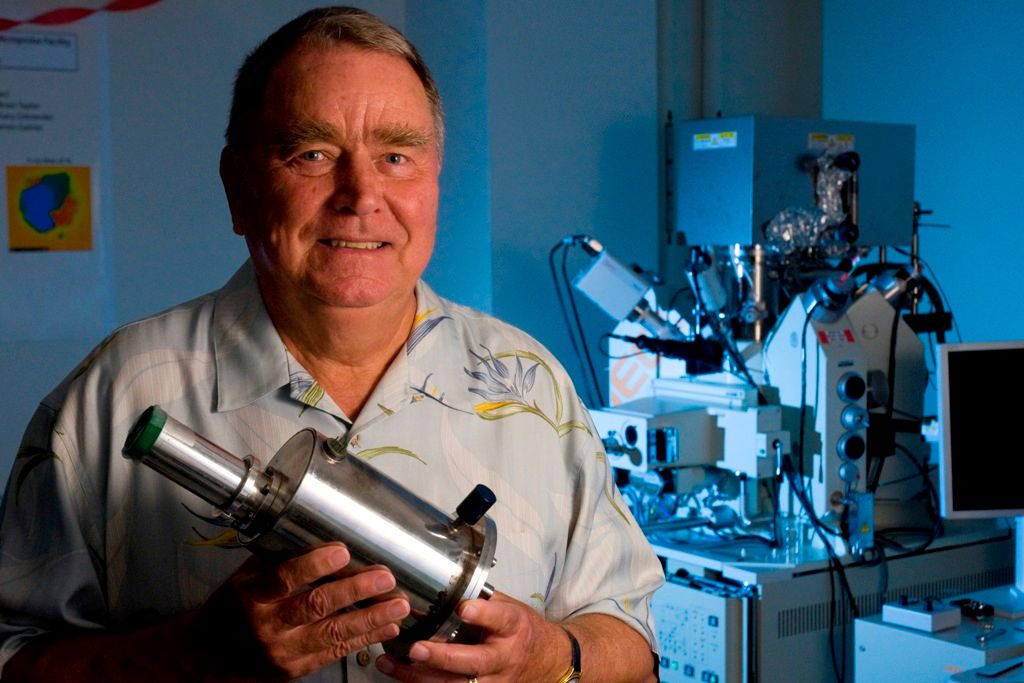
Klaus Keil 1934-2022

Klaus Keil was Emeritus Professor, former Director of the Hawai`i Institute of Geophysics and Planetology, and former Interim Dean of the School of Ocean and Earth Science and Technology. Klaus was an outstanding scientist, spectacular mentor, educator, and leader, dedicated family man, and enthusiastic tennis player. His academic and science leadership skills glittered at the University of Hawai`i since 1990 and at the Institute of Meteoritics at the University of New Mexico from 1968 to 1990.

Klaus was a pioneer in the use of the electron microprobe in meteoritics and in petrology and mineralogy in general. In the early 1960s, he worked with colleagues at NASA Ames Research Center, Ray Fitzgerald and Kurt Heinrich, to make the first energy dispersive X-ray spectrometer for use in microanalysis. This device was the first to focus on terrestrial and extraterrestrial geological materials, and the first to use a solid-state lithium-drifted Si detector. Over his long and illustrious career, Klaus studied practically every type of meteorite and lunar sample, addressing big problems in planetary science, from chondrule formation to pyroclastic eruptions on the Moon and achondritic bodies, from asteroid disruption to the composition of the Martian surface.

His accomplishments were recognized through awards of the Leonard Medal from the Meteoritical Society, the J. Lawrence Smith Medal of the National Academy of Sciences, and election as a Legends Fellow of the Microanalysis Society, in addition to numerous other accolades including the main belt asteroid Keil and the extraterrestrial mineral keilite, (Fe,Mg)S, named in his honor.

Edited for length; longer version here: https://meteoritical.org/news/klaus-keil-1934-2022