2018 Prize Recipients

Julio Ángel Fernández Alves – 2018 Gerard P. Kuiper Prize

Julio Angel Fernandez AlvesDPS awards the 2018 Gerard P. Kuiper Prize for outstanding contributions to the field of planetary science to Julio Ángel Fernández Alves (Facultad de Ciencias, Universidad de la República, Montevideo, Uruguay) for his research focusing on the origin of the solar system and the physical and dynamical evolution of comets.   Prof. Fernández’s 1980 paper “On the Existence of a Comet Belt Beyond Neptune” inspired the search for and discovery of the Kuiper belt. In the same year he published another seminal paper showing that Oort cloud comets should come from the Neptune-Uranus region, having been scattered by those planets’ perturbations; this population of scattered disk objects has also been found. His third seminal contribution introduced the fundamental concept behind the present formation models involving massive migrations of the planets in the early solar system. In addition to his scientific contributions, Dr. Fernández has been tireless in inspiring and promoting the interaction and integration of South American planetary scientists with colleagues around the world.


Francesca E. DeMeo – 2018 Harold C. Urey Prize

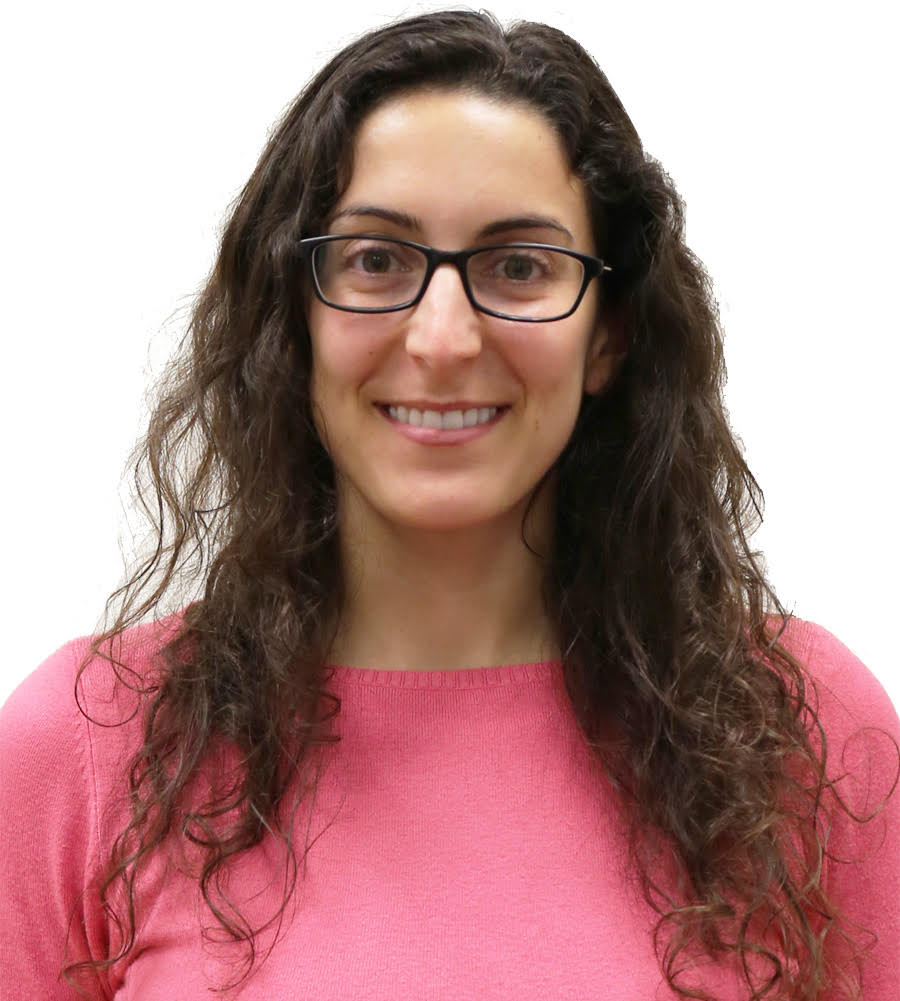
Francesca DeMeoDPS awards the 2018 Harold C. Urey Prize for outstanding achievement in planetary research by a young scientist to Francesca DeMeo (MIT). We award this in recognition of the broad foundational understanding of the study of solar system bodies using the modern system of asteroid classification that bears her name. With reflectance spectra of thousands of asteroids she used the Bus-DeMeo taxonomy as a tool leading to our modern understanding of the geologic structure of the asteroid belt. The compositional complexity revealed by her analysis provides independent, observational evidence fully supporting dynamical models demonstrating greater mixing of bodies in the early solar system than previous observations indicated.


Faith Vilas – 2018 Harold Masursky Award

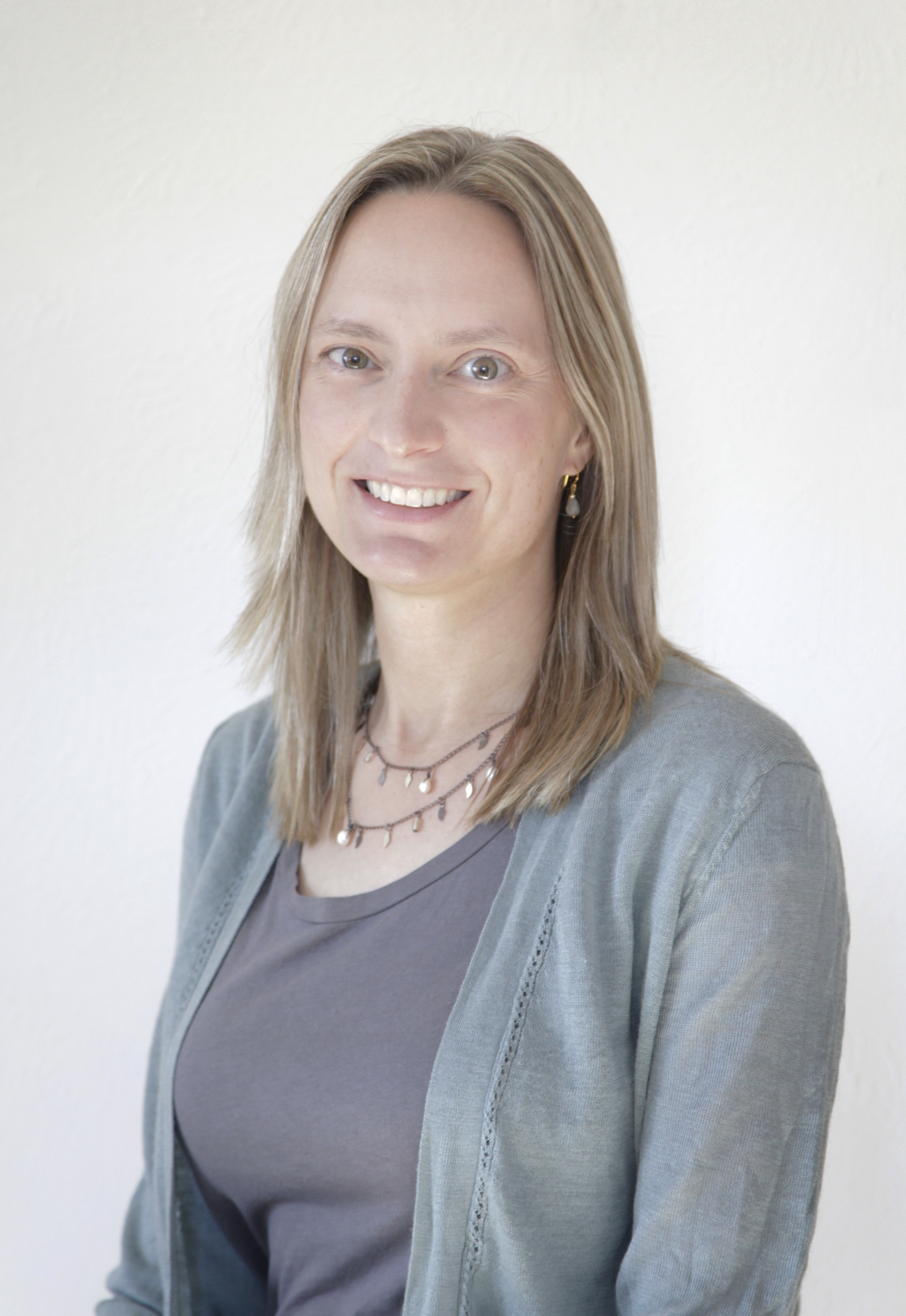
Faith VilasDPS awards the 2018 Harold Masursky Award for meritorious service to planetary science to Faith Vilas (National Science Foundation). During a time of national duress following the chaos of the 9/11 attack, she insured the integrity of the Discovery program selection process. As the first Chair of the NASA Small Bodies Assessment Group, she established its operational practices and made it the viable entity that continues today. As Chair of the DPS, Vilas played a key role in establishing the Carl Sagan Medal, which was the first major statement in support of the importance of communicating our science with the public. She has mentored and inspired young people who have become well-known figures in our profession, and others who have taken an appreciation of our science into other careers. She has served on numerous Academy and NASA panels. Her service to the field and to society has been exemplary.


Bonnie J. Buratti – 2018 Carl Sagan Medal

Bonnie BurattiDPS awards the 2018 Carl Sagan Medal for excellence in public communication to Bonnie J. Buratti (Jet Propulsion Laboratory) for her effective education and public outreach with a measured and demonstrably, high impact. She is noted for conducting teachers’ workshops, delivering popular public talks, and written work appearing in encyclopedias, blog posts, and a recently published, popular book, “Worlds Fantastic, Worlds Familiar.” She brings personal anecdotes combined with clear explanations of science, accompanied by stunning images that bring our science to the public for their enlightenment and enjoyment. Buratti also advocates for others to engage with the public and initiated the DPS program called “Trick or Treat and Telescopes,” a program the division hopes will grow.


Alexandra Witze − 2018 Jonathan Eberhart Planetary Sciences Journalism Award

Alexandra WitzeDPS presents the 2018 Jonathan Eberhart Planetary Sciences Journalism Award for distinguished popular writing to Alexandra Witze for her article “Next Stop, Mars” in the January 19, 2017, issue of Nature. After setting the high stakes involved in bringing back samples from Mars, Witze describes how NASA plans to tackle the daunting task of keeping the samples pristine. Witze takes readers on a wonderful journey through the Jet Propulsion Lab, where the Mars 2020 rover is being built, and introduces some of the people leading the immense project. She beautifully conveys the extreme levels of cleanliness essential to detecting life on another planet and the rigorous planning that goes on behind the scenes. Witze ends the article by describing the rationale behind selecting the landing site for the Mars 2020 rover and looks ahead at potential missions that would carry the precious samples back to Earth.

Newsletter 18-18

Issue 18-18, May 12, 2018


+————————————CONTENTS—————————————-+

  1. DPS ELECTIONS 2018: CANDIDATE SLATE
  2. REQUEST FOR COMMUNITY INPUT TO NASA SCIENTIFIC BALLOON PROGRAM ANALYSIS GROUP
  3. EPSC SESSION: MODELS OF ATMOSPHERES AND EXOSPHERES, SURFACES, AND INTERIORS OF SMALL BODIES
  4. EPSC SESSION: CERES AND VESTA
  5. EPSC SESSION: AEROSOLS AND CLOUDS IN PLANETARY ATMOSPHERES
  6. ASTRONOMY X: MINING THE PAST, MAKING SPACE FOR THE FUTURE
  7. NASA SMD SEEKS VOLUNTEER REVIEWERS
  8. JOBS, POSITIONS, OPPORTUNITIES

+——————————————————————————————–+


1———1———1———1———1———1———1———1———1———1

DPS ELECTIONS 2018: CANDIDATE SLATE


The DPS Nominating Subcommittee has identified the following candidates

for the 2018 DPS elections for Vice Chair and Committee :


Vice-Chair (1 to be elected):

o Matija Cuk, SETI Institute

o Amanda Hendrix, Planetary Science Institute


Committee (2 to be elected):

o Michael Bland

o Will Grundy, Lowell Observatory

o Lucille Le Corre, Planetary Science Institute

o Krista Soderlund, University of Texas, Austin


Additional candidates, supported by a petition of at least 20 DPS members,

may be nominated by May 15th. Please send any nominations to the

DPS Secretary, Anne Verbiscer, at [email protected].


2———2———2———2———2———2———2———2———2———2

REQUEST FOR COMMUNITY INPUT TO NASA SCIENTIFIC BALLOON PROGRAM ANALYSIS GROUP


NASA seeks input from planetary scientists on future directions of scientific
ballooning. Over the next several months, NASA will incorporate input from
the community into a Balloon Roadmap which, in turn, will help inform the
upcoming 2020 Decadal Surveys. NASA’s scientific balloons regularly fly
payloads weighing over 5000-lb to altitudes of 33 – 37 km, above 99% of the
Earth’s atmosphere. NASA is developing super-pressure balloons to support
100-day flight durations at mid-latitudes.

– The NASA/GHAPS/SIDT report discusses some potential uses of stratospheric
balloons for planetary science:


– The full text of the Request-for-Input letter is here:


http://www.phys.hawaii.edu/~gorham/Post/NASA_Roadmap_RFI.pdf

Note that there will be a session on July 19, 2018 at COSPAR in Pasadena with
opportunities to present input, but content must be received by mid-June (via

email: [email protected]).
 

3———3———3———3———3———3———3———3———3———3

EPSC SESSION: MODELS OF ATMOSPHERES AND EXOSPHERES, SURFACES, AND INTERIORS OF SMALL BODIES


Dear colleagues,


This is a reminder for the upcoming abstract submission deadline of the

next EPSC conference (https://www.epsc2018.eu/) that will be held in

Berlin on 16-21 September 2018.


Abstracts submission is now open to  Session SB11/MD7: “Models of

atmospheres and exospheres, surfaces, and interiors of small bodies”

The analysis and interpretation of data from recent and upcoming planetary

missions to solar system small bodies require the development of new

specific models. This session will focus on the description of these new

models and the results of their applications. Abstracts on atmospheric and

exospheric modeling, radiative transfer models and modeling of scattering

properties of surfaces and surface release processes, are welcome as well

as thermophysical evolution models of interiors of small bodies.


To submit you may use the following link:

https://meetingorganizer.copernicus.org/EPSC2018/abstractsubmission/29898

The Abstract submission deadline is  May 16, 2018, 13:00 CEST. 


Best regards,

The conveners

Michelangelo Formisano

Andrea Raponi

Audrey Vorburger


4———4———4———4———4———4———4———4———4———4

EPSC SESSION: CERES AND VESTA


Dear colleagues,


this is a reminder for the upcoming abstract submission deadline of the next

EPSC conference (https://www.epsc2018.eu/) that will be held in Berlin on

16-21 September 2018.


The “Abstract submission deadline” is  May 16, 2018, 13:00 CEST.


We would like to invite you to submit an abstract to the Session: 

SB9 – “Ceres and Vesta “. 


Session summary: September 2017 marked 10 years since the launch of NASA’s

Dawn mission. Dawn has been the first mission to orbit two different targets in

the main asteroid belt: the largest asteroid Vesta and the dwarf planet Ceres.

Dawn’s overall results represent a huge leap in our understanding of these bodies.

Dawn is now in its Second Exteneded Mission Phase. In this session we welcome

contributions that cover: 1) latest results obtained from the Dawn mission on both

Ceres and Vesta, concerning geology, mineralogy, surface composition and/or

geophysics, 2) comparative analysis of Vesta and Ceres in terms of surface

processes, internal structure, thermal evolution and origins. The goal of this session

is to highlight the major achievements of the Dawn mission, and to illustrate recent

discoveries and ongoing work on Vesta and Ceres through direct analysis of Dawn

data, study of analogs and/or theoretical models.


To submit you may use the following link:

 https://meetingorganizer.copernicus.org/EPSC2018/session/29473


Looking forward to see you in Berlin,


The conveners

Francesca Zambon

Eleonora Ammannito

Wladimir Neumann


5———5———5———5———5———5———5———5———5———5

EPSC SESSION: AEROSOLS AND CLOUDS IN PLANETARY ATMOSPHERES


Dear Colleagues,

The abstract submission for the European Planetary Science Congress 2018
organized in Berlin, Germany, on 16–21 September 2018, is open until May 16.

We invite you to submit abstracts to the session
OPS5/TP11  “Aerosols and clouds in planetary atmospheres”!

http://meetingorganizer.copernicus.org/EPSC2018/session/29457

Atmospheric aerosols and cloud particles are found in every atmosphere
of the solar system, as well as, in exoplanets. Depending on their size,
shape, chemical composition, latent heat, and distribution, their effect
on the radiation budget varies drastically and is difficult to predict.
When organic, aerosols also carry a strong prebiotic interest reinforced
by the presence of heavy atoms such as nitrogen, oxygen or sulfur.

The aim of the session is to gather presentations on these complex
objects for both terrestrial and giant planet atmospheres, including the
special case of Titan’s hazy atmosphere. All research aspects from their
production and evolution processes, their observation/detection, to
their fate and atmospheric impact are welcomed, including laboratory
investigations and modeling.

The ambition of the session is a review effort beginning in our solar
system, and which would be valuable to further investigate atmospheric
aerosols in exoplanetary systems.

Spread the word, and see you in Berlin!

With best regards,
Nathalie Carrasco, Panayotis Lavvas and Anni Määttänen


6———6———6———6———6———6———6———6———6———6

.ASTRONOMY X: MINING THE PAST, MAKING SPACE FOR THE FUTURE


Dear colleagues

We are excited to announce our upcoming conference:

“.Astronomy X: Mining the past, making space for the future”
Space Telescope Science Institute, Baltimore, US

24-27 September 2018

The .Astronomy conference (http://www.dotastronomy.com) brings together

an international community of astronomers, science communicators and educators

to discuss new ways in which software and web-based technologies can enable

innovation and accelerate new discoveries in astronomy research that reach

beyond the realm of traditional academia. Through talks, tutorials, unconferences

and a hack day, participants gain new coding or maker skills, hear about the latest

data services and tools, learn how to communicate and collaborate more effectively

using web platforms, and broaden their views on what a career in astronomy can

look like. 

For the 10th edition of .Astronomy we will explore the past/future duality that is

unique to our subject. We push to build, innovate and explore to study at the same

time the history and the future of the Universe. We apply new technologies to data

from past observations to generate new knowledge. As our host institute STScI is

a world-leading centre for space astronomy, we’ll be incorporating the theme of

space into our sessions.

If you are interested in attending .Astronomy X, please visit the  STScI conference

webpage <http://www.stsci.edu/institute/conference/astronomyx> for information

on registration. Please submit your pre-registration forms by Friday, June 8th.

If you have any questions, contact us at [email protected].


Confirmed Invited Speakers
   * Prof. Andy Connolly, University of Washington, US
   * Prof. Jarita Holbrook, University of the Western Cape, South Africa
   * Prof. Sarah Hörst, Johns Hopkins University, US
   * Prof. James Howison, University of Texas at Austin, US

We hope to welcome you in Baltimore!

Kind regards,

The .Astronomy X SOC
Sarah Kendrew (Chair)

Arfon Smith (co-Chair)
Tom Donaldson 

Susan Kassin
Iva Momcheva
Josh Peek
Erik Tollerud


7———7———7———7———7———7———7———7———7———7

NASA SMD SEEKS VOLUNTEER REVIEWERS


Seeking volunteer reviewers in Earth and Space Science


NASA’s Science Mission Directorate (SMD) is seeking subject matter

experts to serve as mail-in and/or panel reviewers of proposals to

ROSES and other SMD solicitations. Just follow the links below to the

volunteer review forms and click the boxes to indicate the topics in

which you consider yourself to be a subject matter expert. If your

skills match our needs for that review, we will contact you to discuss

scheduling. 


We are currently seeking reviewers for:


Heliophysics Programs (Appendix B of ROSES-18)

Emerging Worlds (C.2 of ROSES)

Exobiology (C.5 of ROSES)

Solar System Observations (C.6 of ROSES)

Planetary Data Archiving, Restoration, and Tools (C.7 of ROSES)

MatISSE and DALI (high-TRL planetary instrument programs) C.13 and C.22

 of ROSES

Juno Participating Scientist Program (E.5 of ROSES)

Earth Surface and Interior and Space Geodesy Programs

Astrophysics Data Analysis Program (D.2 of ROSES)

Small Innovative Missions for Planetary Exploration (SIMPLEx PEA J of

 SALMON-3 AO)


The landing page all of these forms may be found at:


http://science.nasa.gov/researchers/volunteer-review-panels/ 


8———8———8———8———8———8———8———8———8———8

JOBS, POSITIONS, OPPORTUNITIES

A) LECTURER POSITION AT THE UNIVERSITY OF TENNESSEE, KNOXVILLE


Lecturer / Laboratory Director position in the Department of Earth and

Planetary Sciences


Further details and instructions for applying are at:


https://webapps.utk.edu/humanresources/utjoblist/


We seek to hire a dynamic educator to teach introductory geoscience

courses (including planetary science), coordinate laboratory sections

and mentor graduate students. This is a 12-month position with a

competitive salary and would be a great fit for those interested in

geoscience education and curriculum development. Although the initial

appointment is for one year, the contract is renewable. The University

of Tennessee, Knoxville has a three-tiered promotional structure for

lecturers, so career advancement and wage increases are expected,

contingent upon performance evaluations. Knoxville has a growing arts

and culture scene, fantastic outdoor recreational opportunities and

provides excellent quality of life. 


B) PHD POSITION AT UNIVERSITY OF IDAHO


The IceCrystal project has an open position for a student seeking a

PhD. The individual will be working with VNIR spectral analysis of lava

flows and will focus on  microcrystal distribution throughout flow

features. The student will participate in field campaigns in rugged and

remote volcanic regions located in Idaho, Iceland, and Alaska. The

student will produce a protocol for the most effective method for

collecting spectral data with the purpose of identifying environmental

conditions experienced by lava flows during emplacement. The work will

be performed in collaboration with NASA Ames Research Center and the

SETI Institute. Starting date for the position is as soon as

August-2018. 


Please contact [email protected] with questions about the position and

instructions on how to apply.


C) THREE-YEAR POSTDOC POSITION AT THE UNIVERSITY OF IDAHO


Position Summary


The IceCrystal project has a post-doctoral fellowship available. The

individual will be expected to perform visible-near infrared

reflectance (VNIR) spectral analysis of terrestrial basaltic lava flows

with particular emphasis on unaltered glassy surfaces. Spectral

measurements will be conducted during field campaigns, which involves

travel to rugged and remote volcanic regions located in Idaho, Iceland,

and Alaska. This individual will then compare spectral signatures of

glassy basalts from different regions and apply these findings to lava

flows on Mars using the CRISM dataset. The work will be performed in

collaboration with NASA Ames Research Center and the SETI Institute.

Starting date for the position is as soon as August-2018.


Please contact [email protected] with questions about the position and

application instructions. 


D) POSTDOCTORAL POSITION IN COMETARY PLASMA PHYSICS AT IRF IN UPPSALA,

SWEDEN


The Swedish Institute of Space Physics is seeking candidates for a

postdoctoral position in space physics to study the complex dynamics of

a cometary ionosphere. Our group is responsible for one of the plasma

instruments on the Rosetta spacecraft to comet 67P, and we collaborate

closely with other Rosetta teams. In this project, there will also be

collaboration with a team doing particle-in-cell plasma simulations.

The work involves both analysis of Rosetta data and theoretical

modeling. Experience in the analysis of space plasma data is expected,

and experience in relevant theoretical modelling is an advantage.


Candidates should have completed a PhD during 2015 or later. Candidates

planning to obtain their PhD degree no later than September 2018 can

also apply.


The position is available at our Uppsala office for 2 years. At IRF

Uppsala some 20 researchers work on the space plasma mainly around

Earth, Saturn, Mars and comet 67P using data from our own instruments

on Rosetta, Cluster, MMS, Swarm and Cassini as well as other data. The

project is financed by the Swedish National Space Board.


More information:


http://www2.irf.se/Topical/Vacancies/?group=P4&vacid=62


Closing date: 15 May 2018


E) POSTDOCTORAL RESEARCH ASSOCIATE IN VENUS OR MARS SCIENCE, WESLEYAN UNIVERSITY


Wesleyan University Department of Earth and Environmental Sciences,

Planetary Sciences Group is seeking a Postdoctoral Research Associate

for one of two potential projects to work under the direction of Prof.

Martha Gilmore. The funds will be available July 1, 2018 for two

years.


Venus Surface Mineralogy – we seek someone with expertise in

geomorphology, remote sensing and mineralogy to undertake analysis of

radar properties of the Venus surface to constrain the origin and

composition of tessera highlands and the lowland plains materials. We

will also examine chemical changes in relevant minerals exposed to

Venus conditions using a number of analytical techniques.


Mars Geochemistry and Spectroscopy – The project is to create a series

of Mars analogue brines and precipitate them under terrestrial and

martian conditions in a Mars chamber. VNIR spectra of the precipitates

will be collected in situ and compared to data collected by CRISM in

Mars orbit.


The Planetary Sciences Group comprises 6 core faculty, 7 affiliated

faculty and postdocs across the sciences and offers both graduate and

undergraduate planetary curricula.


http://www.wesleyan.edu/planetary


Wesleyan University is in Middletown CT, a New England college town

midway between New York and Boston.


To apply:


https://careers.wesleyan.edu/postings/6316


Questions: Prof. Martha Gilmore, [email protected]


Applications will be reviewed as they are received.


———————————+

Send submissions to:

Anne Verbiscer, DPS Secretary ([email protected]


To unsubscribe visit http://aas.org/unsubscribe or email [email protected].

To change your address email [email protected]

Newsletter 18-17

Issue 18-17, May 6, 2018


+————————————CONTENTS—————————————-+

  1. DPS ELECTIONS 2018: CANDIDATE SLATE
  2. LUNAR AND SMALL BODIES GRADUATE CONFERENCE 2018 – FINAL CALL FOR ABSTRACTS – SUBMISSION DEADLINE: MAY 11, 2018
  3. THE SCIENCE AND EVOLUTION OF GEMINI OBSERVATORY 2018 CONFERENCE ABSTRACT DEADLINE, MAY 15
  4. EPSC SESSION: LUNAR VOLATILES
  5. EPSC SESSION: OCEAN WORLDS AND ICY MOONS (OPS3)
  6. EUROPEAN PLANETARY SCIENCE CONGRESS 2018 SESSION ON PLANETARY AERONOMY
  7. EUROPEAN GEOSCIENCES UNION (EGU) AWARDS AND MEDALS PROGRAMME
  8. TUNGUSKA IMPACT REVISITED
  9. MEPAG MEETING 36 PRESENTATIONS, SUMMARY, AND FINDINGS ARE POSTED

+——————————————————————————————–+


1———1———1———1———1———1———1———1———1———1

DPS ELECTIONS 2018: CANDIDATE SLATE


The DPS Nominating Subcommittee has identified the following candidates

for the 2018 DPS elections for Vice Chair and Committee :


Vice-Chair (1 to be elected):

o Matija Cuk, SETI Institute

o Amanda Hendrix, Planetary Science Institute


Committee (2 to be elected):

o Michael Bland

o Will Grundy, Lowell Observatory

o Lucille Le Corre, Planetary Science Institute

o Krista Soderlund, University of Texas, Austin


Additional candidates, supported by a petition of at least 20 DPS members,

may be nominated by May 15th. Please send any nominations to the

DPS Secretary, Anne Verbiscer, at [email protected].


2———2———2———2———2———2———2———2———2———2

LUNAR AND SMALL BODIES GRADUATE CONFERENCE 2018 –

FINAL CALL FOR ABSTRACTS – SUBMISSION DEADLINE: MAY 11, 2018

The 8th Annual Lunar and Small Bodies Graduate Conference (LunGradCon

2018) will  be held on Monday, June 25, 2018 at the NASA Ames Research

Center, preceding the NASA Exploration Science Forum (ESF, June 26-28).

With the expanded interests of the Solar System Exploration Research Virtual

Institute (SSERVI), the scope of this year’s LunGradCon includes both lunar

and small body science. LunGradCon provides an opportunity for grad students

and early-career postdocs to present their research on lunar and small body

science in a low-stress, friendly environment, being critiqued only by their peers.

In addition to oral presentations, the conference presents opportunities for

professional development and networking with fellow grad students and postdocs,

as well as senior members of SSERVI. A limited amount of funding will be provided

for travel and lodging costs. The deadline for LunGradCon registration and abstract

submission is May 11, 2018, 11:59 PM PDT.


For more details, please visit:

http://impact.colorado.edu/lungradcon/2018/

or email any questions to: [email protected]


3———3———3———3———3———3———3———3———3———3

THE SCIENCE AND EVOLUTION OF GEMINI OBSERVATORY 2018 CONFERENCE

ABSTRACT DEADLINE, MAY 15


The Science and Evolution of Gemini Observatory 2018 conference

(https://www.gemini.edu/seg2018) invites the Gemini community to review

recent science highlights, identify needs in the context of Gemini’s evolving

capabilities, and develop strategies for the future. Additionally there will be

workshops on data reduction, speed collaboration, and “Under the Hood”

sessions from successful Large and Long Programs.  Rooms at the

conference rate are going quickly.  


4———4———4———4———4———4———4———4———4———4

EPSC SESSION: LUNAR VOLATILES


European Planetary Science Congress (EPSC) 2018

Berlin, Germany

16-21 September 2018


Abstracts submission is now open to Session LSE5

Lunar Volcanism

Deadline: 16 May 2018, 13:00 CEST


Please visit:

https://meetingorganizer.copernicus.org/EPSC2018/session/29984


The abundance, distribution, history and transport of volatiles on the

Moon are important topics for Lunar science and exploration. Several

missions have been flown or are being planned to address questions

related to Lunar volatiles. This session would invite presentations

related to the advancement in understanding of volatiles on the Moon t

hrough data analysis, modeling, and laboratory studies as well as plans

for the future. 
 

Co-conveners: K. Mandt, G. W. Patterson, O. Mousis, E. Sefton-Nash  


5———5———5———5———5———5———5———5———5———5

EPSC SESSION: OCEAN WORLDS AND ICY MOONS (OPS3)


European Planetary Science Congress (EPSC) 2018

Berlin, Germany

16-21 September 2018


Deadline: 16 May 2018, 13:00 CEST


https://www.epsc2018.eu/home.html


This session will deal with icy moons in the outer solar system with potential

liquid  oceans underneath or, in Titan’s case, on their surfaces. Focus is on the

Jovian and Saturnian satellites and the future missions to explore them. This

session will aim to present new and review papers on the current status of

astrobiological knowledge about the worlds in the outer solar system with

possible subsurface liquid water oceans.


Looking forward to meet you in Berlin!


Co-conveners: A. Hayes, J. Lebreton, O. Witasse,, A. Coustenis, E. Turtle, F. Tosi


6———6———6———6———6———6———6———6———6———6

EUROPEAN PLANETARY SCIENCE CONGRESS 2018 SESSION ON PLANETARY AERONOMY


We invite your contributions to a special session on Planetary Aeronomy at EPSC

2018 in Berlin, Germany (September 16-21, 2018):


https://meetingorganizer.copernicus.org/EPSC2018/session/29889


The aim of this session is to bring together researchers studying solar system and

exoplanet upper atmospheres to exchange knowledge and ideas while learning of

new results in this expanding area of research.  We welcome papers on all aspects

of planetary upper atmospheres in the solar and exoplanet systems, including

observations and models that bear on photochemistry and ionization, magnetosphere-

ionosphere coupling, energy balance, circulation and atmospheric escape.  Contributions

that allow us to better understand planetary evolution and the mass-radius diagram

of exoplanets are also encouraged.      


Please submit your abstracts by the EPSC abstract deadline of Wednesday, May 16, 2018.


7———7———7———7———7———7———7———7———7———7

EUROPEAN GEOSCIENCES UNION (EGU) AWARDS AND MEDALS PROGRAMME


I would like to draw your attention to the Awards & Medals programme

of the European Geosciences Union (EGU) for the year 2019, especially

the Cassini medal which is one of the three most prestigious awards made

by the Union.  It honors scientists who have achieved exceptional international

standing in planetary and space sciences, defined in their widest senses, for

their merit and their scientific achievements.

The EGU Awards and Medals programme for the year 2019 is open for

nominations:
https://www.egu.eu/awards-medals/

The final deadline for submissions is 15 June, 2018.

For more information on proposing candidates and on the selection process,

please see:
https://www.egu.eu/awards-medals/proposal-and-selection-of-candidates/

The awards will be presented at the EGU General Assembly 2019

(07 – 12 April) in Vienna.

Nominations for all the Medals and Awards should be submitted on-line:
https://www.egu.eu/login/?next=/user-area/nominations/form/

Before submitting a nomination, please take a look at the EGU checklist to

make sure your nomination and supporting documents satisfy the EGU

requirements:
https://www.egu.eu/awards-medals/checklist-for-submitting-nominations/

Last year we had no nominations for the Cassini medal! Please consider

nominating your colleague(s) for this honor. 


Jonathan I. Lunine


8———8———8———8———8———8———8———8———8———8

TUNGUSKA IMPACT REVISITED


Call for Papers: ICARUS Special Section on the 1908 Tunguska Impact


Introduction


The 1908 cosmic impact in the Tunguska region of Siberia has intrigued the

public and puzzled scientists for more than a century. This event has generally

been attributed to the airburst impact of either a comet or a stony asteroid.

Unfortunately, no fragments of the exploding object have been recovered, and

the first scientific survey was not carried out until two decades after the event.

The data consist primarily of the distribution of fallen and burned trees and the

topography at the site, a handful of eye witness accounts mostly from tens of

kilometers (or greater) distance, seismic records, an atmospheric pressure wave

that was measured around the world, and an atmospheric phenomenon called

light (or white) nights that persisted for several nights in northern Europe.


Now is a good time to re-examine Tunguska. In the twentieth century, it was

the only known case of extensive damage from a cosmic impact (estimated

energy between 3 and 20 Megatons). In 2013, however, the Chelyabinsk bolide

provided much more quantitative information on a destructive airburst, although

with energy at least an order of magnitude less than Tunguska. The Chelyabinsk

airburst has been extensively studied, and models are able to reproduce most

aspects of this event. The insights and computational tools developed to understand

Chelyabinsk can now be applied to Tunguska. In addition to their scientific interest,

these airbursts provide valuable information for those planning planetary defense

against asteroid impacts.


In January 2018, a workshop at NASA Ames Research Center brought together

approximately 50 experts on impact airbursts to re-examine the Tunguska event

in the light of recent work on Chelyabinsk and other bolides. Papers presented at

this workshop, as well as other current work on Tunguska, are solicited for this

special section of ICARUS.


Submission Format:


The submitted papers must be written in English and describe original research

which is not published nor currently under review by other journals or conferences.

Author guidelines for preparation of manuscript can be found at

 https://www.elsevier.com/journals/icarus/0019-1035/guide-for-authors


For more information, please contact the editorial office at [email protected].

Pre-submission questions regarding topics of interest can also be directed to the

Guest Editors:


David Morrison, NASA Ames Research Center                     [email protected] 

Darrel K. Robertson, NASA Ames Research Center              [email protected]


Important Dates:


Deadline for paper submission: July 1, 2018

Reviewing process completed: January 1, 2019

Production completed: March 1, 2019


Submission Guidelines:


Manuscripts and any supplementary material should be submitted through the

EVISE e-learning platform. The authors must select “Special Issue: Tunguska”

when they reach the “Article Type” step in the submission process. The EVISE

website is located at https://www.evise.com/profile/#/ICARUS/


Please feel free to suggest possible reviewers for your paper. Submitted

manuscripts will go through the standard review process, and there is no

guarantee that a given paper will be accepted for publication. ICARUS has

no page charges, but does charge for color art.


9———9———9———9———9———9———9———9———9———9

MEPAG MEETING 36 PRESENTATIONS, SUMMARY, AND FINDINGS ARE POSTED


Thank you to all who attended MEPAG Meeting 36! This meeting was held

Tuesday-Thursday, April 3-5, 2018, at the Crystal City Marriott at

Reagan National Airport, in Arlington, VA. A total of 135 people

attended in-person, and there were nearly 100 unique Adobe Connect

logins each day.


Nearly all meeting presentations have been added to the meeting 

webpage:


https://mepag.jpl.nasa.gov/meetings.cfm?expand=m36


The Meeting Summary and Findings have also been finalized and posted.

Also available are all forum abstracts and, for some presentations,

e-poster files.


Comments or questions, regarding the meeting, the Summary, or future

MEPAG activities, can be sent to [email protected]. And we

hope you will join us at the virtual meeting(s) that we expect to hold

this summer.

———————————+

Send submissions to:

Anne Verbiscer, DPS Secretary ([email protected]


To unsubscribe visit http://aas.org/unsubscribe or email [email protected].

To change your address email [email protected]
Newsletter 18-16

Issue 18-16, April 22, 2018


+————————————CONTENTS—————————————-+

  1. DPS ELECTIONS 2018: CANDIDATE SLATE
  2. NEOWISE 2018 DATA RELEASE AVAILABLE APRIL 19, 2018
  3. THREE OUTER PLANETS ASSESSMENT GROUP (OPAG) NOTICES
  4. JWST COMMUNITY SURVEY
  5. SUMMER SCHOOL FOR SOFTWARE SYSTEMS IN ASTRONOMY
  6. METEOR CRATER FIELD CAMP
  7. JOBS, POSITIONS, OPPORTUNITIES

+——————————————————————————————–+


1———1———1———1———1———1———1———1———1———1

DPS ELECTIONS 2018: CANDIDATE SLATE


The DPS Nominating Subcommittee has identified the following candidates

for the 2018 DPS elections for Vice Chair and Committee :


Vice-Chair (1 to be elected):

o Matija Cuk, SETI Institute

o Amanda Hendrix, Planetary Science Institute


Committee (2 to be elected):

o Michael Bland

o Will Grundy, Lowell Observatory

o Lucille Le Corre, Planetary Science Institute

o Krista Soderlund, University of Texas, Austin


Additional candidates, supported by a petition of at least 20 DPS members,

may be nominated by May 15th. Please send any nominations to the

DPS Secretary, Anne Verbiscer, at [email protected].


2———2———2———2———2———2———2———2———2———2

NEOWISE 2018 DATA RELEASE AVAILABLE APRIL 19, 2018 


The Near-Earth Object Wide-field Infrared Survey Explorer (NEOWISE)

and IPAC at the  California Institute of Technology announce the NEOWISE

2018 Data Release.


The 2018 Data Release includes all data acquired during the fourth year

of the  NEOWISE Reactivation mission (Mainzer et al. 2014, ApJ, 792, 30),

13 December 2016 to  13 December 2017.  These data are combined with the

Year 1, 2 and 3 NEOWISE data into a  single archive that contains approximately

10.3 million sets  of 3.4 and 4.6 micron  images and a database of over 76 billion

source detections extracted from those images.   


NEOWISE Reactivation scanned the sky nearly eight complete times during the

first four  years of survey operations, with approximately six months between

survey passes.  With  twelve or more independent 3.4 and 4.6 micron exposures

made on each point of the sky  during each survey epoch, the NEOWISE archive

is a time-domain resource for extracting  multiple, independent thermal flux and

position measurements of solar system small  bodies, as well as background galactic

and extragalactic sources. 


A quick guide to the NEOWISE data release, data access instructions and supporting
documentation is available at   http://wise2.ipac.caltech.edu/docs/release/neowise/.

Access to the NEOWISE data products is available via the on-line and API services

of the  NASA/IPAC Infrared Science Archive (IRSA) at https://irsa.ipac.caltech.edu


NEOWISE is a project of the Jet Propulsion Laboratory/California Institute of

Technology.  NEOWISE is funded by the National Aeronautics and Space

Administration Planetary Science  Division.


3———3———3———3———3———3———3———3———3———3

THREE OUTER PLANETS ASSESSMENT GROUP (OPAG) NOTICES


Three (2) OPAG Notices:


(1) Nominations for OPAG Steering Committee and OPAG Chair

NASA solicits nominations (including self nominations) for new

members of the 15-person steering committee for the Outer Planets 

Assessment Group (see https://www.lpi.usra.edu/opag/). Nominations

are due by May 7, 2018 and should be sent to current chair Alfred McEwen:

[email protected]. At least 3 positions need to be filled ASAP.

Candidates for OPAG chair should indicate theirinterest in that role.

NASA will ultimately choose new members by striving to maintain balance

in essential expertise (science and technology) and diversity (gender, ethnicity,

career stage, institution, etc.).


(2) Comments on 2018 OPAG goals document are due July 2, 2018. An

extensively revised draft goals document for the Outer Planets Assessment

Group has been posted at https://www.lpi.usra.edu/opag/. We invite the OPAG

science community to provide feedback by using the OPAG Discussion Board:

https://www.lpi.usra.edu/forums/viewforum.php?f=2. To use this, you must have

filled out a notification of interest form at https://www.lpi.usra.edu/opag/opag.cfm

and register for the discussion board. We plan to provide a 2018 version of this

document to the Discovery program library, so we need comments by July 2.

The goals document will continue to be updated for input to the next Decadal Survey.


(3) Next OPAG meeting: September 11-12 in Pasadena, CA

Details will follow at https://www.lpi.usra.edu/opag/

-OPAG Steering Committee


4———4———4———4———4———4———4———4———4———4

JWST COMMUNITY SURVEY


Given that the JWST Cycle 1 proposal deadline has been extended, we wanted

to take this opportunity to get feedback from the astronomical community on

the proposal process. Our goal is to enable the best possible science with JWST,

so your feedback is greatly appreciated. The input you provide will be used to

improve the JWST proposal process.


The online survey focuses on the JWST proposal tools and information you may

have used as you prepared your proposal for submission, including:

  • Proposal tools
  • Documentation
  • Support

Please take a few minutes to provide us with your anonymous feedback on these

topics by completing our online survey by May 1, 2018:

https://www.surveymonkey.com/r/JWSTsurvey


5———5———5———5———5———5———5———5———5———5

SUMMER SCHOOL IN SOFTWARE SYSTEMS FOR ASTRONOMY


SSfA at UH Hawaii Registration Opens Monday – Registration for Software

Systems for Astronomy 5 on the Big Island of Hawaii opens on Monday,

09-Apr-2018.  The course covers software design and implementation of

telescope and instrument control systems, observation planning tools, and

software for analyzing and archiving astronomical data. SSfA-5 will be

offered as a two week intensive course, 23-Jul to 03-Aug, 2018.
 

Please find special instructions for off-island participants here:
http://astro.uhh.hawaii.edu/Summer/Summer-2018/ssfa18.php#Special_Summer_Note
 

More information about Software Systems for Astronomy 5 is here:

http://astro.uhh.hawaii.edu/Summer/Summer-2018/ssfa18.php
 

General information about the UHH summer program is here:
http://astro.uhh.hawaii.edu/Summer/Summer-2018/summer2018.php
 

The UHH regstration page is here:
https://hilo.hawaii.edu/depts/summer/SummerCourseRegistration.php

More detail about the course is given in the UHH catalog (the course number is 385):
https://hilo.hawaii.edu/catalog/astr-courses
 

If you have questions, send email to [email protected]


6———6———6———6———6———6———6———6———6———6

METEOR CRATER FIELD CAMP


The LPI-JSC Center for Lunar Science and Exploration is excited to

announce a student field camp opportunity coming this fall!

The Field Training and Research Program at Meteor Crater is organized

under the auspices of the

NASA Solar System Exploration Research Virtual Institute (SSERVI),

which is designed, in part, to train a new generation of explorers for the Moon

and beyond.


The Field Training and Research Program at Meteor Crater is a week-long geology

field class and research project based at Barringer Meteorite Crater, Arizona, more

popularly known as Meteor Crater. The goal will be to introduce students to impact

cratering processes and provide an opportunity to assist with a research project at the

crater. Skills developed during the field camp should better prepare the students for

their own thesis studies in impact cratered terrains, whether they be on Earth, the

Moon, asteroids, Mars, or some other solar system planetary surface.

The field camp is designed for graduate college students in geology and planetary

science programs, although advanced undergraduate students will be considered if

they have successfully completed a summer field geology program and have a

demonstrated interest in impact cratering processes. U.S. and international students

are eligible to apply.


The fifth edition of the program will run from October 6, 2018, through October 14, 2018.

Students are responsible for transportation to and from Flagstaff, Arizona.

Transportation will be provided from Flagstaff to Meteor Crater. Additional logistical

details will be provided to selected participants.


APPLICATION DEADLINE:  June 11, 2018

For more information and access to an electronic application form, please visit
 
https://www.lpi.usra.edu/exploration/mcFieldCamp/


7———7———7———7———7———7———7———7———7———7

JOBS, POSITIONS, OPPORTUNITIES


A) POSTDOC IN PHYSICS AND CHEMISTRY OF OUTER PLANETARY ICE ANALOGS

     JET PROPULSION LABORATORY

     PASADENA, CALIFORNIA


content/physics-and-chemistry-outer-planetary-ice-analogs


Application Deadline: May 1, 2018


Overview

The Jet Propulsion Laboratory invites applications for a postdoctoral research

position in the Planetary Ices Group. Drs. Murthy Gudipati and Bryana Henderson

will serve as postdoctoral advisors to the selected candidate with Dr. Gudipati

acting as primary. The appointee will carry out research in collaboration with

the postdoctoral advisors, resulting in publications in the open literature. The

postdoctoral position is available immediately.


Responsibilities

The research work will focus on the area of physics and chemistry of outer

planetary ice analogs using laboratory simulations and spectroscopy. This

position is aimed at understanding the evolution of organic matter in ices under

high-radiation conditions such as on Europa. The successful candidate should

have thorough hands-on experience in similar research activity and should be

able to participate in multiple projects. In addition to the fundamental research

mentioned above, the appointee will have an opportunity to participate in next-

generation space instrumentation concepts, mission concepts, and observations.


Qualifications

Candidates should have a recent Ph.D. in chemistry, physics, astronomy or

planetary sciences and a strong motivation to undertake this multidisciplinary

research. Experience and expertise in the following techniques are highly desired:

low-temperature techniques, laboratory ultraviolet and infrared spectroscopy,

laser spectroscopy, ultra-high vacuum techniques, and mass-spectrometry.

Candidates who have received their PhD within the past five years since the

date of their application are eligible. Postdoctoral positions are awarded for a

minimum of one-year period and may be renewed up to a maximum duration

of three years.


B) POSTDOCTORAL POSITION IN EXPERIMENTAL PLANETARY SCIENCE

     COLUMBIA UNIVERSITY

     NEW YORK, NEW YORK


Columbia University’s Astrophysics Laboratory invites applications for a

Postdoctoral Research Scientist to perform laboratory simulations of solar

wind ion irradiation of Mercury’s regolith surface.  The successful candidate

will join the group headed by Senior Research Scientist Dr. Daniel Wolf Savin;

they will participate in designing, building, and performing experiments utilizing

a novel ion beam apparatus to study the spectral changes and sputtering yields of

regolith-like loose powders.

The appointment is initially for one year, with the possibility of renewal for up to

two additional years; this is contingent upon the availability of funds and mutual

satisfaction.

The successful candidate will have a Ph.D. or the equivalent degree in Planetary

Science, Physics, Geology, Astrophysics, or a related field.  Desired laboratory

skills include experience with apparatus design and construction, fast ion beams,

ion optics, ultra-high vacuum techniques, visible and near infrared spectral reflectance

measurements, quadrupole mass spectrometers, catcher foils, X-ray photoelectron

spectroscopy, and associated electronics.  Desired computer skills include programming,

multidimensional data analysis, LabView, Python, Autodesk Inventor, Solidworks,

SIMION, Linux/Mac OS, and Windows OS.

The successful candidate will have a strong background in at least some of the

areas listed above, a proven research ability, and evidence of future research potential. 

The candidate is expected to be able to work well independently and cooperatively

with a team and to communicate the results of his/her research both orally and in writing. 

Demonstrated written and oral communication skills are highly desirable. 

Questions regarding this position can be addressed to Dr. Savin at

[email protected].

Applicants should submit a cover letter, curriculum vitae (including a list of

publications) and statement of past research.  In addition they should arrange

to have three letters of reference sent directly by the writers to Dr. Savin. 

Applications will be considered only after all of the requested material has been received. 

Applications and letters should be submitted by email to

[email protected].  Screening of applicants will begin immediately and

will continue until the position has been filled.


———————————+

Send submissions to:

Anne Verbiscer, DPS Secretary ([email protected]


To unsubscribe visit http://aas.org/unsubscribe or email [email protected].

To change your address email [email protected]

Newsletter 18-15

Issue 18-15, April 15, 2018

+————————————CONTENTS—————————————-+

  1. DPS ELECTIONS 2018: CANDIDATE SLATE
  2. SMALL BODIES ASSESSMENT GROUP (SBAG) EARLY CAREER TRAVEL GRANT
  3. EUROPEAN PLANETARY SCIENCE CONGRESS 2018 SESSION ON PLANETARY AERONOMY
  4. EUROPEAN PLANETARY SCIENCE CONGRESS 2018 SESSION ON CASSINI’S LEGACY: ONE YEAR LATER
  5. SUMMER SCHOOL IN SOFTWARE SYSTEMS FOR ASTRONOMY
  6. LSST SOLAR SYSTEM SCIENCE COLLABORATION
  7. SUMMER SCHOOL/WORKSHOP: MICROSATELLITES IN PLANETARY AND ATMOSPHERIC RESEARCH
  8. JOBS, POSITIONS, OPPORTUNITIES

+——————————————————————————————–+

1———1———1———1———1———1———1———1———1———1

DPS ELECTIONS 2018: CANDIDATE SLATE

The DPS Nominating Subcommittee has identified the following candidates

for the 2018 DPS elections for Vice Chair and Committee :

Vice-Chair (1 to be elected):

o Matija Cuk, SETI Institute

o Amanda Hendrix, Planetary Science Institute

Committee (2 to be elected):

o Michael Bland

o Will Grundy, Lowell Observatory

o Lucille Le Corre, Planetary Science Institute

o Krista Soderlund, University of Texas, Austin

Additional candidates, supported by a petition of at least 20 DPS members,

may be nominated by May 15th. Please send any nominations to the

DPS Secretary, Anne Verbiscer, at [email protected].

2———2———2———2———2———2———2———2———2———2

SMALL BODIES ASSESSMENT GROUP (SBAG) EARLY CAREER TRAVEL GRANT

We are now accepting applications for early-career travel support to attend

the upcoming SBAG meeting. Please pass the information on to any students,

post-docs or early career scientists/engineers that may be interested in attending

the meeting.

The details are below:

19th Meeting of the NASA Small Bodies Assessment Group
June 13–14, 2018
College Park, MD

Additional logistics information will be released closer to the meeting.

Early career travel support: We are planning to offer limited U.S. travel support

for early career scientists to participate in the SBAG 19 meeting, to be held at

the University of Maryland in College Park, MD on June 13-14, 2018. Interested

undergraduate students, graduate students, postdocs, and other early career scientists

(within 3 years of PhD/MS/BS) should submit a letter and a CV to SBAG Early

Career Secretary Hannah Susorney ([email protected]) by COB (5 pm

Eastern time) April 27th, 2018. Included in the letter, which must not exceed

2 pages, should be a demonstration of financial need and an explanation of how

the applicant’s work relates to the purposes of the SBAG. The letter and CV

should be combined into a single PDF document for submission by e-mail

attachment. Recipients of travel support will be expected to give a short

presentation (~10-15 minutes) of their SBAG-relevant work at the SBAG 19

meeting.

Lightning Talks: We are providing time on the agenda for early-career scientists

and engineers present at the meeting to introduce themselves and their research to

the community. The talks will be 3 minutes each. If you are interested in giving

a lightning talk, please contact the early-career secretary Hannah Susorney

([email protected]). Please encourage students and postdocs that you know

to participate!

3———3———3———3———3———3———3———3———3———3

EUROPEAN PLANETARY SCIENCE CONGRESS 2018 SESSION ON PLANETARY AERONOMY


We invite your contributions to a special session on Planetary Aeronomy at

EPSC 2018 in Berlin, Germany (September 16-21, 2018):

https://meetingorganizer.copernicus.org/EPSC2018/session/29889

The aim of this session is to bring together researchers studying solar system

and exoplanet upper atmospheres to exchange knowledge and ideas while

learning of new results in this expanding area of research.  We welcome papers

on all aspects of planetary upper atmospheres in the solar and exoplanet systems,

including observations and models that bear on photochemistry and ionization,

magnetosphere-ionosphere coupling, energy balance, circulation and atmospheric

escape.  Contributions that allow us to better understand planetary evolution and

the mass-radius diagram of exoplanets are also encouraged.  A list of confirmed

invited speakers will be announced later.

Please submit your abstracts by the EPSC abstract deadline of Wednesday,

May 16, 2018.

4———4———4———4———4———4———4———4———4———4

EUROPEAN PLANETARY SCIENCE CONGRESS 2018 SESSION ON CASSINI’S LEGACY: ONE YEAR LATER

EPSC 2018, Berlin Germany

16-21 September 2018

EPSC Website: https://www.epsc2018.eu/home.html

The Cassini-Huygens Mission to Saturn ended in a dramatic plunge into Saturn’s

atmosphere on September 15, 2017 sending back in-situ data as long as possible.

Since 2004, Cassini and the Huygens probe revealed the entire Saturn system and

opened up new Ocean Worlds for further exploration. In its final 9 months,

Cassini’s 20 Ring-Grazing orbits (bringing the spacecraft just outside the rings)

and 22 “Grand Finale” orbits starting in April 2017, with closest approach between

the innermost D ring and Saturn’s upper atmosphere, enabled the opportunity for

unique science observations including probes of gravitational and magnetic field

moments to higher order and precision; constraining the ring mass; in-situ sampling

of the plasma and dust environment, upper atmosphere and exosphere; and high

resolution imaging both Saturn, its rings and ring moons. We propose a multi-

disciplinary session to report on analysis and modeling of data collected during

this once-in-a-lifetime opportunity to explore Saturn up close in addition to

highlighting the legacy of discoveries of the Saturn system made over thirteen

years of exploration.

Other Cassini-related EPSC sessions can be found here –

https://meetingorganizer.copernicus.org/epsc2018/sessionprogramme

5———5———5———5———5———5———5———5———5———5

SUMMER SCHOOL IN SOFTWARE SYSTEMS FOR ASTRONOMY

SSfA at UH Hawaii Registration Opens Monday – Registration for Software

Systems for Astronomy 5 on the Big Island of Hawaii opens on Monday,

09-Apr-2018.  The course covers software design and implementation of

telescope and instrument control systems, observation planning tools, and

software for analyzing and archiving astronomical data. SSfA-5 will be

offered as a two week intensive course, 23-Jul to 03-Aug, 2018.

Please find special instructions for off-island participants here:
http://astro.uhh.hawaii.edu/Summer/Summer-2018/ssfa18.php#Special_Summer_Note

More information about Software Systems for Astronomy 5 is here:

http://astro.uhh.hawaii.edu/Summer/Summer-2018/ssfa18.php

General information about the UHH summer program is here:
http://astro.uhh.hawaii.edu/Summer/Summer-2018/summer2018.php

The UHH regstration page is here:
https://hilo.hawaii.edu/depts/summer/SummerCourseRegistration.php

More detail about the course is given in the UHH catalog (the course number is 385):
https://hilo.hawaii.edu/catalog/astr-courses

If you have questions, send email to [email protected]

6———6———6———6———6———6———6———6———6———6

LSST SOLAR SYSTEM SCIENCE COLLABORATION

Over its 10 year lifespan, the Large Synoptic Survey Telescope (LSST)

will catalog over 5 million Main Belt asteroids, almost 300,000 Jupiter

Trojans, over 100,000 NEOs, over 40,000 KBOs, over 10,000 comets, and

tens of interstellar objects. Many of these objects will receive

hundreds of observations in multiple bandpasses. The LSST Solar System

Science Collaboration (SSSC) is preparing methods and tools to analyze

this data, as well as understand optimum survey strategies for

discovering moving objects throughout the Solar System.

Learn more at:

http://www.lsstsssc.org

Read our science roadmap at:

https://arxiv.org/abs/1802.01783

Please consider joining the collaboration if you’re an eligible

researcher. If you have any questions, please contact the SSSC

Co-Chairs, Meg Schwamb ([email protected]) and David Trilling

([email protected]).

7———7———7———7———7———7———7———7———7———7

SUMMER SCHOOL/WORKSHOP: MICROSATELLITES IN PLANETARY AND ATMOSPHERIC RESEARCH

Tartu, Estonia

6-11 August 2018

This early career scientist workshop/summer school aims to:

– Give participant an overview into the most pivotal research questions

in planetary and atmospheric sciences

– Highlight the possible potential of microsatellites in those areas

– Explore novel applications of microsatellites in a multitude of

different fields including astronomy, planetary and atmospheric

sciences, geosciences and astrobiology

– Foster the interaction between space researchers and technologists

– Allow participants to start the design and planning of new space

missions

– Contribute to the training of a new generation of space researchers

The course will consist of lectures by leading scientists, planning of

a micro- or nanosatellite project in small groups as well as open

discussions. Participants will also have the possibility to display

their own research results in a poster session. Furthermore, a half-day

excursion to interesting sites in the area (Ice Age Museum, Lake

Peipus) and a walk in Tartu are included as a social programme.

The event is open to applicants from all nationalities. Detailed

information about the summer school and the application procedure

(deadline 31 May 2018) can be found at:

http://www.nordicastrobiology.net/Tartu2018

8———8———8———8———8———8———8———8———8———8

JOBS, POSITIONS, OPPORTUNITIES

A) POSTDOCTORAL FELLOW

National Research Council Canada (NRC)

Herzberg Astronomy and Astrophysics Research Centre (HAA)

Victoria, BC, CANADA

NRC’s Herzberg Astronomy and Astrophysics Research Centre is seeking a

Postdoctoral Fellow to carry out Kuiper belt research with an emphasis on

interpretation of ground and spacecraft data acquired for/by NASA’s New

Horizons Kuiper Extended Mission (KEM).  Fellowships will be for two years

contingent on satisfactory progress achieved during the first year.  It would be

highly desirable for the successful candidate to start work by September 2018.

KEM is providing distant fly-by observations of about a dozen Kuiper belt

objects over a large range of phase angles.  KEM will conduct the first ever

close encounter with a cold classical Kuiper belt object when it flies within

5000 km of 2014 MU69 on 1-Jan-2019.  During its brief and tightly orchestrated

encounter KEM will obtain extensive optical and infrared observation of the

object’s surface.  NRC scientists have been part of the KEM planning and a

PDF working with NRC will have the opportunity to join the KEM science

team to assist in the primary fly-by encounter mission as well as the monitoring

of more distant KBOs from within the Kuiper belt.  The successful candidate

will work with Dr. JJ Kavelaars and his group, and will closely collaborate with

other members of the Research Centre and KEM science team.

Candidates should have obtained a PhD (or equivalent) within the past three

years (PhD received on or after July 1, 2015) or expect to complete their PhD

within 6 months of appointment.

Please apply online at NRC Careers – Apply Here no later than 23:59 Eastern

Time on 10 May 2018.

As an employer who values diversity in its workforce, we encourage candidates

to self-identify as members of the following designated groups: women, visible

minorities, aboriginal peoples and persons with disabilities. Measures for

accommodation are available to all candidates retained for further assessment.

NRC offers a wide range of benefits including dental, extended health, disability

insurance, as well as generous leave entitlements.  To learn more, go to:

http://www.nrc-cnrc.gc.ca/eng/careers/nrc_advantage.html.

Pour obtenir des renseignements sur le programme de stagiaire de recherche

postdoctorale en français ainsi que pour postuler, veuillez visiter le site web

suivant : Stagiaire de recherche postdoctorale

Please direct your questions to:

Cindy Stowe

[email protected]

306-975-6172

B) POSTDOCTORAL RESEARCH ASSOCIATE IN EXOPLANET ATMOSPHERES

Lunar and Planetary Laboratory

University of Arizona

Tucson, Arizona

content/postdoctoral-research-associate-exoplanet-atmospheres

The Department of Planetary Sciences/Lunar & Planetary Laboratory of the

University of Arizona has an opening for Postdoctoral Research Associate in

the field of exoplanet atmospheres.  The department is at the forefront of

planetary science, including research into the atmospheres of exoplanets as

well as the planets and satellites in the solar system.  The successful candidate

will join the Planetary Atmospheres and Exoplanets groups

(https://www.lpl.arizona.edu/research) and work with Dr. Tommi Koskinen on

simulations of exoplanet upper atmospheres.  In addition to model development

and maintenance, the candidate will participate in the interpretation of exoplanet

upper atmosphere observations and preparation for the NASA Colorado Ultraviolet

Transit Experiment (CUTE).

We seek a candidate with a background in numerical modeling of planetary atmospheres.

Previous experience in modeling upper atmospheres and escape is

an advantage.  Applicants should have a doctoral degree in planetary science,

exoplanets or a related field.

Interested candidates should apply for Job Posting P20545 at www.uacareers.com. 

Applicants will be expected to submit a cover letter (1 page), Curriculum Vitae, a

statement of research interest highlighting past achievements and future plans

(up to 3 pages) and contact details for two referees.

C) POSTDOCTORAL POSITION IN EXPERIMENTAL PLANETARY SCIENCE

COLUMBIA UNIVERSITY

NEW YORK, NEW YORK


Columbia University’s Astrophysics Laboratory invites applications for a

Postdoctoral Research Scientist to perform laboratory simulations of solar

wind ion irradiation of Mercury’s regolith surface.  The successful candidate

will join the group headed by Senior Research Scientist Dr. Daniel Wolf Savin;

they will participate in designing, building, and performing experiments utilizing

a novel ion beam apparatus to study the spectral changes and sputtering yields of

regolith-like loose powders.

The appointment is initially for one year, with the possibility of renewal for up to

two additional years; this is contingent upon the availability of funds and mutual

satisfaction.

The successful candidate will have a Ph.D. or the equivalent degree in Planetary

Science, Physics, Geology, Astrophysics, or a related field.  Desired laboratory

skills include experience with apparatus design and construction, fast ion beams,

ion optics, ultra-high vacuum techniques, visible and near infrared spectral reflectance

measurements, quadrupole mass spectrometers, catcher foils, X-ray photoelectron

spectroscopy, and associated electronics.  Desired computer skills include programming,

multidimensional data analysis, LabView, Python, Autodesk Inventor, Solidworks,

SIMION, Linux/Mac OS, and Windows OS.

The successful candidate will have a strong background in at least some of the

areas listed above, a proven research ability, and evidence of future research potential.

The candidate is expected to be able to work well independently and cooperatively

with a team and to communicate the results of his/her research both orally and in writing.

Demonstrated written and oral communication skills are highly desirable.

Questions regarding this position can be addressed to Dr. Savin.

Applicants should submit a cover letter, curriculum vitae (including a list of

publications) and statement of past research.  In addition they should arrange

to have three letters of reference sent directly by the writers to Dr. Savin.

Applications will be considered only after all of the requested material has been received.

Applications and letters should be submitted by email to Dr. Savin.

Screening of applicants will begin immediately and

will continue until the position has been filled.

———————————+

Send submissions to:

Anne Verbiscer, DPS Secretary ([email protected])

To unsubscribe visit http://aas.org/unsubscribe or email [email protected].

To change your address email [email protected]

Newsletter 18-14

Issue 18-14, April 10, 2018


+————————————CONTENTS—————————————-+

  1. DPS ELECTIONS 2018: CANDIDATE SLATE
  2. ABSTRACT DEADLINE 16 APRIL FOR FINAL CASSINI SCIENCE SYMPOSIUM
  3. ABSTRACT DEADLINE EXTENSION AND VEXAG U.S. STUDENT/EARLY CAREER TRAVEL GRANTS FOR THE INTERNATIONAL VENUS CONFERENCE -SEPTEMBER 2018
  4. NOMINATIONS FOR THE 8TH FARINELLA PRIZE NOW OPEN
  5. SUMMER SCHOOL IN SOFTWARE SYSTEMS FOR ASTRONOMY
  6. PSS SPECIAL ISSUE ASTEROID (3200) PHAETHON AND METEOROIDS
  7. JOBS, POSITIONS, OPPORTUNITIES

+——————————————————————————————–+


1———1———1———1———1———1———1———1———1———1

DPS ELECTIONS 2018: CANDIDATE SLATE


The DPS Nominating Subcommittee has identified the following candidates

for the 2018 DPS elections for Vice Chair and Committee :


Vice-Chair (1 to be elected):

o Matija Cuk, SETI Institute

o Amanda Hendrix, Planetary Science Institute


Committee (2 to be elected):

o Michael Bland, USGS

o Will Grundy, Lowell Observatory

o Lucille Le Corre, Planetary Science Institute

o Krista Soderlund, University of Texas, Austin


Additional candidates, supported by a petition of at least 20 DPS members,

may be nominated by May 15th. Please send any nominations to the

DPS Secretary, Anne Verbiscer, at [email protected].


2———2———2———2———2———2———2———2———2———2

ABSTRACT DEADLINE 16 APRIL FOR FINAL CASSINI SCIENCE SYMPOSIUM 


Abstracts are due 16 April 2018 for the final Cassini Science

Symposium. Please use the template provided on the website.


Hosted by the Cassini Project, the symposium is August 12-17 at the

CU-Boulder and includes an off-site reception Sunday evening. The

Cassini Project Scientist Linda Spilker gives a public talk Tuesday

evening and the banquet is Wednesday.


Invited and contributed talks cover the latest Cassini findings on the

Saturn system, including the interpretation and synthesis of results. 

Sessions cover the following disciplines:  Rings, Titan, Icy

Satellites, Magnetospheres and Saturn. This Symposium can serve as a

springboard for future studies and space missions. Future mission

posters are possible.


Go to the website for abstract instructions, dates, to register, sign

up for events, and get hotel links and release dates: 


http://lasp.colorado.edu/home/2018-cassini-science-symposium/


Hotel rooms are on a space available basis, so reserve as early as you

can.


If this announcement was forwarded to you and you would like us to add

your email address to the contact list for future information, please

contact Laura Bloom ([email protected]).


We hope to see you there.


Larry W. Esposito

Chair, Symposium Organizing Committee


3———3———3———3———3———3———3———3———3———3

ABSTRACT DEADLINE EXTENSION AND VEXAG U.S. STUDENT/

EARLY CAREER TRAVEL GRANTS FOR THE INTERNATIONAL

VENUS CONFERENCE – SEPTEMBER 2018


September 11-14, 2018

International Venus Conference 2018

https://www.cps-jp.org/~akatsuki/pub/venus2018/

Niseko, Hokkaido, Japan


Abstracts and Early Bird Registration deadlines are now: 

19 April 2018, 12:00 UTC (21:00 JST, 08:00 EDT, 05:00 PDT)


Please visit this website for any updated registration and abstract

submission information: 


https://www.cps-jp.org/~akatsuki/venus2018/registration.html


U.S. Student/Early Career Travel Support


Travel support for U.S. Students and Early Career Professionals (less

than 5 years from PhD) may be available from the Venus Exploration

Analysis Group (VEXAG).


Provide your Travel Support Request by Friday, April 20, 2018 to

[email protected] containing: 


1. A short (<1 page) description of how your participation in this

meeting will benefit you professionally and contribute to NASA’s

explorations of Venus,

2. Your abstract for the Conference, and

3. Your resume.


4———4———4———4———4———4———4———4———4———4

NOMINATIONS FOR THE 8TH PAOLO FARINELLA PRIZE NOW OPEN

To honor the memory and the outstanding figure of Paolo Farinella (1953-2000),

an extraordinary scientist and person, a prize has been established in recognition

of significant contributions given in the fields of interest of Paolo, which span

from planetary sciences to space geodesy, fundamental physics, science

popularization, security in space, weapons control and disarmament. The prize

has been proposed during the “International Workshop on Paolo Farinella, the

scientist and the man”, held in Pisa in 2010, and is supported by the following

Italian Institutions: University of Pisa, ASI, INAF, IFAC-CNR.

Previous recipients of the “Paolo Farinella Prize” were:

– 2011: William F. Bottke, for his contribution to the field of “Physics and
         dynamics of small solar system bodies”
– 2012: John Chambers, for his contribution to the field of “Formation and
         early evolution of the solar system “
– 2013: Patrick Michel, for his contribution to the field of ” Collisional
         processes in the Solar System”
– 2014: David Vokrouhlicky, for his contribution to the field of “Non
         gravitational forces in the Solar System”
– 2015: Nicolas Biver, for his contribution to the field of “Dynamics and
         physics of comets”
– 2016: Kleomenis Tsiganis, for his contribution to the field of “Applications
         of celestial mechanics to the natural bodies of our solar system”.

– 2017: Simone Marchi, for his contribution to the field of “Physics and dynamics

         of the inner planets of the solar system and their satellites”.

The eighth Paolo Farinella Prize is devoted to planetary sciences and
specifically to studies on the Giant planets satellite systems”.

The award ceremony will be hosted by the European Planetary Science
Congress (EPSC) meeting in Berlin, Germany (16th to 21st of September 2018).


For the 8th “Paolo Farinella” Prize the terms and rules are as follows:

1. A competition is announced to award the “Paolo Farinella” Prize for the
    year 2018. The prize consists of a plate, a certificate and the amount of
    1500 euros.  The winner is expected to give a Prize lecture at the EPSC

    awards special session.

2. The winner will be selected on the basis of his/her overall research
    results in the field of “Giant planets satellite systems”.

3. Nominations must be sent by email not later than May 4th, 2018, to the
    following addresses:

        [email protected] and [email protected]

4. The nominations for the “Paolo Farinella” Prize can be made by any
    researcher that works in the field of planetary sciences. Self nominations

    are acceptable. The candidates should have international and interdisciplinary

    collaborations and should be not older than 47 years, the age of Paolo when

    he passed away, at the date of April 30th, 2018.

5. The winner of the prize will be selected before May 31st, 2018 by the
    “Paolo Farinella” Prize Committee composed of outstanding scientists in
    planetary sciences, with specific experience in the field.

6. The Prize Committee will consider all the nominations, but will be entitled
    to autonomously consider other candidates.


5———5———5———5———5———5———5———5———5———5

SUMMER SCHOOL IN SOFTWARE SYSTEMS FOR ASTRONOMY


SSfA at UH Hawaii Registration Opens Monday – Registration for Software

Systems for Astronomy 5 on the Big Island of Hawaii opens on Monday,

09-Apr-2018.  The course covers software design and implementation of

telescope and instrument control systems, observation planning tools, and

software for analyzing and archiving astronomical data. SSfA-5 will be

offered as a two week intensive course, 23-Jul to 03-Aug, 2018.
 

Please find special instructions for off-island participants here:
http://astro.uhh.hawaii.edu/Summer/Summer-2018/ssfa18.php#Special_Summer_Note
 

More information about Software Systems for Astronomy 5 is here:

http://astro.uhh.hawaii.edu/Summer/Summer-2018/ssfa18.php
 

General information about the UHH summer program is here:
http://astro.uhh.hawaii.edu/Summer/Summer-2018/summer2018.php
 

The UHH regstration page is here:
https://hilo.hawaii.edu/depts/summer/SummerCourseRegistration.php

More detail about the course is given in the UHH catalog (the course number is 385):
https://hilo.hawaii.edu/catalog/astr-courses
 

If you have questions, send email to [email protected]


6———6———6———6———6———6———6———6———6———6

PSS SPECIAL ISSUE “ASTEROID (3200) PHAETHON AND METEOROIDS”

An international symposium “Int’l Symposium on Dust & Parent Bodies”
(http://www.perc.it-chiba.ac.jp/meetings/IDP2018/Welcome.html) was held
at PERC, Chiba Institute of Technology, in 2018 February 26-28.
Following the discussions during the symposium, we plan to make a
special issue on Planetary and Space Science (PSS) entitled “Asteroid
(3200) Phaethon and meteoroids”. We will call for research papers from
widely relevant fields. Any research subjects related to Phaethon or
meteoroids from any viewpoint (observation, experiment, theory,
simulation, exploration, and others) are welcome. Please refer to the
submission procedure as follows:
 

https://www.journals.elsevier.com/planetary-and-space-science/call-for-papers/call-for-papers-for-a-special-issue-of-planetary-and-space-s

If you have any questions or requests, please do not hesitate to contact
us at [email protected]

Editors of the Special Issue, Asteroid (3200) Phaethon and meteoroids:

Fumi Yoshida, Wing-Huen Ip, Masateru Ishiguro Takashi Ito,
Hiroshi Kimura, Harald Krüger, Karen Meech


7———7———7———7———7———7———7———7———7———7

JOBS, POSITIONS, OPPORTUNITIES


A) POSTDOCTORAL POSITION IN EXPERIMENTAL PLANETARY SCIENCE

     COLUMBIA UNIVERSITY

     NEW YORK, NEW YORK


Columbia University’s Astrophysics Laboratory invites applications for a

Postdoctoral Research Scientist to perform laboratory simulations of solar

wind ion irradiation of Mercury’s regolith surface.  The successful candidate

will join the group headed by Senior Research Scientist Dr. Daniel Wolf Savin;

they will participate in designing, building, and performing experiments utilizing

a novel ion beam apparatus to study the spectral changes and sputtering yields of

regolith-like loose powders.

The appointment is initially for one year, with the possibility of renewal for up to

two additional years; this is contingent upon the availability of funds and mutual

satisfaction.

The successful candidate will have a Ph.D. or the equivalent degree in Planetary

Science, Physics, Geology, Astrophysics, or a related field.  Desired laboratory

skills include experience with apparatus design and construction, fast ion beams,

ion optics, ultra-high vacuum techniques, visible and near infrared spectral reflectance

measurements, quadrupole mass spectrometers, catcher foils, X-ray photoelectron

spectroscopy, and associated electronics.  Desired computer skills include programming,

multidimensional data analysis, LabView, Python, Autodesk Inventor, Solidworks,

SIMION, Linux/Mac OS, and Windows OS.

The successful candidate will have a strong background in at least some of the

areas listed above, a proven research ability, and evidence of future research potential. 

The candidate is expected to be able to work well independently and cooperatively

with a team and to communicate the results of his/her research both orally and in writing. 

Demonstrated written and oral communication skills are highly desirable. 

Questions regarding this position can be addressed to Dr. Savin at

[email protected].

Applicants should submit a cover letter, curriculum vitae (including a list of

publications) and statement of past research.  In addition they should arrange

to have three letters of reference sent directly by the writers to Dr. Savin. 

Applications will be considered only after all of the requested material has been

received.  Applications and letters should be submitted by email to

[email protected].  Screening of applicants will begin immediately and

will continue until the position has been filled.


B) NASA POSTDOCTORAL FELLOWSHIP – APPLICATION DEADLINE JULY 1, 2018


This announcement reflects recent increases to the NPP annual base stipend and

the annual travel allowance provided to fellows.


The NASA Postdoctoral Program offers US and international scientists the

opportunity to advance their research while contributing to NASA’s scientific

goals.  The NPP supports fundamental science; explores the undiscovered;

promotes intellectual growth; and encourages scientific connections.


Selected by a competitive peer-review process, NPP Fellows complete one- to

three-year Fellowship appointments that advance NASA’s missions in earth

science, heliophysics, planetary science, astrophysics, space bioscience, aeronautics

and engineering, human exploration and space operations, and astrobiology.


Current NPP research opportunities in planetary science can be viewed here:

NPP Planetary Sciences Research Opportunities


Applicants must have a Ph.D. or equivalent degree in hand before beginning

the fellowship, but may apply while completing the degree requirements. U.S.

citizens, Lawful Permanent Residents, and foreign nationals eligible for J-1 status

as a Research Scholar may apply.


UPDATED! Stipends now start at $60,000 per year, with supplements for high

cost-of-living areas and for certain academic specialties. Financial assistance is

available for relocation and health insurance, and $10,000 per year is provided

for professional travel.


Applications are accepted three times each year: March 1, July 1, and November 1.


For further information and to apply, visit: https://npp.usra.edu/


Questions: [email protected]


C) POSTDOCTORAL SCHOLAR POSITION IN ASTRONOMY
     University of California, Irvine


https://recruit.ap.uci.edu/apply/JPF04558


Postdoctoral Scholar, Exoplanet Habitability
Applications are invited for a postdoctoral scholar position in astronomy at the

University of California, Irvine. The postdoctoral researcher will work with Prof.

Aomawa Shields at UCI on climate modeling studies of potentially habitable

exoplanets, including systems discovered by NASA’s Kepler mission, the

upcoming Transiting Exoplanet Survey Satellite (TESS), and other space- and

ground-based observatories. Desirable qualifications include experience with

computer climate modeling; a research background in atmospheric or planetary

science; strong written and oral communication skills; and an ability to work well

in a collaborative environment.


The appointment can begin in summer 2018, with a negotiable starting date.

The initial appointment will be for one year, with a possibility of extension to

longer terms contingent upon availability of funds and successful performance.

Applicants must have a Ph.D. in astronomy, astrobiology, physics, or one of

the earth science disciplines prior to beginning the appointment. Salary will be

commensurate with experience.


Candidates should submit a CV, publication list, a statement of research interests,

and other supporting documents, through the UC Irvine academic personnel

recruiting portal at https://recruit.ap.uci.edu/apply/JPF04558. Through this site,

applicants will also provide names and email addresses of three referees
who will be contacted to submit letters of reference. For full consideration,

applications and reference letters should be received by May 11, 2018.

All application materials must be submitted through the UCI RECRUIT website

https://recruit.ap.uci.edu/apply/JPF04558.


Information on postdoctoral appointments and resources at UC Irvine is available at

https://www.grad.uci.edu/about-us/postdoctoral-scholars/index.php.


The University of California, Irvine is an Equal Opportunity/Affirmative Action

Employer advancing inclusive excellence. All qualified applicants will receive

consideration for employment without regard to race, color, religion, sex, sexual

orientation, gender identity, national origin, disability, age, protected veteran status,

or other protected categories covered by the UC nondiscrimination policy.


———————————+

Send submissions to:

Anne Verbiscer, DPS Secretary ([email protected]


To unsubscribe visit http://aas.org/unsubscribe or email [email protected].

To change your address email [email protected]

Newsletter 18-13

Issue 18-13, April 1, 2018


+————————————CONTENTS—————————————-+

  1. ANNOUNCEMENT: JWST LAUNCH DELAY CAUSES POSTPONEMENT OF CYCLE 1 CALL FOR PROPOSAL DEADLINE
  2. EUROPEAN PLANETARY SCIENCE CONGRESS 2018
  3. CRYOVOLANISM IN THE SOLAR SYSTEM WORKSHOP
  4. FINAL PREPARATION INFORMATION FOR MEPAG MEETING 36
  5. NEW CAROLINE HERSCHEL PRIZE LECTURESHIP FOR EARLY-CAREER  ASTRO-SCIENTISTS
  6. JOBS, POSITIONS, OPPORTUNITIES

+——————————————————————————————–+


1———1———1———1———1———1———1———1———1———1

ANNOUNCEMENT:  JWST LAUNCH DELAY CAUSES POSTPONEMENT

OF CYCLE 1 CALL FOR PROPOSAL DEADLINE


Based on recommendations made by the JWST Standing Review Board, NASA

is re-scheduling JWST’s launch window for 2020. Given those circumstances,

STScI will delay the Cycle 1 GO/AR proposal deadline until no earlier than February 1 2019. 

A revised proposal schedule will be developed in consultation with the JWST Users

Committee, the JWST Project and representatives from the European and Canadian

Space Agencies. Proposals already submitted in response to the Cycle 1 Call will

not be carried over and will need to be resubmitted.  Finally, the GTO reserved

targets in the Solar System may change if they are no longer observable during

Cycle 1 – revisions to this list will be announced once determined.


NASA’s press release on the launch delay: 

https://www.nasa.gov/press-release/nasa-s-webb-observatory-requires-more-time-for-testing-and-evaluation-new-launch


STScI’s announcement about postponing the proposal deadline: 

https://jwst.stsci.edu/news-events/news/News%20items/the-jwst-cycle-1-goar-proposal-deadline-has-been-delayed


2———2———2———2———2———2———2———2———2———2

EUROPEAN PLANETARY SCIENCE CONGRESS 2018

Technische Universität Berlin
16–21 September 2018, Berlin, Germany

http://epsc2018.eu

Abstract deadline: 16 May 2018, 13:00 CEST.

Dear colleagues,

We invite the world-wide community of planetary scientists to submit an abstract 

for presentation of their recent work at the EPSC 2018 Meeting, which will take

place at Technische Universität Berlin, Germany, 16–21 September 2018.

The previous meeting in Riga was hugely successful and enjoyable, and we expect 

a very well attended meeting in Berlin, with many high quality oral and poster

presentations.

The meeting will consist of oral and poster sessions, as well as splinter meetings

& workshops.  The current list of sessions is organized around the following 

Programme Groups:

CP Comparative Planetology
TP Terrestrial Planets
LSE Lunar Science and Exploration
OPS Outer Planet Systems
MSP Magnetospheres and Space Physics
MD Modelling and Database
MTI Missions, Techniques and Industry
EXO Exoplanets and Origins
AB Astrobiology
SB Small Bodies 
LFI Laboratory and Field Investigations
OEP Outreach, Education, and Policy
AM Amateur Astronomy

The scientific programme and the abstract submission tool are accessible at:

https://meetingorganizer.copernicus.org/EPSC2018/sessionprogramme

Please browse the list of sessions and identify the session that most closely matches

your area of interest; your abstract can be submitted directly to that session.

You may see all deadlines & milestones of the conference at the following website: 

https://www.epsc2018.eu/information/deadlines_and_milestones.html
Please note that a few deadlines have been revised recently.

Information on registration and social events, as well as a separate online 

request form for requesting splinter meetings & workshops will also be

available soon on the meeting web site.

Please forward this message to colleagues who may be interested. 

We look forward to seeing you in Berlin.

With best wishes,

Maria Cristina De Sanctis & Frank Sohl
on behalf of the Scientific Organizing Committee

Jean-Pierre Lebreton
on behalf of the EPSC Executive Committee

Mario Ebel
on behalf of Copernicus Meetings


3———3———3———3———3———3———3———3———3———3

CRYOVOLCANISM IN THE SOLAR SYSTEM WORKSHOP 


This workshop is being held June 5-7 at the LPI in Houson, TX.


Abstract Deadline is April 5th.  


This workshop aims to advance our understanding of the processes that may

lead to extrusive and intrusive volcanism on the icy satellites, KBOs, and

hydrous asteroids in our solar system. Specifically, we seek to resolve how

and under what conditions volcanism and magmatism occur on these worlds

and verify the likely mechanisms responsible for putative volcanic features

and magmatic constructs that have been imaged by spacecraft. 


We invite abstracts which focus on the generation, migration, and eruption

of cryovolcanic fluids on the icy satellites, KBOs, and hydrous asteroids in

our solar system. We welcome contributions pertaining to: the rheology and

composition of aqueous solutions and other low-temperature liquids that may

serve as cryovolcanic fluids; mechanisms for the transport of cryovolcanic

fluids from the interior to the surface; laboratory work on low-temperature

solutions, slurries, and cryogenic liquids; theoretical modeling and analysis

of candidate cryovolcanic features; and plausible terrestrial analogs.
https://www.hou.usra.edu/meetings/cryovolcanism2018/ 


4———4———4———4———4———4———4———4———4———4

FINAL PREPARATION INFORMATION FOR MEPAG MEETING 36

We are very excited to welcome in-person and remote attendees to MEPAG 
Meeting 36! This meeting is scheduled for Tuesday-Thursday, April 3-5, 
2018, at the Crystal City Marriott at Reagan National Airport, and will 
occur 8:15am – 6:00pm EDT on days 1 and 2; and 8:00am – 3:00pm EDT on 
day 3. All oral presentations and discussion periods will also be 
webcast (i.e., all except the forum poster session on day 1 and daily 
breaks/lunches) – connection information, along with all other meeting 
information, is available on the meeting webpage: 

https://mepag.jpl.nasa.gov/meetings.cfm?expand=m36


5———5———5———5———5———5———5———5———5———5

NEW CAROLINE HERSCHEL PRIZE LECTURESHIP FOR EARLY-CAREER 
ASTRO-SCIENTISTS

The William Herschel and Royal Astronomical societies will celebrate 
promising early-career female astro-scientists* with a new Caroline 
Herschel prize: cash and two lectures.

This is a result of campaigning for greater recognition of Caroline’s 
contribution to astronomy within the William Herschel Society, and one 
astronomer’s £10,000-donation ($14,130) to inspire the prize-fund.

Thank you to all who supported the campaign.

Encourage young colleagues to apply:

http://www.williamherschel.org.uk/caroline-herschel-prize-lectureship/

-For achievements in Research and/or Instrument Building and/or 
 Communication and/or Teaching.
-Applicants at least one year post-PhD (viva date), not yet tenured, 
 and normally working in the U.K.
-Award includes travel expenses to deliver a lecture in Bath and in 
 London to the William Herschel and Royal Astronomical Societies.

*For this award astroscience includes astrophysics, cosmology, 
astroparticle physics, astrobiology, astrochemistry, solar physics, 
solar-terrestrial physics, planetary and meteoritic sciences.

Deadline April 30th.
 

6———6———6———6———6———6———6———6———6———6

JOBS, POSITIONS, OPPORTUNITIES


A) RESEARCH ASSOCIATE

     Cornell University

     Ithaca, New York


The Planetary Remote Sensing group at Cornell University is seeking an

early career Research Associate, (Postdoc equivalent), to join our diverse

team. The position will be for an initial one‐year appointment, but is

renewable with continuation for a second and third year contingent upon

performance, and interest. Continuation beyond three years will be

contingent on continued availability of funds.


The nominal starting date is flexible. The successful candidate will work

with Professor Alexander Hayes and his group, and closely collaborate

with other members of the department (and their groups) including Professors

Jonathan Lunine, Steven Squyres, and Philip Nicholson. While there is

considerable latitude in the science program that can be pursued, specific

topics of interest include numerical modeling and photogrammetric analysis

with applications to Titan, 67P/Churyumov‐Gerasimenko, and Mars.


Applicants should apply through Academic Jobs online.

https://academicjobsonline.org/ajo/jobs/10944.


Position and Academic requirements as well as benefit information can

be found through posting. Cornell University is an Affirmative Action,

Equal Opportunity Employer. Woman and underrepresented minorities

are strongly encouraged to apply.


Diversity and Inclusion are a part of Cornell University’s heritage. We are

a recognized employer and educator valuing AA/EEO, Protected Veterans,

and Individuals with Disabilities.


B) SSERVI DIRECTOR POSITION IS NOW OPEN

Two announcements (one job) are now open for the NASA SSERVI Director 
position: One for civil servants, and one for the general public. Please 
apply to the appropriate call if you intend on applying. Announcements 
are accepting applications now, set to close at midnight EST on 5/7/18.

AR18C0035, NASA employees only (internal):

http://www.usajobs.gov/GetJob/ViewDetails/494970100

AR18D0021, Public (external):

http://www.usajobs.gov/GetJob/ViewDetails/494969900


————————+

Send submissions to: 

Anne Verbiscer, DPS Secretary ([email protected]


To unsubscribe visit http://aas.org/unsubscribe or email [email protected].

To change your address email [email protected] 

Newsletter 18-12

Issue 18-12, March 21, 2018


+————————————CONTENTS—————————————-+

  1. REMINDER: DPS 2018 PRIZE NOMINATIONS
  2. SPITZER CYCLE 14 PROPOSAL DEADLINE MARCH 23
  3. COMMUNITY PLUTO FOLLOW ON MISSIONS WHITE PAPER AVAILABLE
  4. OUTER PLANETS ASSESSMENT GROUP FINDINGS AND NEXT MEETING
  5. RECONSIDERATION IN THE USE OF RPS FOR DISCOVERY
  6. NASA SCIENCE MISSION DIRECTORATE SEEKS VOLUNTEER REVIEWERS
  7. UPCOMING MEETINGS AND WORKSHOPS

+——————————————————————————————–+


1———1———1———1———1———1———1———1———1———1

REMINDER: DPS 2018 PRIZE NOMINATIONS


Deadline: April 1, 2018


Every year the DPS recognizes exceptional achievement in our field.

Please consider nominating a respected colleague for one of the annual

DPS prizes. The DPS sponsors five prizes:


The Gerard P. Kuiper Prize honors outstanding contributions to the field

 of planetary science.


The Harold C. Urey Prize recognizes outstanding achievement in planetary

research by a young scientist.


The Harold Masursky Award acknowledges outstanding service to planetary

science and exploration.


The Carl Sagan Medal recognizes and honors outstanding communication

by an active planetary scientist to the general public.


The Jonathan Eberhart Planetary Sciences Journalism Award recognizes and

stimulates distinguished popular writing on planetary sciences.


DPS members and the planetary science community-at-large are encouraged to

submit nominations for DPS prizes.


A complete nomination submitted by the deadline will be considered by the

DPS Prize subcommittee for 3 years (i.e. for this year’s award, next year’s award,

and the year after that), or for the duration of a candidate’s eligibility, whichever

is less. Please fill out the nomination form, and it will be submitted to the prize

subcommittee. The Eberhart Award has different rules and procedures than the

other DPS Prizes, please see its page for more information.


Scroll to the bottom of prizes for rules and procedures.

Questions: [email protected] or [email protected]


2———2———2———2———2———2———2———2———2———2

SPITZER CYCLE 14 PROPOSAL DEADLINE MARCH 23


All Cycle-14 observing proposals are due:     


Friday, 23 March 2018, 2 PM PDT 


All programmatic and technical information for Cycle-14 is available electronically

from the Proposal Kit section of the Spitzer Science Center website at 

http://ssc.spitzer.caltech.edu/warmmission/propkit/ 


If you have any questions please contact us at the Spitzer Helpdesk at

[email protected] 


3———3———3———3———3———3———3———3———3———3

COMMUNITY PLUTO FOLLOW ON MISSIONS WHITE PAPER AVAILABLE


A self-organized community white paper on Pluto Follow On Missions

is now available to the community to download from the following links:


http://bit.ly/PFO_WhitePaper

and

https://sites.google.com/view/pkeg/resources


Those wishing to sign on to this white paper should contact Kelsi Singer,

[email protected]


-Richard Binzel, Will Grundy, Doug Hamilton, Jason Hofgartner, Rosaly Lopes,

Renu Malhotra, Jeff Moore, Cathy Olkin, Stuart Robbins, Kelsi Singer, Alan Stern,

Anne Verbiscer, and Amanda Zangari


4———4———4———4———4———4———4———4———4———4

OUTER PLANETS ASSESMENT GROUP FINDINGS AND NEXT MEETING


Eight findings from 21-23 February OPAG meeting in Hampton have been posted at 

https://www.lpi.usra.edu/opag/.  These findings address 1. Europa exploration 

and the decade of darkness, 2. Status of CDAP and NFDAP, 3. Ice Giant exploration,

4. Workforce issues in the next Decadal Survey, 5. RPS for the next Discovery mission,

6. Ocean Worlds National Academies study, 7. Pre-Decadal mission studies, and

8. OPAG technology.  


The next OPAG meeting is tentatively scheduled for September 11-12 in Pasadena.  


-The OPAG Steering Committee


5———5———5———5———5———5———5———5———5———5

RECONSIDERATION IN THE USE OF RPS FOR DISCOVERY

From: James Green, Director, NASA’s Planetary Science Division


After analysis and consultation with the Department of Energy, NASA’s Planetary

Science Division is pleased to announce that the ban on the use of Radio-isotope

Power Systems (RPS) by proposers responding to the upcoming Discovery 2018

AO has been removed.  Proposers will be able to include the use of up to two (2)

Multi-mission Radio-Isotope Thermal Generators (MMRTG’s) to enable or

significantly enhance their mission concept.  Costs to be borne by proposers for

the MMRTGs, the related environmental impact assessments, and the required

Nuclear Launch Approval process will be announced once determined.


6———6———6———6———6———6———6———6———6———6

SCIENCE MISSION DIRECTORATE SEEKS VOLUNTEER REVIEWERS


The Science Mission Directorate (SMD) has posted some new volunteer reviewer

forms on the SARA web page at

 https://science.nasa.gov/researchers/volunteer-review-panels


SMD is currently seeking reviewers for:


If you would like to volunteer for a review that is not listed above (like Step-1

proposals for B.10 the Heliophysics – Early Career Investigator Program) you may

write directly to the Program Officer at

https://science.nasa.gov/researchers/sara/program-officers-list/


7———7———7———7———7———7———7———7———7———7

UPCOMING MEETINGS AND WORKSHOPS


A) AIDA/DART SPRING 2018 INVESTIGATION TEAM MEETING: SECOND 

ANNOUNCEMENT AND REGISTRATION REMINDER​

Johns Hopkins Applied Physics Laboratory, Laurel MD


The DART Investigation Team will have a one-day meeting on 9 April 2018.

This meeting will be used to discuss the status of DART and the collaborative

AIDA project, present work done by the Investigation Team during DART’s

Preliminary Design Phase (“Phase B”), and prepare for a possible transition to

Final Design and Fabrication Phase (“Phase C”) later in 2018. We welcome

community interest and participation in general discussion, and plan to provide

for remote access. 


Registration is required for onsite participants so that we can generate a visitor

log, but there is no registration fee and no abstracts are solicited.  We note that

it is particularly important for people who are not US citizens to register by the

deadline–we will not be able to accommodate non-citizen walk-ins. The

registration deadline is March 23.


Further details including the current agenda and registration link can be found at 

http://dart.jhuapl.edu/investigationteam_april2018/index.php


B) OCEAN WORLDS 3: ABSTRACT DEADLINE EXTENDED TO MARCH 28


The abstract deadline for the Ocean Worlds 3 meeting has been extended to Wed.

March 28, 2018 5:00 PM CDT. Ocean Worlds 3 will be held May 21–24, 2018 at

the Lunar and Planetary Institute, Universities Space Research Association, Houston,

Texas. The focus will be on the potential for silicate-water interactions to occur on

Ocean Worlds beyond Earth, from a multi-disciplinary and inter-disciplinary perspective. 

As with past Ocean Worlds meetings, a primary motivation is to engender a cross-

fertilization of ideas and expertise by soliciting contributions from both the Ocean

Sciences and Planetary Sciences communities. Consequently, contributions are

invited that address any aspects of this broad water-rock interaction theme, across

he Planetary and Ocean Science fields, including geophysics, hydrogeology,

geochemistry and microbiology.


Meeting website: http://www.hou.usra.edu/meetings/oceanworlds2018


Thanks!

Marc Neveu

Ocean Worlds 3 Organizing Committee


C) 9th PLANETARY CRATER CONSORTIUM


The 9th Planetary Crater Consortium meeting will be held August 8-10, 2018,

at the Southwest Research Institute in Boulder, CO. The Planetary Crater

Consortium is open to all planetary scientists interested in any aspect of impact

cratering on solar system bodies, including observational, theoretical, experimental,

and numerical studies. Contributions on terrestrial impact crater field studies are

encouraged, as well as presentations about cratering on other solar system bodies.

The meeting is a combination of contributed talks, posters, and open discussion.

Abstract deadline is Wednesday, August 1, 2018. For more information, see 

www.planetarycraterconsortium.nau.edu/ or contact Nadine Barlow

([email protected]).


D) LUNAR AND SMALL BODIES GRADUATE CONFERENCE 2018 –

ANNOUNCEMENT AND ABSTRACT SUBMISSION

DEADLINE: MAY 11, 2018

ESF ABSTRACT DEADLINE: MARCH 30, 2018
 

Registration is now open for the 8th Annual Lunar and Small Bodies Graduate

Conference (LunGradCon 2018) to be held on Monday, June 25, 2018 at the

NASA Ames Research Center, preceding the NASA Exploration Science Forum

(ESF, June 26-28). With the expanded interests of the Solar System Exploration

Research Virtual Institute (SSERVI), the scope of this year’s LunGradCon includes

both lunar and small body science. LunGradCon provides an opportunity for grad

students and early-career postdocs to present their research on lunar and small body

science in a low-stress, friendly environment, being critiqued only by their peers.

In addition to oral presentations, the conference presents opportunities for professional

development and networking with fellow grad students and postdocs, as well as

senior members of SSERVI. A limited amount of funding will be provided for travel

and lodging costs. The deadline for LunGradCon registration and abstract submission

is May 11, 2018, 11:59 PM PDT. The ESF abstract deadline is March 30th.


For more details, please visit:

http://impact.colorado.edu/lungradcon/2018/

or email any questions to: [email protected]


E) 4th IPM INTERNATIONAL WORKSHOP

Sep 12-14, 2018- Berlin, Germany


We are very excited to announce that the 4th International Workshop on 

‘Instrumentation for Planetary Missions’ (IPM – 2018) will be held 

in Berlin, Germany Sep 12-14, 2018. The venue will be the Technical 

University (TU)

of Berlin. The topics of interest are listed below.


Important dates:

April 1, 2018: Abstracts submission opens

June 13, 2018: Abstracts submission deadline 


The provisional portal is here (http://www.planet.tu-berlin.de/menue/veranstaltungen/ipm_2018/).

A more complete portal with additional information and abstract submission

links will be available soon. 


The Local organizing committee (LOC) is led by Prof Juergen Oberst of

the Planetary Geodesy and Geoinformation Science Department at TU, Berlin.


The scientific Organizing Committee (SOC) members are:

  • Athena Coustenis (Observatoire de Meudon/LESIA/CNRS), 
  • Juergen Oberst (TU, Planetary Science, Berlin)- Co-chair
  • Sabrina Feldman (JPL) 
  • Stephanie Getty (GSFC)  
  • Elizabeth Turtle (APL) 
  • Shawn Domagal-Goldman (NASA/GSFC)
  • Neil Bowles (Oxford, UK) 
  • Brook Lakew (GSFC)- Co-chair
  • Manuel Grande (Aberystwyth Univ, UK) 
  • Anita Heward (UK)  
  • Christophe Sotin (JPL)
  • David Beaty (JPL)
  • Harald Michaelis (DLR, Institute of Planetary Research, Berlin) 


*Please note that IPM-2018 will take place the week before the European Planetary 

Science Congress (EPSC) – the main annual European planetary science conference 

(https://www.epsc2018.eu/) – also happening at the same venue in Berlin. 


As in years past we are looking forward to a successful IPM International Workshop. 


Mark your calendars and prepare your abstracts!


-Brook Lakew

4th IPM Workshop co-chair.   


Suggested topics for the 4th IPM Workshop 


1- Planetary Science questions to be addressed in the next decade and

beyond – keynote/invited papers


2- Instruments on past missions – lessons learned and vision for next

generation instruments – keynote/invited papers


3- Life detection Instrumentation and related technologies for Ocean Worlds 


4- Instruments on past and newly selected phase-A missions (Rosetta,

Hayabusa 2, Mangalyaan, TGO, ExoMars, Mars 2020, JUICE, Juno,

OSIRIS-Rex, Bepi-Colombo, Lucy, Psyche, Dragonfly, CEASAR, Europa

Clipper, Europa Lander,  etc.)


5- Novel instruments for Lander Missions- including Lunar and Mars landers  


6- Instruments for Orbiters, Flyby Missions (Sub-mm, Radar, UV, IR

spectrometers, imagers)


7- Instrumentation for descent probes (Saturn, Uranus, Venus, …) 


8- Mass Spectrometry, Geochronology and Elemental Spectroscopy

instruments 


9- Science Instruments for Deep-Space SmallSats and CubeSats 


10- Electronics for extreme environments (temperature and radiation) 


11- Dual-Function Instruments on Human Space Flight missions beyond LEO 


12- Science Instruments on human space flight missions to the Deep-space

Gateway and planetary targets beyond LEO ( NEO, Mars, Phobos)


F) DIDYMOS OBSERVER WORKSHOP


The Second Announcement on the Didymos Observer Workshop,

June 19-21 in Prague, Czech Republic, is now available at 

http://didymos2018-mtg.asu.cas.cz/didymosprague2018_secondannouncement.pdf


————————+

Send submissions to: 

Anne Verbiscer, DPS Secretary ([email protected]


To unsubscribe visit http://aas.org/unsubscribe or email [email protected].

To change your address email [email protected] 

Newsletter 18-11

Issue 18-11, March 11, 2018


+————————————CONTENTS—————————————-+

  1. REMINDER: DPS 2018 PRIZE NOMINATIONS
  2. TENTH ANNUAL SUSAN NIEBUR WOMEN IN PLANETARY SCIENCE EVENT AT LPSC 2018
  3. 2018B NASA IRTF CALL FOR PROPOSALS
  4. JWST CYCLE 1 CALL FOR ARCHIVAL RESEARCH (AR) PROPOSALS
  5. JWST OBSERVATION PLANNING: MOVING TARGET VISIBILITY TOOL
  6. INTERNATIONAL VENUS CONFERENCE
  7. WORKSHOP ON CARBON IN THE SOLAR SYSTEM
  8. SPICE TRAINING ANNOUNCEMENT
  9. JOBS, POSITIONS, OPPORTUNITIES

+——————————————————————————————–+


1———1———1———1———1———1———1———1———1———1

REMINDER: DPS 2018 PRIZE NOMINATIONS


Deadline: April 1, 2018


Every year the DPS recognizes exceptional achievement in our field.

Please consider nominating a respected colleague for one of the annual

DPS prizes. The DPS sponsors five prizes:


The Gerard P. Kuiper Prize honors outstanding contributions to the field

 of planetary science.


The Harold C. Urey Prize recognizes outstanding achievement in planetary

research by a young scientist.


The Harold Masursky Award acknowledges outstanding service to planetary

science and exploration.


The Carl Sagan Medal recognizes and honors outstanding communication

by an active planetary scientist to the general public.


The Jonathan Eberhart Planetary Sciences Journalism Award recognizes and

stimulates distinguished popular writing on planetary sciences.


DPS members and the planetary science community-at-large are encouraged to

submit nominations for DPS prizes.


A complete nomination submitted by the deadline will be considered by the

DPS Prize subcommittee for 3 years (i.e. for this year’s award, next year’s award,

and the year after that), or for the duration of a candidate’s eligibility, whichever

is less. Please fill out the nomination form, and it will be submitted to the prize

subcommittee. The Eberhart Award has different rules and procedures than the

other DPS Prizes, please see its page for more information.


Scroll to the bottom of prizes for rules and procedures.

Questions: [email protected] or [email protected]


2———2———2———2———2———2———2———2———2———2

TENTH ANNUAL SUSAN NIEBUR WOMEN IN PLANETARY SCIENCE EVENT AT LPSC 2018


Wednesday, March 21, 5:30 to 7:30 PM, Waterway 1-3
 

Ever feel like everyone in the room is smarter than you? That your accomplishments 

are just luck? Do you ever worry that your colleagues will figure out that you don’t 

really belong? You are not alone. Please join us for a short workshop on “Imposter 

Syndrome” and strategies for dealing with it. As always, all are welcome regardless 

of gender. Light refreshments will be served thanks to sponsorship from the Division 

for Planetary Sciences.  To RSVP (not required, but requested so we will have an idea 

about attendance numbers), or for more information, visit http://bit.ly/WIPS_2018


3———3———3———3———3———3———3———3———3———3

2018B NASA IRTF CALL FOR PROPOSALS


The due date for the 2018B semester (August 1, 2018 to January 31, 2019) is 

Monday, April 2, 2018. See our online submission form 

http://irtfweb.ifa.hawaii.edu/observing/applicationForms.php, which is 

available for proposal submission from 12:00AM on March 01, 2018 until 5:00PM 

on April 02, 2018 HST. Available instruments include: (1) SpeX, a 0.7 – 5.3 micron 

cross-dispersed medium-resolution spectrograph (up to R=2,500) and imager; (2) 

MORIS, a 512×512 pixel Andor CCD camera (60″x60″ field-of-view) mounted at 

the side-facing window of the SpeX cryostat that can be used simultaneously with 

SpeX; (3) iSHELL, a 1.1 – 5.3 micron cross-dispersed echelle spectrograph (up to 

R=75,000) and imager, and (4) MIRSI/MOC, a 5 – 20 micron camera and grism 

spectrograph as shared risk. Information on available facility and visitor instruments 

and performance can be found at: http://irtfweb.ifa.hawaii.edu/Facility. Exposure 

time calculators for SpeX and iSHELL are available on the respective instrument 

webpages.


Please see http://irtfweb.ifa.hawaii.edu/observing/callForProposals.php 

for the full text.


4———4———4———4———4———4———4———4———4———4

JWST CYCLE 1 CALL FOR ARCHIVAL RESEARCH (AR) PROPOSALS


The James Webb Space Telescope (JWST) Cycle 1 call for proposals now

includes opportunities for Archival Research (AR) proposals of targets in the

Guaranteed Time Observation (GTO) programs that have no exclusive access

period – a full list can be found here: https://tinyurl.com/y7kqsj7c.  Most

available programs include Solar System objects and details of these

observations can also found through the link provided.  The JWST AR Program

can provide financial support for U.S. scientists for the analysis of such data sets.  

AR Proposals must outline a management plan and detailed budget for analyzing

the data. Proposals for Archival Research are considered at the same time, and by

the same reviewers, as proposals for observing time, on the basis of scientific merit.

The JWST Cycle 1 Proposals are DUE April 6, 2018 at 8pm Eastern Time.

The full call for proposals can be found here:

https://jwst-docs.stsci.edu/display/JSP/James+Webb+Space+Telescope+Call+for+Proposals+for+Cycle+1

5———5———5———5———5———5———5———5———5———5

JWST OBSERVATION PLANNING: MOVING TARGET VISIBILITY TOOL

The JWST target visibility tool now includes the capability to retrieve
ephemerides for moving targets from JPL/Horizons and give users
information about target visibility windows and valid telescope roll
angles. The latter can be particularly useful for planning observations
of the satellites of Jupiter and Saturn. Instructions and documentation

are available on the JWST Target Visibility Tool page, and links there.

Please direct any questions to the JWST Help Desk , under the Solar System

Observing category.


6———6———6———6———6———6———6———6———6———6

INTERNATIONAL VENUS CONFERENCE 


Abstract Submission and Registration for the International Venus Conference

to be held in Niseko, Hokkaido, Japan from 11 September to 14 September 2018

is now open.  A small fund for travel support primarily intended for, but not limited 

to, Early Career attendees is available.  Please visit this website for any updated 

registration and abstract submission information: 


https://www.cps-jp.org/~akatsuki/venus2018/registration.html


Following the successful series of Venus conferences (La Thuile, Aussois,

Sicily, and Oxford), the Akatsuki team and community in Japan are planning

to host a Venus conference in 2018. The dates will be 11-14 September 2018

and the location will be a beautiful resort in Hokkaido (it will not be

skiing season though). The conference is supported by the Fujihara Foundation

of Science, so it is entitled “The 74th Fujihara Seminar”.


The conference is intended to cover all areas of Venus science with special focus

on new results obtained from Japan’s Venus Climate Orbiter “Akatsuki”. Results

from previous missions, from ground-based observations, numerical computations,

and theoretical works are all welcome.


More info at Conference website: 


https://www.cps-jp.org/~akatsuki/venus2018/


7———7———7———7———7———7———7———7———7———7

WORKSHOP: CARBON IN THE SOLAR SYSTEM
 

April 25-27, 2018 Denver, CO


Abstract deadline has been extended to March 13, 2018!


This workshop focuses on results from the Pluto system, the Saturn system,

Mercury, and nearly all points in between: how do carbonaceous compounds

become weathered in response to thermal processes and irradiation? how to

recognize carbon compounds and their weathering products? Papers covering

modeling, lab and observational results are welcome.


There is no registration fee and the workshop will not have an assigned NCTS#

https://carbon-workshop.arc.nasa.gov


8———8———8———8———8———8———8———8———8———8

SPICE TRAINING ANNOUNCEMENT


The ESA SPICE Service (ESS) and the Navigation and Ancillary Information  

Facility (NAIF) will conduct a SPICE observation geometry training 

class on June 19-22, 2018 in Madrid, SPAIN. SPICE at ESA is 

described at:


http://www.cosmos.esa.int/web/spice/home


The class is free and open to all professionals and students involved 

in Solar System exploration. Further information about the class and 

the class registration form are found at: 


https://www.cosmos.esa.int/web/spice/training-class-june-2018


Registration is due by May 30, 2018.


9———9———9———9———9———9———9———9———9———9

JOBS, POSITIONS, OPPORTUNITIES


A) RESEARCH ASSOCIATE CORNELL UNIVERSITY


The Planetary Remote Sensing group at Cornell University is seeking

a Research Associate to join our diverse team. The position will be for

an initial one‐year appointment, but is renewable with continuation for a

second and third year contingent upon performance, and interest. Continuation

beyond three years will be contingent on continued availability of funds.

The nominal starting date is flexible.


The successful candidate will work with Professor Alexander Hayes and

his group, and closely collaborate with other members of the department

(and their groups) including Professors Jonathan Lunine, Steven Squyres,

and Philip Nicholson. While there is considerable latitude in the science

program that can be pursued, specific topics of interest include numerical

modeling and photogrammetric analysis with applications to Titan,

67P/Churyumov‐Gerasimenko, and Mars.


A Ph.D. in Planetary Science or a related field is required and applicants

should have one to two years post PhD research experience. Applicants

should have prior experience in, and a strong interest in Planetary Remote Sensing.


Applicants should submit a CV (including list of publications) and a brief

(1‐2 page) description of research interests, all in a single pdf file, to Ms.

Lynda Sovocool at [email protected] . (Please note “Planetary Research 

Associate” in the subject heading.) They should also arrange for three letters of

recommendation to be sent to the same email address (Please note the applicant’s

name and Remote Sensing RA in the subject heading). Applications will be

accepted until the position is filled, although we will begin reviewing dossiers

in mid‐March. Applicants may also apply through Academic Jobs online.

https://academicjobsonline.org/ajo/jobs/10944.


Included Benefits: Benefit information can be reviewed at:

https://www.hr.cornell.edu/benefits/


Cornell University is an Affirmative Action, Equal Opportunity Employer.

Women and underrepresented minorities are strongly encouraged to apply.


Diversity and Inclusion are a part of Cornell University’s heritage. We are a

recognized employer and educator valuing AA/EEO, Protected Veterans,

and Individuals with Disabilities.


B) TENURE-TRACK PLANETARY SCIENCES FACULTY POSITION AT CALTECH

The Division of Geological and Planetary Sciences at the California Institute 

of Technology is seeking outstanding applicants for a tenure-track faculty 

position in planetary science at the assistant professor level. We are especially 

interested in individuals whose research complements that in the Division,

which covers the full spectrum of the earth and planetary sciences. We are 

particularly interested in applicants with solar system-focused research programs

in planetary geophysics/geology, planetary atmospheric sciences, or small bodies 

research; but those in other sub-disciplines will be considered. Review will begin 

March 16, 2018. 


For more details and to apply for the position:  https://applications.caltech.edu/job/ps


————————+

Send submissions to: 

Anne Verbiscer, DPS Secretary ([email protected]


To unsubscribe visit http://aas.org/unsubscribe or email [email protected].

To change your address email [email protected] 

Newsletter 18-10

Issue 18-10, March 4, 2018


+————————————CONTENTS—————————————-+

  1. REMINDER: DPS 2018 PRIZE NOMINATIONS
  2. SBAG: FIRST ANNOUNCEMENT OF DIDYMOS OBSERVER WORKSHOP 2018
  3. OPAG TOWN HALL AT LPSC
  4. JOBS, POSITIONS, OPPORTUNITIES

+——————————————————————————————–+


1———1———1———1———1———1———1———1———1———1

REMINDER: DPS 2018 PRIZE NOMINATIONS


Deadline: April 1, 2018


Every year the DPS recognizes exceptional achievement in our field.

Please consider nominating a respected colleague for one of the annual

DPS prizes. The DPS sponsors five prizes:


The Gerard P. Kuiper Prize honors outstanding contributions to the field

of planetary science.


The Harold C. Urey Prize recognizes outstanding achievement in planetary

research by a young scientist.


The Harold Masursky Award acknowledges outstanding service to planetary

science and exploration.


The Carl Sagan Medal recognizes and honors outstanding communication

by an active planetary scientist to the general public.


The Jonathan Eberhart Planetary Sciences Journalism Award recognizes and

stimulates distinguished popular writing on planetary sciences.


DPS members and the planetary science community-at-large are encouraged to

submit nominations for DPS prizes.


A complete nomination submitted by the deadline will be considered by the

DPS Prize subcommittee for 3 years (i.e. for this year’s award, next year’s award,

and the year after that), or for the duration of a candidate’s eligibility, whichever

is less. Please fill out the nomination form, and it will be submitted to the prize

subcommittee. The Eberhart Award has different rules and procedures than the

other DPS Prizes, please see its page for more information.


Scroll to the bottom of prizes for rules and procedures.

Questions: [email protected] or [email protected]


2———2———2———2———2———2———2———2———2———2

SBAG: FIRST ANNOUNCEMENT OF DIDYMOS OBSERVER WORKSHOP 2018


The Didymos Observer Workshop 2018 will be held in Prague, June 19-21.

The First Announcement is available at
http://didymos2018-mtg.asu.cas.cz/didymosprague2018_firstannouncement.txt


3———3———3———3———3———3———3———3———3———3

OPAG TOWN HALL AT LPSC


Dear OPAG community,


On Wednesday, March 21, 2018, from 12:00 to 1:15 p.m., there will be a town

hall at LPSC to discuss the draft revised goals document for the Outer Planets

Assessment Group (OPAG), in Waterway 1-3.


The document is posted at https://www.lpi.usra.edu/opag/.


– Alfred McEwen, OPAG Chair


4———4———4———4———4———4———4———4———4———4

JOBS, POSITIONS, OPPORTUNITIES


A) GODDARD SPACE FLIGHT CENTER VACANCY IS NOW OPEN – PLANETARY DATA SYSTEM


The Science & Exploration Directorate, Solar System Exploration

Division, Solar System Exploration Data Services Office (Code 690.1)

is seeking a scientist to support the Planetary Data System Project Office

located at NASA’s Goddard Space Flight Center. This individual will

be a key member of a small management team providing oversight and

leadership of the Planetary Data System that provides a distributed

archive of data products from planetary missions. NASA’s Planetary

Data System consists of multiple science and engineering nodes that

enable data archiving from planetary missions to ensure the long-term

usability of NASA data and to stimulate advanced research.


In addition to the basic education requirements, applicants must also

have one year of specialized experience equivalent to the next lower

grade, which has equipped the applicant with the particular competencies

needed to successfully perform the duties of the positions described above.

Appropriate details are listed in the announcement.


This position is being filled at the GS/14 level (salary range $114,590 – $148,967).


Schedule: Open February 28, 2018, to March 29, 2018.


Applications will be accepted only through USAJobs.gov.


GSFC Announcement Number GS18D0069

https://www.usajobs.gov/GetJob/ViewDetails/492472300


B) TENURE-TRACK PLANETARY SCIENCES FACULTY POSITION AT CALTECH

The Division of Geological and Planetary Sciences at the California Institute

of Technology is seeking outstanding applicants for a tenure-track faculty

position in planetary science at the assistant professor level. We are especially

interested in individuals whose research complements that in the Division,

which covers the full spectrum of the earth and planetary sciences. We are

particularly interested in applicants with solar system-focused research programs

in planetary geophysics/geology, planetary atmospheric sciences, or small bodies

research; but those in other sub-disciplines will be considered. Review will begin

March 16, 2018. 


For more details and to apply for the position:  https://applications.caltech.edu/job/ps


————————+

Send submissions to:

Anne Verbiscer, DPS Secretary ([email protected]


To unsubscribe visit http://aas.org/unsubscribe or email [email protected].

To change your address email [email protected]