
The Division for Planetary Sciences (DPS) of the American Astronomical Society (AAS)
has named its prize winners for 2024.

Prof. Paul Feldman is awarded the 2024 Kuiper prize for outstanding contributions to planetary science. His nomination posthumously recognizes Dr. Feldman’s outstanding contributions to the small body community. Dr. Feldman was an expert in far-ultraviolet (FUV) spectroscopy. He used this technique to study a broad range of planetary bodies, including Mars, Io, and icy moons. He made the first detection of H2 in the atmosphere of Mars, furthering our understanding of the evolution of H2O on that world. Most lasting are his groundbreaking contributions to cometary science, especially regarding the molecular and atomic excitation mechanisms in their comae. Dr. Feldman discovered that CO is one of the most important cometary ices, now a fundamental fact mentioned in astronomy textbooks. Dr. Feldman was instrumental in building a successful rocket-borne observational program at Johns Hopkins University, which played a critical role in the use of space-based FUV platforms in future missions. He mentored dozens of students and early-career scientists and upheld an exemplary record of service to the planetary community. These contributions include six years as Chair of the Department of Physics and Astronomy at Johns Hopkins University, and nine years as Associate Editor for the Journal of Astronomical Instrumentation.

Prof. David Sing is awarded the 2024 Alexander Prize for a mid-career scientist who has made and continues to make outstanding contributions that have significantly advanced our knowledge of planetary systems, including our solar system. His nomination recognizes Dr. Sing’s contribution to the characterization of exoplanet atmospheres. Dr. Sing’s deep insight into planetary atmospheres has led to major advances in this field. He is outstanding at not just finding the essential scientific questions, but also interfacing with the goals of the exoplanet community at large, and the desires of the much larger astronomical community. He pioneered the observational study of clouds, hazes, and aerosols in the atmospheres of exoplanets. In one of 2016’s most cited papers in astronomy, Dr. Sing demonstrated that clouds were nearly ubiquitous in the atmospheres of Hot Jupiters, contrary to initial expectations. Dr. Sing also spearheaded the PanCET program, which led to a new understanding of previous unknown UV absorbers in exoplanet atmospheres and the first detection of escaping helium. Dr. Sing has mentored a large number of students and postdocs, and these scientists are now emerging leaders in their own right. He excels in building compelling science cases around large, diverse, and collegial teams.

Prof. Katherine de Kleer is awarded the 2024 Urey Prize which recognizes and encourages outstanding achievements in planetary science by an early-career scientist.Her nomination recognizes her creative and outstanding work in planetary astronomy. Dr. de Kleer’s work is motivated by fundamental questions in planetary science, and spans a range of techniques, from using satellite mutual events to map volcanic structures on Io, to eclipse observations of Galilean satellites to make observations of visible auroral emissions, to the first ALMA polarimetric observations in the solar system, to mid-infrared JWST observations of some of the potentially earliest formed asteroids, to her most recent study using isotopic observations of gasses on Io to make informed statements about the volcanic history of the body. Dr. de Kleer excels in finding innovative ways to exploit the capabilities of telescopes at a range of wavelengths to make key advances. Dr. de Kleer has mentored a large number of students, and contributed to a range of unique outreach efforts, including teaching physics classes in San Quentin prison and working as an Astronomer in Residence at the Grand Canyon.
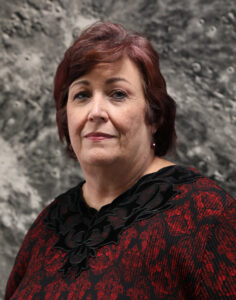
Ms. Renee Dotson has been awarded the 2024 Masursky Prize for outstanding service to the planetary science community. The nomination recognizes Ms. Dotson’s longstanding service to the planetary science community as the Production Editor for the Space Science Series of the University of Arizona Press. For more than two decades, Ms. Dotson has held the principal role in bringing the end-to-end final product to completion for fifteen separate volumes on a wide range of topics. These books have served as definitive references for planetary scientists, from graduate students and postdocs to leading researchers seeking expertise in a new field. In addition to her work on the Space Science Series, Ms. Dotson regularly contributes to the Lunar and Planetary Institute’s summer intern program and the Lunar and Planetary Science Conference. Ms. Dotson’s contributions have touched nearly every researcher and every corner of our field, and have had an immeasurable impact on new generations of planetary scientists.

Dr. Jamie Molaro is awarded the 2024 Sagan medal for outstanding communication by an active planetary scientist to the general public. The nomination recognizes Dr. Molaro’s contributions to changing the way planetary science appears to the world, including efforts to connect art and science, as well as efforts to engage underserved communities. Dr. Molaro created the annual “Art of Planetary Science” exhibition, which has invited the public to engage with science-driven art since 2013. She extended this effort into a series of workshops on space, art, and society called “Making Space”, where participants learn how to use art as a tool for scientific inquiry and public discourse around space exploration. Dr. Molaro is also a leader in our community in making science more accessible to Disabled individuals, by forming the Disabled for Accessibility in Space (DAIS) group and leading research with the AstroAccess project. Dr. Molaro’s other outreach activities include public interviews and presentations, and a notable appearance at Burning Man with an open-source rover.

Mr. Andrew Grant is awarded the 2024 Jonathan Eberhart Planetary Sciences Journalism award, which recognizes distinguished popular writing on planetary sciences, for his piece entitled “The rocky lives of cosmic rubble piles” published in March 2023 in Physics Today. The article tells a story of how our understanding of Near-Earth Asteroids has evolved over the past two decades – specifically, that they are ‘rubble piles’ instead of monolithic bodies – through the lens of results from recent spacecraft missions like NASA’s DART and OSIRIS-REx. These new insights are contextualized from comments from many planetary scientists working in different parts of the asteroid science today and through a discussion of the deeper history of the ideas, hypotheses, and insights that helped this field become what it is. The piece thus perfectly threaded the needle between getting the science right while still telling a coherent story of how the science has evolved. Getting this balance right is especially critical for a piece which discusses the potential risks posed by some of these asteroids, so Grant’s success here in explaining the process of science while emphasizing its effectiveness is doubly admirable. Grant’s piece successfully captured not just the exciting information that is being revealed about asteroids from missions, telescopes, and modeling efforts today, but was able to explain and convey the sense of wonder and excitement that can come from understanding them better to a general audience.
“It is my honor to congratulate this year’s award winners on behalf of the DPS community,” said DPS Chair Dr. Carol Raymond. “They should take immense pride in their achievements and this peer recognition. They embody the excellence and creativity of our community and its commitment to sharing our science with the public.”
The 2024 DPS prizes will be presented at the 56th annual meeting of the Division for Planetary Sciences, which will take place in Boise, Idaho and online from 1 to 6 October 2024.
More information about DPS prizes: https://dps.aas.org/prizes
56th annual DPS meeting, 6-10 October 2024: https://aas.org/meetings/dps56
The Division for Planetary Sciences (DPS), founded in 1968, is the largest special-interest
Division of the American Astronomical Society (AAS). Members of the DPS study the bodies of
our own solar system, from planets and moons to comets and asteroids, and all other solar-
system objects and processes. With the discovery that planets exist around other stars, the DPS
has expanded its scope to include the study of extrasolar planetary systems as well.
The American Astronomical Society (AAS), established in 1899, is the major organization of
professional astronomers in North America. The mission of the AAS is to enhance and share
humanity’s scientific understanding of the universe as a diverse and inclusive astronomical
community, which it achieves through publishing, meeting organization, science advocacy,
education and outreach, and training and professional development.