
Issue 19-30, July 17, 2019
+————————————CONTENTS—————————————-+
- APOLLO ANNIVERSARY LETTER FROM THE DPS AND FRS CHAIRS
- EPSC-DPS 2019 DPS DEPENDENT CARE GRANTS
- OPAG MEETING: SUBSURFACE NEEDS FOR OCEAN WORLDS (SNOW) MEETING #1
- CALL FOR ABSTRACTS: 2019 AGU FALL MEETING
- JOBS, POSITIONS, OPPORTUNITIES
+——————————————————————————————–+
1———1———1———1———1———1———1———1———1———1
APOLLO ANNIVERSARY LETTER FROM THE DPS AND FRS CHAIRS
The 50th anniversary of the Apollo 11 landing is fast approaching. Many in our
profession, as well as other scientific and engineering professions, were inspired
by Apollo to pursue their careers. As a young girl, Linda remembers exactly
where she was on that historic day, sitting next to her dad in the family room, as
they watched the grainy, black-and-white video of Neil Armstrong taking his first
steps on the Moon. Living through those exciting days definitely had an influence
on where she is today. While Kurt was only three months old when Apollo 17
departed from the Moon, he too continues to be inspired by the accomplishments
of the Apollo era – as will all generations to follow. The 50th anniversary of the
Apollo 11 landing on July 20th is a great opportunity to reflect on the joys that our
careers offer and the pathways our lives have taken as a result of these early
accomplishments.
Numerous public outreach efforts are underway by NASA and other organizations
this week. See for examples https://www.lpi.usra.edu/leag/apollo_11_50th_anniversary_celebrations/
and https://spacestem.nasa.gov/events.
Sharing enthusiasm for learning about our place in space during such events is a
self-rewarding and essential effort that results in continued government investment
in space sciences.
In the past several years we have benefited from strong bipartisan congressional
support for space sciences funding in multiple agencies. This support includes a
well-considered investment in robotic lunar science investigations hosted on
commercial lunar payload service providers. These science payloads address
Strategic Knowledge Gap requirements developed under the collective leadership
provided by the National Academies, LPI, LEAG, and other lunar science and
exploration advisory groups. The exciting onset of numerous commercial endeavors
to advance lunar exploration are spurring NASA to further its crewed Artemis
program in more cost efficient ways.
Our AAS/DPS Federal Relations Subcommittee has highlighted the synergies
between science and exploration, as well as our continued support for all planetary
science, during its Congressional Hill Visits. This message is always well received.
When thinking about and communicating the future of human exploration and the
inspiration it continues to provide, we encourage embracing the motto of the Lunar
Reconnaissance Orbiter team: science enables exploration, exploration enables science.
Enjoy this historic opportunity to celebrate our collective achievements in space.
Kurt Retherford
DPS Federal Relations Subcommittee Chair
Linda Spilker
DPS Chair
2———2———2———2———2———2———2———2———2———2
EPSC-DPS 2019 DPS DEPENDENT CARE GRANTS
The DPS Susan Niebur Professional Development Fund provides financial assistance
to qualifying members of the DPS in order to facilitate their meeting attendance by
offsetting dependent care costs (such as child care, elder care, spousal care, etc) at
the meeting location, or at home, during the DPS conference week. For 2019, the
DPS Professional Development Subcommittee will accept applications for dependent
care subsidies to assist an eligible DPS member to attend the Joint EPSC-DPS Meeting
in Geneva, Switzerland (September 2019). The deadline for applications is 12 August 2019.
Please access the grant application form at development#grants .
Mark Gurwell, DPS Professional Development Subcommittee member
3———3———3———3———3———3———3———3———3———3
OPAG MEETING: SUBSURFACE NEEDS FOR OCEAN WORLDS (SNOW) MEETING #1
Accessing into and through the ice shells of ocean worlds will both enable
compelling science, including the search for evidence of past and present
life, and require dedicated technology programs to realize. OPAG invites
members of the astrobiology, planetary science, ocean science and technology
communities to join together in a community-based forum aimed at defining
the path to the ocean(s).
The first Subsurface Needs for Ocean Worlds (SNOW) meeting will be held
9am-5pm August 19, 2019, immediately prior to the fall OPAG meeting in
Boulder, CO. This 1-day workshop is designed to be an open forum to discuss
technology needs, common science drivers, and mission architectures for Ocean
Worlds exploration. The agenda will include a mixture of short presentations,
break out groups, and lighting talks on technology and science.
SNOW meeting #1 will seek to develop plans for Decadal Survey white paper(s)
and define action items and agenda for the next meeting (prior to the winter/spring
OPAG meeting).
Early career scientists are encouraged to participate. For those who receive
support for the OPAG meeting, costs to extend the trip to attend SNOW
can also be supported.
To register for the meeting, please visit https://forms.gle/bsYWEb8tc2DizvedA.
For any questions, please email Britney Schmidt ([email protected])
and/or Kate Craft ([email protected])
4———4———4———4———4———4———4———4———4———4
CALL FOR ABSTRACTS: 2019 AGU FALL MEETING
- SESSION ED026 – ENGAGEMENT OPPORTUNITIES FOR EVERYONE THROUGH SCIENCE FESTIVALS
Anyone interested in sharing their experiences participating in science festivals
as a means of engaging audiences is encouraged to submit an abstract to the 2019
AGU Fall Meeting session Engagement Opportunities for Everyone through Science Festivals.
Increasing numbers of think pieces and news articles position scientists as experts
yet still leave people questioning the science. Now, more than ever, it is crucial for
scientists to be present in conversations around scientific subjects. Enter: science
festivals. This session will illustrate the power of engaging public audiences with
science festivals through descriptions of ongoing events, discussions of evaluation
methods and results, and connecting scientists with resources and experts to help
them join current festivals, or start their own. For scientists already engaging with
public audiences, this session will provide next-steps for communicating their science.
This session will focus on what science festivals are, why engagement is important
for scientists, and how scientists can connect with this living resource. Abstracts from
education/communication professionals and scientists are welcome. Topics of interest
may include science communication at live events, scientists’ engagement and outreach
activities, and evaluation.
https://agu.confex.com/agu/fm19/prelim.cgi/Session/82194
2019 Fall AGU abstract submission deadline is July 31, 2019 at 11:59 p.m. EDT.
Don’t forget: submitting an education abstract won’t count against your first author
science abstract submissions! At AGU, one first author education abstract is
allowable in addition to a science abstract.
Questions? Contact Andy Shaner.
- SESSION P003 : ATMOSPHERIC PROCESSES, PARTICLES, AND CHEMISTRY
We are pleased to invite you to submit an abstract to a cross-disciplinary session
on Atmospheric Processes, Particles, and Chemistry (P003) at the AGU 2019 Fall
Meeting in San Francisco, CA (December 9-13, 2019).
The goal of this session is to stimulate communication across disciplines and spark
new scientific collaborations between the Earth and Planetary communities (lab,
theory, model, observations). With this in mind, we encourage presenters who
have already made these types of connections, as well as others who have a technique
to offer or a problem in search of a new perspective to submit their abstracts.
(Please Note: you can find our session by selecting Planetary Science or
Cross-listed/Atmospheric Science.)
Abstract submission deadline: 31 July 2019, 11:59 pm EDT
P003 – Atmospheric Processes, Particles, and Chemistry
Many of the chemical and microphysical processes occurring in planetary atmospheres
have direct similarities to those studied in the Earth’s atmosphere. The aim of this
session is to bring together atmospheric expertise from the Earth and planetary
communities to share knowledge and techniques across traditional boundaries.
We encourage submissions from all areas of atmospheric studies, including but
not limited to experimental and/or theoretical studies of gas phase composition,
chemistry, dynamics, and particle (aerosols and clouds) formation and evolution.
We encourage reports of existing cross-disciplinary efforts as well as abstracts
describing techniques that could be applied to other bodies, and submissions
describing a gap in knowledge that could be addressed collaboratively. We intend
to use the “short talk” format to maximize information exchange and encourage
participants to initiate conversations that could lead to future collaborations and
new research investigations.
Conveners: Laura Iraci (NASA Ames), Ella Sciamma-O’Brien (NASA Ames),
Alexandria Johnson (Brown University), and Erika Barth (Southwest Research
- SESSION P005: CARBON ACROSS THE SOLAR SYSTEM
We invite abstracts for the following session at the 2019 AGU Fall
Meeting in San Francisco, CA, December 9-13, 2019.Recent results ranging from the Kuiper Belt, the Pluto system, the
Saturn system, other locations beyond ~5 AU, all the way to Mercury in
the inner Solar System, and nearly all points in between, raise
questions about the state of carbon in the Solar System: how do
carbonaceous compounds become weathered in response to thermal
processes and irradiation? How do we recognize carbon compounds and
their various weathering products? The syntheses of these results
improve our scientific understanding of the role of carbon in the Solar
System, how it evolves and how to recognize it. The carbonaceous
near-Earth asteroids 162173 Ryugu and 101955 Bennu are now being
visited and sampled; the analyses of these samples will provide context
for the presence of carbon. In this session, abstracts covering
observational, laboratory and modeling work related to carbon and
carbonaceous species on Solar System bodies are welcome.The deadline for abstract submissions is Wednesday, 31 July, 23:59 EDT
Conveners: Faith Vilas (PSI, [email protected]), Amanda R. Hendrix (PSI),
Yvonne J. Pendleton (NASA ARC)
- SESSION P013: FINDING, EXPLORING AND CHARACTERIZING TERRESTRIAL
EXOPLANETS: THE NEXT FRONTIERWe are pleased to invite you to submit an abstract for the following
session at the 2019 AGU Fall Meeting in San Francisco, CA, December
9-13, 2019.This session is a discussion of the potential of new and future
facilities and modeling efforts designed to detect, image and
characterize Earth-size and super-Earth terrestrial exoplanets,
studying their formation, evolution and also the existence of possible
biospheres. Topics to be covered in this session include instrument
requirements and technologies to detect these exoplanets; strategies
for target selection and prioritization; signs of exoplanet
habitability and global biosignatures that can be sought with upcoming
instrumentation; impacts of planetary system properties; and future
ground-based and space telescope architectures.For more information, visit:
https://agu.confex.com/agu/fm19/prelim.cgi/Session/75474
The submission deadline is Wednesday, July 31, 2019.
Conveners:
Franck Marchis (SETI Institute)
Ramses Ramirez (Tokyo Institute of Technology)
Douglas A. Caldwell (SETI Institute)
- SESSION P030: PLANETARY RINGS, METEOROID AND DUST POPULATIONS AND EFFECTS
Session Description:
New theoretical and observational studies of planetary rings, meteoroids,
and dust. These collections of small particles are sensitive to a wide variety
of dynamical phenomena, and so can provide information about the sources,
sinks and transport of material. Rings can also encode detailed information
about their dynamical environments such as their host planet’s gravitational
field, while meteoroids and dust interact with larger bodies through surface
impacts and atmospheric ablation and therefore contribute to surface weathering
or airless bodies and metal deposition in planetary atmospheres. Subjects to be
covered include: the structure, dynamics and composition of rings; characterization
of dust populations along with their effects on asteroids and spacecraft; dust
chemistry; hypervelocity impacts of dust and meteoroids; the interaction of
planetary rings with ionospheres, magnetospheres and interplanetary dust;
and the origin and evolution of the rings. Recent observations of the dust
environment around small bodies will be highlighted.
Nicolas Lee, Sean Hsu, Matthew Hedman, Sigrid Close
- SESSION P038: THE NEW MARS UNDERGROUND 2.0
After last year’s highly successful “The New Mars Underground” Session, we
look forward to seeing again many abstracts focusing on the Martian subsurface:
its properties, processes and prospects for life, ancient and modern – across
science, enabling technologies and mission concepts.
Summary: The Martian crustal subsurface encompasses a wide range of
environments at depths from ~centimeters to kilometers. These environments
are relatively unexplored but are of enormous interest for planetary science.
Recent results, e.g., methane fluctuations, radar data that are consistent with
liquid subsurface water, and ongoing debates on RSL, all point to dynamic
subsurface environments. We invite contributions that address the nature and
diversity of Mars crustal subsurface environments (modeling, experiments,
observations) or develop the tools/missions for exploring them (sounding,
access, in situ analysis). We are particularly interested in contributions that
advance our understanding of how the subsurface changes with geographic
location and depth, in respect to: volatiles such as brines, ices, clathrates,
salts, methane and oxidants, the potential for extant life and the preservation
of signs of extinct life, the redox potential of past and present environments,
and the technologies/mission concepts that enable such subsurface exploration.
Please direct question to the conveners: Vlada Stamenkovic (JPL,
[email protected]), Nina Lanza (Los Alamos),
Jack Mustard (Brown), Kris Zacny (Honeybee).
Submit here: Abstract submission deadline is coming soon: 31 July 2019,
11:59 pm EDT
https://agu.confex.com/agu/fm19/prelim.cgi/Session/83347
- SESSION P039: THE URANUS AND NEPTUNE SYSTEMS, AND THEIR RELATION TO OTHER PLANETS
https://agu.confex.com/agu/fm19/prelim.cgi/Session/81002
Uranus and Neptune systems are high-priority targets for near-future exploration
by orbiter and/or flyby missions that may accompany in-situ probes and landers.
We aim to hold a highly interdisciplinary session that advances the state of the
art in our understanding of all aspects of ice-giant systems: the magnetospheres,
satellites, rings, atmospheres, and interiors of Uranus and Neptune; their
formation and evolution; and their relation to other planets in and beyond
our solar system. Our session especially welcomes presentations that advance
our understanding of the Ice Giant systems in preparation for future remote
sensing and in situ explorations. We solicit presentations on observations,
modeling, theory and laboratory work, as well as concepts for missions and
instruments relevant for future exploration of the Ice Giant Systems.
Convenors: Kunio Sayanagi, Krista Soderlund, Zibi Turtle, Xin Cao
- SESSION P040: TITAN: THE EXOTIC AND ENIGMATIC MOON
Saturn’s giant moon Titan is one of the most mysterious, and yet strangely
familiar, realms in the solar system. Possessing a dense atmosphere enriched
in organic compounds, its active photochemistry works to produce a panoply
of molecules of increasing size and complexity, running the gamut from
ethane to haze particles. This session solicits presentations on all aspects
of Titan research, including on-going Cassini dataset analysis, Earth-based
observations, modeling, laboratory investigations, and comparison with other
Conveners: Conor Nixon (NASA GSFC), Alex Hayes (Cornell University),
Kathleen Mandt (Johns Hopkins APL)
Submissions welcome until: 31 July 2019 23:59 EDT/03:59 +1 GMT.
At: https://agu.confex.com/agu/fm19/prelim.cgi/Home/0
- SESSION SH04: SPACE WEATHER EVENTS AT SOLAR SYSTEM BODIES AND BEYOND
We would like to invite you to submit an abstract and participate in the
2019 Fall AGU cross-disciplinary session, “SH024: Space weather events
at solar system bodies and beyond”. The abstract submission is currently
open until 31 July 2019 23:59 EDT/03:59 +1 GMT.
Please visit this page to submit directly to this session:
https://agu.confex.com/agu/fm19/prelim.cgi/Session/82766
Session description:
The characteristics of how different solar system bodies respond to the
active solar conditions can be used as an analog for space weather conditions
experienced by planets at other stellar systems. The availability of both
interplanetary spacecraft observations and advanced modeling techniques
allow us to better understand the space weather responses by planets and
their satellites within our solar system. In particular, the heliospheric
influences on various bodies can be different, depending on the plasma
environment of the planet (e.g., airless or tenuous atmosphere, with or
without a magnetosphere).
This session will cover a range of interrelated topics, including the
propagation and evolution of ICMEs and SEPs in the heliosphere, the
space weather responses by planets, moons, and asteroids, and the
expected space weather conditions at exoplanets, particularly those
within habitable zones of their stellar systems. We welcome both
observational and modeling studies on the heliosphere and exoplanetary
-
Conveners:
Réka Winslow (University of New Hampshire)
Jingnan Guo (University of Science and Technology of China)
Christina O. Lee (Space Sciences Laboratory, UC Berkeley)
5———5———5———5———5———5———5———5———5———5
JOBS, POSITIONS, OPPORTUNITIES
A) PLANETARY SCIENCES EXPLORATION POSTDOCTORAL POSITION
AT THE UNIVERSITY OF CENTRAL FLORIDA
The Department of Physics (physics.cos.ucf.edu) at the University of Central
Florida (UCF) and the Florida Space Institute (FSI) invite applications for a
post-doctoral position as part of the Center for Lunar and Asteroid Surface
Science (CLASS) of the NASA Solar System Exploration Research Virtual
Institute (SSERVI). We seek candidates with interests in exploration-related
planetary science including, but not limited to, lunar surface mineralogy,
regolith processes, primitive asteroid mineralogy, and in-situ resource utilization
(ISRU). Applicants must have a Ph.D. at the time of appointment in Geological
Sciences, Planetary Sciences, or a closely related discipline. The successful
applicant is expected to be involved in CLASS projects related to the physical
properties of lunar and asteroidal materials, the scientific support of ISRU
development, and lunar regolith processes. This will include interaction with
the commercial NewSpace community in the development of the next generation
of lunar landers, instruments, and experiments. Interested individuals should
provide include a cover letter, curriculum vitae, summary of research, and a
list of three professional references with contact information to Dr. Daniel Britt
Screening of applications will continue until the position is filled.
———————————+
Send submissions to:
Anne Verbiscer, DPS Secretary ([email protected])
You are receiving this email because you are a DPS member.
To unsubscribe or update your information, please send your request
to [email protected]. The more general AAS privacy policy is available
online at https://aas.org/about/policies/privacy-policy. Current and back
issues of the DPS Newsletter can be found at newsletters
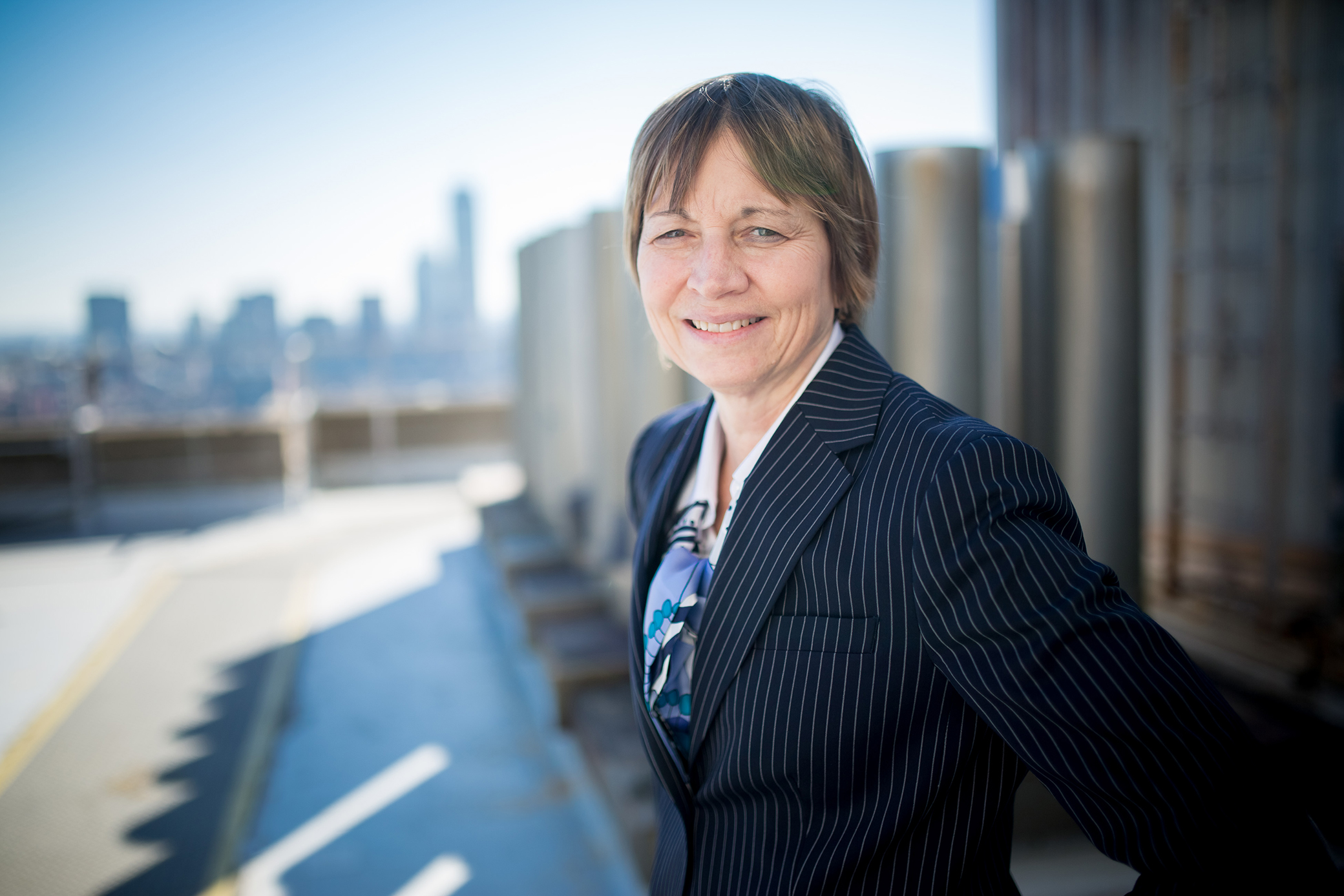 The Gerard P. Kuiper Prize for outstanding contributions to the field of planetary science goes to Dr. Maria Zuber (Massachusetts Institute of Technology) for her contributions to advancements in geophysics, planetary gravity mapping, and laser altimetry. One example of her seminal contributions includes her paper in Science in 2000 combining Mars Global Surveyor laser altimetry data and gravity data to determine the crustal and upper mantle structure of Mars. Another example is her leadership as principal investigator of the GRAIL mission to construct a model of the Moon’s gravitational field to spherical harmonic degree 1,800, which exceeds the baseline requirement of the mission by an order of magnitude. Dr. Zuber has turned her attention to many different solid bodies in the solar system including Mercury, Venus, Eros, Vesta, and Ceres. Over the years she has advised a number of students and postdocs, and one reports that she strikes the perfect balance of being demanding, supportive, encouraging, and open minded.
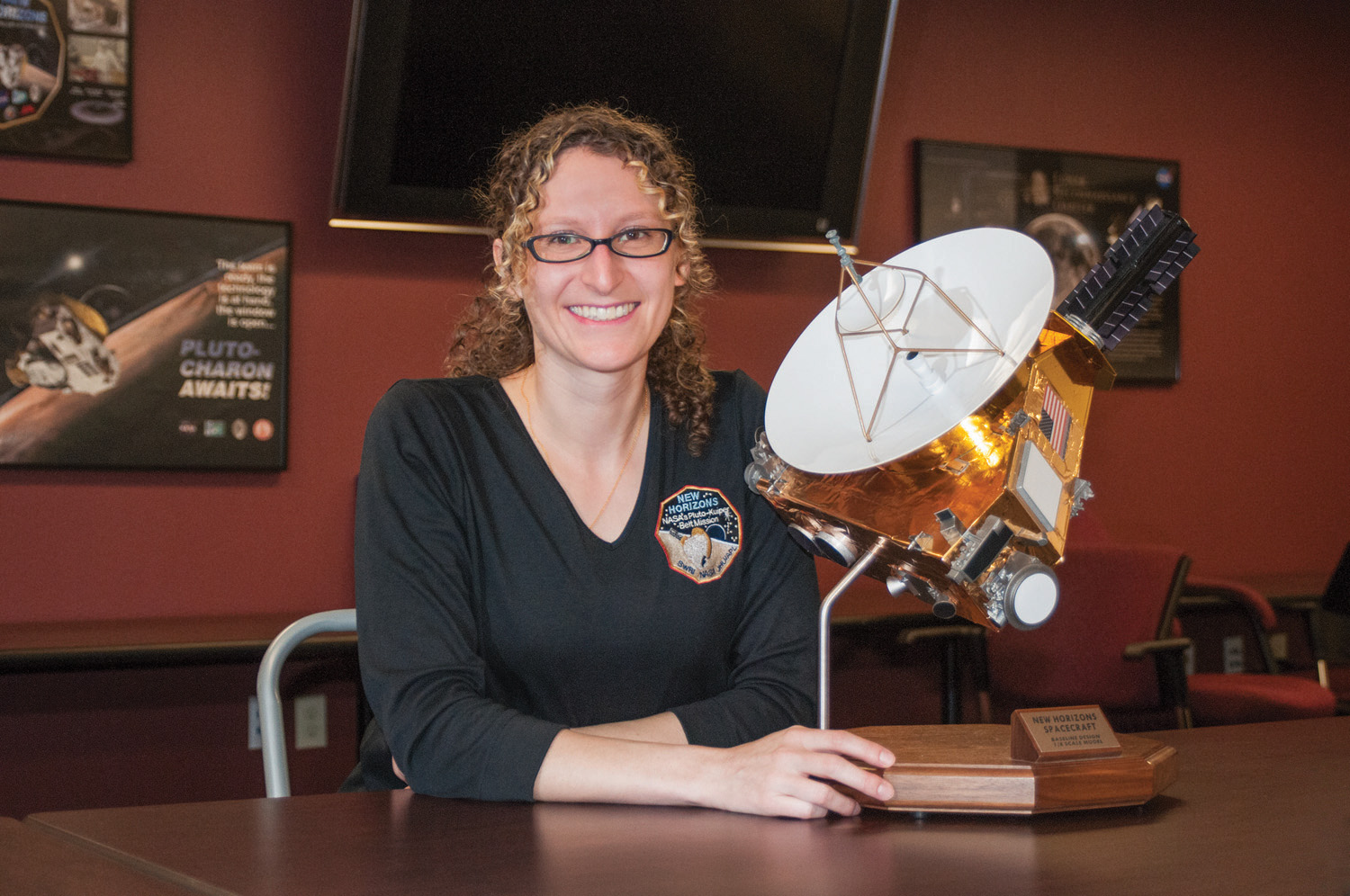 The 2019 Harold C. Urey Prize for outstanding achievement in planetary research by a young scientist is awarded to Dr. Kelsi Singer (Southwest Research Institute) in recognition of her work in impact cratering and in the geology and geophysics of icy worlds. In one paper, she used Cassini observations of Iapetus to create a catalog of landslide data and tested theories of long-runout landslides. Dr. Singer also used secondary craters on Europa and Ganymede to produce size-frequency and size-velocity distributions for icy blocks that revealed fundamental scaling relationships. In recent work, she used the cratering record on Pluto and Charon to determine that there is a deficit of small objects in the Kuiper Belt, with implications for the collisional history of the Kuiper belt and planetesimal formation. Dr Singer’s work is meticulous, rigorous, and insightful. In the best tradition of scientific brilliance, she examines data with an open mind, considers multiple theories, follows those theories to their logical conclusions, quantifies her uncertainties, and applies healthy skepticism toward her results. Photo credit: Rayna Tedford
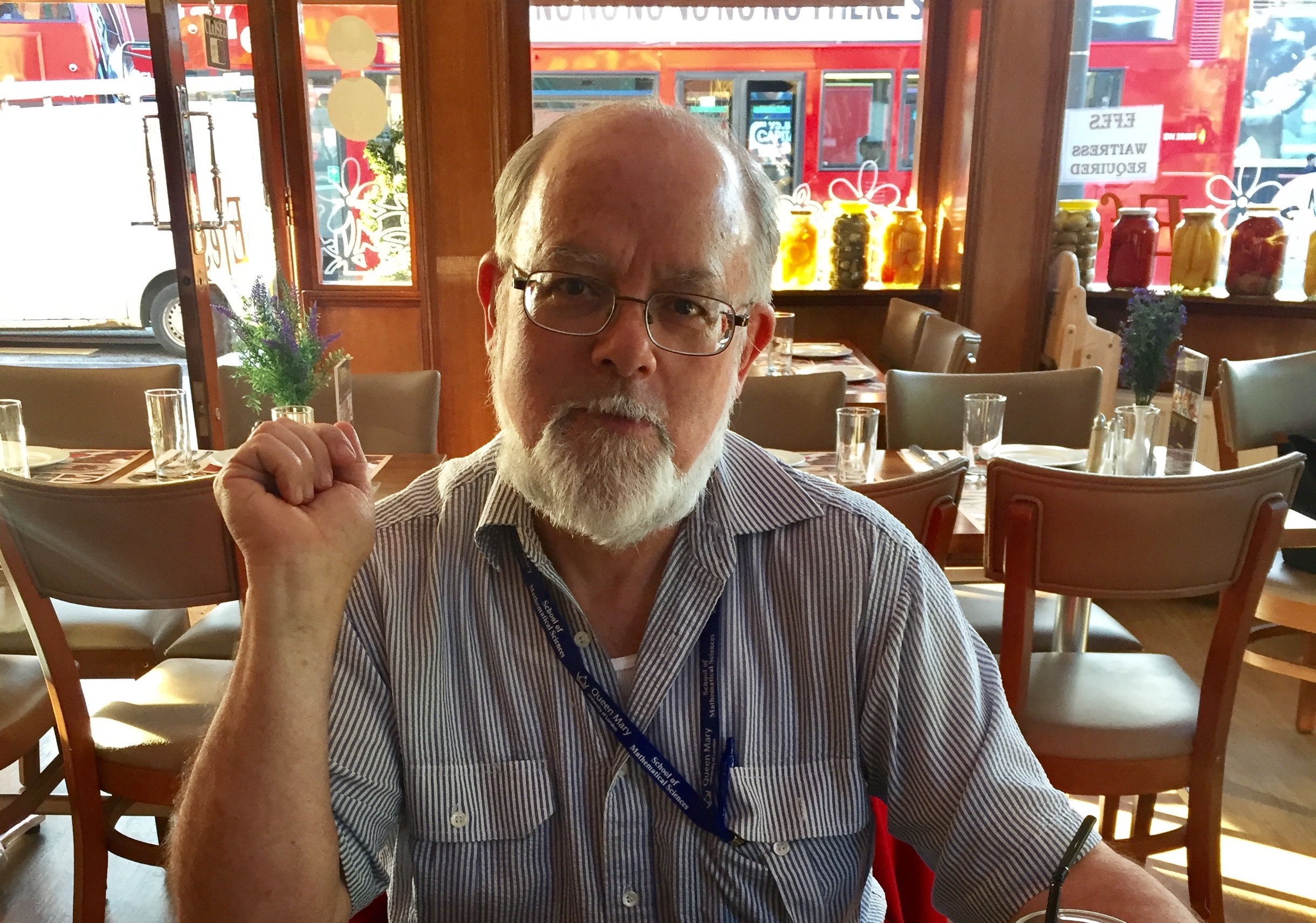 The 2019 Harold Masursky Award for meritorious service to planetary science goes to Dr. Phil Nicholson (Cornell University). A highlight of his service to the community has been his role as Editor in Chief of Icarus for 20 years. During his tenure he improved the experience for authors, reduced time to publication, and increased access. Dr. Nicholson was dedicated to the integrity of the peer review process; he gave everyone the chance to have their voice heard. His work as Editor in Chief, in addition to his full load of teaching and research duties — as well as his volunteer efforts on numerous committees and review panels — makes him an icon of service to the planetary science community.
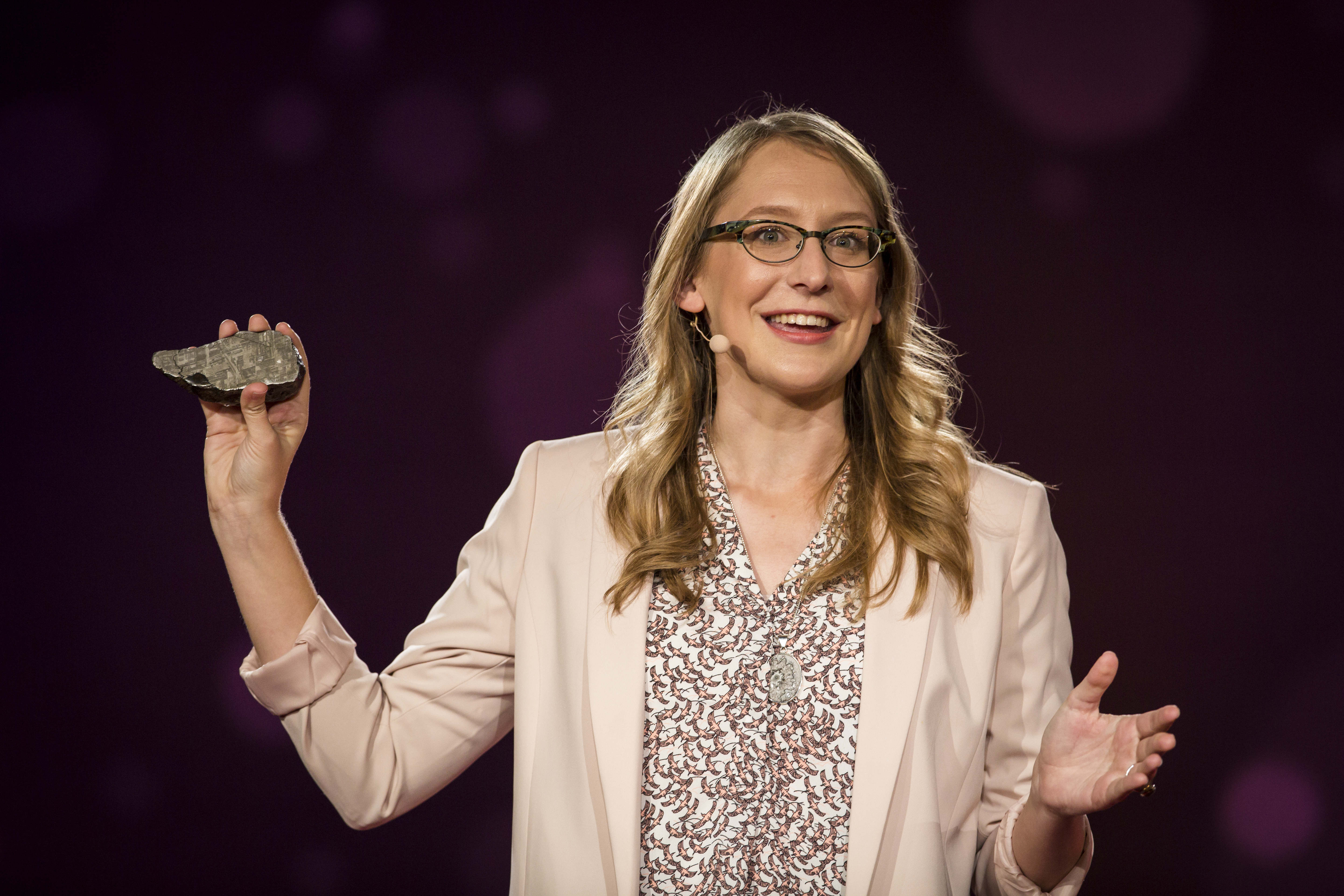 The 2019 Carl Sagan Medal for excellence in public communication goes to Dr. Carrie Nugent (Olin College) for her compelling and effective outreach to a worldwide audience. In her highly rated Spacepod podcast, Dr. Nugent interviews other scientists about their work, providing the public with a wide and deep view of planetary science research. Through Spacepod, she has enabled hundreds of members of our community to share their science with the public. Dr. Nugent is an engaging speaker with more than 1.3 million views of her TED talk on asteroid hunting. She uses clear, evocative language to make solar system discoveries accessible to people of all ages and backgrounds.
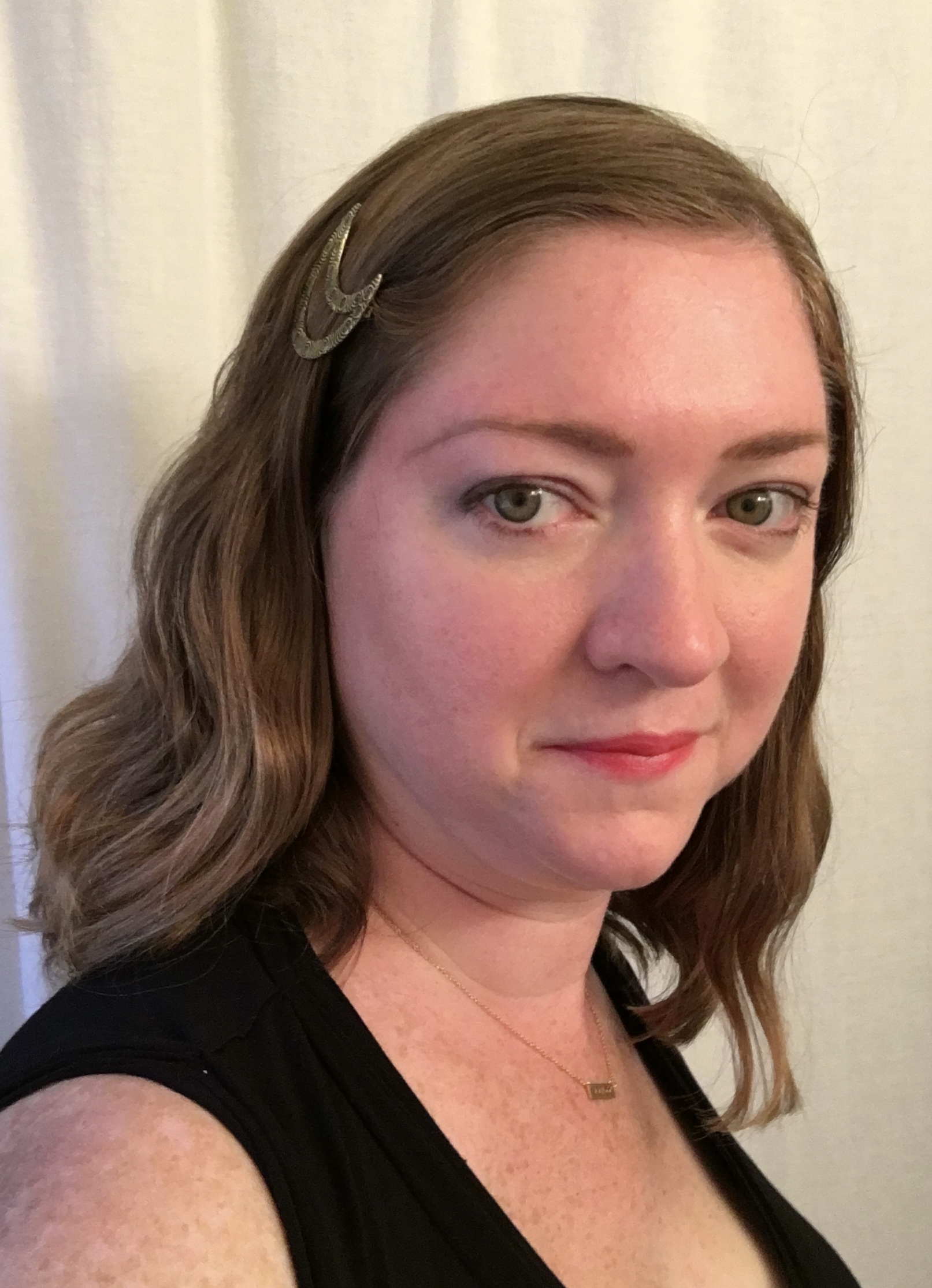 The 2019 Jonathan Eberhart Planetary Science Journalism Award for distinguished popular writing goes to Rebecca Boyle for her article “Pictures of Worlds to Come” in the December 6, 2018, issue of Nature. In this eloquently written feature, Rebecca explores the rapidly evolving field of planet formation, which lies at the intersection of planetary science and other branches of astronomy. She brings to light the giant strides being made in imaging protoplanetary disks by vividly describing the extremely detailed images taken by the Atacama Large Millimeter/submillimeter Array and other facilities. She addresses the challenges presented by such observations to theories about planet formation and how researchers are working on reconciling those. Rebecca beautifully wraps together historical insights, the latest science, and potential paths forward to paint a vibrant picture of this exciting field.